
Pediatric Nutrition Market Size and Share
Market Overview
| Study Period | 2021 - 2032 |
|---|---|
| Market Size (2027) | USD 87.23 Billion |
| Market Size (2032) | USD 119.07 Billion |
| Growth Rate (2027 - 2032) | 6.42 % |
| Fastest Growing Market | Asia-Pacific |
| Largest Market | North America |
| Market Concentration | Medium |
Major Players *Disclaimer: Major Players sorted in no particular order Image © Mordor Intelligence. Reuse requires attribution under CC BY 4.0. | |
Pediatric Nutrition Market Analysis by Mordor Intelligence
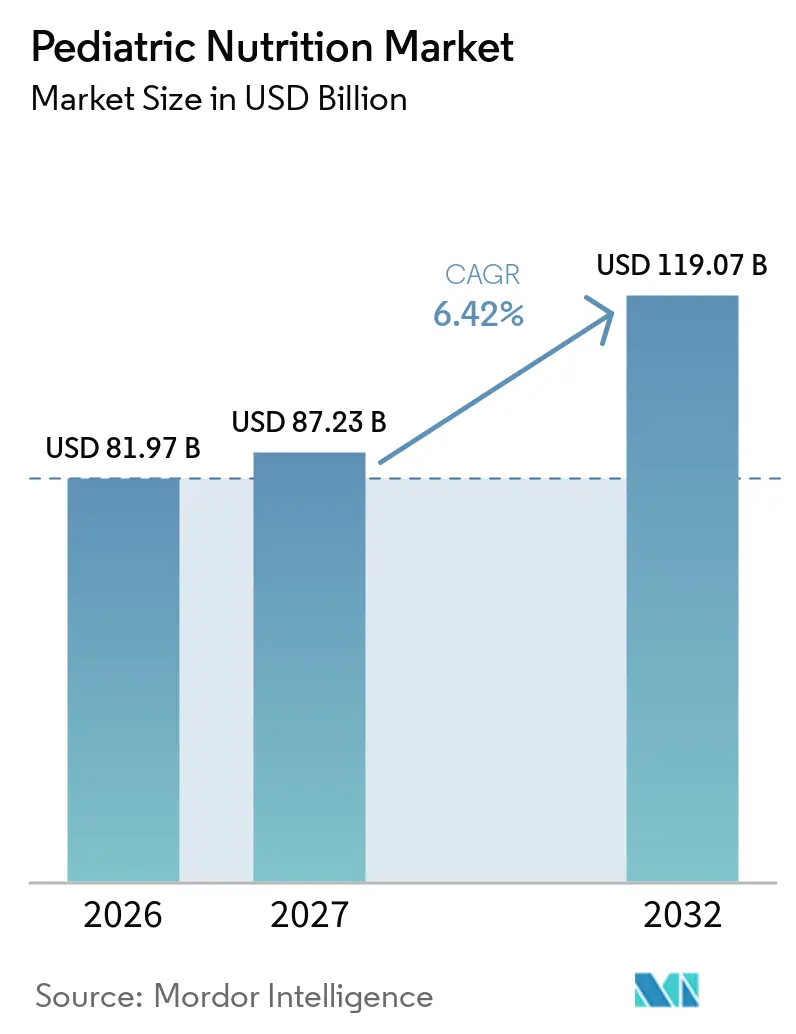
The Pediatric Nutrition Market size is expected to grow from USD 81.97 billion in 2026 to USD 87.23 billion in 2027 and is forecast to reach USD 119.07 billion by 2032 at 6.42% CAGR over 2027-2032.
The pediatric nutrition market is moving beyond standard formula toward specialized, clinically supported, and premium products. Smaller household sizes support higher spending per child, particularly where parents place greater value on trusted ingredients and documented product quality. This shift creates room for products that address allergies, metabolic conditions, and feeding needs after hospital discharge. Product safety, ingredient traceability, and evidence supporting health claims are becoming more important in purchasing and procurement decisions. Falling birth rates in China and parts of Europe will continue to limit volume growth, making premiumization and specialized nutrition important routes to value growth.
Key Report Takeaways
- By product type, Infant Formula held 54.80% of the share of the pediatric nutrition market in 2026, while Pediatric Medical Nutrition is projected to grow at an 8.40% CAGR through 2032.
- By age group, Older Infants aged 6-12 months held 35.60% of the share of the pediatric nutrition market in 2026, while Adolescents aged 13-18 years are projected to grow at an 8.90% CAGR through 2032.
- By form, Powder held 69.40% of the share of the pediatric nutrition market in 2026, while Ready-to-Feed Liquid is projected to grow at a 9.20% CAGR through 2032.
- By distribution channel, Supermarkets and Hypermarkets held 42.10% of the share of the pediatric nutrition market in 2026, while E-Commerce is projected to grow at a 10.10% CAGR through 2032.
- By geography, North America held 42.30% of the share of the pediatric nutrition market in 2026, while Asia-Pacific is projected to grow at a 7.60% CAGR through 2032.
Note: Market numbers in this report are based on Mordor Intelligence's proprietary estimation framework, which combines nine months of actuals with Q4 projections for base year 2026.
Market Trends and Insights
Drivers Impact Analysis of Pediatric Nutrition Market*
| Driver | (~) % Impact on CAGR Forecast | Geographic Relevance | Impact Timeline |
|---|---|---|---|
| Rising Demand for Infant and Pediatric Specialty Nutrition | +1.8% | Global | Medium term (2-4 years) |
| Premiumization and Clean-Label Product Adoption | +1.5% | North America, Europe, APAC | Medium term (2-4 years) |
| Expansion of Pediatric Medical Nutrition and Home Enteral Feeding | +1.2% | North America, Europe | Long term (≥ 4 years) |
| Growth of Omnichannel and Cross-Border E-Commerce | +1.0% | APAC, North America | Short term (≤ 2 years) |
| Personalized Nutrition Based on Microbiome and Genetic Profiling | +0.7% | North America, Europe | Long term (≥ 4 years) |
| Expanded Use of Human Milk Oligosaccharides, Probiotics, and Hydrolysates | +1.3% | Global | Medium term (2-4 years) |
| Source: Mordor Intelligence | |||
Rising Demand for Specialty and Medical Nutrition
Specialty formula, amino acid-based products, hydrolyzed formula, and metabolic diets address needs that standard products cannot meet. Their demand is supported by allergies, premature birth, inherited metabolic conditions, and feeding challenges that can require longer-term nutritional support. The American Academy of Pediatrics describes structured monitoring of enteral and parenteral nutrition as an important component of home health care for children with complex medical needs. This care model broadens the pediatric nutrition market beyond infancy because caregivers continue to need products after discharge. The adolescent group also needs more attention, where eating disorders, disease-related malnutrition, and metabolic conditions create nutrition gaps. Suppliers that pair products with clear clinical guidance and caregiver support are better placed to build recurring demand.
Premiumization and Clean-Label Adoption
Parents are increasingly weighing ingredient lists, sourcing, and product claims when choosing nutrition for children. This behavior supports premium products but also separates the category into value and higher-priced offerings. Nestlé has positioned NAN and Sinergity for premium consumers while maintaining more accessible brands for other households. Nara Organics entered the United States in 2025 with an FDA-registered and USDA-certified organic formula that excluded palm oil, soy, corn syrup, and GMOs. The pediatric nutrition market therefore faces a more demanding standard for transparency, even when parents remain price-sensitive. This can place pressure on middle-priced private-label suppliers that lack clear differentiation.
Home Enteral Care and Advanced Ingredients
Home-based enteral care is extending medical nutrition beyond hospital settings and changing how products are selected. A 2025 systematic review found that post-discharge pediatric enteral nutrition programs can improve weight-for-age outcomes when they include coordinated clinical support[1]. Danone completed its majority acquisition of Kate Farms in July 2025 and added the brand to its North America Medical Nutrition business. Human milk oligosaccharides, probiotics, and hydrolysates also enable differentiated products where clinical and technical evidence is available. Nestlé reported that NAN Sinergity, which combines six HMOs with Bifidobacterium infantis, expanded across Latin America, the Middle East, and Asia during 2025. These ingredients raise the importance of formulation capability, regulatory documentation, and dependable supply relationships.
Digital Access and Personalization
E-commerce gives pediatric nutrition suppliers a direct route to parents seeking product information, replenishment, and specialty formats. The channel is especially relevant in markets where cross-border sales have enabled access to imported formula and medical nutrition. China is tightening the compliance framework for cross-border e-commerce food imports, including infant formula and food for special medical purposes. This favors firms able to meet registration, recall, and traceability obligations. Interest in microbiome, genetic, and other individualized nutrition approaches is also rising, although these approaches remain early in commercial pediatric applications. The American Academy of Pediatrics has described the growing relevance of nutrigenetics, nutrigenomics, and microbiomics to future nutrition practice. Digital engagement may help companies connect such emerging science with clinical education, but product claims will remain subject to close review.
Birth Declines and Demand Concentration
Lower birth rates are reducing the addressable volume base in major formula markets, particularly China and several European countries. China recorded 7.92 million births in 2025 after 9.54 million births in 2024, according to reporting that cited Bank of America analysis. Declining births also make competition more intense because brands pursue a smaller pool of new consumers. In France, infant food sales fell in value and volume during the year to June 2025, reflecting this demographic pressure. The pediatric nutrition market can offset part of this pressure through premium products and medical nutrition, but neither removes the decline in potential first-time users. International brands may be especially exposed where births shift toward lower-tier Chinese cities with strong domestic brand presence.
Stricter Marketing, Labeling, and Product-Claim Requirements
Regulatory requirements are raising the evidence, testing, and documentation needed to sell infant nutrition products. The U.S. Food and Drug Administration began a review of infant formula ingredients in 2025, including nutrient requirements and contaminants. China is also modifying rules for cross-border e-commerce foods, which affects overseas formula suppliers using digital import routes. The 2025 ByHeart outbreak investigation showed how recalls can quickly weaken consumer trust and trigger retailer action. Specialty ingredients and cold-chain inputs add operational risk because suppliers must maintain qualified sources and consistent handling. Strong quality systems, traceability, and diversified sourcing are now necessary to protect brand credibility.
*Our forecasts treat driver/restraint impacts as directional, not additive. The impact forecasts reflect baseline growth, mix effects, and variable interactions.
Pediatric Nutrition Market Segment Analysis
By Product Type:
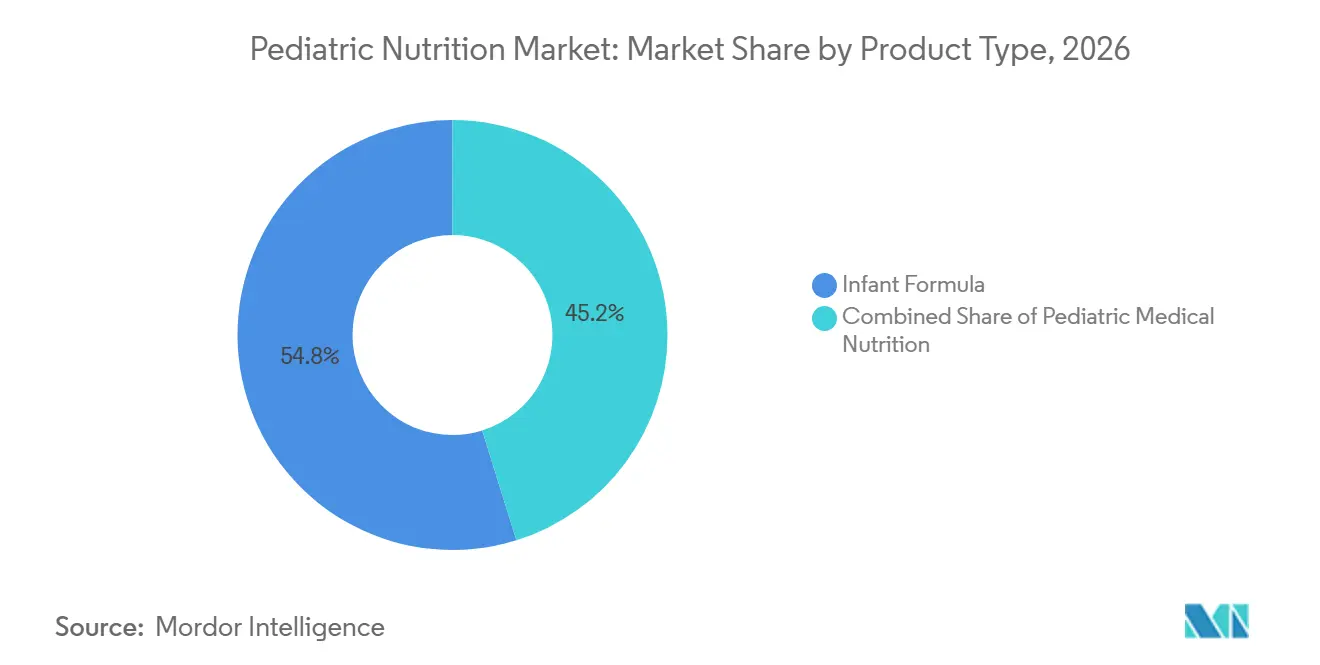
Infant Formula Remains the Largest Category While Medical Nutrition Grows FastestInfant Formula held a 54.80% share of the pediatric nutrition market in 2026. Its position reflects the limited substitution options for non-breastfed infants and the need for regular purchases during early life. Standard cow’s milk formula remains important, but hydrolyzed, extensively hydrolyzed, and amino acid-based products are gaining relevance. HMO-fortified premium products also allow suppliers to reduce exposure to birth-rate-driven volume pressure. Pediatric Medical Nutrition is projected to grow at an 8.4% CAGR through 2032. The segment is supported by diagnoses of rare metabolic disorders, swallowing impairments, and care needs after discharge. Danone’s Kate Farms acquisition strengthened its role in plant-based tube feeding and brought the brand’s products into more than 1,400 U.S. hospitals. The pediatric nutrition market size for medical nutrition is increasingly linked to clinical pathways rather than only to birth volumes.
Baby Food and Complementary Nutrition faces the sharpest volume pressure in North America and other slower-birth markets. Nestlé cited continued challenges for Gerber in its 2025 full-year results and targeted 2-3% CAGR for infant and children’s nutrition during 2025-2027. Nevertheless, this category remains important during the transition to solid foods and toddler feeding. Children’s Dietary Supplements benefit from functional snacks, gummy vitamins, and probiotic chewables for school-age children. The segment also gives suppliers exposure to children who are no longer formula users. Kate Farms entered 302 Target locations in 2025, showing that medical-grade nutrition can gain wider retail access. Products in this area need credible benefit statements because the line between food, supplements, and medical nutrition can be closely examined. Suppliers that provide clear age guidance can serve more of the child nutrition journey[2].

By Age Group:
Older Infants Lead While Adolescent Nutrition Broadens DemandOlder Infants aged 6-12 months accounted for 35.60% of the pediatric nutrition market share in 2026. This stage includes the transition from breast milk or stage-1 formula to follow-on formula and complementary foods. Parents often consider HMO, probiotic, and other functional ingredients during this purchasing period. The 57% use of GOS across global infant formula launches shows how common such product positioning has become. Older infants also use a wide range of feeding formats, from formula to pouches and cereals. This supports premium follow-on formula and complementary product development. The pediatric nutrition market benefits when companies can guide families through this transition with clear, safe information. Formula choices during this stage can also establish later brand preference.
Adolescents aged 13-18 years are projected to grow at an 8.9% CAGR through 2032. Their needs include support for eating disorders, metabolic conditions, disease-related malnutrition, and athletic demands. This group has historically received less attention than infancy in pediatric nutrition. Toddlers aged 12-36 months remain a major cohort for growing-up milks and fortified snacks. Danone reported that 99% of its toddler milk volume met its target of no more than 1.25g added sugar per 100 kcal in 2024. Neonates and infants aged 0-6 months remain influenced by hospital and pediatrician guidance. Children aged 3-12 years create demand for functional snacks and evidence-based supplements. These age groups require different formulations, formats, and communication within the pediatric nutrition industry.
By Form:
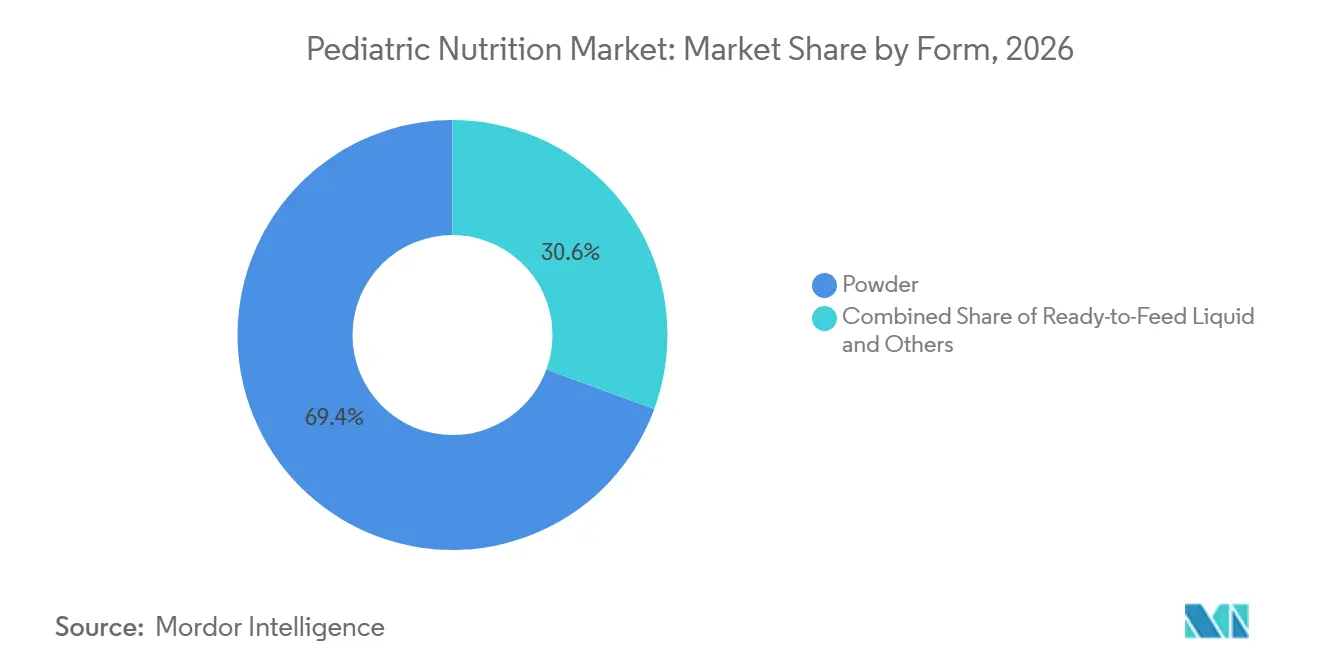
Powder Holds Scale While Ready-to-Feed Liquid Gains Convenience DemandPowder held a 69.40% share of the pediatric nutrition market in 2026. Lower cost per feed, lower transport weight, ambient storage, and established parental routines support this leadership. Powder also enables suppliers to offer several pack sizes and specialized formulations. Its importance remains strong in markets where formula use is frequent, and price sensitivity is high. Ready-to-Feed Liquid is projected to grow at a 9.2% CAGR through 2032. Dual-income households value faster preparation and ready-measured servings. Hospital discharge protocols may also favor ready-to-feed formats because they lower the chance of preparation error. The share of the pediatric nutrition market of powder will remain substantial, but liquid formats provide a clear premium convenience opportunity.
Liquid Concentrate provides a middle option between powder and ready-to-feed products. Its role is most visible in North America, where refrigerated aisles have expanded. Drops and Sprays, particularly vitamin D, probiotics, and iron, are becoming more visible within children’s supplements. Abbott released a randomized controlled trial in July 2025 on PediaSure Plus with PeptiGro System among undernourished Filipino children aged 2-5 years. Other formats include gummies, chewables, bars, pouches, and functional snacks. Little Spoon introduced USDA-organic YoGos yogurt pouches in January 2025 with 4g protein per serving and no added sugars. These formats allow brands to link pediatric nutrition with mainstream food purchases. They also require strong quality control and age-appropriate serving guidance.
By Distribution Channel:
E-Commerce Brings Direct Access While Stores Retain ScaleSupermarkets and Hypermarkets held a 42.10% share of the pediatric nutrition market in 2026. First-time parents value the ability to compare products in person and purchase formula alongside other baby-care items. These retailers also provide shelf visibility and promotional support for major brands. Their role is especially strong for routine powder formula, baby food, and snacks. E-Commerce is projected to grow at a 10.10% CAGR through 2032. The channel supports detailed product information, subscriptions, and direct access to specialty formats. In South Korea, online sales represented 70% of baby-food retail value, showing how important digital channels can become in advanced e-commerce environments. The pediatric nutrition market can use online platforms to improve continuity and personalization, rather than compete only on price.
Pharmacies and Medical Stores remain key access points for specialty and hypoallergenic formula. Pharmacist advice can influence purchases where families seek medical nutrition or products for intolerance. Hospitals and institutional procurement represent a smaller revenue channel but have strong influence after discharge. Hospital formularies can determine the products caregivers continue to buy at home. China’s 2025 cross-border e-commerce rules create additional obligations for international suppliers that use digital import channels. This includes a negative list and a recall framework for imported e-commerce food. Companies that combine online education, reliable delivery, and compliance systems are more likely to succeed. The pediatric nutrition market must therefore manage digital growth alongside local registration and labeling requirements.
Geography Analysis
North America
North America held a 42.3% share of the pediatric nutrition market in 2026. The region benefits from high product prices, WIC infrastructure, and developed institutional purchasing for pediatric medical nutrition. Mainstream formula volume faces pressure, but medical nutrition and premium formulations provide a stronger source of growth. Abbott’s U.S. pediatric nutrition business reported double-digit growth in the first quarter of 2025, but later faced share losses linked to a WIC contract transition and price-suppressed volumes. Abbott said it planned at least 8 new product launches over the following 12 months. The 2025 ByHeart outbreak led to 48 hospitalizations and a full product recall, placing traceability and FDA oversight at the center of purchasing confidence. Danone’s retail expansion of Kate Farms also shows how clinical products are moving beyond hospital-only access. This can turn clinical credibility into a consumer purchasing advantage. The pediatric nutrition market size in North America will therefore depend increasingly on specialized care and trusted premium products[3].
Asia-Pacific
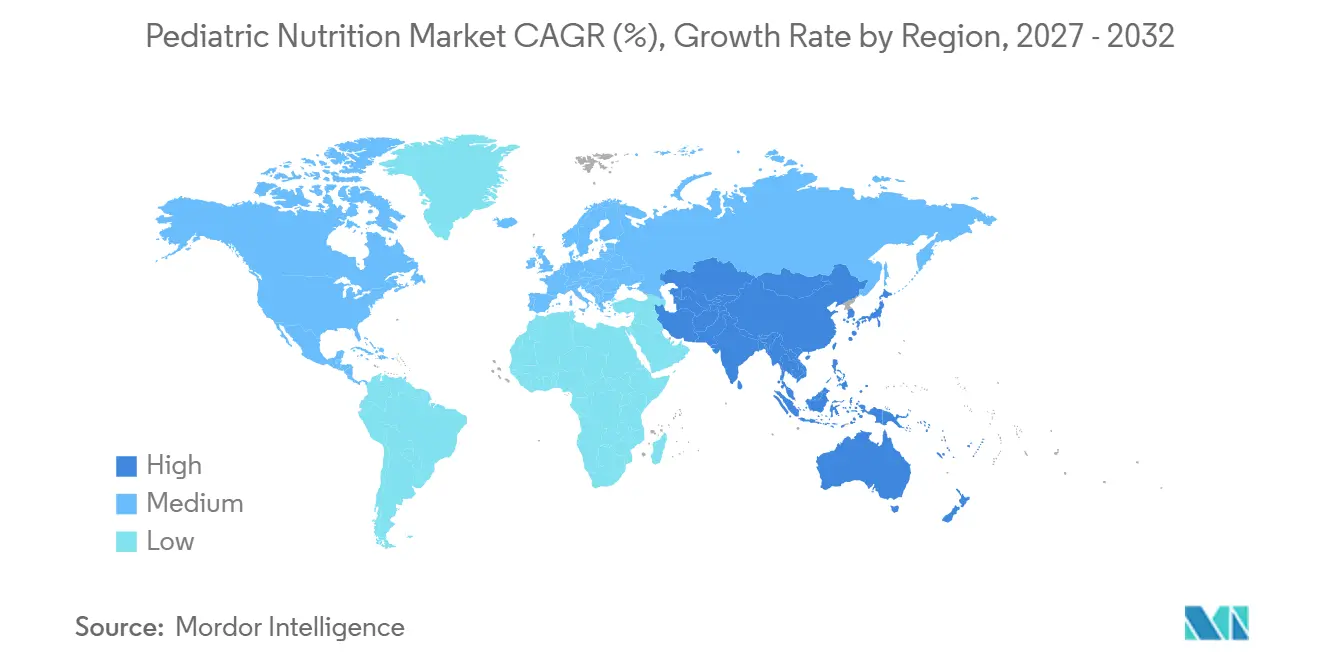
Asia-Pacific is projected to grow at a 7.60% CAGR through 2032. India, Vietnam, Indonesia, and the Philippines combine higher birth volumes with rising household spending and interest in premium formulations. India’s infant nutrition market is projected to grow at a 9.37% CAGR through 2030, supported by urbanization, working-mother participation, and tighter product controls. The Food Safety and Standards Authority of India’s amendment on baby food quality and labeling strengthened the compliance environment. Danone said Aptamil sales in Vietnam doubled during 2025. China’s birth count fell from 9.54 million in 2024 to 7.92 million in 2025. H&H Group reported that Biostime’s mainland China super-premium infant milk formula share rose from 13% in May 2024 to 15.8% in May 2025. International brands must manage both premium positioning and China’s growing cross-border import compliance requirements.
Europe, Middle East and Africa, and South America
Europe has a large installed consumer base and high penetration of organic certification, but lower birth rates restrain volume growth. EU Organic standards and Codex Alimentarius principles influence product formulation, claims, and export acceptance. The pediatric nutrition market size in Europe is therefore increasingly supported by premiumization rather than higher birth volumes. Middle East and Africa provide demographic momentum, including Saudi Arabia’s birth rate of 16.42 per 1,000 population and Egypt’s 1.968 million births in 2024. GCC baby-food e-commerce is forecast to grow at a 6.83% CAGR through 2032. South America is gaining attention as Danone expands Aptamil and Nestlé rolls out Sinergity across Latin America. These markets have not fully monetized premium infant nutrition despite rising middle-class demand. Across these regions, online research and healthcare-provider engagement increasingly shape early purchase decisions. Local compliance, country-specific labeling, and credible nutrition education remain necessary for market entry.
Competitive Landscape
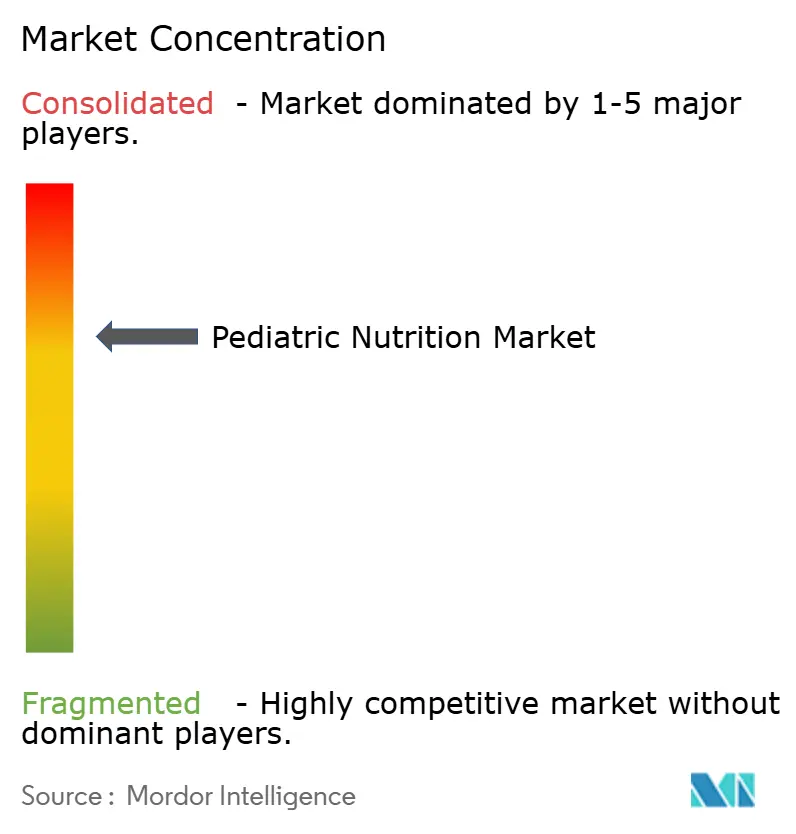
The pediatric nutrition market is moderately concentrated among Nestlé, Danone, Abbott, Reckitt, and FrieslandCampina. These companies have established shelf presence, clinical research capability, and regulatory resources. Their positions are difficult to reproduce quickly because clinical evidence and local approvals take time to develop. Nestlé is using more than 30 years of HMO research to differentiate NAN Sinergity through a six-HMO formulation. The company identified Sinergity as one of its 2025 global innovation “big bets”. The six innovation bets generated combined sales of more than CHF 200 million during the first half of 2025. This shows how global companies are turning ingredient science into premium platforms. The pediatric nutrition market rewards clinical evidence, trust, and product quality as much as broad distribution.
Danone has built its North American medical nutrition position through Real Food Blends, Functional Formularies, and Kate Farms. The Kate Farms transaction added an established plant-based tube-feeding business to Nutricia. Abbott is differentiating PediaSure through clinical study evidence and product-form innovation. Reckitt has continued to assess strategic options for Mead Johnson Nutrition after identifying the division as non-core in 2024. Its 2025 full-year results kept the portfolio review as a material consolidation variable. Any sale could affect brand ownership and supply relationships in North America, Latin America, and Asia. Hospitals may respond by diversifying supplier relationships. These developments make ownership strategy important alongside product innovation.
Specialist companies are competing through organic, clean-label, direct-to-consumer, and plant-based offerings. ByHeart, Bobbie, and Nara Organics showed that new brands can create consumer interest through transparent ingredients and subscription models. The ByHeart recall also showed that trust can weaken quickly when safety systems fail. Adolescent clinical nutrition, organic tube feeding, and personalized nutrition remain areas for new product development. The American Academy of Pediatrics has identified nutrigenetics, nutrigenomics, and microbiomics as emerging fields for nutrition practice. These concepts remain at an early stage for broad pediatric commercial use. Companies will need evidence-led claims and strong safeguards before scaling personalized offerings. Quality assurance and transparent sourcing will remain central to competitive credibility.
Pediatric Nutrition Industry Leaders
-
Nestlé SA
-
Danone SA
-
Abbott Laboratories
-
Reckitt Benckiser Group PLC
-
Royal FrieslandCampina NV
- *Disclaimer: Major Players sorted in no particular order
Pediatric Nutrition Market Companies Covered in this Report
- Abbott Laboratories
- Arla Foods amba
- B. Braun
- Baxter
- Bubs Australia Limited
- ByHeart Inc.
- Cambrooke Therapeutics Inc.
- China Feihe Limited
- Danone
- Fresenius
- H&H Group
- Hero Group AG
- HiPP GmbH & Co. Vertrieb KG
- Kate Farms Inc.
- Kendal Nutricare Limited
- Meiji Holdings
- Morinaga Milk Industry Co. Ltd
- Nestlé SA
- Nutritional Growth Solutions Ltd
- Perrigo Company
- Reckitt Benckiser Group
- Royal FrieslandCampina
Recent Industry Developments in Pediatric Nutrition Market
- February 2026: Nestlé opened a CHF 17.5 million quality laboratory at its global center of competence for powdered infant formula in Konolfingen, Switzerland. The laboratory expanded analytical capacity to 1,200 microbiological samples per day for a site exporting to more than 70 markets
- December 2025: ByHeart Inc. voluntarily recalled all Whole Nutrition Infant Formula products after the FDA and CDC identified its formula as the source of a multistate infant botulism outbreak affecting 48 hospitalized infants across 18 U.S. states. The FDA later issued warning letters to 4 retailers for failing to remove recalled products
Global Pediatric Nutrition Market Report Scope
As per the scope of the report, the pediatric nutrition market encompasses the development, manufacturing, distribution, and consumption of nutritional products specifically formulated to support the growth, development, immune function, and overall health of infants, children, and adolescents. These products include infant formulas, complementary foods, medical nutrition products, and dietary supplements designed to address general nutritional requirements as well as specific clinical or developmental needs.
The pediatric nutrition market is segmented by product type into infant formula, baby food and complementary nutrition, pediatric medical nutrition, and children's dietary supplements; by age group into neonates and infants (0-6 months), older infants (6-12 months), toddlers (12-36 months), children (3-12 years), and adolescents (13-18 years); by form into powder, liquid concentrate, ready-to-feed liquid, drops and sprays, and others; by distribution channel into supermarkets and hypermarkets, pharmacies and medical stores, e-commerce, hospitals and institutional procurement, and others; and by geography into North America, Europe, Asia-Pacific, Middle East & Africa, and South America. The market report also covers the estimated market sizes and trends for 17 countries across major regions globally. For each segment, the market size and forecast are provided in terms of value (USD).
Segmentation Overview
| Infant Formula |
| Baby Food and Complementary Nutrition |
| Pediatric Medical Nutrition |
| Children’s Dietary Supplements |
| Neonates and Infants, 0-6 Months |
| Older Infants, 6-12 Months |
| Toddlers, 12-36 Months |
| Children, 3-12 Years |
| Adolescents, 13-18 Years |
| Powder |
| Liquid Concentrate |
| Ready-to-Feed Liquid, |
| Drops and Sprays |
| Others (Gummies and Chewables, Bars, Pouches, Functional Snacks, among others) |
| Supermarkets and Hypermarkets |
| Pharmacies and Medical Stores |
| E-Commerce |
| Hospitals and Institutional Procurement |
| Others (Convenience and Grocery Stores, Specialty Mother-and-Baby Stores, among others) |
| North America | United States |
| Canada | |
| Mexico | |
| Europe | Germany |
| United Kingdom | |
| France | |
| Italy | |
| Spain | |
| Rest of Europe | |
| Asia-Pacific | China |
| Japan | |
| India | |
| Australia | |
| South Korea | |
| Rest of Asia-Pacific | |
| Middle East and Africa | GCC |
| South Africa | |
| Rest of Middle East and Africa | |
| South America | Brazil |
| Argentina | |
| Rest of South America |
| By Product Type | Infant Formula | |
| Baby Food and Complementary Nutrition | ||
| Pediatric Medical Nutrition | ||
| Children’s Dietary Supplements | ||
| By Age Group | Neonates and Infants, 0-6 Months | |
| Older Infants, 6-12 Months | ||
| Toddlers, 12-36 Months | ||
| Children, 3-12 Years | ||
| Adolescents, 13-18 Years | ||
| By Form | Powder | |
| Liquid Concentrate | ||
| Ready-to-Feed Liquid, | ||
| Drops and Sprays | ||
| Others (Gummies and Chewables, Bars, Pouches, Functional Snacks, among others) | ||
| By Distribution Channel | Supermarkets and Hypermarkets | |
| Pharmacies and Medical Stores | ||
| E-Commerce | ||
| Hospitals and Institutional Procurement | ||
| Others (Convenience and Grocery Stores, Specialty Mother-and-Baby Stores, among others) | ||
| By Geography | North America | United States |
| Canada | ||
| Mexico | ||
| Europe | Germany | |
| United Kingdom | ||
| France | ||
| Italy | ||
| Spain | ||
| Rest of Europe | ||
| Asia-Pacific | China | |
| Japan | ||
| India | ||
| Australia | ||
| South Korea | ||
| Rest of Asia-Pacific | ||
| Middle East and Africa | GCC | |
| South Africa | ||
| Rest of Middle East and Africa | ||
| South America | Brazil | |
| Argentina | ||
| Rest of South America | ||
Key Questions Answered in the Report
What is the projected growth rate for pediatric nutrition through 2032?
The Pediatric Nutrition Market is projected to grow at a 6.42% CAGR from 2027 to 2032 and reach USD 119.07 billion by 2032.
What is the largest product category in pediatric nutrition?
Infant Formula is the largest product category, with a 54.8% share in 2026.
Which pediatric nutrition category is growing the fastest?
Pediatric Medical Nutrition is projected to grow at an 8.40% CAGR through 2032.
Why is ready-to-feed nutrition gaining demand?
Ready-to-Feed Liquid is forecast to grow at a 9.20% CAGR because it supports faster preparation and lower preparation error.
Which channel is forecast to grow fastest?
E-Commerce is forecast to grow at a 10.10% CAGR through 2032 because it supports subscriptions, specialty product access, and product information.
Which region is forecast to grow fastest?
Asia-Pacific is forecast to grow at a 7.60% CAGR through 2032, supported by demand in India and Southeast Asia.