
Patient Engagement Solution Market Size and Share
Market Overview
| Study Period | 2020 - 2031 |
|---|---|
| Market Size (2026) | USD 32.59 Billion |
| Market Size (2031) | USD 61.64 Billion |
| Growth Rate (2026 - 2031) | 13.59 % |
| Fastest Growing Market | Asia Pacific |
| Largest Market | North America |
| Market Concentration | Medium |
Major Players *Disclaimer: Major Players sorted in no particular order Image © Mordor Intelligence. Reuse requires attribution under CC BY 4.0. | |
Patient Engagement Solution Market Analysis by Mordor Intelligence
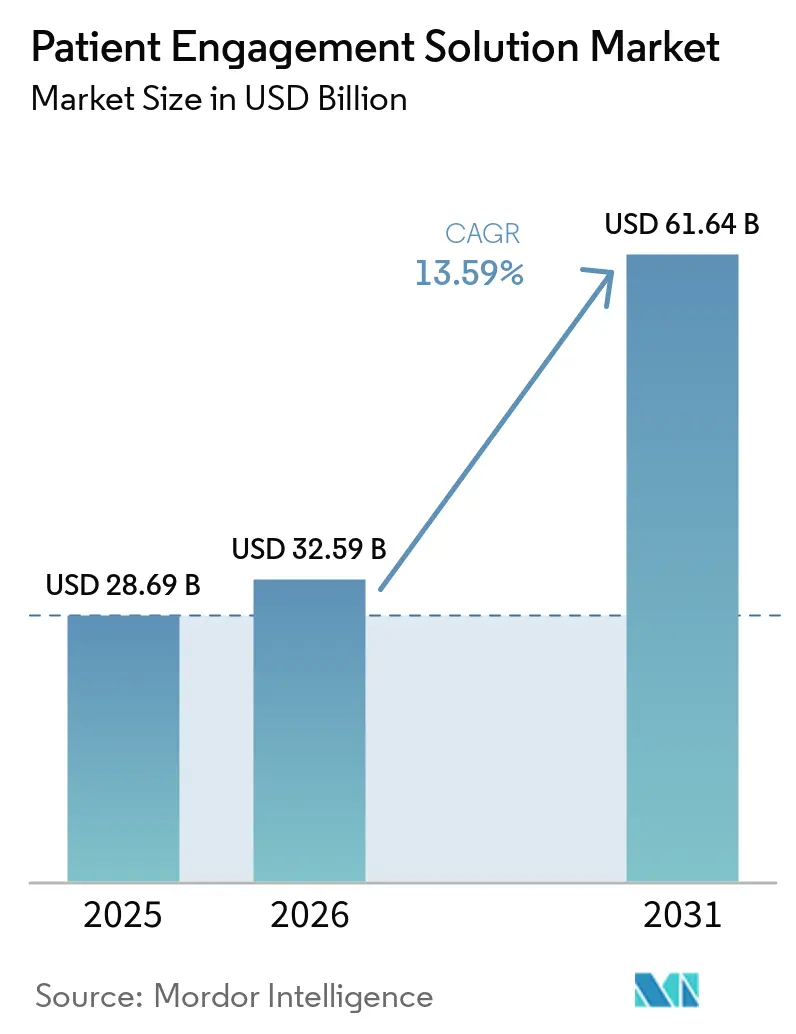
The Patient Engagement Solution Market size is expected to grow from USD 28.69 billion in 2025 to USD 32.59 billion in 2026 and is forecast to reach USD 61.64 billion by 2031 at 13.59% CAGR over 2026-2031.
Growth is propelled by the healthcare sector’s pivot toward value-based care, the rapid maturation of AI-enabled engagement platforms, and mounting evidence that connected patients are more adherent to treatment plans. North America continues to set the pace, but Asia-Pacific’s digital-health momentum, broad smartphone access, and favorable policy shifts position the region for outsized gains. Cloud deployment, omni-channel engagement, and tighter EHR interoperability are solidifying competitive advantages for vendors that can offer turnkey, enterprise-grade solutions. Despite strong demand signals, data-security compliance and persistent talent shortages present headwinds that could temper adoption in the near term.
Key Report Takeaways
- By component, software accounted for 55.74% of the patient engagement solution market share in 2025, while services are projected to grow at 15.88% CAGR to 2031.
- By delivery mode, cloud-based platforms captured 18.45% of the patient engagement solution market's growth rate between 2026 and 2031, the fastest among delivery models. In 2025, the web- and cloud-based segment held 69.62% of the market share.
- By application, population health management led with 28.12% revenue share in 2025; home healthcare management is advancing at a 17.41% CAGR through 2031.
- By end user, providers held 53.28% of the patient engagement solution market size in 2025, whereas payers are forecast to record a 14.36% CAGR through 2031.
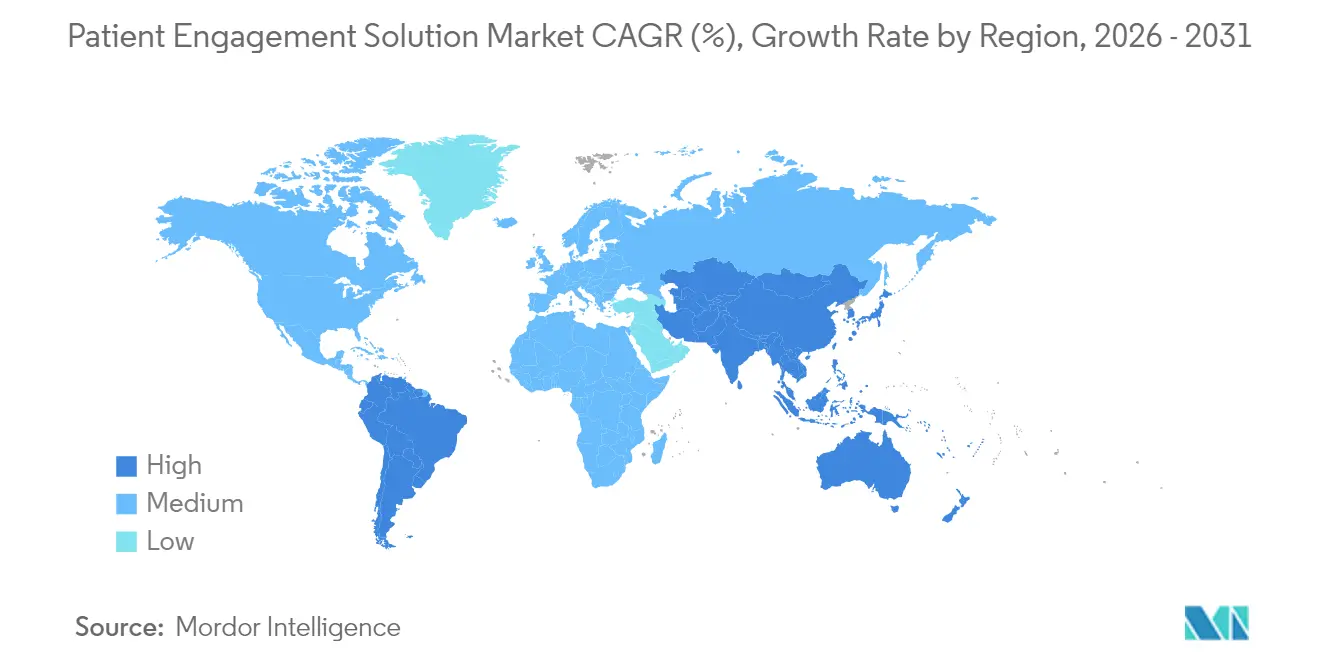
- By geography, North America retained 41.62% of 2025 revenue; Asia-Pacific is set to grow at 17.52% CAGR over 2026-2031.
Note: Market size and forecast figures in this report are generated using Mordor Intelligence’s proprietary estimation framework, updated with the latest available data and insights as of 2026.
Market Trends and Insights
Drivers Impact Analysis of Patient Engagement Solution Market*
| Driver | % Impact on CAGR Forecast | Geographic Relevance | Impact Timeline |
|---|---|---|---|
| Rapid Adoption of AI-Driven Engagement Platforms in Hospitals | + 4.2% | Global, with early adoption in North America & Europe | Medium term (2-4 years) |
| Rising Trend of Mobile Health Applications | +3.5% | Global, with higher impact in Asia-Pacific & North America | Short term (≤ 2 years) |
| Growing Popularity of Patient Engagement Solutions Among the Aging Population | +2.8% | North America, Europe, Japan | Medium term (2-4 years) |
| Rising Investments and Technological Advancements | +3.1% | Global, with concentration in North America & Asia-Pacific | Medium term (2-4 years) |
| Shift from Fee-for-Service to Risk-Sharing Contracts Fuelling Payer Demand | +2.5% | North America & Europe, with expansion to Asia-Pacific | Medium term (2-4 years) |
| Integration of Remote Patient Monitoring with Value-Based Care Reimbursement | +2.2% | North America, with early adoption in Europe | Long term (≥ 4 years) |
| Source: Mordor Intelligence | |||
Rapid Adoption of AI-Driven Engagement Platforms in Hospitals
Hospitals are embedding conversational AI, predictive analytics, and automated triage into front-office and clinical workflows. Eighty-two percent of health systems surveyed plan to implement AI-enabled engagement tools within two years.[1] Early adopters report shorter wait times, smoother care transitions, and higher clinician satisfaction, largely because virtual assistants pre-populate charts and handle routine queries. Philips found that 85% of executives now allocate specific budgets for generative-AI engagement projects.[2]As algorithms mature, hospitals see improved appointment adherence and a decline in no-shows, producing measurable revenue uplift while strengthening patient loyalty.
Rising Trend of Mobile Health Applications
Smartphone-centric care pathways give patients real-time access to their medical data, chatbots, and behavioral nudges, which has helped lift portal log-in rates across large health systems. Asia-Pacific leads mobile-health downloads, yet North American providers record the highest per-user session length. Health organizations are layering video visits, secure messaging, and remote vitals capture into single apps, building an omni-channel presence that mirrors consumer-tech experiences. The approach reduces inbound call-center volume and accelerates follow-up scheduling, delivering cost savings and better care continuity.
Growing Popularity Among the Aging Population
Engagement platforms tailored for older adults feature large icons, voice navigation, and medication reminders compatible with smart speakers. Remote patient monitoring kits ship with simplified setup guides, enabling seniors to transmit vitals without technical assistance. Providers that implemented such programs saw 49% declines in readmissions and 68% drops in emergency-department visits. These outcomes validate the financial case for sustained investment in senior-friendly engagement technology.
Rising Investments and Technological Advancements
Venture capital poured USD 10.1 billion into digital health firms in 2024, channeling funds into blockchain-secured data exchange, IoT-enabled monitoring devices, and AI-powered clinical decision support. Health-system boards now classify digital engagement as a strategic imperative; 67% achieved positive ROI within 18 months of deployment. Continuous funding accelerates feature rollouts and shortens payback periods, intensifying competitive pressure on slower-moving incumbents.
Restraints Impact Analysis of Patient Engagement Solution Market*
| Restraint | % Impact on CAGR Forecast | Geographic Relevance | Impact Timeline |
|---|---|---|---|
| Protection of Patient Information | -2.1% | Global, with higher impact in Europe & North America | Short term (≤ 2 years) |
| Lack of Skilled IT Professionals in the Healthcare Industry | -1.8% | Global, with acute impact in developing regions | Medium term (2-4 years) |
| Persistent Interoperability Gaps Between EHR & Third-Party Engagement Apps | -1.5% | Global, with higher impact in fragmented healthcare systems | Medium term (2-4 years) |
| Sub-Optimal Reimbursement Codes for Home-Health Engagement | -1.3% | North America & Europe, with spillover to other regions | Long term (≥ 4 years) |
| Source: Mordor Intelligence | |||
Protection of Patient Information
Data security concerns represent a significant restraint on market growth, as healthcare organizations must balance enhanced patient engagement with stringent data protection requirements. With over 5,000 reported healthcare data breaches from 2009 to 2022, the industry faces mounting pressure to implement robust security frameworks while maintaining user-friendly engagement solutions. The implementation of regulations like HIPAA in the US and GDPR in Europe creates compliance challenges that can slow adoption, particularly for smaller healthcare providers with limited IT resources. Healthcare organizations are increasingly turning to frameworks like the HITRUST Common Security Framework (CSF) to address these challenges, but implementation requires significant investment in both technology and expertise. The need for secure authentication mechanisms that don't compromise user experience presents a particular challenge, as cumbersome security measures can reduce patient engagement rates and limit the effectiveness of otherwise valuable solutions.
Lack of Skilled IT Professionals in the Healthcare Industry
The shortage of healthcare IT professionals with specialized knowledge in patient engagement technologies is constraining market growth, particularly as solutions become more sophisticated and integrated with clinical workflows. Healthcare organizations face significant challenges in recruiting and retaining IT talent capable of implementing and maintaining complex engagement platforms, especially when competing with technology companies offering higher compensation. This talent gap is particularly acute for specialized skills in AI implementation, data analytics, and cybersecurity, which are increasingly critical for effective patient engagement solutions. The shortage is exacerbated by the rapid pace of technological change, which requires continuous upskilling of existing staff to maintain effectiveness. Healthcare providers are exploring various strategies to address this challenge, including partnerships with technology vendors, outsourced IT services, and investments in training programs, but the fundamental supply-demand imbalance continues to limit the speed and scale of patient engagement solution adoption.
*Our forecasts treat driver/restraint impacts as directional, not additive. The impact forecasts reflect baseline growth, mix effects, and variable interactions.
Patient Engagement Solution Market Segment Analysis
By Component:
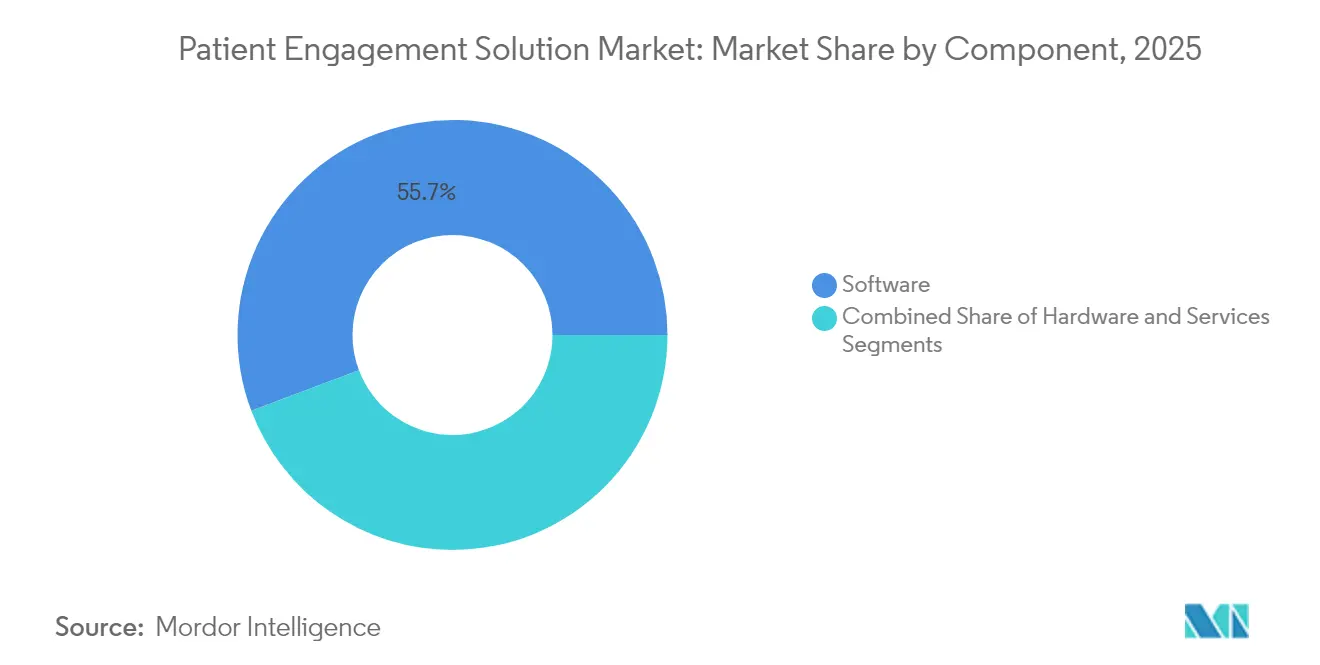
Software Dominates Digital TransformationSoftware commands the largest share of the Patient Engagement Solution Market at 55.74% in 2025, serving as the cornerstone of digital transformation initiatives across healthcare organizations. This dominance stems from software's ability to integrate seamlessly with existing healthcare IT infrastructure while providing the functionality necessary for meaningful patient interactions. Patient portals, mobile applications, and telehealth platforms represent the most widely adopted software solutions, with features ranging from appointment scheduling to secure messaging and access to medical records. The services segment, while currently smaller, is experiencing the fastest growth at a CAGR of 15.88% for 2026-2031, as healthcare organizations increasingly recognize the importance of implementation support, training, and ongoing maintenance to maximize their technology investments. Hardware components, including kiosks, tablets, and wearable devices, play a supporting but essential role in the overall ecosystem, particularly in clinical settings where direct patient interaction is required.
The software landscape is evolving rapidly with AI integration emerging as a defining trend, as 85% of healthcare leaders invest in generative AI to enhance clinician productivity and patient engagement. Interoperability has become a critical focus area, with healthcare organizations prioritizing solutions that can exchange data seamlessly across disparate systems to create a unified patient experience. The shift toward cloud-based software delivery models is accelerating, driven by advantages in scalability, accessibility, and reduced IT overhead. Services providers are expanding their offerings beyond basic implementation to include strategic consulting, workflow optimization, and continuous improvement programs that help healthcare organizations maximize the value of their patient engagement investments. The component ecosystem continues to evolve in response to changing healthcare delivery models, with an increasing emphasis on solutions that support care delivery outside traditional clinical settings.

By Delivery Mode:
Cloud Adoption AcceleratesWeb and cloud-based solutions collectively dominate the market with a 69.62% share in 2025, reflecting healthcare's decisive shift away from legacy on-premise systems. Cloud-based solutions specifically are experiencing explosive growth at a CAGR of 18.45% for 2026-2031, as healthcare organizations recognize the advantages in scalability, accessibility, and reduced IT burden. The economic case for cloud adoption is compelling, with cloud deployments being 77% cheaper than on-premises systems and offering significant reductions in maintenance costs. On-premise solutions retain relevance primarily in settings with specific security requirements or connectivity limitations, but their market share continues to decline as cloud security capabilities mature and connectivity infrastructure improves.
The transition to cloud-based delivery models is enabling new capabilities that were previously impractical, including real-time data analytics, seamless multi-device experiences, and rapid feature updates that keep pace with evolving healthcare needs. Healthcare organizations are increasingly adopting hybrid approaches that combine cloud and on-premise elements to balance security, compliance, and accessibility requirements. The cost structure of cloud solutions, typically following a 'per user per month' model, is proving particularly attractive for smaller healthcare organizations that lack the capital for large upfront investments. Security concerns that previously limited cloud adoption are being addressed through advanced encryption, multi-factor authentication, and compliance certifications, with many cloud providers now exceeding the security capabilities of traditional on-premise deployments. The flexibility of cloud-based solutions is proving especially valuable during healthcare disruptions, enabling rapid deployment of new engagement capabilities in response to changing patient needs and care delivery models.
By Application:
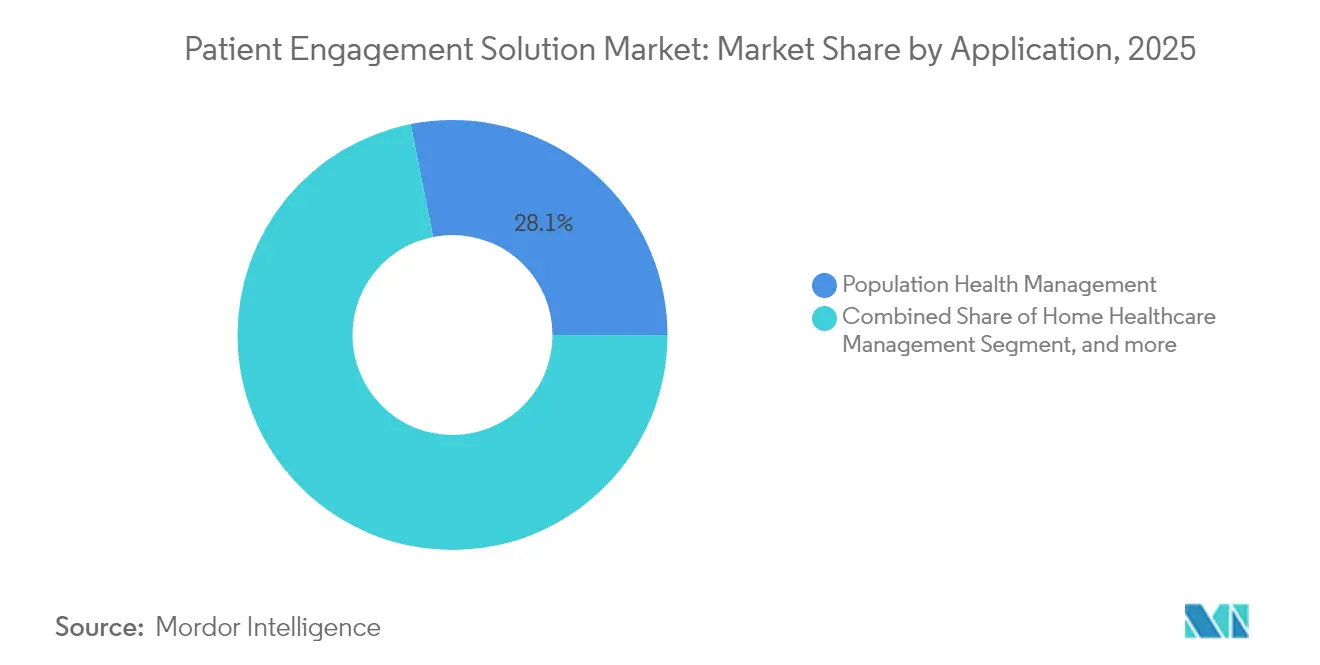
Home Healthcare Management Gains MomentumPopulation Health Management leads application segments with a 28.12% market share in 2025, as healthcare systems leverage patient engagement to address chronic disease management and preventive care initiatives. The application's dominance reflects its alignment with value-based care models that prioritize outcomes over volume, with engagement solutions providing the tools necessary to maintain ongoing patient relationships outside traditional care settings. Home Healthcare Management is emerging as the fastest-growing application segment with a projected CAGR of 17.41% for 2026-2031, driven by the convergence of remote monitoring technologies, telehealth capabilities, and patient engagement platforms. Social and Behavioral Management applications are gaining traction as healthcare organizations recognize the impact of behavioral factors on health outcomes, while Fitness and Health Management solutions are expanding beyond wellness programs to become integral components of preventive care strategies. Financial Management applications are addressing growing patient demand for transparency and control over healthcare costs, particularly as out-of-pocket expenses continue to rise.
The integration of AI and predictive analytics is transforming application capabilities across segments, enabling more personalized and proactive engagement strategies that anticipate patient needs rather than simply responding to them. Remote patient monitoring is becoming increasingly sophisticated, with 99% of U.S. health system leaders viewing digital transformation as essential for improving patient care through innovations like predictive analytics and telehealth. Population Health Management applications are evolving to incorporate social determinants of health data, enabling more holistic approaches to patient engagement that address non-clinical factors affecting health outcomes. Financial Management applications are expanding to include price transparency tools, payment plans, and financial counseling services that help patients navigate the increasingly complex healthcare financial landscape. The boundaries between application categories are blurring as vendors develop more comprehensive platforms that address multiple aspects of the patient journey, from clinical care to financial management and behavioral support.
By End User:
Providers Lead, Payers Gain GroundHealthcare providers dominate the end-user landscape with a 53.28% market share in 2025, reflecting their direct relationship with patients and primary responsibility for care delivery. Hospitals, clinics, and Accountable Care Organizations (ACOs) are implementing patient engagement solutions to improve care coordination, enhance patient satisfaction, and support value-based care initiatives. Inpatient interactive patient care systems are used in hospitals and clinics for patients undergoing recovery and rehabilitation. Payers represent the fastest-growing end-user segment with a CAGR of 14.36% for 2026-2031, as insurance companies recognize the strategic value of patient engagement in reducing claims costs and improving health outcomes. The payer's focus on transitions of care is particularly noteworthy, with a study published in the American Journal of Managed Care demonstrating that payer-led engagement programs can reduce hospital readmissions by up to 52% and emergency department visits by 45% through improved follow-up care and patient education.Patients and caregivers are becoming increasingly active participants in the engagement ecosystem, driving demand for consumer-facing solutions that provide greater control over health information and care decisions.
Pharmaceutical companies are expanding their engagement initiatives beyond traditional adherence programs to include comprehensive support services that address the entire patient journey. The integration of engagement solutions with value-based care models is accelerating adoption across end-user segments, with 83% of ambulatory center stakeholders acknowledging the importance of patient engagement strategies for financial success. Pharmacies and retail health chains are leveraging engagement solutions to extend their role in the care continuum, particularly for chronic disease management and preventive care services. Provider organizations are increasingly focused on reducing the burden on clinical staff, with 95% of executives stressing the need for engagement solutions that integrate seamlessly with existing workflows. The boundaries between traditional end-user categories are blurring as healthcare ecosystems become more integrated, creating new opportunities for collaborative engagement strategies that span the entire care continuum.
Geography Analysis
North America Patient Engagement Solution Market
North America maintains its dominant position in the Patient Engagement Solution Market with a 41.62% share in 2025, driven by advanced healthcare infrastructure, favorable reimbursement policies, and early adoption of digital health technologies. The region's leadership is reinforced by strong regulatory support for patient engagement initiatives, including Meaningful Use requirements and value-based care programs that incentivize provider investments in engagement technologies. A comprehensive survey by the Healthcare Information and Management Systems Society (HIMSS) indicates that 61% of U.S. healthcare organizations have prioritized patient experience and engagement initiatives in their strategic plans, with 72% planning to increase investments in digital patient engagement technologies by 2026. The integration of AI-powered engagement solutions is particularly advanced in this region, with applications ranging from automated appointment scheduling to personalized health recommendations and virtual health assistants. Canada and Mexico are following similar adoption trajectories, though at a somewhat slower pace due to differences in healthcare system structures and funding mechanisms.
APAC Patient Engagement Solution Market
Asia-Pacific represents the fastest-growing regional market with a projected CAGR of 17.52% for 2026-2031, fueled by rapidly expanding healthcare infrastructure, increasing smartphone penetration, and growing middle-class populations with higher healthcare expectations. China leads regional growth with substantial investments in digital health infrastructure and patient-centered care initiatives, while India is experiencing accelerated adoption driven by government digital health programs and a burgeoning telehealth sector. Japan's aging population is creating unique engagement challenges and opportunities, with solutions increasingly focused on remote monitoring and chronic disease management for elderly patients. Australia and South Korea are at the forefront of integrating advanced technologies like AI and IoT into patient engagement platforms, creating more personalized and proactive care experiences. The region's growth is further supported by increasing healthcare expenditure and a strong focus on improving healthcare accessibility in both urban and rural areas.
EMEA and South America Patient Engagement Solution Market
Europe holds a significant market share, with countries like Germany, the United Kingdom, and France leading adoption of patient engagement solutions. The region's strict data protection regulations, particularly GDPR, have shaped the development of engagement platforms with enhanced privacy features and transparent data governance practices. The Middle East and Africa region, while currently representing a smaller market share, is experiencing growing adoption particularly in Gulf Cooperation Council (GCC) countries where healthcare modernization initiatives are driving investments in patient engagement technologies. South America shows promising growth potential, with Brazil leading regional adoption as healthcare providers seek to address access challenges through digital engagement solutions. The global nature of the patient engagement market is increasingly evident, with solutions being adapted to address region-specific healthcare challenges while maintaining core functionality that transcends geographic boundaries.
Competitive Landscape
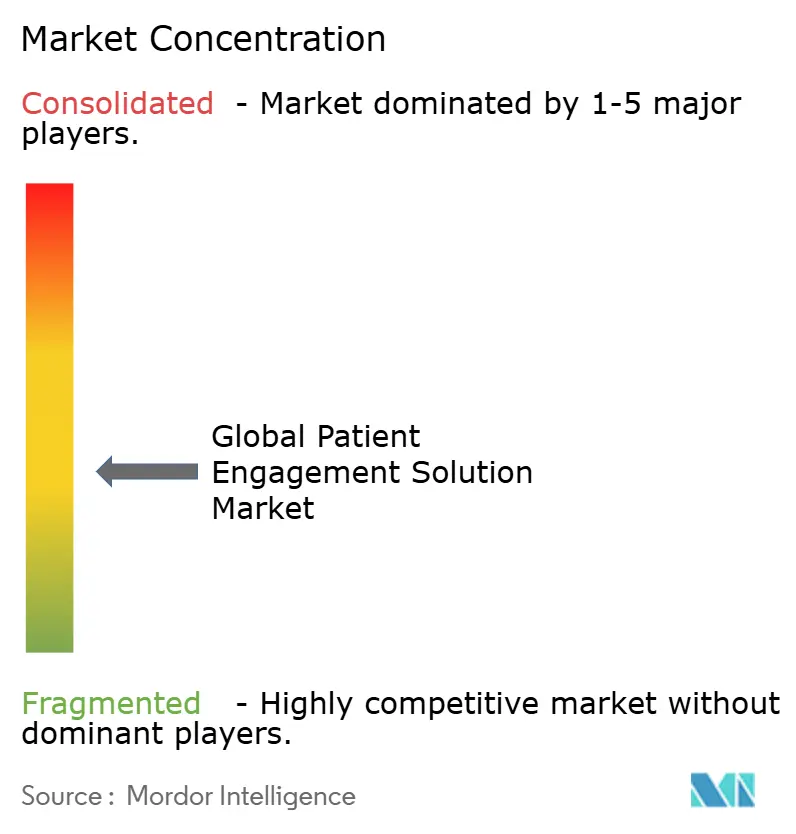
The Patient Engagement Solution Market exhibits moderate fragmentation with a diverse mix of established EHR vendors, specialized engagement solution providers, and emerging technology disruptors competing for market share. The competitive dynamics are evolving rapidly as traditional EHR vendors expand their engagement capabilities through both internal development and strategic acquisitions, while specialized providers differentiate through deeper functionality in specific engagement domains. Market concentration is increasing through merger and acquisition activity, with healthcare IT companies expanding their offerings to meet diverse customer needs.
Strategic partnerships have emerged as a key competitive approach, with technology vendors collaborating with healthcare providers to develop solutions that address specific clinical and operational challenges. The integration of AI and machine learning capabilities represents a critical competitive battleground, with vendors racing to incorporate these technologies into their engagement platforms. White-space opportunities exist particularly in addressing the needs of underserved healthcare segments, including rural providers, behavioral health organizations, and post-acute care facilities. The competitive landscape is further shaped by the growing influence of non-traditional players, including retail giants and technology companies that are leveraging their consumer engagement expertise to enter the healthcare market. Epic's continued market share gains, adding 176 multispecialty hospitals in 2024 alone, highlight the importance of vendor stability and interoperability capabilities in healthcare organizations' purchasing decisions.
Patient Engagement Solution Industry Leaders
-
Allscripts Healthcare Solutions Inc
-
Athenahealth Inc
-
Cerner Corporation
-
Mckesson Corporation
-
IBM Corporation
- *Disclaimer: Major Players sorted in no particular order
Patient Engagement Solution Market Companies Covered in this Report
- Oracle Cerner Corporation
- Epic Systems
- Allscripts
- Athenahealth
- Mckesson
- IBM
- GetWellNetwork
- Lincor Solutions
- Medecision
- Medhost
- Orion Health Ltd.
- WelVU
- YourCareUniverse Inc.
- AdvancedMD
- Kareo
- Meditech
- CureMD Healthcare
- NextGen Healthcare
- Tebra Technologies
- TeleVox (Odeza)
Market Opportunities and Future Outlook
Interoperability-led engagement is opening incremental budget lines beyond traditional patient portals, particularly where compliance and payer programs increasingly reference API-based access. In the United States, CMS Health Technology Ecosystem activities, including the April 2026 release of the first wave of tools such as digital check-in (Kill the Clipboard) and personalized health applications for chronic disease, are reinforcing provider and vendor roadmaps around app-based experiences that sit alongside EHRs. ONC also advanced standards used by engagement platforms through the 2026 Standards Version Advancement Process (SVAP), including approval of HL7 FHIR US Core Implementation Guide STU 9.0.0, which supports vendors building reusable integration layers rather than one-off interfaces.
A second opportunity area is the shift from basic messaging to richer, higher-trust omnichannel communication and automation. Dialog Health's launch of Rich Communication Services (RCS) for healthcare in July 2026, with verified sender identity and branded messaging, reflects demand to improve outreach effectiveness while reducing spam-like patient experiences. Consolidation and capability stacking are also moving forward, illustrated by SpinSci's July 2026 acquisition of Dialog Health and Raintree's July 2026 acquisition of Spike Technologies to add agentic AI voice, as vendors assemble end-to-end patient access and engagement workflows (voice, text/RCS, scheduling, and follow-up). Partnerships that tie engagement to chronic condition programs, such as Lark Health's July 2026 collaboration with Samsung Health for seniors, further point to whitespace in longitudinal, home-based engagement where patient adherence, education, and monitoring are handled as a continuous service.
Recent Industry Developments in Patient Engagement Solution Market
- July 2026: Lark Health partnered with Samsung Electronics to bring an AI-powered health coach and chronic disease management programs to US seniors via Samsung Health, with availability beginning in Q3 2026. The partnership links consumer device ecosystems to structured care programs, widening distribution for engagement software and remote coaching in older populations.
- May 2026: Elsevier completed its acquisition of Mytonomy and positioned the combined offering as an end-to-end patient engagement solution for healthcare providers. The deal adds video-based education and engagement capability to a broader clinical content and workflow portfolio, supporting more integrated onboarding, education, and adherence pathways.
- October 2024: RadiantGraph raised USD 11 million in a Series A round and highlighted integration capabilities with AWS, Google Cloud, Databricks, and Snowflake. The funding supports product scaling around data connectivity and analytics-driven engagement, an area where providers look for measurable outcomes and interoperability with existing cloud data stacks.
Patient Engagement Solution Market Report Scope and Research Methodology
Market Definition and Coverage
This market covers patient engagement solutions that help patients and care teams communicate and act on care, mainly through portals, messaging, reminders, education, scheduling, and remote monitoring, delivered as software and related services across provider and payer settings.
Scope exclusions: Standalone EHR systems are not counted unless they include a patient-facing engagement layer that is sold and priced as part of an engagement offering.
Segments Covered in This Report
- By Component
- Hardware
- Software
- Services
- By Delivery Mode
- Web-Based and Cloud-Based
- On-Premise
- By Application
- Social and Behavioral Management
- Fitness and Health Management
- Home Healthcare Management
- Financial Management
- Population Health Management
- By End User
- Providers (Hospitals, Clinics, ACOs)
- Payers (Public and Private Insurers)
- Patients & Caregivers
- Pharmaceutical Companies
- Pharmacies and Retail Health Chains
- By Geography
- North America
- United States
- Canada
- Mexico
- Europe
- Germany
- United Kingdom
- France
- Italy
- Spain
- Rest of Europe
- Asia-Pacific
- China
- Japan
- India
- Australia
- South Korea
- Rest of Asia-Pacific
- Middle East & Africa
- GCC
- South Africa
- Rest of Middle East & Africa
- South America
- Brazil
- Argentina
- Rest of South America
- North America
Data Sources, Market Sizing, and Validation
Desk Research
Desk research starts with setting a consistent definition of what is sold as patient engagement versus adjacent clinical IT. We refer to public sources such as the US Office of the National Coordinator for Health IT (ONC) for interoperability and patient access signals, the US Centers for Medicare and Medicaid Services (CMS) for program and reimbursement direction, and the US Centers for Disease Control and Prevention (CDC) for chronic disease indicators that shape engagement needs.
To extend this view globally, we also use sources such as the World Health Organization (WHO) for digital health priorities, the World Bank for healthcare and macro indicators used in normalization, and peer-reviewed journals indexed on PubMed for evidence on engagement adoption patterns and care outcomes. These inputs are then complemented with general secondary materials like company filings, investor presentations, press releases, association websites, and reputed healthcare IT press. For cross-checking revenue context and product focus changes, paid subscriptions are used selectively for company financials and intelligence, news and financials, and patent databases. The sources listed here are not exhaustive, and many other references were used for collection, validation, and research clarification.
Primary Interviews and Surveys
Primary interviews and surveys were used to verify what buyers treat as a patient engagement purchase and how spending splits across software, implementation, and ongoing managed services. We covered solution providers, system integrators, hospitals and clinic groups, and payer-side teams across APAC, EMEA, and the Americas so assumptions like pricing ranges, renewal patterns, and deployment mix could be checked and adjusted.
Distribution of primary research fieldwork respondents
| Company type | Respondent position | Region |
|---|---|---|
| Top tier: 26% | CXOs: 15% | APAC: 41% |
| Mid tier: 58% | Functional/Unit leaders: 30% | EMEA: 34% |
| Smaller Players: 16% | Managers: 55% | Americas: 25% |
Market-Sizing & Forecasting
Sizing follows a top-down and bottom-up flow, where healthcare IT spending and digital adoption signals are first used to reconstruct an addressable engagement demand pool, and then selective supplier and channel checks are used to test the result. When building the top-down view, inputs include patient access and interoperability requirements, adoption of portals and secure messaging, the share of care shifting to virtual touchpoints, chronic disease management intensity, and provider and payer budget direction for digital front doors.
Those totals are corroborated with bottom-up approximations using sampled revenue splits from public disclosures, typical subscription and implementation price bands, and observed deployment mix (cloud versus on-premises) so demand that is not monetized does not get overstated. When direct breakouts are missing, gaps are handled using peer-group ratios by end user and solution function, followed by a reasonableness check against IT budget constraints discussed by healthcare organizations.
For forecasting, scenario analysis is applied around a core trend line, and the drivers are tuned using expert input on replacement cycles, expansion module adoption, and managed service attach rates. Short-term projections reflect budget tightening cycles, while longer-term growth is linked to patient access expectations, chronic care load, and policy push for data sharing.
Data Validation & Update Cycle
Validation is done through stepwise checks, where model outputs are compared against independent signals like healthcare IT spend commentary, patient-facing tool adoption measures, and observed shifts toward subscription contracts. Large variances trigger follow-ups and a review of definitions so the same revenue is not double counted across adjacent healthcare IT categories.
Before sign-off, a second analyst reviews assumptions, calculations, and year-to-year movements to spot anomalies that do not match buying behavior. Reports are refreshed annually, and interim updates are made when material events occur such as policy changes, major bundling shifts, or clear pricing resets. Right before delivery, a fresh pass is completed so clients receive the latest updated view.
Mordor Intelligence's Patient Engagement Solution Market Estimate Compared With Other Published Estimates
Different published values usually do not disagree because math was done wrong, but because firms define patient engagement differently and apply different starting years. Gaps commonly come from what is counted as engagement versus broader digital health, whether services are included, and how currency timing and growth assumptions are set.
The main gap comes from whether ongoing implementation and managed services tied to engagement platforms are counted, where Mordor Intelligence includes these revenues alongside subscription and maintenance because they are routinely contracted and renewed as part of the engagement program spend.
Benchmark comparison
| Source | Market Size | Gaps in Research Methodology |
|---|---|---|
| Mordor Intelligence | USD 32.59 B (2026) | |
| Global Research Publisher A | USD 33.45 B (2025) | Uses a different base year and a higher near-term growth path, and the public summary does not clearly separate engagement-only revenues from adjacent digital health tools, which can lift totals when broader functionality is included. |
| Industry Research Portal B | USD 26.36 B (2025) | Starts from a lower captured revenue pool and may exclude some services and support revenues that are bundled with engagement deployments, which reduces the counted value even when adoption is rising. |
The spread across the table is largely explained by service inclusion, adjacent-scope overlap, and the choice of base year used to anchor growth. Our approach keeps the model tied to engagement purchases that are actually contracted and renewed, which makes the steps repeatable when the market is updated.
Key Questions Answered in the Report
What is the current value of the patient engagement solution market?
The market stands at USD 32.59 billion in 2026 and is forecast to reach USD 61.64 billion by 2031, reflecting a 13.59% CAGR.
Which region grows fastest in patient-engagement solutions?
Asia-Pacific is projected to register a 17.52% CAGR through 2031, driven by smartphone ubiquity and large-scale government digital-health programs.
Why are cloud-based platforms gaining popularity?
Cloud solutions cut deployment costs by 77%, scale on demand, and support continuous feature updates, which boosts provider agility and reduces maintenance burdens.
How do AI technologies improve patient engagement?
AI powers virtual assistants, predictive outreach, and automated documentation, which trim administrative workload and personalize care pathways, lifting appointment adherence and patient satisfaction.
What is the chief barrier to wider adoption?
Compliance with stringent data-privacy rules such as HIPAA and GDPR remains the top challenge, especially for smaller providers lacking extensive cybersecurity resources.