
Outpatient Clinics Market Size and Share
Market Overview
| Study Period | 2021 - 2032 |
|---|---|
| Market Size (2027) | USD 54.02 Billion |
| Market Size (2032) | USD 71.25 Billion |
| Growth Rate (2027 - 2032) | 5.69 % |
| Fastest Growing Market | Asia-Pacific |
| Largest Market | North America |
| Market Concentration | Medium |
Major Players *Disclaimer: Major Players sorted in no particular order Image © Mordor Intelligence. Reuse requires attribution under CC BY 4.0. | |
Outpatient Clinics Market Analysis by Mordor Intelligence
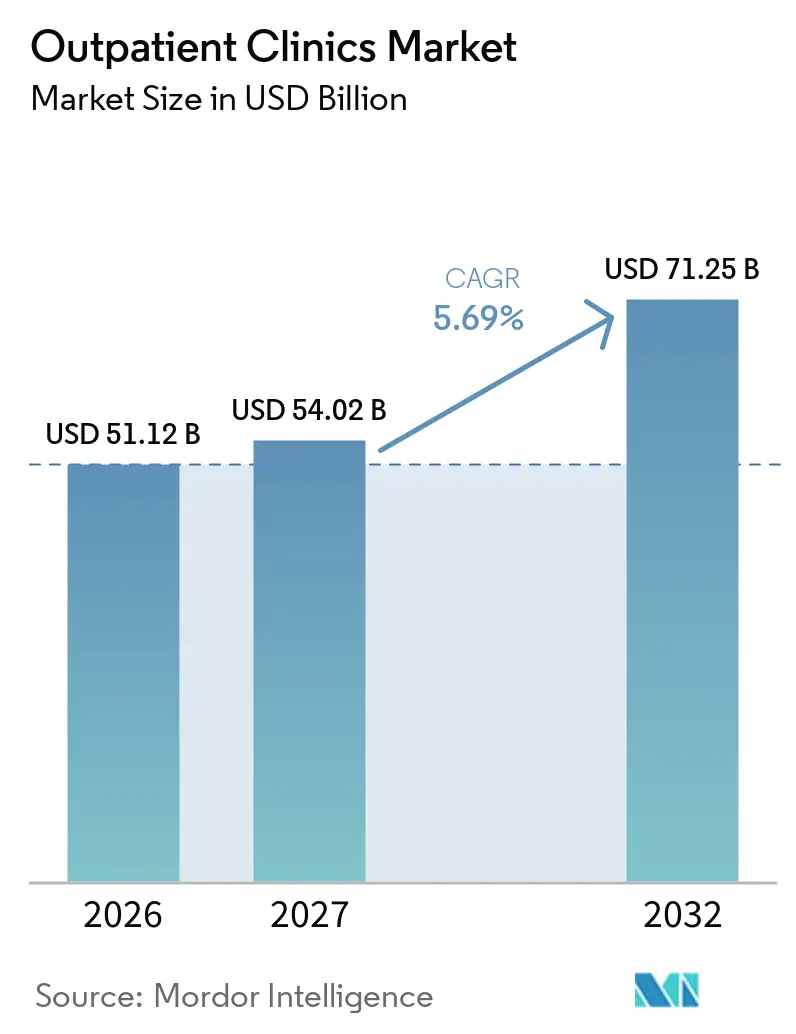
The outpatient clinics market is expected to increase from USD 51.12 billion in 2026 to USD 54.02 billion in 2027 and further reach USD 71.25 billion by 2032, registering a CAGR of 5.69% during the forecast period (2027-2032). Care delivery is moving toward clinics because health systems, payers, and patients increasingly favor treatment that does not require a hospital stay. Vizient forecasts adult outpatient volumes to rise 18% over the next decade, compared with 5% growth in inpatient discharges, which supports continued investment in ambulatory capacity. Chronic disease management also gives clinics repeat contact with patients and supports regular diagnostic, specialist, and follow-up visits. The outpatient clinics market is becoming more competitive as health systems, physician groups, and investors seek broader local coverage, referral control, and more coordinated patient access. Operators with clinical staff, digital support, and efficient authorization processes are better placed to convert growing demand into usable appointment capacity.
Key Report Takeaways
- By clinic type, primary care clinics held 36.62% of the outpatient clinics market share in 2026, while multi-specialty clinics are forecast to expand at a 6.25% CAGR through 2032.
- By specialty, internal medicine and family medicine accounted for 26.72% of the outpatient clinics market share in 2026, while oncology is projected to grow at a 6.83% CAGR through 2032.
- By ownership, hospital- and health-system-owned clinics held 44.59% of the outpatient clinics market share in 2026, while physician-owned clinics are forecast to grow at a 7.21% CAGR through 2032.
- By service type, diagnostic and monitoring services accounted for 42.91% of the outpatient clinics market size in 2026, while specialist consultation and medical management is projected to expand at a 7.69% CAGR through 2032.
- By care delivery mode, appointment-based clinics held 52.36% of the outpatient clinics market share in 2026, while hybrid in-person and virtual clinics are forecast to grow at an 8.14% CAGR through 2032.
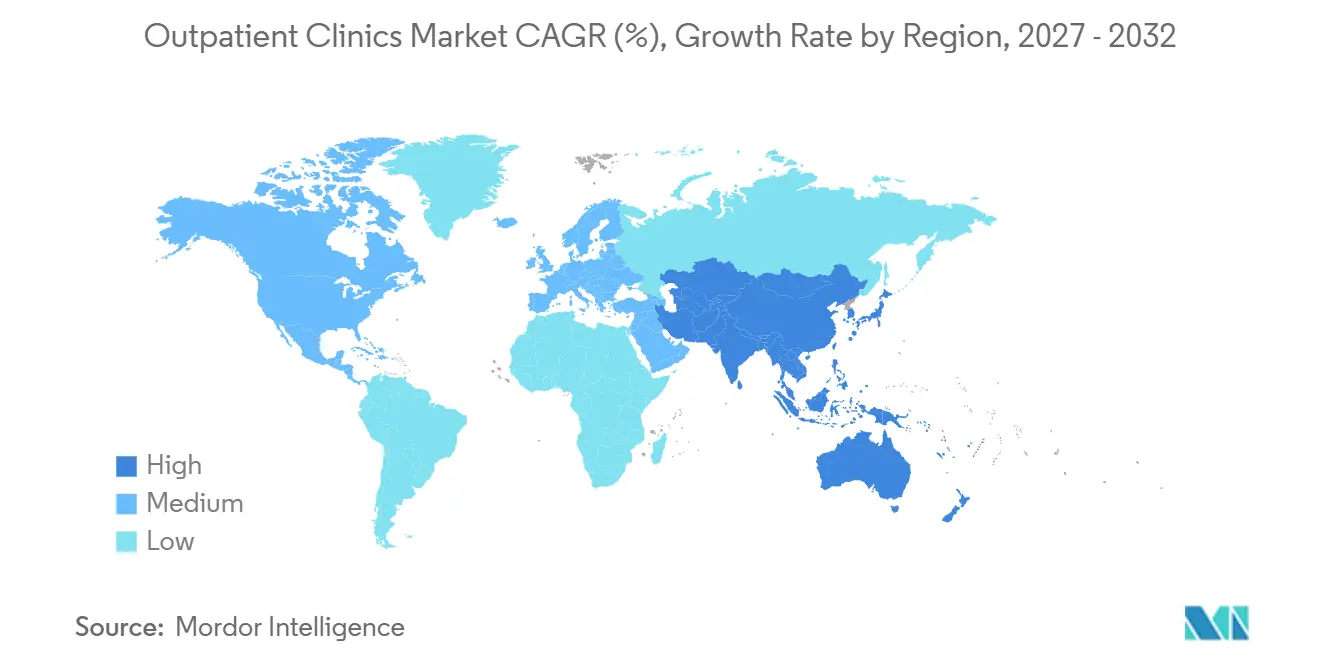
- By geography, North America held 39.48% of the outpatient clinics market share in 2026, while Asia-Pacific is projected to grow at an 8.58% CAGR through 2032.
Note: Market numbers in this report are based on Mordor Intelligence's proprietary estimation framework, which combines nine months of actuals with Q4 projections for base year 2026.
Market Trends and Insights
Drivers Impact Analysis of Outpatient Clinics Market*
| Driver | (~) % Impact on CAGR Forecast | Geographic Relevance | Impact Timeline |
|---|---|---|---|
| Rising Prevalence of Chronic Diseases and Multimorbidity | +1.5% | Global | Long term (≥ 4 years) |
| Shift from Inpatient to Outpatient and Same-Day Care | +1.2% | North America and EU, spill-over to APAC | Medium term (2-4 years) |
| Expansion of Clinic Networks and Decentralized Healthcare Infrastructure | +0.8% | APAC core, North America secondary | Medium term (2-4 years) |
| Adoption of Digital Health, Telehealth and Remote Monitoring | +0.7% | North America, EU, APAC | Medium term (2-4 years) |
| Procedure Migration Enabled by Minimally Invasive Technologies | +0.6% | North America and EU | Long term (≥ 4 years) |
| Hybrid ASC-OBL and Physician-Led Care Models | +0.4% | North America | Medium term (2-4 years) |
| Source: Mordor Intelligence | |||
Rising Prevalence of Chronic Diseases and Multimorbidity
The outpatient clinics market benefits from the need for recurring care among patients with chronic conditions. The CDC reports that chronic conditions and multiple chronic conditions remain common among United States adults, reinforcing the need for primary care, specialist review, diagnostic monitoring, and medication management.[1] Patients with more than 1 condition require coordinated care across services rather than isolated acute visits. This changes clinic demand because routine monitoring, referrals, and treatment adjustments can be delivered without inpatient admission. Providers that organize care plans around long-term conditions can use each encounter to coordinate testing, follow-up, and specialist access. The outpatient clinics market therefore has a durable demand base that is less dependent on occasional illness or elective procedures.
Shift from Inpatient to Outpatient and Same-Day Care
The shift from hospital admission to same-day care is widening the range of procedures that clinics can support. OECD data show that ambulatory surgery accounts for 90% or more of cataract procedures in most member countries.[2] A 2025 JACC study projected 15% growth in cardiovascular ASC volumes between 2023 and 2028, showing that the migration also extends to higher-acuity specialties.[3] CMS expanded its covered procedures list for ambulatory surgical centers in its 2025 payment rule, which supports continued movement toward lower-cost settings. Clinics need dependable triage, recovery, referral, and emergency transfer arrangements as procedural complexity rises. This favors organizations that can integrate clinical protocols with nearby hospitals and specialty networks.
Expansion of Clinic Networks and Decentralized Healthcare Infrastructure
Network expansion is changing the outpatient clinics market from a collection of individual practices into coordinated local systems. Health systems are adding sites to make access more convenient and to direct patients into their broader care networks. Aledade stated that it added more than 500 practices for 2025, showing the importance of scale in value-based primary care arrangements. Larger networks can place diagnostics, specialty visits, routine care, and scheduling support closer to patients. This model can improve referral continuity because fewer services are handled outside the network. It can also place pressure on smaller independent clinics that do not have comparable payer relationships, technology, or administrative capacity.
Adoption of Digital Health, Telehealth and Remote Monitoring
Digital tools are adding a layer of care between clinic appointments rather than replacing clinic care. The American Medical Association reported that 71.4% of United States physicians used telehealth weekly in its 2024 survey data published in 2025.[4] A 2025 JMIR review found that remote assessment tools improved clinical outcomes and reduced unplanned health care contacts. Clinics can use remote monitoring to identify changes earlier and direct patients toward the appropriate in-person service. Virtual follow-up may also reduce missed appointments and support care plans for patients with mobility or travel barriers. The outpatient clinics market is likely to reward operators that make digital contact practical for clinicians and easy for patients. Digital offerings still need to fit privacy, clinical documentation, and referral requirements so that they improve workflow instead of creating separate care pathways.
Restraints Impact Analysis of Outpatient Clinics Market*
| Restraint | (~) % Impact on CAGR Forecast | Geographic Relevance | Impact Timeline |
|---|---|---|---|
| Shortage of Healthcare Professionals and Clinician Burnout | -0.7% | Global, concentrated in North America and EU | Long term (≥ 4 years) |
| Reimbursement, Prior Authorization and Site-of-Care Payment Pressure | -0.6% | North America primary, EU secondary | Medium term (2-4 years) |
| Cybersecurity Exposure and Fragmented Interoperability | -0.4% | Global | Medium term (2-4 years) |
| Urban Real-Estate and Clinic Setup Costs | -0.3% | North America, EU, APAC urban centers | Long term (≥ 4 years) |
| Source: Mordor Intelligence | |||
Shortage of Healthcare Professionals and Clinician Burnout
Workforce constraints limit how quickly outpatient providers can turn demand into appointments. HRSA projects a shortage of 141,160 full-time equivalent physicians by 2038, while 92 million Americans were in primary care Health Professional Shortage Areas in December 2025. A 2025 JAMA Internal Medicine study found that physicians working with incomplete teams more than 1-quarter of the time had higher reported burnout than those with adequately staffed teams. Staff shortages can lengthen waits, reduce the number of appointments, and make expansion plans harder to execute. Clinics are responding with team-based care, digital pre-visit work, and documentation support. These measures can protect clinical time, but they require investment and careful implementation.
Reimbursement, Prior Authorization and Site-of-Care Payment Pressure
Payment administration can delay care and absorb time that clinics need for patients. The AMA reported that 93% of physicians said prior authorization delays necessary care in its 2025 survey. Johns Hopkins Medicine also reported in 2025 that physicians had observed serious adverse events associated with authorization delays. Physicians completed an average of 39 authorization requests each week, using 13 hours of staff time, according to the supplied AMA evidence. Payment differences between care settings can also change the financial case for a procedure as it moves out of a hospital department. Larger integrated systems can spread these administrative and payment pressures across a broader service base. Independent clinics have fewer resources to absorb denials, documentation work, or changes in reimbursement.
*Our forecasts treat driver/restraint impacts as directional, not additive. The impact forecasts reflect baseline growth, mix effects, and variable interactions.
Outpatient Clinics Market Segment Analysis
By Clinic Type:
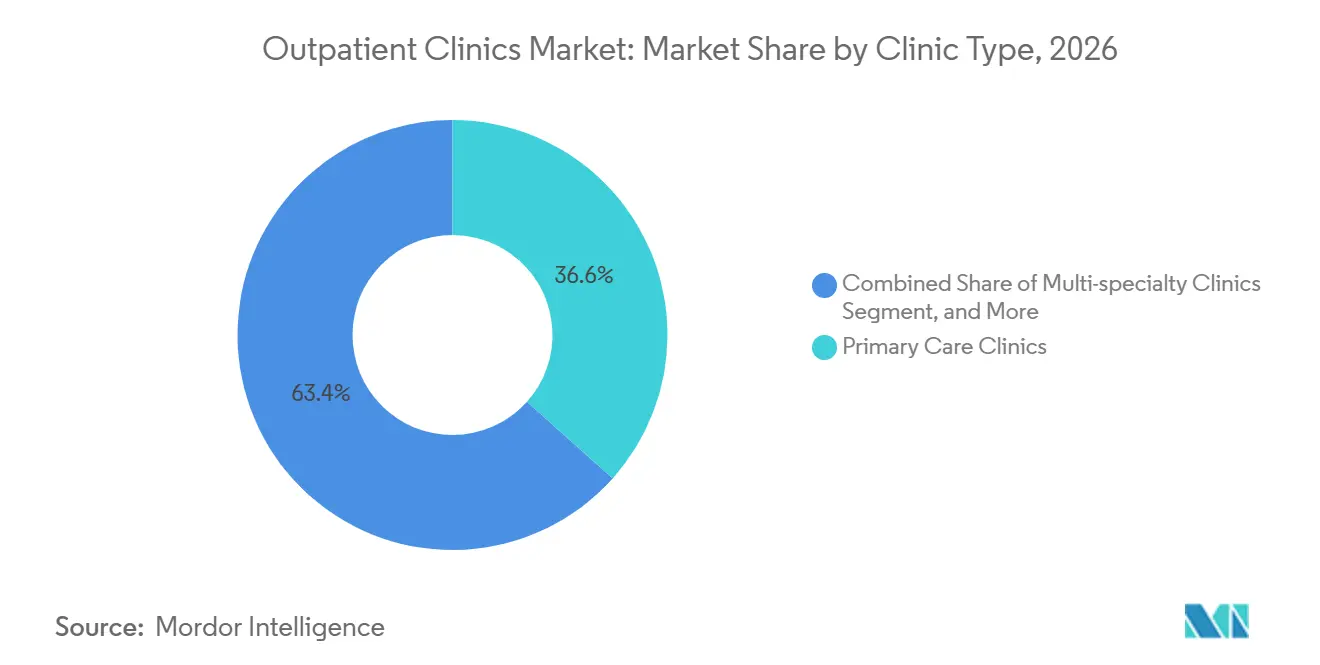
Primary Care Maintains Its Leading Role While Multi-Specialty Clinics ExpandPrimary care clinics held 36.62% of the outpatient clinics market share in 2026. Their position rests on their role as a regular point of contact for prevention, diagnosis, medication review, and management of long-term conditions. Primary care providers can coordinate referrals and testing before a patient requires more complex treatment. This role becomes more important when patients have several conditions and need care across multiple specialties. Retail-linked formats are also widening access to routine care. CVS Health said that MinuteClinic had more than 1,000 U.S. locations and that over 65% offered adult primary care through health system affiliations in 2025. These links allow retail access points to connect patients with larger referral networks. The format may help patients find a routine entry point, although its clinical scope remains different from that of a comprehensive physician practice.
Multi-specialty clinics are forecast to grow at a 6.25% CAGR through 2032. They bring services such as cardiology, orthopedics, oncology, diagnostics, and follow-up care into a shared ambulatory setting. This can reduce delays between referral, testing, and specialist consultation. It also gives health systems a practical way to retain patients within an organized care network. Vizient describes ambulatory redesign as a central part of meeting changing volume and access needs. The model can be more convenient for patients who would otherwise travel to several locations. It requires a broader staffing base and consistent scheduling, which can be difficult in shortage areas. Primary care and multi-specialty providers therefore serve different needs, but both are central to the outpatient clinics market.

By Specialty:
Internal Medicine and Family Medicine Generate Scale While Oncology AdvancesInternal medicine and family medicine held 26.72% of the outpatient clinics market size in 2026. These specialties carry much of the routine care needed for chronic conditions, preventive services, referrals, and medication monitoring. Their patient relationships often continue over many years, which makes continuity important to clinical outcomes and operational planning. Primary care teams also identify when a patient needs imaging, laboratory work, specialty assessment, or urgent intervention. This creates steady demand for related outpatient services. The CDC’s 2025 evidence on multiple chronic conditions supports the need for coordinated primary care rather than isolated treatment episodes. Providers with strong referral pathways can make that coordination easier for patients. The ongoing challenge is maintaining appointment access when physician and support-staff availability is constrained.
Oncology is forecast to grow at a 6.83% CAGR through 2032. More complex cancer services are being organized in ambulatory settings, including infusion, specialist consultation, monitoring, and follow-up. The supplied evidence identified 7 FDA-approved CAR-T products and growing use of bispecific antibodies in outpatient infusion care. This change raises the importance of clinic readiness rather than simply adding infusion chairs. Providers need specialized pharmacy support, trained clinical teams, escalation processes, and links to hospital care. City of Hope opened Hope Plaza in 2025 as a USD 400 million outpatient oncology facility with 110 infusion spaces and 84 exam rooms. The center was designed to support a 69% increase in outpatient visits, illustrating the level of investment being directed toward ambulatory oncology. Oncology clinics that build safety and triage capabilities early can respond more effectively as treatment pathways continue to move beyond inpatient settings.
By Ownership:
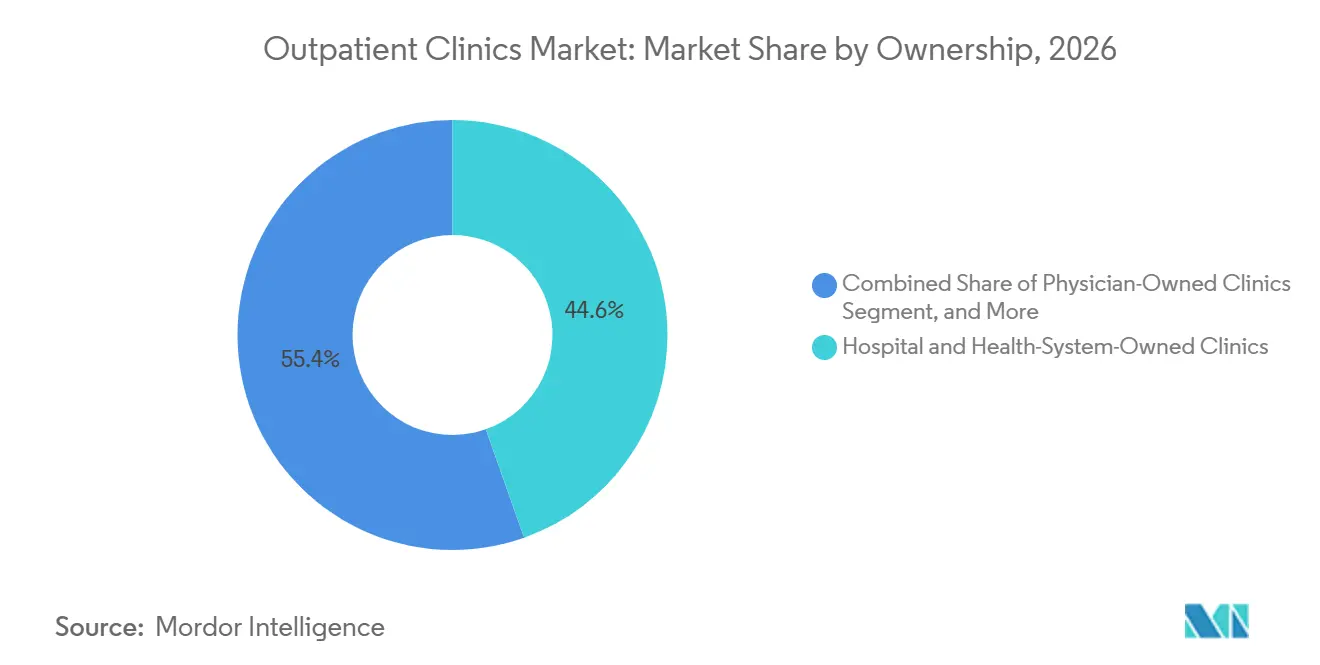
Health-System Clinics Lead While Physician-Owned Clinics Grow FasterHospital- and health-system-owned clinics accounted for 44.59% of the outpatient clinics market size in 2026. Their scale gives them access to hospital resources, specialist networks, recognized brands, and established payer relationships. Clinics can use those connections to coordinate transfers, imaging, surgery, and follow-up care. The GAO noted in 2025 that at least 47% of United States physicians were affiliated with hospital systems in 2024. This ownership model can make care transitions easier when a patient requires hospital services. It can also reinforce local concentration when a large system controls multiple access points. The OECD has warned that competition authorities in member countries are scrutinizing outpatient consolidation and financialization. Regulatory review is therefore an important consideration for organizations using acquisitions to expand their clinic networks.
Physician-owned clinics are forecast to expand at a 7.21% CAGR through 2032. The format can give physicians a stronger role in service design, patient experience, and clinical operating decisions. It can be particularly relevant where specialists want to keep a closer connection to procedural and follow-up care. Physician groups may also choose joint ventures when they need capital, administrative support, or access to a hospital partner. The model is not free from consolidation pressure because ownership transitions can occur when larger operators offer scale or a route to exit. Independent clinics still need payer contracting, cybersecurity controls, staffing, and technology that can match larger rivals. Their advantage is often clinical focus and local responsiveness, not the ability to duplicate all health-system functions. The outpatient clinics market can therefore support both institutional and physician-led ownership when each model has clear operational support.
By Service Type:
Diagnostic Services Lead While Specialist Management Gains MomentumDiagnostic and monitoring services represented 42.91% of the outpatient clinics market share in 2026. Imaging, laboratory testing, routine measurements, and remote biomarker tracking support decision-making across many specialties. They are foundational to chronic disease management because clinicians need timely information to adjust treatment or make referrals. These services also support preventive care by identifying risk before a condition becomes acute. As clinics become more coordinated, diagnostics can be scheduled alongside consultation and follow-up visits. This can reduce friction for patients and improve the continuity of information between teams. Remote assessment tools may add another source of clinically useful information between visits. Providers still need reliable data exchange and clear accountability for reviewing results.
Specialist consultation and medical management are forecast to expand at a 7.69% CAGR through 2032. Growth reflects the need for structured follow-up in oncology, cardiology, neurology, and other areas where patients require recurring evaluation. It also follows the movement of procedures into ambulatory settings because patients still need assessment before and after treatment. The Association of Cancer Care Centers described a 2025 initiative that increased patient volume by 14% and reduced wait times by 13.7% through changes to ambulatory staffing and coordination. The result shows that service growth depends on workflow as well as physical space. Clinics can expand specialist management when tasks are assigned to the appropriate care team members, and escalation paths are clear. This is especially relevant when the physician workforce cannot grow as quickly as patient demand.
By Care Delivery Mode:
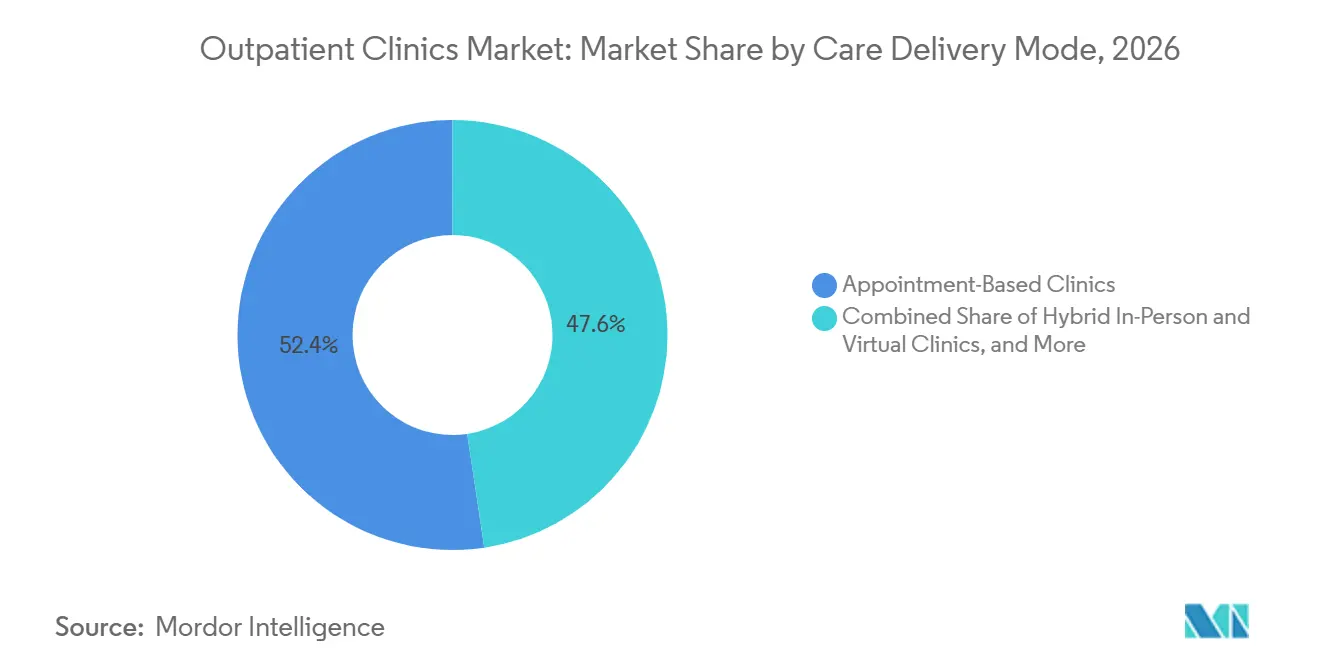
Appointment-Based Care Leads While Hybrid Models RiseAppointment-based clinics held 52.36% of the outpatient clinics market share in 2026. Scheduled visits remain important for specialists, diagnostics, chronic disease management, and treatment plans that require preparation. They give clinicians time to review records, arrange tests, and coordinate any required referrals. Patients with complex conditions also benefit from predictable contact with a care team that knows their history. Appointment-based models can support continuity, but they need accessible scheduling and reliable follow-up to avoid missed care. Staffing shortages can place limits on the number of visits that providers can safely offer. Clinic operators must therefore use capacity carefully while protecting time for patients who need longer consultations. The model remains the core delivery format even as patients expect more flexible access.
Hybrid in-person and virtual clinics are forecast to grow at an 8.14% CAGR through 2032. They combine physical examinations, procedures, and tests with virtual check-ins, remote assessment, and digital communication. The AMA’s telehealth data show that weekly physician use has become an established part of care delivery. Hybrid care can help clinics keep contact with patients between appointments and direct them to in-person care when needed. It may also reduce avoidable travel for routine discussions or monitoring. The model works best when virtual interactions are linked to the same clinical records, scheduling system, and referral processes used by the physical clinic. Operators that treat virtual care as a separate service may lose the coordination benefits that make hybrid care useful. The outpatient clinics market is moving toward connected care models, but in-person clinics remain essential for procedures and many higher-acuity encounters.
Geography Analysis
North America
North America held 39.48% of the outpatient clinics market share in 2026. The region benefits from a payer environment that supports care in lower-acuity settings when clinically appropriate. Its large burden of chronic conditions also supports demand for primary care, diagnostics, specialty review, and repeat follow-up. CMS policy shapes clinic investment because covered-procedure rules and payment approaches influence where services can be delivered. Tenet reported that USPI held interests in 535 ambulatory surgical centers and 25 surgical hospitals across 37 states in the third quarter of 2026. CVS Health is also linking retail primary care sites with health-system affiliations. Cleveland Clinic and Amazon One Medical opened a collaborative primary care office in Northeast Ohio in October 2025, combining scheduling access with specialist referrals and laboratory services. These examples show how care access, referral networks, and site-of-care strategy are becoming more connected. Workforce gaps and prior authorization remain practical constraints on how quickly providers can add capacity.
Asia-Pacific
Asia-Pacific is forecast to grow at an 8.58% CAGR through 2032. Growth is supported by greater investment in decentralized care, rising insurance coverage, and demand for care that is closer to patients. The region includes diverse health systems so that clinic growth will vary with local financing, workforce supply, and urban development. India’s Ayushman Bharat Digital Mission provides a digital health framework that supports health records, telemedicine, and connected care delivery. This regulatory influence can help providers build networks that combine local clinics with digital patient access. Apollo Hospitals reported expansion plans in 2025 that included new capacity and investment in its delivery network. The outpatient clinics market in this region can benefit when digital infrastructure reduces the difficulty of connecting patients, clinicians, diagnostics, and referrals. Providers must still adapt to wide differences in affordability and local clinical capacity.
Europe, Middle East, Africa, and South America
NHS England is commissioning community diagnostic centers to relieve pressure on hospital waiting lists and make testing more accessible. OECD evidence shows that ambulatory surgery has broad scope across member countries, while national payment rules still influence the pace of adoption. In Europe, the movement toward same-day care creates room for clinic investment where procedures can be provided safely outside inpatient facilities. Competition review is also relevant where outpatient platforms consolidate local service capacity. Gulf Cooperation Council health systems are building integrated ambulatory networks under national health-development programs. South American providers can benefit from privately insured demand, although investment decisions may be sensitive to local financing conditions. Across these geographies, the practical opportunity is to align clinic capacity with payment policy, workforce availability, and referral infrastructure. The outpatient clinics market is not developing at the same pace everywhere, but the common direction is toward care that is more accessible than a hospital-centered model.
Competitive Landscape
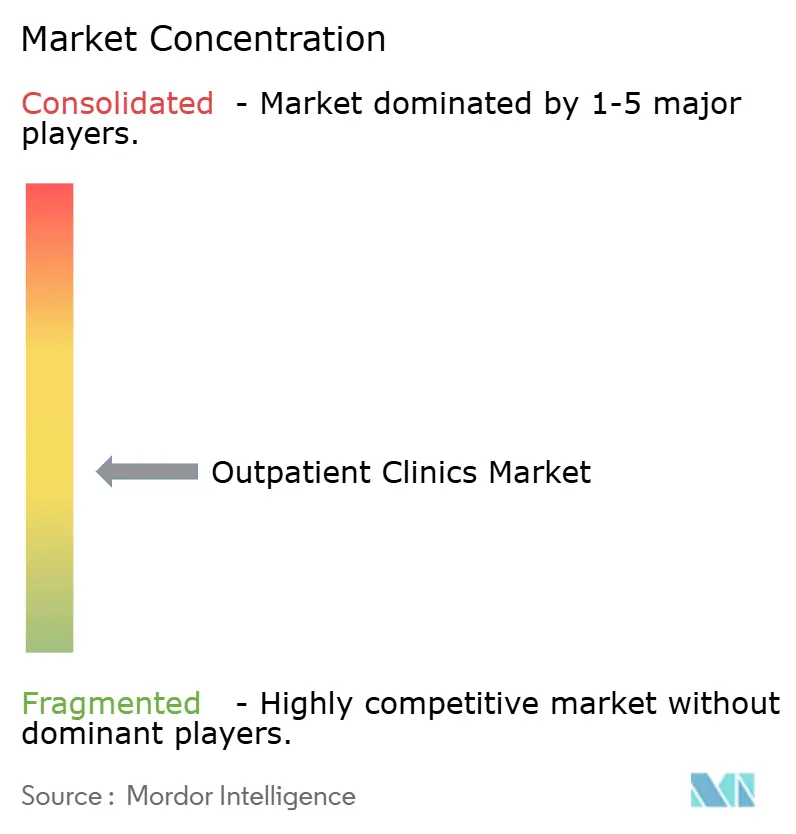
The outpatient clinics market is moderately fragmented at the local operator level, while ownership is becoming more concentrated. Large health systems can combine clinics with hospitals, specialists, diagnostic services, and payer contracts. Tenet’s USPI reported third-quarter 2026 same-facility revenue growth of 4.5% and adjusted EBITDA of USD 537 million. Its strategy includes high-acuity procedures such as joint replacements, spine procedures, and robotic-assisted urology. The company also reported interests in 535 ambulatory surgical centers and 25 surgical hospitals, demonstrating the scale available to an established ambulatory platform. Such networks can standardize operating processes while using hospital links for higher-acuity escalation. The effect is stronger competition for independent providers in attractive local markets.
Acquisition activity is also shaping the competitive landscape. Surgery Partners announced in October 2026 that HealthSpan Partners, an affiliate of Bon Secours Mercy Health, agreed to acquire the company in an all-cash transaction with an enterprise value of USD 5.7 billion. The transaction would add more than 200 ambulatory surgical centers, surgical hospitals, and physician practices across 30 states, subject to shareholder and regulatory approvals. The deal shows that nonprofit health systems are seeking ambulatory scale as a strategic asset. It also shows why clinic operators with established facilities and physician relationships can be valuable acquisition targets. Competition authorities may assess these combinations where they affect local choice, access, or prices. Regulatory review will therefore remain relevant to strategies based on repeated local acquisitions.
Technology, service design, and partnerships are further points of competition. CVS Health uses MinuteClinic locations and health-system affiliations to expand access to adult primary care. Cleveland Clinic and Amazon One Medical used a collaborative office model to connect a primary care access point with an established specialty referral network. City of Hope invested in a dedicated outpatient oncology facility to expand infusion and clinical research capacity. These moves show that competitive advantage can come from access, referral coordination, specialized clinical capability, or a combination of all 3. Independent clinics can still compete through local relationships, focused specialties, and responsive patient service. They need to manage staffing, authorization, data security, and payer relationships without the same scale as larger systems.
Outpatient Clinics Industry Leaders
-
Apollo Hospitals Enterprise Limited
-
Cleveland Clinic
-
DaVita Inc.
-
HCA Healthcare Inc.
-
Mayo Clinic
- *Disclaimer: Major Players sorted in no particular order
Outpatient Clinics Market Companies Covered in this Report
- Apollo Hospitals Enterprise Limited
- Cleveland Clinic
- Community Health Systems, Inc.
- CVS Health
- DaVita
- Fresenius Medical Care AG
- HCA Healthcare
- IHH Healthcare Berhad
- Kaiser Permanente
- Labcorp Holdings Inc.
- Mayo Clinic
- Narayana Health
- One Medical
- Quest Diagnostics
- Ramsay Health Care Limited
- SCA Health
- Surgery Partners Inc.
- Tenet Healthcare
- UnitedHealth Group Incorporated (Optum Health)
- Universal Health Services
Recent Industry Developments in Outpatient Clinics Market
- October 2026: HealthSpan Partners, a Bon Secours Mercy Health affiliate, agreed to acquire Surgery Partners, Inc. in an all-cash transaction valued at USD 5.7 billion in enterprise value. The transaction covers more than 200 ambulatory surgical centers, surgical hospitals, and physician practices across 30 states, with approximately 5,000 affiliated physicians. It is expected to close in the first quarter of 2027, subject to regulatory and shareholder approvals.
- May 2025: City of Hope opened Hope Plaza in Duarte, California. The USD 400 million outpatient oncology facility includes 110 infusion spaces, 84 exam rooms, and 22 dedicated clinical research infusion spaces. The facility targets a 69% increase in outpatient visits as part of a USD 1 billion campus transformation.
- October 2025: Amazon One Medical and Cleveland Clinic opened their first collaborative primary care office in Northeast Ohio. The Avon, Ohio, office combines same-day and next-day appointment access with Cleveland Clinic specialist referrals and on-site laboratory services.
Global Outpatient Clinics Market Report Scope
As per the scope of the report, outpatient clinics are healthcare facilities that provide diagnosis, treatment, consultation, preventive care, and minor medical procedures to patients who do not require overnight hospitalization. These clinics offer a wide range of primary and specialty care services, enabling patients to receive medical attention and return home the same day. Outpatient clinics play a critical role in improving healthcare accessibility, reducing treatment costs, and supporting chronic disease management through routine follow-up care.
The outpatient clinics market is segmented by clinic type, specialty, ownership, service type, care delivery mode, and geography. By clinic type, the market is segmented into primary care clinics, specialty clinics, multi-specialty clinics, community health clinics, retail clinics, and others. By specialty, the market is segmented into internal medicine and family medicine, cardiology, orthopedics and musculoskeletal care, gastroenterology, ophthalmology, obstetrics and gynecology, pediatrics, dermatology, ENT, oncology, neurology and pain management, and others. By ownership, the market is segmented into physician-owned clinics, hospital- and health-system-owned clinics, corporate- and private-equity-owned clinics, public and government-owned clinics, private nonprofit clinics, and others. By service type, the market is segmented into primary and preventive care, specialist consultation and medical management, diagnostic and monitoring services, minor procedures and injury care, ambulatory surgical and interventional services, urgent and emergency outpatient services, and others. By care delivery mode, the market is segmented into walk-in consultation clinics, appointment-based clinics, hybrid in-person and virtual clinics, and others. The geography segment is further divided into North America, Europe, Asia-Pacific, the Middle East and Africa, and South America. The report also covers the estimated market sizes and trends for 17 countries across major regions globally. The report offers the market size and forecasts in value (USD) for the above segments.
Segmentation Overview
| Primary Care Clinics |
| Specialty Clinics |
| Multi-specialty Clinics |
| Community Health Clinics |
| Retail Clinics |
| Others |
| Internal Medicine and Family Medicine |
| Cardiology |
| Orthopedics and Musculoskeletal Care |
| Gastroenterology |
| Ophthalmology |
| Obstetrics and Gynecology |
| Pediatrics |
| Dermatology |
| ENT |
| Oncology |
| Neurology and Pain Management |
| Others |
| Physician-Owned Clinics |
| Hospital and Health-System-Owned Clinics |
| Corporate and Private-Equity-Owned Clinics |
| Public and Government-Owned Clinics |
| Private Nonprofit Clinics |
| Others |
| Primary and Preventive Care |
| Specialist Consultation and Medical Management |
| Diagnostic and Monitoring Services |
| Minor Procedures and Injury Care |
| Ambulatory Surgical and Interventional Services |
| Urgent and Emergency Outpatient Services |
| Others |
| Walk-In Consultation Clinics |
| Appointment-Based Clinics |
| Hybrid In-Person and Virtual Clinics |
| Others |
| North America | United States |
| Canada | |
| Mexico | |
| Europe | Germany |
| United Kingdom | |
| France | |
| Italy | |
| Spain | |
| Rest of Europe | |
| Asia-Pacific | China |
| India | |
| Japan | |
| Australia | |
| South Korea | |
| Rest of Asia-Pacific | |
| Middle East and Africa | GCC |
| South Africa | |
| Rest of Middle East and Africa | |
| South America | Brazil |
| Argentina | |
| Rest of South America |
| By Clinic Type | Primary Care Clinics | |
| Specialty Clinics | ||
| Multi-specialty Clinics | ||
| Community Health Clinics | ||
| Retail Clinics | ||
| Others | ||
| By Specialty | Internal Medicine and Family Medicine | |
| Cardiology | ||
| Orthopedics and Musculoskeletal Care | ||
| Gastroenterology | ||
| Ophthalmology | ||
| Obstetrics and Gynecology | ||
| Pediatrics | ||
| Dermatology | ||
| ENT | ||
| Oncology | ||
| Neurology and Pain Management | ||
| Others | ||
| By Ownership | Physician-Owned Clinics | |
| Hospital and Health-System-Owned Clinics | ||
| Corporate and Private-Equity-Owned Clinics | ||
| Public and Government-Owned Clinics | ||
| Private Nonprofit Clinics | ||
| Others | ||
| By Service Type | Primary and Preventive Care | |
| Specialist Consultation and Medical Management | ||
| Diagnostic and Monitoring Services | ||
| Minor Procedures and Injury Care | ||
| Ambulatory Surgical and Interventional Services | ||
| Urgent and Emergency Outpatient Services | ||
| Others | ||
| By Care Delivery Mode | Walk-In Consultation Clinics | |
| Appointment-Based Clinics | ||
| Hybrid In-Person and Virtual Clinics | ||
| Others | ||
| By Geography | North America | United States |
| Canada | ||
| Mexico | ||
| Europe | Germany | |
| United Kingdom | ||
| France | ||
| Italy | ||
| Spain | ||
| Rest of Europe | ||
| Asia-Pacific | China | |
| India | ||
| Japan | ||
| Australia | ||
| South Korea | ||
| Rest of Asia-Pacific | ||
| Middle East and Africa | GCC | |
| South Africa | ||
| Rest of Middle East and Africa | ||
| South America | Brazil | |
| Argentina | ||
| Rest of South America | ||
Key Questions Answered in the Report
What is the projected value of outpatient clinics by 2032?
The outpatient clinics market is projected to reach USD 71.25 billion by 2032, from USD 54.02 billion in 2027, at a 5.69% CAGR.
Which clinic type holds the largest share in 2026?
Primary care clinics lead by clinic type with a 36.62% share in 2026.
Which outpatient specialty is expected to grow the fastest?
Oncology is forecast to grow at a 6.83% CAGR through 2032 as more cancer services move into ambulatory settings.
Why are outpatient clinic networks expanding?
Networks are expanding to improve access, retain referrals, coordinate services, and respond to the movement of care away from inpatient settings.
What is the main staffing challenge for clinic operators?
HRSA projects a shortfall of 141,160 full-time equivalent physicians by 2038, which can constrain appointment capacity and expansion.
Which region is expected to grow the fastest through 2032?
Asia-Pacific is forecast to grow at an 8.58% CAGR through 2032, supported by decentralized care investment and expanding digital health infrastructure.