
Orthotic Devices Market Size and Share
Market Overview
| Study Period | 2020 - 2031 |
|---|---|
| Market Size (2026) | USD 7.08 Billion |
| Market Size (2031) | USD 10.28 Billion |
| Growth Rate (2026 - 2031) | 7.75 % |
| Fastest Growing Market | Asia-Pacific |
| Largest Market | North America |
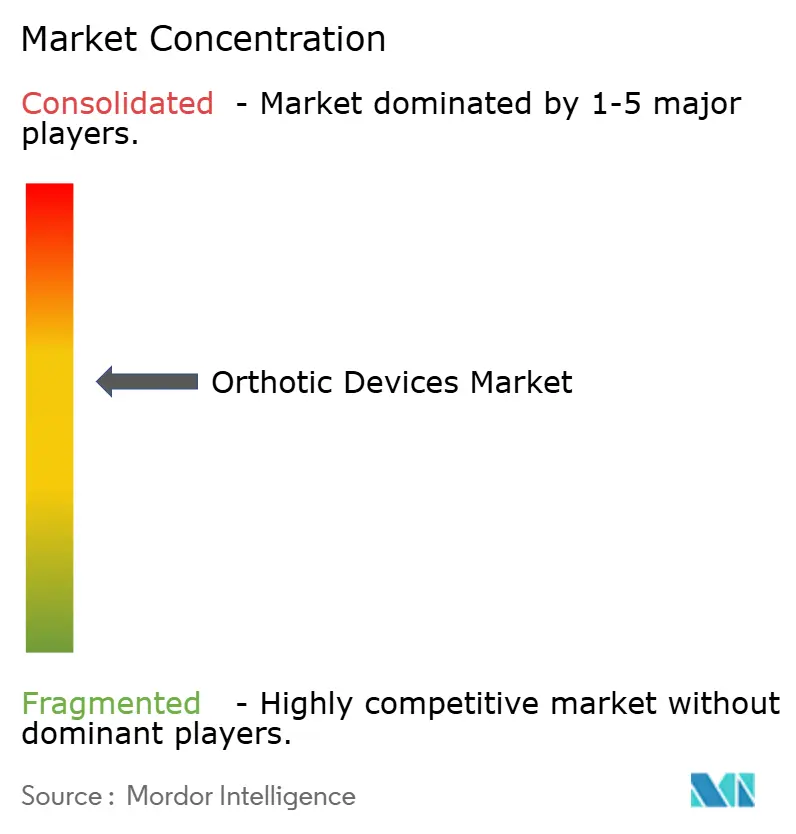
| Market Concentration | Medium |
Major Players *Disclaimer: Major Players sorted in no particular order Image © Mordor Intelligence. Reuse requires attribution under CC BY 4.0. | |
Orthotic Devices Market Analysis by Mordor Intelligence
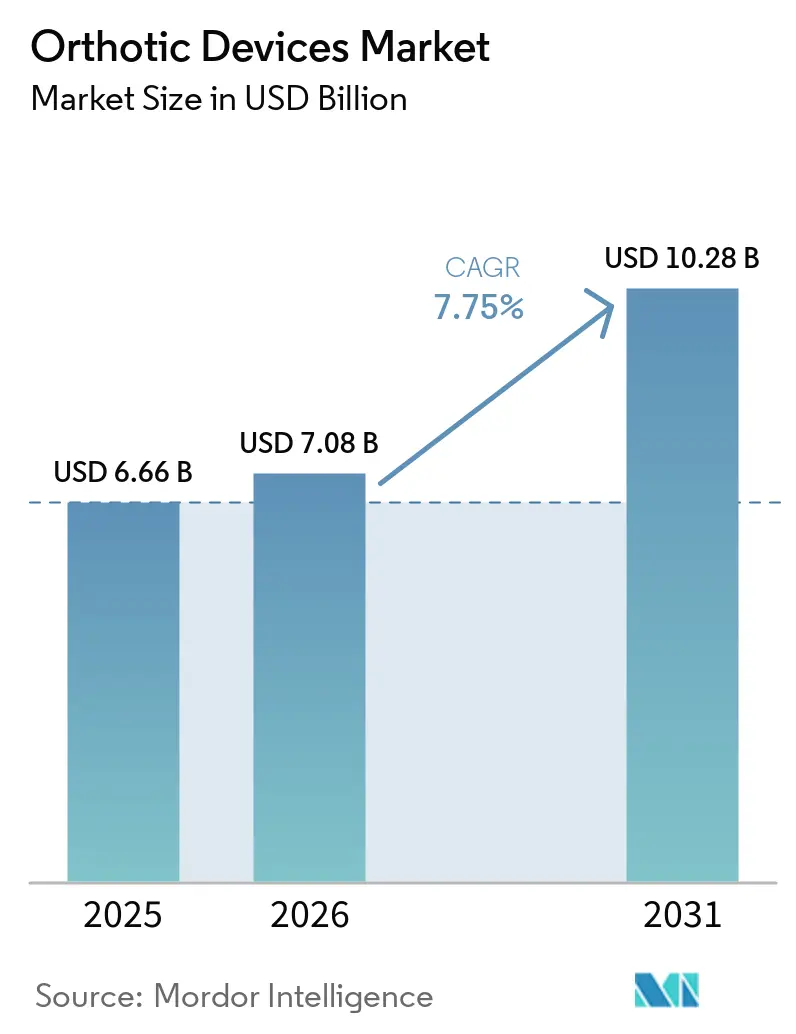
The Orthotic Devices Market size is projected to expand from USD 6.66 billion in 2025 and USD 7.08 billion in 2026 to USD 10.28 billion by 2031, registering a CAGR of 7.75% between 2026 and 2031.
A large and expanding burden of musculoskeletal conditions supports demand for clinically fitted braces and supports across care settings. Diabetes, stroke, and age-related mobility needs also sustain repeat prescriptions and replacement demand. Care delivery is shifting toward rehabilitation, non-surgical treatment, and support at home. Digital design and manufacturing are widening access to custom devices while raising the importance of clinical evidence. Competition increasingly centers on product capability, patient-care networks, and the ability to serve complex neurological needs.
Key Report Takeaways
- By product type, lower-limb devices held 52% revenue share in 2025, while spinal devices recorded the highest projected CAGR at 7.8% through 2031.
- By functionality, conventional orthoses held 68% revenue share in the orthotic devices market in 2025, while powered and smart devices are forecast to grow at an 11.5% CAGR through 2031.
- By application, musculoskeletal disorders accounted for 34% of the orthotic devices market size in 2025, while neuromuscular disorders are forecast to expand at an 8.5% CAGR through 2031.
- By age group, adults held 56% revenue share in 2025, while the geriatric segment is forecast to grow at an 8.2% CAGR through 2031.
- By end user, hospitals and clinics held 38% revenue share in 2025, while homecare is forecast to grow at a 9.3% CAGR through 2031.
Note: Market size and forecast figures in this report are generated using Mordor Intelligence’s proprietary estimation framework, updated with the latest available data and insights as of January 2026.
Global Orthotic Devices Market Trends and Insights
Drivers Impact Analysis*
| Driver | (~) % Impact on CAGR Forecast | Geographic Relevance | Impact Timeline |
|---|---|---|---|
| Rising Burden of Musculoskeletal and Neuromuscular Disorders | +2.1% | Global, with highest absolute volume in Asia and North America | Long term (≥ 4 years) |
| Aging Population and Mobility Preservation Demand | +1.8% | Global, concentrated in East Asia, Europe, and North America | Long term (≥ 4 years) |
| Expansion of Rehabilitation and Non-Surgical Mobility Care | +1.4% | North America and Europe, with growth in Asia-Pacific | Medium term (2-4 years) |
| Digital Scanning, CAD/CAM, and 3D-Printed Custom Orthoses | +1.2% | North America and Europe, expanding in Asia-Pacific | Medium term (2-4 years) |
| Growth of Sports Injury Prevention and Recovery Programs | +0.8% | North America, Europe, and Asia-Pacific | Short term (≤ 2 years) |
| Clinically Integrated Smart Orthoses and Gait Analytics | +0.6% | North America and Europe, with early adoption in Asia-Pacific | Medium term (2-4 years) |
| Source: Mordor Intelligence | |||
Rising Burden of Musculoskeletal and Neuromuscular Disorders
Global musculoskeletal disorder prevalence reached 1.686 billion cases in 2021 and is projected to reach 2.161 billion by 2035[1]D. T. Nguyen et al., “Global, Regional, and National Burden of Musculoskeletal Disorders, 1990-2021,” Frontiers in Public Health. Musculoskeletal disorders also created USD 2,099.84 billion in lost work value during 2021, equal to 1.41% of global GDP. Better preventive care may lower age-standardized rates in developed countries, yet absolute caseloads continue to rise in South Asia and Southeast Asia. Case counts in those subregions rose 135% and 132%, respectively, between 1990 and 2021. In 2023, Asia had 999 million prevalent musculoskeletal cases and USD 419.6 billion in direct healthcare costs, while high body mass index was an increasingly important modifiable risk factor. Stroke, multiple sclerosis, and cerebral palsy often require long-term orthotic support, which can create recurring replacement needs rather than a single acute-care purchase.
Expansion of Rehabilitation and Non-Surgical Mobility Care
Health systems in North America and Europe are placing greater emphasis on rehabilitation and non-surgical mobility support. This approach extends the period in which patients may use fitted orthoses, monitoring services, and adjusted devices in the orthotic devices market. Medicare prior authorization requirements for certain knee, thoracolumbosacral, and upper-limb orthoses take effect on October 28, 2026. The policy places advanced orthoses more clearly within formal clinical and payment pathways. A 2025 systematic review[2]M. Mortada et al., “The Current State of 3D-Printed Orthoses Clinical Outcomes,” BMC Musculoskeletal Disorders found improvements in pain, alignment, and patient satisfaction across ankle-foot, spinal, and upper-limb orthoses. These findings support the use of prescription-grade devices in longer rehabilitation plans, especially where clinicians can document functional outcomes.
Digital Scanning, CAD/CAM, and 3D-Printed Custom Orthoses
Digital scanning, CAD/CAM, and additive manufacturing are moving custom orthotic production toward repeatable digital workflows. A 2025 review[3]M. Wiśniewski et al., “3D Printing in the Creation of Orthopedic Prostheses and Orthoses,” Journal of Medical and Biological Engineering reported that 3D-printed upper-limb splints improved comfort and clinical performance compared with thermoplastic and fiberglass alternatives. The same review found that 3D-printed spinal braces were thinner, lighter, cheaper, and faster to produce than conventional alternatives. These processes can reduce production dependence on scarce specialist labor and help clinics serve patients in remote areas of the orthotic devices market. CAD/CAM linked with diagnostic imaging can also shorten design cycles for pediatric devices, which need replacement as children grow. The orthotic devices market can therefore gain from lower turnaround time as well as improved fit and patient acceptance.
Aging Population and Mobility Preservation Demand
Older patients often need more complex care because mobility problems can occur alongside several chronic conditions. This increases the role of devices that fit into coordinated medication, therapy, and mobility plans. Germany's statutory health insurers spent EUR 3.49 billion on orthopedic technology in 2024, up 24% from EUR 2.81 billion in 2019 CMS. Orthoses represented 39.8% of orthopedic technology revenue in 2025. Adults aged 55-59 carried the highest global musculoskeletal disorder prevalence by age group in the Global Burden of Disease analysis. This creates steady demand across both late working-age and geriatric care in the orthotic devices market. The geriatric segment's 8.2% forecast CAGR reflects demand for custom-fitted and periodically upgraded mobility support.
Restraints Impact Analysis*
| Restraint | (~) % Impact on CAGR Forecast | Geographic Relevance | Impact Timeline |
|---|---|---|---|
| High Cost of Custom Devices and Advanced Materials | -1.8% | Global, most acute in emerging markets and homecare settings | Long term (≥ 4 years) |
| Uneven Reimbursement and Affordability in Emerging Markets | -1.4% | Asia-Pacific, Middle East, Africa, and South America | Medium term (2-4 years) |
| Source: Mordor Intelligence | |||
High Cost of Custom Devices and Advanced Materials
Custom carbon-fiber ankle-foot orthoses, powered knee-ankle-foot orthoses, and sensor-enabled braces can cost USD 500 to USD 5,000. These prices can limit access where insurance coverage is absent or incomplete. Carbon fiber and engineering polymers can also expose manufacturers to material cost changes and concentrated supply sources. NCOPE projected a demand-to-supply ratio of 1.6 for orthotic and prosthetic professionals by 2030. This indicates that the credentialed workforce would need to grow by 60% to meet projected demand. The U.S. training route includes a master's degree, at least 1,900 residency hours, and 3 board examinations, which restricts how quickly fitting capacity can expand.
Uneven Reimbursement and Affordability in Emerging Markets
Differences in reimbursement between high-income and emerging markets continue to limit access to advanced devices. Medicare covers 80% of allowable charges for qualifying medically necessary orthoses, including devices for eligible diabetic patients. This support reduces out-of-pocket costs for a major clinical population. The International Working Group on the Diabetic Foot recommends therapeutic footwear and orthotic interventions as part of prevention and treatment pathways. National coverage systems can use such clinical guidance when extending reimbursement. In markets with limited coverage, international manufacturers have less reason to invest in local clinical distribution, which can then constrain availability and prescriptions.
*Our forecasts treat driver/restraint impacts as directional, not additive. The impact forecasts reflect baseline growth, mix effects, and variable interactions.
Segment Analysis
By Product Type: Lower-Limb Devices Lead, While Spinal Devices Grow Fastest
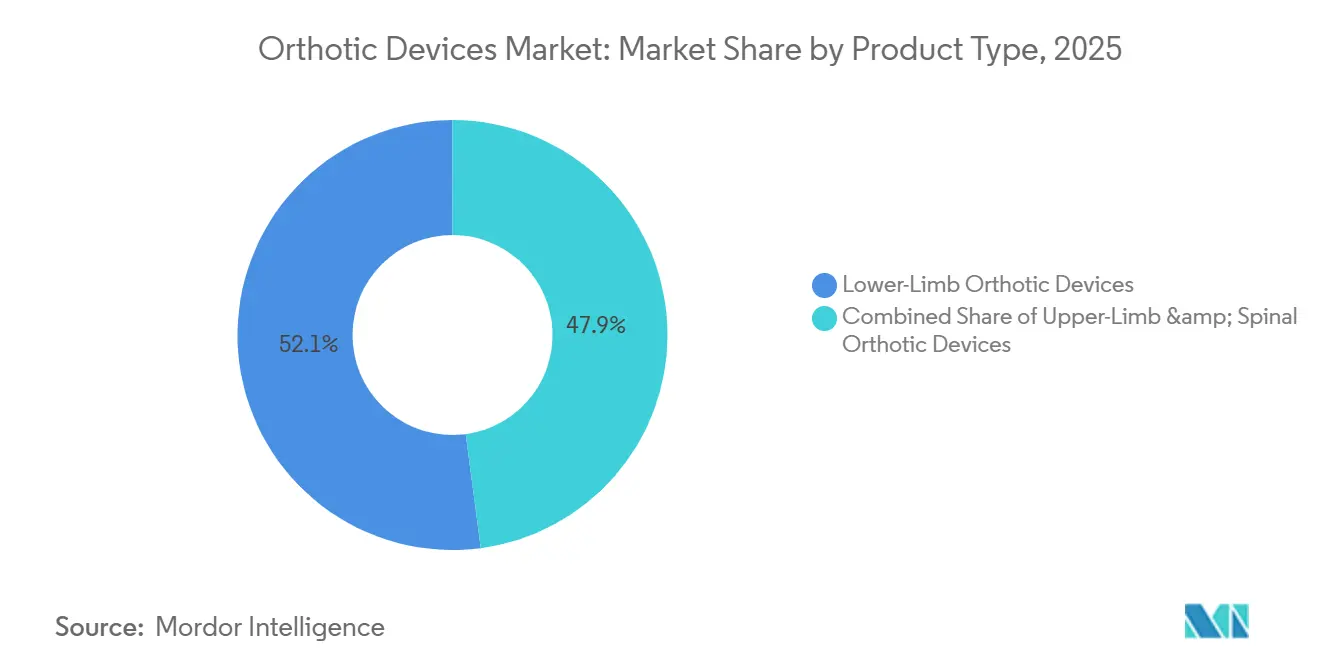
Lower-limb devices held 52.1% revenue share in the orthotic devices market in 2025. Ankle-foot orthoses, knee orthoses, and knee-ankle-foot orthoses are used across musculoskeletal, neurological, and diabetic foot-care pathways. Their large installed base reflects frequent prescriptions for osteoarthritis, stroke-related gait impairment, and foot protection in the orthotic devices market. These devices may also require periodic replacement as patients' functional needs change. Sports injuries contribute to acute bracing demand, particularly for knee and ankle injuries. The product group therefore combines chronic-care demand with short-cycle rehabilitation use.
Spinal devices are forecast to grow at a 7.8% CAGR through 2031. Scoliosis treatment, cervical conditions, and lumbar degeneration support demand for this category. A systematic review covering 62 studies and 3,815 participants found Cobb angle reductions in each of the 5 spinal orthosis intervention studies reviewed. The review also reported shorter fabrication times for 3D-printed designs than for thermoplastic alternatives. Digital fabrication can help providers offer custom spinal bracing with shorter lead times. Upper-limb orthoses remain relevant for stroke rehabilitation, cerebral palsy, and wrist fracture management. Their clinical role broadens when lighter designs improve comfort during daily use.


By Functionality: Conventional Orthoses Retain Scale, While Smart Devices Gain Clinical Use
Conventional orthoses held 68.3% revenue share in the orthotic devices market in 2025. Thermoplastic and prefabricated braces remain widely used because they cover a range of clinical needs at more accessible price points. Their availability supports use across insured, partly insured, and direct-pay patient groups. Conventional devices also fit established clinical workflows in hospitals, clinics, and rehabilitation settings. This foundation keeps conventional products central to the orthotic devices industry, even as digital features enter selected categories in the orthotic devices market. Their broad reach is likely to remain important where advanced reimbursement is limited.
Powered and smart devices are forecast to grow at an 11.5% CAGR through 2031. Dynamic orthoses sit between passive support and powered solutions by enabling controlled movement during rehabilitation. Functional electrical stimulation and sensor features can support gait training and neurological care. A 2025 study[4]S. Marangoz et al., “Smart Device Development for Gait Monitoring,” Technologies described a modular smart foot orthosis with plantar-pressure sensing, vibrotactile feedback, and a smartphone application for gait monitoring. Ottobock signed an agreement in July 2026 to acquire Fesia Technology, adding functional electrical stimulation orthoses to its neuro-orthotics portfolio. Strong clinical validation remains necessary for these products to gain durable reimbursement and clinician acceptance.
By Application: Musculoskeletal Conditions Provide Scale, While Neuromuscular Care Accelerates
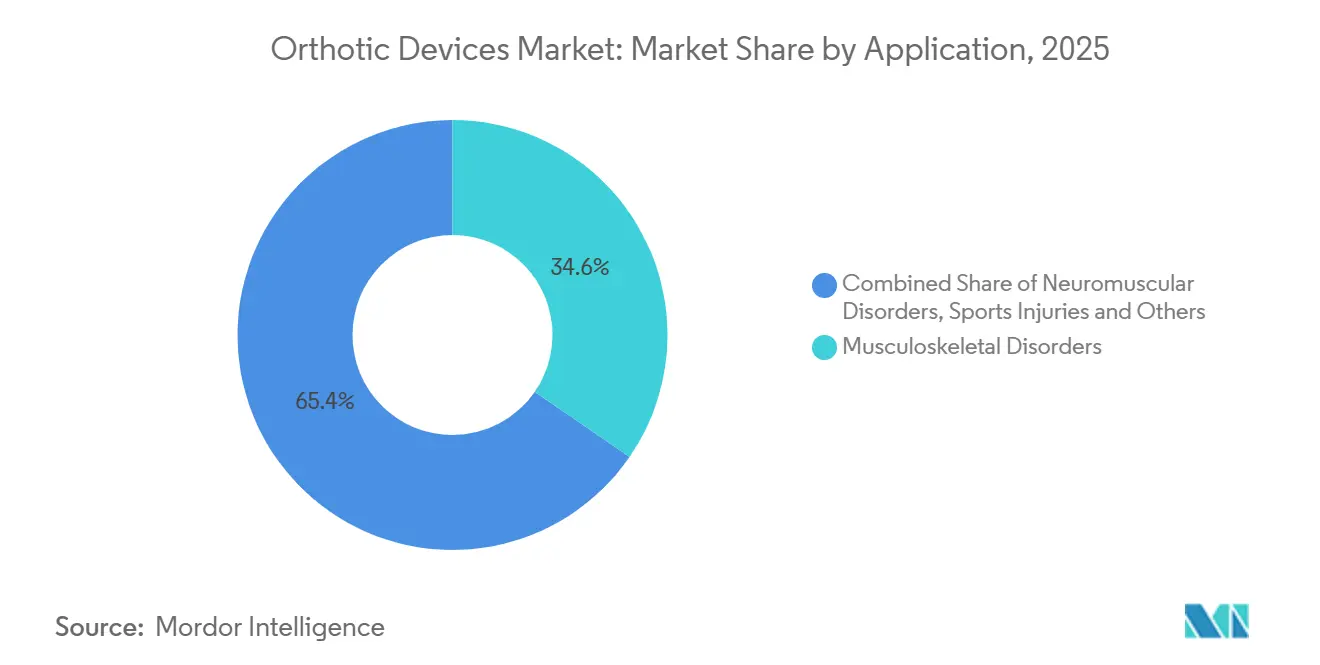
Musculoskeletal disorders accounted for 34.6% of the orthotic devices market size in 2025. Osteoarthritis, low back pain, rheumatoid arthritis, scoliosis, and plantar fasciitis create a broad base of prescriptions. The global musculoskeletal patient population is projected to reach 2.161 billion by 2035. These conditions often require support throughout recovery, symptom management, or activity modification. Replacement demand may continue as fit, mobility, or disease severity changes. The category benefits from its presence in both acute rehabilitation and long-term mobility care.
Neuromuscular disorders are forecast to grow at an 8.5% CAGR through 2031. Stroke, multiple sclerosis, cerebral palsy, and spinal cord injury can require ongoing gait and limb-support solutions. Functional electrical stimulation expands the role of orthoses from support toward active rehabilitation. Ottobock's planned Fesia acquisition reflects demand for these capabilities in neurological care. Diabetes also supports a durable need for therapeutic orthoses and footwear. The International Diabetes Federation reported 589 million adults living with diabetes in 2025 and projects 853 million by 2050. Sports injury, trauma, post-surgical recovery, and age-related mobility conditions add further use cases across the orthotic devices market.
By End User: Hospitals and Clinics Lead, While Homecare Expands
Hospitals and clinics held 38% revenue share in the orthotic devices market in 2025. Complex orthoses often require prescription review, biomechanical assessment, and professional fitting. These settings can coordinate care across physicians, therapists, and orthotists in the orthotic devices market. Orthotics and prosthetics clinics remain important for custom devices and ongoing adjustments. Rehabilitation centers are also using outcome monitoring with smart orthoses. Sports and specialized care centers serve patients seeking prevention, recovery, and activity support.
Homecare is forecast to grow at a 9.3% CAGR through 2031. Teleconsultation and digital scanning can make follow-up support more practical outside hospital settings. Hanger and Numotion announced their combination on September 10, 2026, creating a platform expected to serve 1.5 million patients annually across 1,125+ locations. The combined organization intends to bring orthotic, prosthetic, and complex rehabilitation care closer to patients. This model can improve access where travel and specialist availability are barriers. The orthotic devices market may see more distributed care, though clinical fitting and reimbursement requirements will continue to shape adoption.
Geography Analysis
North America held 41% of the orthotic devices market share in 2026. Medicare's DMEPOS framework and demand for clinically advanced devices support the region's position. CMS applied a 2% fee schedule update factor to prosthetics and orthotics effective January 1, 2026. The agency also added prior authorization requirements for selected knee, thoracolumbosacral, and upper-limb orthoses beginning October 28, 2026. Coverage for eligible diabetic footwear and orthotic items reduces patient cost for an important clinical group. The Hanger and Numotion combination is expected to expand the regional patient-care network and strengthen homecare access.
Europe remains a mature region with active product development and established reimbursement systems in the orthotic devices market. Germany is the world's second-largest orthotics and prosthetics market, according to Embla Medical's investor disclosures. GKV spending on orthopedic technology reached EUR 3.49 billion in 2024, while orthoses represented 39.8% of related revenue in 2025. MEDI launched the SmartFit OA knee orthosis in 2025 with the BOA Fit System for individualized compression adjustment. It also expanded its modular Lumbamed spinal range during 2025. Workforce shortages in the United Kingdom may limit access despite underlying National Health Service demand.
Asia-Pacific is forecast to grow at an 8.8% CAGR through 2031, the fastest regional rate in the orthotic devices market. Asia accounted for 54.6% of 372 million annual incident musculoskeletal cases and USD 419.6 billion in modeled direct healthcare costs during 2023. Japan's older population and China's high national musculoskeletal caseload support demand for established clinical services. Embla Medical completed a majority investment in Streifeneder ortho.production GmbH in September 2025 to broaden its full-range offering and patient-care reach. Middle East and Africa and South America remain developing contributor regions. Investment in sports medicine infrastructure in the Gulf can support premium orthotic uptake, while workforce shortages and reimbursement limits can restrict access elsewhere. Brazil is expanding reimbursement for selected orthotic devices, while currency constraints in Argentina favor locally manufactured elastic supports over imported advanced devices.
Competitive Landscape
The orthotic devices market is moderately concentrated around clinical-grade suppliers, with Ottobock, Embla Medical, Enovis, and Bauerfeind among the leading participants. Specialty producers such as Tynor Orthotics and Thuasne compete in standard and adjacent device categories. Competition in the orthotic devices market differs by product complexity, reimbursement access, clinical evidence, and the reach of fitting networks. Ottobock acquired Blatchford Norway A/S in May 2026 for EUR 110 million, adding 8 patient-care locations and EUR 40 million in revenue. The transaction established Ottobock's first owned presence in Norway. Such acquisitions allow manufacturers to connect device sales with local clinical support.
Ottobock reported EUR 818.5 million in core revenue for the first half of 2026, up 7.7% year over year. The company identified neuro-orthotics and prosthetics as important growth areas. Its June 2026 agreement to divest the Human Mobility wheelchair business further focuses its portfolio on prosthetics, neuro-orthotics, and functional electrical stimulation. Embla Medical reported USD 929 million in sales during 2025, with reported growth of 9%. Its Fior & Gentz neuro-orthotics business recorded broad momentum in Europe. These moves show how leading suppliers are adding specialized technologies and closer patient-care links.
Hanger and Numotion are combining their networks to form a large North American care platform with 1,125+ locations. This integration can combine recurring clinical services with product distribution and patient data. Bauerfeind reported a 2.13 cm reduction in visual analog scale pain scores in a 2025 study of its SecuTec OA hard-frame brace. The study also reported lower analgesic consumption than the control group. Remote fitting, functional electrical stimulation, and pediatric 3D printing remain areas where clinical need may exceed commercial infrastructure. Companies that pair evidence with reliable fitting and reimbursement support are better positioned in the orthotic devices industry.
Orthotic Devices Industry Leaders
Ottobock SE & Co. KGaA
Össur hf.
Enovis Corporation
Bauerfeind AG
Breg, Inc.
- *Disclaimer: Major Players sorted in no particular order

Recent Industry Developments
- September 2026: Hanger, Inc. and Numotion announced their combination to form Hanger Numotion, a North American platform serving approximately 1.5 million patients annually across 1,125+ locations in orthotics, prosthetics, and complex rehabilitation technology. Closing is expected in Q4 2026.
- July 2026: Ottobock SE & Co. KGaA signed an agreement to acquire Fesia Technology, S.L., a developer of functional electrical stimulation orthoses for neurological conditions including stroke, multiple sclerosis, cerebral palsy, and spinal cord injury.
- June 2026: Ottobock signed an agreement to divest its Human Mobility wheelchair business to DHCare, sharpening its portfolio focus on prosthetics, neuro-orthotics, and functional electrical stimulation.
- May 2026: Ottobock completed the acquisition of Blatchford Norway A/S from Blatchford Ltd. for EUR 110 million, adding 8 patient-care locations, 200 employees, and EUR 40 million in revenue.


Global Orthotic Devices Market Report Scope
As per the scope of the report, orthotic devices are external medical devices designed to modify the structural and functional characteristics of the neuromuscular and musculoskeletal system. These devices are used to support, align, prevent, or correct deformities, improve mobility, reduce pain, enhance rehabilitation outcomes, and assist patients with orthopedic, neurological, and age-related mobility conditions. Orthotic devices are widely used in the management of musculoskeletal disorders, neuromuscular impairments, sports injuries, diabetic foot complications, post-surgical recovery, and mobility support for pediatric and geriatric populations.
The orthotic devices market is segmented by product type into lower-limb orthotic devices, upper-limb orthotic devices, and spinal orthotic devices; by functionality into conventional orthotic devices, dynamic orthotic devices, and powered/smart orthotic devices; by application into musculoskeletal disorders, neuromuscular disorders, sports injuries & trauma rehabilitation, diabetic foot & neuropathy, and post-surgical & age-related mobility disorders; by age group into pediatric, adult, and geriatric; by end user into hospitals & clinics, orthotics & prosthetics clinics, rehabilitation centers, homecare settings, and sports & specialized care centers; and by geography into North America, Europe, Asia-Pacific, Middle East & Africa, and South America.
The market report also covers the estimated market sizes and trends for 17 countries across major regions globally. For each segment, the market size and forecast are provided in terms of value (USD).
| Lower-Limb Orthotic Devices |
| Upper-Limb Orthotic Devices |
| Spinal Orthotic Devices |
| Conventional Orthotic Devices |
| Dynamic Orthotic Devices |
| Powered / Smart Orthotic Devices |
| Musculoskeletal Disorders |
| Neuromuscular Disorders |
| Sports Injuries & Trauma Rehabilitation |
| Diabetic Foot & Neuropathy |
| Post-Surgical & Age-Related Mobility Disorders |
| Pediatric |
| Adult |
| Geriatric |
| Hospitals & Clinics |
| Orthotics & Prosthetics Clinics |
| Rehabilitation Centers |
| Homecare Settings |
| Sports & Specialized Care Centers |
| North America | United States |
| Canada | |
| Mexico | |
| Europe | Germany |
| United Kingdom | |
| France | |
| Italy | |
| Spain | |
| Rest of Europe | |
| Asia-Pacific | China |
| Japan | |
| India | |
| South Korea | |
| Australia | |
| Rest of Asia-Pacific | |
| Middle East and africa | GCC |
| South Africa | |
| Rest of Middle East and Africa | |
| South America | Brazil |
| Argentina | |
| Rest of South America |
| By Product Type | Lower-Limb Orthotic Devices | |
| Upper-Limb Orthotic Devices | ||
| Spinal Orthotic Devices | ||
| By Functionality | Conventional Orthotic Devices | |
| Dynamic Orthotic Devices | ||
| Powered / Smart Orthotic Devices | ||
| By Application | Musculoskeletal Disorders | |
| Neuromuscular Disorders | ||
| Sports Injuries & Trauma Rehabilitation | ||
| Diabetic Foot & Neuropathy | ||
| Post-Surgical & Age-Related Mobility Disorders | ||
| By Age Group | Pediatric | |
| Adult | ||
| Geriatric | ||
| By End User | Hospitals & Clinics | |
| Orthotics & Prosthetics Clinics | ||
| Rehabilitation Centers | ||
| Homecare Settings | ||
| Sports & Specialized Care Centers | ||
| By Geography | North America | United States |
| Canada | ||
| Mexico | ||
| Europe | Germany | |
| United Kingdom | ||
| France | ||
| Italy | ||
| Spain | ||
| Rest of Europe | ||
| Asia-Pacific | China | |
| Japan | ||
| India | ||
| South Korea | ||
| Australia | ||
| Rest of Asia-Pacific | ||
| Middle East and africa | GCC | |
| South Africa | ||
| Rest of Middle East and Africa | ||
| South America | Brazil | |
| Argentina | ||
| Rest of South America | ||


Key Questions Answered in the Report
What is the projected value of orthotic devices by 2031?
The orthotic devices market is forecast to reach USD 10.28 billion by 2031, growing at a 7.75% CAGR from 2026.
Which orthotic device category has the largest share?
Lower-limb devices held 52% revenue share in 2025, supported by use in ankle, knee, diabetic foot, and neurological care.
Which functionality category is growing fastest?
Powered and smart orthoses are forecast to grow at an 11.5% CAGR through 2031, supported by sensor and functional electrical stimulation applications.
Which application is growing fastest for orthotic devices?
Neuromuscular disorders are forecast to grow at an 8.5% CAGR through 2031 as stroke, multiple sclerosis, and cerebral palsy care needs expand.
Which region is expected to grow fastest?
Asia-Pacific is forecast to grow at an 8.8% CAGR through 2031, supported by its large musculoskeletal disease burden.
Why is homecare important for orthotic device providers?
Homecare is forecast to grow at a 9.3% CAGR through 2031 as teleconsultation and digital scanning support care outside traditional settings.
Page last updated on:





