
Orthopedic Accessories Market Size and Share
Market Overview
| Study Period | 2020 - 2031 |
|---|---|
| Market Size (2026) | USD 3.39 Billion |
| Market Size (2031) | USD 3.89 Billion |
| Growth Rate (2026 - 2031) | 2.80 % |
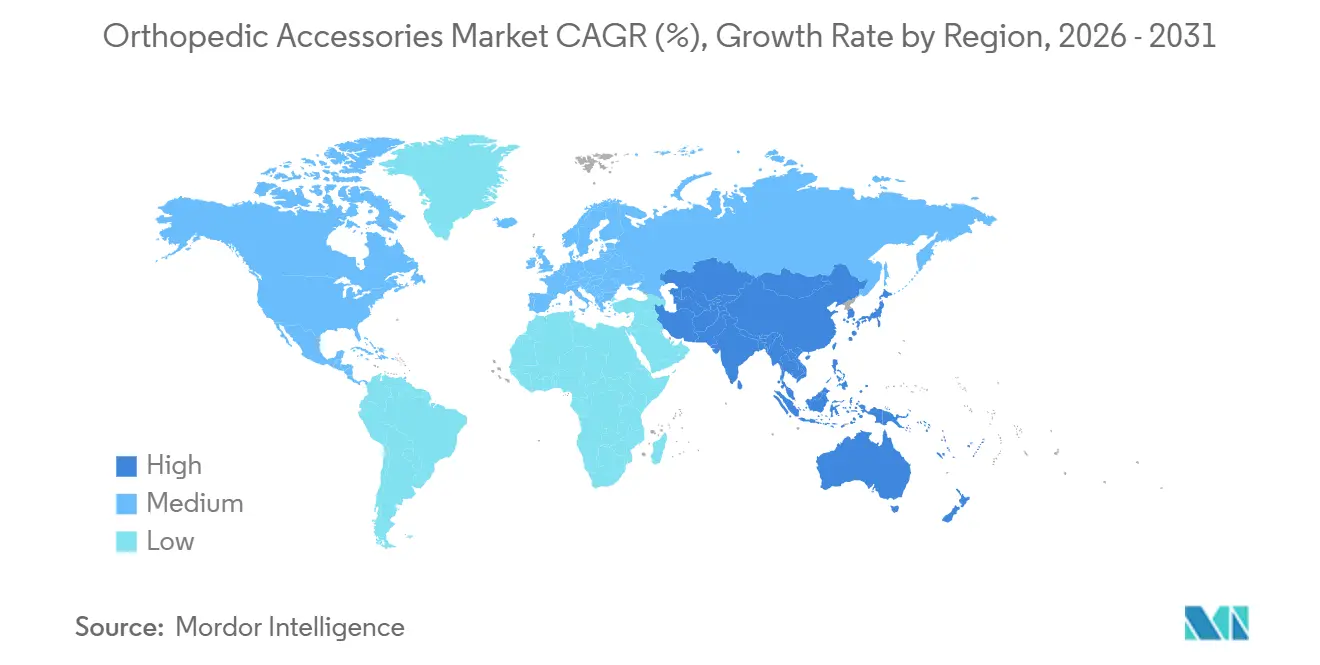
| Fastest Growing Market | Asia-Pacific |
| Largest Market | North America |
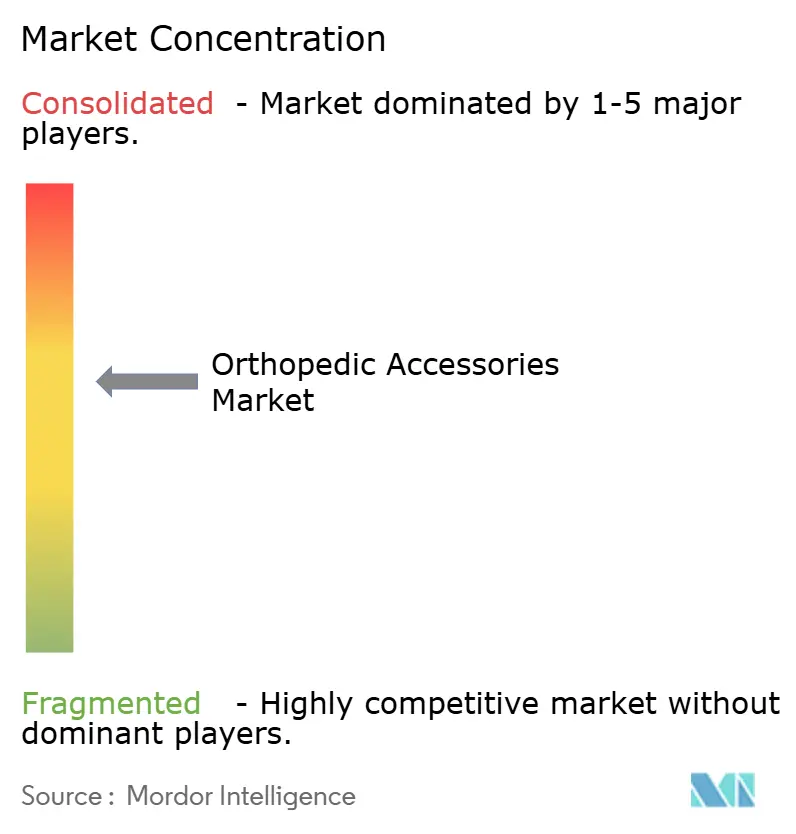
| Market Concentration | Medium |
Major Players *Disclaimer: Major Players sorted in no particular order Image © Mordor Intelligence. Reuse requires attribution under CC BY 4.0. | |
Orthopedic Accessories Market Analysis by Mordor Intelligence
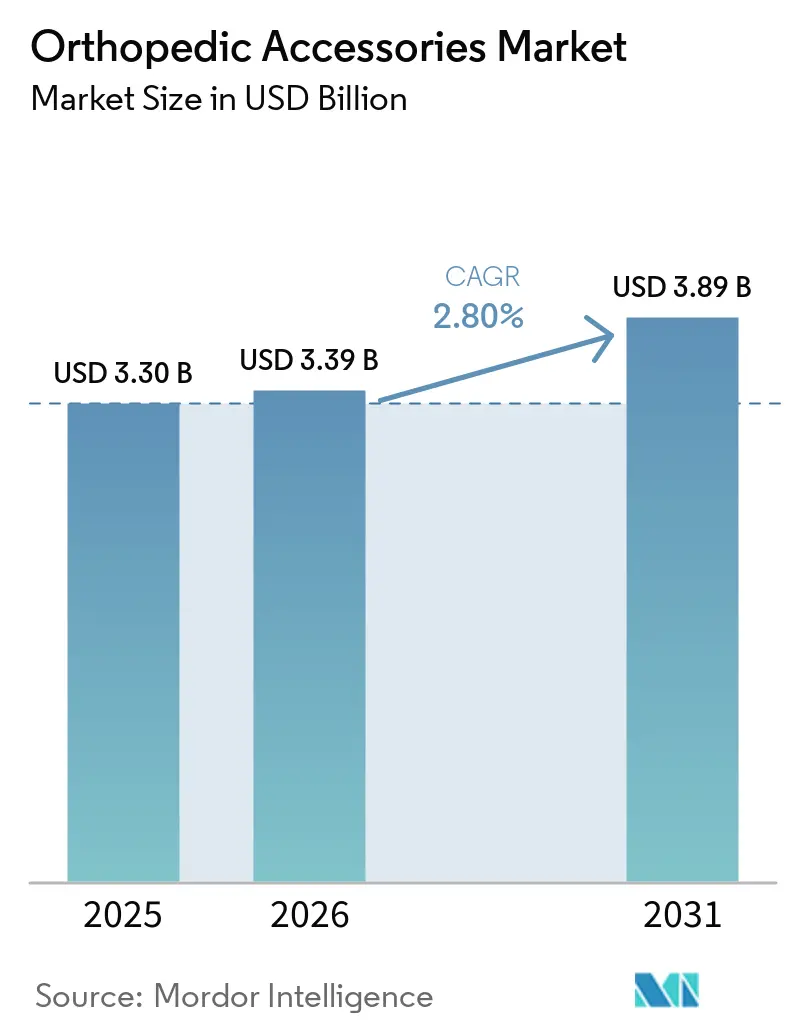
The Orthopedic Accessories Market size was valued at USD 3.30 billion in 2025 and is estimated to grow from USD 3.39 billion in 2026 to reach USD 3.89 billion by 2031, at a CAGR of 2.80% during the forecast period (2026-2031).
The orthopedic accessories market is supported by the long-term burden of osteoarthritis and other musculoskeletal conditions, which creates demand for recovery, mobility, and daily support products. Rising life expectancy also expands the customer base, while continued activity among older adults broadens use beyond acute treatment. Companies are balancing lower-priced, widely available soft supports with premium devices that use sensors, custom fitting, or advanced joint control. The orthopedic accessories market also faces greater scrutiny of reimbursement documentation and supplier compliance, which favors companies with established clinical and payment capabilities. These conditions make reliable distribution, clinical evidence, and product fit important factors in the orthopedic accessories market.
Key Report Takeaways
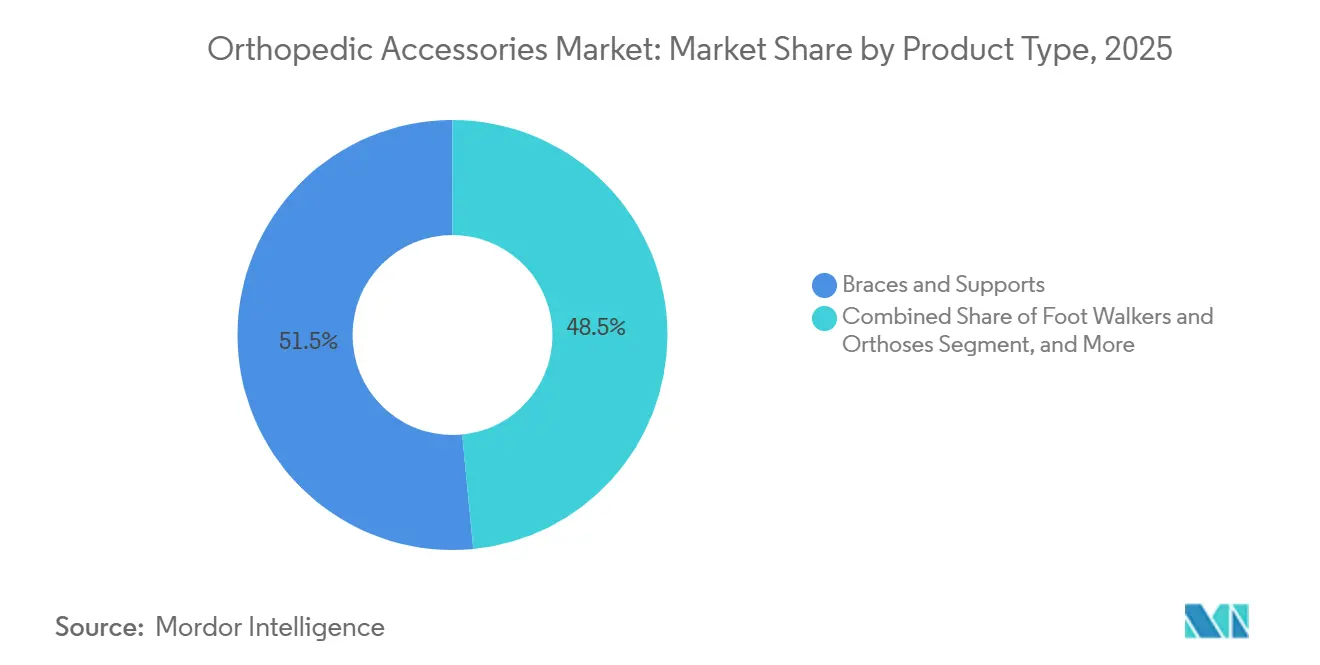
- By product type, braces and supports held 51.54% of the orthopedic accessories market share in 2025, while foot walkers and orthoses are forecast to grow at a 4.54% CAGR through 2031.
- By application, knee accessories accounted for 28.65% of the orthopedic accessories market size in 2025, while foot accessories are projected to grow at a 4.89% CAGR through 2031.
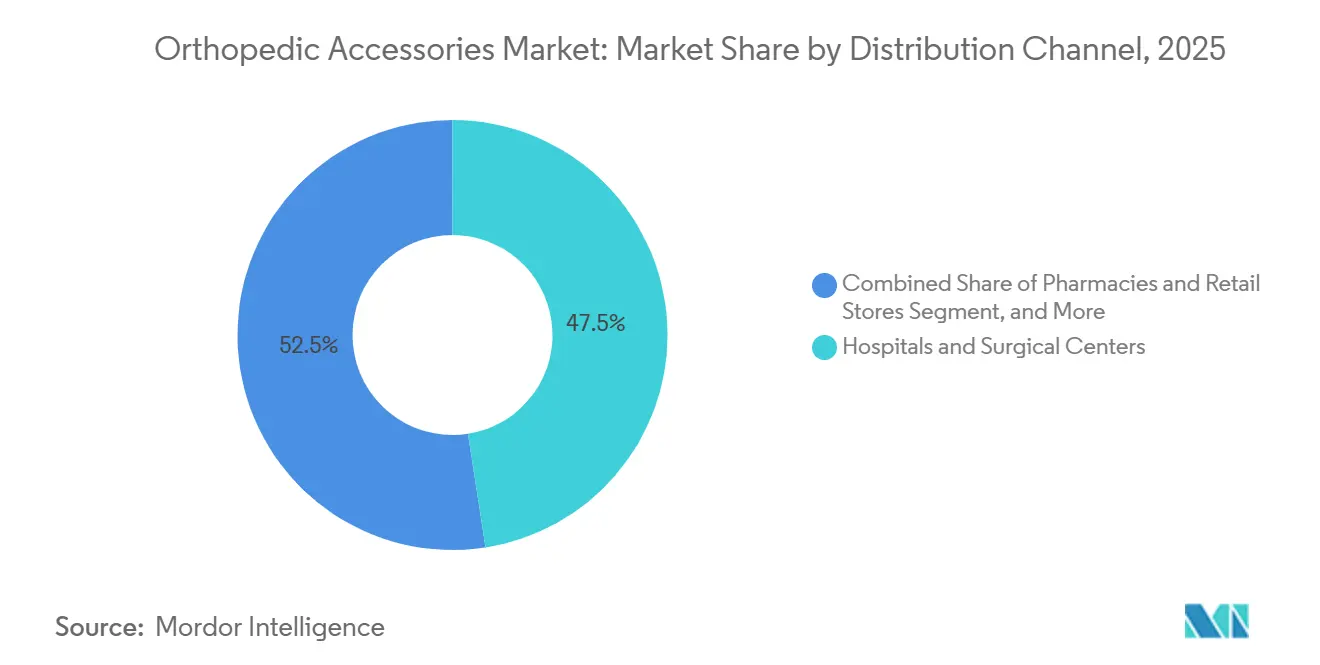
- By distribution channel, hospitals and surgical centers held 47.54% share in 2025, while pharmacies and retail stores are forecast to expand at a 5.85% CAGR through 2031.
- By end user, hospitals and surgical centers accounted for 42.54% share in 2025, while homecare settings are forecast to grow at a 5.76% CAGR through 2031.
- By geography, North America held 41.54% share in 2025, whereas the Asia-Pacific is anticipated to grow at a CAGR of 3.65% by 2031.
Note: Market size and forecast figures in this report are generated using Mordor Intelligence’s proprietary estimation framework, updated with the latest available data and insights as of January 2026.
Market Trends and Insights
Drivers Impact Analysis of Orthopedic Accessories Market*
| Driver | (~) % Impact on CAGR Forecast | Geographic Relevance | Impact Timeline |
|---|---|---|---|
| Rising Musculoskeletal Disorders and Osteoarthritis Burden | +0.60% | Global, with disproportionate burden in East Asia, South Asia, and high-income North America | Long term (≥ 4 years) |
| Aging Population and Active Aging Demand | +0.50% | Global, concentrated in North America, Western Europe, and East Asia, with spillover to Asia-Pacific and the Middle East and Africa | Long term (≥ 4 years) |
| Sports and Activity-Related Injuries | +0.40% | North America and Europe, with growing relevance in urban Asia-Pacific markets | Medium term (2-4 years) |
| Post-Operative and Outpatient Rehabilitation Demand | +0.40% | North America and Europe, with early development in Asia-Pacific and South America | Medium term (2-4 years) |
| Sensor-Enabled Braces and Remote Rehabilitation Workflows | +0.20% | High-income North America and Western Europe, with early adoption in South Korea and Japan | Medium term (2-4 years) |
| Faster Custom Fitting Through 3D Scanning and Additive Manufacturing | +0.20% | North America and Western Europe, with early gains in advanced Asia-Pacific centers | Short term (≤ 2 years), transitioning to Medium term (2-4 years) |
| Source: Mordor Intelligence | |||
Rising Musculoskeletal Disorders and Osteoarthritis Burden
The orthopedic accessories market is underpinned by a growing number of people living with musculoskeletal disorders. A 2025 study reported 607 million osteoarthritis cases worldwide in 2021, which was 137% higher than in 1990. Knee osteoarthritis represented more than 56% of those cases, linking the disease burden closely to demand for knee braces, supports, and orthoses. The same research projected 765 million people living with osteoarthritis by 2060. A separate 2025 analysis identified 1.686 billion prevalent musculoskeletal disorder cases in 2021 and projected 2.161 billion cases by 2035[1]. East and Southeast Asia recorded the fastest rise in age-standardized osteoarthritis disability rates among older adults, bringing demand growth to locations where access to orthopedic accessories has historically been less developed.
Aging Population and Active Aging Demand
Population aging extends the need for products that support mobility, stability, and recovery. The World Health Organization reported that 1 in 6 people worldwide will be aged 60 years or older by 2030. It also projected that the population aged 80 years or older will reach 426 million by 2050, with 80% of older people living in low- and middle-income countries[2]. This pattern increases the importance of accessible products that serve consumers outside advanced hospital systems. The orthopedic accessories market also benefits from preventive use by adults who remain physically active while managing recurring knee, ankle, or back discomfort. Braces and supports retain a broad customer base because they are used for chronic conditions, injury prevention, and recovery after treatment. The growing preference for continued mobility supports repeated replacement demand rather than only one-time purchases.
Sports and Activity-Related Injuries
Sports and recreation injuries continue to support demand for protective and recovery devices in the orthopedic accessories market. U.S. emergency departments treated 4.4 million sports and recreation equipment-related injuries in 2024, an increase of 17% from 2023. Knee and ankle ligament injuries remained common among high school athletic programs, with 5,921 injuries recorded during the 2024-25 academic year in the underlying market research. These injuries support purchases during rehabilitation and also encourage preventive brace use among people with prior injuries or instability concerns. Pharmacies and retailers are particularly relevant when consumers choose over-the-counter products without a hospital prescription. This pattern supports the orthopedic accessories market because a product can be used repeatedly across training, recovery, and future injury prevention.
Post-Operative Care, Connected Rehabilitation, and Custom Fitting
Shorter hospital stays are shifting more orthopedic recovery into outpatient and home settings. The orthopedic accessories market, therefore, depends increasingly on clinics, therapists, telehealth providers, and patients who influence product selection after discharge. Homecare is growing as remote oversight and home-based rehabilitation become more common. Sensor-enabled braces can support this model by helping clinicians follow adherence and recovery outside the clinic. CMS introduced payment for microprocessor-controlled ankle-foot orthoses under HCPCS code L2221 in 2026, with a fee of USD 1,889.92 per unit. Additive manufacturing can also shorten custom knee orthosis design time from 8 hours to 10.3 minutes, according to a 2026 study, which could improve the economics of custom fitting at a clinical scale.
Restraints Impact Analysis of Orthopedic Accessories Market*
| Restraint | (~) % Impact on CAGR Forecast | Geographic Relevance | Impact Timeline |
|---|---|---|---|
| High Cost of Advanced and Custom Accessories | -0.40% | Global, with the greatest effect in emerging Asia-Pacific economies and South America | Long term (≥ 4 years) |
| Inconsistent Reimbursement and Coverage Exclusions | -0.30% | North America and Western Europe, where coverage complexity varies by country | Medium term (2-4 years) |
| Poor Wearability and Long-Term Patient Compliance | -0.20% | Global, particularly in homecare settings | Medium term (2-4 years) |
| Counterfeit and Low-Traceability Products in Digital Channels | -0.10% | Asia-Pacific, the Middle East and North Africa, and cross-border online trade in Europe and North America | Short term (≤ 2 years) |
| Source: Mordor Intelligence | |||
Cost, Wearability, and Patient Compliance
The gap between basic soft supports and custom devices can limit access to advanced orthopedic accessories. Custom orthoses often require in-person assessment, physician orders, and documentation, which can increase out-of-pocket costs through deductibles and coinsurance. Non-rigid supports may also fall outside Medicare brace coverage. These constraints are more difficult in price-sensitive settings where advanced devices are less affordable. Poor comfort, limited fit, and the burden of daily wear can reduce long-term patient use, especially during recovery at home. The orthopedic accessories market will benefit when faster design and production methods reduce cost while also improving fit and wearability.
Reimbursement, Compliance, and Low-Traceability Products
Reimbursement rules create a material risk for suppliers, distributors, and patients. The HHS Office of Inspector General reported a 21.4% improper payment rate for off-the-shelf orthotic braces in fiscal 2024, totaling USD 1.9 billion in payments[3]. CMS imposed a 6-month moratorium on new enrollment for certain DMEPOS suppliers in February 2026 and identified USD 3.4 billion in suspected fraudulent billing patterns. Stronger documentation and supplier checks raise the cost of participation for legitimate, smaller suppliers. They can also make established companies with documented reimbursement portfolios more attractive partners for providers. Low-traceability online products remain a concern because they can weaken product confidence and complicate enforcement across digital channels. These conditions make compliance systems and verifiable distribution important competitive requirements in the orthopedic accessories market.
*Our forecasts treat driver/restraint impacts as directional, not additive. The impact forecasts reflect baseline growth, mix effects, and variable interactions.
Orthopedic Accessories Market Segment Analysis
By Product Type:
Braces and Supports Lead While Walkers and Orthoses Grow FasterBraces and supports held 51.54% of the orthopedic accessories market share in 2025. Their leading position reflects use across injury management, chronic support, and recovery after surgery. Consumers can choose over-the-counter knee sleeves, structured supports, and custom unloader braces for osteoarthritis management. This breadth allows the category to serve both self-directed purchases and clinician-directed treatment. Manufacturing scale also supports broad availability across price points and care settings.
Foot walkers and orthoses are forecast to grow at a 4.54% CAGR through 2031. The orthopedic accessories market size for this category is supported by diabetic foot complications, peripheral neuropathy, and lower-limb deterioration among older adults. These products often address mobility needs that require more than a basic soft support. Their role in repeat prescriptions can make demand more durable than demand tied only to sports injuries. Powered and microprocessor-enabled designs also show continued interest in devices that improve control and mobility.

By Application:
Knee Remains the Largest Use Area, and Foot Demand ExpandsKnee products accounted for 28.65% of the orthopedic accessories market size in 2025. The leading position corresponds with the 374.74 million prevalent knee osteoarthritis cases identified globally in 2021. Knee accessories cover a broad price range, from lower-priced compression sleeves to custom unloader devices. This mix supports volume across clinical, retail, and home recovery settings. It also gives manufacturers opportunities to serve patients at different stages of condition management.
Foot accessories are forecast to grow at a 4.89% CAGR through 2031. Diabetes-related foot conditions and demand for functional orthoses support this direction in the orthopedic accessories market. Foot products can support biomechanical correction as well as protection during recovery. Hip and ankle products serve substantial but more specific patient groups, with ankle demand closely linked to sports injury recovery. Spine accessories remain important for post-operative stabilization, degenerative conditions, and scoliosis management. Enovis launched the DonJoy Spinamic Hybrid Scoliosis Brace in June 2026, combining dynamic support and structural control in 10 off-the-shelf sizes.
By Distribution Channel:
Hospitals Lead and Retail Gains MomentumHospitals and surgical centers held 47.54% of the distribution channel value in 2025. Their position reflects their role in prescribing high-value custom products and post-operative accessories. Orthopedic, orthotics, and prosthetics clinics provide fitting, follow-up, and product guidance as patients leave acute care. These relationships remain important for products that need clinical assessment or reimbursement documentation. They also help patients select products that match their recovery requirements.
Pharmacies and retail stores are forecast to grow at a 5.85% CAGR through 2031. This shift reflects greater consumer involvement in conservative care and preventive support purchases. Retail settings give people access to basic products before or after a formal clinical visit. E-commerce adds convenience but has a more limited role in premium products because traceability and regulatory concerns remain important. CMS actions against suspected fraudulent DMEPOS billing reinforce the value of verified product and prescriber relationships. Other channels, including direct-to-patient programs and rehabilitation facility supply chains, remain smaller parts of the orthopedic accessories market.
By End User:
Hospitals Retain Scale While Homecare ExpandsHospitals and surgical centers accounted for 42.54% of end-user demand in 2025. These settings remain central to prescribing, fitting, and post-acute recovery planning. Orthopedic clinics are also important for custom orthotics, ankle-foot orthosis fitting, and functional bracing after surgery. Migration of some procedures toward outpatient care gives clinics more influence over the products used after discharge. This change affects which providers help patients choose and obtain accessories.
Homecare settings are forecast to expand at a 5.76% CAGR through 2031. This development reflects efforts to reduce inpatient stays and support recovery in familiar settings. It also places more responsibility on patients and caregivers to use devices properly between visits. Remote monitoring can support follow-up when connected devices capture use patterns and recovery information. The orthopedic accessories market is therefore increasingly shaped by products that patients can use correctly without frequent facility visits. CMS actions on DMEPOS enrollment also underline the importance of compliant suppliers as home-based care channels grow.
Geography Analysis
North America Orthopedic Accessories Market
North America held 41.54% of the orthopedic accessories market share in 2025. The region benefits from high arthritis prevalence, established DMEPOS coverage, and broad sports participation. In the United States, 21.3% of adults had received an arthritis diagnosis in 2024. The United States accounted for 78% of the North American value in the underlying market assessment. Ambulatory surgery growth is shifting product selection toward orthopedic clinics and physical therapists.
Europe Orthopedic Accessories Market
Europe remains the second-largest regional part of the orthopedic accessories market, with Germany, the United Kingdom, and France leading demand. Germany has a developed orthotics and prosthetics network, while Bauerfeind, Medi, Ottobock, Lohmann and Rauscher, and Thuasne have major regional operations. Sports medicine bracing also supports a consumer retail channel in the United Kingdom and France. Ottobock presented the C-Brace Interim at OTWorld 2026 in Leipzig, using a microprocessor-controlled orthotic knee joint for early rehabilitation. European Medical Device Regulation requirements raise compliance costs while setting more consistent quality expectations.
APAC, MEA and South America Orthopedic Accessories Market
Asia-Pacific is forecast to grow at a 3.65% CAGR through 2031, making it the fastest-growing regional segment. China is the regional production base and the largest consumption location by volume in the supply assessment. India is an important value-growth location because healthcare infrastructure and urban access to musculoskeletal care are improving. Japan, South Korea, and Australia are premium-oriented markets, while the Middle East, Africa, and South America remain developing regions where reimbursement and manufacturing gaps limit growth.
Competitive Landscape
The orthopedic accessories market is semi-fragmented, with Enovis, Össur, Ottobock, and Bauerfeind in the technology and premium-brand tier. Tynor Orthotics, medi, and Mueller Sports Medicine compete across value and over-the-counter categories. No single company holds a dominant position because the category covers varied products, uses, and sales channels. Soft support products face price competition from generic and private-label offerings. Premium suppliers seek differentiation through clinical evidence, customized fit, digital functions, and reimbursement capability.
Enovis completed the acquisition of Breg in April 2024, creating a combined business with USD 1.7 billion in revenue. Smith+Nephew acquired Integrity Orthopaedics for USD 225 million in January 2026 to strengthen its U.S. shoulder repair offering. Össur agreed to acquire Fior and Gentz in January 2024 for EUR 100 million, with a contingent earnout of up to EUR 20 million, expanding its lower-limb neuro-orthotic component capabilities. Bauerfeind launched the GenuTrain P3 patella-tracking brace in the U.S. market in January 2026. These moves show that both acquisitions and internal product development are being used to improve premium product portfolios.
Pediatric orthotics connected home rehabilitation, and value-tier products in Asia-Pacific and South America remain areas of commercial opportunity. OrthoPediatrics introduced the TRAXIO Complete Weight System with Synetik Group in April 2026, targeting the U.S. pediatric orthopedic specialty-bracing segment. Companies with established L-code systems, verified documentation, and compliant DMEPOS enrollment have an advantage when supplier oversight increases. The orthopedic accessories market will remain divided between highly competitive basic supports and premium devices that can show clinical and payment value.
Orthopedic Accessories Industry Leaders
-
3M Company
-
DJO LLC (Enovis)
-
Össur hf.
-
Zimmer Biomet Holdings, Inc.
-
Bauerfeind AG
- *Disclaimer: Major Players sorted in no particular order
Orthopedic Accessories Market Companies Covered in this Report
- 3M
- Alcare
- Aspen Medical Products
- Bauerfeind
- Breg
- DeRoyal Industries
- DJO LLC (Enovis)
- Essity AB (BSN Medical)
- Frank Stubbs Company
- Hely & Weber Orthopedics
- Lohmann & Rauscher International
- McDavid
- medi
- Mueller Sports Medicine, Inc.
- Nippon Sigmax Co., Ltd.
- Össur hf.
- Ottobock
- Thuasne Group
- Tynor Orthotics
- Trulife
- United Ortho
- Zimmer Biomet
Recent Industry Developments in Orthopedic Accessories Market
- June 2026: Enovis Corporation launched the DonJoy Spinamic® Hybrid Scoliosis Brace through DJO LLC in the United States. The brace targets adolescent idiopathic scoliosis, combining rigid corrective mechanics with a breathable mesh vest in 10 off-the-shelf sizes, with fitting and in-brace imaging completable in a single visit. Enovis is pursuing worldwide regulatory clearance, signaling intent to make scoliosis bracing a global commercial priority.
- May 2026: Ottobock presented the C-Brace Interim at OTWorld 2026 in Leipzig, an innovative early-rehabilitation fitting concept integrating a microprocessor-controlled orthotic knee joint for patients with lower-limb paralysis. The device is designed for use in the first 6 months of rehabilitation and extends therapeutic training time beyond clinic hours into everyday life.
- January 2026: Smith Nephew acquired Integrity Orthopaedics for USD 225 million upfront plus contingent performance-based payments, strengthening its U.S. shoulder repair portfolio through the Tendon Seam rotator-cuff repair system and expanding its orthopedic accessories position.
Global Orthopedic Accessories Market Report Scope
According to the report’s scope, orthopedic accessories are supportive devices such as braces that help protect or stabilize bones and joints. They can reduce pain and support recovery, mobility, or injury prevention.
The orthopedic accessories market is segmented into product type, application, distribution channel, end user, and geography. By product type, the market is segmented into braces and supports, foot walkers and orthoses, and other product types. By application, the market is segmented into foot, hip, ankle, knee, spine, and other applications. By distribution channel, the market is segmented into hospitals and surgical centers, orthopedic clinics and O&P clinics, pharmacies and retail stores, e-commerce platforms, and other distribution channels. By end user, the market is segmented into hospitals and surgical centers, orthopedic clinics, homecare settings, and other end users. By geography, the market is segmented into North America, Europe, Asia-Pacific, the Middle East and Africa, and South America. The report also covers the estimated market sizes and trends for 17 countries across major regions globally. The report offers values (USD) for all the above segments.
Segmentation Overview
| Braces and Supports |
| Foot Walkers and Orthoses |
| Other Product Types |
| Foot |
| Hip |
| Ankle |
| Knee |
| Spine |
| Other Applications |
| Hospitals and Surgical Centers |
| Orthopedic Clinics and O&P Clinics |
| Pharmacies and Retail Stores |
| E-Commerce Platforms |
| Other Distribution Channels |
| Hospitals and Surgical Centers |
| Orthopedic Clinics |
| Homecare Settings |
| Other End Users |
| North America | United States |
| Canada | |
| Mexico | |
| Europe | Germany |
| United Kingdom | |
| France | |
| Italy | |
| Spain | |
| Rest of Europe | |
| Asia-Pacific | China |
| Japan | |
| India | |
| Australia | |
| South Korea | |
| Rest of Asia-Pacific | |
| Middle East and Africa | GCC |
| South Africa | |
| Rest of Middle East and Africa | |
| South America | Brazil |
| Argentina | |
| Rest of South America |
| By Product Type | Braces and Supports | |
| Foot Walkers and Orthoses | ||
| Other Product Types | ||
| By Application | Foot | |
| Hip | ||
| Ankle | ||
| Knee | ||
| Spine | ||
| Other Applications | ||
| By Distribution Channel | Hospitals and Surgical Centers | |
| Orthopedic Clinics and O&P Clinics | ||
| Pharmacies and Retail Stores | ||
| E-Commerce Platforms | ||
| Other Distribution Channels | ||
| By End User | Hospitals and Surgical Centers | |
| Orthopedic Clinics | ||
| Homecare Settings | ||
| Other End Users | ||
| Geography | North America | United States |
| Canada | ||
| Mexico | ||
| Europe | Germany | |
| United Kingdom | ||
| France | ||
| Italy | ||
| Spain | ||
| Rest of Europe | ||
| Asia-Pacific | China | |
| Japan | ||
| India | ||
| Australia | ||
| South Korea | ||
| Rest of Asia-Pacific | ||
| Middle East and Africa | GCC | |
| South Africa | ||
| Rest of Middle East and Africa | ||
| South America | Brazil | |
| Argentina | ||
| Rest of South America | ||
Key Questions Answered in the Report
What is the value of the orthopedic accessories market in 2026?
The market stands at USD 3.39 billion in 2026 and is forecast to reach USD 3.89 billion by 2031 at a 2.8% CAGR. The outlook reflects demand related to osteoarthritis, other musculoskeletal conditions, and recovery needs across clinical and home settings.
Which orthopedic accessory product category has the largest share?
Braces and supports led product demand with a 51.5% share in 2025 because they serve injury care, chronic support, and post-operative recovery. Their broad range covers basic over-the-counter options and clinically selected devices, which helps support their leading position.
Which orthopedic accessory category is growing fastest?
Foot walkers and orthoses are forecast to grow at a 4.5% CAGR through 2031, supported by lower-limb conditions and diabetic foot needs. The category also benefits from demand for mobility support among older adults and people managing peripheral neuropathy.
Which application leads demand for orthopedic accessories?
Knee applications led with a 28.7% share in 2025, consistent with the high global burden of knee osteoarthritis. Knee supports are used for preventive care, injury recovery, chronic disease management, and post-operative rehabilitation.
Why are homecare settings becoming more important for orthopedic accessories?
Homecare is forecast to grow at a 5.7% CAGR through 2031 as recovery shifts away from longer hospital stays and remote follow-up becomes more common. Connected products may help clinicians monitor use and recovery when patients are not in a hospital or clinic.
What factors affect access to advanced orthopedic accessories?
The main constraints are higher custom-device costs, documentation requirements, coverage exclusions, wearability concerns, and supplier compliance rules. These factors can affect what patients can obtain, the products suppliers can offer, and the channels through which devices are distributed.