
Orthodontic Services Market Size and Share
Market Overview
| Study Period | 2020 - 2031 |
|---|---|
| Market Size (2026) | USD 8.53 Billion |
| Market Size (2031) | USD 15.19 Billion |
| Growth Rate (2026 - 2031) | 12.24 % |
| Fastest Growing Market | Asia-Pacific |
| Largest Market | North America |
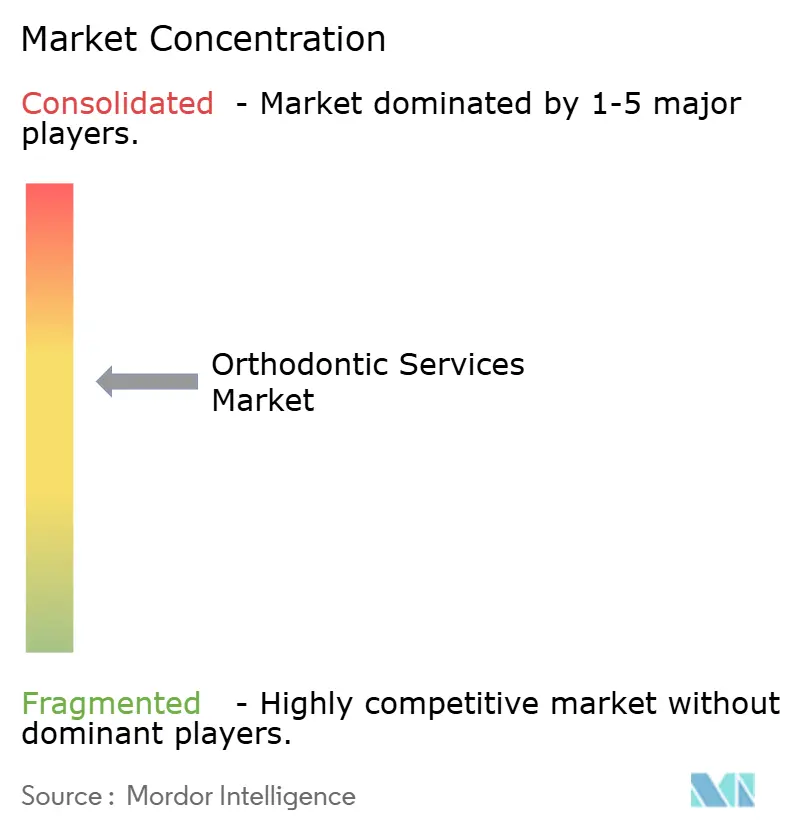
| Market Concentration | Medium |
Major Players *Disclaimer: Major Players sorted in no particular order Image © Mordor Intelligence. Reuse requires attribution under CC BY 4.0. | |
Orthodontic Services Market Analysis by Mordor Intelligence
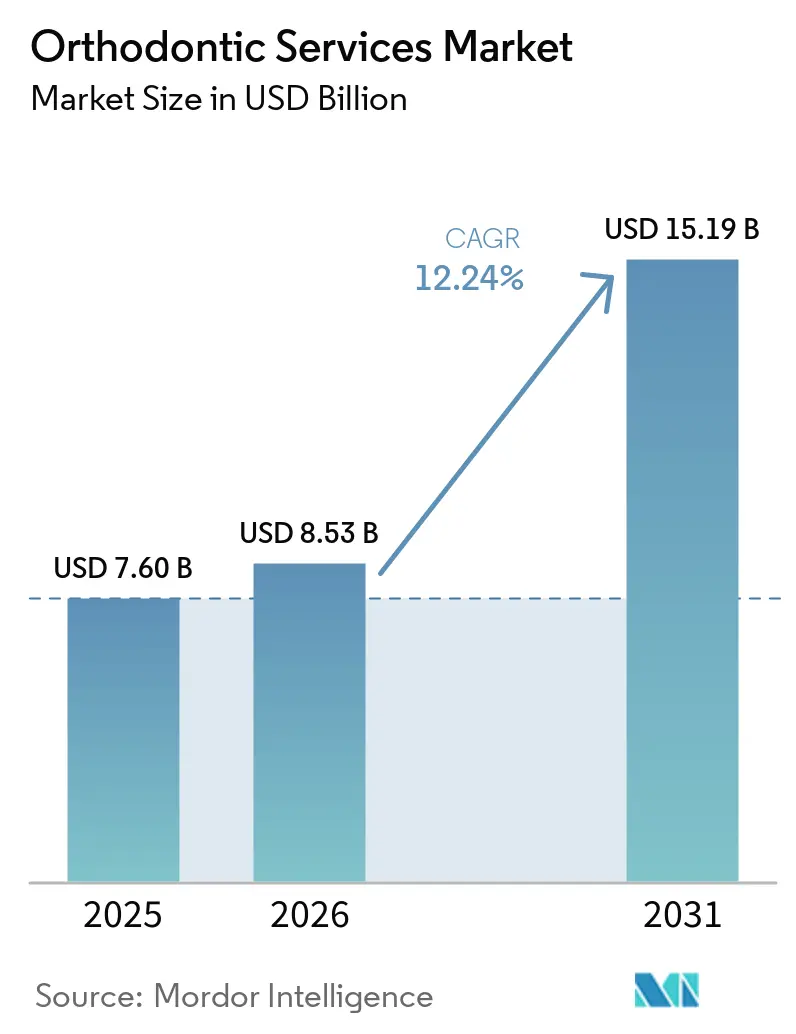
The Orthodontic Services Market size is projected to be USD 7.60 billion in 2025, USD 8.53 billion in 2026, and reach USD 15.19 billion by 2031, growing at a CAGR of 12.24% from 2026 to 2031.
The orthodontic services market is expanding as more patients seek correction for dental misalignment and increasingly prefer discreet treatment options. Malocclusion creates a broad pool of potential patients across age groups, while digital workflows help practices manage cases with fewer in-person visits. Larger dental and orthodontic service organizations are also changing access to treatment by standardizing workflows, sharing administrative resources, and using coordinated procurement. These changes support greater capacity in the orthodontic services market, although they also raise the importance of specialist availability, insurance coverage, and patient affordability. The orthodontic services market, therefore, combines a growing clinical need with a shift in how providers deliver, monitor, and finance care.
Key Report Takeaways
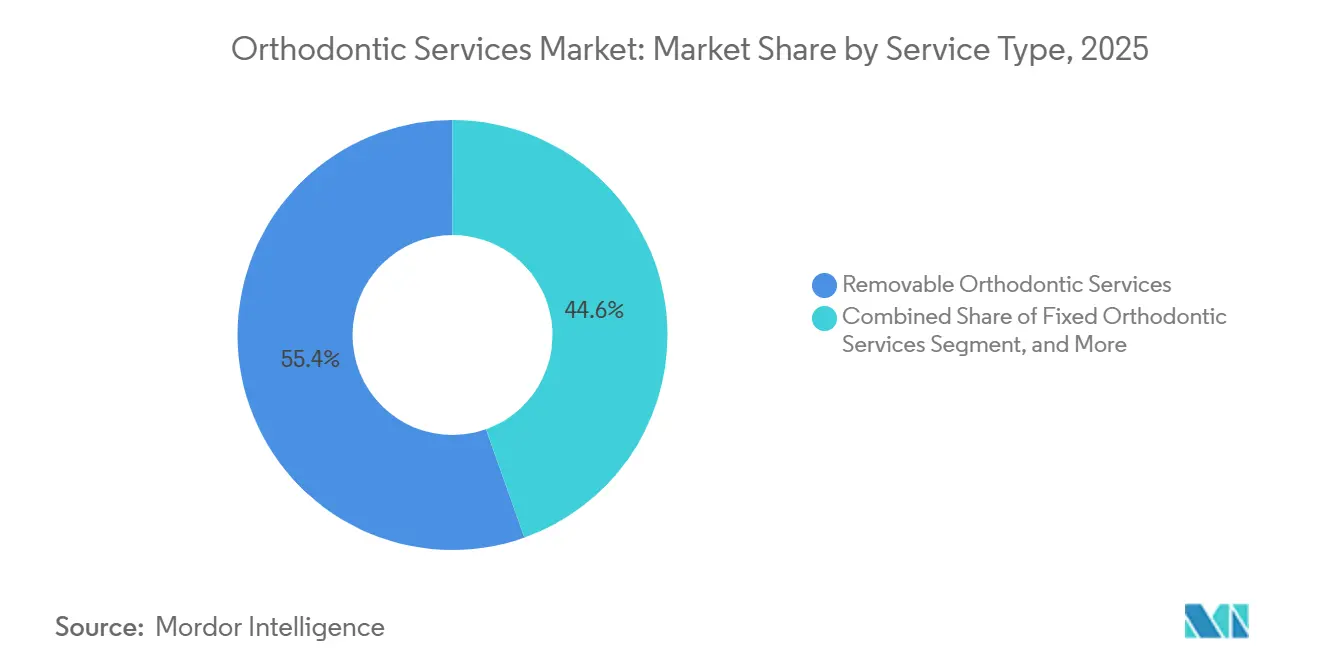
- By service type, removable orthodontic services held 55.4% of the orthodontic services market share in 2025 and are forecast to grow at a 14.65% CAGR through 2031.
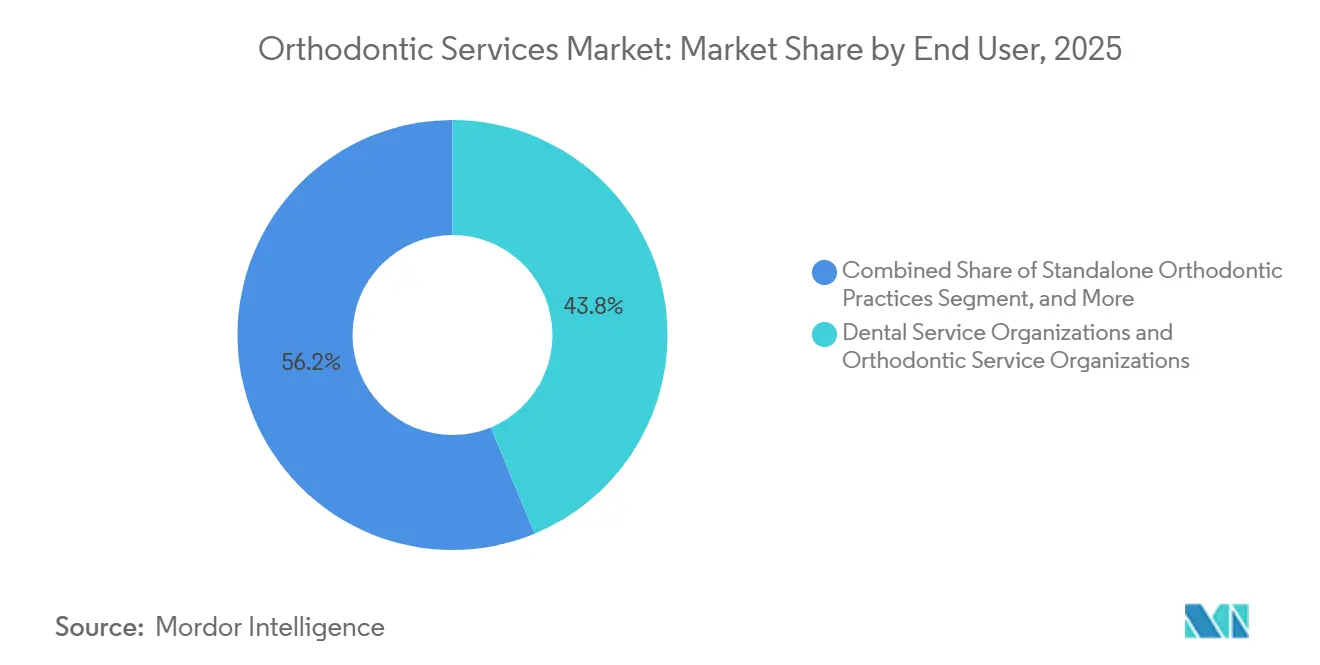
- By end user, DSOs and OSOs held 43.8% of revenue in 2025 and are forecast to grow at a 14.8% CAGR through 2031.
- By age group, adults aged 18–40 years held 56.4% of revenue in 2025 and are forecast to grow at a 15.32% CAGR through 2031.
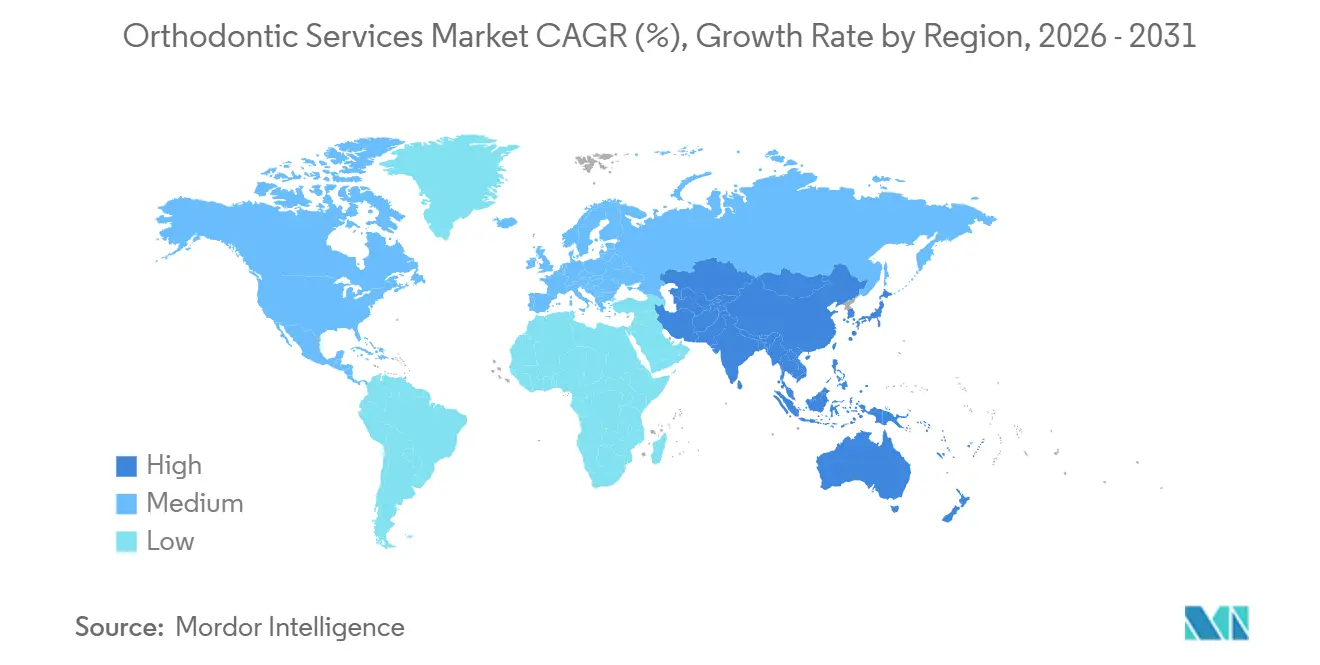
- By geography, North America held 42.4% of revenue in 2025, while Asia-Pacific is forecast to grow at a 13.4% CAGR through 2031.
Note: Market size and forecast figures in this report are generated using Mordor Intelligence’s proprietary estimation framework, updated with the latest available data and insights as of January 2026.
Market Trends and Insights
Drivers Impact Analysis of Orthodontic Services Market*
| Driver | (~) % Impact on CAGR Forecast | Geographic Relevance | Impact Timeline |
|---|---|---|---|
| Rising Prevalence of Dental Misalignment and Malocclusion | +1.80% | Global, most pronounced in Asia and South America | Long term (≥ 4 years) |
| Growing Adult Demand for Aesthetic Orthodontics | +2.50% | North America, Europe, and Asia-Pacific urban centers | Medium term (2-4 years) |
| Digital Scanning, AI Planning, and 3D-Printed Appliances | +2.00% | North America and Europe, with expansion into Asia-Pacific | Medium term (2-4 years) |
| Expanded Insurance and Employer-Sponsored Dental Benefits | +1.50% | North America, with early gains in the GCC and Western Europe | Short term (≤ 2 years) |
| Hybrid Remote Monitoring and Orthodontic Service Organization Scalability | +1.70% | North America, Europe, and Asia-Pacific | Medium term (2-4 years) |
| Direct-Print Workflow Compression and Lower Per-Case Production Cost | +1.30% | North America, Europe, China, and developed Asia-Pacific markets | Medium term (2-4 years) |
| Source: Mordor Intelligence | |||
Rising Prevalence of Dental Misalignment and Malocclusion
Malocclusion supports demand for orthodontic assessment and treatment across multiple age groups in the orthodontic services market, because the need can first appear in childhood and remain relevant through adulthood. A 2025 study reported adolescent prevalence ranging from 39% to 93%, depending on region and diagnostic criteria, while pooled prevalence was 61.8% in Asia and 61.5% in Europe[1]. This burden extends beyond appearance because untreated misalignment may affect oral function, complicate care needs, and make early clinical assessment more relevant for families and providers. The World Health Organization identifies oral diseases as a major public health concern, which supports greater attention to prevention and early diagnosis[2]. The 2024 Bangkok Declaration also placed oral health within wider health-system priorities, creating a more supportive setting for screening, referral, and care pathways where routine dental services are still developing. Over time, more systematic screening could broaden access to orthodontic services in lower-income and underserved settings.
Growing Adult Demand for Aesthetic Orthodontic Care
Adults are a major source of demand in the orthodontic services market because they often value discretion, convenience, and treatment flexibility, especially when treatment must fit work schedules and social routines. Adults aged 18–40 years accounted for 56.4% of revenue in 2025, showing that treatment is no longer focused only on adolescents. Some adult patients return for correction after earlier treatment when retainer use ended, and teeth shifted over time, creating a recurring source of demand rather than a one-time treatment population. Removable aligner programs fit this group because they can be removed for work, meals, and daily routines. For organized provider networks, adult cases can support more consistent use of digital impressions, remote monitoring, and standardized treatment planning, while reducing unnecessary visits for patients with predictable treatment needs. The resulting demand encourages practices to make adult engagement and long-term retention part of their service models.
Digital Scanning, AI Planning, and 3D-Printed Appliances
Digital scanning, artificial intelligence, and 3D printing are reducing manual steps in the orthodontic services market, from initial records through plan review, appliance design, and follow-up monitoring. A 2025 review found that AI-supported planning was associated with shorter treatment duration and fewer appointments than conventional workflows, although clinical use still requires professional oversight[3]. Align Technology introduced ClinCheck Signature in April 2026 with enhanced visualization and tools designed to reduce plan revisions. These tools can help providers manage a larger number of cases while improving consistency across locations, which is particularly useful for multi-site groups that need comparable clinical processes. At the same time, software-led care must meet medical-device requirements, which favors companies that can maintain quality systems and compliance processes across clinical, data-management, and product-development functions. The U.S. Food and Drug Administration cleared SmileInspector software as a Class II device in January 2026, confirming that planning software is subject to formal oversight.
Expanded Insurance and Employer-Sponsored Dental Benefits
Insurance design affects whether patients begin treatment after an orthodontic consultation, since even clinically appropriate care may be delayed when lifetime limits or deductibles leave high costs with patients. Employer-sponsored dental plans and voluntary benefit models can spread costs across a broader employee population, although the actual value to patients still depends on coverage scope and the provider network. The National Association of Dental Plans stated in 2026 that affordability concerns are influencing dental-benefit design and enrollment choices[4]. Sun Life introduced Kid Smile Complete in April 2026, providing eligible dependent children under 13 with 100% in-network dental coverage and no deductible. Better coverage can improve conversion for patients who already have an identified clinical need, particularly when a provider can explain treatment choices and the expected patient contribution clearly. However, coverage limits and out-of-pocket costs still shape which provider channels can capture demand. Larger provider groups may benefit when negotiated network rates make their programs more accessible to covered families.
Restraints Impact Analysis of Orthodontic Services Market*
| Restraint | (~) % Impact on CAGR Forecast | Geographic Relevance | Impact Timeline |
|---|---|---|---|
| High Treatment Costs and Limited Reimbursement | -2.20% | Global, most acute in Asia-Pacific, the Middle East and Africa, and South America | Long term (≥ 4 years) |
| Shortage of Trained Orthodontists and Uneven Specialist Access | -1.60% | Rural North America, the Middle East and Africa, and South Asia | Medium term (2-4 years) |
| Clinical Uncertainty in Remote Treatment of Complex Cases | -1.20% | Global, especially markets with limited specialist oversight | Medium term (2-4 years) |
| Regulatory, Interoperability, and Data-Governance Burden | -1.00% | North America, Europe, and regulated Asia-Pacific markets | Medium term (2-4 years) |
| Source: Mordor Intelligence | |||
High Treatment Costs and Limited Reimbursement
Treatment cost remains a central restraint for the orthodontic services market, especially where reimbursement is limited or unavailable, because many courses of care require payments that cannot be absorbed within ordinary household budgets. Clear aligner treatment and premium fixed appliances can require substantial out-of-pocket spending. This constraint is more acute in emerging economies and for households with limited dental benefits, where patients may postpone care even when misalignment affects function or quality of life. In China, Angelalign reported that the 2025 domestic average selling prices declined 12.6% as centralized procurement put pressure on pricing, even as case volumes increased. The result shows that larger patient volumes do not always translate into the same level of provider or manufacturer revenue growth. Insurance expansion may reduce part of the affordability gap, but it has not removed it for middle-income and uninsured patients, leaving payment plans, provider efficiency, and lower-cost delivery models important to access.
Shortage of Trained Orthodontists and Uneven Specialist Access
Specialist supply does not keep pace with demand in every part of the orthodontic services market, particularly where population density is low, and referral pathways to specialist practices are limited. The U.S. workforce included 10,830 practicing orthodontists in 2024, while dental professional shortage areas affected millions of people, with rural communities carrying much of the burden. Long training requirements make rapid expansion of the specialist base difficult, so workforce shortages cannot be resolved on the same timetable as rising patient interest or technology adoption. The problem is intensified by the uneven distribution of orthodontists between metropolitan and rural areas, which can increase travel time, delay consultation, and reduce continuity of care for patients outside major cities. Remote monitoring, virtual consultations, and AI-supported review may reduce travel needs and use specialist time more efficiently. These tools can ease access constraints, but their value depends on local clinical rules, reliable connectivity, and appropriate professional supervision.
*Our forecasts treat driver/restraint impacts as directional, not additive. The impact forecasts reflect baseline growth, mix effects, and variable interactions.
Orthodontic Services Market Segment Analysis
By Service Type:
Removable Formats Hold the Largest PositionRemovable services accounted for 55.4% of the orthodontic services market share in 2025. Clear aligner therapy is the leading format within this category because it suits patients who want a less visible option. It also works well with digital impressions and software-supported treatment planning. Fixed services remain essential for severe crowding, skeletal discrepancies, and other complex cases that require controlled force delivery. These cases continue to support specialist activity at standalone orthodontic practices, hospitals, and academic dental centers.
The orthodontic services market size associated with removable care is supported by a growing ability to standardize case planning and monitoring. Digital manufacturing can shorten turnaround times and improve repeatability for aligner programs. Some larger providers are beginning to explore in-house production, which can lower per-case costs and increase operational control. Align Technology continues to invest in digital orthodontic systems and 3D printing capabilities for practices. Fixed appliances will retain a clear clinical role, particularly for difficult cases. Adjunctive and complex services, including surgical and craniofacial treatment, remain smaller but important because they require specialist coordination and advanced planning.

By End User:
DSOs and OSOs Lead Delivery-Model GrowthDSOs and OSOs held 43.8% of revenue in 2025 and are forecast to grow at a 14.8% CAGR through 2031. This makes them the fastest-growing end-user channel in the orthodontic services market. These organizations can centralize scheduling, procurement, patient communication, and digital workflow support. Their scale can also make it easier to offer standard care pathways across many sites. Smile Doctors expanded its network through the March 2025 acquisition of myOrthos, adding more than 70 affiliated locations across 13 states.
The orthodontic services market share of larger networks can increase when orthodontists seek administrative support and patient-acquisition capabilities. Standalone practices nevertheless retain an important position in higher-income suburban areas, where specialist reputation and long-term patient relationships support premium care. General dental clinics are another relevant channel as more general practitioners incorporate clear aligner protocols into their service offering. Hospitals and academic dental centers remain vital for complex cases, specialist education, and referral networks. Align Technology reported continued growth in its DSO channel in the second quarter of 2026, supported by account additions and higher case volume per site. Provider consolidation is therefore changing service delivery without eliminating independent practice models.
By Age Group:
Adults Anchor Revenue While Earlier Care ExpandsAdults aged 18–40 years held 56.4% of revenue in 2025, the largest age-based position in the orthodontic services market. This group includes first-time patients and adults returning after relapse following earlier treatment. Adults often prioritize less conspicuous appliances and scheduling flexibility. These preferences reinforce demand for removable options and remote monitoring. Adolescents aged 13–17 years remain important because active growth can be the preferred time for certain developmental corrections.
Pediatric patients aged 0–12 years account for a smaller share of the orthodontic services market size, yet early intervention is gaining attention. A 2025 systematic review found that diagnosis and treatment of skeletal anomalies during the prepubertal period can improve treatment outcomes and reduce treatment duration. Align Technology reported 935,800 teen and kids case starts in fiscal 2025, an increase of 7.8% from the prior year. This indicates that removable approaches are extending beyond adult use. Mature adults above 40 years are another emerging group as longer working lives and regular video communication increase interest in appearance and treatment convenience. Providers that support follow-up care can address recurring demand across more than one age group.
Geography Analysis
North America Orthodontic Services Market
North America held 42.4% of the orthodontic services market share in 2025. The United States is the region’s largest country-level opportunity, supported by established dental benefits and a mature DSO and OSO presence. Organized provider networks have created a more structured delivery model for orthodontic care. Canada also offers private dental benefit growth and cross-border expansion opportunities. Daia Orthodontics announced in September 2026 that it had acquired 4 clinics in New Brunswick and Prince Edward Island.
Europe Orthodontic Services Market
Europe is the second-largest regional block in the orthodontic services market. Germany, the United Kingdom, France, Italy, and Spain account for much of regional activity. Adult adoption and high dental awareness support demand for aesthetic care. Orthalis acquired Dentalsoft Group in January 2026, forming SignalSoft Développement to expand orthodontic software capabilities in Europe. Medical-device requirements for diagnostic and planning software raise entry requirements for smaller digital providers.
APAC, MEA and South America Orthodontic Services Market
Asia-Pacific is forecast to expand at a 13.4% CAGR through 2031, the fastest regional rate in the orthodontic services market. China remains an important driver because a large patient base can offset pricing pressure through case growth. Angelalign reported a 26.3% increase in Chinese mainland case volume to 276,200 cases in 2025. India is also becoming a more important market after Zenyum and MakeO Toothsi announced their merger in February 2026, combining a network of nearly 1,100 partner doctors. The Middle East and Africa and South America remain smaller in absolute value, but urbanization, private clinic expansion, and greater awareness are broadening demand.
Competitive Landscape
The orthodontic services market has a concentrated global technology layer and a more fragmented care-delivery layer. Align Technology reported 299,500 active doctor customers and cumulative treatment experience with 22.8 million Invisalign patients in 2026. Service providers remain more dispersed because orthodontic care is delivered through many local practices and networks. This division produces competition between device makers, software providers, and multi-site care organizations. Leading platforms seek density in major cities through practice affiliations and acquisitions.
Manufacturers are also using partnerships and clinical education to deepen their position in the orthodontic services market. Straumann Group announced a partnership with Smartee in October 2025 to support ClearCorrect manufacturing in EMEA and Asia-Pacific. Medit established a Global Orthodontic Business Division in May 2026 and acquired Progressive Orthodontics, linking scanning technology with practitioner education. These moves show that companies are pursuing integrated digital workflows rather than standalone products. Dentsply Sirona’s 2025 restructuring and impairment in orthodontics also indicated margin pressure among mid-tier suppliers.
Remote monitoring, pediatric intervention, and lower-tier cities in China and India remain important areas for competition in the orthodontic services market. Digital tools can create recurring revenue through monitoring services while helping practices limit unnecessary appointments. Angelalign reported 532,400 total cases in 2025, an increase of 48.1%, and international case growth of 82.1%. Its performance reflects the ability of regional competitors to expand outside their home markets. Large service organizations also hold a procurement advantage that independent practices may find difficult to match. Competition will therefore remain active across clinical software, aligner supply, provider networks, and remote care services.
Orthodontic Services Industry Leaders
-
Smile Doctors, LLC
-
PDS Health
-
Heartland Dental
-
The Aspen Group
-
Integrated Dental Holdings (mydentist)
- *Disclaimer: Major Players sorted in no particular order
Orthodontic Services Market Companies Covered in this Report
- Align Technology
- Dentsply Sirona
- Envista
- Straumann Group
- Solventum Corporation
- Henry Schein
- Smile Doctors, LLC
- PDS Health
- Heartland Dental
- The Aspen Group
- Smile Brands Inc.
- Dental Care Alliance
- MB2 Dental Solutions
- Integrated Dental Holdings (mydentist)
- Abano Healthcare Group Limited
- Q & M Dental Group (Singapore) Limited
- Coast Dental Services LLC
- Apollo White Dental Pvt. Ltd.
- American Orthodontics
- Angelalign Technology Inc.
- 3 Shape
Recent Industry Developments in Orthodontic Services Market
- September 2026: Daia Orthodontics & TMJ Orthopedics announced cross-border expansion into Canada through the acquisition of four orthodontic clinics in New Brunswick and Prince Edward Island, marking a significant geographic diversification for a Michigan-based orthodontic practice.
- May 2026: Medit Corp. established its Global Orthodontic Business Division and acquired Progressive Orthodontics, a clinical education institution in Aliso Viejo, California, integrating digital scanning capabilities with a global practitioner training network.
- April 2026: Align Technology previewed the Invisalign Specifix Attachment System, ClinCheck Signature, and Invisalign Palatal Expander with integrated hooks at the AAO Annual Session in Orlando.
- February 2026: Zenyum and MakeO Toothsi announced a merger to create a consumer dental company with nearly 1,100 partner doctors across markets from the Middle East to Japan.
Global Orthodontic Services Market Report Scope
According to the report’s scope, orthodontic services help straighten teeth and correct bite problems. They include treatments such as braces, clear aligners, and retainers. These services improve dental health, comfort, and the appearance of a smile.
The orthodontic services market is segmented into service type, end user, age group, and geography. By service type, the market is segmented into fixed orthodontic services, removable orthodontic services, and adjunctive and complex orthodontic services. By end user, the market is segmented into standalone orthodontic practices, general dental clinics with orthodontic services, dental service organizations and orthodontic service organizations, hospitals and academic dental centers, and other end users. By age group, the market is segmented into pediatric (0-12 Years), adolescent (13-17 Years), adult (18-40 Years), and mature adult (Above 40 Years). By geography, the market is segmented into North America, Europe, Asia-Pacific, the Middle East and Africa, and South America. The report also covers the estimated market sizes and trends for 17 countries across major regions globally. The report offers values (USD) for all the above segments.
Segmentation Overview
| Fixed Orthodontic Services |
| Removable Orthodontic Services |
| Adjunctive and Complex Orthodontic Services |
| Standalone Orthodontic Practices |
| General Dental Clinics with Orthodontic Services |
| Dental Service Organizations and Orthodontic Service Organizations |
| Hospitals and Academic Dental Centers |
| Other End Users |
| Pediatric (0-12 Years) |
| Adolescent (13-17 Years) |
| Adult (18-40 Years) |
| Mature Adult (Above 40 Years) |
| North America | United States |
| Canada | |
| Mexico | |
| Europe | Germany |
| United Kingdom | |
| France | |
| Italy | |
| Spain | |
| Rest of Europe | |
| Asia-Pacific | China |
| Japan | |
| India | |
| Australia | |
| South Korea | |
| Rest of Asia-Pacific | |
| Middle East and Africa | GCC |
| South Africa | |
| Rest of Middle East and Africa | |
| South America | Brazil |
| Argentina | |
| Rest of South America |
| By Service Type | Fixed Orthodontic Services | |
| Removable Orthodontic Services | ||
| Adjunctive and Complex Orthodontic Services | ||
| By End User | Standalone Orthodontic Practices | |
| General Dental Clinics with Orthodontic Services | ||
| Dental Service Organizations and Orthodontic Service Organizations | ||
| Hospitals and Academic Dental Centers | ||
| Other End Users | ||
| By Age Group | Pediatric (0-12 Years) | |
| Adolescent (13-17 Years) | ||
| Adult (18-40 Years) | ||
| Mature Adult (Above 40 Years) | ||
| Geography | North America | United States |
| Canada | ||
| Mexico | ||
| Europe | Germany | |
| United Kingdom | ||
| France | ||
| Italy | ||
| Spain | ||
| Rest of Europe | ||
| Asia-Pacific | China | |
| Japan | ||
| India | ||
| Australia | ||
| South Korea | ||
| Rest of Asia-Pacific | ||
| Middle East and Africa | GCC | |
| South Africa | ||
| Rest of Middle East and Africa | ||
| South America | Brazil | |
| Argentina | ||
| Rest of South America | ||
Key Questions Answered in the Report
What is the forecast for orthodontic services through 2031?
The orthodontic services market is forecast to reach USD 15.19 billion by 2031, growing at a 12.2% CAGR from 2026. Demand is supported by greater adult participation, digital workflows, and wider use of organized care platforms.
Which service type held the largest revenue share in 2025?
Removable orthodontic services led with 55.4% of revenue in 2025, supported by demand for discreet aligner-based treatment. Fixed appliances remain clinically important for severe crowding, skeletal conditions, and other complex corrections.
Why are DSOs and OSOs growing quickly?
DSOs and OSOs are forecast to grow at a 14.8% CAGR through 2031 because they can standardize operations, procurement, and digital workflows across locations. Their shared support functions can also help participating clinicians spend more time on patient care.
Which age group drives the greatest demand?
Adults aged 18-40 years accounted for 56.4% of revenue in 2025, reflecting demand for flexible and less visible treatment options. This includes patients receiving treatment for the first time and those returning after orthodontic relapse.
Which region is growing fastest?
Asia-Pacific is forecast to expand at a 13.4% CAGR through 2031, led by large patient populations and higher adoption of aesthetic dental care. China and India are important markets because of their scale, digital engagement, and expanding provider networks.
What are the main barriers to patient access?
High treatment costs, restricted reimbursement, and uneven access to trained orthodontists remain the central barriers to treatment uptake. Remote monitoring and digital planning may improve capacity, but they do not fully solve affordability or geographic access gaps.