
Organic Pasta Market Size and Share
Market Overview
| Study Period | 2022 - 2032 |
|---|---|
| Market Size (2027) | USD 0.88 Billion |
| Market Size (2032) | USD 1.44 Billion |
| Growth Rate (2027 - 2032) | 10.23 % |
| Fastest Growing Market | Asia-Pacific |
| Largest Market | North America |
| Market Concentration | Low |
Major Players *Disclaimer: Major Players sorted in no particular order Image © Mordor Intelligence. Reuse requires attribution under CC BY 4.0. | |
Organic Pasta Market Analysis by Mordor Intelligence
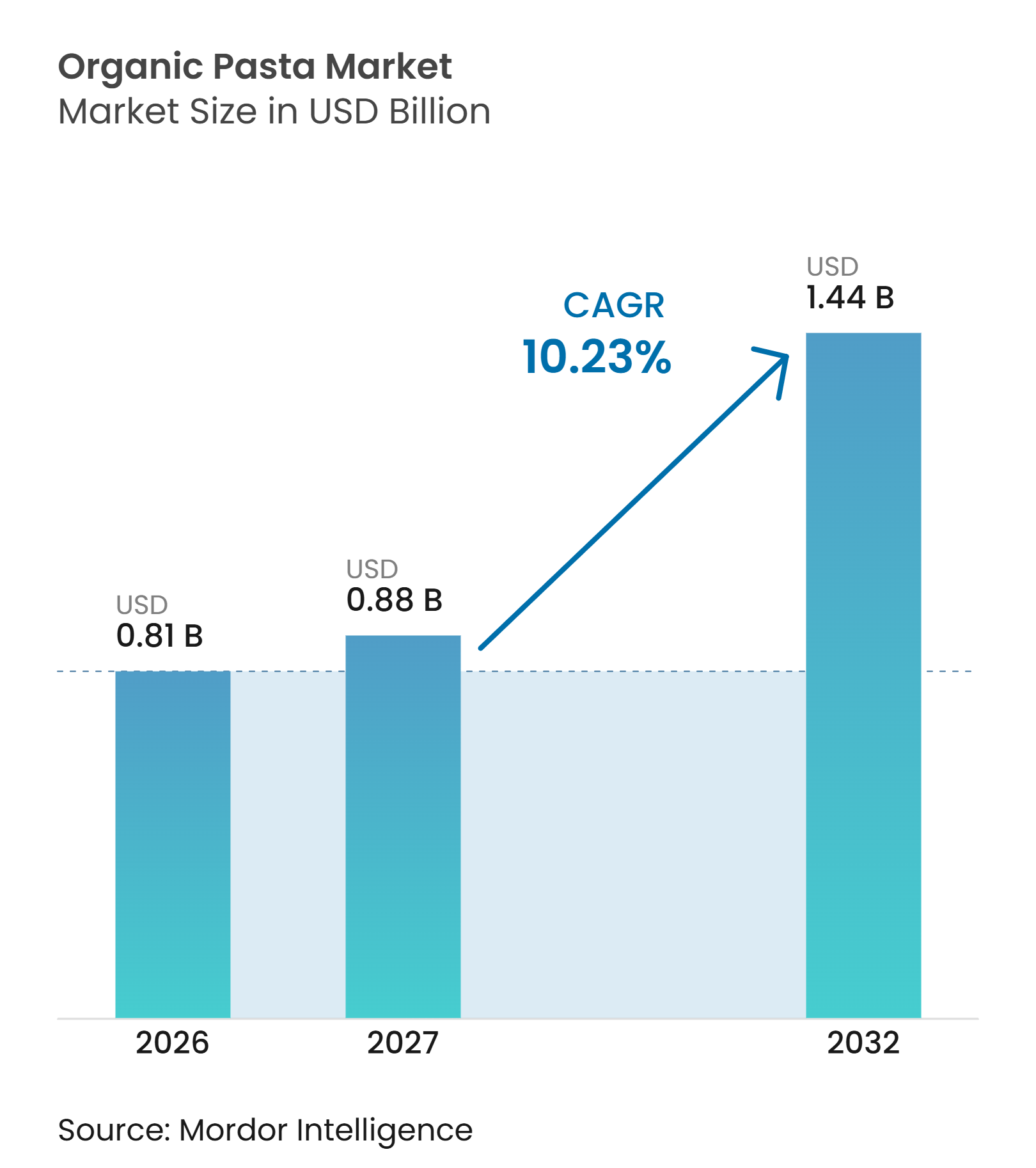
The organic pasta market size is expected to grow from USD 0.81 billion in 2026 to USD 0.88 billion in 2027, and is forecast to reach USD 1.44 billion by 2032 at a 10.23% CAGR over 2027-2032. The organic pasta market is benefiting from wider availability of certified ingredients, expanding retail distribution, and increasing consumer interest in organic, gluten-free, and high-protein products. Producers are strengthening product differentiation through premium formats, ingredient provenance, and improved processing quality. Growing interest in fresh, filled, and functional pasta is also creating opportunities for premium product offerings. Greater emphasis on ingredient quality, certification, traceability, and supply-chain transparency is further supporting market development and strengthening consumer confidence in organic pasta products.
Key Report Takeaways
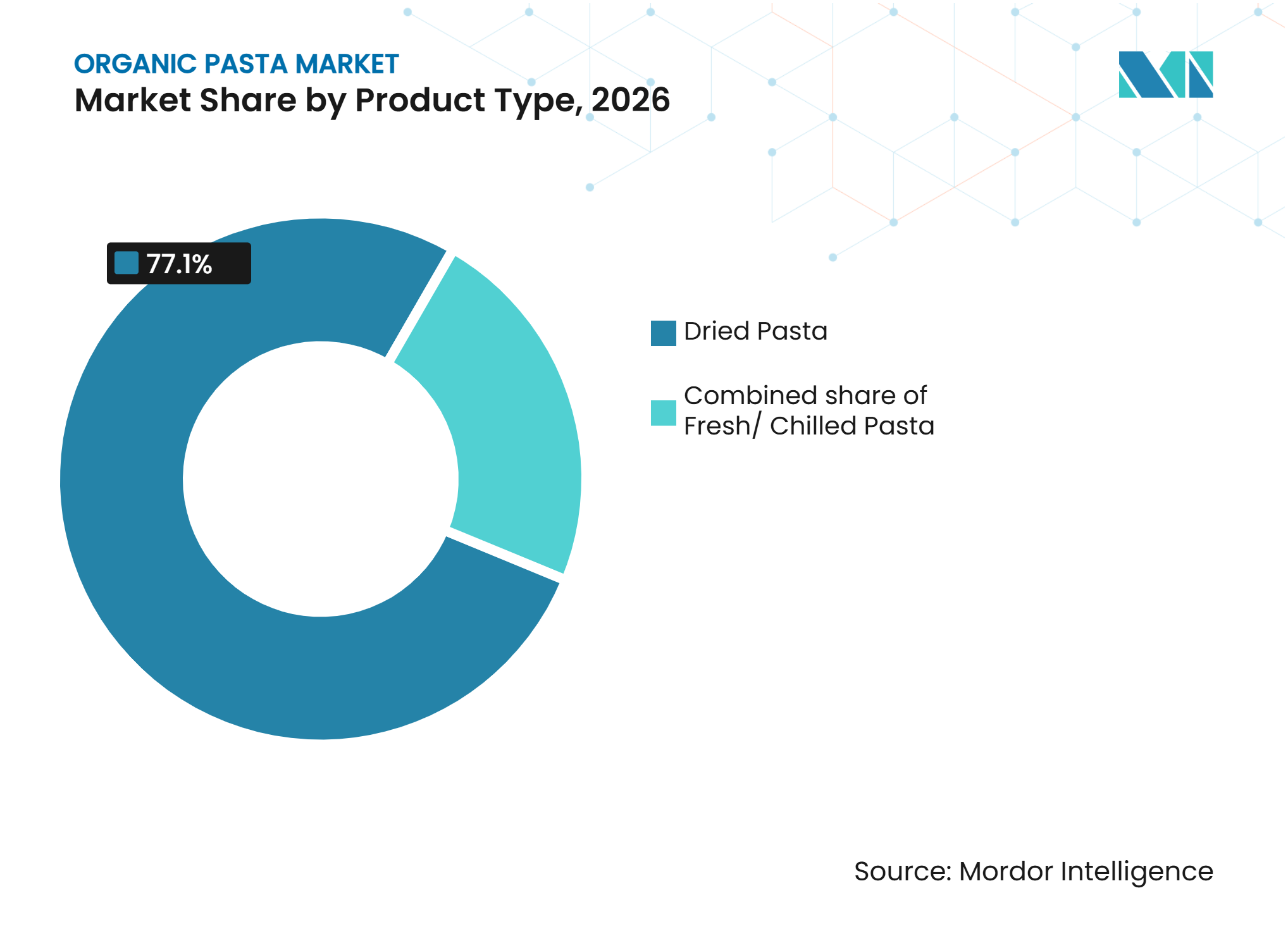
• By product type, dried pasta held 77.16% of the organic pasta market share in 2026, while fresh/ chilled pasta is forecast to expand at a CAGR of 12.21% through 2032.
• By filling, plain held 84.12% of the organic pasta market share in 2026, while stuffed/ filled pasta is forecast to expand at a CAGR of 12.32% through 2032.
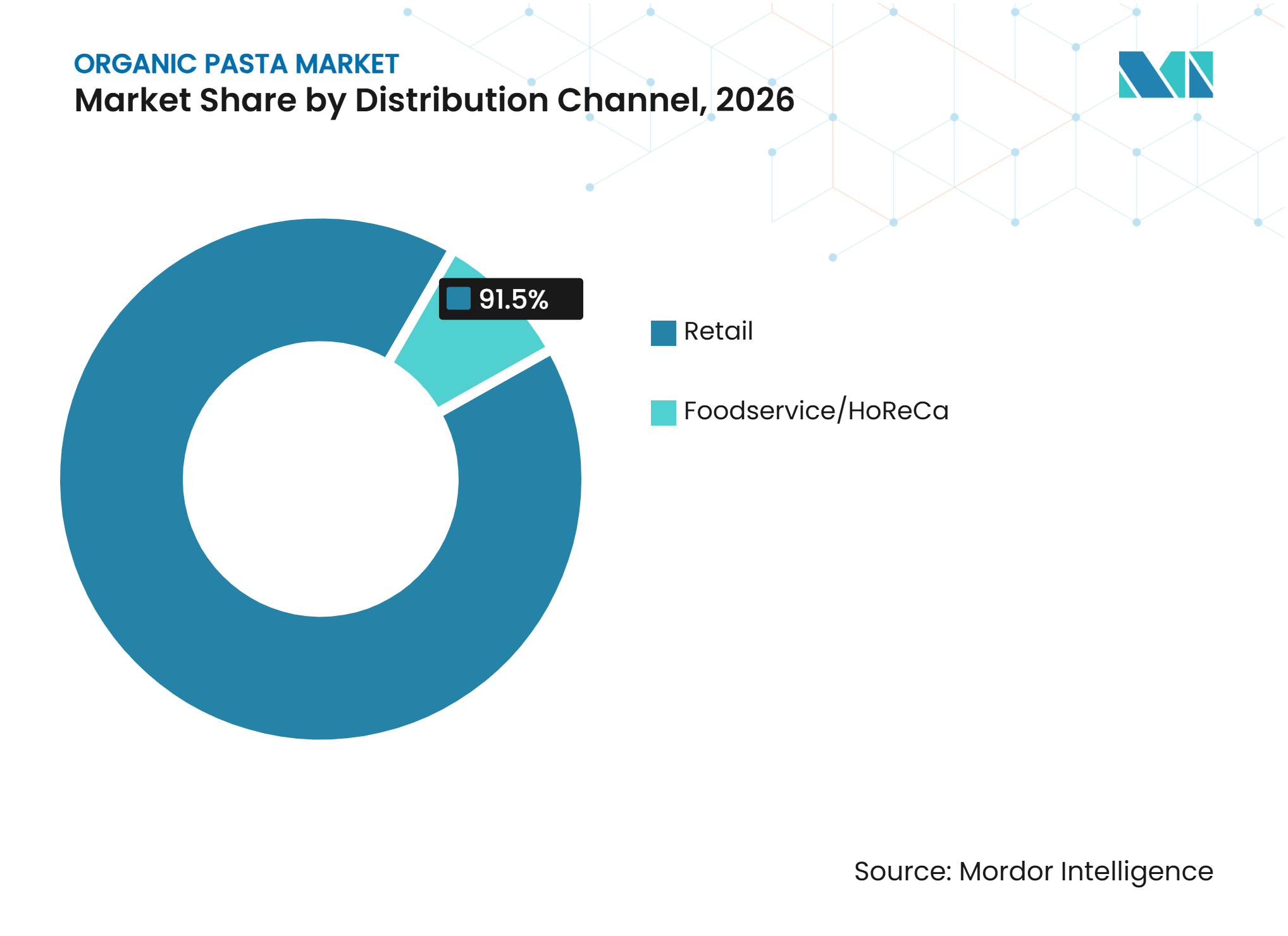
• By distribution channel, retail held 91.54% of the organic pasta market share in 2026, while foodservice/ HoReCa is forecast to expand at a CAGR of 11.96% through 2032.
• By geography, North America held 48.13% of the organic pasta market share in 2026, while Asia-Pacific is forecast to expand at a CAGR of 11.85% through 2032.
Note: Market numbers in this report are based on Mordor Intelligence's proprietary estimation framework, which combines nine months of actuals with Q4 projections for base year 2026.
Market Trends and Insights
Drivers Impact Analysis of Organic Pasta Market of Organic Pasta Market*
| Driver | (~) % Impact on CAGR Forecast | Geographic Relevance | Impact Timeline |
|---|---|---|---|
| Growing consumer demand for organic pasta | +1.4% | Europe, North America, and Asia-Pacific | Long term (≥ 4 years) |
| Increasing availability and adoption of organic pasta across mainstream retail channels | +1.2% | Europe and North America, with growing adoption in Asia-Pacific | Medium term (2–4 years) |
| Growing demand for organic gluten-free and alternative-grain pasta | +1.1% | North America, Europe, and Asia-Pacific | Medium term (2–4 years) |
| Premium formats broaden the category's value proposition | +0.9% | Europe and North America | Medium term (2–4 years) |
| Product innovation and expansion of fresh, chilled, and frozen organic pasta formats | +0.8% | Europe and North America | Short term (≤ 2 years) |
| Growing demand for organic pasta in emerging markets | +0.7% | Asia-Pacific, South America, and Middle East and Africa | Long term (≥ 4 years) |
| Source: Mordor Intelligence | |||
Growing Consumer Demand for Organic Pasta
The organic pasta market is benefiting from increasing consumer interest in certified organic food products, ingredient transparency, and healthier food choices. For instance, in 2026, according to data from the Organic Trade Association, the United States organic pasta market grew by 3.6% in 2025, up from 2024 [1]. This continued growth highlights the rising acceptance of organic pasta among consumers and the expanding market for products made with organically certified ingredients. Manufacturers are benefiting from these changing preferences by strengthening their organic product portfolios, offering a wider variety of pasta options, and positioning organic pasta as an alternative to conventional products. These developments are creating opportunities for established pasta producers and specialized organic brands to expand their market presence.
Increasing Availability and Adoption of Organic Pasta across Mainstream Retail Channels
The expansion of organic food distribution through conventional grocery retailers is creating opportunities for organic pasta manufacturers to reach a wider consumer base. For instance, in September 2026, according to the United States Department of Agriculture's Economic Research Service, mass-market retail channels account for 55% of U.S. organic food sales, while natural and specialty retailers account for more than 33%, highlighting the importance of established retail networks in organic product distribution [2]. This growing retail presence is also encouraging retailers to expand their organic pasta offerings. For instance, in September 2025, Natural Grocers introduced three certified organic egg pasta varieties, including Tagliatelle, Pappardelle, and Reginelle, as part of its private-label portfolio. Such product additions are increasing the availability of organic pasta across retail outlets and providing consumers with more choices in the organic pasta category.
Growing Demand for Organic Gluten-free and Alternative-Grain Pasta
The organic pasta market is shaped by growing consumer interest in gluten-free alternatives and in pasta made from alternative grains and legumes. For instance, in January 2026, according to Coeliac UK's Shopping Habits, of 3,785 respondents, only 38.4% were satisfied with the range of gluten-free products available in supermarkets, highlighting the need for greater product variety and availability [3]. Manufacturers are responding by introducing organic pasta formulations using alternative ingredients to address these preferences. For instance, in April 2025, Canadian food startup Otelia launched three varieties of certified organic protein pasta made from black beans, edamame, and soy chickpeas. The products are also gluten-free, vegan, and non-GMO, with each serving providing 21 g of protein and 9 g of fiber. Such product innovations are expanding the availability of organic pasta made with alternative ingredients and catering to consumers seeking gluten-free, protein-rich options.
Premium Formats Broaden the Category's Value Proposition
The organic pasta market is benefiting from growing consumer interest in premium and specialty products that combine organic ingredients with distinctive qualities such as traditional production methods, regional authenticity, heritage grains, and enhanced nutritional value. Manufacturers are expanding their product portfolios with innovative shapes, artisanal processing techniques, and alternative ingredients to offer greater variety and differentiation. The introduction of fresh, chilled, frozen, and filled organic pasta varieties is further broadening product choices and catering to diverse meal occasions. These developments are creating opportunities for manufacturers to strengthen their premium product positioning, reach a wider consumer base, and expand their presence across established and emerging retail markets.
Restraints Impact Analysis of Organic Pasta Market of Organic Pasta Market*
| Restraint | (~) % Impact on CAGR Forecast | Geographic Relevance | Impact Timeline |
|---|---|---|---|
| Premium pricing of organic pasta and inflation-driven consumer trade-down | -1.0% | Emerging markets, Asia-Pacific, price-sensitive regions | Medium term (2–4 years) |
| Supply volatility and higher procurement costs of certified organic grains and pulses | -0.9% | Europe, North America, Asia-Pacific | Medium term (2–4 years) |
| High organic certification, processing compliance, and supply chain segregation costs | -0.7% | Global, particularly emerging markets | Long term (≥ 4 years) |
| Texture, taste, and cooking-performance challenges in organic alternative-grain pasta | -0.6% | Global, particularly North America and Europe | Medium term (2–4 years) |
| Source: Mordor Intelligence | |||
Premium Pricing of Organic Pasta and Inflation-driven Consumer Trade-Down
The organic pasta market remains exposed to consumer trade-down when household budgets are under pressure, as organic products generally carry higher production, certification, and handling costs than conventional alternatives. These additional costs contribute to premium retail prices, making organic pasta less accessible to price-sensitive consumers, particularly during periods of inflation and reduced discretionary spending. Since pasta is a frequently purchased staple with several conventional and private-label alternatives available in supermarkets and hypermarkets, consumers may switch to lower-priced conventional or private-label products to manage grocery expenses. The growing availability of affordable private-label pasta further intensifies price competition, making it challenging for branded organic pasta manufacturers to maintain their premium positioning.
Supply Volatility and Higher Procurement Costs of Certified Organic Grains and Pulses
The organic pasta market faces supply-side challenges due to the limited availability and fluctuating supply of certified organic grains and pulses used in pasta production. Raw materials such as organic durum wheat, rice, corn, chickpeas, lentils, and peas are dependent on agricultural production conditions and can be affected by unpredictable weather, crop diseases, soil quality, and seasonal variations. These factors can disrupt raw material availability and create fluctuations in procurement costs. Organic farming also involves additional production and certification requirements, while maintaining organic integrity throughout sourcing, storage, transportation, and processing increases supply chain complexity. Manufacturers must ensure consistent access to certified raw materials while preventing contamination with conventionally grown ingredients, which can limit sourcing flexibility.
*Our forecasts treat driver/restraint impacts as directional, not additive. The impact forecasts reflect baseline growth, mix effects, and variable interactions.
Organic Pasta Market Segment Analysis
By Product Type:
Dried Pasta Anchors Volume, While Chilled Formats Drive GrowthDried pasta held 77.16% of the organic pasta market in 2026. Dried organic pasta benefits from established pantry-purchasing habits and its widespread availability across supermarkets and grocery retail channels. Its extended shelf life supports convenient storage, efficient inventory management, regular replenishment, and distribution across diverse geographic markets without requiring refrigerated transportation or storage. Retailers can offer a wider variety of shapes, pack sizes, and product formulations while maintaining product availability and minimizing spoilage. This makes dried pasta a convenient option for households incorporating organic products into their regular grocery purchases. Its established production and distribution infrastructure also provides manufacturers with opportunities to expand their retail presence and reach a broader consumer base.
Fresh/ chilled pasta is projected to expand at a CAGR of 12.21% from 2027 to 2032. Fresh and chilled organic pasta is gaining traction as consumers increasingly seek premium, convenient meal options that offer restaurant-style experiences at home. These products provide opportunities for manufacturers to introduce distinctive formulations, filled varieties, and diverse taste profiles while positioning organic ingredients as a premium product attribute. Their differentiated formats and shorter production cycles also support product innovation and enable manufacturers to cater to consumers seeking variety beyond conventional dried pasta. Demand from foodservice establishments further creates opportunities for fresh and chilled organic pasta, as restaurants can incorporate premium ingredients and distinctive product offerings into their menus



By Filling:
Plain Pasta Provides Scale, While Stuffed Pasta Builds Premium ValuePlain held 84.12% of the organic pasta market share in 2026. Plain organic pasta benefits from its familiarity and versatility, as households regularly purchase it for everyday meals and pair it with a wide range of sauces and ingredients. Its broad usage across different meal occasions supports consistent retail demand and enables manufacturers to maintain a strong presence across supermarkets and grocery channels. The segment also offers opportunities for private-label development, allowing retailers to expand their organic pasta ranges with accessible everyday options. Manufacturers are further enhancing plain pasta offerings by using pulse flours, ancient grains, and protein-rich formulations, adding nutritional variety and product differentiation to familiar formats. These ingredient innovations allow consumers to explore new product attributes while retaining their preferred pasta shapes and meal preparation habits.
Stuffed/ filled pasta is expected to expand at a CAGR of 12.32% through 2032. Stuffed organic pasta is gaining popularity as consumers increasingly seek premium and convenient meal options with distinctive ingredients and flavors. Products such as ravioli, tortellini, and other filled varieties offer manufacturers opportunities to combine organic pasta with diverse fillings, including vegetables, cheese, and plant-based ingredients. Their differentiated formulations and premium positioning appeal to consumers seeking restaurant-style meals and greater variety for home consumption. The segment also benefits from foodservice applications, where restaurants can incorporate premium organic ingredients into distinctive menu offerings and introduce consumers to specialty pasta varieties. The growing availability of filled organic pasta through refrigerated and frozen retail formats further improves convenience and expands consumer choice.
By Distribution Channel:
Retail Leads Sales, While Foodservice Builds New OccasionsRetail held 91.54% of the organic pasta market share in 2026. The retail distribution channel plays a significant role in the organic pasta market by providing manufacturers with broad access to household consumers through supermarkets, hypermarkets, natural-food stores, and online grocery platforms. These outlets enable organic pasta products to reach consumers alongside conventional alternatives, improving product visibility and supporting regular grocery purchases. Retail shelves also allow consumers to compare organic certifications, ingredient compositions, nutritional attributes, and available pack formats, supporting informed purchasing decisions. The expansion of private-label organic pasta ranges further strengthens product availability and broadens consumer choice across everyday and specialty formats. Online retail platforms offer additional opportunities for manufacturers to reach consumers interested in niche organic products that may be limited in physical stores.
Foodservice/ HoReCa is forecast to expand at a CAGR of 11.96% from 2027 to 2032. The foodservice distribution channel provides opportunities for organic pasta manufacturers to reach consumers through restaurants, hotels, catering services, and hospitality establishments. These outlets introduce diners to organic pasta through prepared meals, supporting product awareness and familiarity beyond conventional retail purchases. The channel is particularly well-suited to fresh, filled, and regional pasta varieties, enabling chefs to create distinctive dishes with premium ingredients and diverse flavor combinations. Organic sourcing also strengthens menu differentiation when combined with traditional recipes, specialty ingredients, and transparent ingredient information. Growing interest in premium dining experiences and differentiated menu offerings creates opportunities for restaurants to incorporate organic pasta into their foodservice portfolios.

Geography Analysis
North America
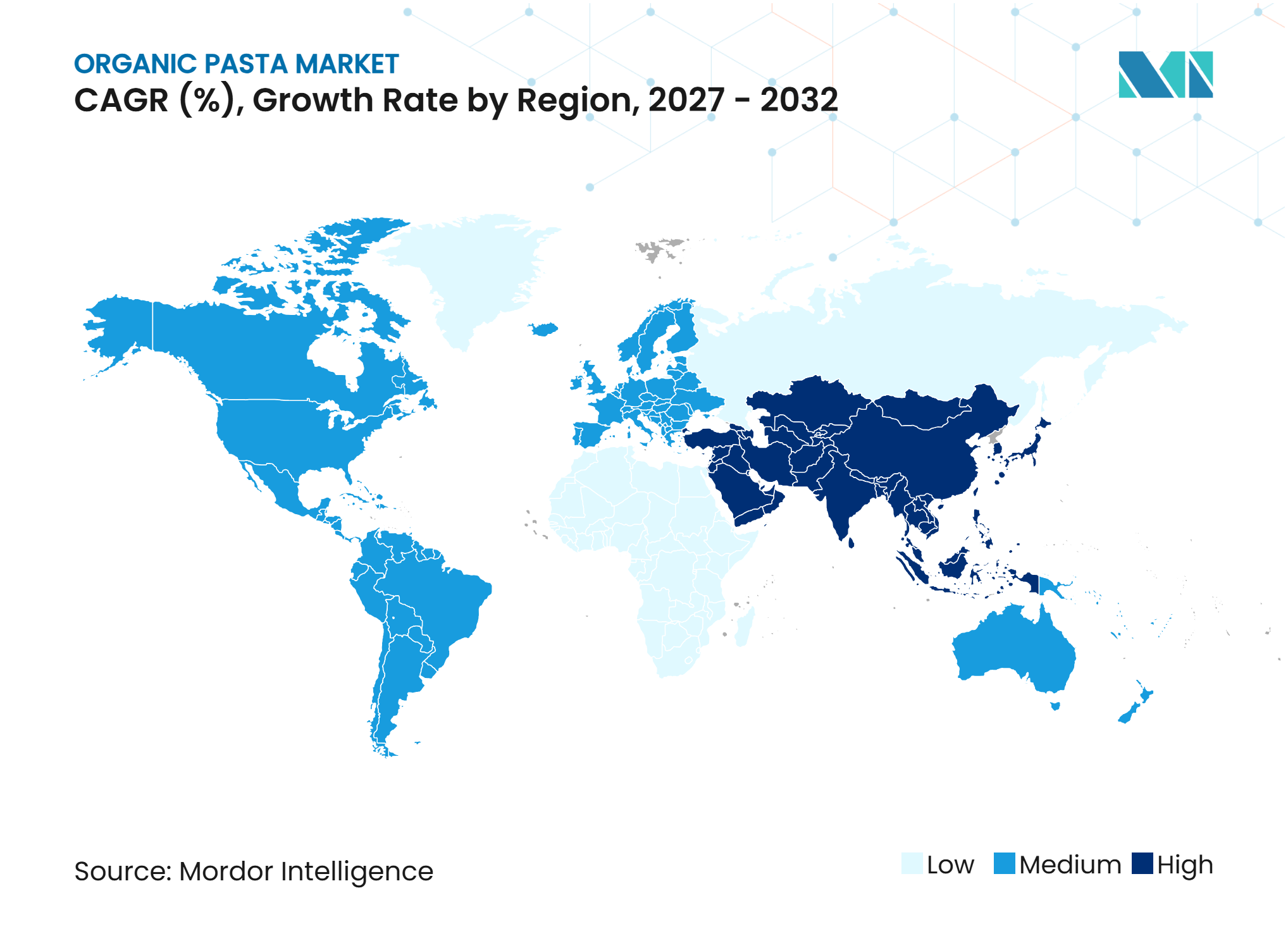
North America accounted for 48.13% of the organic pasta market share by revenue in 2026. North America’s organic pasta market is supported by an established organic food industry, widespread grocery distribution networks, and growing consumer familiarity with certified organic products. The United States provides a strong foundation for market development through its extensive network of specialty retailers, supermarket chains, warehouse clubs, and online grocery platforms. The expansion of organic food consumption also creates opportunities for pasta manufacturers to reach consumers who actively seek certified products and compare ingredient quality, nutritional attributes, and product formulations. Canada further contributes to regional market development through expanding retail availability and investments in local production capacity. The growing presence of international and domestic organic pasta brands is broadening product choices across conventional, premium, and specialty categories.
Asia-Pacific
Asia-Pacific is forecast to expand at a CAGR of 11.85% from 2027 to 2032. Asia-Pacific’s organic pasta market is expanding as urbanization, evolving food preferences, and the growth of organized grocery retail create opportunities for specialty food products. Increasing consumer interest in ingredient transparency, certified organic foods, and convenient meal options is supporting the introduction of organic pasta across the region. Established premium food markets such as Japan and South Korea provide opportunities for differentiated organic products, while China and India offer additional potential through the expansion of modern retail networks and digital commerce platforms. The growing availability of imported organic food products through online channels is also improving consumer access to specialty pasta varieties. Manufacturers are further expanding product offerings with legume-based formulations, plant protein ingredients, and convenient formats to cater to changing dietary preferences and urban lifestyles. Improvements in retail infrastructure and e-commerce distribution are supporting wider product visibility and accessibility.
Europe and Emerging Regions
Europe’s organic pasta market benefits from established pasta manufacturing capabilities, strong culinary traditions, and growing consumer demand for certified organic food products. Italy remains a key regional market due to its pasta production expertise, strong product heritage, and developed organic supply chains, while Germany, France, and the Netherlands offer opportunities through established organic food retail networks. Manufacturers are also expanding premium product offerings through innovative formulations, protein-enriched varieties, and fresh and filled organic pasta. South America benefits from the availability of locally cultivated ingredients such as quinoa, creating opportunities for distinctive organic pasta products and exports. Meanwhile, the Middle East and Africa offer emerging opportunities through premium retail and hospitality channels, supported by the increasing availability of imported organic products and growing consumer awareness of specialty food options.
Competitive Landscape
Market Concentration
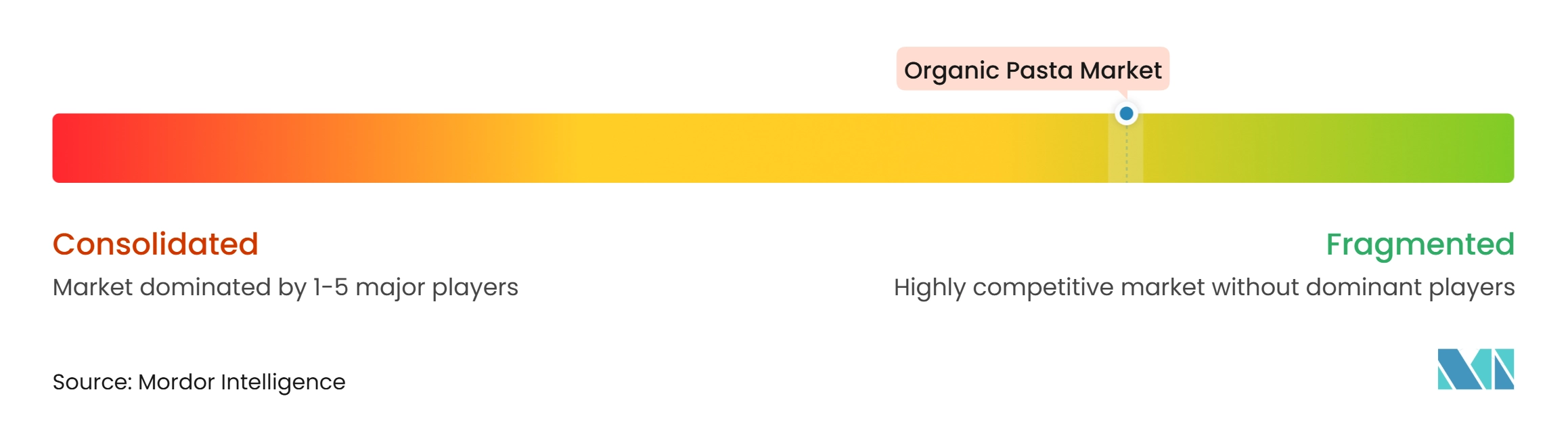
The organic pasta market is fragmented, with competition distributed among established pasta manufacturers, specialty organic brands, and private-label producers. Market participants compete through product quality, organic certification, ingredient sourcing, nutritional attributes, and product innovation. Differentiation through alternative grains, protein-rich formulations, gluten-free options, distinctive shapes, and premium processing methods is becoming increasingly important in attracting diverse consumer groups. Manufacturers are also expanding their product portfolios to address changing dietary preferences, including demand for plant-based ingredients, clean-label formulations, and specialty pasta varieties. These strategies allow companies to target different consumer segments while strengthening their brand positioning in the growing organic food category.
Supply chain capabilities, production capacity, and distribution networks also influence competitive positioning. Established manufacturers benefit from developed sourcing relationships, manufacturing infrastructure, and access to established retail channels, which support consistent product availability and a wider geographic reach. Smaller producers generally focus on specialized formulations, ingredient quality, and targeted consumer segments to establish their market presence. Investments in certified raw-material sourcing, production facilities, packaging, and supply chain management further support operational efficiency and product consistency. Retail partnerships, online distribution, and promotional activities also help manufacturers improve brand visibility and expand access to consumers across different markets.
Competition is also increasing across fresh and chilled pasta, filled varieties, foodservice supply, and emerging regional markets. These categories provide opportunities for manufacturers to introduce differentiated products and cater to diverse meal occasions. Growing private-label participation is broadening product availability and creating opportunities to reach price-sensitive consumers through accessible organic offerings. At the same time, branded manufacturers are strengthening their positioning through distinctive ingredients, premium quality, nutritional attributes, and product variety. Companies are therefore focusing on innovation, efficient sourcing, competitive pricing, and wider distribution to strengthen their market presence and maintain consumer preference.
Organic Pasta Industry Leaders
-
Barilla G. e R. Fratelli S.p.A.
-
Ebro Foods, S.A. (Pastificio Lucio Garofalo S.p.A. – Garofalo Organic)
-
F.lli De Cecco di Filippo Fara San Martino S.p.A.
-
Rummo S.p.A.
-
Andriani S.p.A. (Felicia)
- *Disclaimer: Major Players sorted in no particular order
Organic Pasta Market Companies Covered in this Report
- Barilla G. e R. Fratelli S.p.A.
- Ebro Foods, S.A. (Pastificio Lucio Garofalo S.p.A. – Garofalo Organic)
- F.lli De Cecco di Filippo Fara San Martino S.p.A.
- Rummo S.p.A.
- Andriani S.p.A. (Felicia)
- Jovial Foods, Inc. (Jovial)
- Eden Foods, Inc. (Eden)
- George DeLallo Company (DeLallo)
- Ateliers Bio de Provence (Coquelicot Provence)
- Tesei S.r.l. (Mannetti
- MARCOZZI Group)
- La Molisana S.p.A.
- Delverde Industrie Alimentari S.p.A. (Delverde)
- Pasta Lensi S.r.l.
- ALB-GOLD Teigwaren GmbH (ALB-GOLD)
- mossa GmbH (Pasta Nuova)
- Unipasta S.r.l. (Unipasta Bio)
- Zanichelli & Govi S.r.l. (Govi Farm)
- Molino Conti S.r.l.
- Biopasta S.r.l. (Biopasta)
- Gino Girolomoni Cooperativa Agricola (Girolomoni)
Recent Industry Developments in Organic Pasta Market
- May 2026: Barilla expanded its Al Bronzo pasta range with organic certification and introduced a new Radiatori shape, combining organic ingredients with its traditional bronze-cut processing method.
- March 2026: Natural Grocers introduced four varieties of certified organic frozen ravioli, including Ricotta & Mushroom, Mozzarella & Cherry Tomato, Eggplant & Provolone, and Butternut Squash, expanding its private-label organic pasta portfolio.
- February 2026: Felicia expanded its North American distribution through a nationwide Amazon launch, making its pasta portfolio available across the United States. The company also highlighted its expanding retail presence in the United States and Canada and its Ontario production facility
Global Organic Pasta Market Report Scope
The organic pasta market includes pasta products made using certified organic ingredients, such as organic wheat, grains, and pulses, produced in accordance with organic farming standards and processing requirements. The market is segmented by Product Type, Filling, Distribution Channel, and Geography. Based on Product Type, the market is segmented into Dried Pasta, Fresh/Chilled Pasta, Frozen Pasta, and Canned/Ready-to-Eat Pasta. Based on Filling, the market is segmented into Plain and Stuffed/Filled Pasta. Based on Distribution Channel, the market is segmented into Foodservice/HoReCa and Retail. Retail is further segmented into Supermarkets/Hypermarkets, Convenience/Grocery Stores, Online Retail Stores, and Other Distribution Channels. By geography, the market is segmented into North America, Europe, Asia-Pacific, South America, and the Middle East and Africa, with further analysis of key countries and the remaining regional markets. For each segment, market forecasts are provided in terms of value (USD).
Segmentation Overview
| Dried Pasta |
| Fresh/Chilled Pasta |
| Frozen Pasta |
| Canned/Ready to Eat Pasta |
| Plain |
| Stuffed/Filled Pasta |
| Foodservice/HoReCa | |
| Retail | Supermarkets/Hypermarkets |
| Convenience/Grocery Stores | |
| Online Retail Stores | |
| Other Distribution Channel |
| North America | United States |
| Canada | |
| Mexico | |
| Rest of North America | |
| Europe | United Kingdom |
| Germany | |
| France | |
| Italy | |
| Spain | |
| Netherlands | |
| Poland | |
| Rest of Europe | |
| Asia-Pacific | China |
| Japan | |
| India | |
| Australia | |
| South Korea | |
| Rest of Asia-Pacific | |
| South America | Brazil |
| Argentina | |
| Colombia | |
| Rest of South America | |
| Middle East and Africa | South Africa |
| Saudi Arabia | |
| United Arab Emirates | |
| Turkey | |
| Rest of Middle East and Africa |
| By Product Type | Dried Pasta | |
| Fresh/Chilled Pasta | ||
| Frozen Pasta | ||
| Canned/Ready to Eat Pasta | ||
| By Filling | Plain | |
| Stuffed/Filled Pasta | ||
| By Distribution Channel | Foodservice/HoReCa | |
| Retail | Supermarkets/Hypermarkets | |
| Convenience/Grocery Stores | ||
| Online Retail Stores | ||
| Other Distribution Channel | ||
| By Geography | North America | United States |
| Canada | ||
| Mexico | ||
| Rest of North America | ||
| Europe | United Kingdom | |
| Germany | ||
| France | ||
| Italy | ||
| Spain | ||
| Netherlands | ||
| Poland | ||
| Rest of Europe | ||
| Asia-Pacific | China | |
| Japan | ||
| India | ||
| Australia | ||
| South Korea | ||
| Rest of Asia-Pacific | ||
| South America | Brazil | |
| Argentina | ||
| Colombia | ||
| Rest of South America | ||
| Middle East and Africa | South Africa | |
| Saudi Arabia | ||
| United Arab Emirates | ||
| Turkey | ||
| Rest of Middle East and Africa | ||
Key Questions Answered in the Report
What is the organic pasta market size through 2032?
The organic pasta market is projected to rise from USD 0.81 billion in 2026 to USD 1.44 billion by 2032, at a 10.23% CAGR from 2027 to 2032.
Which product type leads organic pasta sales?
Dried pasta led with 77.16% of revenue in 2026 as it fits established pantry purchasing, shelf-life, and mainstream retail requirements.
Why is stuffed organic pasta gaining attention?
Stuffed/ filled pasta is forecast to expand at a CAGR of 12.32% through 2032 as it can support differentiated, premium at-home meal occasions.
Which region offers the strongest growth in the market?
Asia-Pacific is forecast to expand at a CAGR of 11.85% through 2032, supported by urban consumption, organized grocery expansion, and demand for certified products.