
Oral Drug Delivery Market Size and Share
Market Overview
| Study Period | 2020 - 2031 |
|---|---|
| Market Size (2026) | USD 142.60 Billion |
| Market Size (2031) | USD 183.03 Billion |
| Growth Rate (2026 - 2031) | 5.12 % |
| Fastest Growing Market | Asia-Pacific |
| Largest Market | North America |
| Market Concentration | Medium |
Major Players *Disclaimer: Major Players sorted in no particular order Image © Mordor Intelligence. Reuse requires attribution under CC BY 4.0. | |
Oral Drug Delivery Market Analysis by Mordor Intelligence
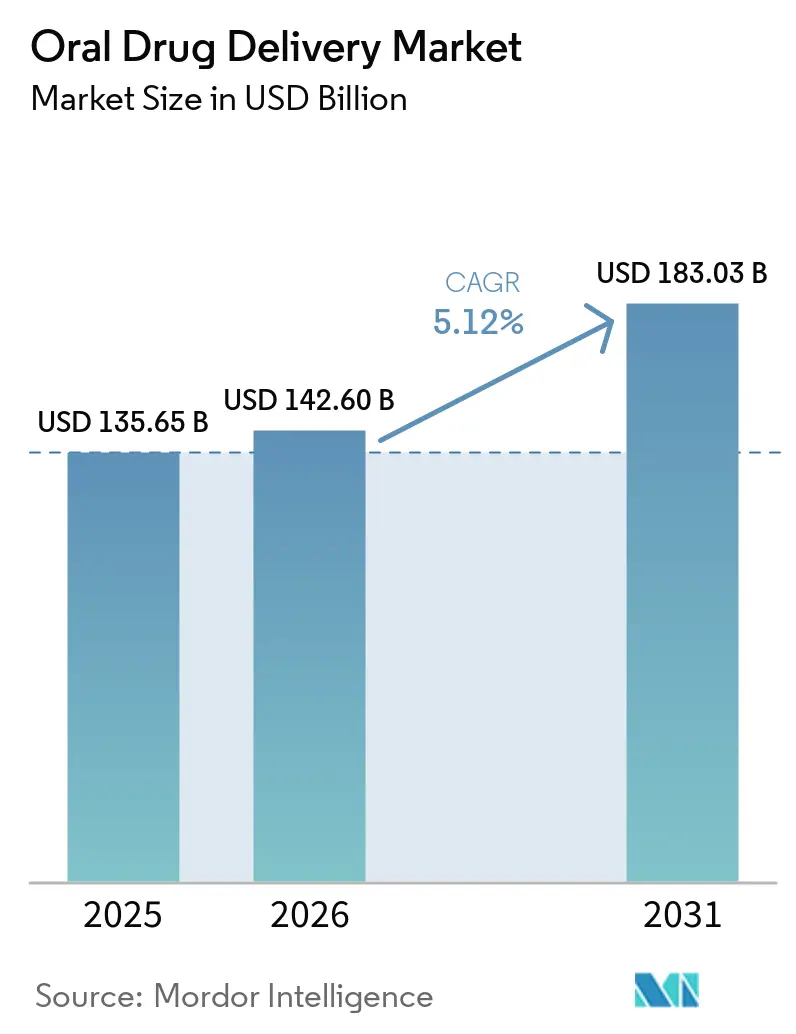
The Oral Drug Delivery Market size is expected to grow from USD 135.65 billion in 2025 to USD 142.60 billion in 2026 and is forecast to reach USD 183.03 billion by 2031 at 5.12% CAGR over 2026-2031.
The oral drug delivery market remains the largest pharmaceutical administration route because patients understand daily oral treatment, and manufacturers can produce established formats at scale. Chronic conditions create recurring demand for therapies that patients can use outside a clinical setting. Higher value dosage forms are also becoming more important, including modified release tablets, oral peptides, and orally disintegrating films. These formats can raise the value of a prescription even when they are supplied through mature generic portfolios. The oral drug delivery market is therefore supported by both wider treatment volumes in emerging countries and a shift toward more complex formulations.
Key Report Takeaways
- By dosage form, tablets held 52.4% of the oral drug delivery market share in 2025, while capsules are forecast to grow at a 7.5% CAGR through 2031.
- By therapeutic area, cardiovascular disorders held 28.5% of the oral drug delivery market share in 2025, while oncology is forecast to grow at an 8.2% CAGR through 2031.
- By application, disease treatment accounted for 57.7% of revenue in 2025, while research and academic purposes are forecast to grow at a 7.8% CAGR through 2031.
- By distribution channel, hospital pharmacies held 55.9% of revenue in 2025, while online and specialty pharmacies are forecast to grow at an 8.8% CAGR through 2031.
- By end user, home care held 47.7% of revenue in 2025, while hospitals and specialty clinics are forecast to grow at an 8.5% CAGR through 2031.
- By geography, North America held 41.3% of global revenue in 2025, while Asia Pacific is forecast to grow at a 6.4% CAGR through 2031.
Note: Market size and forecast figures in this report are generated using Mordor Intelligence’s proprietary estimation framework, updated with the latest available data and insights as of January 2026.
Market Trends and Insights
Drivers Impact Analysis of Oral Drug Delivery Market*
| Driver | (~) % Impact on CAGR Forecast | Geographic Relevance | Impact Timeline |
|---|---|---|---|
| Chronic Disease and Polypharmacy Expansion | +1.40% | Global, with strongest effect in North America, Europe, Japan, and South Korea | Long term (≥ 4 years) |
| Patient Preference for Convenient, Noninvasive Administration | +0.70% | Global, with faster uptake in home care and telehealth enabled systems in North America and Europe | Medium term (2-4 years) |
| Oral Biologics and Peptide Pipeline Expansion | +1.10% | North America and Europe, with later uptake in Asia Pacific | Medium term (2-4 years) |
| Patent Cliff Lifecycle Reformulation | +0.60% | North America, Europe, Japan, Asia Pacific, and South America | Short term (≤ 2 years) |
| Outsourcing to Specialized Oral Dose CDMOs | +0.50% | Global, with strategic concentration in North America, Europe, and India | Medium term (2-4 years) |
| Patient Centric ODT, Film, and Mini Tablet Adoption | +0.50% | North America, Europe, South America, and Asia Pacific | Medium term (2-4 years) |
| Source: Mordor Intelligence | |||
Chronic Disease and Polypharmacy Expansion
Chronic noncommunicable disease remains a core source of demand for the oral drug delivery market. The World Health Organization projects that the population aged 60 years and older will increase from 1.1 billion in 2023 to 1.4 billion by 2030[1]. Older patients often need several medicines for cardiovascular disease, diabetes, central nervous system conditions, and other long-term illnesses. Oral formats allow these patients to follow a regular treatment routine without arranging repeated clinical visits. Fixed dose combinations can reduce the number of separate products that patients need to take each day. This makes tablets and capsules particularly relevant for long-term treatment plans that must balance treatment adherence with routine care.
Polypharmacy also changes the formulation requirements placed on the oral drug delivery market. Patients using several medicines may benefit from modified-release products that simplify daily dosing. Combination products can support treatment adherence when clinicians need to manage more than 1 condition at the same time. The need is most visible in aging populations in North America, Europe, Japan, and South Korea. Daily oral treatment remains practical for hypertension, lipid management, anticoagulation, and many other common conditions. The resulting prescription base creates stable demand for established oral forms while supporting the development of products designed for more complex care routines.
Patient Preference for Convenient, Noninvasive Administration
Oral administration gives many patients a familiar option that does not require needles or scheduled infusion visits. This preference supports home-based treatment for chronic conditions that require regular and long-duration use. It also supports telehealth and digital pharmacy models, where prescribing, education, and refill services can be coordinated outside traditional care sites. The oral drug delivery market benefits when a therapy can move from supervised initiation to routine self-administration. Convenience is especially relevant for patients who require frequent treatment or who have limited ability to travel to specialist centers. The practical value of self-administration helps explain why home care was the largest end-user setting in 2025.
The same preference is shaping the way manufacturers position differentiated oral products. Orally disintegrating tablets, oral films, and mini tablets can help patients with swallowing difficulties or complicated treatment routines. These formats can also give companies a way to distinguish a medicine from a conventional tablet when the active ingredient is otherwise familiar. Noninvasive delivery does not remove the need for clinical monitoring in high acuity conditions. It can, however, reduce the time and logistical burden associated with routine dosing. This creates a clear reason for developers to consider patient handling and dosing experience during formulation design.
Oral Biologics and Peptide Pipeline Expansion
The oral biologics pipeline is drawing greater interest because it could extend self-administration to treatments that have historically relied on injections. Eli Lilly reported FDA approval of orforglipron in April 2026 for weight management, with 12.4% average weight loss in the 72-week ATTAIN 1 Phase 3 trial. The product illustrates how oral metabolic therapies can widen access to treatments that once depended on injectable products. Novo Nordisk also secured a positive CHMP opinion for oral semaglutide 25 mg for weight management in May 2026. These events direct development activity toward absorption enhancement, protective coatings, and dosage forms that maintain product performance in the gastrointestinal tract. The oral drug delivery market can benefit when these platform investments move beyond individual molecules into repeatable development capabilities.
Clinical evidence also shows why oral biologics remain technically demanding. A 2026 human study of the RT 111 RaniPill platform reported 81% relative bioavailability of a full-length immunoglobulin G compared with subcutaneous administration. This result provides a useful reference point for device-enabled delivery of large molecules. It also underlines the value of platforms that can address absorption and exposure instead of focusing only on the active ingredient. Developers must still establish repeat dosing performance, product reliability, and an acceptable regulatory package. As a result, specialist capabilities in peptide formulation, device integration, and analytical testing are becoming more relevant to the oral drug delivery market.
Patent Cliff Lifecycle Reformulation
Loss of exclusivity encourages manufacturers to reassess how established medicines are presented and administered. A modified release tablet, fixed dose combination, or alternate oral form can offer a differentiated product profile when a standard version faces generic competition. The FDA’s 505(b)(2) pathway provides an established route for some changes to approved drugs. Reformulation can therefore become part of a broader lifecycle plan rather than a response after generic entry has already occurred. Developers may seek better tolerability, lower dosing frequency, or simpler use when evaluating a new oral format. This supports demand for formulation development and specialized manufacturing services.
New oral products can also change the treatment position of a medicine class. Merck stated that the FDA approved enlicitide as a once daily oral PCSK9 inhibitor in July 2026. The approval illustrates how oral delivery can shift a therapy category previously associated with injectable treatment. Such launches can increase attention on coating, permeability, stability, and bioavailability strategies. They also create opportunities for companies that can support high-potency oral products from development through commercial supply. The effect is strongest in large branded portfolios that need to protect value while responding to competitive pressure.
Restraints Impact Analysis of Oral Drug Delivery Market*
| Restraint | (~) % Impact on CAGR Forecast | Geographic Relevance | Impact Timeline |
|---|---|---|---|
| Gastrointestinal Degradation and Low Bioavailability of Macromolecules | -0.50% | Global, with a strong effect in North America and Europe | Long term (≥ 4 years) |
| API Loading and Taste Masking Limits in Films and ODTs | -0.30% | Global, especially in pediatric and geriatric settings | Medium term (2-4 years) |
| Bioequivalence, CMC, and Quality Documentation Burden | -0.40% | North America, Europe, Japan, and Asia Pacific | Medium term (2-4 years) |
| Excipient Volatility and Nitrosamine Risk | -0.30% | Global, with high compliance costs in North America and Europe | Short term (≤ 2 years) |
| Source: Mordor Intelligence | |||
Gastrointestinal Degradation, Bioavailability, and Product Design Limits
Gastrointestinal degradation limits the number of macromolecules that can currently be developed as oral products. A 2026 scientific review reported that 90% to 99% of ingested protein can be degraded before it reaches the absorptive epithelium[2]. The same review noted that most biologics have oral bioavailability below 1% under physiological conditions. Oral semaglutide shows that commercial peptide products are possible, but it also requires controlled fasting use and a permeation enhancer. These limits reduce the number of injectable medicines that can readily move into oral formats. They place a premium on formulation methods that protect the active ingredient and improve absorption without affecting safety.
Product design introduces further limits for orally disintegrating tablets and films. High active ingredient loading can make a format larger, less palatable, or less stable. Taste masking becomes important when a product dissolves in the mouth and exposes the patient directly to the active ingredient. Developers must also generate evidence that a new oral format delivers consistent exposure and meets chemistry, manufacturing, and control requirements. This can slow the progress of products that appear technically promising at an early stage. The constraint is particularly relevant for pediatric and geriatric uses, where a patient-friendly format must still deliver a reliable therapeutic dose.
Excipient, Nitrosamine, and Quality Documentation Requirements
Nitrosamine controls have increased the quality workload for manufacturers of oral products. The FDA issued revised final guidance on the control of nitrosamine impurities in human drugs in September 2024. The guidance distinguishes small molecule nitrosamines from nitrosamine drug substance related impurities. It also established a framework that requires companies to assess risk, confirm the presence of impurities where appropriate, and take action when limits are exceeded. Oral solid dosage products can be exposed to risk through active ingredients, excipients, packaging, or storage conditions. This requirement can direct formulation, testing, and regulatory resources away from new product programs.
Excipient variability can complicate risk assessments because ingredient quality may differ across suppliers, grades, and batches. Products with substantial amounts of common tablet excipients may need careful evaluation during development and throughout commercial supply. Companies must also document manufacturing controls and bioequivalence evidence when they change a product or supplier. The need for this documentation is particularly important in the United States, Europe, Japan, and increasingly harmonized markets in Asia Pacific. It can extend development schedules for both reformulated products and new oral formats. The oral drug delivery industry must manage these requirements while preserving consistent performance at commercial scale.
*Our forecasts treat driver/restraint impacts as directional, not additive. The impact forecasts reflect baseline growth, mix effects, and variable interactions.
Oral Drug Delivery Market Segment Analysis
By Dosage Form:
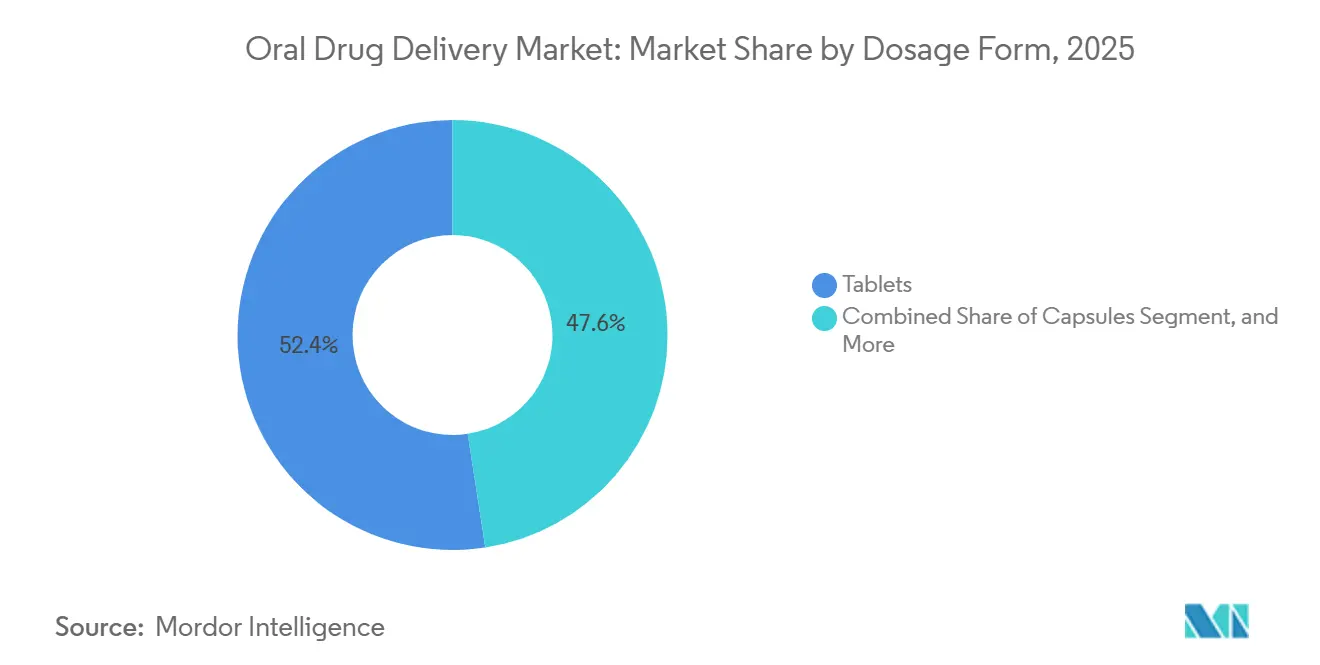
Tablets Retain Scale While Capsules Support Complex FormulationsTablets held 52.4% of global revenue in 2025, making them the leading dosage form. Their position reflects wide use in cardiovascular, central nervous system, and anti-infective treatments. Tablets can accommodate a broad range of active ingredient loads and release profiles. Manufacturers can also produce them efficiently through established compression, coating, and packaging systems. Matrix, bilayer, and coated tablets give formulators several routes to modify release behavior. Fixed-dose combination tablets are particularly relevant for patients who take several long-term medicines. Powders, granules, liquids, syrups, lozenges, and other forms remain important where swallowing or dissolution constraints limit conventional tablets. These formats serve pediatric, geriatric, and specialized therapeutic uses. The oral drug delivery market, therefore, relies on tablets for scale while maintaining a broader mix of administration options.
Capsules are forecast to grow at a 7.5% CAGR through 2031, the fastest pace among dosage forms. Their growth reflects value in lipid-based delivery systems for poorly soluble molecules. Capsules can also support multiparticulate and modified release designs. Sprinkle capsules provide an option for patients who cannot swallow a conventional solid dosage form. Research published in 2026 described a growing role for amorphous solid dispersions and lipid-based formulations in enabling oral delivery of poorly water-soluble drugs[3]. Capsule formats can house these systems during both clinical and commercial development. They can also support premium products where performance depends on formulation complexity. The faster growth of capsules does not displace tablets. It instead reflects a need for formats that handle difficult molecules and more specialized dosing requirements.

By Therapeutic Area:
Cardiovascular Use Leads While Oral Oncology AdvancesCardiovascular disorders accounted for 28.5% of the oral drug delivery market size in 2025. The segment depends on a large population of patients requiring regular treatment for hypertension, lipid disorders, and anticoagulation. These therapies are often designed for unsupervised use over long periods. Daily oral dosing makes it possible to manage treatment in home care settings. Statins, antihypertensives, and anticoagulants have also created deep prescribing familiarity with oral formats. This base supports the stable use of tablets and capsules across many health systems. The segment remains important even as newer medicines require more complex formulation work. It provides a large established demand pool for lifecycle management and differentiated dosage forms. The oral drug delivery industry continues to serve this therapeutic area through both conventional and newer products.
Oncology is projected to grow at an 8.2% CAGR through 2031. Oral targeted therapies can reduce dependence on infusion center visits for selected treatment regimens. Targeted kinase inhibitors, PARP inhibitors, and oral immunomodulatory agents are important areas of development. These products require careful management because dosing, toxicity, adherence, and drug interactions may need close clinical oversight. Oral oncology can therefore start in a structured care setting before longer-term treatment shifts toward the patient’s home. High-potency active ingredient handling also affects the manufacturing choices available to sponsors. This supports investment in contained development and production facilities. The segment’s growth reflects both patient convenience and the ongoing shift toward targeted treatment approaches. It also increases the need for quality, packaging, and pharmacy support that is appropriate for high acuity medicines.
By Application:
Disease Treatment Remains Largest While Research Use ExpandsDisease treatment accounted for 57.7% of the oral drug delivery market size in 2025. The segment includes medicines for cardiovascular disease, diabetes, central nervous system conditions, infections, and other chronic or acute needs. These conditions account for a large share of oral prescription volume across health systems. Oral products are frequently preferred because they can be distributed and administered without specialized equipment. The use of oral medicines also aligns with cost-conscious primary care and long-duration treatment. Preventive use remains a separate application that includes oral contraceptives and pre-exposure prophylaxis. Merck is developing alimatravir, an investigational once-monthly oral product for HIV pre-exposure prophylaxis, in Phase 3 development. These uses extend the relevance of oral formats beyond treatment after disease diagnosis.
Research and academic purposes are projected to grow at a 7.8% CAGR through 2031. This application includes translational research, clinical trial formulation work, and pharmacokinetic screening. University-affiliated pharmaceutical science centers also require flexible dosage forms for early testing. Custom oral formats can be useful where researchers need to evaluate dose, release behavior, or patient handling before a medicine enters larger studies. Three-dimensional printing can support this work when a study needs a tailored physical design. Thermo Fisher Scientific and Lyndra Therapeutics announced a 2025 collaboration for clinical research and commercial manufacturing of long-acting oral therapies using Lyndra’s LYNX platform. The collaboration shows that development programs can engage commercial manufacturing support before products reach broad launch stages. This activity creates a demand pool that is linked to research pipelines as well as routine prescription demand.
By Distribution Channel:
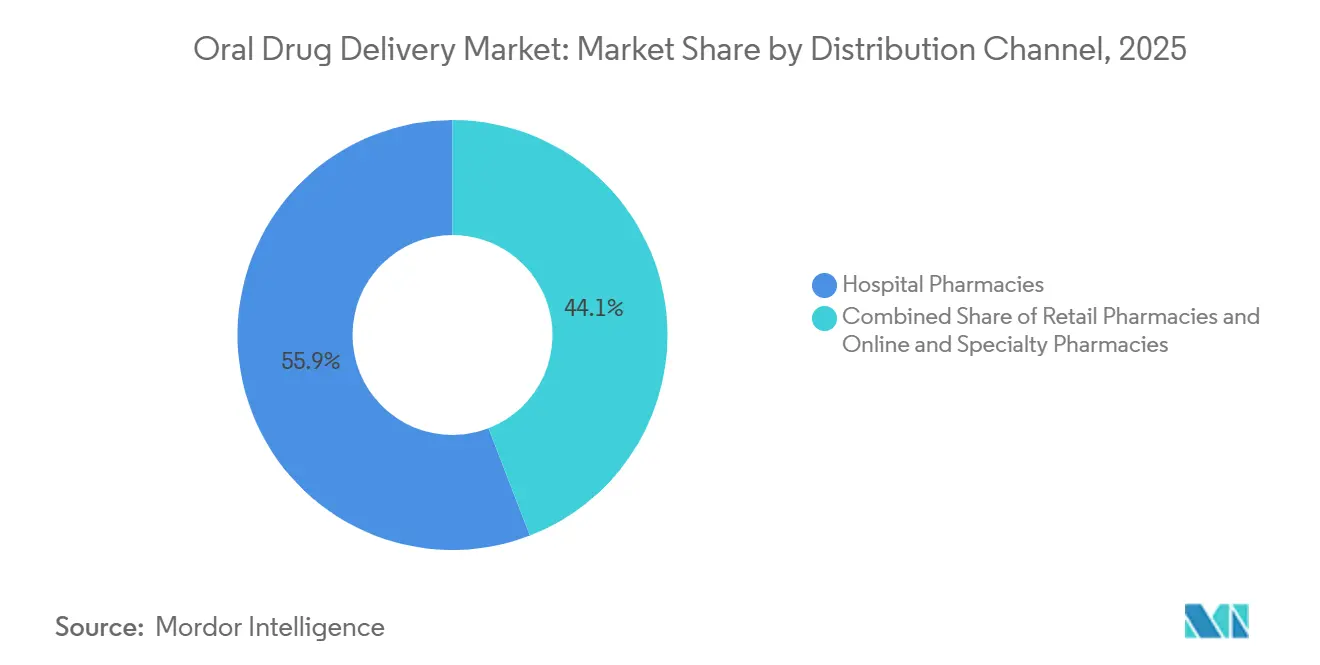
Hospital Pharmacies Lead While Digital Specialty Services GrowHospital pharmacies held 55.9% of global revenue in 2025. They dispense many high acuity oral therapies, including oncology agents, immunosuppressants, antiretrovirals, and specialty psychiatric medicines. These products may require pharmacist oversight, patient education, and coordination with payer requirements. Hospital pharmacies can connect dispensing with the clinical team responsible for treatment initiation and monitoring. This model is useful when the therapy is oral, but the patient’s condition requires close care coordination. Health systems have also expanded specialty pharmacy operations to support complex medication pathways. Retail pharmacies remain central for maintenance prescriptions used in common chronic conditions. Their role is shaped by generic substitution, reimbursement pressures, and efforts to expand specialty dispensing services. The channel mix reflects differences in the clinical complexity of oral medicines rather than a single uniform dispensing model.
Online and specialty pharmacies are projected to grow at an 8.8% CAGR through 2031. Their growth is linked to telehealth, digital fulfillment, and products that need continuing patient support. These services can coordinate refill reminders, delivery, and clinical support for patients managing chronic treatment. They can be particularly useful when manufacturers want a direct route for high-value specialty products. Eli Lilly stated that prescriptions for orforglipron were accepted through LillyDirect immediately after FDA approval in April 2026. The launch shows how a pharmaceutical company can combine an oral therapy with a direct digital access model. Online channels do not eliminate the role of hospital or retail pharmacies. They instead add a route that can be suited to ongoing therapy management and home delivery.
By End User:
Home Care Leads While Hospitals and Specialty Clinics ExpandHome care held 47.7% of global revenue in 2025. This setting captures the basic advantage of oral delivery because many patients can take a medicine without clinical supervision. Home use is important in hypertension, diabetes, central nervous system care, infectious diseases, and other long-duration conditions. It allows treatment to continue without the repeated appointments required for many injectable products. Digital pharmacies and telehealth services can further support home-based prescribing and delivery. The launch of oral metabolic treatments adds to this pattern because these products are designed for self-administration. Home care can also benefit from clear dosing instructions and packaging that supports daily adherence. The size of this segment reflects the practical role of oral medicines in routine treatment. It also makes patient experience an important element of product design.
Hospitals and specialty clinics are projected to grow at an 8.5% CAGR through 2031. Growth is concentrated in conditions where high acuity oral therapies are initiated under structured clinical support. Oral oncology and immunology products are examples where patients may receive education and monitoring before continuing at home. These settings can manage adverse events, interactions, and treatment changes that may be difficult to address through standard retail dispensing. They also provide a link between prescribers, pharmacy teams, and reimbursement support. This role does not conflict with the home care position of oral medicines. Instead, it reflects a treatment pathway where complex products begin under specialist guidance. The oral drug delivery market needs both settings when new therapies combine the convenience of oral dosing with significant clinical management needs. Long term care facilities add another use setting as aging populations require organized medication administration.
Geography Analysis
North America Oral Drug Delivery Market
North America held 41.3% of global revenue in 2025. The region benefits from substantial pharmaceutical research activity, broad payer coverage for innovative products, and a dense network of development and manufacturing providers. The United States has been an early launch market for new oral metabolic therapies, oral peptide programs, and specialty oral medicines. It also has established prescription, specialty pharmacy, and direct delivery channels that can support new products. Catalent, Thermo Fisher Scientific, Piramal Pharma Solutions, and other specialists contribute to the region’s development and production capacity. These capabilities can support a medicine from formulation work through commercial supply. North America remains important because it combines innovative product demand with technical manufacturing depth. This supports its leading position in the oral drug delivery market.
Europe and South America Oral Drug Delivery Market
Europe is the second-largest regional market and has strong quality standards and consolidated healthcare systems. These systems encourage cost-effective oral generics in primary care while also supporting complex medicines through specialist pathways. Germany, France, the United Kingdom, and the Nordic countries remain important innovation markets. Spain, Italy, and Portugal contribute significant generic manufacturing capacity. Recipharm invested in high-potency oral solid-dose capabilities at its Leganés facility in Spain for Phase 3 oncology and orphan programs. The investment reflects regional interest in more complex oral manufacturing. Novo Nordisk reported that the United Kingdom approved the Wegovy pill in June 2026 after the FDA and UAE approvals. South America remains smaller, although Brazil supports regional growth through generic medicine use and local oral solid dose production.
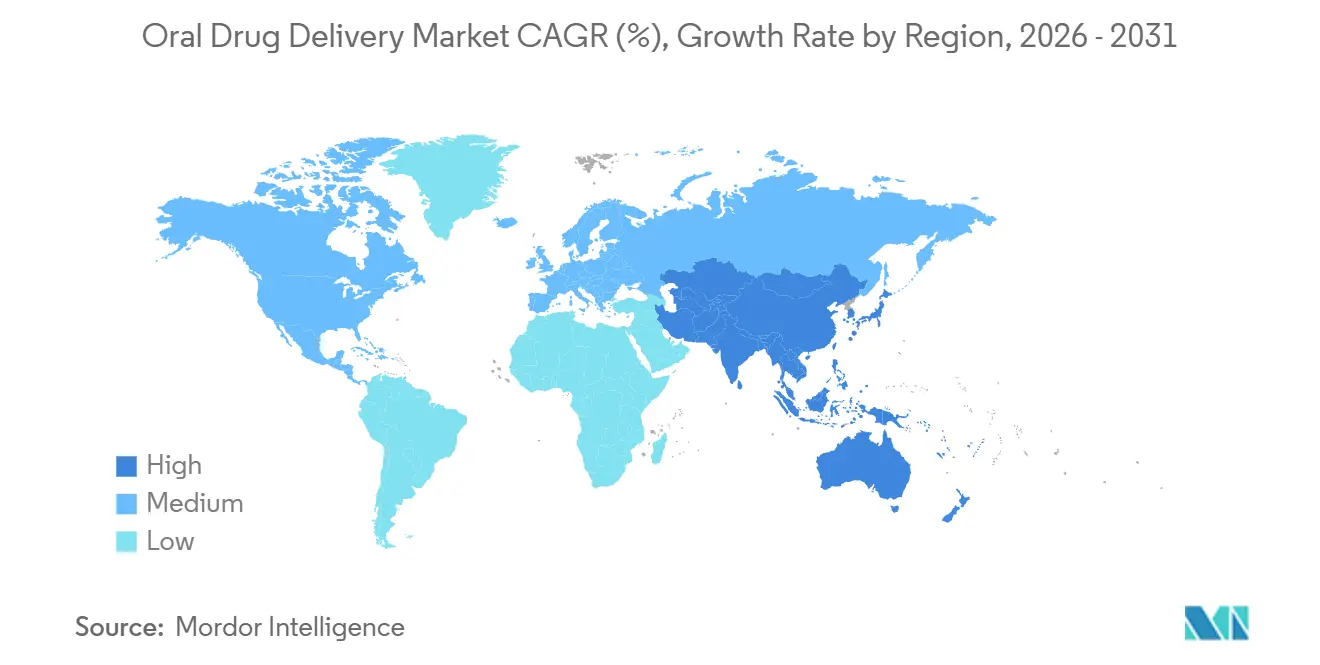
APAC and MEA Oral Drug Delivery Market
Asia Pacific is projected to grow at a 6.4% CAGR through 2031. Rising chronic disease prevalence, broader healthcare access, generic medicine adoption, and manufacturing investment all support growth across the region. China and India are the principal growth markets. China’s localization policies are supporting domestic pharmaceutical capacity, while India remains a large exporter of generic tablets and capsules. Japan has a sophisticated oral pharmaceutical sector that emphasizes controlled-release and modified-release products for cardiovascular and central nervous system conditions. Regional growth also creates opportunities for companies that can meet local regulatory needs and scale supply efficiently. The Middle East and Africa are emerging regions where access and insurance coverage are expanding in several Gulf countries. This geographic pattern gives the oral drug delivery market a combination of high-value mature demand and expanding volume demand. It also broadens the oral drug delivery market’s manufacturing base.
Competitive Landscape
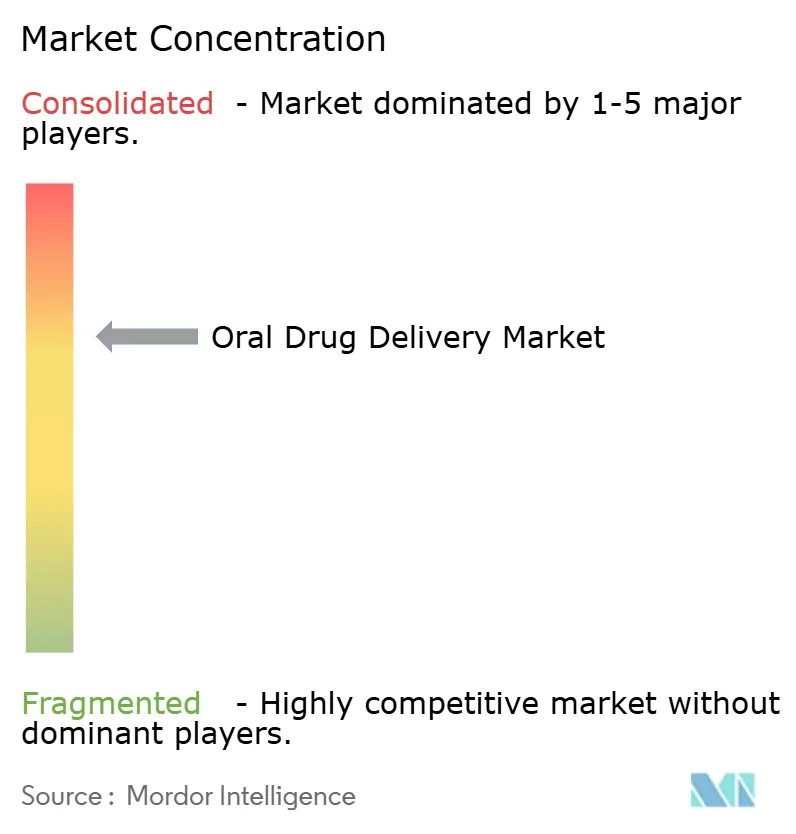
The oral drug delivery market is moderately fragmented across manufacturing and contract development services. It is more concentrated in proprietary dosage forms and novel oral therapies, where a limited group of innovator companies holds key intellectual property. Novo Nordisk, Eli Lilly, Merck, AstraZeneca, and Pfizer are among the companies active in oral metabolic, peptide, and specialty therapy programs. Catalent, Lonza, Recipharm, Thermo Fisher Scientific, Piramal Pharma Solutions, and Aenova provide development and manufacturing capabilities. These service companies compete through formulation expertise, quality systems, production capacity, and geographic reach. Their capabilities can include spray drying, high potency containment, lipid-based formulations, and orally disintegrating tablet production. This structure leaves room for both originator companies and specialists who solve specific technical needs. The oral drug delivery market, therefore, combines large branded portfolios with a broad set of specialized suppliers.
Platform ownership has become more important as companies seek differentiated oral formats. Catalent’s Zydis platform provides an established orally disintegrating tablet capability. Aquestive has developed its PharmFilm technology for sublingual and oral film products. These platforms can give a company a position in a narrow dosage category even when it does not own the active ingredient. ALK’s 2026 capacity commitment to Catalent is one example of how a developer may secure access to a specialized oral format. Lonza’s divestment agreement for its Capsules and Health Ingredients business is another example of companies redefining where they create value in oral delivery. Recipharm’s high-potency investment in Spain illustrates the importance of specialized capacity for oral oncology and orphan product programs. These moves show that strategy is increasingly linked to platform access and technical focus.
Competition is especially active in oral GLP 1 products and other therapies that could reduce reliance on injections. Novo Nordisk’s oral semaglutide program, Eli Lilly’s orforglipron, and AstraZeneca’s elecoglipron program illustrate the intensity of this area. Eli Lilly reported in February 2026 that orforglipron delivered superior blood sugar control and weight loss compared with oral semaglutide in the ACHIEVE 3 trial. AstraZeneca stated that elecoglipron advanced into a Phase 3 program after positive Phase 2b results. This competition is reshaping the oral drug delivery market.
Oral Drug Delivery Industry Leaders
-
Novo Nordisk A/S
-
Pfizer Inc.
-
Novartis AG
-
Merck & Co., Inc.
-
Sanofi
- *Disclaimer: Major Players sorted in no particular order
Oral Drug Delivery Market Companies Covered in this Report
- Novo Nordisk
- Pfizer
- Novartis
- Merck
- Sanofi
- AstraZeneca
- Eli Lilly and Company
- Abbvie
- Takeda Pharmaceuticals
- Roche
- GlaxoSmithKline
- Catalent
- Lonza Group
- Thermo Fisher Scientific
- Recipharm
- Aenova Group GmbH
- Piramal Group
- Aquestive Therapeutics
- Intelgenx
- ZIM Laboratories
- Evonik Industries
- C.L. Pharm Co., Ltd.
- Indivior
- Dr. Reddy’s Laboratories
Recent Industry Developments in Oral Drug Delivery Market
- September 2026: ALK committed DKK 500 million over 3 years to secure a 40% capacity expansion of Catalent’s Zydis ODT platform to 1.1 billion tablets annually from the early 2030s, signaling sustained long term demand for fast dissolving tablet formulations across allergen immunotherapy and CNS indications.
- July 2026: FDA approved Merck’s LIPFENDRA, enlicitide, as a once daily oral PCSK9 inhibitor, reducing LDL C by nearly 60% in Phase 3 trials and converting a therapeutic class previously restricted to injectable monoclonal antibodies.
- April 2026: FDA approved Eli Lilly’s Foundayo, orforglipron, for weight management. The product can be taken without food or water restrictions and delivered 12.4% average weight loss in the ATTAIN 1 Phase 3 trial.
- December 2025: Pfizer entered an exclusive global collaboration and license with YaoPharma for YP05002, a Phase 1 oral small molecule GLP 1 receptor agonist for chronic weight management, with USD 150 million upfront and up to USD 1.935 billion in milestone payments.
Global Oral Drug Delivery Market Report Scope
Segmentation Overview
| Tablets |
| Capsules |
| Powders and Granules |
| Liquids and Syrups |
| Lozenges and Pastilles |
| Other Dosage Forms |
| Cardiovascular Disorders |
| Central Nervous System Disorders |
| Oncology |
| Diabetes and Obesity |
| Gastrointestinal Disorders |
| Infectious Diseases |
| Pain Management |
| Other Therapeutic Areas |
| Disease Treatment |
| Preventive and Prophylactic Use |
| Research and Academic Purposes |
| Hospital Pharmacies |
| Retail Pharmacies |
| Online and Specialty Pharmacies |
| Home-Care Settings |
| Hospitals and Specialty Clinics |
| Long-Term Care Facilities |
| Other End Users |
| North America | United States |
| Canada | |
| Mexico | |
| Europe | Germany |
| United Kingdom | |
| France | |
| Italy | |
| Spain | |
| Rest of Europe | |
| Asia-Pacific | China |
| Japan | |
| India | |
| Australia | |
| South Korea | |
| Rest of Asia-Pacific | |
| Middle East and Africa | GCC |
| South Africa | |
| Rest of Middle East and Africa | |
| South America | Brazil |
| Argentina | |
| Rest of South America |
| By Dosage Form | Tablets | |
| Capsules | ||
| Powders and Granules | ||
| Liquids and Syrups | ||
| Lozenges and Pastilles | ||
| Other Dosage Forms | ||
| By Therapeutic Area | Cardiovascular Disorders | |
| Central Nervous System Disorders | ||
| Oncology | ||
| Diabetes and Obesity | ||
| Gastrointestinal Disorders | ||
| Infectious Diseases | ||
| Pain Management | ||
| Other Therapeutic Areas | ||
| By Application | Disease Treatment | |
| Preventive and Prophylactic Use | ||
| Research and Academic Purposes | ||
| By Distribution Channel | Hospital Pharmacies | |
| Retail Pharmacies | ||
| Online and Specialty Pharmacies | ||
| By End User | Home-Care Settings | |
| Hospitals and Specialty Clinics | ||
| Long-Term Care Facilities | ||
| Other End Users | ||
| Geography | North America | United States |
| Canada | ||
| Mexico | ||
| Europe | Germany | |
| United Kingdom | ||
| France | ||
| Italy | ||
| Spain | ||
| Rest of Europe | ||
| Asia-Pacific | China | |
| Japan | ||
| India | ||
| Australia | ||
| South Korea | ||
| Rest of Asia-Pacific | ||
| Middle East and Africa | GCC | |
| South Africa | ||
| Rest of Middle East and Africa | ||
| South America | Brazil | |
| Argentina | ||
| Rest of South America | ||
Key Questions Answered in the Report
What is the forecast growth rate for oral drug delivery?
The oral drug delivery market is forecast to grow at a 5.12% CAGR from 2026 to 2031, reaching USD 183 billion in 2031.
Which dosage form has the largest share?
Tablets held 52.43% of revenue in 2025 because they support large scale manufacturing and a wide range of therapeutic uses.
Which therapeutic area is growing fastest?
Oncology is forecast to grow at an 8.21% CAGR through 2031 as targeted oral therapies expand.
Why are oral peptide medicines attracting investment?
Developers are pursuing oral peptides and biologics because they could extend self administration to therapies that have often required injections.
Which distribution channel is growing fastest?
Online and specialty pharmacies are forecast to grow at an 8.76% CAGR through 2031, supported by telehealth, digital fulfillment, and continuing patient support.
Which region is expanding fastest?
Asia Pacific is forecast to grow at a 6.43% CAGR through 2031, supported by healthcare access, generic medicine use, and manufacturing investment.