
Ocular Melanoma Market Size and Share
Market Overview
| Study Period | 2021 - 2032 |
|---|---|
| Market Size (2027) | USD 1.93 Billion |
| Market Size (2032) | USD 2.64 Billion |
| Growth Rate (2027 - 2032) | 6.44 % |
| Fastest Growing Market | Asia-Pacific |
| Largest Market | North America |
| Market Concentration | Medium |
Major Players *Disclaimer: Major Players sorted in no particular order Image © Mordor Intelligence. Reuse requires attribution under CC BY 4.0. | |
Ocular Melanoma Market Analysis by Mordor Intelligence
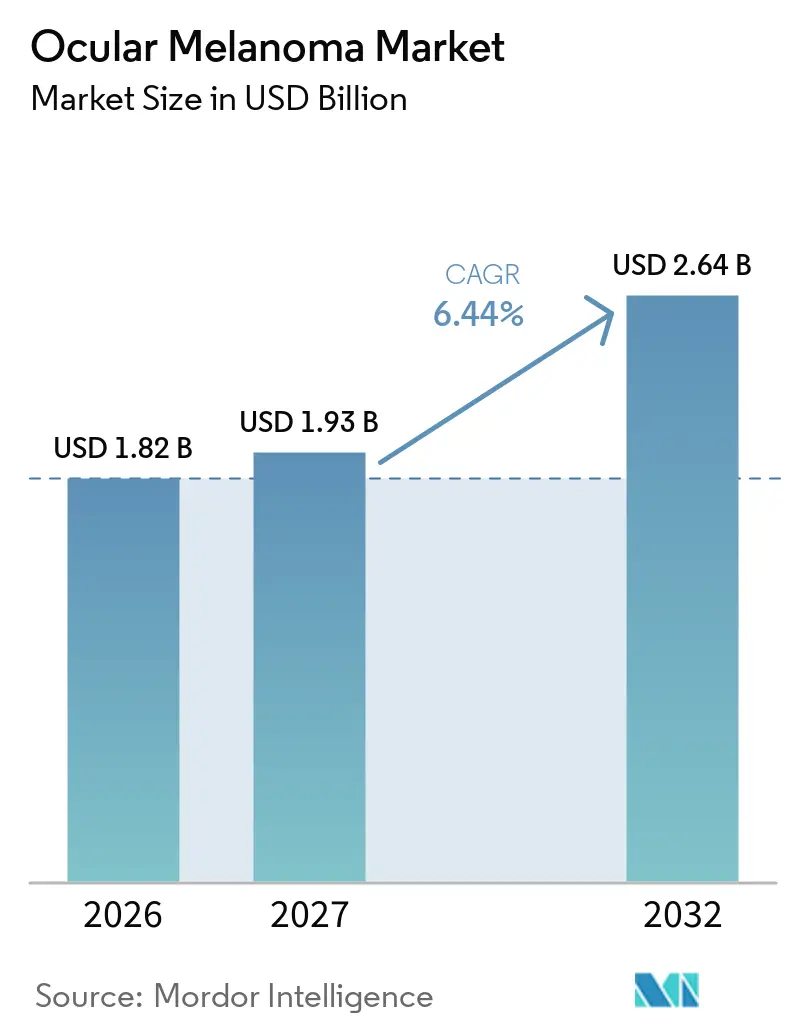
The Ocular Melanoma Market size was valued at USD 1.82 billion in 2026 and is estimated to grow from USD 1.93 billion in 2027 to reach USD 2.64 billion by 2032, at a CAGR of 6.44% during the forecast period (2027-2032).
The ocular melanoma market is being shaped by the commercialization of T-cell receptor therapies, the broader availability of liver-directed chemotherapy, and the late-stage development of protein kinase C inhibitors. KIMMTRAK recorded USD 400.0 million in net sales during 2025, representing a 29% increase from the prior year and indicating continued adoption of specialized therapies in a rare disease setting. Treatment decisions are increasingly based on human leukocyte antigen (HLA) status, disease stage, and the location of metastatic disease. This trend is expanding the role of molecular testing and strengthening the connection between academic treatment centers and clinical trial enrollment. However, the limited patient population and complex treatment delivery requirements continue to constrain the growth of the ocular melanoma market.
Key Report Takeaways
- By disease site, uveal melanoma held 86.12% of the ocular melanoma market share in 2026, while conjunctival melanoma is projected to grow at a 9.22% CAGR through 2032.
- By disease stage, primary ocular melanoma accounted for 44.93% of revenue in 2026, while unresectable or metastatic disease is projected to expand at an 8.67% CAGR through 2032.
- By treatment type, immunotherapy captured 39.67% of revenue in 2026, while chemotherapy is projected to grow at a 9.78% CAGR through 2032.
- By drug class, immune checkpoint inhibitors held 38.12% of revenue in 2026, while protein kinase inhibitors are projected to grow at a 10.45% CAGR through 2032.
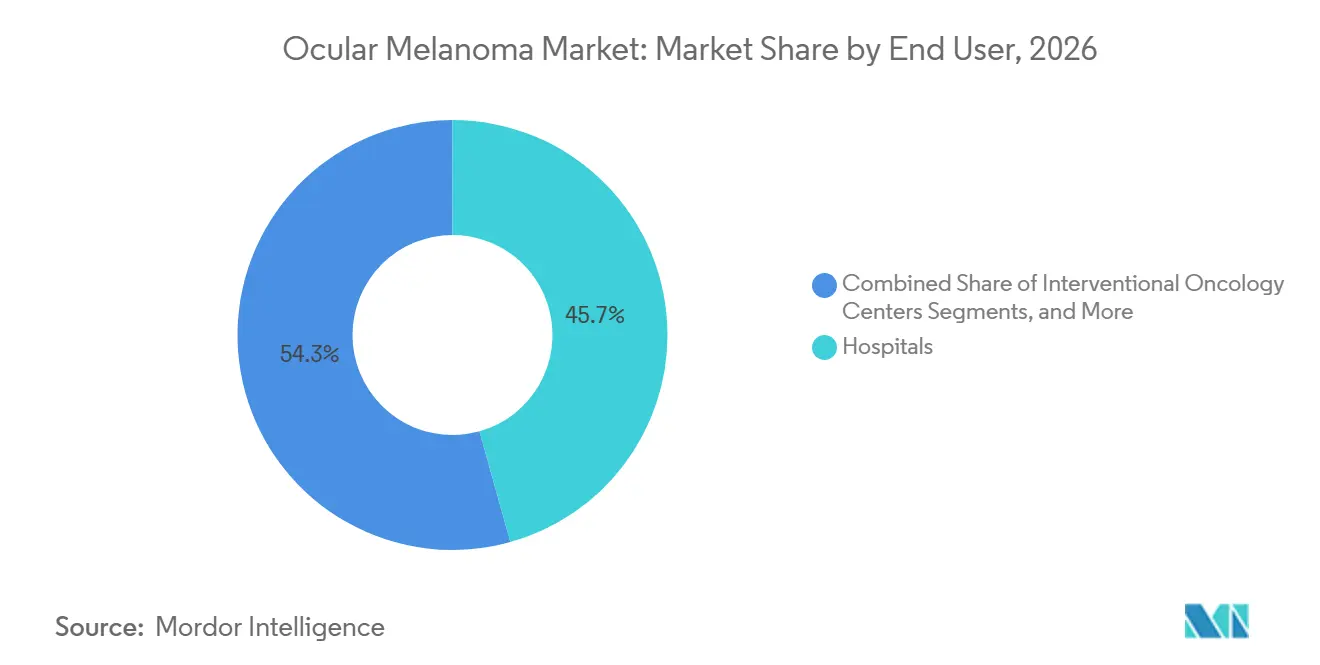
- By end user, hospitals held 45.66% of revenue in 2026, while academic and research institutes are projected to grow at an 11.23% CAGR through 2032.
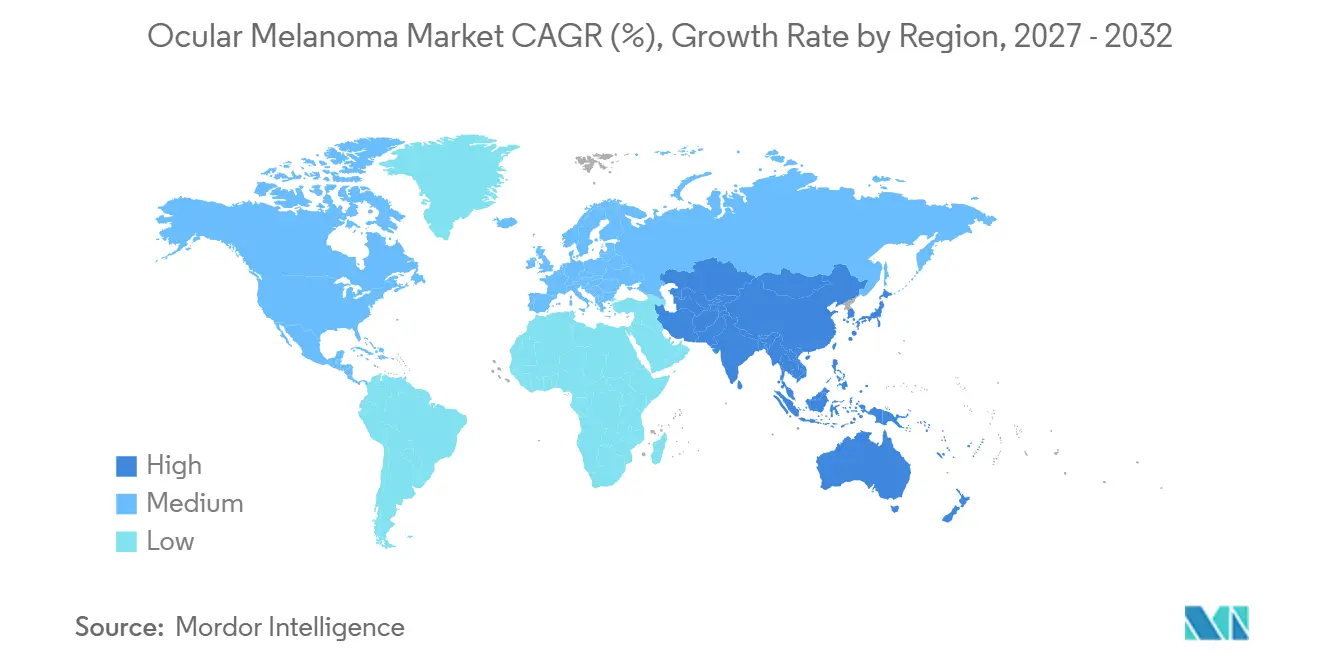
- By geography, North America held 38.10% of revenue in 2026, while Asia-Pacific is projected to grow at an 8.95% CAGR through 2032.
Note: Market numbers in this report are based on Mordor Intelligence's proprietary estimation framework, which combines nine months of actuals with Q4 projections for base year 2026.
Market Trends and Insights
Drivers Impact Analysis of Ocular Melanoma Market*
| DRIVER | (~) % IMPACT ON CAGR FORECAST | GEOGRAPHIC RELEVANCE | IMPACT TIMELINE |
|---|---|---|---|
| Expanding liver-directed therapy for hepatic-dominant metastases | +1.3% | North America, with secondary relevance in Europe through CHEMOSAT | Short term (≤ 2 years) |
| Rising biomarker-guided immunotherapy adoption | +1.6% | Global, with early adoption in North America and Western Europe | Medium term (2-4 years) |
| Shift toward globe-sparing radiotherapy | +0.7% | Global | Medium term (2-4 years) |
| Growing molecular prognostic testing | +0.8% | North America and Western Europe | Short term (≤ 2 years) |
| Rising clinical-trial and precision-oncology investment | +1.1% | Global, concentrated in North America and Europe | Long term (≥ 4 years) |
| Earlier detection through multimodal ocular imaging | +0.6% | Global, with faster expansion in Asia-Pacific | Long term (≥ 4 years) |
| Source: Mordor Intelligence | |||
Expanding Use of Liver-Directed Therapy for Hepatic-Dominant Metastases
Hepatic metastases occur in up to 90% of patients with metastatic uveal melanoma, making liver control a key treatment priority. This disease pattern expands the role of liver-directed therapies in the ocular melanoma market, particularly for patients with unresectable hepatic disease. HEPZATO Kit recorded 140% procedure volume growth in 2025, while Delcath targeted at least 28% additional volume growth in 2026. By mid-2026, Delcath reported 31 active Risk Evaluation and Mitigation Strategy (REMS)-certified centers and more than 50 sites in activation discussions.[1] The 2026 European Society for Medical Oncology-European Reference Network for Rare Adult Solid Cancers (ESMO-EURACAN) guideline included CHEMOSAT as a recommended liver-directed option.[2] A Phase 2 Moffitt study is assessing sequential percutaneous hepatic perfusion (PHP) followed by tebentafusp, which may strengthen the role of liver-directed chemotherapy in combination treatment.
Rising Adoption of Biomarker-Guided Immunotherapy
Biomarker-guided treatment is creating distinct treatment pathways for patients with human leukocyte antigen (HLA)-A*02:01-positive and HLA-A*02:01-negative disease. KIMMTRAK reported a 16% five-year overall survival rate, compared with 8% in the control arm among eligible patients, and a median overall survival of 21.6 months, compared with 16.9 months.[3] In OptimUM-02, darovasertib plus crizotinib reported a 37.1% objective response rate, compared with 5.8% for investigator’s choice in HLA-A*02:01-negative metastatic uveal melanoma. The combination arm also recorded five complete responses, while the control arm reported none. These results increase the importance of HLA testing before systemic treatment begins. Food and Drug Administration (FDA) Breakthrough Therapy Designation and Real-Time Oncology Review can also shorten development timelines for therapies targeting this rare indication.
Shift From Enucleation Toward Globe-Sparing Radiotherapy
Darovasertib supports an eye-preserving treatment approach for patients who may otherwise require enucleation. Interim Phase 2 data showed an 82% ocular tumor shrinkage rate and a 61% eye preservation rate among patients recommended for eye removal. Among patients receiving plaque brachytherapy, 65% achieved a reduction in their predicted radiation dose. FDA feedback from the April 2025 Type D meeting confirmed that eye preservation rate could serve as a primary endpoint for full approval.[4] The Phase 3 OptimUM-10 study began in January 2026 and is enrolling 520 patients across enucleation-eligible and plaque brachytherapy-eligible cohorts. This development could increase treatment activity in primary disease while reducing the relative role of enucleation over time.
Increasing Use of Molecular Prognostic Testing
Molecular testing is increasingly supporting routine clinical decision-making for primary uveal melanoma. The 2026 ESMO-EURACAN guideline recommends chromosome 3, 6, and 8 copy number assessment, gene expression profiling (GEP), and testing for BAP1, SF3B1, and EIF1AX. A 2026 study of 1,537 patients found that the 15-GEP and preferentially expressed antigen in melanoma (PRAME) assay retained prognostic validity without confirmatory cytopathology. This finding is relevant when biopsy material is limited, or cytopathology is unavailable. A real-world study presented in 2025 found that Class 2 and PRAME-positive tumors had a 25.3-fold hazard ratio for melanoma-specific death compared with Class 1 and PRAME-negative tumors. Improved risk classification can support enrollment in adjuvant studies, including OptimUM-11 and the European Organization for Research and Treatment of Cancer (EORTC) ATOM.
Restraints Impact Analysis of Ocular Melanoma Market*
| RESTRAINT | (~) % IMPACT ON CAGR FORECAST | GEOGRAPHIC RELEVANCE | IMPACT TIMELINE |
|---|---|---|---|
| Extreme disease rarity and specialist capacity limits | -0.9% | Global, most acute in Asia-Pacific and South America | Long term (≥ 4 years) |
| Hla-a*02:01 eligibility limits for tebentafusp | -0.8% | Global | Medium term (2-4 years) |
| Procedure complexity and rems-linked delivery burden | -0.6% | North America, with secondary relevance in Europe | Short term (≤ 2 years) |
| Limited evidence for adjuvant and combination treatment pathways | -0.5% | Global | Medium term (2-4 years) |
| Source: Mordor Intelligence | |||
Extreme Disease Rarity and Concentrated Specialist Capacity
Uveal melanoma affects fewer than 10 people per million annually in North America and Western Europe, limiting the addressable patient population. This rarity constrains procedure volumes despite improvements in disease awareness, reimbursement, and therapy access. Fewer than 40 specialized or Risk Evaluation and Mitigation Strategy (REMS)-certified centers in the United States provide diagnosis and treatment, resulting in a highly concentrated care delivery model. HEPZATO administration requires interventional radiology capabilities, specialized catheter and filtration systems, and certified perfusion staff. Delcath reported an average of 0.75 new patients per site per month in early 2026, compared with a full-year average of 0.5 patients per site per month in 2025. These capacity constraints are more significant in Asia-Pacific and South America due to limited ocular oncology specialist availability.
HLA-A*02:01 Eligibility Limits for Tebentafusp
Tebentafusp requires human leukocyte antigen (HLA)-A*02:01 antigen presentation, limiting eligibility to 40%–50% of patients with metastatic uveal melanoma in North America and Europe. The eligible population is smaller in several Asian countries, where the HLA-A*02:01 type is less prevalent. Immunocore guided toward moderated revenue growth in 2026 despite continued volume gains, reflecting the finite size of the eligible patient pool. In March 2025, NHS Scotland did not recommend tebentafusp because the economic case was not sufficiently demonstrated. HLA-agnostic programs, including OptimUM-11, may reduce this eligibility constraint over time. However, their near-term impact remains limited, as these programs are still progressing through clinical and regulatory stages.
*Our forecasts treat driver/restraint impacts as directional, not additive. The impact forecasts reflect baseline growth, mix effects, and variable interactions.
Ocular Melanoma Market Segment Analysis
By Disease Site:
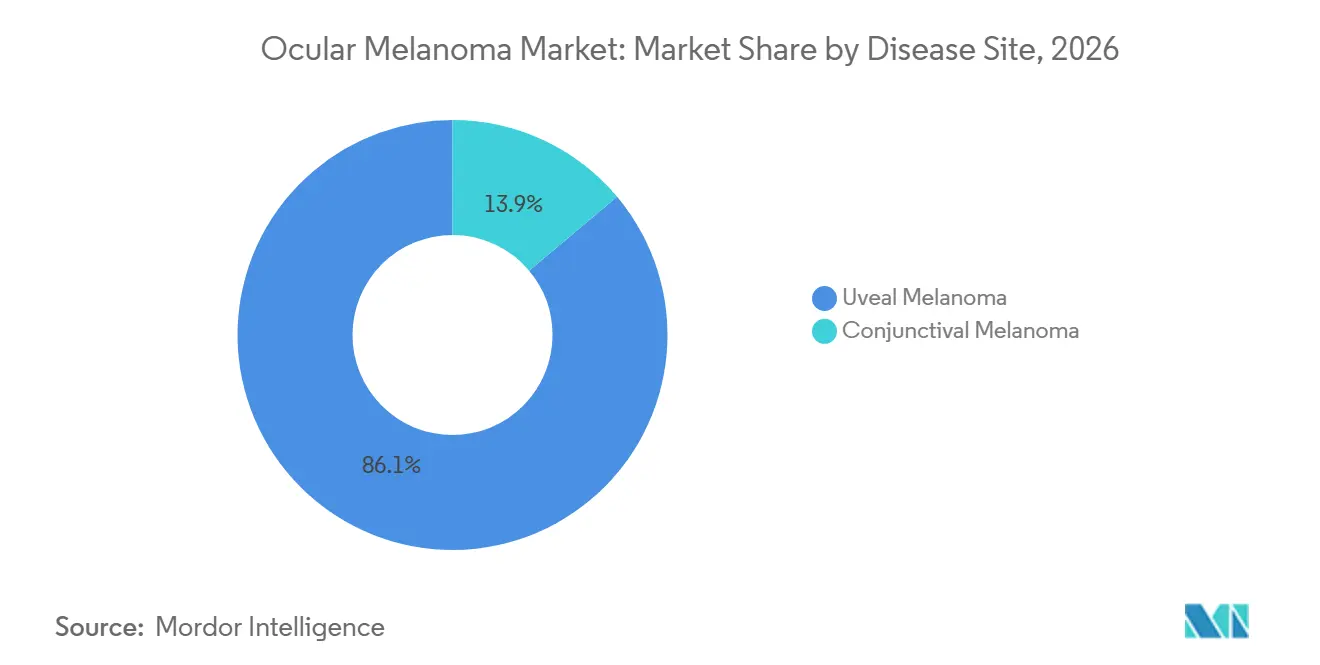
Uveal Melanoma Retains a Strong Revenue BaseUveal melanoma held 86.12% of the ocular melanoma market share in 2026, supported by its higher incidence than other primary intraocular cancers and the availability of HEPZATO Kit and tebentafusp for metastatic disease. These therapies generated more than USD 500 million in annual net revenue by 2026. At least 20 active trials across adjuvant, neoadjuvant, and metastatic settings continue to support pipeline development and adoption at academic centers.
Conjunctival melanoma is projected to grow at a 9.22% compound annual growth rate (CAGR) through 2032, driven by the absence of approved pharmacological therapies and the need for systemic treatment options. A retrospective multicenter study of 16 patients reported a 63% objective response rate with immune checkpoint inhibitors, while 88% avoided orbital exenteration. Its BRAF and NF1 profiles often resemble cutaneous melanoma, supporting biology-based treatment escalation.
By Disease Stage:
Metastatic Disease Gains Importance as Options ExpandPrimary ocular melanoma accounted for 44.93% of the ocular melanoma market size in 2026. Newly diagnosed patients receive plaque brachytherapy, proton beam radiation, surgery, and emerging neoadjuvant treatments. This consistent patient flow supports demand for primary-stage treatment services and sustains the role of ophthalmology and ocular oncology centers. Local disease management remains essential as systemic options develop.
Unresectable or metastatic disease is projected to grow at an 8.67% CAGR through 2032. Tebentafusp reported a 16% five-year survival rate, compared with 8% in the control arm, among eligible first-line metastatic patients. Darovasertib plus crizotinib reduced progression risk by 58% in OptimUM-02. These developments may expand systemic options for human leukocyte antigen (HLA)-A*02:01-negative patients and address evolving extrahepatic metastatic patterns.
By Treatment Type:
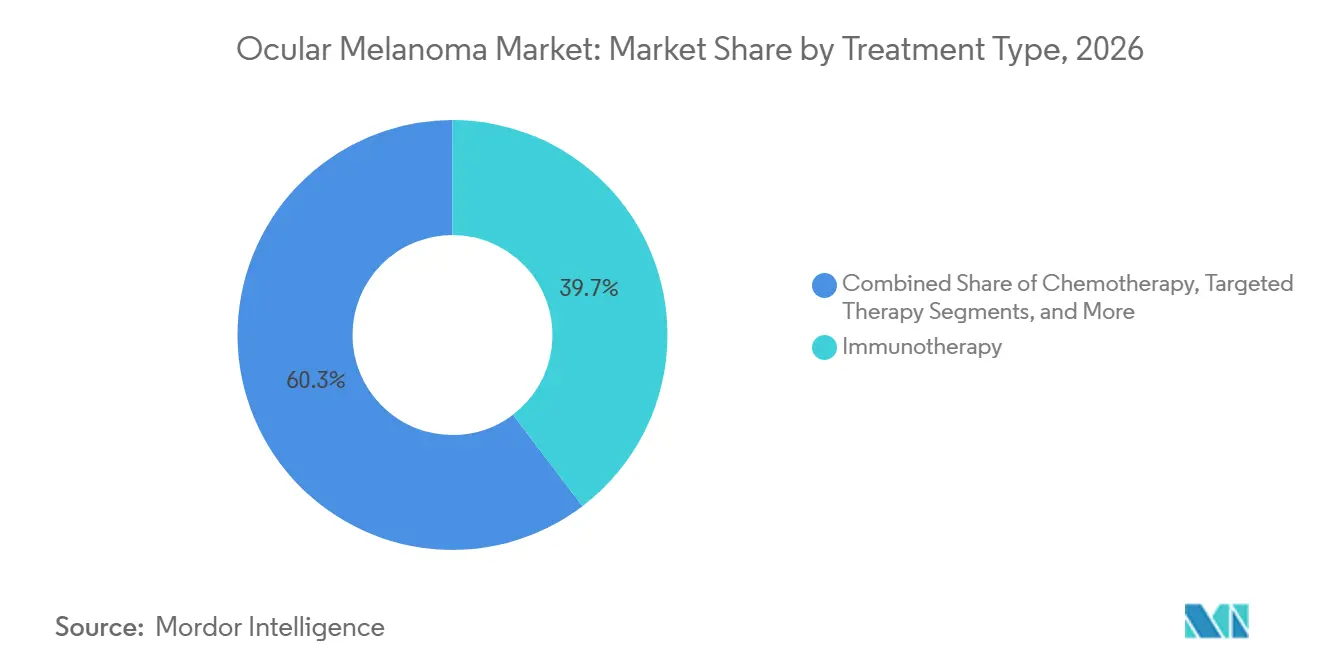
Immunotherapy Leads While Chemotherapy Expands FasterImmunotherapy held 39.67% of the ocular melanoma market share in 2026. Tebentafusp is established for HLA-A*02:01-positive metastatic uveal melanoma, while programmed death-1 (PD-1) and cytotoxic T-lymphocyte-associated protein 4 (CTLA-4) inhibitors are used off label for conjunctival melanoma. Retrospective data reported a 63% response rate with immune checkpoint inhibitors in conjunctival melanoma. A 2025 study also linked tebentafusp-related cutaneous immune effects with survival outcomes.
Chemotherapy is forecast to grow at a 9.78% CAGR through 2032, primarily due to the HEPZATO Kit rollout for unresectable hepatic metastases. Delcath recorded 140% procedure volume growth in 2025 and expected at least 28% additional growth in 2026. The company reported USD 85.2 million in 2025 revenue and guided USD 104 million to USD 108 million for 2026. Radiation, surgery, laser therapy, and emerging options such as bel-sar remain relevant across treatment settings.

By Drug Class:
Protein Kinase Inhibitors Have the Highest Growth OutlookImmune checkpoint inhibitors held 38.12% of revenue by drug class in 2026. Their position reflects use across uveal and conjunctival melanoma, alongside tebentafusp use in eligible patients. The category remains closely linked to biomarker selection and first-line treatment decisions and benefits from the established role of PD-1 and CTLA-4 therapies in melanoma care. However, clinical practice increasingly differentiates immune checkpoint inhibitors from T-cell receptor therapies.
Protein kinase inhibitors are forecast to grow at a 10.45% CAGR through 2032. This outlook is supported by darovasertib development in the Phase 3 OptimUM-10 and OptimUM-11 studies. OptimUM-10 began in January 2026 and plans to enroll 520 patients, while OptimUM-11 enrolled its first patient in September 2026 and plans to enroll 450 patients. Brenetafusp plus tebentafusp is also under evaluation, supported by relevant Food and Drug Administration (FDA) designations.
By End User:
Hospitals Lead Treatment Delivery and Academic Centers Advance AdoptionHospitals held 45.66% of revenue by end user in 2026, reflecting the concentration of percutaneous hepatic perfusion (PHP) procedures and tebentafusp infusions at large oncology institutions. KIMMTRAK requires 16-hour observation after each of the first three infusions under its Risk Evaluation and Mitigation Strategy (REMS) requirements. This requirement limits routine use in lower-complexity outpatient settings and favors integrated hospital-based treatment teams.
Academic and research institutes are projected to grow at an 11.23% CAGR through 2032. These centers serve as key clinical trial sites and provide early access to investigational therapies. UT Southwestern treated its first HEPZATO patient in January 2026 and became a referral center for a multistate area. Ophthalmology and interventional oncology centers continue to support primary disease management and PHP delivery, respectively, while REMS certification strengthens institutional capabilities.
Geography Analysis
North America
North America held 38.10% of the ocular melanoma market size in 2026. The region benefits from a strong network of Risk Evaluation and Mitigation Strategy (REMS)-certified centers and National Cancer Institute (NCI)-designated cancer centers with ocular oncology programs. KIMMTRAK generated USD 257.0 million in net sales in the United States in 2025. U.S. institutions are conducting combination studies, including percutaneous hepatic perfusion (PHP) followed by tebentafusp at Moffitt and neoadjuvant tebentafusp at Thomas Jefferson University. Major centers are increasingly integrating molecular risk assessment into treatment workflows. Canada and Mexico contribute to regional demand, although access remains subject to Health Canada and Federal Commission for Protection against Sanitary Risks (COFEPRIS) review timelines.
Asia-Pacific
Asia-Pacific is projected to grow at a compound annual growth rate (CAGR) of 8.95% through 2032. China, Japan, South Korea, and Australia are expanding specialized ophthalmic oncology capacity and participation in global clinical studies. China holds the largest position in the region, supported by expanding oncology resources and approvals of novel immunotherapies. Japan contributes through its immunotherapy expertise and participation in international trials. The lower frequency of human leukocyte antigen (HLA)-A*02:01 limits the eligible population for tebentafusp in parts of the region. This increases the relevance of HLA-agnostic development programs as they progress toward potential approvals. A 2026 meta-analysis reported pooled sensitivity of 78.21% and specificity of 94.28% for machine-learning and deep-learning diagnostic models, while ultrasound-based models achieved an area under the curve (AUC) of 0.984.
Europe, Latin America, Middle East, and Africa
Europe is the second-largest regional market, and KIMMTRAK generated USD 131.4 million in European net sales during 2025, representing 79% year-over-year growth. In January 2025, the National Institute for Health and Care Excellence (NICE) recommended tebentafusp for eligible National Health Service (NHS) England patients, subject to a commercial arrangement. CHEMOSAT guidance under the 2026 European Society for Medical Oncology (ESMO)-European Reference Network for Rare Adult Solid Cancers (EURACAN) framework supports broader consideration of percutaneous hepatic perfusion (PHP) in European treatment systems. Brazil approved KIMMTRAK under its rare diseases pathway in March 2025, creating the first regulatory authorization for metastatic uveal melanoma in Latin America. The Gulf Cooperation Council (GCC) may emerge as an additional access area as Saudi Arabia expands oncology infrastructure through its health investment program. South Africa’s academic cancer centers provide an established base for early adoption when approved systemic therapies become available.
Competitive Landscape
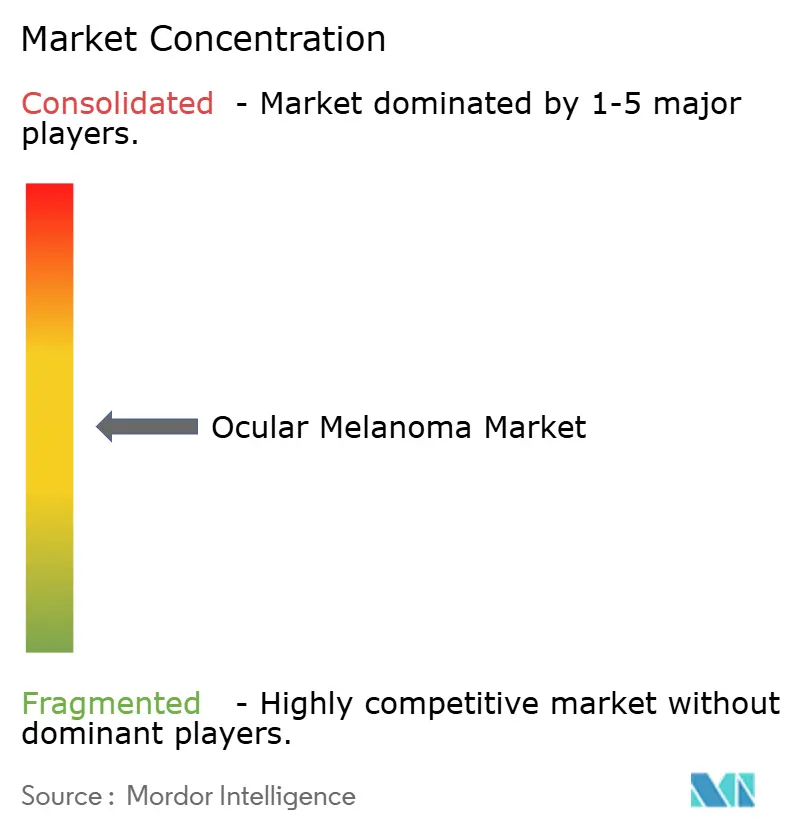
The ocular melanoma market has a moderately concentrated commercial base but a broader investigational pipeline. KIMMTRAK and HEPZATO Kit account for a significant share of current commercial revenue, while more than 15 companies are developing therapies for uveal, conjunctival, and early choroidal melanoma. Immunocore expects KIMMTRAK to receive approvals in 39 countries and achieve an annualized revenue run rate exceeding USD 430 million by mid-2026. The company continues its market-launch strategy while advancing tebentafusp combination studies. However, KIMMTRAK’s commercial opportunity remains limited to patients who are human leukocyte antigen (HLA)-A*02:01-positive, creating opportunities for therapies targeting tebentafusp-ineligible patients.
Delcath holds a near-exclusive position in the percutaneous hepatic perfusion (PHP)-based liver-directed chemotherapy niche. The company projects 31 Risk Evaluation and Mitigation Strategy (REMS)-certified treatment centers, an 86% gross margin, and 2026 revenue of USD 104 million to USD 108 million. Delcath has also presented PHP combination data with tebentafusp and with nivolumab plus relatlimab. The company aims to position liver-directed treatment alongside systemic therapies rather than in direct competition with them. IDEAYA and Servier are pursuing a New Drug Application (NDA) submission for darovasertib plus crizotinib after OptimUM-02 reported a hazard ratio of 0.42. If approved, the regimen could establish a distinct first-line treatment option for HLA-A*02:01-negative disease.
Ocular Melanoma Industry Leaders
-
Delcath Systems, Inc.
-
Immunocore Holdings plc
-
Aura Biosciences, Inc.
-
Novartis AG
-
Bristol-Myers Squibb Company
- *Disclaimer: Major Players sorted in no particular order
Ocular Melanoma Market Companies Covered in this Report
- Agenus
- AstraZeneca
- Aura Biosciences, Inc.
- BeiGene, Ltd.
- Bristol-Myers Squibb
- Castle Biosciences, Inc.
- Daiichi Sankyo
- Delcath Systems, Inc.
- Eli Lilly and Company
- Roche
- Genmab
- IDEAYA Biosciences, Inc.
- Immunocore Holdings plc
- Incyte
- Iovance Biotherapeutics, Inc.
- Merck
- Novartis
- Pfizer
- Regeneron Pharmaceuticals
- Replimune Group, Inc.
Recent Industry Developments in Ocular Melanoma Market
- October 2026: Immunocore confirmed plans to present Phase 1/2 IMC-F106C-101 data on brenetafusp, alone and with tebentafusp, in HLA-A*02:01-positive metastatic uveal melanoma at the 2026 SITC Annual Meeting.
- September 2026: IDEAYA and Servier dosed the first patient in the global Phase 3 OptimUM-11 study of adjuvant darovasertib plus crizotinib in primary uveal melanoma with elevated metastatic risk.
- September 2026: Immunocore completed target enrollment of 540 patients in the registrational TEBE-AM study of tebentafusp, alone and with pembrolizumab, in previously treated advanced melanoma.
- June 2026: Aura Biosciences completed enrollment of 108 patients in the Phase 3 CoMpass study evaluating bel-sar versus sham control in early choroidal melanoma.
Global Ocular Melanoma Market Report Scope
As per the scope of the report, ocular melanoma is a rare but serious type of eye cancer that originates in the melanocytes, which are the specialized cells responsible for producing melanin, the pigment that gives color to your skin, hair, and eyes. While most people associate melanoma with the skin, it is the most common primary cancer to develop inside the adult eye.
The ocular melanoma market is segmented by disease site, disease stage, treatment type, drug class, end user, and geography. By disease site, the market is segmented into uveal melanoma and conjunctival melanoma. By disease stage, the market is categorized into primary ocular melanoma, unresectable or metastatic ocular melanoma, and other metastatic sites. By treatment type, the market is segmented into radiation therapy, surgical therapy, laser therapy, immunotherapy, chemotherapy, targeted therapy, and other treatment types. By drug class, the market is segmented into immune checkpoint inhibitors, protein kinase inhibitors, immune checkpoint inhibitors, T-cell receptor-based therapies, and other drug classes. By end user, the market is segmented into hospitals, ophthalmology and ocular oncology centers, interventional oncology centers, academic and research institutes, and other end users. By geography, the market is analyzed across North America, Europe, Asia-Pacific, the Middle East and Africa, and South America. The report also covers the estimated market sizes and trends for 17 countries across major regions globally. The report offers market sizes and forecasts in terms of value (USD) for the above segments.
Segmentation Overview
| Uveal Melanoma |
| Conjunctival Melanoma |
| Primary Ocular Melanoma |
| Unresectable or Metastatic Ocular Melanoma |
| Other Metastatic Sites |
| Radiation Therapy |
| Surgical Therapy |
| Laser Therapy |
| Immunotherapy |
| Chemotherapy |
| Targeted Therapy |
| Other Treatment Type |
| Immune Checkpoint Inhibitors |
| Protein Kinase Inhibitors |
| Immune Checkpoint Inhibitors |
| T-cell Receptor-Based Therapies |
| Other Drug Classes |
| Hospitals |
| Ophthalmology and Ocular Oncology Centers |
| Interventional Oncology Centers |
| Academic and Research Institutes |
| Other End Users |
| North America | United States |
| Canada | |
| Mexico | |
| Europe | Germany |
| United Kingdom | |
| France | |
| Italy | |
| Spain | |
| Rest of Europe | |
| Asia-Pacific | China |
| India | |
| Japan | |
| Australia | |
| South Korea | |
| Rest of Asia-Pacific | |
| Middle East and Africa | GCC |
| South Africa | |
| Rest of Middle East and Africa | |
| South America | Brazil |
| Argentina | |
| Rest of South America |
| By Disease Site | Uveal Melanoma | |
| Conjunctival Melanoma | ||
| By Disease Stage | Primary Ocular Melanoma | |
| Unresectable or Metastatic Ocular Melanoma | ||
| Other Metastatic Sites | ||
| By Treatment Type | Radiation Therapy | |
| Surgical Therapy | ||
| Laser Therapy | ||
| Immunotherapy | ||
| Chemotherapy | ||
| Targeted Therapy | ||
| Other Treatment Type | ||
| By Drug Class | Immune Checkpoint Inhibitors | |
| Protein Kinase Inhibitors | ||
| Immune Checkpoint Inhibitors | ||
| T-cell Receptor-Based Therapies | ||
| Other Drug Classes | ||
| By End User | Hospitals | |
| Ophthalmology and Ocular Oncology Centers | ||
| Interventional Oncology Centers | ||
| Academic and Research Institutes | ||
| Other End Users | ||
| By Geography | North America | United States |
| Canada | ||
| Mexico | ||
| Europe | Germany | |
| United Kingdom | ||
| France | ||
| Italy | ||
| Spain | ||
| Rest of Europe | ||
| Asia-Pacific | China | |
| India | ||
| Japan | ||
| Australia | ||
| South Korea | ||
| Rest of Asia-Pacific | ||
| Middle East and Africa | GCC | |
| South Africa | ||
| Rest of Middle East and Africa | ||
| South America | Brazil | |
| Argentina | ||
| Rest of South America | ||
Key Questions Answered in the Report
What is the forecast growth rate for ocular melanoma through 2032?
The ocular melanoma market is projected to grow at a CAGR of 6.44% and reach USD 2.64 billion by 2032.
Which disease site accounts for the largest share of revenue?
Uveal melanoma held 86.12% of revenue by disease site in 2026, supported by its higher incidence and available metastatic therapies.
Why is liver-directed treatment important in ocular melanoma?
Hepatic metastases develop in up to 90% of patients with metastatic uveal melanoma, which makes liver control central to treatment planning.
Which treatment type is growing fastest through 2032?
Chemotherapy is forecast to expand at a 9.78% CAGR, mainly because of the ongoing rollout of HEPZATO Kit for hepatic metastases.
What limits access to tebentafusp treatment?
Tebentafusp requires HLA-A*02:01 antigen presentation, which limits eligibility to 40% to 50% of metastatic uveal melanoma patients in North America and Europe.
Which region has the highest projected growth rate?
Asia-Pacific is projected to grow at an 8.95% CAGR through 2032 as specialist capacity and participation in clinical trials increase.