
North America Medical and Healthcare Technical Textile Market Size and Share
Market Overview
| Study Period | 2021 - 2032 |
|---|---|
| Forecast Data Period | 2027 - 2032 |
| Base Year Market Size (2026) | USD 6.34 Billion |
| Market Size (2027) | USD 6.71 Billion |
| Market Size (2032) | USD 8.65 Billion |
| Growth Rate (2027 - 2032) | 5.21 % |
| Market Concentration | Medium |
Major Players *Disclaimer: Major Players sorted in no particular order Image © Mordor Intelligence. Reuse requires attribution under CC BY 4.0. | |
North America Medical and Healthcare Technical Textile Market Analysis by Mordor Intelligence
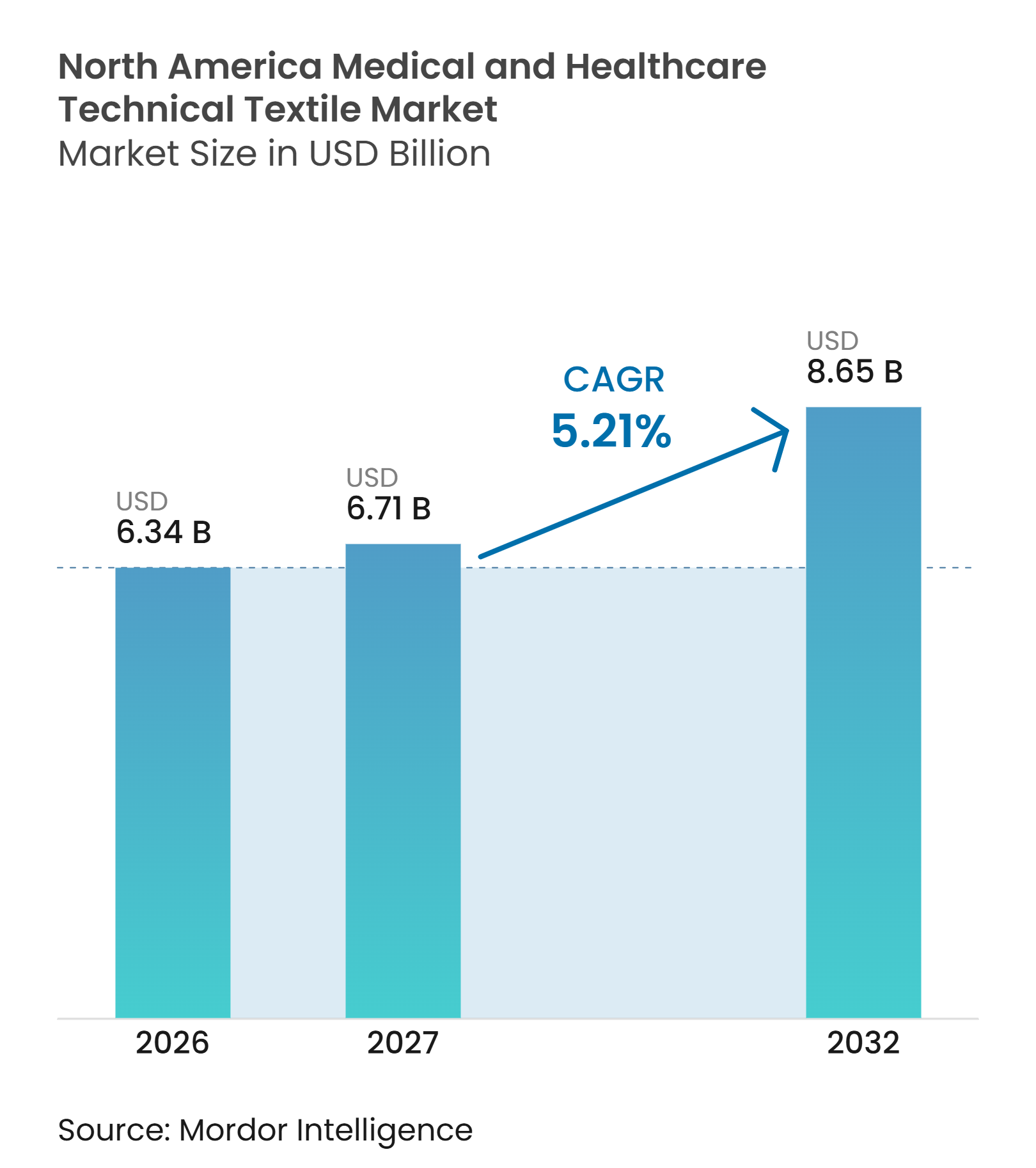
The North America Medical And Healthcare Technical Textile Market size was valued at USD 6.34 billion in 2026 and is estimated to grow from USD 6.71 billion in 2027 to reach USD 8.65 billion by 2032, at a CAGR of 5.21% during the forecast period (2027-2032).
The North America medical and healthcare technical textile market is supported by rising procedure volumes outside inpatient hospitals, demand for advanced wound management, and more care delivered in the home. Product requirements remain demanding because suppliers must meet sterilization, biocompatibility, traceability, and quality-system requirements that favor established manufacturers. The FDA Quality Management System Regulation took effect in February 2026 and incorporates ISO 13485:2016 requirements into 21 CFR Part 820, increasing the importance of supplier controls and documented design processes. Demand is also shifting toward reusable and recyclable formats, as healthcare providers seek lower waste without compromising clinical performance.
Key Report Takeaways
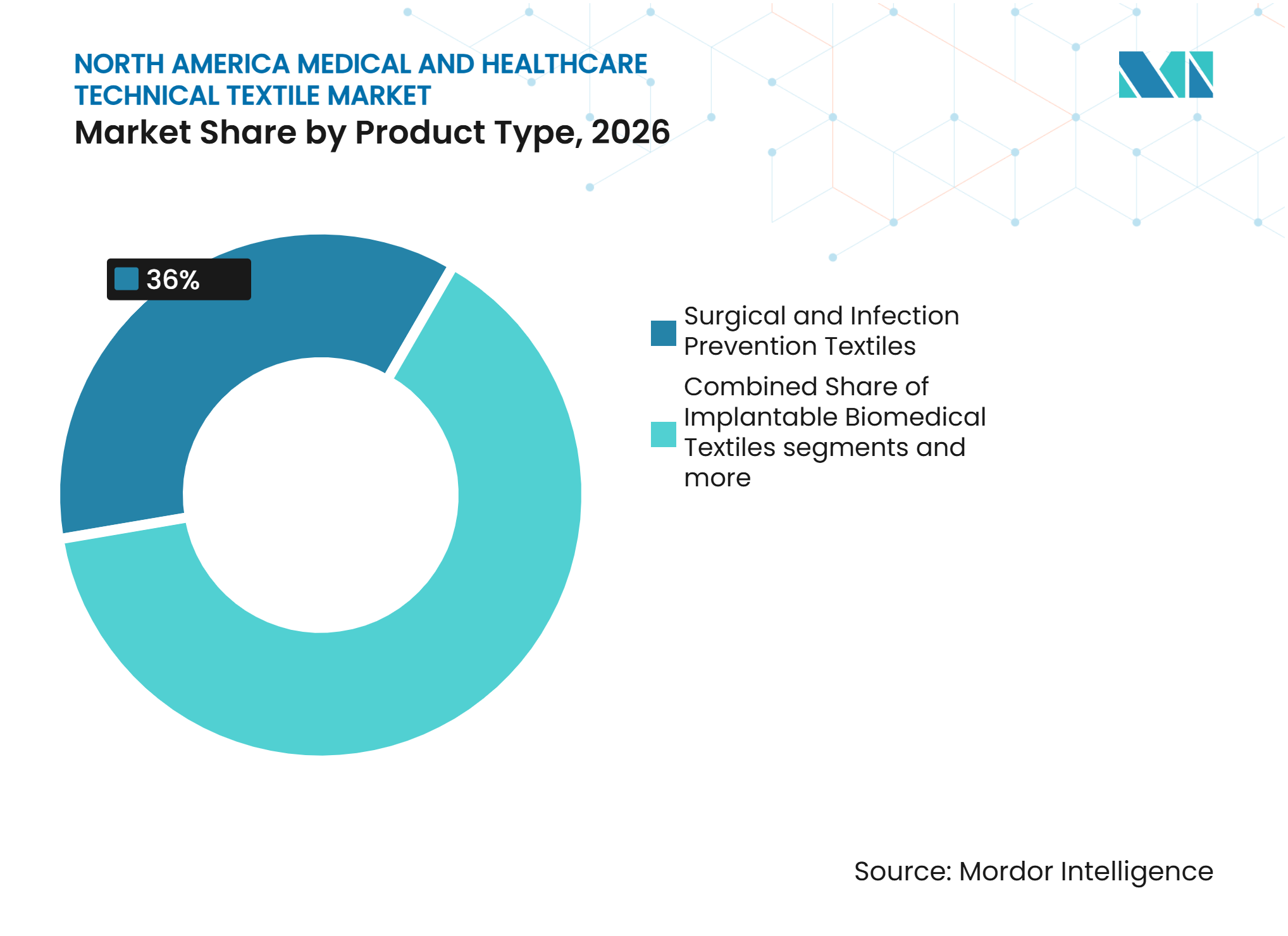
- By product type, surgical and infection prevention textiles held 36.0% of the North America medical and healthcare technical textile market share in 2026, while implantable biomedical textiles recorded the highest projected CAGR at 7.3% through 2032.
- By material type, polypropylene held 32.0% of the North America medical and healthcare technical textile market share in 2026, while bioresorbable synthetic fibers and polymers recorded the highest projected CAGR at 7.6% through 2032.
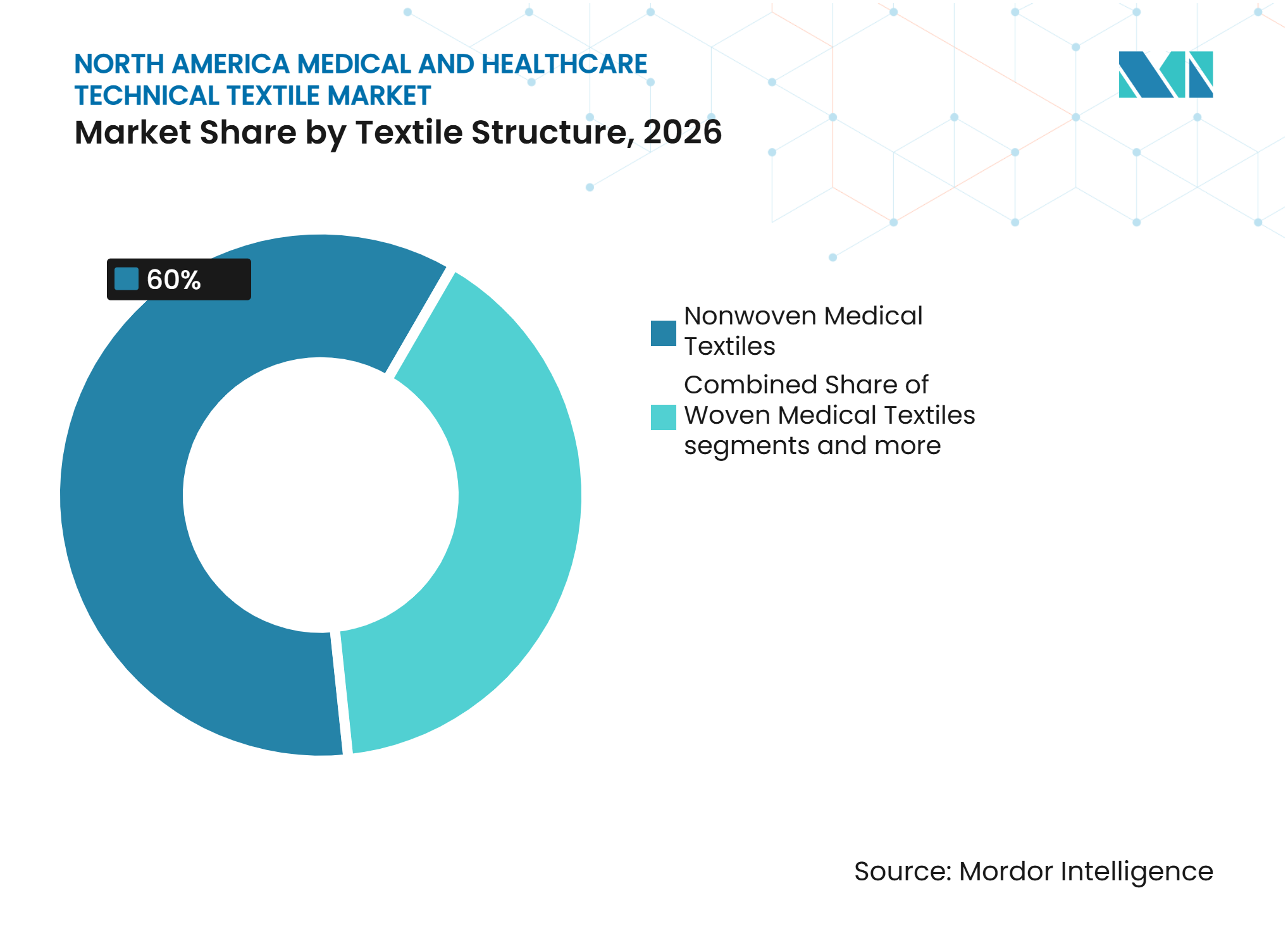
- By textile structure, nonwoven medical textiles held 60.0% of the North America medical and healthcare technical textile market size in 2026, while knitted medical textiles recorded the highest projected CAGR at 6.3% through 2032.
- By geography, the United States held a 78.0% share in 2026, while Mexico recorded the highest projected CAGR at 6.5% through 2032.
Note: Market numbers in this report are based on Mordor Intelligence's proprietary estimation framework, which combines nine months of actuals with Q4 projections for base year 2026.
Market Trends and Insights
Drivers Impact Analysis of North America Medical and Healthcare Technical Textile Market*
| Driver | (~) % Impact on CAGR Forecast | Geographic Relevance | Impact Timeline |
|---|---|---|---|
| Rising Surgical and Outpatient Procedure Volumes | +1.4% | United States core, Canada secondary | Medium term (2-4 years) |
| Increasing Chronic Wound and Geriatric Care Demand | +1.2% | United States core, Canada secondary, Mexico emerging | Long term (≥ 4 years) |
| Infection Control and Barrier Performance Requirements | +0.9% | North America-wide, United States regulatory primacy | Short term (≤ 2 years) |
| Hospital to Home and Remote Care Expansion | +0.7% | United States primary, Canada secondary | Medium term (2-4 years) |
| Defense Funded Sensor Fabric Technology Crossover | +0.4% | United States primary | Long term (≥ 4 years) |
| Domestic Medical Textile Capacity and Supply Chain Resilience | +0.3% | United States core, Mexico supply chain spillover | Short term (≤ 2 years) |
| Source: Mordor Intelligence | |||
Rising Surgical and Outpatient Procedure Volumes
The movement of procedures from hospitals to ambulatory settings is expanding the use of sterile drapes, gowns, and procedure packs in the North America medical and healthcare technical textile market. Pennsylvania reported that outpatient total hip replacements increased 148.8% and outpatient total knee replacements increased 147.0% between fiscal 2021 and fiscal 2025. These settings generally rely on standardized single-use barrier products for each procedure. MedPAC reported nearly 6,300 ambulatory surgical centers serving 3.4 million Medicare fee-for-service patients, and it projected total annual procedure volume to reach 44 million by 2034.[1] The shift gives suppliers a steadier procedure-linked demand base than traditional reusable linen programs. It also raises the value of dependable supply, validated performance, and efficient kit assembly for outpatient providers.
Increasing Chronic Wound and Geriatric Care Demand
Advanced wound care is a durable source of demand because chronic wounds require repeated dressing changes and tailored moisture management. A 2025 clinical review estimated that chronic wounds affect 10.5 million Medicare beneficiaries and cost Medicare USD 22.5 billion annually. The same need is linked to aging, as nearly 85% of the affected population is 65 years or older. Updated 2025 guidance from ISTAP and WOCN supports more structured prevention and management of skin tears in aged skin. This clinical setting favors multilayer foam, antimicrobial fiber, and moisture-handling textile systems over basic gauze. The North America medical and healthcare technical textile market therefore benefits when care providers require dressings that protect fragile skin while remaining practical for repeated use.
Infection Control and Barrier Performance Requirements
ANSI/AAMI PB70:2022 is a central product specification for protective apparel and drapes used in United States healthcare facilities. The four-level framework shapes purchasing requirements for liquid barrier performance and reinforces demand for tested nonwoven constructions. In February 2025, Medline received FDA 510(k) clearance for its Level 4 Surgical Gown with Breathable Sleeves. The product illustrates how suppliers are addressing barrier protection and wearer comfort together. The QMSR also places greater emphasis on design controls, supplier qualification, and corrective action systems for medical device manufacturers.[2] These requirements make certification capability and documented production controls important competitive factors in the North America medical and healthcare technical textile market.
Hospital to Home and Remote Care Expansion
Hospital-at-Home programs are creating a new channel for packaged wound care, absorbent products, and isolation materials designed for residential use. The American Hospital Association reported that 413 hospitals across 146 health systems in 39 states were authorized under the Acute Hospital Care at Home waiver as of August 2025.[3] Home delivery changes product expectations because patients and caregivers must apply or manage some products outside a clinical environment. This requires clear instructions, reliable adhesives, and packaging that supports safe use. Advocate Health reported that its program served more than 16,500 patients with a 30-day readmission rate of 0.93, compared with 1.09 for traditional inpatient care. The expansion broadens the addressable care setting for the North America medical and healthcare technical textile market without removing the need for institutional-grade performance.
Restraints Impact Analysis of North America Medical and Healthcare Technical Textile Market*
| Restraint | (~) % Impact on CAGR Forecast | Geographic Relevance | Impact Timeline |
|---|---|---|---|
| Complex Biocompatibility and Regulatory Validation | -1.2% | North America-wide, concentrated on United States manufacturers | Long term (≥ 4 years) |
| Polypropylene and Specialty Polymer Cost Volatility | -0.9% | United States primary, Canada and Mexico secondary | Short term (≤ 2 years) |
| Single-Use Textile Waste and Limited Recycling Infrastructure | -0.6% | United States and Canada, Mexico emerging | Medium term (2-4 years) |
| Clinical Integration and Reliability Gaps in Smart Textiles | -0.4% | United States primary | Medium term (2-4 years) |
| Source: Mordor Intelligence | |||
Complex Biocompatibility and Regulatory Validation
Novel implantable and antimicrobial textiles face lengthy validation requirements before commercial use. The FDA QMSR became effective in February 2026 and aligns the United States quality framework with ISO 13485:2016. ISO 10993-1 evaluation requires biological safety assessment for devices that contact skin or internal tissue. Implantable products may need testing for cytotoxicity, sensitization, irritation, systemic toxicity, genotoxicity, and implantation effects before a 510(k) submission. These tasks can extend development schedules and increase capital needs for bioresorbable meshes, scaffolds, and coated textile products. The North America medical and healthcare technical textile market consequently gives an advantage to companies with proven quality systems and established regulatory evidence.
Polypropylene and Specialty Polymer Cost Volatility
Polypropylene is central to high-volume nonwoven production, but its cost can change with energy prices, supply conditions, and trade policy. The American Medical Manufacturers Association warned in 2025 that broad healthcare tariffs on polymers and nonwoven intermediates could raise costs for providers and patients. Medical-use grades also require control of extractables and leachables for many clinical applications. This can make qualified inputs more expensive than industrial grades. Long-term purchasing contracts can limit the ability of suppliers to pass changes in resin cost to customers. The constraint is strongest in high-volume drapes and gowns where purchasing teams compare price closely. Producers are responding through supply diversification, domestic capacity, and higher-value products that rely less on commodity pricing.
*Our forecasts treat driver/restraint impacts as directional, not additive. The impact forecasts reflect baseline growth, mix effects, and variable interactions.
North America Medical and Healthcare Technical Textile Market Segment Analysis
By Product Type:
Surgical Textiles Anchor Volume and Implantable Accelerate ValueSurgical and infection prevention textiles held 36.0% of the North America medical and healthcare technical textile market share in 2026. The category is supported by the use of sterile drapes, gowns, and barrier products in operating rooms and ambulatory surgery centers. ANSI/AAMI PB70 performance requirements mean that each product must deliver an established level of fluid protection. Wound Care and Non-Implantable Therapeutic Textiles form another large demand area because pressure injuries and chronic wounds require advanced dressing formats. Smith and Nephew stated that pressure injuries cost the United States healthcare system more than USD 26.8 billion annually. Hygiene and absorbent care products are also important in long-term care, while hospital textiles cover linens, patient gowns, and compression products. Extracorporeal and device-integrated products serve smaller but high-value roles in dialysis and cardiovascular care.
Implantable biomedical textiles are projected to grow at a 7.3% CAGR through 2032. Their growth follows a pipeline of absorbable meshes and scaffold products used in hernia and soft-tissue repair. BD launched the Phasix ST Umbilical Hernia Patch in April 2025 after FDA 510(k) clearance. PrintBio received FDA clearance in May 2025 for 3DMatrix DynaFlex, a resorbable surgical mesh for soft-tissue repair and reconstruction. These introductions support the move from permanent materials toward absorbable options in selected procedures. They also reinforce the value of validated clinical and regulatory documentation within this segment of the North America medical and healthcare technical textile industry.



By Material Type:
Polypropylene Leads Volume and Bioresorbable Polymers Lead GrowthPolypropylene held 32.0% of the North America medical and healthcare technical textile market share in 2026. Its leadership reflects the cost and performance balance available in spunbond-meltblown-spunbond nonwoven processing. The material is compatible with common sterilization methods and is widely used in surgical drapes, gowns, and isolation products. Polyester supports knitted implantable meshes and woven vascular grafts, while polyamide is used in sutures and catheter-related products. Polyurethane and other elastomeric materials are used in IV securement and continuous glucose monitor overlays. Covestro introduced Dureflex MA5000 in 2025 for IV securement dressings and continuous glucose monitor overlays.
Bioresorbable synthetic fibers and polymers are projected to grow at a 7.6% CAGR through 2032. P4HB, PDO, and PLGA are gaining use in implant-grade products that are designed to degrade after supporting tissue repair. FDA clearances for these products build the reference base for subsequent device development. Regenerated cellulosic fibers also have a role in wound contact layers because they can support moisture management and patient comfort. Natural fibers remain relevant in reusable hospital linens and some wound care uses. In April 2025, The Ottawa Hospital completed a transition from more than 500 disposable surgical gowns a day to a reusable program and projected an annual waste reduction of nearly 33,000 kg. The material mix in the North America medical and healthcare technical textile market is therefore separating into high-volume disposable polymers, specialized implant materials, and reusable formats.
By Textile Structure:
Nonwovens Lead Volume and Knitted Structures AccelerateNonwoven medical textiles held 60.0% of the North America medical and healthcare technical textile market share in 2026. SMS and spunbond formats combine liquid barrier performance, sterility, and low unit cost for high-volume clinical uses. Meltblown layers are especially important because their fiber structure supports barrier classification in surgical apparel. The Department of Commerce initiated a Section 232 investigation covering imports of critical medical equipment and personal protective equipment in 2025. This action highlighted the strategic value of domestic nonwoven capacity.
Knitted medical textiles are projected to grow at a 6.3% CAGR through 2032. Their open-loop construction can support tissue ingrowth and flexibility in hernia repair, pelvic floor reconstruction, rotator cuff repair, compression therapy, and catheter securement. Braided structures remain important for sutures, endovascular grafts, and covered stent systems that require precise mechanical properties. DARPA launched the BioElectronics to Sense and Treat program in February 2025 to develop wearable smart bandages that combine infection sensing with closed-loop treatment delivery. The program points to a future in which textile structures function as active medical-device platforms rather than passive substrates. Reliability, clinical workflow integration, and regulatory evidence will determine how quickly these smart-textile formats enter broader use.

Geography Analysis
United States
The United States held 78.0% of the North America medical and healthcare technical textile market share in 2026. Its scale reflects healthcare spending, a broad hospital network, ambulatory surgery infrastructure, and the largest regional base of regulated manufacturers. MedPAC estimated that nearly 6,300 ambulatory surgical centers handle 3.4 million Medicare fee-for-service procedures annually, while 413 hospitals were authorized for Hospital-at-Home services in August 2025. Federal domestic-preference policy, FDA oversight, and QMSR compliance favor suppliers with ISO 13485-aligned processes, while sensor-enabled dressings and bioresorbable implants remain important development areas.
Mexico
Mexico is projected to grow at a 6.5% CAGR through 2032, the highest rate among the geographies in the North America medical and healthcare technical textile market. The Mexican government announced Medline Industries USD 250 million investment in a medical consumables manufacturing and distribution facility in Nuevo Laredo in January 2025. The investment supports a USMCA-integrated production base for domestic providers and the wider regional network. Public hospital procurement supports demand for surgical clothing, hospital linens, and wound care products, while COFEPRIS is the core regulatory authority for medical devices and related healthcare products. The key opportunity combines local demand with nearshore manufacturing that gives customers shorter supply lines.
Canada
Canada is reshaping procurement around reusable products and circular waste programs. Environment and Climate Change Canada provided CAD 392,232 (USD 286,471) in 2025 to the Canadian Coalition for Green Health Care for a national single-use plastics reduction initiative. Island Health is converting 850,000 disposable gowns each year to reusable alternatives and expects annual savings of CAD 2 million (USD 1.5 million) and a reduction of 77,000 kg of carbon dioxide equivalent emissions. According to the Canadian Institute for Health Information (CIHI), Canadian healthcare spending is projected to reach CAD 399 billion (USD 291.4 billion) in 2025, growing by 4.2% compared with projected GDP growth of 2.6%, supporting clinical consumables demand as healthcare providers prioritize durable, reusable, and recyclable nonwoven products. Suppliers that document clinical performance and environmental handling options are better placed to meet these expectations.
Competitive Landscape
Market Concentration
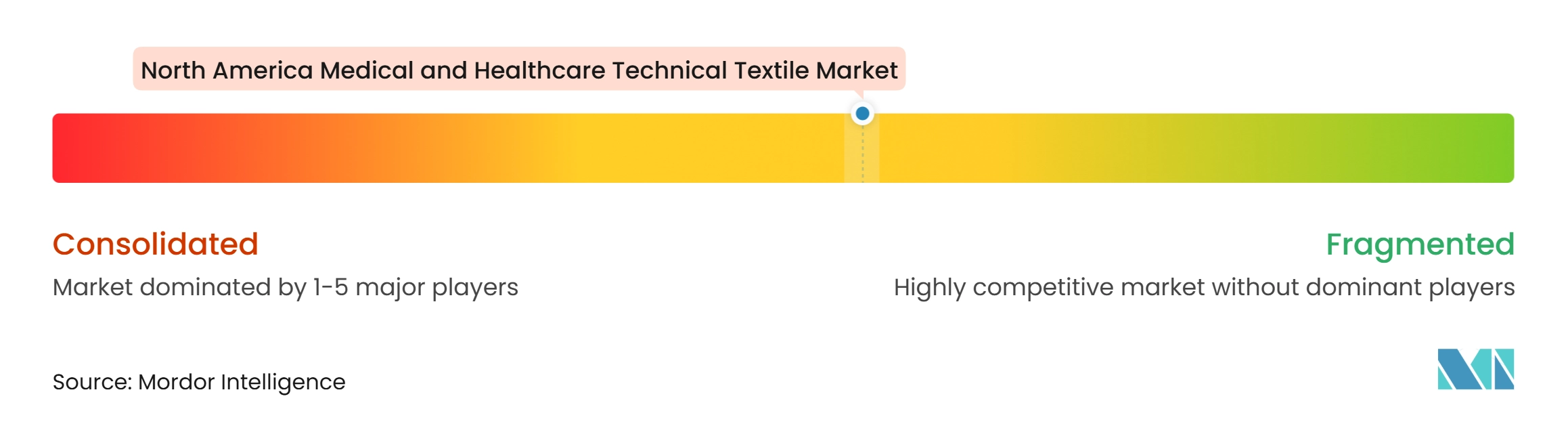
The North America medical and healthcare technical textile market exhibits a medium level of market concentration. Kimberly-Clark, Berry Global, and DuPont have supply-chain positions in surgical nonwovens, while Cardinal Health and Owens and Minor compete through institutional distribution. Mölnlycke Health Care and Medline combine product supply, kit assembly, and procedural support. ISO 13485-aligned quality systems are important qualifications in regulated healthcare applications.
In October 2026, Solventum announced FDA 510(k) clearance for combined use of Restrata Synthetic Electrospun Fiber Matrix and V.A.C. Therapy. Its December 2025 acquisition of Acera Surgical strengthened its position in electrospun matrices. Medline's Level 4 gown clearance shows ongoing product attention to barrier protection and comfort. BD also extended its portfolio through a fully absorbable umbilical hernia patch. These actions show that regulatory clearance and clinical fit remain central to competitive positioning.
White-space opportunities include PFAS-free high-barrier surgical textiles, recyclable polypropylene nonwovens, and sensor-enabled dressings for home care. DARPA's BEST program supports smart bandages that detect infection and deliver treatment. At the same time, domestic procurement preferences may benefit suppliers with United States capacity. Established nonwoven producers are well positioned because of their material capacity and qualification experience. Smaller firms can compete through clinical value in wound matrices, implantable designs, and active textiles. The North America medical and healthcare technical textile market will continue to reward scale in high-volume products and evidence-based innovation in clinical applications.
North America Medical and Healthcare Technical Textile Industry Leaders
-
3M Company
-
Ahlstrom Oyj
-
Asahi Kasei Corporation
-
ATEX Technologies, Inc.
-
B. Braun SE
- *Disclaimer: Major Players sorted in no particular order
North America Medical and Healthcare Technical Textile Market Companies Covered in this Report
- 3M Company
- Ahlstrom Oyj
- Asahi Kasei Corporation
- ATEX Technologies, Inc.
- B. Braun SE
- Bally Ribbon Mills
- Berry Global Group, Inc.
- Cardinal Health, Inc.
- Confluent Medical Technologies
- DuPont de Nemours, Inc.
- Freudenberg SE
- Kimberly-Clark Corporation
- Medline Industries, LP
- Medtronic plc
- Mölnlycke Health Care AB
- Owens & Minor, Inc.
- Precision Fabrics Group, Inc.
- Smith & Nephew plc
- Solventum Corporation
- Trelleborg AB
- Winner Medical Co., Ltd.
Recent Industry Developments in North America Medical and Healthcare Technical Textile Market
- October 2026: Solventum (US) received FDA 510(k) clearance for the combined use of Restrata Synthetic Electrospun Fiber Matrix and V.A.C. Therapy, the first clearance combining electrospun bioresorbable matrix technology with negative pressure wound therapy. The milestone followed Solventum's December 2025 acquisition of Acera Surgical for USD 850 million, including USD 725 million upfront and USD 125 million in performance milestones.
- October 2025: Smith & Nephew released clinical data supporting the ALLEVYN COMPLETE CARE 5-Layer Foam Dressing, reporting 93% mechanical energy absorption in Frictional Energy Absorber Effectiveness testing. The dressing was cleared for the United States advanced wound care sector for pressure injury prevention and wound management.
- July 2025: DARPA selected Singletto for its Embedded Entrepreneur Initiative, building on its work under the DARPA Personal Protective Biosystem program. The selection supports the transition of its Oxafence Active Protection platform in responsive textiles to commercial medical and defense applications.
North America Medical and Healthcare Technical Textile Market Report Scope
The North America Medical and Healthcare Technical Textile Market Report is Segmented by Product Type (Hospital and Patient Care Textiles, Implantable Biomedical Textiles, and More), by Material Type (Polypropylene (PP), Polyester (PET), and More), by Textile Structure (Nonwoven Medical Textiles, Woven Medical Textiles, and More), and by Geography (China, Japan, and More). The Market Forecasts are Provided in Terms of Value (USD).
Segmentation Overview
| Surgical and Infection Prevention Textiles |
| Wound Care and Non-Implantable Therapeutic Textiles |
| Healthcare Hygiene and Absorbent Care Textiles |
| Implantable Biomedical Textiles |
| Extracorporeal and Medical Device-Integrated Textiles |
| Hospital and Patient Care Textiles |
| Polypropylene (PP) |
| Polyester (PET) |
| Polyethylene (PE) |
| Polyamide (Nylon) |
| Cotton and Other Natural Fibers |
| Regenerated Cellulosic Fibers |
| Polyurethane and Other Elastomeric Fibers |
| Bioresorbable Synthetic Fibers and Polymers |
| Other Specialty Fibers and Materials |
| Nonwoven Medical Textiles |
| Woven Medical Textiles |
| Knitted Medical Textiles |
| Braided Medical Textiles |
| Other Engineered Medical Textile Structures and Products |
| United States |
| Canada |
| Mexico |
| By Product Type | Surgical and Infection Prevention Textiles |
| Wound Care and Non-Implantable Therapeutic Textiles | |
| Healthcare Hygiene and Absorbent Care Textiles | |
| Implantable Biomedical Textiles | |
| Extracorporeal and Medical Device-Integrated Textiles | |
| Hospital and Patient Care Textiles | |
| By Material Type | Polypropylene (PP) |
| Polyester (PET) | |
| Polyethylene (PE) | |
| Polyamide (Nylon) | |
| Cotton and Other Natural Fibers | |
| Regenerated Cellulosic Fibers | |
| Polyurethane and Other Elastomeric Fibers | |
| Bioresorbable Synthetic Fibers and Polymers | |
| Other Specialty Fibers and Materials | |
| By Textile Structure | Nonwoven Medical Textiles |
| Woven Medical Textiles | |
| Knitted Medical Textiles | |
| Braided Medical Textiles | |
| Other Engineered Medical Textile Structures and Products | |
| By Geography | United States |
| Canada | |
| Mexico |
Key Questions Answered in the Report
What is driving demand for medical and healthcare technical textiles in North America?
Outpatient surgery, chronic wound management, home-based care, and stricter infection-control requirements support demand for specialized textile products.
How large is the North America medical and healthcare technical textile market?
The sector is valued at USD 6.34 billion in 2026 and is projected to reach USD 8.65 billion by 2032 at a 5.21% CAGR.
Which product category has the largest share in North America?
Surgical and infection prevention textiles lead with a 36.0% share in 2026 because operating rooms and ambulatory centers use sterile barrier products routinely.
Which material is growing fastest for medical textile applications?
Bioresorbable synthetic fibers and polymers are projected to grow at a 7.6% CAGR through 2032, supported by absorbable mesh and scaffold products.
Why are reusable surgical gowns becoming more important in Canada?
Healthcare providers are pursuing waste reduction and lifecycle savings, with Island Health moving 850,000 gowns annually to reusable alternatives.
What compliance requirements affect medical textile suppliers?
FDA QMSR, ISO 13485-aligned quality practices, ISO 10993 biological evaluation, and ANSI/AAMI PB70 barrier requirements shape product development and procurement.