
Non-Surgical Rejuvenation Market Size and Share
Market Overview
| Study Period | 2021 - 2032 |
|---|---|
| Market Size (2027) | USD 19.04 Billion |
| Market Size (2032) | USD 26.93 Billion |
| Growth Rate (2027 - 2032) | 7.18 % |
| Fastest Growing Market | Asia-Pacific |
| Largest Market | North America |
| Market Concentration | Medium |
Major Players *Disclaimer: Major Players sorted in no particular order Image © Mordor Intelligence. Reuse requires attribution under CC BY 4.0. | |
Non-Surgical Rejuvenation Market Analysis by Mordor Intelligence
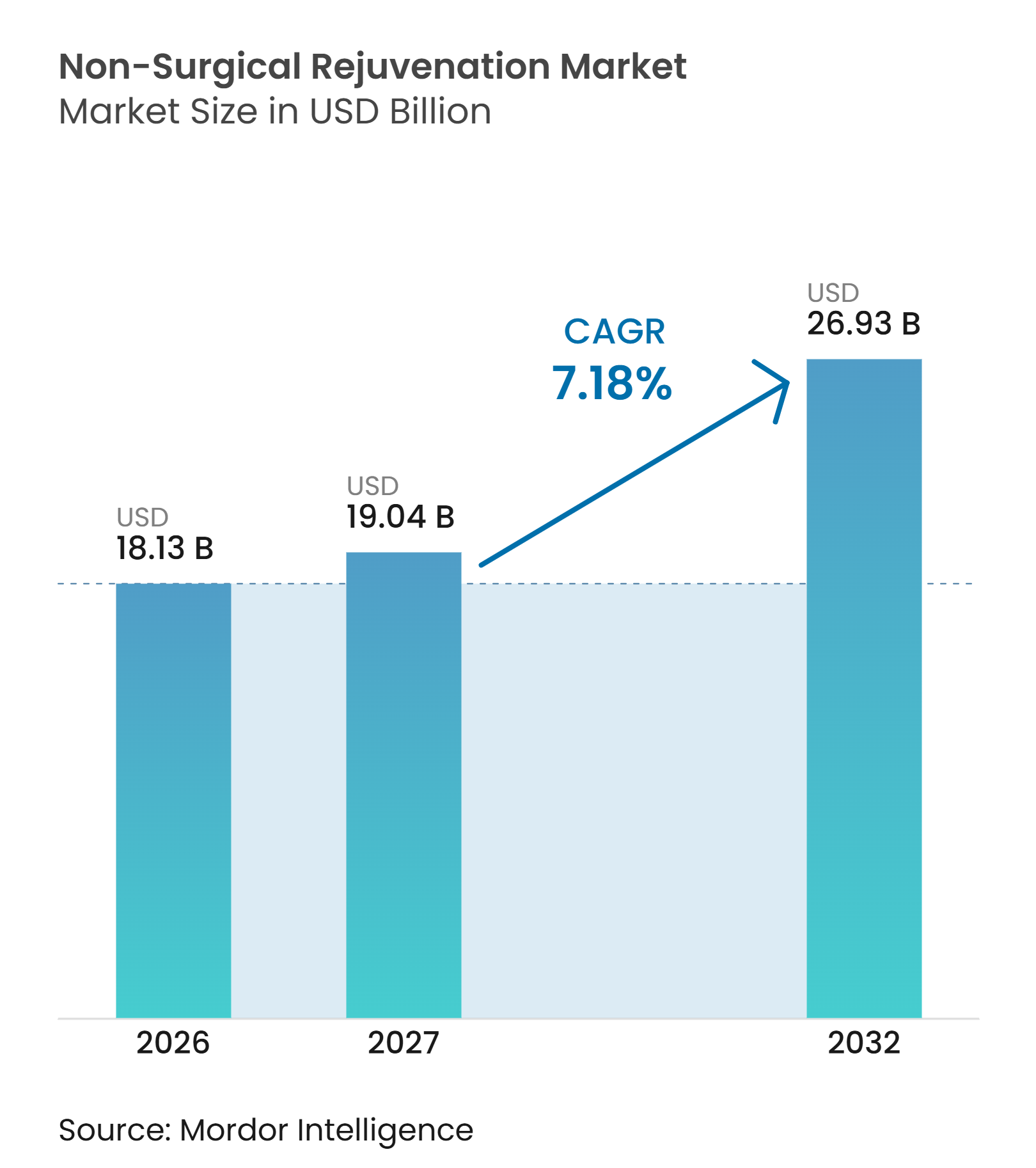
The Non-Surgical Rejuvenation Market size was valued at USD 18.13 billion in 2026 and is estimated to grow from USD 19.04 billion in 2027 to reach USD 26.93 billion by 2032, at a CAGR of 7.18% during the forecast period (2027-2032).
The non-surgical rejuvenation market is shifting toward treatments that fit routine care, with shorter visits and limited recovery time supporting repeat demand. An aging population remains central to demand, while younger adults are entering treatment earlier for preventive care. Medical spas extend their access beyond hospital-linked dermatology practices and creating a wider base for recurring treatments. AI-supported facial assessment is helping providers combine treatments around individual skin and facial needs, although trained clinical oversight remains important. Counterfeit injectables and changing demand for fat-reduction procedures among GLP-1 users remain material constraints on the non-surgical rejuvenation market.
Key Report Takeaways
- By product type, injectable neurotoxins held 34.72% of the non-surgical rejuvenation market share in 2026, while topical and skin booster products are projected to grow at a 10.21% CAGR through 2032.
- By treatment area, facial aesthetics accounted for 66.26% of the non-surgical rejuvenation market share in 2026, while hair and scalp treatments are forecast to expand at a 7.74% CAGR through 2032.
- By gender, the female segment held 86.23% of revenue in 2026, while the male segment is projected to grow at a 9.56% CAGR through 2032.
- By age group, adults aged 40 to 54 held 42.34% of revenue in 2026, while the 13 to 39 age group is forecast to grow at a 7.69% CAGR through 2032.
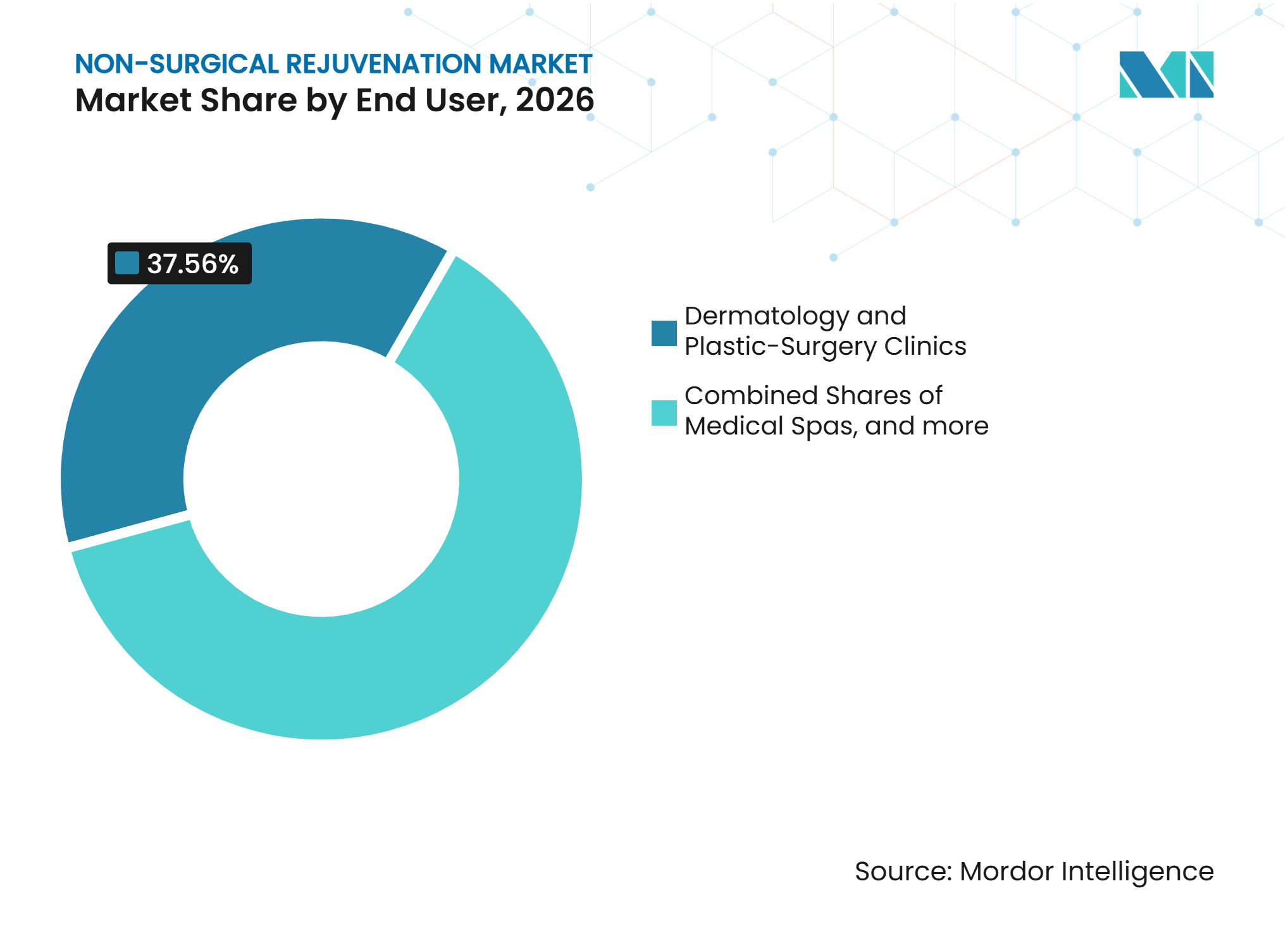
- By end user, dermatology and plastic-surgery clinics held 37.56% of revenue in 2026, while medical spas are projected to expand at an 8.67% CAGR through 2032.
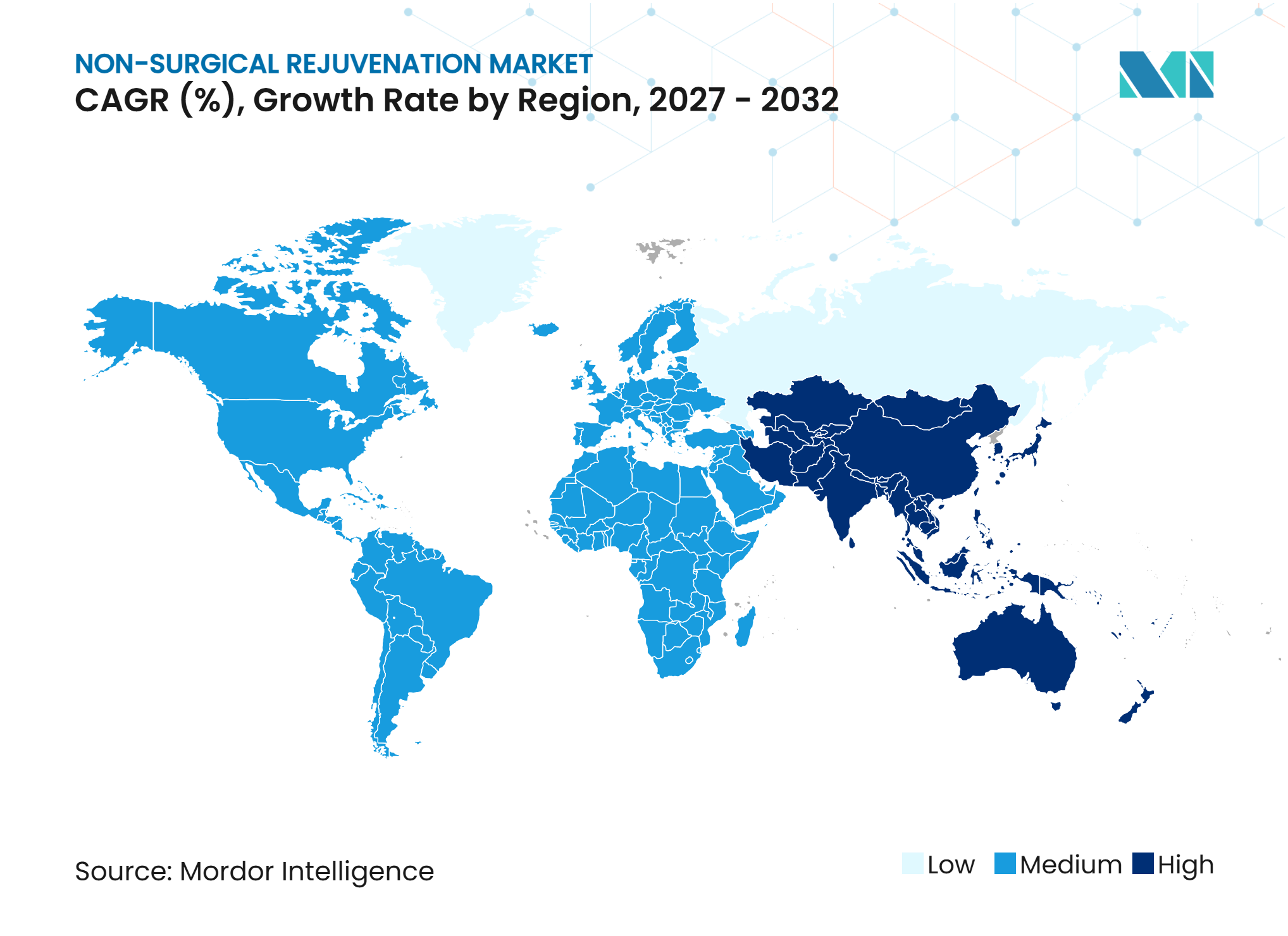
- By geography, North America accounted for 41.32% of revenue in 2026, while Asia-Pacific is forecast to grow at a 9.35% CAGR through 2032.
Note: Market numbers in this report are based on Mordor Intelligence's proprietary estimation framework, which combines nine months of actuals with Q4 projections for base year 2026.
Market Trends and Insights
Drivers Impact Analysis of Non-Surgical Rejuvenation Market*
| Driver | (~) % Impact on CAGR Forecast | Geographic Relevance | Impact Timeline |
|---|---|---|---|
| Preference for Low-Downtime, Office-Based Treatments | +1.50% | Global | Short term (≤ 2 years) |
| Repeat-Care Economics of Neuromodulators and Fillers | +1.20% | Global, concentrated in North America and Europe | Medium term (2-4 years) |
| Aging Population and Preventive Aesthetics | +1.00% | Global, highest in North America, Europe, and Asia-Pacific | Long term (≥ 4 years) |
| Social Media, Video Calls, and Appearance Awareness | +0.90% | Global, strongest in North America and Asia-Pacific | Short term (≤ 2 years) |
| Expansion of Medical Spas and Tier-Two Access | +0.80% | Asia-Pacific, with spillover to North America and Middle East and Africa | Medium term (2-4 years) |
| AI-Assisted Facial Mapping and Combination Protocols | +0.50% | North America and Europe, with early gains in South Korea, Japan, and China | Medium term (2-4 years) |
| Source: Mordor Intelligence | |||
Preference for Low-Downtime, Office-Based Treatments
Office-based care has become a central part of the non-surgical rejuvenation market because patients can fit treatment into normal work and family schedules. Minimally invasive procedures represented 80.00% of treatments among Gen X and Millennial facial rejuvenation seekers in 2025.[1]Neurotoxin and filler appointments can often be completed within a short visit, which reduces the practical barrier associated with surgery. The appeal is strongest when patients can resume normal activity with limited recovery requirements. Product suppliers are therefore under pressure to demonstrate reliable outcomes and treatment intervals that support retention. In the United States, the FDA requirement that injectables be prescription products strengthens the distinction between compliant providers and informal sellers.
Aging Population and Preventive Aesthetics
Population aging continues to support the non-surgical rejuvenation market, particularly for treatments addressing facial volume, skin texture, and laxity. The 40 to 54 age group held 42.34% of revenue in 2026, confirming its role as the established treatment base. Younger adults are also starting maintenance treatments earlier, which can lengthen the period over which they return for care. A 2025 Pew Research Center survey found that 23.00% of U.S. adults had received or would consider non-surgical treatments such as botulinum toxin or dermal fillers.[2]Patients aged 55 to 69 and those aged 70 and above add further demand as acceptance of aesthetic treatment expands. This broadening age range supports combination treatment plans rather than a single, occasional procedure.
Social Media, Video Calls, and Appearance Awareness
Digital channels have made patients more aware of facial symmetry, skin quality, and visible signs of aging. Video calls can increase attention to facial movement, texture, and asymmetry during routine professional communication. Search and social media activity also give first-time patients more knowledge of procedures before they reach a clinic. This can shorten the time between consultation and booking when providers can clearly address product, safety, and outcome questions. The same channels can spread misleading claims and promote unapproved products, creating a responsibility for providers to communicate credible clinical information. FDA enforcement actions against websites marketing unapproved botulinum toxin products show why digital discovery must be paired with verified supply and qualified administration.[3]
Expansion of Medical Spas and Tier-Two Access
Medical spas are widening entry points into the non-surgical rejuvenation market by offering accessible locations, direct-pay treatment, and repeat-care programs. More than 90.00% of U.S. medical spas remained independently owned in 2025, leaving a fragmented provider base despite active consolidation.[4] Membership and subscription models can help providers maintain contact with patients between clinical procedures. Chain expansion is also moving beyond major metropolitan areas, where patient access has historically been less developed. SoYoung reported 426.00% year-over-year growth in light-aesthetic clinic chain revenue in the second quarter of 2025, while second-tier city locations grew 99.00%. Greater access raises the importance of practitioner qualification and traceable product distribution.
Restraints Impact Analysis of Non-Surgical Rejuvenation Market*
| Restraint | (~) % Impact on CAGR Forecast | Geographic Relevance | Impact Timeline |
|---|---|---|---|
| High Device and Treatment Costs | -1.30% | Global, most acute in South America and Middle East and Africa | Medium term (2-4 years) |
| Patchwork Regulation and Practitioner-Training Gaps | -0.80% | Global, highest in Middle East and Africa and Southeast Asia-Pacific | Long term (≥ 4 years) |
| Counterfeit and Gray-Market Injectables | -0.60% | Global, highest in Asia-Pacific and Middle East and Africa | Medium term (2-4 years) |
| Competing Weight-Loss Pharmacotherapy Reducing Fat-Reduction Demand | -0.40% | North America and Europe | Short term (≤ 2 years) |
| Source: Mordor Intelligence | |||
Counterfeit and Gray-Market Injectables
Counterfeit and gray-market injectables remain a serious safety and trust issue for the non-surgical rejuvenation market. UK authorities recorded 41 confirmed botulism cases between June and August 2025 that were linked to unlicensed botulinum toxin products. The MHRA response targeted sellers using social media and unlicensed practitioners operating in informal settings. New York City also issued a 2025 health advisory on severe illness linked to self-injection of botulinum toxin products obtained from unlicensed sources. Such events can make price-sensitive consumers hesitant about treatment even when they are considering a legitimate provider. Providers and manufacturers need product authentication, patient education, and disciplined purchasing controls to protect confidence in the category.
Competing Weight-Loss Pharmacotherapy Reducing Fat-Reduction Demand
Weight-loss pharmacotherapy is changing demand within the non-surgical rejuvenation market rather than reducing demand equally across all treatments. Patients who achieve significant weight loss may see less reason to pursue localized fat-reduction procedures. This weakens the outlook for treatments positioned only around fat elimination, including some cryolipolysis and body-contouring procedures. At the same time, post-weight-loss skin laxity and facial volume loss can increase interest in skin-tightening devices and biostimulatory injectables. Providers that present treatment around tissue quality and laxity correction are better positioned for this shift. The change favors flexible treatment portfolios instead of a narrow reliance on localized fat-reduction services.
*Our forecasts treat driver/restraint impacts as directional, not additive. The impact forecasts reflect baseline growth, mix effects, and variable interactions.
Non-Surgical Rejuvenation Market Segment Analysis
By Product Type:
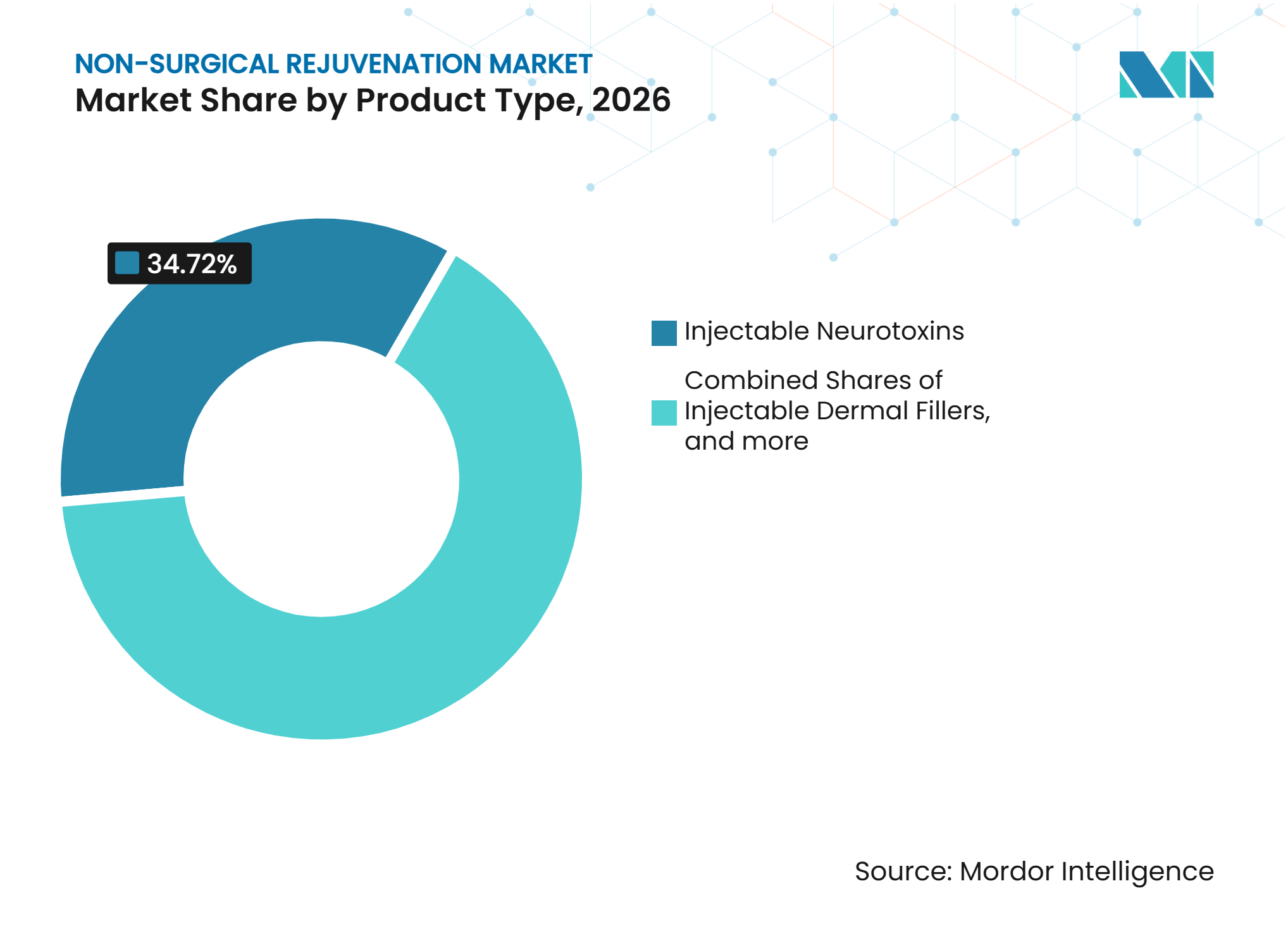
Injectables Lead While Skin Boosters AccelerateInjectable neurotoxins held 34.72% of the non-surgical rejuvenation market share in 2026, making them the largest product category. Their large installed patient base reflects repeated treatment cycles and broad use across preventive and corrective facial care. In the United States, 9.90 million neuromodulator injections were performed in 2024, up 4.00% from the prior year.
Topical and skin booster products are forecast to grow at a 10.21% CAGR from 2027 to 2032, the fastest rate among product types. Their growth reflects clinician interest in polynucleotides, PDRN, and skin-booster hyaluronic acid across facial and body protocols. These products are often used with injectables or energy-based procedures rather than as complete substitutes. That clinical role can raise the value of a treatment visit when providers select products around hydration, texture, and tissue quality. Energy-based systems remain relevant across laser, intense pulsed light, radiofrequency, high-intensity focused ultrasound, cryolipolysis, and electromagnetic muscle stimulation.



By Treatment Area:
Facial Care Retains Scale While Hair Treatments Grow FasterFacial aesthetics accounted for 66.26% of the non-surgical rejuvenation market share in 2026. Its size reflects a broad set of needs involving expression lines, volume loss, skin quality, and visible age-related change. Neuromodulators and fillers remain central because they can be adapted to preventive treatment and later-stage correction. Facial treatment also benefits from combination protocols that incorporate energy-based devices within a single care plan.
Hair and scalp treatments are forecast to grow at a 7.74% CAGR from 2027 to 2032, the fastest rate across treatment areas. Rising awareness of androgenetic alopecia is bringing more patients into non-surgical hair solutions. Platelet-rich plasma and injectable scalp biostimulators are becoming part of the treatment discussion for patients seeking earlier intervention. Male patients provide an important source of demand because hair and facial treatments can be considered together. Body contouring and fat reduction face a changing demand mix as GLP-1 use reshapes patient preferences. Patients with post-weight-loss laxity may favor radiofrequency or high-intensity focused ultrasound over treatments directed only at fat removal.
By Gender:
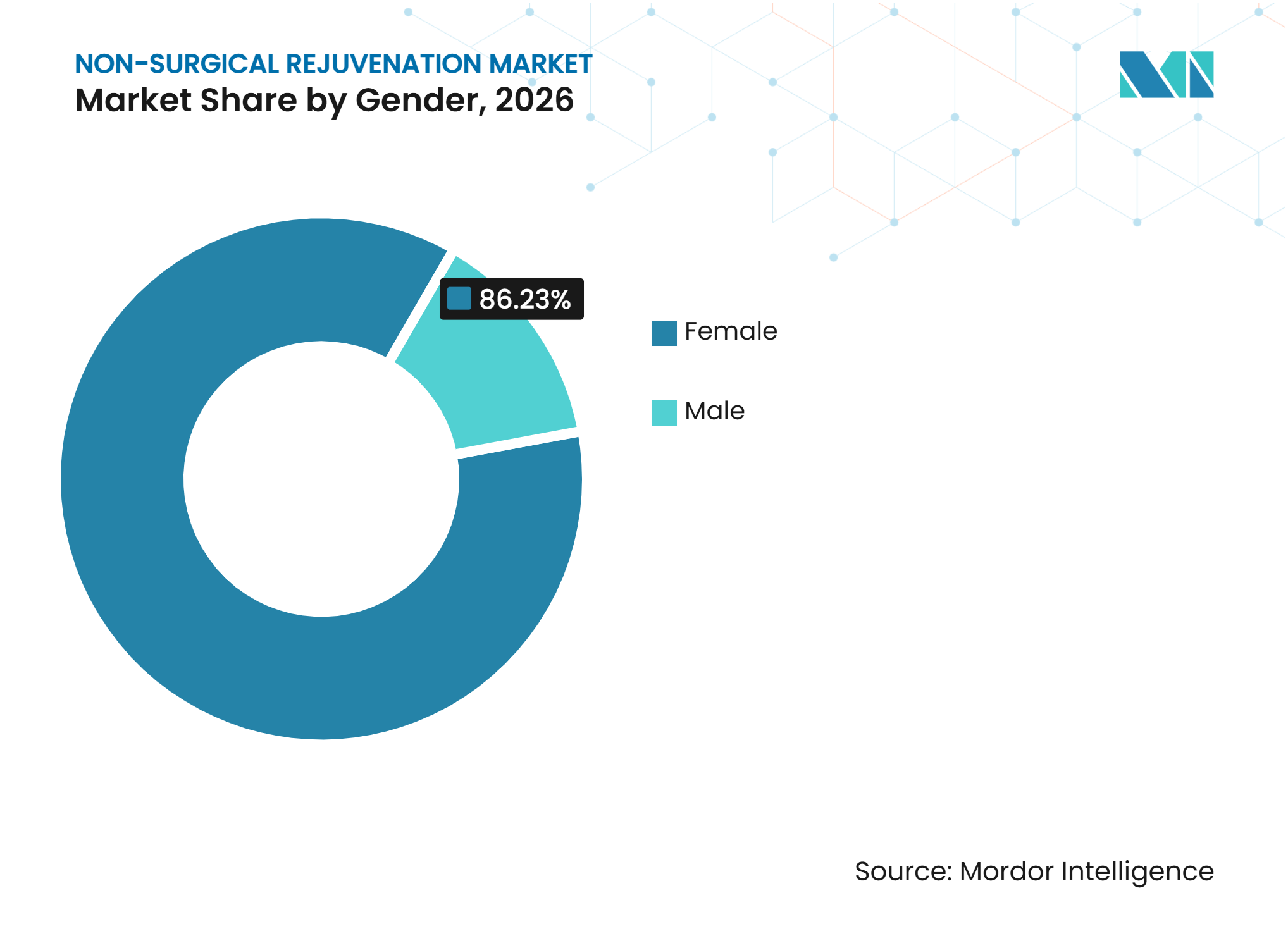
Female Patients Form the Base While Male Demand RisesThe female segment held 86.23% of revenue in 2026, reflecting a longstanding role in shaping demand for injectable and skin-quality maintenance. Established patient routines support repeat neurotoxin, filler, and skin treatment appointments. Women remain the largest patient group across many provider settings because aesthetic care has been embedded in professional and consumer routines for longer. This large base gives providers predictable demand for maintenance procedures. It also supports membership programs that combine clinical treatment with skincare and follow-up care.
The male segment is projected to grow at a 9.56% CAGR from 2027 to 2032. AAFPRS reported that 92.00% of American facial plastic surgeons had male patients in their practices in 2025. Neurotoxins were the leading non-surgical treatment sought by this patient group. Men also seek fillers and skin-quality treatments, although absolute procedure volumes remain below those of women.

By Age Group:
The Core Cohort Holds Revenue While Younger Adults Enter EarlierAdults aged 40 to 54 held 42.34% of revenue in 2026, making this the largest age group. This cohort commonly seeks treatment for early volume loss, expression lines, skin laxity, and texture concerns. It has both the clinical need and spending history that support injectable and energy-based treatment. Combination protocols are particularly relevant because patients may address several concerns in the same appointment.
The 13 to 39 age group is forecast to grow at a 7.69% CAGR from 2027 to 2032. This growth reflects preventive treatment behavior among adults who seek care before lines and volume changes become more pronounced. Early use of neurotoxins can establish a longer period of contact with providers when treatment is appropriate and clinically supervised. The shift does not remove demand among older patients, but it changes when people begin aesthetic maintenance.
By End User:
Clinics Retain Trust While Medical Spas Gain GroundDermatology and plastic-surgery clinics held 37.56% of revenue in 2026, the largest end-user share. Their position reflects the importance of clinical credentialing for first-time injectable patients and complex treatment plans. Clinics often have the specialist expertise needed to combine neurotoxins, fillers, biostimulators, and energy-based procedures. This is especially valuable for patients with multiple concerns or those seeking corrective treatment.
Medical spas are forecast to grow at an 8.67% CAGR from 2027 to 2032. Their growth reflects direct-pay treatment, flexible scheduling, memberships, and a patient experience designed around routine wellness visits. The channel also appeals to investors because repeat services and skincare programs can support recurring revenue. AmSpa reported active acquisition activity in 2025, with scaled regional platforms reaching EBITDA multiples of 7.00x to 12.00x.
Geography Analysis
North America
North America accounted for 41.32% of the non-surgical rejuvenation market share in 2026. The region has high injectable procedure volumes, established consumer awareness, and a dense provider base. In the United States, 9.88 million botulinum toxin procedures and 5.33 million hyaluronic acid filler procedures were recorded in 2024. Six FDA-approved neuromodulators compete in the country, and Hugel fully commercialized Letybo in the United States in March 2025.
Asia-Pacific
Asia-Pacific is forecast to grow at a 9.35% CAGR from 2027 to 2032, the highest regional rate. Growth is supported by expanding clinic networks, rising incomes, and broadening acceptance of routine aesthetic maintenance. South Korea remains an innovation center for neuromodulators and aesthetic protocols. Korean brands and treatment approaches are increasingly reaching China, Southeast Asia, and Western markets. SoYoung reported that light-aesthetic clinic chain revenue grew 426.00% year over year in the second quarter of 2025.
Europe
Europe is a mature region with deep adoption of injectables and energy-based systems across Germany, the United Kingdom, France, Italy, and Spain. The EU Medical Device Regulation has raised approval and compliance standards for device suppliers, supporting established manufacturers with proven quality systems. Swissmedic approved Ipsen's Relfydess in March 2025 for glabellar and lateral canthal lines in adults under 65, increasing neuromodulator choice in Switzerland.
Competitive Landscape
Market Concentration
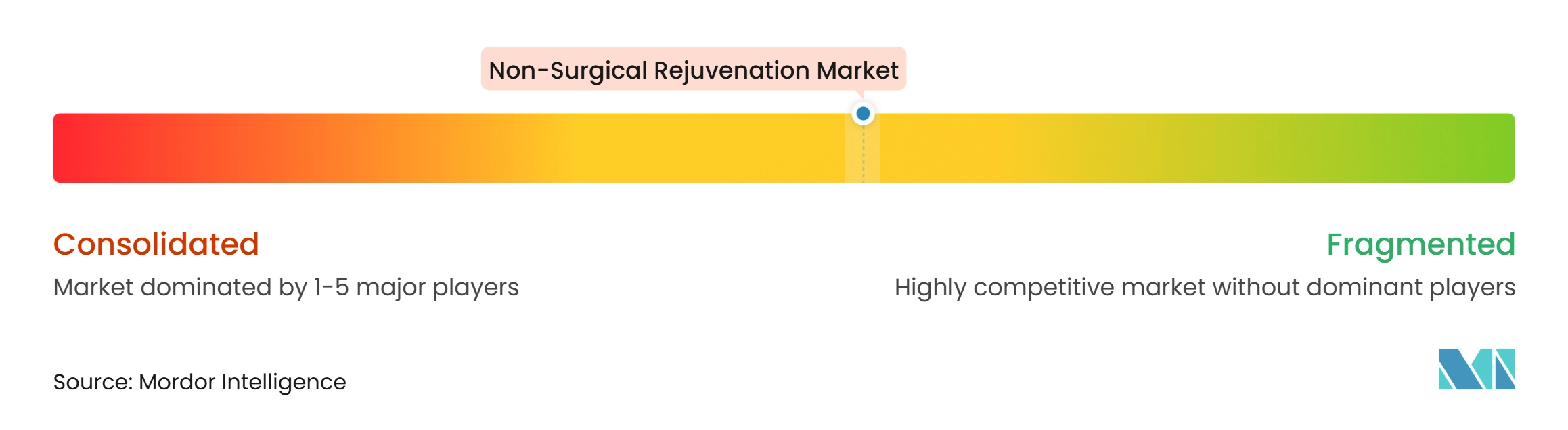
The non-surgical rejuvenation market is moderately concentrated among product manufacturers and fragmented among clinics and medical spas. AbbVie and Galderma remain the leading injectable franchises through Botox Cosmetic and Juvéderm, and Dysport, Restylane, and Sculptra. Revance differentiates Daxxify through a stated six-month duration, challenging the shorter repeat-cycle model used by established neurotoxin products.
In energy-based systems, InMode, BTL Industries, Cynosure, Candela, Lumenis, and Alma Lasers compete across radiofrequency, laser, and body-contouring platforms. Cynosure and Lutronic combined in 2024, adding scale in a competitive device category. Device evaluation increasingly depends on clinical outcomes and procedure use rather than technical specifications alone. Regulatory approval and quality systems are also central to competitive standing. ISO 13485 and Good Manufacturing Practice requirements are important diligence considerations for device and injectable suppliers.
Non-Surgical Rejuvenation Industry Leaders
-
AbbVie Inc.
-
Candela Corporation
-
Lumenis Be Ltd.
-
Cutera, Inc.
-
Merz Pharma GmbH and Co. KGaA
- *Disclaimer: Major Players sorted in no particular order
Non-Surgical Rejuvenation Market Companies Covered in this Report
- Abbvie
- Alma Lasers
- BTL INDUSTRIES Inc.
- Candela Medical
- Cutera
- Cynosure LLC
- Daewoong Pharmaceutical Co., Ltd
- Evolus Inc.
- Fotona d.o.o.
- Galderma
- Hugel Inc.
- InMode Ltd
- Jeisys Medical Inc.
- Lumenis
- Lutronic
- Merz Pharma GmbH and Co. KGaA
- Revance Therapeutics
- Sciton
- Sinclair Pharma Limited
- Solta Medical
- Teoxane SA
- Venus Concept Inc.
Recent Industry Developments in Non-Surgical Rejuvenation Market
- January 2026: Victoria Park Medispa acquires PHI Medical Aesthetics in Alberta, the Canadian platform's first entry into Western Canada, bringing its clinic network to 27 locations as part of a coast-to-coast expansion strategy.
- March 2025: Hugel's Letybo, letibotulinumtoxinA-wlbg, achieves full U.S. commercialization through its BENEV partnership, becoming the sixth neuromodulator to receive FDA approval in over 20 years.
Global Non-Surgical Rejuvenation Market Report Scope
The non-surgical rejuvenation market report segments the market by product type, including injectable neurotoxins, injectable dermal fillers, energy-based systems, and topical and skin booster products. Injectable neurotoxins are further categorized into botulinum toxin type A and botulinum toxin type B. Injectable dermal fillers are segmented into hyaluronic acid, calcium hydroxylapatite, poly-L-lactic acid, collagen and PMMA microspheres, and polycaprolactone and other biostimulators. Energy-based systems are further classified into laser and IPL platforms, radiofrequency devices, ultrasound and HIFU platforms, cryolipolysis systems, and electromagnetic muscle stimulators.
The market is also segmented by treatment area, including facial aesthetics, body contouring and fat reduction, skin rejuvenation, pigment and texture treatments, hair and scalp treatments, and intimate wellness. By gender, the market is categorized into female and male populations. Based on age group, the market is segmented into 13–39 years, 40–54 years, 55–69 years, and 70+ years. By end user, the market is segmented into dermatology and plastic-surgery clinics, medical spas, hospitals and ambulatory centers, traditional spas, HCP-owned clinics, and other end users. Geographically, the market is segmented into North America, Europe, Asia-Pacific, Middle East & Africa, and South America. The report further provides market sizing and forecasts for key countries across these regions. For each segment, market size estimates and forecasts are presented in terms of value (USD).
Segmentation Overview
| Injectable Neurotoxins | Botulinum Toxin Type A |
| Botulinum Toxin Type B | |
| Injectable Dermal Fillers | Hyaluronic Acid |
| Calcium Hydroxylapatite | |
| Poly-L-Lactic Acid | |
| Collagen and PMMA Microspheres | |
| Others | |
| Energy-Based Systems | Laser and IPL Platforms |
| Radiofrequency Devices | |
| Ultrasound and HIFU Platforms | |
| Cryolipolysis Systems | |
| Electromagnetic Muscle Stimulators | |
| Topical and Skin Booster Products |
| Facial Aesthetics |
| Body Contouring and Fat Reduction |
| Skin Rejuvenation, Pigment, and Texture |
| Hair and Scalp Treatments |
| Other Treatment Areas |
| Female |
| Male |
| 13-39 Years |
| 40-54 Years |
| 55-69 Years |
| 70+ Years |
| Dermatology and Plastic-Surgery Clinics |
| Medical Spas |
| Hospitals and Ambulatory Centers |
| Traditional Spas |
| Other End Users |
| North America | United States |
| Canada | |
| Mexico | |
| Europe | Germany |
| United Kingdom | |
| France | |
| Italy | |
| Spain | |
| Rest of Europe | |
| Asia-Pacific | China |
| India | |
| Japan | |
| Australia | |
| South Korea | |
| Rest of Asia-Pacific | |
| Middle East and Africa | GCC |
| South Africa | |
| Rest of Middle East and Africa | |
| South America | Brazil |
| Argentina | |
| Rest of South America |
| By Product Type | Injectable Neurotoxins | Botulinum Toxin Type A |
| Botulinum Toxin Type B | ||
| Injectable Dermal Fillers | Hyaluronic Acid | |
| Calcium Hydroxylapatite | ||
| Poly-L-Lactic Acid | ||
| Collagen and PMMA Microspheres | ||
| Others | ||
| Energy-Based Systems | Laser and IPL Platforms | |
| Radiofrequency Devices | ||
| Ultrasound and HIFU Platforms | ||
| Cryolipolysis Systems | ||
| Electromagnetic Muscle Stimulators | ||
| Topical and Skin Booster Products | ||
| By Treatment Area | Facial Aesthetics | |
| Body Contouring and Fat Reduction | ||
| Skin Rejuvenation, Pigment, and Texture | ||
| Hair and Scalp Treatments | ||
| Other Treatment Areas | ||
| By Gender | Female | |
| Male | ||
| By Age Group | 13-39 Years | |
| 40-54 Years | ||
| 55-69 Years | ||
| 70+ Years | ||
| By End User | Dermatology and Plastic-Surgery Clinics | |
| Medical Spas | ||
| Hospitals and Ambulatory Centers | ||
| Traditional Spas | ||
| Other End Users | ||
| By Geography | North America | United States |
| Canada | ||
| Mexico | ||
| Europe | Germany | |
| United Kingdom | ||
| France | ||
| Italy | ||
| Spain | ||
| Rest of Europe | ||
| Asia-Pacific | China | |
| India | ||
| Japan | ||
| Australia | ||
| South Korea | ||
| Rest of Asia-Pacific | ||
| Middle East and Africa | GCC | |
| South Africa | ||
| Rest of Middle East and Africa | ||
| South America | Brazil | |
| Argentina | ||
| Rest of South America | ||
Key Questions Answered in the Report
What is the projected value of the non-surgical rejuvenation market by 2032?
The market is projected to reach USD 26.93 billion by 2032, growing at a 7.18% CAGR from 2027 to 2032.
Which product category is growing the fastest in non-surgical rejuvenation?
Topical skin booster products are projected to grow at a 10.21% CAGR through 2032.
Which treatment area holds the largest share of non-surgical rejuvenation revenue?
Facial aesthetics held 66.26% of revenue in 2026, supported by demand for neurotoxins, fillers, and combination procedures.
Why are medical spas gaining importance in aesthetic care?
Medical spas are projected to grow at an 8.67% CAGR through 2032 because they offer direct-pay care, flexible scheduling, memberships, and repeat treatment programs.
Which region is expected to grow fastest for non-surgical rejuvenation procedures?
Asia-Pacific is projected to grow at a 9.35% CAGR through 2032, supported by clinic expansion and broadening acceptance of aesthetic maintenance.