
Non-opioid Pain Treatment Market Size and Share
Market Overview
| Study Period | 2021 - 2032 |
|---|---|
| Market Size (2027) | USD 51.72 Billion |
| Market Size (2032) | USD 78.20 Billion |
| Growth Rate (2027 - 2032) | 8.62 % |
| Fastest Growing Market | Asia-Pacific |
| Largest Market | North America |
| Market Concentration | Low |
Major Players *Disclaimer: Major Players sorted in no particular order Image © Mordor Intelligence. Reuse requires attribution under CC BY 4.0. | |
Non-opioid Pain Treatment Market Analysis by Mordor Intelligence
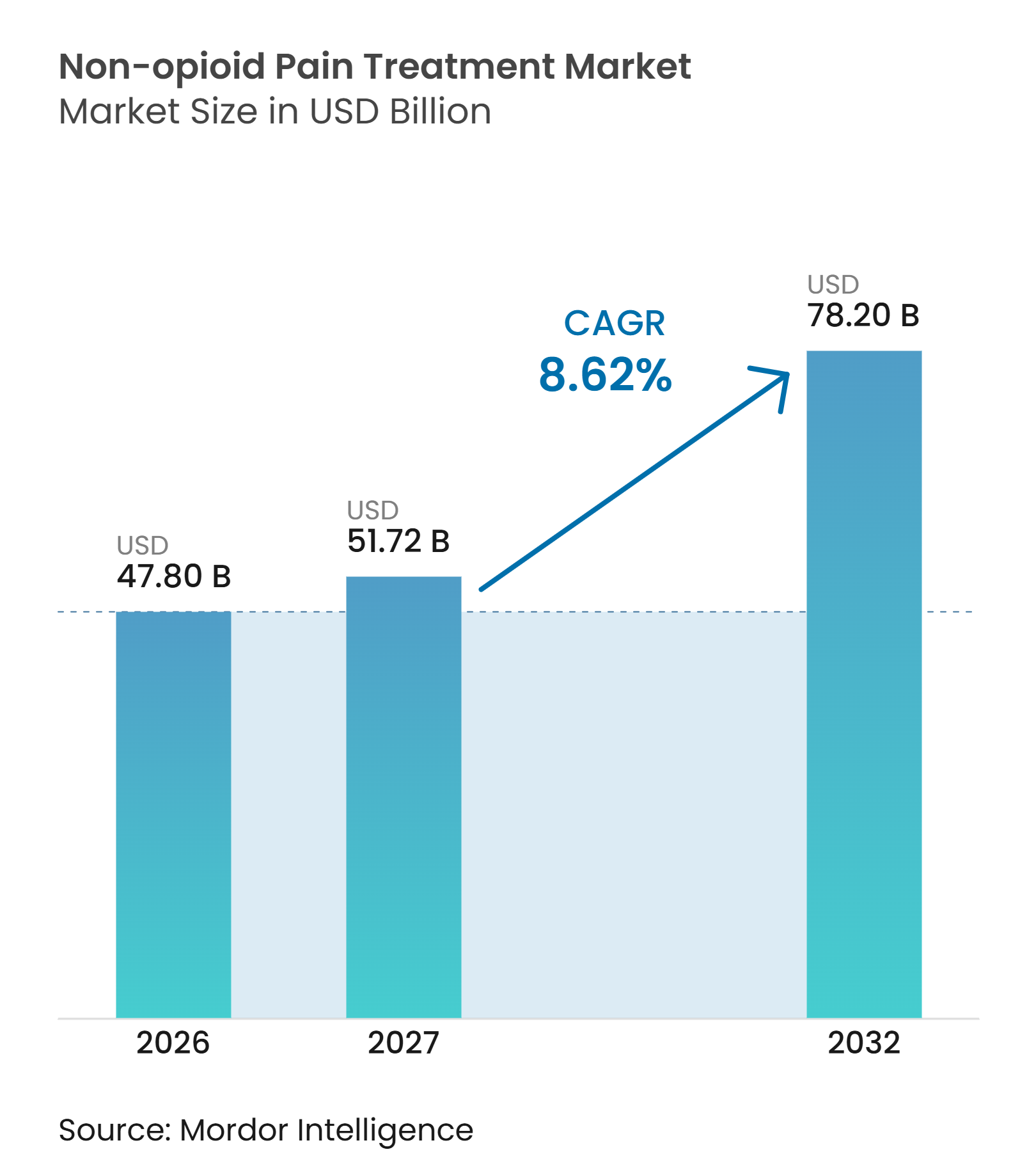
The Non-opioid Pain Treatment Market size is projected to expand from USD 47.80 billion in 2026 and USD 51.72 billion in 2027 to USD 78.20 billion by 2032, registering a CAGR of 8.62% between 2027 and 2032.
Demand is supported by chronic conditions, postsurgical pain care, and clinical efforts to reduce opioid exposure. The non-opioid pain treatment market is also changing as payers and providers place greater weight on non-opioid treatment pathways. New sodium channel inhibitors and longer-acting local anesthetics are widening prescription options, while established OTC products continue to provide most consumer access. The market opportunity is shaped by the need to balance pain relief, safety, reimbursement, and affordability across different health systems.
Key Report Takeaways
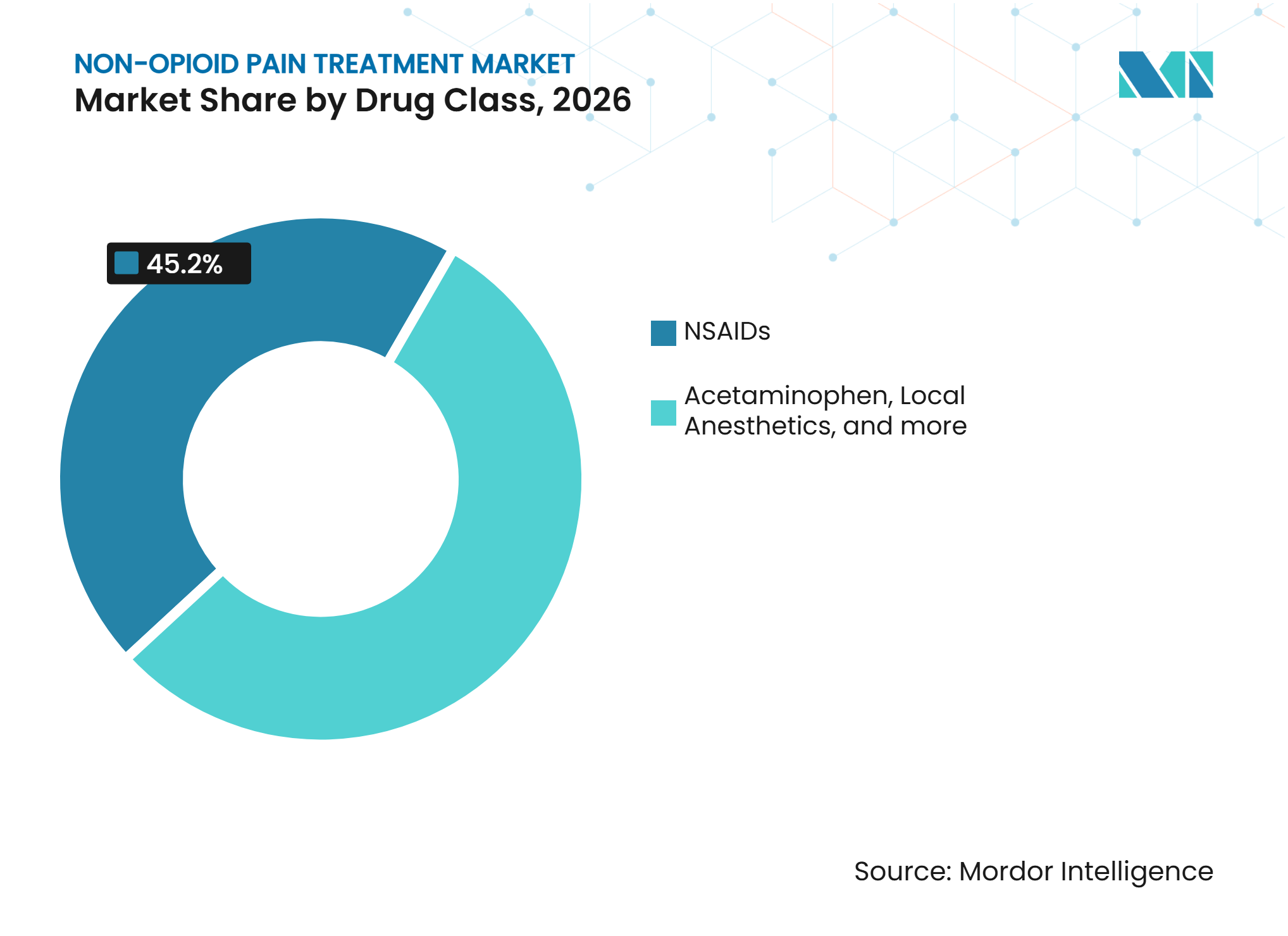
- By drug class, NSAIDs held 45.20% of the non-opioid pain treatment market share in 2026, while local anesthetics are projected to grow at a 9.31% CAGR through 2032.
- By pain type, chronic pain accounted for a 39.45% share in 2026, while acute pain is projected to grow at a 9.10% CAGR through 2032.
- By route of administration, oral medicines held a 46.78% share in 2026, while injectables are projected to grow at an 8.90% CAGR through 2032.
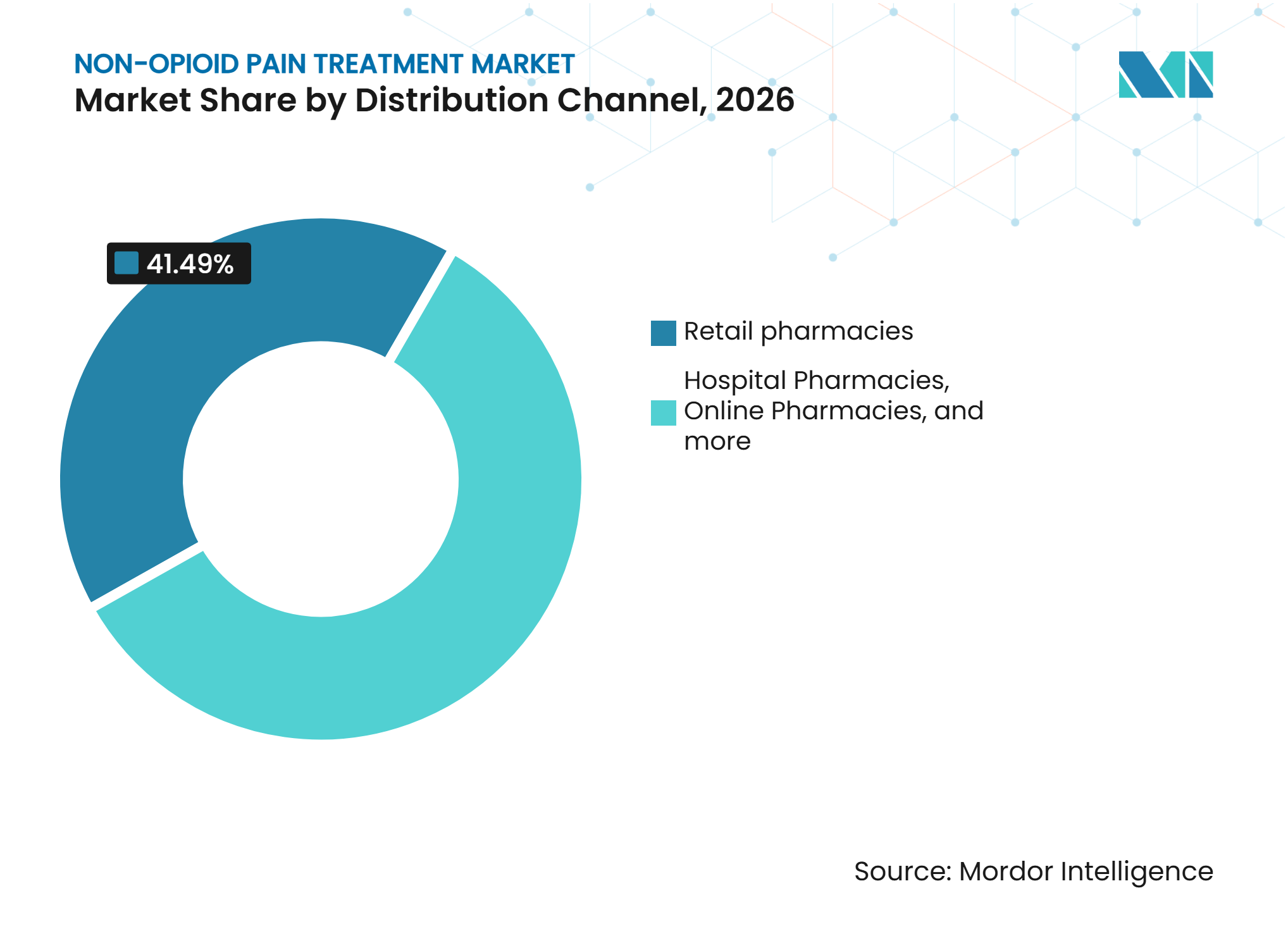
- By distribution channel, retail pharmacies held a 41.49% share in 2026, while online pharmacies are projected to grow at a 9.81% CAGR through 2032.
- By prescription type, over-the-counter (OTC) medicines held a 57.45% share in 2026, while prescription medicines are projected to grow at a 9.94% CAGR through 2032.
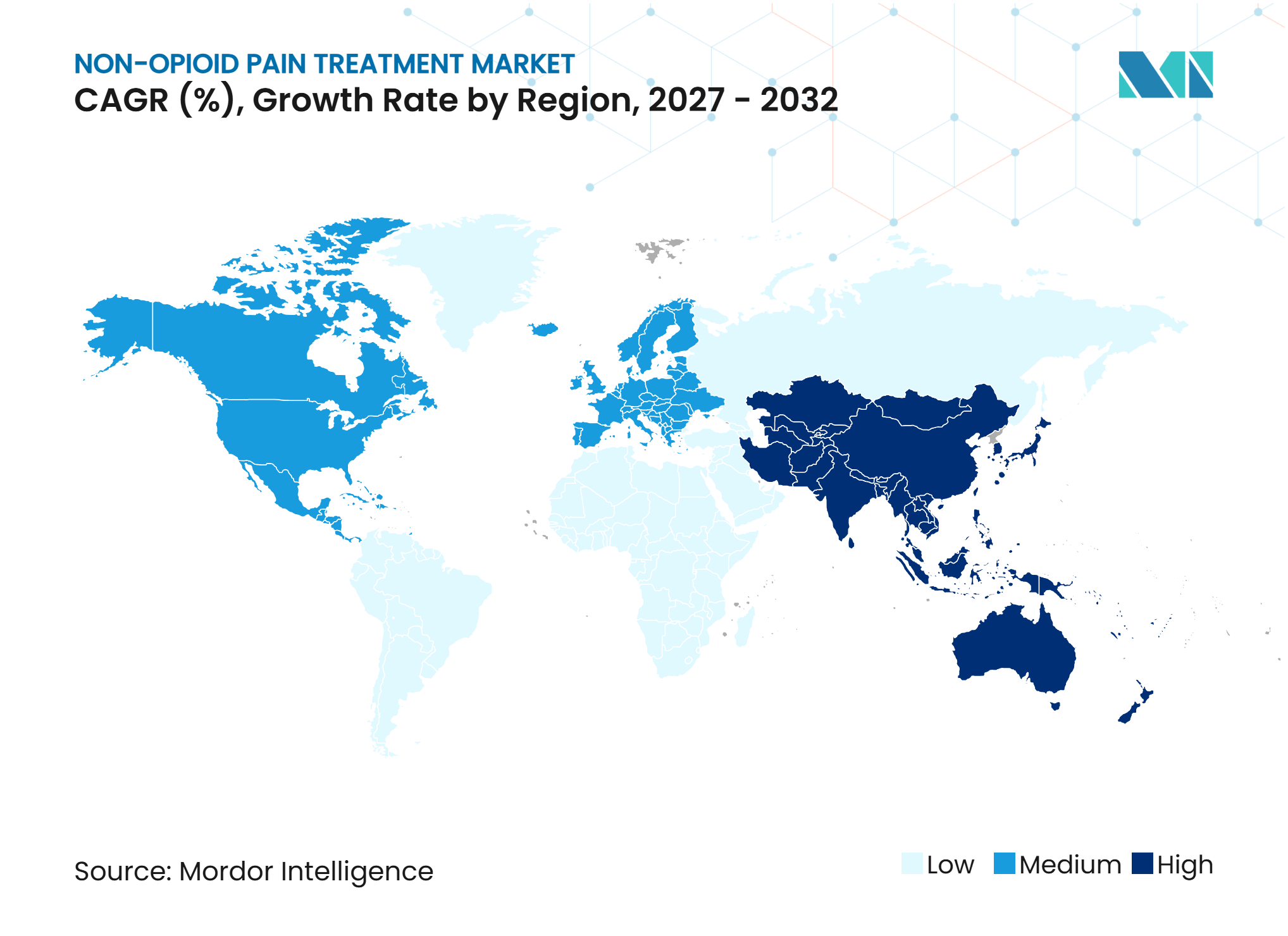
- By geography, North America held a 40.10% share in 2026, while Asia-Pacific is projected to grow at a 9.50% CAGR through 2032.
Note: Market numbers in this report are based on Mordor Intelligence's proprietary estimation framework, which combines nine months of actuals with Q4 projections for base year 2026.
Market Trends and Insights
Drivers Impact Analysis of Non-opioid Pain Treatment Market*
| Driver | (~) % Impact on CAGR Forecast | Geographic Relevance | Impact Timeline |
|---|---|---|---|
| Rising Chronic Pain and Postsurgical Procedure Volumes | +2.1% | Global | Medium term (2-4 years) |
| Clinical and Payer Preference for Opioid-Sparing Pain Management | +1.6% | North America and Europe | Short term (≤ 2 years) |
| Commercialization of Novel Peripheral Pain-Signal Inhibitors | +1.4% | North America, with early gains in Japan and Europe | Medium term (2-4 years) |
| Separate Medicare Payments for Qualifying Non-opioid Treatments | +0.9% | United States | Short term (≤ 2 years) |
| Expanded Use of Long-acting Local Anesthetics in Multimodal Analgesia | +0.7% | North America and Europe, with spillover to core Asia-Pacific markets | Short term (≤ 2 years) |
| OTC Fixed-dose Combination Products Improving Duration and Convenience | +0.5% | North America, with early gains in Western Europe | Medium term (2-4 years) |
| Source: Mordor Intelligence | |||
Rising Chronic Pain and Postsurgical Procedure Volumes
Chronic conditions and surgery related pain create sustained demand for non-opioid treatment options. Low back pain, osteoarthritis, and neuropathic conditions remain prominent sources of need, while acute postsurgical episodes add recurring demand. A May 2025 U.S. Pain Foundation survey reported that nearly 80 million American adults annually receive medication for acute pain. The Non-opioid pain treatment market benefits when surgical care shifts toward ambulatory settings because patients need pain relief after discharge. Long-acting formulations can address pain during the first days after surgery, when follow-up is limited. This setting supports broader use of products that reduce reliance on ongoing opioid treatment.
The demand base is not limited to surgery. Osteoarthritis, low-back pain, and cancer pain require recurring care across extended treatment periods. These conditions support regular use of NSAIDs, acetaminophen, antidepressants, anticonvulsants, and local anesthetics where appropriate. The Non-opioid pain treatment market therefore serves both episodic and persistent pain needs. Older patients can require more individualized treatment because comorbidity and polypharmacy complicate product choice. Providers must consider cardiovascular, gastrointestinal, renal, and hepatic factors when selecting therapy. That clinical constraint encourages interest in options with different mechanisms of action.
Clinical and Payer Preference for Opioid-Sparing Pain Management
Health systems are formalizing opioid-sparing care pathways for many acute pain settings. A September 2025 Chinese Society of Anesthesiology guideline described acetaminophen and NSAIDs as central to postoperative pain management, positioning opioids as rescue therapy when needed. The Non-opioid pain treatment market gains from protocol changes because they influence routine prescribing rather than isolated clinical decisions. Hospitals can embed non-opioid options into perioperative order sets and discharge planning. This approach also aligns with efforts to limit respiratory depression, sedation, and dependence associated with opioids. Adoption is strongest where providers can pair clinical protocols with reliable reimbursement.
Evidence on opioid-sparing regimens strengthens the case for multimodal care. A July 2025 systematic review and meta-analysis published in Pain and Therapy, covering 58 randomized trials and 5,614 patients, found that these regimens reduced postoperative morphine use by a mean 9.47 mg during the first 24 hours and reduced postoperative nausea and vomiting. Payers can consider these downstream clinical effects when making formulary decisions. Step-therapy requirements can encourage trials of non-opioid therapies before certain opioid prescriptions. The Non-opioid pain treatment market is supported when this approach is applied to common acute indications. Coverage decisions still depend on comparative evidence, acquisition cost, and the local treatment standard.
Commercialization of Novel Peripheral Pain-Signal Inhibitors
Novel peripheral pain-signal inhibitors are changing the prescription side of the Non-opioid pain treatment market. The U.S. Food and Drug Administration approved JOURNAVX, or suzetrigine, on January 30, 2025, as a treatment for moderate-to-severe acute pain [1]. Suzetrigine selectively targets NaV1.8, a sodium channel involved in peripheral pain signaling. Its mechanism seeks to address acute pain without directly acting on the central nervous system in the same manner as opioids. This creates a distinct option for perioperative teams and patients for whom opioid avoidance is a priority. Its commercial progress also establishes a reference point for other companies developing selective sodium-channel therapies.
Research activity now extends beyond one product or one company. An October 2025 European Journal of Medicinal Chemistry review described continuing advances in NaV1.8 inhibitor discovery, including work on new molecular scaffolds. The Non-opioid pain treatment market may see increased differentiation if future candidates demonstrate durable benefit across acute, neuropathic, or chronic pain settings. These developments show that innovation includes both oral and injectable approaches. The commercial outcome will depend on clinical evidence, regulatory approval, reimbursement, and practical use in care pathways.
Separate Medicare Payments for Qualifying Non-opioid Treatments
Separate Medicare payment has improved the economics for qualifying non-opioid treatments in U.S. outpatient surgical settings. The NOPAIN Act created separate payment for qualifying non-opioid treatments in hospital outpatient departments and ambulatory surgical centers through December 31, 2027. The Non-opioid pain treatment market benefits because facilities do not have to absorb the full cost difference between certain newer treatments and low-cost generic alternatives. This can make long-acting local anesthetics and other qualifying products more practical for perioperative use. The policy applies to defined settings, rather than every outpatient location. Its value is therefore strongest for companies with products that fit eligible procedures and payment rules.
The CY 2026 OPPS and ASC final rule, issued by CMS in November 2025, identified qualifying drugs and devices under the payment framework[2]. This gives providers a clearer basis for evaluating non-opioid options in a procedure-specific setting. Products that secure adoption before the end of 2027 may be better positioned for continued use after the payment period closes. The policy also gives manufacturers an incentive to show operational value to surgical centers. Hospital formulary committees still assess evidence, workflow, and budget impact. The Non-opioid pain treatment market remains exposed to changes in payment policy once the separate-payment period ends.
Restraints Impact Analysis of Non-opioid Pain Treatment Market*
| Restraint | (~) % Impact on CAGR Forecast | Geographic Relevance | Impact Timeline |
|---|---|---|---|
| Cardiovascular, Gastrointestinal, and Hepatic Safety Risks | -1.3% | Global | Long term (≥ 4 years) |
| Higher Acquisition Cost of Novel Non-opioid Products | -0.9% | Global, most acute in Asia-Pacific, the Middle East and Africa, and South America | Medium term (2-4 years) |
| Limited Evidence for Durable Efficacy in Complex Chronic Pain | -0.5% | North America and Europe | Medium term (2-4 years) |
| Hospital Formulary Inertia and Low-cost Generic Substitution | -0.6% | Global, most acute in Asia-Pacific and the Middle East and Africa | Long term (≥ 4 years) |
| Source: Mordor Intelligence | |||
Cardiovascular, Gastrointestinal, and Hepatic Safety Risks
Safety risks limit use of established products in some patient groups. NSAIDs can present cardiovascular and gastrointestinal risks, especially for older patients and those with existing cardiovascular, renal, or gastrointestinal conditions. A September 2025 systematic review and meta-analysis published in Clinical Pharmacology & Therapeutics found that gastrointestinal bleeding risk differed substantially across individual NSAIDs. The review reported an odds ratio of 20.67 for ketorolac and 1.16 for celecoxib. These differences make product selection important rather than interchangeable. The Non-opioid pain treatment market must therefore account for the clinical limits of broad, low-cost therapies.
Safety warnings on NSAID products address cardiovascular thrombotic events and serious gastrointestinal bleeding. These warnings restrict prolonged use in patients who face higher clinical risk. High-dose acetaminophen also requires attention to hepatic safety. Newer mechanisms can address some limitations, but long-term evidence remains important for complex chronic pain. The safety profile of each treatment affects payer coverage, formulary placement, and clinician confidence. The Non-opioid pain treatment market is likely to retain diverse drug classes because no single therapy is suitable for all patient populations.
Higher Acquisition Cost of Novel Non-opioid Products
Novel therapies face a clear affordability challenge against generic NSAIDs and acetaminophen. In January 2025, Vertex stated that JOURNAVX had a wholesale acquisition cost of USD 15.50 per 50-mg tablet when it was introduced. At the twice daily maintenance dose, this equals about USD 31 per day of treatment. Such pricing can be difficult to justify where generic products remain the default reimbursed option. The Non-opioid pain treatment market may therefore divide between premium therapies in well-funded systems and high-volume generic use in cost-sensitive systems. Evidence of reduced complications or better recovery can improve the value case, but the evidence must be relevant to routine care.
Health technology assessment bodies and formulary committees require meaningful comparative evidence. The American Society of Regional Anesthesia and Pain Medicine noted in 2025 that comparative effectiveness data for suzetrigine against modern multimodal regimens were limited outside pivotal trials. This can slow reimbursement for higher-cost therapies. Out-of-pocket payment models in parts of Asia-Pacific, Latin America, and sub-Saharan Africa further constrain access to premium products. Manufacturers must show clinical value while developing pricing and access strategies suitable for local systems. The Non-opioid pain treatment market will continue to depend on low-cost generics even as advanced products expand.
*Our forecasts treat driver/restraint impacts as directional, not additive. The impact forecasts reflect baseline growth, mix effects, and variable interactions.
Non-opioid Pain Treatment Market Segment Analysis
By Drug Class:
NSAID Leadership Coexists With New Prescription OptionsNSAIDs held 45.20% of the non-opioid pain treatment market share in 2026. Their position reflects broad availability, established clinician familiarity, and the low cost of generic ibuprofen, naproxen, diclofenac, and related products. Non-selective NSAIDs remain important for routine pain treatment, while selective COX-2 inhibitors are used when gastrointestinal considerations influence prescribing. The class is deeply established across OTC and prescription settings. Safety risks, however, restrict use among patients with cardiovascular, gastrointestinal, renal, or other comorbidities. This limitation leaves room for alternatives that can provide clinically meaningful pain relief with a different risk profile.
Local anesthetics are forecast to grow at a 9.31% CAGR through 2032. Long-acting products are gaining attention in ambulatory surgery because a single injection can support pain control during the first 24 to 72 hours after a procedure. Under the CY 2026 OPPS and ASC final rule issued by CMS in November 2025, the NOPAIN Act payment framework supports use of certain qualifying non-opioid products in eligible U.S. outpatient settings. NaV1.8 inhibitors introduce another prescription option with a peripheral mechanism. Acetaminophen retains a broad OTC role, while antidepressants and anticonvulsants remain important for neuropathic and chronic pain management. The Non-opioid pain treatment industry is therefore developing through both formulation improvements and new mechanisms.



By Pain Type:
Acute Pain Advances While Chronic Pain Sustains DemandChronic pain represented 39.45% of revenue in 2026. Osteoarthritis, low-back pain, and cancer pain require continuing management and create a stable base of treatment demand. These conditions often need individualized care because pain severity, comorbidity, drug tolerability, and functional goals differ by patient. NSAIDs, antidepressants, anticonvulsants, acetaminophen, and local treatments can each play a role. The segment also includes patients whose long treatment duration increases the relevance of safety and adherence. Chronic pain remains a large demand base even where novel treatments are initially approved for acute indications.
Acute pain is forecast to grow at a 9.10% CAGR through 2032. Postsurgical and traumatic episodes are increasingly managed through non-opioid-first protocols, particularly when providers seek to reduce opioid exposure after discharge. Two Phase 3 randomized trials published in Anesthesiology in June 2025 evaluated suzetrigine in postsurgical pain models after abdominoplasty and bunionectomy. The studies support the role of new oral options in defined acute pain settings. Neuropathic pain remains an area of unmet need because standard treatments can deliver incomplete relief or create tolerability concerns. The non-opioid pain treatment market may gain from treatments that demonstrate sustained benefit in this harder-to-treat population.
By Route of Administration:
Oral Access Remains Broad as Injectable Use ExpandsOral products accounted for 46.78% of the non-opioid pain treatment market size in 2026. Oral NSAIDs, acetaminophen, anticonvulsants, and antidepressants are widely used because they are familiar, low-cost, and practical for home administration. Most over-the-counter pain relievers are sold as oral tablets and capsules, so OTC demand is concentrated in this route. Kenvue announced FDA approval of TYLENOL with Naproxen in July 2026 as an OTC fixed-dose combination containing acetaminophen 650 mg and naproxen sodium 220 mg [3]. The company stated that the product had 3-year marketing exclusivity. Product development in oral formats shows that established routes can still support innovation.
Injectables are forecast to grow at an 8.90% CAGR through 2032. Long-acting local anesthetics can provide localized relief without requiring daily patient adherence during the immediate postsurgical period. Their use is particularly relevant in ambulatory surgical centers and hospital outpatient departments. Pacira entered into an exclusive worldwide license agreement for AMT-143, a 14-day sustained-release ropivacaine hydrogel, in November 2025. Topical products such as lidocaine patches and diclofenac gels provide another route for patients seeking localized treatment. Rectal and intranasal products remain narrower options for acute-care circumstances when oral administration is not suitable.
By Distribution Channel:
Digital Access Changes Consumer Purchasing PatternsRetail pharmacies held 41.49% of distribution revenue in 2026. Their role reflects the high volume of OTC analgesic purchases and the value of pharmacist access for product selection. Retail outlets also remain important for consumers managing recurring musculoskeletal pain. Hospital pharmacies play a different role because they control access to products used within procedural settings. Supermarkets and hypermarkets compete in lower-price OTC categories where ibuprofen and acetaminophen are familiar consumer purchases. The Non-opioid pain treatment market continues to rely on physical retail even as channel behavior changes.
Online pharmacies are forecast to grow at a 9.81% CAGR through 2032. Digital platforms can improve convenience and access, especially in locations where rapid delivery services are expanding. Online purchasing of analgesics is gaining ground in markets such as India, Southeast Asia, and Eastern Europe. Online channels can also make repeat purchases easier for established OTC users. Their expansion requires compliance with national pharmacy rules and controls over prescription fulfillment. The channel shift may place pressure on traditional retailers to improve digital ordering and delivery capability.

By Prescription Status:
OTC Volume Supports the Base, While Prescription Products Grow FasterOTC products held 57.54% of revenue in 2026. Ibuprofen, acetaminophen, naproxen, and their combinations are central to this position because consumers can use them for common acute and musculoskeletal pain without a prescription. Established consumer healthcare companies support the segment through brand investment, formulation development, and retail distribution. OTC availability also places treatment close to the point of need for many patients. Safety labeling and responsible-use communication remain important because easy access does not remove medical risk. The Non-opioid pain treatment market retains a broad consumer base through this high-volume segment.
Prescription products are forecast to grow at a 9.94% CAGR through 2032. The growth outlook reflects new NaV1.8 inhibitors, reimbursement support for some non-opioid treatments, and established use of antidepressants and anticonvulsants for selected pain conditions. Formularies are particularly important because coverage can influence uptake more directly than physician awareness alone. Prescription products may deliver differentiated care for acute postsurgical pain or for patients who cannot use common OTC therapies. The boundary between OTC and prescription products can also shift as fixed-dose combinations offer longer duration or new clinical positioning. The Non-opioid pain treatment industry has room for both consumer-led and provider-led product pathways.
Geography Analysis
North America
North America held 40.10% of the non-opioid pain treatment market share in 2026. The region combines established OTC brand use with a developed prescription and reimbursement environment. In the United States, the NOPAIN Act supports separate Medicare payment for qualifying treatments in hospital outpatient departments and ambulatory surgical centers through the end of 2027. This policy improves the facility economics for certain non-opioid options used in eligible surgical procedures. Canada has broad OTC access but follows its own Health Canada review process, while Mexico remains more sensitive to public-payer formulary decisions and product cost.
Asia-Pacific
Asia-Pacific is forecast to grow at a 9.50% CAGR through 2032. Japan’s aging population supports demand for pain management, while ongoing product development broadens interest in novel non-opioid mechanisms. India’s growth is supported by expanding consumer access and rapid delivery platforms for OTC products. The non-opioid pain treatment market size in Asia-Pacific will depend on whether innovative products can reach patients at prices compatible with local payment systems.
Europe, the Middle East and Africa, and South America
Europe has a mature base for generic and OTC analgesics, supported by established pharmacy channels and regulatory oversight through national authorities and the European Medicines Agency. The Middle East and Africa includes GCC markets where private hospital growth and insurance coverage can support premium prescription demand. Other markets in the region rely more heavily on accessible generic OTC treatments. In South America, Brazil and Argentina provide broad consumer access to analgesics but may limit rapid adoption of expensive prescription products through public-payer formularies. Digital pharmacy expansion is a relevant opportunity across these mixed regions, especially for repeat OTC purchases.
Competitive Landscape
Market Concentration
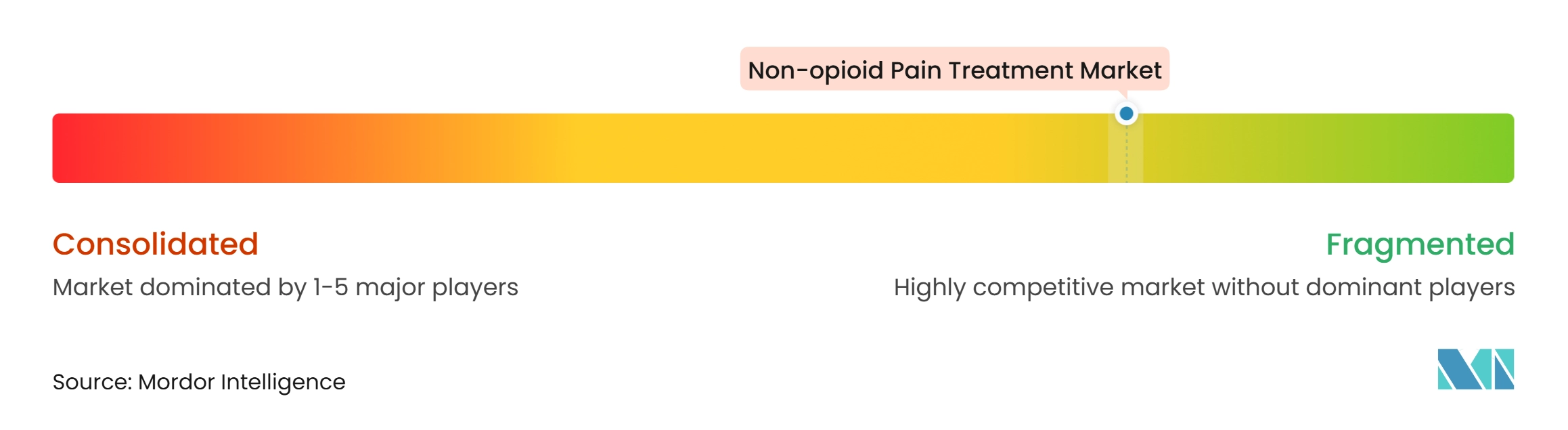
The non-opioid pain treatment market is highly fragmented, and no single company holds a dominant position. Large OTC brand owners lead consumer categories, while generic manufacturers, specialty pharmaceutical companies, and hospital product suppliers compete across prescription and institutional channels. This fragmentation reflects the wide availability of generic ibuprofen, naproxen, and acetaminophen, which keeps entry barriers low, and the spread of demand across many pain types, care settings, and product formats.
The non-opioid pain treatment market combines established consumer healthcare companies with prescription-focused innovators. Kenvue, Haleon, Reckitt, and Opella compete in OTC categories through brand strength, formulation changes, and broad retail distribution. Vertex has created a new reference point in prescription acute pain with JOURNAVX, which received U.S. FDA approval in January 2025. Competition differs by category because mature NSAID and acetaminophen products compete on access and brand familiarity, while newer products compete on clinical differentiation and payer support. Companies must align product development with evidence generation, regulatory requirements, and formulary strategy.
Viatris completed its acquisition of Pacira BioSciences on November 17, 2026, making Pacira a wholly owned subsidiary. The transaction brings Pacira’s non-opioid pain portfolio, including EXPAREL and ZILRETTA, into Viatris’s broader platform. Pacira also advanced its PCRX-201 development program for knee osteoarthritis in July 2026. These moves show how companies are using acquisitions, licensing, and pipeline development to build positions beyond conventional oral analgesics. The competitive environment favors players that can support long-duration formulations, clinical studies, and reimbursement discussions.
Reckitt expanded the retail offering of its Biofreeze brand in the United States in July 2025 with the Ultraflex Patch and Dry Stick. Kenvue’s TYLENOL with Naproxen approval also shows continued investment in differentiated OTC combinations. Long-acting local anesthetics, topical products, and novel oral mechanisms remain areas of active competition. The non-opioid pain treatment market is likely to remain diverse because patient needs differ by pain type, setting, safety profile, and ability to pay.
Non-opioid Pain Treatment Industry Leaders
-
Bayer AG
-
Haleon plc
-
Kenvue Brands LLC
-
Opella Healthcare Group SAS
-
Reckitt Benckiser Group plc
- *Disclaimer: Major Players sorted in no particular order
Non-opioid Pain Treatment Market Companies Covered in this Report
- AFT Pharmaceuticals Limited
- B. Braun
- Baxter
- Bayer
- Daiichi Sankyo
- Fresenius
- Grünenthal GmbH
- Haleon plc
- Heron Therapeutics
- Hikma Pharmaceuticals
- Hisamitsu Pharmaceutical
- Hyloris Pharmaceuticals SA
- Kenvue Brands LLC
- Opella Healthcare Group SAS
- Pfizer
- Reckitt Benckiser Group
- Scilex Holding
- Vertex Pharmaceuticals
- Viatris
Recent Industry Developments in Non-opioid Pain Treatment Market
- November 2026: Viatris Inc. completed its acquisition of Pacira BioSciences at USD 36.50 per share, making Pacira a wholly owned subsidiary and adding Pacira’s non-opioid pain products, including EXPAREL and ZILRETTA, to the Viatris portfolio.
- July 2026: The FDA approved TYLENOL with Naproxen from Kenvue, the first OTC fixed-dose combination of acetaminophen 650 mg and naproxen sodium 220 mg, with onset under 30 minutes and 12-hour duration supported by 8 clinical studies. FDA granted 3-year market exclusivity, and the product entered U.S. mass retail upon approval.
- January 2025: The FDA approved Vertex Pharmaceuticals’ JOURNAVX, or suzetrigine, as the first selective NaV1.8 inhibitor and the first new class of pain medicine in more than 20 years.
Global Non-opioid Pain Treatment Market Report Scope
As per the scope of the report, non-opioid pain treatment refers to pharmaceutical products that prevent or relieve acute, chronic, and neuropathic pain without acting on opioid receptors.
The non-opioid pain treatment market report segments the market by drug class, including NSAIDs, acetaminophen, local anesthetics, combination drugs, and other drug classes. NSAIDs are further categorized into non-selective NSAIDs and selective COX-2 inhibitors. By pain type, the market is categorized into acute pain, chronic pain, neuropathic pain, musculoskeletal pain, migraine and headache pain, and other pain types. Acute pain is further divided into postsurgical pain, traumatic pain, and dental pain. Chronic pain includes osteoarthritis pain, low-back pain, and cancer pain, while neuropathic pain includes diabetic peripheral neuropathy, postherpetic neuralgia, and radiculopathy. Based on route of administration, the market is segmented into oral, injectable, topical, and other routes of administration. Based on distribution channel, the market is segmented into hospital pharmacies, retail pharmacies, online pharmacies, and other distribution channels. By prescription status, the market is categorized into prescription and over-the-counter products.
Geographically, the non-opioid pain treatment market is segmented into North America, Europe, Asia-Pacific, Middle East and Africa, and South America. The report further provides market size estimates and forecasts for major countries across these regions. For each segment, market estimates and forecasts are presented in terms of value (USD).
Segmentation Overview
| NSAIDs | Non-selective NSAIDs |
| Selective COX-2 Inhibitors | |
| Acetaminophen | |
| Local Anesthetics | |
| Combination Drugs | |
| Other Drug Classes (Antidepressants, Anticonvulsants, NaV1.8 Inhibitors, etc) |
| Acute Pain | Postsurgical Pain |
| Traumatic Pain | |
| Dental Pain | |
| Chronic Pain | Osteoarthritis Pain |
| Low-back Pain | |
| Cancer Pain | |
| Neuropathic Pain | Diabetic Peripheral Neuropathy |
| Postherpetic Neuralgia | |
| Radiculopathy | |
| Musculoskeletal Pain | |
| Migraine and Headache Pain | |
| Other Pain Types |
| Oral |
| Injectable |
| Topical |
| Other Routes of Administration (Rectal, Intranasal, etc.) |
| Hospital Pharmacies |
| Retail Pharmacies |
| Online Pharmacies |
| Other Distribution Channels (Supermarkets, Hypermarkets, Convenience Stores, etc.) |
| Prescription |
| Over-the-Counter |
| North America | United States |
| Canada | |
| Mexico | |
| Europe | Germany |
| United Kingdom | |
| France | |
| Italy | |
| Spain | |
| Rest of Europe | |
| Asia-Pacific | China |
| Japan | |
| India | |
| Australia | |
| South Korea | |
| Rest of Asia-Pacific | |
| Middle East and Africa | GCC |
| South Africa | |
| Rest of Middle East and Africa | |
| South America | Brazil |
| Argentina | |
| Rest of South America |
| By Drug Class | NSAIDs | Non-selective NSAIDs |
| Selective COX-2 Inhibitors | ||
| Acetaminophen | ||
| Local Anesthetics | ||
| Combination Drugs | ||
| Other Drug Classes (Antidepressants, Anticonvulsants, NaV1.8 Inhibitors, etc) | ||
| By Pain Type | Acute Pain | Postsurgical Pain |
| Traumatic Pain | ||
| Dental Pain | ||
| Chronic Pain | Osteoarthritis Pain | |
| Low-back Pain | ||
| Cancer Pain | ||
| Neuropathic Pain | Diabetic Peripheral Neuropathy | |
| Postherpetic Neuralgia | ||
| Radiculopathy | ||
| Musculoskeletal Pain | ||
| Migraine and Headache Pain | ||
| Other Pain Types | ||
| By Route of Administration | Oral | |
| Injectable | ||
| Topical | ||
| Other Routes of Administration (Rectal, Intranasal, etc.) | ||
| By Distribution Channel | Hospital Pharmacies | |
| Retail Pharmacies | ||
| Online Pharmacies | ||
| Other Distribution Channels (Supermarkets, Hypermarkets, Convenience Stores, etc.) | ||
| By Prescription Status | Prescription | |
| Over-the-Counter | ||
| By Geography | North America | United States |
| Canada | ||
| Mexico | ||
| Europe | Germany | |
| United Kingdom | ||
| France | ||
| Italy | ||
| Spain | ||
| Rest of Europe | ||
| Asia-Pacific | China | |
| Japan | ||
| India | ||
| Australia | ||
| South Korea | ||
| Rest of Asia-Pacific | ||
| Middle East and Africa | GCC | |
| South Africa | ||
| Rest of Middle East and Africa | ||
| South America | Brazil | |
| Argentina | ||
| Rest of South America | ||
Key Questions Answered in the Report
What is the projected size of the non-opioid pain treatment market by 2032?
The market is projected to reach USD 78.2 billion by 2032, growing at an 8.62% CAGR from 2027 to 2032.
Which drug class leads non-opioid pain treatment revenue?
NSAIDs lead with 45.2% revenue share in 2026, supported by broad generic availability and established use.
Which drug class is expected to grow fastest?
Local anesthetics are projected to grow at a 9.31% CAGR through 2032. These include pain-use anticonvulsants, antidepressants, muscle relaxants, and selective NaV1.8 inhibitors.
Which pain type is expected to grow fastest through 2032?
Acute pain is forecast to grow at a 9.1% CAGR, supported by postsurgical care and opioid-sparing treatment protocols.
Why are NaV1.8 inhibitors important for pain care?
They target peripheral pain signaling and provide a new prescription option for acute pain without an opioid mechanism.
Which region is expected to grow fastest?
Asia-Pacific is forecast to grow at a 9.5% CAGR, supported by aging populations, local innovation, and expanding consumer access.