
Next Generation Sequencing Data Analysis Market Size and Share
Market Overview
| Study Period | 2020 - 2031 |
|---|---|
| Market Size (2026) | USD 1.32 Billion |
| Market Size (2031) | USD 3.32 Billion |
| Growth Rate (2026 - 2031) | 20.24 % |
| Fastest Growing Market | Asia-Pacific |
| Largest Market | North America |
| Market Concentration | Medium |
Major Players *Disclaimer: Major Players sorted in no particular order Image © Mordor Intelligence. Reuse requires attribution under CC BY 4.0. | |
Next Generation Sequencing Data Analysis Market Analysis by Mordor Intelligence
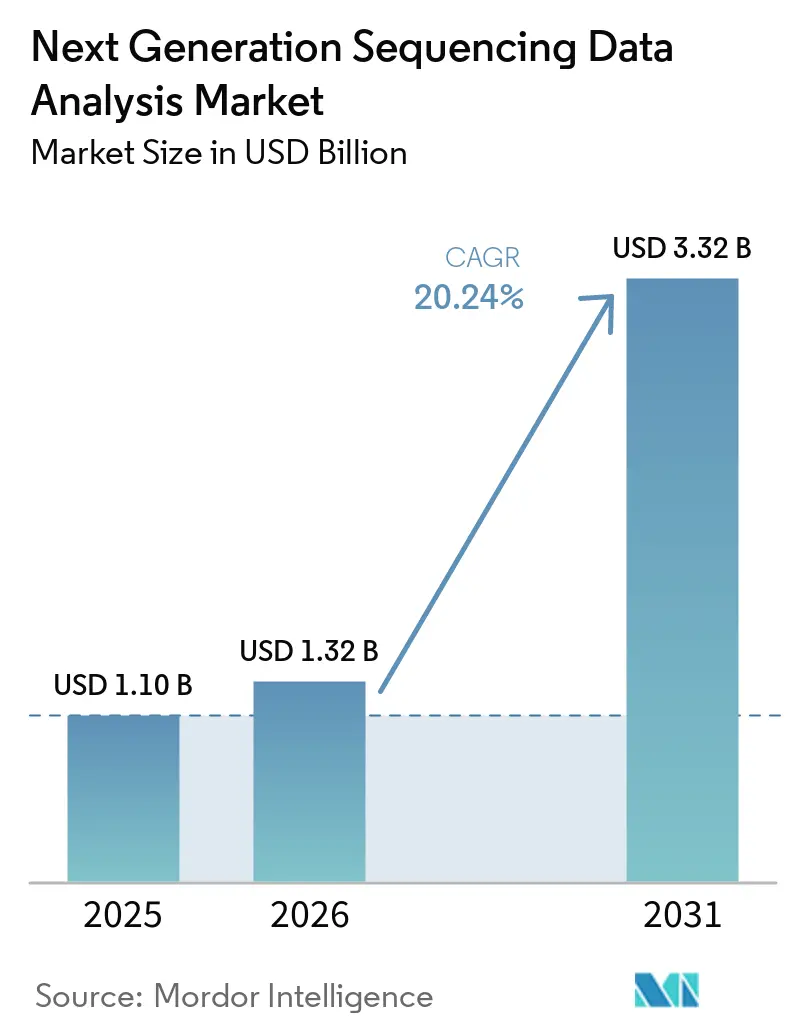
The Next Generation Sequencing Data Analysis Market size was valued at USD 1.10 billion in 2025 and is estimated to grow from USD 1.32 billion in 2026 to reach USD 3.32 billion by 2031, at a CAGR of 20.24% during the forecast period (2026-2031).
The market is supported by investment in variant interpretation systems, cloud-hosted bioinformatics platforms, and automated analytical pipelines. Demand increasingly reflects the challenge of interpreting multi-omics and population-scale datasets, rather than sequencing throughput alone. Hospitals, pharmaceutical companies, and academic centers need workflows that connect genomic data with clinical and research decisions. Companion diagnostic requirements, national sequencing programs, and AI-supported workflows are shaping vendor priorities. These conditions favor platforms that can manage complex datasets while producing reproducible and clinically useful results.
Key Report Takeaways
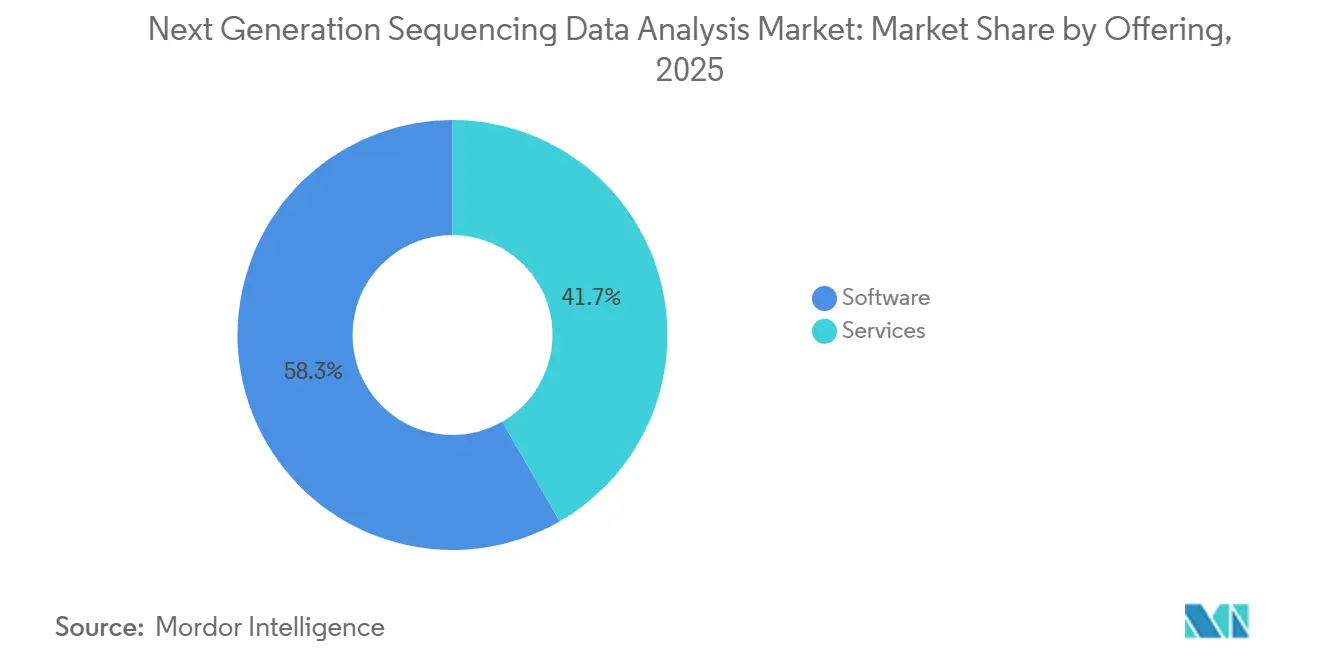
- By offering, software held 58.31% of the Next Generation Sequencing Data Analysis Market share in 2025, while services are forecast to grow at a 22.65% CAGR through 2031.
- By workflow, tertiary analysis held 48.24% of revenue in 2025, while secondary analysis is projected to expand at a 23.42% CAGR through 2031.
- By deployment mode, cloud-based deployment held 64.14% of the Next Generation Sequencing Data Analysis Market share in 2025, while hybrid deployment is forecast to grow at a 22.52% CAGR through 2031.
- By application, drug discovery and development was the largest use case, while the clinical diagnostics segment is forecast to grow at a 22.82% CAGR through 2031.
- By end user, academic and research institutes held 37.84% of revenue in 2025, while contract research organizations are forecast to grow at a 23.22% CAGR through 2031.
- By geography, North America held 42.41% of revenue in 2025, while Asia-Pacific is expected to be the fastest-growing region with 22.25% CAGR through 2031.
Note: Market size and forecast figures in this report are generated using Mordor Intelligence’s proprietary estimation framework, updated with the latest available data and insights as of January 2026.
Global Next Generation Sequencing Data Analysis Market Trends and Insights
Drivers Impact Analysis*
| Driver | (~) % Impact on CAGR Forecast | Geographic Relevance | Impact Timeline |
|---|---|---|---|
| Expanding Clinical NGS Testing in Oncology and Rare Disease | +4.5% | Global, with North America and Europe as core markets and rapid uptake in Asia-Pacific | Short term (≤ 2 years) |
| Cloud and Hybrid Compute Adoption | +3.5% | Global, with North America and Europe leading and Asia-Pacific adopting through cloud partnerships | Medium term (2-4 years) |
| AI and Machine Learning Convergence With Genomic Pipelines | +4.0% | Global, concentrated in North America, Europe, and East Asia | Medium term (2-4 years) |
| Declining Sequencing Cost and Population-Scale Programs | +3.0% | Global, with Asia-Pacific and South America advancing through national programs | Long term (≥ 4 years) |
| Regulatory Recognition of Genomic Software as a Medical Device | +2.5% | Primarily North America and Europe, with developing frameworks in Asia-Pacific | Short term (≤ 2 years) |
| Federated and Privacy-Preserving Multi-Institutional Analysis | +1.5% | Europe and North America, with wider use through multilateral programs | Long term (≥ 4 years) |
| Source: Mordor Intelligence | |||
Expanding Clinical NGS Testing in Oncology and Rare Disease
The Next Generation Sequencing Data Analysis Market benefits as oncology moves from single-gene testing toward comprehensive genomic profiling. The proposed FDA reclassification in November 2025 would move oncology nucleic acid-based companion diagnostics from Class III PMA requirements to Class II 510(k) requirements under 21 CFR 866.6075. A lower regulatory threshold can increase companion diagnostic volumes without reducing the complexity of analyzing test results. Competition, therefore, depends more on analytical accuracy, reproducible pipelines, and the quality of clinical reporting. Rare disease programs add demand because whole-exome and whole-genome testing need tools for uncertain variant resolution and phenotype-genotype correlation. Software providers are responding with AI-supported interpretation functions that help laboratories manage these complex review tasks.
Cloud and Hybrid Compute Adoption
Cloud infrastructure helps institutions avoid building on-premises compute capacity for peak genomic workloads. Oxford Nanopore Technologies reported a 50% reduction in total cost of ownership compared with traditional local-storage pipelines in work supporting Singapore's national genome program. This model allows institutions to use compute resources when needed instead of purchasing capacity years in advance. The Next Generation Sequencing Data Analysis Market also faces greater dependence on a limited set of large cloud environments as analytical workloads move off site. That dependence can make data residency and workflow migration more difficult for users. Hybrid systems address this issue by keeping raw reads within an institution while using cloud resources for secondary and tertiary analysis.
AI and Machine Learning Convergence With Genomic Pipelines
AI and machine learning are moving from quality-control tasks toward clinical variant interpretation in the Next Generation Sequencing Data Analysis Market. Illumina stated that DRAGEN v4.5, released in April 2026, reduced FFPE-related single-nucleotide variant false positives by more than 90% and indel false positives by more than 87% without adding runtime or compute burden[1]. These gains can make archived FFPE tumor samples more useful for biomarker discovery. A 2025 review described the use of CNNs, transformers, and hybrid models in tools including DeepVariant and Clair3. Such tools raise the importance of specialized analytical software and validation practices. Federated learning can support model development where institutional data cannot leave local systems.
Declining Sequencing Cost and Population-Scale Programs
Lower sequencing costs are increasing the number of genomes that require analysis across the Next Generation Sequencing Data Analysis Market. MGI's T20 sequencer reached a sequencing cost below USD 100 per sample in commercial deployments. The NIH All of Us Research Program reported more than 1.3 billion genetic variants across more than 535,000 whole-genome sequences in its June 2026 release. The program also released 14,500 long-read genomes and planned further multiomic releases during 2026. Brazil's Genomas Brasil program is integrating large-scale genomics into the national public health system. Each genome adds demand for primary, secondary, and tertiary analysis across software and services.
Restraints Impact Analysis*
| Restraint | (~) % Impact on CAGR Forecast | Geographic Relevance | Impact Timeline |
|---|---|---|---|
| Fragmented Data-Privacy and Data-Sovereignty Requirements | -1.5% | Europe, North America, Asia-Pacific, and global research programs | Medium term (2-4 years) |
| Shortage of Clinically Trained Bioinformaticians and Validation Experts | -1.2% | Global, especially clinical settings in North America, Europe, and emerging Asia-Pacific markets | Short term (≤ 2 years) |
| Long-Term Genomic Storage and Compute Cost | -0.8% | Global, especially smaller clinical institutions and lower-income geographies | Long term (≥ 4 years) |
| Legacy LIMS and EHR Interoperability Gaps | -0.7% | Global, concentrated in national health systems with fragmented IT infrastructure | Medium term (2-4 years) |
| Source: Mordor Intelligence | |||
Fragmented Data-Privacy and Data-Sovereignty Requirements
Data sovereignty rules determine where genomic data can be stored, processed, and shared in the Next Generation Sequencing Data Analysis Market. European requirements and the developing European Health Data Space framework can limit cross-border handling of citizen genomic data. These rules can fragment the collaborations that create large datasets for AI model training. SF-GWAS demonstrated privacy-preserving genome-wide association analysis on a UK Biobank cohort of 410,000 individuals with accuracy comparable to centralized models[2]. Federated methods offer a practical response where data cannot cross institutional boundaries. Vendors still face added engineering and legal work when they operate jurisdiction-specific data environments across several geographies.
Shortage of Clinically Trained Bioinformaticians and Validation Experts
The need for clinically trained bioinformaticians and validation experts can limit adoption across the Next Generation Sequencing Data Analysis Market. Automated calling and report-generation tools still require qualified staff to establish assay specifications and review discordant results. Clinical laboratories also need these professionals to meet validation and accreditation requirements. A 2025 review identified gaps in education infrastructure, access to training, and cross-disciplinary skills development across genomic data science. The challenge is broader than staffing for routine pipeline operation because clinical workflows require informed oversight of genomic findings. This makes service providers and managed platforms relevant where end users do not have sufficient in-house capability.
*Our forecasts treat driver/restraint impacts as directional, not additive. The impact forecasts reflect baseline growth, mix effects, and variable interactions.
Segment Analysis
By Offering: Integrated Software Retains the Largest Position
Software held 58.31% of Next Generation Sequencing Data Analysis Market revenue in 2025. This Next Generation Sequencing Data Analysis Market share reflected institutional demand for integrated suites that cover primary, secondary, and tertiary analysis. Tertiary interpretation software has high value because it supports variant curation, clinical report generation, and decision support. These functions are close to diagnostic and therapeutic decisions. Secondary analysis software includes alignment, variant calling, and quality filtering functions. Hardware vendors increasingly incorporate this layer within their offerings, which can pressure standalone software margins.
Data management, storage, and workflow management tools are gaining use as institutions handle hundreds of terabytes of genomic information each year. These tools address data governance and pipeline coordination needs that general IT systems do not fully meet. Services are the fastest-expanding offering segment through 2031 because many institutions lack internal bioinformatics teams. Customized pipeline development is important for long-read, single-cell, and multiomics assays that require configuration beyond standard packages. Outsourced analysis, variant interpretation, and report generation provide hospital laboratories with clinical-grade outputs without building internal analytics infrastructure. The service model also supports contract research organizations that offer integrated sample-to-report workflows.
By Workflow: Tertiary Analysis Holds the Largest Revenue Position
Tertiary analysis held 48.24% of workflow revenue in 2025 in the Next Generation Sequencing Data Analysis Market. The workflow covers variant annotation, phenotype-genotype correlation, clinical reporting, and AI-supported interpretation. Its position shows that the central challenge in NGS diagnostics is turning variant lists into evidence-backed clinical conclusions. Tertiary systems connect to electronic health records, genomic databases such as ClinVar and COSMIC, and regulatory reporting functions. These connections make the workflow more complex than earlier analysis stages. They also make tertiary tools more differentiated within clinical and translational settings.
Secondary analysis is the fastest-growing workflow segment through 2031. It includes read mapping, variant alignment, and variant calling. Long-read platforms from Oxford Nanopore Technologies and PacBio need secondary pipelines that handle reads extending to tens of kilobases. This differs from short-read pipelines designed for Illumina systems. Machine-learning models such as DeepVariant and Clair3 can improve calling accuracy while requiring specialized software infrastructure. Primary analysis remains the lowest-margin stage because instrument vendors increasingly include it in on-device or instrument-adjacent compute systems.
By Deployment Mode: Cloud Leads While Hybrid Gains Ground
Cloud-based deployment accounted for 64.14% of the Next Generation Sequencing Data Analysis Market in 2025. This Next Generation Sequencing Data Analysis Market share reflects the appeal of pay-per-sample pricing and flexible computing capacity. Institutions can avoid forecasting peak infrastructure demand years before it occurs. Cloud systems also support collaboration among sites without the physical movement of data. This is useful for multi-site clinical trials and population-scale programs. It can also simplify access to centrally managed analytical environments for distributed research groups.
Hybrid deployment is the fastest-growing mode through 2031. Users adopt this model to balance cloud economics with data sovereignty and compliance requirements. In a common configuration, raw sequence data remains on premises while secondary and tertiary tasks run in the cloud. Institutions may upload indexed and de-identified intermediate files for more computationally intensive processing. On-premises systems remain relevant to defense research institutions, sovereign health systems, and pharmaceutical organizations with sensitive proprietary data. Workflow management tools such as Nextflow and WDL help coordinate tasks across local and cloud environments.
By Application: Drug Discovery Leads While Clinical Diagnostics Grows Fastest
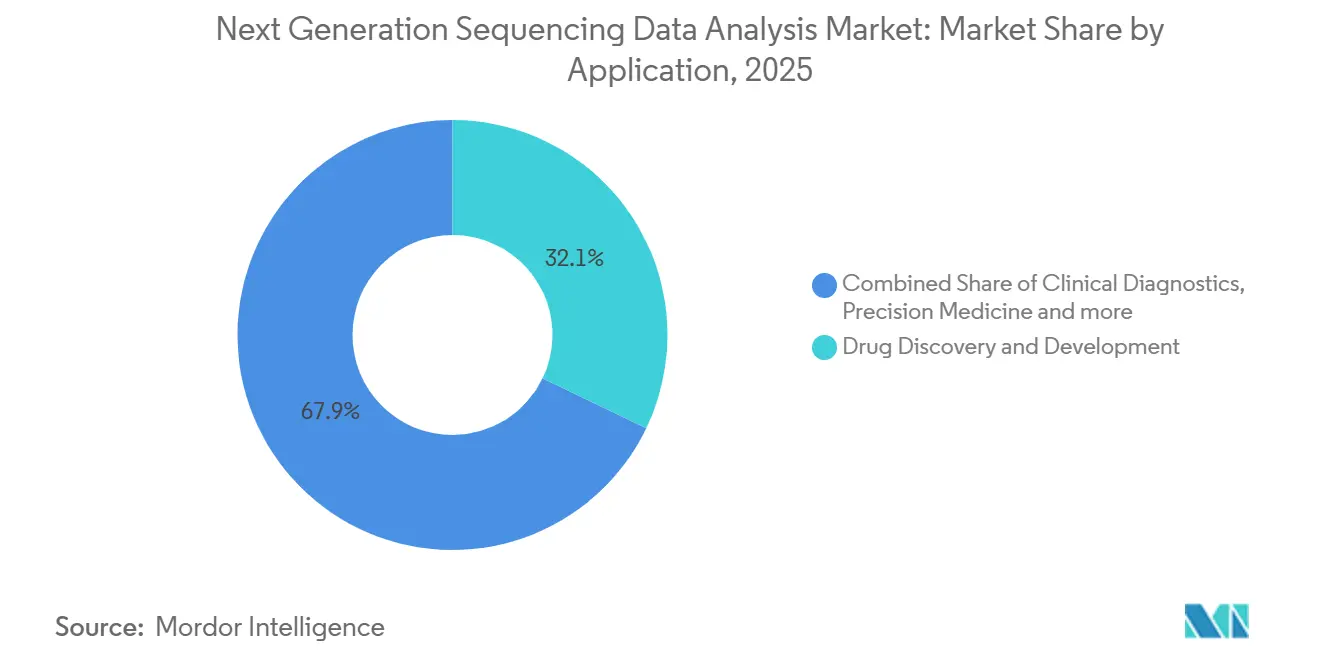
Drug discovery and development is the largest application in the Next Generation Sequencing Data Analysis Market. Pharmaceutical companies use genomic profiling for target identification, biomarker-based patient stratification, and compound screening. The application now extends beyond bulk RNA sequencing and routine variant calling. Single-cell multiomics and perturbation genomics produce large datasets from transcriptomic screens across many compounds. These datasets need dedicated analytical pipelines and data management capacity. Precision medicine and genomic research are also relevant revenue areas for academic cores, biobanks, and translational research groups.
Clinical diagnostics is forecast to grow at a 22.82% CAGR through 2031, making it the fastest-growing application. The Next Generation Sequencing Data Analysis Market size for clinical diagnostics is supported by use in oncology, rare disease, reproductive health, and pharmacogenomics. Clinical-grade software needs analytical validation records, algorithm version control, and audit trails that research-grade platforms may not provide. These requirements expand the technical scope of clinical bioinformatics offerings. Tempus received FDA 510(k) clearance in September 2025 for its Tempus xR IVD RNA-based NGS diagnostic device. The clearance shows that AI-focused companies are pursuing direct regulatory engagement alongside established diagnostic platforms.

By End User: Academic Institutes Lead While CROs Expand Fastest
Academic and research institutes held 37.84% of the Next Generation Sequencing Data Analysis Market revenue in 2025. This position is sustained by grants, publicly funded biobank programs, and institutional sequencing cores. These organizations generate continuous genomic datasets that need a reliable analysis infrastructure. Universities and research institutes also widely use open-source tools such as Nextflow, GATK, and Bioconductor. Commercial providers can target this installed base with managed cloud platforms. Hospitals and clinical laboratories have a smaller current share but higher value per case because of audit, reporting, and regulatory obligations.
Contract research organizations are the fastest-growing end-user category through 2031. Pharmaceutical and biotechnology companies are outsourcing pipeline development, sample-to-report execution, data management, and regulatory submission work. CROs can build differentiated assets as they accumulate validated pipelines and genomic datasets across client projects. These assets can support repeat work and specialized analytical services. Global CROs must also address cross-border genomic data transfers under rules including GDPR and PIPL. This need is increasing investment in jurisdiction-specific analysis capacity and federated compute models.
Geography Analysis
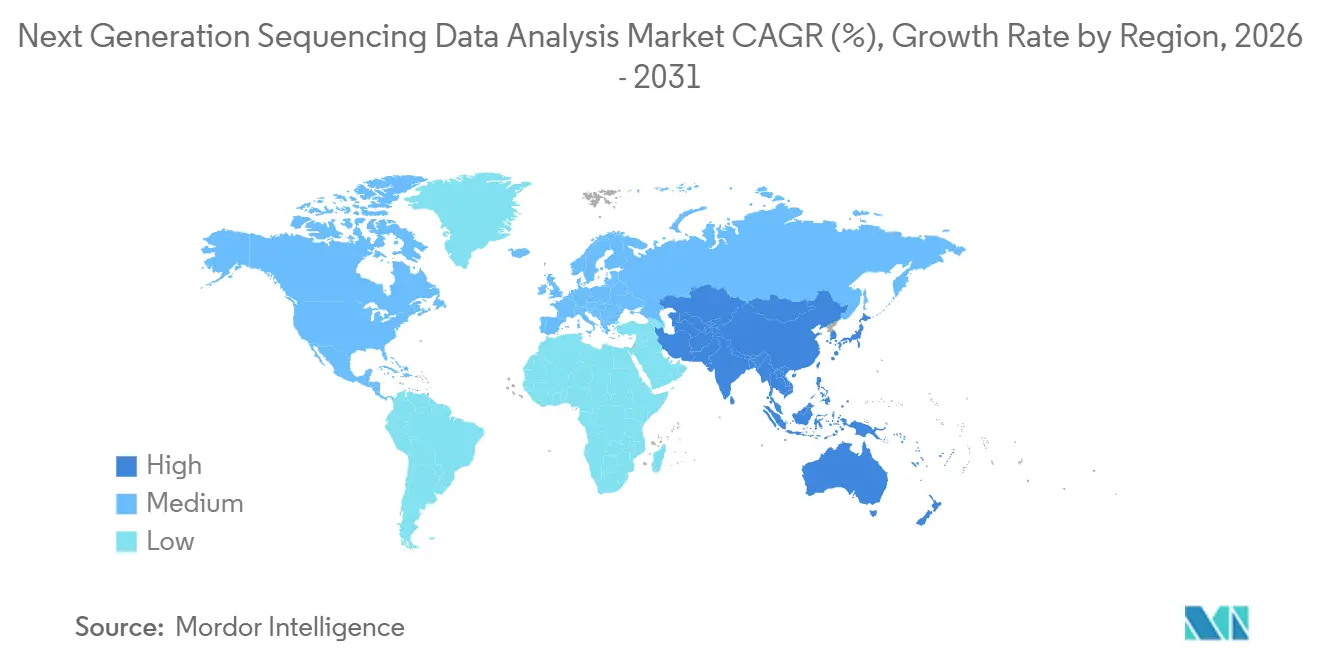
North America held 42.41% of the Next Generation Sequencing Data Analysis Market revenue in 2025. The region's position reflects sequencing capacity across academic medical centers, national laboratories, and pharmaceutical genomics groups. NIH All of Us links more than 535,000 whole-genome sequences with nearly 482,000 electronic health records in its June 2026 release[3]. This scale supports continuing demand for analysis platforms and services. Canada and Mexico add demand through genomics programs and expanding biomedical research infrastructure. The United States has a large base of software licensing tied to installed Illumina systems and NGS-focused CRO activity.
Europe has a meaningful position in the Next Generation Sequencing Data Analysis Market, led by the UK, Germany, and France. National genomics programs in these countries support demand for scalable analytical infrastructure. Germany's genomDE initiative directs public resources toward genomic medicine infrastructure. The country's health insurance expansion for tumor profiling reimbursement in 2024 added an estimated 80,000 tests annually. France committed EUR 670 million (USD 720 million) at 2025 average exchange rates to 12 regional genomics platforms under its national plan. The EU IVDR transition increases the need for tools that support validated and documented laboratory workflows.
Asia-Pacific is the fastest-growing regional area through 2031. China benefits from MGI-driven sequencing cost reductions, India from an expanding biotechnology research base, and Japan from a reimbursement-supported clinical NGS setting. South Korea, Australia, and India contribute capacity through academic sequencing cores, health agency programs, and contract research expansion. The Middle East and Africa are earlier-stage areas led by GCC genomic medicine investments and South African research sequencing programs. Brazil's Genomas Brasil initiative shows how government-directed programs can shape genomic capacity in South America.
Competitive Landscape
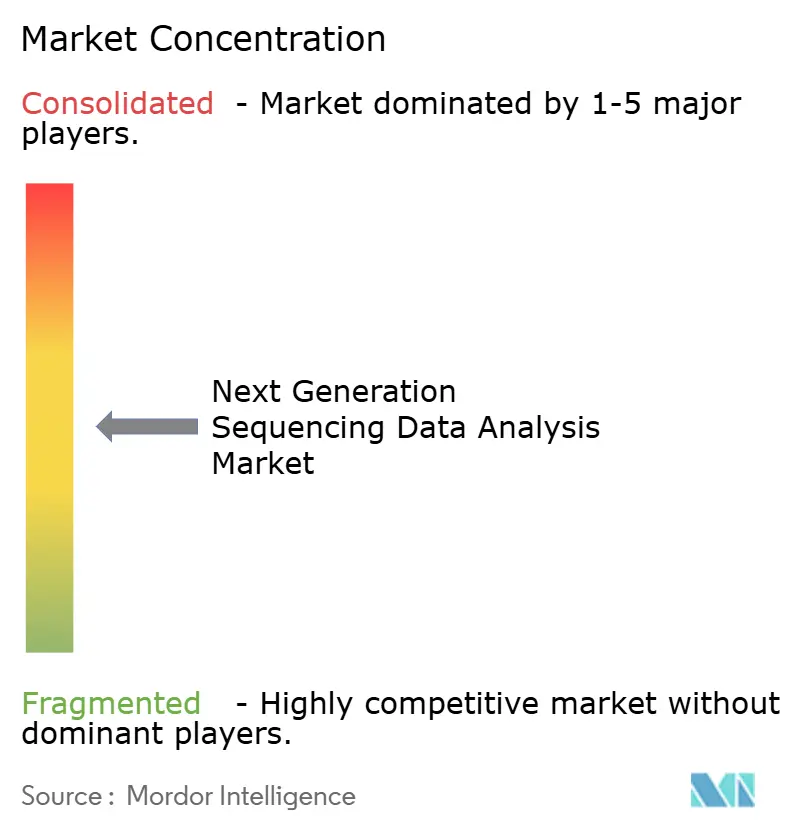
The Next Generation Sequencing Data Analysis Market has a moderately concentrated, tiered competitive structure. Instrument-software integrators include Illumina, Thermo Fisher Scientific, and Oxford Nanopore Technologies. Cloud-native platforms such as DNAnexus and Seven Bridges Genomics compete through scalability, ecosystem connectivity, and data management. AI-focused interpretation providers include SOPHiA GENETICS, Fabric Genomics, and Sentieon. Their position depends on algorithmic performance and clinical workflow integration. The Next Generation Sequencing Data Analysis Market remains contestable because cloud computing lowers entry barriers even as existing platforms build workflow lock-in.
SOPHiA GENETICS reported that its SOPHiA DDM platform had analyzed more than 2.5 million cases across more than 800 institutions in 70 countries since 2014. In June 2026, the company signed an MOU with Memorial Sloan Kettering Cancer Center to explore a precision-oncology joint venture. Illumina released DRAGEN v4.5 in April 2026 with machine-learning somatic calling functions. In March 2026, Illumina and Labcorp expanded their collaboration to co-commercialize liquid-biopsy and solid-tumor IVD test kits with integrated data analysis. These moves show the importance of combining analytical software, clinical workflows, and testing access.
Rare disease and newborn screening remain areas where clinical tertiary analysis needs specialized phenotype-led interpretation and rare-variant databases. Multi-institutional federated analysis also has limited mature commercial tooling where patient information cannot leave institutional systems. Vendors are developing privacy-preserving analytical approaches based on homomorphic encryption and secure multi-party computation. Sentieon illustrates the continuing role of compute efficiency through GPU-accelerated variant calling. The Next Generation Sequencing Data Analysis Market is also seeing greater focus on analytical algorithm protection. Illumina's DRAGEN update reflects how competition is extending from sequencing chemistry into software methods and clinical interpretation.
Next Generation Sequencing Data Analysis Industry Leaders
-
Illumina, Inc.
-
Thermo Fisher Scientific Inc.
-
QIAGEN N.V.
-
F. Hoffmann-La Roche Ltd
-
DNAnexus, Inc.
- *Disclaimer: Major Players sorted in no particular order
Recent Industry Developments
- September 2026: Ultima Genomics announced a collaboration with NVIDIA to enable pangenome-aware whole genome sequencing (WGS) analysis at unprecedented scale. Pangenome-aware analysis became an important tool to enable higher sensitivity and precision of NGS and to reduce genome reference bias by capturing global human genetic diversity.
- August 2026: Lexogen announced the availability of designated NGS service workflows operated in compliance with the principles of the World Health Organization’s Good Clinical Laboratory Practice guidance.
Global Next Generation Sequencing Data Analysis Market Report Scope
As per the scope of the report, next-generation sequencing (NGS) data analysis is the process of turning data produced by high-throughput DNA or RNA sequencing into meaningful biological results.
The next-generation sequencing data analysis market is segmented by offering into software and services. The software segment includes primary data analysis software, secondary analysis software, tertiary analysis and interpretation software, data management and storage tools, and workflow management software. The services segment includes data analysis services, data management and storage services, pipeline development and customization services, and other services. By workflow, the market is segmented into primary analysis, secondary analysis, and tertiary analysis. By deployment mode, the market is segmented into cloud-based, on-premises, and hybrid solutions. By application, the market is segmented into clinical diagnostics, drug discovery and development, precision medicine, genomic research, and other applications. By end user, the market is segmented into academic and research institutes, hospitals and clinical laboratories, pharmaceutical and biotechnology companies, contract research organizations, and other end users. By geography, the market is segmented into North America, Europe, Asia-Pacific, the Middle East and Africa, and South America. The market report also covers the estimated market sizes and trends for 17 countries across major regions globally. For each segment, the market size and forecast are provided in terms of value (USD).
| Software | Primary Data Analysis Software |
| Secondary Analysis Software | |
| Tertiary Analysis and Interpretation Software | |
| Data Management and Storage Tools | |
| Workflow Management Software | |
| Services | Data Analysis Services |
| Data Management and Storage Services | |
| Pipeline Development and Customization | |
| Other Services |
| Primary Analysis |
| Secondary Analysis |
| Tertiary Analysis |
| Cloud-Based |
| On-Premise |
| Hybrid |
| Clinical Diagnostics |
| Drug Discovery and Development |
| Precision Medicine |
| Genomic Research |
| Other Applications |
| Academic and Research Institutes |
| Hospitals and Clinical Laboratories |
| Pharmaceutical and Biotechnology Companies |
| Contract Research Organizations |
| Other End Users |
| North America | United States |
| Canada | |
| Mexico | |
| Europe | Germany |
| United Kingdom | |
| France | |
| Italy | |
| Spain | |
| Rest of Europe | |
| Asia-Pacific | China |
| Japan | |
| India | |
| Australia | |
| South Korea | |
| Rest of Asia-Pacific | |
| Middle East and Africa | GCC |
| South Africa | |
| Rest of Middle East and Africa | |
| South America | Brazil |
| Argentina | |
| Rest of South America |
| By Offering | Software | Primary Data Analysis Software |
| Secondary Analysis Software | ||
| Tertiary Analysis and Interpretation Software | ||
| Data Management and Storage Tools | ||
| Workflow Management Software | ||
| Services | Data Analysis Services | |
| Data Management and Storage Services | ||
| Pipeline Development and Customization | ||
| Other Services | ||
| By Workflow | Primary Analysis | |
| Secondary Analysis | ||
| Tertiary Analysis | ||
| By Deployment Mode | Cloud-Based | |
| On-Premise | ||
| Hybrid | ||
| By Application | Clinical Diagnostics | |
| Drug Discovery and Development | ||
| Precision Medicine | ||
| Genomic Research | ||
| Other Applications | ||
| By End User | Academic and Research Institutes | |
| Hospitals and Clinical Laboratories | ||
| Pharmaceutical and Biotechnology Companies | ||
| Contract Research Organizations | ||
| Other End Users | ||
| By Geography | North America | United States |
| Canada | ||
| Mexico | ||
| Europe | Germany | |
| United Kingdom | ||
| France | ||
| Italy | ||
| Spain | ||
| Rest of Europe | ||
| Asia-Pacific | China | |
| Japan | ||
| India | ||
| Australia | ||
| South Korea | ||
| Rest of Asia-Pacific | ||
| Middle East and Africa | GCC | |
| South Africa | ||
| Rest of Middle East and Africa | ||
| South America | Brazil | |
| Argentina | ||
| Rest of South America | ||
Key Questions Answered in the Report
What is the size of the Next Generation Sequencing Data Analysis Market?
The Next Generation Sequencing Data Analysis Market was USD 1.32 billion in 2026 and is forecast to reach USD 3.32 billion by 2031 at a 20.24% CAGR.
Which offering leads NGS data analysis spending?
Software led with 58.31% of revenue in 2025 because institutions favor integrated tools that support analysis from primary processing through interpretation.
Why is clinical diagnostics growing quickly?
Clinical diagnostics is forecast to grow at a 22.82% CAGR through 2031 as NGS testing expands across oncology, rare disease, reproductive health, and pharmacogenomics.
Which deployment model has the largest installed base?
Cloud-based deployment held 64.14% in 2025, while hybrid deployment is growing fastest as institutions balance flexible compute capacity with data sovereignty needs.
Which region leads NGS data analysis revenue?
North America held 42.41% of revenue in 2025, supported by research capacity, clinical programs, and large-scale genomics initiatives.
What limits adoption of genomic analysis platforms?
Data sovereignty requirements and shortages of clinically trained bioinformatics and validation professionals can complicate platform deployment and operation.