
Neurofibromatosis Treatment Market Size and Share
Market Overview
| Study Period | 2020 - 2031 |
|---|---|
| Market Size (2026) | USD 16.59 Billion |
| Market Size (2031) | USD 30.25 Billion |
| Growth Rate (2026 - 2031) | 12.77 % |
| Fastest Growing Market | Asia-Pacific |
| Largest Market | North America |
| Market Concentration | Medium |
Major Players *Disclaimer: Major Players sorted in no particular order Image © Mordor Intelligence. Reuse requires attribution under CC BY 4.0. | |
Neurofibromatosis Treatment Market Analysis by Mordor Intelligence
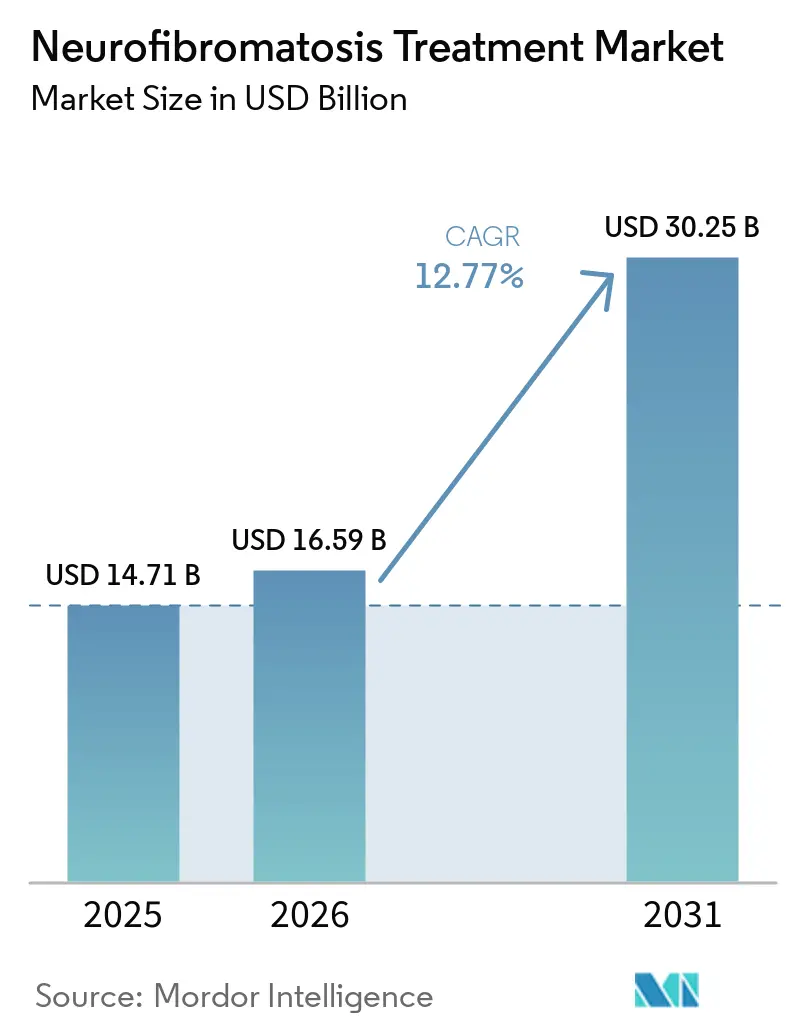
The Neurofibromatosis Treatment Market size is expected to grow from USD 14.71 billion in 2025 to USD 16.59 billion in 2026 and is forecast to reach USD 30.25 billion by 2031 at 12.77% CAGR over 2026-2031.
The market is expanding beyond pediatric NF1 therapy, supported by selumetinib and mirdametinib approvals for broader patient populations. Gene-based and AI-supported programs remain early-stage. Access depends on specialist care, molecular diagnosis, reimbursement, and chronic treatment management. Unmet needs persist in NF2 and schwannomatosis, where systemic options remain limited outside Japan’s bevacizumab indication. Near-term opportunities center on established NF1 care, while expansion depends on addressing safety, access, and evidence requirements.
Key Report Takeaways
- By disease type, Neurofibromatosis Type 1 (NF1) held 38.31% of revenue in 2025, while NF1 is expected to have the highest growth with 13.65% CAGR through 2031.
- By therapy type, MEK inhibitors held 26.24% of revenue in 2025, while gene-based therapies are forecast to grow at a 17.42% CAGR through 2031.
- By treatment stage, first-line therapy held 38.14% of revenue in 2025, while advanced disease management is forecast to grow at a 16.52% CAGR through 2031.
- By end user, hospitals held 35.14% of revenue in 2025, while academic and research institutes are forecast to grow at a 14.82% CAGR through 2031.
- By geography, North America held 42.61% of revenue in 2025, while Asia-Pacific is projected to grow at a CAGR of 15.25% through 2031.
Note: Market size and forecast figures in this report are generated using Mordor Intelligence’s proprietary estimation framework, updated with the latest available data and insights as of January 2026.
Global Neurofibromatosis Treatment Market Trends and Insights
Drivers Impact Analysis*
| Driver | (~) % Impact on CAGR Forecast | Geographic Relevance | Impact Timeline |
|---|---|---|---|
| Expansion of Approved MEK-Inhibitor Labels Across Age Groups | +2.8% | Global, concentrated in North America, EU, China, and Japan | Short term (≤ 2 years) |
| Rising Diagnosis Through Genetic Testing and Specialist Referral | +1.5% | Global, with largest gains in APAC and EU | Medium term (2-4 years) |
| Increased Investment in Rare-Disease Drug Development | +1.2% | North America and EU, with spillover to APAC and MEA | Medium term (2-4 years) |
| Disease-Specific Endpoint and Registry Standardization | +0.6% | Global, led by the United States and EU | Long term (≥ 4 years) |
| AI-Enabled Discovery for Genetically Defined Tumor Biology | +0.9% | North America and EU, with early translation in APAC | Medium term (2-4 years) |
| Source: Mordor Intelligence | |||
Expansion of Approved MEK-Inhibitor Labels Across Age Groups
The FDA approved selumetinib for adults with NF1 and symptomatic, inoperable plexiform neurofibromas on November 19, 2025. The KOMET Phase III trial included 145 patients across 13 countries. It reported a confirmed overall response rate of 20% for selumetinib and 5% for placebo, with p=0.011. The neurofibromatosis treatment market gained a wider adult treatment base through this approval. FDA approved mirdametinib on February 11, 2025, for adults and children aged 2 years and older with NF1-PN. The ReNeu Phase 2b trial reported confirmed response rates of 41% in adults and 52% in children. The European Commission conditionally authorized EZMEKLY in July 2025 for adults and children with NF1-PN. Differences in cardiac safety, tolerability, and routine monitoring could shape physician choice before comparative studies become available.
Rising Diagnosis Through Genetic Testing and Specialist Referral
Combined DNA and cDNA sequencing can achieve a diagnostic yield above 95.9% for NF1. Traditional genomic DNA methods had detected 60% to 90% of pathogenic variants. Splicing variants account for 22% to 30% of disease-causing alterations and can be missed without broader testing. A 2025 study of 148 Turkish pediatric patients found molecular variants in 94.5% of cases through NGS. Adding MLPA increased the cumulative yield to 95.9%[1]Europe PMC, “High-Yield DNA-Based Neurofibromatosis Type 1 Diagnostics Reveal Population-Specific Mutation Landscape in 1,917 Koreans,” PubMed, 2025, europepmc.org.. Earlier molecular confirmation can improve referrals for plexiform neurofibroma surveillance and treatment assessment. The neurofibromatosis treatment market may therefore gain eligible patients before symptom burden becomes severe. A Korean assessment of 1,917 individuals achieved an 81.6% cumulative yield after reclassification and whole-genome sequencing.
Increased Investment in Rare-Disease Drug Development
NIH awarded USD 26 million in fiscal year 2025 to begin the fifth Rare Diseases Clinical Research Network cycle. The funding supported 21 research consortia, including 10 new consortia. NIH also awarded USD 5.6 million to a Data Management and Coordinating Center at Cincinnati Children’s Hospital[2]National Institutes of Health, “NIH Announces Funding to Establish and Strengthen Rare Disease Research Groups,” Rare Diseases Clinical Research Network, October 29, 2025, rarediseasesnetwork.org.. The Children’s Tumor Foundation reported 67 active NF clinical trials in 2025. This total was 3 times the level recorded 10 years earlier. Registry data from these efforts can support adaptive platform trials that test several experimental arms at the same time. The neurofibromatosis treatment market could benefit from shorter development cycles and more focused studies. This setting favors companies with specialized mechanisms that can pursue clear clinical questions in rare populations.
AI-Enabled Discovery for Genetically Defined Tumor Biology
Healx dosed the first patient in the INSPIRE-NF1 Phase 2 trial of HLX-1502 in February 2025. The company identified the compound through an AI platform that reviewed millions of drug-disease data points. HLX-1502 received FDA Fast Track, Orphan Drug, and Rare Pediatric Disease designations. The program targets a mechanism distinct from approved MEK inhibitors. A 2025 publication described an AI-enabled platform using transcriptomic modeling, immune deconvolution, and molecular docking for personalized NF1 treatment strategies. The work addresses variable responses and resistance to existing MEK-directed treatment. The neurofibromatosis treatment market could gain candidates outside the MAPK/ERK pathway during the forecast period. The clinical value of these programs will depend on results from prospective trials rather than computational selection alone.
Restraints Impact Analysis*
| Restraint | (~) % Impact on CAGR Forecast | Geographic Relevance | Impact Timeline |
|---|---|---|---|
| High Treatment Cost and Reimbursement Friction | -1.8% | Global, most acute in EU outside Germany, South Korea, and Canada | Short term (≤ 2 years) |
| Long-Term Toxicity Monitoring and Treatment Discontinuation | -0.7% | Global, most pronounced in pediatric-heavy markets | Medium term (2-4 years) |
| Small, Geographically Fragmented Patient Populations | -0.4% | Global, most acute in MEA, South America, and Rest of APAC | Long term (≥ 4 years) |
| Source: Mordor Intelligence | |||
High Treatment Cost and Reimbursement Friction
Ireland estimated annual selumetinib treatment costs at EUR 204,001 (USD 236,691) for a 10-year-old and EUR 305,642 (USD 354,619) for an 18-year-old. The assessment reported ICERs from EUR 170,774 (USD 198,139) to EUR 332,319 (USD 385,571) per QALY against a EUR 50,000 (USD 58,012) reference value. It indicated that price reductions of 70% to 84% would be needed for coverage under the assessed Irish thresholds. High list prices can delay reimbursement and constrain prescribing even after regulatory approval. Payers that do not fund treatment have less reason to expand specialist capacity or diagnostic infrastructure. This can restrict diagnosis and treatment at the same time. Dutch recommendations also included prescribing and monitoring conditions for selumetinib. The neurofibromatosis treatment market will continue to face different uptake rates across national reimbursement systems.
Long-Term Toxicity Monitoring and Treatment Discontinuation
MEK inhibitors require ongoing management because plexiform neurofibromas may need chronic treatment suppression. In the ReNeu trial, left ventricular dysfunction occurred in 27% of children receiving mirdametinib. Rash occurred in 90% of adults, and diarrhea occurred in 59% of adults[3]U.S. National Library of Medicine, “Gomekli (Mirdametinib) Prescribing Information,” DailyMed, 2025, dailymed.nlm.nih.gov.. Prescribing information also warns of ocular toxicity and embryo-fetal effects. Cardiac, ophthalmologic, and dermatologic monitoring can increase demands on clinical teams. Patients with treatment intolerance or resistance have few established alternatives outside MEK inhibition. Those with malignant transformation risk may also need imaging and multispecialty care. These requirements can limit consistent monitoring in community settings and may contribute to treatment discontinuation.
*Our forecasts treat driver/restraint impacts as directional, not additive. The impact forecasts reflect baseline growth, mix effects, and variable interactions.
Segment Analysis
By Disease Type: NF1 Retains the Largest Revenue Base
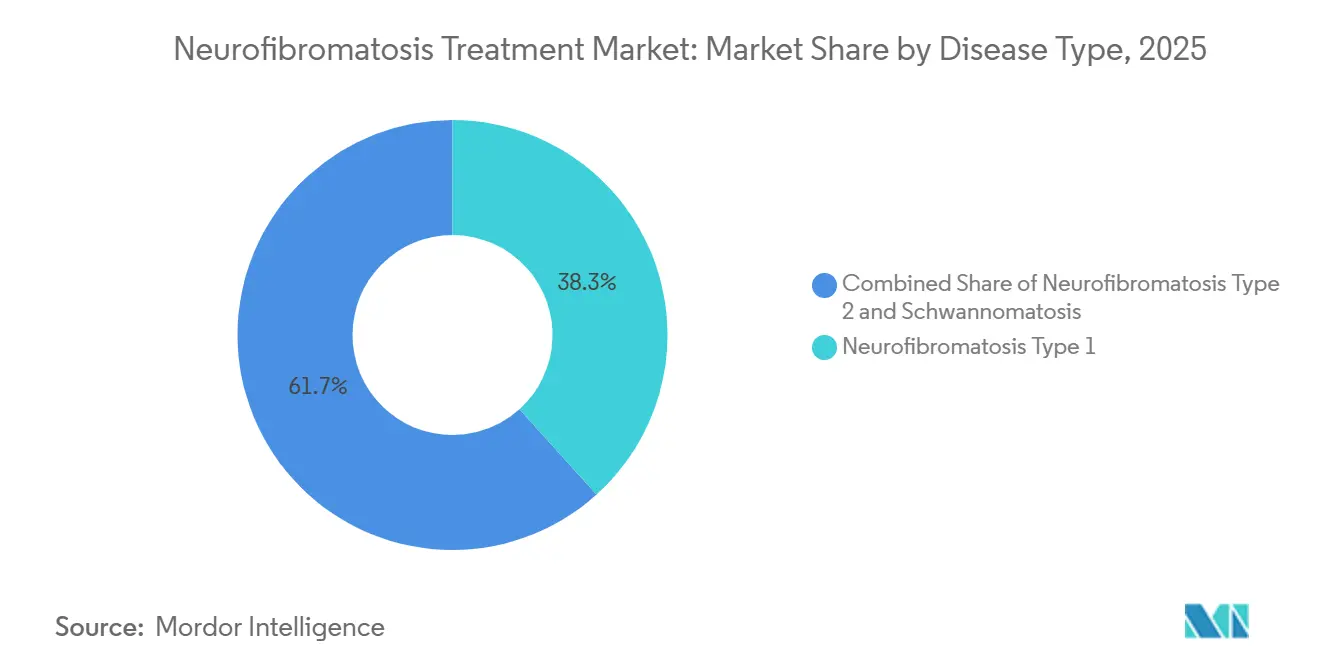
NF1 held 38.31% of the neurofibromatosis treatment market share in 2025. Its prevalence affected 1 in 2,500 to 3,000 people globally. The disease also had commercial support from approved MEK inhibitors. NF1 is expected to record the highest disease-type growth through 2031. This pattern supports continued revenue concentration in the neurofibromatosis treatment market. It also reflects the greater number of approved treatment options for NF1 than for other forms of neurofibromatosis.
Japan approved bevacizumab for NF2 in June 2026. The approval was the first for a medicine for NF2 and followed the BeatNF2 Phase II study of 62 patients at 12 Japanese institutions. NF2 and schwannomatosis still depend largely on surgery and investigational care outside this indication. Their underlying biology differs from NF1 because of the loss of the Merlin tumor suppressor. This difference limits the direct transfer of the NF1 MEK inhibitor approach. PRIME-NF2 is evaluating multi-agent approaches more broadly. These disease areas remain less developed portions of the neurofibromatosis treatment market, even as research activity rises.



By Therapy Type: Gene-Based Therapies Have the Highest Growth Rate
MEK inhibitors represented 26.24% of total revenue in 2025. They remain the commercial treatment base because selumetinib, mirdametinib, and luvometinib each target MEK1/2 within the MAPK pathway. Gene-based therapies are forecast to grow at a 17.42% CAGR through 2031. The neurofibromatosis treatment market size for gene-based therapies is shaped by pipeline activity rather than current commercial scale. No gene therapy has regulatory approval for an NF subtype. This difference is important when considering near-term sales and later clinical potential.
A September 2025 Nature Communications study reported an AAV vector proof-of-concept for NF1-related tumors. The study found significant tumor growth suppression in xenograft models of MPNST, neurofibromas, and gliomas. A 2026 Communications Biology study reported 43% tumor penetrance in treated mice and 83% in controls. These findings provide preclinical support for later human testing. Clinician choice among current MEK inhibitors may increasingly depend on tolerability and formulation convenience. Pain-management therapies, surgery, and radiation remain relevant where access to MEK inhibitors is restricted. The STARFISH platform trial is also assessing treatments for schwannomatosis-related pain.
By Treatment Stage: Advanced Disease Management Has the Fastest Growth
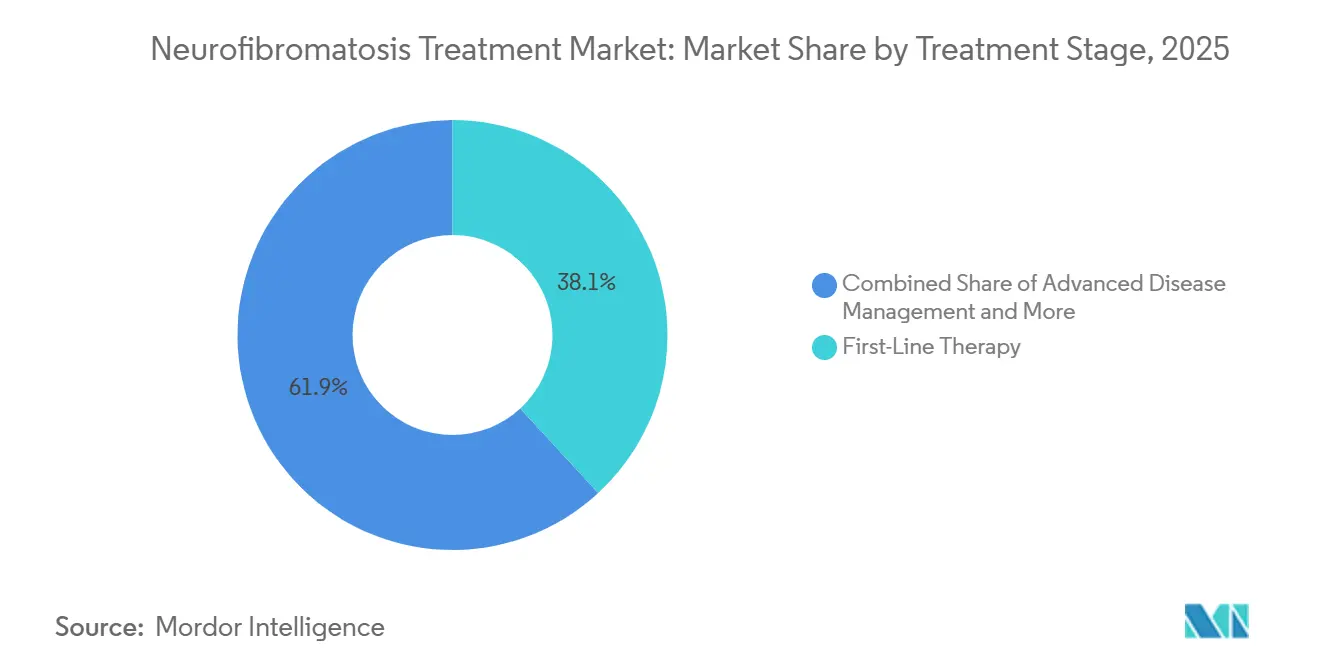
First-line therapy accounted for 38.14% of total revenue in 2025. This stage is closely associated with MEK inhibitor treatment for symptomatic, inoperable plexiform neurofibromas. Advanced disease management is forecast to grow at a 16.52% CAGR through 2031. This rate reflects research interest in MPNST and high-tumor-burden disease. These patients lack an approved systemic treatment option. The neurofibromatosis treatment market size for this stage will depend on whether emerging programs establish a durable clinical benefit.
Recurrent disease management and symptomatic treatment serve patients who discontinue treatment or do not respond to MEK inhibitors. These patients often rely on repeat surgery or palliative pain treatment. A 2025 preclinical report assessed AZT with selumetinib as a potential combination for NF1-related tumors. The report should be interpreted as early research because it has not established an approved treatment approach. The NF1 platform trial is designed to evaluate several interventions at the same time. It includes work across optic pathway gliomas and non-OPG low-grade gliomas. This wider clinical program can support formal evaluation across the treatment pathway through 2031.
By End User: Hospitals Lead While Research Institutes Expand
Hospitals accounted for 35.14% of total revenue in 2025. Prescribing is concentrated in specialist centers within tertiary hospital systems. These settings can coordinate cardiac imaging, ophthalmologic assessments, and dermatologic monitoring. Academic and research institutes are forecast to grow at a 14.82% CAGR through 2031. Their growth follows the expansion in NF trials and NIH-backed rare-disease research networks. The neurofibromatosis treatment market depends on hospital capacity because chronic medicine use requires coordinated monitoring.
Specialty centers are gaining relevance as prescribers and payers seek efficient long-term monitoring pathways. Academic-affiliated NF clinics can provide multidisciplinary support for cardiovascular needs and learning disabilities. This model is important for patients with complex NF1-related comorbidities. Other end users include pediatric oncology outpatient practices and remote specialist consultations. These channels can support patients in rural North America and Southeast Asia, where specialist density is low. Research institutes also remain central to investigator-led trials and early gene therapy work. Their activity expands the clinical evidence base before newer therapies move into routine practice.
Geography Analysis
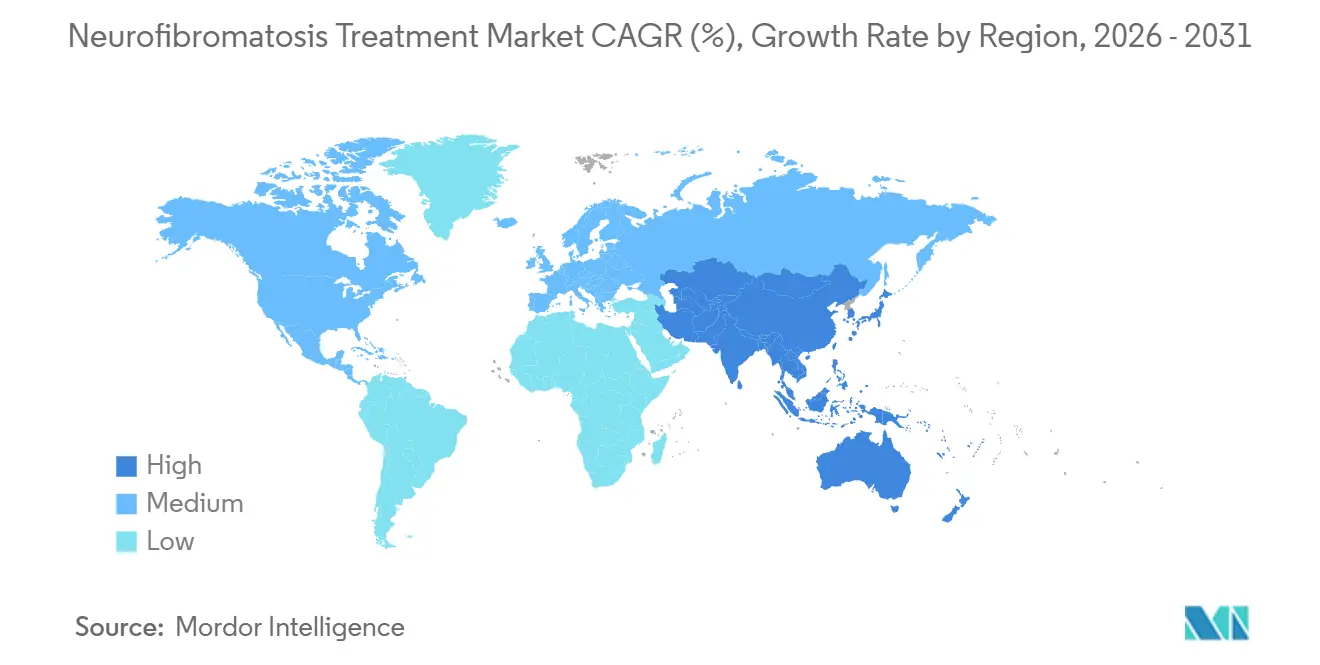
North America held 42.61% of global revenue in 2025. The United States received major approvals for pediatric selumetinib in 2020, adult selumetinib in 2025, and mirdametinib in February 2025. Reimbursement access is more developed than in many other regions, although access remains incomplete. Canada’s pan-Canadian Pharmaceutical Alliance reached a letter of intent on Koselugo reimbursement in December 2024. Quebec subsequently made its first provincial formulary listing. These developments strengthened public coverage after years of access through expanded criteria.
Europe has uneven reimbursement conditions across countries. Germany’s G-BA issued an August 2026 resolution that listed annual selumetinib treatment costs of EUR 81,237 (USD 94,254) to EUR 97,443 (USD 113,057) per patient—issued a cost-comparison recommendation for mirdametinib in children aged 2 to 17. Germany and the United Kingdom are, therefore, more accessible than several European markets. The Netherlands and Ireland recorded adverse assessments for selumetinib without negotiated price adjustments. France, Spain, Italy, and the Rest of Europe remain behind in reimbursement execution. These variations will continue to affect the neurofibromatosis treatment market across Europe.
Asia-Pacific is forecast to grow at a 15.25% CAGR through 2031, the fastest regional rate in the neurofibromatosis treatment market. China approved Fosun Pharma’s domestically developed luvometinib for pediatric NF1-PN in May 2025. Japan approved bevacizumab for NF2 in June 2026. India, Australia, and South Korea have substantial addressable populations but lag in diagnostic infrastructure and orphan-drug reimbursement. The Middle East and Africa, and South America rely more on compassionate use and hospital decisions than national coverage. Brazil, Argentina, the GCC, and South Africa have specialist or academic capacity, but funding constraints limit broad medicine uptake. These areas are expected to contribute more to generics and surgical care than to premium MEK inhibitor or gene-therapy sales through 2031.

Competitive Landscape
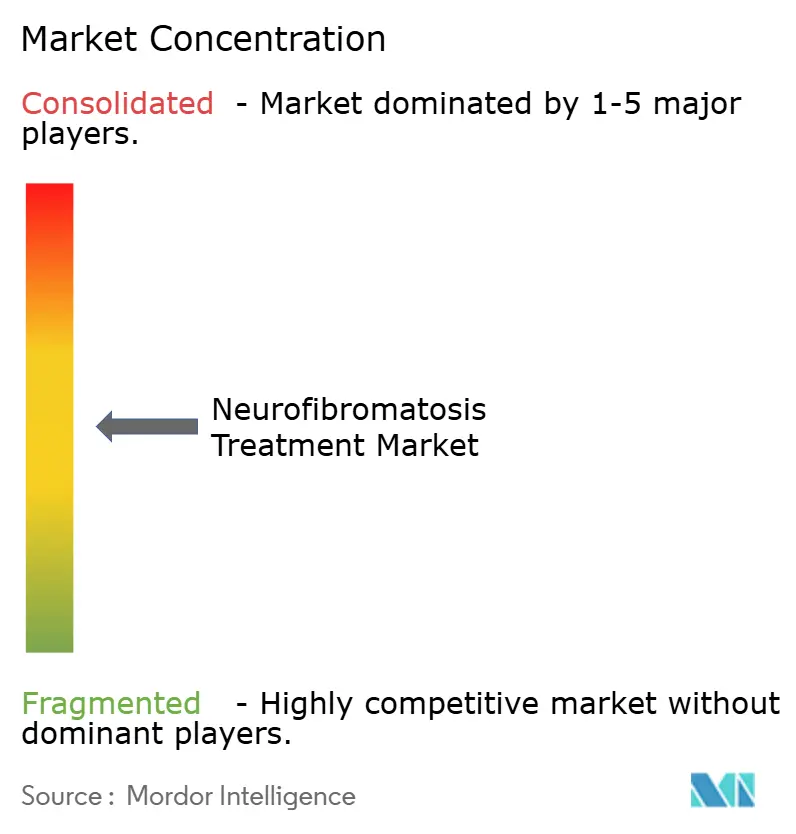
The neurofibromatosis treatment market is moderately concentrated in branded NF1 treatment. AstraZeneca’s Koselugo and SpringWorks Therapeutics and Merck KGaA’s Gomekli and EZMEKLY form the principal branded competition. NF2, schwannomatosis, and gene-based treatment programs remain more fragmented. Selumetinib received U.S. adult approval in November 2025 after European approval earlier that year. Mirdametinib received U.S. approval in February 2025 and conditional EU authorization in July 2025. These sequential approvals expanded both companies’ geographic reach and patient coverage.
SpringWorks used the EZMEKLY brand in the EU and the Gomekli brand in the United States. This approach may reduce direct price comparisons across jurisdictions. NF2-related schwannomatosis remains a principal opening for new entrants. Japan’s bevacizumab indication is the only approved systemic treatment cited for this setting. Vivace Therapeutics and the INTUITT-NF2 platform trial represent work in this less-developed treatment area. The neurofibromatosis treatment market is likely to remain differentiated by disease subtype, rather than by a single uniform treatment model. Companies entering NF2 need mechanisms suited to Merlin loss rather than a simple extension of the NF1 approach.
NFlection Therapeutics completed Phase 2b work for NFX-179 topical gel in 199 patients. The program targets cutaneous neurofibromas rather than plexiform neurofibromas. Cutaneous neurofibromas occur in more than 95% of people with NF1 and do not have an approved pharmacotherapy. Recursion Pharmaceuticals and Healx are applying AI-enabled discovery to NF biology. Healx’s INSPIRE-NF1 Phase 2 study of HLX-1502 was the most advanced AI-derived NF candidate described in active development during 2026.
Neurofibromatosis Treatment Industry Leaders
AstraZeneca PLC
Merck KGaA
F. Hoffmann-La Roche Ltd
Novartis AG
Pfizer Inc.
- *Disclaimer: Major Players sorted in no particular order

Recent Industry Developments
- September 2026: Fosun Pharma’s luvometinib (Fu Mai Ning) received NMPA approval for adult patients with NF1 and symptomatic, inoperable plexiform neurofibromas. This approval extended coverage across all age groups in China and provided the first domestically developed targeted treatment option for Chinese adults with NF1-PN.
- June 2026: Chugai Pharmaceutical received MHLW approval in Japan for Avastin (bevacizumab) to treat NF2, making it the world’s first approved drug for the disease. In the BeatNF2 Phase II trial, which included 62 patients, 16.1% of treated patients experienced improved hearing after 24 weeks, compared with 3.2% of patients in the placebo group.


Global Neurofibromatosis Treatment Market Report Scope
As per the scope of the report, neurofibromatosis treatment refers to the medical approaches and interventions aimed at managing and alleviating the symptoms and complications associated with neurofibromatosis, a genetic disorder that causes tumors to develop on nerve tissues. Treatment may include surgical removal of tumors, medication to control symptoms, regular monitoring, and supportive therapies such as physical therapy or counseling, depending on the type and severity of the condition.
The neurofibromatosis treatment market is segmented by disease type into neurofibromatosis type 1, neurofibromatosis type 2, and schwannomatosis. By therapy type, the market is segmented into MEK inhibitors, pain management therapies, surgical interventions, radiation therapy, gene-based therapies, and other therapy types. By treatment stage, the market is segmented into first-line therapy, recurrent disease management, symptomatic treatment, and advanced disease management. By end user, the market is segmented into hospitals, specialty centers, academic and research institutes, and other end users. By geography, the market is segmented into North America, Europe, Asia-Pacific, the Middle East and Africa, and South America. The market report also covers the estimated market sizes and trends for 17 countries across major regions globally. For each segment, the market size and forecast are provided in terms of value (USD).
| Neurofibromatosis Type 1 |
| Neurofibromatosis Type 2 |
| Schwannomatosis |
| MEK Inhibitors |
| Pain-Management Therapies |
| Surgical Interventions |
| Radiation Therapy |
| Gene-Based Therapies |
| Other Therapy Types |
| First-Line Therapy |
| Recurrent Disease Management |
| Symptomatic Treatment |
| Advanced Disease Management |
| Hospitals |
| Specialty Centers |
| Academic and Research Institutes |
| Other End Users |
| North America | United States |
| Canada | |
| Mexico | |
| Europe | Germany |
| United Kingdom | |
| France | |
| Italy | |
| Spain | |
| Rest of Europe | |
| Asia-Pacific | China |
| Japan | |
| India | |
| Australia | |
| South Korea | |
| Rest of Asia-Pacific | |
| Middle East and Africa | GCC |
| South Africa | |
| Rest of Middle East and Africa | |
| South America | Brazil |
| Argentina | |
| Rest of South America |
| By Disease Type | Neurofibromatosis Type 1 | |
| Neurofibromatosis Type 2 | ||
| Schwannomatosis | ||
| By Therapy Type | MEK Inhibitors | |
| Pain-Management Therapies | ||
| Surgical Interventions | ||
| Radiation Therapy | ||
| Gene-Based Therapies | ||
| Other Therapy Types | ||
| By Treatment Stage | First-Line Therapy | |
| Recurrent Disease Management | ||
| Symptomatic Treatment | ||
| Advanced Disease Management | ||
| By End User | Hospitals | |
| Specialty Centers | ||
| Academic and Research Institutes | ||
| Other End Users | ||
| By Geography | North America | United States |
| Canada | ||
| Mexico | ||
| Europe | Germany | |
| United Kingdom | ||
| France | ||
| Italy | ||
| Spain | ||
| Rest of Europe | ||
| Asia-Pacific | China | |
| Japan | ||
| India | ||
| Australia | ||
| South Korea | ||
| Rest of Asia-Pacific | ||
| Middle East and Africa | GCC | |
| South Africa | ||
| Rest of Middle East and Africa | ||
| South America | Brazil | |
| Argentina | ||
| Rest of South America | ||


Key Questions Answered in the Report
What is the 2026 size of the neurofibromatosis treatment market?
The neurofibromatosis treatment market is valued at USD 16.59 billion in 2026 and is forecast to reach USD 30.25 billion by 2031.
Which neurofibromatosis type generates the most revenue?
NF1 held 38.31% of revenue in 2025, supported by higher prevalence and approved MEK inhibitor options for symptomatic, inoperable plexiform neurofibromas.
Which treatment category is growing fastest?
Gene-based therapies are forecast to grow at a 17.42% CAGR through 2031, although no gene therapy has approval for an NF subtype.
Why do hospitals remain important for patients with NF1?
Hospitals held 35.14% of revenue in 2025 because they can coordinate cardiac, eye, and dermatologic monitoring for long-term treatment. The neurofibromatosis treatment market relies on these specialist settings because patients may also need surveillance imaging, repeat surgery, pain care, and coordinated support for other NF1-related needs.
Which region is growing fastest for neurofibromatosis care?
Asia-Pacific is forecast to grow at a 15.25% CAGR through 2031, supported by regional approvals and expanding treatment access.
Page last updated on:





