
Nephrology Drugs Market Size and Share
Market Overview
| Study Period | 2020 - 2031 |
|---|---|
| Market Size (2026) | USD 42.40 Billion |
| Market Size (2031) | USD 64.62 Billion |
| Growth Rate (2026 - 2031) | 8.75 % |
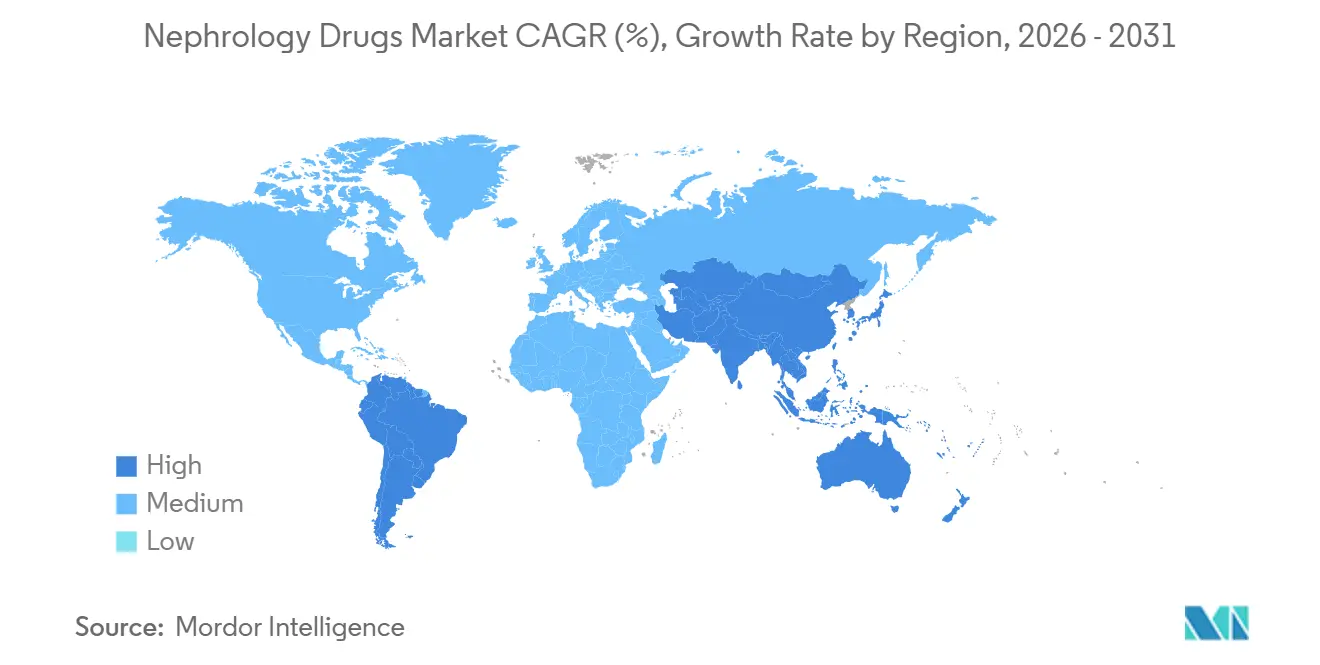
| Fastest Growing Market | Asia-Pacific |
| Largest Market | North America |
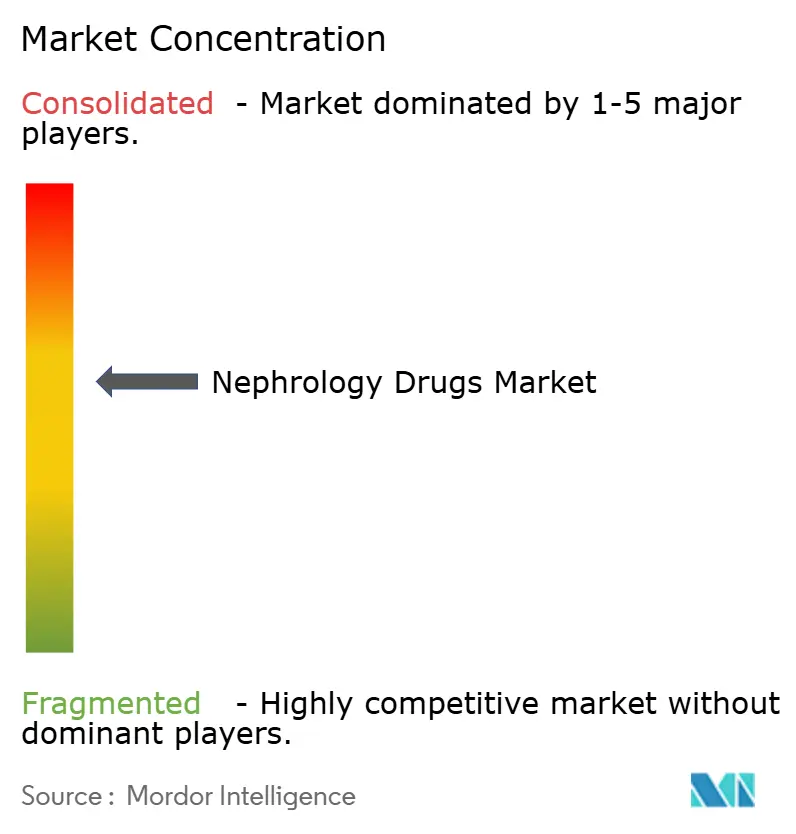
| Market Concentration | Medium |
Major Players *Disclaimer: Major Players sorted in no particular order Image © Mordor Intelligence. Reuse requires attribution under CC BY 4.0. | |
Nephrology Drugs Market Analysis by Mordor Intelligence
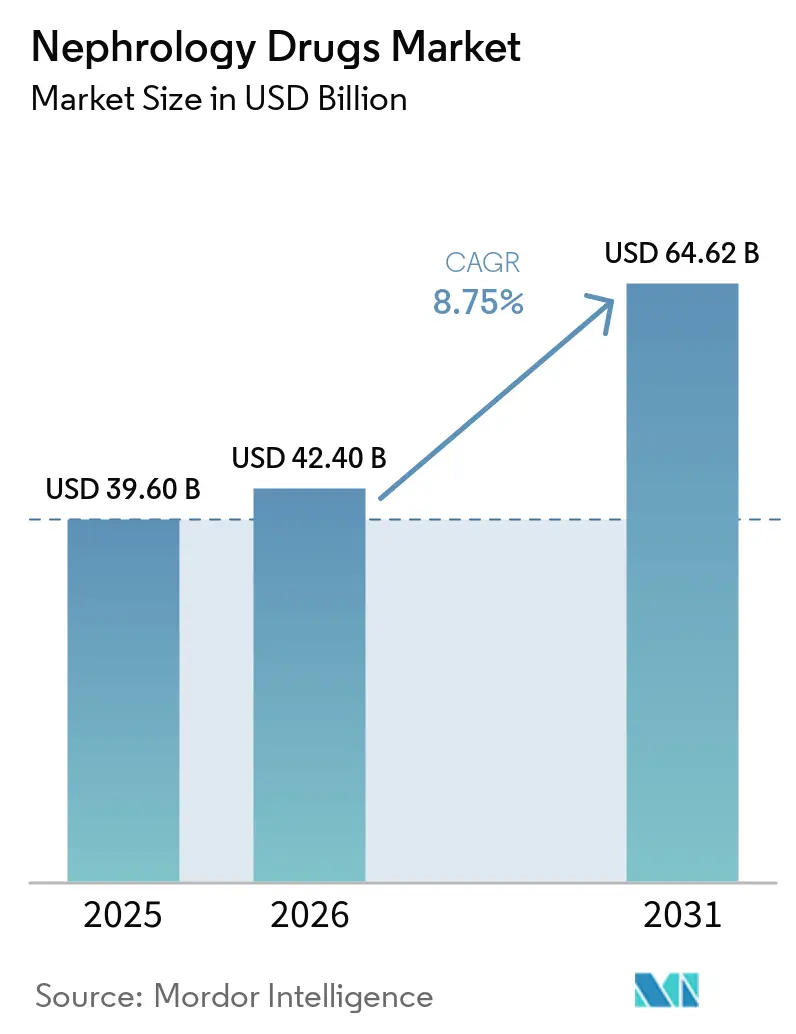
The Nephrology Drugs Market size is expected to increase from USD 39.60 billion in 2025 to USD 42.40 billion in 2026 and reach USD 64.62 billion by 2031, growing at a CAGR of 8.75% over 2026-2031.
The growing chronic kidney disease burden is enlarging the treated population across established and developing health systems. Kidney health has also moved higher on public health agendas, which can strengthen screening and medicine-access programs. Treatment is shifting from disease management with established medicines toward earlier, layered cardiorenal care. Companies are responding by pairing complementary mechanisms and developing therapies for specific renal diseases. Access, reimbursement, and evidence requirements will continue to determine where the nephrology drugs market expands most quickly.
Key Report Takeaways
- By drug class, RAS inhibitors held 31.8% of the nephrology drugs market share in 2025, while SGLT2 inhibitors are forecast to grow at a 10.8% CAGR through 2031.
- By indication, CKD accounted for 38.5% of the nephrology drugs market size in 2025, while diabetic kidney disease is projected to expand at a 10.6% CAGR through 2031.
- By route of administration, oral formulations held 72.4% of the nephrology drugs market share in 2025, while subcutaneous delivery is forecast to grow at a 10.2% CAGR through 2031.
- By distribution channel, retail pharmacies accounted for 42.7% of the nephrology drugs market size in 2025, while specialty pharmacies are projected to grow at a 10.5% CAGR through 2031.
Note: Market size and forecast figures in this report are generated using Mordor Intelligence’s proprietary estimation framework, updated with the latest available data and insights as of January 2026.
Global Nephrology Drugs Market Trends and Insights
Drivers Impact Analysis*
| Driver | (~) % Impact on CAGR Forecast | Geographic Relevance | Impact Timeline |
|---|---|---|---|
| Rising Chronic Kidney Disease and End-Stage Renal Disease Burden | +2.5% | Global | Long term (≥ 4 years) |
| Expansion of Renal-Protective SGLT2 Inhibitor Use Beyond Diabetes | +1.8% | Global, led by North America, EU, APAC | Medium term (2-4 years) |
| Earlier Detection Through eGFR and Albuminuria Screening | +0.9% | Global, strongest in high-income regions | Medium term (2-4 years) |
| Aging, Diabetes, Hypertension and Obesity Comorbidity Load | +1.4% | Global, concentrated in APAC and North America | Long term (≥ 4 years) |
| Increasing Investment in Precision Nephrology and Rare Kidney Disease Therapies | +0.7% | North America and Europe | Medium term (2-4 years) |
| Digitally Enabled Home and Outpatient Medication Management | +0.4% | North America, Europe, and core APAC markets | Short term (≤ 2 years) |
| Source: Mordor Intelligence | |||
Rising Chronic Kidney Disease and End-Stage Renal Disease Burden
Chronic kidney disease[1]Global Burden of Disease Collaborators, “Global, Regional, and National Burden of Chronic Kidney Disease in Adults, 1990-2023, and Its Attributable Risk Factors,” The Lancet affected 788 million adults globally in 2023, compared with 378 million adults in 1990. China had 152 million cases and India had 138 million cases, creating the largest national patient pools. Around 30% of affected people lacked a confirmed diagnosis in clinical records during 2023. Broader detection can therefore increase treatment demand without requiring a rise in disease incidence. CKD caused 1.48 million deaths in 2023 and ranked as the ninth leading global cause of death. Impaired kidney function also contributed to 11.5% of cardiovascular mortality, supporting drug development across related conditions.
Expansion of Renal-Protective SGLT2 Inhibitor Use Beyond Diabetes
KDIGO gave SGLT2 inhibitors a Grade 1A recommendation for adults with CKD who meet its eGFR criteria. The recommendation applies regardless of diabetes status, expanding the relevant prescribing population. Use among people without diabetes has remained beyond the scope of the guideline recommendation. This gap leaves room for prescription growth as primary care, cardiology, and nephrology practices adopt the guidance. The CONFIDENCE trial[2]Finerenone with Empagliflozin in Chronic Kidney Disease and Type 2 Diabetes (CONFIDENCE Trial),” New England Journal of Medicine found that finerenone plus empagliflozin reduced urinary albumin-to-creatinine ratios 29% more than either medicine alone. Combination treatment can raise use of complementary medicines within the nephrology drugs market.
Earlier Detection Through eGFR and Albuminuria Screening
Only 35% of people with diabetes received albuminuria testing in 2023, while testing reached 4% of people with hypertension. These results indicate that many people eligible for drug therapy were not identified through screening. KDIGO recommends using both urine albumin measurement and GFR assessment for CKD evaluation. The approach extends detection responsibilities beyond nephrologists to other clinical settings. Point-of-care creatinine testing can support eGFR estimation during primary care visits. Earlier diagnosis can lengthen the period in which patients receive renal medicines and monitoring.
Aging, Diabetes, Hypertension and Obesity Comorbidity Load
High fasting plasma glucose accounted for 31.9% of CKD disability-adjusted life years in 2023. High systolic blood pressure contributed 24.5%, while high body mass index contributed 23.5%. These risk factors often occur together and can require several medicines for one patient. Current protocols can combine an SGLT2 inhibitor, a nonsteroidal MRA, and a RAS inhibitor. Anemia and bone-mineral medicines may be added as CKD advances. KDIGO recommends sequential treatment adjustments based on eGFR and albuminuria, which supports continuing medicine use as disease severity changes
Restraints Impact Analysis*
| Restraint | (~) % Impact on CAGR Forecast | Geographic Relevance | Impact Timeline |
|---|---|---|---|
| High Cost and Reimbursement Friction for Novel Renal Therapies | -1% | Global, most acute in LMICs and ESRD bundled-payment markets | Medium term (2-4 years) |
| Long and Complex Kidney-Outcome Trial Requirements | -0.8% | Global | Long term (≥ 4 years) |
| Renal-Dose Errors and Medication-Management Complexity | -0.5% | Global | Short term (≤ 2 years) |
| Late Diagnosis, Low Awareness and Uneven Specialist Access | -0.6% | APAC, Middle East and Africa, and South America | Long term (≥ 4 years) |
| Source: Mordor Intelligence | |||
High Cost and Reimbursement Friction for Novel Renal Therapies
Medicare's ESRD Prospective Payment System bundles most dialysis-related medicines into a fixed daily payment. Facilities can face costs above the bundled payment when they use newer treatments. The Transitional Drug Add-on Payment Adjustment provides support for 2 years before payment returns to bundled levels. This change can make prescribing difficult for providers despite an established patient need. A 2025 analysis found that costs restrict novel biological and targeted renal medicines largely to high-income countries. The access gap limits the nephrology drugs market in regions with substantial CKD burdens.
Long and Complex Kidney-Outcome Trial Requirements
Kidney trials generally require sustained eGFR decline, end-stage kidney disease, or renal and cardiovascular death as endpoints. These outcomes need large cohorts and multi-year follow-up before a sponsor can seek approval. Development timelines can consequently extend by 3 to 5 years compared with oncology or cardiovascular programs. Proteinuria reduction has supported surrogate-endpoint approvals for sparsentan and Tarpeyo in IgAN. The route remains unavailable for most CKD indications that require eGFR-based outcomes. KDIGO has started a focused update addressing newer evidence on SGLT2 inhibitors, GLP-1-based therapies, and nonsteroidal MRAs in non-diabetic CKD.
*Our forecasts treat driver/restraint impacts as directional, not additive. The impact forecasts reflect baseline growth, mix effects, and variable interactions.
Segment Analysis
By Drug Class: SGLT2 Inhibitors Reshaping a RAS-Dominated Landscape
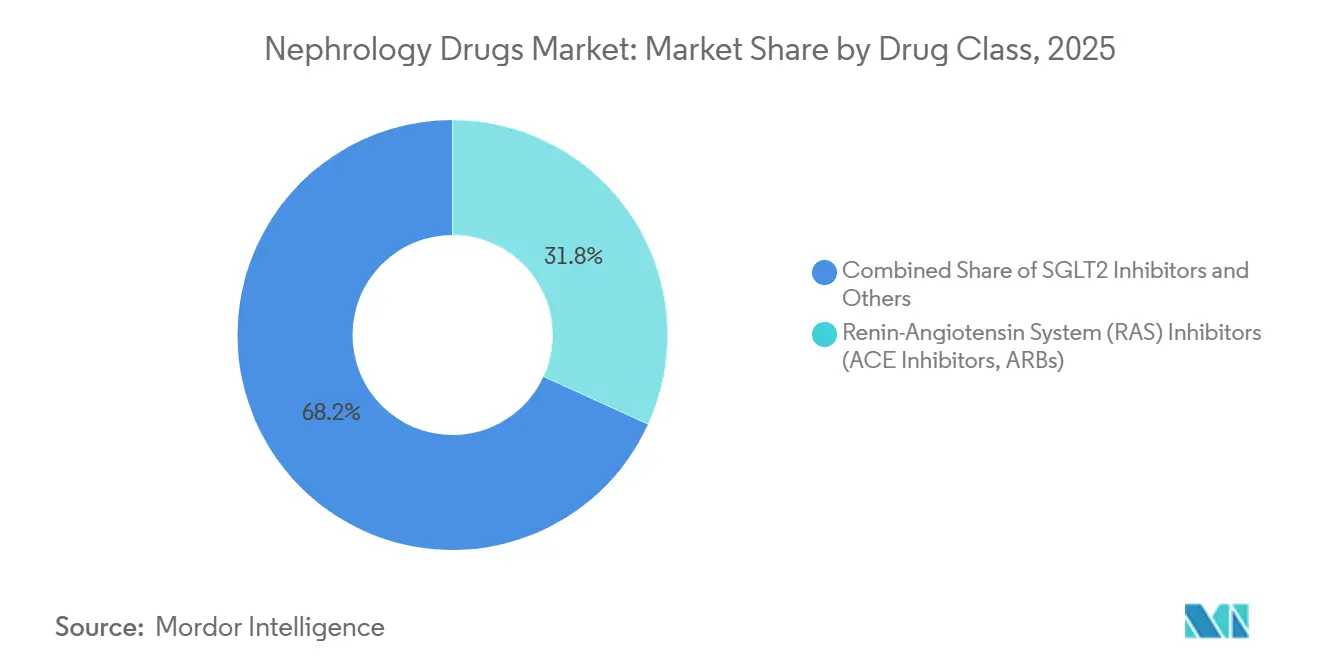
RAS inhibitors held 31.8% of the nephrology drugs market share in 2025. Their position reflected long-standing guideline use and broad generic availability in hypertensive and diabetic nephropathy. SGLT2 inhibitors are projected to grow at a 10.8% CAGR from 2026 to 2031. KDIGO's Grade 1A recommendation supports their use in eligible adults with CKD, regardless of diabetes status. Slower adoption among patients without diabetes leaves a clear route for higher treatment use. The nephrology drugs industry is therefore moving beyond a landscape centered on RAS therapy alone.
The CONFIDENCE trial showed a 29% greater reduction in proteinuria from finerenone and empagliflozin together than from either therapy alone. The result supports multi-class protocols and increases medicine use per treated patient. Anemia therapies include erythropoiesis-stimulating agents and HIF-prolyl hydroxylase inhibitors. Vafseo[3]Akebia Therapeutics, “Akebia Receives FDA Approval of Vafseo Tablets,” Akebia Therapeutics became commercially available in the United States in January 2025 after FDA approval in March 2024. Phosphate binders, potassium binders, immunosuppressants, and complement inhibitors remain important in other renal conditions. Targeted biologics for rare kidney diseases are also entering restricted distribution programs.



By Indication: DKD as the Growth Engine Within a CKD-Led Market
CKD accounted for 38.5% of the nephrology drugs market size in 2025, making it the largest indication. Diabetic kidney disease is forecast to grow at a 10.6% CAGR from 2026 to 2031. High fasting plasma glucose contributed 31.9% of CKD disability-adjusted life years in 2023. This disease burden explains the strong development focus on diabetic kidney disease. Novo Nordisk is extending semaglutide into renal outcome indications within this therapeutic area.
CKD has an established treatment population and well-defined pharmacotherapy approaches across several clinical guidelines. Modest gains in drug penetration can therefore create substantial volume because of this patient base. Glomerular and autoimmune diseases include IgAN, FSGS, primary membranous nephropathy, and lupus nephritis. Treatment is moving from broad immunosuppression toward targeted biologics and BTK-inhibitor approaches. Proteinuria as an FDA-accepted surrogate endpoint in IgAN supported approvals for sparsentan and Tarpeyo. Acute kidney injury remains centered on supportive care, although biomarker-guided early intervention is under development. ESRD and CKD complications remain linked to anemia and mineral-metabolism management through dialysis programs.
By Route of Administration: Subcutaneous Formulations Gaining on Oral's Dominant Position
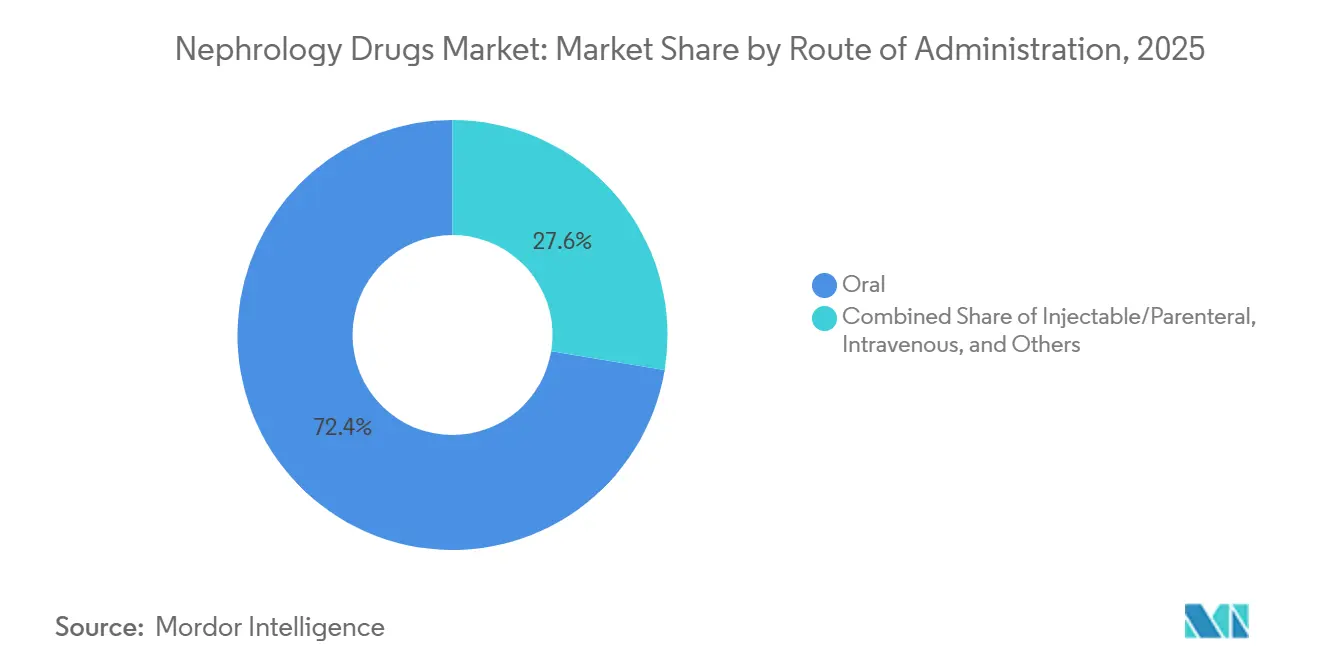
Oral formulations held 72.4% of the nephrology drugs market share in 2025. Once-daily SGLT2 inhibitors and RAS inhibitors support this leading position in outpatient and home settings. Subcutaneous delivery is forecast to grow at a 10.2% CAGR from 2026 to 2031. Its growth is tied to biologics for rare kidney diseases, including complement inhibitors and anti-CD20 agents. Subcutaneous use can offer an outpatient or home alternative to intravenous infusion. The nephrology drugs market also retains a substantial need for oral maintenance treatment.
Intravenous delivery remains standard for ESAs and iron supplementation in many dialysis centers. Center-based workflows create switching barriers even as oral HIF-PH inhibitors become available. Injectable and other parenteral routes serve procedural and acute-care needs, including induction treatment for glomerular disease. Targeted renal medicines can carry premium prices in restricted treatment settings. Subcutaneous administration has become a design priority for chronic therapy in advanced CKD. Accelerated approval requirements for glomerular disease medicines have reinforced this focus in late-stage programs.
By Distribution Channel: Specialty Pharmacies Attracting High-Complexity Renal Therapies
Retail pharmacies held 42.7% of the nephrology drugs market size in 2025. Their position reflects recurring community dispensing of oral CKD maintenance medicines. Specialty pharmacies are forecast to grow at a 10.5% CAGR from 2026 to 2031. Biologic and precision medicines often require clinical monitoring, cold-chain logistics, and patient support. These needs suit restricted distribution programs handled by specialty providers. This channel is becoming more important as the nephrology drugs industry adopts complex renal therapies.
Hospital pharmacies dispense intravenous ESAs, bundled dialysis medicines, and acute nephrology treatments. The ESRD bundled-payment system can place continuing pressure on margins in this setting. Online pharmacies are gaining traction for maintenance CKD treatment and home delivery. Digital adherence tools can reduce dispensing barriers for patients with limited mobility or home dialysis needs. Specialty pharmacy operators must meet URAC accreditation requirements. This baseline shapes entry requirements and differentiation among providers handling high-complexity therapies.
Geography Analysis
North America held 41.3% of the nephrology drugs market share in 2025. The region benefits from established renal specialists, Medicare ESRD coverage, and early uptake of recommended therapies. The United States remains the largest national market because post-approval use can develop quickly within its health care system. Kerendia[4]Bayer AG, “Bayer Annual Report 2025,” generated EUR 829 million, equivalent to USD 936 million, in global sales during 2025. Canada showed similar prescribing patterns, while Mexico is growing with urban obesity and diabetes. Medicare's bundled ESRD payment structure remains an important constraint on novel dialysis medicines.
Europe follows North America, supported by integrated renal care pathways in Germany, the United Kingdom, and France. Guideline adoption has supported SGLT2 inhibitor use across CKD and heart failure care. Asia-Pacific is projected to grow at a 10.9% CAGR from 2026 to 2031. China and India had 152 million and 138 million CKD cases, respectively, in the 2023 dataset. Japan has an established dialysis system and was an early adopter of HIF-PH inhibitors for renal anemia treatment.
Japan recorded 2.5 million diagnosed CKD patients, while South Korea and Australia are expanding screening initiatives. SGLT2 use in non-diabetic CKD has further room to develop across Asia-Pacific. IgA nephropathy drug development also has regional relevance because prevalence is higher than in Western populations. Middle East and Africa, and South America, remain lower-penetration areas constrained by affordability and specialist access. Latin America recorded an age-standardized CKD prevalence of 15.4% in 2023. Lower-cost SGLT2 generics may support a volume-led pathway as exclusivities expire.

Competitive Landscape
The nephrology drugs market is moderately consolidated among major pharmaceutical companies, while specialty renal care remains more fragmented. AstraZeneca, Boehringer Ingelheim, and Bayer anchor cardiorenal treatment through established and newer mechanisms. Bayer reported a 79% year-over-year increase in Kerendia revenue during 2025. This performance followed additional evidence and stronger guideline positioning for finerenone. AstraZeneca is developing baxdrostat and zibotentan alongside its dapagliflozin franchise. Its approach supports combination trials across complementary renal mechanisms.
Farxiga lost U.S. exclusivity in 2026, increasing pressure on branded SGLT2 treatment. AstraZeneca is redirecting focus toward newer assets as generic competition changes the category. Bayer presented full Phase III FIND-CKD results for finerenone in non-diabetic CKD during June 2026. The results supported plans to broaden use across CKD causes. Travere received FDA approval for FILSPARI in FSGS during April 2026. The approval used a proteinuria surrogate-endpoint pathway and strengthened the company's position in rare renal disease.
Calliditas, now part of Asahi Kasei, continues to differentiate Nefecon through biomarker evidence in IgAN. Akebia began a Vafseo post-marketing study with a large dialysis organization in August 2025. The study is intended to build evidence supporting use against ESA biosimilars. Digital dosing optimization and biomarker-guided risk assessment remain areas without a settled commercial standard. Competitive activity in the nephrology drugs market is therefore strongest where targeted therapies address rare diseases and unmet needs.
Nephrology Drugs Industry Leaders
Bayer AG
Novartis AG
Pfizer Inc.
F. Hoffmann-La Roche Ltd
AbbVie Inc.
- *Disclaimer: Major Players sorted in no particular order

Recent Industry Developments
- July 2026: Travere Therapeutics closed an exclusive licensing agreement with Everest Medicines for civorebrutinib (EVER001), an oral covalent reversible BTK inhibitor, paying USD 112.5 million upfront with up to USD 1.03 billion in additional milestone payments. Travere plans to investigate civorebrutinib across primary membranous nephropathy, immune-mediated FSGS, and minimal change disease, positioning it as a potential pipeline-in-a-product across immune-driven glomerular diseases.
- June 2026: Bayer presented the first full results from the Phase III FIND-CKD study evaluating finerenone in non-diabetic CKD at the 63rd ERA Congress in Glasgow. A prespecified subgroup analysis confirmed that finerenone slowed kidney function decline versus placebo in hypertensive nephropathy patients, an underserved population with few current guideline-directed options.
- June 2026: Bayer published INFINITY pooled analysis data in The Lancet at the 63rd ERA Congress, evaluating finerenone across CKD populations with and without type 2 diabetes, reinforcing the drug's cardiorenal protection profile across a broader spectrum of CKD etiologies and supporting label expansion ambitions.
- June 2026: Chugai Pharmaceutical submitted a Japanese New Drug Application for FILSPARI (sparsentan) in IgAN, with Travere Therapeutics remaining eligible for regulatory and sales milestones and tiered royalties. This filing extends sparsentan's geographic reach to Japan, an important early-adopter nephrology market with stringent regulatory standards.


Global Nephrology Drugs Market Report Scope
As per the scope of the report, nephrology drugs are pharmaceutical therapies used for the prevention, management, and treatment of kidney-related disorders, including chronic kidney disease (CKD), diabetic kidney disease (DKD), acute kidney injury (AKI), glomerular diseases, and complications associated with impaired renal function. These drugs help slow disease progression, preserve kidney function, manage disease-related complications such as anemia and electrolyte imbalances, and improve clinical outcomes for patients with acute and chronic renal conditions. Advances in nephrology therapeutics, including targeted and disease-modifying treatments, have enhanced the management of kidney diseases and reduced the risk of progression to end-stage renal disease (ESRD).
The nephrology drugs market is segmented by drug class into Renin-Angiotensin System (RAS) Inhibitors (ACE Inhibitors, ARBs), SGLT2 Inhibitors, Mineralocorticoid Receptor Antagonists & Endothelin Receptor Antagonists, Anemia Management Therapies (ESAs, HIF-PH Inhibitors), and Other Nephrology Drugs (Phosphate Binders, Potassium Binders, Immunosuppressants, Complement Inhibitors, Others); by indication into Chronic Kidney Disease (CKD), Diabetic Kidney Disease (DKD), Glomerular & Autoimmune Kidney Diseases, Acute Kidney Injury (AKI), and CKD-Associated Complications & End-Stage Renal Disease (ESRD); by route of administration into Oral, Injectable/Parenteral, Intravenous, Subcutaneous, and Other Routes; by distribution channel into Hospital Pharmacies, Retail Pharmacies, Online Pharmacies, Specialty Pharmacies, and Other Distribution Channels; and by geography into North America, Europe, Asia-Pacific, Middle East and Africa, and South America. The market report also covers the estimated market sizes and trends for 17 countries across major regions globally. For each segment, the market size and forecast are provided in terms of value (USD).
| Renin-Angiotensin System (RAS) Inhibitors (ACE Inhibitors, ARBs) |
| SGLT2 Inhibitors |
| Mineralocorticoid Receptor Antagonists & Endothelin Receptor Antagonists |
| Anemia Management Therapies (ESAs, HIF-PH Inhibitors) |
| Other Nephrology Drugs (Phosphate Binders, Potassium Binders, Immunosuppressants, Complement Inhibitors, Others) |
| Chronic Kidney Disease (CKD) |
| Diabetic Kidney Disease (DKD) |
| Glomerular & Autoimmune Kidney Diseases |
| Acute Kidney Injury (AKI) |
| CKD-Associated Complications & End-Stage Renal Disease (ESRD) |
| Oral |
| Injectable/Parenteral |
| Intravenous |
| Subcutaneous |
| Other Routes |
| Hospital Pharmacies |
| Retail Pharmacies |
| Online Pharmacies |
| Specialty Pharmacies |
| Other Distribution Channels |
| North America | United States |
| Canada | |
| Mexico | |
| Europe | Germany |
| United Kingdom | |
| France | |
| Italy | |
| Spain | |
| Rest of Europe | |
| Asia-Pacific | China |
| Japan | |
| India | |
| South Korea | |
| Australia | |
| Rest of Asia-Pacific | |
| Middle East and africa | GCC |
| South Africa | |
| Rest of Middle East and Africa | |
| South America | Brazil |
| Argentina | |
| Rest of South America |
| By Drug Class | Renin-Angiotensin System (RAS) Inhibitors (ACE Inhibitors, ARBs) | |
| SGLT2 Inhibitors | ||
| Mineralocorticoid Receptor Antagonists & Endothelin Receptor Antagonists | ||
| Anemia Management Therapies (ESAs, HIF-PH Inhibitors) | ||
| Other Nephrology Drugs (Phosphate Binders, Potassium Binders, Immunosuppressants, Complement Inhibitors, Others) | ||
| By Indication | Chronic Kidney Disease (CKD) | |
| Diabetic Kidney Disease (DKD) | ||
| Glomerular & Autoimmune Kidney Diseases | ||
| Acute Kidney Injury (AKI) | ||
| CKD-Associated Complications & End-Stage Renal Disease (ESRD) | ||
| By Route of Administration | Oral | |
| Injectable/Parenteral | ||
| Intravenous | ||
| Subcutaneous | ||
| Other Routes | ||
| By Distribution Channel | Hospital Pharmacies | |
| Retail Pharmacies | ||
| Online Pharmacies | ||
| Specialty Pharmacies | ||
| Other Distribution Channels | ||
| By Geography | North America | United States |
| Canada | ||
| Mexico | ||
| Europe | Germany | |
| United Kingdom | ||
| France | ||
| Italy | ||
| Spain | ||
| Rest of Europe | ||
| Asia-Pacific | China | |
| Japan | ||
| India | ||
| South Korea | ||
| Australia | ||
| Rest of Asia-Pacific | ||
| Middle East and africa | GCC | |
| South Africa | ||
| Rest of Middle East and Africa | ||
| South America | Brazil | |
| Argentina | ||
| Rest of South America | ||


Key Questions Answered in the Report
What is driving demand for nephrology drugs?
CKD affected 788 million adults globally in 2023, while diagnosis gaps and metabolic risk factors continue to widen treatment demand.
Which nephrology drug class is growing fastest?
SGLT2 inhibitors are forecast to grow at a 10.8% CAGR through 2031, supported by KDIGO guidance for eligible adults with CKD
Why are SGLT2 inhibitors used in chronic kidney disease?
KDIGO recommends SGLT2 inhibitors for eligible adults with CKD regardless of diabetes status, widening their potential role in renal care.
Which region is expanding fastest for renal therapies?
Asia-Pacific is projected to grow at a 10.9% CAGR through 2031, supported by its large CKD burden and improving access infrastructure.
What limits access to newer kidney medicines?
High therapy costs and dialysis payment structures can restrict uptake, particularly in lower-income countries and bundled-payment settings.
Why are specialty pharmacies important in kidney care?
Specialty pharmacies support medicines that require monitoring, cold-chain logistics, restricted distribution, and patient services.
Page last updated on:





