
Neonatal Thermoregulation Market Size and Share
Market Overview
| Study Period | 2020 - 2031 |
|---|---|
| Market Size (2026) | USD 1.37 Billion |
| Market Size (2031) | USD 2.03 Billion |
| Growth Rate (2026 - 2031) | 8.13 % |
| Fastest Growing Market | Asia-Pacific |
| Largest Market | North America |
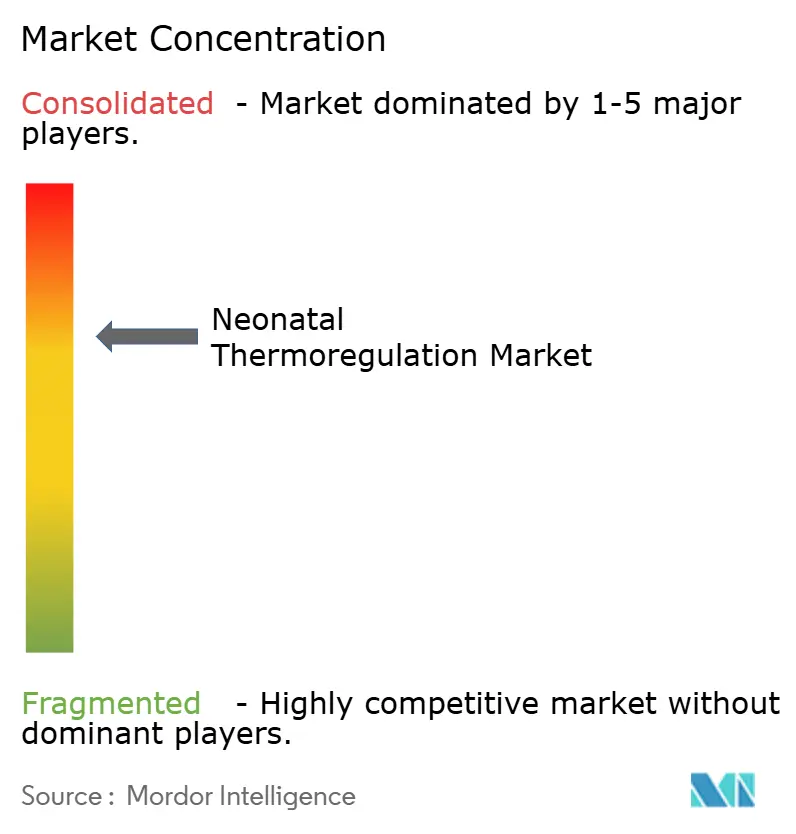
| Market Concentration | Medium |
Major Players *Disclaimer: Major Players sorted in no particular order Image © Mordor Intelligence. Reuse requires attribution under CC BY 4.0. | |
Neonatal Thermoregulation Market Analysis by Mordor Intelligence
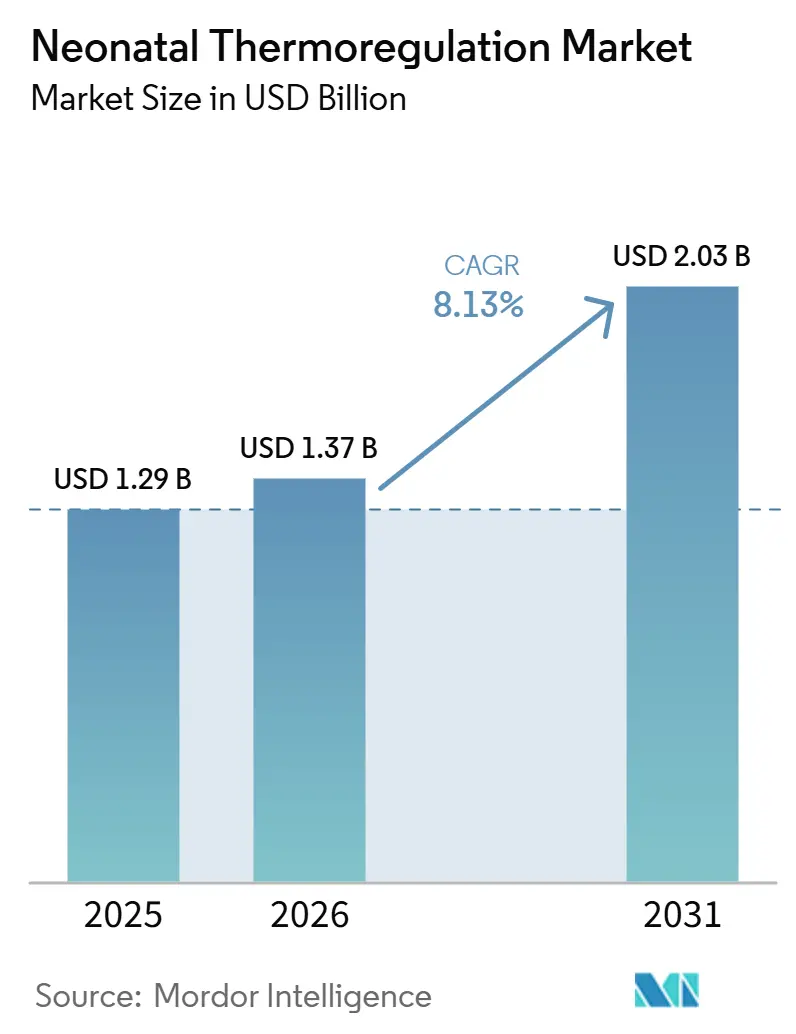
The neonatal thermoregulation market is projected to expand from USD 1.29 billion in 2025 and USD 1.37 billion in 2026 to USD 2.03 billion by 2031, registering a CAGR of 8.13% between 2026 and 2031. The neonatal thermoregulation market is being supported by the continued burden of preterm birth, which keeps demand steady for incubators, radiant warmers, and precision temperature monitoring across care settings worldwide. The neonatal thermoregulation market is also shifting toward servo-controlled and data-connected systems because hospitals are trying to reduce manual temperature variation and tighten clinical workflows. The neonatal thermoregulation market is seeing added support from NICU expansion in emerging economies, where new district and referral facilities are creating first-time equipment demand rather than replacement-only demand. The neonatal thermoregulation market is also benefiting from updated therapeutic hypothermia guidance for neonatal hypoxic-ischemic encephalopathy, which strengthens the case for specialized cooling systems in referral NICUs. At the same time, high capital costs, stricter compliance timelines, and growing demand for software-linked platforms are pushing vendors in the neonatal thermoregulation market to compete on integration, clinical relevance, and lifecycle support rather than on hardware alone.
Key Report Takeaways
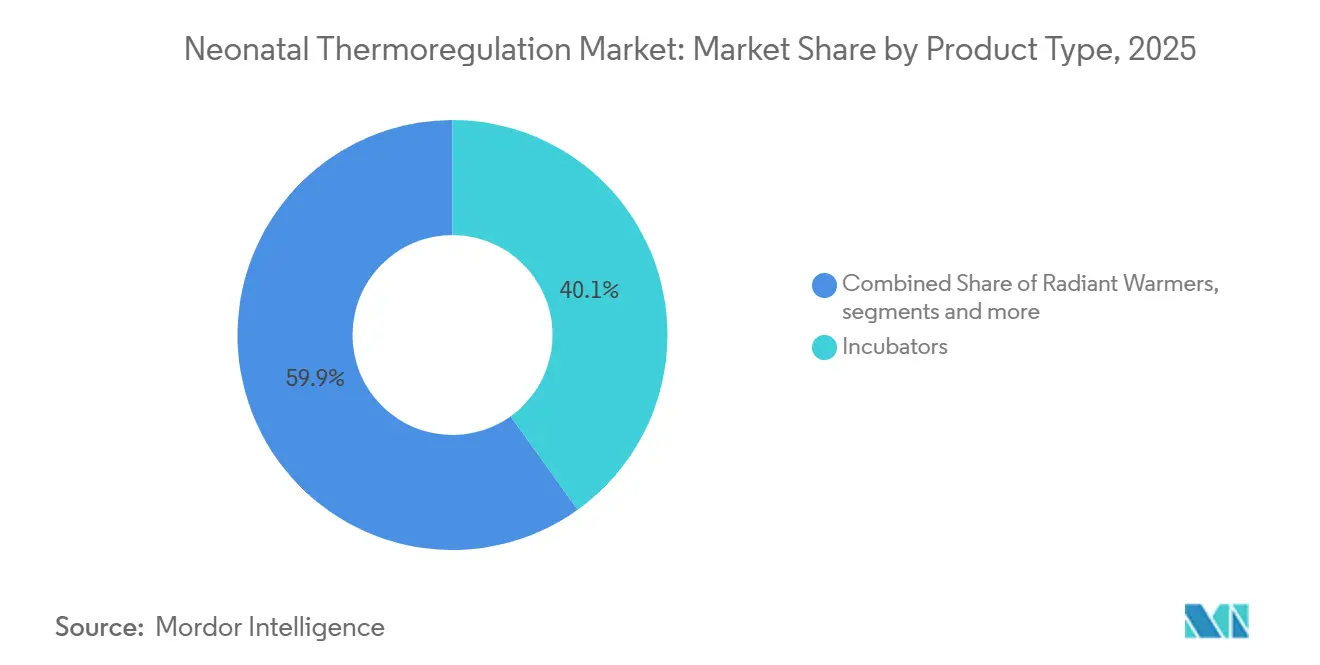
- By product type, incubators led with 40.13% revenue share in 2025, while temperature monitoring devices are forecasted to expand at an 8.24% CAGR through 2031.
- By technology, servo-controlled systems held 39.2% revenue share in 2025, while hybrid closed-loop systems are forecasted to grow at 9.16% CAGR through 2031.
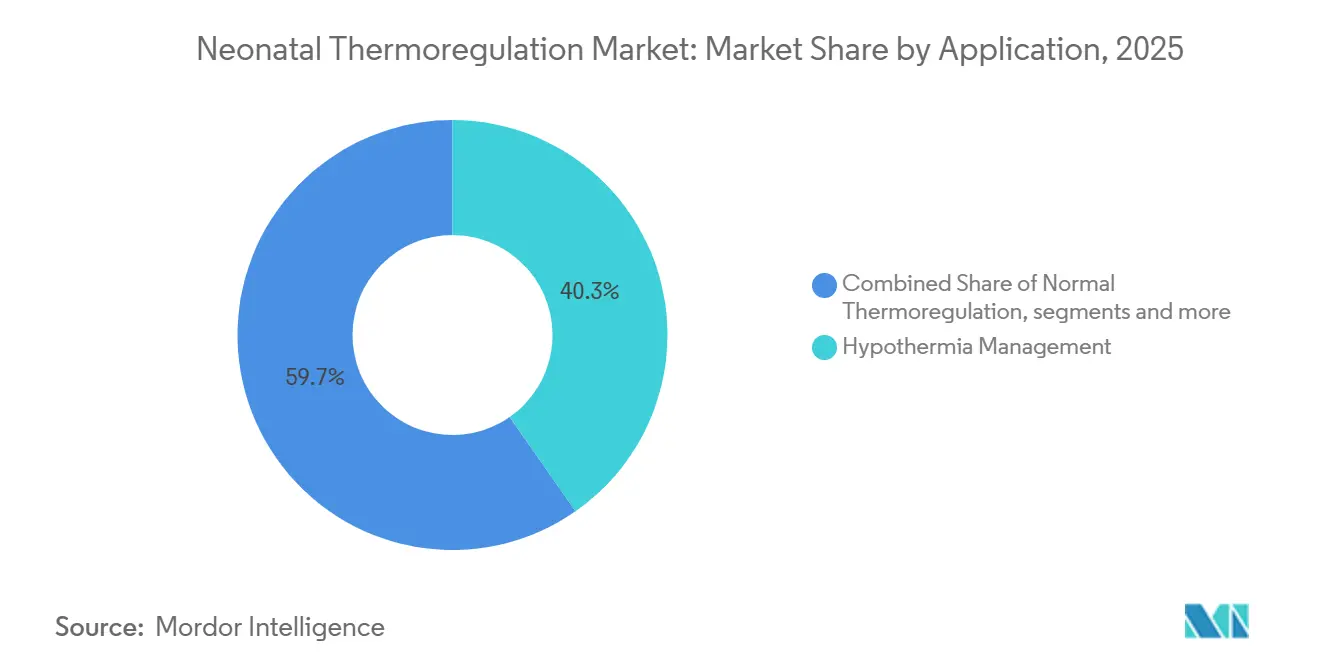
- By application, hypothermia management accounted for 40.33% of revenue in 2025, while neonatal intensive care is projected to advance at 8.54% CAGR through 2031.
- By end-user, hospitals held 44.23% of the neonatal thermoregulation market share in 2025, while neonatal intensive care units recorded the highest projected CAGR at 9.76% through 2031.
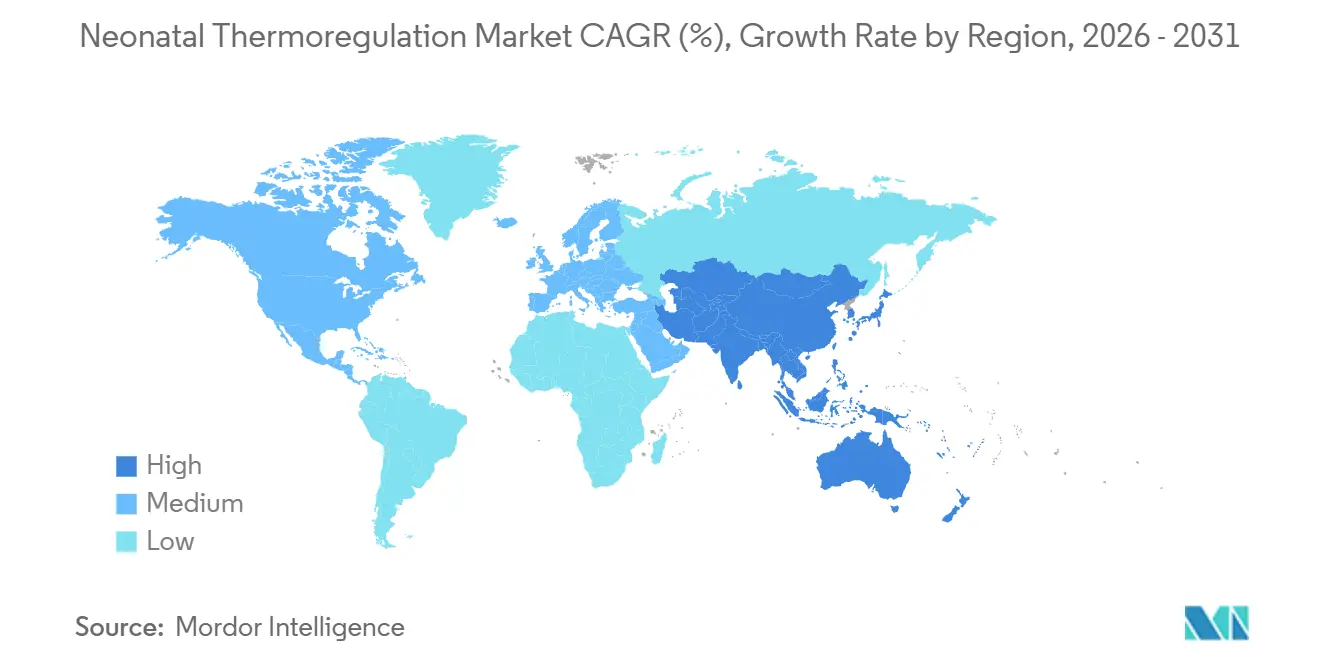
- By geography, North America held 46.36% of revenue in 2025, while Asia-Pacific is forecasted to grow at 10.24% CAGR through 2031.
Note: Market size and forecast figures in this report are generated using Mordor Intelligence’s proprietary estimation framework, updated with the latest available data and insights as of January 2026.
Market Trends and Insights
Drivers Impact Analysis of Neonatal Thermoregulation Market*
| Driver | (~) % Impact on CAGR Forecast | Geographic Relevance | Impact Timeline |
|---|---|---|---|
| Rising Preterm Births and Low Birth Weight | +2.5% | Global, strongest in South Asia and Sub-Saharan Africa | Long term (≥ 4 years) |
| Shift Toward Servo-Controlled Closed-Loop Thermoregulation | +1.8% | North America and Europe, with spillover to the Asia-Pacific | Medium term (2-4 years) |
| NICU Capacity Expansion in High-Burden Health Systems | +1.4% | Asia-Pacific core, with spillover to Middle East, Africa, and South America | Long term (≥ 4 years) |
| Infection Control and Thermal Stability Prioritization in Delivery Rooms | +0.7% | Global, concentrated in North America and Europe | Short term (≤ 2 years) |
| Demand for Portable Warmers in Transport and Referral Networks | +0.6% | North America and Europe, with spillover to Asia-Pacific | Medium term (2-4 years) |
| Microprocessor Supply Risk and Local Sourcing Shifts | +0.3% | Global, with manufacturing concentration in East Asia | Short term (≤ 2 years) |
| Source: Mordor Intelligence | |||
Rising Preterm Births and Low Birth Weight Incidence
Preterm birth remains one of the clearest long-run demand anchors for the neonatal thermoregulation market because temperature stability is essential for infant survival in the first days of care. WHO and UNICEF estimates show that 13.4 million preterm births were recorded annually, which means close to 1 in 10 live births worldwide were premature.[1]World Health Organization, “1 in 10 Babies Worldwide Are Born Early, With Major Impacts on Health and Survival,” WHO News, who.int A 2025 meta-analysis reported neonatal mortality at 8 per 100 preterm births overall and 40 per 100 among extremely preterm infants, which keeps procurement demand for thermal care equipment difficult to defer.[2]“Global Prevalence of Neonatal Mortality in Preterm Infants, A Systematic Review and Meta-Analysis,” BMC Pregnancy and Childbirth, link.springer.com The geographic burden has shifted more heavily toward South Asia and Sub-Saharan Africa, where the installed base for advanced thermoregulation remains underserved and where the neonatal thermoregulation market still has room to widen beyond its traditional high-income base.
Shift Toward Servo-Controlled Closed-Loop Thermoregulation
The neonatal thermoregulation market is moving toward servo-controlled systems because clinical teams want tighter temperature control and less operator-dependent variability in fragile infants. Evidence from 2024 showed the feasibility and safety of servo-controlled thermoregulation in preterm infants at 34 to 35 weeks of gestational age, which broadens the clinical case beyond only the smallest infants.[3]S. H. Kim et al., “Therapeutic Hypothermia for Preterm Infants 34 to 35 Weeks Gestational Age With Neonatal Encephalopathy,” Journal of Perinatology, nature.com This shift matters commercially because hospitals that once relied on lower-cost open-care systems are now under more pressure to upgrade as guidelines and procurement standards become stricter. The 2024 amendments tied to IEC 60601-2-19 and IEC 60601-2-21 also raise the engineering and certification bar for manufacturers, which favors vendors that already operate within structured compliance systems. The neonatal thermoregulation market is therefore shifting from pure hardware competition toward platforms that can manage temperature, support documentation, and connect with hospital information systems.
NICU Capacity Expansion in High-Burden Health Systems
NICU expansion in high-burden health systems is creating a different growth pattern in the neonatal thermoregulation market because a large share of purchasing now comes from new beds and new units rather than replacement cycles alone. Public and private investment in neonatal infrastructure across Asia is widening procurement for entry, mid, and premium device tiers, especially where district hospitals and referral centers are being upgraded. This expands the neonatal thermoregulation market in ways that are more structurally durable than one-time equipment refreshes because every new bed also creates continuing service, maintenance, and replacement demand. As a result, the neonatal thermoregulation market is gaining from both emerging-country capacity build-out and from the need to equip those new spaces with devices that fit higher-acuity clinical protocols.
Demand for Portable Warmers in Transport and Referral Networks
The neonatal thermoregulation market is also gaining from transport and referral use cases because thermal instability during transfer can sharply worsen neonatal outcomes. In January 2026, the US FDA granted 510(k) clearance for the mOm Essential portable neonatal incubator, which validated demand for thermal management outside standard NICU settings. Premium transport devices also command higher prices because they must maintain thermal stability under vibration, power limits, and movement between facilities. The neonatal thermoregulation market is seeing this segment broaden in function because portable warmers are now being used not only for emergency transfer but also to extend the reach of scarce level-III NICUs into rural and lower-resource areas.
Restraints Impact Analysis of Neonatal Thermoregulation Market*
| Restraint | (~) % Impact on CAGR Forecast | Geographic Relevance | Impact Timeline |
|---|---|---|---|
| High Capital Cost of Advanced Incubators and Warmers | -1.2% | Asia-Pacific, Middle East and Africa, and South America | Long term (≥ 4 years) |
| Clinical Workflow Dependence on Skilled Biomedical Maintenance | -0.8% | Global, strongest in Middle East and Africa and South America | Medium term (2-4 years) |
| Regulatory Approval and Recertification Burden | -0.6% | North America and Europe primarily | Medium term (2-4 years) |
| Kangaroo Mother Care and Low-Tech Thermal Care Substitution | -0.4% | South Asia, Sub-Saharan Africa, and other emerging markets | Long term (≥ 4 years) |
| Source: Mordor Intelligence | |||
High Capital Cost of Advanced Incubators and Warmers
The neonatal thermoregulation market still faces a clear volume constraint because advanced closed-loop incubators are expensive for public hospitals in high-burden countries. Government tender ceilings in parts of South Asia and Sub-Saharan Africa often push buyers toward lower-specification systems, which can reduce uptake of devices with integrated monitoring, humidity control, and alarm redundancy. This creates a split structure inside the neonatal thermoregulation market where premium systems are concentrated in level-III urban NICUs while district hospitals continue to depend on simpler devices. The result is margin pressure for global vendors because the fastest-growing demand pools often remain the most price sensitive. Leasing and pay-per-use models are starting to appear in parts of Asia, but adoption is still uneven and not yet broad enough to remove this pricing barrier across the neonatal thermoregulation market.
Kangaroo Mother Care and Low-Tech Thermal Care Substitution for Stable Neonates
Kangaroo mother care creates a real substitution effect in parts of the neonatal thermoregulation market because it is being used more actively for stable preterm and low-birth-weight infants in resource-limited settings. A 2025 WHO clinical practice guide recommended starting kangaroo mother care as early as possible, including before full stabilization, unless severe respiratory or hemodynamic failure is present. A 2025 Lancet trial also confirmed benefit in infants weighing 700 grams to 2,000 grams in sub-Saharan African settings, where hardware access remains constrained. The displacement effect is not uniform because extremely preterm infants below 28 weeks still require closed-loop incubation and cannot rely on low-tech thermal care alone. Even so, the neonatal thermoregulation market can face slower unit uptake in district-hospital channels if vendors assume that all admitted preterm infants will convert into device-hours at the same rate across all care settings.
*Our forecasts treat driver/restraint impacts as directional, not additive. The impact forecasts reflect baseline growth, mix effects, and variable interactions.
Neonatal Thermoregulation Market Segment Analysis
By Product Type:
Incubators Anchor Revenue While Monitoring Devices Gain Fastest GroundIncubators held 40.13% of revenue in 2025, which kept them as the largest product category in the neonatal thermoregulation market because they remain central to enclosed microenvironment management for very low-birth-weight and extremely preterm infants. The 2026 implementation deadlines linked to IEC 60601-2-19 and IEC 60601-2-21 are also pushing parts of the installed base toward compliance-led replacement, which supports ongoing purchasing in the neonatal thermoregulation industry. Radiant warmers remained the second-largest product segment because open-access use in delivery rooms and resuscitation settings still matters where clinicians need thermal support without interrupting procedures.
Temperature monitoring devices are forecasted to grow at 8.24% CAGR through 2031, which makes them the fastest-growing product category in the neonatal thermoregulation market. Heated mattresses and pads are also gaining relevance in transport scenarios where radiant heat may be less practical under battery and mobility constraints. The neonatal thermoregulation market is therefore broadening at the product level from core warming hardware toward sensor-rich platforms that can extend monitoring value across more care environments.



By Technology:
Servo Control Leads While Hybrid Systems Outpace the FieldServo-controlled systems held 39.22% of technology-segment revenue in 2025, which kept them in the lead across the neonatal thermoregulation market because tighter thermal control is increasingly treated as a baseline standard in higher-acuity NICUs. The 2024 compliance amendments also reinforced the position of these systems by raising the performance and safety expectations attached to closed-loop control. Air-based systems still remain common in lower-acuity and budget-constrained facilities because their simpler design keeps acquisition costs lower.
Hybrid closed-loop systems are forecasted to grow at 9.16% CAGR through 2031, which gives them the fastest expansion path in the neonatal thermoregulation market. Hospitals are increasingly specifying platforms that combine radiant, convective, and conductive heat sources under a single feedback architecture because that reduces manual intervention and smooths thermal control. The neonatal thermoregulation market is therefore shifting technologically toward integrated systems that can support both routine warming and specialized cooling without forcing hospitals into separate workflows.
By Application:
Hypothermia Management Holds the Lead While NICU Care Expands FastestHypothermia management accounted for 40.33% of revenue in 2025, which made it the largest application in the neonatal thermoregulation market because it covers both prevention of cold stress in preterm infants and controlled cooling in infants with hypoxic-ischemic encephalopathy. This segment stays broad because it includes everyday bedside thermal maintenance as well as high-acuity therapeutic use in referral centers. The February 2026 AAP clinical update strengthened this application by reaffirming cooling to 33.5°C within 6 hours of birth for eligible term infants with moderate-to-severe encephalopathy.
Neonatal intensive care is forecasted to grow at 8.54% CAGR through 2031, which makes it the fastest-growing application in the neonatal thermoregulation market size among application categories. The rise reflects higher NICU admissions for extremely preterm infants and a shift toward more specialized thermal pathways that depend on servo-control, telemetry, and transport continuity. Normal thermoregulation still represents the broadest application by unit volume because general nurseries and standard hospital settings continue to use large installed bases of basic incubators and warmers.
By End-User:
Hospitals Dominate Revenue While NICUs Post the Fastest GrowthHospitals accounted for 44.23% of end-user revenue in 2025, which gave them the lead in the neonatal thermoregulation market because broad acute-care systems can purchase multiple device types through large tenders. Specialty clinics remain smaller, but they are relevant as step-down sites for stable preterm infants moving out of acute NICU care. The neonatal thermoregulation market share held by hospitals also reflects the fact that most global installed capacity for advanced thermal devices still sits inside hospital-based neonatal care networks.
Neonatal intensive care units are forecasted to grow at 9.76% CAGR through 2031, which makes them the fastest-growing end-user group in the neonatal thermoregulation market. Homecare remains the smallest end-user category, but Masimo’s Stork system shows there is a viable path for thermal monitoring beyond discharge in carefully selected cases. Infection control expectations are also influencing procurement in NICU environments, which gives an edge to vendors that can document surface compatibility and cleaning support under stricter bedside protocols.
Geography Analysis
North America and Europe Neonatal Thermoregulation Market
North America accounted for 46.36% of the neonatal thermoregulation market share in 2025, which kept it as the largest regional contributor because the United States has a dense tertiary NICU network, stronger reimbursement support, and active replacement cycles. Canada adds volume through provincial purchasing systems, while Mexico supports more mid-tier demand at lower average selling prices. Europe remains an important region for the neonatal thermoregulation market because established NICU networks across Germany, the United Kingdom, France, Italy, and Spain continue to buy devices that can meet tighter evidence and compliance expectations. The 2026 implementation deadlines around IEC amendments are also creating a compliance-led upgrade cycle across parts of Europe beyond the normal replacement pattern.
APAC Neonatal Thermoregulation Market
Asia-Pacific is forecasted to grow at 10.24% CAGR through 2031, which makes it the fastest-expanding region in the neonatal thermoregulation market. The main support comes from NICU expansion in India, provincial upgrades in China, and strong demand in Japan for higher-specification neonatal systems. The region also has more room for first-time procurement because large parts of the installed base remain below the sophistication seen in North America and Western Europe. Japan has already shown how fast adoption can move when products match workflow needs closely, especially in transport and referral use cases. The neonatal thermoregulation market in the rest of Asia-Pacific is also being widened by hospital investment in countries such as Vietnam, Indonesia, and Thailand, where budget limits still favor mid-tier platforms.
MEA and South America Neonatal Thermoregulation Market
The Middle East and Africa present a split picture in the neonatal thermoregulation market because Gulf countries are investing in premium NICU infrastructure while much of Sub-Saharan Africa remains constrained by affordability and donor-linked purchasing. This leaves a strong clinical need in place, but it slows conversion into premium device demand where preterm birth burdens are high, and procurement budgets are thin. South America is led by Brazil and Argentina, with Brazil benefiting from local manufacturing that supports a cost-competitive regional supply. The rest of South America, including Colombia and Chile, offers a smaller but improving opportunity as urban hospitals continue to invest in neonatal care capacity.

Competitive Landscape
The neonatal thermoregulation market remains moderately consolidated in the premium tier, where GE HealthCare, Drägerwerk AG & Co. KGaA, and Koninklijke Philips N.V. hold strong installed positions across North American and European NICUs. Their advantage comes from long regulatory histories, established clinician relationships, and service contracts that make replacement decisions harder to reverse once a platform is embedded. That said, the neonatal thermoregulation market is less concentrated in lower-cost and emerging-country segments, where Indian and Chinese manufacturers create pricing pressure and keep the broad market structure more mixed. This split means premium bedside positions are harder to dislodge, while value-oriented tenders remain open to more regional competition. It also means vendors that cannot connect hardware performance with software, workflow, and service support are more exposed to commoditization in the neonatal thermoregulation market.
The neonatal thermoregulation market is also being shaped by visible strategic moves from specialist and adjacent players. In June 2026, Inspiration Healthcare entered a framework agreement to transfer infusion product distribution rights to Micrel Medical Devices SA, which narrowed its focus toward neonatal medtech after strong SLE neonatal ventilation growth in fiscal year 2026. In March 2025, Dräger expanded its neonatal care portfolio with BiliPredics, showing that software-linked clinical tools are becoming a more important part of competitive positioning around core thermal care hardware.
White-space opportunities in the neonatal thermoregulation market are still concentrated in low-cost compliant incubators, transport-focused warmers, and post-discharge monitoring systems. Phoenix Medical Systems, Neonatech Medical Devices, and Ningbo David Medical Device Co. are active where procurement depends heavily on local approvals, service reach, and price discipline. The neonatal thermoregulation market therefore rewards two distinct strategies: one built on integrated premium ecosystems and another focused on localized affordability. Companies that can bridge both ends with tiered product lines, clean compliance records, and practical service support are likely to hold the strongest position as the neonatal thermoregulation market continues to expand.
Neonatal Thermoregulation Industry Leaders
GE HealthCare
Drägerwerk AG & Co. KGaA
Koninklijke Philips N.V.
Atom Medical Corporation
Natus Medical Incorporated
- *Disclaimer: Major Players sorted in no particular order
Neonatal Thermoregulation Market Companies Covered in this Report
- Atom Medical
- Bistos Co., Ltd.
- Cobams S.r.l.
- Dragerwerk
- Fanem Ltda.
- Fisher & Paykel Healthcare
- GE Healthcare
- Ginevri Srl
- Inspiration Healthcare Group plc
- International Biomedical, Ltd.
- Koninklijke Philips
- Masimo
- Medicor Elektronika Zrt.
- Medtronic
- Natus Medical
- Neonatech Medical Devices Pvt. Ltd.
- Ningbo David Medical Device
- Phoenix Medical Systems
- Pluss Advanced Technologies Pvt. Ltd.
- Vyaire Medical

Recent Industry Developments in Neonatal Thermoregulation Market
- June 2026: Inspiration Healthcare Group plc entered a framework agreement with Micrel Medical Devices SA to transfer infusion product distribution rights to Micrel by January 2027, reorienting the group as a focused neonatal medtech business centered on SLE neonatal ventilation and related neonatal technologies. The strategic realignment followed SLE neonatal ventilation revenue increasing 56% in fiscal year 2026, positioning specialized neonatal equipment as the group's primary growth engine.
- February 2026: The American Academy of Pediatrics published an updated clinical report on therapeutic hypothermia for neonatal hypoxic-ischemic encephalopathy in the February 2026 issue of Pediatrics, recommending cooling to 33.5°C within 6 hours of birth for infants born at ≥36 weeks' gestation with moderate-to-severe HIE. The updated protocol strengthens the clinical mandate for specialized whole-body cooling equipment, raising procurement urgency for therapeutic hypothermia devices in referral NICUs and transport networks.
- January 2026: The US FDA granted 510(k) clearance for the mOm Essential portable neonatal incubator, designed to enable thermoregulation of premature infants outside conventional NICU settings and to support mother-infant co-location in diverse hospital environments. The clearance validated a new care-model segment for portable thermoregulation technology in markets where NICU bed availability is constrained.


Global Neonatal Thermoregulation Market Report Scope
According to the report’s scope, the neonatal thermoregulation market comprises devices, systems, and accessories used to maintain and monitor the body temperature of newborns, particularly preterm and low-birth-weight infants. The market includes infant warmers, incubators, cooling systems, thermal mattresses, and temperature monitoring solutions designed to prevent hypothermia or hyperthermia, improve neonatal outcomes, and support care in neonatal intensive care units (NICUs) and delivery settings.
The neonatal thermoregulation market is segmented into product type, technology, application, end-user, and geography. By product type, the market is segmented into incubators, radiant warmers, heated mattresses and pads, temperature monitoring devices, thermal blankets and mattresses, infant warmers, and other product types. By technology, the market is segmented into servo-controlled systems, air-based systems, water-based systems, and hybrid closed-loop systems. By application, the market is segmented into hypothermia management, normal thermoregulation, hyperthermia management, neonatal intensive care, and postnatal care. By end-user, the market is segmented into hospitals, neonatal intensive care units, specialty clinics, and homecare settings. By geography, the market is segmented into North America, Europe, Asia-Pacific, the Middle East and Africa, and South America. The report also covers the estimated market sizes and trends for 17 countries across major regions globally. The report offers values (USD) for all the above segments.
| Incubators |
| Radiant Warmers |
| Heated Mattresses and Pads |
| Temperature Monitoring Devices |
| Thermal Blankets and Mattresses |
| Infant Warmers |
| Other Product Types |
| Servo-Controlled Systems |
| Air-Based Systems |
| Water-Based Systems |
| Hybrid Closed-Loop Systems |
| Hypothermia Management |
| Normal Thermoregulation |
| Hyperthermia Management |
| Neonatal Intensive Care |
| Postnatal Care |
| Hospitals |
| Neonatal Intensive Care Units |
| Specialty Clinics |
| Homecare Settings |
| North America | United States |
| Canada | |
| Mexico | |
| Europe | Germany |
| United Kingdom | |
| France | |
| Italy | |
| Spain | |
| Rest of Europe | |
| Asia-Pacific | China |
| Japan | |
| India | |
| Australia | |
| South Korea | |
| Rest of Asia-Pacific | |
| Middle East and Africa | GCC |
| South Africa | |
| Rest of Middle East and Africa | |
| South America | Brazil |
| Argentina | |
| Rest of South America |
| By Product Type | Incubators | |
| Radiant Warmers | ||
| Heated Mattresses and Pads | ||
| Temperature Monitoring Devices | ||
| Thermal Blankets and Mattresses | ||
| Infant Warmers | ||
| Other Product Types | ||
| By Technology | Servo-Controlled Systems | |
| Air-Based Systems | ||
| Water-Based Systems | ||
| Hybrid Closed-Loop Systems | ||
| By Application | Hypothermia Management | |
| Normal Thermoregulation | ||
| Hyperthermia Management | ||
| Neonatal Intensive Care | ||
| Postnatal Care | ||
| By End-User | Hospitals | |
| Neonatal Intensive Care Units | ||
| Specialty Clinics | ||
| Homecare Settings | ||
| By Geography | North America | United States |
| Canada | ||
| Mexico | ||
| Europe | Germany | |
| United Kingdom | ||
| France | ||
| Italy | ||
| Spain | ||
| Rest of Europe | ||
| Asia-Pacific | China | |
| Japan | ||
| India | ||
| Australia | ||
| South Korea | ||
| Rest of Asia-Pacific | ||
| Middle East and Africa | GCC | |
| South Africa | ||
| Rest of Middle East and Africa | ||
| South America | Brazil | |
| Argentina | ||
| Rest of South America | ||


Key Questions Answered in the Report
What is the projected value of the neonatal thermoregulation market by 2031?
The market is forecasted to reach USD 2.03 billion by 2031, rising from USD 1.29 billion in 2025 to USD 1.37 billion in 2026 at an 8.13% CAGR.
Which product category leads current revenue?
Incubators led with 40.13% revenue share in 2025 because they remain essential for enclosed thermal management in high-acuity neonatal care.
Which technology is growing the fastest through 2031?
Hybrid closed-loop systems are projected to grow at 9.16% CAGR as hospitals move toward unified and more automated thermal control.
Which region is expanding the fastest?
Asia-Pacific is expected to post the highest growth at 10.24% CAGR through 2031 due to NICU expansion and rising first-time equipment purchases.
Page last updated on:


 Your data is secure and never sold or shared.


