
Myocardial Ischemia Market Size and Share
Market Overview
| Study Period | 2020 - 2031 |
|---|---|
| Market Size (2026) | USD 5.13 Billion |
| Market Size (2031) | USD 6.48 Billion |
| Growth Rate (2026 - 2031) | 4.76% CAGR |
| Fastest Growing Market | Asia-Pacific |
| Largest Market | North America |
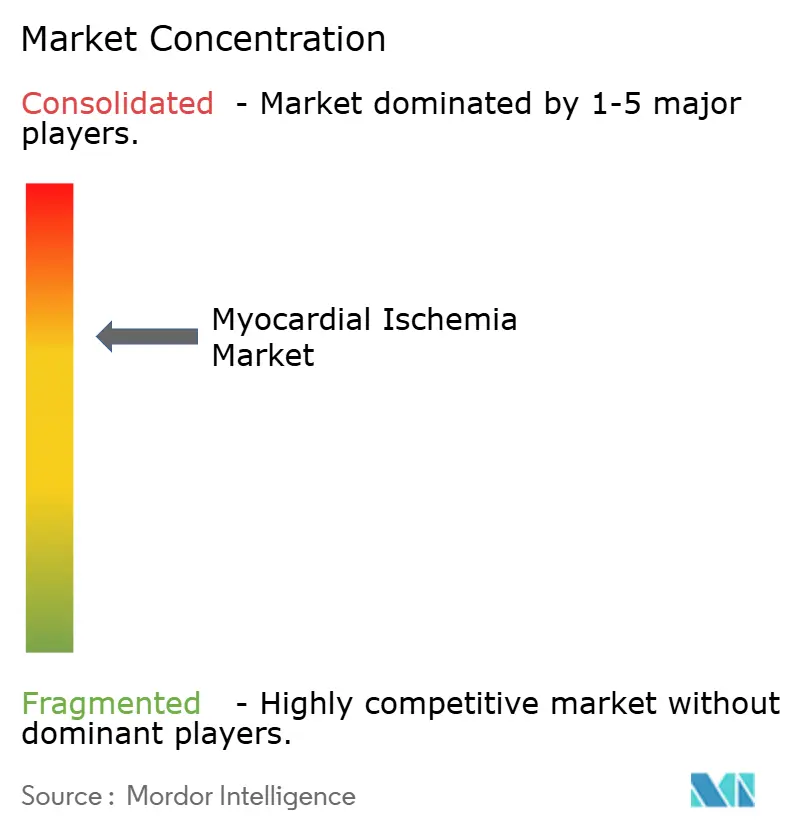
| Market Concentration | Medium |
Major Players *Disclaimer: Major Players sorted in no particular order Image © Mordor Intelligence. Reuse requires attribution under CC BY 4.0. | |
Myocardial Ischemia Market Analysis by Mordor Intelligence
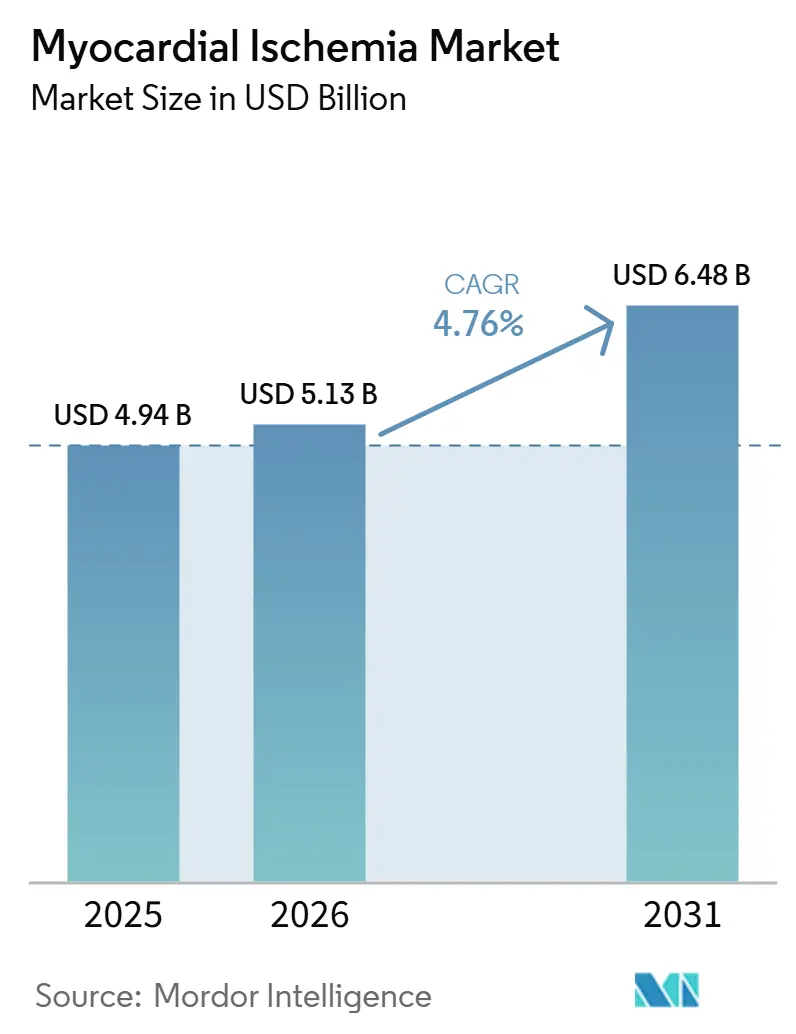
The myocardial ischemia market is projected to expand from USD 4.94 billion in 2025 and USD 5.13 billion in 2026 to USD 6.48 billion by 2031, registering a CAGR of 4.76% between 2026 and 2031. The myocardial ischemia market is being supported by the continuing rise in cardiovascular disease burden, with a 2025 modeling study projecting total cardiovascular deaths to increase from 20.5 million in 2025 to 35.6 million by 2050. The myocardial ischemia market is also benefiting from stronger clinical support for early and more precise diagnosis, as the 2025 ACC and AHA guideline reinforced individualized risk stratification and functional testing in acute coronary syndrome care. Treatment pathways are also becoming more efficient as drug-eluting stent-based PCI and intracoronary imaging extend the role of less invasive cardiac care across a wider patient pool. Competition in the myocardial ischemia market remains structurally complex because companies operate across both interventional devices and long-term pharmacotherapy, which increases the value of integrated care portfolios. Growth still faces pressure from procedure affordability and uneven access to advanced imaging and cath lab capacity, especially outside higher-income health systems.
Key Report Takeaways
- By type, symptomatic myocardial ischemia led with a 52.22% share in 2025, while asymptomatic myocardial ischemia is projected to grow at a 5.42% CAGR through 2031.
- By management, diagnosis held a 57.62% share in 2025, while treatment is projected to expand at a 6.17% CAGR through 2031
- By end-user, hospitals and clinics held a 44.24% share in 2025, while cardiac specialty clinics are projected to advance at a 6.76% CAGR through 2031.
- By geography, North America held a 47.35% share in 2025, while Asia-Pacific is projected to expand at a 7.13% CAGR through 2031.
Note: Market size and forecast figures in this report are generated using Mordor Intelligence’s proprietary estimation framework, updated with the latest available data and insights as of January 2026.
Global Myocardial Ischemia Market Trends and Insights
Drivers Impact Analysis*
| Driver | (~) % Impact on CAGR Forecast | Geographic Relevance | Impact Timeline |
|---|---|---|---|
| Rising Global Burden of Cardiovascular Disease | +1.3% | Global | Long term (≥ 4 years) |
| Expanding Early Diagnosis and Screening Adoption | +0.9% | North America and Europe, spill-over to APAC | Medium term (2-4 years) |
| Shift Toward Minimally Invasive Revascularization and Precision Imaging | +0.7% | North America, Europe, APAC core | Medium term (2-4 years) |
| Wearable Monitoring and Remote Cardiac Triage Adoption | +0.5% | North America and Europe, early gains in APAC | Short term (≤ 2 years) |
| Underdiagnosis of Silent Ischemia in High-Risk Patients | +0.4% | Global, concentrated in Asia and MENA high-risk diabetic cohorts | Long term (≥ 4 years) |
| Source: Mordor Intelligence | |||
Rising Global Burden of Cardiovascular Disease
The myocardial ischemia market continues to draw support from the persistent global burden of ischemic heart disease. A 2025 modeling study published in JACC projected that total cardiovascular disease deaths will rise from 20.5 million in 2025 to 35.6 million by 2050.[1]Chong B et al., “Global Burden of Cardiovascular Diseases, Projections From 2025 to 2050,” JACC via PubMed, pubmed.ncbi.nlm.nih.gov A separate 2025 study in BMC Cardiovascular Disorders also confirmed that ischemic heart disease remains the leading cause of disability adjusted life years worldwide.[2]BMC Cardiovascular Disorders, “Global, Regional, and National Burden of Cardiovascular Diseases and Risk Factors, 1990-2021,” BMC Cardiovascular Disorders, link.springer.com This keeps the myocardial ischemia market tied to structural patient need rather than short-cycle fluctuations in procedure volumes. Aging populations, higher body mass index, and persistent cardiometabolic risk are widening the treatment pool across both developed and developing health systems. That demand supports steady use of imaging, medication, and revascularization across the myocardial ischemia market.
Expanding Early Diagnosis and Screening Adoption
The myocardial ischemia market is also being lifted by the wider acceptance of earlier diagnosis in at-risk patients. The 2025 ACC, AHA, ACEP, NAEMSP, and SCAI guideline reinforced individualized risk stratification and precision diagnostic testing in acute coronary syndrome management.[3]Sandeep V. Rao et al., “2025 ACC/AHA/ACEP/NAEMSP/SCAI Guideline for the Management of Patients With Acute Coronary Syndromes,” Circulation, ahajournals.org That clinical direction supports higher use of ECG, echocardiography, stress testing, coronary CT, and functional imaging in routine care pathways. The economic case for this shift is also improving, as the PRECISE randomized trial showed that a precision diagnostic pathway for stable chest pain reduced mean diagnostic costs at 45 days by USD 249 per patient versus usual testing. This makes wider screening easier to defend in value-based care systems where cost control matters as much as clinical yield. It also strengthens the diagnostic side of the myocardial ischemia market because more patients are being identified before severe events occur.
Shift Toward Minimally Invasive Revascularization and Precision Imaging
A further source of support for the myocardial ischemia market is the shift toward less invasive treatment and more precise imaging guidance. A 2026 review in Frontiers in Medicine stated that PCI with drug-eluting stent implantation has become the preferred revascularization strategy for most patients with acute coronary syndromes, with better outcomes supported by intracoronary imaging such as IVUS and OCT. A 2025 PMC analysis also showed that shifting coronary angiography and PCI into ambulatory surgery centers can generate savings for Medicare and beneficiaries, which supports broader site-of-care migration. This trend strengthens the myocardial ischemia market by widening the range of settings where intervention can take place.
Wearable Monitoring and Remote Cardiac Triage Adoption
The myocardial ischemia market is also seeing near-term gains from wearable monitoring and remote cardiac triage tools. A 2025 review in Sensors noted that wearable ECG monitors and implantable loop recorders can capture transient ST-segment changes linked to silent ischemic episodes that would otherwise go undetected. This matters because a 2025 cross-sectional study found objective evidence of silent myocardial ischemia in 37.7% of asymptomatic patients with Type 2 diabetes. Remote monitoring, therefore, improves case finding in high-risk groups that do not present with typical symptoms. It also gives the myocardial ischemia market a stronger digital layer that feeds both diagnosis and long-term treatment follow-up.
Restraints Impact Analysis*
| Restraint | (~) % Impact on CAGR Forecast | Geographic Relevance | Impact Timeline |
|---|---|---|---|
| High Cost of Diagnostic and Interventional Care Pathways | -0.6% | Global, most acute in APAC, MEA, and South America | Long term (≥ 4 years) |
| Adverse Events and Long-Term Medication Non-Adherence | -0.4% | Global | Medium term (2-4 years) |
| Limited Access to Cath Labs and Advanced Imaging in Low-Resource Settings | -0.3% | MEA, South America, rural APAC | Long term (≥ 4 years) |
| Source: Mordor Intelligence | |||
High Cost of Diagnostic and Interventional Care Pathways
The myocardial ischemia market still faces a clear affordability barrier in diagnosis and intervention. Boston Scientific’s 2025 reimbursement guide showed Medicare national average payments for PCI with an intraluminal device ranging from USD 12,911 to USD 30,397, depending on complication status. Limited access to cath labs and advanced imaging in lower resource settings adds another layer of delay, especially outside large urban hospitals. The result is not a lack of need, but slower penetration of the myocardial ischemia market across parts of Asia-Pacific, the Middle East, Africa, and South America.
Adverse Events and Long-Term Medication Non-Adherence
Long-term medication persistence remains another restraint on the myocardial ischemia market. A 2025 Swedish cohort study found that 91% to 92% of post-myocardial infarction patients were still using secondary preventive therapy at 1 year, but only 74% to 79% remained on treatment at 12 years DOI.ORG. The main losses came from discontinuation of statins, beta-blockers, aspirin, and RAAS inhibitors, which weakens refill stability in chronic care. It limits the full revenue potential of the myocardial ischemia market in long-cycle medication therapy.
*Our forecasts treat driver/restraint impacts as directional, not additive. The impact forecasts reflect baseline growth, mix effects, and variable interactions.
Segment Analysis
By Type: Asymptomatic Detection Reshaping the Disease Map
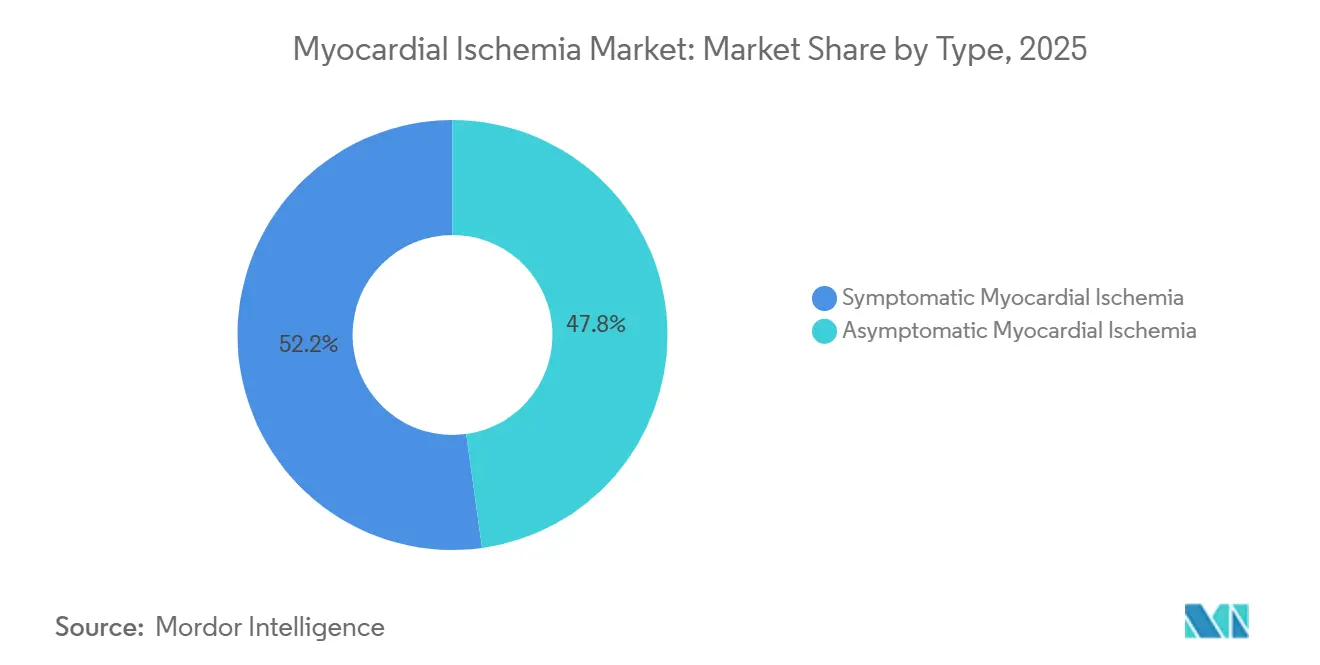
Symptomatic myocardial ischemia held 52.22% of the myocardial ischemia market share in 2025, reflecting the large volume of patients who entered care through chest pain, stress testing, angiography, and standard intervention pathways. The asymptomatic segment, however, is forecasted to grow at a 5.24% CAGR through 2031, which makes it the fastest-moving part of the myocardial ischemia market by type. The shift is being driven by wider screening in high-risk groups such as people with diabetes and chronic kidney disease, where silent disease is common.
Wearable monitoring is now the main structural force behind this change in the myocardial ischemia market. Guidance remains selective rather than universal, which keeps the focus on the highest risk groups and reduces the chance of broad overtesting. A 2024 review in Biomedicines showed that silent myocardial ischemia continues to pose a meaningful clinical challenge, especially when symptom presentation is weak or absent. That balance keeps the type mix of the myocardial ischemia market moving toward more targeted detection rather than broad population screening.


By Management: Treatment Momentum Drives Long-Term Mix Shift
Diagnosis held 57.62% of the management segment in 2025, which made it the largest operating layer in the myocardial ischemia market. ECG, echocardiography, stress testing, coronary angiography, and CT or MRI still form the gateway into nearly every care pathway. This part of the market benefits from guideline support, high procedure volumes, and a lower unit cost than complex interventions. The diagnostic side is also improving in technical quality as newer imaging tools take on a wider role in coronary assessment.
Treatment, while smaller in current share, shows the fastest projected myocardial ischemia market expansion, with management expected at 6.17% CAGR through 2031. This reflects continued demand for PCI and for drug therapies that reduce future cardiovascular events in high-risk patients. Better imaging guidance also improves treatment execution by helping clinicians plan and optimize intervention with greater confidence. This keeps the myocardial ischemia market moving toward a longer-term mix where therapy captures a larger share of value creation beyond the initial diagnosis.
By End-User: Specialty Clinics Emerging as the Fastest-Growing Site of Care
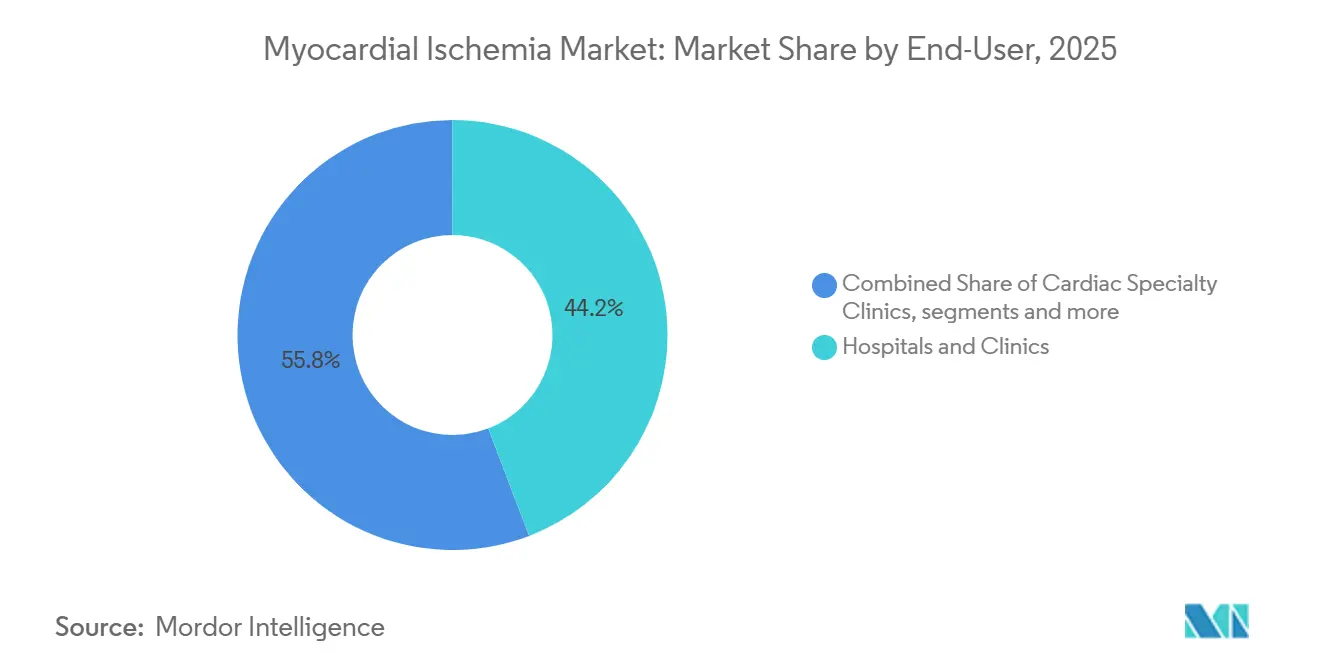
Hospitals and clinics held a 44.24% share of the end-user segment in 2025, which kept them at the center of the myocardial ischemia market. They remained the primary setting for acute diagnosis, complex PCI, coronary artery bypass grafting, and initiation of intensive pharmacotherapy. Their scale also reflects the need for multidisciplinary care when cases are unstable or clinically complex.
Cardiac specialty clinics are forecasted to grow at a 6.76% CAGR through 2031, which is the highest segment-level growth rate across the myocardial ischemia market. Their rise reflects a broader move toward focused cardiovascular care in lower-cost settings with tighter workflow control. As procedure pathways become more standardized and imaging guidance improves, these focused sites are likely to capture a larger portion of routine interventional volume. This shift does not remove hospitals from the care pathway, but it does change where a growing share of the myocardial ischemia market is delivered.

Geography Analysis
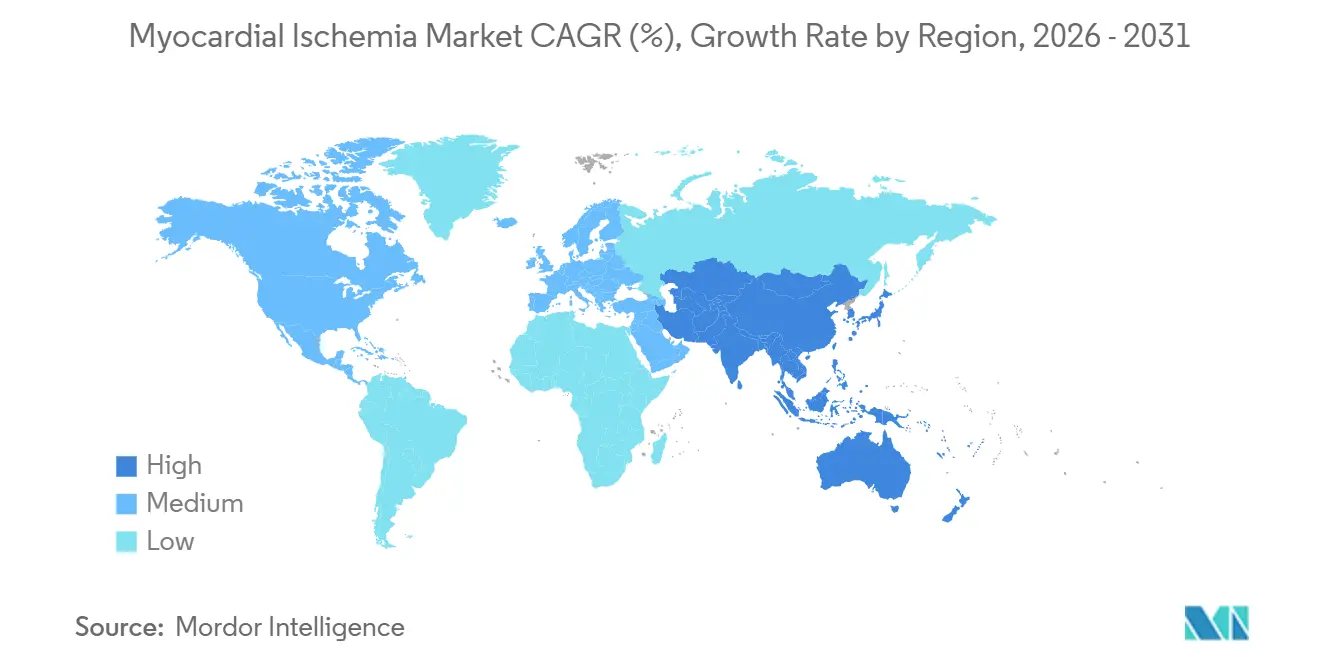
North America held 47.35% of the myocardial ischemia market share in 2025, which kept it as the clear regional leader. The region benefits from mature cath lab infrastructure, broad reimbursement support, and high adoption of advanced imaging platforms. The United States remains the core demand center because guideline-driven acute coronary syndrome care creates stable diagnostic and treatment volume across hospitals and interventional programs. Canada and Mexico add supplementary volume, but North America’s lead still rests mainly on the scale and reimbursement depth of the U.S. system.
Europe remains the second largest regional block in the myocardial ischemia market, with Germany, the United Kingdom, France, Italy, and Spain supporting most of the continent’s procedural and pharmacotherapy demand. Germany stands out because its digital health reimbursement pathway creates a clearer route for longer-term cardiovascular management tools in routine care. European device and drug access is also shaped by established regulatory systems, including EMA review processes and the EU MDR framework for cardiac devices. Eastern European countries offer a medium-term opening within the myocardial ischemia market because disease burden remains high while interventional capacity still trails Western Europe.
Asia-Pacific shows the fastest projected myocardial ischemia market expansion by region, at a projected 7.13% CAGR from 2026 to 2031. China and India are leading the regional volume build-out as access to cardiac care widens across larger patient pools. Japan adds a strong innovation base, while South Korea and Australia contribute advanced imaging and interventional adoption. Middle East and Africa, along with South America, remain smaller in total size, but the myocardial ischemia market is still growing there as cardiac capacity expands in major urban centers even though limited cath lab and imaging access continues to slow penetration in rural and lower resource settings.

Competitive Landscape
The myocardial ischemia market has a dual competitive structure, with major medtech companies leading interventional devices and imaging, and large pharmaceutical companies leading long-term pharmacotherapy. This creates a more complex field than a single product market because share shifts can happen within devices, within drugs, or across integrated care models. Companies therefore compete on technology depth, care pathway fit, and their ability to connect diagnosis, treatment, and follow-up. The myocardial ischemia market is moving toward integrated portfolios because isolated device or drug positions are less protected when payers demand clearer outcome value.
GE HealthCare illustrates this direction in the myocardial ischemia market through its 2026 cardiology portfolio push. In March 2026, the company announced FDA 510(k) clearance for Photonova Spectra, which expands its role in cardiac imaging and plaque assessment. These moves show that competitive advantage in the myocardial ischemia market increasingly depends on connected imaging and intervention capability rather than on a single standalone product.
Pharmaceutical competition is also tightening as companies pursue stronger event reduction in high-risk patients and new mechanisms that can improve preventive outcomes. Amgen strengthened its position when Repatha showed a 25% relative reduction in major adverse cardiovascular events and a 36% reduction in heart attack risk in the VESALIUS-CV study reported in November 2025. At the same time, stricter regulatory, quality, and post-market expectations continue to favor incumbents that already have broad clinical relationships and the resources to support advanced imaging, intervention, and long-cycle therapy across the myocardial ischemia market.
Myocardial Ischemia Industry Leaders
Medtronic plc
Abbott Laboratories
Boston Scientific Corporation
Bayer AG
Novartis AG
- *Disclaimer: Major Players sorted in no particular order

Recent Industry Developments
- May 2026: Boston Scientific Corporation announced that the FRACTURE IDE trial of its SEISMIQ 4CE Coronary Intravascular Lithotripsy Catheter met primary safety and effectiveness endpoints, achieving 93.3% freedom from major adverse cardiac events at 30 days. The results, presented at EuroPCR 2026, position the device as a key tool for treating severely calcified coronary artery disease, an indication that remains difficult to address with conventional PCI techniques.
- April 2026: Bayer was granted FDA Priority Review for asundexian, its investigational Factor XIa inhibitor for secondary stroke prevention, following publication of the pivotal OCEANIC-STROKE Phase 3 trial results in The New England Journal of Medicine, which showed substantial ischemic stroke reduction versus placebo. The drug's mechanism, targeting the coagulation pathway without direct antiplatelet effect, may reduce bleeding complications relative to DAPT in ischemia-prone patients.
- March 2026: GE HealthCare announced at ACC.26 the FDA 510(k) clearance of its Photonova Spectra photon-counting CT system, an AI-enabled cardiac imaging platform enabling ultra-high-definition coronary anatomy visualization, plaque characterization, and dose-conscious cardiac imaging for ischemia assessment.


Global Myocardial Ischemia Market Report Scope
According to the report’s scope, the myocardial ischemia market comprises diagnostic tools, therapeutic solutions, and healthcare services used for the detection, treatment, and management of myocardial ischemia, a condition caused by reduced blood flow and oxygen supply to the heart muscle. The market includes diagnostic imaging technologies, cardiac monitoring devices, pharmaceuticals, interventional procedures, and supportive therapies aimed at improving cardiac function and reducing the risk of complications such as heart attacks.
The myocardial ischemia market is segmented into type, management, end-user, and geography. By type, the market is segmented into symptomatic myocardial ischemia and asymptomatic myocardial ischemia. By management, the market is segmented into diagnosis and treatment. The diagnosis segment is further segmented into electrocardiogram, echocardiography, stress testing, coronary angiography, and CT and MRI imaging. The treatment segment is further segmented into medication therapy, percutaneous coronary intervention, coronary artery bypass grafting, and lifestyle management and rehabilitation. By end-user, the market is segmented into hospitals and clinics, cardiac specialty clinics, diagnostic centers, ambulatory surgical centers, and research and academic institutes. By geography, the market is segmented into North America, Europe, Asia-Pacific, the Middle East and Africa, and South America. The report also covers the estimated market sizes and trends for 17 countries across major regions globally. The report offers values (USD) for all the above segments.
| Symptomatic Myocardial Ischemia |
| Asymptomatic Myocardial Ischemia |
| Diagnosis | Electrocardiogram |
| Echocardiography | |
| Stress Testing | |
| Coronary Angiography | |
| CT and MRI Imaging | |
| Treatment | Medication Therapy |
| Percutaneous Coronary Intervention | |
| Coronary Artery Bypass Grafting | |
| Lifestyle Management and Rehabilitation |
| Hospitals and Clinics |
| Cardiac Specialty Clinics |
| Diagnostic Centers |
| Ambulatory Surgical Centers |
| Research and Academic Institutes |
| North America | United States |
| Canada | |
| Mexico | |
| Europe | Germany |
| United Kingdom | |
| France | |
| Italy | |
| Spain | |
| Rest of Europe | |
| Asia-Pacific | China |
| Japan | |
| India | |
| Australia | |
| South Korea | |
| Rest of Asia-Pacific | |
| Middle East and Africa | GCC |
| South Africa | |
| Rest of Middle East and Africa | |
| South America | Brazil |
| Argentina | |
| Rest of South America |
| By Type | Symptomatic Myocardial Ischemia | |
| Asymptomatic Myocardial Ischemia | ||
| By Management | Diagnosis | Electrocardiogram |
| Echocardiography | ||
| Stress Testing | ||
| Coronary Angiography | ||
| CT and MRI Imaging | ||
| Treatment | Medication Therapy | |
| Percutaneous Coronary Intervention | ||
| Coronary Artery Bypass Grafting | ||
| Lifestyle Management and Rehabilitation | ||
| By End-User | Hospitals and Clinics | |
| Cardiac Specialty Clinics | ||
| Diagnostic Centers | ||
| Ambulatory Surgical Centers | ||
| Research and Academic Institutes | ||
| By Geography | North America | United States |
| Canada | ||
| Mexico | ||
| Europe | Germany | |
| United Kingdom | ||
| France | ||
| Italy | ||
| Spain | ||
| Rest of Europe | ||
| Asia-Pacific | China | |
| Japan | ||
| India | ||
| Australia | ||
| South Korea | ||
| Rest of Asia-Pacific | ||
| Middle East and Africa | GCC | |
| South Africa | ||
| Rest of Middle East and Africa | ||
| South America | Brazil | |
| Argentina | ||
| Rest of South America | ||


Key Questions Answered in the Report
What is the expected value of the myocardial ischemia market by 2031?
The myocardial ischemia market is forecasted to reach USD 6.48 billion by 2031, rising from USD 4.94 billion in 2025 to USD 5.31 billion in 2026 at a 4.76% CAGR.
Which region is expanding the fastest in myocardial ischemia care?
Asia-Pacific is projected to record the fastest growth at a 7.13% CAGR through 2031, supported by rising cardiovascular burden and wider access to cardiac care.
Why is asymptomatic myocardial ischemia becoming more important?
The asymptomatic myocardial ischemia segment is expected to grow at a 5.24% CAGR through 2031, and is gaining attention because silent disease remains underdetected.
Which part of management is growing faster, diagnosis or treatment?
Treatment is the faster-growing management segment, with a projected 6.2% CAGR through 2031, even though diagnosis remained larger in 2025.
Page last updated on:






