
Mortgage Lending Market Size and Share
Market Overview
| Study Period | 2021 - 2032 |
|---|---|
| Market Size (2027) | USD 8.5 Trillion |
| Market Size (2032) | USD 10.5 Trillion |
| Growth Rate (2027 - 2032) | 4.30 % |
| Fastest Growing Market | Asia-Pacific |
| Largest Market | North America |
| Market Concentration | Low |
Major Players *Disclaimer: Major Players sorted in no particular order Image © Mordor Intelligence. Reuse requires attribution under CC BY 4.0. | |
Mortgage Lending Market Analysis by Mordor Intelligence
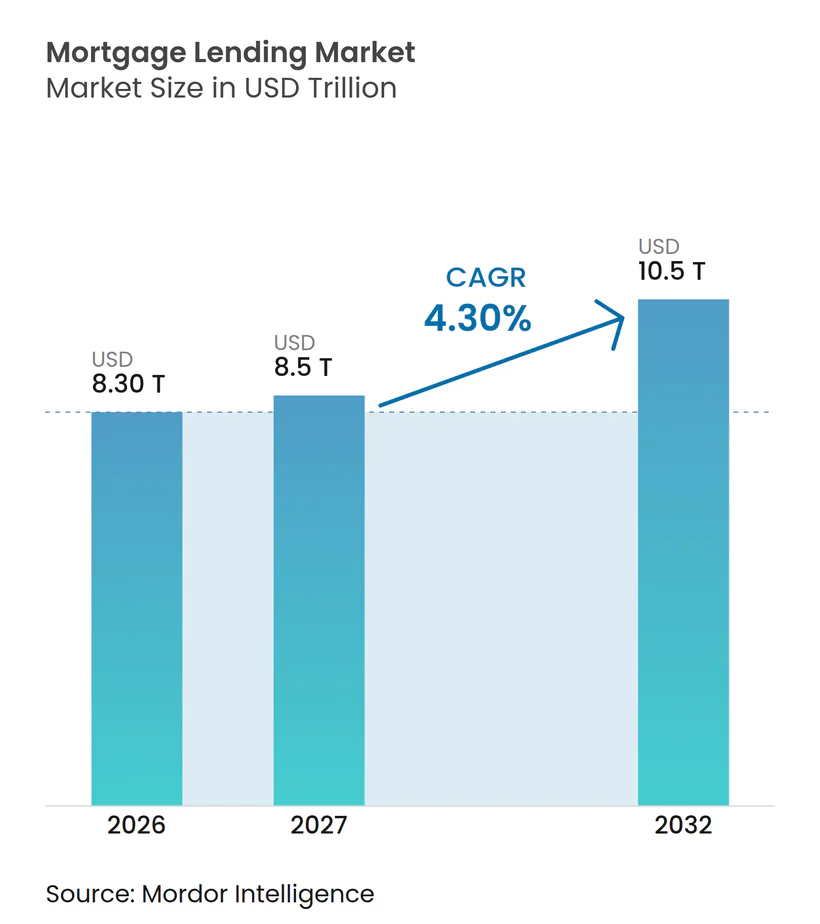
The Mortgage Lending Market size was valued at USD 8.30 trillion in 2026 and is estimated to grow from USD 8.5 trillion in 2027 to reach USD 10.5 trillion by 2032, at a CAGR of 4.30% during the forecast period (2027-2032).
The mortgage lending market is supported by sustained homeownership demand, even as high borrowing costs delay purchase decisions. Housing shortages make lending demand less sensitive to short-term interest rate movements, as qualified borrowers continue to require access to homes. The market also benefits from government-backed housing finance programs, first-time homebuyer assistance, and the broader adoption of digital origination tools. Competition is increasingly focused on expanding servicing portfolios, accelerating loan processing, and strengthening borrower relationships throughout the loan lifecycle. However, affordability remains the primary constraint, as high interest rates, elevated home prices, insurance costs, and rate lock-in reduce the number of viable transactions.
Key Report Takeaways
- By loan type, residential mortgage loans captured 72.8% of the mortgage lending market share in 2026, while commercial mortgage loans are projected to grow at a 6.8% CAGR through 2032.
- By loan purpose, property purchase loans accounted for 62.3% of the mortgage lending market share in 2026, while home improvement and renovation loans are projected to grow at a 6.2% CAGR through 2032.
- By interest rate type, fixed-rate mortgages held 72.5% of the mortgage lending market share in 2026, while adjustable-rate mortgages are projected to grow at a 9.7% CAGR through 2032.
- By originating institution type, commercial banks held 66.8% of the mortgage lending market share in 2026, while non-bank financial institutions are projected to grow at an 8.9% CAGR through 2032.
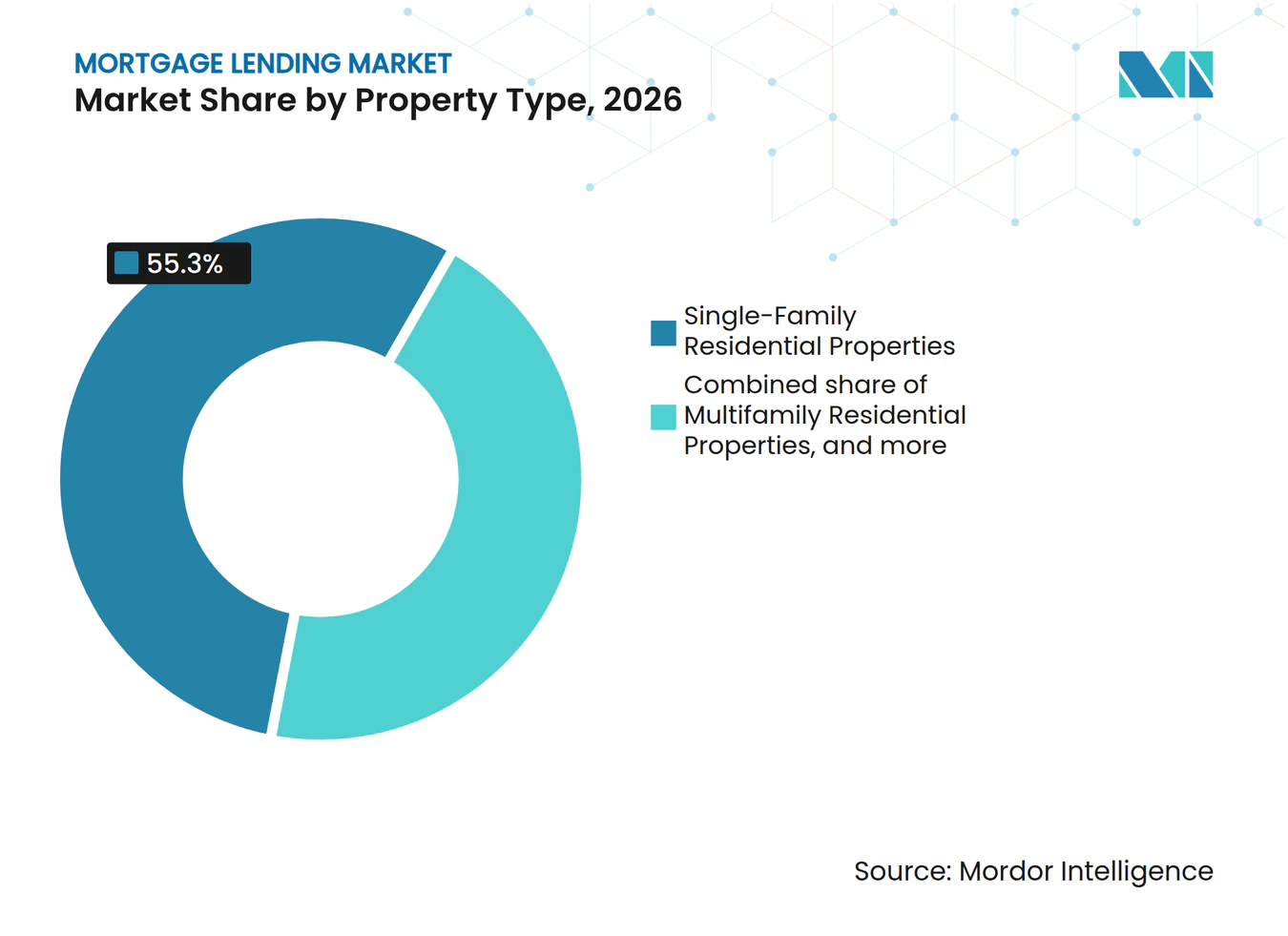
- By property type, single-family residential properties captured 55.3% of the mortgage lending market share in 2026, while industrial and logistics properties are projected to grow at a 7.8% CAGR through 2032.
- By distribution channel, mortgage brokers and intermediaries held 39.8% of the mortgage lending market share in 2026, while digital direct-to-consumer platforms are projected to grow at a 9.6% CAGR through 2032.
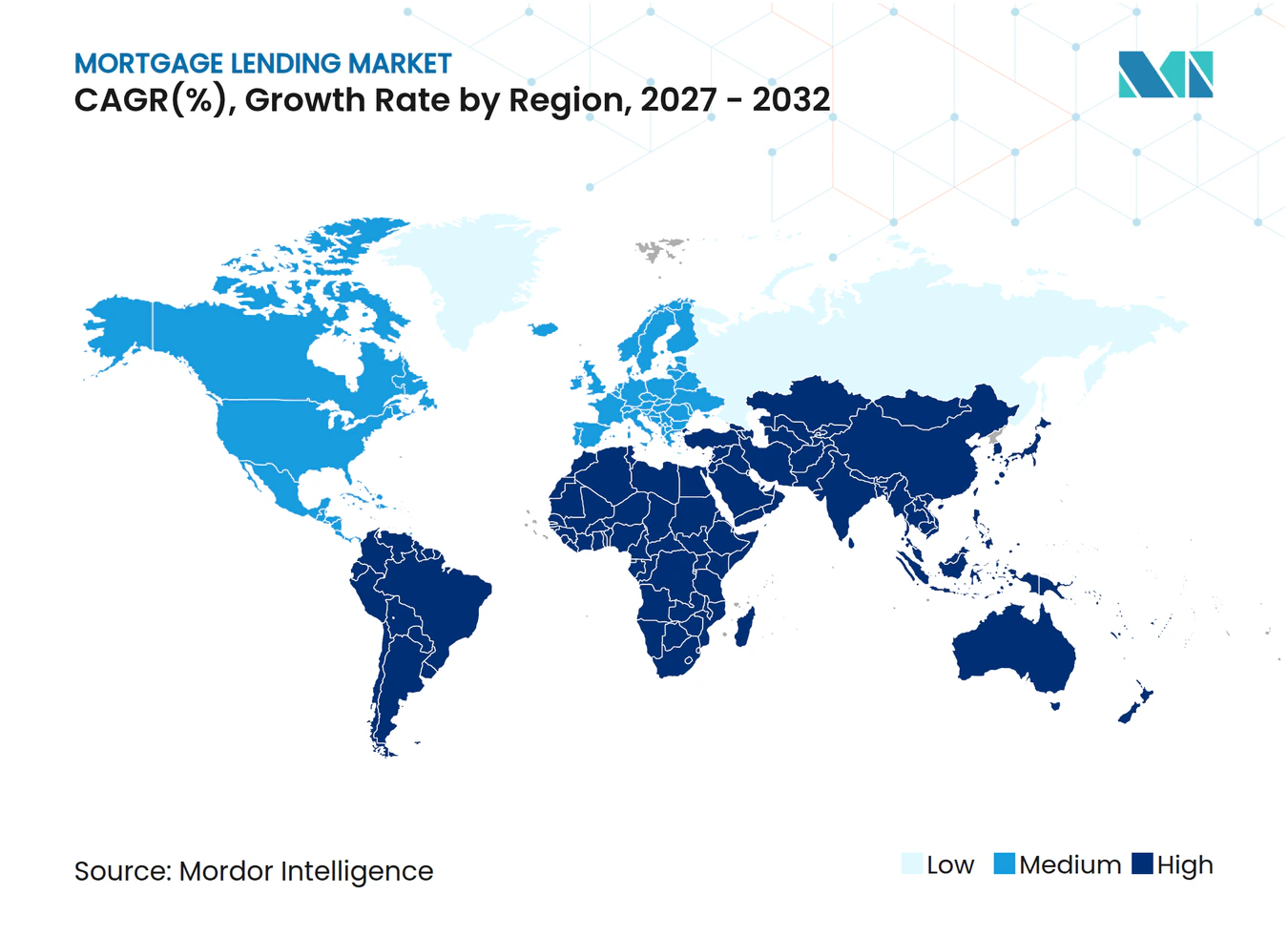
- By geography, North America accounted for 40.3% of the mortgage lending market size in 2026, while Asia-Pacific is projected to grow at a 9.8% CAGR through 2032.
Note: Market numbers in this report are based on Mordor Intelligence's proprietary estimation framework, which combines nine months of actuals with Q4 projections for base year 2026.
Market Trends and Insights
Drivers Impact Analysis of Mortgage Lending Market*
| Driver | (~) % Impact on CAGR Forecast | Geographic Relevance | Impact Timeline |
|---|---|---|---|
| Structural Housing Demand and Housing Supply Constraints | +0.8% | Global, concentrated in North America, Asia-Pacific, and Western Europe | Long term (≥ 4 years) |
| Interest Rate Easing and Improving Mortgage Borrowing Affordability | +0.9% | Global, largest in the United States, Eurozone, and United Kingdom | Medium term (2-4 years) |
| Government-Backed Housing Finance and First-Time Buyer Assistance | +0.5% | North America, Middle East and Africa, and emerging Asia-Pacific markets | Medium term (2-4 years) |
| Digital Mortgage Origination and Faster Loan Processing | +0.7% | Global, led by North America and Asia-Pacific | Medium term (2-4 years) |
| Expansion of Non-Bank Mortgage Lenders and Alternative Financing Providers | +0.6% | North America, India, and Southeast Asia | Long term (≥ 4 years) |
| Flexible Credit Assessment for Self-Employed and Underserved Borrowers | +0.4% | North America, South America, and emerging Asia-Pacific economies | Long-term (≥ 4 years) |
| Source: Mordor Intelligence | |||
Structural Housing Demand and Housing Supply Constraints
Housing supply constraints continue to sustain demand for financing in the mortgage lending market. Although borrowers may delay home purchases when interest rates rise, the need for suitable housing remains. As a result, the market increasingly depends on the availability of homes that align with borrower budgets. Constraints in entry-level housing are particularly significant, as they limit the number of borrowers who can translate loan eligibility into completed home purchases. Therefore, the mortgage lending market depends on housing supply measures in addition to credit conditions. In the United States, the Community Reinvestment Act, Consumer Financial Protection Bureau fair lending rules, and Basel III capital standards also shape lending outcomes by influencing how lenders serve different borrower groups and geographic locations.
Interest Rate Easing and Improving Mortgage Borrowing Affordability
Interest rate changes remain a key near-term driver of mortgage activity. Agency mortgage securitizations increased by 33.2% year over year to USD 333 billion in the first quarter of 2026, while refinance securitizations rose by 132% as the 30-year fixed mortgage rate declined to 6.1%[1]. In France, home loan production increased by 33% in 2025 to EUR 146.7 billion (USD 158.4 billion), following two consecutive years of decline. French mortgage rates fell to 3.1% in December 2025, supporting this recovery. Fannie Mae projected United States single-family mortgage originations to reach USD 2.32 trillion in 2026, with the refinance share expected to increase from 26% to 35%[2]. These trends demonstrate the mortgage lending market’s ability to respond rapidly to lower financing costs.
Digital Mortgage Origination and Faster Loan Processing
Digital processing has become a critical competitive requirement in the mortgage lending market. By integrating document collection, underwriting, and closing processes, lenders can reduce paperwork-related delays and improve the borrower experience. However, the value of these systems depends on reliable workflows rather than technology adoption alone. Lenders that rely on legacy systems may face higher operating costs and slower decision-making cycles than their technology-focused competitors. Digital channels also expand access for younger borrowers, who increasingly expect online applications and rapid responses. While these tools can help the mortgage lending market attract new borrowers, lenders must maintain clear comparison and disclosure practices to support informed borrower decisions.
Expansion of Non-Bank Mortgage Lenders and Alternative Financing Providers
Non-bank lenders are becoming more important in the mortgage lending market as banks extend funding through indirect channels. United States mortgage companies originated 64.2% of home purchase loans in 2025, compared with 44.6% in 2018[3]. Over the same period, the bank share fell from 42.5% to 30.1%, and bank lending to non-depository institutions increased from USD 417 billion to USD 1.4 trillion. This shift changes the role of banks from direct originators toward wholesale funding providers. It also brings more attention to the regulatory treatment of borrowers served outside traditional depository channels. The mortgage lending market will continue to depend on whether non-bank lenders can combine wider reach with sound underwriting and stable funding.
Restraints Impact Analysis of Mortgage Lending Market*
| Restraint | (~) % Impact on CAGR Forecast | Geographic Relevance | Impact Timeline |
|---|---|---|---|
| High Mortgage Rates, House Prices, and Borrower Affordability Constraints | -0.8% | Global, most acute in North America, Western Europe, and Australasia | Short term (≤ 2 years) |
| Mortgage Rate Lock-In and Weak Existing-Home Transaction Activity | -0.5% | North America, primarily the United States and Canada | Medium term (2-4 years) |
| Stricter LTV, DTI, and Borrower Eligibility Requirements | -0.3% | Global, governed by Basel Committee guidelines and national regulators | Medium term (2-4 years) |
| Rising Property Insurance Costs and Climate-Related Collateral Risks | -0.2% | North America, Australasia, and coastal Middle East and Africa | Long term (≥ 4 years) |
| Source: Mordor Intelligence | |||
High Mortgage Rates, House Prices, and Borrower Affordability Constraints
High home prices and borrowing rates reduce borrowers' capacity in the mortgage lending market. The Mortgage Bankers Association expects the 30-year mortgage rate to average 7.3% in the fourth quarter of 2026 and remain above 7% through 2027[4]. This rate environment limits the payment level that borrowers can support. It also makes a larger down payment necessary in many high-priced locations. Affordability cannot be resolved through easier credit alone when the supply of suitable homes is constrained. Housing policy, supply expansion, and borrower support must operate together for the mortgage lending market to broaden access meaningfully.
Mortgage Rate Lock-In and Weak Existing-Home Transaction Activity
Rate lock-in limits supply in the existing-home market because many borrowers already hold loans below prevailing rates. Only 23% of United States borrowers hold mortgage rates above 6%, leaving most borrowers with little financial reason to replace an existing loan at rates near 7%. Existing-home sales fell 1% year over year and 3% quarter over quarter in the first quarter of 2026. Canada faces a related renewal issue because loans originated in 2020 and 2021 are moving into higher-rate renewal periods. Canadian residential mortgage debt exceeded CAD 2.4 trillion (USD 1.7 trillion) in December 2025. This lock-in reduces listing activity and narrows purchase lending opportunities even where buyer demand is present.
*Our forecasts treat driver/restraint impacts as directional, not additive. The impact forecasts reflect baseline growth, mix effects, and variable interactions.
Mortgage Lending Market Segment Analysis
By Loan Type:
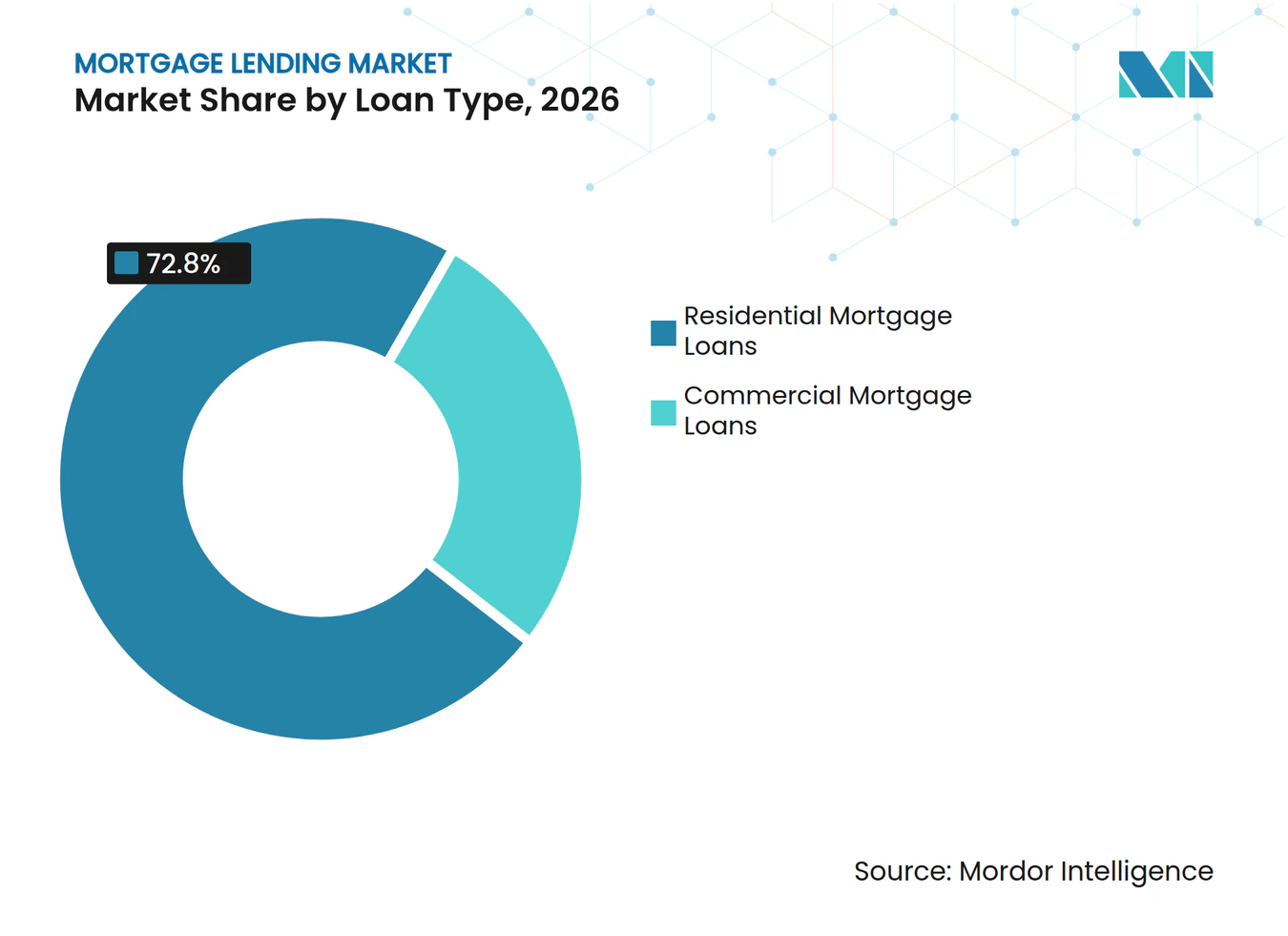
Commercial Lending Expands Alongside the Residential BaseResidential mortgage loans held a 72.8% share of the mortgage lending market in 2026. Residential lending remains the largest part of the market because it supports owner-occupied housing across developed and emerging economies. Commercial mortgage loans are projected to expand at a 6.8% CAGR through 2032. The mortgage lending market size for commercial lending is supported by a refinancing and acquisition cycle in commercial real estate. The segment also benefits from continuing agency support for multifamily financing in the United States.
Commercial mortgage banker originations in 2025 were 40% above 2024 levels, while office property originations increased 146% year over year. The Mortgage Bankers Association estimated that agency loans accounted for 40% of multifamily originations in recent periods. Commercial lending spreads narrowed by 21 basis points year over year in the second quarter of 2026, reflecting stronger lender competition on pricing. This improves access for borrowers without requiring lenders to take materially higher leverage risk. The mortgage lending market therefore has a commercial growth path that is linked to refinancing needs, asset transactions, and competitive lending conditions.


By Loan Purpose:
Purchase Lending Remains the Largest Use CaseProperty purchase loans held a 62.3% share in 2026, making them the largest loan-purpose category. The mortgage lending market share held by purchase activity reflects the central role of home acquisition in mortgage demand. The Mortgage Bankers Association projected USD 1.46 trillion in purchase originations for 2026, a 7.7% increase from 2025. Refinancing remains the second-largest purpose, but its share is well below the level reached during the low-rate period of 2021. Home improvement and renovation loans are projected to grow at a 6.2% CAGR through 2032.
Renovation demand is linked to older housing stock and younger buyers purchasing lower-priced homes that need improvement. Gen Z represented 20% of purchase rate locks in the second quarter of 2026, which was a record for the group. One-third of Gen Z borrowers used non-savings sources for down payments, including family gifts and personal loans. Construction and development lending is supported by multifamily project activity, while home equity and cash-out loans remain important for older homeowners. Baby Boomers accounted for 31% of cash-out refinance activity in the second quarter of 2026.
By Interest Rate Type:
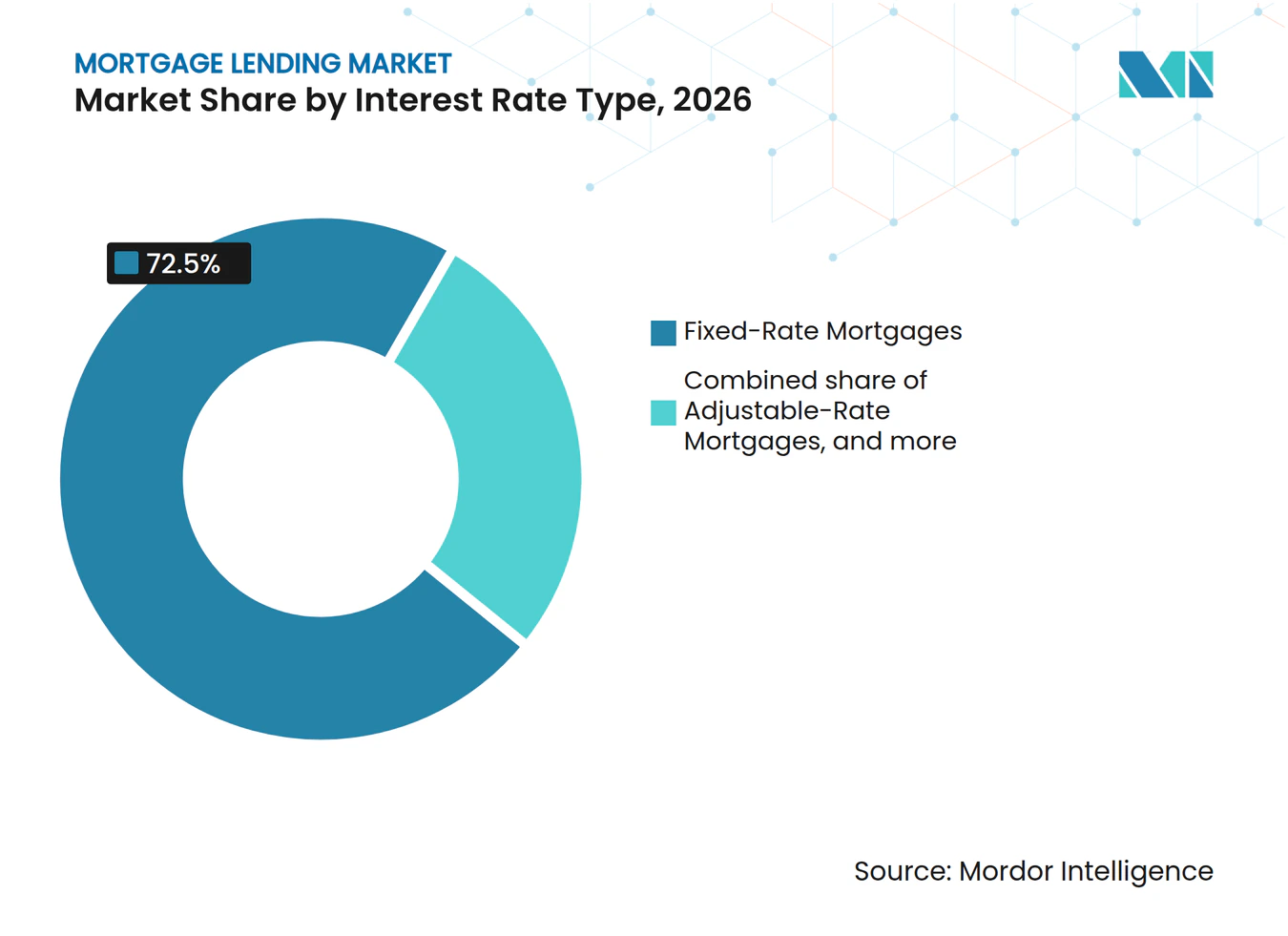
Fixed Rates Remain Preferred While Adjustable Rates GainFixed-rate mortgages held a 72.5% share in 2026, reflecting borrower demand for payment certainty. This preference remains especially strong where rate volatility affects household budgets. In France, variable-rate mortgages accounted for 4.5% of mortgage production in June 2026, compared with 14% for the Eurozone average. Adjustable-rate mortgages are projected to grow at a 9.7% CAGR through 2032. Their growth reflects affordability pressure, where initial adjustable rates can be lower than fixed-rate alternatives.
Active United States first-lien adjustable-rate mortgages reached 3.1 million by October 2026, the highest level in 5.5 years. Adjustable-rate mortgage locks exceeded 11% of total locks during the same period. These products are more common in high-cost areas where monthly affordability has become difficult under fixed rates. Hybrid-rate mortgages retain a smaller but stable role in Scandinavia and parts of Asia-Pacific. The mortgage lending market is likely to see borrowers weigh short-term payment relief against future reset risk.

By Originating Institution Type:
Non-Banks Grow While Banks Retain ScaleCommercial banks held a 66.8% share of global mortgage originations in 2026. Their scale reflects deposit-funded capacity and long-standing relationships with borrowers. Non-bank financial institutions are projected to grow at an 8.9% CAGR through 2032. This expansion is supported by their access to customer groups and locations that may be less fully served by commercial banks. The mortgage lending market is therefore becoming more diverse in how loans are originated and funded.
In Germany, vdp-member banks originated EUR 39.8 billion (USD 43 billion) in property loans in the first quarter of 2026, 5.9% above the prior-year period. Housing finance companies also play an important role in India, where they reach borrowers underserved by large commercial banks. In the United Kingdom, the Intermediary Mortgage Lenders Association expects 87% of regulated mortgage lending to flow through the broker channel in 2026 and 2027. Credit unions and building societies maintain borrower retention strengths in their established markets. The mortgage lending industry is evolving toward a model in which banks, non-banks, brokers, and specialist lenders serve different parts of the borrowing journey.
By Property Type:
Industrial and Logistics Assets Lead Commercial GrowthSingle-family residential properties held 55.3% share in 2026. This position reflects the importance of owner-occupied housing to lending activity. Multifamily housing is the second-largest property category, with USD 399.2 billion in United States originations projected for 2026. Industrial and logistics properties are projected to grow at a 7.8% CAGR through 2032. This growth is tied to demand for facilities that support distribution and e-commerce activity.
Industrial commercial mortgage-backed securities represented 17% of total United States issuance through August 2026, compared with 14.6% in 2025. Average securitized industrial loan sizes increased to USD 177.8 million from USD 143.9 million in the prior year. Industrial and logistics assets led net-lease investment with 63% of second-quarter 2026 investment activity, reaching USD 8.1 billion after a 28% year-over-year increase. Office lending is recovering selectively in high-quality urban assets, while retail and hotel results vary more by location and asset quality. The mortgage lending market supports this shift as lenders direct capital toward property types with durable tenant demand.
By Distribution Channel:
Brokers Lead While Digital Platforms Grow FasterMortgage brokers and intermediaries held a 39.8% share in 2026. This channel remains important because borrowers often need help navigating underwriting standards and product options. In the United Kingdom, brokers are expected to handle 87% of regulated mortgage lending in 2026 and 2027. Digital direct-to-consumer platforms are projected to grow at a 9.6% CAGR through 2032. The mortgage lending market can use both channels because one offers advice while the other offers speed and convenience.
Gen Z and Millennial borrowers represented two-thirds of purchase rate locks in the second quarter of 2026. Their participation supports continued demand for online applications and digital communication. Digital platforms can shorten processing steps when document and decision workflows are well integrated. Borrowers still need transparent product comparisons because approved amounts can vary across lenders. Mortgage brokers therefore retain an important role where loan terms, eligibility criteria, and repayment choices require tailored guidance.
Geography Analysis
North America held a 40.3% share of the mortgage lending market in 2026. The region has a developed secondary mortgage system and a large base of residential borrowers. The Mortgage Bankers Association revised its 2026 United States single-family origination forecast to USD 2.1 trillion from USD 2.2 trillion because rate volatility affected purchase activity. United States residential loan originations reached USD 577.7 billion in the first quarter of 2026, up 15% year over year despite a weak purchase-lending environment. Canada faces pressure as fixed-rate mortgages from 2020 and 2021 reset at higher rates.
Europe is experiencing an uneven recovery, with Southern markets performing better than some Northern markets. Eurozone outstanding residential mortgage lending reached EUR 5,450 billion (USD 5.9 trillion) in June 2026. Germany and France accounted for 30% and 23% of that amount. United Kingdom gross mortgage lending is forecast at GBP 320 billion (USD 409.6 billion) in 2026 and GBP 350 billion (USD 448 billion) in 2027. United Kingdom buy-to-let lending is forecast at GBP 44 billion (USD 56.3 billion) in 2026 and GBP 48 billion (USD 61.4 billion) in 2027. The Mortgage lending market in Europe is also shaped by the European Union Mortgage Credit Directive and national loan-to-value and stress-testing rules.
Asia-Pacific is projected to grow at a 9.8% CAGR through 2032, making it the fastest-growing regional part of the Mortgage lending market. India’s mortgage-to-GDP ratio is 12% to 13%, compared with 65% in developed markets, which indicates substantial room for housing finance expansion. China has reduced existing mortgage coupons by 50 basis points and lowered minimum down payments to 15%, supporting originations and refinancing. Asia-Pacific private real estate credit fundraising reached USD 11.2 billion, led by Australia at 40% and India at 36%. Dubai recorded AED 686.8 billion (USD 187 billion) in real estate sales during 2025, although mortgage-backed transaction value declined 4%. Saudi Arabia’s real estate loan book reached SAR 951.3 billion (USD 253.7 billion) at the end of 2025, and a first-time buyer program was launched in July 2026 after new mortgage issuance declined in the first half.
Competitive Landscape
Market Concentration
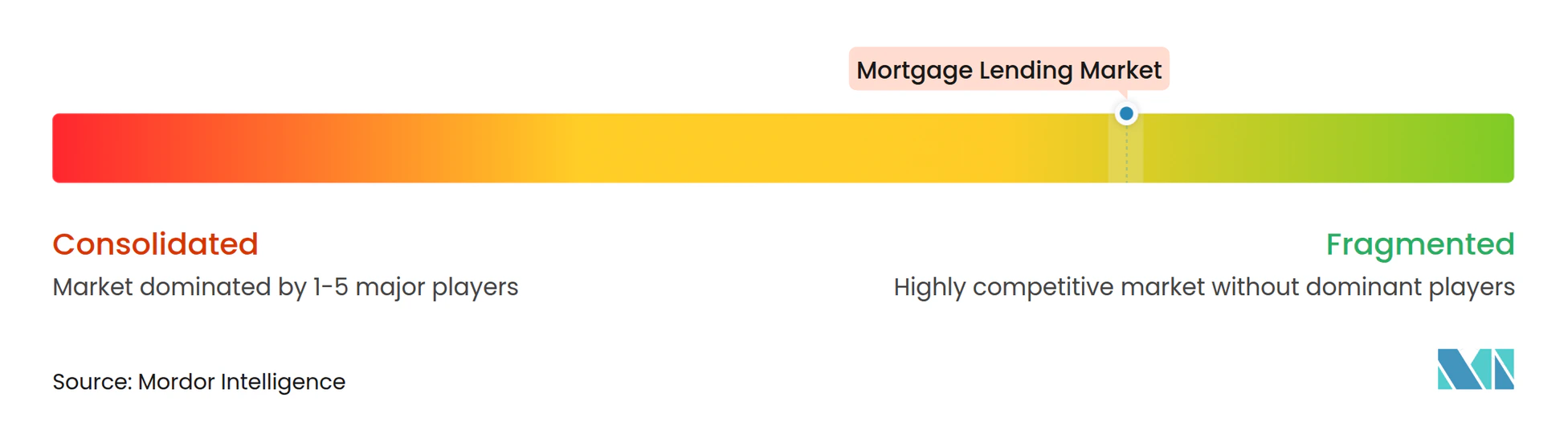
The United States mortgage lending market is fragmented, with competition spanning large commercial banks, regional banks, credit unions, independent mortgage lenders, nonbank originators, and specialist commercial real estate lenders. Although leading institutions benefit from funding capacity, servicing scale, established distribution networks, and technology investments, the diversity of lending channels and borrower segments limits the dominance of individual providers. Competition increasingly centers on digital origination, underwriting efficiency, broker relationships, servicing capabilities, and customer retention.
Consolidation is reshaping individual competitors without eliminating broader market fragmentation. Rocket Companies completed its USD 14.2 billion acquisition of Mr. Cooper Group in October 2025, combining mortgage origination and servicing capabilities and expanding its reach across nearly 10 million homeowner relationships. Rocket also completed its acquisition of Redfin in July 2025, extending its presence across home search, mortgage financing, closing, and servicing. Meanwhile, United Wholesale Mortgage announced a USD 1.3 billion all-stock agreement to acquire Two Harbors Investment Corp. in December 2025, targeting an expansion of its mortgage servicing portfolio. The transaction's completion status should be confirmed before describing it as finalized.
Commercial mortgage lending also features diverse funding sources and specialist providers. According to CBRE, alternative lenders accounted for 38% of its originated non-agency commercial real estate loan closings in the second quarter of 2026, compared with 34% a year earlier, while commercial mortgage-backed securities lenders' share declined from 19% to 11%. Opportunities extend across affordable housing finance, energy-efficient retrofit mortgages, digital distribution, and specialized borrower segments. Technology can reduce processing costs and improve application turnaround times, although the benefits depend on system integration, underwriting quality, and borrower safeguards. Overall, the market remains fragmented, with competitive positions shaped by lender specialization, distribution reach, operational efficiency, and long-term customer relationships.
Mortgage Lending Industry Leaders
-
Rocket Companies, Inc.
-
United Wholesale Mortgage, LLC
-
JPMorgan Chase & Co.
-
Wells Fargo & Company
-
Bank of America Corporation
- *Disclaimer: Major Players sorted in no particular order
Mortgage Lending Market Companies Covered in this Report
- Rocket Companies, Inc. (Rocket Mortgage)
- United Wholesale Mortgage, LLC
- JPMorgan Chase & Co.
- Wells Fargo & Company
- Bank of America Corporation
- U.S. Bank National Association
- CrossCountry Mortgage, LLC
- PennyMac Financial Services, Inc.
- loanDepot, Inc.
- Freedom Mortgage Corporation
- Guild Mortgage Company
- Veterans United Home Loans
- Lloyds Banking Group plc
- Nationwide Building Society
- NatWest Group plc
- Barclays PLC
- HSBC Holdings plc
- Banco Santander, S.A.
- BNP Paribas S.A.
- Crédit Agricole S.A.
Recent Industry Developments in Mortgage Lending Market
- August 2026: CBRE reported that United States commercial real estate lending reached a 5-year high, while industrial and logistics investment rose 23% year over year to USD 29.6 billion. Alternative lenders held a record 38% share of non-agency commercial loan closings.
- July 2026: Saudi Arabia’s Real Estate Development Fund, Saudi National Bank, and the National Housing Company launched a government-backed mortgage program for first-time buyers starting at SAR 699 (USD 186) per month. The program followed a 30% decline in new residential mortgage issuance in the first half of 2026.
- February 2026: The Mortgage Bankers Association forecast United States commercial mortgage originations to increase 27% to USD 805.5 billion in 2026, with multifamily originations reaching USD 399.2 billion after a 21% increase.
Global Mortgage Lending Market Report Scope
Segmentation Overview
| Residential Mortgage Loans |
| Commercial Mortgage Loans |
| Property Purchase Loans |
| Refinancing Loans |
| Home Equity and Cash-Out Loans |
| Construction and Development Loans |
| Home Improvement and Renovation Loans |
| Fixed-Rate Mortgages |
| Adjustable-Rate Mortgages |
| Hybrid-Rate Mortgages |
| Commercial Banks |
| Specialist Mortgage Banks and Housing-Finance Companies |
| Credit Unions and Building Societies |
| Non-bank Financial Institutions / Independent Mortgage Lenders |
| Government-backed and Public Housing-Finance Institutions |
| Other Originators |
| Single-Family Residential Properties |
| Multifamily Residential Properties |
| Office Properties |
| Retail and Mixed-Use Properties |
| Industrial and Logistics Properties |
| Other Property Types |
| Direct Retail |
| Mortgage Broker and Intermediary |
| Correspondent and Wholesale |
| Other Channels |
| North America | United States |
| Canada | |
| Mexico | |
| South America | Brazil |
| Argentina | |
| Rest of South America | |
| Europe | United Kingdom |
| Germany | |
| France | |
| Italy | |
| Spain | |
| Rest of Europe | |
| Asia-Pacific | China |
| India | |
| Japan | |
| Australia | |
| Rest of Asia-Pacific | |
| Middle East & Africa | United Arab Emirates |
| Saudi Arabia | |
| South Africa | |
| Rest of Middle East & Africa |
| By Loan Type | Residential Mortgage Loans | |
| Commercial Mortgage Loans | ||
| By Loan Purpose | Property Purchase Loans | |
| Refinancing Loans | ||
| Home Equity and Cash-Out Loans | ||
| Construction and Development Loans | ||
| Home Improvement and Renovation Loans | ||
| By Interest Rate Type | Fixed-Rate Mortgages | |
| Adjustable-Rate Mortgages | ||
| Hybrid-Rate Mortgages | ||
| By Originating Institution Type | Commercial Banks | |
| Specialist Mortgage Banks and Housing-Finance Companies | ||
| Credit Unions and Building Societies | ||
| Non-bank Financial Institutions / Independent Mortgage Lenders | ||
| Government-backed and Public Housing-Finance Institutions | ||
| Other Originators | ||
| By Property Type | Single-Family Residential Properties | |
| Multifamily Residential Properties | ||
| Office Properties | ||
| Retail and Mixed-Use Properties | ||
| Industrial and Logistics Properties | ||
| Other Property Types | ||
| By Distribution Channel | Direct Retail | |
| Mortgage Broker and Intermediary | ||
| Correspondent and Wholesale | ||
| Other Channels | ||
| By Geography | North America | United States |
| Canada | ||
| Mexico | ||
| South America | Brazil | |
| Argentina | ||
| Rest of South America | ||
| Europe | United Kingdom | |
| Germany | ||
| France | ||
| Italy | ||
| Spain | ||
| Rest of Europe | ||
| Asia-Pacific | China | |
| India | ||
| Japan | ||
| Australia | ||
| Rest of Asia-Pacific | ||
| Middle East & Africa | United Arab Emirates | |
| Saudi Arabia | ||
| South Africa | ||
| Rest of Middle East & Africa | ||
Key Questions Answered in the Report
What is driving growth in mortgage lending?
The sector is projected to grow from USD 8.5 trillion in 2027 to USD 10.5 trillion by 2032, supported by housing demand, digital origination, government support, and commercial refinancing activity.
Which loan type is growing fastest?
Commercial mortgage loans are projected to grow at a 6.8% CAGR through 2032, while residential loans remain the largest loan type with 72.8% share in 2026.
Why are adjustable-rate mortgages becoming more popular?
Adjustable-rate mortgages are projected to grow at a 9.7% CAGR through 2032 as borrowers seek lower initial payments in high-rate and high-cost housing markets.
Which region will grow fastest through 2032?
Asia-Pacific is projected to grow at a 9.8% CAGR through 2032, supported by low mortgage penetration in India and policy support in China.
How important are mortgage brokers?
Mortgage brokers and intermediaries held 39.8% share in 2026, and the United Kingdom broker channel is forecast to handle 87% of regulated lending in 2026 and 2027.
What is the largest risk for lenders and borrowers?
Affordability is the main risk because high rates, high home prices, insurance costs, and rate lock-in reduce purchase activity and refinancing incentives.