
Milk Protein Concentrates Market Size and Share
Market Overview
| Study Period | 2022 - 2032 |
|---|---|
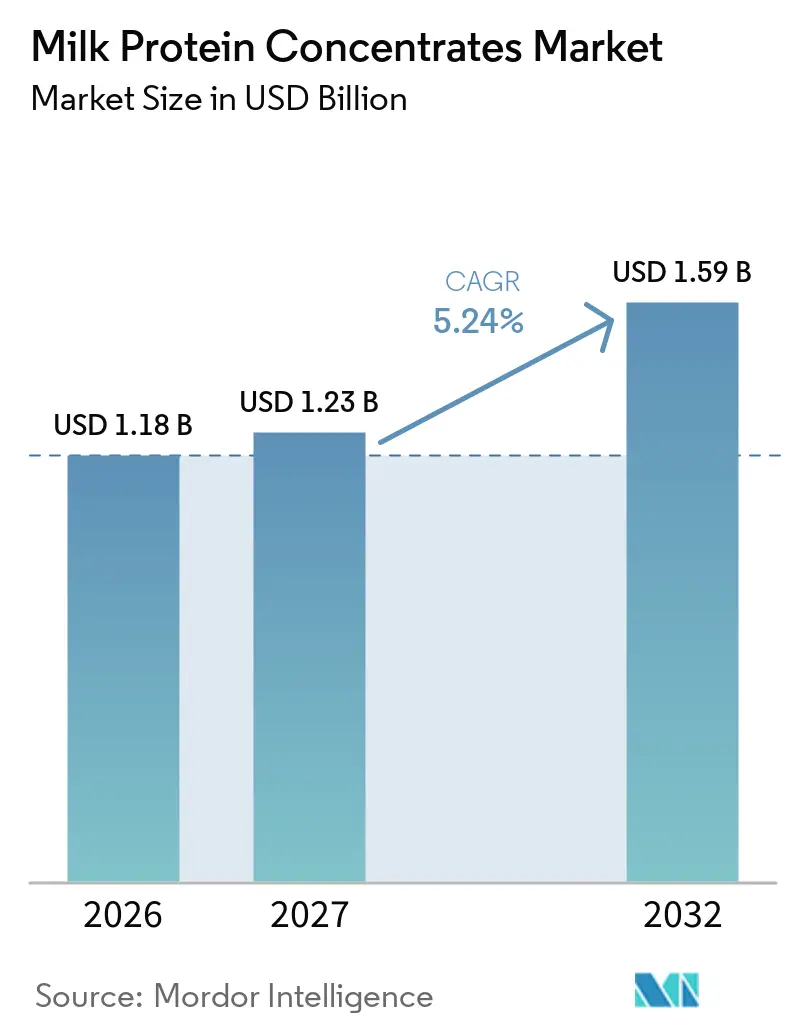
| Market Size (2027) | USD 1.23 Billion |
| Market Size (2032) | USD 1.59 Billion |
| Growth Rate (2027 - 2032) | 5.24 % |
| Fastest Growing Market | Asia-Pacific |
| Largest Market | North America |
| Market Concentration | Low |
Major Players *Disclaimer: Major Players sorted in no particular order Image © Mordor Intelligence. Reuse requires attribution under CC BY 4.0. | |
Milk Protein Concentrates Market Analysis by Mordor Intelligence
The milk protein concentrates market size was valued at USD 1.18 billion in 2026 and is estimated to grow from USD 1.23 billion in 2027 to reach USD 1.59 billion by 2032, at a CAGR of 5.24% during the forecast period (2027-2032). The milk protein concentrates market benefits from processors shifting skim-milk solids toward higher-value protein ingredients instead of commodity nonfat dry milk. High-protein food, beverage, and nutrition products support this shift across retail and foodservice channels. Demand also reflects growing interest in nutrient-dense portions among users of GLP-1 medicines, strengthening demand for protein-fortified yogurt, beverages, and snacks. However, the milk protein concentrates market faces cost pressures from raw milk prices, energy-intensive filtration processes, and limited processing capacity. Producers with traceable sourcing, efficient ultrafiltration capabilities, and diversified ingredient portfolios are better positioned to protect margins.
Key Report Takeaways
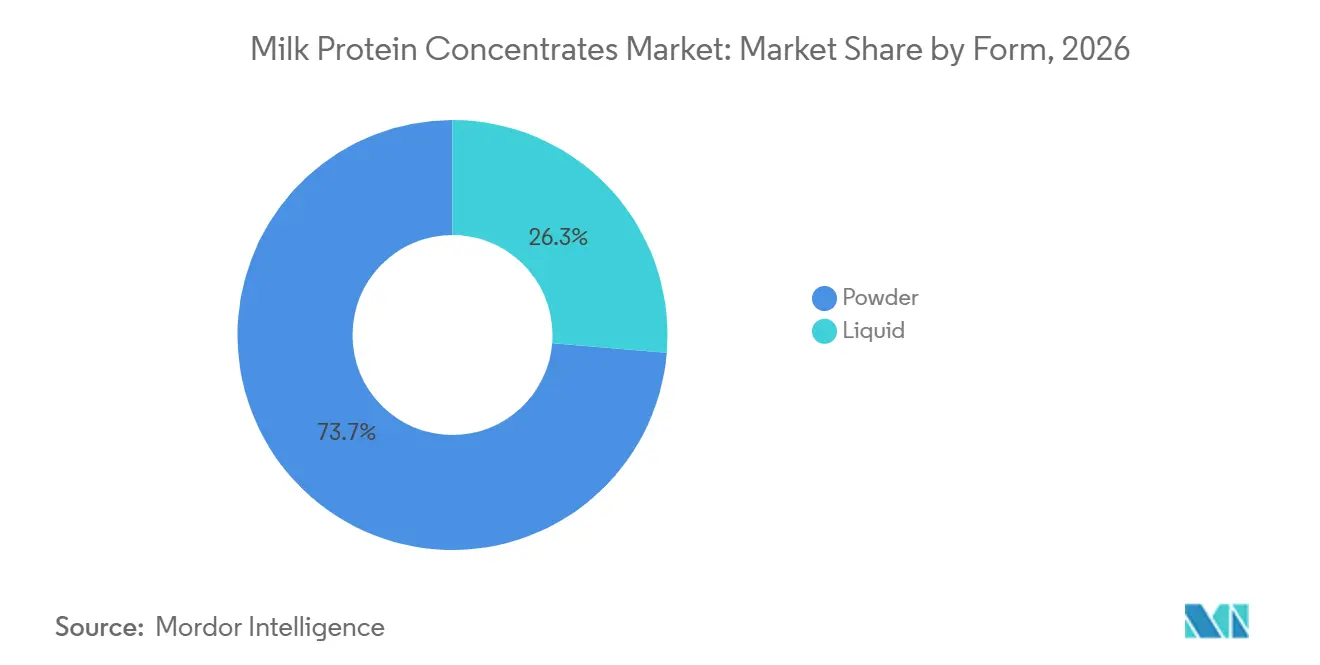
- By form, powder accounted for 73.68% of the milk protein concentrates market share in 2026, while liquid milk protein concentrates are projected to grow at a 6.78% CAGR through 2032.
- By protein concentration, MPC 70-85% held the largest share of 37.85% in 2026, while MPC above 85% is forecast to expand at a 6.36% CAGR through 2032.
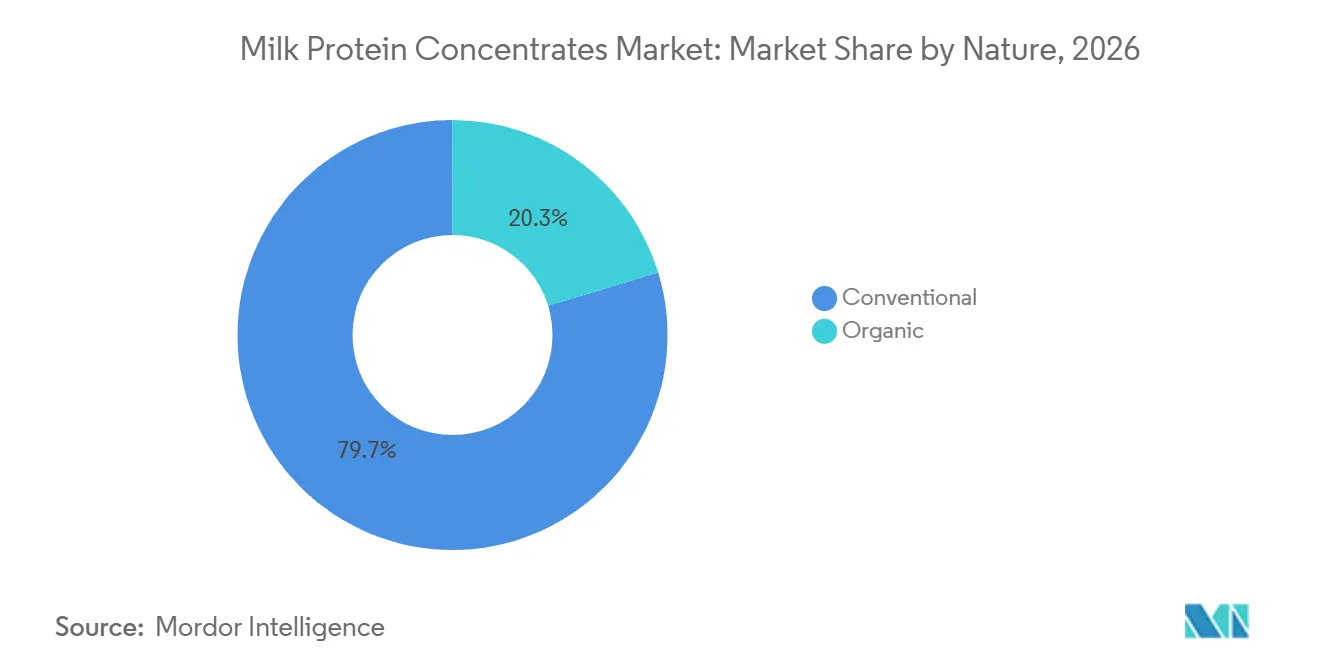
- By nature, conventional dominated with a 79.71% share in 2026, while organic is expected to register a 6.63% CAGR through 2032.
- By application, dairy products accounted for 29.67% of the milk protein concentrates market share in 2026, while sports nutrition and supplements are projected to grow at a 6.22% CAGR through 2032.
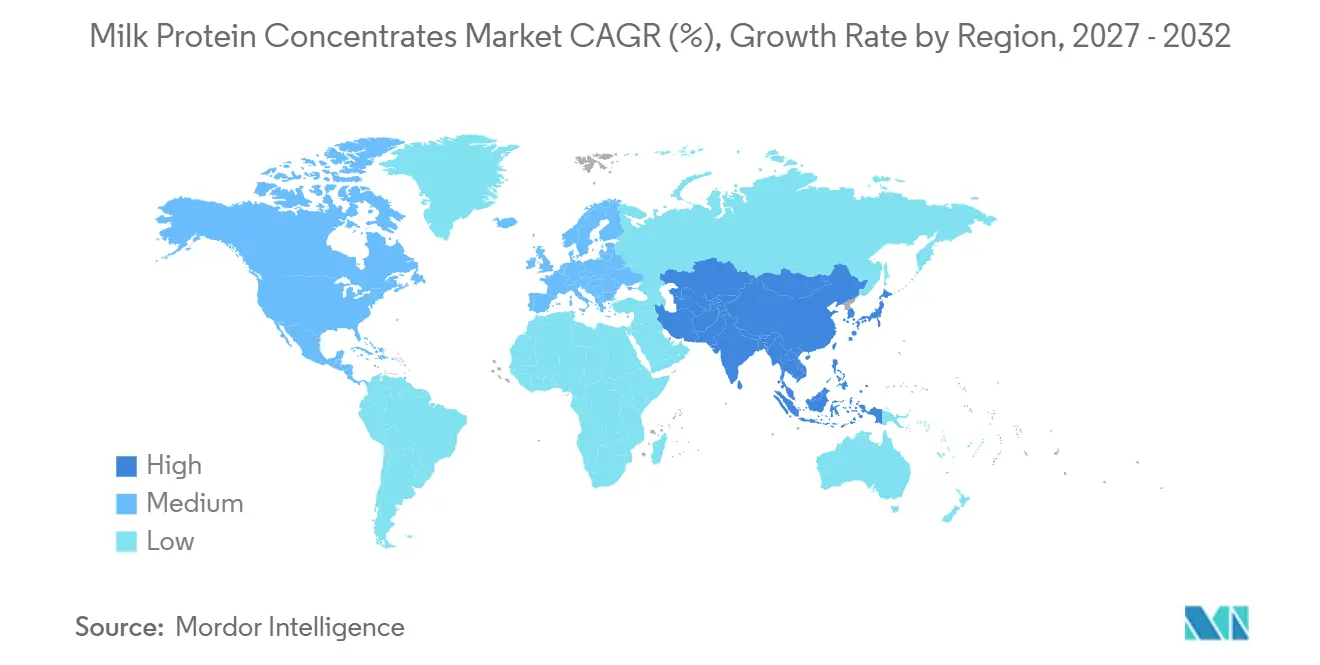
- By geography, North America held 37.82% of the milk protein concentrates market share in 2026, while Asia-Pacific is forecast to register the fastest growth at a 7.03% CAGR through 2032.
Note: Market numbers in this report are based on Mordor Intelligence's proprietary estimation framework, which combines nine months of actuals with Q4 projections for base year 2026.
Market Trends and Insights
Drivers Impact Analysis of Milk Protein Concentrates Market*
| Driver | (~) % Impact on CAGR Forecast | Geographic Relevance | Impact Timeline |
|---|---|---|---|
| Rising demand for high-protein food and beverage products | +1.4% | Global, highest intensity in North America and Western Europe | Short term (≤ 2 years) |
| Increasing adoption in sports and performance nutrition | +1.1% | North America, Western Europe, urban Asia-Pacific | Medium term (2-4 years) |
| Expansion of protein-fortified dairy portfolio | +0.7% | Global, with spillover to the Middle East, Africa, and South America | Medium term (2-4 years) |
| Growing demand for lactose-free and high-protein ingredients | +0.6% | North America and Europe, with early gains in Australia and Japan | Long term (≥ 4 years) |
| Demand for ready-to-drink protein beverages | +0.5% | North America and core Asia-Pacific markets | Short term (≤ 2 years) |
| Use in cheese manufacturing and processing | +0.3% | North America and Europe, with spillover to South America | Long term (≥ 4 years) |
| Source: Mordor Intelligence | |||
Rising Demand for High-Protein Food and Beverage Products
Consumer interest in protein has expanded beyond sports nutrition to mainstream grocery products. In 2025, Agriculture and Agri-Food Canada reported 312 United States product launches featuring milk protein concentrate in high-protein or protein-fortified products between January 2021 and April 2026[1]. This product activity supports the milk protein concentrates market, as MPC provides protein density in yogurt, snacks, and beverages without relying solely on whey isolates. Consequently, processors are allocating more skim milk solids to higher-value MPC production, potentially tightening ingredient availability even as milk output increases. The introduction of protein-enriched everyday food products is also broadening MPC consumption across conventional food categories, encouraging manufacturers to expand their ingredient sourcing and processing capabilities
Increasing Adoption in Sports and Performance Nutrition
Milk Protein Concentrate (MPC) provides a naturally balanced casein-to-whey profile, making it suitable for products that require both immediate and sustained protein delivery. The American Dairy Products Institute’s 2024 report identified MPC 80 applications in aseptic protein shakes, overnight oats, toddler drinks, and processed cheese[2]. This broad application base means that sports nutrition increasingly competes for ingredient supply with clinical and everyday nutrition categories. The milk protein concentrates market benefits as brands incorporate dairy proteins into daily-use products rather than limiting them to post-workout powders. Sports nutrition brands also value formats that combine functional performance with familiar dairy-based positioning. Consequently, MPC use is expanding across active nutrition, convenient meals, and fortified foods.
Expansion of Protein-Fortified Dairy Portfolio
The expansion of protein-fortified dairy product portfolios is driving demand for milk protein concentrates (MPCs) across the global dairy processing industry. Manufacturers are incorporating MPCs into conventional dairy products, including milk beverages, yogurt, cheese, and dairy desserts, to increase protein content while maintaining desirable taste, texture, and consistency. The combination of casein and whey proteins makes MPCs suitable for developing high-protein dairy formulations without relying solely on additional protein ingredients. Dairy companies are also introducing fortified versions of familiar products to meet consumer demand for convenient protein sources as part of their daily diets. This product diversification is encouraging dairy processors to adopt different MPC grades according to their formulation requirements, creating additional procurement opportunities for specialized dairy ingredient suppliers.
Growing Demand for Lactose-Free and High Protein Ingredients
Growing demand for high-protein and lactose-free dairy products is driving manufacturers to incorporate milk protein concentrates (MPCs) into fortified beverages, yogurt, nutritional shakes, and other dairy formulations. MPCs contain both casein and whey proteins, enabling manufacturers to increase protein content while maintaining desirable texture and nutritional profiles. In January 2025, the United States Food and Drug Administration (FDA) issued information on the manufacturing processes and ingredients used in high-protein yogurt, Greek yogurt, and Greek-style yogurt[3]. The request will cover protein-concentration methods, including membrane ultrafiltration and milk protein fortification, underscoring the role of concentrated dairy proteins in product development. These developments create opportunities for MPC suppliers across protein-enriched dairy applications.
Restraints Impact Analysis of Milk Protein Concentrates Market*
| Restraint | (~) % Impact on CAGR Forecast | Geographic Relevance | Impact Timeline |
|---|---|---|---|
| High production costs and price volatility | -0.8% | Global, most acute in North America and Oceania | Short term (≤ 2 years) |
| Limited raw-milk availability and supply chain constraints | -0.5% | North America, Europe, and core Asia-Pacific markets | Medium term (2-4 years) |
| Competition from alternative dairy and plant-based proteins | -0.4% | North America and Europe, with urban Asia-Pacific exposure | Long term (≥ 4 years) |
| Milk protein allergenicity and dietary restrictions | -0.2% | Global, with elevated relevance in Asia-Pacific and the Middle East and Africa | Long term (≥ 4 years) |
| Source: Mordor Intelligence | |||
High Production Costs and Price Volatility
Milk protein concentrate production requires specialized processing technologies, including ultrafiltration, evaporation, and spray drying, which involve substantial capital investment and energy consumption. Manufacturers also require a consistent supply of high-quality raw milk, making production costs susceptible to fluctuations in milk procurement prices, animal feed costs, and energy prices. Rising transportation, packaging, and storage costs further increase overall production expenses. These cost pressures can reduce manufacturers' profit margins and increase MPC selling prices. As a result, price-sensitive food processors may shift to alternative dairy- or plant-based protein ingredients, limiting the broader adoption of milk protein concentrates.
Limited raw-milk availability and supply chain constraints
Milk protein concentrate production relies on a consistent supply of high-quality raw milk, making manufacturers vulnerable to fluctuations in milk availability and dairy procurement conditions. Seasonal changes in milk production, adverse weather, livestock feed shortages, and shifts in dairy farming output can disrupt raw material sourcing. Transportation delays, international trade disruptions, and rising logistics costs can also affect the timely delivery of dairy ingredients to food manufacturers. These supply chain challenges create procurement uncertainty, increase operating expenses, and limit MPC producers’ ability to maintain consistent production volumes. Such constraints can affect production planning, capacity utilization, and the ability of manufacturers to fulfil long-term customer contracts.
*Our forecasts treat driver/restraint impacts as directional, not additive. The impact forecasts reflect baseline growth, mix effects, and variable interactions.
Milk Protein Concentrates Market Segment Analysis
By Form:
Ready-to-Drink Demand Expands Liquid Use While Powder Retains ScalePowder accounted for 73.68% of the milk protein concentrates market share in 2026. Its leading position reflects its ambient shelf stability, lower freight costs per unit of protein, and compatibility with dry-blending operations. These advantages support powdered formats, as manufacturers can store and dose them within established dry ingredient systems. In May 2026, Idaho Milk Products opened a USD 190 million ice cream and powder-blending facility with the capacity to process 120 million pounds of dry powder annually. This investment reinforces the processing scale supporting powder in the milk protein concentrates market.
Liquid is projected to register a CAGR of 6.78% through 2032. Aseptic beverage producers can use liquid retentates directly, eliminating the reconstitution steps required for powder. Liquid ingredients may also retain native protein functionality in certain beverage applications. However, they require specialized storage, transportation, and processing systems. Powder remains the dominant form, while liquid grades offer a practical growth opportunity for ready-to-drink nutrition applications.
By Protein Concentration:
High-Purity Grades Extend the Addressable Value RangeMPC with 70-85% protein content accounted for 37.85% of the milk protein concentrates market share in 2026. This range provides protein density suitable for cheese, yogurt, and beverage fortification without requiring the purity of an isolate. It is particularly relevant for formulators seeking to balance functionality, protein claims, and input costs. In November 2025, the United States Dairy Export Council and the National Milk Producers Federation noted that advanced filtration can produce MPC products with protein content ranging from 40% to more than 90% by weight. Lower-concentration tiers remain relevant for processed cheese, recombined milk, and basic supplements, where formulation costs take priority over high purity. This broad range of concentration options enables suppliers to serve both volume and premium customers.
MPC with more than 85% protein content is projected to grow at a CAGR of 6.36% through 2032. Sports nutrition and high-protein beverage producers increasingly require high protein levels within limited serving sizes. High-purity grades meet this requirement while providing a dairy protein alternative to pure whey isolate. These grades are also used in specialized nutrition products, where protein density is of greater importance. The segment requires advanced filtration capabilities and stringent quality control, which may limit the number of suppliers that can consistently offer these products. Growing demand for these grades is expected to strengthen the value-added segment of the milk protein concentrates industry.
By Nature:
Conventional Supply Leads While Organic Grades Remain Capacity-ConstrainedConventional holds a 79.71% share of the milk protein concentrates market in 2026. Their scale enables suppliers to secure large food-processing contracts that require consistent protein specifications and reliable supply. Established cooperatives can supply conventional dairy proteins through integrated farm and processing networks. This model supports high-volume ingredient applications, including cheese, bakery fillings, beverages, and standard nutrition powders. The segment retains its leading position, meeting the cost requirements of broad food and beverage applications.
The organic segment is projected to grow at a CAGR of 6.63% through 2032. Demand is driven by premium infant formula and sports nutrition products, where organic sourcing can strengthen product positioning. However, supply expansion is more challenging because organic raw milk requires segregated handling and certified processing lines. Organic certification can limit the number of eligible producers, even when demand exists. Although the organic segment will remain smaller than the conventional segment, it offers a differentiated growth opportunity for processors with suitable sourcing and compliance systems.
By Application:
Dairy Processing Leads as Sports Nutrition Adds Faster GrowthDairy products accounted for 29.67% of the milk protein concentrates market share in 2026. MPC supports cheese yield enhancement, yogurt fortification, and dairy beverage formulation, establishing its role in routine dairy processing. Its protein composition and functional properties also help manufacturers maintain product consistency, improve texture, and achieve targeted nutritional profiles across different dairy applications. Bakery and confectionery products, beverages, clinical nutrition, and infant nutrition represent additional demand pools, each with distinct technical and procurement requirements. These applications diversify demand beyond a single end use.
Sports nutrition and supplements are projected to grow at a CAGR of 6.22% through 2032. Demand is expanding beyond post-workout products to include protein shakes, nutritional snacks, meal replacements, and everyday protein-enriched food products. MPC supports this segment through its combined casein and whey composition, high protein quality, and suitability for powder and liquid formulations. Manufacturers incorporate MPC into sports drinks, protein bars, recovery beverages, and nutritional supplements to support muscle maintenance and recovery. The development of specialized high-protein formulations further creates opportunities for MPC suppliers. This application is expected to provide an important growth channel alongside the broader dairy processing base.
Geography Analysis
North America
North America holds a 37.82% share of the milk protein concentrates market in 2026. The region benefits from established ultrafiltration infrastructure and large dairy cooperatives capable of supplying food and nutrition manufacturers. United States domestic MPC consumption increased by 63% in 2024, reflecting growing demand for functional nutrition products and a shift from nonfat dry milk toward higher-value protein products. The adoption of GLP-1 medications further supports demand for products that deliver higher protein content in smaller portions. Companies that align domestic processing capacity with beverage and food applications can capitalize on this demand while managing raw milk supply and trade-related exposure.
Asia-Pacific
Asia-Pacific is projected to grow at a CAGR of 7.03% through 2032, the highest growth rate in the milk protein concentrates market. China remains a key market for dairy proteins, although declining birth rates may constrain demand for infant formula. India offers a more favorable long-term demand outlook, driven by an expanding urban consumer base and growing interest in protein-rich foods. Australia and New Zealand also serve as export-oriented supply hubs for the region. Import requirements and quality systems favor suppliers with established compliance and traceability capabilities. The region’s growth will depend on suppliers’ ability to offer affordable product formats that align with local beverage, snack, and nutrition preferences.
Europe, South America, and the Middle East and Africa
Europe combines established dairy processing capabilities with demand for clinical, infant, and sports nutrition ingredients. In these European applications, the milk protein concentrates market is supported by product reformulation and clear protein positioning rather than volume growth alone. In South America, Brazil represents the primary market, while Argentina provides supporting dairy-processing capacity for regional consumption. The Middle East and Africa show demand for protein-fortified laban, yogurt, and nutrition products; however, affordability and cold-chain infrastructure vary across countries. These diverse regions offer opportunities for producers that can tailor concentration grades, packaging formats, and pricing to local processing conditions.
Competitive Landscape
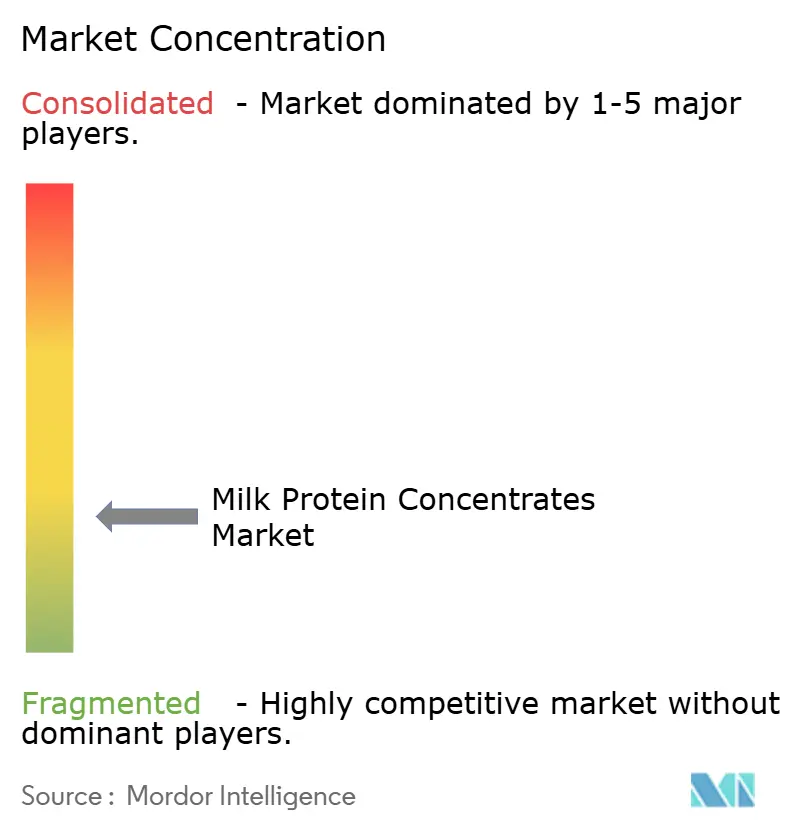
The milk protein concentrates market is fragmented. Farmer-owned cooperatives, including Fonterra, Dairy Farmers of America, Agropur, and FrieslandCampina, play an important role because they integrate milk sourcing with membrane processing. This integrated structure improves raw material security and supports large-volume contracts. These companies also leverage established relationships with dairy farmers and food manufacturers to maintain consistent ingredient quality and strengthen their positions in international supply chains.
Technology is a key competitive variable in the milk protein concentrates market. Higher-solids ultrafiltration can produce liquid retentates that eliminate the need for spray drying while preserving protein functionality. Fonterra launched the MyNZMP Link digital sales channel in 2025, enabling regional ingredient buyers to secure volumes through tenders, fixed-price listings, and auctions. These developments demonstrate that process capabilities and sales access can be as important as protein concentration. Investments in advanced membrane filtration, processing efficiency, and specialized protein formulations also enable manufacturers to differentiate their MPC portfolios and meet specific customer requirements.
Plant proteins and fermentation-based alternatives also create competition, particularly in applications where buyers have flexibility regarding protein sources. However, dairy suppliers retain a functional advantage in applications requiring strong protein delivery, familiar taste, and established labeling practices. Product quality, traceability, and reliable supply remain critical in infant nutrition, clinical nutrition, and premium sports nutrition applications. The fragmented market structure limits the ability of any single producer to influence prices, while creating consolidation opportunities for suppliers with secure milk pools and specialized filtration assets. Competitive strategies are likely to focus on improved functionality, lower processing costs, and targeted formulations rather than scale alone.
Milk Protein Concentrates Industry Leaders
-
Dairy Farmers of America, Inc.
-
FrieslandCampina Ingredients
-
Arla Foods amba
-
Groupe Lactalis S.A.
-
Gay Lea Foods Co-operative Limited
- *Disclaimer: Major Players sorted in no particular order
Milk Protein Concentrates Market Companies Covered in this Report
- Fonterra Co-operative Group Limited
- Gay Lea Foods Co-operative Limited
- Arla Foods amba
- Groupe Lactalis S.A.
- Idaho Milk Products
- Saputo Inc.
- Glanbia plc
- Agropur Cooperative
- Hilmar Cheese Company, Inc.
- Leprino Foods Company
- Dairy Farmers of America, Inc.
- Kerry Group plc
- FrieslandCampina Ingredients
- Ingredia SA
- Hoogwegt International B.V.
- Actus Nutrition
- AMCO Proteins
- Grassland Dairy Products Inc.
- Westland Milk Products
- Valio Ltd.
Recent Industry Developments in Milk Protein Concentrates Market
- June 2026: Darigold and Actus Nutrition announced a strategic partnership centered on Darigold's milk protein manufacturing facility in Jerome, Idaho. Actus planned to invest in the facility to expand its capacity to produce high-value milk protein ingredients. The partnership combines Darigold's established milk supply network with Actus's specialty protein processing expertise, strengthening both companies' capabilities in the milk protein ingredients industry.
- May 2026: Idaho Milk Products opened a USD 190 million ice cream and powder-blending facility in Jerome, Idaho. The facility can process up to 120 million pounds of dry powder annually. It converts milk protein concentrate (MPC) inventory into finished, protein-enhanced consumer products, expanding the company’s addressable market beyond B2B ingredient supply.
- June 2025: Cayuga Milk Ingredients inaugurated a USD 270 million, two-phase expansion project at its Aurelius facility in New York, United States. The company produces milk protein concentrates, milk protein isolates, skim milk powder, and other dairy ingredients. This expansion strengthens the company’s dairy processing infrastructure and enhances its ability to serve industrial customers that require specialized milk-based ingredients.
Global Milk Protein Concentrates Market Report Scope
Milk Protein Concentrates are dairy ingredients produced by removing a portion of the water, lactose, and minerals from milk while concentrating its natural proteins, primarily casein and whey proteins.
The milk protein concentrates market is segmented by form, protein concentration, nature, application, and geography. By form, the market is segmented into powder and liquid. By protein concentration, the market is segmented into MPC 40-60%, MPC 60-70%, MPC 70-85%, and MPC above 85%. By nature, the market is segmented into organic and conventional. By application, the market is segmented into dairy products, sports nutrition and supplements, bakery and confectionery, beverages, clinical and specialized nutrition, and infant and toddler nutrition. Based on geography, the market is classified into North America, Europe, South America, Asia-Pacific, and the Middle East and Africa. The market forecasts are provided in terms of value (USD).
Segmentation Overview
| Powder |
| Liquid |
| MPC 40-60% |
| MPC 60-70% |
| MPC 70-85% |
| MPC Above 85% |
| Organic |
| Conventional |
| Dairy Products |
| Sports Nutrition and Supplements |
| Bakery and Confectionery |
| Beverages |
| Clinical and Specialized Nutrition |
| Infant and Toddler Nutrition |
| North America | United States |
| Canada | |
| Mexico | |
| Rest of North America | |
| Europe | Germany |
| United Kingdom | |
| Italy | |
| France | |
| Spain | |
| Netherlands | |
| Rest of Europe | |
| Asia-Pacific | China |
| India | |
| Japan | |
| Australia | |
| Rest of Asia-Pacific | |
| South America | Brazil |
| Argentina | |
| Rest of South America | |
| Middle East and Africa | South Africa |
| Turkey | |
| Rest of Middle East and Africa |
| By Form | Powder | |
| Liquid | ||
| By Protein Concentration | MPC 40-60% | |
| MPC 60-70% | ||
| MPC 70-85% | ||
| MPC Above 85% | ||
| By Nature | Organic | |
| Conventional | ||
| By Application | Dairy Products | |
| Sports Nutrition and Supplements | ||
| Bakery and Confectionery | ||
| Beverages | ||
| Clinical and Specialized Nutrition | ||
| Infant and Toddler Nutrition | ||
| By Geography | North America | United States |
| Canada | ||
| Mexico | ||
| Rest of North America | ||
| Europe | Germany | |
| United Kingdom | ||
| Italy | ||
| France | ||
| Spain | ||
| Netherlands | ||
| Rest of Europe | ||
| Asia-Pacific | China | |
| India | ||
| Japan | ||
| Australia | ||
| Rest of Asia-Pacific | ||
| South America | Brazil | |
| Argentina | ||
| Rest of South America | ||
| Middle East and Africa | South Africa | |
| Turkey | ||
| Rest of Middle East and Africa | ||
Key Questions Answered in the Report
What is the projected size of the milk protein concentrates market by 2032?
The milk protein concentrates market is projected to grow from USD 1.18 billion in 2026 to USD 1.59 billion by 2032, registering a CAGR of 5.24% during 2027-2032.
Which form segment held the largest share of the milk protein concentrates market in 2026?
The powder form segment held the largest market share in 2026, accounting for 73.68% of market.
Which protein concentration segment dominated the market in 2026?
The MPC 70-85% segment dominated the market in 2026, representing 37.85% of total market revenue.
Which nature segment accounted for the largest market share in 2026?
The conventional segment led the market in 2026 with a 79.71% share.
Which application segment held the largest share of the milk protein concentrates market in 2026?
The dairy products segment was the largest application area in 2026, accounting for 29.67% of the market.
Which region dominated the milk protein concentrates market in 2026?
North America held the largest regional share in 2026, accounting for 37.82% of market.