
Market Overview
| Study Period | 2020 - 2031 |
|---|---|
| Forecast Data Period | 2026 - 2031 |
| Base Year Market Size (2025) | USD 225.79 Million |
| Market Size (2026) | USD 234.75 Million |
| Market Size (2031) | USD 285.02 Million |
| Growth Rate (2026 - 2031) | 3.97 % |
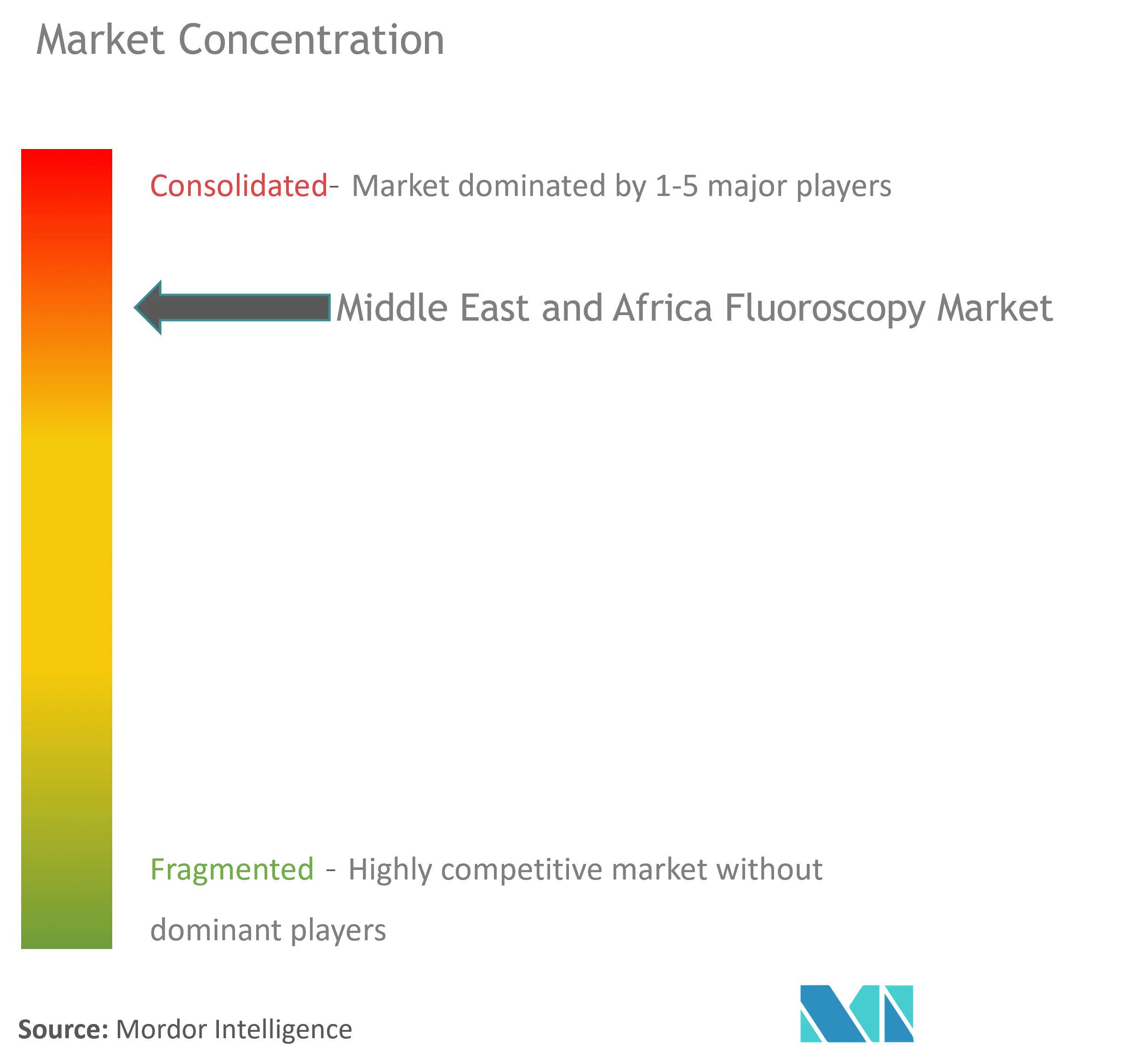
| Market Concentration | High |
Major Players *Disclaimer: Major Players sorted in no particular order Image © Mordor Intelligence. Reuse requires attribution under CC BY 4.0. | |
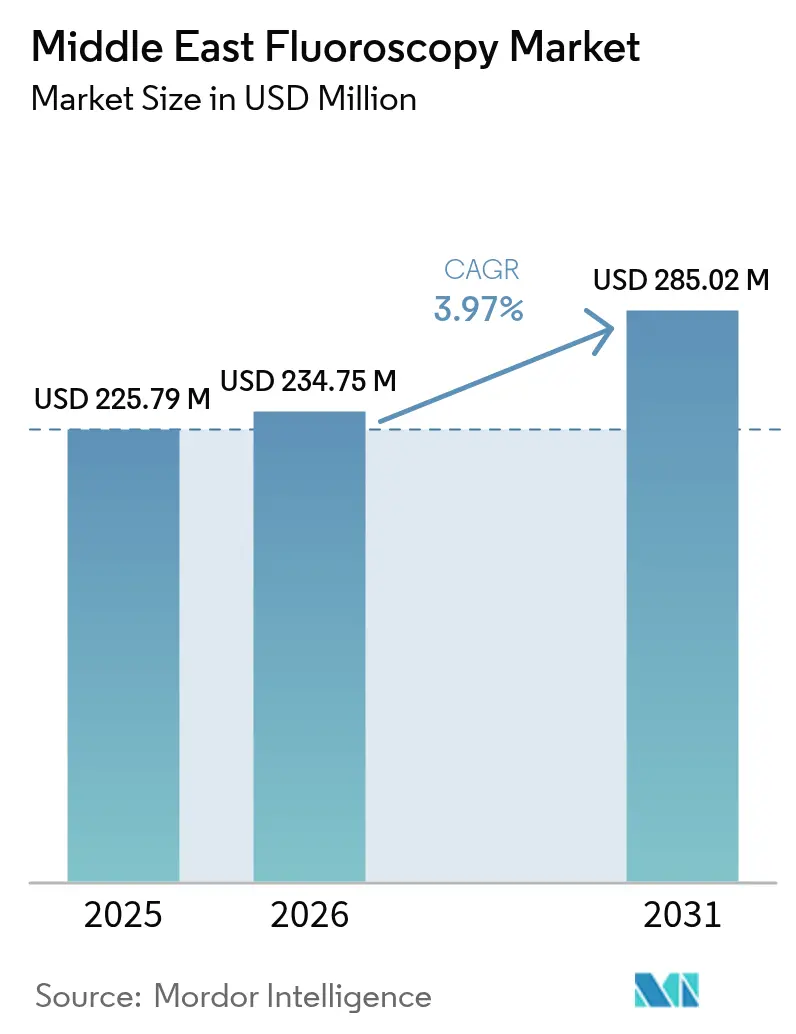
Middle East Fluoroscopy Market Analysis by Mordor Intelligence
Middle East Fluoroscopy Market size in 2026 is estimated at USD 234.75 million, growing from 2025 value of USD 225.79 million with 2031 projections showing USD 285.02 million, growing at 3.97% CAGR over 2026-2031.
The COVID-19 pandemic placed enormous pressure on hospitals and healthcare systems that were understaffed and overworked. For instance, an article published in the World Journal of Gastrointestinal Endoscopy in November 2021 reported that, as per a survey, there was a 13% reduction in endoscopic procedures at the beginning of the pandemic. Such a reduction in patient volume significantly impacted the demand for fluoroscopy, affecting market growth during the pandemic. However, the market returned to a pre-pandemic level as COVID-19 cases declined, which led to the normal to high demand levels for therapeutic and diagnostic procedures. For instance, according to an article published by the Saudi Journal of Medical and Pharmaceutical Sciences in February 2022, the COVID-19 pandemic has drastically influenced endoscopic retrograde cholangiopancreatography (a procedure that requires fluoroscopy) practice, with an increase in the urgent endoscopic retrograde cholangiopancreatography (ERCP) indications. Hence, the COVID-19 pandemic initially severely affected the market, but as the number of COVID-19 cases started to decline, the market experienced significant growth.
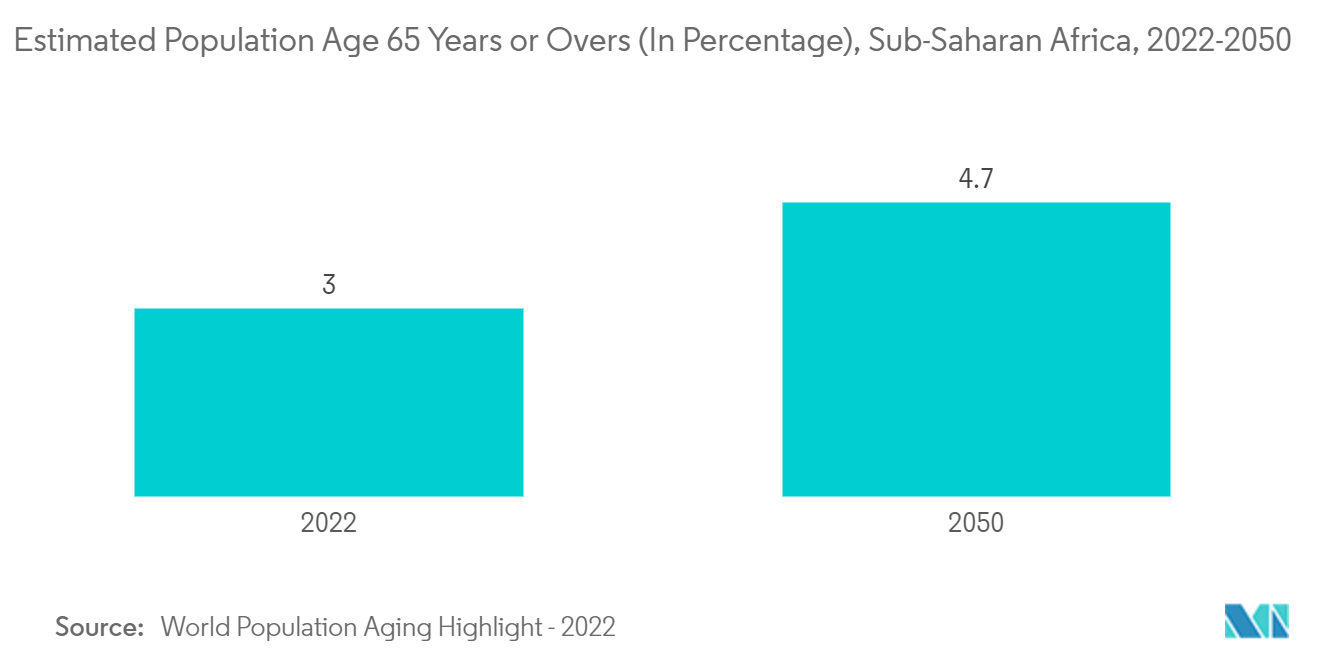
Factors such as rising demand for minimally-invasive surgeries, growing geriatric population, prevalence of chronic diseases, and advantages associated with fluoroscopy are expected to drive the market growth over the forecast period. For instance, as per the article published by Khaleej Times in November 2022, every year in the UAE, around 8,000 to 10,000 patients suffer from a stroke, equating to about one patient every hour. Such a high frequency of heart diseases is expected to fuel the demand for fluoroscopy thereby boosting the market growth. Furthermore, according to the 2022 statistics published by the United Nations Population Fund, in Egypt, a large proportion of the living population was aged 15-64, accounting for 61% in 2022. In addition, as per the same source, 6% of the population was 65 years and above in 2022. Likewise, as per the World Bank data released in December 2021, around 59.76% of Israel's total population was aged 15 to 64 years, and nearly 12.41% of Israel's total population was 65 years and older. As the geriatric population is prone to suffer from various chronic conditions this is likely to create demand for diagnosis which may contribute to market growth.
Additionally, according to an article published by Pain and Therapy, in February 2021, most interventions used for chronic pain management include fluoroscopy-guided surgeries. Furthermore, according to an article published by Radiation and Environmental Biophysics, in August 2021, in recent years, there has been growing use of X-ray fluoroscopy in clinical departments outside the main imaging departments for clinicians such as interventional cardiologists, electro-physiologists, vascular surgeons, urologists, orthopedic surgeons, and gastroenterologist in the gulf countries. Thus, with the rise in the use of fluoroscopy due to its advantages associated with it, the market is likely to grow over the forecast period.
However, side effects due to radiation exposure, the rising adoption of refurbished systems, and stringent regulations for imaging devices impede the market growth.
Note: Market size and forecast figures in this report are generated using Mordor Intelligence’s proprietary estimation framework, updated with the latest available data and insights as of 2026.
Market Trends and Insights
Cardiovascular Segment is Expected to Hold Significant Market Share over the Forecast Period
The cardiovascular segment is expected to grow over the forecast period due to the rising prevalence of cardiovascular diseases in the Middle East. The increased death rate due to cardiovascular diseases across developed countries and the increased geriatric population are expected to drive segmental growth. For instance, according to Saudi Health Ministry statistics, in 2021, 15% of the Saudi population suffered from hypertension, a risk factor contributing significantly to cardiovascular diseases. Hence, with the increasing risk factors and associated cardiovascular diseases, the demand for fluoroscopy is likely to increase, thereby boosting market growth.
Additionally, the government's increase in healthcare expenditure is also contributing to market growth. For instance, according to the Unicef MENA Generation 2030 regional Fact Sheet, total health expenditure per capita for 2030 and 2050 is projected to be USD 160 and USD 129, respectively. Thus, the increasing healthcare expenditure is expected to uplift the market in the coming years.
Hence, all the above-mentioned factors are expected to contribute to segmental growth over the forecast period.
GCC is Expected to Witness a Growth in the Studied Market Over the Forecast Period
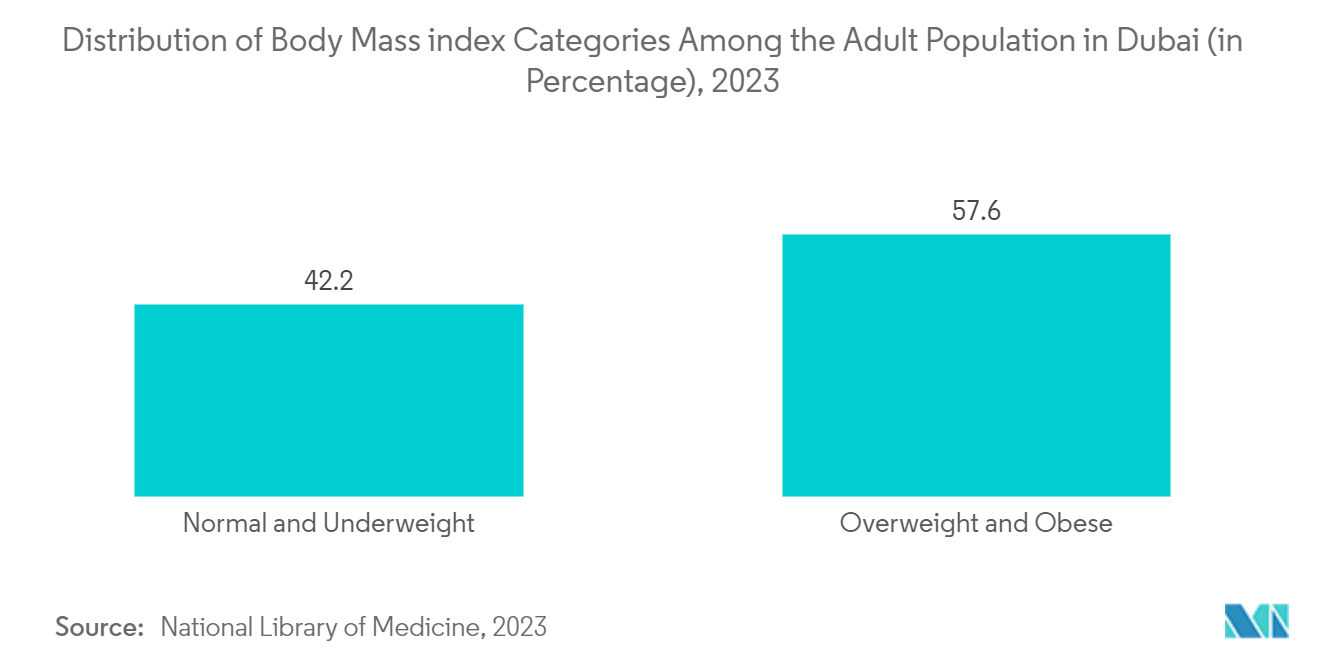
The Gulf Cooperation Council (GCC) comprises six countries Saudi Arabia, Kuwait, Bahrain, Qatar, the United Arab Emirates (UAE), and Oman. Factors such as the growing burden of diseases in these countries, product launches, and strategic initiatives by market players are likely to drive market growth during the study period. Fluoroscopy is a vitally important imaging modality for obese patients, commonly used to image post-gastric bypass patients. Therefore, an increased risk of obesity is expected to drive market growth. For instance, according to the World Obesity Atlas report of 2022, the prevalence of obesity is expected to increase by 50% in women, and 37% in men by 2030 in UAE. Hence, increased risk factor such as obesity is expected to increase the demand for fluoroscopy.
Furthermore, the presence of competitors and strategic initiatives undertaken by players is also contributing to market growth. For instance, in May 2022, Ibnsina Pharma acquired EI Shorouk Hospital, Egypt which aims to diversify the strategies in the healthcare sector to improve and equip all the healthcare services in the hospital, including the endoscopic unit. Thus, such mergers, acquisitions, and partnerships are driving the growth of the market growth.
Competitive Landscape
The Middle East fluoroscopy devices market is characterized by consolidation, with a few companies dominating the regional market. The competitive landscape includes analyzing local companies that hold market shares and are well known, including GE Healthcare (GE Company), Canon Medical Systems Corporation, Siemens Healthineers, Koninklijke Philips NV, and Hitachi Medical Systems, among others.
Middle East Fluoroscopy Industry Leaders
-
Canon Medical Systems Corporation
-
Siemens Healthineers
-
Koninklijke Philips NV
-
GE Healthcare (GE Company)
-
Hitachi Medical Systems
- *Disclaimer: Major Players sorted in no particular order
Middle East Fluoroscopy Market Companies Covered in this Report
- Canon
- Siemens Healthineers
- Koninklijke Philips
- GE Healthcare
- Hitachi
- Shimadzu
- Hologic
- Eurocolumbus
- Ziehm Imaging
- Varex Imaging
Market Opportunities and Future Outlook
Provider capacity build-outs and digital operating room programs across the GCC create room for new fluoroscopy installations and upgrades, especially where hospitals are expanding interventional cardiology, GI, urology, pain management, and hybrid OR capabilities. In the UAE, Dubai Healthcare City Authority broke ground in April 2026 on the PIXEL DHCC and IBN SINA+ developments under an AED 1.3 billion program, and Aster DM Healthcare announced an AED 1 billion UAE expansion in February 2026, both of which support incremental demand for diagnostic imaging and image-guided procedures.
On the technology side, hospital groups and health authorities are formalizing partnerships around integrated imaging and workflow digitization, which supports adoption of advanced fluoroscopy platforms, dose-management features, and service-led contracting. In May 2026, Johnson & Johnson MedTech partnered with the Abu Dhabi Department of Health to deploy the Polyphonic surgical intelligence network across providers such as Cleveland Clinic Abu Dhabi, PureHealth, Mediclinic Group, and NMC Healthcare. In June 2026, Philips signed a strategic technology partnership with Aster Procare Hospital in Al Khobar to deploy image-guided therapy solutions and advanced diagnostic imaging. At the same time, evolving UAE market-access rules and post-transfer oversight by the Emirates Drug Establishment, including MOHAP ministerial decisions in January 2026 covering recalls, registration, and pricing oversight, increases the need for compliant registration, traceability, and multi-channel distribution planning for OEMs and distributors operating across Saudi Arabia, the UAE, and the wider Middle East.
Recent Industry Developments in Middle East Fluoroscopy Market
- June 2026: Philips and Aster Procare Hospital in Al Khobar, Saudi Arabia, signed a strategic technology partnership to deploy image-guided therapy solutions and advanced diagnostic imaging. The agreement supports hospital modernization priorities aligned with Saudi Vision 2030 and strengthens Philips presence in high-acuity interventional and diagnostic workflows that rely on fluoroscopy.
- May 2026: Kent Imaging signed a distribution agreement with Roots Pharmaceutical Company W.L.L. to bring SnapshotNIR tissue oxygenation imaging to the GCC and Iraq. While not a fluoroscopy system, this expands adjacent peri-procedural imaging availability and reinforces the role of regional distribution networks that also influence imaging device procurement and service coverage.
- April 2026: Nanovision signed an MoU with Dubai-based Genpharm to explore introducing its Phased Array CT technology into the Middle East and North Africa. The agreement points to ongoing interest from imaging innovators in using local partners to enter regulated MENA markets, adding competitive pressure on established imaging vendors across hospital imaging portfolios.
Middle East Fluoroscopy Market Report Scope and Research Methodology
Market Definition and Coverage
For this study, the market is defined as the value of fluoroscopy systems used for real time X-ray imaging in clinical settings across the Middle East, measured in USD and captured at manufacturer level revenues.
Scope exclusions: The sizing excludes procedure fees, hospital service revenues, and maintenance-only contracts that are not bundled with equipment sales.
Segments Covered in This Report
- By Device Type
- Fixed Fluoroscopes
- Mobile Fluoroscopes
- By Application
- Orthopedic
- Cardiovascular
- Pain Management and Trauma
- Neurology
- Gastrointestinal
- Urology
- General Surgery
- Other Applications
- Geography
- Saudi Arabia
- United Arab Emirates
- Egypt
- Iran
- Rest of Middle East
Data Sources, Market Sizing, and Validation
Desk Research
Desk research was used to set the country coverage, confirm care delivery trends, and form realistic demand signals for fluoroscopy purchases. We reviewed public health spending and infrastructure indicators from the World Bank and WHO, and then cross-checked the imaging and radiation safety context through IAEA publications where available.
To keep the inputs practical, we also used country level procurement and utilization clues from ministries of health and national statistics portals. Where equipment imports were a meaningful signal, we referenced relevant customs and trade headings. Company annual reports, investor presentations, product brochures, and trusted press coverage were also used to validate typical system positioning (mobile versus fixed) and replacement patterns. For hard-to-find company financial splits, we referenced paid subscriptions for company financials and for news and filings, and those points were used only as checks rather than a single-point reference. These examples are not exhaustive, and other public and reference sources were also used for data collection, validation, and research clarification.
Primary Interviews and Surveys
Primary interviews and surveys were run to test assumptions on buying cycles, average selling price direction, and how mobile systems are selected versus fixed rooms across key care settings. We spoke with a mix of device-side leaders, distributors and channel partners, and hospital and imaging administrators across the Middle East, so gaps from desk research could be closed and the final numbers cross-verified.
Distribution of primary research fieldwork respondents
| Company type | Respondent position |
|---|---|
| Top tier: 33% | CXOs: 14% |
| Mid tier: 50% | Functional/Unit leaders: 34% |
| Smaller Players: 17% | Managers: 52% |
Market-Sizing & Forecasting
The market was first built using a top-down approach where imaging infrastructure signals and procedure-driven demand were translated into an equipment demand pool by country, and then converted into value using typical system price bands. To keep the outcome realistic, selective bottom-up approximations were then used, including supplier and channel checks on unit placements and sampled ASP x volume math, which were subsequently used to adjust totals where gaps appeared.
Key inputs that shaped the model included the installed base and replacement cycle for fluoroscopy rooms, the mix shift between mobile and fixed systems, tender activity and public procurement timing, hospital expansion and cath lab additions, and expected ASP movement due to feature upgrades and currency timing. Where bottom-up datapoints were missing for smaller countries, we applied proxy adoption rates from similar health system profiles and then re-tested them with interview feedback before finalizing.
For forecasting, scenario analysis was used so the base case could reflect how budgets, public tenders, and private hospital expansion typically move together in the region. Assumptions were kept transparent and were updated only when multiple independent signals pointed in the same direction.
Data Validation & Update Cycle
Validation was done by triangulating the model output with independent checks such as import trends for relevant equipment categories, major tender announcements, and observed replacement behavior shared by interviewees. When a country result looked unusually high or low, the drivers were re-opened, and additional calls were triggered to confirm whether the variance was caused by timing effects, one-off projects, or incorrect mix assumptions.
Before sign-off, a second analyst reviewed key inputs, growth logic, and arithmetic, followed by a consistency pass across countries and applications. Reports are refreshed annually, and interim updates are completed when material events occur, after which a fresh review is done before delivery so clients receive the latest updated view.
Mordor Intelligence's Middle East Fluoroscopy Market Size Versus Other Published Estimates
Published market sizes for fluoroscopy in the Middle East often differ because authors use different geographic bundles, count different device categories, and apply different pricing and timing assumptions. Year choice also matters because tenders and large hospital projects can move shipments between two calendar years.
The table below points to a wide spread, which is usually explained by whether the number represents only fluoroscopy systems or whether adjacent imaging and procedure-related revenues are included, and whether the geography is Middle East only versus a broader MEA bundle. Currency conversion timing and how price erosion versus feature-led ASP uplift is modeled can also move the final value, especially when inflation and exchange rates are volatile.
Benchmark comparison
| Source | Market Size | Gaps in Research Methodology |
|---|---|---|
| Mordor Intelligence | USD 234.75 M (2026) | |
| Global Consultancy A | USD 95.20 M (2024) | Uses a narrower fluoroscopy systems framing for MEA with different segmentation and a lower stated revenue base year, which can undercount mobile placements and tender timing effects when compared on a single-year snapshot. |
| Regional Consultancy B | USD 1.20 B (2024) | Appears to use a broader interpretation of the market that can blend technology categories or related imaging revenues, and it applies a more aggressive growth path without clearly showing unit and ASP assumptions by country. |
The table shows that the main gap is scope and year alignment. In Mordor Intelligence's model, the value is tied to fluoroscopy equipment sales across the covered Middle East countries, with mobile and fixed systems counted within the device scope and checked against procurement and replacement signals. With those choices kept explicit, the estimate stays traceable to demand indicators that a client can pressure-test and replicate.
Key Questions Answered in the Report
How big is the Middle East Fluoroscopy Market?
The Middle East Fluoroscopy Market size is expected to reach USD 234.75 million in 2026 and grow at a CAGR of 3.97% to reach USD 285.02 million by 2031.
What is the current Middle East Fluoroscopy Market size?
In 2026, the Middle East Fluoroscopy Market size is expected to reach USD 234.75 million.
Who are the key players in Middle East Fluoroscopy Market?
Canon Medical Systems Corporation, Siemens Healthineers, Koninklijke Philips NV, GE Healthcare (GE Company) and Hitachi Medical Systems are the major companies operating in the MEA Fluoroscopy Market.
What years does this Middle East Fluoroscopy Market cover, and what was the market size in 2025?
In 2025, the Middle East Fluoroscopy Market size was estimated at USD 225.79 million. The report covers the MEA Fluoroscopy Market historical market size for years: 2019, 2020, 2021, 2022, 2023 and 2024. The report also forecasts the MEA Fluoroscopy Market size for years: 2026, 2027, 2028, 2029, 2030 and 2031.