

Micro Perforated Films Market Size and Share
Market Overview
| Study Period | 2020 - 2031 |
|---|---|
| Market Size (2026) | USD 1.94 Billion |
| Market Size (2031) | USD 2.38 Billion |
| Growth Rate (2026 - 2031) | 4.18 % CAGR |
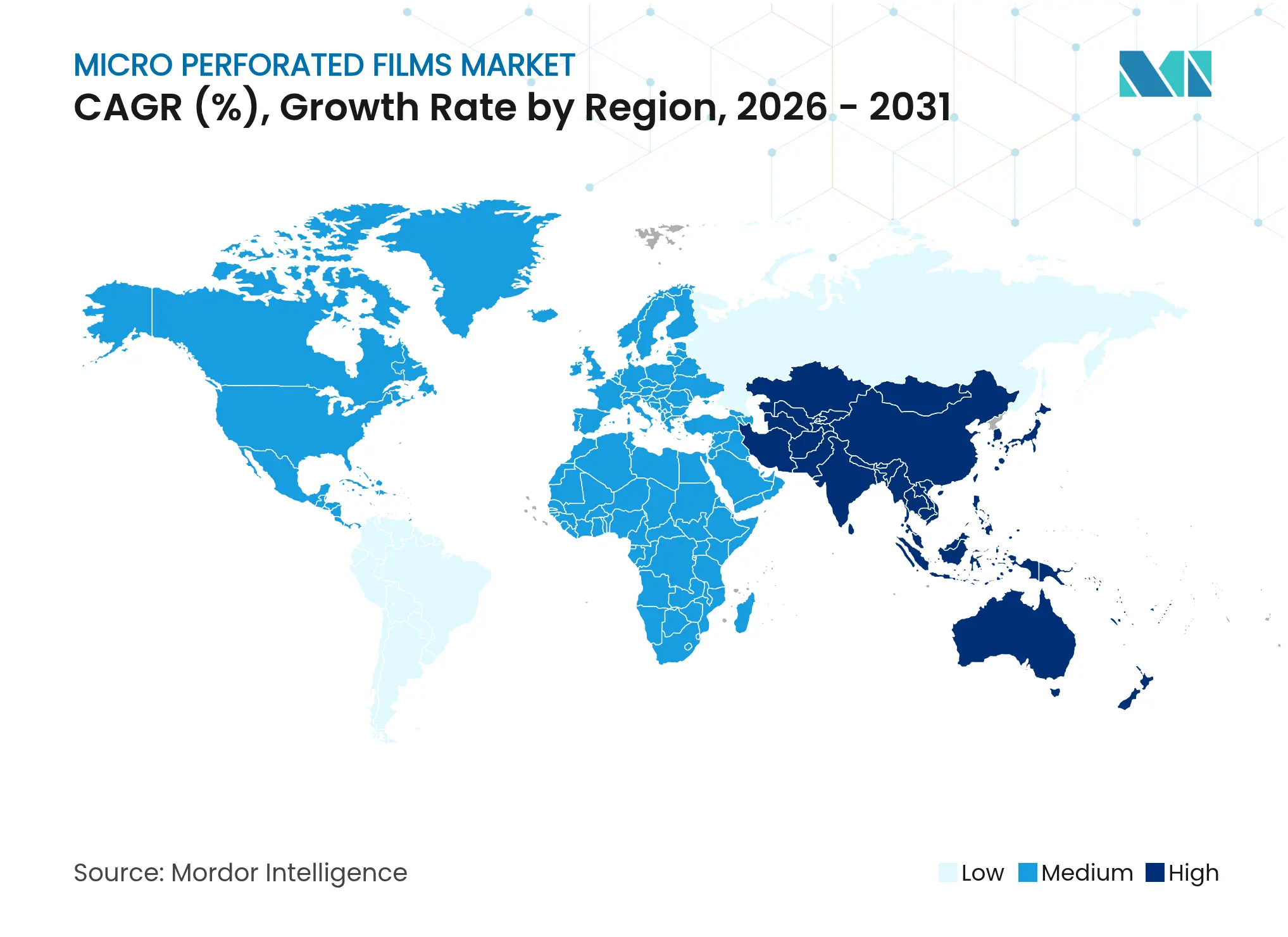
| Fastest Growing Market | Asia Pacific |
| Largest Market | Asia Pacific |
| Market Concentration | Medium |
Major Players *Disclaimer: Major Players sorted in no particular order. Image © Mordor Intelligence. Reuse requires attribution under CC BY 4.0. |

Micro Perforated Films Market Analysis by Mordor Intelligence
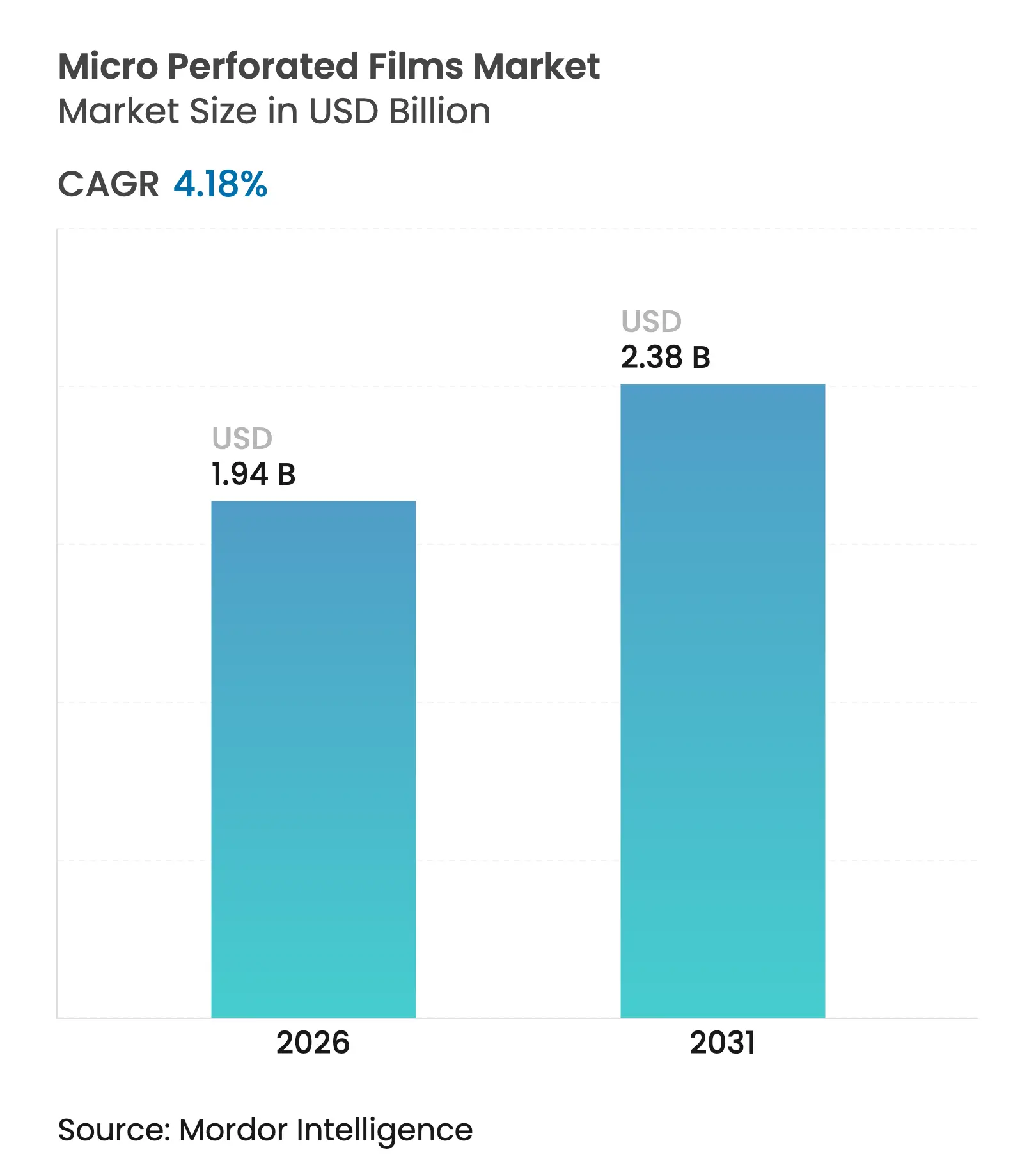
Micro Perforated Films market size in 2026 is estimated at USD 1.94 billion, growing from 2025 value of USD 1.86 billion with 2031 projections showing USD 2.38 billion, growing at 4.18% CAGR over 2026-2031. Rising demand for precision-engineered films that balance gas exchange with moisture retention keeps growth steady even as overall volume expansion moderates. Retail consolidation, e-commerce grocery adoption, and stringent shelf-life requirements intensify interest in laser micro-perforated solutions that extend freshness by 2-4 days for highly perishable items. Polypropylene (PP) retains leadership because it combines clarity, strength, and cost-effectiveness, yet polyethylene terephthalate (PET) gains traction on recyclability and higher barrier strength. Asia-Pacific remains the pivotal production and consumption center, bolstered by cold-chain investment and middle-class demand. Meanwhile, regulatory moves to curb PFAS in food contact materials and episodic shortages of specialty perforation needles nudge converters toward contamination-free laser technology.
Key Report Takeaways
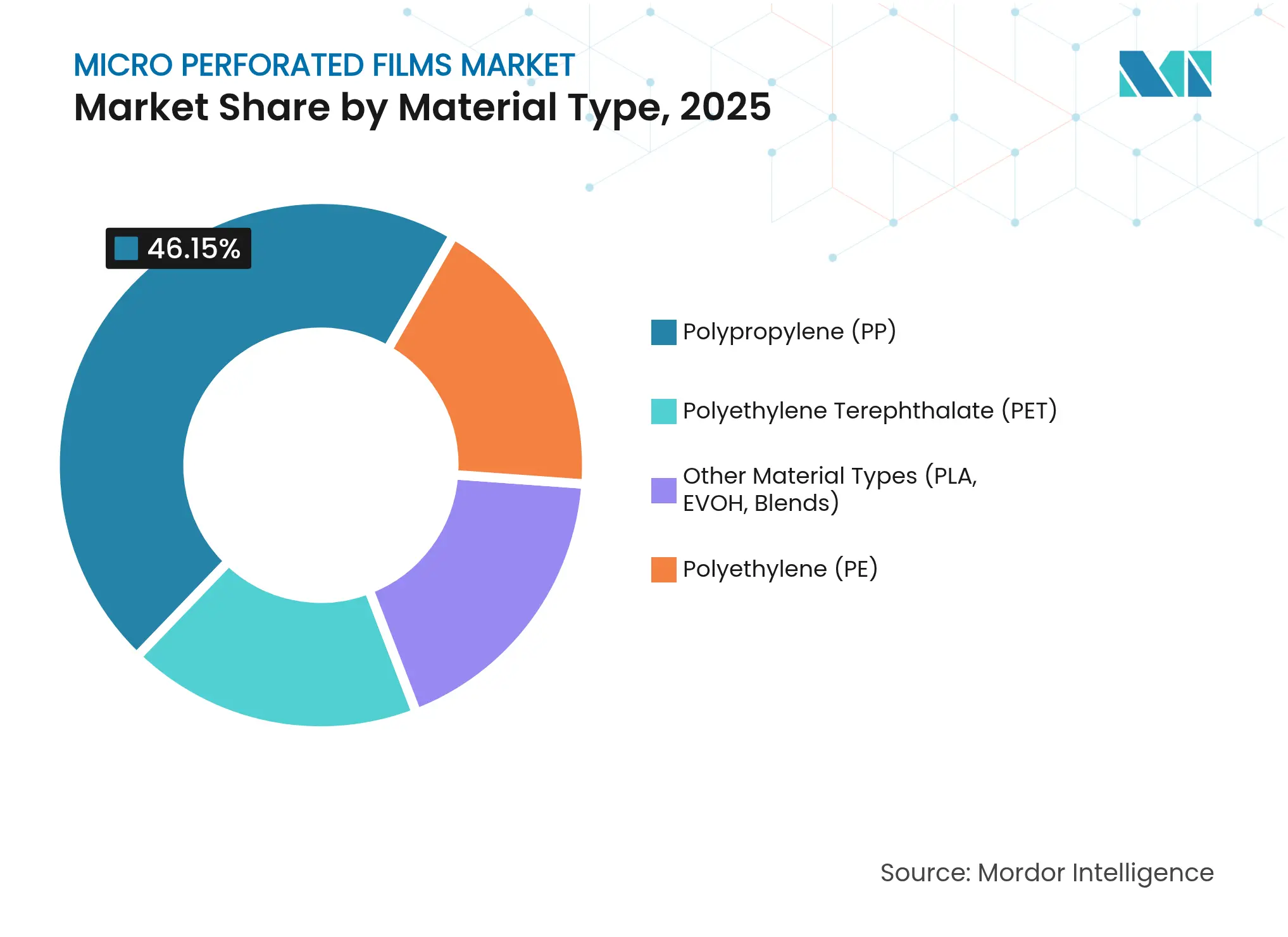
- By material type, polypropylene (PP) led with a 46.15% revenue share of the micro perforated films market share in 2025 while polyethylene terephthalate (PET) is projected to post the fastest 5.43% CAGR to 2031.
- By perforation method, mechanical needle lines held 64.50% of the micro perforated films market size in 2025 whereas laser systems are advancing at a 5.52% CAGR.
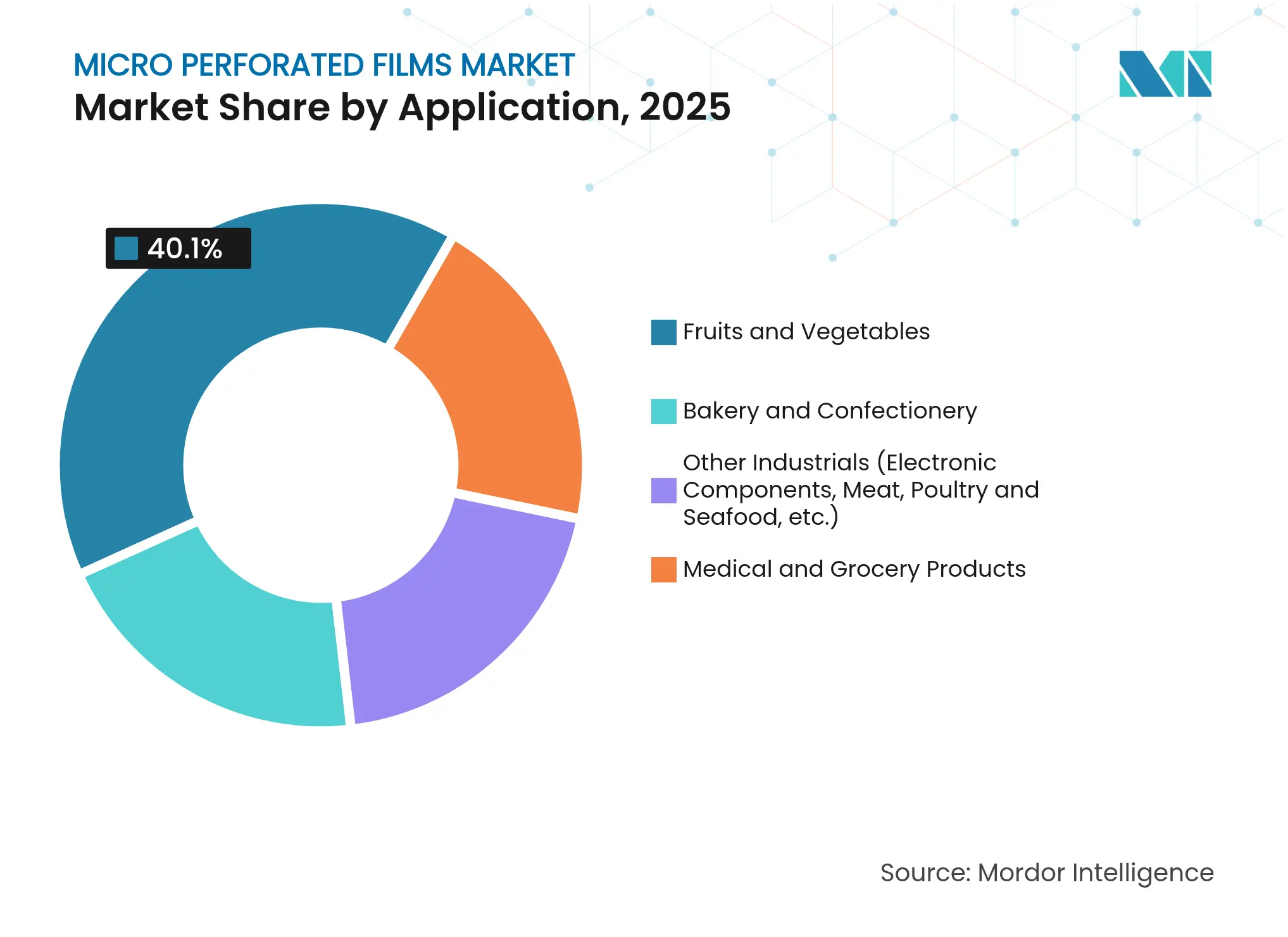
- By application, fresh fruits and vegetables packaging accounted for 40.10% of the micro perforated films market size in 2025 and is expected to post sustained mid-single-digit growth to 2031.
- By geography, Asia-Pacific controlled 44.30% of 2025 revenue while North America will record the highest regional CAGR of 5.36% through 2031.
Note: Market size and forecast figures in this report are generated using Mordor Intelligence's proprietary estimation framework, updated with the latest available data and insights as of 2026.
Global Micro Perforated Films Market Trends and Insights
Driver Impact Analysis
| Driver | (~) % Impact on CAGR Forecast | Geographic Relevance | Impact Timeline |
|---|---|---|---|
Longer shelf-life fresh produce packaging
|
+1.2%
|
Global, APAC & North America
|
Medium term (2-4 years)
|
Organised retail and e-commerce cold chains
| +0.8% | APAC core; spill-over Europe & North America | Long term (≥ 4 years) |
Shift to laser perforation
| +0.7% | Europe & North America first; APAC catching up | Short term (≤ 2 years) |
PP adoption in flexible packaging
| +0.6% | Global, strongest in APAC | Medium term (2-4 years) |
Salad meal-kit uptake
| +0.5% | North America & Europe, rising in urban APAC | Short term (≤ 2 years) |
| Source: Mordor Intelligence | |||
Rising Demand for Longer-Shelf-Life Fresh Produce Packaging
Retailers require packaging that keeps leafy greens, berries, and high-respiration produce marketable for multiple extra days. Micro perforated films maintain carbon dioxide at 3-5% and oxygen at 16-18% inside packs, lowering respiration and moisture loss. Shelf life gains of 4-8 days have cut waste costs by up to 25% for leading grocers. Precision perforation therefore translates into reduced shrinkage and broader delivery zones for produce suppliers. Brands see marketing advantages in fresher visual appearance, and converters able to customize hole density by crop type secure repeat contracts.
Expansion of Organised Retail and E-Commerce Cold Chains
Emerging markets build chilled warehouses and automated sortation hubs that expose produce to varied temperatures during transfers. Micro perforated films tailored for 0 °C to 10 °C prevent excess condensation and retain firmness across 24- to 48-hour shipment cycles. Meal-kit operators now specify films with integrated temperature dots and QR-based condition tracking. Consequently, cold-chain growth lifts film demand not only by volume but also by technical complexity, supporting premium pricing.
Shift from Needle to Laser Micro-Perforation for Uniform Gas Transmission
Laser systems generate holes with ±5 µm tolerance and avoid physical contact, eliminating metal shavings and microbial transfer risks. Changeovers occur via software settings rather than needle swaps, lifting uptime. Acoustic sensors embedded in the laser head verify penetration depth, a safeguard that has become critical for customers audited under Hazard Analysis and Critical Control Points (HACCP) regimes. Capital outlays prove defensible because labor and consumable savings plus quality gains recoup investments within two years for high-volume plants.
Growing Adoption of Polypropylene Films in Flexible Packaging
PP’s mechanical strength, clarity, and cost advantage cement its role, but sustainability expectations push development of bio-circular PP derived from used cooking oil that matches conventional grade performance. BOPP variants incorporating 30% post-consumer recycled resin still meet optical and barrier targets, helping brand owners hit recycled-content pledges[1]. PP’s easy machinability on both needle and laser lines gives converters operational flexibility when supply or regulations shift.
Restraint Impact Analysis
| Restraint | (~) % Impact on CAGR Forecast | Geographic Relevance | Impact Timeline |
|---|---|---|---|
Contamination risk in conventional lines
|
-0.4%
|
Global, food-grade focus
|
Short term (≤ 2 years)
|
PFAS regulation limiting fluoropolymer laser masks
| -0.3% | Europe & North America, globalizing | Medium term (2-4 years) |
Tight supply of specialty stainless micro-punch needles
| -0.2% | Global, acute in APAC | Short term (≤ 2 years) |
| Source: Mordor Intelligence | |||
High Contamination Risk in Conventional Lines
Needle tips contact film at speeds topping 300 strokes per minute, creating burrs and metal dust that threaten food safety. Plants must halt production for sanitizing breaks, pushing up downtime and cleaning chemical costs. Regulatory audits highlight perforation as a critical control point, leading some converters to cap run speeds, which limits capacity during seasonal demand spikes.
Emerging PFAS Regulation Limiting Fluoropolymer Laser Masks
The European Union’s 2026 deadline caps total PFAS at 25 ppb, disqualifying popular fluoropolymer masks that resist laser heat yet may leach trace compounds[2]. Substitutes such as ceramic composites deliver lower life cycles and reduced hole uniformity, meaning early adopters face recalibrations. Equipment original-equipment-manufacturers accelerate R&D yet still face bridge periods where clients must validate new mask materials under strict migration tests.
Segment Analysis
By Material Type: Polypropylene Leadership Meets Polyethylene Terephthalate Momentum
Polypropylene possessed the largest stake at 46.15% of the micro perforated films market in 2025 thanks to its balanced cost, strength, and water-vapor barrier. BOPP grades allow converters to hit tight hole sizes without film tearing. Bio-circular PP derived from used cooking oil now offers identical machinability while trimming carbon footprints.
PET ranks as the fastest riser at a 5.43% CAGR. Its higher oxygen barrier and clarity suit premium salad, berry, and medical packs that require visual checks. Recyclability in established PET bottle streams strengthens positioning in regions with extended producer responsibility rules. The micro perforated films market size for PET therefore expands faster than overall demand, especially in Europe where retailers prefer mono-polymer recyclability schemes. HDPE and LDPE stay relevant in colder-chain bakery wraps due to flexibility under sub-zero temperatures, though growth stabilizes. Emerging PLA and EVOH co-extrusions meet niche calls for biodegradability or extreme aroma protection but still represent single-digit shares.
Note: Segment shares of all individual segments available upon report purchase
By Perforation Method: Laser Gains on Mechanical Dominion
Needle perforation still commands 64.50% of 2025 revenue because legacy lines remain fully depreciated and can hit high web speeds. Yet downtime for needle swaps and cleaning continues to weigh on throughput. The micro perforated films market size attributed to laser solutions grows quickly as brands tighten tolerance standards.
Laser’s 5.52% CAGR rests on contactless processing, immediate hole pattern changes, and elimination of consumables. Nd:YAG and CO₂ heads process PP, PET, and recyclable PE alike, offering multi-material flexibility. Acoustic feedback loops detect incomplete penetration, preventing pinholes that could accelerate spoilage. Hot-pin and electrostatic techniques serve small niches where irregular hole geometry is demanded, but neither technology shows breakout potential.
By Application: Produce Packaging Dominates, Diversification Emerges
Fresh fruits and vegetables accounted for 40.10% of 2025 value because respiration-sensitive crops like berries, grapes, and leafy greens cannot tolerate generic films. Converters supply crop-specific patterns that balance CO₂ buildup with dehydration control, winning multi-year supply contracts with retailers. Bakery snacks leverage smaller hole arrays that vent moisture without drying contents, retaining softness past shelf-date targets.
Medical packaging sees rising interest as sterilizable PET films with micro vents allow ethylene-oxide outgassing while blocking particulate ingress. Electronics pouches now specify micro perforated films to manage humidity and static charge simultaneously. The micro perforated films market share associated with these industrial uses remains modest yet posts a 5.74% CAGR as suppliers demonstrate case studies.
Note: Segment shares of all individual segments available upon report purchase
Geography Analysis
Asia-Pacific captured 44.30% of global 2025 revenue, reflecting both manufacturing cost advantage and swelling consumption of chilled fresh foods. China spent more than USD 20 billion on cold-chain nodes since 2024, broadening the addressable base for advanced produce packaging. Regional converters integrate high-speed laser arrays to serve domestic grocers and cross-border fruit exporters. India’s double-digit e-commerce grocery growth forces suppliers to meet 24-hour delivery windows despite tropical heat, spurring adoption of breathable film formats.
North America holds a solid second position. The United States leads technology uptake, with major salad processors retrofitting plants for laser micro-perforation to comply with Food Safety Modernization Act verification audits. Canadian berry exporters adopt PP-PET laminate structures in response to longer rail corridors that demand eight-day firmness retention. Latin produce sourced from Mexico now arrives fresher in northern retail thanks to optimized micro-vent packs. Europe emphasizes regulatory compliance and circularity. Retail chains require mono-material solutions compatible with deposit-return lines, favoring PET and PP films with 30% recycled content. Early enforcement of PFAS bans triggers faster pivot to ceramic laser masks, prompting European packers to partner closely with equipment suppliers on validation protocols. South America, the Middle East, and Africa collectively contribute smaller shares but exhibit catch-up potential. Brazil’s mango and grape exporters test micro perforated packs that minimize condensation during trans-Atlantic voyages. Gulf States supermarkets pilot salad bowls sealed with laser-vented lids to handle 35 °C logistics. African citrus exporters begin to trial breathable liners for sea shipments, aiming to slash waste rates that previously exceeded 15%.

Competitive Landscape
Market Concentration
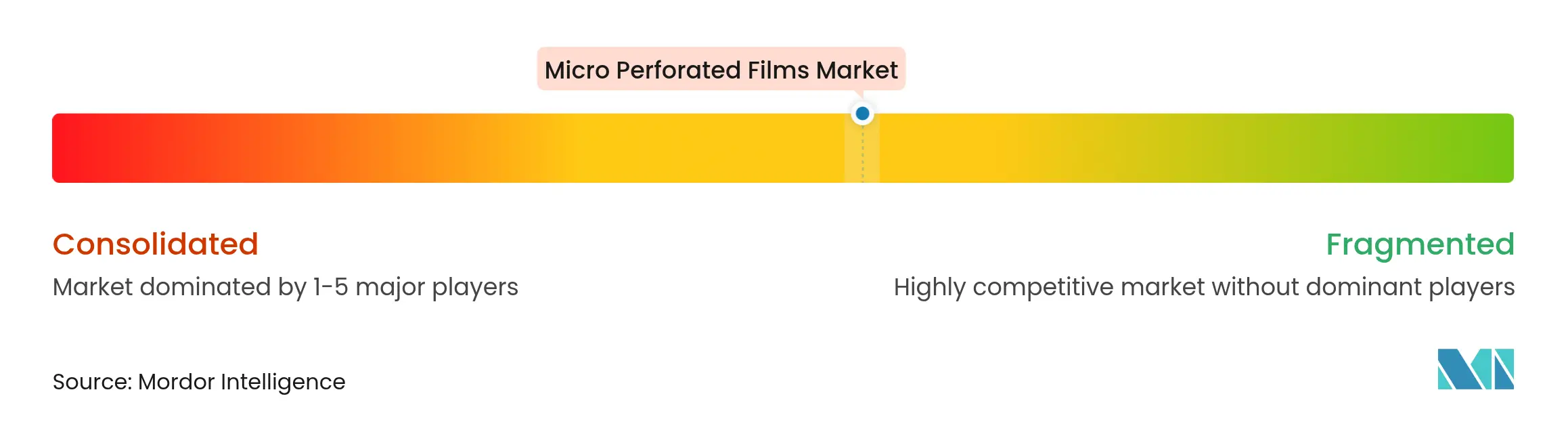
The Micro Perforated Films Market exhibits moderate fragmentation. Amcor’s 2025 introduction of AI-guided perforation monitors cut defect rates for citrus liners presented at IPPE. Sealed Air rolls out predictive maintenance software that alerts operators when laser optics drift out of calibration, trimming unscheduled downtime.
Mid-tier challengers specialize in laser retrofits, offering speed-boost modules that bolt on to older mechanical lines and lift output by 15%. These niche vendors win business where converters hesitate to scrap depreciated assets yet still need tighter tolerances. Asian converters leverage regional raw-material cost positions to bid aggressively on supermarket contracts, though lack of in-house R&D limits differentiation.
Regulatory trends create windows for disruptors. Firms that commercialize PFAS-free laser masks ahead of the 2026 European deadline could secure technology licensing royalties. Suppliers of bio-circular PP pellets forge alliance models with converters eager to advertise low-carbon footprints on produce labels. Meanwhile, ongoing tightness in needle steel triggers collaborative purchasing clubs among smaller converters aiming to secure allocation.
Micro Perforated Films Industry Leaders

*Disclaimer: Major Players sorted in no particular order
Recent Industry Developments
- February 2025: The European Union finalized Regulation 2025/40, setting strict PFAS limits in food packaging, effective August 2026. The thresholds are 25 ppb for individual PFAS, 250 ppb for the total sum, and 50 ppm for polymeric PFAS. These regulations will impact laser micro-perforation systems using fluoropolymer masks, affecting the Micro Perforated Films Market.
- August 2023: Amcor acquired Phoenix Flexibles, a Gujarat-based flexible packaging plant generating approximately USD 20 million annually from food, home care, and personal care applications. This acquisition enhances Amcor's production capacity and strengthens its position in the Micro Perforated Films Market.
Table of Contents for Micro Perforated Films Industry Report
1. Introduction
- 1.1 Study Assumptions and Market Definition
- 1.2 Scope of the Study
2. Research Methodology
3. Executive Summary
4. Market Landscape
- 4.1 Market Overview
- 4.2 Market Drivers
- 4.2.1 Rising demand for longer-shelf-life fresh produce packaging
- 4.2.2 Expansion of organised retail and e-commerce cold chains
- 4.2.3 Shift from needle to laser micro-perforation for uniform gas transmission
- 4.2.4 Growing adoption of polypropylene (PP) films in flexible packaging
- 4.2.5 Surge in micro-perforated films usage for ready-to-eat salad meal-kits
- 4.3 Market Restraints
- 4.3.1 High contamination risk in perforation step of conventional lines
- 4.3.2 Emerging PFAS regulation limiting fluoropolymer laser masks
- 4.3.3 Supply tightness of specialty stainless micro-punch needles
- 4.4 Value Chain Analysis
- 4.5 Porter’s Five Forces
- 4.5.1 Threat of New Entrants
- 4.5.2 Bargaining Power of Buyers
- 4.5.3 Bargaining Power of Suppliers
- 4.5.4 Threat of Substitute Products
- 4.5.5 Degree of Competition
5. Market Size and Growth Forecasts (Value)
- 5.1 By Material Type
- 5.1.1 Polypropylene (PP)
- 5.1.2 Polyethylene Terephthalate (PET)
- 5.1.3 Polyethylene (PE)
- 5.1.4 Other Material Types (PLA, EVOH, Blends)
- 5.2 By Perforation Method
- 5.2.1 Mechanical Needle Perforation
- 5.2.2 Laser Micro-Perforation (CO₂, Nd:YAG)
- 5.2.3 Electro-static / Hot-Pin
- 5.3 By Application
- 5.3.1 Fruits and Vegetables
- 5.3.2 Bakery and Confectionery
- 5.3.3 Medical and Grocery Products
- 5.3.4 Other Industrials (Electronic Components, Meat, Poultry and Seafood, etc.)
- 5.4 Geography
- 5.4.1 Asia-Pacific
- 5.4.1.1 China
- 5.4.1.2 Japan
- 5.4.1.3 India
- 5.4.1.4 South Korea
- 5.4.1.5 ASEAN Countries
- 5.4.1.6 Rest of Asia-Pacific
- 5.4.2 North America
- 5.4.2.1 United States
- 5.4.2.2 Canada
- 5.4.2.3 Mexico
- 5.4.3 Europe
- 5.4.3.1 Germany
- 5.4.3.2 United Kingdom
- 5.4.3.3 France
- 5.4.3.4 Italy
- 5.4.3.5 Spain
- 5.4.3.6 Russia
- 5.4.3.7 NORDIC Countries
- 5.4.3.8 Rest of Europe
- 5.4.4 South America
- 5.4.4.1 Brazil
- 5.4.4.2 Argentina
- 5.4.4.3 Rest of South America
- 5.4.5 Middle East and Africa
- 5.4.5.1 Saudi Arabia
- 5.4.5.2 South Africa
- 5.4.5.3 Rest of Middle East and Africa
6. Competitive Landscape
- 6.1 Market Concentration
- 6.2 Strategic Moves
- 6.3 Market Share(%)/Ranking Analysis
- 6.4 Company Profiles (includes Global level Overview, Market level overview, Core Segments, Financials as available, Strategic Information, Market Rank/Share for key companies, Products and Services, and Recent Developments)
- 6.4.1 Aera
- 6.4.2 Amcor plc
- 6.4.3 Bolloré ITF
- 6.4.4 Dhwani
- 6.4.5 HEXIS S.A.S.
- 6.4.6 Jiangyin Bairuijia Plastics Science & Technology Co., Ltd.
- 6.4.7 Mondi
- 6.4.8 Oerlemans Packaging
- 6.4.9 Penguin Plastics
- 6.4.10 Sealed Air
- 6.4.11 Specialty Polyfilms Pvt. Ltd.
- 6.4.12 Taghleef Industries
7. Market Opportunities and Future Outlook
- 7.1 White-space and Unmet-Need Assessment
Global Micro Perforated Films Market Report Scope
The Micro Perforated Films market report includes:
| By Material Type | Polypropylene (PP) | |
| Polyethylene Terephthalate (PET) | ||
| Polyethylene (PE) | ||
| Other Material Types (PLA, EVOH, Blends) | ||
| By Perforation Method | Mechanical Needle Perforation | |
| Laser Micro-Perforation (CO₂, Nd:YAG) | ||
| Electro-static / Hot-Pin | ||
| By Application | Fruits and Vegetables | |
| Bakery and Confectionery | ||
| Medical and Grocery Products | ||
| Other Industrials (Electronic Components, Meat, Poultry and Seafood, etc.) | ||
| Geography | Asia-Pacific | China |
| Japan | ||
| India | ||
| South Korea | ||
| ASEAN Countries | ||
| Rest of Asia-Pacific | ||
| North America | United States | |
| Canada | ||
| Mexico | ||
| Europe | Germany | |
| United Kingdom | ||
| France | ||
| Italy | ||
| Spain | ||
| Russia | ||
| NORDIC Countries | ||
| Rest of Europe | ||
| South America | Brazil | |
| Argentina | ||
| Rest of South America | ||
| Middle East and Africa | Saudi Arabia | |
| South Africa | ||
| Rest of Middle East and Africa | ||
