
Micro-hospitals Market Size and Share
Market Overview
| Study Period | 2021 - 2032 |
|---|---|
| Market Size (2027) | USD 397.71 Billion |
| Market Size (2032) | USD 596.65 Billion |
| Growth Rate (2027 - 2032) | 8.45 % |
| Fastest Growing Market | Asia-Pacific |
| Largest Market | North America |
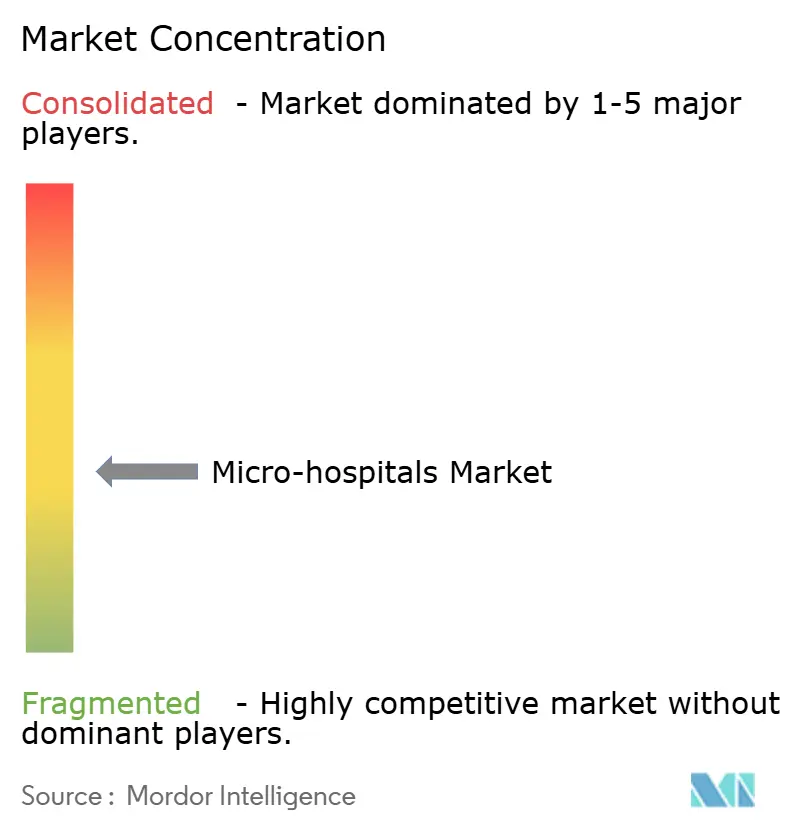
| Market Concentration | Medium |
Major Players
*Disclaimer: Major Players sorted in no particular order Image © Mordor Intelligence. Reuse requires attribution under CC BY 4.0. |
|
Micro-hospitals Market Analysis by Mordor Intelligence
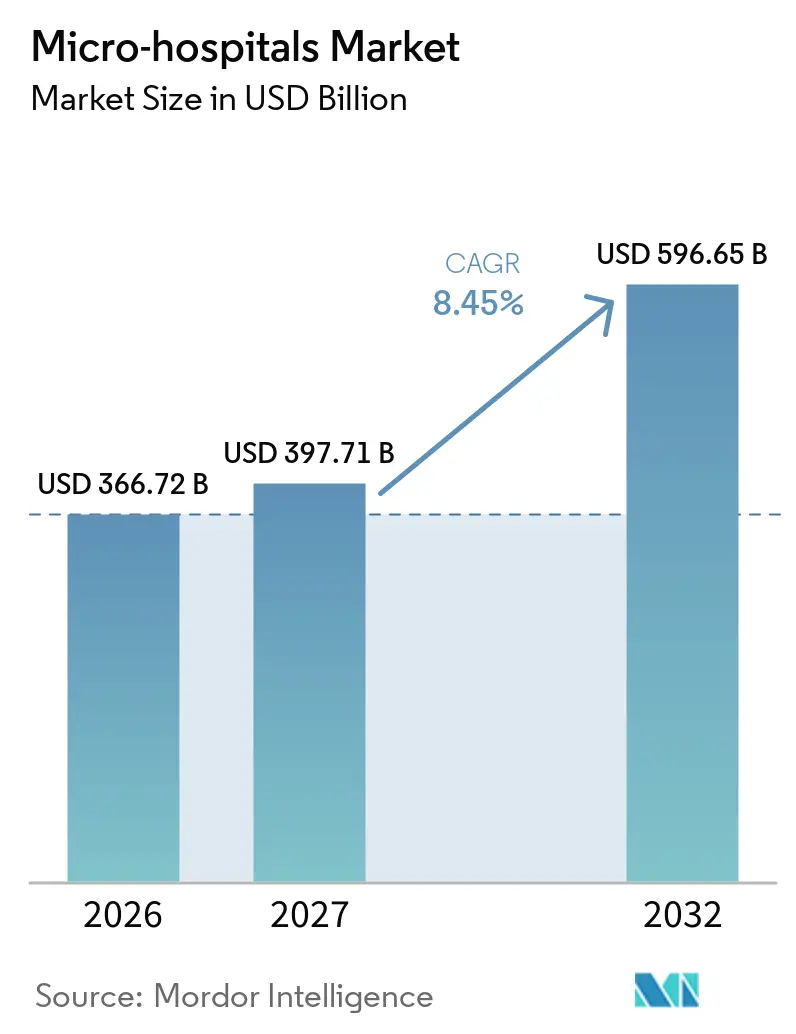
The Micro-hospitals Market size is expected to grow from USD 366.72 billion in 2026 to USD 397.71 billion in 2027 and is forecast to reach USD 596.65 billion by 2032 at 8.45% CAGR over 2027-2032.
The Micro-hospitals market is moving toward distributed acute care, with health systems using smaller sites to extend emergency and observation capacity beyond major campuses. This approach addresses the pressure on tertiary hospitals while giving patients access to care closer to home. Large integrated providers are increasingly treating compact facilities as a route into suburban, urban, and underserved catchments rather than as isolated pilots. The model also benefits from virtual physician coverage, in-person nursing, remote diagnostics, and a growing preference for outpatient and short-stay care. Competition is broadening as established health systems, specialist operators, and physician-led developers pursue similar sites and payer relationships.
Key Report Takeaways
- By bed capacity, 10-24 beds held 58.43% of revenue in 2026, while sub-10-bed facilities are forecast to grow at an 8.92% CAGR through 2032 in the micro-hospitals market.
- By service type, Emergency Care held 31.27% of revenue in 2026, while Primary and Urgent Care are forecast to grow at a 9.25% CAGR through 2032.
- By ownership, Private For-Profit facilities held 48.57% of revenue in 2026, while Private Non-Profit facilities are forecast to grow at a 9.83% CAGR through 2032 in the micro-hospitals market.
- By facility model, Health-System-Affiliated facilities held 62.19% of revenue in 2026, while standalone facilities are forecast to grow at a 10.44% CAGR through 2032.
- By payer, Private Insurance and Managed Care held 46.25% of revenue in 2026, while Public Insurance, Medicare, and Medicaid are forecast to grow at a 10.76% CAGR through 2032 in the micro-hospitals market.
- By location, suburban facilities held 43.61% of revenue in 2026, while urban facilities are forecast to grow at an 11.27% CAGR through 2032.
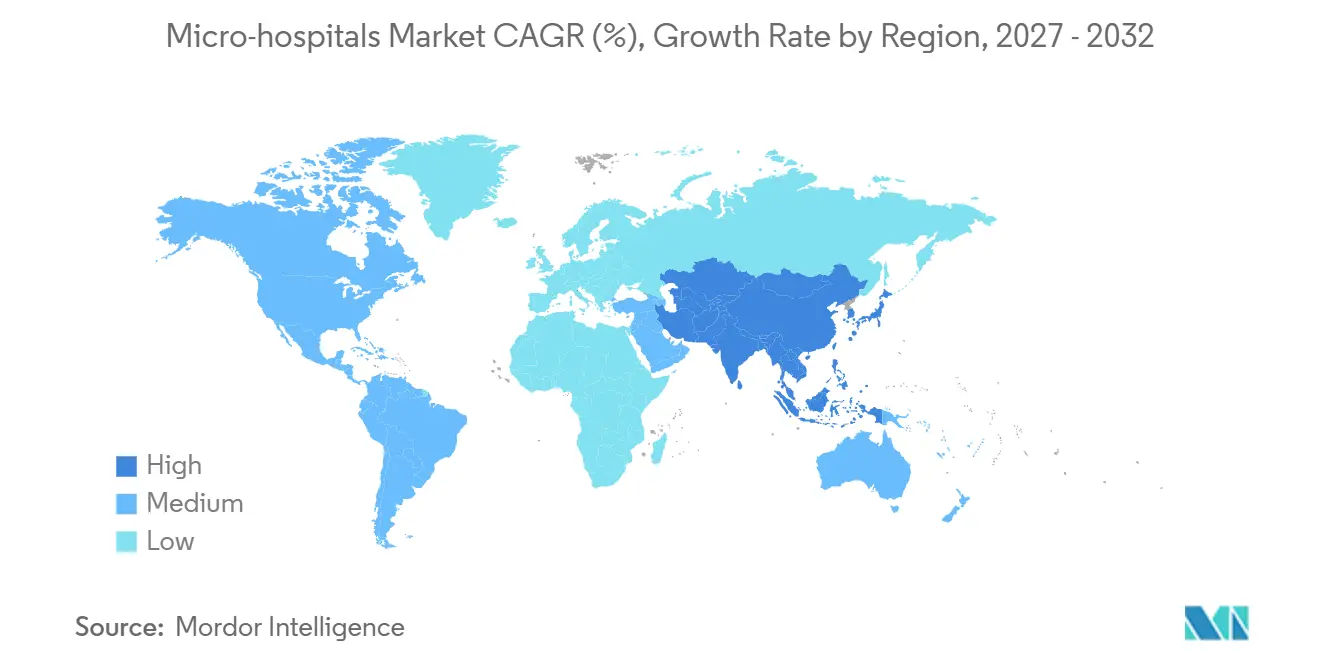
- By geography, North America commanded 36.42% of the micro-hospitals market in 2026; Asia-Pacific is forecast to register a 12.48% CAGR through 2032.
Note: Market numbers in this report are based on Mordor Intelligence's proprietary estimation framework, which combines nine months of actuals with Q4 projections for base year 2026.
Market Trends and Insights
Drivers Impact Analysis of Micro-hospitals Market*
| Driver | (~) % Impact on CAGR Forecast | Geographic Relevance | Impact Timeline |
|---|---|---|---|
| Community-Level Acute Care Demand | +2.3% | Global, with core gains in North America and APAC urban peripheries | Short term (≤ 2 years) |
| Lower Capital Intensity and Faster Deployment | +1.6% | North America and Europe | Short term (≤ 2 years) |
| Expansion Into Underserved Catchments | +1.4% | North America, APAC, and MEA | Medium term (2-4 years) |
| Outpatient and Short-Stay Care Migration | +1.2% | North America and the EU | Medium term (2-4 years) |
| Telehealth and Remote Diagnostics | +0.9% | Global, with early gains in North America and APAC | Long term (≥ 4 years) |
| Health-System Partnerships and Mixed-Use Hubs | +0.7% | North America, the UK, and GCC countries | Long term (≥ 4 years) |
| Source: Mordor Intelligence | |||
Demand for Convenient Community-Level Acute Care
The Micro-hospitals market is supported by communities that need faster access to emergency and short-stay care. Smaller facilities can place emergency capacity nearer to residents who are distant from full-service hospitals. Patient preference for nearby emergency and acute care is a principal driver for the Micro-hospitals market. Communities with long emergency department waits can use a community facility as an initial point of care for high-acuity events that do not require a major hospital. A patient who first uses a micro-hospital emergency service may later use its outpatient services. This pattern supports a broader role for the facility in the local care network. Friendswood, Texas, received its first hospital in September 2025 through a USD 25 million micro-hospital. The project illustrates the remaining opportunity in communities without a hospital facility.[1]
Community proximity also matters for health systems that are seeking to strengthen patient relationships across a local care network. Emergency access gives a compact hospital a clear role, while imaging, observation, and outpatient services make the site useful beyond an acute episode. The format can reduce travel time for patients who otherwise would delay care or use distant emergency departments. It can also give systems a visible presence in neighborhoods where a traditional campus is not feasible. The Micro-hospitals market benefits when the facility is designed as part of a coordinated clinical network rather than a standalone building. That connection is especially important when a patient needs a rapid transfer, specialist consultation, or follow-up service.
Lower Capital Intensity and Faster Facility Deployment
The Micro-hospitals market benefits from the lower capital requirement of a compact facility. A facility spanning 18,000 to 30,000 square feet can open within 18 to 24 months. The reported capital requirement is USD 20 million to USD 70 million. A full-service hospital can require multiyear planning and USD 500 million or more in construction spending. This gap allows operators to test local demand while larger providers remain committed to campus plans. In August 2026, a USD 21.9 million loan supported a Nutex Health facility within a Clermont, Florida, retail center, showing how retail sites can lower land costs.[2]
Simpler, single-story layouts can reduce construction complexity and limit the amount of capital tied up before opening. These economics allow providers to sequence expansion around verified demand. Faster development also changes how operators evaluate real estate risk. A smaller site can fit on land that would not support a conventional campus, including suburban edge parcels and redevelopment sites. That flexibility gives health systems an option to establish service access before committing to a larger facility.
Expansion Into Suburban, Rural, and Underserved Catchments
The Micro-hospitals market has remaining capacity in suburban and rural catchments. The opportunity is less developed outside the United States and remains incomplete within it. Kootenai Health and MultiCare announced a 30-acre Prairie Medical Campus in Post Falls, Idaho, in March 2025. Its first phase includes a micro-hospital with a 12-room emergency department, advanced imaging, and overnight capacity. The campus responds to a county population that is projected to double over 20 years.[3] Pacific OneHealth announced an INR 300 crore investment, equivalent to USD 35.5 million at 2025 rates, for a community micro-hospital network beginning with 5 facilities in Delhi NCR.
Rural need is also relevant because hospital closures have reduced local access in some communities. The model can provide emergency, imaging, and overnight capacity without attempting to duplicate every specialty service of a tertiary hospital. Its role depends on reliable referral arrangements for patients who require intensive or complex treatment. Kootenai Health and MultiCare announced a 30-acre Prairie Medical Campus in Post Falls, Idaho, in March 2025. The Micro-hospitals market can benefit from that role because the facility supports patient access while creating a foundation for related outpatient services. The model is most durable when operators match the scope of care to local population density, staffing availability, and referral capacity.
Outpatient, Short-Stay, and Value-Based Care Migration
The Micro-hospitals market is also supported by care moving from inpatient settings to outpatient and short-stay settings. CMS removed 285 musculoskeletal procedures from inpatient-only restrictions in 2026. This change lowers a barrier that previously directed many surgical cases to inpatient facilities. It creates an opportunity for compact facilities designed for short-stay surgical care. Commercial payers are also moving care to outpatient settings faster than earlier CMS modeling anticipated. Facilities built only for emergency and observation care may need changes to their floor plans and clinical teams as surgical volume rises.[4]
The movement from inpatient treatment toward outpatient and short-stay care favors facilities built for rapid assessment and observation. Compact hospitals can manage patients who need clinical monitoring but do not require a lengthy admission. The Micro-hospitals industry is aligned with value-based arrangements because these arrangements place attention on avoidable admissions and coordinated care. The American Hospital Association reported in 2025 that rural providers are forming partnerships to improve data capabilities and payer negotiations.
Restraints Impact Analysis of Micro-hospitals Market*
| Restraint | (~) % Impact on CAGR Forecast | Geographic Relevance | Impact Timeline |
|---|---|---|---|
| Clinical Workforce Shortages and Wage Inflation | -0.7% | Global, especially U.S. nonmetro areas and developing APAC markets | Short term (≤ 2 years) |
| Reimbursement, Certificate-of-Need, and Licensing Uncertainty | -0.5% | North America and the EU | Medium term (2-4 years) |
| Low-Volume Economics and Service-Line Cannibalization | -0.3% | North America and Europe | Medium term (2-4 years) |
| Specialist Coverage and Transfer Dependence | -0.2% | Global | Long term (≥ 4 years) |
| Source: Mordor Intelligence | |||
Clinical Workforce Shortages and Wage Inflation
Workforce availability remains a persistent constraint for the Micro-hospitals market. The model depends on lean staffing and continuous physician coverage. A small facility cannot distribute shift costs across the patient census of a large hospital. HRSA projected a shortfall of 141,160 full-time physician equivalents by 2038. Its projections showed a 58% physician deficit in nonmetro areas, compared with 5% in metro areas. AACN also reported a projected shortage of 267,330 registered nurses by 2028, which raises contract labor use and wage costs in rural and outer-suburban locations.
Virtual physician models can ease some coverage pressure. They also create reliance on dependable technology, clinical protocols, and effective handoffs between remote and on-site teams. The Micro-hospitals market must solve those operating details before remote coverage can provide a consistent staffing advantage.
Reimbursement, Certificate-of-Need, and Licensing Uncertainty
Reimbursement and licensing requirements create separate but related constraints for the Micro-hospitals market. The CMS CY 2026 OPPS final rule reduced the conversion factor by 0.5% from January 1, 2026. The rule also signaled reductions of up to 2% for 2027 and later years. Drug administration at grandfathered off-campus outpatient departments now receives 40% of the OPPS rate. The stated policy change was expected to reduce annual OPPS spending by USD 290 million. At least 12 states adjusted Certificate-of-Need laws in 2024, leaving providers to manage different requirements across states.
The No Surprises Act and its independent dispute resolution process affect how facilities are paid for emergency services. Nutex Health reported that it prevailed in more than 85% of determinations, while arbitration costs represented 35% of arbitration-related revenue. That profile can expose a for-profit operator to payment variability and legal change. Accreditation standards also impose costs that a facility must carry despite a limited bed base. These requirements make compliance planning essential before a project moves from a real estate concept to an operating hospital.
*Our forecasts treat driver/restraint impacts as directional, not additive. The impact forecasts reflect baseline growth, mix effects, and variable interactions.
Micro-hospitals Market Segment Analysis
By Bed Capacity:
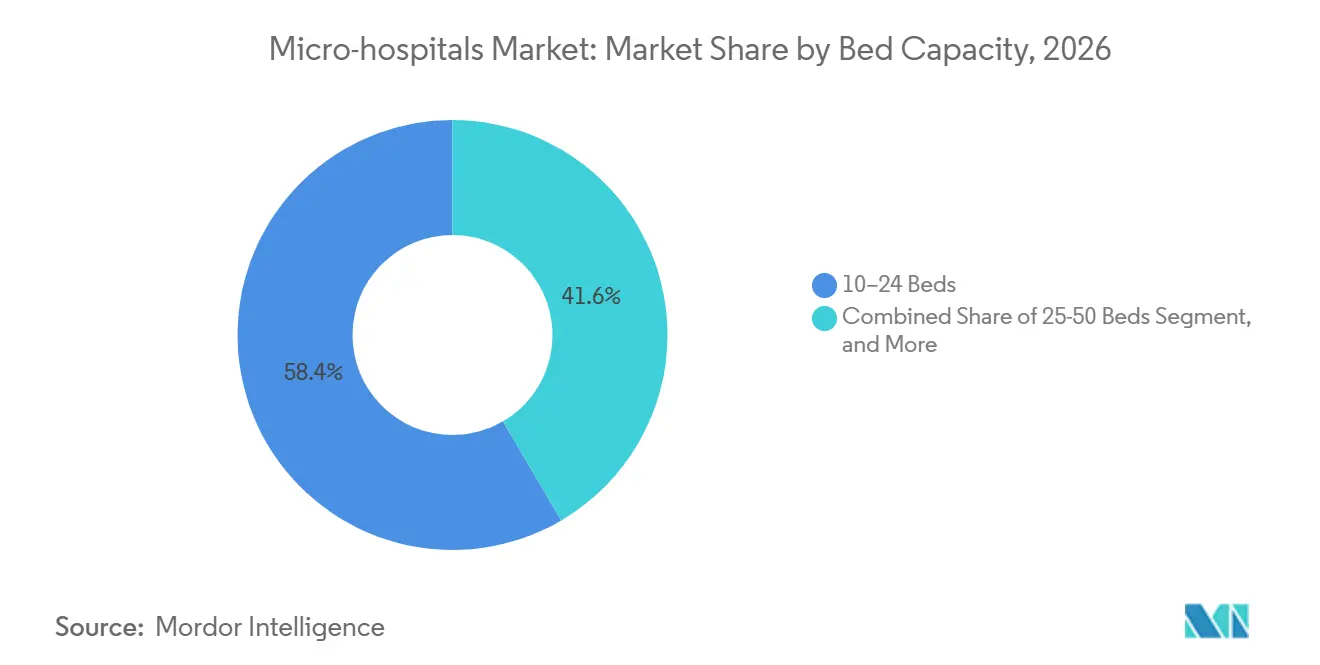
Mid-Range Configurations Lead Revenue While Compact Formats Grow FastestThe 10-24-bed category held 58.43% of the micro-hospitals market share in 2026. This configuration supports around-the-clock emergency coverage, limited inpatient observation, and ancillary services. It gives operators a manageable staffing requirement without limiting core acute-care capability. Nutex Health opened West Little Rock Emergency Hospital in August 2026. The facility had 8 emergency beds and 5 inpatient suites within 18,966 square feet. It was Nutex Health’s 28th micro-hospital nationally and its 3rd in Arkansas.
Sub-10-bed facilities are forecast to grow at an 8.92% CAGR from 2027 to 2032. The format can meet demand where a freestanding emergency department designation is sufficient. It can also avoid inpatient licensing thresholds that raise capital needs. Texas, Colorado, and Arizona operators have used this distinction. Telemedicine consultations help the facility reach specialists without expanding its footprint. Nutex Health’s self-development plan targets 3 to 5 facilities each year from 2026, supported by site control through its real estate division.

By Service Type:
Emergency Care Leads While Primary and Urgent Care Expands FastestEmergency Care held 31.27% of the micro-hospitals market share in 2026. The service remains central because many facilities began as freestanding emergency departments. Emergency services provide the base for continuous operations. Diagnostic imaging, short-stay observation, and outpatient care can raise revenue per visit. These added services also support the fixed cost of continuous clinical coverage. The 2026 inpatient-only list phase-out allows more surgical procedures to be billed as outpatient encounters.
Primary and Urgent Care is forecast to grow at a 9.25% CAGR from 2027 to 2032. Health systems are adding these services to establish long-term patient relationships. This broadens the role of a facility beyond emergency treatment. Pacific OneHealth plans a care model in which 70% of procedures are expected to be day-care procedures. Its approach differs from the emergency-first design common in the United States. The proposed network combines day-care specialties with digital systems and coordinated care pathways.
By Ownership:
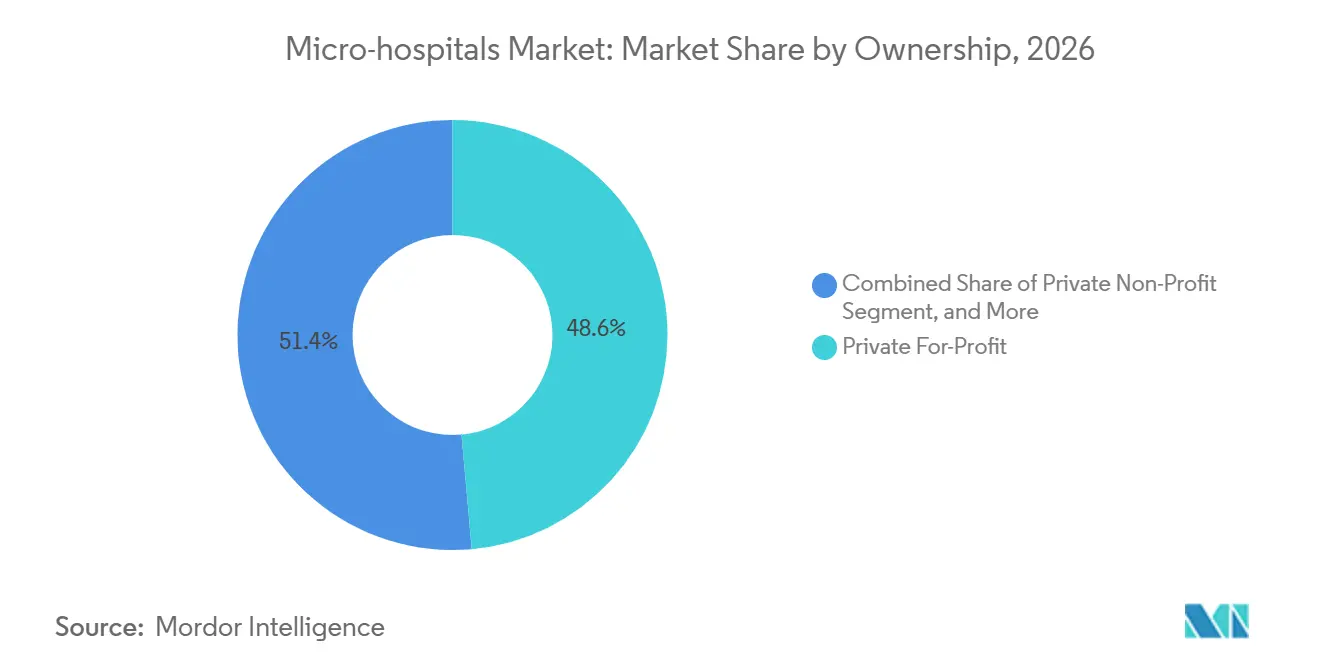
Private For-Profit Facilities Lead While Private Non-Profit Facilities Gain MomentumPrivate For-Profit entities held 48.57% of the Micro-hospitals market size by ownership in 2026. Their position reflects the lower capital deployment required compared with traditional hospital projects. This part of the Micro-hospitals industry includes dedicated operators and health-system subsidiaries. Dedicated operators build network scale by repeatedly developing facilities. Health-system subsidiaries seek greater density in selected service areas. Public and government-owned facilities remain the smallest ownership group and depend more closely on public capital budgets.
Private Non-Profit facilities are forecast to grow at a 9.83% CAGR from 2027 to 2032. Nonprofit systems are using compact facilities to improve access in areas affected by rural hospital closures. This approach aligns capital investment with local access objectives. Ascension Saint Thomas obtained approval for a USD 20.6 million freestanding emergency department in Fairview, Tennessee, in May 2026. The organization also pursued a USD 23 million facility in Mt. Juliet. These projects show nonprofit systems responding to for-profit development in their service areas.
By Facility Model:
Affiliated Facilities Lead While Standalone Formats AccelerateHealth-System-Affiliated facilities held 62.19% of the Micro-hospitals market size by facility model in 2026. Affiliation gives a compact facility access to referral pathways and supply contracts. It can also lower patient acquisition costs through an established brand. These benefits are important in newly developed local markets. Freestanding emergency department-based facilities are an expanding part of the affiliated category. Their growth is strongest in states with clear, freestanding emergency department licensing pathways.
Standalone facilities are forecast to grow at a 10.44% CAGR from 2027 to 2032. Physician-led operators and independent investors are pursuing newly deregulated areas. The model has lower administrative overhead and more flexibility in site choices. It also relies on telehealth and third-party specialist arrangements without an internal referral network. Nutex Health approved a 2026 strategy to manage site selection, land costs, and construction timing through its real estate division. The company retained a target of developing 3 to 5 facilities each year.
By Payer:
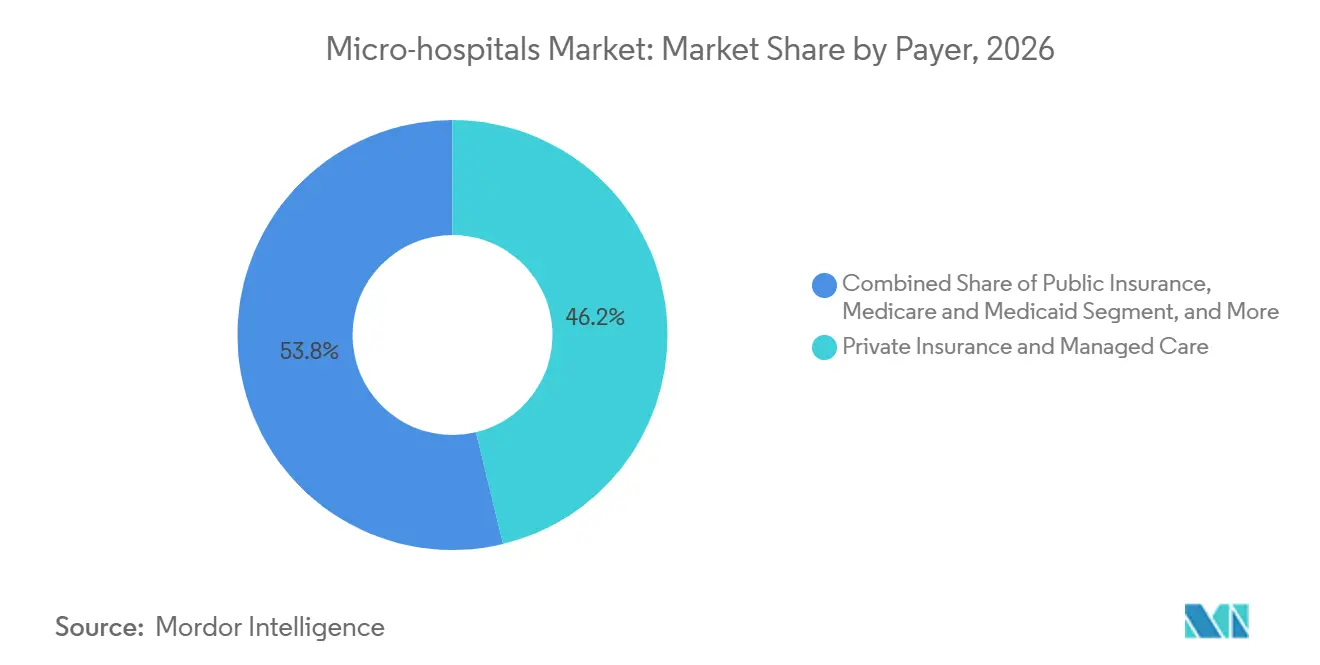
Private Insurance Leads While Public Coverage Grows FastestPrivate Insurance and Managed Care accounted for 46.25% of revenue in the Micro-hospitals industry in 2026. Commercial coverage remains the main revenue base for many suburban facilities. Operators often configure early facilities to capture commercially insured visits. Public payer growth has a different reimbursement profile. Self-Pay and Out-of-Pocket care remain the smallest payer group in high-coverage locations. It is more meaningful in lower-coverage Sun Belt, APAC, and Latin American locations.
Public Insurance, Medicare, and Medicaid are forecast to grow at a 10.76% CAGR from 2027 to 2032. Medicare eligibility is expanding as the U.S. population ages. Medicaid expansion also extends coverage in lower-income communities with limited acute-care access. The site-neutral payment changes may reduce reimbursement per encounter for off-campus outpatient departments. Providers may respond through more accurate coding or a greater focus on surgical and emergency services. Florida Senate Bill 1606, enacted in 2025, required AHCA-licensed facilities to furnish patient records within 14 business days.
By Location:
Suburban Facilities Lead While Urban Demand Grows FastestSuburban facilities held 43.61% of the location segment in 2026. Sun Belt population movement has supported this concentration. States without Certificate-of-Need requirements have also attracted more suburban development. Florida, Texas, and the Mountain West have seen substantial facility activity. Rural areas remain important for nonprofit and government providers focused on local access. Workforce availability continues to limit their rate of expansion.
Urban facilities are forecast to grow at an 11.27% CAGR from 2027 to 2032. Health systems are converting or reducing underperforming urban acute-care sites. Capital is being redirected toward smaller care settings with more focused service lines. Prime Healthcare converted Suburban Community Hospital in East Norriton, Pennsylvania, from a 126-bed hospital into a micro-hospital. The facility later moved to specialty behavioral health care. This case shows both the repurposing opportunity and the service-line risk in urban conversions.
Geography Analysis
North America
North America held 36.42% of the micro-hospitals market share in 2026. The region combines fragmented acute-care delivery, a broad private provider base, and state-level variation in site approval rules. The United States had 100 micro-hospitals or neighborhood hospitals operating or in active development by late 2025. Texas, Pennsylvania, and the Pacific Northwest have become visible areas for new facilities. Baylor Scott & White is building 4 small-format hospitals across North Texas, including Willow Park and Alliance. CMS payment rules and state certificate-of-need policy remain influential because they affect service reimbursement and the timing of new sites. Canada is also exploring more decentralized ambulatory care, while Mexico’s private hospital sector is assessing compact formats for urban areas with limited emergency capacity.
Asia-Pacific
Asia-Pacific is projected to grow at a 12.48% CAGR through 2032. Urbanization and limited hospital capacity in Tier II and III cities support interest in smaller facilities with faster development timelines. Pacific OneHealth announced an INR 300 crore program, equivalent to USD 36 million, for 5 micro-hospitals across Delhi. The facilities are intended to operate as surgical and diagnostic hubs that relieve pressure on tertiary providers. Apollo Hospitals committed more than INR 7,600 crore, equivalent to USD 912 million, for additional capacity in India beginning in FY26. India’s National Health Mission and Japan’s regional medical care plans influence funding and care-network planning. The Micro-hospitals market can expand where providers adapt compact facilities to local referral systems and health financing arrangements.
Europe, Middle East and Africa, and South America
Europe offers a public-system route to decentralizing care without creating large new hospital campuses. In the Middle East and Africa, private insurance and limited hospital-bed density support the case for compact private facilities. Dubai Healthcare City began a USD 350 million first-phase development in December 2025, with completion expected in November 2027. The project includes outpatient, surgical, diagnostic, and compact inpatient capacity. Brazil is also drawing investment in community-based care, as ISA Saúde raised USD 30 million in a Series B round led by the International Finance Corporation in October 2025. These geographies have different payment systems and regulatory settings, but each offers room for care models that place services closer to patients. Providers must align facility scope with local policy, insurer participation, and access to specialist transfer networks.
Competitive Landscape
The micro-hospitals market is moderately fragmented worldwide. Competitive conditions differ by location, facility model, and regulation. United States physician-led operators and nonprofit health-system affiliates are pursuing many of the same suburban corridors. HCA Healthcare and Ascension have development programs in Tennessee. This overlap makes location selection a more deliberate investment decision. Remote monitoring and AI-assisted diagnostics can extend specialist support from central clinical hubs. These tools can reduce the cost of continuous specialist availability at a compact facility.
The Micro-hospitals market has more white space in rural areas and international locations. Certificate-of-Need changes have opened entry in some states. West Virginia and Tennessee advanced micro-hospital and acute-care exemptions during 2025 and 2026. Joint Commission accreditation and ACHC certification can influence how payers and referral partners assess smaller facilities. These credentials act as quality signals where individual facilities have limited standalone outcome data. The Micro-hospitals market, therefore, favors providers that can manage licensing, accreditation, referral relationships, and clinical coverage together.
Nutex Health provides a specific example of vertical integration in the Micro-hospitals market. Its board approved a self-development model in 2026. The company’s real estate division manages site acquisition and construction planning. The strategy supports an annual pace of 3 to 5 facility developments. Nutex Health opened West Little Rock Emergency Hospital in August 2026, its 28th micro-hospital nationwide. Ascension Saint Thomas also received approval in May 2026 for a USD 20.6 million facility in Fairview, Tennessee.
Micro-hospitals Industry Leaders
-
AdventHealth
-
Apollo Hospitals Enterprise Limited
-
Baylor Scott and White Health
-
Fortis Healthcare Limited
-
Max Healthcare Institute Limited
- *Disclaimer: Major Players sorted in no particular order
Micro-hospitals Market Companies Covered in this Report
- AdventHealth
- Apollo Hospitals Enterprise Limited
- Ardent Health Services
- Ascension
- Baylor Scott and White Health
- ChristianaCare
- CHRISTUS Health
- CommonSpirit Health
- Community Health Systems, Inc.
- Dignity Health
- Emerus Holdings, Inc.
- Fortis Healthcare
- HCA Healthcare, Inc.
- Intermountain Health
- LifePoint Health
- Max Healthcare Institute Limited
- Mercy
- Nutex Health, Inc.
- Prime Healthcare Services
- Ramsay Health Care Limited
- Saint Luke’s Health System
- Spire Healthcare Group plc
- Steward Health Care
- Tenet Healthcare
- Texas Health Resources
- Trinity Health
- Universal Health Services
- WellSpan Health
Recent Industry Developments in Micro-hospitals Market
- August 2026: Nutex Health opened West Little Rock Emergency Hospital in Arkansas, its 28th micro-hospital nationwide and 3rd in the state, at 18,966 square feet with 8 ER beds, 5 inpatient suites, and full MRI, CT, X-ray, and ultrasound imaging, extending the company’s Southwest U.S. network density and reinforcing its 3-5 annual facility growth target.
- August 2026: Fourth Time Partners LLC secured a USD 21.9 million construction loan from Ameris Bank for a Nutex Health micro-hospital in Clermont, Florida, sited within a retail center, demonstrating private capital appetite for micro-hospital real-estate investment in the Southeast.
- July 2026: Pacific OneHealth announced INR 300 crore, equivalent to USD 35.5 million at 2025 rates, to build North India’s largest integrated community micro-hospital chain, beginning with 5 facilities in Delhi NCR over 2 years and targeting 20 nationally, each with 30-80 beds, day-care surgical specialties, and integrated digital infrastructure.
Global Micro-hospitals Market Report Scope
As per the scope of the report, micro-hospitals are small-scale inpatient healthcare facilities that provide emergency care, diagnostic imaging, laboratory services, outpatient procedures, and limited inpatient beds. They are designed to deliver hospital-level care closer to communities while operating with lower infrastructure and staffing requirements than traditional hospitals. Micro-hospitals typically serve non-complex acute care needs and facilitate referrals to larger medical centers for specialized treatments.
The micro-hospitals market is segmented by bed capacity, service type, ownership, facility model, payer, location, and geography. By bed capacity, the market is segmented into <10 beds, 10–24 beds, and 25-50 beds. By service type, the market is segmented into emergency care, primary and urgent care, diagnostic and imaging services, outpatient care, short-stay and observation care, limited inpatient care, and others. By ownership, the market is segmented into private for-profit, private non-profit, and public and government. By facility model, the market is segmented into standalone micro-hospitals, health-system-affiliated micro-hospitals, freestanding emergency department-based micro-hospitals, and others. By payer, the market is segmented into private insurance and managed care, public Insurance, Medicare and Medicaid, and self-pay and out-of-pocket. The market is segmented into urban, suburban, and rural. The geography segment is further divided into North America, Europe, Asia-Pacific, the Middle East and Africa, and South America. The report also covers the estimated market sizes and trends for 17 countries across major regions globally. The report offers the market size and forecasts in value (USD) for the above segments.
Segmentation Overview
| <10 Beds |
| 10–24 Beds |
| 25-50 Beds |
| Emergency Care |
| Primary and Urgent Care |
| Diagnostic and Imaging Services |
| Outpatient Care |
| Short-Stay and Observation Care |
| Limited Inpatient Care |
| Others |
| Private For-Profit |
| Private Non-Profit |
| Public and Government |
| Standalone Micro-hospitals |
| Health-System-Affiliated Micro-hospitals |
| Freestanding Emergency Department-Based Micro-hospitals |
| Others |
| Private Insurance and Managed Care |
| Public Insurance, Medicare and Medicaid |
| Self-Pay and Out-of-Pocket |
| Urban |
| Suburban |
| Rural |
| North America | United States |
| Canada | |
| Mexico | |
| Europe | Germany |
| United Kingdom | |
| France | |
| Italy | |
| Spain | |
| Rest of Europe | |
| Asia-Pacific | China |
| India | |
| Japan | |
| Australia | |
| South Korea | |
| Rest of Asia-Pacific | |
| Middle East and Africa | GCC |
| South Africa | |
| Rest of Middle East and Africa | |
| South America | Brazil |
| Argentina | |
| Rest of South America |
| By Bed Capacity | <10 Beds | |
| 10–24 Beds | ||
| 25-50 Beds | ||
| By Service Type | Emergency Care | |
| Primary and Urgent Care | ||
| Diagnostic and Imaging Services | ||
| Outpatient Care | ||
| Short-Stay and Observation Care | ||
| Limited Inpatient Care | ||
| Others | ||
| By Ownership | Private For-Profit | |
| Private Non-Profit | ||
| Public and Government | ||
| By Facility Model | Standalone Micro-hospitals | |
| Health-System-Affiliated Micro-hospitals | ||
| Freestanding Emergency Department-Based Micro-hospitals | ||
| Others | ||
| By Payer | Private Insurance and Managed Care | |
| Public Insurance, Medicare and Medicaid | ||
| Self-Pay and Out-of-Pocket | ||
| By Location | Urban | |
| Suburban | ||
| Rural | ||
| By Geography | North America | United States |
| Canada | ||
| Mexico | ||
| Europe | Germany | |
| United Kingdom | ||
| France | ||
| Italy | ||
| Spain | ||
| Rest of Europe | ||
| Asia-Pacific | China | |
| India | ||
| Japan | ||
| Australia | ||
| South Korea | ||
| Rest of Asia-Pacific | ||
| Middle East and Africa | GCC | |
| South Africa | ||
| Rest of Middle East and Africa | ||
| South America | Brazil | |
| Argentina | ||
| Rest of South America | ||
Key Questions Answered in the Report
What is driving growth in micro-hospitals?
Nearby acute-care demand, lower facility capital requirements, and the shift toward outpatient and short-stay care are supporting growth.
How large will this sector become by 2032?
The Micro-hospitals market is forecast to reach USD 550.16 billion by 2032, growing at an 8.45% CAGR from 2027.
Which facility model has the largest share?
Health-System-Affiliated facilities held 62.19% of revenue in 2026, supported by referral networks, supply contracts, and established brands.
Which service type is growing fastest?
Primary and Urgent Care is forecast to grow at a 9.25% CAGR through 2032 as systems seek ongoing patient relationships.
Which geography is growing fastest?
Asia-Pacific is the fastest-growing region, with India developing day-care-focused community micro-hospital networks.
What limits facility expansion?
Staffing shortages, reimbursement changes, licensing requirements, and dependence on specialist coverage can limit expansion.