
Metal Fiber Market Size and Share
Market Overview
| Study Period | 2022 - 2032 |
|---|---|
| Market Size (2027) | USD 6.48 Billion |
| Market Size (2032) | USD 8.32 Billion |
| Growth Rate (2027 - 2032) | 5.13 % |
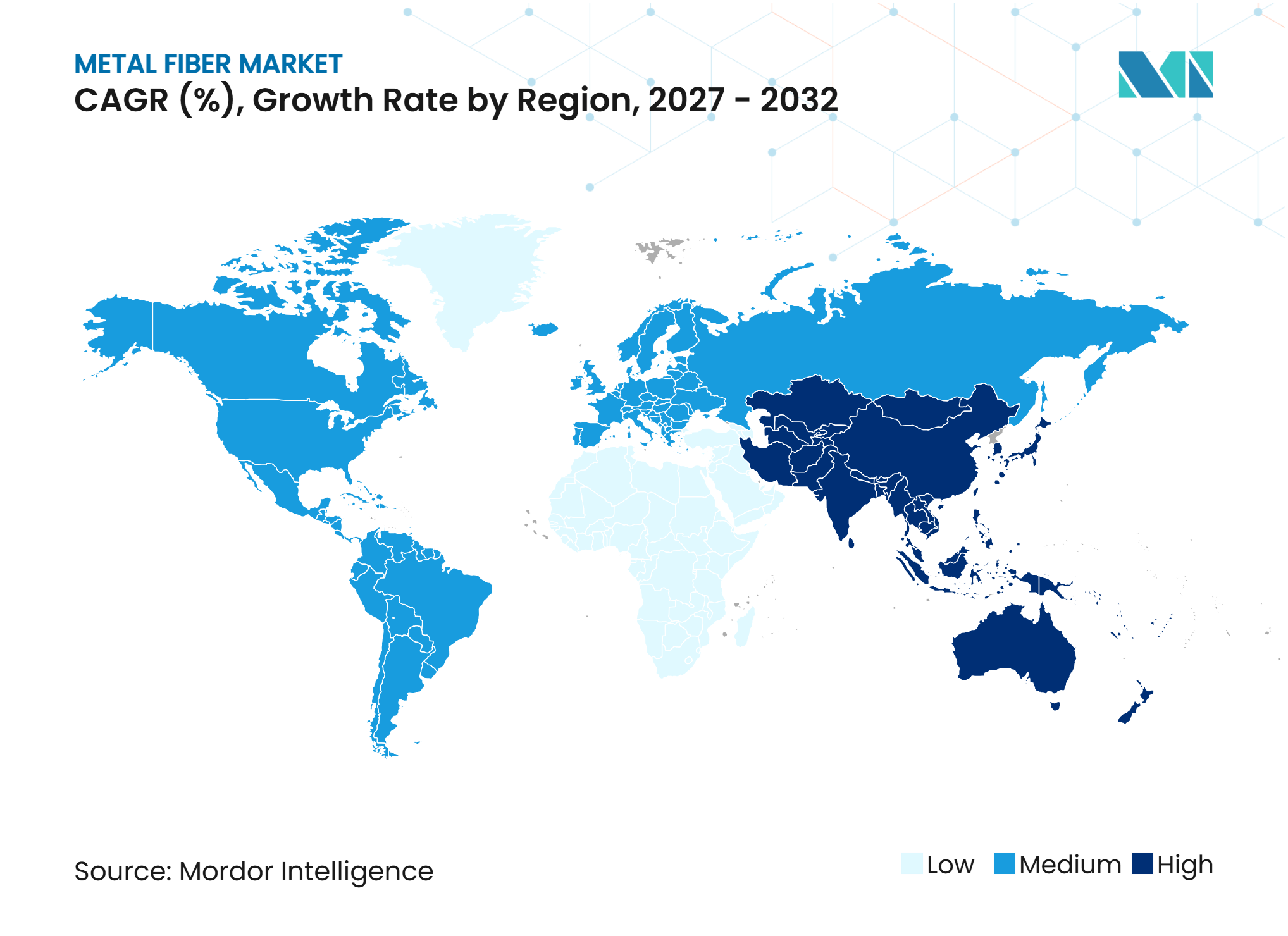
| Fastest Growing Market | Asia-Pacific |
| Largest Market | Asia-Pacific |
| Market Concentration | Medium |
Major Players *Disclaimer: Major Players sorted in no particular order Image © Mordor Intelligence. Reuse requires attribution under CC BY 4.0. | |
Metal Fiber Market Analysis by Mordor Intelligence
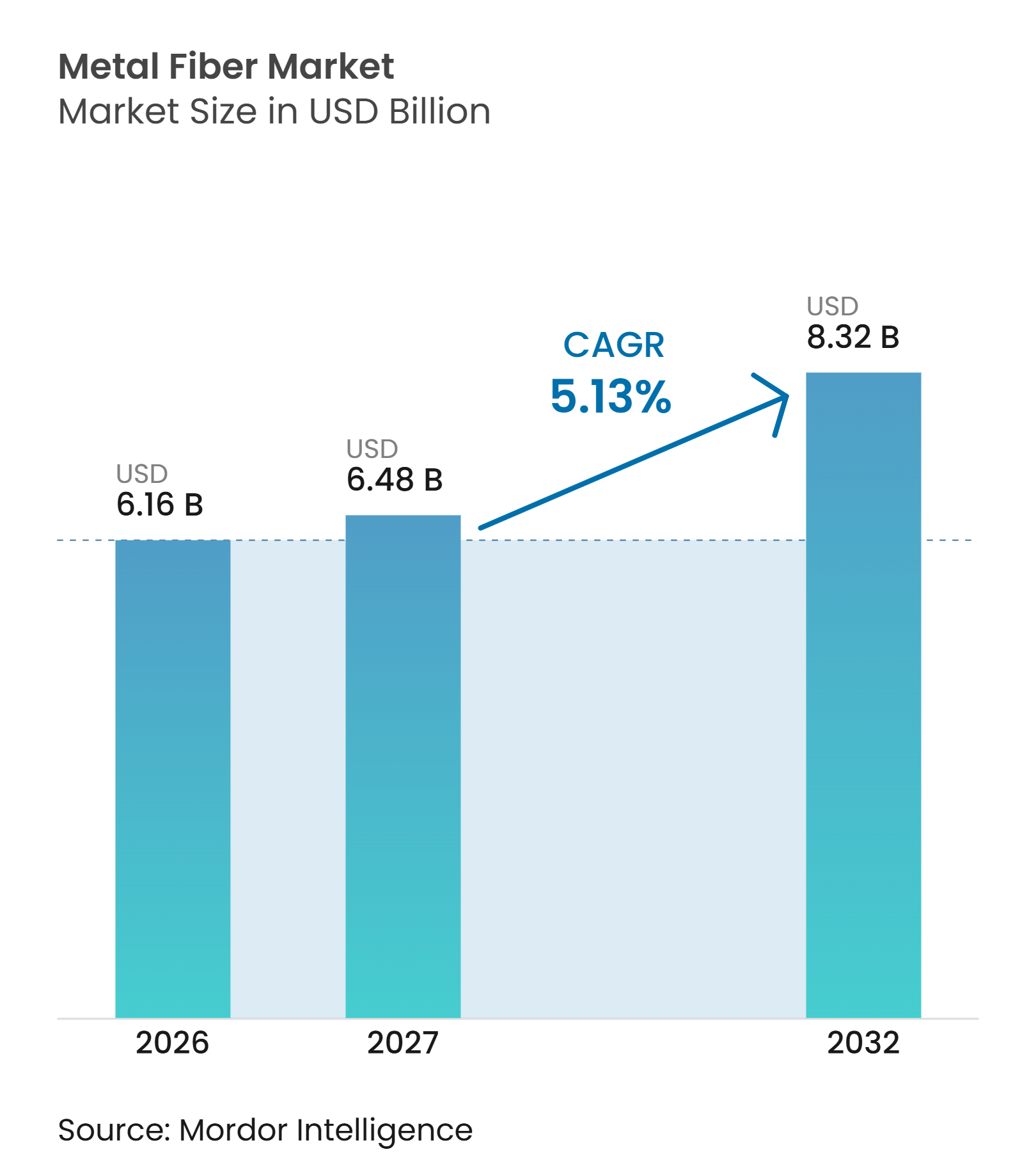
The Metal fiber market size was valued at USD 6.16 billion in 2026 and is estimated to grow from USD 6.48 billion in 2027 to USD 8.32 billion by 2032, at a CAGR of 5.13% during the forecast period (2027-2032). Demand is supported by lightweight materials in vehicles and aerospace equipment, durable filtration media for demanding industrial processes, and specialist components for electronics and semiconductor production. The metal fiber market benefits from lengthy qualification cycles, controlled alloy processing, and customer approval requirements, which limit direct substitution in critical applications. These conditions give established suppliers more scope to protect margins when performance and traceability matter more than initial purchase cost. Opportunities are emerging in recycled steel fibers, porous transport layers for hydrogen equipment, and current collectors for advanced batteries, although these applications remain in the early stages of commercialization. Raw material exposure remains an important constraint, as nickel, titanium, and stainless alloy costs can move faster than supplier contracts allow.
Key Report Takeaways
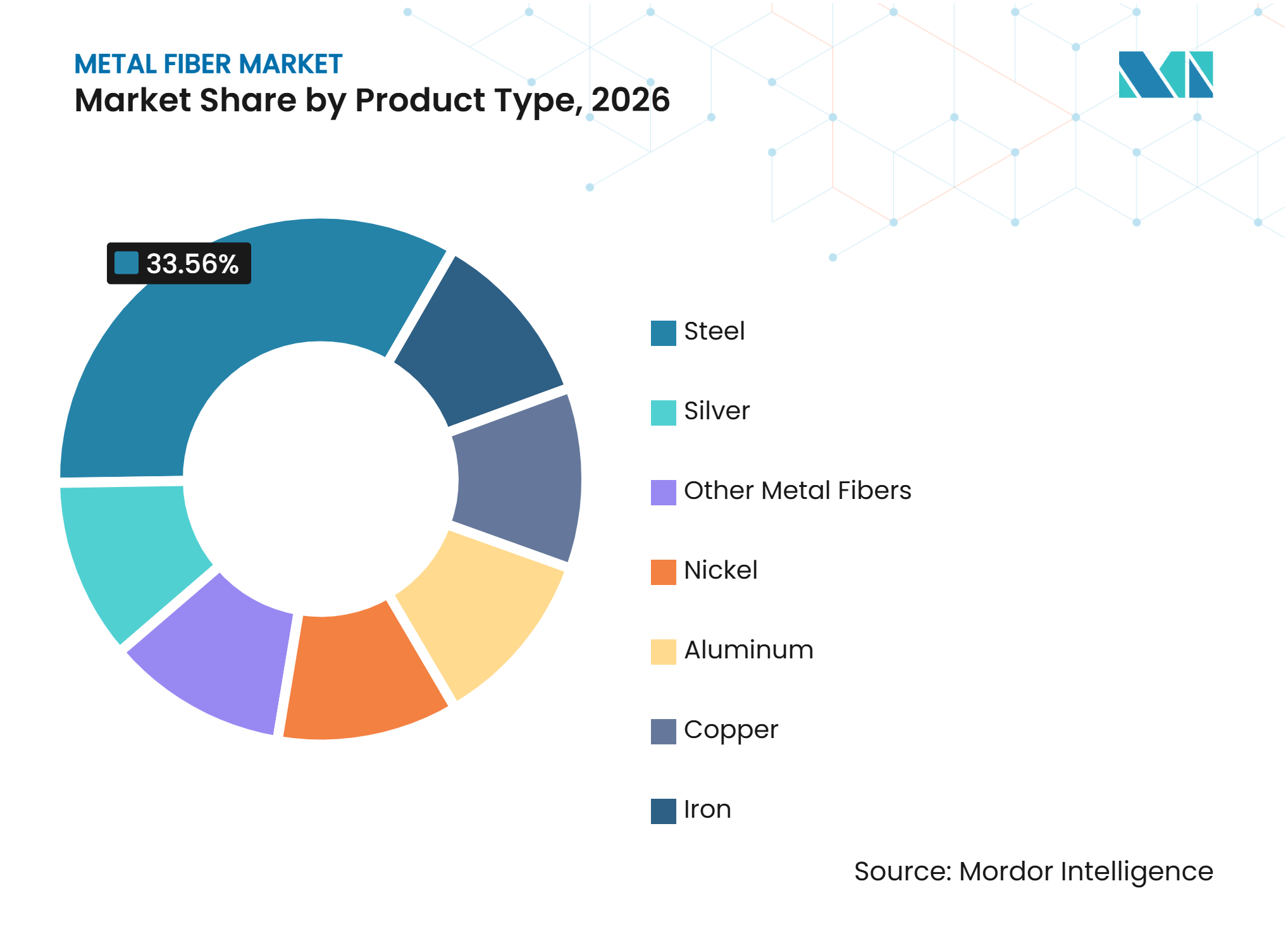
- By product type, steel held 33.56% of the Metal fiber market share in 2026, while aluminum is forecast to expand at a 6.15% CAGR through 2032.
- By application, filtration accounted for 41.67% of the Metal fiber market share in 2026, while Electrostatic Discharge (ESD) and Electromagnetic Interference (EMI) protection are forecast to grow at a 5.88% CAGR through 2032.
- By technology, bundle drawing held a 46.23% share in 2026, while melt spinning is forecast to grow at a 5.73% CAGR through 2032.
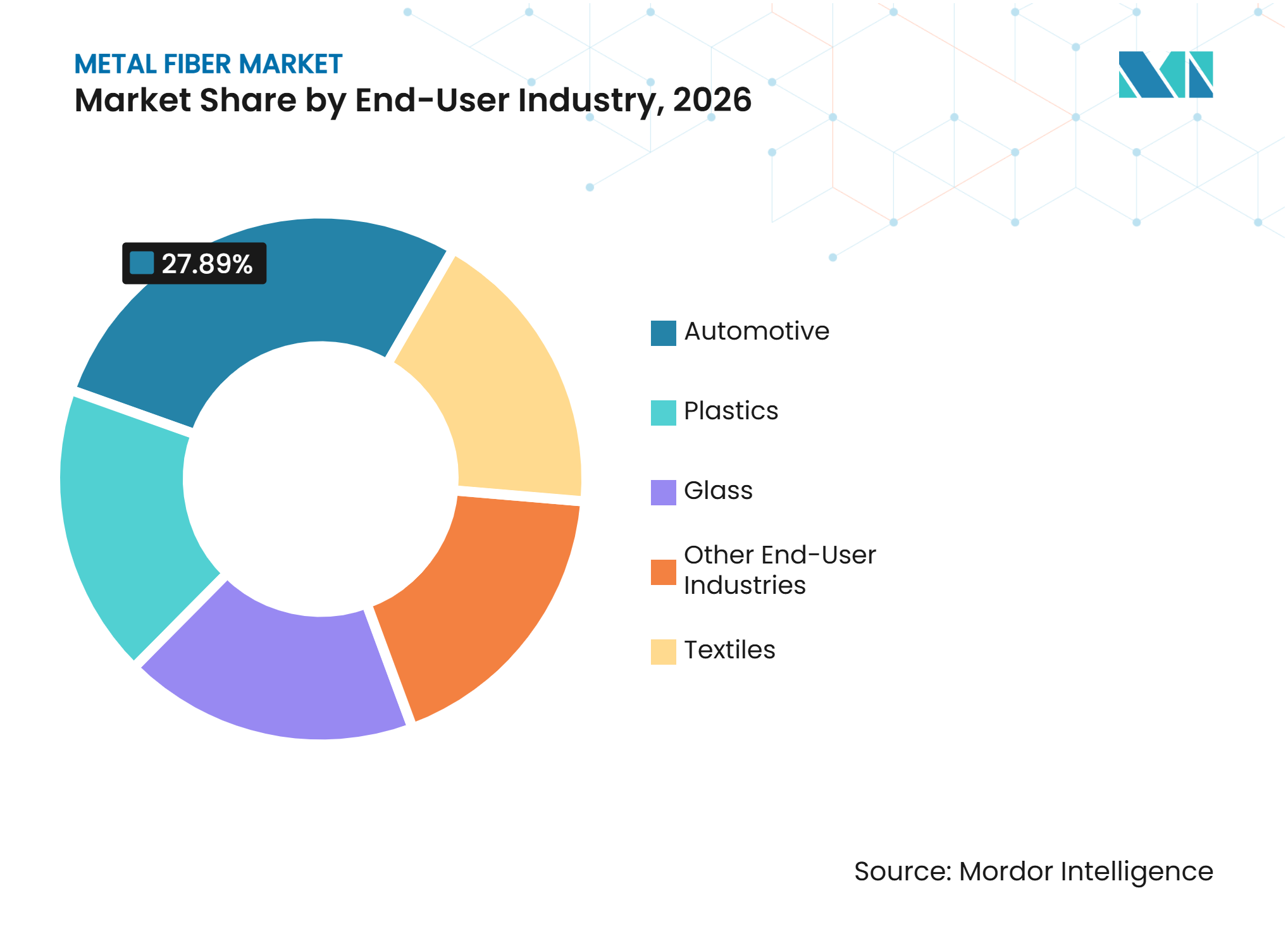
- By end-user industry, automotive held a 27.89% share in 2026 and is forecast to grow at a 6.26% CAGR through 2032.
- By geography, Asia-Pacific held a 35.41% share in 2026 and is forecast to grow at a 6.01% CAGR through 2032.
Note: Market numbers in this report are based on Mordor Intelligence's proprietary estimation framework, which combines nine months of actuals with Q4 projections for base year 2026.
Market Trends and Insights
Drivers Impact Analysis of Metal Fiber Market*
| Drivers | (~) % Impact on CAGR Forecast | Geographic Relevance | Impact Timeline |
|---|---|---|---|
| Lightweighting and Emissions Compliance in Automotive and Aerospace | +1.4% | Global, with intensity in Asia-Pacific, China, Japan, South Korea, and North America | Medium term (2-4 years) |
| Industrial Filtration for High-Temperature and Corrosive Service | +1.1% | Global, strongest in Asia-Pacific chemical and polymer operations and European specialty chemicals | Medium term (2-4 years) |
| ESD and EMI Shielding Demand in Electrification and Electronics | +1.0% | Asia-Pacific core markets, China, South Korea, Taiwan, with spillover to North America | Short term (≤ 2 years) |
| Reusable, Cleanable Filter Media and Lifecycle-Cost Reduction | +0.8% | Global, particularly North America and Europe | Long term (≥ 4 years) |
| Titanium and Nickel Fiber Adoption in Hydrogen Electrolyzer Porous Transport Layers | +0.9% | Europe and East Asia, including Germany, Belgium, Japan, and South Korea | Long term (≥ 4 years) |
| Source: Mordor Intelligence | |||
Lightweighting and Emissions Compliance in Automotive and Aerospace
Regulatory pressure on vehicle emissions supports demand for aluminum fibers in automotive and aerospace applications. Research on lightweight automotive materials found that a 10% to 20% reduction in vehicle mass can improve fuel or electricity consumption by 5% to 15% and reduce carbon dioxide emissions by 15 to 20 g/km. Electric vehicles add battery mass, which increases the value of weight savings in other components. Aluminum has a density of 2.69 g/cm³, compared with 7.85 g/cm³ for steel, making it more relevant where vehicle mass limits design choices. Federal Motor Vehicle Safety Standards (FMVSS) No. 305a, finalized by the National Highway Traffic Safety Administration in 2025, adds documentation requirements that favor traceable and specification-controlled materials. The metal fiber market therefore benefits from product designs that place safety, efficiency, and material records under closer scrutiny.
Industrial Filtration for High-Temperature and Corrosive Service
Stainless steel and nickel alloy fibers are used where polymer melts, chemical streams, and semiconductor gases require filtration at high temperatures or in corrosive conditions. These operating conditions limit the use of polymeric and glass-fiber alternatives. A 2025 peer-reviewed study reported that metal filters are used in high-temperature flue-gas systems above 200 degrees Celsius. The study also identified a lack of standardized high-temperature test protocols, which can slow qualification of replacement materials. This favors producers with validated metal fiber media and experience in demanding process environments. The metal fiber market also benefits as semiconductor manufacturers place greater emphasis on gas purity and particle control.
ESD and EMI Shielding Demand in Electrification and Electronics
High-voltage electronics in electric vehicles, 5G equipment, and data centers require materials that control electrostatic discharge and electromagnetic interference. Stainless steel chopped fiber can be blended into thermoplastics to create shielding materials that retain useful processing properties. LATI reports that its LATISHIELD compounds use up to 15% stainless steel microfibers and can achieve shielding effectiveness of up to 90 dB at relevant frequencies. UNECE Regulation No. 10 Revision 7 entered into force on June 17, 2025, and extended radiated immunity testing to 6 GHz for vehicle electronic systems. Research on MXene composites continues, but oxidation sensitivity and processing challenges constrain their broad industrial use. This leaves established metal fiber solutions positioned for near-term automotive and industrial applications.
Reusable, Cleanable Filter Media and Lifecycle-Cost Reduction
Metal fiber filters can be cleaned by backwashing, ultrasonic treatment, or thermal regeneration and reused in continuous industrial operations. This can reduce consumable waste and avoid repeated shutdowns in polymer extrusion and carbon fiber production. The value is higher where contamination risks and filter-replacement labor drive high operating costs. Fraunhofer ISE reported in 2025 that screen-printed titanium microporous layers for Proton Exchange Membrane (PEM) electrolyzers reached a thickness of 20 microns and reduced surface roughness by 46%[1]. This result illustrates the level of control that industrial metal processing can provide in porous components. The metal fiber market has a practical advantage where users assess service life, maintenance, and waste rather than unit price alone.
Restraints Impact Analysis of Metal Fiber Market*
| Restraints | (~) % Impact on CAGR Forecast | Geographic Relevance | Impact Timeline |
|---|---|---|---|
| High Manufacturing Cost and Precision-Process Complexity | -0.4% | Global, most acute for smaller producers in Europe and Asia-Pacific | Long term (≥ 4 years) |
| Metal-Price Volatility and Alloy Supply Exposure | -0.3% | Global, with European nickel, titanium, and stainless exposure amplified by the Carbon Border Adjustment Mechanism (CBAM) | Short term (≤ 2 years) |
| Qualification Cycles and Customer-Specific Validation Requirements | -0.2% | Global, strongest in aerospace, semiconductor, and medical end use | Medium term (2-4 years) |
| Source: Mordor Intelligence | |||
High Manufacturing Cost and Precision-Process Complexity
Bundle drawing requires controlled dissolution of composite wire bundles, precision drawing through dies, and consistent metallurgy across long production runs. These requirements create high capital costs and demand specialized process knowledge. The cost structure makes metal fibers less competitive in commodity applications where price carries more weight than lifecycle performance. Producers therefore tend to focus on filtration, electronics, medical, aerospace, and other technically demanding applications. Long customer validation processes further limit the number of suppliers that can serve each application. The metal fiber market remains concentrated in applications where performance, repeatability, and qualification justify higher costs.
Metal-Price Volatility and Alloy Supply Exposure
Stainless steel, nickel, and titanium are exposed to commodity-price movements and supply disruption risks. The European Union Carbon Border Adjustment Mechanism entered its definitive phase in January 2026, introducing certificate requirements for covered imports, including steel and aluminum[2]. The European Commission proposed extending CBAM to downstream steel- and aluminum-intensive products from January 2028. A 2026 survey by the Federation of Aluminum Consumers in Europe identified unstable supply conditions, higher raw material prices, and geopolitical risk as key concerns. Suppliers with long-term alloy arrangements or more integrated sourcing can better manage these disruptions. Volatility can still pressure margins when contract price adjustments lag material cost changes.
*Our forecasts treat driver/restraint impacts as directional, not additive. The impact forecasts reflect baseline growth, mix effects, and variable interactions.
Metal Fiber Market Segment Analysis
By Product Type:
Steel Retains Scale While Aluminum Leads GrowthSteel held 33.56% of the metal fiber market share in 2026, reflecting its established use in sintered filtration media, concrete reinforcement, brake pads, and conductive plastics. Its tensile strength, corrosion resistance, and production maturity support its role in high-output applications. Nickel fiber serves premium requirements in electrolyzer transport layers and high-temperature chemical filtration. Copper and silver fibers are used in conductive textiles and specialty heating applications. Iron fiber is used in less demanding filtration and reinforcement applications. The metal fiber market size for aluminum is expected to grow at a 6.15% CAGR through 2032, supported by lightweight vehicle structures and aerospace interiors. Aluminum's lower density supports its use where mass limits are a central design constraint.
Melt spinning expands the alloy options available for aluminum fibers by producing amorphous and nanocrystalline structures. A 2025 study of 6061 aluminum alloy found improved yield strength through melt spinning and hot extrusion, supporting the use of melt-spun aluminum in structural composite applications. A US patent granted in December 2025 covers networks of melt-spun metal fibers for battery electrodes. Titanium, Hastelloy, and Inconel fibers remain important in aerospace and chemical processing where operating conditions are severe. These specialty fibers are used in applications with high performance requirements. The metal fiber industry combines a broad steel base with niche alloy demand driven by material performance.



By Application:
Filtration Provides Scale While ESD and EMI Protection ExpandsFiltration accounted for 41.67% of the metal fiber market share in 2026, supported by the thermal stability, chemical resistance, and cleanability of sintered stainless steel and nickel media. Polymer extrusion, pharmaceutical liquid handling, and semiconductor gas delivery use these materials where process purity is essential. Metal fiber filters also serve high-temperature flue-gas treatment above 200 degrees Celsius. Commodity felt media face greater price pressure than precision gas filters. Process users continue to value filtration media that can be regenerated rather than discarded, supporting demand in applications where downtime, contamination, and replacement labor are high operating costs. The metal fiber market maintains a strong filtration base because replacement alternatives face qualification hurdles.
ESD and EMI protection are forecast to grow at a 5.88% CAGR through 2032. The United Nations Economic Commission for Europe (UNECE) Regulation No. 10, Revision 7, increased the coverage of automotive radiated immunity testing to 6 GHz in 2025. Stainless steel fiber-loaded thermoplastics can achieve 60–90 dB of shielding effectiveness at loadings of 5-15%. These compounds can offer lower weight and more design flexibility than metallic enclosures in suitable applications. Heating and hot-glass handling continue to provide steady demand. Sound attenuation, catalytic supports, and battery current collectors remain in earlier stages of use. ISO 9001 requirements in automotive and filtration supply chains limit participation to producers with appropriate quality systems.
By Technology:
Bundle Drawing Leads While Melt Spinning Adds CapabilityBundle drawing held 46.23% of the metal fiber market share in 2026. The process produces continuous fibers with very small diameters and high length-to-diameter ratios, which are suited to precision filtration and conductive applications. Tight dimensional control is particularly important in high-purity industrial uses. The process also supports established stainless steel and nickel fiber product lines, and its operating requirements create a barrier for new participants. Foil shaving produces shorter staple fibers for concrete reinforcement and friction materials. The metal fiber industry relies on bundle drawing, in which continuity and diameter control are central customer requirements.
Melt spinning is forecast to grow at a 5.73% CAGR through 2032. Rapid quenching can produce amorphous and nanocrystalline microstructures that differ from conventional crystalline alloys. A 2025 study demonstrated single-roll melt spinning of magnesium- and aluminum-clad ribbon for battery applications, highlighting the method's potential beyond steel and nickel. Machining and shaving methods support small-lot orders across aluminum, titanium, copper, and specialty alloys. Electrodeposition and chemical vapor deposition remain limited to laboratory-scale or very specialized uses. The metal fiber market can therefore support several manufacturing routes because application requirements differ sharply by fiber geometry and alloy.
By End-User Industry:
Automotive Holds Scale and Growth LeadershipAutomotive held 27.89% of the metal fiber market share in 2026 and is forecast to grow at a 6.26% CAGR through 2032. Electrification increases the use of metal fibers in electromagnetic shielding, lightweight reinforcement, and potential battery electrode applications. Traditional automotive uses include exhaust treatment supports and brake friction materials. Electric vehicle architectures add requirements for shielding around power electronics and battery systems. Research published by Ohio State University in 2025 found that lightweight multi-material body-in-white designs using metal-fiber composite joints can be produced with existing original equipment manufacturer assembly infrastructure, reducing an assembly compatibility barrier that has limited some composite applications. The metal fiber market size in automotive is therefore supported by both existing friction uses and newer electrical applications.
Textiles use metal staple fibers for antistatic performance and electrical conductivity in technical fabrics and protective workwear. Plastics serve as the link between metal fiber products and ESD or EMI shielding applications. Glass producers use stainless steel fiber-reinforced handling tools where organic alternatives could char or contaminate molten material. Energy infrastructure can use steel fiber reinforcement in wind turbine foundations and tunnel linings. Medical filtration and hydrogen equipment add smaller but relevant demand areas. Aerospace and medical suppliers often face qualification periods of 12 to 24 months per application, limiting sudden supplier changes and supporting more stable pricing for approved producers.

Geography Analysis
Asia-Pacific: Broad Demand Base and Growth Leadership
Asia-Pacific held 35.41% of the metal fiber market share in 2026 and is forecast to grow at a 6.01% CAGR through 2032. China supports regional demand through electric vehicle production, polymer extrusion, and semiconductor fabrication. Japan and South Korea contribute specialized high-precision production for semiconductor and industrial filtration customers. NIKKO TECHNO renewed its website in 2025, reflecting its continued presence in specialized processing of metallic fibers. The regional manufacturing base links high-output vehicle production with demanding electronic and industrial customers. This combination supports demand for both standard and premium grades. India and ASEAN countries also offer secondary growth as local vehicle assembly and industrial filtration infrastructure expand. The metal fiber market has a particularly broad set of demand channels across Asia-Pacific, which increases the value of reliable regional production and qualified supply chains.
Europe: Technical Specialization Under Rising Compliance Costs
Europe remains an important center of production and demand, with suppliers and customers concentrated in Germany, Belgium, France, Italy, and Romania. Bekaert maintains a Deerlijk Innovation Hub for Hydrogen, which focuses on the development of porous transport layers. BinNova renewed its ISO 9001:2015, ISO 14001:2015, and ISO 45001:2018 certifications in September 2025. These certifications reflect the compliance factors that shape European industrial and filtration supply relationships. The EU Carbon Border Adjustment Mechanism (CBAM) framework adds costs and administrative exposure for value chains that use imported steel and aluminum. Germany's automotive base and France's chemical and aerospace activity continue to support high-specification filtration and shielding requirements. The metal fiber market in Europe depends as much on technical capabilities and documented quality systems as on local production output.
North America, South America, and Middle East and Africa: Distinct Development Paths
North America has demand from defense, aerospace, medical, semiconductor, and automotive applications, particularly for titanium and high-alloy nickel fibers. Federal Highway Administration Buy America requirements apply to Federal-aid projects obligated on or after October 1, 2026, and require manufactured products to contain at least 55% domestically produced components. This regulatory requirement may support the use of domestically sourced metal fiber media in eligible infrastructure applications. IntraMicron's facility in Auburn, Alabama remains associated with specialty metal fiber engineering and bundle-drawing capability. South American demand is tied to automotive formalization and investment in industrial filtration, with Brazil and Argentina as key centers. The Middle East and Africa have earlier-stage demand in petrochemical and mining filtration. Bekaert signed 2025 partnerships with IKK Mateenbar and EMSTEEL, indicating its interest in developing regional construction and reinforcement applications. These regions have different demand profiles, but all create opportunities where local qualification, policy, or industrial investment favors specialized materials.
Competitive Landscape
Market Concentration
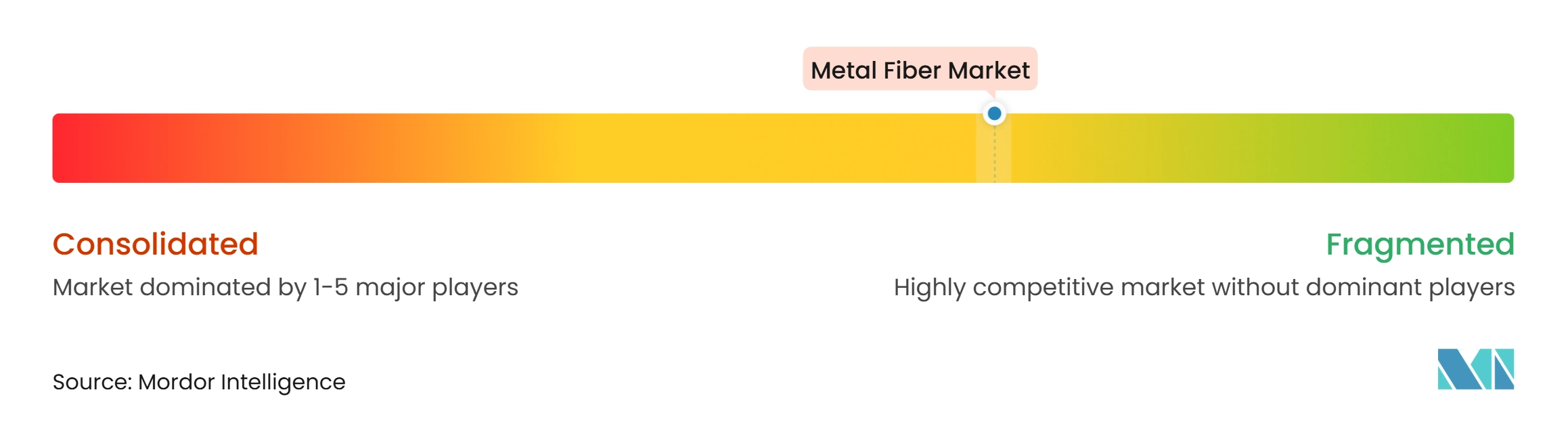
The metal fiber market is moderately fragmented. Bekaert offers a broad range of applications across filtration, shielding, concrete reinforcement, and hydrogen. Nippon Seisen, Hollingsworth and Vose, IntraMicron, BinNova, and Green Steel Group serve narrower applications or regional positions. Competition is shaped by process knowledge, alloy-handling capability, and customer qualification rather than by price alone. Bekaert's patent for networks of melt-spun metal fibers in battery electrodes was granted in December 2025, indicating that suppliers are targeting energy storage applications alongside established industrial products. Hollingsworth and Vose received the World Filtration Institute's 2025 Product of the Year Award for its NanoWave MERV 13A media for data centers, demonstrating how product development can support differentiation in adjacent filtration categories.
Smaller suppliers in Japan, France, Romania, and Turkey serve local or specialized customers, where logistics, language, and customer approval processes can create durable advantages. ISO 9001 and ISO 14001 requirements remain practical barriers to entry in filtration, automotive, and other regulated supply chains. Bekaert launched Dramix Loop in January 2026 as an industrial-scale steel fiber made from recovered end-of-life tire cords, reporting a global warming potential of 0.0436 kg CO2 equivalent per kg for the product. This launch gives circular material use a clearer role in concrete reinforcement competition. Competing shielding materials based on MXenes and carbon nanotubes are still under development, and processing and scalability constraints continue to limit their use in large-scale automotive and industrial applications.
Bekaert launched Currento Microporous Layer in August 2026 for Proton Exchange Membrane (PEM) electrolyzers. The company states that the titanium metal fiber layer is designed to support lower iridium loading, thinner membranes, and higher current densities. This product extends competition from basic fiber supply toward engineered porous components. Bekaert's 2025 partnerships with IKK Mateenbar and EMSTEEL also indicate a regional route to construction and reinforcement applications in the Middle East.
Metal Fiber Industry Leaders
-
Bekaert
-
Nippon Seisen Co., Ltd.
-
Fibrometals
-
Green Steel Group
-
IntraMicron, Inc.
- *Disclaimer: Major Players sorted in no particular order
Metal Fiber Market Companies Covered in this Report
- Addas Group
- Bekaert
- BinNova GmbH & Co KG
- CREAFIBRES SAS
- DEUTSCHES METALLFASERWERK
- FiberGuide
- Fibrometals
- Green Steel Group
- Guven Metal
- Hollingsworth & Vose
- IntraMicron, Inc.
- MBC Metal Limited
- NIKKO TECHNO, Ltd.
- Nippon Seisen Co., Ltd.
- Stanford Advanced Materials
Recent Industry Developments in Metal Fiber Market
- August 2026: Bekaert launched Currento Microporous Layer (MPL), an engineered titanium metal fiber layer applied to porous transport layer substrates. The layer enables lower iridium loading, thinner membranes, and higher current densities in PEM electrolyzers to reduce the levelized cost of hydrogen.
- January 2026: Bekaert launched Dramix Loop, an industrial-scale steel fiber manufactured entirely from high-grade steel recovered from end-of-life tire cords. It has a global warming potential of 0.0436 kg CO2 equivalent per kg for concrete reinforcement applications.
Global Metal Fiber Market Report Scope
Metal fibers are fine strands, filaments, or staple fibers made from metals, metal alloys, or core materials coated with metal. These fibers are produced from a range of metals, including stainless steel, copper, aluminum, nickel, and titanium. They are available in various forms, such as woven fabrics, nonwoven mats, and loose fibers, and are used across a wide range of industries, including aerospace, automotive, electronics, and construction, owing to their mechanical strength, electrical conductivity, thermal resistance, and corrosion resistance properties.
The metal fiber market is segmented by product type, application, technology, end-user industry, and geography. By product type, the market is segmented into steel, nickel, aluminum, copper, iron, silver, and other metal fibers. By application, the market is segmented into filtration, ESD and EMI protection, hot glass manipulation, heating, specialties, and other applications. By technology, the market is segmented into bundle drawing, foil shaving, melt spinning, machining, and others. By end-user industry, the market is segmented into automotive, textiles, plastics, glass, and other end-user industries. The report also covers market sizes and forecasts for metal fiber across 15 countries in major regions. The market sizes and forecasts are provided in terms of value (USD).
Segmentation Overview
| Steel |
| Nickel |
| Aluminum |
| Copper |
| Iron |
| Silver |
| Other Metal Fibers |
| Filtration |
| ESD and EMI Protection |
| Hot Glass Manipulation |
| Heating |
| Specialties |
| Other Applications |
| Bundle Drawing |
| Foil Shaving |
| Melt Spinning |
| Machining |
| Others |
| Automotive |
| Textiles |
| Plastics |
| Glass |
| Other End-User Industries |
| Asia-Pacific | China |
| India | |
| Japan | |
| South Korea | |
| ASEAN Countries | |
| Rest of Asia-Pacific | |
| North America | United States |
| Canada | |
| Mexico | |
| Europe | Germany |
| United Kingdom | |
| France | |
| Italy | |
| NORDIC Countries | |
| Rest of Europe | |
| South America | Brazil |
| Argentina | |
| Rest of South America | |
| Middle East and Africa | Saudi Arabia |
| South Africa | |
| Rest of Middle East and Africa |
| By Product Type | Steel | |
| Nickel | ||
| Aluminum | ||
| Copper | ||
| Iron | ||
| Silver | ||
| Other Metal Fibers | ||
| By Application | Filtration | |
| ESD and EMI Protection | ||
| Hot Glass Manipulation | ||
| Heating | ||
| Specialties | ||
| Other Applications | ||
| By Technology | Bundle Drawing | |
| Foil Shaving | ||
| Melt Spinning | ||
| Machining | ||
| Others | ||
| By End-User Industry | Automotive | |
| Textiles | ||
| Plastics | ||
| Glass | ||
| Other End-User Industries | ||
| By Geography | Asia-Pacific | China |
| India | ||
| Japan | ||
| South Korea | ||
| ASEAN Countries | ||
| Rest of Asia-Pacific | ||
| North America | United States | |
| Canada | ||
| Mexico | ||
| Europe | Germany | |
| United Kingdom | ||
| France | ||
| Italy | ||
| NORDIC Countries | ||
| Rest of Europe | ||
| South America | Brazil | |
| Argentina | ||
| Rest of South America | ||
| Middle East and Africa | Saudi Arabia | |
| South Africa | ||
| Rest of Middle East and Africa | ||
Key Questions Answered in the Report
What is current market size of Metal Fiber Market?
The Metal fiber market size was valued at USD 6.16 billion in 2026 and is estimated to grow from USD 6.48 billion in 2027 to USD 8.32 billion by 2032, at a CAGR of 5.13% during the forecast period (2027-2032).
Which product type drives demand for metal fiber?
Steel leads product demand with a 33.56% share in 2026, driven by its broad use in filtration, reinforcement, friction materials, and conductive plastics.
Which application is growing fastest for metal fibers?
ESD and EMI protection is the fastest-growing application, with a forecast CAGR of 5.88% through 2032, as electric vehicles and electronic systems require greater shielding.
Which region leads metal fiber demand?
Asia-Pacific leads with a 35.41% share in 2026 and is forecast to grow at a 6.01% CAGR through 2032, supported by vehicles, polymers, and semiconductor manufacturing.