
Medical and Healthcare Technical Textile Market Size and Share
Market Overview
| Study Period | 2021 - 2032 |
|---|---|
| Market Size (2027) | USD 23.29 Billion |
| Market Size (2032) | USD 30.87 Billion |
| Growth Rate (2027 - 2032) | 5.80 % |
| Fastest Growing Market | Middle East and Africa |
| Largest Market | Asia-Pacific |
| Market Concentration | Medium |
Major Players *Disclaimer: Major Players sorted in no particular order Image © Mordor Intelligence. Reuse requires attribution under CC BY 4.0. | |
Medical and Healthcare Technical Textile Market Analysis by Mordor Intelligence
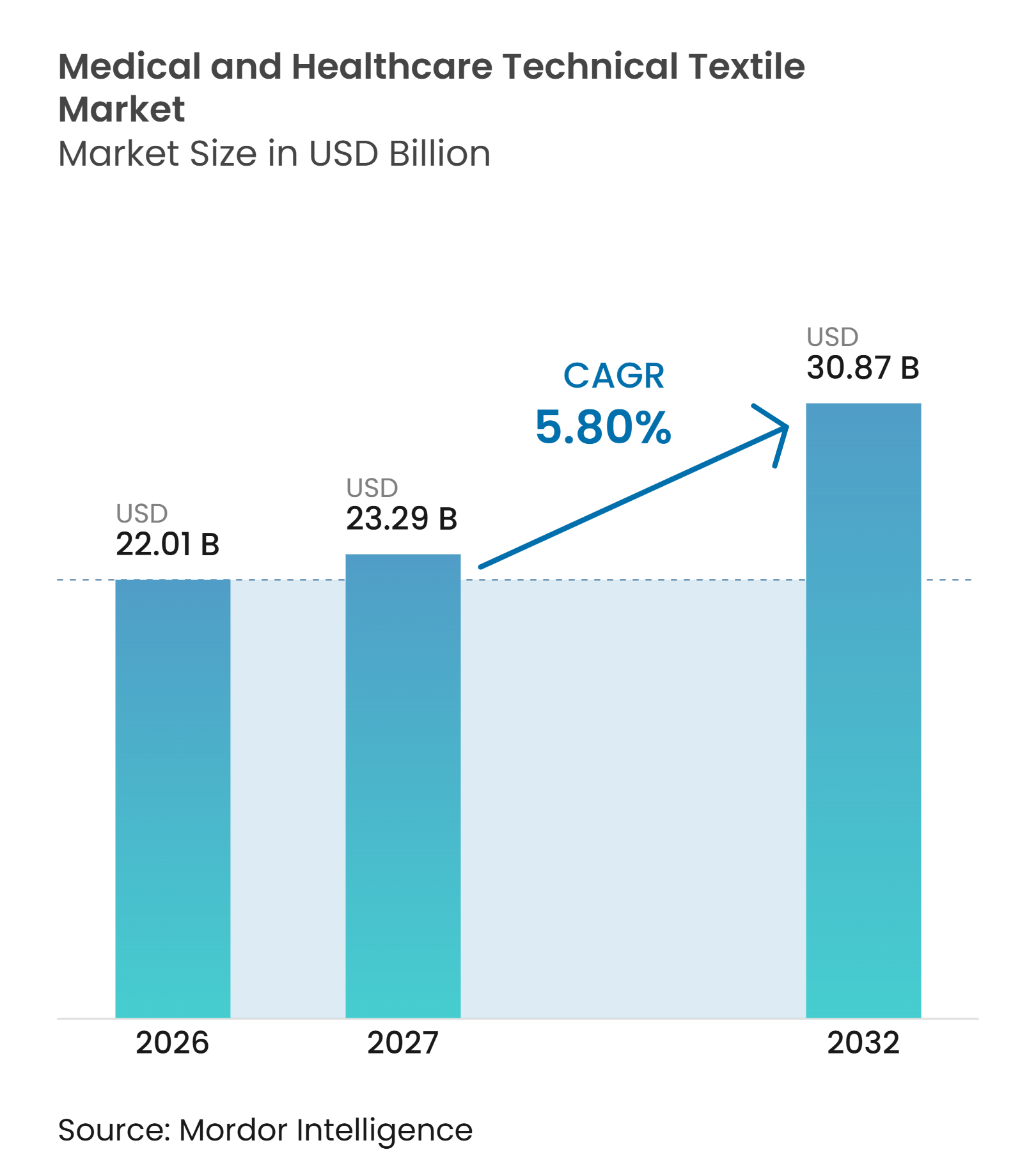
The Medical And Healthcare Technical Textile Market size was valued at USD 22.01 billion in 2026 and is estimated to grow from USD 23.29 billion in 2027 to reach USD 30.87 billion by 2032, at a CAGR of 5.80% during the forecast period (2027-2032).
The medical and healthcare technical textile market benefits from recurring demand tied to chronic wounds, aging populations, infection prevention, and surgical care. The product mix is shifting toward implantable textiles, advanced wound substrates, and functional antimicrobial nonwovens, which supports value creation beyond routine hygiene uses. Regulatory capability and clean-room production remain important barriers so that certified suppliers can retain a stronger position in hospital tenders and device applications. The medical and healthcare technical textile market also faces a practical balance between reducing single-use waste and maintaining the sterility standards that hospitals require. Reusable systems, bio-based alternatives, and PFAS-free barrier finishes can create opportunities where they meet clinical performance requirements.
Key Report Takeaways
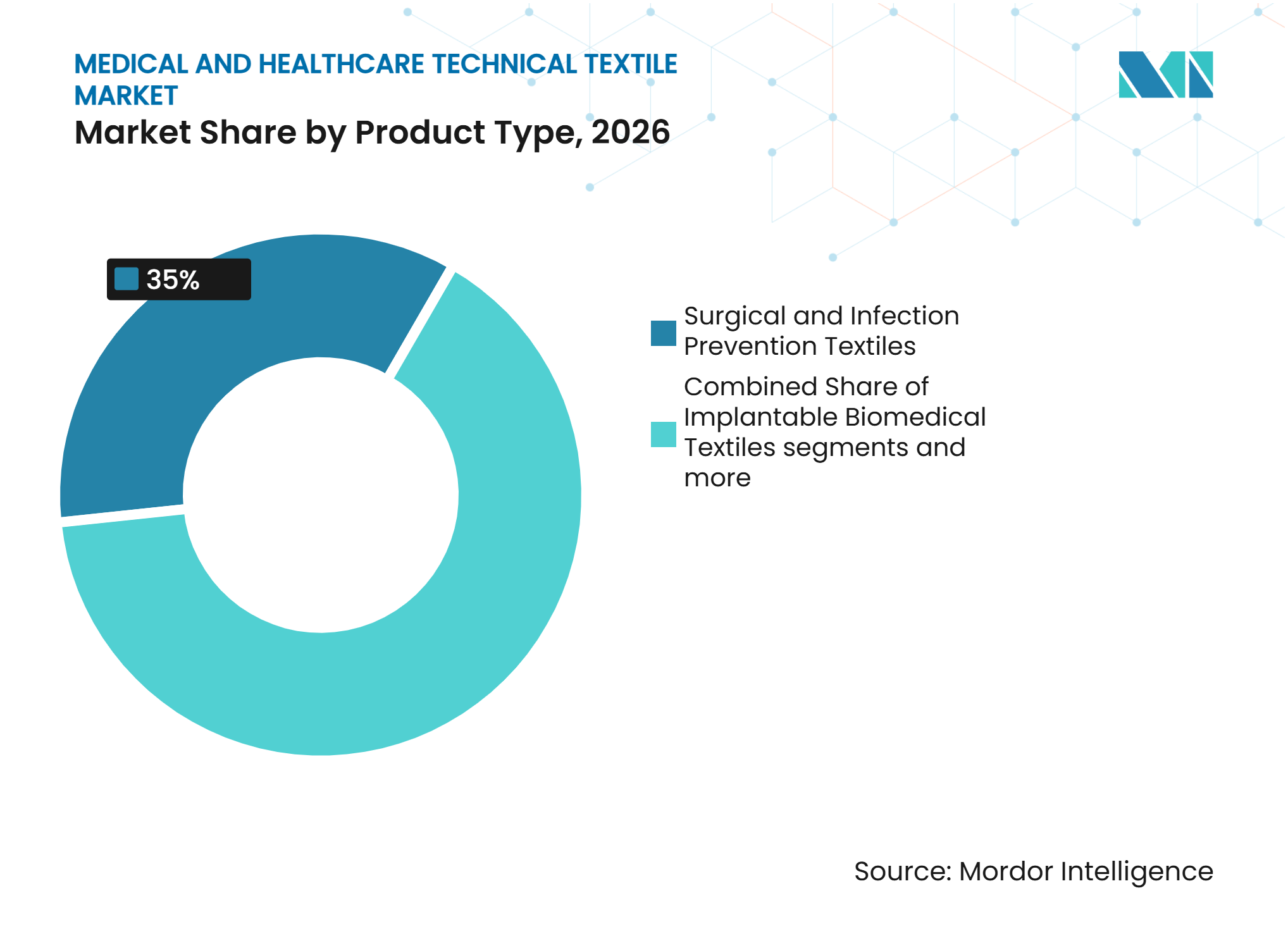
- By product type, surgical and infection prevention textiles held 35% of the medical and healthcare technical textile market share in 2026, while implantable biomedical textiles are forecast to grow at a 7.7% CAGR through 2032.
- By material type, polypropylene held 31.5% of medical and healthcare technical textile market size in 2026, while bioresorbable synthetic fibers and polymers are forecast to grow at an 8% CAGR through 2032.
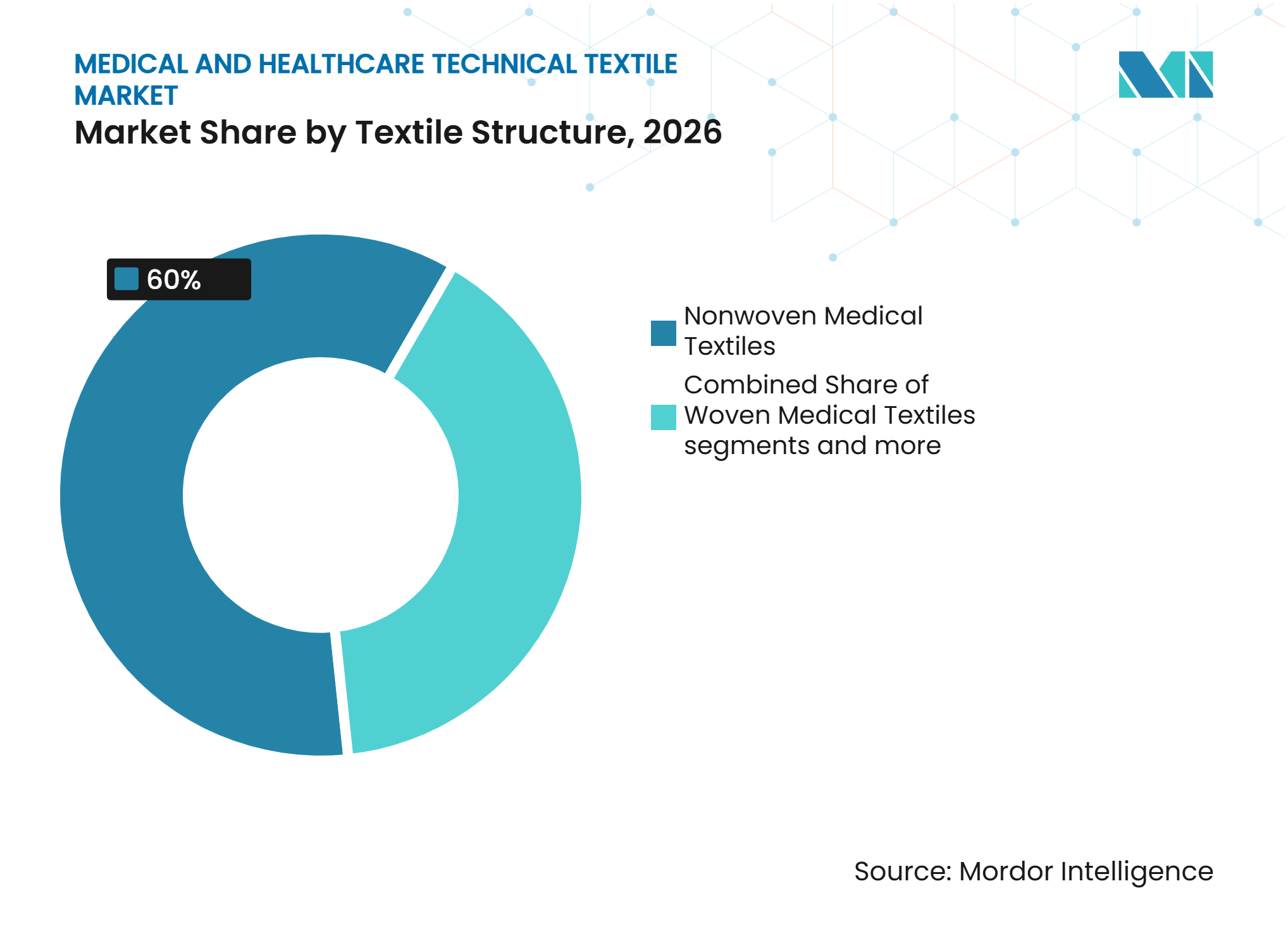
- By textile structure, nonwoven medical textiles held 60% of revenue in 2026, while knitted medical textiles are forecast to grow at a 6.5% CAGR through 2032.
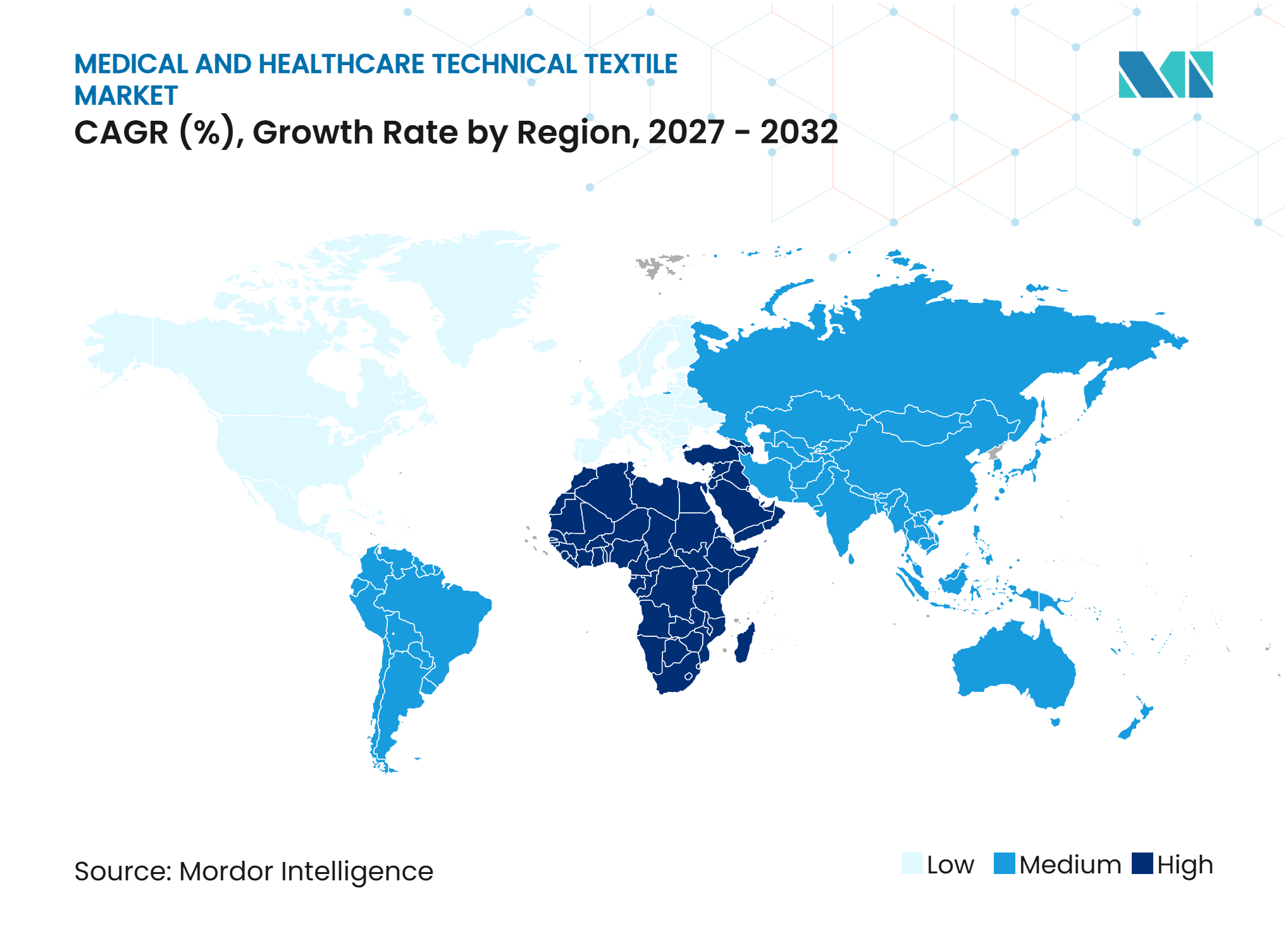
- By geography, Asia-Pacific held 34.6% of revenue in 2026, while the Middle East and Africa is forecast to grow at a 9% CAGR through 2032.
Note: Market numbers in this report are based on Mordor Intelligence's proprietary estimation framework, which combines nine months of actuals with Q4 projections for base year 2026.
Market Trends and Insights
Drivers Impact Analysis of Medical and Healthcare Technical Textile Market*
| Driver | (~) % Impact on CAGR Forecast | Geographic Relevance | Impact Timeline |
|---|---|---|---|
| Growing Prevalence of Chronic Wounds and Diabetes-Related Complications | +1.4% | Global, highest in North America, Southeast Asia, and Sub-Saharan Africa | Long term (≥ 4 years) |
| Aging Populations and Demand for Incontinence and Long-Term Care Products | +1.2% | Global, highest intensity in Japan, Western Europe, and North America | Long term (≥ 4 years) |
| Rising Surgical Procedure Volumes and Demand for Sterile Medical Textiles | +1% | Global, fastest acceleration in Asia-Pacific and Middle East and Africa ambulatory care centers | Medium term (2-4 years) |
| Increasing Infection Prevention and Healthcare Worker Protection Requirements | +0.8% | Global, regulatory anchor in North America and Europe, demand pull in Asia-Pacific and Middle East and Africa | Medium term (2-4 years) |
| Expansion of Advanced Wound Care and Compression Therapy Applications | +0.7% | North America, Europe, and Asia-Pacific core, with spillover to Middle East and Africa and South America | Medium term (2-4 years) |
| Growing Demand for Textile-Based Implantable Medical Devices | +0.6% | North America and Europe, early stage in Asia-Pacific and Middle East and Africa | Long term (≥ 4 years) |
| Source: Mordor Intelligence | |||
Growing Prevalence of Chronic Wounds and Diabetes-Related Complications
The medical and healthcare technical textile market draws recurring demand from chronic wounds and diabetes-related complications. The IDF Diabetes Atlas reported 589 million adults living with diabetes globally, while diabetic foot ulcers had a 6.3% prevalence within the diabetic population and a 13% rate in North America. A 2025 systematic review reported that diabetic foot ulcer recurrence can reach 65% over 5 years, while infection complicates 30% to 60% of cases.[1] This recurrence pattern supports continued use of wound contact layers, absorbent cores, and antimicrobial outer barriers. The medical and healthcare technical textile market therefore favors suppliers with dressing portfolios that address several stages of care. Advanced wound care and compression therapy can also support demand where clinical protocols require sustained treatment and monitoring.
Aging Populations and Demand for Incontinence and Long-Term Care Products
The medical and healthcare technical textile market is supported by aging populations that need incontinence and long-term care products. The industry association cited 55 million to 60 million people with urinary incontinence in Europe, with an economic burden of EUR 69.1 billion (USD 81.3 billion) in 2025. It also indicated that the burden could rise to EUR 86.7 billion (USD 102.0 billion) by 2030. Demand is moving toward moderate and heavy absorbency formats as care needs become more complex. Soft, cloth-like nonwoven topsheets and superabsorbent polymer integration can matter more as users seek comfort alongside absorbency. This favors products that can serve both clinical settings and home-based care.
Rising Surgical Procedure Volumes and Demand for Sterile Medical Textiles
The medical and healthcare technical textile market is closely linked to surgical volume because each procedure uses sterile drapes, gowns, wraps, and instrument packaging. There are 313 million major surgical procedures globally in 2025, creating a regular consumption cycle for sterile textile items.[2] Growth in minimally invasive care and ambulatory surgical centers can support standardized procedure packs and certified assembly capability. Infection prevention reinforces this demand because a 2025 review found antimicrobial textile interventions reduced bacterial load and reported selected reductions in MRSA and Clostridium difficile outcomes.[3] The medical and healthcare technical textile market increasingly rewards performance specifications rather than basic fabric cost alone. Suppliers that pair barrier performance with clinical evidence can be better positioned in hospital procurement.
Increasing Infection Prevention and Healthcare Worker Protection Requirements
Healthcare providers continue to prioritize textiles that reduce contamination risks and protect clinical staff during routine care and surgical procedures. A 2025 review found that antimicrobial interventions involving hospital textiles, including treated privacy curtains and copper-oxide bedding, reduced bacterial load and reported selected reductions in healthcare-associated infection outcomes. This supports procurement specifications that evaluate barrier performance, antimicrobial function, and clinical evidence rather than fabric cost alone. Demand for certified gowns, drapes, isolation products, and sterile procedure packs therefore remains linked to stronger infection-control standards. China produced 9.207 million tons of nonwovens in 2025, up 7.5% from the prior year, as higher-specification medical applications expanded. Suppliers that can combine reliable barrier properties with validated manufacturing and traceability are better placed to meet hospital requirements across developed and emerging healthcare systems.
Restraints Impact Analysis of Medical and Healthcare Technical Textile Market*
| Restraint | (~) % Impact on CAGR Forecast | Geographic Relevance | Impact Timeline |
|---|---|---|---|
| Stringent Medical Device Approval and Biocompatibility Requirements | -0.9% | Global, highest compliance burden in North America and Europe | Long term (≥ 4 years) |
| High Development and Qualification Costs of Implantable Biomedical Textiles | -0.7% | North America and Europe, with emerging compliance costs in Asia-Pacific and Middle East and Africa | Long term (≥ 4 years) |
| Volatility in Medical-Grade Polymer and Specialty Fiber Prices | -0.5% | Global, most acute for polypropylene-dependent Asian and European nonwoven manufacturers | Short term (≤ 2 years) |
| Increasing Pressure to Reduce Single-Use Medical Textile Waste | -0.4% | Europe core, spillover to North America, and early regulatory influence in Asia-Pacific | Medium term (2-4 years) |
| Source: Mordor Intelligence | |||
Stringent Medical Device Approval and Biocompatibility Requirements
Medical textile manufacturers must meet process validation, biocompatibility, labeling, and sterility requirements before products can enter regulated clinical applications. These obligations are especially significant for implantable textiles, surgical products, and wound-care materials that have direct patient contact. The need for documented quality systems and clinical evidence can lengthen development timelines and increase the cost of entering regulated product categories. Smaller converters may face difficulty funding testing, registration, and ongoing compliance activities, which can limit their ability to serve higher-value medical applications. This favors established suppliers with mature quality-management systems, regulatory teams, and experience working with hospitals and device manufacturers. It can also encourage consolidation when smaller companies seek larger partners with the resources to support product qualification and commercialization.
High Development and Qualification Costs of Implantable Biomedical Textiles
Implantable biomedical textiles require substantial investment because their development involves specialized materials, design verification, biocompatibility testing, preclinical work, and clinical evidence. These requirements make implantable products more expensive and time-consuming to develop than conventional disposable nonwovens. Development teams must also establish consistent manufacturing controls for specialized structures such as knitted meshes, braided implants, and electrospun matrices. The cost burden can steer companies toward incremental improvements of existing products instead of entirely new textile architectures. BD’s April 2025 launch of the Phasix ST Umbilical Hernia Patch shows the level of product development involved in creating indication-specific absorbable implant solutions. These barriers concentrate innovation among companies that can fund regulatory work, clinical evidence, specialized production, and post-market support.
*Our forecasts treat driver/restraint impacts as directional, not additive. The impact forecasts reflect baseline growth, mix effects, and variable interactions.
Medical and Healthcare Technical Textile Market Segment Analysis
By Product Type:
Surgical Textiles Lead, Implantable Demand AcceleratesSurgical and infection prevention textiles held 35% of medical and healthcare technical textile market revenue in 2026. Their position reflects routine use of sterile gowns, drapes, and related products during surgical procedures. Wound care and non-implantable therapeutic textiles formed the second-largest category. This category benefits from chronic wound care protocols that use several materials over the course of treatment. Healthcare hygiene and absorbent care textiles remain volume intensive because they include incontinence pads, hospital underpads, and personal care products. Hospital and Patient Care Textiles serve large volumes but face more cost-sensitive purchasing. Extracorporeal and Medical Device-Integrated Textiles remain specialized because they must meet blood-compatibility and device-performance requirements. The medical and healthcare technical textile industry serves these categories through different production and clinical validation models.
Implantable biomedical textiles are projected to grow at a 7.7% CAGR through 2032 within the medical and healthcare technical textile market. The segment benefits from demand for materials that can provide support without leaving a permanent implant. BD launched the Phasix ST Umbilical Hernia Patch in April 2025, describing it as a fully absorbable patch for umbilical hernias that uses biologically derived P4HB and an integrated hydrogel barrier. BD also reported that 60% of surveyed patients preferred a nonpermanent mesh option. These product launches support wider clinical use of bioresorbable textile structures. The medical and healthcare technical textile market can see more competition in this segment as clinical adoption increases.



By Material Type:
Polypropylene Anchors Volume, Bioresorbable Lead Value GrowthPolypropylene held 31.5% of revenue in the medical and healthcare technical textile market in 2026. Its position comes from the material's use in spunbond and meltblown production for surgical and hygiene applications. A 2025 study found that 5-layer polypropylene composites with 3 spunbond layers and 2 meltblown layers balanced particle filtration efficiency with air permeability. Polyester supports woven and knitted products that need dimensional stability during repeated processing. Polyamide is used in suture yarns and braided fixation structures. Polyurethane and elastomeric fibers support compression garments and retention bandages. Cotton and natural fibers remain relevant to gauze and wound contact layers, particularly for skin-sensitive patients. The medical and healthcare technical textile industry uses this broad material base to meet different clinical and performance needs.
Bioresorbable synthetic fibers and polymers are forecast to grow at an 8% CAGR through 2032 in the medical and healthcare technical textile market. PLA, PGA, PDO, and P4HB can be selected for different degradation profiles and healing timelines. These materials are most relevant to implantable applications where temporary support is required. Regenerated cellulosic fibers can also gain attention as sustainability requirements place greater scrutiny on synthetic disposable products. Material selection is becoming more closely linked to clinical use, regulatory evidence, and end-of-life considerations. This shift raises the value of suppliers that can provide both reliable fiber performance and documented compliance. The medical and healthcare technical textile market will continue to use polypropylene at scale while expanding its resorbable material portfolio.
By Textile Structure:
Nonwovens Define the Market, Knits Deliver Fastest GrowthNonwoven medical textiles held 60% of the medical and healthcare technical textile market share in 2026. Their versatility supports high-volume uses such as surgical drapes, isolation gowns, wound dressings, and hygiene products. The China Textile Industry Association reported that China produced 9.207 million tons of nonwovens in 2025, an increase of 7.5% from the prior year. The same source reported USD 10.9 billion in 2025 exports of medical gauze and dressings. Woven textiles remain relevant for reusable surgical systems and high-strength orthopedic supports. Braided textiles support sutures, vascular grafts, and tendon repair scaffolds where load-bearing design is important. The medical and healthcare technical textile market relies on each structure for distinct clinical requirements.
Knitted medical textiles are forecast to grow at a 6.5% CAGR through 2032. Warp-knitted grafts and soft-tissue meshes support this category, as do compression products for chronic venous disease and lymphedema. Knitted fabrics provide conformability and graduated stretch that suit hosiery, elastic retention dressings, and tubular supports. A 2025 systematic review found that antimicrobial finishing for healthcare textiles, including privacy curtains and bedding, can reduce microbial contamination and selected healthcare-associated infection outcomes. This supports interest in functional finishing for knitted hospital textiles. The medical and healthcare technical textile market also uses knitting where repeatable fit and controlled elasticity are needed. Structure selection will remain tied to the intended use, clinical performance, and manufacturing economics. Nonwovens retain the largest role, while knitted designs expand in applications that need stretch and conformability.

Geography Analysis
Asia-Pacific held 34.6% of the medical and healthcare technical textile market in 2026. China combines a large production base with growing local demand for infection prevention, surgical care, and advanced wound products. The China Textile Industry Association reported 9.207 million tons of nonwoven production in 2025, an increase of 7.5% from the prior year. Japan, Vietnam, and India add regional demand through aging-related care needs, export-oriented production, and growing hospital networks.
North America and Europe contribute strongly to premium medical textile applications, particularly implantable textiles, advanced wound care platforms, and certified surgical packs. Germany is a European manufacturing and regulatory hub, with its medical technology and devices sector generating EUR 19.7 billion (USD 23.2 billion) in gross value added in 2024. The same source reported EUR 31.8 billion (USD 37.4 billion) in exports and 212,100 direct employees. The United Kingdom faces infection-control and sustainability requirements, while South American procurement constraints can limit premium-product uptake.
The Middle East and Africa is forecast to expand at a 9% CAGR through 2032, the fastest rate among the regional segments. This growth reflects healthcare capacity expansion and localization efforts in several markets. Mölnlycke Health Care increased its share in Tamer Mölnlycke Care from 33.3% to 60% in May 2025. The expanded local portfolio covers drapes, gowns, and wound care products for the Gulf Cooperation Council region. Turkey and African markets offer longer-term growth as standards and hospital capacity develop.
Competitive Landscape
Market Concentration
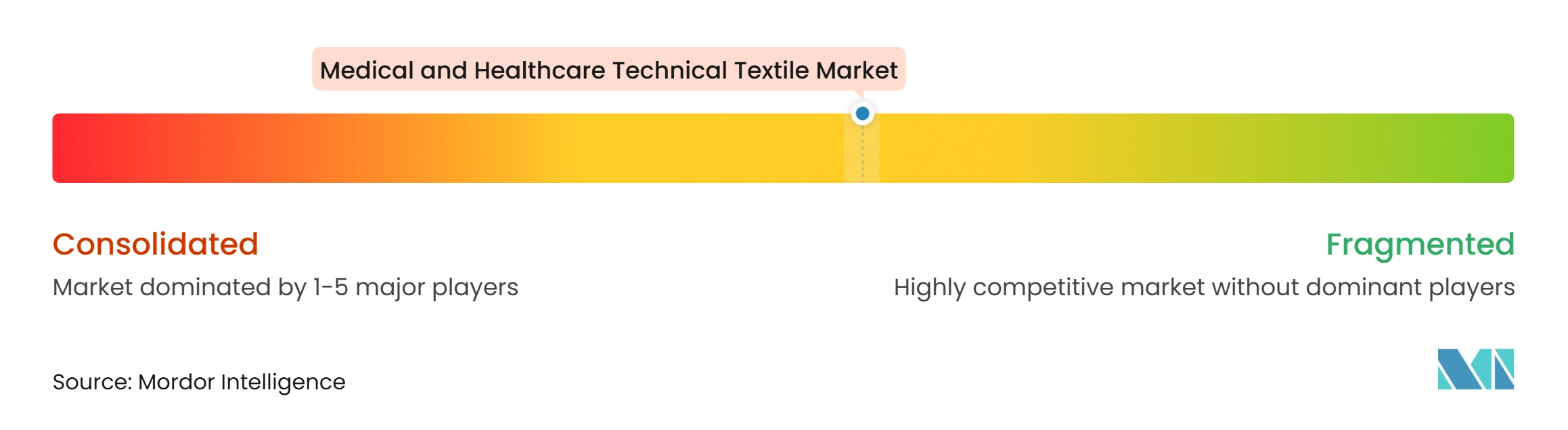
The medical and healthcare technical textile market exhibits a medium level of market concentration. Freudenberg Performance Materials, Ahlstrom, Magnera Corporation, Fitesa, and PFNonwovens compete through material engineering, scale, and supply reliability. Mölnlycke Health Care, Essity, Smith+Nephew, and Lohmann & Rauscher compete through clinical evidence and hospital relationships. The medical and healthcare technical textile industry increasingly differentiates through antimicrobial performance, PFAS-free barriers, bio-based fibers, and advanced wound care platforms.
Freudenberg Performance Materials announced the acquisition of Foshan United Medical in July 2026, adding wound dressing formulation and finished-product capability to its nonwoven materials business. The company had also acquired the remaining shares in Japan Vilene Company in November 2025, strengthening its footprint in Japan. Mölnlycke announced a combined EUR 40 million (USD 47.05 million) investment in Mikkeli and Oldham in June 2026, including sterilization and wound care capacity expansion. The medical and healthcare technical textile market rewards these investments because they link material supply, regulated manufacturing, and finished-care products. Capacity expansion can also improve supply resilience for hospitals and distributors.
Specialist implantable-textile companies, including ATEX Technologies, Bally Ribbon Mills, Secant Group, and Confluent Medical Technologies, compete through technical capabilities in braiding, weaving, and electrospinning. These niches require knowledge and equipment that broad nonwoven producers may not replicate easily. The medical and healthcare technical textile market offers room for suppliers that can serve minimally invasive surgery, bioresorbable implants, and high-performance wound care. Companies that provide PFAS-free surgical barriers while maintaining clinical performance can also address hospital sustainability requirements. The Medical and healthcare technical textile industry is therefore shaped by both large integrated producers and specialists that hold focused technical positions.
Medical and Healthcare Technical Textile Industry Leaders
-
Freudenberg Performance Materials
-
Ahlstrom
-
Magnera Corporation
-
Fitesa
-
PFNonwovens
- *Disclaimer: Major Players sorted in no particular order
Medical and Healthcare Technical Textile Market Companies Covered in this Report
- Freudenberg Performance Materials
- Ahlstrom
- Magnera Corporation
- Fitesa
- PFNonwovens
- Avgol (Indorama Ventures)
- Suominen Corporation
- Asahi Kasei Corporation
- Toray Industries, Inc.
- Mölnlycke Health Care
- Medline Inc.
- Cardinal Health, Inc.
- PAUL HARTMANN AG
- Essity AB
- Lohmann & Rauscher
- Winner Medical Co., Ltd.
- Smith & Nephew plc
- Solventum Corporation
- Secant Group
- ATEX Technologies
- Bally Ribbon Mills
- Confluent Medical Technologies
- Johnson & Johnson MedTech
- B. Braun Melsungen AG
- Trelleborg AB
Recent Industry Developments in Medical and Healthcare Technical Textile Market
- July 2026: Freudenberg Performance Materials announced the acquisition of Foshan United Medical, expanding into full-service advanced wound care supply by adding wound dressing formulation and end-product capabilities alongside its existing nonwoven materials business.
- June 2026: Mölnlycke Health Care confirmed a EUR 40 million (USD 47.05 million) combined investment in Mikkeli, Finland, and Oldham, United Kingdom, doubling sterilization capacity in Mikkeli and adding 100 million units of annual wound care manufacturing capacity, building on recent expansions in the United States and China.
- November 2025: Freudenberg Performance Materials acquired all remaining shares in Japan Vilene Company, a Japanese technical textile and filtration materials manufacturer, strengthening its commercial and manufacturing footprint in the Japanese medical textile market.
- November 2025: Mölnlycke Health Care commenced production at its first wound care manufacturing site in Changshu, China, a 10,000 m² facility meeting global Mölnlycke manufacturing standards, to supply growing Asia-Pacific demand for advanced wound care products.
Global Medical and Healthcare Technical Textile Market Report Scope
The Medical and Healthcare Technical Textile Market Report is Segmented by Product Type (Hospital and Patient Care Textiles, Implantable Biomedical Textiles, and More), by Material Type (Polypropylene (PP), Polyester (PET), and More), by Textile Structure (Nonwoven Medical Textiles, Woven Medical Textiles, and More), and by Geography (North America, Europe, and More). The Market Forecasts are Provided in Terms of Value (USD).
Segmentation Overview
| Surgical and Infection Prevention Textiles |
| Wound Care and Non-Implantable Therapeutic Textiles |
| Healthcare Hygiene and Absorbent Care Textiles |
| Implantable Biomedical Textiles |
| Extracorporeal and Medical Device-Integrated Textiles |
| Hospital and Patient Care Textiles |
| Polypropylene (PP) |
| Polyester (PET) |
| Polyethylene (PE) |
| Polyamide (Nylon) |
| Cotton and Other Natural Fibers |
| Regenerated Cellulosic Fibers |
| Polyurethane and Other Elastomeric Fibers |
| Bioresorbable Synthetic Fibers and Polymers |
| Other Specialty Fibers and Materials |
| Nonwoven Medical Textiles |
| Woven Medical Textiles |
| Knitted Medical Textiles |
| Braided Medical Textiles |
| Other Engineered Medical Textile Structures and Products |
| North America | United States |
| Canada | |
| Mexico | |
| Europe | Germany |
| United Kingdom | |
| France | |
| Italy | |
| Spain | |
| Netherlands | |
| Rest of Europe | |
| Asia-Pacific | China |
| Japan | |
| India | |
| South Korea | |
| Taiwan | |
| Australia | |
| Indonesia | |
| Vietnam | |
| Rest of Asia-Pacific | |
| Middle East and Africa | Saudi Arabia |
| United Arab Emirates | |
| Turkey | |
| South Africa | |
| Rest of Middle East and Africa | |
| South America | Brazil |
| Argentina | |
| Rest of South America |
| By Product Type | Surgical and Infection Prevention Textiles | |
| Wound Care and Non-Implantable Therapeutic Textiles | ||
| Healthcare Hygiene and Absorbent Care Textiles | ||
| Implantable Biomedical Textiles | ||
| Extracorporeal and Medical Device-Integrated Textiles | ||
| Hospital and Patient Care Textiles | ||
| By Material Type | Polypropylene (PP) | |
| Polyester (PET) | ||
| Polyethylene (PE) | ||
| Polyamide (Nylon) | ||
| Cotton and Other Natural Fibers | ||
| Regenerated Cellulosic Fibers | ||
| Polyurethane and Other Elastomeric Fibers | ||
| Bioresorbable Synthetic Fibers and Polymers | ||
| Other Specialty Fibers and Materials | ||
| By Textile Structure | Nonwoven Medical Textiles | |
| Woven Medical Textiles | ||
| Knitted Medical Textiles | ||
| Braided Medical Textiles | ||
| Other Engineered Medical Textile Structures and Products | ||
| By Geography | North America | United States |
| Canada | ||
| Mexico | ||
| Europe | Germany | |
| United Kingdom | ||
| France | ||
| Italy | ||
| Spain | ||
| Netherlands | ||
| Rest of Europe | ||
| Asia-Pacific | China | |
| Japan | ||
| India | ||
| South Korea | ||
| Taiwan | ||
| Australia | ||
| Indonesia | ||
| Vietnam | ||
| Rest of Asia-Pacific | ||
| Middle East and Africa | Saudi Arabia | |
| United Arab Emirates | ||
| Turkey | ||
| South Africa | ||
| Rest of Middle East and Africa | ||
| South America | Brazil | |
| Argentina | ||
| Rest of South America | ||
Key Questions Answered in the Report
What is the projected value of the medical and healthcare technical textile market by 2032?
The supplied estimate projects USD 30.87 billion by 2032, from USD 22.01 billion in 2026, at a 5.8% CAGR during 2027 to 2032. Growth is supported by recurring demand in surgical care, infection prevention, wound management, absorbent care, and specialized implantable applications.
Which product category leads medical and healthcare technical textiles?
Surgical and Infection Prevention Textiles led with 35% of revenue in 2026. Their position reflects the routine use of sterile gowns, drapes, wraps, and procedure-pack components whenever surgeries and other clinical procedures are performed.
Which medical textile product is growing fastest?
Implantable Biomedical Textiles are forecast to grow at a 7.7% CAGR through 2032. Demand is supported by bioresorbable structures that can provide temporary support during healing and by clinical preference for alternatives to permanent mesh in selected applications.
Why are nonwovens widely used in healthcare applications?
Nonwoven Medical Textiles held 60% of revenue in 2026 because they support high-volume disposable uses including gowns, drapes, dressings, isolation products, and hygiene materials. Their filtration, barrier, and manufacturing characteristics suit many routine clinical requirements.
Which region is expected to grow the fastest through 2032?
The Middle East and Africa is expected to grow at a 9% CAGR through 2032, supported by healthcare capacity expansion, local manufacturing initiatives, and wider adoption of infection-prevention and wound-care products in hospital systems. Saudi Arabia illustrates this direction through locally manufactured drapes, gowns, and wound-care products.
What factors limit adoption of new implantable textile products?
Validation, biocompatibility evidence, sterility assurance, and high development costs can extend the qualification path for implantable products. These requirements favor manufacturers with established quality systems, regulatory expertise, and the resources to support preclinical and clinical evidence.