
Lutetium-177 Market Size and Share
Market Overview
| Study Period | 2021 - 2032 |
|---|---|
| Market Size (2027) | USD 3.74 Billion |
| Market Size (2032) | USD 7.82 Billion |
| Growth Rate (2027 - 2032) | 15.92 % |
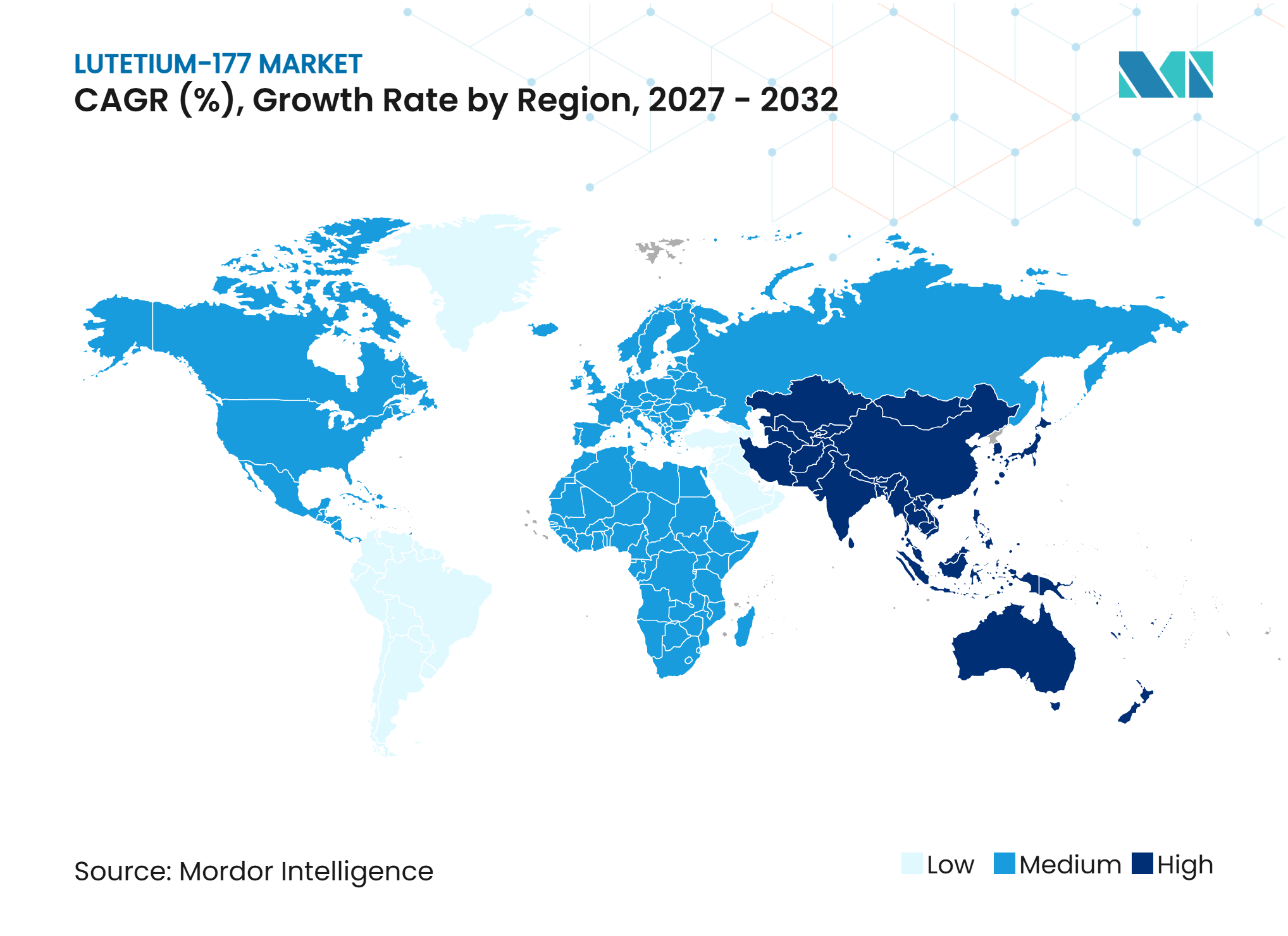
| Fastest Growing Market | Asia-Pacific |
| Largest Market | North America |
| Market Concentration | Medium |
Major Players *Disclaimer: Major Players sorted in no particular order Image © Mordor Intelligence. Reuse requires attribution under CC BY 4.0. | |
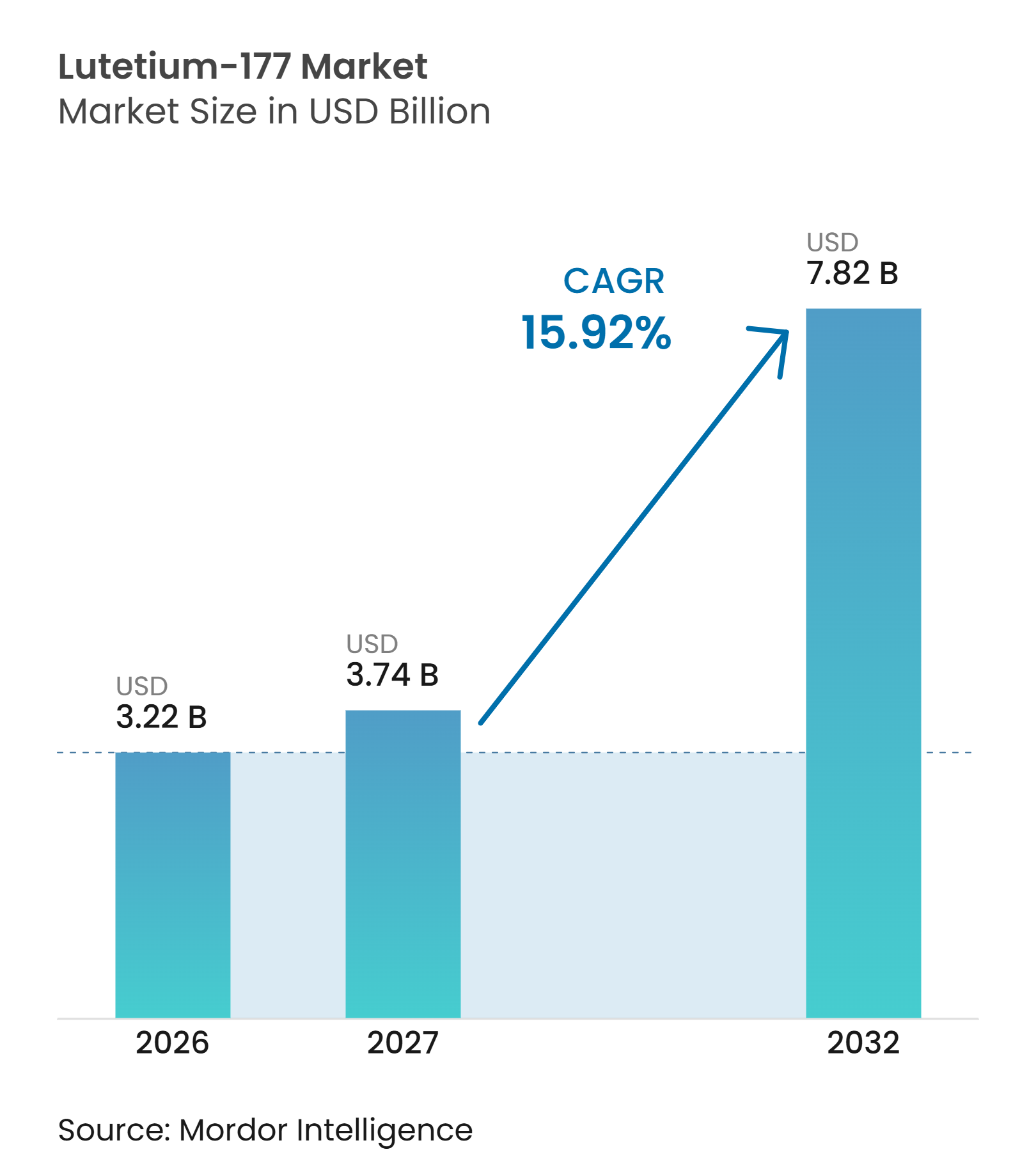
Lutetium-177 Market Analysis by Mordor Intelligence
The Lutetium-177 Market size is projected to be USD 3.22 billion in 2026, USD 3.74 billion in 2027, and reach USD 7.82 billion by 2032, growing at a CAGR of 15.92% from 2027 to 2032.
The Lutetium-177 market is being shaped by wider use of radioligand therapy in prostate cancer and neuroendocrine tumors. FDA label expansions have moved Pluvicto into earlier treatment settings, which increases the number of eligible patients and changes how treatment centers plan capacity. Production investment is reducing dependence on a limited group of isotope suppliers, although access to enriched ytterbium-176 and reactor irradiation remains important. The Lutetium-177 market also depends on certified treatment sites, trained clinicians, and predictable reimbursement because an available isotope dose does not by itself create patient throughput. Competition is moving beyond individual therapies toward control of isotope supply, radiopharmaceutical manufacturing, and distribution capacity.
Key Report Takeaways
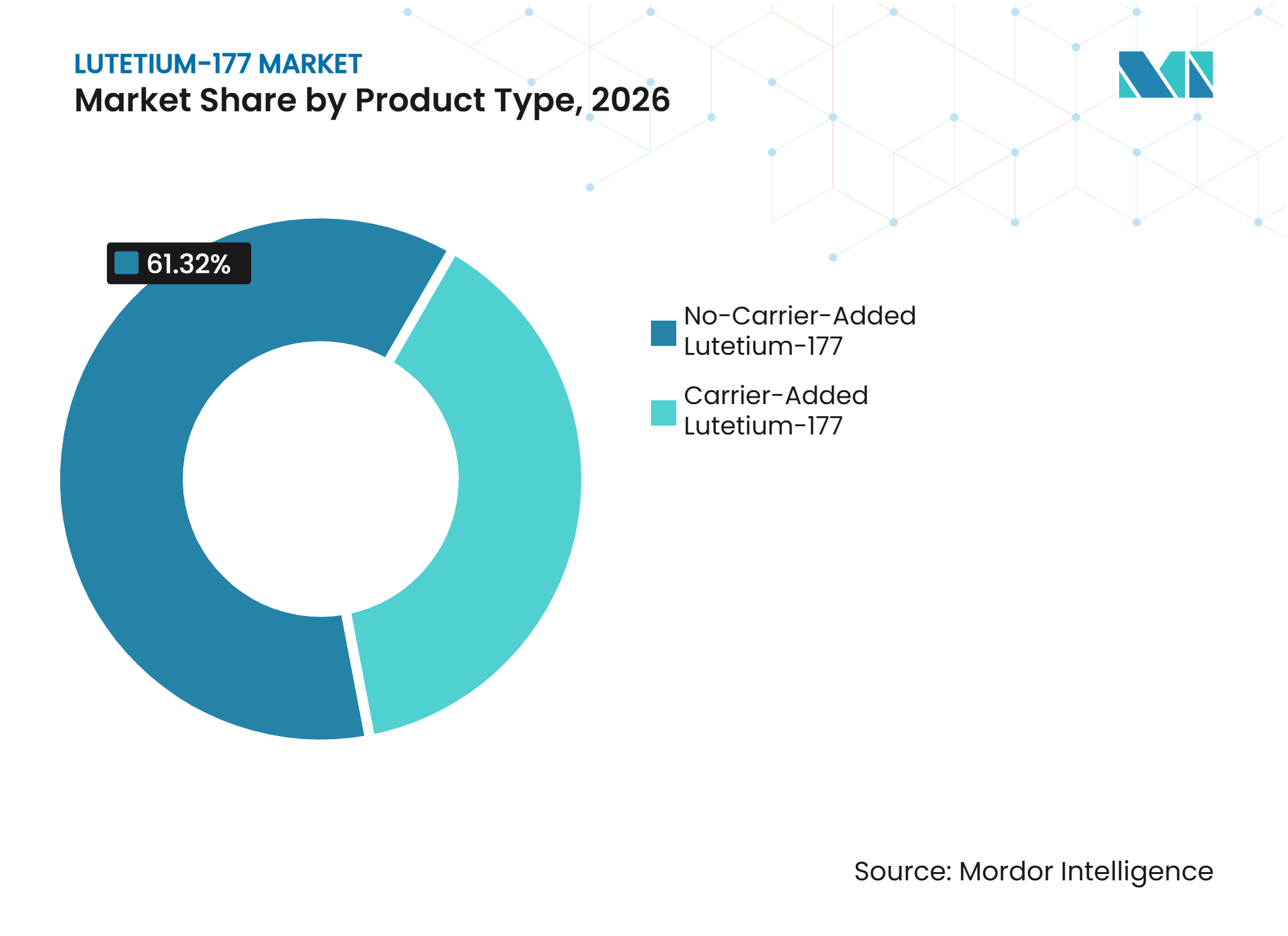
- By product type, no-carrier-added Lutetium-177 held 61.32% of the Lutetium-177 market share in 2026 and is projected to grow at a 17.54% CAGR through 2032.
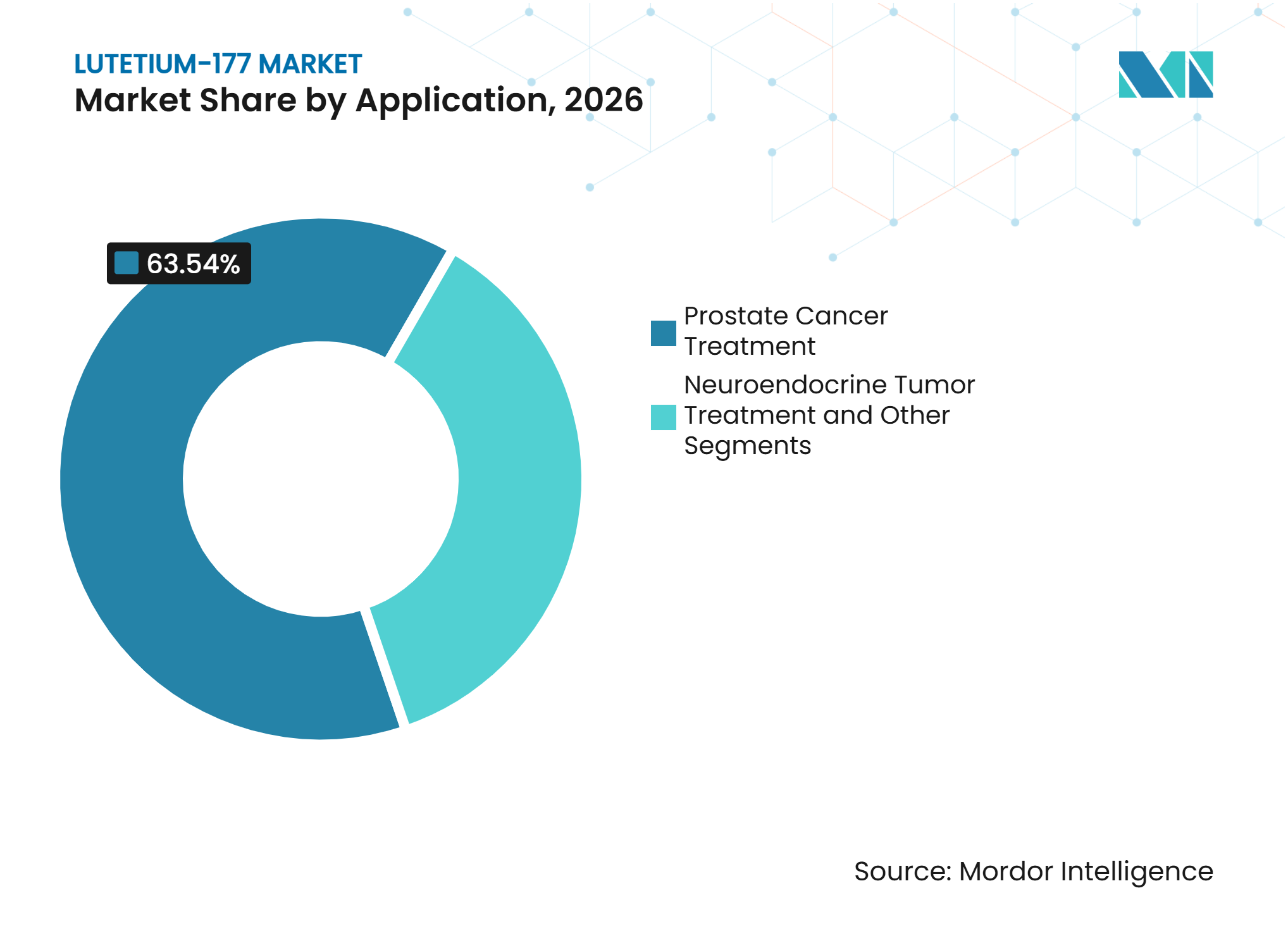
- By application, prostate cancer treatment held 63.54% of revenue in 2026, while neuroendocrine tumor treatment is projected to expand at an 18.43% CAGR through 2032.
- By end user, tertiary-care academic and comprehensive cancer centers held 42.65% of revenue in 2026, while specialty nuclear-medicine clinics are projected to expand at an 18.54% CAGR through 2032.
- By geography, North America held 43.21% of revenue in 2026, while Asia-Pacific is projected to grow at a 16.54% CAGR through 2032.
Note: Market numbers in this report are based on Mordor Intelligence's proprietary estimation framework, which combines nine months of actuals with Q4 projections for base year 2026.
Market Trends and Insights
Drivers Impact Analysis of Lutetium-177 Market*
| Driver | (~) % Impact on CAGR Forecast | Geographic Relevance | Impact Timeline |
|---|---|---|---|
| Expanding Adoption of Targeted Radioligand Therapy | 4.50% | Global, with greatest intensity in North America and Europe | Medium term (2-4 years) |
| Regulatory Approvals and Label Expansion for Lu-177 Therapies | 3.80% | Global, with gains in the United States, Europe, Japan, and China | Short term (≤ 2 years) |
| Rising Cancer Burden and Demand for Precision Oncology | 3.20% | Global, with rising incidence in Asia-Pacific and Africa | Long term (≥ 4 years) |
| Expansion of High-Purity Lu-177 Production Capacity | 2.60% | North America, Europe, and Asia-Pacific | Medium term (2-4 years) |
| Increasing Availability of Theranostic Imaging and Treatment Centers | 2.20% | North America, Europe, Japan, China, and selected urban centers in emerging markets | Medium term (2-4 years) |
| Broadening Lu-177 Clinical Pipeline Across New Targets and Tumor Types | 1.90% | Global, led by North America and Europe | Long term (≥ 4 years) |
| Source: Mordor Intelligence | |||
Expanding Adoption of Targeted Radioligand Therapy
Targeted radioligand therapy is reaching more patients as approvals move beyond late-line treatment settings. In March 2025, the FDA expanded Pluvicto for patients with PSMA-positive metastatic castration-resistant prostate cancer who had not received taxane chemotherapy. In July 2026, the FDA approved Pluvicto with androgen receptor pathway inhibitor therapy for PSMA-positive metastatic hormone-sensitive prostate cancer[1]. These decisions make the Lutetium-177 market less dependent on a narrow group of advanced-disease patients. They also increase demand for imaging, treatment scheduling, radiation safety processes, and staff who can administer repeated treatment cycles. The clinical use of radioligands therefore requires health systems to expand service capacity at the same pace as drug access.
Regulatory Approvals and Label Expansion for Lu-177 Therapies
Regulatory approvals are shortening the period between clinical evidence and commercial adoption in major treatment regions. The FDA decisions in 2025 and 2026 gave Pluvicto access to earlier prostate cancer settings, supported by trial evidence reviewed through the agency’s oncology approval process. Japan’s PMDA approved Pluvicto for metastatic castration-resistant prostate cancer in September 2025, establishing a regulated pathway for use in a large Asia-Pacific health system. The European Commission granted centralized authorization for Ilumira, a no-carrier-added lutetium-177 chloride precursor, in March 2026. These actions expand the number of jurisdictions with established regulatory expectations for therapeutic Lu-177 material. They also make manufacturing quality, pharmacovigilance, and authorization maintenance central requirements for suppliers in the Lutetium-177 market.
Rising Cancer Burden and Demand for Precision Oncology
The global prostate cancer burden supports continued demand for therapies that can be matched to tumor targets. IARC reported 1.546 million new prostate cancer cases and 419,849 deaths worldwide in 2024. A 2026 peer-reviewed analysis projects annual global prostate cancer cases to reach 2.88 million by 2050. This projected increase makes patient selection and treatment sequencing more important across the Lutetium-177 market. PSMA-targeted imaging helps clinicians identify suitable prostate cancer patients, while somatostatin receptor imaging supports use in neuroendocrine tumors. The combined use of imaging and targeted treatment may support more precise referral pathways, but it also raises the need for integrated diagnostic and therapeutic services.
Expansion of High-Purity Lu-177 Production Capacity
High-purity isotope capacity is expanding through investments in enrichment, reactors, and radiochemical facilities. Kinectrics commissioned 4 electromagnetic isotope separator units in September 2025 and reported annual ytterbium-176 output above 500 grams. The Government of Canada announced funding in August 2025 for a second Lu-177 isotope production system at Bruce Power’s CANDU Unit 6 reactor[2]. SCK CEN completed a centralized radiochemical facility that is intended to support production of medical radioisotopes. SHINE also reported capacity at its Cassiopeia facility and subsequent work to extend its supply platform. These projects give the Lutetium-177 market more geographic options, although enriched precursor access and qualified irradiation time remain decisive production inputs.
Restraints Impact Analysis of Lutetium-177 Market*
| Restraint | (~) % Impact on CAGR Forecast | Geographic Relevance | Impact Timeline |
|---|---|---|---|
| Limited High-Flux Reactor and Enriched Ytterbium-176 Availability | -1.8% | Global, with particular exposure in European production hubs | Medium term (2-4 years) |
| Shortage of Licensed Theranostic Centers and Specialized Personnel | -1.4% | Global, with the greatest pressure in Europe and emerging markets | Long term (≥ 4 years) |
| High Treatment Costs and Incomplete Reimbursement for Total Care Delivery | -1.3% | North America, Europe, Asia-Pacific, and emerging markets | Medium term (2-4 years) |
| Dose-Wastage Exposure From Narrow Delivery Windows and Radioactive Decay | -0.9% | Global, with stronger exposure in regions with limited logistics infrastructure | Short term (≤ 2 years) |
| Source: Mordor Intelligence | |||
Limited High-Flux Reactor and Enriched Ytterbium-176 Availability
No-carrier-added Lu-177 production depends on enriched ytterbium-176 and access to suitable neutron irradiation capacity. ITM renewed its collaboration with the Institut Laue-Langevin in June 2025, securing priority access to half of the reactor’s available irradiation capacity for medical Lu-177 production. The agreement shows that supply security is based on long-term technical arrangements rather than spot purchasing. Kinectrics’ enrichment investment improves precursor availability, but enrichment alone does not replace reactor irradiation and authorized processing. The Lutetium-177 market consequently remains exposed to disruption at several points in the production chain. Producers that secure both precursor material and irradiation access may have a meaningful advantage when demand rises quickly.
Shortage of Licensed Theranostic Centers and Specialized Personnel
Treatment capacity can constrain growth even when isotope supply is available. A 2026 European workforce survey found that 80.2% of nuclear medicine departments had at least 1 vacancy. The same evidence showed that 57.7% of vacancies had remained open for 6 months or longer. A 2025 study also reported that more than 73% of nuclear medicine residency positions in Italy were vacant in 2024. SNMMI has highlighted that the expansion of radiopharmaceutical therapy requires more dedicated treatment centers and specialized personnel[3]. For the Lutetium-177 market, staffing shortages can extend waiting periods and limit the benefit of new therapy approvals or manufacturing investment.
*Our forecasts treat driver/restraint impacts as directional, not additive. The impact forecasts reflect baseline growth, mix effects, and variable interactions.
Lutetium-177 Market Segment Analysis
By Product Type:
High-Purity Material Supports Commercial Therapeutic UseNo-carrier-added material held 61.32% of revenue in 2026 and is projected to grow at a 17.54% CAGR through 2032. This portion of the Lutetium-177 market size reflects the need for high specific activity in therapeutic radiolabeling. No-carrier-added production uses enriched ytterbium-176 targets and is designed to reduce stable lutetium impurities. ITM describes no-carrier-added Lu-177 as a radioisotope supply option for therapeutic applications. The European Commission authorization for Ilumira covered no-carrier-added lutetium-177 chloride as a radiolabeling precursor. This regulatory decision supports the use of high-purity material within controlled pharmaceutical manufacturing systems.
Carrier-added Lu-177 remains relevant for research work and some production pathways. Its use can be affected by lower specific activity because stable isotopes are present in the final material. This difference is important for products that need to deliver a therapeutic radionuclide while preserving target binding. The Lutetium-177 industry therefore places significant value on radionuclidic purity, batch consistency, and documented quality controls. Suppliers must validate material quality before it enters a radiopharmaceutical production process. Expanded production capacity does not remove the need for comparable standards across each source of high-purity material.



By Application:
Prostate Cancer Drives Volume While Neuroendocrine Tumors ExpandProstate cancer treatment held 63.54% of revenue in 2026. Pluvicto generated USD 1.994 billion in full-year 2025 revenue, according to Novartis, demonstrating the established commercial scale of PSMA-targeted therapy. The FDA’s March 2025 and July 2026 approvals broadened use across metastatic prostate cancer settings. These expansions support patient access earlier in the treatment sequence. They also require providers to coordinate PSMA imaging, oncology consultation, nuclear medicine workflows, and follow-up care. Prostate cancer remains the primary near-term volume base for the Lutetium-177 market.
Neuroendocrine tumor treatment is projected to grow at an 18.43% CAGR through 2032. The segment is supported by somatostatin receptor-directed treatment and diagnostic pathways. ITM announced that the FDA accepted its new drug application for n.c.a. 177Lu-edotreotide in November 2025. The ongoing development of therapies for neuroendocrine tumors introduces more choice within peptide receptor radionuclide therapy. Other programs are examining Lu-177 in targets such as fibroblast activation protein and HER2, but these remain earlier-stage opportunities. This wider development activity could diversify the Lutetium-177 market over time, although approved uses remain concentrated in the leading indications.

By End User:
Academic Centers Lead While Specialty Clinics Build CapacityTertiary-care academic and comprehensive cancer centers held 42.65% of revenue in 2026. Their position reflects the need for radiation-shielded facilities, medical physicists, radiopharmacists, nuclear medicine physicians, and established referral systems. Academic sites also help develop clinical protocols and manage complex patient care. Novartis reported that Pluvicto was available at more than 790 United States treatment sites by late 2025. This broader site network shows that treatment delivery is extending outside the earliest specialized centers. The Lutetium-177 market depends on this transition because a small number of academic institutions cannot serve every eligible patient.
Specialty nuclear-medicine clinics are projected to grow at an 18.54% CAGR through 2032. Their growth is supported by more standardized workflows and the possibility of outpatient delivery for appropriately selected patients. However, site growth depends on trained staff, licensing, radiation protection arrangements, and access to radiopharmaceutical supply. SNMMI has emphasized the need for expertise as radiopharmaceutical therapy programs expand. Hospitals remain important because they can connect nuclear medicine departments with oncology services and inpatient support. Pharmaceutical and biotechnology companies also use Lu-177 through clinical trials, which links their demand to the scale and pace of the development pipeline.
Geography Analysis
North America
North America held 43.21% of the Lutetium-177 market share in 2026. The region benefits from a large network of treatment sites, established oncology practices, and recent FDA label expansions for Pluvicto. Novartis reported more than 790 United States treatment sites for Pluvicto by late 2025. Canada is also strengthening the regional supply base through enriched ytterbium-176 capacity and planned reactor production. The regional opportunity is tempered by the need for qualified staff and dedicated treatment capacity. These operational needs will determine how fully new therapeutic approvals translate into administered patient doses.
Asia-Pacific
Asia-Pacific is projected to grow at a 16.54% CAGR through 2032. Japan’s PMDA authorized Pluvicto in September 2025, which gave providers a formal product and regulatory framework for metastatic castration-resistant prostate cancer treatment. Novartis also announced investment in a radioligand therapy manufacturing facility at its Sasayama site in Japan. Japan’s approval and local investment signal that therapy access and manufacturing are developing together. The region has a large potential patient base, but national authorization, reimbursement, imaging access, and trained-center availability will vary by country. Those differences mean that adoption is likely to proceed at different speeds across Asia-Pacific.
Europe, Middle East and Africa, and South America
Europe has established radiopharmaceutical expertise but faces capacity constraints from workforce shortages. The Lutetium-177 market size in Europe is supported by authorized precursor products, including Ilumira, and by clinical capabilities in major treatment countries. The European workforce survey found vacancies across nuclear medicine departments, creating a barrier to wider treatment access. A German study found that coordination between urologists and nuclear medicine physicians can impede care pathways even in mature systems. In the Middle East, Africa, and South America, access is more closely tied to isotope availability, certified facilities, and specialist training. IAEA technical cooperation and local capacity building can help create the required technical base, but treatment delivery remains at an earlier stage than in North America or Europe. These mixed regions offer long-term growth potential rather than immediate broad-based commercial scale.
Competitive Landscape
Market Concentration
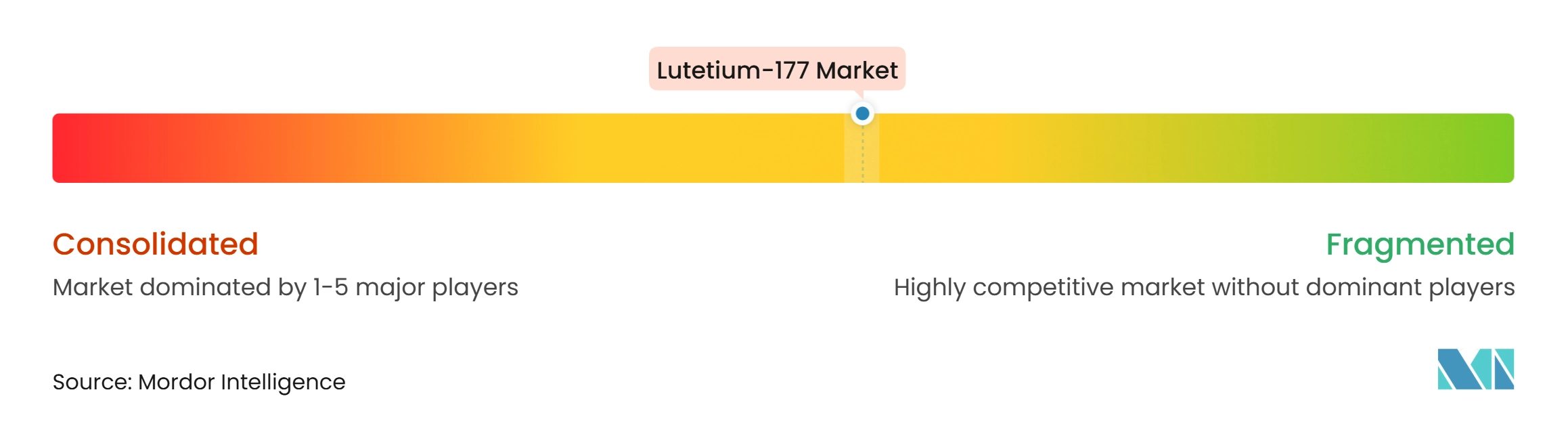
The Lutetium-177 market is concentrated in branded therapy while its supply layer is expanding. The Lutetium-177 market requires coordinated supply, clinical evidence, regulatory authorization, and treatment capacity, so competitive strength cannot be measured from product revenue alone. Novartis reported USD 2.622 billion in combined revenue from Pluvicto and Lutathera in the first 9 months of 2026. Its established products and manufacturing investment make it the central commercial participant in current radioligand therapy. The FDA approvals for Pluvicto in earlier prostate cancer settings strengthen this position. The company’s strategy combines label expansion, treatment-site development, and manufacturing investment. This integrated approach is important where the product must move through specialized diagnostic, supply, and treatment systems.
ITM has developed a second strategic position through no-carrier-added isotope supply and its therapeutic pipeline. Its June 2025 agreement with Institut Laue-Langevin secured priority access to reactor irradiation capacity. In November 2025, ITM reported FDA acceptance of its application for n.c.a. 177Lu-edotreotide in gastroenteropancreatic neuroendocrine tumors. Telix announced an agreement to acquire ITM in September 2026, linking isotope manufacturing with a wider radiopharmaceutical platform. The transaction illustrates why secure isotope access is becoming a core competitive asset in the Lutetium-177 market. It also suggests that large participants will seek closer control over specialized production infrastructure.
Other suppliers are building positions through capacity additions and regulatory authorizations. SHINE obtained European authorization for Ilumira, which gives manufacturers another regulated no-carrier-added precursor option. Kinectrics increased enriched ytterbium-176 capability in Canada, adding a regional precursor source. SCK CEN completed a centralized radiochemical facility to support future isotope production. These actions may reduce supply concentration in the Lutetium-177 market, but they do not immediately create new approved therapies or treatment staff. The competitive outcome will depend on whether suppliers can meet pharmaceutical standards, secure reactor access, and support reliable international delivery.
Lutetium-177 Industry Leaders
-
Novartis AG
-
ITM Isotope Technologies Munich SE
-
Curium International Trading B.V.
-
Telix Pharmaceuticals Limited
-
SHINE Technologies, LLC
- *Disclaimer: Major Players sorted in no particular order
Lutetium-177 Market Companies Covered in this Report
- Advanced Accelerator Applications S.A.
- Cardinal Health
- China National Nuclear Corporation
- Curium International Trading B.V.
- Eckert & Ziegler SE
- Eli Lilly and Company
- Evergreen Theragnostics, Inc.
- Institute for Radioelements
- ITM Isotope Technologies Munich SE
- NorthStar Medical Radioisotopes, LLC
- Novartis
- NRG PALLAS
- Nusano Inc.
- POINT Biopharma Global Inc.
- Radiopharm Theranostics Limited
- SCK CEN
- SHINE Technologies, LLC
- Telix Pharmaceuticals Limited
Recent Industry Developments in Lutetium-177 Market
- September 2026: Telix Pharmaceuticals agreed to acquire ITM Isotope Technologies Munich SE for USD 1.65 billion upfront plus up to USD 700 million contingent on ITM-11 milestones, combining what ITM describes as the world’s leading n.c.a. Lu-177 manufacturing network with Telix’s therapeutic pipeline and commercial platform.
- July 2026: The FDA approved Pluvicto in combination with an androgen receptor pathway inhibitor for PSMA-positive metastatic hormone-sensitive prostate cancer based on the Phase 3 PSMAddition trial, extending Pluvicto’s label across metastatic prostate cancer settings.
- November 2025: ITM announced FDA acceptance of its new drug application for n.c.a. 177Lu-edotreotide for gastroenteropancreatic neuroendocrine tumors.
Global Lutetium-177 Market Report Scope
According to the report’s scope, lutetium-177 (Lu-177) is a radioactive isotope used in targeted radionuclide therapy. It delivers radiation to cancer cells, often through medicines designed to bind to specific tumor targets.
The lutetium-177 market is segmented into product type, application, end user, and geography. By product type, the market is segmented into carrier-added lutetium-177 and no-carrier-added lutetium-177. By application, the market is segmented into prostate cancer treatment, neuroendocrine tumor treatment, and other applications. By end user, the market is segmented into tertiary-care academic and comprehensive cancer centers, hospitals, specialty nuclear-medicine clinics, pharmaceutical and biotechnology companies, and other end users. By geography, the market is segmented into North America, Europe, Asia-Pacific, the Middle East and Africa, and South America. The report also covers the estimated market sizes and trends for 17 countries across major regions globally. The report offers values (USD) for all the above segments.
Segmentation Overview
| Carrier-Added Lutetium-177 |
| No-Carrier-Added Lutetium-177 |
| Prostate Cancer Treatment |
| Neuroendocrine Tumor Treatment |
| Other Applications |
| Tertiary-Care Academic and Comprehensive Cancer Centers |
| Hospitals |
| Specialty Nuclear-Medicine Clinics |
| Pharmaceutical and Biotechnology Companies |
| Other End Users |
| North America | United States |
| Canada | |
| Mexico | |
| Europe | Germany |
| United Kingdom | |
| France | |
| Italy | |
| Spain | |
| Rest of Europe | |
| Asia-Pacific | China |
| Japan | |
| India | |
| Australia | |
| South Korea | |
| Rest of Asia-Pacific | |
| Middle East and Africa | GCC |
| South Africa | |
| Rest of Middle East and Africa | |
| South America | Brazil |
| Argentina | |
| Rest of South America |
| By Product Type | Carrier-Added Lutetium-177 | |
| No-Carrier-Added Lutetium-177 | ||
| By Application | Prostate Cancer Treatment | |
| Neuroendocrine Tumor Treatment | ||
| Other Applications | ||
| By End User | Tertiary-Care Academic and Comprehensive Cancer Centers | |
| Hospitals | ||
| Specialty Nuclear-Medicine Clinics | ||
| Pharmaceutical and Biotechnology Companies | ||
| Other End Users | ||
| Geography | North America | United States |
| Canada | ||
| Mexico | ||
| Europe | Germany | |
| United Kingdom | ||
| France | ||
| Italy | ||
| Spain | ||
| Rest of Europe | ||
| Asia-Pacific | China | |
| Japan | ||
| India | ||
| Australia | ||
| South Korea | ||
| Rest of Asia-Pacific | ||
| Middle East and Africa | GCC | |
| South Africa | ||
| Rest of Middle East and Africa | ||
| South America | Brazil | |
| Argentina | ||
| Rest of South America | ||
Key Questions Answered in the Report
What is driving demand for Lutetium-177 therapies?
Wider radioligand therapy use, earlier Pluvicto treatment settings, and the global prostate cancer burden are key factors. The Lutetium-177 market is projected to grow at a 15.92% CAGR from 2027 to 2032.
Which Lu-177 product type has the largest share?
No-carrier-added Lutetium-177 held 61.32% of revenue in 2026 and is projected to grow at a 17.54% CAGR through 2032 within the Lutetium-177 market.
Why is no-carrier-added Lu-177 important?
Its high specific activity supports therapeutic radiolabeling, while regulated precursor authorizations help establish quality expectations for clinical supply.
Which cancer application leads Lu-177 use?
Prostate cancer treatment held 63.54% of revenue in 2026. Neuroendocrine tumor treatment is projected to grow faster at an 18.43% CAGR through 2032.
What limits wider radioligand therapy access?
Licensed treatment sites and specialized personnel are key constraints. A 2026 European survey found vacancies in 80.2% of nuclear medicine departments.
Which region is growing fastest for Lu-177 therapy?
Asia-Pacific is projected to grow at a 16.54% CAGR through 2032, supported by regulatory progress in Japan and expanding regional manufacturing investment.