
Intra-Aortic Balloon Pump (IABP) Market Size and Share
Market Overview
| Study Period | 2021 - 2032 |
|---|---|
| Market Size (2027) | USD 341.62 Million |
| Market Size (2032) | USD 450.95 Million |
| Growth Rate (2027 - 2032) | 5.71 % |
| Fastest Growing Market | Asia-Pacific |
| Largest Market | North America |
| Market Concentration | High |
Major Players *Disclaimer: Major Players sorted in no particular order Image © Mordor Intelligence. Reuse requires attribution under CC BY 4.0. | |
Intra-Aortic Balloon Pump (IABP) Market Analysis by Mordor Intelligence
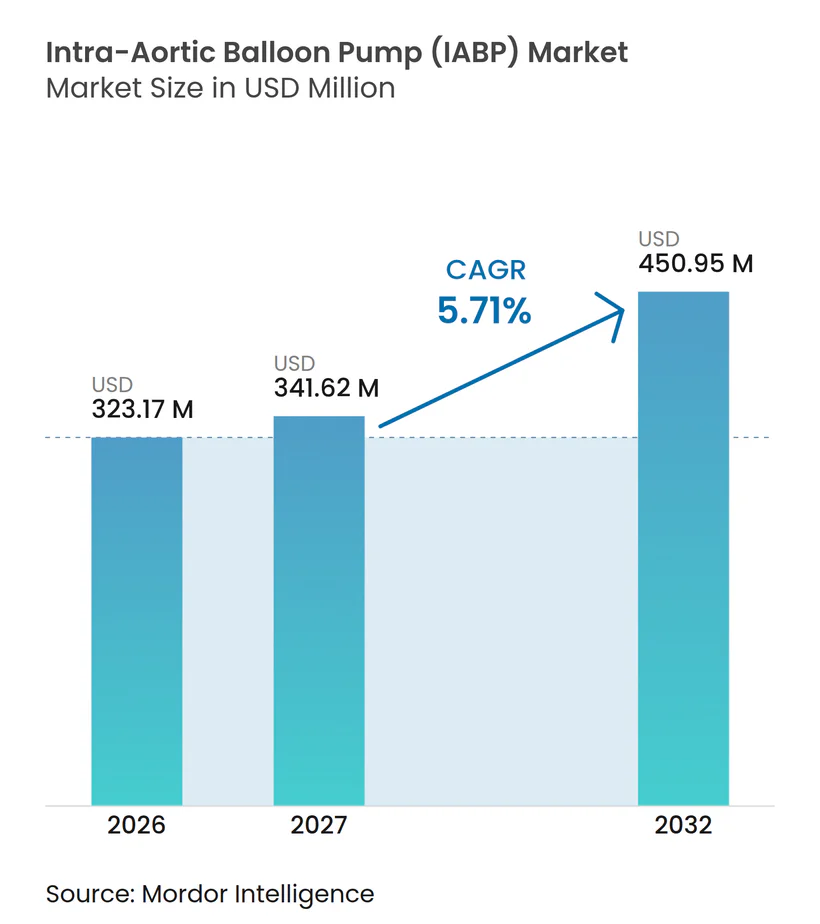
The Intra-Aortic Balloon Pump Market size was valued at USD 323.17 million in 2026 and is estimated to grow from USD 341.62 million in 2027 to reach USD 450.95 million by 2032, at a CAGR of 5.71% during the forecast period (2027-2032).
The Intra-Aortic Balloon Pump market remains important in cardiac support despite more selective use in routine acute myocardial infarction-related cardiogenic shock. Demand is moving toward transport, bridge-to-transplant care, cardiac surgery, and complex coronary procedures. Replacement of console fleets installed in the early 2010s is also supporting procurement activity in established cardiac programs. In lower-resource settings, the lower cost and simpler operating requirements of IABP systems continue to support use where microaxial pumps are not widely available. The 2025 ACC and AHA guidance limits routine use in AMI-related cardiogenic shock, but it retains clinical scope for mechanical complications and selected perioperative settings[1].
Key Report Takeaways
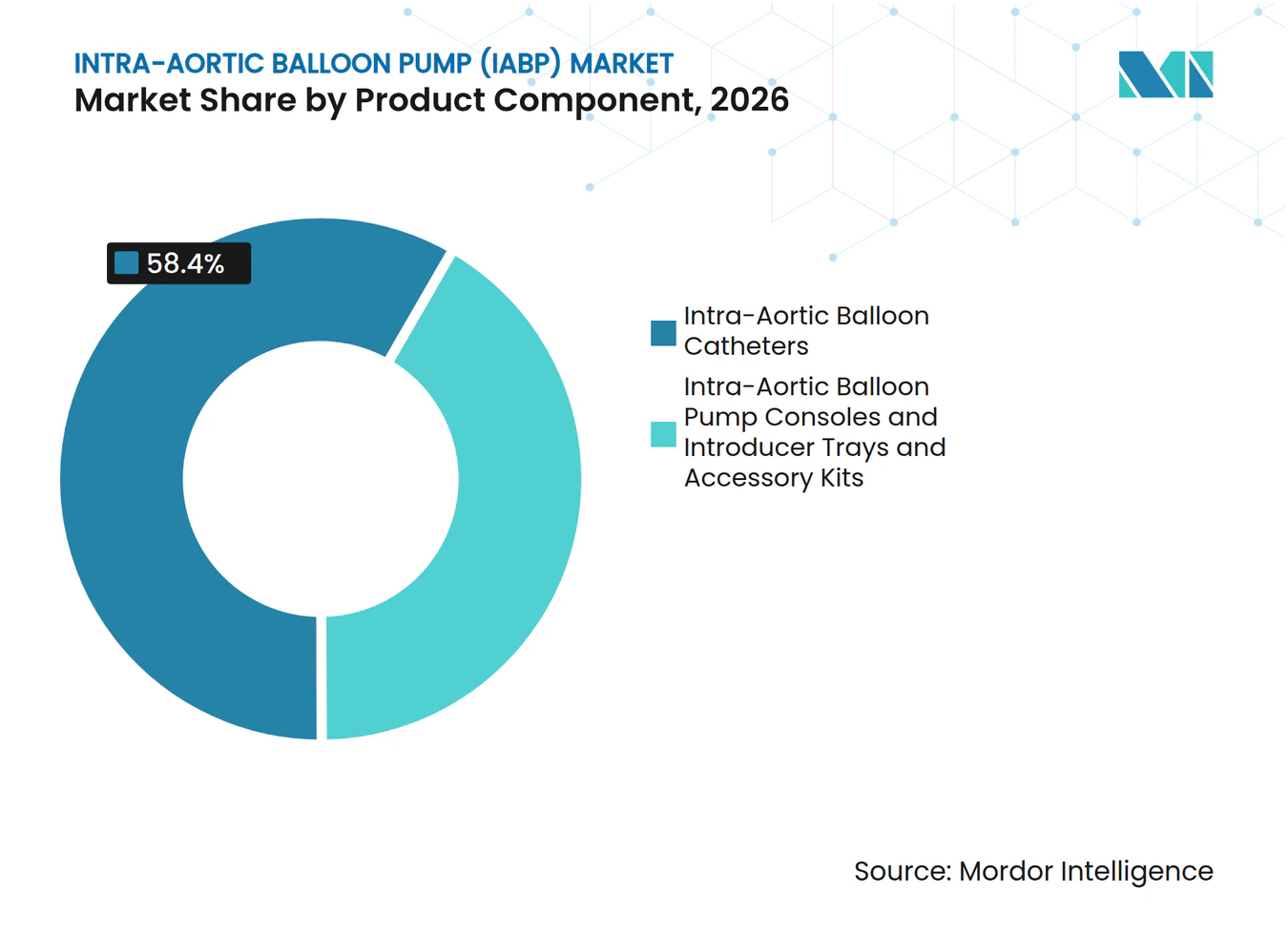
- By product component, intra-aortic balloon catheters held 58.4% of revenue in 2027, while IABP consoles are forecast to grow at a 6.3% CAGR through 2032.
- By catheter type, ordinary intra-aortic balloon catheters held 71.8% of revenue in 2027, while fiber-optic intra-aortic balloon catheters are forecast to grow at a 7.8% CAGR through 2032.
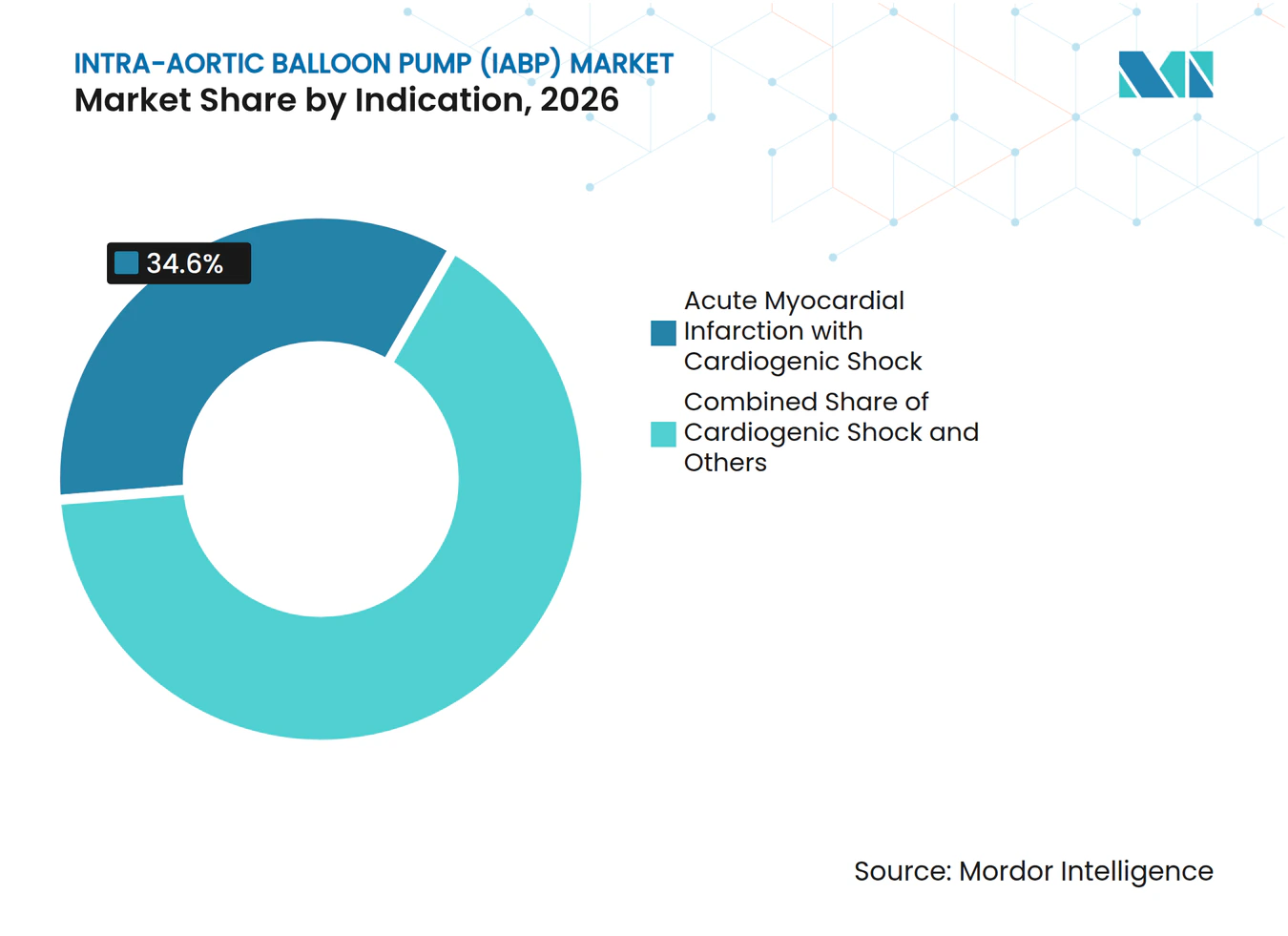
- By indication, acute myocardial infarction with cardiogenic shock held 34.6% of revenue in 2027, while bridge to ventricular assist device or heart transplantation is forecast to grow at an 8.5% CAGR through 2032.
- By end user, hospitals held 74.2% of revenue in 2027, while cardiac care centers are forecast to grow at a 6.9% CAGR through 2032.
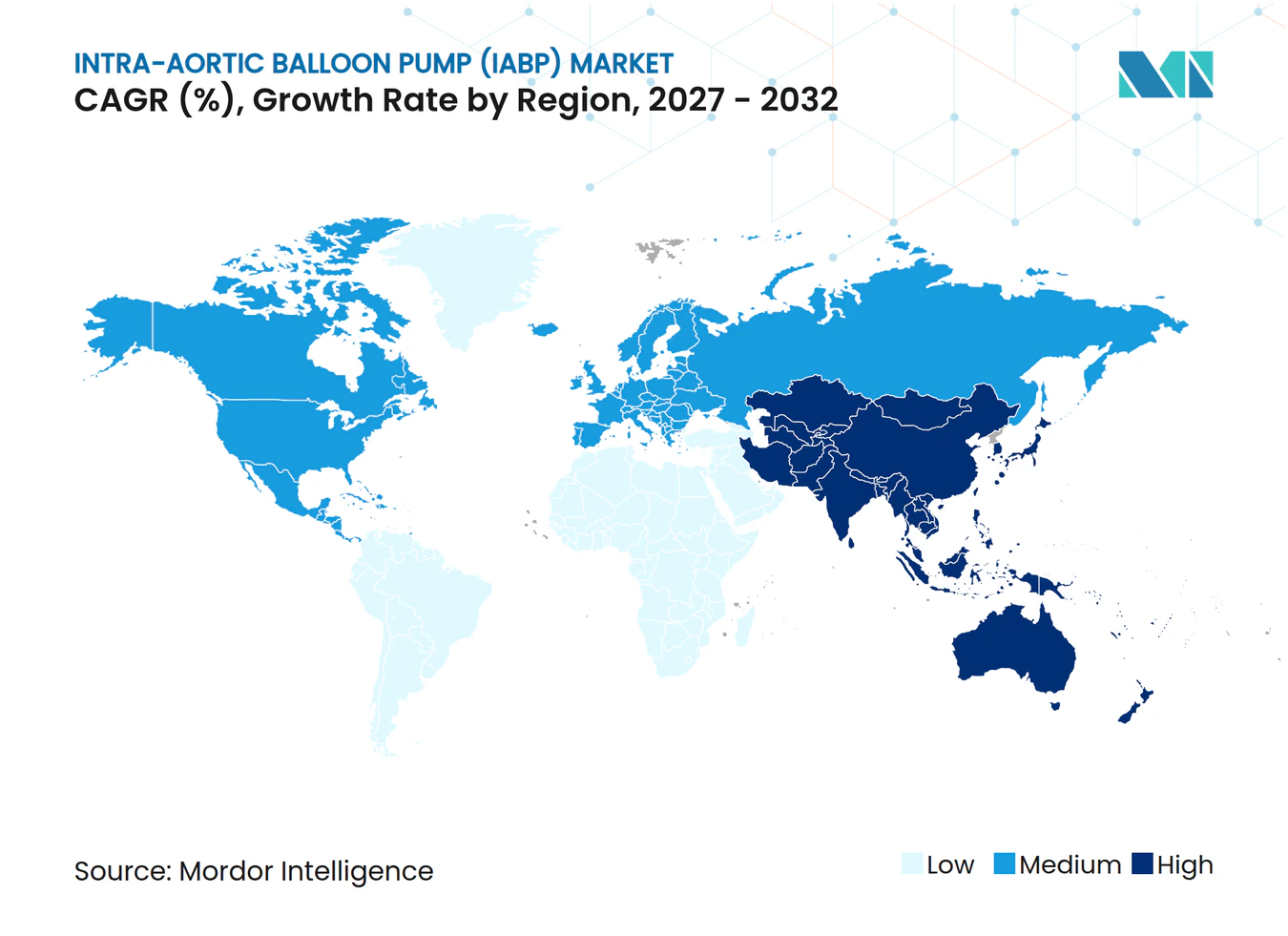
- By geography, North America held 42.8% of revenue in 2027, while Asia-Pacific is forecast to grow at a 6.7% CAGR through 2032.
Note: Market numbers in this report are based on Mordor Intelligence's proprietary estimation framework, which combines nine months of actuals with Q4 projections for base year 2026.
Market Trends and Insights
Drivers Impact Analysis of Intra-Aortic Balloon Pump (IABP) Market*
| Driver | (~) % Impact on CAGR Forecast | Geographic Relevance | Impact Timeline |
|---|---|---|---|
| Rising High-Risk PCI and Complex Cardiac Procedure Demand | +1.0% | Global, with strong relevance in North America and Western Europe | Medium term (2-4 years) |
| Console Replacement and Installed-Base Service Cycles | +0.8% | North America, Western Europe, and Japan | Medium term (2-4 years) |
| Cardiovascular Disease, Aging, and Emerging Cardiac-Care Access | +1.1% | Global, with highest relevance in Asia-Pacific and middle-SDI settings | Long term (≥ 4 years) |
| Fiber-Optic Sensor Upgrades and Workflow Digitization | +0.4% | High-income markets globally | Long term (≥ 4 years) |
| Source: Mordor Intelligence | |||
Rising High-Risk PCI and Complex Cardiac Procedure Demand
High-risk percutaneous coronary intervention remains a central use case for the Intra-Aortic Balloon Pump market, even as hospitals assess higher-support devices for selected patients. A French study reported that multivessel coronary artery disease increased from 16.4% to 18.4% of cases from 2014 to 2025. IABP systems can be inserted quickly in the catheterization laboratory and do not require a perfusionist. These practical features retain value for hospitals without dedicated mechanical circulatory support teams. In the United States, IABP use during PCI remained between 328 and 356 procedures per 10,000 procedures from 2012 to 2025, which contrasts with declines in the United Kingdom and Canada.
Console Replacement and Installed-Base Service Cycles
The Intra-Aortic Balloon Pump market benefits when older consoles reach end-of-supported-life status, and hospitals must evaluate replacement options. Many installed systems entered service in the early to mid-2010s, which makes serviceability, safety notices, and component availability important procurement considerations. Biomedical engineering teams increasingly compare helium management, transport capability, catheter compatibility, and service history before a capital purchase. Teleflex received FDA 510(k) clearance in April 2025 for the AC3 Range IABP, which was designed for patient support during ambulance and aircraft transport. The system includes a full-size helium tank, dual power inputs, a reinforced extendable handle, and swivel wheels. These features allow procurement teams to assess one console across intensive care, procedure, and transfer settings rather than treating transport as a separate need.
Cardiovascular Disease, Aging, and Emerging Cardiac-Care Access
The underlying burden of ischemic heart disease supports demand for hemodynamic support across the Intra-Aortic Balloon Pump market. Global ischemic heart disease prevalence rose from 112 million cases in 1990 to 254 million cases in 2024, with population aging and growth contributing to the increase. Older adults often present with more complex coronary anatomy, frailty, and hemodynamic vulnerability during coronary care. Patients aged 75 years and older represent 30% to 40% of acute coronary syndrome hospitalizations in the United States. In China, Korea, India, and South Asia, the limited availability of advanced microaxial pumps preserves IABP as a practical support option in tertiary cardiac care. New cardiac centers in Southeast Asia also create opportunities for console placement and follow-on catheter demand where referral systems are expanding.
Fiber-Optic Sensor Upgrades and Workflow Digitization
Fiber-optic monitoring is creating a higher-value pathway within the Intra-Aortic Balloon Pump market. Tip-embedded sensors measure intra-aortic pressure directly and can reduce signal damping associated with fluid-filled external transducer systems. The technology helps clinicians identify the dicrotic notch, which guides counterpulsation timing, when pressure signals are difficult to interpret. This is relevant for patients with arrhythmias or low-amplitude pressure waveforms. Teleflex referenced its dicrotic-notch detection performance in arrhythmic pressure signals when presenting its fiber-optic catheter capability. Integration of waveform data into ICU information systems is becoming a practical differentiator as hospitals standardize clinical workflows.
Restraints Impact Analysis of Intra-Aortic Balloon Pump (IABP) Market*
| Restraint | (~) % Impact on CAGR Forecast | Geographic Relevance | Impact Timeline |
|---|---|---|---|
| Routine AMI-CS Guideline Downgrade and Competing Support Devices | -0.7% | North America, Europe, and other guideline-adherent markets | Short term (≤ 2 years) |
| Safety Actions, Staffing, Transport, and Helium Logistics Constraints | -0.3% | Global, with elevated relevance in MEA and South America | Medium term (2-4 years) |
| Source: Mordor Intelligence | |||
Routine AMI-CS Guideline Downgrade and Competing Support Devices
The 2025 ACC and AHA acute coronary syndrome guideline gives routine IABP use in AMI-related cardiogenic shock a Class 3 no-benefit recommendation. The position reflects findings from IABP-SHOCK II and differs from use in mechanical complications of AMI, where IABP retains clinical relevance. The guideline also affects purchasing decisions at centers that align capital equipment policies with clinical recommendations. Evidence comparing microaxial pumps with IABP may further limit IABP use in selected cardiogenic shock populations. A meta-analysis across 18 studies and 4,500 patients associated Impella with lower 30-day mortality than IABP, while reporting more device-related complications. The Intra-Aortic Balloon Pump market retains support in cardiac surgery, bridge therapy, and moderate-support settings where higher-cost alternatives may not be appropriate.
Safety Actions, Staffing, Transport, and Helium Logistics Constraints
Field-safety actions can delay purchasing decisions and add administrative demands for hospital teams. The FDA classified voluntary corrective actions for Getinge Cardiosave Hybrid and Rescue IABP systems as Class 2 recalls in November 2025, covering 11,470 units distributed globally. The actions addressed battery maintenance, vibration, and shock table instructions, helium O-ring replacement intervals, and battery runtime information. IABP programs also depend on specialist staffing, reliable transfer procedures, and helium supply management. These needs are more difficult to meet in settings with constrained intensive care capacity or limited technical service support. Such operational requirements can slow adoption in parts of the Middle East, Africa, and South America despite unmet cardiac-care demand.
*Our forecasts treat driver/restraint impacts as directional, not additive. The impact forecasts reflect baseline growth, mix effects, and variable interactions.
Intra-Aortic Balloon Pump (IABP) Market Segment Analysis
By Product Component:
Catheter Consumables Anchor Revenue StabilityIntra-aortic balloon catheters commanded 58.40% of the Intra-Aortic Balloon Pump market share in 2027. The category benefits from a recurring purchase pattern because a new catheter is required for each procedure. This model provides a steadier revenue base than console purchases, which are tied to capital budgets and replacement timing. A large installed base of consoles supports continued consumable demand even when hospitals postpone equipment upgrades. Introducer trays and accessory kits represent the smallest product component because they are generally purchased with catheter systems. Their demand follows procedure volume and offers limited standalone purchasing influence. Hospitals evaluate compatibility between catheters and existing consoles before changing suppliers. This creates a practical barrier to switching in established programs. It also supports recurring business for suppliers with a broad installed console base.
IABP consoles are forecast to grow at a 6.30% CAGR through 2032 within the Intra-Aortic Balloon Pump market size. Replacement activity is supported by systems installed in the early 2010s that now face aging components and evolving service requirements. Hospitals do not only compare the purchase price when replacing a console. They also assess portability, battery support, helium management, fiber-optic catheter capability, cybersecurity practices, training needs, and service coverage. Transport demand is making mobility a more visible part of the product decision. Teleflex received FDA clearance for its AC3 Range system in April 2025, which supports use across ground and air transport environments. The device’s dual power inputs and full-size helium tank address continuity of support during transfer. Manufacturers that connect these capabilities to a clear service model can gain attention during replacement cycles.


By Catheter Type:
Fiber-Optic Segment Commands Premium Pricing PowerOrdinary intra-aortic balloon catheters held 71.80% share of the Intra-Aortic Balloon Pump market in 2027. Their position reflects broad compatibility with existing consoles and a lower unit cost for hospitals managing constrained budgets. These catheters remain important in emerging care settings where cost and reliable access are major procurement concerns. The segment also benefits from established clinician familiarity and distributor networks. Standard catheters meet the needs of many procedures where advanced pressure sensing is not required. Their volume base is therefore likely to remain meaningful across large, price-sensitive markets. Compliance with ISO 10993 biocompatibility requirements applies to catheter materials and adds to entry requirements. Product approvals and quality systems also remain important for suppliers seeking broader geographic access. These conditions favor companies with established regulatory capabilities and validated production processes.
Fiber-optic intra-aortic balloon catheters are forecast to grow at a 7.80% CAGR through 2032. Direct pressure measurement at the catheter tip can improve signal quality and timing precision when waveforms are complicated. Sensor profiles between 260 and 550 μm support measurement near the clinical point of use. The feature is particularly relevant in patients with arrhythmias, where conventional signals may be more difficult to interpret. Better dicrotic-notch detection supports a premium clinical case during formulary reviews. It can also increase revenue per console without requiring a proportional increase in procedure volume. In China, high technical requirements for Class III device approvals protect the position of established foreign suppliers. The result is a split pattern where ordinary catheters support broad volume while fiber-optic products contribute more value in higher-acuity settings. Both categories remain necessary across the Intra-Aortic Balloon Pump industry because care capacity and purchasing priorities differ by hospital.
By Indication:
Bridge-to-Destination Growth Reshapes Clinical PrioritizationAcute myocardial infarction with cardiogenic shock held a 34.6% share of the Intra-Aortic Balloon Pump market in 2027. The indication remains large because STEMI and NSTEMI continue to create a substantial baseline need for acute cardiac support. However, guideline changes make routine use in this group more selective. The 2025 ACC and AHA guidance does not recommend routine IABP for AMI-related cardiogenic shock. Clinical use remains more defensible when patients have mechanical complications, including ventricular septal rupture or papillary muscle rupture. Acute heart failure-related cardiogenic shock and high-risk PCI also contribute to demand across a range of severity levels. Cardiac surgery remains another important setting because perioperative instability can require temporary circulatory support. These differing indications reduce reliance on any one clinical pathway. They also make evidence and guideline positioning important to hospital protocols.
Bridge to ventricular assist device or heart transplantation is forecast to grow at an 8.50% CAGR through 2032. The number of patients bridged to heart transplantation using temporary mechanical circulatory support has tripled since 2018. IABP can support patient ambulation in an axillary-access configuration during extended bridge therapy. Ambulation can help preserve functional status before advanced therapy and transfer. This pathway favors specialist centers that can coordinate surgical, intensive care, and transplant teams. It also broadens the role of IABP beyond a short emergency intervention. Post-cardiotomy low cardiac output syndrome and refractory unstable angina remain within other clinically defined indications. European cardiac surgery guidance continues to recognize temporary support choices for carefully selected patients. The Intra-Aortic Balloon Pump market size for bridge care therefore depends on referral networks and access to advanced heart failure programs.


By End User:
Specialized Cardiac Facilities Gain Incremental ShareHospitals held a 74.20% share of the Intra-Aortic Balloon Pump market in 2027. They manage the core settings for STEMI treatment, complex cardiac surgery, intensive care, and cardiogenic shock. Their scale and case complexity create high catheter demand and support in-house technical expertise. Large hospitals can also maintain the multidisciplinary teams needed to place, monitor, and transfer patients receiving IABP support. Hospital procurement tends to favor systems that fit existing catheter, service, and training arrangements. This can increase the value of installed-base relationships for major suppliers. Guideline updates may reduce use in some AMI-related shock cases. Yet mechanical complications, perioperative care, and transfer stabilization preserve relevant use cases. These conditions keep hospitals central to purchasing and utilization.
Cardiac care centers are forecast to grow at a 6.90% CAGR through 2032. Dedicated cardiac programs are investing in local capacity to manage transfers and complex referrals within their catheterization and intensive care units. Their growth is linked to regional networks that move patients from smaller facilities to specialized cardiac teams. Independent catheterization laboratories remain a small but developing end-user segment. U.S. cardiovascular procedure volumes in ambulatory surgery centers are projected to grow 15% from 2023 to 2030. Many of these facilities have limited scope for IABP because high-acuity patients still require hospital-level services. Some can provide early stabilization before transfer under defined protocols. Ambulatory surgery centers therefore have a narrower role than hospitals or dedicated cardiac centers. Training, transfer agreements, and patient selection will determine whether their contribution expands.
Geography Analysis
North America
North America held 42.80% of the Intra-Aortic Balloon Pump market share in 2027. The region has dense catheterization laboratory capacity, an aging console fleet, and established interfacility cardiac transfer networks. More than 50% of U.S. PCI procedures are performed in patients older than 65 years, while people aged 75 years and older account for 30% to 40% of acute coronary syndrome hospitalizations. This patient profile sustains a need for hemodynamic support in complex procedures. The ACC and AHA guideline change may reduce routine use in AMI-related shock. The retained role for mechanical complications and selected perioperative care limits the effect across the full regional base. Teleflex’s AC3 Range clearance addresses a transport need across ambulance, fixed-wing, and rotary-wing care settings.
Asia-Pacific
Asia-Pacific is forecast to grow at a 6.70% CAGR through 2032, the highest regional rate in the Intra-Aortic Balloon Pump market. Limited access to microaxial flow pumps in China and Korea keeps IABP relevant in cardiogenic shock care. In India and South Asia, device cost, training requirements, and referral patterns also shape the choice of mechanical support. Japan’s JROAD-DPC registry captures more than 1.5 million annual cardiovascular hospitalizations, with PCI for AMI exceeding 46,000 cases and a median cardiac patient age of 75 years. Japan, South Korea, Australia, and Singapore can support adoption of premium fiber-optic catheters. China and India contribute procedure volume through broader use of ordinary catheters. The regional pattern supports different product strategies rather than one uniform offering. NMPA Class III approval requirements remain a regulatory influence for manufacturers entering China. These requirements strengthen the importance of quality documentation, local registration capability, and long-term distributor support.
Europe, Middle East and Africa, and South America
Europe is shaped by established clinical caution regarding routine IABP use in AMI-related cardiogenic shock. Demand is more concentrated in cardiac surgery, perioperative care, bridge therapy, and transport applications. Getinge announced the reinstatement of the Cardiosave CE Mark in August 2025 after an 18-month suspension related to EU MDR compliance. The reinstatement is relevant for hospital replacement planning and European deliveries. Gulf Cooperation Council countries are expanding tertiary cardiac care capacity, which can create new placements in public and specialist hospitals. Other Middle Eastern and African settings face limits from staffing, technical support, and intensive care capacity. South American adoption is concentrated in tertiary centers in Brazil, Chile, and Colombia. These mixed regions require suppliers to pair equipment sales with training, maintenance, and transfer-care support. EU MDR compliance remains an important factor for products supplied into European health systems[2].
Competitive Landscape
Market Concentration
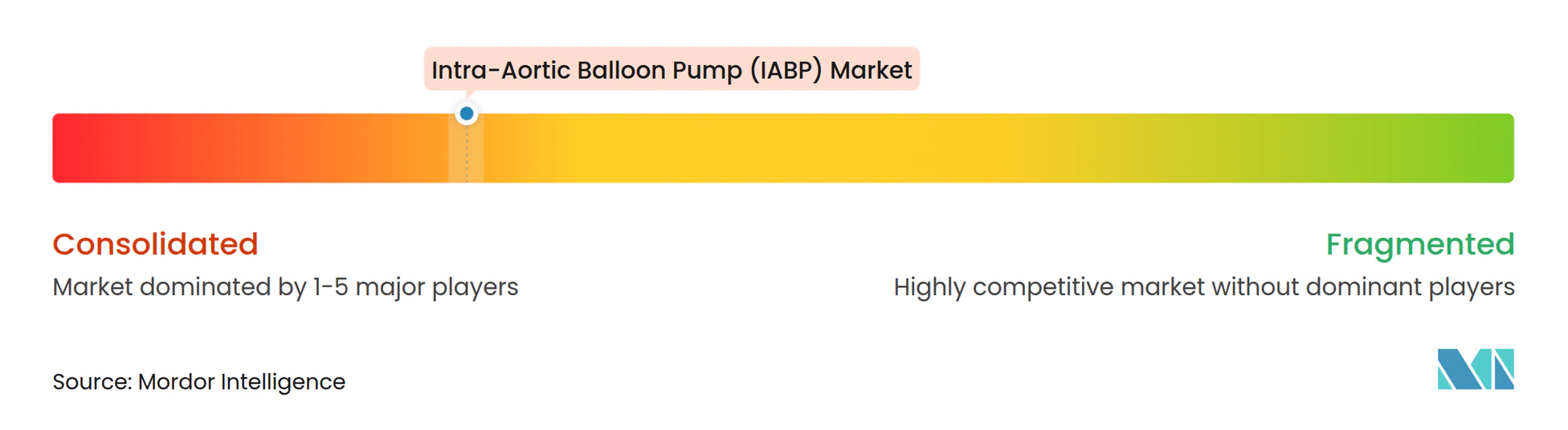
The Intra-Aortic Balloon Pump market is concentrated around Getinge, through Datascope, and Teleflex. Platform-specific catheter compatibility strengthens recurring revenue and creates switching costs for programs with established equipment and training processes. Both companies have the regulatory resources and service infrastructure needed to support major hospital accounts. Their position is especially strong where device approvals and quality requirements limit entry by smaller suppliers. Insightra Medical, Senko Medical, Zeon Medical, and Tokai Medical Products retain narrower positions in selected clinical and geographic segments. These companies do not have comparable installed-base density in premium markets.
Teleflex used product development to address an identified gap in interfacility transport. Its April 2025 FDA-cleared AC3 Range is designed for use during ambulance, fixed-wing, and rotary-wing transfer. The product extends the company’s focus from catheterization laboratory and intensive care settings into mobile care. Getinge secured reinstatement of the Cardiosave CE Mark in August 2025 after its EU MDR compliance work. That action restored an important route to European deliveries and reinforces the role of regulatory execution in supplier competitiveness. Fuwai Hospital of the Chinese Academy of Medical Sciences received U.S. Patent 12,257,407 in March 2025 for a dual-balloon catheter concept with differential timing. The filing indicates continuing research activity in catheter design[3].
Quality management remains central to supplier competition in the Intra-Aortic Balloon Pump market. EU MDR, FDA device requirements, ISO 13485 quality systems, and ISO 10993 biocompatibility expectations raise the evidence burden for consoles and catheters. Getinge’s Cardiosave certificate suspension showed how compliance issues can interrupt normal market access. The subsequent CE Mark reinstatement showed the importance of resolving identified design and documentation issues. The FDA’s 2025 Class 2 recall classification for selected Cardiosave corrective actions also made preventive maintenance and communication visible to hospital buyers. Suppliers can differentiate through reliable service, transparent corrective action management, and catheter sensing performance. Smaller firms must prove comparable quality and support before they can challenge established procurement relationships.
Intra-Aortic Balloon Pump (IABP) Industry Leaders
-
Getinge AB
-
Teleflex Incorporated
-
Osypka Medical GmbH
-
Tokai Medical Products Inc.
-
Zeon Medical Inc.
- *Disclaimer: Major Players sorted in no particular order
Intra-Aortic Balloon Pump (IABP) Market Companies Covered in this Report
- Abbott Laboratories
- Abiomed
- BIOTRONIK SE and Co. KG
- Boston Scientific
- Cook Group
- Fukuda Denshi Co., Ltd.
- Getinge
- Insightra Medical, Inc.
- InterValve, Inc.
- Lepu Medical Technology (Beijing) Co., Ltd.
- Medtronic
- Meril Life Science
- MicroPort
- Osypka Medical
- Senko Medical Instrument Mfg. Co., Ltd.
- Teleflex
- Terumo
- Tokai Medical Products, Inc.
- Zeon Medical Inc.
- Zoll Medical
Recent Industry Developments in Intra-Aortic Balloon Pump (IABP) Market
- February 2026: The SAVE-PCI trial is a prospective, randomized study conducted in China that evaluates NyokAssist against intra-aortic balloon pump (IABP) support in 236 hemodynamically stable high-risk percutaneous coronary intervention (HRPCI) patients with left ventricular (LV) dysfunction or planned rotational atherectomy and high-risk anatomy, including unprotected left main disease, a last remaining vessel, or three-vessel disease. At 30 days, major adverse cardiovascular and cerebrovascular event (MACCE) rates remained low and were comparable between the two groups, at 4.4% for NyokAssist and 2.6% for IABP, with no major vascular complications reported.
- April 2025: Teleflex Incorporated received FDA 510(k) clearance for the AC3 Range Intra-Aortic Balloon Pump, designed for ongoing patient support across ambulance, fixed-wing, and rotary-wing aircraft transport modes. The device leverages AC3 Optimus's patented algorithms, adding transport-specific features including a full-size helium tank, dual power inputs, a metal-reinforced extendable handle, and 360-degree swivel wheels. Full U.S. market release commenced in Q2 2025, directly targeting the unmet hemodynamic stabilization gap in interfacility cardiac transfers.
Global Intra-Aortic Balloon Pump (IABP) Market Report Scope
As per the scope of the report, the Intra-Aortic Balloon Pump (IABP) market encompasses the development, manufacturing, distribution, and utilization of intra-aortic balloon pump systems and related accessories that provide temporary mechanical circulatory support to patients with compromised cardiac function. IABP therapy works through counterpulsation technology, which inflates and deflates a balloon catheter within the descending thoracic aorta to improve coronary blood flow, reduce cardiac workload, and enhance hemodynamic stability. These systems are widely used in the management of cardiogenic shock, acute myocardial infarction, high-risk percutaneous coronary interventions (PCI), heart failure, and cardiac surgery procedures.
The Intra-Aortic Balloon Pump (IABP) market is segmented by product component into intra-aortic balloon pump consoles, intra-aortic balloon catheters, and introducer trays & accessory kits; by catheter type into fiber-optic intra-aortic balloon catheters and ordinary intra-aortic balloon catheters; by indication into acute myocardial infarction with cardiogenic shock, cardiogenic shock related to acute heart failure, mechanical complications of acute myocardial infarction, high-risk percutaneous coronary intervention, cardiac surgery and perioperative hemodynamic support, bridge to ventricular assist device or heart transplantation, and other clinically defined indications; by end user into hospitals, cardiac care centers, independent catheterization laboratories, ambulatory surgery centers, and other end users; and by geography into North America, Europe, Asia-Pacific, Middle East & Africa, and South America. The market report also covers the estimated market sizes and trends for 17 countries across major regions globally. For each segment, the market size and forecast are provided in terms of value (USD).
Segmentation Overview
| Intra-Aortic Balloon Pump Consoles |
| Intra-Aortic Balloon Catheters |
| Introducer Trays and Accessory Kits |
| Fiber-Optic Intra-Aortic Balloon Catheters |
| Ordinary Intra-Aortic Balloon Catheters |
| Acute Myocardial Infarction with Cardiogenic Shock |
| Cardiogenic Shock Related to Acute Heart Failure |
| Mechanical Complications of Acute Myocardial Infarction |
| High-Risk Percutaneous Coronary Intervention |
| Cardiac Surgery and Perioperative Hemodynamic Support |
| Bridge to Ventricular Assist Device or Heart Transplantation |
| Other Clinically Defined Indications (Refractory Unstable Angina, Post-Cardiotomy Low Cardiac Output Syndrome, among others) |
| Hospitals |
| Cardiac Care Centers |
| Independent Catheterization Laboratories |
| Ambulatory Surgery Centers |
| Other End Users (Emergency and Interfacility Transport Services, Academic & University Medical Centers, among others) |
| North America | United States |
| Canada | |
| Mexico | |
| Europe | Germany |
| United Kingdom | |
| France | |
| Italy | |
| Spain | |
| Rest of Europe | |
| Asia-Pacific | China |
| Japan | |
| India | |
| Australia | |
| South Korea | |
| Rest of Asia-Pacific | |
| Middle East and Africa | GCC |
| South Africa | |
| Rest of Middle East and Africa | |
| South America | Brazil |
| Argentina | |
| Rest of South America |
| By Product Component | Intra-Aortic Balloon Pump Consoles | |
| Intra-Aortic Balloon Catheters | ||
| Introducer Trays and Accessory Kits | ||
| By Catheter Type | Fiber-Optic Intra-Aortic Balloon Catheters | |
| Ordinary Intra-Aortic Balloon Catheters | ||
| By Indication | Acute Myocardial Infarction with Cardiogenic Shock | |
| Cardiogenic Shock Related to Acute Heart Failure | ||
| Mechanical Complications of Acute Myocardial Infarction | ||
| High-Risk Percutaneous Coronary Intervention | ||
| Cardiac Surgery and Perioperative Hemodynamic Support | ||
| Bridge to Ventricular Assist Device or Heart Transplantation | ||
| Other Clinically Defined Indications (Refractory Unstable Angina, Post-Cardiotomy Low Cardiac Output Syndrome, among others) | ||
| By End User | Hospitals | |
| Cardiac Care Centers | ||
| Independent Catheterization Laboratories | ||
| Ambulatory Surgery Centers | ||
| Other End Users (Emergency and Interfacility Transport Services, Academic & University Medical Centers, among others) | ||
| By Geography | North America | United States |
| Canada | ||
| Mexico | ||
| Europe | Germany | |
| United Kingdom | ||
| France | ||
| Italy | ||
| Spain | ||
| Rest of Europe | ||
| Asia-Pacific | China | |
| Japan | ||
| India | ||
| Australia | ||
| South Korea | ||
| Rest of Asia-Pacific | ||
| Middle East and Africa | GCC | |
| South Africa | ||
| Rest of Middle East and Africa | ||
| South America | Brazil | |
| Argentina | ||
| Rest of South America | ||
Key Questions Answered in the Report
What is driving demand for intra-aortic balloon pumps?
In the Intra-Aortic Balloon Pump market, demand is supported by complex PCI, aging cardiac patients, console replacement, transport requirements, and broader cardiac-care access in emerging settings.
How large is the Intra-Aortic Balloon Pump market?
The Intra-Aortic Balloon Pump market size is USD 341.60 million in 2027 and is projected to reach USD 451.00 million by 2032 at a 5.70% CAGR.
Which IABP product component has the largest share?
In the Intra-Aortic Balloon Pump market, intra-aortic balloon catheters lead with 58.40% of revenue in 2027 because every treatment procedure requires a new catheter.
Which IABP indication is growing fastest?
The Intra-Aortic Balloon Pump market is expected to see bridge to ventricular assist device or heart transplantation grow at an 8.50% CAGR through 2032.
Which region will grow fastest for IABP systems?
Within the Intra-Aortic Balloon Pump market, Asia-Pacific is forecast to grow at a 6.70% CAGR through 2032 because higher-cost alternatives are less accessible in major markets.
Who are the leading IABP suppliers?
Supplier competition in the Intra-Aortic Balloon Pump market is led by Getinge and Teleflex, supported by installed-base compatibility, service infrastructure, and regulatory capabilities.