
India Oral Anti-Diabetic Drug Market Size and Share
Market Overview
| Study Period | 2020 - 2031 |
|---|---|
| Forecast Data Period | 2026 - 2031 |
| Base Year Market Size (2025) | USD 1.76 Billion |
| Market Size (2026) | USD 1.82 Billion |
| Market Size (2031) | USD 2.16 Billion |
| Growth Rate (2026 - 2031) | 3.46 % |
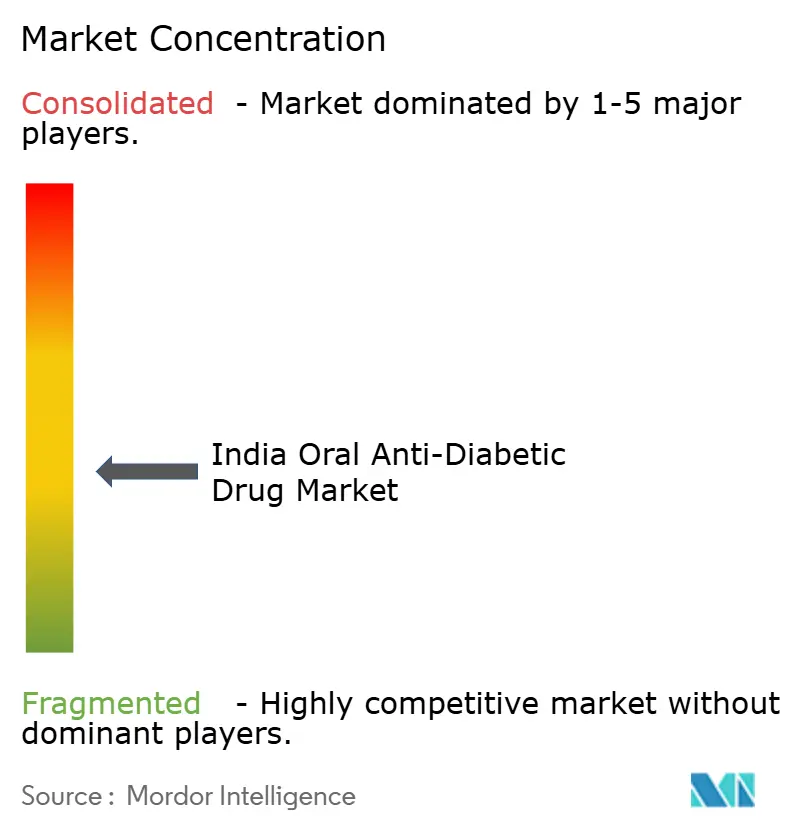
| Market Concentration | Medium |
Major Players *Disclaimer: Major Players sorted in no particular order Image © Mordor Intelligence. Reuse requires attribution under CC BY 4.0. | |
India Oral Anti-Diabetic Drug Market Analysis by Mordor Intelligence
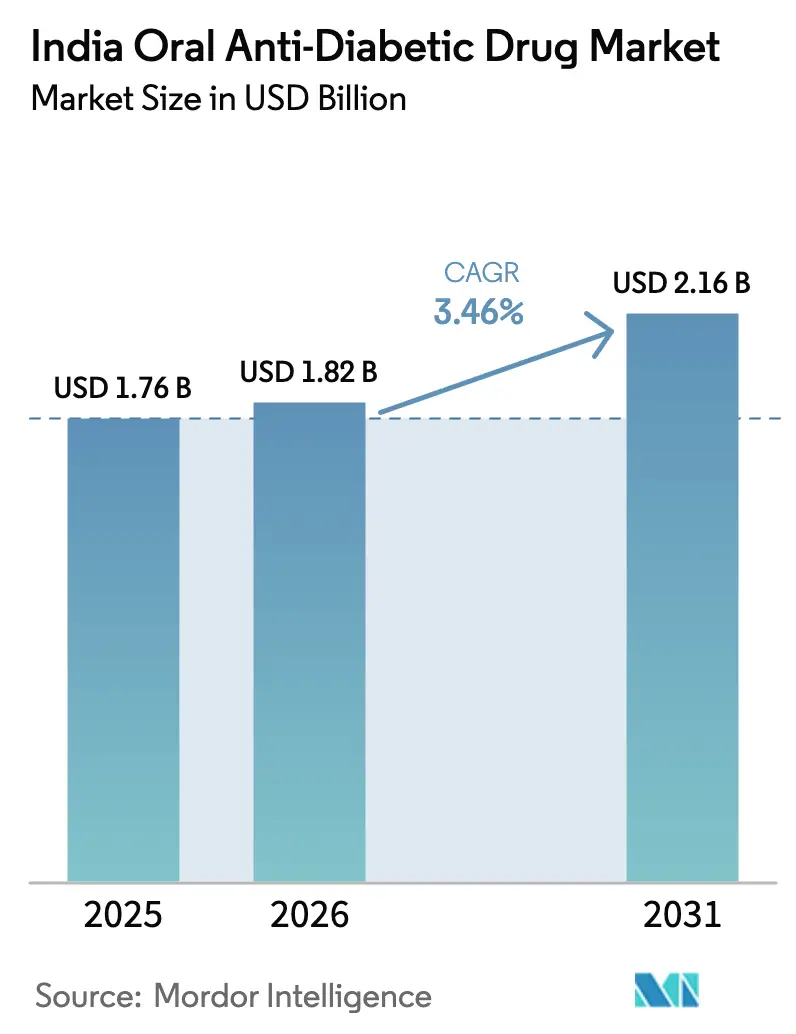
The India oral anti-diabetic drug market size was valued at USD 1.76 billion in 2025 and estimated to grow from USD 1.82 billion in 2026 to reach USD 2.16 billion by 2031, at a CAGR of 3.46% during the forecast period (2026-2031). The sales trajectory is shaped by a mix of patent expiries, intensified generic competition, government price controls and a domestic manufacturing push that is lowering average treatment costs while broadening patient access. Rapid urbanisation, the growing burden of type 2 diabetes mellitus (T2DM), and rising acceptance of digital pharmacies are sustaining prescription volume growth even as unit prices fall. Multinational innovator brands are responding with differentiated fixed-dose combinations (FDCs) and once-daily novel classes aimed at adherence improvement, yet price-sensitive buyers increasingly opt for trade generics and Pradhan Mantri Bhartiya Janaushadhi Pariyojana (PMBJP) outlets. Meanwhile, the Production-Linked Incentive (PLI) scheme is adding local capacity for critical active pharmaceutical ingredients (APIs), reducing import dependence and reinforcing supply-chain resilience.
Key Report Takeaways
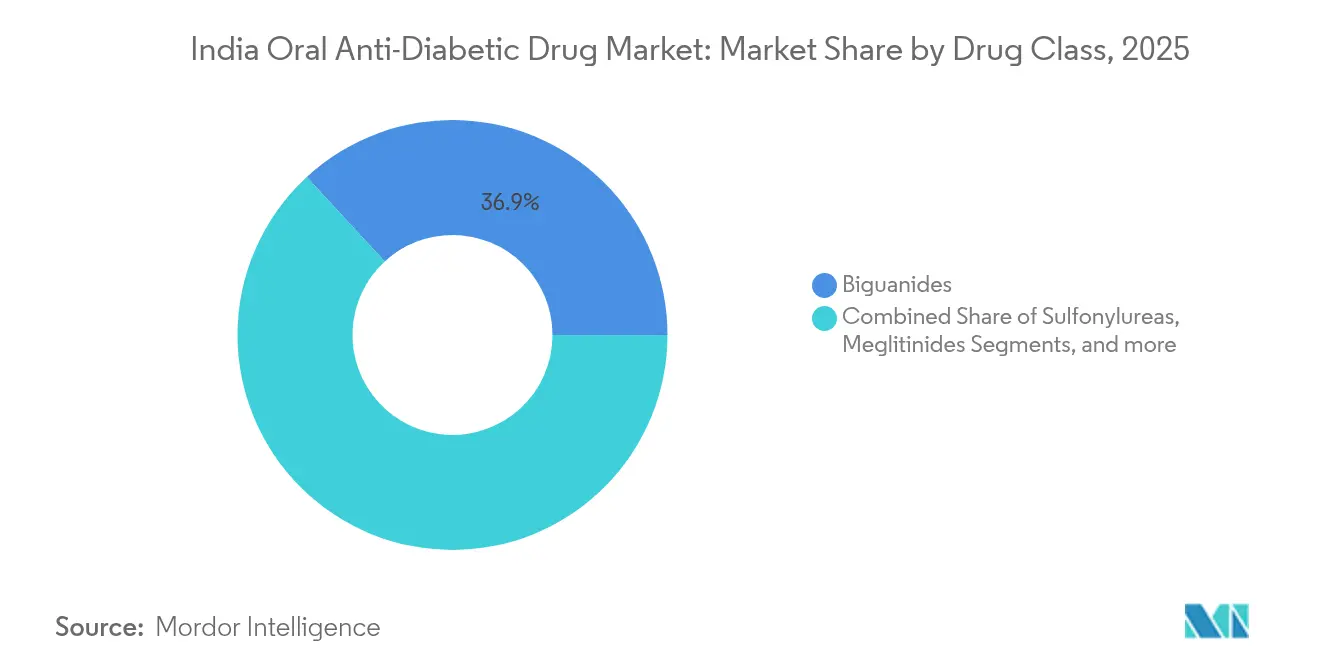
- By drug class, Biguanides led with 36.85% of India oral anti-diabetic drug market share in 2025; SGLT-2 inhibitors are projected to expand at a 3.79% CAGR through 2031.
- By age group, adults held 67.05% share of the India oral anti-diabetic drug market size in 2025, whereas the geriatric cohort is poised for the fastest 3.94% CAGR to 2031.
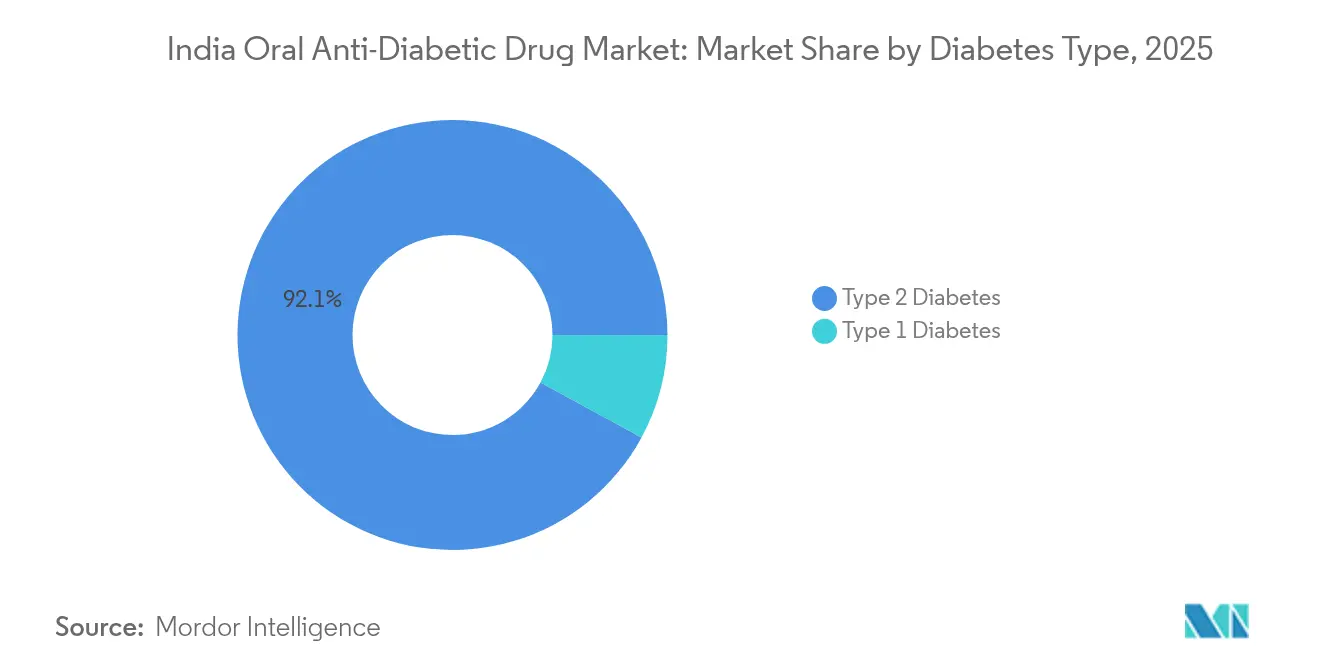
- By diabetes type, type 2 diabetes accounted for 92.10% of the India oral anti-diabetic drug market in 2025 and is forecast to maintain a 3.62% CAGR through 2031.
- By distribution channel, hospital pharmacies commanded 66.05% of 2025 revenues, while online pharmacies are advancing at a 4.29% CAGR during 2026-2031.
Note: Market size and forecast figures in this report are generated using Mordor Intelligence’s proprietary estimation framework, updated with the latest available data and insights as of 2026.
Global valuation is built by aggregating outputs from multiple countries and regions, with India being one of the contributors. Our global oral anti-diabetic drugs market size represents that cumulative total.
India Oral Anti-Diabetic Drug Market Trends and Insights
Drivers Impact Analysis*
| Driver | (~) % Impact on CAGR Forecast | Geographic Relevance | Impact Timeline |
|---|---|---|---|
| Rising prevalence of T2DM & pre-diabetes | +1.2% | National, higher in urban centres | Long term (≥ 4 years) |
| Patent expiries driving rapid generic penetration | +0.8% | National, immediate impact in metro cities | Short term (≤ 2 years) |
| PLI scheme for diabetes APIs/formulations | +0.6% | National, concentrated in manufacturing hubs | Medium term (2-4 years) |
| Surge in FDCs & once-daily novel classes (SGLT-2, DPP-4) | +0.4% | Urban and semi-urban markets | Medium term (2-4 years) |
| Digital-first pharmacy expansion in Tier-2-4 cities | +0.3% | Tier-2, Tier-3 and rural markets | Medium term (2-4 years) |
| Pharmacogenomic-guided dosing pilots in tertiary centres | +0.2% | Metro cities and medical college hospitals | Long term (≥ 4 years) |
| Source: Mordor Intelligence | |||
Rising Prevalence of T2DM & Pre-Diabetes
India hosts 77 million individuals with diabetes and projections indicate 134 million cases by 2045. Urban blood-glucose screening campaigns reveal that 49.43% of tested adults show abnormal values and 27.18% already meet diabetic thresholds. Lucknow prevalence data record 15.8% urban versus 11.7% rural incidence, underscoring market opportunities beyond metros. Annual diabetes-linked healthcare costs exceed USD 5 billion, and poorer households devote up to 23.7% of income to disease management. These epidemiological realities drive consistent therapy demand, though the India oral anti-diabetic drug market grows at a measured pace given rising generic penetration and price caps.
Patent Expiries Accelerating Generic Launches
Empagliflozin’s March 2025 patent cliff spurred an influx of 147 generic brands, doubling market participants within a month. Generic tablets retail at INR 5.49 compared with the innovator’s INR 59, unleashing 80-90% price erosion. Upcoming expiries—Semaglutide (Jan 2026) and Sitagliptin/Metformin FDCs (Jul 2029)—promise sustained openings for domestic formulators. Multinationals respond by bundling cardiovascular-renal claims and co-packaged devices to justify premium positioning. Rapid genericisation democratises access while rewiring competitive dynamics across the India oral anti-diabetic drug market.
PLI Scheme Boosting Diabetes API Output
PLI incentives have mobilised INR 1.61 lakh crore in pharma investment, generating production of INR 14 lakh crore across 764 approved projects [1]. Thirty-two diabetes-relevant API ventures worth INR 4,024 crore are operational, targeting 41 bulk drugs, including Metformin and Dapagliflozin intermediates. The policy reduces import reliance, which had hovered near 70%, and lays groundwork for exporting next-generation formulations post-2026 expiries. Greenfield bulk-drug parks, power-reliable manufacturing clusters and single-window clearances accelerate capacity commissioning, enhancing supply security throughout the India oral anti-diabetic drug market.
Surge in FDCs & Once-Daily Novel Classes
Physician adoption of DPP-4 inhibitors rose from 48.9% to 61.2% within two years as hypoglycaemia risk and weight neutrality influence prescribing. The SGLT-2 inhibitor segment, worth INR 3,235 crore, posts 25% annual growth owing to demonstrated cardio-renal benefits. Consensus guidelines from 94 cardiologists now favour early Dapagliflozin-Sitagliptin FDC initiation in high-risk patients [2]. Once-daily regimens improve adherence among semi-urban diabetics, 78% of whom skip self-monitoring because of cost or low awareness. Differentiated FDC portfolios thus provide competitive moats against immediate post-expiry price compression in the India oral anti-diabetic drug market.
Restraints Impact Analysis*
| Restraint | (~) % Impact on CAGR Forecast | Geographic Relevance | Impact Timeline |
|---|---|---|---|
| High price of novel GLP-1 oral agents | -0.7% | Urban markets primarily, limited rural penetration | Medium term (2-4 years) |
| National price-control & trade-generic proliferation squeezing margins | -0.5% | National, affecting all market segments | Short term (≤ 2 years) |
| Patient drift to long-acting injectables/implants | -0.4% | Metro cities and Tier-1 urban centres | Medium term (2-4 years) |
| Extreme inter-brand price dispersion eroding prescriber confidence | -0.3% | National, particularly affecting rural and semi-urban areas | Short term (≤ 2 years) |
| Source: Mordor Intelligence | |||
High Price of Novel GLP-1 Oral Agents
Monthly therapy with oral Semaglutide costs INR 10,000, deterring widespread uptake in a market where generic Metformin costs under INR 100. Out-of-pocket spending dominates, as 80% of patients lack comprehensive insurance coverage. Clinical trials show 1.56% HbA1c reductions and 5 kg weight loss, yet cost-effectiveness remains negative for most households. Sales therefore remain confined to affluent urban cohorts until patent expiry-led generics emerge post-2026. The India oral anti-diabetic drug market thus balances clinical efficacy gains against affordability ceilings.
National Price-Control & Trade-Generic Squeeze
The National Pharmaceutical Pricing Authority fixed ceiling prices for 84 Empagliflozin SKUs and mandated 50% cuts for off-patent components in FDCs. Trade-generic launches surged once protective patents lapsed, intensifying discount wars that favour patients but slash manufacturer margins. Para 32 exemptions, enabling Indian Patent Office experts to shape pricing verdicts, inject regulatory uncertainty for innovators. Volume-led strategies dominate as brand equity erodes, prompting firms to re-engineer cost structures while preserving therapeutic quality across the India oral anti-diabetic drug market.
*Our forecasts treat driver/restraint impacts as directional, not additive. The impact forecasts reflect baseline growth, mix effects, and variable interactions.
Segment Analysis
By Drug Class: Biguanides Dominance Faces Novel-Class Disruption
Biguanides anchored by Metformin held 36.85% of India oral anti-diabetic drug market share in 2025. Empagliflozin’s patent expiry and rapid price erosion, however, redirected prescribers toward SGLT-2 inhibitors, the fastest-growing class with a 3.79% CAGR to 2031. Sulfonylureas are declining due to hypoglycaemia fears, while DPP-4 inhibitors widened adoption on safety merits. Alpha-glucosidase inhibitors and Meglitinides remain niche. Pharmacogenomic studies show higher prevalence of alleles linked to poor Metformin response among Indian patients, opening avenues for personalised dosing . The India oral anti-diabetic drug market size for SGLT-2 inhibitors is projected to reach USD 611.8 million by 2031, reflecting emerging therapeutic preferences. Novel dual SGLT-1/2 compounds and GLP-1 combinations in the development pipeline may further recalibrate shares as price-sensitive FDCs mature.
A confluence of cardiovascular-renal data and initial price drops is strengthening SGLT-2 molecule positioning. Domestic players with vertically integrated API capacity leverage PLI incentives to undercut imports while ensuring quality compliance. Innovator firms seek differentiation through outcome-based real-world studies, but generics already capture volume prescribing. Net-net, competitive intensity within drug classes is redefining value capture along the India oral anti-diabetic drug market.

By Age Group: Adult Stability Versus Geriatric Momentum
Adults generated 67.05% of 2025 prescriptions, yet their CAGR trails at 2.98% because of therapeutic maturity and slowing incidence growth in mid-life cohorts. The geriatric cohort shows a 3.94% CAGR driven by longevity gains and higher multi-morbidities requiring safer agents. India oral anti-diabetic drug market size for geriatrics is estimated at USD 427.6 million in 2025, growing as elderly pensioners turn to affordable Jan Aushadhi generics that cut monthly spend by 70%. Rural elderly patients face access gaps, but teleconsultation pilots in states such as Tamil Nadu are bridging follow-up care.
Polypharmacy challenges accelerate demand for weight-neutral, low-hypoglycaemia formulations. Digital adherence tools customised for large-font interfaces record 18% higher engagement among older users, underpinning incremental sales gains. Meanwhile, paediatric prescriptions remain low volume, yet research into Metformin add-on therapy to mitigate insulin resistance in type 1 adolescents highlights future niche expansion. Overall, demographic evolution ensures a steady patient pipeline within the India oral anti-diabetic drug market.
By Diabetes Type: Type 2 Dominance Shapes Therapeutic Evolution
Type 2 diabetes maintained 92.10% share of India oral anti-diabetic drug market in 2025 and advances at a 3.62% CAGR to 2031. Only 20.8% of T2DM patients currently achieve HbA1c < 7%, signalling substantial room for treatment intensification. Early combination therapy using DPP-4 or SGLT-2 inhibitors with Metformin is gaining traction. Regional discrepancies persist, with southern states exhibiting higher prevalence yet better control due to stronger primary care infrastructure. Digital therapeutics pilots report 1.2% incremental HbA1c reduction when paired with oral agents.
Type 1 diabetes accounts for a small share but commands higher per-patient spend owing to complex regimens. Research into immune-modulating oral agents suggests future convergence of therapy pathways. Overall, type 2 disease patterns continue to dictate formulary decisions, supply-chain planning, and public-health budgeting in the India oral anti-diabetic drug market.
By Distribution Channel: Hospital Pharmacies Lead as Online Channels Accelerate
Hospital pharmacies retained 66.05% revenue share in 2025 because prescribers favour in-house dispensing for long-term disease management. Yet online pharmacies log the fastest 4.29% CAGR on the back of smartphone penetration and e-commerce trust gains. India oral anti-diabetic drug market size within online channels is forecast to top USD 229.7 million by 2031, aided by e-pharmacy regulation that mandates CDSCO registration and secure cold-chain logistics. Retail chemists still serve Tier-2 and Tier-3 towns, where physical access matters and credit purchases dominate.
PMBJP’s 15,000 outlets expand generic reach at 50-80% lower prices and shift walk-in traffic from private retailers. Start-ups offering doorstep HbA1c tests bundle medication subscriptions, incentivising monthly auto-refills. Hospital chains counter by integrating tele-consults with pharmacy home-delivery, maintaining influence across the India oral anti-diabetic drug market.
Geography Analysis
Southern India registers the country’s highest diabetes prevalence, but its superior endocrinology infrastructure underpins higher drug uptake and adherence rates. Western metros such as Mumbai and Ahmedabad show swift adoption of SGLT-2 inhibitors after patent expiry, buoyed by cardiologist endorsement and early cardiovascular outcome trials. Northern Tier-2 cities, including Jaipur and Lucknow, reveal rising incidence yet remain predominantly Metformin-centric, owing to cost constraints.
Rural markets, still only 18% of national pharma sales as of 2025, lag in therapy intensity because of limited diagnostics, but government sub-centres and mobile medical vans are narrowing gaps. Telehealth platforms now reach remote Himalayan districts, overcoming geographical barriers and promoting continuity of oral therapy. The Ayushman Bharat programme has enabled 7.79 crore hospitalisations since launch and cuts out-of-pocket expenses by 21%, indirectly freeing disposable income for medicines.
Eastern and northeastern states battle logistics hurdles related to poor road connectivity and intermittent electricity that complicates pharmacy refrigeration. Producers are piloting solar-powered micro-warehouses paired with digital stock-tracking to reduce stockouts. Overall, evolving infrastructure, policy incentives and technology diffusion continue to widen geographic reach, enlarging patient pools for the India oral anti-diabetic drug market.
Coverage of the oral anti-diabetic drugs market by Mordor Intelligence spans a wide geographic footprint, with regional analysis available for Asia, South America, and North America, alongside detailed country-level intelligence for Malaysia, South Korea, Brazil, Mexico, France, and Vietnam, each shaped by local operating conditions.
Regulatory Landscape
CDSCO provides central oversight for new drugs and fixed-dose combinations under the Drugs and Cosmetics Act and New Drugs and Clinical Trials Rules 2019. In April 2025, CDSCO banned 35 irrational FDCs, highlighting the need for central approvals and clinical justification for fixed-dose combinations in oral anti-diabetic therapies.
The National Pharmaceutical Pricing Authority (NPPA) sets retail price ceilings under the Drugs Prices Control Order 2013, and in 2026 NPPA price-cap notifications covering diabetes formulations tightened the operating environment for branded generics and FDC portfolios.
Competitive Landscape
Domestic manufacturers capture a decent share of national pharmaceutical volumes and rapidly erode premium price bands through early generic launches. Within weeks of Empagliflozin’s expiry, 37 local firms introduced products priced up to 90% cheaper than the innovator. Novo Nordisk and Eli Lilly still dominate premium GLP-1 segments, but Glenmark’s Lirafit biosimilar launch in March 2025 cut treatment cost by 70% and signalled intensifying biosimilar rivalry.
Strategically, local players leverage PLI-funded backward integration, API self-sufficiency and aggressive trade-generic branding to retain physician mindshare. Cipla’s USD 857 million war chest targets acquisitions in chronic therapeutics to widen its cardiometabolic portfolio. Innovators pursue differentiation via outcome-based contracts, patient-support apps and co-formulated once-weekly oral candidates. Meanwhile, AI-assisted drug discovery and pharmacogenomic screening partnerships emerge as future moats, shifting competition beyond simple cost vantage points.
Value migration is evident: gross margins compress but unit volumes spike, forcing firms to optimise supply chains, scale packaging automation and co-source distribution. Over 50 alliances between digital-health start-ups and pharma marketers formed in 2024-2025, pairing continuous glucose monitoring apps with medication discount coupons, thereby deepening customer retention. Competitive pressures are expected to intensify through 2030 as additional patent cliffs approach and rural channel expansion accelerates across the India oral anti-diabetic drug market.
India Oral Anti-Diabetic Drug Industry Leaders
-
Sanofi
-
Eli Lilly
-
Astellas
-
Astrazeneca
-
Johnson & Johnson
- *Disclaimer: Major Players sorted in no particular order
Market Opportunities and Future Outlook
The Biopharma SHAKTI scheme, with an outlay of Rs 10,000 crore and customs-duty exemptions for 17 life-saving drugs including diabetes medicines, supports domestic R&D and manufacturing capacity in India. In practice, it can shorten execution cycles and improve supply resilience for oral anti-diabetic portfolios.
Within demand-side access, PMBJP expansion and online pharmacy channel growth broaden price-to-patient options. Competition has already been reshaped by Empagliflozin's March 2025 patent cliff, which drew 147 generic entrants and drove sharp price erosion, while PLI incentives mobilised INR 1.61 lakh crore in pharma investment and left 32 diabetes-relevant API ventures operational, including capacity for Metformin and SGLT-2 and DPP-4 APIs.
Recent Industry Developments
- May 2026: Launched Obeda, an oral semaglutide biosimilar for type 2 diabetes mellitus, in 3mg, 7mg, and 14mg strengths. The introduction of an oral GLP-1 biosimilar in India increases patient options and intensifies biosimilar competition in the OAD space.
- April 2026: Sanofi India Limited reported continued growth in its insulin portfolio and reaffirmed the strategic importance of its oral anti-diabetic OAD partnership model. The company’s continued emphasis on its distribution and partner model supports market reach and price-competition dynamics.
- July 2025: Sanofi India Limited partnered with Emcure Pharmaceuticals to exclusively distribute and promote its OAD brands Amaryl and Cetapin. The partnership is designed to expand access and penetration of OAD brands in India, reflecting a shift toward distribution collaborations to scale legacy products against generics.
Research Methodology Framework and Report Scope
Market Definition and Coverage
This market covers the value of oral prescription drugs used to manage diabetes in India, counted as manufacturer level sales and reported in USD for the stated years.
Scope exclusions: We exclude insulin and other non-oral therapies, devices, diagnostics, and hospital procedure revenues from this market sizing.
Segmentation Overview
- By Drug Class
- Biguanides
- Sulfonylureas
- Meglitinides
- Thiazolidinediones
- Alpha-Glucosidase Inhibitors
- DPP-4 Inhibitors
- SGLT-2 Inhibitors
- Others
- By Age Group
- Adults
- Pediatric
- Geriatric
- By Diabetes Type
- Type 1 Diabetes
- Type 2 Diabetes
- By Distribution Channel
- Hospital Pharmacies
- Retail Pharmacies
- Online Pharmacies
Data Sources, Market Sizing, and Validation
Desk Research
Desk research was used to set the India specific demand backdrop and the policy and pricing context that affects oral diabetes prescriptions. We typically start with public health and epidemiology indicators (diagnosed population, treatment rates, and care access), and then link them to therapy adoption and affordability trends.
Key sources used for this study include non-paywalled references such as the International Diabetes Federation (IDF) diabetes atlas, National Health Mission and Ministry of Health publications, CDSCO and India pharmacovigilance updates, Department of Pharmaceuticals and NPPA price ceiling notifications, and peer reviewed journals that report real world use of oral therapies. We also reviewed company annual reports, investor presentations, and reputed business press to understand brand level developments and generic intensity, and then used approved paid databases for company financials, news tracking, and patent databases where relevant. This list is not exhaustive, and other sources were also referred to during data collection, validation, and research clarification.
Primary Interviews and Surveys
Primary work focused on validating therapy mix shifts within oral prescriptions, channel dynamics across retail and e-pharmacy, and practical pricing behavior after price controls and generic entry. We spoke with manufacturers, distributors, pharmacists, and clinicians across metro and non-metro markets so assumptions on volume growth, switching, and fixed dose combination uptake could be tested, then updated where needed.
Distribution of primary research fieldwork respondents
| Company type | Respondent position |
|---|---|
| Top tier: 36% | CXOs: 17% |
| Mid tier: 43% | Functional/Unit leaders: 38% |
| Smaller Players: 21% | Managers: 45% |
Market-Sizing & Forecasting
Sizing starts from a top-down build where the treated diabetes population is mapped to oral therapy use, which is then converted into value using average annual therapy cost ranges by class and channel. The model is checked with selective bottom-up views, such as sampled SKU price points across retail and online listings, channel checks on mix between single molecule and fixed dose combinations, and manufacturer revenue splits where disclosures allow.
Inputs that matter in India include diabetes prevalence and diagnosis trends, the share of patients managed mainly with oral therapy, switching from older classes to newer oral classes, the mix of single molecule versus combinations, and price movement tied to generic intensity and NPPA related price ceilings. Where public data is incomplete, gaps are handled by using class level ranges validated through interviews and by keeping assumptions consistent across states and channels unless a clear signal suggests otherwise.
Forecasting uses scenario analysis anchored to expert consensus on prescription growth and price progression, followed by sensitivity checks for faster combination adoption or sharper price erosion. Final forecasts are kept traceable so a user can see which variable changes the outcome and by how much.
Data Validation & Update Cycle
Validation is done by comparing outputs against independent signals, such as therapy area growth commentary, observed price bands in major channels, and any visible step changes from policy updates. If a class grows too quickly or pricing looks inconsistent with ceiling notifications and generic entry, assumptions are revisited and, where needed, respondents are re-contacted for clarification.
Before sign-off, results move through multi-step analyst review where units, currency conversions, and year mapping are checked, followed by a variance review against historical patterns. Reports are refreshed annually, and interim updates are added when material events occur, after which a final pre-delivery pass is completed so clients receive the latest updated view.
Mordor Intelligence's India Oral Anti Diabetic Drug Market Sizing Compared With Other Published Estimates
Published market sizes for this space can differ even when they appear to cover the same therapy area, since product inclusion, the time window, and the pricing basis do not always match.
The benchmark table shows a smaller value than estimates that start from India pharma sales audits. In Mordor Intelligence's model, the count is restricted to oral anti-diabetic drugs only (excluding insulin and other non-oral therapies), with values normalized to USD using a consistent year basis rather than moving MAT periods.
Benchmark comparison
| Source | Market Size | Gaps in Research Methodology |
|---|---|---|
| Mordor Intelligence | USD 1.76 B (2025) | |
| Trade Journal A | USD 2.67 B (2025) | Uses an IPM therapy segment total that includes insulin and non-oral injectables, and it is reported on a MAT period basis which can lift the measured value versus a calendar-year view. |
| Industry Brief B | USD 2.10 B (2026) | Likely mixes oral and broader diabetes drug revenues and applies a faster price-growth assumption, which can overstate value in a market where generics and price ceilings can dampen ASPs. |
The spread across publishers mainly comes from product boundary choices, period definitions, and how prices are carried forward across years. By tying the model to a clear oral-only demand pool and rechecking class mix and price movement through interviews and desk signals, we keep the estimate repeatable and easier to audit year to year.
Key Questions Answered in the Report
What is the current value of the India oral anti-diabetic drug market?
The India oral anti-diabetic drug market stands at USD 1.82 billion in 2026 and is forecast to rise to USD 2.16 billion by 2031 at a 3.46% CAGR.
Which drug class is expanding fastest in India?
SGLT-2 inhibitors represent the fastest-growing class, posting a 3.79% CAGR through 2031 due to cardio-renal benefits and post-patent price reductions.
How are patent expiries influencing competition?
The March 2025 Empagliflozin patent cliff attracted 37 generic entrants within weeks and slashed retail prices by up to 90%, fundamentally reshaping competitive dynamics.
Why are online pharmacies gaining share in diabetes medicines?
Improved last-mile logistics, CDSCO e-pharmacy rules and smartphone adoption enable convenient home delivery, driving a 4.29% CAGR for online channels through 2031.
What government policies support domestic diabetes drug manufacturing?
The PLI scheme earmarks incentives for critical APIs, while bulk-drug parks and single-window approvals strengthen domestic capacity, lowering import dependence.
Are novel GLP-1 oral agents affordable for most Indian patients?
No. Current monthly therapy costs of roughly INR 10,000 limit uptake to affluent urban patients; generics post-2026 should reduce prices and widen access.