
Market Overview
| Study Period | 2021 - 2032 |
|---|---|
| Forecast Data Period | 2027 - 2032 |
| Base Year Market Size (2026) | USD 1.12 Billion |
| Market Size (2027) | USD 1.16 Billion |
| Market Size (2032) | USD 1.35 Billion |
| Growth Rate (2027 - 2032) | 3.05 % |
| Market Concentration | Medium |
Major Players *Disclaimer: Major Players sorted in no particular order Image © Mordor Intelligence. Reuse requires attribution under CC BY 4.0. | |
United Kingdom (UK) Diabetes Drugs Market Analysis by Mordor Intelligence
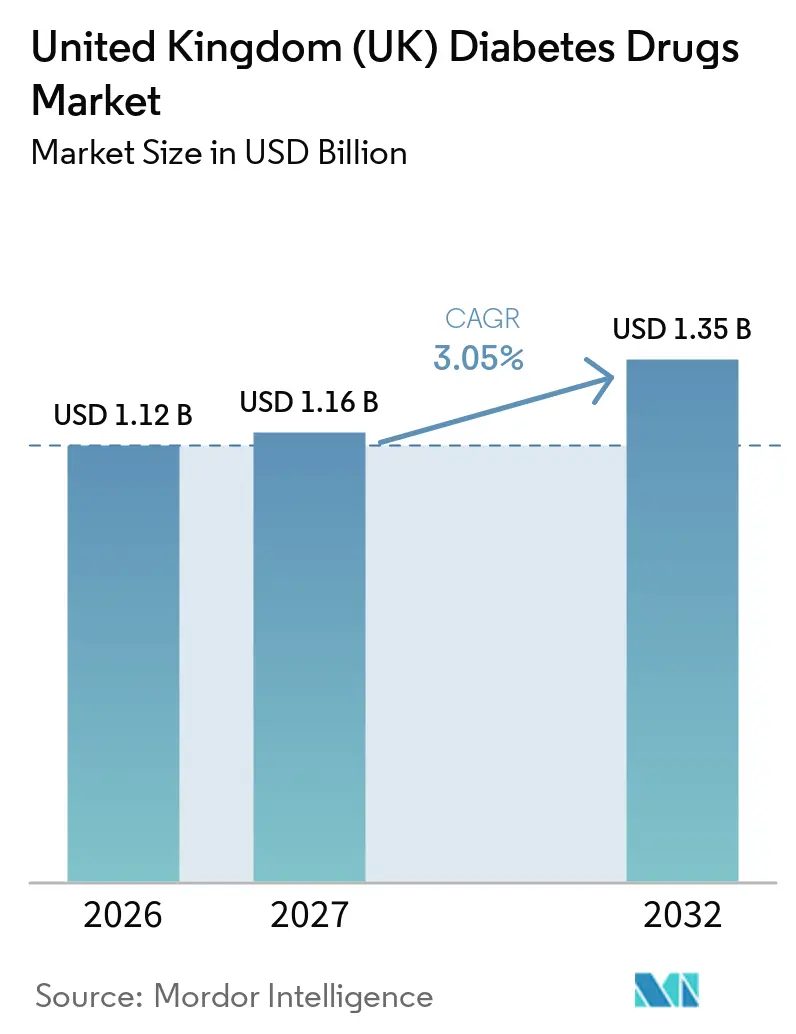
The United Kingdom Diabetes Drugs Market size was valued at USD 1.12 billion in 2026 and is estimated to grow from USD 1.16 billion in 2027 to reach USD 1.35 billion by 2032, at a CAGR of 3.05% during the forecast period (2027-2032).
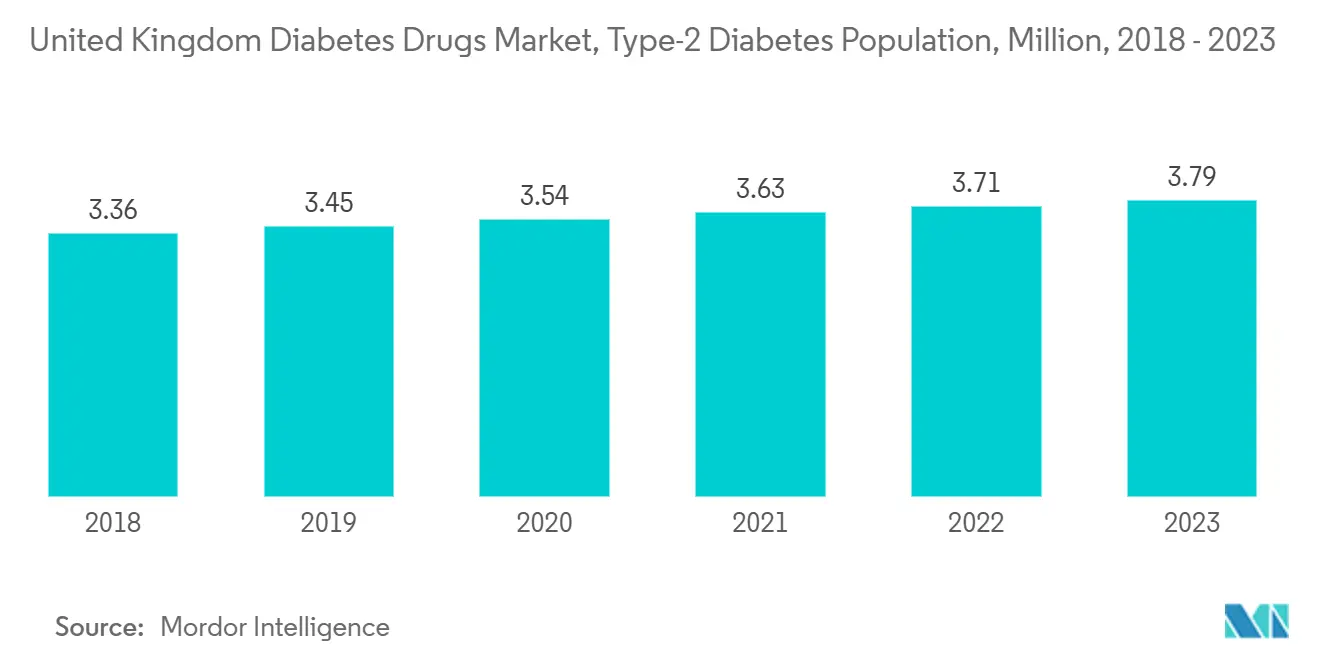
Diabetes prevalence data shows an increase in the number of people living with a diabetes diagnosis in the UK. The rapidly increasing incidence and prevalence of diabetic patients and healthcare expenditure are indications of the increasing usage of diabetic drugs.
The United Kingdom benefits from a well-established diabetes care framework that supports the availability and utilization of anti-diabetic medications. Ongoing efforts to improve disease management, expand access to innovative therapies, and reduce the long-term burden of diabetes are encouraging the adoption of advanced treatment options. Additionally, increasing investments in diabetes care services and digital health-enabled monitoring programs are creating a favorable environment for the growth of the diabetes drugs market.
Oral anti-diabetic drugs continue to play a vital role in diabetes management across the United Kingdom due to their convenience, cost-effectiveness, and suitability for long-term treatment. Metformin remains a widely prescribed first-line therapy, while newer drug classes such as SGLT-2 inhibitors and DPP-4 inhibitors are increasingly incorporated into treatment regimens based on patient risk profiles and comorbidities. The growing emphasis on improving treatment adherence, reducing diabetes-related complications, and optimizing healthcare resource utilization is supporting sustained demand for anti-diabetic medications in the country.
Therefore, owing to the aforementioned factors the studied market is anticipated to witness growth over the analysis period.
Note: Market numbers in this report are based on Mordor Intelligence's proprietary estimation framework, which combines nine months of actuals with Q4 projections for base year 2026.
United Kingdom (UK) Diabetes Drugs Market Trends and Insights
The oral anti-diabetic drugs segment holds the highest market share in the United Kingdom Diabetes Drugs Market in the current year
The oral anti-diabetic drugs segment holds the highest market share of about 64.5% in the United Kingdom Diabetes Drugs Market in the current year.
Oral Anti-Diabetic Drugs are available internationally and are recommended for use when escalation of treatment for type 2 diabetes is required along with lifestyle management. Oral agents are typically the first medications used in treating type 2 diabetes due to their wide range of efficacy, safety, and mechanisms of action.
Any medicinal product commercially available in the United Kingdom is eligible for reimbursement. It means the NHS refunds the costs of the medicine to the dispensing pharmacist or doctor, apart from a few exceptions. Various steps are being taken in the direction of controlling diabetes. An electronic version of a personalized Diabetes United Kingdom Management Plan is available for completion on EMIS Web. The plan can record the objectives and steps agreed upon with the patient and generate an information prescription.
The information prescription can be printed and given to the patient, and an electronic version can be saved in the patient's care record. The Diabetes United Kingdom Management Plan protocols need to be activated and generate a pop-up alert for patients if they are pregnant, suffer from kidney disease, or a raised BP/HbA1c/Cholesterol value, and include no record of a diabetes management plan in the last 6 months. It is also applicable if there is no eGFR or ACR test record in the last 13 months and no record of a Patient Health Questionnaire recorded in the last 3 months.
Owing to the above factors, the market will likely continue to grow.
Glucagon-like Peptide-1 Receptor Agonist Segment is Expected to Dominate the United Kingdom Diabetes Drugs Market in terms of revenue over the forecast period
Glucagon-like Peptide-1 Receptor Agonist Segment is expected to dominate the United Kingdom Diabetes Drugs Market in revenue and register a CAGR of more than 4.5% over the forecast period.
Growth of the segment is supported by the increasing adoption of GLP-1 receptor agonists within the National Health Service (NHS) for the management of type 2 diabetes, particularly among patients requiring both glycemic control and weight reduction. The rising prevalence of obesity and diabetes in the United Kingdom, coupled with expanding access to innovative GLP-1 therapies and favorable clinical recommendations, continues to strengthen demand for this drug class across the country.
The Association of British HealthTech Industries (ABHI) is a trade association for the medical technology sector in the United Kingdom. The National Service Framework (NSF) program is improving services by setting national standards to drive service quality and tackle variations in care. The Association of British HealthTech Industries launched a diabetes section, enabling diabetes technology companies to work together in the first forum of its kind. The ABHI group is for any health technology company interested in diabetes care.
The disease's growing incidence, prevalence, and progressive nature encouraged the development of new drugs to provide additional treatment options for diabetic patients. The roll-out of many new products, increasing international research collaborations in technology advancement, and increasing awareness about diabetes among the people are some market opportunities for the players in the United Kingdom diabetes drugs market.
Competitive Landscape
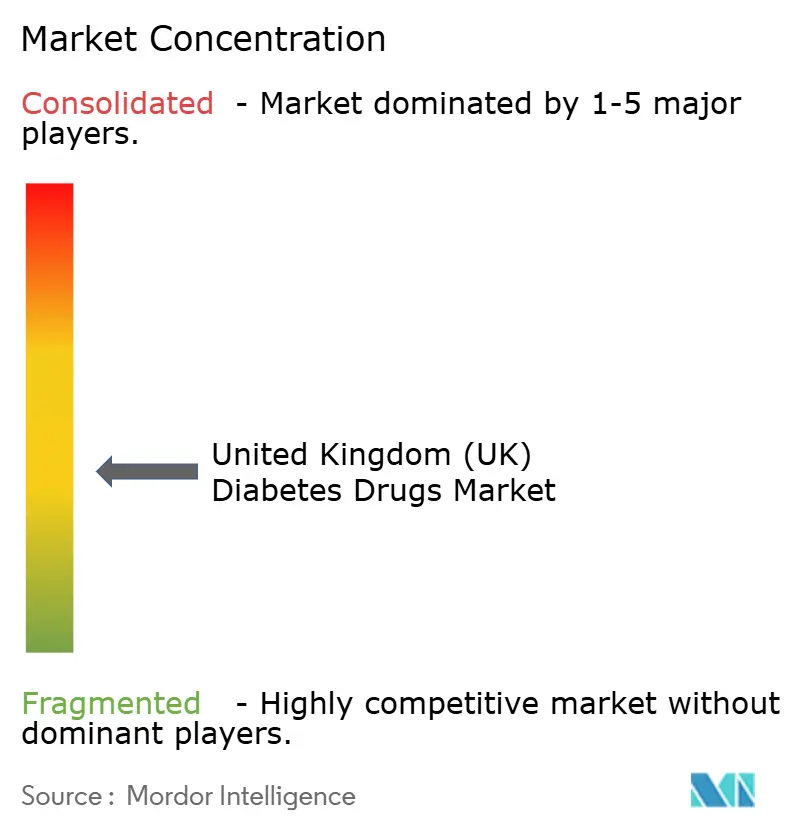
The United Kingdom Diabetes Drugs Market is fragmented, with major manufacturers, namely Eli Lilly, Sanofi, Novo Nordisk, and AstraZeneca, holding a presence in the region. A major share of the market is held by manufacturers concomitant with strategy-based M&A operations and constantly entering the market to generate new revenue streams and boost existing ones. These measures taken by the market players will ensure a competitive marketplace, forcing companies to experiment with new technologies.
United Kingdom (UK) Diabetes Drugs Industry Leaders
-
AstraZeneca
-
Boehringer Ingelheim
-
Novo Nordisk A/S
-
Sanofi Aventis
-
Eli Lilly and Company
- *Disclaimer: Major Players sorted in no particular order
Recent Industry Developments
- Septmber 2023: Lilly's diabetes medication Mounjaro has been given the green light by the UK regulatory body. According to the National Institute for Health and Care Excellence (NICE), approximately 180,000 individuals are projected to see positive outcomes from this innovative therapy.
- March 2022: Eli Lilly and Boehringer Ingelheim gained approval for heart failure treatment from the EU for sodium-glucose co-transporter-2-inhibitor (SGLT2-I) and Jardiance (empagliflozin). Previously Jardiance gained a label expansion for treating heart failure in the US.
United Kingdom (UK) Diabetes Drugs Market Report Scope
Diabetes Drugs are used to manage diabetes mellitus by lowering the glucose level in the blood. The United Kingdom Diabetes Drugs Market is segmented into drugs. The report offers the value (in USD) and volume (in units) for the above segments.
Insulins
| Basal or Long Acting Insulins | Lantus (Insulin Glargine) |
| Levemir (Insulin Detemir) | |
| Toujeo (Insulin Glargine) | |
| Tresiba (Insulin Degludec) | |
| Basaglar (Insulin Glargine) | |
| Bolus or Fast Acting Insulins | NovoRapid/Novolog (Insulin Aspart) |
| Humalog (Insulin Lispro) | |
| Apidra (Insulin Glulisine) | |
| Traditional Human Insulins | Novolin/Actrapid/Insulatard |
| Humulin | |
| Insuman | |
| Biosimilar Insulins | Insulin Glargine Biosimilars |
| Human Insulin Biosimilars |
Oral Anti-diabetic drugs
| Biguanides | Metformin |
| Alpha-Glucosidase Inhibitors | Alpha-Glucosidase Inhibitors |
| Dopamine D2 receptor agonist | Bromocriptin |
| SGLT-2 inhibitors | Invokana (Canagliflozin) |
| Jardiance (Empagliflozin) | |
| Farxiga/Forxiga (Dapagliflozin) | |
| Suglat (Ipragliflozin) | |
| DPP-4 inhibitors | Onglyza (Saxagliptin) |
| Tradjenta (Linagliptin) | |
| Vipidia/Nesina(Alogliptin) | |
| Galvus (Vildagliptin) | |
| Sulfonylureas | Sulfonylureas |
| Meglitinides | Meglitinides |
Non-Insulin Injectable drugs
| GLP-1 receptor agonists | Victoza (Liraglutide) |
| Byetta (Exenatide) | |
| Bydureon (Exenatide) | |
| Trulicity (Dulaglutide) | |
| Lyxumia (Lixisenatide) | |
| Amylin Analogue | Symlin (Pramlintide) |
Combination drugs
| Insulin combinations | NovoMix (Biphasic Insulin Aspart) |
| Ryzodeg (Insulin Degludec and Insulin Aspart) | |
| Xultophy (Insulin Degludec and Liraglutide) | |
| Oral Combinations | Janumet (Sitagliptin and Metformin) |
| Insulins | Basal or Long Acting Insulins | Lantus (Insulin Glargine) |
| Levemir (Insulin Detemir) | ||
| Toujeo (Insulin Glargine) | ||
| Tresiba (Insulin Degludec) | ||
| Basaglar (Insulin Glargine) | ||
| Bolus or Fast Acting Insulins | NovoRapid/Novolog (Insulin Aspart) | |
| Humalog (Insulin Lispro) | ||
| Apidra (Insulin Glulisine) | ||
| Traditional Human Insulins | Novolin/Actrapid/Insulatard | |
| Humulin | ||
| Insuman | ||
| Biosimilar Insulins | Insulin Glargine Biosimilars | |
| Human Insulin Biosimilars | ||
| Oral Anti-diabetic drugs | Biguanides | Metformin |
| Alpha-Glucosidase Inhibitors | Alpha-Glucosidase Inhibitors | |
| Dopamine D2 receptor agonist | Bromocriptin | |
| SGLT-2 inhibitors | Invokana (Canagliflozin) | |
| Jardiance (Empagliflozin) | ||
| Farxiga/Forxiga (Dapagliflozin) | ||
| Suglat (Ipragliflozin) | ||
| DPP-4 inhibitors | Onglyza (Saxagliptin) | |
| Tradjenta (Linagliptin) | ||
| Vipidia/Nesina(Alogliptin) | ||
| Galvus (Vildagliptin) | ||
| Sulfonylureas | Sulfonylureas | |
| Meglitinides | Meglitinides | |
| Non-Insulin Injectable drugs | GLP-1 receptor agonists | Victoza (Liraglutide) |
| Byetta (Exenatide) | ||
| Bydureon (Exenatide) | ||
| Trulicity (Dulaglutide) | ||
| Lyxumia (Lixisenatide) | ||
| Amylin Analogue | Symlin (Pramlintide) | |
| Combination drugs | Insulin combinations | NovoMix (Biphasic Insulin Aspart) |
| Ryzodeg (Insulin Degludec and Insulin Aspart) | ||
| Xultophy (Insulin Degludec and Liraglutide) | ||
| Oral Combinations | Janumet (Sitagliptin and Metformin) | |
Key Questions Answered in the Report
How big is the United Kingdom Diabetes Drugs Market?
The United Kingdom Diabetes Drugs Market size is expected to reach USD 1.12 billion in 2026 and grow at a CAGR of 3.05% to reach USD 1.35 billion by 2032.
What is the United Kingdom Diabetes Drugs Market size in 2027?
In 2027, the United Kingdom Diabetes Drugs Market size is expected to reach USD 1.16 billion.
Who are the key players in United Kingdom Diabetes Drugs Market?
AstraZeneca, Boehringer Ingelheim, Novo Nordisk A/S, Sanofi Aventis and Eli Lilly and Company are the major companies operating in the United Kingdom Diabetes Drugs Market.
What years does this United Kingdom Diabetes Drugs Market cover, and what was the market size in 2025?
In 2025, the United Kingdom Diabetes Drugs Market size was estimated at USD 1.09 billion. The report covers the United Kingdom Diabetes Drugs Market historical market size for years: 2021, 2022, 2023, 2024, 2025, and 2026. The report also forecasts the United Kingdom Diabetes Drugs Market size for years: 2027, 2028, 2029, 2030, 2031, and 2032.