
Implantable Infusion Pump Market Size and Share
Market Overview
| Study Period | 2021 - 2032 |
|---|---|
| Market Size (2027) | USD 22.02 Billion |
| Market Size (2032) | USD 35.76 Billion |
| Growth Rate (2027 - 2032) | 10.18 % |
| Fastest Growing Market | Asia-Pacific |
| Largest Market | North America |
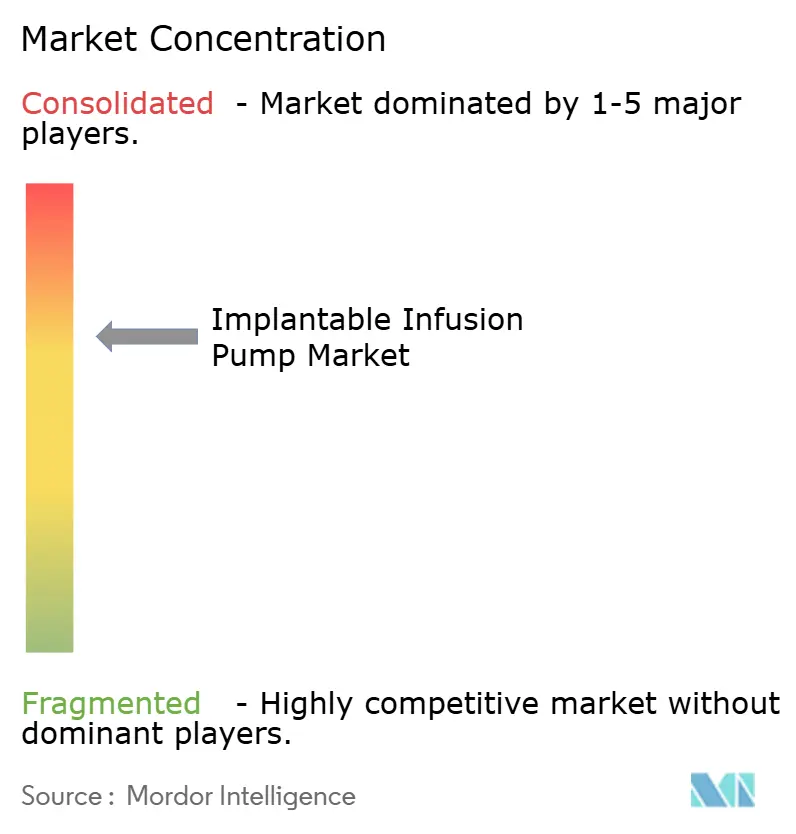
| Market Concentration | Medium |
Major Players *Disclaimer: Major Players sorted in no particular order Image © Mordor Intelligence. Reuse requires attribution under CC BY 4.0. | |
Implantable Infusion Pump Market Analysis by Mordor Intelligence
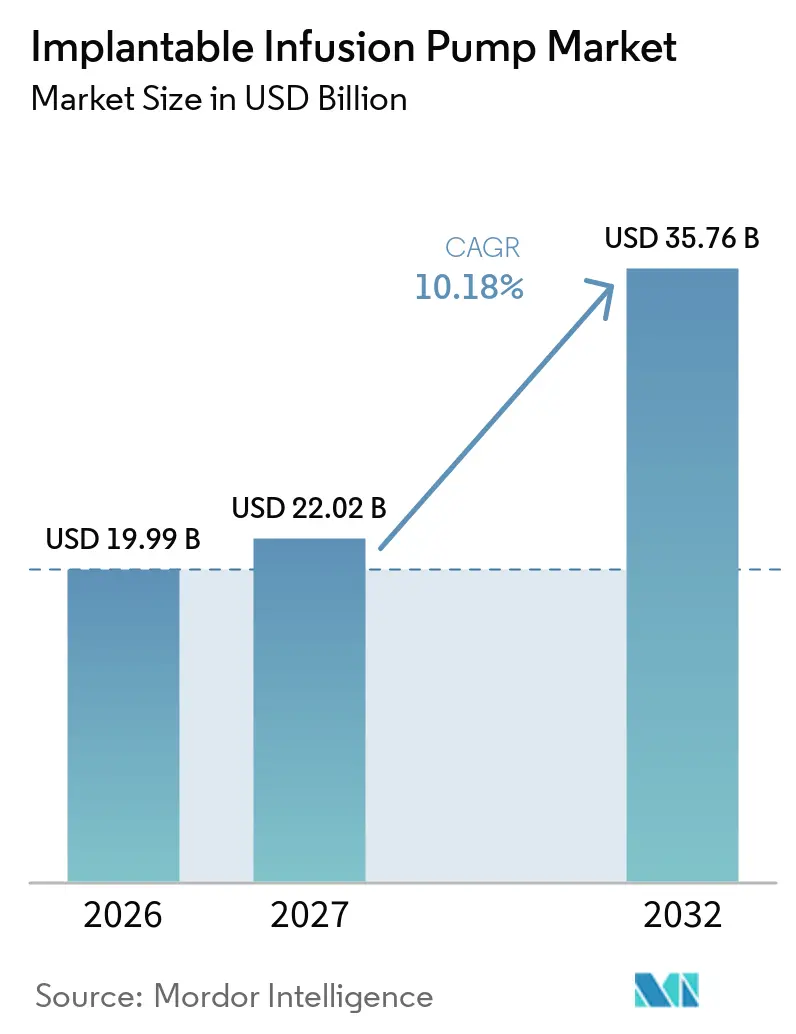
The Implantable Infusion Pump Market size was valued at USD 19.99 billion in 2026 and is estimated to grow from USD 22.02 billion in 2027 to reach USD 35.76 billion by 2032, at a CAGR of 10.18% during the forecast period (2027-2032).
Growth reflects wider use of intrathecal and hepatic-artery delivery for conditions that do not respond well to systemic treatment. Chronic pain, spasticity, cancer, and neurological disorders are supporting demand for controlled long-term therapy. Better programmability and remote monitoring are also changing how providers manage treatment after implantation. Companies are adapting their products and follow-up models as procedures move toward ambulatory settings. This requires them to consider implantation efficiency, refill access, programming support, and the different economics of outpatient care. The effect is not limited to the procedure location because it changes the support that clinicians and patients need after discharge. The implantable infusion pump market also faces cost, specialist-capacity, and safety constraints that favor experienced providers and established platforms.
Key Report Takeaways
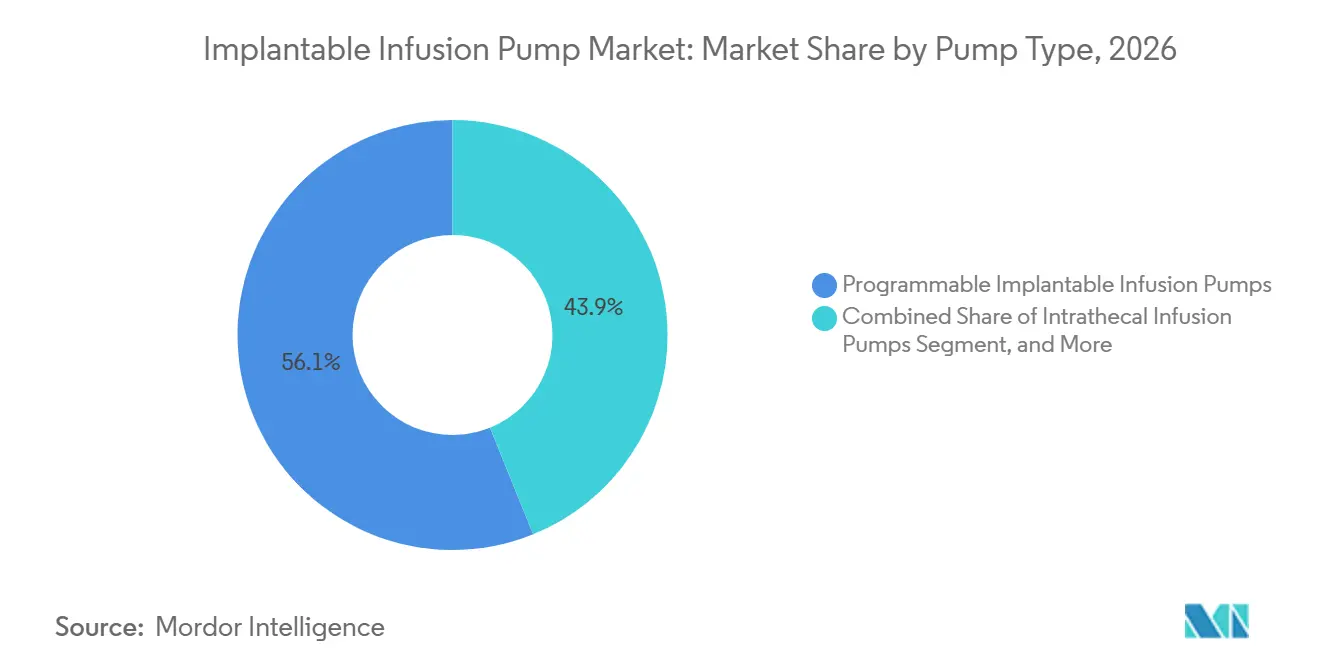
- By pump type, programmable pumps held 56.13% of the implantable infusion pump market share in 2026, while intrathecal pumps are forecast to grow at an 11.24% CAGR through 2032 in the implantable infusion pump market.
- By application, chronic pain management accounted for 48.57% of the implantable infusion pump market size in 2026, while oncology and chemotherapy are projected to expand at an 11.79% CAGR through 2032.
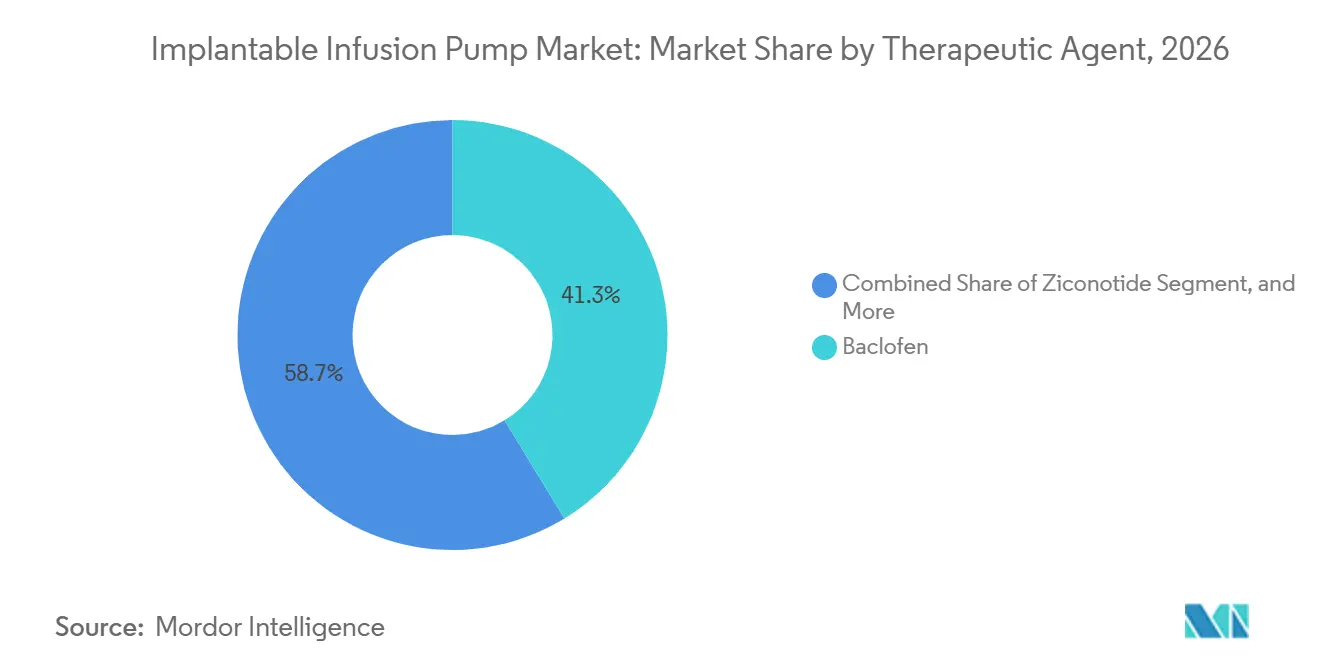
- By therapeutic agent, baclofen held 41.28% of revenue in 2026, while ziconotide is expected to record a 12.31% CAGR through 2032 in the implantable infusion pump market.
- By end user, hospitals accounted for 58.94% of revenue in 2026, while ambulatory surgical centers are forecast to grow at a 12.76% CAGR through 2032.
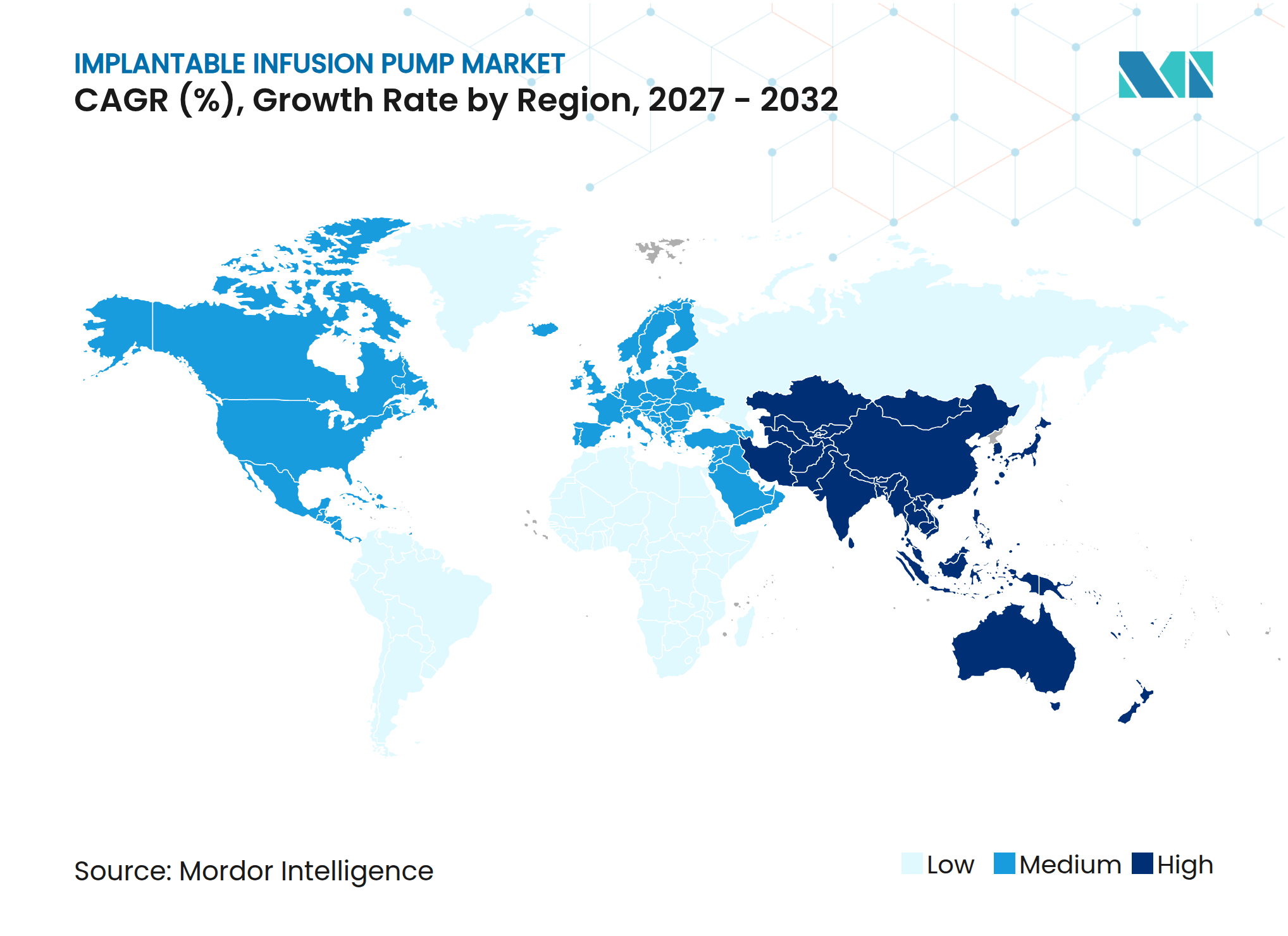
- By geography, North America commanded 38.46% of the implantable infusion pump market in 2026; Asia-Pacific is forecast to register a 13.58% CAGR through 2032.
Note: Market numbers in this report are based on Mordor Intelligence's proprietary estimation framework, which combines nine months of actuals with Q4 projections for base year 2026.
Market Trends and Insights
Drivers Impact Analysis of Implantable Infusion Pump Market*
| Driver | (~) % Impact on CAGR Forecast | Geographic Relevance | Impact Timeline |
|---|---|---|---|
| Chronic Pain, Spasticity, Cancer, and Neurological Disorders | +3.5% | Global | Long term (≥ 4 years) |
| Targeted, Continuous, and Programmable Drug Delivery | +2.2% | North America and Europe | Medium term (2-4 years) |
| Hospital-to-Home and Ambulatory Care Shift | +1.8% | North America, core Asia-Pacific, and Europe | Medium term (2-4 years) |
| Smart Pumps, Wireless Telemetry, and Remote Monitoring | +1.3% | North America and Europe | Short term (≤ 2 years) |
| Hepatic-Artery Infusion in Liver Oncology | +0.8% | North America and Europe | Medium term (2-4 years) |
| BioMEMS and Miniaturized Micro-Dosing Platforms | +0.5% | North America and core Asia-Pacific | Long term (≥ 4 years) |
| Source: Mordor Intelligence | |||
Rising Chronic Disease Burden and Targeted Drug Delivery
Chronic pain, spasticity, cancer, and neurological disorders provide a stable demand base for the implantable infusion pump market. A 2026 study reported 52.4 new chronic pain cases per 1,000 people each year in the United States.[1] Medtronic’s registry of 10,793 targeted drug delivery patients through October 2024 showed that 76.5% received implants for pain management and 21.2% for spasticity.[2] Patients who live longer after spinal cord injury or multiple sclerosis can remain eligible for treatment for a longer period. Pain medicine and neurosurgery programs are giving intrathecal baclofen a more established role for refractory spasticity. Intrathecal systems also provide analgesia at drug concentrations 100 to 300 times lower than equivalent oral doses, which can reduce systemic adverse events.[3]
Ambulatory Care and Post-Implant Management
The shift from hospital procedures toward ambulatory care is changing the operating model of the implantable infusion pump market. Lower reimbursement in ambulatory surgical centers can reduce pricing power for device manufacturers as procedure volume moves to that setting. The same shift can widen access by allowing more patients to receive treatment outside academic referral centers. Simplified refill kits, lean monitoring workflows, and compact programming tools can make ambulatory care more practical. Specialty clinics remain important because they perform routine refills and support programming after implantation. These conditions create greater value for companies that can support follow-up services as well as the device itself. The implantable infusion pump market is therefore moving toward care models that combine implantation, refilling, monitoring, and responsive clinical support. Providers can weigh these operating factors alongside the technical features of a pump when selecting a platform for ambulatory use.
Smart Pumps, Wireless Monitoring, and Miniaturized Platforms
Connected devices are creating a new technical baseline for the implantable infusion pump market. Medtronic introduced SynchroMed III in late 2023 with post-implant firmware upgrades and stronger cybersecurity protections. A 2025 study validated a soft wireless peristaltic micropump for on-demand neural drug delivery without mechanical valves. A 2026 study also reported a Bluetooth-enabled nanofluidic electrochemical pump that delivered 1 to 10 µg/h at 4.62 mW. These developments point toward smaller systems that could reduce the frequency of refills. Connected platforms can also support recurring service revenue where providers use remote monitoring and software-enabled follow-up. For the implantable infusion pump market, firmware upgradeability can help suppliers improve existing systems without requiring a new procedure for every technical change. Cybersecurity protections also become a practical part of device management when treatment information is transmitted or programming is supported through connected tools.
Hepatic-Artery Infusion and Oncology Expansion
Hepatic-artery infusion is widening the role of implantable pumps in oncology care. The PUMP-2 phase II trial reported 80% one-year overall survival for hepatic-artery floxuridine with systemic gemcitabine-cisplatin in unresectable intrahepatic cholangiocarcinoma. The trial compared this outcome with a 47% historical control rate. The PUMP-IT randomized trial is recruiting patients with initially unresectable colorectal liver metastases. Boston Scientific’s integration of Intera Oncology places the Intera 3000 within a larger interventional oncology sales organization. The implantable infusion pump market could therefore gain from broader clinician training and wider availability of hepatic-artery infusion therapy. The commercial effect depends on whether hospitals can add the relevant procedural expertise, cancer-care coordination, and long-term patient monitoring. This remains a specialized treatment pathway, but a larger commercial organization can make the platform available to more oncologists and referral centers. The resulting expansion would be based on clinical adoption and provider capability rather than a simple increase in device distribution.
Restraints Impact Analysis of Implantable Infusion Pump Market*
| Restraint | (~) % Impact on CAGR Forecast | Geographic Relevance | Impact Timeline |
|---|---|---|---|
| Device, Implantation, and Follow-Up Costs | -1.8% | Core Asia-Pacific, South America, and Middle East and Africa | Long term (≥ 4 years) |
| Infection, Catheter, Granuloma, and Mechanical-Failure Risk | -1.2% | Global | Medium term (2-4 years) |
| Limited Specialist Implantation and Refill Capacity | -0.9% | Middle East and Africa, South America, and rest of Asia-Pacific | Long term (≥ 4 years) |
| Battery Replacement, Cybersecurity, and Software Updates | -0.6% | North America and Europe | Short term (≤ 2 years) |
| Source: Mordor Intelligence | |||
Cost, Reimbursement, and Specialist Capacity
High acquisition, implantation, and follow-up costs limit adoption in several regions of the implantable infusion pump market. Reimbursement remains fragmented in parts of Asia-Pacific and Latin America, where patients may rely on private hospitals or out-of-pocket payment. The Prometra system requires refilling at intervals of no more than 90 days, which can create 4 clinical visits each year. Battery replacement procedures can add to the treatment cost for non-rechargeable pumps. Payers are increasingly assessing refill visits, replacement procedures, and complication management alongside the original device price. This assessment is particularly relevant for the implantable infusion pump market in regions where reimbursement coverage is fragmented and public systems continue to favor oral therapies. Manufacturers with complete economic evidence can better explain the financial effect of a device across the full treatment period. Limited numbers of implanting and refill specialists further concentrate access in established centers.
Clinical Safety and Device Management Requirements
Infection, catheter complications, granuloma, and mechanical failure can restrict the wider use of implantable pumps. A 2024 study reported a 10.4% surgical-site infection rate at centers without prophylactic protocols and a 3.4% rate when absorbable antibacterial envelopes were used. The same study stated that a hospital-acquired surgical-site infection added USD 28,219 in system costs. Catheter-tip granuloma can limit dose escalation and may require early explantation. Battery changes, cybersecurity safeguards, and software updates add further management requirements for connected systems. These risks favor high-volume academic and specialty centers with formal infection-control and follow-up practices. The concentration of procedures in these facilities can make it difficult for smaller distributors to build access in new geographies. It also reinforces the importance of established referral chains for manufacturers and clinicians.
*Our forecasts treat driver/restraint impacts as directional, not additive. The impact forecasts reflect baseline growth, mix effects, and variable interactions.
Implantable Infusion Pump Market Segment Analysis
By Pump Type:
Programmable Platforms Hold the Largest Revenue PositionProgrammable implantable pumps represented 56.13% of revenue in 2026, giving them the largest position in the implantable infusion pump market. Clinical evidence, physician training, and approvals across pain, spasticity, and selected oncology uses support this position. The installed base of SynchroMed and Prometra devices also produces replacement-cycle revenue, since physicians and patients need a replacement option when an implanted device reaches the end of its service life. This installed base also requires recurring clinical attention for refills, programming, and long-term treatment management. This creates more predictable demand than categories that depend mainly on new implantation volumes, even when procedure growth varies across hospital systems and referral networks. Constant-rate pumps serve the hepatic-artery infusion oncology niche. Their body-heat-powered mechanics remove battery dependence during multiyear hepatic tumor management, a relevant benefit for patients who require sustained regional chemotherapy over a long treatment period.
The Intera 3000 is the only FDA-approved constant-flow implantable pump for hepatic-artery infusion therapy in the United States. Boston Scientific can use its interventional oncology sales coverage to expand the platform beyond academic cancer centers. Implantable insulin pumps remain limited because external closed-loop insulin delivery systems avoid surgery. The FDA Premarket Approval pathway and ISO 13485 certification create compliance requirements for new competitors. These requirements involve evidence, quality management, and regulatory work that existing PMA holders have already absorbed over time. As a result, a new pump platform must address more than product performance before it can compete within established clinical settings. Intrathecal pumps are the fastest-growing pump type, with the implantable infusion pump market size for this segment forecast to grow at an 11.24% CAGR from 2027 to 2032. Ziconotide use, broader baclofen indications, and reduced systemic opioid needs support this growth.

By Application:
Chronic Pain Has the Largest Revenue BaseChronic pain management held 48.57% of application revenue in 2026, the largest implantable infusion pump market share across applications. The size of the patient population supports this position, because many patients continue to need treatment after oral and systemic analgesics have not delivered adequate symptom control. Pain medicine programs use intrathecal therapy as an escalation option for patients who do not respond to systemic analgesics, which keeps chronic pain at the center of referral and treatment pathways. Spasticity management is the second-largest application. Medtronic’s registry showed that spasticity accounted for 21.2% of targeted drug delivery implantations through October 2024.
Prospective research cited in the draft showed that intrathecal baclofen reduced spasticity scores by 40.2% and improved motor function by 9.6% in cerebral palsy. Diabetes management remains a smaller use because external pumps and continuous glucose-monitoring systems avoid implantation risk and offer a mature alternative for patients who need ongoing insulin delivery. Oncology and chemotherapy are forecast to grow at an 11.79% CAGR through 2032. Results from PUMP-2 support regional chemotherapy for unresectable intrahepatic cholangiocarcinoma. The ongoing PUMP-IT trial could add evidence for hepatic-artery infusion in colorectal liver metastases. If its overall-survival endpoint is met, the study could strengthen the clinical rationale for treatment in a first-line setting. The evidence base will remain important because oncology providers require data before expanding a specialized regional chemotherapy program. This evidence could increase referral activity in surgical oncology centers.
By Therapeutic Agent:
Baclofen Leads While Ziconotide Grows FasterBaclofen commanded 41.28% of therapeutic-agent revenue in 2026. Its leading role reflects FDA approval for severe spasticity from spinal and cerebral causes, along with its use in patients whose clinical needs cannot be met adequately through oral therapy. Intrathecal baclofen is important when oral therapy does not provide comparable results at intrathecal doses. Morphine and other intrathecal opioids form the next-largest therapeutic group, particularly in the treatment pathways for refractory cancer pain and chronic nonmalignant pain. These agents treat refractory cancer pain and chronic nonmalignant pain. However, health systems are seeking to reduce systemic opioid equivalents as drug stewardship requirements expand.
Floxuridine has a narrow but important role in hepatic-artery infusion treatment for colorectal liver metastases and intrahepatic cholangiocarcinoma. Boston Scientific’s distribution of Intera 3000 can support wider use as clinical evidence matures. Ziconotide is the fastest-growing therapeutic agent, with the implantable infusion pump market size for this therapy projected to grow at a 12.31% CAGR from 2027 to 2032. It is the only FDA-approved non-opioid and non-peptide intrathecal analgesic for severe chronic pain. The July 2026 PRIALT package insert listed SynchroMed III as an approved delivery platform. Bupivacaine and clonidine mainly support combination intrathecal regimens and follow procedural volume. Their contribution is tied to the use of combination treatment protocols rather than an independent expansion in patient demand. This leaves the broader adoption of intrathecal therapy as the main driver of their use.
By End User:
Hospitals Lead While Ambulatory Centers ExpandHospitals held 58.94% of revenue in 2026, reflecting the surgical and clinical infrastructure needed for pump implantation. Neurosurgical and surgical oncology teams, fluoroscopy access, and postoperative monitoring remain important. Academic medical centers and high-volume pain programs carry a disproportionate share of procedures. Memorial Sloan Kettering, MD Anderson, Mayo Clinic, and comparable European centers support referral-driven care models. Device companies benefit when specialist sales teams and clinical education programs serve these centers. Specialty clinics manage refills and remote programming after implantation. Their activity grows with the installed base, rather than only with the number of new implantation procedures. This makes outpatient follow-up capacity a continuing requirement as use expands across hospitals and ambulatory centers.
Ambulatory surgical centers are forecast to grow at a 12.76% CAGR from 2027 to 2032. This segment benefits from the broader move toward outpatient care. Lower reimbursement than hospital outpatient settings can constrain revenue per procedure. However, the volume opportunity makes the channel important for manufacturers in the implantable infusion pump industry. Simplified implantation kits, compact programming handsets, and efficient refill workflows can improve the fit for ambulatory centers. Companies built around hospital operating rooms may need to adapt their commercial and clinical support models. For the implantable infusion pump market, outpatient growth expands the possible patient-access funnel but can also require manufacturers to earn less from each procedure. The balance between volume growth and reimbursement pressure makes service design an important commercial consideration for manufacturers and provider partners.
Geography Analysis
North America Implantable Infusion Pump Market
North America held 38.46% of global revenue in 2026, the largest regional implantable infusion pump market share. The United States supports adoption through reimbursement for approved intrathecal therapy in pain and spasticity care. The region also has a substantial chronic-pain population and a developed training pipeline in pain medicine. The Boston Scientific and Intera Oncology transaction can expand hepatic-artery infusion beyond a small group of specialized cancer centers. Canada is widening access to intrathecal therapies beyond major urban areas, which can extend treatment availability outside the largest referral centers. This development remains linked to provincial payer decisions and the availability of clinicians who can manage implantation, refilling, and ongoing programming. Mexico’s private hospital sector is expanding hepatic-artery infusion capacity at a more limited pace. The opportunity remains centered on providers that can support oncology procedures and specialist follow-up rather than on broad-based adoption across the health system.
Europe Implantable Infusion Pump Market
Europe is the second-largest regional block for the implantable infusion pump market. Germany and the United Kingdom support programmable pump volumes through their national health systems. France and Italy have established neurology-related implantation programs. EU Medical Device Regulation post-market clinical follow-up requirements raise compliance costs for manufacturers. The requirements also increase the evidence standard used in hospital procurement, since providers must consider post-market clinical follow-up information when comparing established and newer platforms. The implantable infusion pump market, therefore, remains more accessible to suppliers that can provide mature registry evidence and post-market documentation. This process can increase compliance costs, but it can also reduce the appeal of platforms that do not yet have comparable clinical records. This favors platforms with multi-year registry data and can limit access for less-documented entrants.
APAC, South America and MEA Implantable Infusion Pump Market
Asia-Pacific is forecast to grow at a 13.58% CAGR from 2027 to 2032, making it the fastest-growing region. China’s aging population supports demand for chronic pain and spasticity management, while faster registration activity can improve the practical availability of medical devices for providers. China and India also have growing needs related to colorectal and hepatobiliary cancers. Japan’s clinical-evidence requirements can slow entry, but its older population supports a sizable treated base. South Korea and Australia form premium subsegments where hospitals show a preference for next-generation programmable systems and related clinical support. South Korea and Australia have a demand for next-generation programmable systems. India’s tertiary oncology infrastructure is expanding and can support hepatic-artery infusion adoption. In South America, private hospital networks in São Paulo, Rio de Janeiro, and Buenos Aires account for most implantation volumes. In the Middle East and Africa, demand remains concentrated in Saudi Arabia, the UAE, Qatar, and South Africa because specialist capacity and affordability continue to constrain broader use. Brazil and Argentina lead South American volume through private hospitals, while the Middle East and Africa demand is concentrated in Saudi Arabia, the UAE, Qatar, and South Africa. Across these regions, the availability of trained implanting physicians remains as important as disease prevalence. The implantable infusion pump market cannot expand broadly where patients lack access to specialists who can implant, refill, and monitor the system. Clinical education by device suppliers can therefore shape adoption in the same way as reimbursement reform and hospital investment.
Competitive Landscape
The implantable infusion pump market is moderately consolidated globally. The implantable infusion pump market is shaped by established programmable-device platforms, a specialized oncology pump category, and a smaller set of companies with related drug-device capabilities. This structure gives leading suppliers a durable role, while leaving focused opportunities in newer wireless and miniaturized designs. The competitive outcome will depend on whether those designs can meet the clinical, regulatory, and operational standards already expected by implanting centers. Companies must also show that a new technical feature improves care without adding an avoidable burden for clinicians. Medtronic plc holds the leading position in programmable intrathecal delivery through SynchroMed. Its position draws on more than 30 years of approvals, its 10,793-patient registry, and clinical education for implanting physicians, which together support physician confidence in the SynchroMed platform. These assets support referral patterns and physician familiarity, while the company’s established installed base supports ongoing needs for replacements, refills, and programming support. Established regulatory experience also gives incumbents an advantage in a class III device category.
Boston Scientific’s acquisition of Intera Oncology changed the competition in hepatic-artery infusion. Intera 3000 is the only FDA-approved constant-flow hepatic-artery infusion pump in the United States. Boston Scientific can apply its interventional oncology sales coverage to widen access to the therapy. Flowonix shifted to Miratech Medical as its sole U.S. distributor in May 2025 to strengthen coverage for the Prometra system. Baxter International, B. Braun, Becton Dickinson, and Fresenius Kabi have more limited implantable portfolios and are more relevant through complementary drug-device capabilities.
Wireless, rechargeable, and miniaturized platforms are a competitive opening for the implantable infusion pump market. Biogen’s September 2025 agreement to acquire Alcyone Therapeutics for USD 85 million upfront linked an intrathecal drug pipeline with device access technology. ThecaFlex DRx is designed to reduce repeat lumbar punctures for patients receiving intrathecal antisense oligonucleotides. Research on wireless micropumps also supports interest in closed-loop systems and smaller devices. Smaller competitors and academic BioMEMS spin-offs face high capital and regulatory requirements, which reinforces the advantage of established PMA holders that have already built quality systems, evidence packages, and physician relationships.
Implantable Infusion Pump Industry Leaders
-
Abbott Laboratories
-
B. Braun Melsungen AG
-
Baxter International Inc.
-
Becton, Dickinson and Company
-
Boston Scientific Corporation
- *Disclaimer: Major Players sorted in no particular order
Implantable Infusion Pump Market Companies Covered in this Report
- Abbott Laboratories
- Avanos Medical
- B. Braun
- Baxter
- Beckton Dickinson
- Boston Scientific
- DURECT Corporation
- Flowonix Medical Inc.
- Fresenius
- ICU Medical
- Infusyn Therapeutics
- Intera Oncology Inc.
- Johnson & Johnson
- Medtronic
- MicroPort
- Nevro
- Smiths Group
- Teleflex
- Terumo
- Tricumed Medizintechnik
Recent Industry Developments in Implantable Infusion Pump Market
- July 2026: Medtronic plc completed its USD 650 million acquisition of SPR Therapeutics, adding the SPRINT Peripheral Nerve Stimulation System to its pain-management portfolio. The deal expands Medtronic's chronic pain continuum from permanent intrathecal drug delivery to short-term, minimally invasive percutaneous therapies, broadening its addressable patient population and enabling earlier-in-care-pathway clinical interventions.
- June 2025: InfuSystem Therapeutics received FDA approval for a revised post-approval study protocol related to its Prometra Programmable Infusion Pump System, an implantable programmable drug delivery device used for chronic pain and spasticity management. The update reflects ongoing regulatory and clinical evaluation of implantable infusion pump technologies.
- February 2025: The U.S. FDA approved ONAPGO (apomorphine hydrochloride infusion) for adults with advanced Parkinson's disease experiencing motor fluctuations. The therapy is administered via a continuous infusion pump, providing sustained dopaminergic treatment throughout the day and offering a non-surgical alternative to certain advanced Parkinson's therapies.
Global Implantable Infusion Pump Market Report Scope
As per the scope of the report, implantable infusion pumps are medical devices surgically implanted inside the body to deliver precise and continuous doses of medications directly to a targeted area, such as the bloodstream, spinal fluid, or a specific organ. These pumps are commonly used for long-term management of chronic pain, cancer pain, spasticity, and other conditions requiring controlled drug delivery. By providing targeted therapy, implantable infusion pumps can improve treatment effectiveness, reduce systemic side effects, and enhance patient quality of life.
The implantable infusion pumps market is segmented by pump type, application, therapeutic agent, end user, and geography. By pump type, the market is segmented into programmable implantable infusion pumps, constant-rate implantable infusion pumps, intrathecal infusion pumps, hepatic-artery infusion pumps, implantable insulin pumps, and other implantable infusion pumps. By application, the market is segmented into chronic pain management, spasticity management, oncology and chemotherapy, diabetes management, and other chronic conditions. By therapeutic agent, the market is segmented into morphine, baclofen, ziconotide, bupivacaine, clonidine, floxuridine, and other therapeutic agents. By end user, the market is segmented into hospitals, ambulatory surgical centers, specialty clinics, and others. The geography segment is further divided into North America, Europe, Asia-Pacific, the Middle East and Africa, and South America. The report also covers the estimated market sizes and trends for 17 countries across major regions globally. The report offers the market size and forecasts in value (USD) for the above segments.
Segmentation Overview
| Programmable Implantable Infusion Pumps |
| Constant-Rate Implantable Infusion Pumps |
| Intrathecal Infusion Pumps |
| Hepatic-Artery Infusion Pumps |
| Implantable Insulin Pumps |
| Others |
| Chronic Pain Management |
| Spasticity Management |
| Oncology and Chemotherapy |
| Diabetes Management |
| Others |
| Morphine |
| Baclofen |
| Ziconotide |
| Bupivacaine |
| Clonidine |
| Floxuridine |
| Others |
| Hospitals |
| Ambulatory Surgical Centers |
| Specialty Clinics |
| Others |
| North America | United States |
| Canada | |
| Mexico | |
| Europe | Germany |
| United Kingdom | |
| France | |
| Italy | |
| Spain | |
| Rest of Europe | |
| Asia-Pacific | China |
| India | |
| Japan | |
| Australia | |
| South Korea | |
| Rest of Asia-Pacific | |
| Middle East and Africa | GCC |
| South Africa | |
| Rest of Middle East and Africa | |
| South America | Brazil |
| Argentina | |
| Rest of South America |
| By Pump Type | Programmable Implantable Infusion Pumps | |
| Constant-Rate Implantable Infusion Pumps | ||
| Intrathecal Infusion Pumps | ||
| Hepatic-Artery Infusion Pumps | ||
| Implantable Insulin Pumps | ||
| Others | ||
| By Application | Chronic Pain Management | |
| Spasticity Management | ||
| Oncology and Chemotherapy | ||
| Diabetes Management | ||
| Others | ||
| By Therapeutic Agent | Morphine | |
| Baclofen | ||
| Ziconotide | ||
| Bupivacaine | ||
| Clonidine | ||
| Floxuridine | ||
| Others | ||
| By End User | Hospitals | |
| Ambulatory Surgical Centers | ||
| Specialty Clinics | ||
| Others | ||
| By Geography | North America | United States |
| Canada | ||
| Mexico | ||
| Europe | Germany | |
| United Kingdom | ||
| France | ||
| Italy | ||
| Spain | ||
| Rest of Europe | ||
| Asia-Pacific | China | |
| India | ||
| Japan | ||
| Australia | ||
| South Korea | ||
| Rest of Asia-Pacific | ||
| Middle East and Africa | GCC | |
| South Africa | ||
| Rest of Middle East and Africa | ||
| South America | Brazil | |
| Argentina | ||
| Rest of South America | ||
Key Questions Answered in the Report
What is driving demand for implantable infusion pumps?
Chronic pain, spasticity, cancer care, and neurological disorders are increasing demand for long-term targeted drug delivery.
Which pump type has the largest revenue position?
Programmable pumps held 56.13% of revenue in 2026, supported by clinical evidence and an established installed base.
Which application is expanding fastest?
Oncology and chemotherapy are forecast to grow at an 11.79% CAGR through 2032, supported by hepatic-artery infusion research.
Why are ambulatory surgical centers important for implantable pumps?
Ambulatory surgical centers are forecast to grow at a 12.76% CAGR through 2032 and require simplified implantation and follow-up workflows.
What are the main risks associated with implantable infusion systems?
Infection, catheter complications, granuloma, mechanical failure, battery replacement, and cybersecurity requirements can limit wider adoption.
Which region is growing fastest for implantable infusion pumps?
Asia-Pacific is forecast to grow at a 13.58% CAGR from 2027 to 2032, supported by aging populations and growing oncology care capacity.
What is the 2027 value of the implantable infusion pump market?
The implantable infusion pump market size is USD 22.02 billion in 2027 and is forecast to reach USD 35.76 billion by 2032 at a 10.18% CAGR.