
Home Dialysis Systems Market Size and Share
Market Overview
| Study Period | 2021 - 2032 |
|---|---|
| Market Size (2027) | USD 31.92 Billion |
| Market Size (2032) | USD 52.20 Billion |
| Growth Rate (2027 - 2032) | 10.34 % |
| Fastest Growing Market | Asia-Pacific |
| Largest Market | North America |
| Market Concentration | Medium |
Major Players *Disclaimer: Major Players sorted in no particular order Image © Mordor Intelligence. Reuse requires attribution under CC BY 4.0. | |
Home Dialysis Systems Market Analysis by Mordor Intelligence
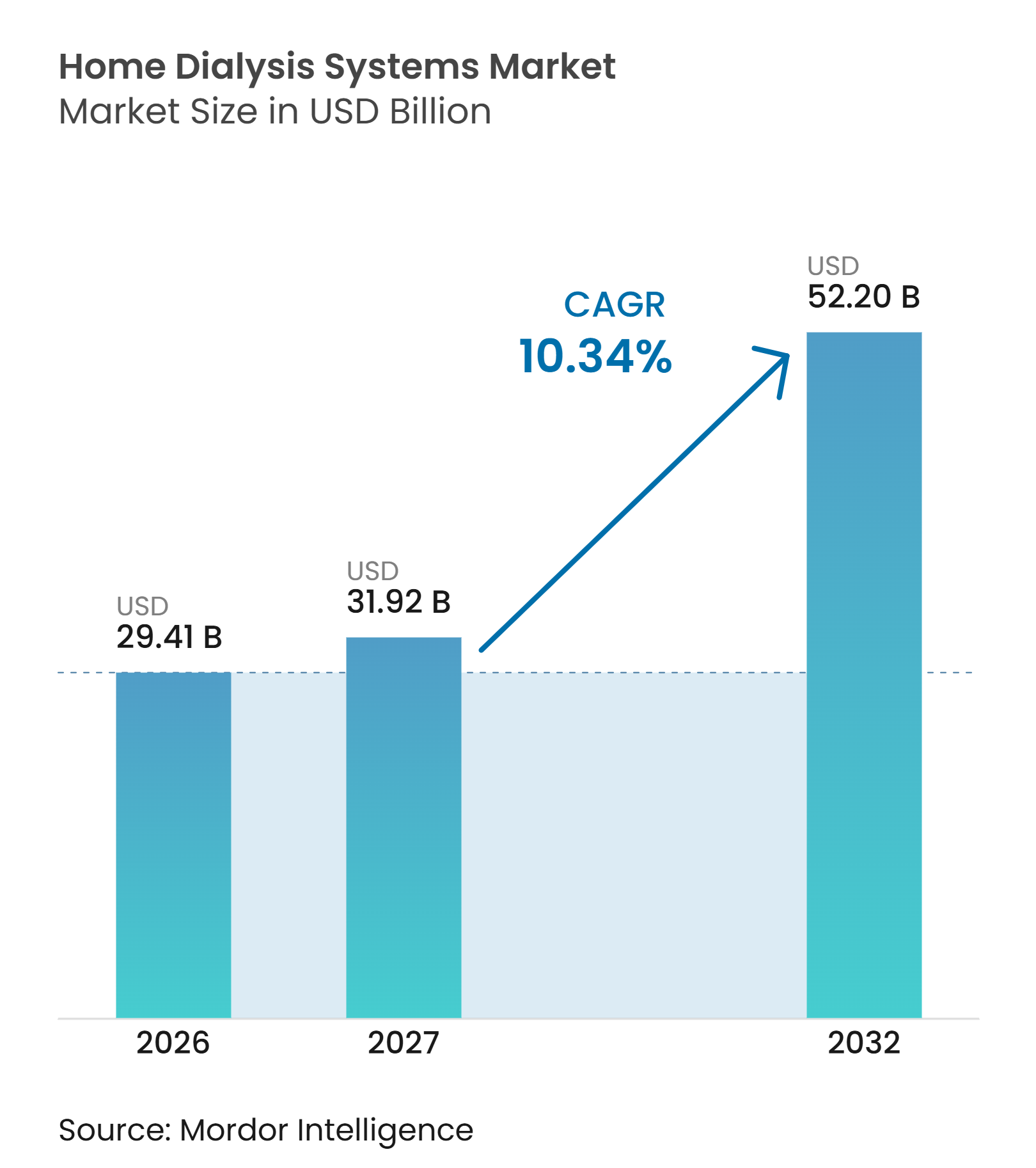
The Home Dialysis Systems Market size is expected to increase from USD 29.41 billion in 2026 to USD 31.92 billion in 2027 and reach USD 52.20 billion by 2032, growing at a CAGR of 10.34% over 2027-2032.
Rising diabetes and hypertension are increasing the number of people who require long-term kidney care. The Centers for Disease Control and Prevention stated that chronic kidney disease affected 37 million United States adults in 2026, and 360 patients began dialysis each day, which supports a steady need for treatment capacity. Payer policy is moving more care into the home because home treatment can lower care costs and suit selected patients. Medicare coverage for home dialysis in acute kidney injury took effect on January 1, 2025, widening the group that can use home systems. The home dialysis systems market also depends on training, caregiver capacity, reliable reimbursement, and connected clinical support, rather than patient demand alone. The home dialysis systems market has room to grow in countries where dialysis center capacity cannot meet rising patient needs. It also explains why reimbursement, education, and practical home support remain central to the home dialysis systems market.
Key Report Takeaways
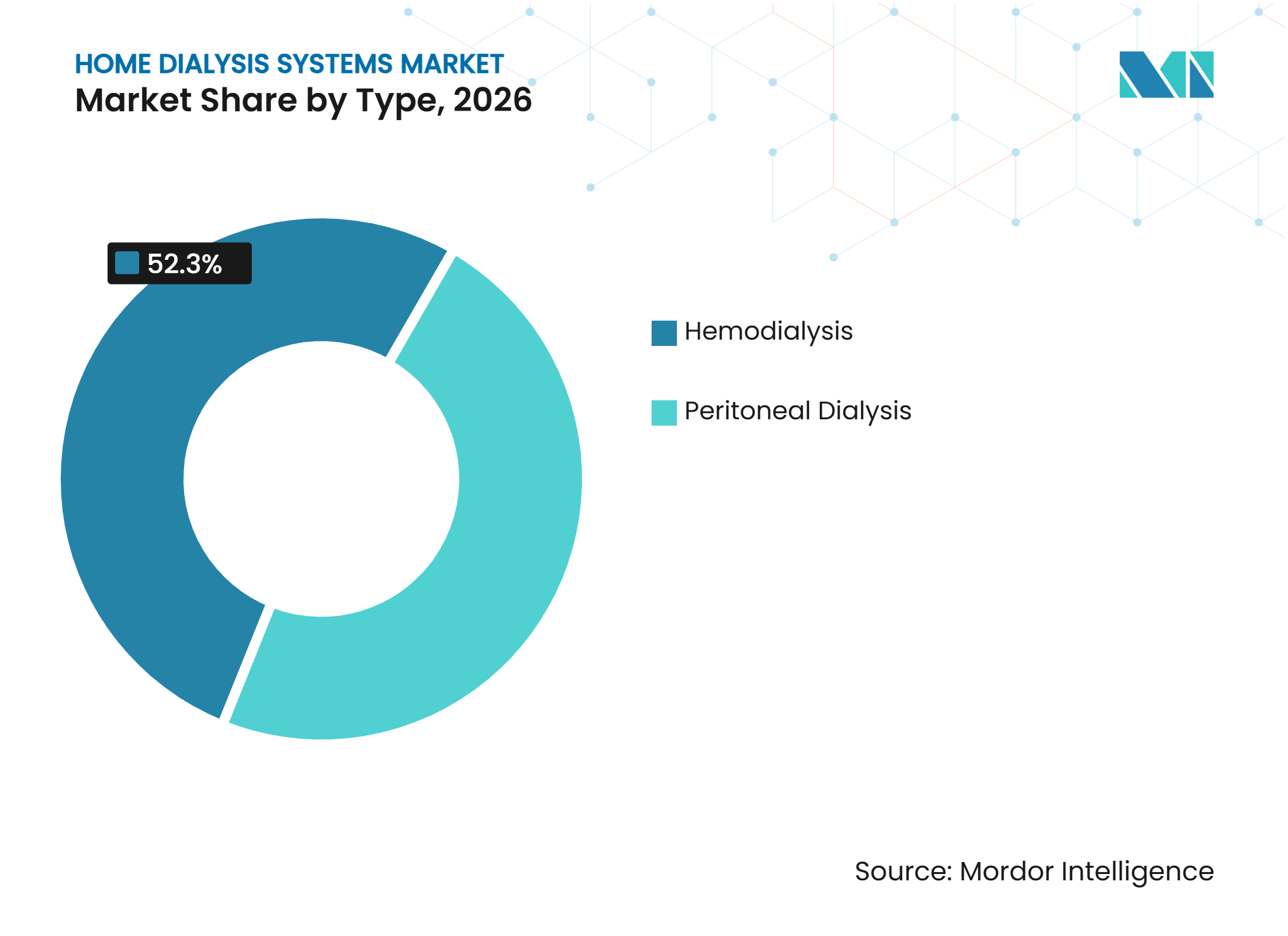
- By type, hemodialysis held 52.25% of the home dialysis systems market share in 2026, while peritoneal dialysis is projected to grow at an 11.12% CAGR through 2032.
- By product type, devices accounted for 43.63% of the home dialysis systems market share in 2026, while consumables are forecast to expand at a 10.85% CAGR through 2032.
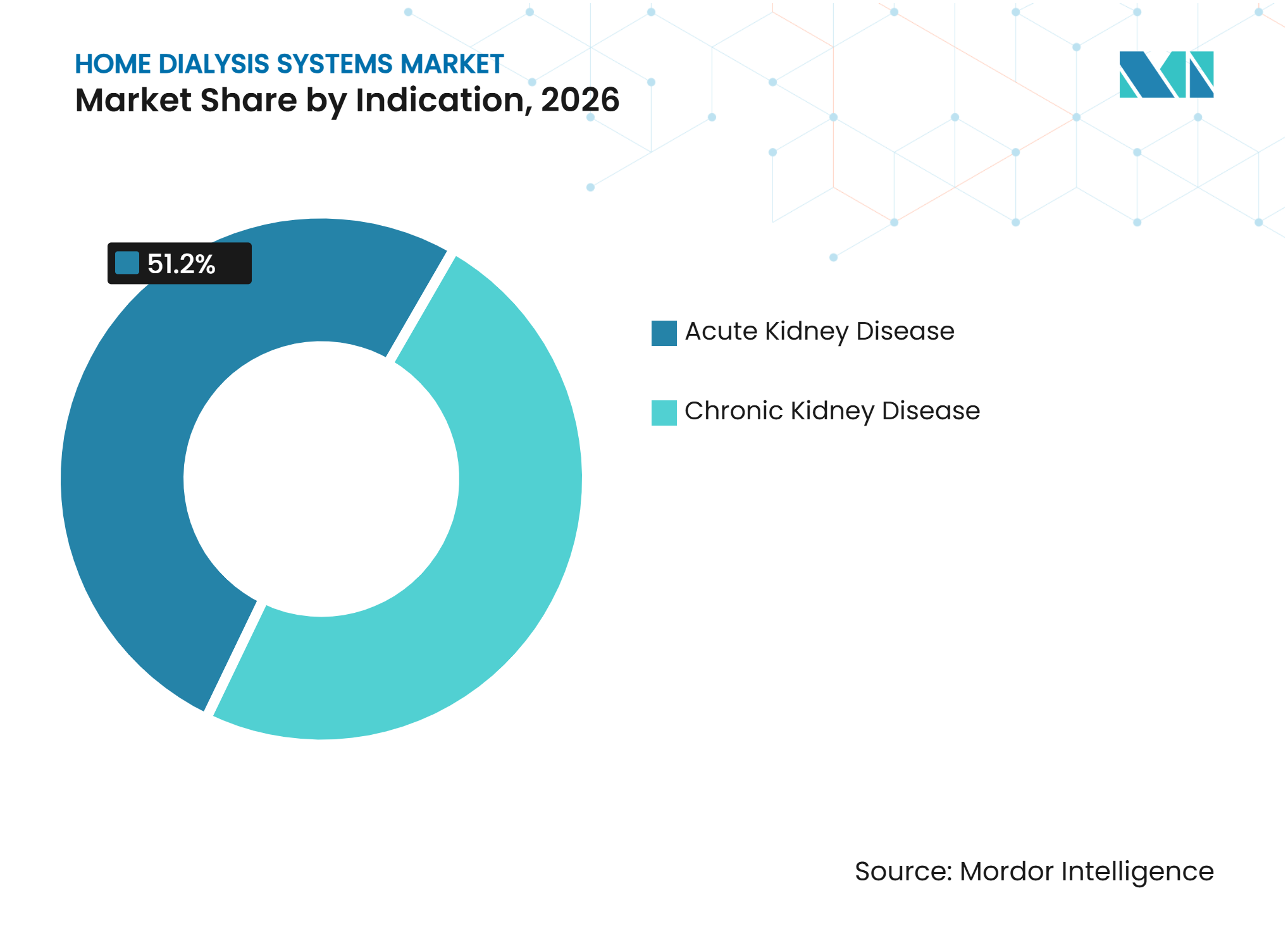
- By indication, acute kidney disease held 51.22% of the home dialysis systems market share in 2026, while chronic kidney disease is projected to grow at 11.83% CAGR through 2032.
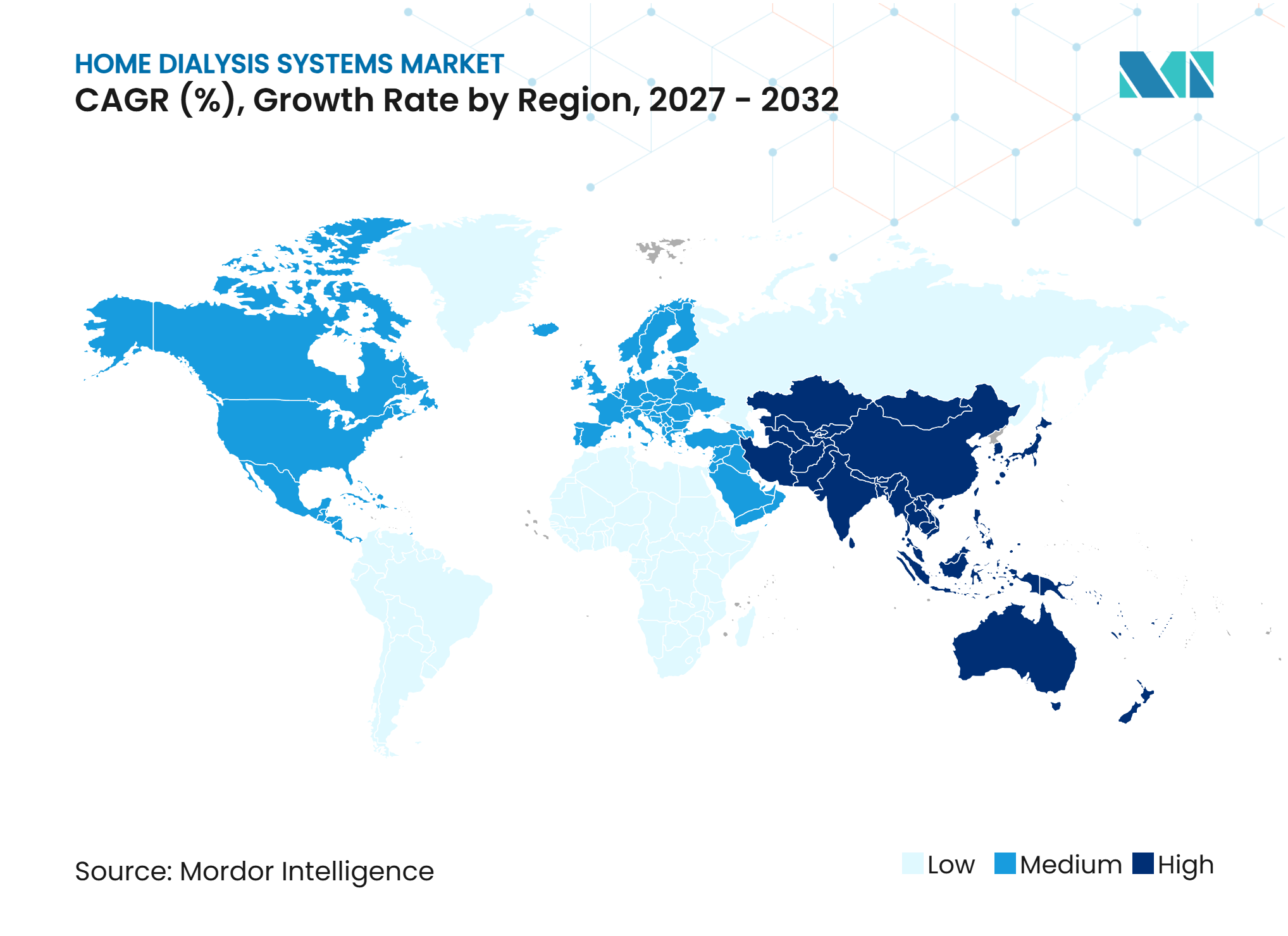
- By geography, North America accounted for 46.27% of the home dialysis systems market share in 2026, while Asia-Pacific is forecast to grow at a 12.36% CAGR through 2032.
Note: Market numbers in this report are based on Mordor Intelligence's proprietary estimation framework, which combines nine months of actuals with Q4 projections for base year 2026.
Market Trends and Insights
Drivers Impact Analysis of Home Dialysis Systems Market*
| Driver | (~) % Impact on CAGR Forecast | Geographic Relevance | Impact Timeline |
|---|---|---|---|
| Rising Chronic Kidney Disease and End-Stage Kidney Disease Burden | +3.2% | Global, the highest intensity in Asia-Pacific and North America | Long term (≥ 4 years) |
| Expansion of Value-Based and Home-Dialysis Reimbursement | +2.5% | North America and Europe, including Germany and France | Medium term (2-4 years) |
| Demand for Patient-Centric and Flexible Treatment | +2.0% | Global | Medium term (2-4 years) |
| Connected Devices and Remote Patient Management | +1.8% | North America, Europe, and the Asia-Pacific urban centers | Short term (≤ 2 years) |
| Point-of-Care Dialysate Generation and Lower Treatment Logistics | +1.1% | North America, Europe, and the emerging Asia-Pacific | Long term (≥ 4 years) |
| Source: Mordor Intelligence | |||
Rising Chronic Kidney Disease and End-Stage Kidney Disease Burden
The growing chronic kidney disease and end-stage kidney disease population remains a durable source of demand for home treatment. Chronic kidney disease affected 37 million United States adults in 2026, or 14% of the adult population, while 360 patients started dialysis each day.[1] Diabetes and hypertension continue to produce a large maintenance-dialysis population in several regions. South Asia and sub-Saharan Africa carry a growing burden, but home dialysis use remains limited, leaving manufacturers to address unmet access through simpler systems and consumable-led offerings. Japan recorded 36,404 new dialysis starts in 2024, with diabetic nephropathy responsible for 37.6% of cases and an average starting age of 71.7 years.[2] These patients need support home programs designed for older people with multiple health conditions.
Expansion of Value-Based and Home-Dialysis Reimbursement
Reimbursement policy supports the home dialysis systems market when it pays for treatment, training, and care outside a facility. The CMS 2025 ESRD Prospective Payment System set a base rate of USD 273.8 per treatment and extended Medicare home dialysis coverage to patients with acute kidney injury.[3] CMS raised the base rate to USD 281.7 per treatment for 2026 and projected USD 6 billion in payments to 7,600 ESRD facilities. Germany introduced a EUR 96.5 (USD 106) per treatment-week home dialysis startup incentive for the first 52 weeks of a home program in January 2025. Germany also raised dialysis cost flat rates in January 2026 under an annual adjustment mechanism. These measures address the initial provider costs that can delay home-program adoption.
Demand for Patient-Centric and Flexible Treatment
Patients increasingly value treatment schedules that preserve daily routines and reduce time spent at dialysis centers. Automated peritoneal dialysis can run overnight, which allows patients to keep daytime commitments. Short daily home hemodialysis and nocturnal home hemodialysis offer similar flexibility for patients who can safely manage treatment at home. A 2026 multicenter study found that patients using the Quanta Dialysis System achieved a mean standardized weekly Kt/V of at least 2.1, meeting the reported adequacy benchmark while supporting flexible scheduling. Home treatment can shift more responsibility to caregivers, so family capacity affects whether flexibility turns into sustained use. A 2025 study of remote support for peritoneal dialysis patients reported better self-management and caregiver competence with structured family participation.
Connected Devices and Remote Patient Management
Connected platforms allow clinicians to monitor treatment data and respond without requiring a facility visit. They can support remote reviews of treatment parameters, prescription management, and earlier identification of complications. Connected devices also increase the importance of cybersecurity in product design and clearance. Outset Medical stated that its next-generation Tablo system received FDA clearance in January 2026 and incorporated the FDA's 2025 cybersecurity guidance.
Restraints Impact Analysis of Home Dialysis Systems Market*
| Restraint | (~) % Impact on CAGR Forecast | Geographic Relevance | Impact Timeline |
|---|---|---|---|
| Patient and Caregiver Training Burden | -1.5% | Global, most acute in Asia-Pacific and sub-Saharan Africa | Short term (≤ 2 years) |
| Uneven Reimbursement and Provider Economics | -1.0% | Emerging Asia-Pacific, Middle East and Africa, South America, and select European markets | Medium term (2-4 years) |
| Home Infrastructure, Safety, and Adherence Constraints | -0.8% | Emerging Asia-Pacific, the Middle East and Africa, South America, and rural areas globally | Medium term (2-4 years) |
| Source: Mordor Intelligence | |||
Patient and Caregiver Training Burden
Training requirements remain a major limit on wider home treatment use. Home hemodialysis requires patients and caregivers to learn vascular access management, machine setup, sterile technique, and emergency procedures over 8-12 weeks. The time and effort required can increase early withdrawal risk before a patient completes the transition home. Japan's 2024 dialysis report documented very low home dialysis use despite advanced nephrology services. Home infrastructure, safety, and adherence needs can compound this training challenge, especially in rural and emerging settings. Digital tools may shorten parts of the training process, but the available evidence on results across populations remains limited.
Uneven Reimbursement and Provider Economics
Provider economics remain uneven when payment favors predictable in-center treatment over the upfront cost of home programs. A home program requires spending on patient training, equipment installation, and remote monitoring before it can deliver regular treatment. The ESRD Treatment Choices Model ended on December 31, 2025, removing a United States provider-level financial incentive for home dialysis transitions. In several Middle Eastern, South American, and Southeast Asian markets, patients can face substantial out-of-pocket costs for home equipment and consumables. Manufacturers also face ISO 13485 requirements and country-specific device approvals that extend the cost and timing of entry.
*Our forecasts treat driver/restraint impacts as directional, not additive. The impact forecasts reflect baseline growth, mix effects, and variable interactions.
Home Dialysis Systems Market Segment Analysis
By Type:
Peritoneal Dialysis Gains Preference Through Nighttime TherapyHemodialysis held 52.25% of the home dialysis systems market in 2026 and remained the leading treatment type. Short daily and nocturnal home hemodialysis are advancing faster than conventional home hemodialysis. Simpler setup and waterless device designs make more intensive schedules more practical at home. Product entry and scale-up remain subject to national requirements, including NMPA standards in China and CE marking under the European Union Medical Device Regulation.
Peritoneal dialysis is projected to expand at an 11.12% CAGR from 2027 to 2032, making it the fastest-growing treatment type in the home dialysis systems market. Automated peritoneal dialysis runs overnight and can reduce disruption to work and daytime activities. This schedule favors patients who value greater daily autonomy. Continuous ambulatory peritoneal dialysis requires manual exchanges up to 4 times each day. The manual process raises caregiver time requirements relative to automated therapy.


By Product Type:
Consumables Build Recurring Revenue as Device Use ExpandsDevices held 43.63% of the home dialysis systems market share in 2026. Home hemodialysis machines, dialyzers, and water treatment systems provide the essential equipment for home programs. Outset Medical, Mozarc Medical, Quanta Dialysis Technologies, and Fresenius Medical Care compete on system setup, water purification, connectivity, and cybersecurity. The installed base, therefore, remains important to the revenue model for providers and manufacturers.
Consumables are forecasted to grow at 10.85% CAGR through 2032. Bloodlines, concentrates, catheters, and other single-use items are used during each treatment session. Their demand rises directly as more patients use home devices. A 2025 study found that an internet hospital and community linkage model improved self-management and caregiver competence for maintenance peritoneal dialysis patients.
By Indication:
Chronic Kidney Disease Supports Long-Term Treatment DemandAcute kidney disease accounted for 51.22% of the home dialysis systems market share in 2026. Its position reflected the range of devices cleared for acute kidney injury and Medicare's January 2025 coverage expansion. CMS extended home dialysis coverage to acute kidney injury patients, which widened the commercial scope beyond end-stage kidney disease. The policy recognized that lower ultrafiltration treatment may support residual kidney function recovery. It also increased the relevance of systems that can serve different clinical needs.
Chronic kidney disease is forecasted to grow at 11.83% CAGR through 2032, the highest rate among indications. Diabetes and hypertension are increasing the number of patients who need long-duration maintenance dialysis. Diabetic nephropathy accounted for 37.6% of new dialysis starts in Japan in 2024. It also accounted for 37% of United States end-stage kidney disease patients. This pattern supports demand for devices, consumables, and connected care over extended treatment periods. Suppliers that combine treatment hardware with remote management and continuing supplies are aligned with this long-duration care model.

Geography Analysis
North America
North America held 46.27% of the home dialysis systems market in 2026, with the United States as the main revenue contributor. The Medicare ESRD base rate is USD 281.7 per treatment in 2026. CMS projected USD 6 billion in total payments to 7,600 ESRD facilities during 2026. The end of the ESRD Treatment Choices Model in 2025 removed a direct transition incentive for providers. Patient demand and product innovation now carry more of the responsibility for home program growth. Canada and Mexico remain smaller contributors, although provincial systems in Canada are considering peritoneal-dialysis-first policies where facility capacity is limited. Facility payment changes can improve the broader renal care environment without automatically producing a home transition. The near-term result depends on how providers, patients, and device makers respond to the changed incentive structure.
Europe
Europe is shaped by reimbursement reform in Germany and France. Germany introduced EUR 96.5 per treatment-week incentives for new home dialysis patients in January 2025. The program had EUR 15 million in added funding and addressed home dialysis penetration of 5-7%, against a stated target range of 20-30%. Germany increased dialysis cost flat rates again in January 2026. The United Kingdom, France, Italy, and Spain also contribute to demand. The United Kingdom's home-first commissioning approach and France's move toward individualized weekly flat-rate reimbursement support the region's direction. These policies recognize that reimbursement needs to cover more than a dialysis session. It also needs to recognize training, home setup, and ongoing clinical oversight. The home dialysis systems market has a clearer route to adoption when those elements are reflected in local payment design.
Asia-Pacific, the Middle East, Africa, and South America
Asia-Pacific is projected to expand at a 12.36% CAGR through 2032, the fastest regional rate in the home dialysis systems market. China had 1.3 million dialysis patients at the end of 2025, including 1.138 million on hemodialysis and 162,000 on peritoneal dialysis. India and South Korea add to regional demand, while Australia and New Zealand remain benchmarks for home-first policy. The Middle East, Africa, and South America remain early-stage regions, with potential linked to urban healthcare expansion and national renal care programs. China illustrates the scale of the regional opportunity because the large dialysis population still has limited peritoneal dialysis participation. Japan shows that advanced clinical infrastructure alone does not ensure high home treatment use. The home dialysis systems market, therefore, needs policy support, education, and products suited to local household conditions.
Competitive Landscape
Market Concentration
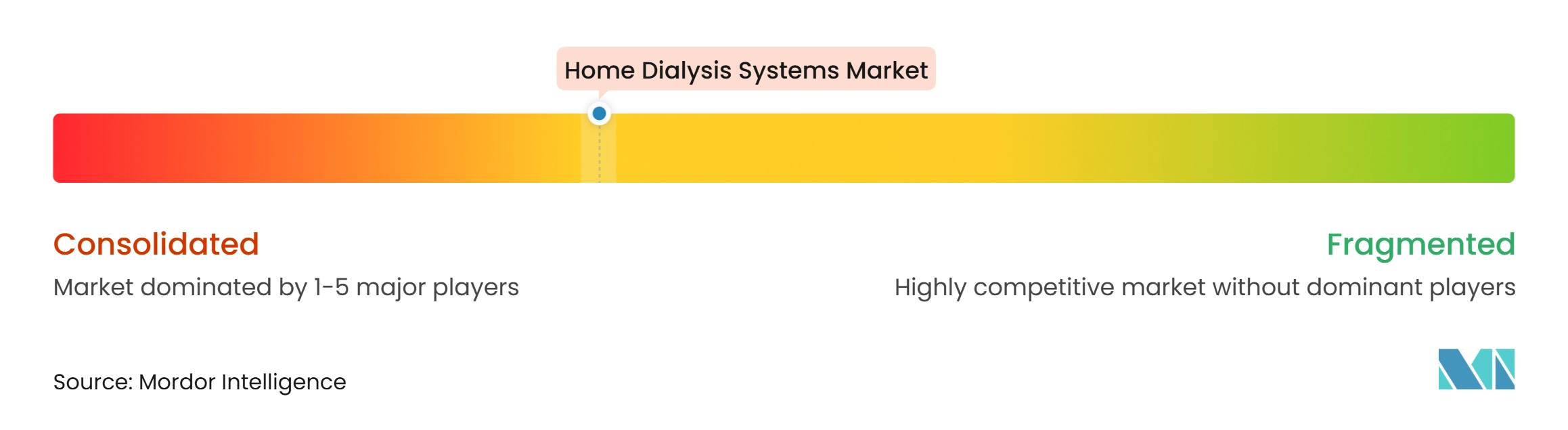
The home dialysis systems market is moderately concentrated. Fresenius Medical Care and Vantive hold strong positions in connected care ecosystems and peritoneal dialysis consumables. Fresenius Medical Care introduced Kinexus in June 2026 to bring remote peritoneal dialysis and home hemodialysis support into one platform. The company also reported that 10% of its U.S. dialysis machines had been replaced by the 5008X CAREsystem by mid-2026, with more than 600,000 treatments performed. The home dialysis systems market increasingly rewards suppliers that can support the patient and the clinical team throughout treatment. Digital tools can reduce the separation between peritoneal dialysis and home hemodialysis workflows. They can also make long-term service relationships more central to competition. This places value on the reliability of both equipment and clinical data support.
Outset Medical positions Tablo around integrated water purification and use in both facility and home settings. Mozarc Medical received conditional IDE approval for its Solv multi-pass hemodialysis system in March 2026. The sorbent-based design seeks to reduce water use and could change portability and cost expectations if it is clinically validated. Quanta's home hemodialysis platform provides another option for providers seeking clinical performance comparable to center-based treatment. Its 2026 multicenter study added clinical evidence for a high-flow home system. Competition in the home dialysis systems market is therefore extending beyond the device itself. Suppliers also compete with installation needs, water use, remote support, and the confidence that clinicians have in home-based performance.
White-space opportunities are centered on wearable dialysis, point-of-care dialysate generation, and services for underserved regions. Vivance completed a late-feasibility clinical trial for its wearable peritoneal dialysis device by August 2025 and had raised more than USD 20 million. ISO 13485 and FDA 510(k) requirements continue to set an entry threshold for devices and consumables. The focus on real-world clinical evidence is rising, as illustrated by Fresenius Medical Care's BEACON-US initiative announced in July 2026. Evidence generation may help suppliers show how connected systems perform across varied patient groups. The home dialysis systems market retains room for systems that reduce training, water, and logistics barriers. These areas remain relevant where existing home program infrastructure is limited.
Home Dialysis Systems Industry Leaders
-
Fresenius Medical Care AG & Co. KGaA
-
Vantive Health LLC
-
Nipro Corporation
-
B. Braun Melsungen AG
-
Outset Medical, Inc.
- *Disclaimer: Major Players sorted in no particular order
Home Dialysis Systems Market Companies Covered in this Report
- Abbvie
- Asahi Kasei
- AWAK Technologies Pte Ltd
- B. Braun
- DaVita
- Dialyze Direct
- Dialysis Clinic, Inc.
- Fresenius
- Innovative Renal Care
- Mozarc Medical
- Nikkiso Co., Ltd.
- Nipro
- Outset Medical, Inc.
- Physidia S.A.S.
- Quanta Dialysis Technologies Ltd.
- Rockwell Medical
- Satellite Healthcare, Inc.
- Terumo
- Toray Industries, Inc.
- Vantive Health LLC
Recent Industry Developments in Home Dialysis Systems Market
- August 2026: Fresenius Medical Care reported 23% operating income growth in Q2 2026, with approximately 10% of United States dialysis machines replaced by the 5008X CAREsystem and over 600,000 cumulative treatments performed; the company's BEACON-US initiative, announced July 29, 2026, will generate real-world evidence on high-volume hemodiafiltration across diverse United States patient populations, extending its connected-care clinical data advantage.
- June 2026: Fresenius Medical Care launched Kinexus worldwide at the European Renal Association Congress, a unified digital home dialysis platform combining peritoneal dialysis and home hemodialysis remote therapy monitoring, remote prescription management, and clinical decision support in a single modular interface.
- May 2026: Quanta Dialysis Technologies published a prospective, multicenter, open-label efficacy and safety study of the Quanta Dialysis System for home hemodialysis in Kidney Medicine, confirming a mean standardized weekly Kt/V of at least 2.1 in home settings.
Global Home Dialysis Systems Market Report Scope
According to the report’s scope, the home dialysis systems market refers to the industry providing dialysis equipment and solutions designed for use in patients’ homes, enabling treatment outside traditional clinical settings. It covers home hemodialysis and peritoneal dialysis systems, along with related consumables and support services.
The home dialysis systems market is segmented into type, product type, indication, and geography. By type, the market is segmented into hemodialysis and peritoneal dialysis. Hemodialysis is further segmented into conventional home hemodialysis, short daily home hemodialysis, and nocturnal home hemodialysis. Peritoneal dialysis is further segmented into continuous ambulatory peritoneal dialysis and automated peritoneal dialysis. By product type, the market is segmented into devices and consumables. The devices are further segmented into home hemodialysis machines, dialyzers, water treatment systems, and other device types. The consumables are further segmented into bloodlines, concentrates, catheters, and other consumables. By indication, the market is segmented into acute kidney disease and chronic kidney disease. By geography, the market is segmented into North America, Europe, Asia-Pacific, the Middle East and Africa, and South America. The report also covers the estimated market sizes and trends for 17 countries across major regions globally. The report offers values (USD) for all the above segments.
Segmentation Overview
| Hemodialysis | Conventional Home Hemodialysis |
| Short Daily Home Hemodialysis | |
| Nocturnal Home Hemodialysis | |
| Peritoneal Dialysis | Continuous Ambulatory Peritoneal Dialysis |
| Automated Peritoneal Dialysis |
| Devices | Home Hemodialysis Machines |
| Dialyzers | |
| Water Treatment Systems | |
| Other Device Types | |
| Consumables | Bloodlines |
| Concentrates | |
| Catheters | |
| Other Consumables |
| Acute Kidney Disease |
| Chronic Kidney Disease |
| North America | United States |
| Canada | |
| Mexico | |
| Europe | Germany |
| United Kingdom | |
| France | |
| Italy | |
| Spain | |
| Rest of Europe | |
| Asia-Pacific | China |
| Japan | |
| India | |
| Australia | |
| South Korea | |
| Rest of Asia-Pacific | |
| Middle East and Africa | GCC |
| South Africa | |
| Rest of Middle East and Africa | |
| South America | Brazil |
| Argentina | |
| Rest of South America |
| By Type | Hemodialysis | Conventional Home Hemodialysis |
| Short Daily Home Hemodialysis | ||
| Nocturnal Home Hemodialysis | ||
| Peritoneal Dialysis | Continuous Ambulatory Peritoneal Dialysis | |
| Automated Peritoneal Dialysis | ||
| By Product Type | Devices | Home Hemodialysis Machines |
| Dialyzers | ||
| Water Treatment Systems | ||
| Other Device Types | ||
| Consumables | Bloodlines | |
| Concentrates | ||
| Catheters | ||
| Other Consumables | ||
| By Indication | Acute Kidney Disease | |
| Chronic Kidney Disease | ||
| By Geography | North America | United States |
| Canada | ||
| Mexico | ||
| Europe | Germany | |
| United Kingdom | ||
| France | ||
| Italy | ||
| Spain | ||
| Rest of Europe | ||
| Asia-Pacific | China | |
| Japan | ||
| India | ||
| Australia | ||
| South Korea | ||
| Rest of Asia-Pacific | ||
| Middle East and Africa | GCC | |
| South Africa | ||
| Rest of Middle East and Africa | ||
| South America | Brazil | |
| Argentina | ||
| Rest of South America | ||
Key Questions Answered in the Report
What is the projected growth rate for home dialysis systems through 2032?
The home dialysis systems market is projected to grow from USD 29.41 billion in 2026 to USD 31.92 billion in 2027, and to reach USD 52.20 billion by 2032, at a 10.34% CAGR.
Which home dialysis treatment type is growing fastest?
Peritoneal dialysis is expected to be the fastest-growing treatment type, with a projected CAGR of 11.12% through 2032.
Which product category will grow most quickly through 2032?
Consumables are forecasted to grow at 10.85% CAGR as bloodlines, concentrates, catheters, and single-use sets are needed for each session.
Which region is expected to grow fastest through 2032?
Asia-Pacific is projected to grow at a 12.36% CAGR, supported by demand in China, India, Japan, and South Korea.