
Gynecology Surgical Instruments Market Size and Share
Market Overview
| Study Period | 2021 - 2032 |
|---|---|
| Market Size (2027) | USD 3.28 Billion |
| Market Size (2032) | USD 4.65 Billion |
| Growth Rate (2027 - 2032) | 7.22 % |
| Fastest Growing Market | Asia-Pacific |
| Largest Market | North America |
| Market Concentration | Medium |
Major Players *Disclaimer: Major Players sorted in no particular order Image © Mordor Intelligence. Reuse requires attribution under CC BY 4.0. | |
Gynecology Surgical Instruments Market Analysis by Mordor Intelligence
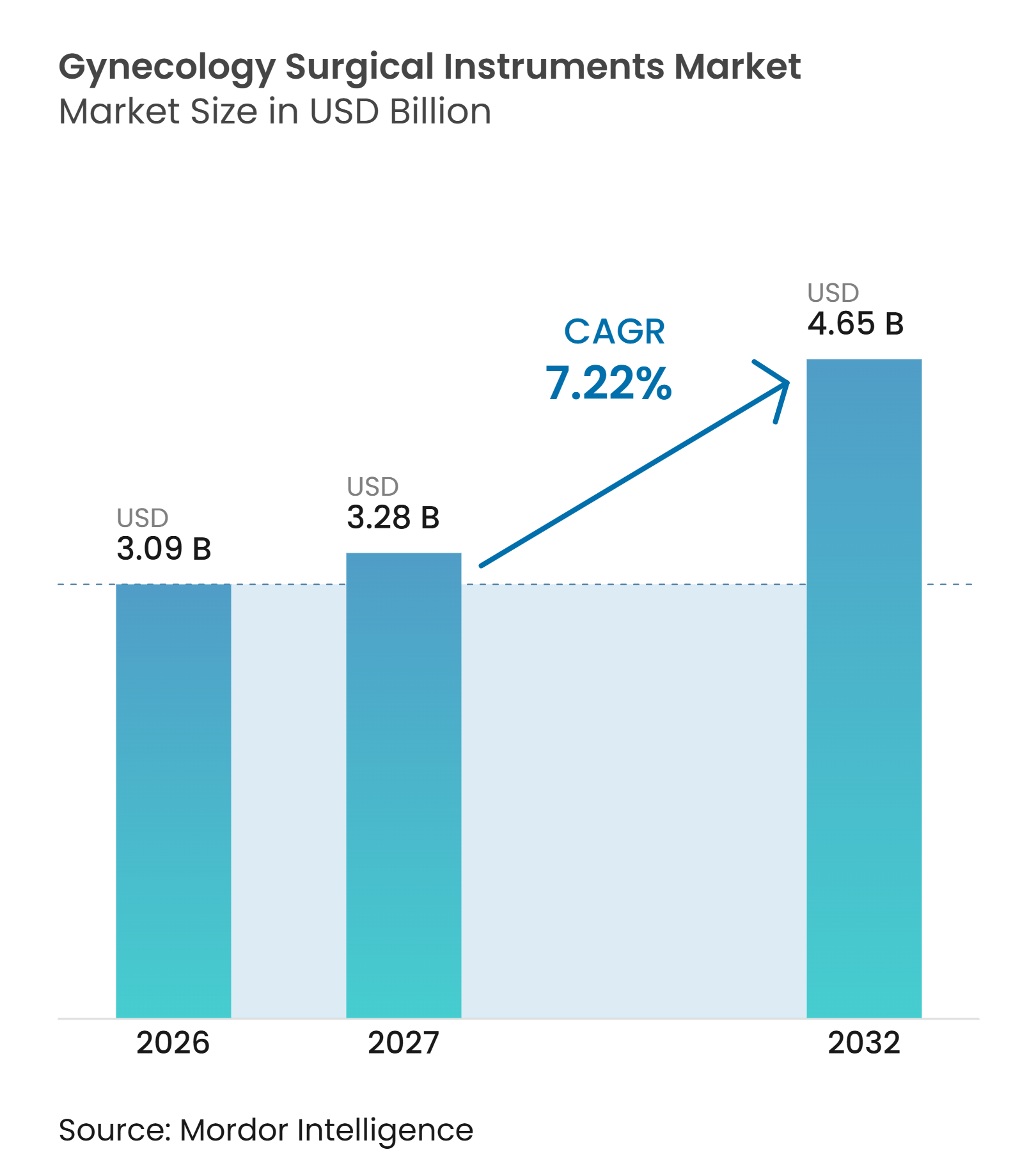
The Gynecology Surgical Instruments Market size is expected to increase from USD 3.09 billion in 2026 to USD 3.28 billion in 2027 and reach USD 4.65 billion by 2032, growing at a CAGR of 7.22% over 2027-2032.
Rising gynecological cancer incidence and the continuing burden of benign conditions are increasing the need for diagnostic and surgical care. The gynecology surgical instruments market is also changing as laparoscopic, robotic, and office-based procedures replace a portion of open and inpatient care. Providers are balancing reusable equipment against single-use products based on sterilization capacity, procedure time, and infection-control needs. Larger suppliers can extend their positions through broad portfolios and regulatory resources, while specialized suppliers can serve procedure-specific needs. The gynecology surgical instruments market has additional room for expansion, as women’s health screening, surgical training, and outpatient infrastructure are improving.
Key Report Takeaways
- By product type, forceps held 37.15% of the gynecology surgical instruments market share in 2026, while trocars and access instruments are forecast to grow at a 7.74% CAGR through 2032.
- By usability, reusable instruments held 51.24% of the gynecology surgical instruments market share in 2026, while disposable and single-use instruments are expected to grow at an 8.15% CAGR through 2032.
- By application, laparoscopy accounted for 38.21% of the gynecology surgical instruments market in 2026, while hysteroscopy is forecast to grow at a 9.22% CAGR through 2032.
- By end-user, hospitals accounted for 42.53% of the gynecology surgical instruments market in 2026, while gynecology and specialty clinics are expected to grow at an 8.63% CAGR through 2032.
- By geography, North America accounted for 47.33% of the gynecology surgical instruments market in 2026, while Asia-Pacific is projected to grow at a 10.35% CAGR through 2032.
Note: Market numbers in this report are based on Mordor Intelligence's proprietary estimation framework, which combines nine months of actuals with Q4 projections for base year 2026.
Market Trends and Insights
Drivers Impact Analysis of Gynecology Surgical Instruments Market*
| Driver | (~) % Impact on CAGR Forecast | Geographic Relevance | Impact Timeline |
|---|---|---|---|
| Rising Burden of Gynecological Disorders and Cancers | +1.5% | Global, with higher relevance in Sub-Saharan Africa and South Asia | Medium term (2-4 years) |
| Expansion of Minimally Invasive Gynecological Procedures | +1.8% | Global, with early gains in North America and Europe, and expansion into the Asia-Pacific | Short term (≤ 2 years) |
| Shift Toward Office-Based and Ambulatory Surgery | +1.0% | North America and Europe, with emerging traction in the Asia-Pacific | Medium term (2-4 years) |
| Women's Health Infrastructure and Screening Investment | +0.8% | Global, with a stronger effect in low- and middle-income countries | Long term (≥ 4 years) |
| Disposable and Single-Use Instrument Adoption | +1.1% | Global, with faster uptake in North America and Europe | Short term (≤ 2 years) |
| AI-Enabled Visualization and Precision Instrumentation | +0.9% | North America and Europe, with expansion into Asia-Pacific, the Middle East, and Africa | Medium term (2-4 years) |
| Source: Mordor Intelligence | |||
Rising Burden of Gynecological Disorders and Cancers
Gynecological disease burden continues to support demand across the gynecology surgical instruments market. Global data recorded 1,473,427 new gynecological cancer cases in 2022. These cases represented 15.3% of new cancer cases among women. Eastern Africa had an age-standardized incidence rate of 50.7 per 100,000 women, compared with a global rate of 30.3 per 100,000 women.[1] Endometriosis, uterine fibroids, polycystic ovary syndrome, and abnormal uterine bleeding also require recurring diagnostic or surgical intervention for many patients. Uterine cancer incidence increased by 0.7% each year from 1990 to 2021, and future incidence is expected to rise if present patterns continue.
Expansion of Minimally Invasive Gynecological Procedures
Minimally invasive procedures are changing the mix of instruments used in the gynecology surgical instruments market. Laparoscopic approaches can reduce intraoperative blood loss by 50% to 70% compared with open procedures.[2] They can also shorten recovery and hospital stays for suitable patients. Robotic systems use platform-compatible forceps, energy devices, and access products, which can create recurring demand for proprietary instruments. A 2026 study reported robot-assisted total hysterectomy with the Toumai system in Belgium, including 30 mL estimated blood loss and discharge on the following day.[3] Suppliers without compatible products may face pressure as high-volume centers increase robotic procedure capacity.
Shift Toward Office-Based and Ambulatory Surgery
Care is moving from hospital operating rooms toward ambulatory centers and office settings for appropriate gynecological procedures. This movement shifts purchasing decisions toward clinics, outpatient networks, and ambulatory surgery center operators. Diagnostic hysteroscopy can be performed outside a hospital setting for selected patients. Single-use and compact instruments can fit these workflows because they reduce dependence on reprocessing capacity. Robotic procedures are also entering outpatient settings, as reflected by a January 2026 announcement from Innovations Surgery Center in Maryland. The shift broadens the customer base for the gynecology surgical instruments market beyond inpatient hospitals.
Women's Health Infrastructure and Screening Investment
Investment in women’s health can expand access to surgical and diagnostic instruments over a longer period. The Gates Foundation announced a USD 2.5 billion commitment through 2030 for women’s health research and development in August 2025. The program includes gynecological and menstrual health diagnostics and therapeutics. The World Health Organization’s cervical cancer elimination initiative calls for 70% of women to be screened with a high-performance test by age 35 and again by age 45. This supports demand for colposcopes, biopsy forceps, and related diagnostic products. Kenya’s 2025/26 reproductive, maternal, newborn, child, and adolescent health investment case also directs resources toward women’s health services through 2030.
Restraints Impact Analysis of Gynecology Surgical Instruments Market*
| Restraint | (~) % Impact on CAGR Forecast | Geographic Relevance | Impact Timeline |
|---|---|---|---|
| High Capital, Reprocessing, and Procedure Costs | -1.5% | Global, with a stronger effect in lower-income settings and small ambulatory centers | Medium term (2-4 years) |
| Shortage of Trained Gynecological Surgical Personnel | -0.8% | Global, with greater severity in Sub-Saharan Africa, South Asia, and rural North America | Long term (≥ 4 years) |
| Divergent Regulatory and Reimbursement Requirements | -0.6% | Europe, the United States, and the Asia-Pacific | Medium term (2-4 years) |
| Instrument Waste and Sustainability Trade-Offs | -0.4% | Europe, with effects extending to North America and Australia | Long term (≥ 4 years) |
| Source: Mordor Intelligence | |||
High Capital, Reprocessing, and Procedure Costs
Cost remains a material constraint for buyers in the gynecology surgical instruments market. A 2026 review of 4,724 procedures across 9 studies found that reusable instruments saved USD 16 to USD 388 per case in general laparoscopic surgery. The same review reported that a disposable energy device priced at USD 630 generated USD 254 in total savings per hysterectomy case in a 46-patient trial. The savings resulted from shorter operating time, which changed the total procedure cost. Robotic surgical suites require substantial capital investment and can concentrate advanced equipment use in high-volume tertiary facilities. Procurement policies based on general surgery may not reflect the costs of specific gynecological procedures.
Shortage of Trained Gynecological Surgical Personnel
A shortage of trained clinicians limits the conversion of care needs into procedure volumes. The FIGO Cancer Report 2025 identified limited access to trained gynecological surgeons as a barrier to ovarian cancer surgical care in low- and middle-income countries. The shortage reduces instrument use even when the underlying disease burden is high. Laparoscopic and robotic skills are often concentrated in urban tertiary facilities. Community and rural hospitals can therefore have limited access to complex minimally invasive procedures. Training pathways linked to robotic platforms can expand clinical capacity, but workforce development takes several years.
*Our forecasts treat driver/restraint impacts as directional, not additive. The impact forecasts reflect baseline growth, mix effects, and variable interactions.
Gynecology Surgical Instruments Market Segment Analysis
By Product Type:
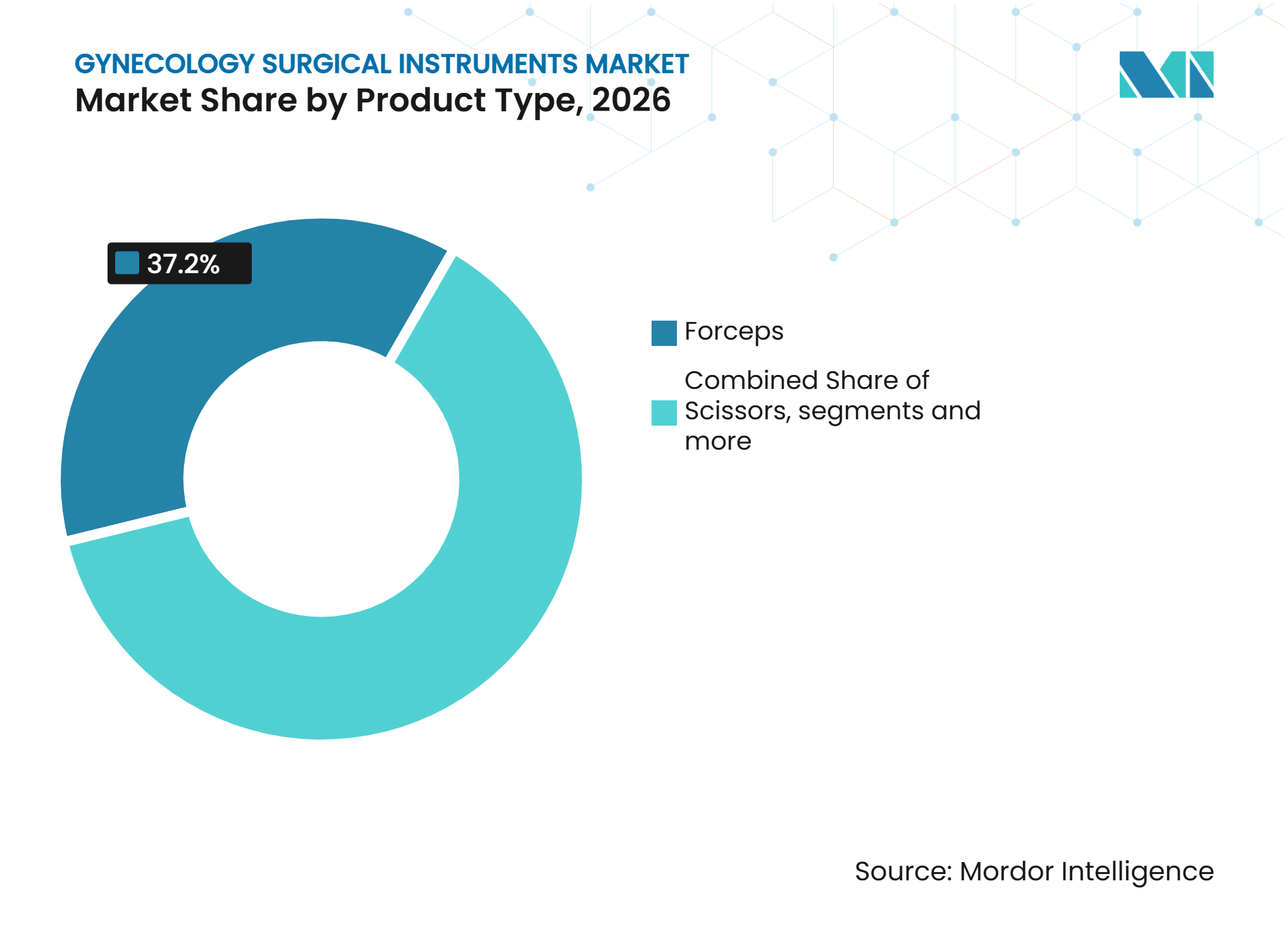
Forceps Lead Volume While Trocars Scale with Minimally Invasive UptakeForceps held 37.15% of the gynecology surgical instruments market share in 2026. Their position reflects use across laparoscopic, hysteroscopic, and open procedures. Biopsy, grasping, and tenaculum forceps each serve distinct clinical requirements. Trocars and access instruments are forecasted to grow at a 7.74% CAGR through 2032. Each laparoscopic or robotic procedure can require 2 to 4 trocar insertions. Higher procedure counts, therefore, increase demand for access products. Clinical support for minimally invasive hysterectomy strengthens this pattern.
Scissors and needle holders remain linked to surgeon technique and suturing preferences. Vaginal speculums are moving toward single-use plastic versions in ambulatory and clinic settings. This transition reflects infection-control requirements and simpler outpatient workflows. Dilators and curettes continue to support dilation and curettage procedures and cervical preparation. The product mix in the gynecology surgical instruments industry is increasingly shaped by compatibility with these installed platforms.



By Usability:
Reusable Instruments Anchor Share, but Disposables Reframe the Total-Cost CalculusReusable instruments accounted for 51.24% of revenue in 2026. Large hospitals can spread reprocessing costs over a high volume of procedures. The gynecology surgical instruments market size for reusable products remains supported by centralized sterilization departments. In a hysterectomy trial, a disposable energy device reduced total procedural cost despite its higher unit price. Buyers must therefore assess equipment economics at the procedure level.
Disposable and single-use products are projected to grow at an 8.15% CAGR through 2032. Infection-control requirements and ambulatory center workflows support this expansion. Clinics and fertility centers may lack the capacity to reprocess complex instruments. CooperSurgical acquired Obp Surgical and its ONETRAC single-use platform for USD 100 million in August 2024. Quality and sterilization requirements remain relevant for suppliers serving both product categories.
By Application:
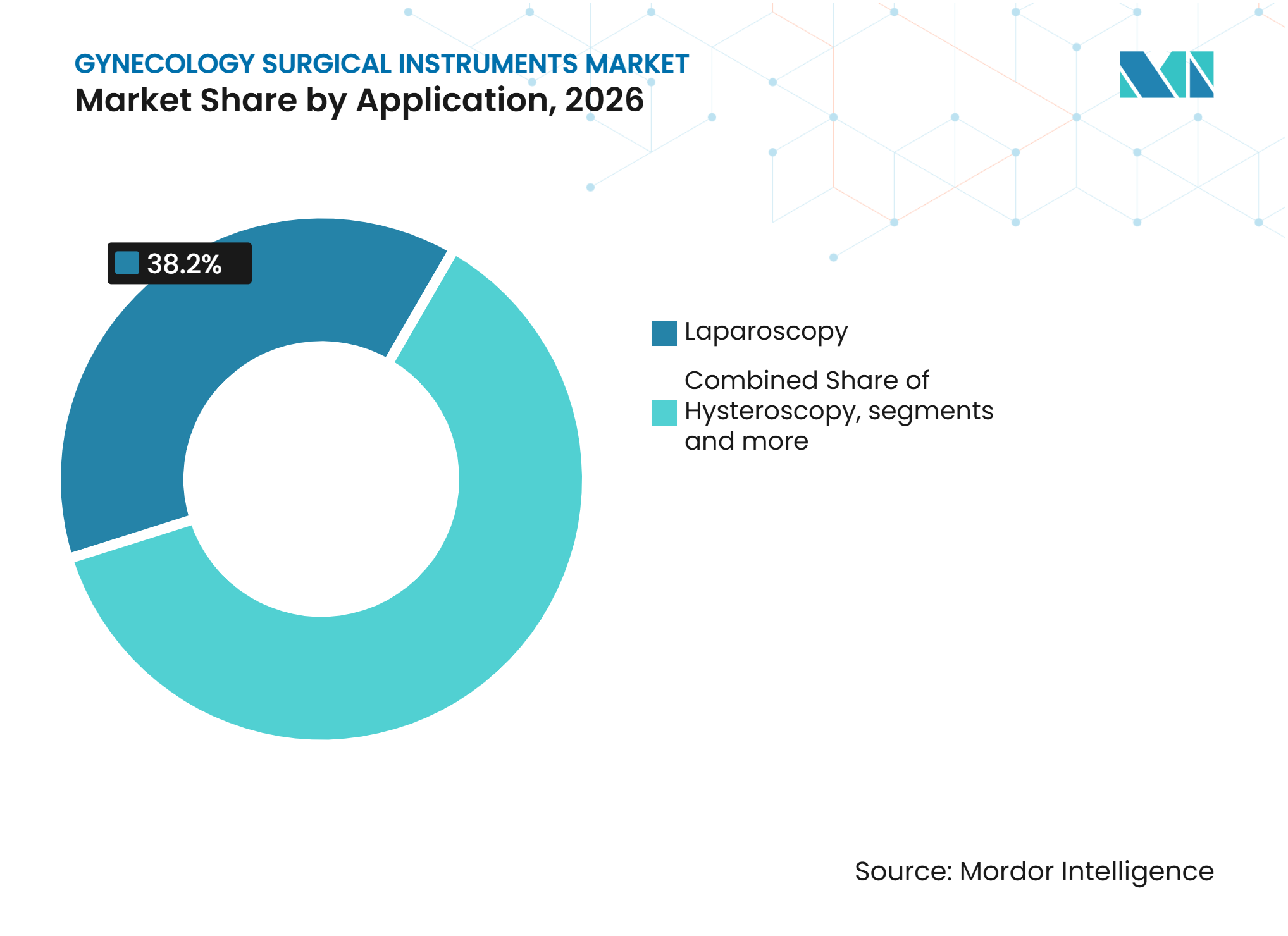
Laparoscopy Anchors Procedure Volume While Hysteroscopy Rewrites Site EconomicsLaparoscopy accounted for 38.21% of application revenue in 2026. It is used for hysterectomy, ovarian cystectomy, endometriosis excision, and tubal ligation. Clinical guidance supports laparoscopic approaches when they are feasible for the patient and procedure. This established procedural base supports stable instrument demand across the gynecology surgical instruments market. Hysteroscopy is forecasted to record the fastest application growth at a 9.22% CAGR through 2032. Single-use hysteroscopes can avoid the need for reprocessing equipment in clinics. Office-based diagnostics can also reduce dependence on hospital operating rooms.
Dilation and curettage remains used in incomplete miscarriage management and uterine polyp removal. Its relative contribution may decline where hysteroscopy manages conditions once addressed through dilation and curettage. Colposcopy and cervical biopsy instruments benefit from national screening programs. The gynecology surgical instruments market thus relies on both diagnostic access and procedural capability.

By End-User:
Hospitals Retain Scale Advantage as Specialty Clinics Lead Growth RateHospitals held 42.53% of end-user revenue in 2026. They manage high-acuity care, including gynecologic oncology surgery and complex robotic procedures. These cases often require more extensive instrument ecosystems and higher spending per procedure. Hospitals retain centralized sterile processing capabilities for reusable portfolios. Large facilities can also evaluate new robotic-compatible instruments through formal clinical and purchasing processes. This sustains demand for broad portfolios from established device suppliers.
Gynecology and specialty clinics are expected to grow at an 8.63% CAGR through 2032. These providers perform diagnostic hysteroscopy, colposcopy, cervical biopsy, and office-based endometrial ablation. Ambulatory surgery centers can offer lower facility costs for eligible laparoscopic and hysteroscopic procedures. Academic institutions remain important for robotic compatibility studies and early clinical evaluation. Their assessments can support wider adoption after products enter routine care. The gynecology surgical instruments industry must address different purchasing needs across these end-user settings.
Geography Analysis
North America
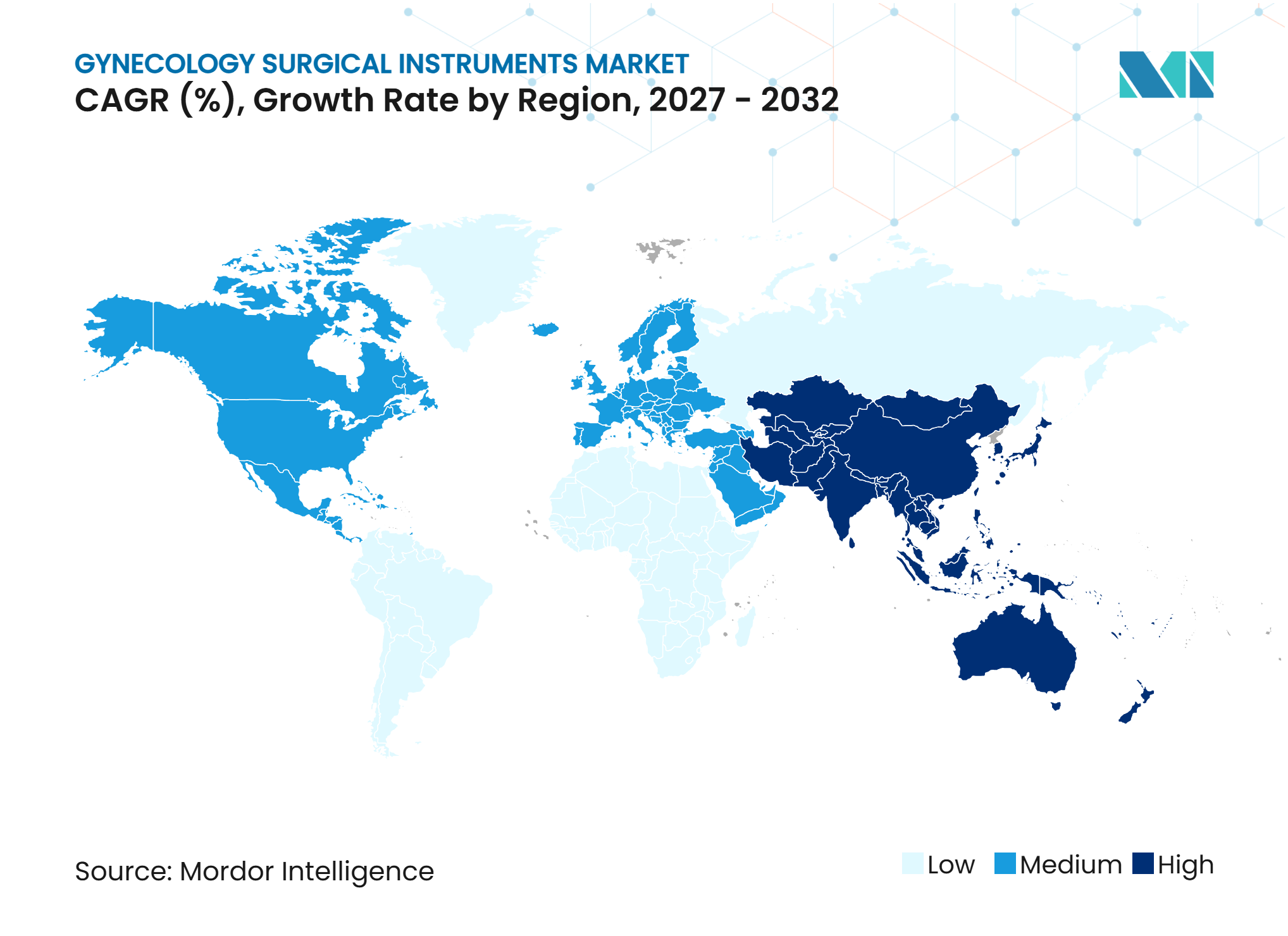
North America held 47.33% of the gynecology surgical instruments market share in 2026. High procedure volumes and concentrated group purchasing support regional demand. ACOG guidance favors minimally invasive gynecological surgery where clinically appropriate. The United States accounts for most regional revenue. Canada supports steady, cost-focused reusable instrument purchasing through its publicly funded health system. Mexico provides an incremental source of demand through private hospitals and medical tourism. Regulatory review pathways in the United States influence the pace of device launches.
Europe
Europe is the second-largest regional market. Germany and the United Kingdom represent the largest national demand concentrations in the region. University hospital networks in Germany are adopting bipolar vessel-sealing technology for laparoscopic hysterectomy. This can shorten procedures and reduce open-conversion risk. The EU Medical Device Regulation raises requirements for biocompatibility and sterilization validation. These requirements can raise maintenance costs for mid-tier instrument portfolios. France, Italy, and Spain are expanding ambulatory hysteroscopy as payers shift diagnostic care from hospital operating rooms. Eastern Europe offers further opportunities as health infrastructure is upgraded.
Asia-Pacific, the Middle East and Africa, and South America
Asia-Pacific is projected to expand at a 10.35% CAGR through 2032, the fastest regional rate in the gynecology surgical instruments market. China is expanding minimally invasive surgical training beyond tier-1 cities. India’s private hospital sector adds procedure capacity and access to gynecological care. Japan’s aging female population supports demand for uterine and ovarian cancer surgery. South Korea and Australia have advanced technology adoption patterns. The Middle East and Africa benefit from private hospital expansion in Gulf Cooperation Council countries. South America draws demand from Brazil and Argentina. These regions remain smaller contributors but offer longer-term procurement opportunities as women’s health infrastructure develops.
Competitive Landscape
Market Concentration
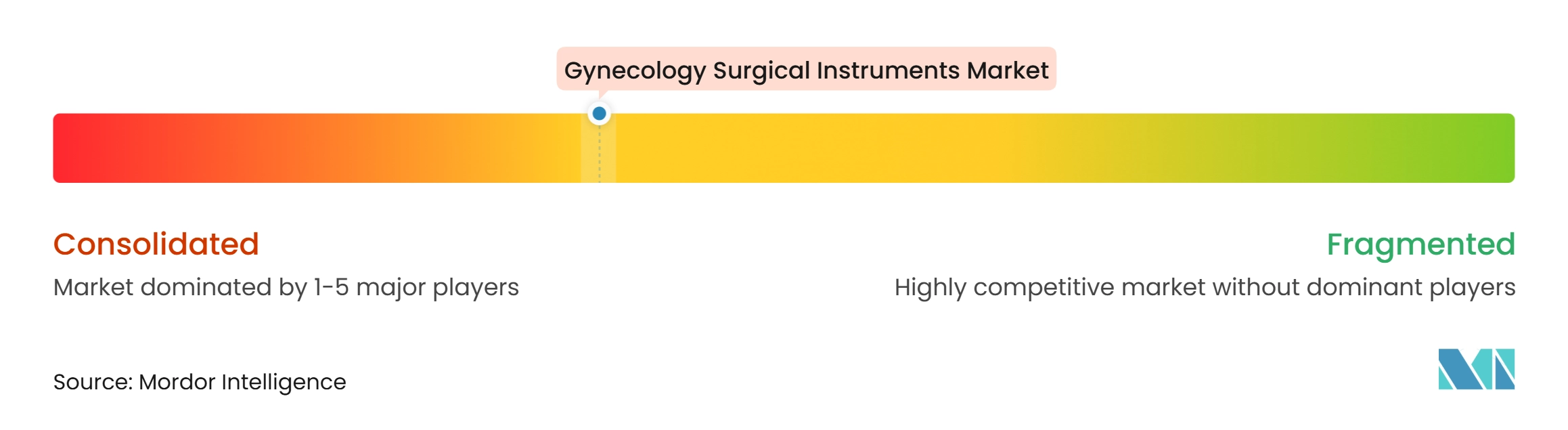
The gynecology surgical instruments market is moderately consolidated. Medtronic, Olympus, KARL STORZ, Johnson & Johnson, and B. Braun Melsungen compete through broad surgical instrument portfolios. CooperSurgical, Hologic, and LiNA Medical retain positions in procedure-specific categories and end-user niches. Broad portfolios can support contracts across multiple gynecological procedures. Specialized suppliers can compete through focused clinical use cases and accessible product offerings. Regulatory documentation and post-market surveillance capabilities favor better-resourced suppliers. The EU Medical Device Regulation can increase compliance requirements for reusable and single-use devices. This can make expansion harder for smaller manufacturers with limited regulatory resources.
Robotic platform expansion is increasing competition for compatible instruments. CMR Surgical submitted a 510(k) application for Versius Plus in benign gynecology in April 2026. The company reported that the Versius family had treated more than 45,000 patients globally at the time of filing. Medtronic also submitted filings to expand Hugo into gynecologic specialties in June 2026. These systems can increase demand for platform-specific access, grasping, and energy products. Suppliers with robotic-compatible products can gain from replacement cycles within installed systems.
Portfolio expansion remains an important strategic option. Hologic completed its acquisition of Gynesonics for USD 350 million in January 2025. The Sonata system added a transcervical fibroid treatment platform to Hologic’s portfolio. In July 2026, Medtronic announced Touch Surgery Aide and its FDA-cleared Instrument Exit Point application for Hugo procedures. The platform operates in more than 1,500 operating rooms worldwide. These moves show how acquisitions, robotics, and real-time surgical computing can strengthen competitive positions.
Gynecology Surgical Instruments Industry Leaders
-
CooperSurgical Inc.
-
Hologic, Inc.
-
KARL STORZ GmbH & Co. KG
-
Olympus Corporation
-
Johnson & Johnson
- *Disclaimer: Major Players sorted in no particular order
Gynecology Surgical Instruments Market Companies Covered in this Report
- Aesculap
- B. Braun
- Boston Scientific
- Conmed
- Cook Group
- The Cooper Companies
- Gynesonics, Inc.
- Hologic
- Johnson & Johnson
- Karl Storz
- LiNA Medical ApS
- MedGyn Products
- Medtronic
- Olympus
- Richard WOLF GmbH
- Sklar Surgical Instruments
- Smiths Group
- STERIS
- Stryker
- Tetra Surgical Industries
Recent Industry Developments in Gynecology Surgical Instruments Market
- June 2026: Medtronic submitted 510(k) filings to the United States FDA to expand the Hugo RAS system into gynecologic surgical specialties. The filing follows completed enrollment in the Embrace Gynecology IDE clinical study, 70 patients across 5 United States hospitals, and was accompanied by a concurrent 510(k) submission for the LigaSure RAS Maryland instrument.
- April 2026: CMR Surgical submitted a 510(k) premarket notification to the United States FDA for the Versius Plus Surgical Robotic System for benign gynecology procedures, including total hysterectomy, oophorectomy, and salpingectomy. The Versius family had treated more than 45,000 patients globally at the time of submission, with gynecological procedures representing a large proportion of recorded cases.
Global Gynecology Surgical Instruments Market Report Scope
According to the report’s scope, the gynecology surgical instruments market refers to the industry supplying specialized instruments used in gynecological surgeries such as hysterectomy, laparoscopy, cesarean section, and endoscopy. It includes products like forceps, scissors, speculums, retractors, and laparoscopic devices, designed to ensure precision, safety, and efficiency in women’s health procedures.
The gynecology surgical instruments market is segmented into product type, usability, application, end-user, and geography. By product type, the market is segmented into forceps, scissors, trocars and access instruments, needle holders, vaginal speculums, dilators and curettes, and other product types. By usability, the market is segmented into reusable instruments and disposable and single-use instruments. By application, the market is segmented into laparoscopy, hysteroscopy, dilation and curettage, colposcopy and cervical biopsy, and other applications. By end-user, the market is segmented into hospitals, gynecology clinics and specialty clinics, ambulatory surgery centers, fertility and reproductive-health centers, and academic and research institutions. By geography, the market is segmented into North America, Europe, Asia-Pacific, the Middle East and Africa, and South America. The report also covers the estimated market sizes and trends for 17 countries across major regions globally. The report offers values (USD) for all the above segments.
Segmentation Overview
| Forceps |
| Scissors |
| Trocars and Access Instruments |
| Needle Holders |
| Vaginal Speculums |
| Dilators and Curettes |
| Other Product Types |
| Reusable Instruments |
| Disposable/Single-Use Instruments |
| Laparoscopy |
| Hysteroscopy |
| Dilation and Curettage |
| Colposcopy and Cervical Biopsy |
| Other Applications |
| Hospitals |
| Gynecology Clinics and Specialty Clinics |
| Ambulatory Surgery Centers |
| Fertility and Reproductive-Health Centers |
| Other End-Users (Academic and Research Institution, and More) |
| North America | United States |
| Canada | |
| Mexico | |
| Europe | Germany |
| United Kingdom | |
| France | |
| Italy | |
| Spain | |
| Rest of Europe | |
| Asia-Pacific | China |
| Japan | |
| India | |
| Australia | |
| South Korea | |
| Rest of Asia-Pacific | |
| Middle East and Africa | GCC |
| South Africa | |
| Rest of Middle East and Africa | |
| South America | Brazil |
| Argentina | |
| Rest of South America |
| By Product Type | Forceps | |
| Scissors | ||
| Trocars and Access Instruments | ||
| Needle Holders | ||
| Vaginal Speculums | ||
| Dilators and Curettes | ||
| Other Product Types | ||
| By Usability | Reusable Instruments | |
| Disposable/Single-Use Instruments | ||
| By Application | Laparoscopy | |
| Hysteroscopy | ||
| Dilation and Curettage | ||
| Colposcopy and Cervical Biopsy | ||
| Other Applications | ||
| By End-User | Hospitals | |
| Gynecology Clinics and Specialty Clinics | ||
| Ambulatory Surgery Centers | ||
| Fertility and Reproductive-Health Centers | ||
| Other End-Users (Academic and Research Institution, and More) | ||
| By Geography | North America | United States |
| Canada | ||
| Mexico | ||
| Europe | Germany | |
| United Kingdom | ||
| France | ||
| Italy | ||
| Spain | ||
| Rest of Europe | ||
| Asia-Pacific | China | |
| Japan | ||
| India | ||
| Australia | ||
| South Korea | ||
| Rest of Asia-Pacific | ||
| Middle East and Africa | GCC | |
| South Africa | ||
| Rest of Middle East and Africa | ||
| South America | Brazil | |
| Argentina | ||
| Rest of South America | ||
Key Questions Answered in the Report
What is the forecast growth rate through 2032?
The gynecology surgical instruments market is forecasted to grow from USD 3.09 billion in 2026 to USD 3.28 billion in 2027, and to reach USD 4.65 billion by 2032, at a 7.22% CAGR through 2032.
Which product type has the largest revenue share?
Forceps led product revenue with a 37.15% share in 2026.
Which application is expanding fastest?
Hysteroscopy is projected to grow at a 9.22% CAGR through 2032 as more diagnostic procedures shift into office-based settings.
Which region is growing fastest?
Asia-Pacific is forecasted to expand to 10.35% CAGR through 2032, supported by training, infrastructure, and access improvements.