
Gluten Free Flours Market Size and Share
Market Overview
| Study Period | 2022 - 2032 |
|---|---|
| Market Size (2027) | USD 8.60 Billion |
| Market Size (2032) | USD 10.81 Billion |
| Growth Rate (2027 - 2032) | 4.67 % |
| Fastest Growing Market | Asia-Pacific |
| Largest Market | North America |
| Market Concentration | Medium |
Major Players *Disclaimer: Major Players sorted in no particular order Image © Mordor Intelligence. Reuse requires attribution under CC BY 4.0. | |
Gluten Free Flours Market Analysis by Mordor Intelligence
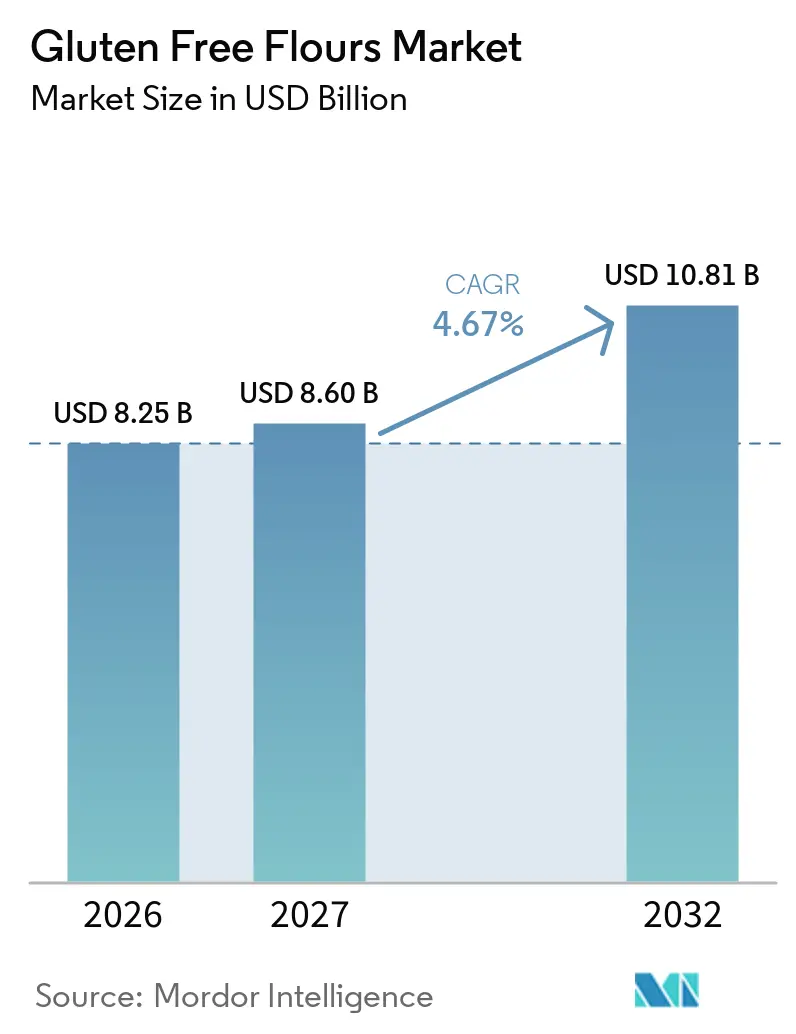
The gluten free flours market size grows from USD 8.25 billion in 2026 to USD 8.60 billion in 2027, and is forecast to reach USD 10.81 billion by 2032 at a 4.67% CAGR over 2027-2032. Food processors require reliable flour performance and documented supply controls, while retail buyers increasingly associate gluten free products with clear ingredient information. Consequently, the gluten free flour market favors suppliers that combine certified production, consistent functional performance, and a broad range of flour options.The market also benefits from the growing use of rice, corn, coconut, and other alternative flours in bakery products, savory snacks, and convenience foods. Product innovation focused on nutritional composition, taste, texture, and application-specific blends is expected to drive market expansion and broaden manufacturers’ customer bases.
Key Report Takeaways
- By product type, rice flour led the gluten free flours market with a 37.68% share in 2026, while coconut flour is anticipated to register the fastest CAGR of 5.93% during 2027-2032.
- By source, cereals retained a 68.25% share in 2026, while legumes are anticipated to expand at a 6.35% CAGR through 2032.
- By application, the food processing industry led the market with a share of 67.71% in 2026, while retail/household is anticipated to register the fastest CAGR of 5.76% during 2027-2032.
- By region, North America led the market with a share of 35.82% in 2026, while Asia-Pacific is anticipated to register the fastest CAGR of 6.53% during 2027-2032.
Note: Market numbers in this report are based on Mordor Intelligence's proprietary estimation framework, which combines nine months of actuals with Q4 projections for base year 2026.
Global Gluten Free Flours Market Trends and Insights
Drivers Impact Analysis*
| Driver | (~) % Impact on CAGR Forecast | Geographic Relevance | Impact Timeline |
|---|---|---|---|
| Rising prevalence and diagnosis of celiac disease | +1.2% | Global, with strong relevance in Northern and Southern Europe and North America | Short term (≤ 2 years) |
| Greater consumer awareness of gluten sensitivity and gluten avoidance | +0.9% | North America and Europe, with spillover to Asia-Pacific urban centers | Short term (≤ 2 years) |
| Expansion of gluten-free bakery products | +0.8% | North America, Europe, and Asia-Pacific | Medium term (2-4 years) |
| Product innovation in alternative grain and plant-based flours | +0.7% | Global | Medium term (2-4 years) |
| Expansion of retail distribution and product availability | +0.5% | Asia-Pacific, South America, and the Middle East and Africa | Medium term (2-4 years) |
| Strengthening gluten-free labeling standards and consumer confidence | +0.4% | Europe, North America, and Asia-Pacific | Long term (≥ 4 years) |
| Source: Mordor Intelligence | |||
Rising Prevalence and Diagnosis of Celiac Disease
Celiac disease generates less discretionary demand than lifestyle-driven purchasing because diagnosed individuals must follow a gluten-free diet. The 2025 European Society for the Study of Coeliac Disease guidelines reported a histologically confirmed prevalence of 0.7% in Western countries, while serological estimates ranged from 1% to 1.6%[1]. The guidelines also identify diagnosis as a critical component of disease management, supporting continued demand for foods produced with gluten-free ingredients. In countries with established diagnostic pathways and reimbursement programs, confirmed cases can drive recurring purchases by consumers and food manufacturers. This segment of the gluten free flour market supports demand for safe, traceable flour systems rather than occasional product trials.
Greater Consumer Awareness of Gluten Sensitivity and Gluten Avoidance
The consumer group reporting gluten or wheat sensitivity is materially larger than the diagnosed celiac population. The April 2025 International Food Information Council survey found that one in four Americans reported an allergy, intolerance, or sensitivity within their household, while 70% reported medium or high awareness of allergen information on packaged foods[2]. Food manufacturers must therefore address demand for transparent sourcing and clear allergen information, in addition to clinical dietary needs. The gluten-free flour market benefits as consumers increasingly view gluten-free options as suitable for routine household purchases. Greater consumer familiarity with gluten-related dietary concerns also encourages retailers to expand gluten-free flour offerings across mainstream grocery channels, making these products more accessible to households seeking alternatives to conventional wheat flour.
Expansion of Gluten Free Bakery Products
Bakery remains a major application for gluten-free flour, as bread, biscuits, pasta, and batter products depend on consistent flour performance. British bakery data for the 52 weeks ending April 2025 showed that free-from bakery sales grew by 9.4%, compared with 3.2% growth in standard bakery products. This growth increases demand for flour blends that deliver water absorption, starch gelatinization, and shelf stability in commercial production. Expanded distribution also incentivizes ingredient suppliers to offer application-tested, certified flour blends. In addition, retail brands require consistent batch quality across larger production runs. The gluten-free flour market gains volume as mainstream bakery ranges introduce certified gluten-free products.
Product Innovation in Alternative Grain and Plant-Based Flours
Rice and corn remain important ingredients; however, alternative flours are gaining relevance in applications that require protein, fiber, and functional properties. Archer Daniels Midland launched a gluten free, non genetically modified organisms (gmo) pea flour ingredient in May 2026 for bakery, batter, breading, and cereal applications. The ingredient will not require allergen labeling. These ingredients can support protein enrichment and help manufacturers reduce their dependence on a single cereal base. Coconut flour also provides high water absorption and fiber content, which may reduce the need for certain gums and hydrocolloids in finished formulations. The gluten-free flour market is likely to reward suppliers that offer functional blends rather than single-ingredient commodity flours.
Restraints Impact Analysis*
| Restraint | (~) % Impact on CAGR Forecast | Geographic Relevance | Impact Timeline |
|---|---|---|---|
| High prices of gluten-free flours compared with conventional wheat flour | -1.0% | Global, with stronger relevance in price-sensitive emerging markets | Medium term (2-4 years) |
| Cross-contamination risks and stringent quality-control requirements | -0.7% | Global | Short term (≤ 2 years) |
| Nutritional limitations of certain gluten-free flour formulations | -0.5% | North America and Europe | Medium term (2-4 years) |
| Inconsistent sensory quality and shorter freshness of finished products | -0.3% | Global | Medium term (2-4 years) |
| Source: Mordor Intelligence | |||
High Prices of Gluten Free Flours Compared with Conventional Wheat Flour
Price remains a key constraint for consumers who choose gluten-free products based on preference rather than medical necessity. Dedicated milling facilities, testing requirements, specialty grain sourcing, and lower production volumes increase supplier costs. Manufacturers also incur higher expenses when sourcing certified gluten-free raw materials and maintaining separate storage and processing systems to prevent cross-contamination. This price gap limits household adoption in price-sensitive markets and hinders the shift from specialty retail outlets to mainstream grocery channels. For food processors, the relevant comparison is the cost of the finished formulation rather than the price of flour alone. Suppliers can mitigate this barrier by offering flour systems that reduce the need for additional formulation ingredients or minimize reformulation requirements.
Cross-Contamination Risks and Stringent Quality-Control Requirements
Gluten free flour manufacturers face challenges in preventing cross-contamination during grain harvesting, transportation, storage, milling, and packaging, particularly when shared equipment handles wheat, barley, or rye. In January 2026, the United States Food and Drug Administration issued a request for information on gluten ingredient disclosure and cross-contact prevention in packaged foods, underscoring the need for clearer information and stronger controls. Under the FDA’s gluten-free labeling regulation, products carrying a gluten-free claim must contain less than 20 parts per million (ppm) of gluten[3]. To comply, manufacturers may need to invest in segregation procedures, equipment cleaning, supplier verification, and testing, which increases operating costs and complicates production.
*Our forecasts treat driver/restraint impacts as directional, not additive. The impact forecasts reflect baseline growth, mix effects, and variable interactions.
Segment Analysis
By Product Type: Rice Flour Leads, Coconut Flour Grows Faster
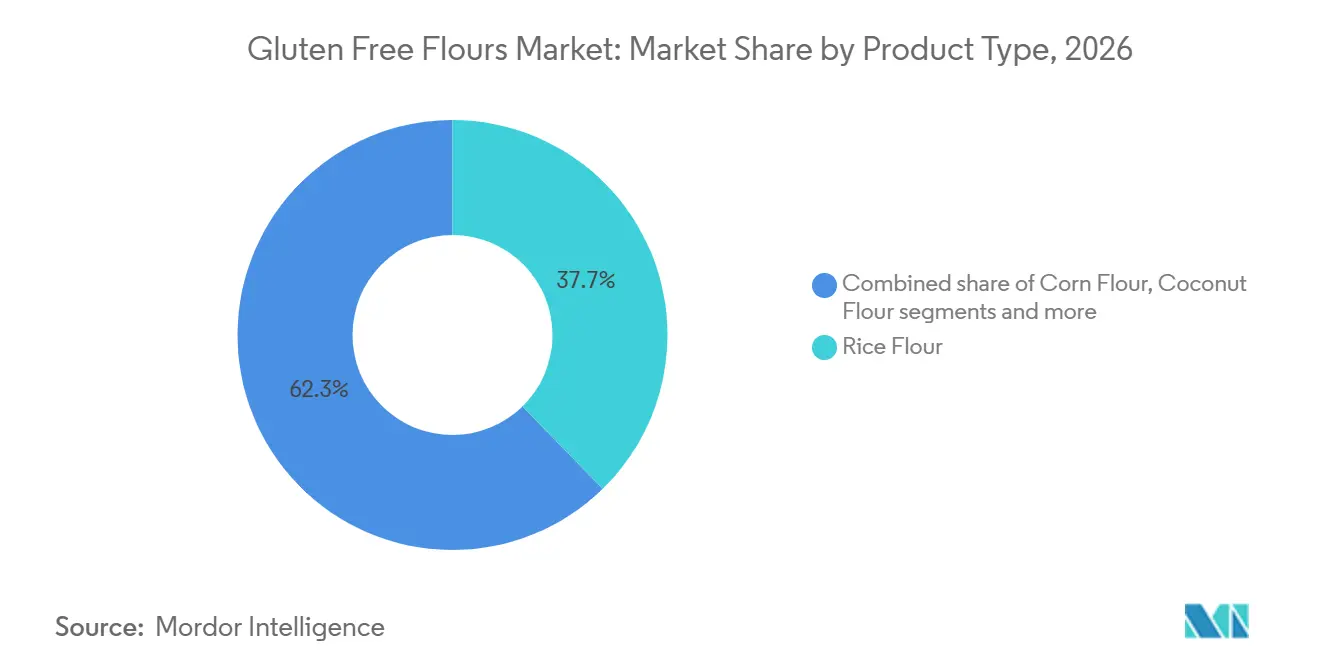
Rice flour accounts for 37.68% of the gluten free flour market in 2026. Suppliers and food processors widely use it in industrial bakery products, noodle production, and batter coatings because of its familiar handling characteristics. Its neutral flavor, fine particle profile, and established supply base make it a common ingredient in commercial formulations. Rice flour serves both food processing and retail baking applications, supporting demand from large-volume manufacturers and households.
Coconut flour is forecast to grow at a CAGR of 5.93% through 2032, the fastest growth rate among product types. Its increasing use reflects consumer interest in high-fiber products and low-carbohydrate or paleo-style diets. Corn flour remains relevant for tortillas, snacks, soups, and other high-volume applications in the Americas. Amaranth flour holds a smaller share in nutrition-focused specialty products across North America and Europe. The other product category includes buckwheat, cassava, sorghum, and teff flours, which enable manufacturers to create differentiated textures and origin-based claims.

By Source: Cereals Hold the Largest Position, Legumes Add Nutrition
Cereal-derived flours accounted for 68.25% of the gluten free flour market in 2026. Rice, corn, and sorghum benefit from established supply chains and broad acceptance in food processing, supporting their use in large procurement contracts. Their favorable volume economics also benefit manufacturers operating margin-sensitive product lines. However, conventional cereal-based formulations may contain less protein and fiber than legume-based products, limiting their suitability for products targeting consumers seeking added nutritional value. Consequently, the gluten-free flour industry is experiencing increased demand for cereal blends that enhance nutrition while maintaining familiar processing characteristics.
Legume-sourced flours are forecast to expand at a CAGR of 6.35% through 2032. Chickpea, lentil, pea, and faba bean flours support protein enrichment and can improve binding in batters and breadings. Suppliers can leverage this shift in sourcing to develop higher-value flour systems rather than competing solely on the unit price of single-origin ingredients. The gluten-free flour market also benefits from a broader source base, which reduces dependence on a limited group of staple grains.
By Application: Food Processing Holds Scale, Retail and Household Demand Grows Faster
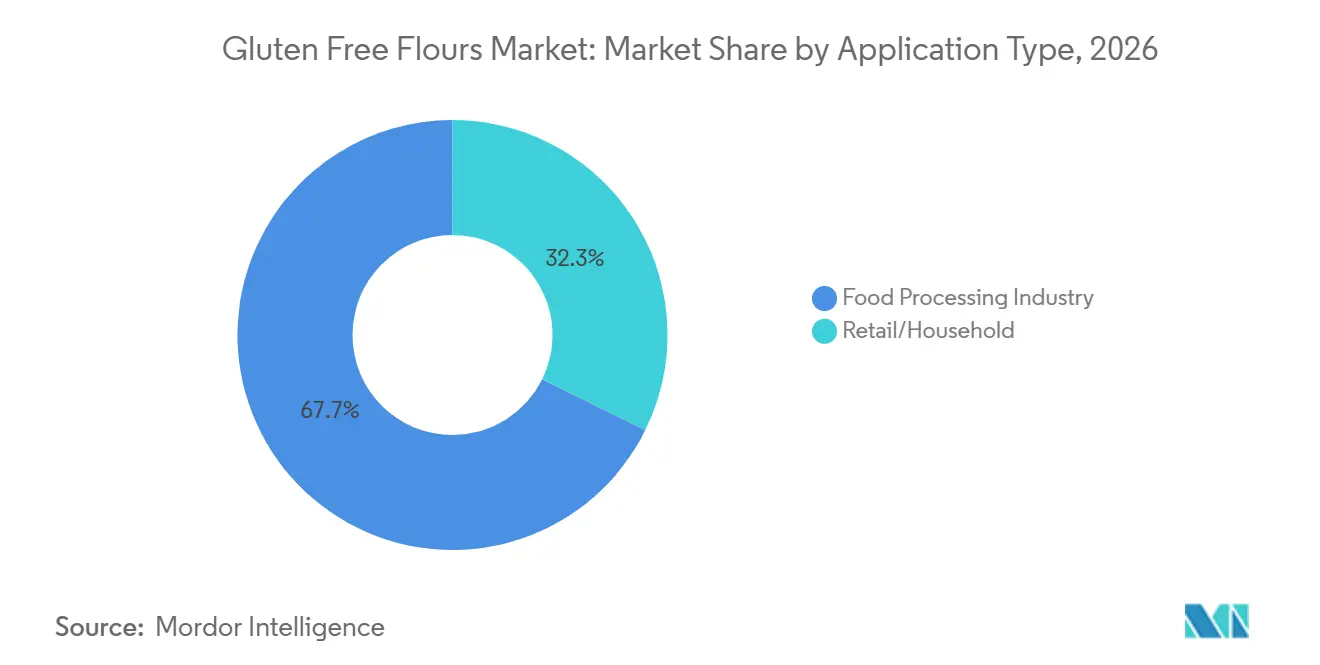
Food processing accounted for 67.71% of the gluten free flour market size in 2026. Bakery and confectionery represent the primary application areas, followed by savory snacks, soups and sauces, and ready-to-eat foods. Large manufacturers require consistent dough performance, shelf stability, traceability, and clear safety documentation. Mainstream consumer packaged goods companies are adding gluten-free claims to selected product lines, potentially increasing flour procurement volumes. This shift also raises the quality standards that ingredient suppliers must meet. Smaller suppliers face challenges in consistently providing certified supply, contamination testing, and batch-level documentation.
Retail and household applications are forecast to grow at a CAGR of 5.76% through 2032. Online retail enables consumers to access niche brands and may encourage repeat purchases among individuals following gluten-free diets. Expanding shelf space in hypermarkets, grocery stores, and convenience stores also improves product availability. Household bakers often require flour blends that simplify gluten-free preparation. This creates opportunities for suppliers that provide clear instructions and predictable results. The gluten-free flour market can expand through this channel as smaller pack sizes and accessible retail formats improve product availability for urban consumers.
Geography Analysis
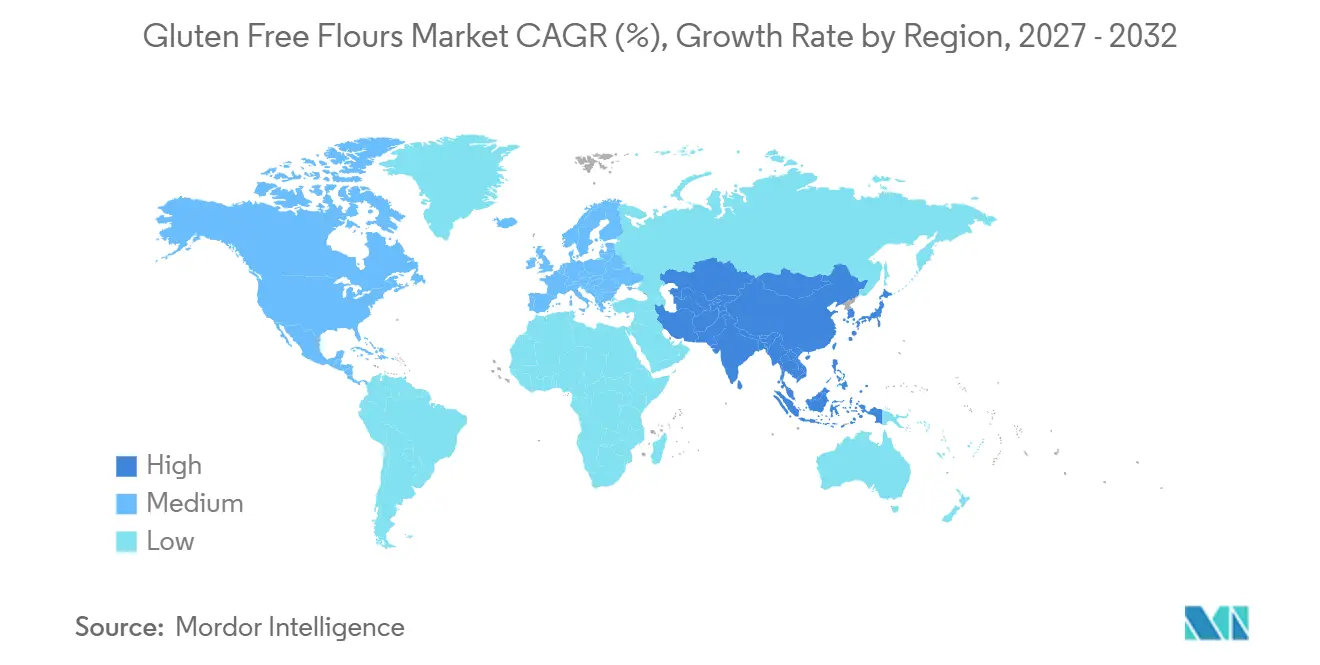
North America hold 35.82% share of the gluten free flour market in 2026. The region benefits from established retail distribution networks, strong clinical awareness, and the continued reformulation of packaged food product ranges. The United States has a federal gluten free food labeling framework, and the Food and Drug Administration seeks information in January 2026 on preventing gluten cross-contact in packaged foods. Canada has a similar demand base but faces greater price pressure. Mexico remains a less mature market, where urbanization and the expansion of specialty retail channels support demand.
Asia-Pacific is forecast to grow at a CAGR of 6.53% through 2032, the fastest rate among regions. Rising diagnosis rates, urbanization, and the wider availability of imported and locally produced specialty foods support this growth. China’s large e-commerce platforms provide urban consumers with greater access to gluten-free products. India is experiencing higher demand as diagnostic infrastructure reaches more patients with celiac disease. Japan has established rice-processing capabilities and a consumer base that values clear ingredient information. Australia and Indonesia contribute volume through modern retail channels and increasing awareness of celiac disease. The gluten-free flour market in Asia-Pacific provides suppliers with opportunities to develop both regional rice-based production and imported specialty product ranges.
Europe is the second-largest region, supported by Italy, Germany, the United Kingdom, France, and Spain. Clinical dietary demand and lifestyle-driven adoption coexist across these countries. The regional consumer base includes individuals who require a gluten-free diet and those who choose gluten-free products without a formal diagnosis. South America and the Middle East and Africa are earlier-stage markets. Brazil and Argentina have rice and corn production bases that can support local sourcing. The higher reported prevalence of self-reported non-celiac gluten or wheat sensitivity in Eastern Mediterranean countries may support future retail demand.
Competitive Landscape
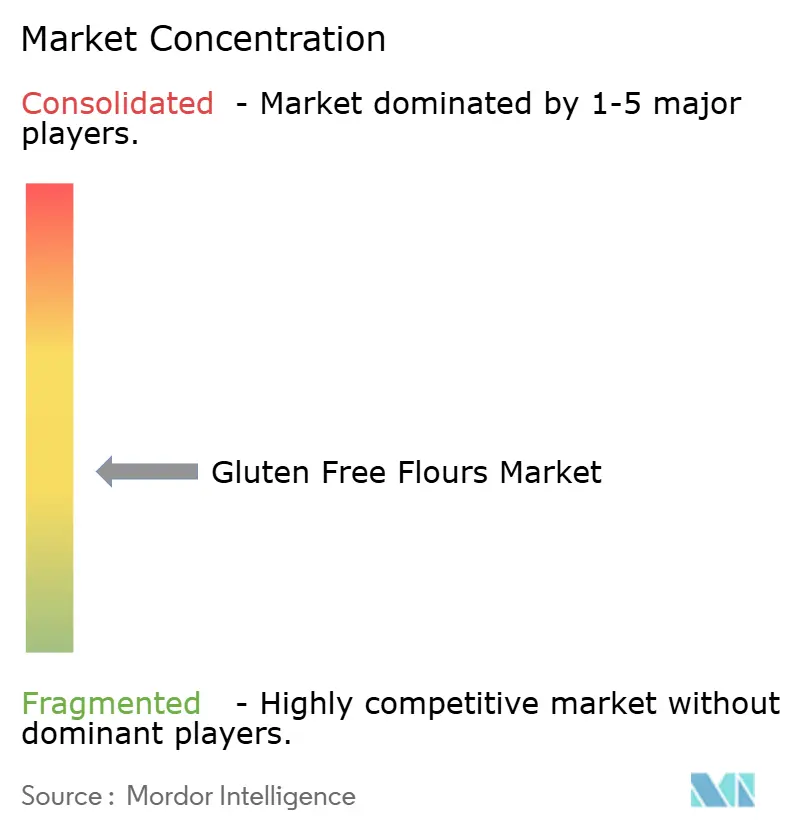
The gluten free flour market remains moderately fragmented. Global ingredient companies compete with specialty millers, artisan brands, and regional processors. Large suppliers leverage their scale, supply reliability, and application development capabilities to secure food processing accounts. Archer Daniels Midland reports that its Carbohydrate Solutions business processes wheat and corn into specialty starches, flours, and sweeteners across more than 270 processing plants. This scale supports dependable supply for large customers. Competition increasingly focuses on flour systems that meet specific product performance, certification, and nutritional requirements.
Smaller producers compete through traceability, regional sourcing, and visible certification. These attributes appeal to consumers who prioritize safety after receiving a diagnosis or adopting a gluten-free diet. Nutrient-fortified, organic, and single-origin products remain key areas of differentiation for specialized producers. Food processors also value suppliers that can demonstrate product performance in bakery and snack applications. Quality monitoring and traceability tools support contamination control and customer documentation. The gluten-free flour market is likely to remain accessible to both large-scale suppliers and specialist producers, as their customer groups and product strengths differ.
The gluten free flour market requires suppliers to balance standardization with flexibility, as bakery, snack, soup, and household applications require different flour characteristics. Suppliers that document particle size, water absorption, allergen controls, and blend composition can simplify selection for customers transitioning from small trials to regular production. The market remains favorable for specialized products when producers can demonstrate clear benefits in safety, nutrition, texture, or processing performance. Therefore, the gluten-free flour market supports differentiated regional offerings alongside large-scale industrial supply, provided suppliers maintain reliable testing and certification practices.
Gluten Free Flours Industry Leaders
-
Archer Daniels Midland Company
-
General Mills, Inc.
-
Cargill, Incorporated
-
Bob’s Red Mill Natural Foods, Inc.
-
The Hain Celestial Group, Inc.
- *Disclaimer: Major Players sorted in no particular order
Recent Industry Developments
- October 2026: Reliteaur Gluten Free Ragi Flour is listed as a new product for SIAL Paris 2026. Reliteaur Foods manufactures the product using finger millet (ragi), a naturally gluten-free grain. The company mills and packs the flour in an AOECS-certified facility and conducts testing through an NABL-accredited laboratory. The product reflects the development of millet-based alternatives for retail, health food, and foodservice applications.
- October 2025: Archer Daniels Midland Company opened a new Central Lab-Milling facility at its Specialty Manufacturing Facility in Decatur, Illinois. The lab uses advanced analytical technologies and bakes approximately 30 loaves daily to evaluate flour performance in real-world applications. The facility enhances procurement quality across ADM's 31 North American flour facilities and supports Research and Development collaboration with downstream food manufacturers.
- May 2025: Mightylicious announced the availability of its gluten-free flour mixes at more than 300 Kroger-family store locations across the United States. The new product range included All-Purpose Vegetarian Flour, All-Purpose Vegan Flour, and a vegan brownie mix. This launch expanded consumer access to specialized flour products through mainstream grocery retail channels.
Global Gluten Free Flours Market Report Scope
Gluten free flours are flour products made from grains, legumes, nuts, seeds, or roots that do not contain gluten, such as rice flour, corn flour, coconut flour, and chickpea flour.
The gluten free flours market is segmented by product type, source, application, and geography. By product type, the market is segmented into corn flour, coconut flour, rice flour, amaranth flour and others. By source, the market is segmented into cereals and legumes. By application, the market is segmented into the food processing industry (bakery and confectionery, savory snacks, soups and sauces, ready-to-eat convenience foods, and other applications) and retail/household (hypermarkets and supermarkets, convenience/grocery stores, online retail, other distribution channels). Based on geography, the market is classified into North America, Europe, South America, Asia-Pacific, and the Middle East and Africa. The market forecasts are provided in terms of value (USD).
| Corn Flour |
| Coconut Flour |
| Rice Flour |
| Amaranth Flour |
| Others |
| Cereals |
| Legumes |
| Food Processing Industry | Bakery and Confectionary |
| Savory Snacks | |
| Soups and Sauces | |
| Ready-to-Eat and Convenience Foods | |
| Other Applications | |
| Retail/Household | Hypermarkets and Supermarkets |
| Convenience/Grocery Stores | |
| Online Retail | |
| Other Distribution Channels |
| North America | United States |
| Canada | |
| Mexico | |
| Rest of North America | |
| Europe | Germany |
| United Kingdom | |
| Italy | |
| France | |
| Spain | |
| Netherlands | |
| Rest of Europe | |
| Asia-Pacific | China |
| India | |
| Japan | |
| Australia | |
| Indonesia | |
| Thailand | |
| Rest of Asia-Pacific | |
| South America | Brazil |
| Argentina | |
| Rest of South America | |
| Middle East and Africa | South Africa |
| Saudi Arabia | |
| United Arab Emirates | |
| Turkey | |
| Rest of Middle East and Africa |
| By Product Type | Corn Flour | |
| Coconut Flour | ||
| Rice Flour | ||
| Amaranth Flour | ||
| Others | ||
| By Source | Cereals | |
| Legumes | ||
| By Application | Food Processing Industry | Bakery and Confectionary |
| Savory Snacks | ||
| Soups and Sauces | ||
| Ready-to-Eat and Convenience Foods | ||
| Other Applications | ||
| Retail/Household | Hypermarkets and Supermarkets | |
| Convenience/Grocery Stores | ||
| Online Retail | ||
| Other Distribution Channels | ||
| By Geography | North America | United States |
| Canada | ||
| Mexico | ||
| Rest of North America | ||
| Europe | Germany | |
| United Kingdom | ||
| Italy | ||
| France | ||
| Spain | ||
| Netherlands | ||
| Rest of Europe | ||
| Asia-Pacific | China | |
| India | ||
| Japan | ||
| Australia | ||
| Indonesia | ||
| Thailand | ||
| Rest of Asia-Pacific | ||
| South America | Brazil | |
| Argentina | ||
| Rest of South America | ||
| Middle East and Africa | South Africa | |
| Saudi Arabia | ||
| United Arab Emirates | ||
| Turkey | ||
| Rest of Middle East and Africa | ||
Key Questions Answered in the Report
What is the current and projected size of the gluten free flours market?
The gluten free flours market was valued at USD 8.25 billion in 2026 and is projected to grow from USD 8.60 billion in 2027 to USD 10.81 billion by 2032, registering a CAGR of 4.67% during 2027-2032.
Which product type held the largest market share in 2026?
Rice flour was the leading product type segment, accounting for 37.68% of the gluten free flours market in 2026.
Which source segment dominated the gluten free flours market in 2026?
The cereals segment dominated the market in 2026, holding a 68.25% share.
Which application segment accounted for the largest share of the market in 2026?
The food processing industry segment held the largest share of the gluten free flours market, accounting for 67.71% in 2026.
Which region led the gluten free flours market in 2026?
North America was the largest regional market, capturing 35.82% of revenue in 2026.