
Gluten-free Chocolate Market Size and Share
Market Overview
| Study Period | 2022 - 2032 |
|---|---|
| Market Size (2027) | USD 1.7 Billion |
| Market Size (2032) | USD 2.51 Billion |
| Growth Rate (2027 - 2032) | 8.10 % |
| Fastest Growing Market | Asia-Pacific |
| Largest Market | North America |
| Market Concentration | Low |
Major Players *Disclaimer: Major Players sorted in no particular order Image © Mordor Intelligence. Reuse requires attribution under CC BY 4.0. | |
Gluten-free Chocolate Market Analysis by Mordor Intelligence
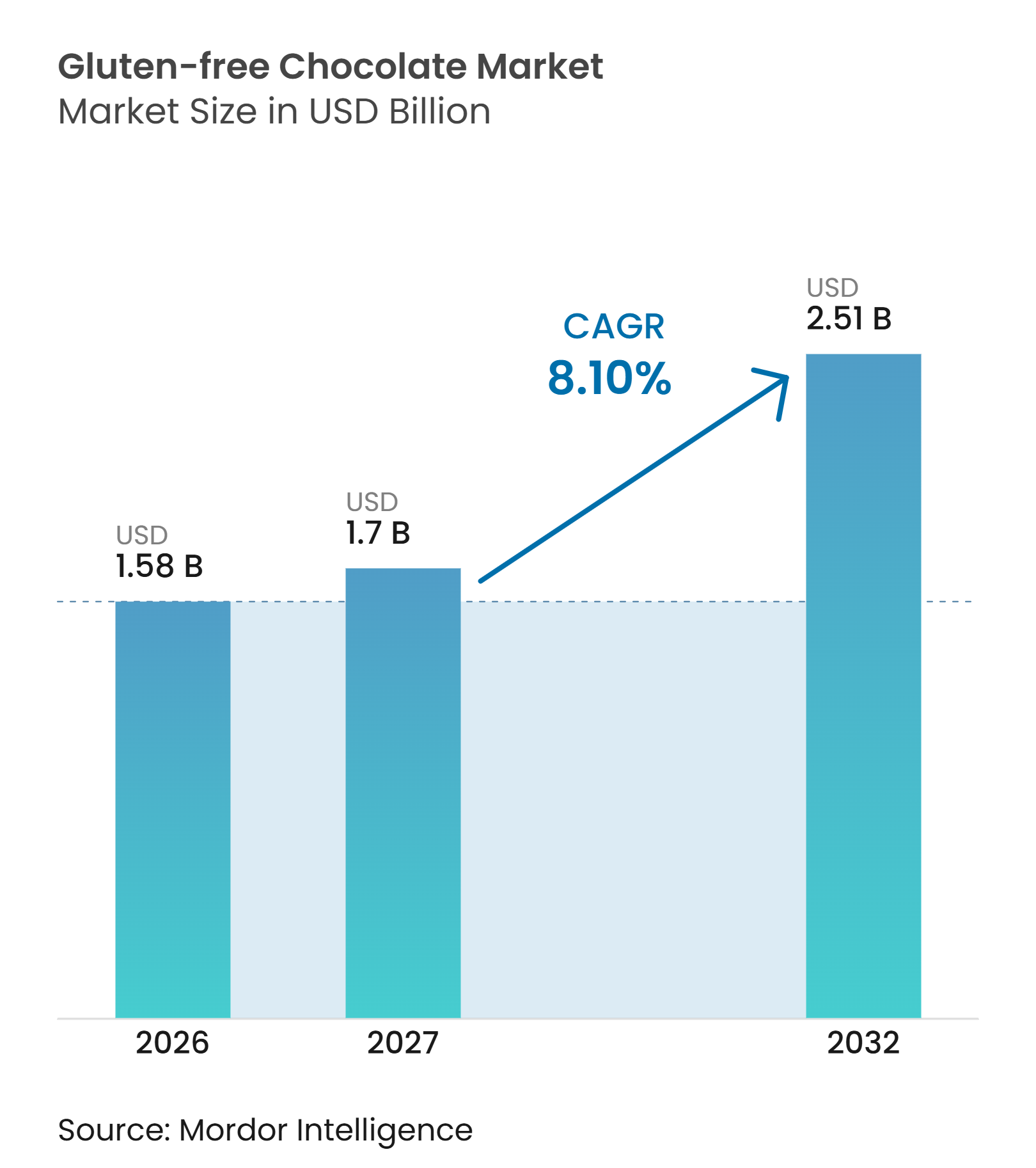
The gluten-free chocolate market size is expected to grow from USD 1.58 billion in 2026 to USD 1.70 billion in 2027 and is forecast to reach USD 2.51 billion by 2032 at a CAGR of 8.10% over 2027-2032. The gluten-free chocolate market benefits from medical dietary requirements and increasing consumer interest in wellness-oriented food choices. Growing awareness of gluten-related conditions supports demand for products that accommodate specific dietary needs. Manufacturers are expanding market appeal by combining gluten-free credentials with vegan, organic, sugar-free, and functional attributes, attracting consumers with diverse preferences. Certified sourcing, dedicated manufacturing processes, and transparent labeling strengthen consumer confidence and support retailer requirements. Established supplier relationships, effective quality-control systems, and strong certification capabilities also provide opportunities for brands to build product credibility, maintain consistent quality, and strengthen their competitive positioning.
Key Report Takeaways
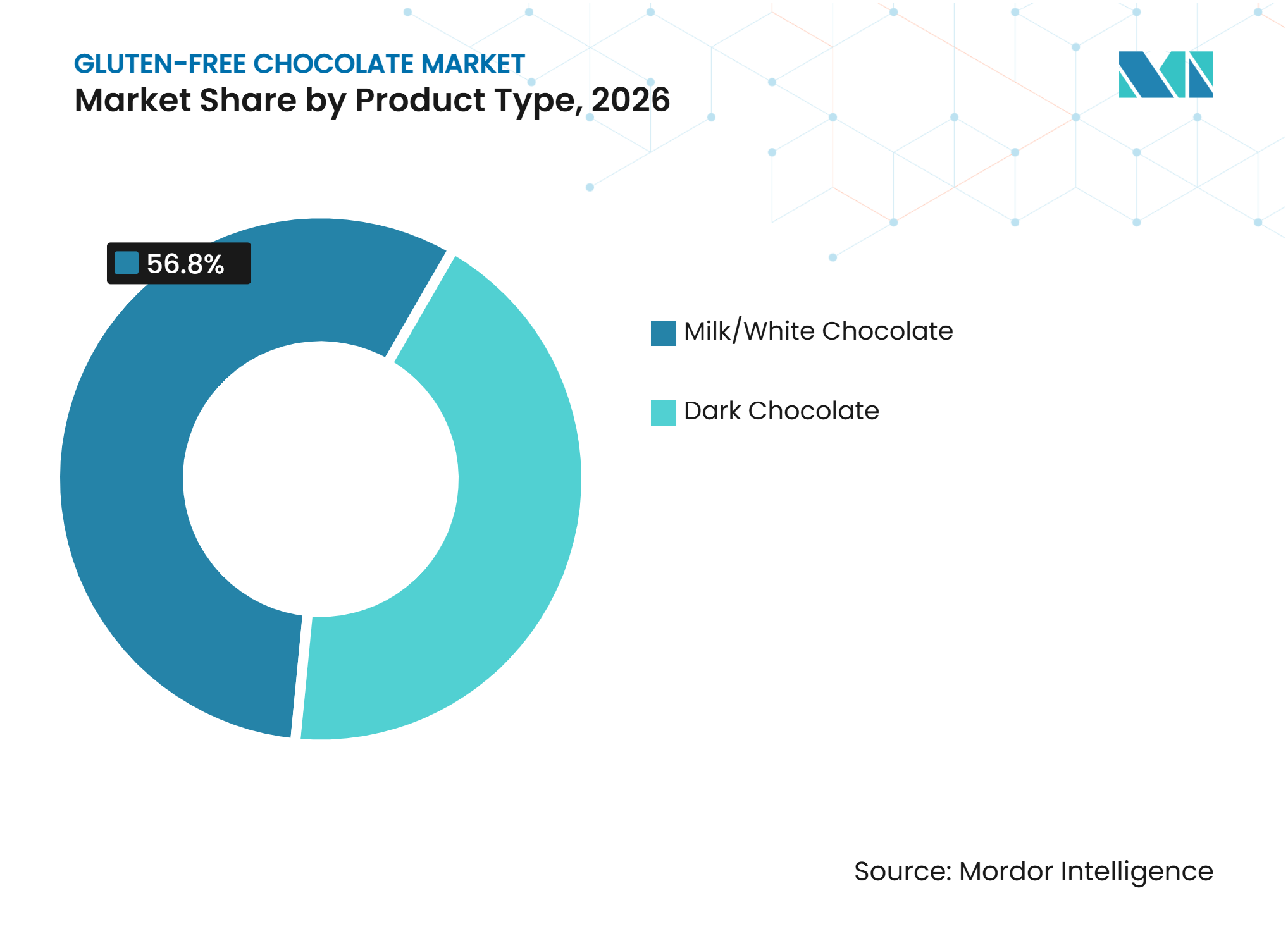
• By product type, dark chocolate held 43.20% of the gluten-free chocolate market share in 2026, while milk/ white chocolate is forecast to expand at a CAGR of 8.65% through 2032.
• By form, chocolate bars held 46.80% of the gluten-free chocolate market share in 2026, while chocolate chips are forecast to expand at a CAGR of 9.75% through 2032.
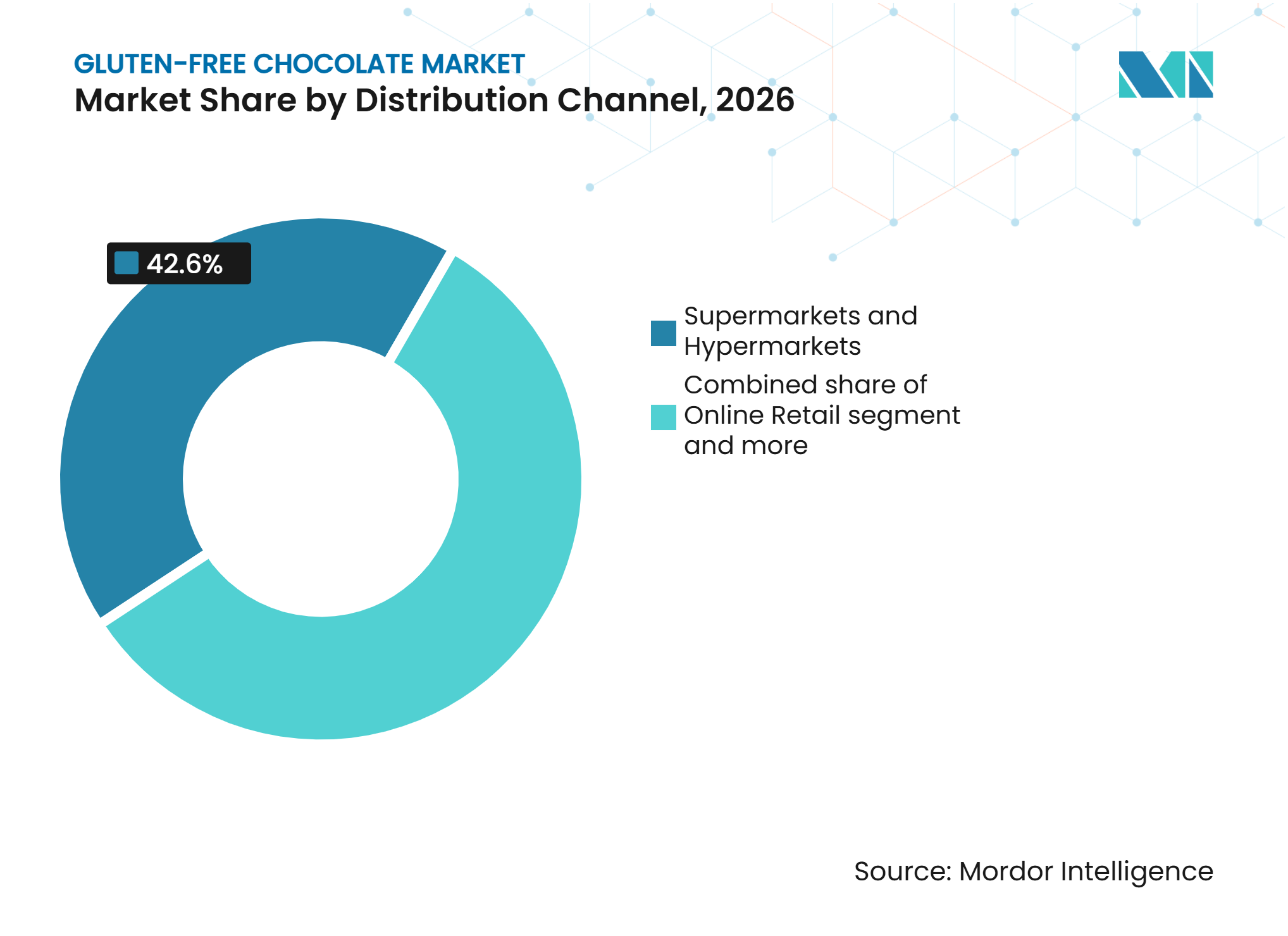
• By distribution channel, supermarkets and hypermarkets held 42.60% of the gluten-free chocolate share in 2026, while online retail is forecast to expand at a CAGR of 10.41% through 2032.
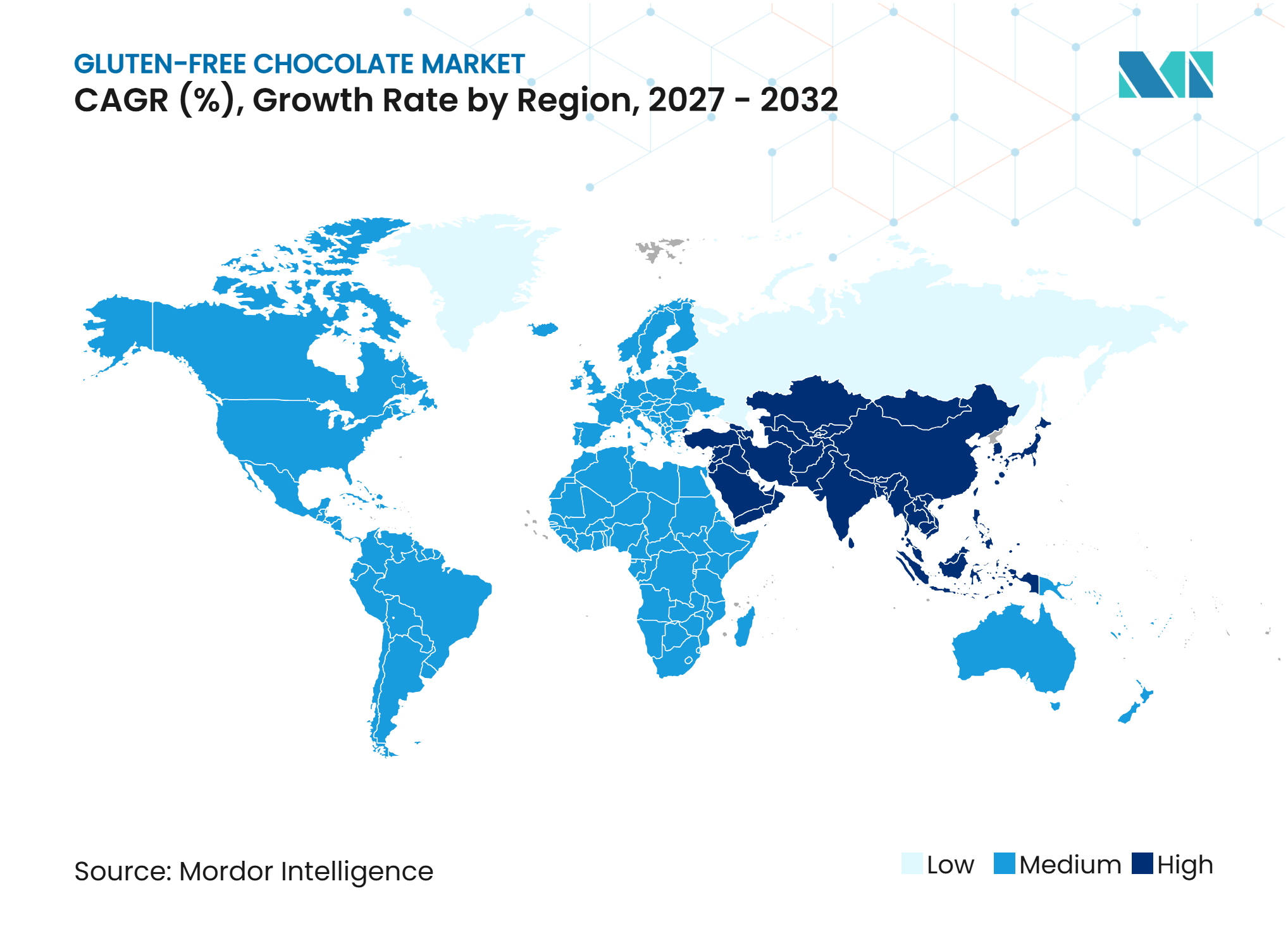
• By geography, North America held 36.80% of the gluten-free chocolate market share in 2026, while Asia-Pacific is forecast to expand at a CAGR of 9.60% through 2032.
Note: Market numbers in this report are based on Mordor Intelligence's proprietary estimation framework, which combines nine months of actuals with Q4 projections for base year 2026.
Market Trends and Insights
Drivers Impact Analysis of Gluten-Free Chocolate Market*
| Driver | (~) % Impact on CAGR Forecast | Geographic Relevance | Impact Timeline |
|---|---|---|---|
| Increasing prevalence and diagnosis of celiac disease and gluten-related disorders | +1.8% | North America and Europe | Medium term (2-4 years) |
| Greater consumer awareness of gluten-related health and dietary requirements | +1.4% | Global | Short term (≤ 2 years) |
| Premiumization of gluten-free chocolate products | +1.1% | North America, Europe, and Asia-Pacific | Medium term (2-4 years) |
| Demand for convenient and portion-controlled gluten-free chocolate formats | +0.9% | North America and Asia-Pacific | Short term (≤ 2 years) |
| Product diversification through vegan, organic, sugar-free and functional chocolate offerings | +0.8% | Global | Medium term (2-4 years) |
| Expansion of dedicated gluten-free chocolate product portfolios | +0.6% | North America and Europe | Long term (≥ 4 years) |
| Source: Mordor Intelligence | |||
Increasing Prevalence and Diagnosis of Celiac Disease and Gluten-Related Disorders
The prevalence of celiac disease and continued identification of undiagnosed cases are supporting long-term demand for gluten-free food products. For instance, in February 2026, according to the Celiac Disease Foundation, celiac disease affects approximately 1 in 100 people in North America, while millions of affected individuals remain undiagnosed. The average time to diagnosis is 6–10 years, highlighting opportunities for continued disease identification and greater awareness of gluten-free requirements [1]. This medical need is encouraging manufacturers to expand suitable product offerings and improve the availability of reliable gluten-free alternatives. For instance, in May 2025, Mondelēz International expanded its Hu Chocolate portfolio with Dark Chocolate Bites that are gluten-free, vegan, and organic, demonstrating product innovation that caters to these dietary preferences.
Greater Consumer Awareness of Gluten-Related Health and Dietary Requirements
Growing consumer attention to gluten consumption and dietary requirements is broadening interest in gluten-free food products beyond individuals with medically diagnosed conditions. For instance, in June 2025, according to the Oldways Whole Grains Council, 26% of United States consumers reported reducing gluten intake, while 7% actively avoided gluten altogether. Among consumers who always avoided gluten, 81% had no medical diagnosis, highlighting the role of personal dietary preferences in driving demand for gluten-free products [2]. This broader interest is encouraging chocolate manufacturers to expand product offerings with clear gluten-free positioning and complementary dietary attributes. For instance, in October 2026, Wild West Chocolate introduced its Goldstruck Nut Butter Bars, featuring gluten-free, organic, vegan, and kosher attributes across four chocolate-and-nut-butter varieties.
Premiumization of Gluten-free Chocolate Products
The premiumization of gluten-free chocolate products is driven by demand for high-quality ingredients, improved formulations, and distinctive chocolate experiences. Manufacturers are focusing on combining gluten-free suitability with rich flavors, desirable textures, premium cocoa, and carefully selected ingredients to enhance product appeal. Organic sourcing, ethical certifications, transparent labeling, and dedicated manufacturing controls further strengthen product differentiation and consumer confidence. These attributes create opportunities for brands to position gluten-free chocolate as a premium confectionery offering rather than solely a dietary alternative. Maintaining consistent taste, product quality, and reliable gluten-free standards remains important for building consumer loyalty and supporting premium market positioning.
Demand for Convenient and Portion-Controlled Gluten-free Chocolate Formats
Demand for convenient, portion-controlled formats is encouraging manufacturers to expand their gluten-free chocolate offerings for different consumption occasions. Consumers increasingly prefer packaging that supports easy carrying, storage, and portion management, particularly when consuming chocolate outside the home. For instance, in September 2025, according to Flexible Packaging Europe, 6,000 consumers across six European countries highlighted the importance of portion size, resealability, ease of opening, and convenient packaging in their chocolate purchasing decisions [3]. Responding to these preferences, Enjoy Life Foods introduced Baking Chocolate Snack Packs in individually portioned packages, offering certified gluten-free Semi-Sweet Mini Chips and Dark Chocolate Morsels. These developments create opportunities for manufacturers to combine dietary assurance with convenient packaging and accessible chocolate formats.
Restraints Impact Analysis of Gluten-Free Chocolate Market*
| Restraint | (~) % Impact on CAGR Forecast | Geographic Relevance | Impact Timeline |
|---|---|---|---|
| High gluten-free sourcing and certification costs | -0.9% | Global | Medium term (2-4 years) |
| Risk of cross-contamination during manufacturing | -0.6% | Global | Short term (≤ 2 years) |
| Limited dedicated gluten-free production facilities | -0.5% | Asia-Pacific and South America | Long term (≥ 4 years) |
| Premium pricing limiting mainstream adoption | -0.7% | South America, Middle East, and Africa | Medium term (2-4 years) |
| Source: Mordor Intelligence | |||
High Gluten-Free Sourcing and Certification Costs
High costs of gluten-free sourcing and certification can increase overall production expenses for chocolate manufacturers. Procuring ingredients that meet strict gluten-free requirements requires careful supplier selection, verification of raw material specifications, and consistent monitoring of ingredient quality. Manufacturers must also invest in dedicated handling procedures, contamination prevention measures, testing, and certification processes to maintain product safety and regulatory compliance. These requirements can increase manufacturing complexity, quality assurance expenses, and operational costs throughout the supply chain. Higher costs may put pressure on profit margins and lead to higher retail prices, potentially limiting affordability for price-sensitive consumers.
Risk of Cross-Contamination During Manufacturing
The risk of cross-contamination during manufacturing remains a significant challenge for the gluten-free chocolate market. Chocolate production facilities may process multiple ingredients and product varieties, increasing the possibility of unintended gluten exposure through shared equipment, production lines, storage areas, and handling procedures. Preventing contamination requires manufacturers to implement strict segregation practices, dedicated production controls, thorough equipment cleaning, and regular testing of raw materials and finished products. Maintaining consistent gluten-free standards throughout manufacturing and packaging can increase operational complexity and quality assurance requirements. Any failure to prevent cross-contamination can compromise product integrity, affect consumer confidence, and expose manufacturers to regulatory and reputational risks.
*Our forecasts treat driver/restraint impacts as directional, not additive. The impact forecasts reflect baseline growth, mix effects, and variable interactions.
Gluten-free Chocolate Market Segment Analysis
By Product Type:
Dark Chocolate Leads While Milk and White Variants Broaden ChoiceDark chocolate held 43.20% of the gluten-free chocolate market share in 2026. Dark chocolate maintains a strong position in the gluten-free chocolate market because its cocoa-focused profile aligns with demand for indulgent confectionery with health-conscious and premium attributes. Its familiar taste and wide consumer acceptance make it an accessible option for individuals seeking gluten-free alternatives without changing their usual chocolate preferences. Dark chocolate formulations can also offer greater flexibility in ingredient selection, allowing manufacturers to develop products with simpler ingredient compositions and reduce reliance on certain gluten-containing inclusions. Growing consumer interest in cocoa quality, transparent sourcing, and responsible production further supports the appeal of this segment.
Milk and white chocolate are projected to expand at a CAGR of 8.65% through 2032. Milk and white chocolate products are gaining relevance in the gluten-free chocolate market as consumers seek greater variety in flavor, texture, and indulgence. These products help expand the category beyond traditional cocoa-forward offerings and appeal to consumers who prefer creamier and sweeter chocolate profiles. Developing dairy-alternative and gluten-free formulations requires careful ingredient selection and processing controls to maintain desirable taste, texture, and product consistency. Manufacturers are expanding their free-from portfolios with more diverse chocolate formats to address these preferences and accommodate households with different dietary requirements.


By Form:
Bars Maintain Scale While Chips Support Home BakingChocolate bars held 46.80% of the gluten-free chocolate market in 2026. Chocolate bars remain a leading format in the gluten-free chocolate market because they offer convenience, familiarity, and ease of consumption across different retail channels. Their defined portions make them suitable for individual consumption, while their packaging provides sufficient space for gluten-free declarations, certification marks, allergen information, and ingredient details. Clear product information helps consumers assess dietary suitability and make purchasing decisions with greater confidence. The established popularity of chocolate bars also makes them accessible to both regular chocolate consumers and individuals seeking gluten-free alternatives. Manufacturers can further differentiate these products through organic ingredients, vegan formulations, ethical cocoa sourcing, and varied flavor profiles while retaining a familiar consumption format.
Chocolate chips are forecast to grow at a 9.75% CAGR through 2032, the fastest rate among forms. This growth indicates that dietary management affects both ingredient purchases and ready-to-eat confectionery demand. Consumers who choose certified chips for home baking can manage recipes more closely and avoid uncertainty from bakery counters or mixed production environments. The gluten-free chocolate industry gains a more stable relationship with these buyers because baking creates repeat purchase occasions around holidays, household routines, and family events. Bites also address portable snacking needs, while coated confections and baking mixes serve narrower occasions. Together, these formats give the gluten-free chocolate market a wider role across both at-home preparation and immediate consumption.
By Distribution Channel:
Supermarkets Keep Reach While Online Retail Gains SpeedSupermarkets and hypermarkets accounted for 42.60% of the gluten-free chocolate market in 2026. Supermarkets and hypermarkets play an important role in the gluten-free chocolate market by making certified products accessible through regular grocery shopping. Their broad product ranges allow consumers to compare gluten-free chocolate with conventional confectionery and choose products based on dietary requirements, flavor preferences, and price. Wider availability also helps position gluten-free chocolate as part of everyday confectionery consumption rather than limiting it to specialist dietary needs. These retail outlets provide manufacturers with greater product visibility, promotional opportunities, and access to a broad consumer base. They also support the introduction of new flavors, packaging formats, and product varieties across different consumer groups.
Online retail is projected to expand at a CAGR of 10.41% through 2032. Online retail is emerging as a rapidly expanding distribution channel in the gluten-free chocolate market by improving access to specialist products and niche brands. Digital platforms allow manufacturers to provide detailed information about ingredients, gluten-free certifications, allergen controls, and product attributes, helping consumers make informed purchasing decisions. Online availability also enables shoppers to compare brands, flavors, and product formats based on their dietary requirements and preferences. Direct-to-consumer sales and subscription services further support convenient purchasing and regular product replenishment. This channel is particularly valuable in markets where physical retailers offer a limited selection of gluten-free confectionery.


Geography Analysis
North America
North America accounted for 36.80% of the gluten-free chocolate market share in 2026. North America holds a leading position in the gluten-free chocolate market, supported by established consumer awareness, strong demand for specialized food products, and a well-developed retail distribution network. The United States provides a substantial commercial base through its extensive supermarket, specialty food, and online retail channels. Canada also contributes to regional demand through growing recognition and diagnosis of celiac disease and gluten-related disorders. Clear gluten-free labeling requirements and established certification practices help strengthen consumer confidence and support product accessibility. Manufacturers can serve both diagnosed consumers and shoppers following broader dietary preferences through transparent ingredient information, reliable product standards, and diverse chocolate offerings.
Asia-Pacific
Asia-Pacific is projected to expand at a CAGR of 9.60% through 2032. Asia-Pacific is emerging as the fastest-growing regional market for gluten-free chocolate, supported by rising urbanization, increasing health awareness, and the expansion of organized and online retail. Growing access to specialized food products is introducing gluten-free chocolate to a wider consumer base beyond premium and specialty retail outlets. Improvements in food labeling and allergen communication are also creating opportunities for manufacturers to provide clearer product information and strengthen consumer confidence. Markets such as China, Japan, India, Australia, South Korea, and Singapore offer opportunities through their evolving consumer preferences, expanding retail networks, and interest in premium food products. Increasing demand for convenient, high-quality, and dietary-specific confectionery is encouraging manufacturers to diversify their regional product offerings
Europe and Frontier Markets Converge
Europe remains an important market for gluten-free chocolate, supported by strong awareness of celiac disease and the wide availability of gluten-free products. Countries such as Italy and Germany contribute to regional demand through established free-from food markets and the growing availability of products in supermarkets and specialty stores. South America is gradually expanding, particularly in Brazil and Argentina, as manufacturers introduce gluten-free versions of familiar chocolate and confectionery products. These offerings are helping increase product variety and consumer awareness. The Middle East and Africa also present emerging opportunities, supported by growing awareness of dietary requirements and improving access to specialty food products. Countries such as South Africa, Saudi Arabia, and the United Arab Emirates offer opportunities for manufacturers to expand their presence through supermarkets, online retail, and specialty food stores.
Competitive Landscape
Market Concentration
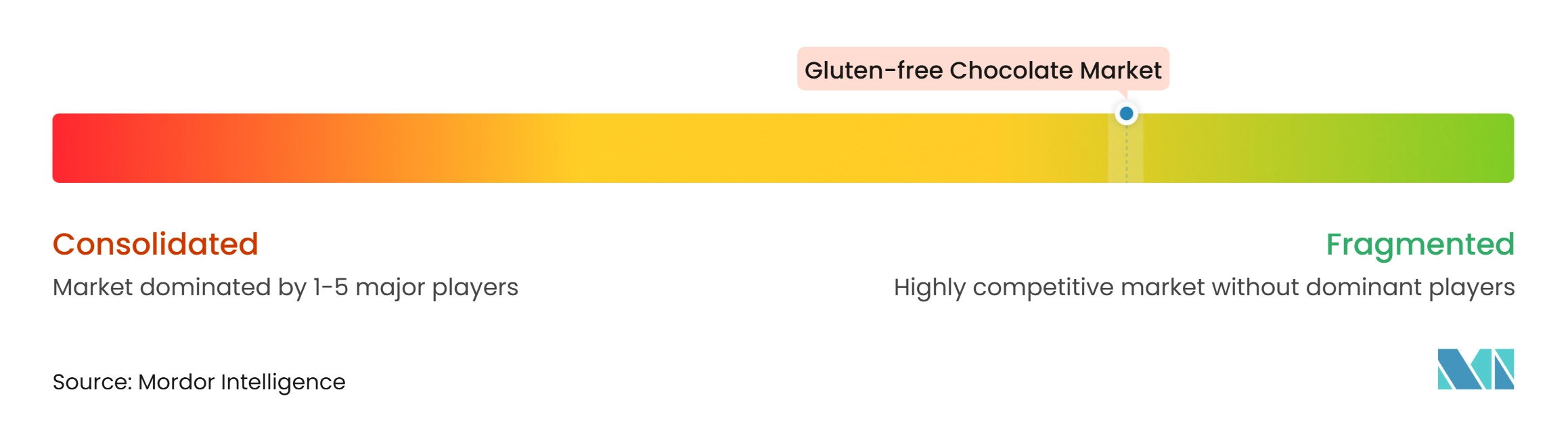
The gluten-free chocolate market is fragmented, with established multinational food companies and independent specialist manufacturers competing through product quality, certification credibility, ingredient transparency, and brand differentiation. Larger companies benefit from established manufacturing capabilities, extensive distribution networks, and strong brand recognition, while specialist manufacturers focus on dedicated production facilities, free-from formulations, and targeted product portfolios. The presence of manufacturers with diverse capabilities and market approaches fosters a more competitive environment and offers consumers a wider selection of gluten-free chocolate products.
Portfolio expansion remains an important competitive strategy, with manufacturers broadening their offerings through different chocolate varieties, product formats, and combinations of dietary attributes. Seasonal confectionery, family-oriented products, and convenient packaging allow brands to serve a wider range of consumption occasions. Digital retail and direct-to-consumer channels further enable specialist manufacturers to strengthen brand visibility, build consumer relationships, and encourage repeat purchases. Food safety certifications and effective quality management systems also help manufacturers establish credibility and strengthen retail partnerships.
The fragmented competitive landscape creates opportunities for both specialist brands and multinational companies to strengthen their market presence through product innovation, portfolio diversification, and distribution expansion. Manufacturers are increasingly able to differentiate their offerings through gluten-free suitability alongside vegan, organic, sugar-free, and functional attributes. Smaller brands benefit from focused product development and flexibility, while larger companies leverage production capabilities, established brands, and wider retail networks.
Gluten-free Chocolate Industry Leaders
-
The Hershey Company (Lily's Sweets)
-
Mondelēz International, Inc. (Enjoy Life Foods)
-
Trek One Capital (Alter Eco)
-
Taza Chocolate, Inc.
-
UNREAL Brands, Inc. (UNREAL)
- *Disclaimer: Major Players sorted in no particular order
Gluten-free Chocolate Market Companies Covered in this Report
- The Hershey Company (Lily's Sweets)
- Mondelēz International, Inc. (Enjoy Life Foods)
- Trek One Capital (Alter Eco)
- Taza Chocolate, Inc.
- UNREAL Brands, Inc. (UNREAL)
- Raaka Chocolate, LLC
- No Whey Foods, LLC
- Moo Free Ltd
- Zertus Group (Kinnerton Confectionery Ltd – NOMO)
- Mood Foods Limited (Ombar)
- Theo Chocolate, Inc.
- Nirvana Chocolates
- Chocxo Corporation
- Firetree Chocolate Limited
- Bennetto Natural Foods
- Wild West Chocolate
- JOJO's Chocolate LLC
- La Perla di Torino
- Dammenberg
- Loon Chocolate LLC
Recent Industry Developments in Gluten-free Chocolate Market
- September 2026: ZoRaw expanded its functional chocolate portfolio with gluten-free chocolate bars containing protein and fibre, with selected varieties offering up to 12 g of protein per bar and no added sugar. The range includes milk, dark, almond milk, and coconut chocolate varieties.
- May 2025: Hu launched individually wrapped Dark Chocolate Bites in Hazelnut Butter, Cashew Butter + Pure Vanilla Bean, and Creamy Coconut flavors. The gluten-free range featured six filled chocolate pieces per pouch and is also vegan, USDA Organic, Fairtrade, and non-GMO.
- May 2025: Ombar launched its 70 g Blonde Chocolate Bar at Tesco Extra, expanding its dairy-free and gluten-free chocolate range. Made with organic cocoa butter, desiccated coconut, Madagascan vanilla, chicory root, and caramelized sugar, the product offers a creamy texture with caramel and vanilla flavors.
Global Gluten-free Chocolate Market Report Scope
The gluten-free chocolate market includes chocolate products made without gluten-containing ingredients and processed under controlled conditions to prevent gluten contamination. These products are intended for consumers with celiac disease, gluten sensitivity, and those following gluten-free diets. The market is segmented by Product Type (Dark Chocolate and Milk/ White Chocolate), Form (Chocolate Bars, Chocolate Chips, Chocolate Bites, and Other Forms), Distribution Channel (Supermarkets and Hypermarkets, Specialty and Gourmet Stores, Online Retail, and Other Distribution Channels), and Geography (North America, Europe, Asia-Pacific, South America, and the Middle East and Africa). Market forecasts are provided in terms of value (USD).
Segmentation Overview
| Dark Chocolate |
| Milk/ White Chocolate |
| Chocolate Bars |
| Chocolate Chips |
| Chocolate Bites |
| Other Forms |
| Supermarkets and Hypermarkets |
| Specialty and Gourmet Stores |
| Online Retail |
| Other Distribution Channels |
| North America | United States |
| Canada | |
| Mexico | |
| Rest of North America | |
| Europe | Germany |
| United Kingdom | |
| Italy | |
| France | |
| Spain | |
| Netherlands | |
| Poland | |
| Belgium | |
| Sweden | |
| Rest of Europe | |
| Asia-Pacific | China |
| India | |
| Japan | |
| Australia | |
| Indonesia | |
| South Korea | |
| Thailand | |
| Singapore | |
| Rest of Asia-Pacific | |
| South America | Brazil |
| Argentina | |
| Colombia | |
| Chile | |
| Peru | |
| Rest of South America | |
| Middle East and Africa | South Africa |
| Saudi Arabia | |
| United Arab Emirates | |
| Nigeria | |
| Egypt | |
| Morocco | |
| Turkey | |
| Rest of Middle East and Africa |
| By Product Type | Dark Chocolate | |
| Milk/ White Chocolate | ||
| By Form | Chocolate Bars | |
| Chocolate Chips | ||
| Chocolate Bites | ||
| Other Forms | ||
| By Distribution Channel | Supermarkets and Hypermarkets | |
| Specialty and Gourmet Stores | ||
| Online Retail | ||
| Other Distribution Channels | ||
| By Geography | North America | United States |
| Canada | ||
| Mexico | ||
| Rest of North America | ||
| Europe | Germany | |
| United Kingdom | ||
| Italy | ||
| France | ||
| Spain | ||
| Netherlands | ||
| Poland | ||
| Belgium | ||
| Sweden | ||
| Rest of Europe | ||
| Asia-Pacific | China | |
| India | ||
| Japan | ||
| Australia | ||
| Indonesia | ||
| South Korea | ||
| Thailand | ||
| Singapore | ||
| Rest of Asia-Pacific | ||
| South America | Brazil | |
| Argentina | ||
| Colombia | ||
| Chile | ||
| Peru | ||
| Rest of South America | ||
| Middle East and Africa | South Africa | |
| Saudi Arabia | ||
| United Arab Emirates | ||
| Nigeria | ||
| Egypt | ||
| Morocco | ||
| Turkey | ||
| Rest of Middle East and Africa | ||
Key Questions Answered in the Report
What is the market size of gluten-free chocolate?
The gluten-free chocolate market is estimated to reach USD 1.58 billion in 2026 and increase to USD 1.70 billion in 2027. By 2032, the market is projected to reach USD 2.51 billion, registering a CAGR of 8.10% during 2027–2032.
Which gluten-free chocolate product type is the largest?
Dark chocolate led with a 43.20% share in 2026, supported by its familiar flavor profile, health-oriented positioning, and ability to carry transparent cocoa and certification claims.
Which form is projected to grow the fastest?
Chocolate chips are forecast to grow at a 9.75% CAGR through 2032 as certified ingredients support home baking, recipe control, and repeat purchasing across household occasions.
Why do food safety controls matter for gluten-free chocolate?
Gluten-free claims require controlled sourcing and production practices to manage cross-contact, protect consumer confidence, and meet food labeling requirements through reliable, documented facility procedures and strong compliance evidence.