
Gluten-Free Bread Market Size and Share
Market Overview
| Study Period | 2021 - 2031 |
|---|---|
| Market Size (2026) | USD 2.98 Billion |
| Market Size (2031) | USD 4.16 Billion |
| Growth Rate (2026 - 2031) | 6.90 % |
| Fastest Growing Market | Asia-Pacific |
| Largest Market | Europe |
| Market Concentration | Low |
Major Players *Disclaimer: Major Players sorted in no particular order Image © Mordor Intelligence. Reuse requires attribution under CC BY 4.0. | |
Gluten-Free Bread Market Analysis by Mordor Intelligence
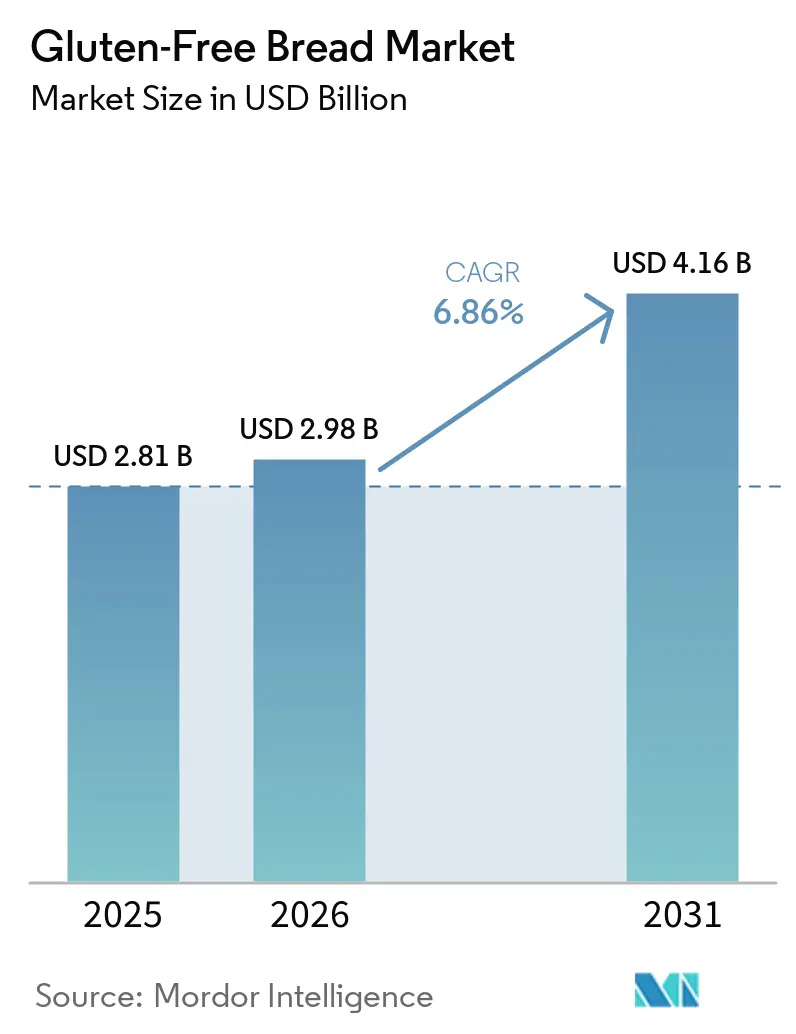
The gluten-free bread market size was valued at USD 2.81 billion in 2025 to USD 2.98 billion in 2026, and is forecast to reach USD 4.16 billion by 2031 at a 6.90% CAGR over 2026-2031. Celiac disease creates a sustained need for safe bread, while wider access to testing can turn previously undiagnosed consumers into regular buyers. The gluten-free bread market also benefits as products improve in taste, texture, nutrition, and shelf life, as these factors influence repeat purchases beyond medically necessary diets. Manufacturers are investing in dedicated production capacity, cleaner formulations, and broader product formats, which can strengthen certification reliability and product differentiation. Price remains the primary barrier to wider adoption, although reduced treatment in Spain demonstrates how public policy can narrow the consumer cost gap. Europe has the strongest established base, while Asia-Pacific offers the fastest geographic expansion as diagnosis rates, specialized retail, and online access improve.
Key Report Takeaways
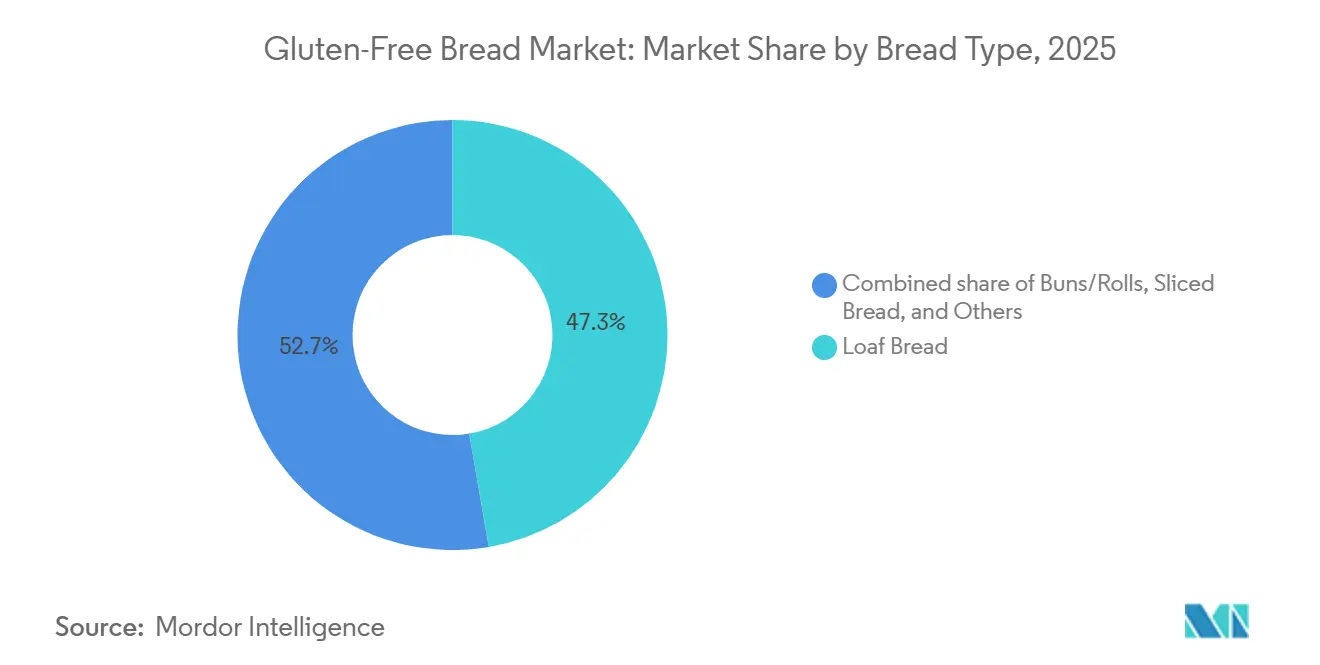
- By bread type, loaf bread led the gluten-free bread market with a share of 47.31% in 2025, while buns/rolls are anticipated to register the fastest CAGR of 7.87% during 2026-2031.
- By ingredient base, rice flour retained 31.78% share in 2025, whereas multi-flour blends are forecast to expand at a 7.45% CAGR through 2031.
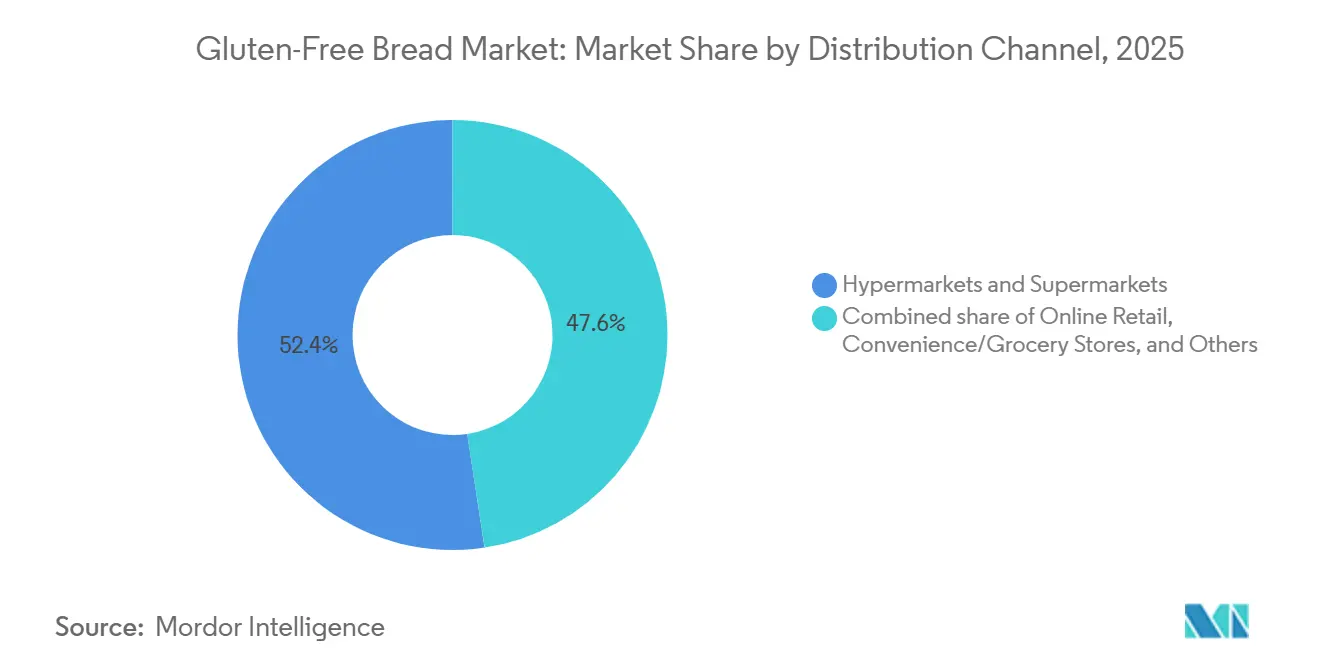
- By distribution channel, hypermarkets and supermarkets led the market with a share of 52.37% in 2025, while online retail is anticipated to register the fastest CAGR of 7.73% during 2026-2031.
- By geography, Europe led the gluten-free bread market in 2025 with a 34.12% share, while Asia-Pacific is projected to advance at a 7.97% CAGR through 2031.
Note: Market size and forecast figures in this report are generated using Mordor Intelligence’s proprietary estimation framework, updated with the latest available data and insights as of January 2026.
Market Trends and Insights
Drivers Impact Analysis of Gluten-Free Bread Market*
| Driver | (~) % Impact on CAGR Forecast | Geographic Relevance | Impact Timeline |
|---|---|---|---|
| Rising prevalence of celiac disease and gluten-related disorders | +1.4% | Global, acute in Europe and North America | Long term (≥ 4 years) |
| Continuous product innovation enhancing bread quality and shelf life | +1.1% | North America and Europe, with early gains in Asia-Pacific urban centers | Medium term (2-4 years) |
| Growing consumer preference for clean-label and natural ingredients | +0.9% | North America and Europe, with a premium Asia-Pacific segment | Medium term (2-4 years) |
| Rising investments by bakery manufacturers in gluten-free portfolios | +0.8% | Global, with primary focus in North America and Europe | Short term (≤ 2 years) |
| Broadening product range across diverse gluten-free bread formats | +0.7% | North America, Europe, and Asia-Pacific | Medium term (2-4 years) |
| Rapid expansion of E-commerce and specialty food distribution channels | +0.8% | Global, with Asia-Pacific at the core and spillover to Middle East and Africa and South America | Short term (≤ 2 years) |
| Source: Mordor Intelligence | |||
Rising Prevalence of Celiac Disease and Gluten-Related Disorders
Celiac disease had a biopsy-confirmed global prevalence of 0.7% and a serological prevalence of 1.4%, affecting an estimated 60 million to 80 million people worldwide, according to an article published by Gastroenterology in 2024[1]. Diagnosis remains uneven, particularly in low- and middle-income settings, where improved testing can make demand more visible over time. In 2024, the Association of European Coeliac Societies continued to support the inclusion of gluten in Codex guidance on precautionary allergen labeling. Stronger labeling expectations can benefit producers that already maintain robust allergen controls and credible certification. These developments are expected to strengthen consumer confidence in certified gluten-free bread products and support long-term demand across regulated retail markets.
Continuous Product Innovation Enhancing Bread Quality and Shelf Life
Texture and palatability have historically limited repeat purchases of gluten-free bread, particularly among consumers who compare it directly with wheat bread. A 2025 study conducted by the National Library of Medicine found that combining hydroxypropyl methylcellulose and xanthan gum improved dough properties and produced bread with lower hardness and higher cohesiveness than formulations using single hydrocolloids[2]. These advances address practical concerns related to freshness, handling, and eating quality in the gluten-free bread market. As product quality moves closer to that of conventional bread across everyday formats, improved technical performance may make premium pricing harder to sustain. The ability to deliver a sensory experience closer to conventional bread is strengthening the commercial appeal of gluten-free products across both medically required and lifestyle-driven consumer groups.
Growing Consumer Preference for Clean-Label and Natural Ingredients
Clean-label preferences are shaping formulation decisions, as gluten-free products must replace gluten functionality without creating long additive lists. The gluten-free bread market is responding with prebiotic fibers, ancient-grain flours, and sourdough processes that support product function while enabling simpler ingredient statements. Natural ingredients can help brands attract lifestyle consumers who do not require a therapeutic diet but still assess ingredient quality. However, removing preservatives or emulsifiers can weaken shelf life and texture if formulation work does not compensate for their functional role. Products that deliver acceptable softness and stability with recognizable ingredients can build repeat purchase behavior and strengthen brand loyalty.
Rising Investments by Bakery Manufacturers in Gluten-Free Portfolios
Dedicated production investments indicate that large bakery companies increasingly view gluten-free bread as a durable category rather than a limited product extension. Dr. Schär reported record results for 2024, including the acquisition of Hero AG’s gluten-free Nordic business and the expansion of its Alagón facility in Spain. These investments support the gluten-free bread market by improving supply security, strengthening manufacturing consistency, and enabling companies to serve a broader product portfolio. Dedicated allergen-controlled facilities also reduce the practical risk of cross-contact, which can occur when gluten-free products share operations with conventional bread. While the capital requirement creates a barrier for smaller entrants, it can also increase confidence among retailers and consumers who rely on verified product safety.
Restraints Impact Analysis of Gluten-Free Bread Market*
| Restraint | (~) % Impact on CAGR Forecast | Geographic Relevance | Impact Timeline |
|---|---|---|---|
| High retail prices limiting mainstream consumer adoption | -0.9% | Global, acute in South America, Middle East and Africa, and rural Asia-Pacific | Long term (≥ 4 years) |
| Limited availability across emerging and price-sensitive markets | -0.7% | South America, Middle East and Africa, and rural Asia-Pacific | Medium term (2-4 years) |
| Dependence on costly specialty gluten-free raw materials | -0.8% | Global | Medium term (2-4 years) |
| Consumer skepticism toward non-medical gluten-free dietary benefits | -0.5% | North America and Europe | Short term (≤ 2 years) |
| Source: Mordor Intelligence | |||
High Retail Prices Limiting Mainstream Consumer Adoption
The cost difference between gluten-free and conventional bread stems from ingredient sourcing, dedicated manufacturing, testing, and certification, rather than temporary supply disruption. In July 2024, Coeliac UK found that gluten-free loaves cost 4.5 times more per gram than conventional loaves, while people with celiac disease paid up to 35% more for a weekly grocery basket[3]. Specialty flours can cost more than wheat flour, and producers must manage ongoing costs related to allergen controls and third-party certification. This cost pressure particularly challenges smaller producers that lack purchasing scale for ingredients and packaging. Without comparable cost-control measures or lower specialty input costs, pricing is likely to remain a constraint on wider household adoption in the gluten-free bread market.
Limited Availability Across Emerging and Price-Sensitive Markets
The gluten-free bread market remains concentrated in premium retail formats in developed economies, limiting access across many emerging markets. South America, the Middle East and Africa, and rural parts of Asia-Pacific have limited specialist retail coverage and less reliable distribution for temperature-sensitive or niche food products. Online retail improves reach but cannot fully replace local availability in areas with uneven logistics and internet access. Manufacturers may delay investments in dedicated controls when local demand, recognized certification, and shelf access remain uncertain. This creates a supply gap, as newly diagnosed consumers may need gluten-free options but cannot consistently find certified bread through local channels.
*Our forecasts treat driver/restraint impacts as directional, not additive. The impact forecasts reflect baseline growth, mix effects, and variable interactions.
Gluten-Free Bread Market Segment Analysis
By Bread Type:
Loaf Remains the Standard, Buns and Rolls AccelerateLoaf bread accounts for 47.31% of the bread type segment in 2025, making it the most established format in the gluten-free bread market. It serves as an everyday staple for diagnosed consumers and as a familiar entry product for people reducing gluten for other reasons. Retailers generally allocate the largest gluten-free shelf space to loaves because the format supports regular household purchases. More mature loaf bread production lines also help suppliers maintain availability and consistent product specifications. Loaf formats support breakfast, sandwiches, and packed meals, giving them broader usage than occasional specialty formats. This routine use gives the format a stable position even as manufacturers introduce more product choices.
Buns and rolls are forecast to register a 7.87% CAGR through 2031, making them the fastest-growing bread type. In the gluten-free bread market, their growth reflects rising demand for burger buns, dinner rolls, and sandwich formats that can withstand fillings, sauces, and handling. These use cases were previously challenging because gluten-free dough lacked elasticity and structure. Sliced bread supports school lunches and workplace meals, where portioning and convenience influence purchase decisions. The others category includes flatbreads, pittas, wraps, and artisan formats that extend usage beyond the standard sandwich occasion.

By Ingredient Base:
Rice Flour’s Dominance Meets the Multi-Flour ChallengeRice flour holds 31.78% of the ingredient base segment in 2025, supported by its neutral flavor, broad availability, and established use in bakery manufacturing. This position makes rice flour a familiar base across North American, European, and Asian supply chains. However, when manufacturers use rice flour alone, it can produce a dense texture, crumbly slices, and limited moisture retention. These limitations are driving manufacturers to combine rice flour with other flours and functional ingredients. Rice flour remains commercially useful because manufacturers can source it easily, and it does not add a strong flavor profile. Its widespread use also helps manufacturers develop formulas that perform predictably at scale.
Multi-flour blends are forecast to grow at a CAGR of 7.45% through 2031, supported by the use of quinoa, amaranth, sorghum, millet, and buckwheat. In the gluten-free bread market, these ingredients can improve protein and fiber profiles while helping address the texture limitations of single-flour formulations. Corn flour retains a meaningful role in North and South America, where established processing systems and dietary familiarity support its use. Almond flour remains a premium option because its fat content can add moisture and richness, but its cost limits mainstream adoption. The others category includes cassava, chickpea, lentil, and teff flours, which offer different sensory and nutritional properties.
By Distribution Channel:
Supermarkets Lead While Online Redefines Access GeometryHypermarkets and supermarkets account for 52.37% of distribution channel revenue in 2025, making them the leading route to consumers. This position reflects the planned nature of gluten-free grocery shopping, as consumers often review ingredients and certifications before purchase. Dedicated free-from aisles in the United Kingdom, Germany, and the United States offer shoppers more options than smaller store formats. These stores also carry a broader mix of loaf bread, buns, wraps, and specialty products. Shelf visibility remains important, as people newly diagnosed with celiac disease often begin their search in mainstream grocery outlets.
Online retail is forecast to grow at a CAGR of 7.73% through 2031, offering access to brands that may not be available locally. Digital channels allow shoppers to compare certifications and ingredients before placing an order. Subscription models also support consistent delivery for consumers who must maintain a gluten-free diet. The gluten-free bread market can use this channel to lower entry barriers for smaller brands with strong formulations but limited ability to secure supermarket listings. Health-focused online platforms and direct-to-consumer sellers can provide these producers with national reach without requiring immediate physical shelf scale. Specialty retailers and health food stores remain relevant for consumers seeking guidance, uncommon formats, or a deeper product selection.
Geography Analysis
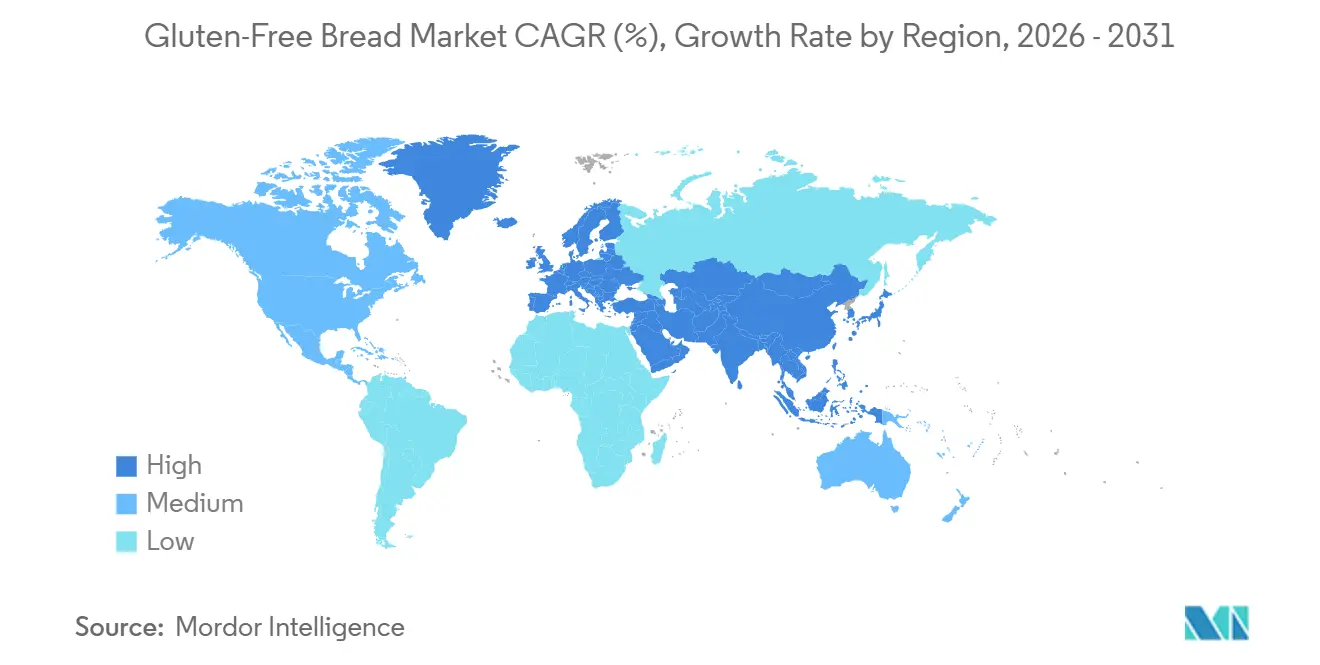
Europe accounts for 34.12% of 2025 revenue, giving the region the leading position in the gluten-free bread market. This leadership reflects established diagnosis pathways, strong retail infrastructure, and a consistent regulatory environment. Common regulations help manufacturers apply a single standard across a large regional consumer base. Europe’s retail systems also support dedicated free-from shelf space and a wide mix of brands and formats. Dr. Schär expanded its Alagón site in Spain and reported a broader 2026 capacity program across Italy, Spain, and Germany. The company’s investment highlights how established European demand can support dedicated production assets. Ongoing Codex work on precautionary allergen labeling could further increase the value of rigorous quality systems for certified producers.
North America serves as the primary hub for large-scale brand competition and frequent product-format launches. The United States combines broad national grocery distribution with specialist brands, large food companies, and well-established gluten-free labeling regulations. Canada and Mexico are expanding retail access, although specialty health food stores remain more influential than in the United States. The North American gluten-free bread market size is also shaped by the wide range of foodservice and direct-to-consumer opportunities. Product innovation is particularly active where brands can leverage national distribution networks to transform technical improvements into mainstream offerings.
Asia-Pacific is forecast to grow at a CAGR of 7.97% through 2031, making it the fastest-growing region. Australia has a comparatively high diagnosis rate, while its food standards require products labeled gluten-free to contain no detectable gluten. China’s larger cities are experiencing increasing health awareness, greater e-commerce access, and rising imports of certified products, although domestic certification remains less developed. Japan offers stable demand, supported by an aging population and consumer interest in cleaner food formulations. The gluten-free bread market can therefore expand most effectively across these regions when recognized certification, distribution coverage, and price accessibility improve simultaneously.
Competitive Landscape
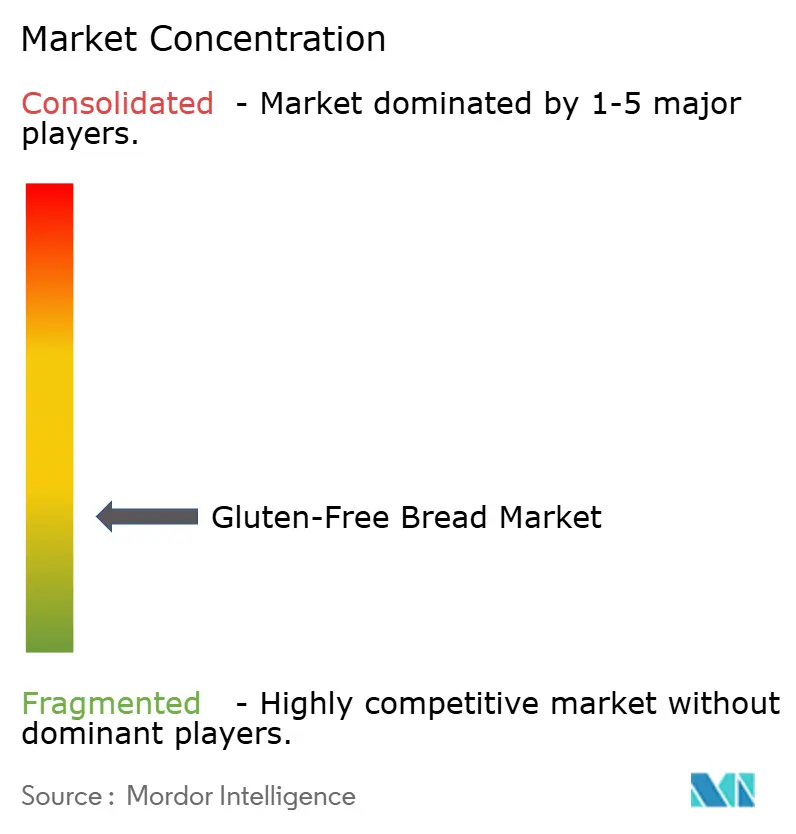
The gluten-free bread market remains fragmented, with no single producer holding a category-defining position. Competition includes multinational bakery companies with broad distribution networks and specialist brands with expertise in gluten-free formulations. Companies compete on taste, texture, allergen controls, price, availability, and certification credibility. Dedicated production lines play an important role because they reduce cross-contact risk and improve consistency for consumers who rely on safe products. The category also rewards brands that balance ingredient simplicity with the functional requirements of bread. Larger companies can support national distribution and capacity investments, while specialists can respond quickly to the specific needs of consumers with celiac disease.
Flowers Foods, through Canyon Bakehouse, launched a nationally available gluten-free sourdough loaf in the United States in 2025. This move expanded a format that has previously been harder to find outside specialty retail. Dr. Schär’s 2026-launched flatbread added another everyday eating occasion through a preservative-free product. These moves show how the gluten-free bread market can extend a brand beyond core loaf bread without changing its central safety proposition. Scientific work on composite flours also supports competitive differentiation when it improves nutrition and texture at the same time.
The expanding online retail channel is creating growth opportunities for gluten-free bread brands by improving access to specialized products beyond traditional supermarkets and specialty stores. E-commerce platforms enable manufacturers to reach consumers in underserved markets while offering a broader product range, detailed ingredient information, and convenient home delivery. Direct-to-consumer models also allow brands to build stronger relationships with niche consumer groups and communicate certifications, allergen controls, and product attributes more effectively. Manufacturers that ensure reliable online availability, provide transparent product information, and maintain consistent quality can strengthen consumer trust and drive repeat purchases.
Gluten-Free Bread Industry Leaders
-
Dr. Schär AG
-
Bimbo Bakeries USA
-
Warburtons Ltd.
-
BFree Foods
-
Conagra Brands
- *Disclaimer: Major Players sorted in no particular order
Gluten-Free Bread Market Companies Covered in this Report
- Dr. Schär AG
- Bimbo Bakeries USA
- Warburtons Ltd.
- Katz Gluten Free
- Promise Gluten Free
- Little Northern Bakehouse
- Genius Foods Ltd.
- Fria
- Three Bakers
- Outside the Breadbox
- BFree Foods
- BreadsRLY
- Glutino
- GluteNull Bakery
- Rudi’s Organic Bakery, Inc.
- Franz Gluten Free
- Conagra Brands
- Ener-G
- Essential Baking Company
- Happy Campers Gluten Free
Recent Industry Developments in Gluten-Free Bread Market
- April 2026: Warburtons invested GBP 100 million to expand capacity and support long-term growth. The company acquired the former Rathbones bakery in Wakefield, securing the land, buildings, and machinery to establish what will become its 13th bakery. This expansion comes as demand continues to rise for branded bakery products, including crumpets, pancakes, and gluten-free lines.
- June 2025: Juvela launched Oaf, a new gluten-free bakery brand targeting the retail segment, alongside a GBP 1.5 million investment in a new allergen-free production facility in South Wales. The Oaf range initially launched in Tesco with four products: White Softie, White Sour D’oh, Seedie Sour D’oh, and Pizza Base Slices.
- April 2025: Canyon Bakehouse, owned by Flowers Foods, launched the first nationally available gluten-free sourdough bread in the United States. The whole-grain loaf is free from dairy, soy, sesame, and nuts.
Global Gluten-Free Bread Market Report Scope
Gluten-free bread is formulated without gluten-containing grains, such as wheat, barley, and rye. Manufacturers use alternative flours, including rice, corn, sorghum, and buckwheat. This bread primarily serves individuals with celiac disease, gluten intolerance, or those following a gluten-free diet.
The gluten-free bread market is segmented by bread type, ingredient base, distribution channel, and geography. By bread type, the market is segmented into loaf bread, buns/rolls, sliced bread, and others. By ingredient base, the market is segmented into rice flour, corn (maize) flour, almond flour, multi-flour blends, and others. By distribution channel, the market is segmented into supermarkets/hypermarkets, convenience/grocery stores, online retail, and other distribution channels. Based on geography, the market is classified into North America, Europe, South America, Asia-Pacific, and the Middle East and Africa. The market forecasts are provided in terms of value (USD).
Segmentation Overview
| Loaf Bread |
| Buns/Rolls |
| Sliced Bread |
| Others |
| Rice Flour |
| Corn (Maize) Flour |
| Almond Flour |
| Multi-Flour Blends |
| Others |
| Hypermarkets and Supermarkets |
| Convenience/Grocery Stores |
| Online Retail Channels |
| Other Distribution Channels |
| North America | United States |
| Canada | |
| Mexico | |
| Rest of North America | |
| Europe | Germany |
| United Kingdom | |
| Italy | |
| France | |
| Spain | |
| Netherlands | |
| Poland | |
| Belgium | |
| Sweden | |
| Rest of Europe | |
| Asia-Pacific | China |
| India | |
| Japan | |
| Australia | |
| Indonesia | |
| South Korea | |
| Thailand | |
| Singapore | |
| Rest of Asia-Pacific | |
| South America | Brazil |
| Argentina | |
| Colombia | |
| Chile | |
| Peru | |
| Rest of South America | |
| Middle East and Africa | South Africa |
| Saudi Arabia | |
| United Arab Emirates | |
| Nigeria | |
| Egypt | |
| Morocco | |
| Turkey | |
| Rest of Middle East and Africa |
| By Bread Type | Loaf Bread | |
| Buns/Rolls | ||
| Sliced Bread | ||
| Others | ||
| By Ingredient Base | Rice Flour | |
| Corn (Maize) Flour | ||
| Almond Flour | ||
| Multi-Flour Blends | ||
| Others | ||
| By Distribution Channel | Hypermarkets and Supermarkets | |
| Convenience/Grocery Stores | ||
| Online Retail Channels | ||
| Other Distribution Channels | ||
| By Geography | North America | United States |
| Canada | ||
| Mexico | ||
| Rest of North America | ||
| Europe | Germany | |
| United Kingdom | ||
| Italy | ||
| France | ||
| Spain | ||
| Netherlands | ||
| Poland | ||
| Belgium | ||
| Sweden | ||
| Rest of Europe | ||
| Asia-Pacific | China | |
| India | ||
| Japan | ||
| Australia | ||
| Indonesia | ||
| South Korea | ||
| Thailand | ||
| Singapore | ||
| Rest of Asia-Pacific | ||
| South America | Brazil | |
| Argentina | ||
| Colombia | ||
| Chile | ||
| Peru | ||
| Rest of South America | ||
| Middle East and Africa | South Africa | |
| Saudi Arabia | ||
| United Arab Emirates | ||
| Nigeria | ||
| Egypt | ||
| Morocco | ||
| Turkey | ||
| Rest of Middle East and Africa | ||
Key Questions Answered in the Report
What is the current and projected size of the gluten-free bread market?
The gluten-free bread market was valued at USD 2.81 billion in 2025, is estimated to reach USD 2.98 billion in 2026, and is projected to grow to USD 4.16 billion by 2031, registering a CAGR of 6.90% during 2026–2031.
Which bread type accounted for the largest market share in 2025?
Loaf bread dominated the market with a 47.31% share in 2025, driven by its widespread use as a daily staple and broad retail availability
Which ingredient base led the gluten-free bread market in 2025?
Rice flour was the leading ingredient base, accounting for 31.78% of the market in 2025, owing to its neutral taste, functionality, and widespread use in gluten-free formulations.
Which distribution channel held the largest share of the market in 2025?
Hypermarkets and supermarkets accounted for the largest share, representing 52.37% of the market in 2025.
Which region dominated the gluten-free bread market in 2025?
Europe held the largest regional share, accounting for 34.12% of the market in 2025.