
Storage Tank Insulation Market Size and Share
Market Overview
| Study Period | 2022 - 2032 |
|---|---|
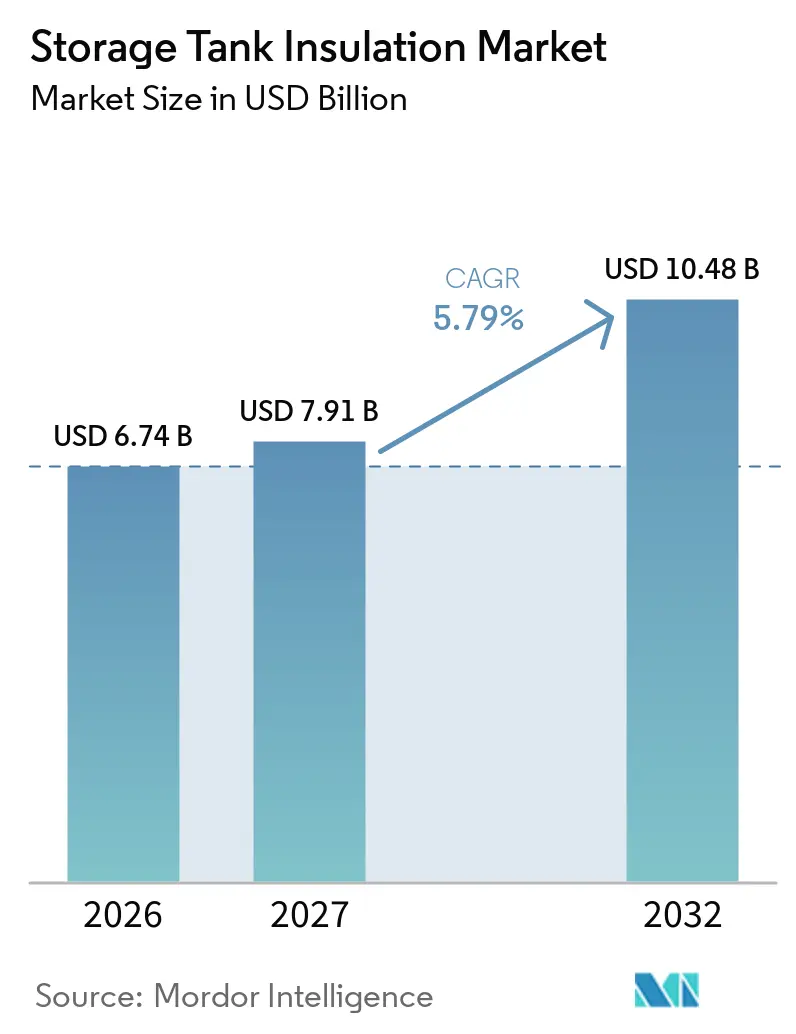
| Market Size (2027) | USD 7.91 Billion |
| Market Size (2032) | USD 10.48 Billion |
| Growth Rate (2027 - 2032) | 5.79 % |
| Fastest Growing Market | Asia-Pacific |
| Largest Market | Asia-Pacific |
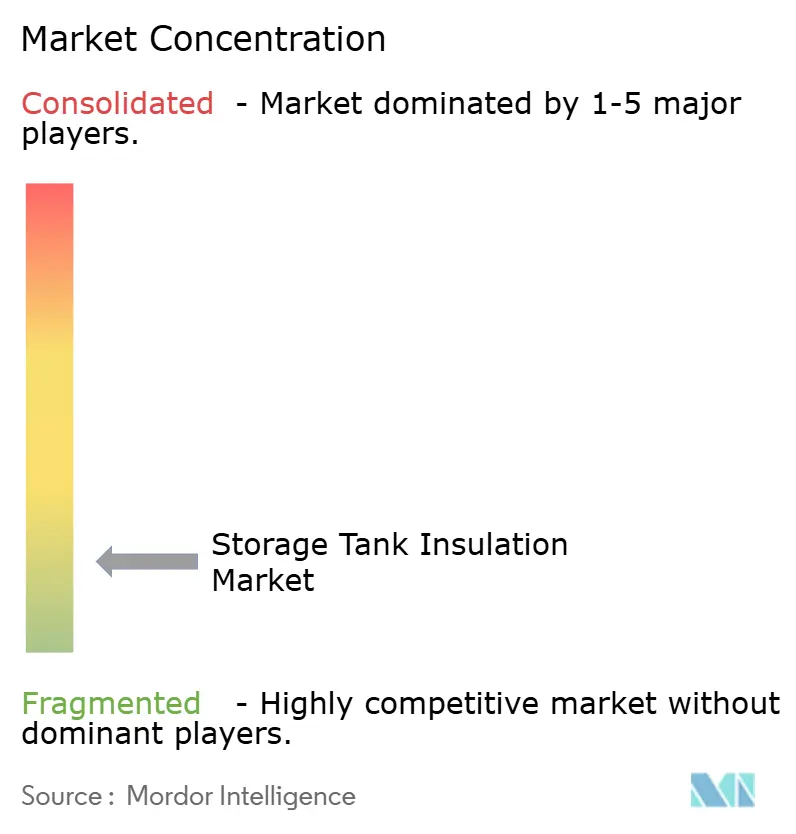
| Market Concentration | Low |
Major Players *Disclaimer: Major Players sorted in no particular order Image © Mordor Intelligence. Reuse requires attribution under CC BY 4.0. | |
Storage Tank Insulation Market Analysis by Mordor Intelligence
The global storage tank insulation market size is expected to grow from USD 6.74 billion in 2026 to USD 7.91 billion in 2027 and is forecast to reach USD 10.48 billion by 2032 at 5.79% CAGR over 2027-2032. The market is supported by investment in oil and gas, LNG, and petrochemical assets that require stable operating temperatures, consistent energy performance, and materials suited for demanding service conditions. Energy efficiency requirements are shifting insulation spending toward planned asset upgrades, documented performance checks, and earlier maintenance decisions at industrial sites. Operators face higher energy costs and compliance burdens when aging insulation results in thermal losses, surface condensation, or unreliable temperature control in tanks and connected equipment. Suppliers are responding with materials that improve fire performance, moisture resistance, heat retention, installation flexibility, and compatibility with the operating requirements of hot, cold, and cryogenic storage systems. The market also benefits from projects that combine new tank construction with retrofit work on existing assets, generating demand across construction, replacement, maintenance, and asset-integrity programs.
Key Report Takeaways
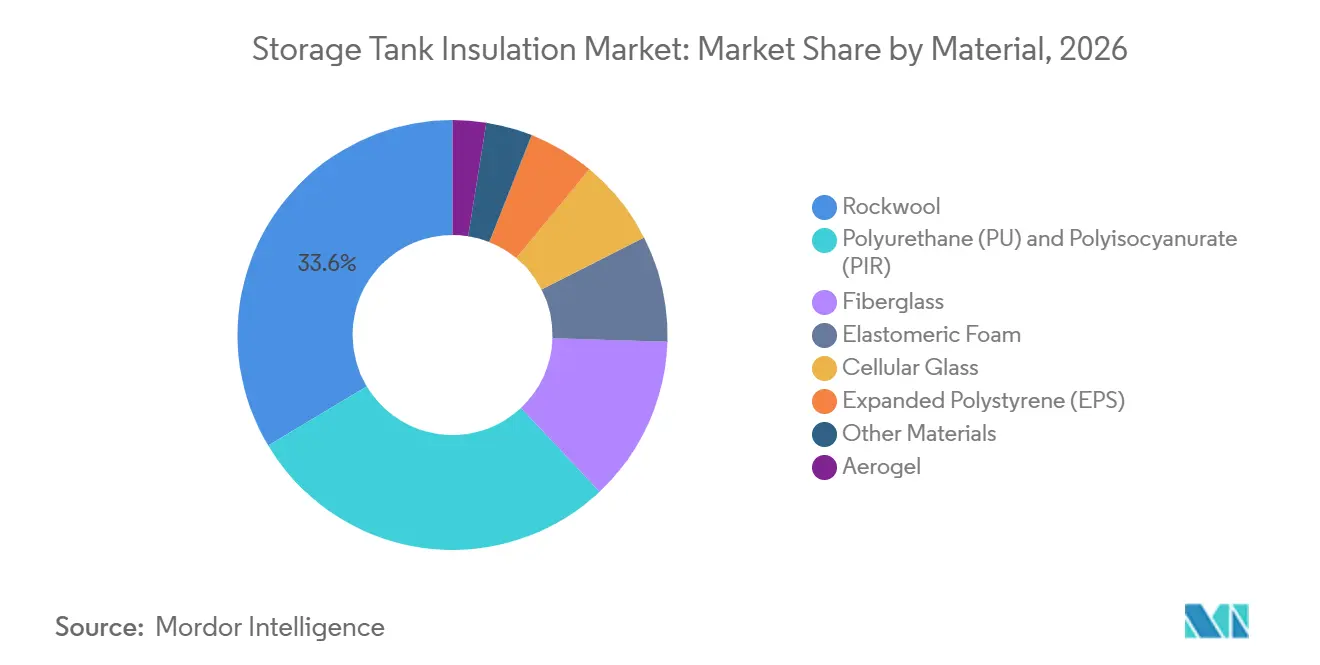
- By material, rockwool led with 33.6% revenue share in 2026, while elastomeric foam is forecast to expand at a 5.9% CAGR through 2032.
- By temperature range, hot insulation held 57.8% revenue share in 2026, while cryogenic insulation is forecast to expand at a 7.3% CAGR through 2032.
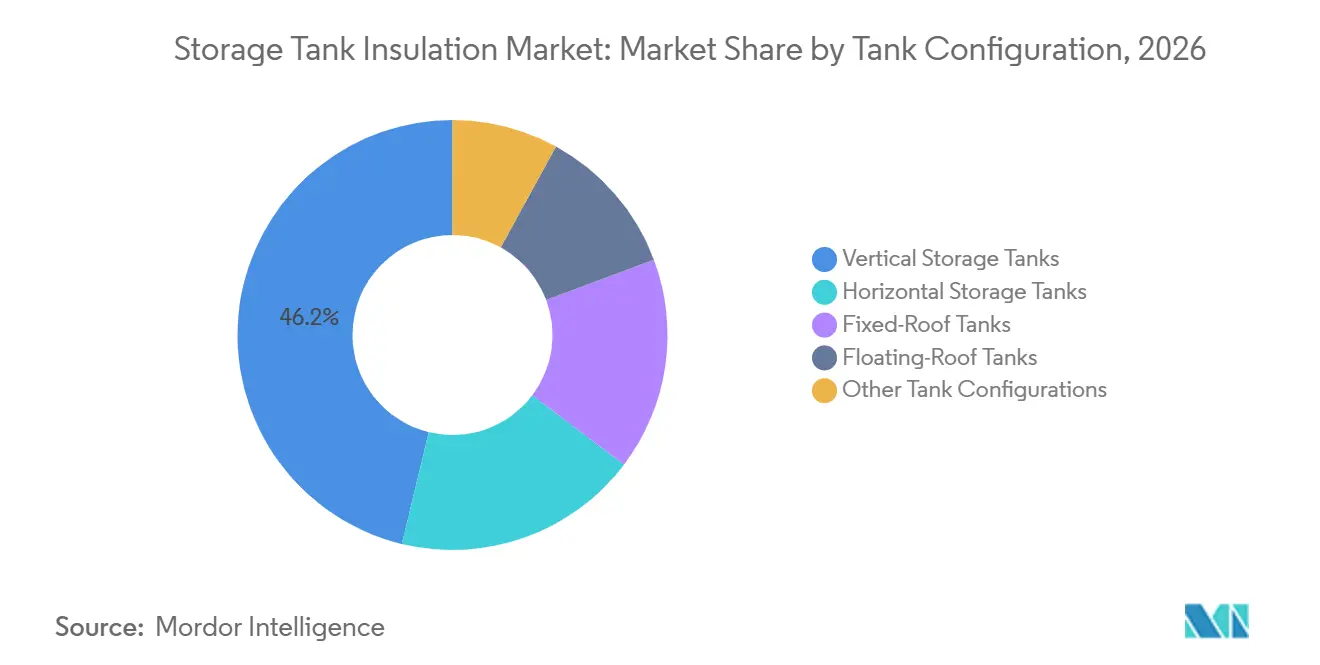
- By tank configuration, vertical storage tanks held 46.2% revenue share in 2026, while floating-roof tanks are forecast to expand at a 6.1% CAGR through 2032.
- By insulation application, thermal insulation held 32.7% revenue share in 2026, while cold retention is forecast to expand at a 6.6% CAGR through 2032.
- By end-use industry, oil and gas held 35.5% revenue share in 2026, while chemical and petrochemical are forecast to expand at a 5.8% CAGR through 2032.
- By geography, Asia-Pacific held 42.3% revenue share in 2026 and is forecast to expand at a 6.3% CAGR through 2032.
Note: Market numbers in this report are based on Mordor Intelligence's proprietary estimation framework, which combines nine months of actuals with Q4 projections for base year 2026.
Market Trends and Insights
Drivers Impact Analysis of Storage Tank Insulation Market*
| Driver | (~) % Impact on CAGR Forecast | Geographic Relevance | Impact Timeline |
|---|---|---|---|
| Industrial Energy Efficiency And Emissions Requirements | +1.2% | Global, concentrated in Europe and North America | Medium term (2-4 years) |
| LNG, Industrial Gas, And Cryogenic Storage Expansion | +1.5% | Asia-Pacific core, Middle East, North America | Long term (≥ 4 years) |
| Petrochemical And Process Industry Capacity Additions | +0.9% | Middle East, Southeast Asia, China | Medium term (2-4 years) |
| Temperature Controlled Food And Beverage Storage | +0.6% | Asia-Pacific, South America, and Middle East and Africa | Short term (≤ 2 years) |
| Digital Monitoring And Predictive Maintenance Adoption | +0.5% | Global, with early gains in Singapore, South Korea, and the United Arab Emirates | Medium term (2-4 years) |
| Retrofit Demand From Aging Fixed Tank Assets | +0.7% | North America and Europe | Medium term (2-4 years) |
| Source: Mordor Intelligence | |||
Industrial Energy Efficiency and Emissions Requirements
Energy efficiency regulations are prompting large fixed-tank operators to review heat losses, insulation condition, fuel use, and the operating costs of equipment that no longer meets internal performance targets. The recast EU Energy Efficiency Directive requires member states to implement energy audits and energy savings programs for large enterprises.[1] Germany, France, and Italy remain important compliance markets due to their substantial industrial tank fleets, established refining capacity, and many sites where insulation has been maintained over long operating lives. Procurement teams increasingly require documented thermal performance rather than relying solely on contractor preference, placing greater weight on material test data and documented system design. China's GB/T 8175-2025 took effect in May 2026, replacing the 2008 guide for thermal insulation design of equipment and pipes. These requirements give the storage tank insulation market a clearer link to formal engineering specifications, supplier documentation, and timely replacement decisions at operating facilities.
LNG, Industrial Gas, and Cryogenic Storage Expansion
The storage tank insulation market is gaining support from LNG projects, industrial gas storage, and cryogenic systems that require sustained temperature control before, during, and after commissioning. Global LNG supply is projected to rise by 7% in 2026, the fastest annual increase since 2019. Insulation is generally ordered before first gas, giving tank suppliers earlier visibility on project schedules, material needs, installation access, and construction sequencing. EN 14620-4:2025 updated insulation requirements for refrigerated liquefied-gas storage systems and reinforced the importance of boil-off control, installation quality, and maintenance planning.[2] Gaztransport and Technigaz announced a 200,000 m³ ethane membrane tank in Ningbo, China, with completion scheduled for the fourth quarter of 2028. Low-emission hydrogen investment was expected to reach USD 8 billion in 2025, supporting interest in higher-value insulation where boil-off management, material thickness, and reliability are key considerations.
Petrochemical and Process Industry Capacity Additions
Petrochemical construction supports insulation demand because facilities include process vessels, pipelines, reactors, columns, and storage tanks that all operate at defined temperature ranges. BASF started production at its EUR 8.7 billion integrated site in Zhanjiang, China, in early 2026. The site adds reactors, columns, and tanks that require controlled operating temperatures, reliable insulation systems, and a mix of hot-service and cold-service materials. Vopak reached a positive final investment decision for a 160,000 m³ ethane storage facility in Map Ta Phut, Thailand, under a 15-year contract with PTT Global Chemical. This type of refrigerated facility adds demand for insulation over a long operating life and creates recurring inspection and maintenance needs. Covestro announced a planned 660,000-tonne-per-year MDI production train in Shanghai and began a feasibility study in the United Arab Emirates. The storage tank insulation market therefore draws support from both downstream project construction and upstream material capacity additions.
Temperature Controlled Food and Beverage Storage
Food and beverage storage creates demand for tank systems that maintain controlled temperatures during processing, intermediate storage, cleaning, and transfer between facilities. Dairy, fermentation, and beverage vessels require insulation that supports stable conditions, routine cleaning, and consistent product handling. In Asia-Pacific, investment in temperature-controlled food storage across India, Vietnam, Indonesia, and Thailand is supporting demand, as facilities expand to serve growing processing and distribution networks. Fermentation tanks used in brewing and biofermentation favor materials that resist moisture, repeated cleaning, and the thermal cycling associated with production schedules. Refrigeration can represent 20% to 25% of facility operating expenses, strengthening the case for higher-performing insulation systems when energy savings can offset material costs. This demand base broadens the storage tank insulation market beyond oil, gas, and petrochemical installations, while retaining the same need for durable and well-specified products.
Restraints Impact Analysis of Storage Tank Insulation Market*
| Restraint | (~) % Impact on CAGR Forecast | Geographic Relevance | Impact Timeline |
|---|---|---|---|
| Volatile Raw Material And Specialty Insulation Costs | -0.8% | Global, most acute in Europe and Asia | Short term (≤ 2 years) |
| High Retrofit And Installation Complexity | -0.4% | North America and Europe | Medium term (2-4 years) |
| Moisture Ingress And Corrosion Under Insulation | -0.3% | Global, coastal and humid regions | Long term (≥ 4 years) |
| Long Procurement Cycles For Large LNG Projects | -0.3% | Asia-Pacific and Middle East | Long term (≥ 4 years) |
| Source: Mordor Intelligence | |||
Volatile Raw Material and Specialty Insulation Costs
Raw material price volatility remains a near-term constraint for polyurethane-based systems used in cold-service and cryogenic insulation. MDI prices increased by 40% between late 2025 and mid-2026 following maintenance outages at major production sites, according to company updates from BASF SE and Covestro AG.[3] Rockwool, fiberglass, and aerogel producers face separate cost pressures stemming from energy-intensive production, transport requirements, and site-specific finishing needs. Certain certified LNG applications also have a limited pool of qualified suppliers, which can reduce procurement flexibility when projects require specialized materials. These conditions make it more difficult for mid-sized contractors to commit to fixed-price contracts and protect margins over longer construction schedules. The storage tank insulation market can continue to grow under these conditions, but margins, purchasing decisions, and project timing become less predictable. Material availability may also affect project schedules when buyers require specialized products for refrigerated tanks or complex retrofit work.
Moisture Ingress and Corrosion Under Insulation
Moisture ingress can reduce insulation performance and increase the risk of corrosion under insulation on tanks, piping, cladding, and related equipment. A 2025 industry collaboration involving Shell plc, Equinor ASA, BP plc, Chevron Corporation, Saudi Basic Industries Corporation, and Dow Inc. reported new findings on corrosion under insulation and inspection practices. Remediation typically requires removal and replacement of insulation during a shutdown, along with inspection and repair of the underlying substrate. These costs can delay upgrade decisions, particularly at older sites where access is limited and multiple maintenance priorities compete for funding. Engineering teams must match materials, vapor barriers, cladding, drainage details, and installation methods to site-specific conditions. The storage tank insulation market benefits when operators address these risks proactively, but poorly designed systems can reduce confidence in conventional products and increase lifecycle costs.
*Our forecasts treat driver/restraint impacts as directional, not additive. The impact forecasts reflect baseline growth, mix effects, and variable interactions.
Storage Tank Insulation Market Segment Analysis
By Material:
Rockwool Leads While Aerogel And Elastomeric Foam Reshape Performance SpecificationsRockwool held 33.6% of the storage tank insulation market share by material in 2026. Its position reflects long-standing use in high-temperature tanks across refining, petrochemical, and power applications, where fire performance and stable service conditions are central to material selection. The material is noncombustible, can serve temperatures up to 700°C, and works with aluminum cladding that protects insulation systems from site exposure. These qualities support its use in heated crude-oil tanks and process vessels at refinery and petrochemical complexes. Fiberglass serves lower-cost tank-farm applications, while expanded polystyrene is used in lower-temperature food-grade storage where operating conditions differ from hot-service duties. Cellular glass holds a premium role in cold-service and buried-tank applications where moisture resistance, dimensional stability, and protection against water ingress are important.
Elastomeric foam is projected to grow at a 5.9% CAGR from 2027 to 2032, the fastest rate within the material category. Its closed-cell structure resists moisture ingress in refrigerated and cold-service applications, where moisture can undermine thermal performance and complicate maintenance. The storage tank insulation industry uses the material where mineral wool would require additional vapor barriers and where flexibility aids installation around complex equipment shapes. Aerogel remains a smaller-volume choice, but it has changed discussions around thin, high-performance systems for restricted spaces and demanding cryogenic service. Armacell International launched ArmaGel XG in September 2024 and opened a Pune facility with annual aerogel capacity of 1 million m² by mid-2025. A 2024 university study found that an aerogel-insulated cryogenic tank achieved a 3.6 g/h hydrogen boil-off rate, compared with 2,019 g/h for a fiberglass equivalent. China's updated thermal-insulation guidance also supports materials that help engineers meet documented heat-loss requirements at newly designed and upgraded facilities.

By Temperature Range:
Cryogenic Insulation Outpaces Other SegmentsHot insulation held 57.8% of the temperature-range segment in 2026. This position reflects the large fleet of petroleum storage and refinery tanks that manage crude viscosity, process heat, and product handling through elevated operating temperatures. Cold insulation serves refrigerated food and beverage tanks, industrial-gas storage, and biofermentation vessels, where maintaining temperature conditions protects product quality and process consistency. Demand rises with investment in food cold chains and industrial-gas infrastructure, particularly where new facilities require purpose-designed storage equipment. The storage tank insulation market size for cryogenic insulation is projected to grow at a 7.3% CAGR from 2027 to 2032, the highest projected rate among the segments provided, reflecting the more demanding thermal-control requirements of LNG and other low-temperature applications.
The expected LNG supply increase in 2026 supports the forward pipeline for cryogenic tank systems and related insulation packages. Liquid hydrogen pilots also require systems that operate at -253°C and use vacuum-based or multilayer aerogel insulation to manage heat transfer and boil-off. EN 14620-4:2025 sets updated requirements for refrigerated liquefied-gas tank insulation, including design and maintenance considerations that affect material selection. South Korean manufacturers and Japanese terminal operators are refurbishing aging cryogenic tanks as they maintain established import and storage infrastructure. This work adds retrofit demand alongside new capacity and extends the need for specialist contractors. The storage tank insulation industry requires more specialized engineering in this category than in standard hot-service work, as installation errors can affect long-term thermal performance.
By Tank Configuration:
Vertical Tanks Lead While Floating Roof Systems GrowVertical storage tanks held 46.2% of the tank-configuration segment in 2026. They are widely used in crude-oil tank farms, LNG import terminals, and chemical storage parks that require large capacity in a fixed location. Their cylindrical format increases storage capacity within an available footprint and has made the design familiar to operators and contractors. Horizontal tanks serve LPG, ammonia (NH₃), and smaller industrial-gas applications where pressure-vessel design, transport, and site layout favor a different orientation. Fixed-roof tanks remain established in fuel and chemical storage, particularly where operating requirements do not require a moving roof system. They use internal floating roofs or vapor-recovery systems to manage evaporative losses and maintain operating control.
Floating-roof tanks are forecast to expand at a 6.1% CAGR from 2027 to 2032. Growth is linked to crude-oil and condensate storage at export terminals in the Middle East and North America, where emissions control and storage availability guide design choices. Gaztransport and Technigaz's design work for 3 x 240,000 m³ LNG tanks in Australia illustrates the scale of new fixed-containment systems using GST membrane technology. The company states that this design can reduce steel requirements by 40% and add 10% storage capacity for an equivalent footprint. Floating roofs require flexible insulation that can tolerate motion and thermal cycling without premature damage or loss of fit. Inspection requirements also make long-life material selection important for the storage tank insulation market and for operators seeking to control maintenance interruptions.
By Insulation Application:
Thermal Insulation Holds The Base While Cold Retention ExpandsThermal insulation accounted for 32.7% of the application segment in 2026. It includes heat retention for hot crude storage, steam-traced tanks, and process vessels. Heat retention and energy-loss reduction applications help facilities lower fuel use and maintain product temperature. Condensation control and personnel protection are important in chemical and pharmaceutical operations. Cold tanks can create surface moisture that contributes to structural corrosion, while high surface temperatures can require safety measures for workers.
Cold retention is forecast to expand at a 6.6% CAGR from 2027 to 2032. The category benefits from LNG storage and growing cold-chain capacity for food and pharmaceutical products. Liquid air energy storage also uses insulated tanks to retain low temperatures during storage cycles, representing a small but relevant opportunity in the storage tank insulation market. Fire protection insulation continues to serve petrochemical and LNG operators upgrading passive protection on vessels and loading equipment, supported by insurer requirements and process-safety standards.
By End-Use Industry:
Oil And Gas Anchors Demand While Chemicals Grow FastestOil and gas accounted for 35.5% of the end-use segment in 2026. Its position reflects extensive crude-oil tanks, refinery vessels, and LNG terminal systems that require insulation across hot, cold, and cryogenic operating conditions. Operators in the Gulf Cooperation Council and Southeast Asia are combining insulation upgrades with structural monitoring programs. Water and wastewater applications use insulation in process-heating systems. Energy and power remains a steady end-use for heat retention and condensate-tank applications.
Chemical and petrochemical is forecast to grow at a 5.8% CAGR from 2027 to 2032. Ethylene (C₂H₄), propane dehydrogenation, and specialty-chemical projects require insulation across several tank temperature ranges and for equipment operating under different process conditions. The Vopak and PTT Global Chemical agreement for Map Ta Phut demonstrates the long operating life of petrochemical storage infrastructure and the role of contracted capacity in project planning. Pharmaceutical biofermentation adds a smaller but demanding customer group, as tank temperatures must remain within narrow operating limits during production and storage. Specialized materials can gain share in applications where validation, hygiene, and process reliability limit substitution by standard systems. This end-use base supports demand for both standard products and premium insulation systems across new installations, maintenance programs, and retrofit projects.
Geography Analysis
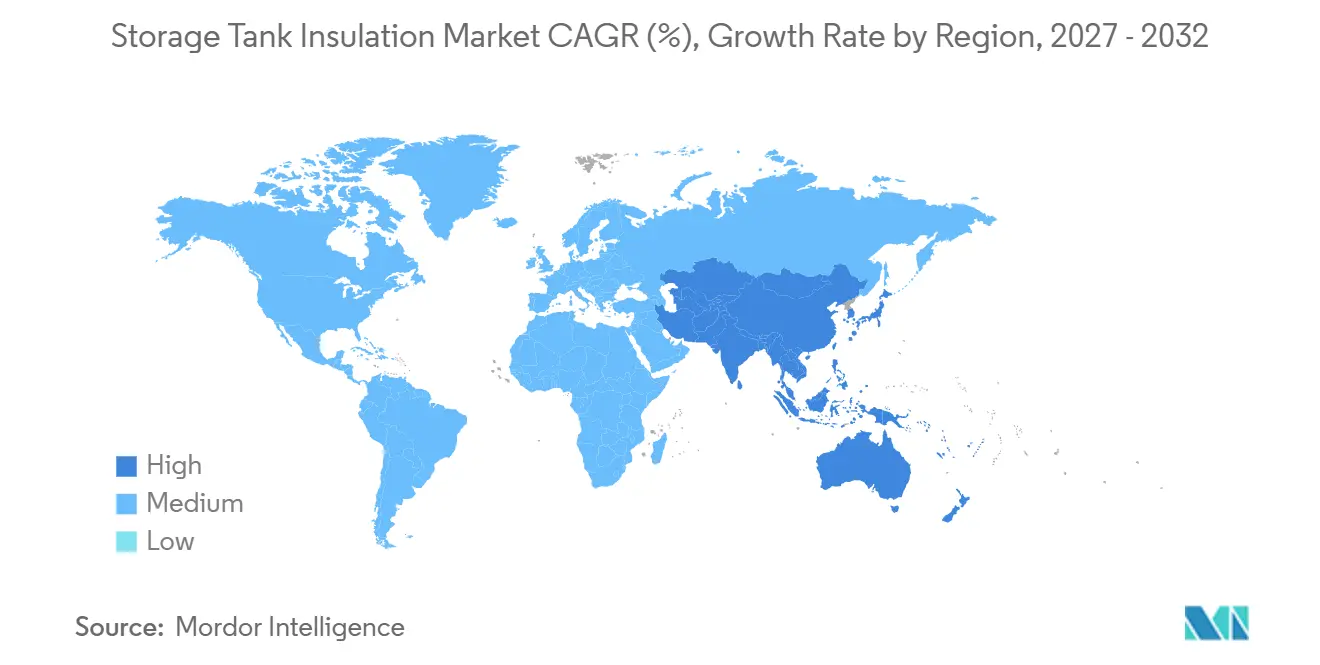
Asia-Pacific held 42.3% of the storage tank insulation market share in 2026 and is projected to grow at a 6.3% CAGR through 2032. Growth in the region is driven by new storage capacity additions, refinery activity, LNG infrastructure development, petrochemical construction, and the need to maintain thermal performance across varied climate conditions. China remains a central demand center, with ongoing industrial projects and capacity expansions requiring insulation materials for both storage assets and process equipment. BASF SE began production at its Zhanjiang integrated site in early 2026 following an investment of EUR 8.70 billion. India and Southeast Asia contribute additional greenfield demand through LNG import infrastructure and strategic oil storage plans, expanding the addressable market beyond established refinery centers. Demand in the region is therefore shaped by project construction activity, refurbishment needs, material availability, and the ability of suppliers to serve different end-use applications.
North America and Europe are mature parts of the storage tank insulation market, where retrofit and maintenance work supports demand across long-established industrial sites. The EU Energy Efficiency Directive places greater focus on energy audits and documented savings measures at large industrial sites. Cryogenic storage is a growing niche at LNG terminals in Germany, the Netherlands, Greece, and Poland, while older tanks continue to require inspection, repair, and insulation replacement. United States LNG export capacity is projected to increase from 11.4 Bcf/d in 2024 to 28.7 Bcf/d by 2029. California adopted updated Title 24 Part 6 requirements covering industrial pipe insulation and related energy measures.[4] These markets are less dependent on greenfield tank farms than Asia-Pacific, but their large installed base creates sustained demand for engineered replacement work and materials that meet updated requirements.
The Middle East and Africa represent an expanding area for above-ground storage tank insulation in oil export and petrochemical settings. Saudi Arabia and the United Arab Emirates continue to support chemical storage and industrial projects requiring tank systems suited to high ambient temperatures and demanding operating conditions. South America remains a smaller market, but oil and gas investment in Brazil and Argentina supports new storage requirements across upstream, export, and processing activity. Mineral wool and polyurethane foam are common in hot and ambient service applications, while cryogenic demand is centered on LNG receiving infrastructure and related gas storage systems. Africa remains an early-stage opportunity, though suppliers are monitoring liquefaction projects in Mozambique and Senegal that may require cold-service insulation at commissioning. These regions present a mix of volume opportunities in conventional service and technically demanding work in refrigerated applications.
Competitive Landscape
The storage tank insulation market is fragmented, with global material suppliers and regional service providers both shaping the competitive environment. Rockwool International A/S, Armacell International S.A., Saint-Gobain S.A., Owens Corning, and Kingspan Group plc compete with regional specialists, contractors, and cryogenic system integrators. Competition centers on material performance, project delivery, installation capability, specification compliance, and the ability to support customers across the service life of a tank asset. Larger suppliers are investing in product development and regional capacity to serve high-value applications and improve access to expanding industrial markets. Regional firms remain important where local installation capability, site knowledge, schedule flexibility, and pricing determine contract awards. The market also favors suppliers that can document their products effectively and work with engineering firms during the specification process.
Rockwool International A/S planned EUR 650 million of capital investment in 2026 for capacity expansion in India, Romania, and the United States, as well as electric melting technology. Armacell International S.A. expanded its aerogel offering through ArmaGel XG and a new manufacturing site in Pune. Owens Corning completed the sale of its glass reinforcements business to Praana Group for an enterprise value of USD 645 million in May 2026. This divestiture may shift its focus toward building products and create openings for other suppliers in industrial fiberglass applications where tank owners require established material availability. Companies are also using condition monitoring and risk-based inspection to differentiate their offerings, particularly where customers require evidence that insulation is protecting an asset over its planned service life.
Digital monitoring is becoming more relevant where buyers want early warning of moisture and corrosion risks before they result in unplanned repairs. A 2026 CORR paper reported that remote monitoring systems combining electromagnetic sensing and moisture detection can reduce inspection costs by up to 75% within risk-based inspection workflows. Suppliers that connect insulation design to monitoring may become more involved in asset integrity planning. Premium opportunities are concentrated in cryogenic, offshore, and space-constrained applications, where standard products may not meet the required thermal or physical performance limits. The overall competitive structure reflects a market where established multinational suppliers are prominent, yet local contractors and specialist providers retain meaningful roles.
Storage Tank Insulation Industry Leaders
-
ROCKWOOL A/S
-
Kingspan Group plc
-
Saint-Gobain
-
Owens Corning
-
Armacell International S.A.
- *Disclaimer: Major Players sorted in no particular order
Storage Tank Insulation Market Companies Covered in this Report
- Armacell International S.A.
- BASF SE
- Cabot Corporation
- CB&I
- Chemelex Inc.
- ClimaTech / Climalock
- Covestro AG
- CRYOPERL
- ERATHERM
- Etex Group
- G+H Insulation
- Huntsman Corporation
- Insultherm Inc.
- Johns Manville
- Kingspan Group plc
- Knauf Insulation
- L’ISOLANTE K-FLEX S.p.A.
- MC&I Inc.
- Owens Corning
- Pittsburgh Corning Europe N.V. and FOAMGLAS®
- Röchling SE and Co. KG
- Rockwool A/S
- Saint-Gobain
- Sherwin-Williams
- Tarsco Bolted Tank
Recent Industry Developments in Storage Tank Insulation Market
- May 2026: Kingspan Group commissioned a new mineral wool insulated-panel manufacturing facility in Hradec Králové, Czech Republic, following an investment of approximately EUR 30 million. Mineral wool panels are widely used in industrial facilities, cold storage infrastructure, and storage tank insulation applications.
- March 2026: Knauf Insulation commenced test production at its EUR 120 million electric-melting rock mineral wool line in Novi Marof, Croatia. The expansion adds approximately 60,000 tonnes per year of mineral wool capacity, increasing supply for industrial insulation, cryogenic facilities, and storage tank insulation applications.
- January 2026: GTT was contracted to design three 240,000 m³ onshore LNG storage tanks in Australia using its GST membrane technology. According to the company, the design can reduce steel consumption by up to 40% while increasing storage capacity by approximately 10% for the same footprint, which is directly relevant to cryogenic storage tank insulation and containment technology.
- October 2025: The updated EN 14620-4:2025 standard was published, introducing revised requirements for the design, fabrication, testing, and installation of insulation systems for refrigerated liquefied-gas storage tanks, representing one of the most significant regulatory developments affecting cryogenic storage tank insulation projects in Europe.
Global Storage Tank Insulation Market Report Scope
Storage tank insulation involves applying thermal insulating materials around storage tanks to minimize heat loss or gain, maintain stable product temperatures, improve energy efficiency, and protect stored liquids or gases from external environmental conditions. These insulation systems are used on hot, cold, and cryogenic storage tanks across industries such as oil and gas, LNG, chemicals, power generation, food and beverage, and water treatment. Storage tank insulation helps reduce operating costs, prevent condensation and corrosion, enhance safety, and ensure reliable storage performance in industrial facilities.
The global storage tank insulation market is segmented by material, temperature range, tank configuration, insulation application, end-use industry, and geography. By material, the market is segmented into polyurethane (PU) and polyisocyanurate (PIR), rockwool, fiberglass, elastomeric foam, cellular glass, expanded polystyrene (EPS), aerogel, and other materials. By temperature range, the market is segmented into hot insulation, cold insulation, and cryogenic insulation. By tank configuration, the market is segmented into vertical storage tanks, horizontal storage tanks, fixed-roof tanks, floating-roof tanks, and other tank configurations. By insulation application, the market is segmented into thermal insulation, heat retention, cold retention, condensation control, personnel protection, fire protection, and energy-loss reduction. By end-use industry, the market is segmented into oil and gas, chemical and petrochemical, food and beverage, energy and power, water and wastewater, pharmaceutical, and other industries. The report also covers the market size and forecasts for the global storage tank insulation market across 26 countries in key regions. For each segment, the market sizing and forecasts are provided on the basis of value (USD).
Segmentation Overview
| Polyurethane (PU) and Polyisocyanurate (PIR) |
| Rockwool |
| Fiberglass |
| Elastomeric Foam |
| Cellular Glass |
| Expanded Polystyrene (EPS) |
| Aerogel |
| Other Materials |
| Hot Insulation |
| Cold Insulation |
| Cryogenic Insulation |
| Vertical Storage Tanks |
| Horizontal Storage Tanks |
| Fixed-Roof Tanks |
| Floating-Roof Tanks |
| Other Tank Configurations |
| Thermal Insulation |
| Heat Retention |
| Cold Retention |
| Condensation Control |
| Personnel Protection |
| Fire Protection |
| Energy-Loss Reduction |
| Oil and Gas |
| Chemical and Petrochemical |
| Food and Beverage |
| Energy and Power |
| Water and Wastewater |
| Pharmaceutical |
| Other Industries |
| North America | United States |
| Canada | |
| Mexico | |
| Europe | Germany |
| France | |
| Italy | |
| Spain | |
| United Kingdom | |
| Poland | |
| Russia | |
| Rest of Europe | |
| Asia-Pacific | China |
| India | |
| Japan | |
| South Korea | |
| Australia | |
| Indonesia | |
| Vietnam | |
| Thailand | |
| Rest of Asia-Pacific | |
| South America | Brazil |
| Argentina | |
| Chile | |
| Rest of South America | |
| Middle East and Africa | Saudi Arabia |
| United Arab Emirates | |
| Egypt | |
| South Africa | |
| Morocco | |
| Rest of Middle East and Africa |
| By Material | Polyurethane (PU) and Polyisocyanurate (PIR) | |
| Rockwool | ||
| Fiberglass | ||
| Elastomeric Foam | ||
| Cellular Glass | ||
| Expanded Polystyrene (EPS) | ||
| Aerogel | ||
| Other Materials | ||
| By Temperature Range | Hot Insulation | |
| Cold Insulation | ||
| Cryogenic Insulation | ||
| By Tank Configuration | Vertical Storage Tanks | |
| Horizontal Storage Tanks | ||
| Fixed-Roof Tanks | ||
| Floating-Roof Tanks | ||
| Other Tank Configurations | ||
| By Insulation Application | Thermal Insulation | |
| Heat Retention | ||
| Cold Retention | ||
| Condensation Control | ||
| Personnel Protection | ||
| Fire Protection | ||
| Energy-Loss Reduction | ||
| By End-Use Industry | Oil and Gas | |
| Chemical and Petrochemical | ||
| Food and Beverage | ||
| Energy and Power | ||
| Water and Wastewater | ||
| Pharmaceutical | ||
| Other Industries | ||
| By Geography | North America | United States |
| Canada | ||
| Mexico | ||
| Europe | Germany | |
| France | ||
| Italy | ||
| Spain | ||
| United Kingdom | ||
| Poland | ||
| Russia | ||
| Rest of Europe | ||
| Asia-Pacific | China | |
| India | ||
| Japan | ||
| South Korea | ||
| Australia | ||
| Indonesia | ||
| Vietnam | ||
| Thailand | ||
| Rest of Asia-Pacific | ||
| South America | Brazil | |
| Argentina | ||
| Chile | ||
| Rest of South America | ||
| Middle East and Africa | Saudi Arabia | |
| United Arab Emirates | ||
| Egypt | ||
| South Africa | ||
| Morocco | ||
| Rest of Middle East and Africa | ||
Key Questions Answered in the Report
What is the projected growth rate for the storage tank insulation market?
The storage tank insulation market is projected to grow at a 5.79% CAGR from 2027 to 2032, reaching USD 10.48 billion by 2032. This outlook reflects investment in energy efficiency, LNG, and petrochemical assets.
Which material leads the storage tank insulation market?
Rockwool led the material category with a 33.6% revenue share in 2026, while elastomeric foam has the fastest projected growth at a 5.9% CAGR. Material selection depends on operating temperature, moisture exposure, fire requirements, and installation conditions.
Why is cryogenic tank insulation growing quickly?
Cryogenic insulation is projected to grow at a 7.3% CAGR through 2032, driven by LNG, industrial gas, and hydrogen projects that require strict boil-off and temperature control. The category also benefits from advance ordering during large tank projects.
Which end-use sector is the largest user in the storage tank insulation market?
Oil and gas held 35.5% of end-use revenue in 2026, as its tanks and terminals operate across hot, cold, and cryogenic conditions. Refineries, crude storage, and LNG terminals generate demand for different insulation system types.
Which region has the strongest storage tank insulation market outlook?
Asia-Pacific held a 42.3% revenue share in 2026 and is projected to grow at a 6.3% CAGR through 2032. Demand in the region is driven by new tank construction, refinery activity, LNG development, and petrochemical projects.