
Sports Recovery Services Market Size and Share
Market Overview
| Study Period | 2022 - 2032 |
|---|---|
| Market Size (2027) | USD 9.96 Billion |
| Market Size (2032) | USD 15.48 Billion |
| Growth Rate (2027 - 2032) | 9.22 % |
| Fastest Growing Market | Asia-Pacific |
| Largest Market | North America |
| Market Concentration | Low |
Major Players *Disclaimer: Major Players sorted in no particular order Image © Mordor Intelligence. Reuse requires attribution under CC BY 4.0. | |
Sports Recovery Services Market Analysis by Mordor Intelligence
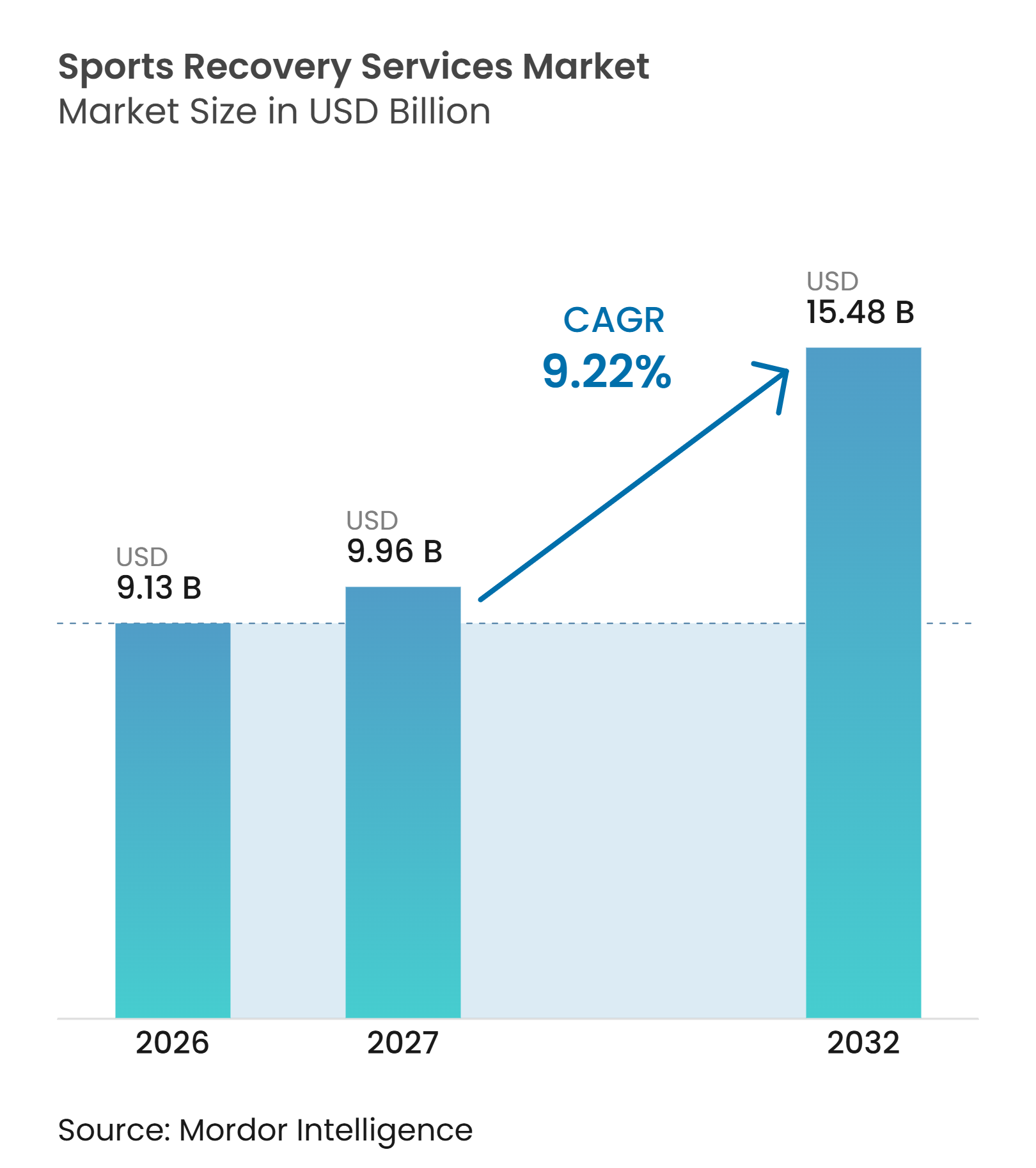
The global sports recovery services market size was valued at USD 9.13 billion in 2026 and is estimated to grow from USD 9.96 billion in 2027 to reach USD 15.48 billion by 2032, at a CAGR of 9.22% during the forecast period (2027-2032). Demand is expanding beyond post-injury treatment as consumers incorporate recovery services into regular fitness and wellness routines. Manual and assisted therapies remain central because consumers recognize them and they support repeat visits. Thermal and contrast therapies are gaining acceptance as operators add cryotherapy, heat, and compression options to service menus. Providers also use memberships, digital booking, and partnerships with gyms and employers to support consistent utilization. The competitive landscape remains fragmented, making network scale, clinical credibility, and a clear service proposition important for expansion.
Key Report Takeaways
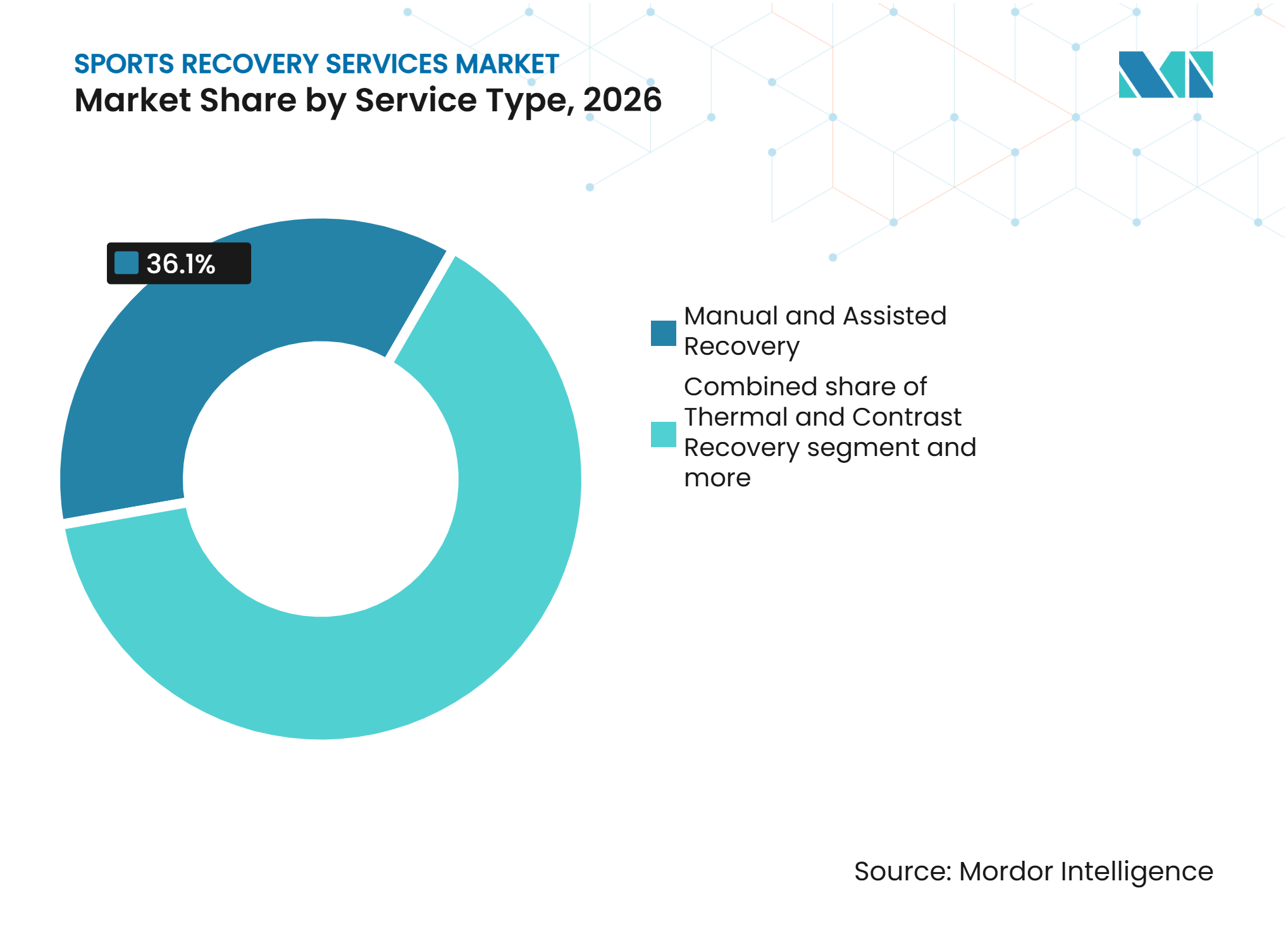
- By service type, Manual and Assisted Recovery accounted for 36.10% of the global sports recovery services market share in 2026, and Thermal and Contrast Recovery is projected to grow at a 9.78% CAGR through 2032.
- By delivery setting, Sports Medicine and Physiotherapy Clinics accounted for 37.70% of the global sports recovery services market share in 2026, and Recovery Studios and Wellness Centers are projected to grow at a 10.50% CAGR through 2032.
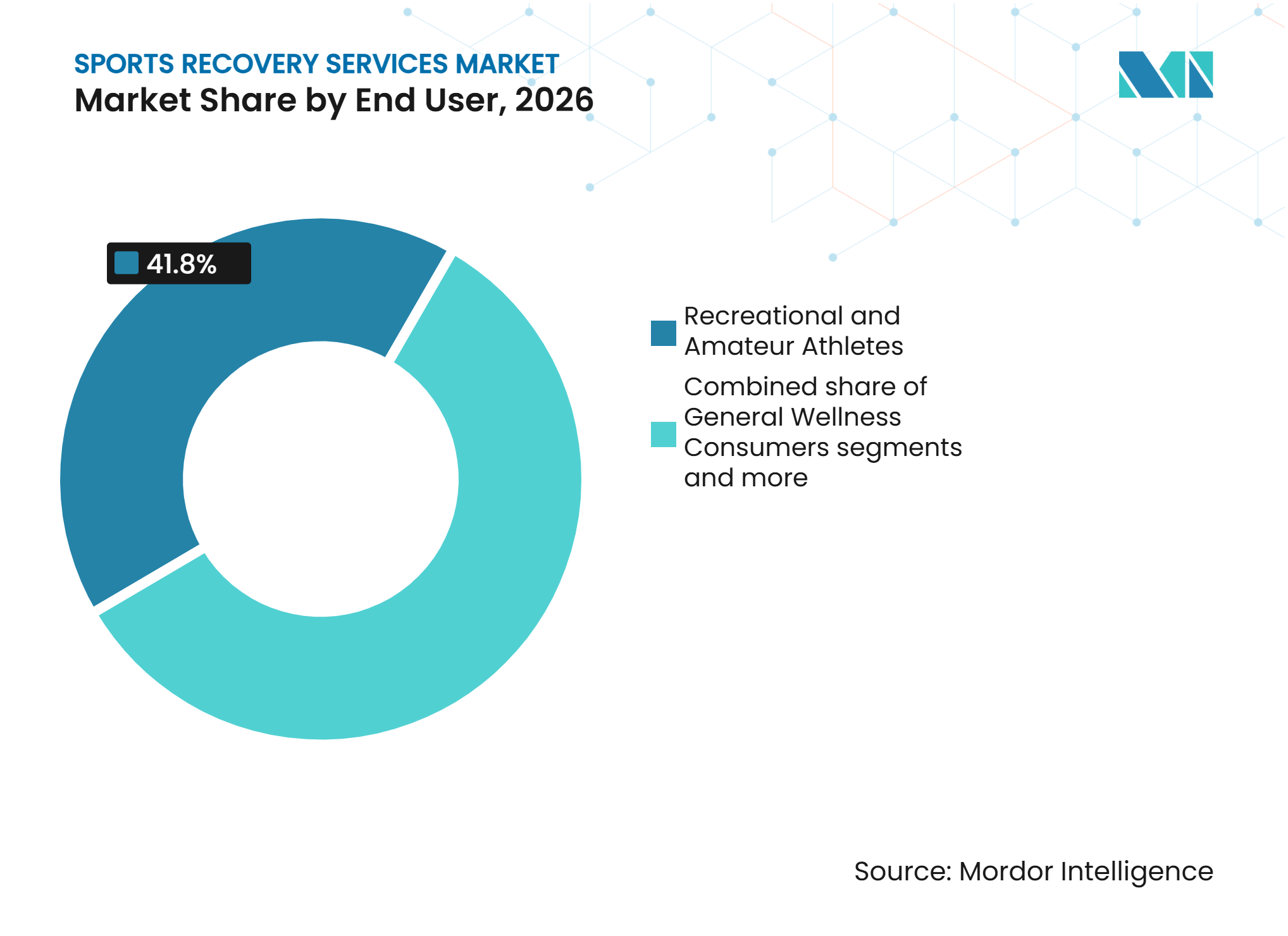
- By end user, Recreational and Amateur Athletes accounted for 41.80% of the global sports recovery services market share in 2026, and General Wellness Consumers are projected to grow at a 10.12% CAGR through 2032.
- By treatment objective, Recovery and Muscle Soreness Management accounted for 31.80% of the global sports recovery services market size in 2026, and Mobility, Pain Relief, and General Wellness are projected to grow at a 10.65% CAGR through 2032.
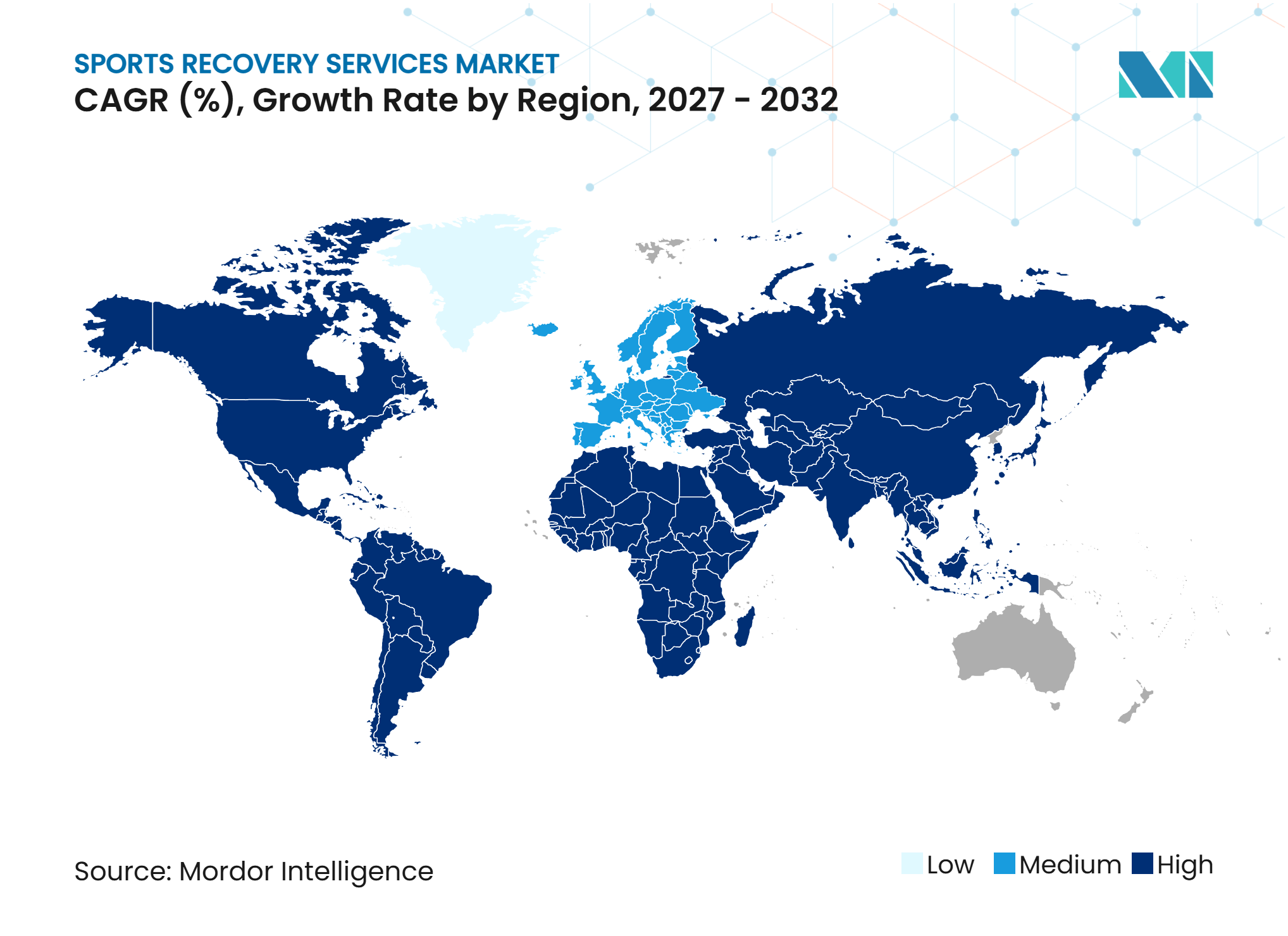
- By geography, North America accounted for 43.80% of the global sports recovery services market size in 2026, and Asia-Pacific is projected to grow at a 10.96% CAGR through 2032.
Note: Market numbers in this report are based on Mordor Intelligence's proprietary estimation framework, which combines nine months of actuals with Q4 projections for base year 2026.
Market Trends and Insights
Drivers Impact Analysis of Sports Recovery Services Market*
| Driver | (~) % Impact on CAGR Forecast | Geographic Relevance | Impact Timeline |
|---|---|---|---|
| Rising Participation in Organized, Recreational, and Fitness Activities | +2.1% | Global, led by Asia-Pacific and North America | Medium term (2-4 years) |
| Increasing Sports-Related Injuries and Musculoskeletal Conditions | +1.8% | Global, with acute demand in North America and Europe | Short term (≤ 2 years) |
| Mainstreaming of Preventive Recovery and Wellness Spending | +1.9% | North America and Western Europe, expanding to Asia-Pacific | Medium term (2-4 years) |
| Expansion of App-Based Booking, Memberships, and Multi-Service Recovery Studios | +1.5% | Global, highest adoption in North America | Short term (≤ 2 years) |
| Integration of Recovery Services Into Gyms, Clubs, Hotels, and Corporate Wellness Programs | +1.1% | North America and Europe, with spillover to Asia-Pacific and the Middle East and Africa | Medium term (2-4 years) |
| Transfer of Elite-Team Recovery Protocols Into Consumer Services | +0.7% | Global, led by North America and Europe | Long term (≥ 4 years) |
| Source: Mordor Intelligence | |||
Rising Participation in Organized, Recreational, and Fitness Activities
Regular participation in sports and exercise is expanding the customer base for the global sports recovery services industry. The R&A reported 112.2 million adult and junior golfers across its affiliated markets in 2025, a 3% increase year-on-year, including 47.1 million junior golfers, up 6%; the figures exclude the United States and Mexico[1]. The International Olympic Committee reported that Let’s Move and Olympic Day activities have engaged more than 30 million people in physical activity since 2023. Higher training frequency drives repeat demands for massage, mobility services, and physiotherapy rather than occasional recovery visits. This trend supports studio memberships and gym-based recovery packages in the global sports recovery services market.
Increasing Sports-Related Injuries and Musculoskeletal Conditions
Sports injuries and broader musculoskeletal conditions continue to drive demand for clinically supported recovery services. A 2025 analysis of the Global Burden of Disease Study 2021 estimated 607.8 million incident injury cases worldwide in 2021, up from 554.9 million in 1990; these figures cover all injuries, not sports injuries specifically[2]. A 2025 study overview found that anterior cruciate ligament injuries remain a concern in American football, basketball, soccer and volleyball, with female athletes experiencing higher injury rates in several sports. Separately, European injury surveillance recorded 572,280 sports-injury cases treated in emergency departments across 15 countries between 2018 and 2022. Rehabilitation needs often extend beyond acute care, supporting demand for physiotherapy, manual therapy, and compression services. Practitioner registration requirements and professional standards also make clinical governance important for providers in the global sports recovery services industry.
Mainstreaming of Preventive Recovery and Wellness Spending
Preventive wellness is expanding recovery services beyond injury treatment and elite athletics. ClassPass reported a 50% year-over-year increase in sports recovery bookings in 2025, indicating that consumers scheduled recovery appointments more frequently. The International SPA Association's 2025 consumer study found that 85% of spa-goers considered their visits a form of self-care. This trend supports the use of recovery services for stress relief, comfort, and ongoing physical maintenance. The Global Wellness Institute identified growing interest in cryotherapy and contrast therapy formats while cautioning providers against unsupported performance or treatment claims. Recurring service use supports membership models and multi-visit packages in the global sports recovery services market.
Expansion of App-Based Booking, Memberships, and Multi-Service Recovery Studios
Digital booking and membership programs help operators convert individual visits into regular usage. ClassPass recorded 37% growth in global wellness bookings in 2025, while sports recovery bookings grew by 50%. ABC Fitness reported an 8% year-over-year increase in gym check-ins and a 27% year-over-year increase in new member enrollments in its Summer 2025 Wellness Watch Report. These trends provide operators with a larger consumer base for recovery services offered through apps, loyalty programs, and bundled access. Platforms also enable consumers to compare availability, pricing, and service combinations before visiting. Membership models reduce reliance on one-time purchases and improve utilization across the global sports recovery services market.
Restraints Impact Analysis of Sports Recovery Services Market*
| Restraint | (~) % Impact on CAGR Forecast | Geographic Relevance | Impact Timeline |
|---|---|---|---|
| High Equipment, Facility, and Staffing Costs | -1.5% | Global, most acute in emerging markets | Long term (≥ 4 years) |
| Uneven Clinical Evidence and Health-Claim Compliance Risk | -0.9% | North America and Europe | Medium term (2-4 years) |
| Limited Consumer Affordability Outside Premium Urban Catchments | -1.1% | Asia-Pacific core, South America, Middle East and Africa | Medium term (2-4 years) |
| Fragmented Service Quality and Inconsistent Practitioner Standards | -0.7% | Global, most pronounced in Asia-Pacific and the Middle East and Africa | Long term (≥ 4 years) |
| Source: Mordor Intelligence | |||
High Equipment, Facility, and Staffing Costs
High upfront investment can limit providers’ ability to offer multiple recovery modalities at a single location. Thermal systems, compression equipment, light-based devices, treatment rooms, and specialized staff increase the fixed cost base. These costs are particularly challenging to absorb in locations with lower customer spending capacity or uncertain venue occupancy. Consequently, providers may prioritize higher-income urban areas, gym partnerships, or franchise models that distribute operating support. Staffing requirements also remain significant, as clinical and hands-on recovery services require qualified practitioners and consistent service delivery. These factors can slow broader geographic expansion in the global sports recovery services market.
Uneven Clinical Evidence and Health-Claim Compliance Risk
Evidence quality varies across recovery modalities, particularly when wellness services make therapeutic claims. The Global Wellness Institute cautioned in 2025 against overstating cryotherapy benefits. The 2025 study “A DICOM-Based Standard for Quantitative Physical Rehabilitation” highlighted challenges in data standardization and rehabilitation evaluation. Providers must distinguish wellness positioning from medical claims and use appropriately credentialed staff for clinical services. Differences in national regulations for devices, advertising, and practitioner registration can delay expansion across markets. Stronger evidence and careful communication are essential for building trust in the global sports recovery services market.
*Our forecasts treat driver/restraint impacts as directional, not additive. The impact forecasts reflect baseline growth, mix effects, and variable interactions.
Consumer Preferences & Spending Patterns
ClassPass’ 2025 Look Back Report recorded a 50% increase in sports recovery bookings, a 42% increase in massage bookings, and a 40% increase in sauna bookings. These trends indicated demand for performance recovery and relaxation services, creating opportunities to bundle massage, heat therapy, and stretching. The International Spa Association's (ISPA) 2025 consumer study identified stress relief as a key motivation for spa visits, supporting integrated wellness positioning rather than performance-focused messaging alone.
The Health & Fitness Association reported that Americans with fitness goals expected to spend USD 61 per month, or USD 733 annually, in 2026. In Spain, the fitness sector generated EUR 3.235 billion (USD 3.81 billion) in 2025 and served 8.3 million users across 5,806 centers, according to España Activa. These figures indicated opportunities to offer recovery add-ons through established gyms, where existing memberships lowered access barriers. Transparent pricing and tiered packages can broaden adoption across customer segments.
Service Market Performance Intelligence
The United Kingdom private-practice benchmarking, based on 715 clinic-owner responses, reported median physiotherapy fees of GBP 74 (USD 99.83) for initial assessments and GBP 63 (USD 85) for follow-up visits in 2026. Higher initial consultation fees reflect assessment time and practitioner expertise, while repeat visits support treatment packages and memberships. Sports recovery operators can offer lower-cost introductory sessions alongside specialist services while balancing affordability with staffing, equipment, and maintenance costs.
ABC Fitness’ 2025 report recorded 7.2 million new gym memberships, with Gen Z accounting for 47% of new members. New studio membership declined by 4%, while cancellations fell by 6%, highlighting the importance of retention alongside customer acquisition. Digital booking platforms, personalized recommendations, and fitness community partnerships can help recovery providers reach younger customers and encourage repeat visits. Operators should track conversion rates, customer acquisition costs, and repeat-booking rates to identify effective channels.
Sports Recovery Services Market Segment Analysis
By Service Type:
Manual and Assisted Recovery Anchors the Market, While Thermal Modalities Scale FastManual and Assisted Recovery accounted for 36.10% share of global market value in 2026. Its position reflects the broad availability of sports massage, assisted stretching, and manual therapy across clinics, studios, and fitness venues. These services support frequent visits by addressing muscle tightness, fatigue, and limited mobility. StretchLab operated 531 studios globally as of December 2025[3]. Manual services also require less specialized equipment than some technology-driven modalities. However, operators need skilled staff and consistent service quality across locations.
The global sports recovery services industry for Thermal and Contrast Recovery is projected to grow at a CAGR of 9.78% from 2027 to 2032. Cryotherapy, sauna, and contrast protocols are gaining traction as gyms, studios, and hotels add recovery zones. The Global Wellness Institute identified a shift toward electric cryo-chambers and multi-modality contrast formats combining heat and cold exposure. Compression and light-based services can complement these packages. Clinical and advanced recovery services remain differentiated where physiotherapy, hyperbaric oxygen therapy, and other clinically governed services are available. Operators must clearly communicate each modality’s purpose and limitations, particularly when customers expect medical outcomes.



By Delivery Setting:
Physiotherapy Clinics Lead, While Studios Close the GapSports Medicine and Physiotherapy Clinics accounted for 37.70% of the global sports recovery services market value share in 2026. Clinical credibility, practitioner qualifications, referral pathways, and post-injury use support their position. These settings support rehabilitation, pain management, and return-to-activity programs by integrating manual therapy, exercise guidance, and supervised recovery. They also distinguish clinically governed services from wellness-focused offerings. Licensing requirements and local practitioner regulations remain important for clinic expansion and service design.
The Recovery Studios and Wellness Centers segment of the global sports recovery services market is forecast to grow at a CAGR of 10.50% through 2032. These venues use memberships, digital booking, and thermal, manual, and technology-enabled services to encourage repeat visits. They serve customers seeking training, recovery and general comfort rather than treatment for a diagnosed injury. Growth depends on convenient locations, clear membership options, and staff who can responsibly explain services. Fitness clubs are adding recovery amenities to broader member offerings. Hotels, corporate venues, in-home formats, and mobile services offer expansion opportunities for operators that maintain consistent quality service outside fixed studio locations.
By End User:
Recreational Athletes Drive Volume, While General Wellness Consumers Drive GrowthRecreational and Amateur Athletes accounted for 41.80% of the global market value share in 2026. This segment generates steady demand from individuals who exercise regularly, participate in organized sports, or train for events. Higher participation expands the user base for massage, stretching, physiotherapy, and thermal recovery services. The R&A's 2025 figures showed a large and growing golf population, including 47.1 million junior golfers. Regular users support recovery studio economics through repeat visits after training sessions. Providers must tailor packages to different activity levels.
General Wellness Consumers is projected to grow at a CAGR of 10.12% during 2027-2032. This group expands the global sports recovery services market beyond athletes and individuals managing injuries. Consumers may seek relaxation, mobility, stress relief, or support for regular fitness routines. The International Spa Association's 2025 findings indicated growing interest in self-care and stress reduction. Professional athletes remain influential because their use of recovery technologies increases consumer awareness. Organizations and institutional users can provide predictable utilization through group programs.

By Treatment Objective:
Soreness Management Sustains Volume, While Mobility and Wellness Lead GrowthRecovery and Muscle Soreness Management accounted for 31.80% of the global market value share in 2026. This objective generates consistent demand from customers experiencing fatigue or soreness after frequent exercise. It is well suited to membership models, as clients may return after each training cycle rather than only following an injury. Providers can position massage, assisted stretching, compression, and thermal services within this objective. The segment is also accessible to a broad customer base because it does not require a formal rehabilitation referral. However, providers must avoid interpreting routine soreness as evidence of a medical condition without an appropriate clinical assessment.
Mobility, Pain Relief, and General Wellness are projected to grow at a CAGR of 10.65% from 2027 to 2032. This growth reflects demand from adults seeking to remain active and incorporate mobility-focused activities into their weekly routines. The objective combines preventive care, comfort, and wellness, making it relevant to both studios and clinically governed practices. Injury Recovery and Rehabilitation remains important for individuals requiring structured return-to-activity support following a medical event. Injury Prevention and Performance Optimization increasingly leverage wearable data and personalized recommendations, as reflected in the 2025 collaboration between Therabody and Garmin. Operators must clearly define whether their services support general wellness, performance preparation, or rehabilitation.
Geography Analysis
North America accounted for 43.80% of the global market value in 2026. The region benefits from mature franchise networks, a large base of gyms and wellness studios, and strong consumer spending on personal health. The Health & Fitness Association reported planned health and fitness spending of USD 60 billion in the United States for 2026[4]. The region also has a well-developed outpatient physiotherapy network that supports clinical recovery and rehabilitation services. Corporate wellness programs and partnerships with fitness venues provide additional customer acquisition channels. Practitioner licensing, advertising regulations, and device requirements shape the regulatory landscape and may favor operators with established compliance processes.
Asia-Pacific is projected to grow at a CAGR of 10.96% from 2027 to 2032, representing the fastest growth rate among the geographic segments. Rising sports participation, expanding gym infrastructure, and growing middle-income populations support demand across China, India, South Korea, and Southeast Asia. The region has an expanding consumer base interested in fitness, preventive health, and technology-enabled services. However, service quality standards and practitioner requirements remain inconsistent across markets. This creates opportunities for providers that establish clear staff qualification requirements and standardized operating procedures. The sports recovery services market in Asia-Pacific can benefit from service formats that align with local spending levels rather than relying solely on premium urban studios.
Europe combines established physiotherapy networks, thermal wellness traditions, and growing interest in boutique recovery formats. Recovery services are becoming increasingly visible across the region’s broader fitness venue base. In Belgium, the partnership between Jims, SPRS, and PRIME demonstrates the integration of fitness and physiotherapy services across multiple locations. South America presents a developing opportunity in major urban centers, where organized sports participation and private fitness spending continue to expand. In the Middle East and Africa, the UAE has emerged as an early adopter of premium recovery formats, while other markets are likely to rely more heavily on urban infrastructure and affordable service models. Market value across these regions remains influenced by local regulations, disposable income, and access to qualified practitioners.
Sports Recovery Service Provider Network & Expansion Intelligence
The market includes dedicated recovery franchises, physiotherapy networks, and gym-based services. Xponential Fitness’ 2025 SEC filing reported 531 operating StretchLab studios and 1,012 licenses sold globally, highlighting the scale of franchised assisted-stretching services. In Belgium, JIM, SPRS, and PRIME operate multi-site models that integrate physiotherapy with fitness venues, potentially improving access without requiring standalone recovery clinics.
In March 2026, Anytime Fitness introduced its first dedicated recovery zone in Madrid, using Hyperice and Komoder equipment, within its network of 52 Spanish clubs. The company targeted more than 60 clubs and 60,000 members by year-end. Xponential Fitness’ Q3 2026 results projected 124-130 net new studio openings in 2026, down 37% at the midpoint from 2025, signaling expansion pressure. These examples highlight opportunities to embed recovery services within existing fitness networks rather than relying solely on standalone facilities.
Competitive Landscape
Market Concentration
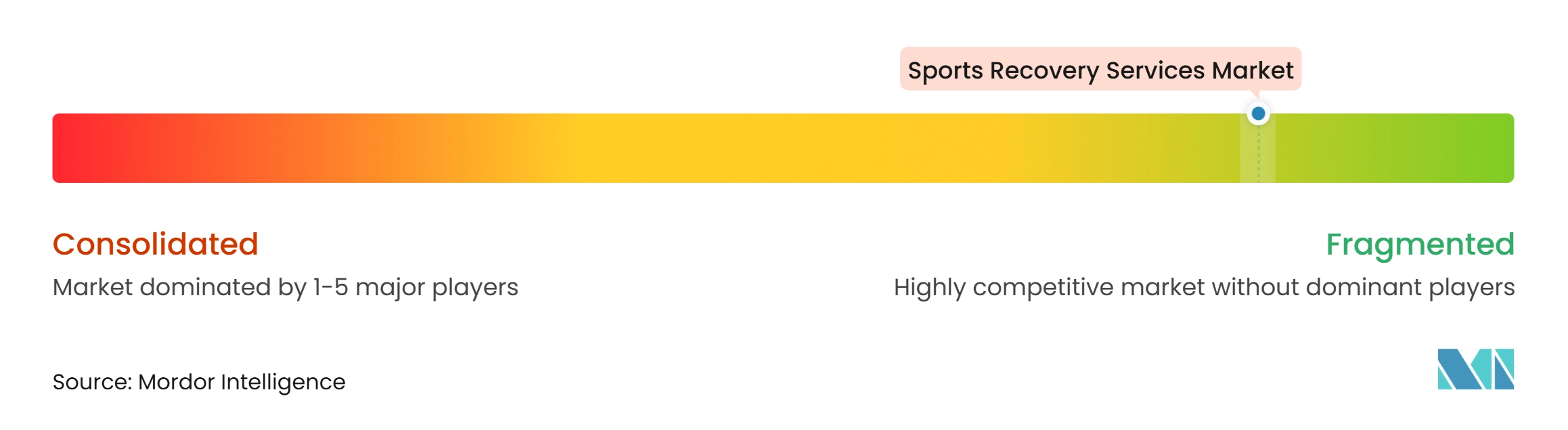
The global sports recovery services market is fragmented. Providers compete on network reach, staff capability, clinical credibility, location, and recovery modalities. Technology-focused companies, including Therabody and Hyperice, influence the market through devices, digital services, and professional sports partnerships. Therabody’s 2025 Garmin collaboration demonstrates the use of wearables and data to personalize recovery guidance. Franchise and clinic networks compete through scale, membership access, and service consistency, while regional operators differentiate through trusted delivery and local expansion.
Strategic activity includes partnerships, portfolio changes, and digital conversion initiatives. In October 2026, Xponential Fitness announced a review of strategic alternatives, including a potential sale, merger, or other transaction. Its 2026 unit openings and StretchLab booking pilots indicate continued focus on network growth and digital customer acquisition. Therabody links biometric data to personalized recovery recommendations through Garmin, while Technogym’s Oura integration connects training and recovery within gym ecosystems.
Providers can differentiate through evidence-based wellness services, clinical referral pathways, employer programs, gym integrations, and memberships. Compliance remains important when services involve clinical claims. Smaller operators compete through community access and specialist staff, while larger networks benefit from technology investment, training, and brand recognition.
Sports Recovery Services Industry Leaders
-
Restore Hyper Wellness
-
Xponential Fitness, Inc.
-
iCRYO
-
Therabody
-
Hyperice
- *Disclaimer: Major Players sorted in no particular order
Sports Recovery Services Market Companies Covered in this Report
- Restore Hyper Wellness
- Xponential Fitness, Inc.
- Therabody
- iCRYO
- ReCOVER
- The Covery | Health
- Pause Studio
- Upgrade Labs
- The CryoBar
- Life Time, Inc.
- EXOS LLC
- P3 Recovery
- Next Health
- Remedy Place
- Select Medical Holdings Corporation
- ATI Physical Therapy, Inc.
- U.S. Physical Therapy, Inc.
- Recoverie
- Airrosti
- Upstream Rehabilitation
Recent Industry Developments in Sports Recovery Services Market
- March 2026: Therabody expanded its Ulta Beauty partnership into 650+ additional stores, increasing distribution to more than 1,000 locations nationwide and extending access to its wellness and recovery technology through mainstream retail.
- September 2025: Jims, SPRS, and PRIME launched Belgium’s largest physiotherapy network across 10 Jims locations with approximately 60 physiotherapists, targeting expansion to 22 sites by 2028.
- May 2025: Technogym and Oura integrated recovery metrics, including sleep patterns, heart-rate variability and resting heart rate, into Technogym’s AI Coach to deliver personalized training recommendations based on users’ readiness.
- January 2025: Therabody partnered with Garmin and launched Coach by Therabody in beta, using wearable data on heart rate, sleep, stress, Body Battery and cardiovascular performance to generate personalized recovery recommendations.
Global Sports Recovery Services Market Report Scope
The global sports recovery services market report analyzes recovery and wellness services designed to support muscle recovery, manage soreness, aid rehabilitation, improve mobility, and optimize physical performance. The market is segmented by service type, delivery setting, end user, treatment objective, and geography. The study examines drivers such as rising participation in sports and fitness activities, increasing sports-related injuries, growing adoption of preventive recovery, expansion of app-based bookings and recovery studios, integration with gyms and corporate wellness programs, and adoption of elite-athlete recovery protocols, alongside restraints including high equipment and staffing costs, uneven clinical evidence, affordability barriers, and inconsistent practitioner standards. It evaluates provider networks, service availability, geographic expansion, service pricing, customer acquisition trends, consumer preferences, service adoption, and spending patterns. The report provides market size and growth forecasts, regional analyses across North America, South America, Europe, Asia-Pacific, and the Middle East and Africa, competitive landscape assessments, market concentration, market shares, strategic developments, and company profiles. It also explores opportunities in clinically governed, evidence-linked recovery networks and subscription-based services for employers, hotels, and sports teams. Market estimates and forecasts are presented in USD across all covered segments for 2022-2032.
Segmentation Overview
Key Questions Answered in the Report
What is the projected value of sports recovery services by 2032?
The sector is forecast to reach USD 15.48 billion by 2032, rising from USD 9.13 billion in 2026 at a 9.22% CAGR during 2027-2032.
Which service type leads sports recovery services?
Manual and Assisted Recovery leads with a 36.10% share in 2026, supported by massage, assisted stretching, and manual therapy.
Which recovery service is growing the fastest?
Thermal and Contrast Recovery is projected to grow at a 9.78% CAGR through 2032 as cryotherapy and contrast formats reach more commercial venues.
Which customer group generates the largest demand?
Recreational and Amateur Athletes account for 41.80% of 2026 value because regular exercise supports repeat recovery use.
Why are recovery studios expanding?
Recovery Studios and Wellness Centers are projected to grow at a 10.50% CAGR through 2032, supported by membership, app-based booking, and multi-service offers.
Which region is growing the fastest for sports recovery services?
Asia-Pacific is projected to grow at a 10.96% CAGR through 2032, supported by expanding sports participation, gym infrastructure, and middle-income populations.