
Glaucoma Eye Drops Market Size and Share
Market Overview
| Study Period | 2021 - 2032 |
|---|---|
| Market Size (2027) | USD 2.17 Billion |
| Market Size (2032) | USD 3.05 Billion |
| Growth Rate (2027 - 2032) | 7.05 % |
| Fastest Growing Market | Asia-Pacific |
| Largest Market | North America |
| Market Concentration | Medium |
Major Players *Disclaimer: Major Players sorted in no particular order Image © Mordor Intelligence. Reuse requires attribution under CC BY 4.0. | |
Glaucoma Eye Drops Market Analysis by Mordor Intelligence
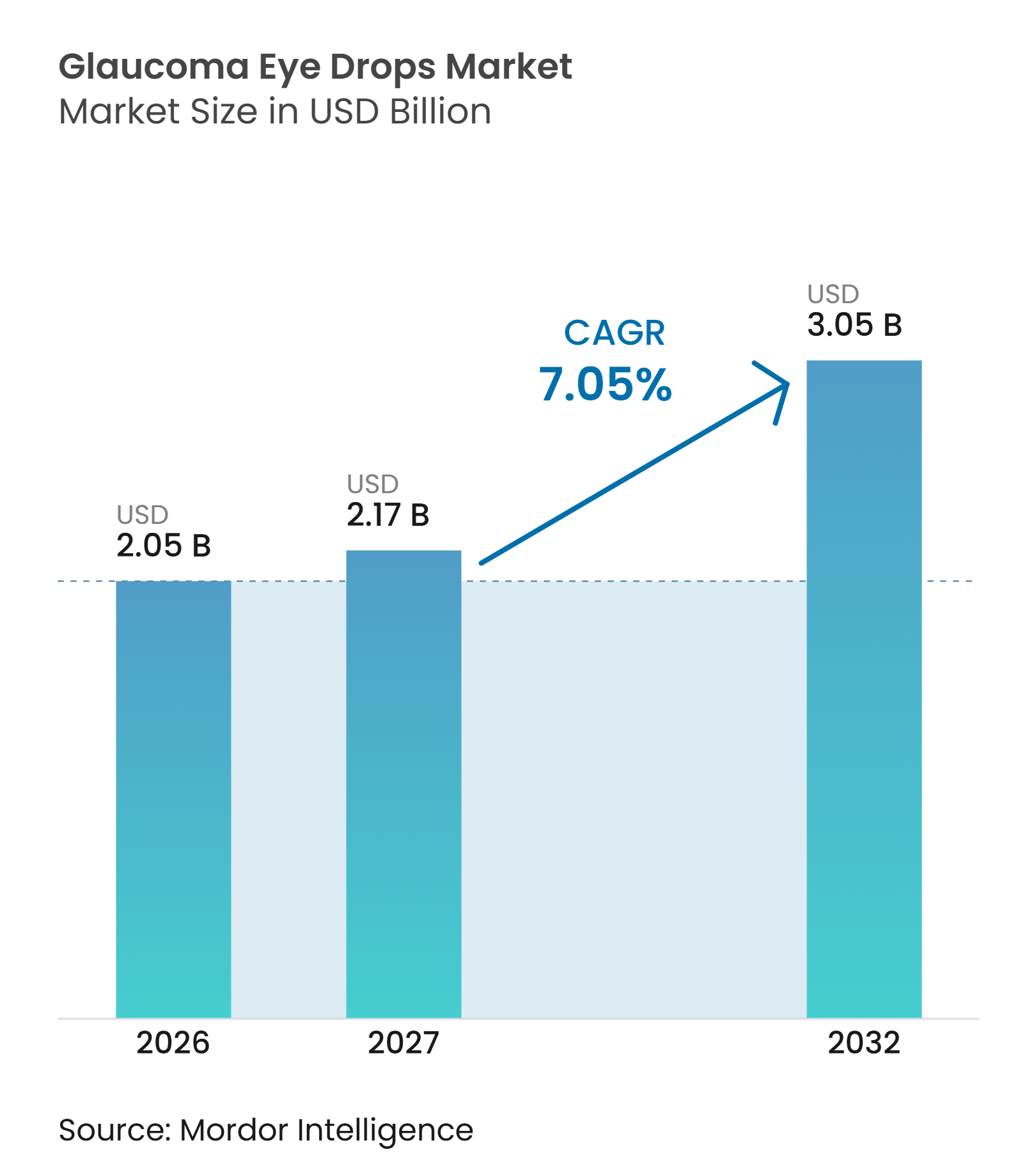
The Glaucoma Eye Drops Market size is projected to be USD 2.05 billion in 2026, USD 2.17 billion in 2027, and reach USD 3.05 billion by 2032, growing at a CAGR of 7.05% from 2027 to 2032.
Demand rests on the irreversible nature of glaucoma and the need to manage intraocular pressure throughout a patient's life. The population with open-angle glaucoma aged 40 and older is projected to rise from 80.5 million in 2024 to 186.6 million in 2060, with aging and myopia in East Asia contributing to the increase. The glaucoma eye drops market also reflects the high burden of primary angle-closure glaucoma in Asia, where the condition creates substantial vision loss and ongoing treatment needs. Product development is moving toward preservative-free formulations, fixed-dose combinations, and therapies with new mechanisms, while generic competition continues to lower prices. Laser treatment, minimally invasive surgery, and sustained-release products may reduce daily drop use for some patients, but they do not remove the need for medical therapy across the broader treated population.
Key Report Takeaways
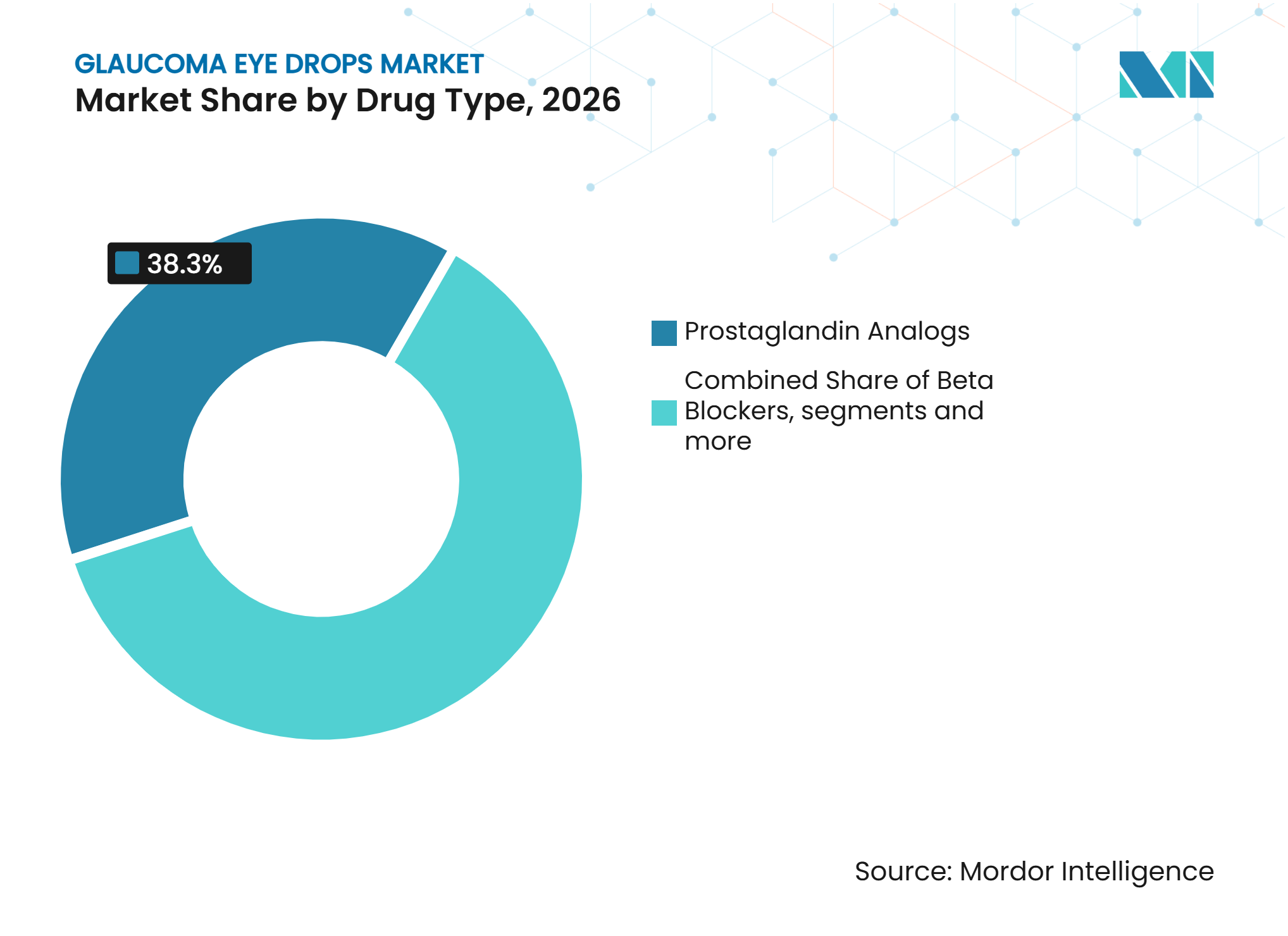
- By drug type, prostaglandin analogs held a 38.32% revenue share in 2026, while beta blockers are projected to grow at an 8.16% CAGR through 2032.
- By disease indication, angle-closure glaucoma accounted for 52.25% of the market in 2026 and is forecasted to expand at a 7.85% CAGR through 2032.
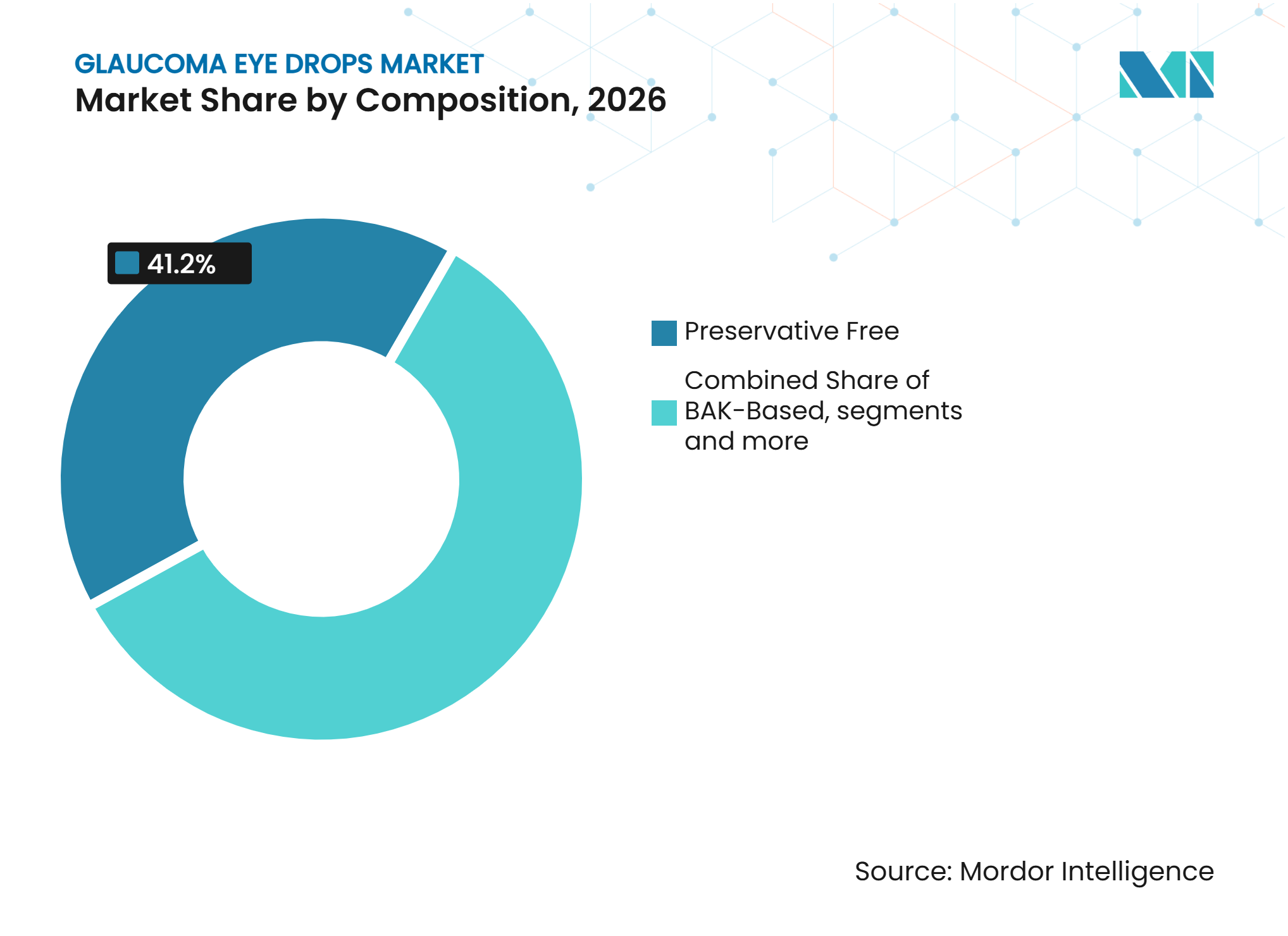
- By composition, preservative-free formulations held a 41.16% revenue share in 2026, while BAK-based products are expected to grow at a 9.34% CAGR through 2032.
- By distribution channel, hospital pharmacies held a 45.36% revenue share in 2026, while online pharmacies are forecast to grow at an 8.64% CAGR through 2032.
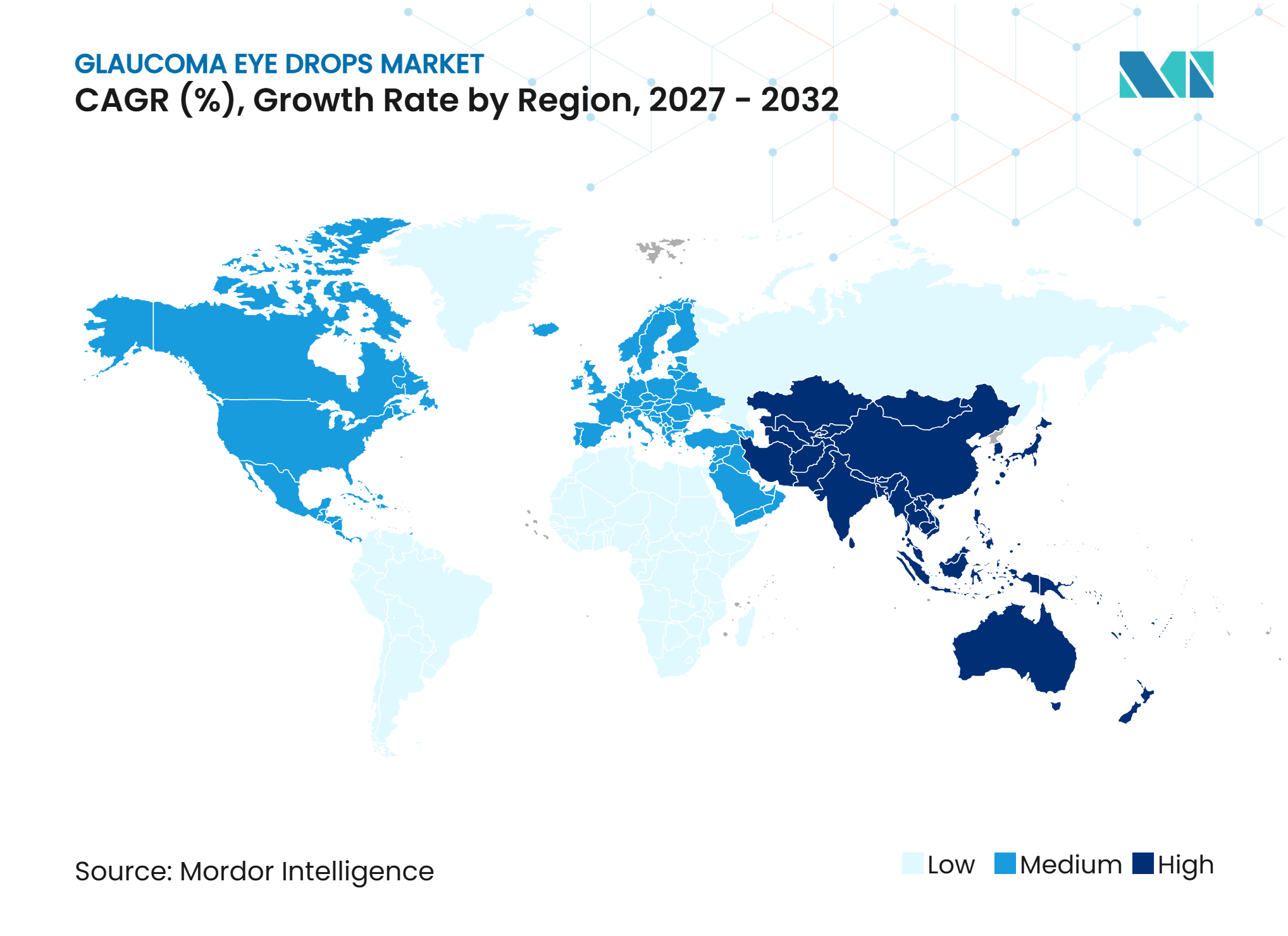
- By geography, North America held a 46.22% revenue share in 2026, while Asia-Pacific is expected to grow at a 10.23% CAGR through 2032.
Note: Market numbers in this report are based on Mordor Intelligence's proprietary estimation framework, which combines nine months of actuals with Q4 projections for base year 2026.
Market Trends and Insights
Drivers Impact Analysis of Glaucoma Eye Drops Market*
| Driver | (~) % Impact on CAGR Forecast | Geographic Relevance | Impact Timeline |
|---|---|---|---|
| Rising Glaucoma Prevalence and Aging Population | +2.1% | Global, most pronounced in Asia-Pacific and North America | Long term (≥ 4 years) |
| Increasing Screening and Earlier Diagnosis | +1% | Asia-Pacific, North America, Europe | Medium term (2-4 years) |
| Preference for Once-Daily Prostaglandin Analogs | +1.2% | Global, dominant in North America and Europe | Short term (≤ 2 years) |
| Expansion of Combination and Fixed-Dose Therapies | +0.8% | Asia-Pacific, North America, Europe | Medium term (2-4 years) |
| Ocular Surface Disease and Preservative-Free Switching | +0.7% | North America, Europe, Japan | Short term (≤ 2 years) |
| Chronic-Disease Adherence Platforms and Personalized Dosing | +0.4% | North America, Europe, Japan | Medium term (2-4 years) |
| Source: Mordor Intelligence | |||
Rising Glaucoma Prevalence and Aging Population
Glaucoma creates durable demand because its progression is irreversible and its treatment commonly continues for many years. In Japan, 5% of people aged 40 and older had glaucoma, and the disease remained the country's leading cause of visual impairment.[1]Aging increases the number of people requiring diagnosis, monitoring, and pressure-lowering treatment. Myopia adds another dimension in East Asia because the 2025 projection attributed 28.9 million additional open-angle glaucoma cases to the myopia epidemic. This pattern creates a younger group of patients who may remain on treatment for far longer than patients diagnosed only in later life. The glaucoma eye drops market, therefore, benefits from both a growing patient base and a longer period of therapy for many patients.
Increasing Screening and Earlier Diagnosis
Earlier diagnosis increases the period during which patients can receive pressure-lowering therapy before advanced vision loss develops. Screening capacity matters most where large populations have historically had limited access to specialist eye care. Japan's reported glaucoma prevalence among people aged 40 and older also supports the need for continued eye examinations. Better identification can bring patients into treatment earlier, including people who have not yet developed severe impairment. This supports prescription volume across established and emerging care systems in the glaucoma eye drops market.
Preference for Once-Daily Prostaglandin Analogs
Prostaglandin analogs remain a common first-line option because once-daily dosing fits a chronic treatment routine. Their established pressure-lowering effect and broad generic availability have helped maintain their use across many health systems. Gland Pharma received U.S. FDA approval for generic latanoprostene bunod ophthalmic solution 0.024% in April 2025, extending access to a newer prostaglandin option.[2] Amneal received U.S. FDA approval for bimatoprost ophthalmic solution 0.01% in September 2025, adding generic competition for Lumigan.[3] Santen received approval in Japan for SETANEO in August 2025, a dual FP and EP3 receptor agonist with a distinct approach to aqueous outflow. As once-daily dosing becomes expected, differentiation in the glaucoma eye drops market depends more on tolerability, formulation, and mechanism of action.
Expansion of Combination and Fixed-Dose Therapies
Fixed-dose combinations can simplify daily treatment when patients need more than 1 pressure-lowering medicine. A single formulation can also reduce cumulative exposure to preservatives when it is made without preservatives. Santen launched TAPCOM in China in September 2025 after National Medical Products Administration approval in April 2025. The once-daily product combines tafluprost 0.0015% and timolol 0.5% in a preservative-free formulation. This approach can support adherence for patients who would otherwise manage separate bottles and dosing schedules. It also gives branded manufacturers a way to differentiate products where conventional generic components are already widely available in the glaucoma eye drops market.
Restraints Impact Analysis of Glaucoma Eye Drops Market*
| Restraint | (~) % Impact on CAGR Forecast | Geographic Relevance | Impact Timeline |
|---|---|---|---|
| Generic Price Erosion and Patent Expiry | -1.3% | Global, most acute in North America and Europe | Short term (≤ 2 years) |
| Ocular and Systemic Adverse Effects | -0.8% | Global | Long term (≥ 4 years) |
| Competition from Laser, MIGS, and Sustained-Release Therapies | -1% | North America, Europe | Medium term (2-4 years) |
| Sterility, Dose Delivery, and Cold-Chain Challenges | -0.4% | Asia-Pacific, Middle East and Africa, South America | Long term (≥ 4 years) |
| Source: Mordor Intelligence | |||
Generic Price Erosion and Patent Expiry
Generic entry continues to reduce prices for established glaucoma drug classes. The broad generic competition in prostaglandin analogs includes 23 latanoprost generics in Germany and 9 in the United States. Glenmark received U.S. FDA ANDA approval for brimonidine tartrate and timolol maleate ophthalmic solution in May 2024. Manufacturers must show meaningful benefits through preservative-free products, combinations, or new mechanisms if they expect to defend prices. This pricing environment limits value growth in the glaucoma eye drops market, even where prescription volume rises.
Ocular and Systemic Adverse Effects
Adverse effects can affect persistence with daily topical therapy. Long-term exposure to preservatives may contribute to ocular surface symptoms, which can make regular administration harder for patients. The 2025 phase III evidence on preservative-free latanoprost supports the importance of reducing this burden. Systemic and ocular tolerability concerns also influence medicine selection when clinicians consider beta blockers, alpha agonists, and combination therapies. Prescribers must balance pressure control with comfort and the patient's ability to sustain treatment. These clinical considerations support demand for better-tolerated formulations but can constrain the use of some established products in the glaucoma eye drops market.
*Our forecasts treat driver/restraint impacts as directional, not additive. The impact forecasts reflect baseline growth, mix effects, and variable interactions.
Glaucoma Eye Drops Market Segment Analysis
By Drug Type:
Established Prostaglandin Use Meets New MechanismsProstaglandin analogs held 38.32% of the glaucoma eye drops market share in 2026, supported by first-line prescribing, once-daily use, and generic availability. This position reflects their established role in lowering intraocular pressure across many care settings. Beta blockers are projected to record the fastest drug-type growth at an 8.16% CAGR through 2032. Alpha agonists remain relevant where clinicians need an additional mechanism of action. Carbonic anhydrase inhibitors are often used in combinations but face greater generic pressure as established products lose exclusivity. Combined medicines remain important for patients who need more than 1 approach to pressure control.
Generic suppliers retain a strong role in mature classes because price remains decisive for many patients and payers. Branded companies are instead concentrating on formulations and mechanisms that are harder to substitute. This balance between accessible generics and differentiated therapies will continue to shape the glaucoma eye drops industry.



By Disease Indication:
Angle-Closure Glaucoma Drives Value and GrowthAngle-closure glaucoma accounted for 52.25% of the glaucoma eye drops market in 2026 and is expected to be the fastest-growing indication at a 7.85% CAGR through 2032. This combination reflects the condition's substantial concentration in Asia and its need for intensive treatment. Primary angle-closure glaucoma represented 26.2% of global glaucoma cases but accounted for 48.3% of glaucoma-related blindness. More than 76% of the global primary angle-closure glaucoma burden was concentrated in Asia. China accounted for a major part of this burden and is projected to have 15 million people with primary angle-closure glaucoma in the country by 2050.
Open-angle glaucoma has a different treatment pattern. Angle-closure glaucoma often requires immediate pressure reduction during acute episodes and maintenance therapy after procedures. This can lead to the use of pilocarpine, acetazolamide, alpha agonists, prostaglandin analogs, or beta blockers at different stages. The treatment intensity supports the indication's value within the glaucoma eye drops market.
By Composition:
Preservative-Free Products Lead as BAK-Based Volume GrowsPreservative-free formulations held 41.16% revenue share in 2026. Their position is supported by clinical concerns over the cumulative effect of benzalkonium chloride, or BAK, on the ocular surface. The 2025 phase III trial found better ocular-surface outcomes with preservative-free latanoprost than with preserved latanoprost. Hospital tenders and formularies in developed markets can give suppliers with preservative-free portfolios a competitive advantage. This supports the continued role of preservative-free formats in the glaucoma eye drops market.
BAK-based products are projected to grow fastest at a 9.34% CAGR through 2032. This result reflects strong unit demand in price-sensitive markets, where multidose preserved bottles remain more accessible. Non-BAK preservatives occupy a middle position between BAK-based and preservative-free products. They can reduce some surface toxicity while avoiding the cost and logistics of unit-dose preservative-free packaging. Preservative-free fixed-dose combinations offer a more differentiated option because they combine ease of use with improved tolerability.

By Distribution Channel:
Hospital Dispensing Remains Central as Digital Refills ExpandHospital pharmacies held 45.36% of channel revenue in 2026. Their role reflects the fact that glaucoma treatment often begins after diagnosis in a specialist clinic or hospital setting. Patients commonly receive their first prescription and initial dispensing within this clinical environment. Hospital channels also remain important for product selection, specialist follow-up, and procedural preparation. Retail pharmacies serve many established patients who need recurring refills. The glaucoma eye drops market for hospital pharmacies remains supported by the close connection between diagnosis and specialist prescribing.
Online pharmacies are projected to grow at an 8.64% CAGR through 2032. Their expansion is linked to the recurring nature of glaucoma prescriptions and the convenience of automated refill services. Digital care models can combine telehealth consultations, reminders, prescription management, and home delivery. Manufacturers create direct support programs for patients who use branded products. Retail pharmacies remain a familiar option, but they have fewer ways to integrate prescribing and ongoing digital follow-up. The glaucoma eye drops market is, therefore, likely to have a more balanced channel structure as chronic-care platforms develop.
Geography Analysis
North America
North America held a 46.22% revenue share in 2026, equal to USD 0.95 billion. The region benefits from high diagnosis levels, broad insurance coverage, and established specialist ophthalmology networks. Generic prostaglandin analogs are mature in the United States, which makes differentiated formulations more important for growth. Preservative-free products, fixed-dose combinations, and therapies with new mechanisms have a clearer role in this setting. North American providers also have wider access to laser and surgical alternatives, which can limit daily topical use for selected patients.
Asia-Pacific
Asia-Pacific is projected to grow at a 10.23% CAGR through 2032, the fastest rate among regions. The glaucoma eye drops market benefits in the region from large patient populations, improving diagnostic infrastructure, and active product launches. China had 21.8 million glaucoma patients, while primary angle-closure glaucoma is expected to affect 15 million people in the country by 2050. Japan received SETANEO in 2025 and Rhopressa in 2026, adding 2 new treatments to the local portfolio. Price-sensitive markets in the region remain more dependent on domestic generic supply and affordable multidose products.
Europe, the Middle East, Africa, and South America
Europe remains a significant setting for preservative-free adoption and institutional purchasing practices. Hospital tendering can favor suppliers that can provide preservative-free formulations at consistent quality. This supports established preservative-free portfolios in markets with strong specialist care systems. The Middle East, Africa, and South America are smaller but relevant growth areas because diagnosis remains incomplete in many settings. Sterility and cold-chain constraints can restrict preservative-free expansion outside hospital channels. The regional structure of the glaucoma eye drops market, therefore, reflects differences in clinical capacity, affordability, and distribution infrastructure.
Competitive Landscape
Market Concentration
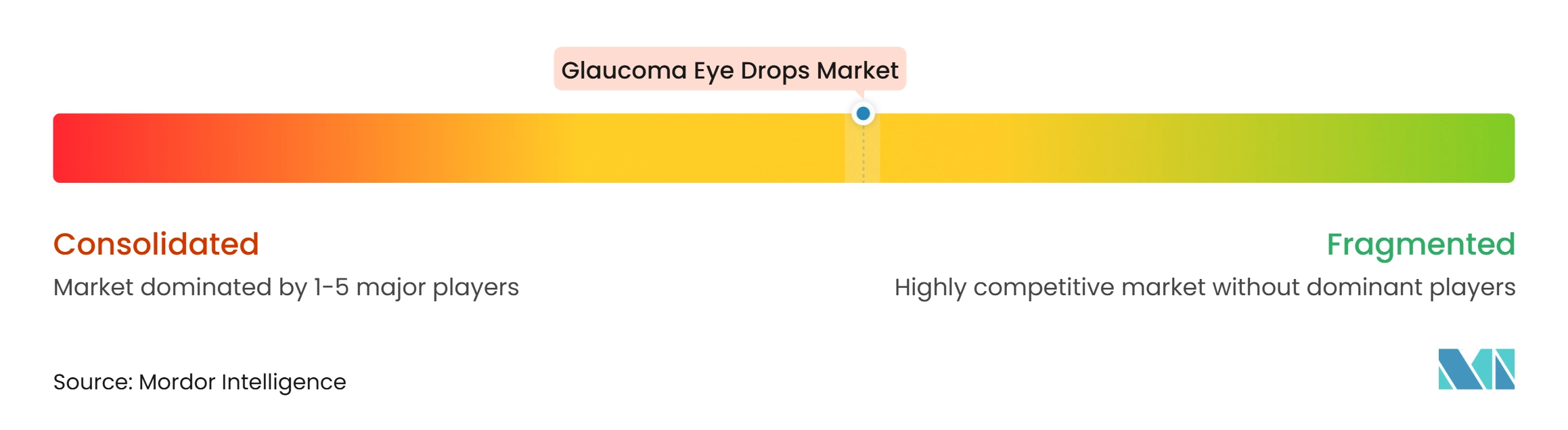
The glaucoma eye drops market has a semi-fragmented structure. AbbVie, Alcon, Novartis, Bausch + Lomb, and Santen hold important branded positions in premium formulations and differentiated therapies. A broad generic tier includes Cipla, Teva, Sun Pharmaceutical, Viatris, Glenmark, and Gland Pharma. This group places continued pressure on prices in established medicine classes. AbbVie uses Lumigan, Combigan, and Ganfort to maintain a branded glaucoma portfolio. In April 2026, Santen China and AbbVie formalized a 6-year exclusive distribution and promotion agreement for 5 AbbVie glaucoma eye drops in the Chinese mainland. The arrangement puts multiple mechanisms under Santen's local commercial organization. It also shows how companies can use local distribution partnerships in complex growth markets.
Santen has added new assets to its portfolio through regulatory approvals and launches. It received approval for SETANEO in Japan in August 2025. It then launched Rhopressa in Japan in August 2026 after receiving manufacturing and marketing approval in June 2026. The company also launched preservative-free TAPCOM in China in September 2025. These moves address distinct needs in mechanism, tolerability, and combination therapy. They also help protect branded positions where older products face generic substitution. Other branded suppliers face the same need to show clinical or formulation value beyond a standard generic eye drop.
Generic companies compete through product filings, manufacturing capability, and distribution coverage. Gland Pharma's April 2025 approval for generic latanoprostene bunod and Amneal's September 2025 bimatoprost approval illustrate continued entry into established drug classes. Glenmark's 2024 approval for a brimonidine and timolol combination provides another example. The competitive opportunity lies in preservative-free technology, fixed-dose combinations, and patient-support services that are harder to commoditize. Companies that can make these options available at accessible prices may have an advantage in high-growth regions.
Glaucoma Eye Drops Industry Leaders
-
AbbVie Inc.
-
Alcon Inc.
-
Santen Pharmaceutical Co., Ltd.
-
Bausch + Lomb Corporation
-
Novartis AG
- *Disclaimer: Major Players sorted in no particular order
Glaucoma Eye Drops Market Companies Covered in this Report
- Abbvie
- Aerie Pharmaceuticals, Inc.
- Akorn
- Alcon
- Bausch + Lomb Corporation
- Cipla
- Fera Pharmaceuticals
- Glaukos
- Glenmark Pharmaceuticals
- Laboratoires Thea
- Merck
- Nicox S.A.
- Novartis
- Otsuka
- Pfizer
- Santen Pharmaceuticals
- Senju Pharmaceutical Co., Ltd.
- Sun Pharmaceuticals Industries
- Teva Pharmaceutical Industries
- Viatris
Recent Industry Developments in Glaucoma Eye Drops Market
- August 2026: Santen Pharmaceutical launched Rhopressa Ophthalmic Solution 0.02% (netarsudil mesylate) in Japan on August 17, 2026, at a National Health Insurance price of JPY 987.80 (~USD 6.17) per 1 mL following manufacturing and marketing approval in June 2026. Rhopressa brings ROCK inhibitor and norepinephrine-transporter inhibition to Japan's glaucoma treatment landscape, offering a mechanistically distinct option for patients with insufficient response to prostaglandin analogs or beta blockers.
- April 2026: Santen China and AbbVie formalized a 6-year exclusive distribution and promotion agreement covering 5 AbbVie glaucoma eye drops, Alphagan, AlphaganP, Lumigan, Ganfort, and Combigan, in the Chinese mainland. The agreement consolidates a multi-mechanism portfolio into Santen's China commercial infrastructure, covering alpha agonists, prostaglandin analogs, and fixed-dose combinations.
Global Glaucoma Eye Drops Market Report Scope
According to the report’s scope, the glaucoma eye drops market refers to the industry focused on pharmaceutical eye drop formulations used to lower intraocular pressure and manage glaucoma, a leading cause of irreversible blindness. It includes branded and generic products across classes such as prostaglandin analogs, beta blockers, carbonic anhydrase inhibitors, and combination therapies.
The glaucoma eye drops market is segmented into drug type, disease indication, composition, distribution channel, and geography. By drug type, the market is segmented into prostaglandin analogs, beta blockers, alpha agonists, carbonic anhydrase inhibitors (CAIs), combined medications, and other drug types. By disease indication, the market is segmented into angle-closure glaucoma and open-angle glaucoma. By composition, the market is segmented into preservative-free, BAK-based, and non-BAK-based preservatives. By distribution channel, the market is segmented into hospital pharmacies, retail pharmacies, and online pharmacies. By geography, the market is segmented into North America, Europe, Asia-Pacific, the Middle East and Africa, and South America. The report also covers the estimated market sizes and trends for 17 countries across major regions globally. The report offers values (USD) for all the above segments.
Segmentation Overview
| Prostaglandin Analogs |
| Beta Blockers |
| Alpha Agonists |
| Carbonic Anhydrase Inhibitors (CAIs) |
| Combined Medications |
| Other Drug Types |
| Angle-closure Glaucoma |
| Open-angle Glaucoma |
| Preservative Free |
| BAK-Based |
| Non BAK-Based Preservatives |
| Hospital Pharmacies |
| Retail Pharmacies |
| Online Pharmacies |
| Other Distribution Channels |
| North America | United States |
| Canada | |
| Mexico | |
| Europe | Germany |
| United Kingdom | |
| France | |
| Italy | |
| Spain | |
| Rest of Europe | |
| Asia-Pacific | China |
| Japan | |
| India | |
| Australia | |
| South Korea | |
| Rest of Asia-Pacific | |
| Middle East and Africa | GCC |
| South Africa | |
| Rest of Middle East and Africa | |
| South America | Brazil |
| Argentina | |
| Rest of South America |
| By Drug Type | Prostaglandin Analogs | |
| Beta Blockers | ||
| Alpha Agonists | ||
| Carbonic Anhydrase Inhibitors (CAIs) | ||
| Combined Medications | ||
| Other Drug Types | ||
| By Disease Indication | Angle-closure Glaucoma | |
| Open-angle Glaucoma | ||
| By Composition | Preservative Free | |
| BAK-Based | ||
| Non BAK-Based Preservatives | ||
| By Distribution Channel | Hospital Pharmacies | |
| Retail Pharmacies | ||
| Online Pharmacies | ||
| Other Distribution Channels | ||
| By Geography | North America | United States |
| Canada | ||
| Mexico | ||
| Europe | Germany | |
| United Kingdom | ||
| France | ||
| Italy | ||
| Spain | ||
| Rest of Europe | ||
| Asia-Pacific | China | |
| Japan | ||
| India | ||
| Australia | ||
| South Korea | ||
| Rest of Asia-Pacific | ||
| Middle East and Africa | GCC | |
| South Africa | ||
| Rest of Middle East and Africa | ||
| South America | Brazil | |
| Argentina | ||
| Rest of South America | ||
Key Questions Answered in the Report
What is driving demand for the glaucoma eye drops market?
Lifelong pressure management, population aging, and earlier diagnosis support demand. The market is forecasted to grow from USD 2.05 billion in 2026 to USD 2.17 billion in 2027 to reach USD 3.05 billion by 2032, at a 7.05% CAGR from 2027 to 2032.
Which glaucoma drug type had the largest share in 2026?
Prostaglandin analogs led with 38.32% share in 2026 because of their first-line role, once-daily dosing, and generic availability.
Why are preservative-free glaucoma eye drops gaining attention?
Guidance on ocular surface disease and 2025 clinical evidence favor preservative-free latanoprost for improved ocular-surface outcomes.
Which region is growing fastest for glaucoma treatment products?
Asia-Pacific is projected to grow at a 10.23% CAGR through 2032, supported by patient volume, diagnostic development, and product activity.