
Market Overview
| Study Period | 2020 - 2031 |
|---|---|
| Forecast Data Period | 2026 - 2031 |
| Base Year Market Size (2025) | USD 5.82 Billion |
| Market Size (2026) | USD 6.14 Billion |
| Market Size (2031) | USD 8.06 Billion |
| Growth Rate (2026 - 2031) | 5.58 % |
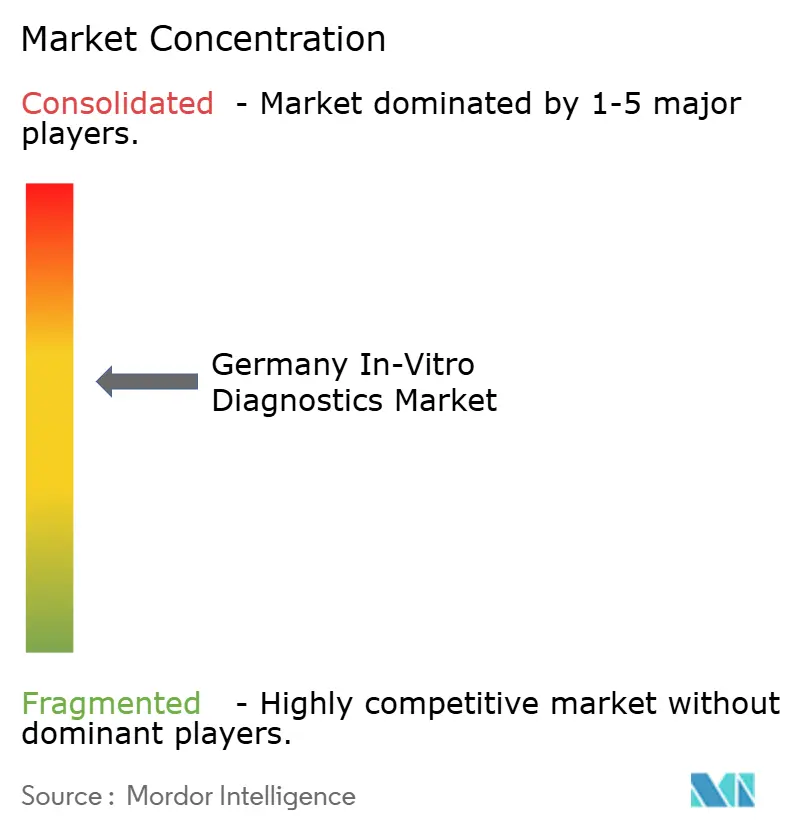
| Market Concentration | Medium |
Major Players *Disclaimer: Major Players sorted in no particular order Image © Mordor Intelligence. Reuse requires attribution under CC BY 4.0. | |
Germany In-Vitro Diagnostics Market Analysis by Mordor Intelligence
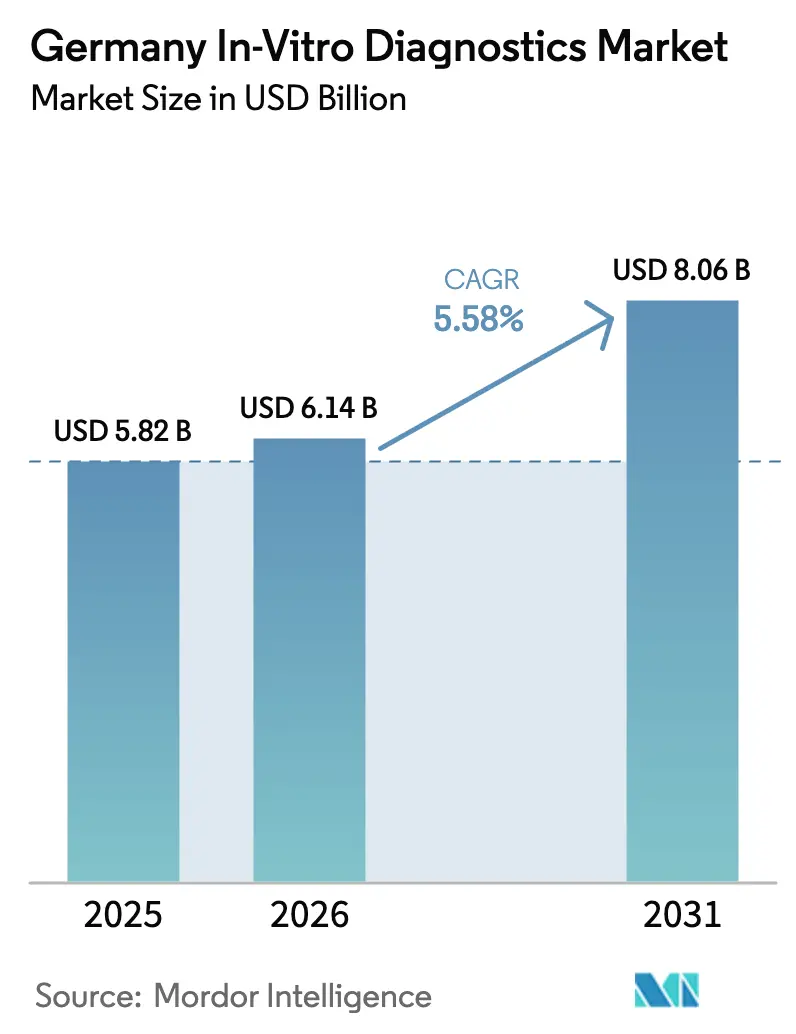
The Germany In-Vitro Diagnostics Market size is expected to grow from USD 5.82 billion in 2025 to USD 6.14 billion in 2026 and is forecast to reach USD 8.06 billion by 2031 at 5.58% CAGR over 2026-2031.
Underlying this steady headline growth is a structural shift from routine clinical chemistry to high-value molecular testing, an evolution propelled by the genomDE genome-sequencing program, the approaching May 2026 IVDR recertification deadline, and Germany’s sweeping Health Data Usage Act, which mandates nationwide interoperability of electronic patient records. Manufacturers are pruning legacy portfolios to fund IVDR-compliant innovation, while laboratories channel capital into automation and middleware that can surface clean, FHIR-formatted results to national data hubs. At the same time, statutory insurers reward preventive screening for an aging population in which 25-27% of citizens will be ≥67 years by 2038, steering demand toward diabetes, cardiovascular and oncologic panels. Together, these forces position the Germany in-vitro diagnostics market at the intersection of policy, demography, and precision-medicine technology adoption.
Key Report Takeaways
- By test type, clinical chemistry led with 33.54% of Germany in-vitro diagnostics market share in 2025, while molecular diagnostics is projected to expand at a 7.87% CAGR through 2031.
- By product & service, reagents and consumables commanded 55.65% share of the Germany in-vitro diagnostics market size in 2025, yet software and services are advancing at an 8.65% CAGR to 2031.
- By usability, disposable devices held 65.76% share in 2025, whereas reusable platforms are forecast to post a 7.99% CAGR between 2026-2031.
- By specimen type, blood and serum represented 47.76% of Germany in-vitro diagnostics market share in 2025, and urine-based testing is climbing at 7.54% CAGR through 2031.
- By application, infectious diseases captured 30.65% revenue share in 2025; diabetes monitoring is set to record the fastest 8.88% CAGR to 2031.
- By end user, diagnostic laboratories generated 45.32% revenue in 2025, while home-care and point-of-care centers are expanding at 8.65% CAGR over 2026-2031.
Note: Market size and forecast figures in this report are generated using Mordor Intelligence’s proprietary estimation framework, updated with the latest available data and insights as of January 2026.
Germany In-Vitro Diagnostics Market Trends and Insights
Drivers Impact Analysis*
| Driver | (~) % Impact on CAGR Forecast | Geographic Relevance | Impact Timeline |
|---|---|---|---|
| Rising Chronic Disease Burden | +1.2% | National, with acute pressure in aging regions (Bavaria, Baden-Württemberg) | Long term (≥ 4 years) |
| Expansion Of Precision Medicine Initiatives | +1.5% | National, concentrated in university hospital networks (Berlin, Munich, Heidelberg) | Medium term (2-4 years) |
| Government Funding For Digital Health Infrastructure | +1.0% | National, accelerated deployment in urban centers | Medium term (2-4 years) |
| Shift Toward Decentralized Testing Models | +0.9% | National, early gains in ambulatory care and rural areas | Short term (≤ 2 years) |
| Continuous Technological Advancements In IVD | +1.3% | Global, with German leadership in automation and AI integration | Long term (≥ 4 years) |
| Aging Population And Preventive Health Focus | +1.1% | National, pronounced in eastern states with higher median age | Long term (≥ 4 years) |
| Source: Mordor Intelligence | |||
Rising Chronic Disease Burden
Chronic pathology anchors baseline test volumes in the Germany in-vitro diagnostics market. More than 53.7% of adults live with at least one long-term condition, including 8.4% with diabetes and 6.8% with cardiovascular disease, driving continuous demand for chemistry panels, immunoassays and glucose monitoring[1]Robert Koch Institute, “Gesundheitsberichterstattung 2025,” rki.de. Statutory insurers have widened HbA1c screening intervals under the Disease Management Program to intercept pre-diabetes early, and oncology testing is buoyed by 510,000 new cancer diagnoses recorded in 2024. Cardiovascular biomarker panels are migrating into outpatient cardiology because 2025 guidelines recommend annual troponin, BNP and D-dimer checks for citizens ≥50 years, opening a recurring preventive market.
Expansion of Precision Medicine Initiatives
The EUR 700 million genomDE pilot seeks to sequence 100,000 genomes by 2027, embedding next-generation sequencing into daily practice at 33 comprehensive cancer centers. Companion diagnostics now sit under IVDR Rule 3d, meaning clinical utility must be proven prospectively, but once certified they enjoy reimbursement certainty. Illumina’s NovaSeq X Plus has pushed whole-genome sequencing costs down to USD 200 per run, making population scale feasible. Prenatal NIPT penetration jumped to 18% of births in 2024 after blanket GKV coverage, underscoring how policy unlocks latent precision-testing demand.
Government Funding for Digital Health Infrastructure
Germany’s Health Data Usage Act makes electronic patient records mandatory for 73 million citizens by 2025, compelling every laboratory to transmit results in interoperable FHIR structure. Middleware sales therefore outpace the broader Germany in-vitro diagnostics market, growing at 8.65% CAGR as labs retrofit legacy LIS estates. The European Health Data Space extends interoperability across 27 member states, and new EBM billing codes pay physicians for algorithm-assisted remote monitoring, further monetizing digitized data streams.
Shift Toward Decentralized Testing Models
Section 64e of the Social Code Book V now reimburses point-of-care pilots, catalyzing CGM, pharmacy-based respiratory panels and mobile lab vans that travel rural districts. Abbott’s FreeStyle Libre counts 1.2 million German users; Cepheid’s GeneXpert network in 450 hospitals cuts sepsis pathogen turnaround to 90 minutes, and Bavarian Red Cross vans deliver on-site results to 200 underserved towns. These quick-response modalities capture the fastest 8.65% CAGR slice of the Germany in-vitro diagnostics market.
Restraints Impact Analysis*
| Restraint | (~) % Impact on CAGR Forecast | Geographic Relevance | Impact Timeline |
|---|---|---|---|
| Stringent Regulatory Compliance Requirements | -1.8% | EU-wide, acute bottleneck in Germany due to notified body concentration | Short term (≤ 2 years) |
| Pricing And Reimbursement Pressures | -1.2% | National, intensifying in high-volume commodity tests | Medium term (2-4 years) |
| Supply Chain Vulnerabilities For Critical Components | -0.7% | Global, with German exposure via reagent imports from Asia | Short term (≤ 2 years) |
| Data Privacy And Security Concerns | -0.5% | National, heightened scrutiny under GDPR and IT Security Act 2.0 | Long term (≥ 4 years) |
| Source: Mordor Intelligence | |||
Stringent Regulatory Compliance Requirements
The IVDR transition forces around 25,000 legacy assays through only 35 notified bodies able to review ~8,000 files a year, leaving a backlog that drives some mid-tier suppliers from the Germany in-vitro diagnostics market. Average recertification cost per product line ranges EUR 200,000-500,000, and companion diagnostics must fund 200-patient prospective trials, extending launch timelines by up to two years. BfArM tracking shows 18% of manufacturers have already dropped at least one low-margin test, thinning choice in niche pathogen panels.
Pricing and Reimbursement Pressures
The EBM schedule trimmed reimbursement on high-volume chemistry panels by 8-12% between 2022-2024 even as reagent inflation ran 6%, compressing gross margins. G-BA health technology assessments now demand cost-utility evidence before listing novel molecular assays, a process costing up to EUR 1.5 million and adding multi-year uncertainty. Private insurers meanwhile introduce pre-authorization for tests priced above EUR 200, creating administrative drag.
*Our forecasts treat driver/restraint impacts as directional, not additive. The impact forecasts reflect baseline growth, mix effects, and variable interactions.
Segment Analysis
By Test Type: Molecular Momentum Beside Clinical Chemistry Scale
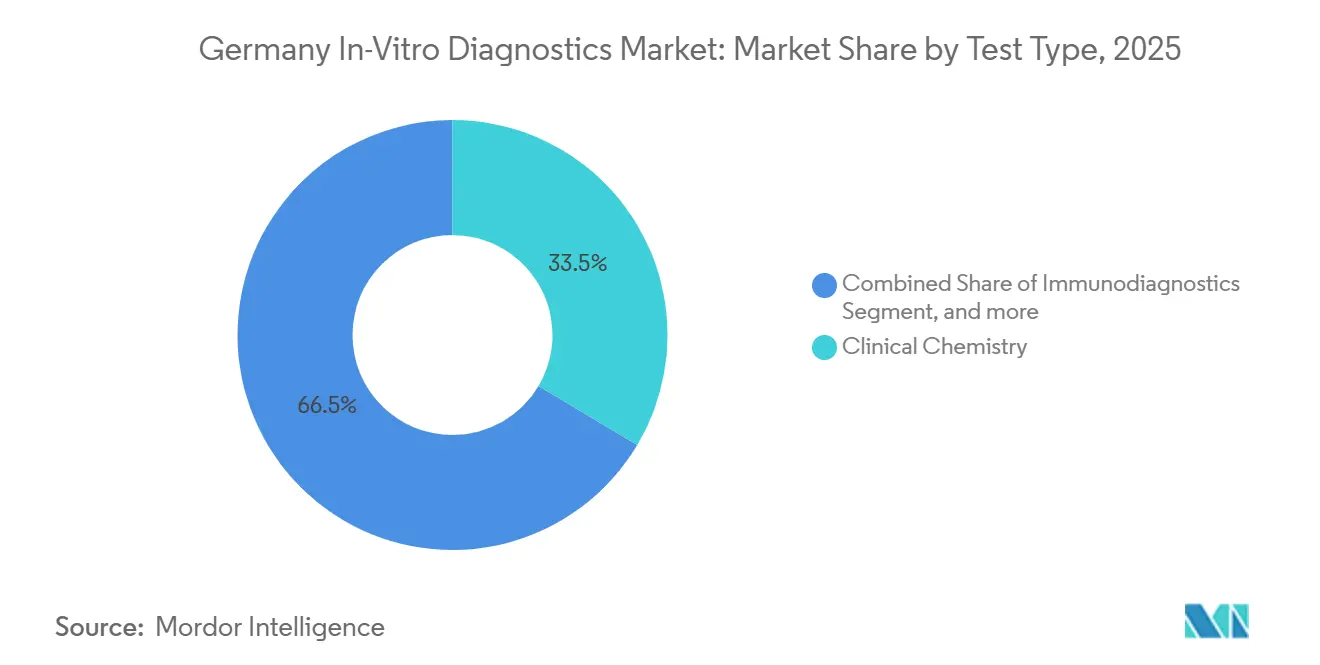
Clinical chemistry underpinned 33.54% of Germany in-vitro diagnostics market share in 2025 on the back of millions of metabolic and lipid panels processed each day. Still, molecular diagnostics is clocking a brisk 7.87% CAGR from 2026-2031 as oncologists, geneticists and infectious-disease teams pivot to NGS and rapid PCR. The Germany in-vitro diagnostics market size tied to molecular assays benefits directly from the EUR 700 million genomDE pipeline and IVDR companion-diagnostic mandates that guarantee reimbursement once clinical utility is proven. Laboratories continue to run chemistry platforms for population-wide screening, but capital budgets increasingly favor sequencers and syndromic PCR stations that condense multi-day culture workflows into one-hour runs. Microbiology culture’s share erodes as 450 German hospitals rely on Cepheid GeneXpert for 90-minute sepsis panels, while immunodiagnostics hold steady with hormone, tumor-marker and autoimmune workloads.
Automated hematology analyzers such as Sysmex XN-Series embed AI morphology modules, reducing manual slide reviews and elevating hematology to a higher-margin, insight-driven service line. Point-of-care rapid tests that flourished during the pandemic are now repurposed for flu and streptococcus screening in community pharmacies. Over the next five years, genomDE feeder projects at 38 university hospitals will lift germline and somatic variant testing penetration, locking molecular diagnostics into double-digit revenue share by the end of the forecast horizon.



By Product & Service: Digital Layers Outpace Reagent Core
Reagents and consumables generated 55.65% of Germany in-vitro diagnostics market size in 2025 because every assay cycle demands single-use chemicals and cartridges. Yet software and services revenue rides an 8.65% CAGR through 2031 as laboratories rush to install middleware that converts legacy LIS outputs into IVDR-mandated FHIR messages. Germany’s Health Data Usage Act, European Health Data Space linkage and real-time upload to EUDAMED all hinge on this digital layer. The Germany in-vitro diagnostics market share for instruments is under cyclical lift as labs replace aging analyzers with IVDR-validated platforms like Roche cobas 8000 or Siemens Atellica, which integrate QC automation to satisfy stricter post-market surveillance.
Service lines diversify beyond maintenance into regulatory consulting, with midsize manufacturers outsourcing technical documentation writing for EUR 80,000-150,000 per SKU. Near-shoring of reagent production strengthens continuity; Thermo Fisher’s Freiburg expansion will reduce Asian dependency, and Siemens’ AI process manager cuts waste 15%. Together, these investments ensure reagent dominance persists, even as digital revenues compound from a smaller base.
By Usability: High-Throughput Reusables Climb
Disposable cartridges, strips and lateral-flow cassettes held 65.76% revenue in 2025, meeting consumer demand for easy home and pharmacy testing. Still, reusable high-throughput analyzers are forecast to grow 7.99% CAGR because hospitals deploy large systems to offset workforce shortages and to log every QC event for IVDR compliance. The Germany in-vitro diagnostics market size addition from reusable analyzers is amplified by greener purchasing rules that favor lower plastic consumption within the German Hospital Federation’s Green Lab Initiative.
Abbott’s FreeStyle Libre proves disposables’ continued pull—1.2 million active diabetic users in Q3 2024 alone—yet laboratories processing >500 specimens daily achieve cost-per-test parity only with reusable cobas or DxH series analyzers. Vendors therefore design modular layouts where shared reagent packs can run thousands of cycles before disposal, reducing hazardous-waste bills and aligning with sustainability targets.
By Specimen Type: Blood Rules, Urine Rises for CKD Watch
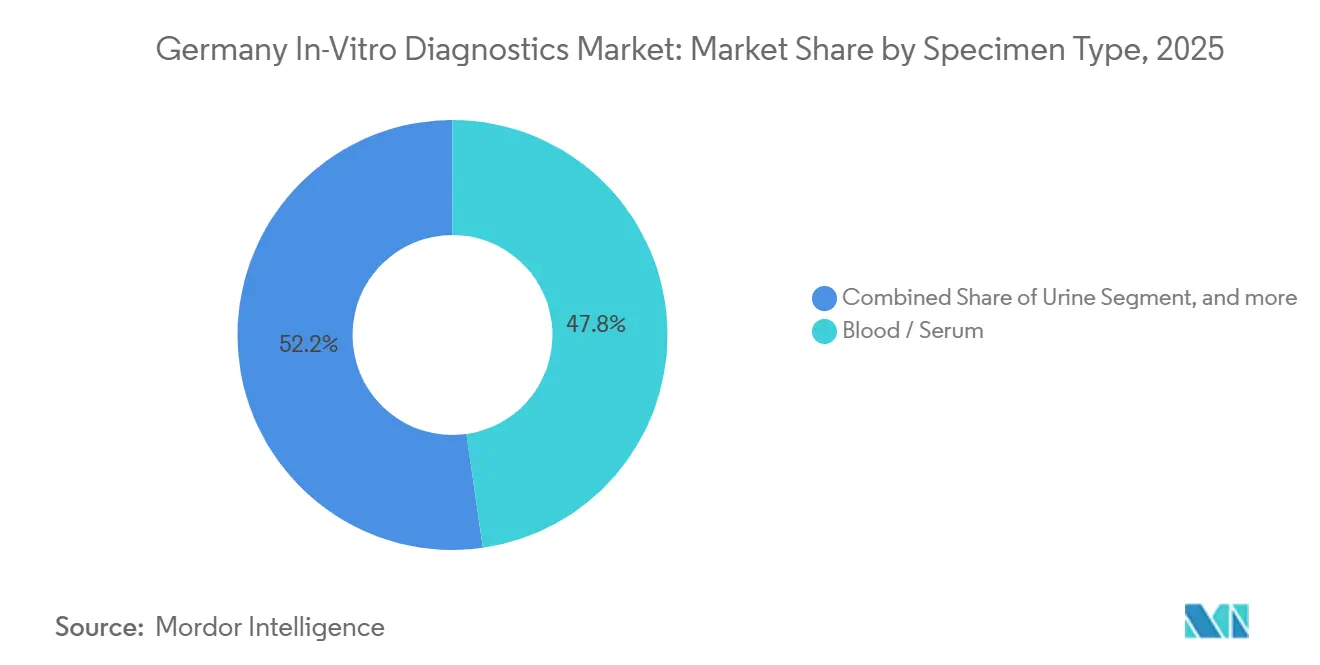
Blood and serum samples underwrote 47.76% of Germany in-vitro diagnostics market share in 2025, indispensable for chemistry, immunoassay, hematology and molecular workflows. Urine testing is, however, the fastest climber with 7.54% CAGR as quarterly albumin-creatinine ratio monitoring becomes compulsory for 2 million diabetics at risk of chronic kidney disease. The Germany in-vitro diagnostics market size linked to ctDNA rises too, as liquid-biopsy assays secure reimbursement for lung and colorectal cancers.
Saliva now serves rapid respiratory panels and oral HIV screens; Euroimmun’s saliva-IgA celiac test entered German labs in 2024. Tissue biopsies remain critical for complex oncology profiling although liquid biopsy trims invasive procedures. Blood screening remains regulated tightly by Paul-Ehrlich-Institut NAT testing for every donation, ensuring safety while adding steady NAT kit demand.
By Application: Diabetes Surges Beyond Infection Normalization
Infectious diseases remained the largest slice at 30.65% in 2025, but COVID-volume retrenchment flattens growth. Diabetes monitoring posts an 8.88% CAGR to 2031, buoyed by CGM reimbursement for all insulin-treated Type 2 patients. This pivot positions diabetes as the pre-eminent growth engine inside the Germany in-vitro diagnostics market. Oncology gains from liquid biopsy adoption; Roche’s FoundationOne Liquid CDx now reimbursed for NSCLC illustrates payers’ appetite for minimally invasive monitoring that fits value-based frameworks. Cardiology panels hold steady on aging demographics, and autoimmune multiplex assays shorten diagnostic journeys for lupus or Sjögren’s patients. Prenatal NIPT acceptance expands as blanket coverage makes trisomy screening routine.
By End User: Labs Consolidate While POC Networks Bloom
Diagnostic laboratories generated 45.32% of 2025 revenue, yet their growth lags that of home-care and point-of-care centers, which accelerated at a 8.65% CAGR. Synlab’s 120-site network processed 180 million tests in 2024, leveraging AI to keep staffing flat, proving that scale is the core route to lab survival. Contrastingly, pharmacies, GP clinics and mobile vans now capture patients who favor on-site answers within minutes. The Germany in-vitro diagnostics market size attached to hospitals shows hybrid behavior: high-acuity assays stay in-house, routine panels outsource to mega-labs. Academic centers drive frontier NGS research, funded by genomDE grants, and their in-house lab-developed tests maintain discovery agility under IVDR’s LDT carve-out.
Geography Analysis
Germany accounts for almost 30% of total European IVD revenue thanks to its 84 million population, EUR 474 billion in health spending, and a dense laboratory grid[2]. The Germany in-vitro diagnostics market size therefore dwarfs peers such as France and Italy, and its forward CAGR of 5.58% edges above their 4.8-5.2% trajectories. Precision-medicine leadership flows from Berlin and Munich university-hospital corridors where genomDE funnels capital and talent. Bavaria and Baden-Württemberg outpace national averages in liquid biopsy and CGM adoption, reflecting higher disposable income and private clinic density. Eastern Länder struggle with clinician shortages; hence, mobile diagnostic units and tele-connected point-of-care hubs are most impactful there.
Urban hubs—Berlin, Hamburg, Frankfurt—benefit from 95% household high-speed internet coverage, making cloud-LIS, AI triage, and home-monitoring integration seamless. Cross-border care is rising because the European Health Data Space gives 449 million EU residents digital access to German lab results; ISO 15189 upgrades and multilingual reports thus become export enablers for German reference labs. Germany also hosts eight of Europe’s 35 IVDR notified bodies, cementing its role as certification hub; foreign manufacturers often enter the Germany in-vitro diagnostics market first to navigate audits on local turf before rolling out EU-wide.
Surrounding markets react: Scandinavian countries push point-of-care adoption, Southern Europe remains price-sensitive toward clinical chemistry, while Eastern Europe imports German automation expertise. Collectively, this reinforces Germany as trendsetter whose policy moves—data sharing, reimbursement, regulatory rigor—set de facto standards for continental diagnostics practice.
Regulatory Landscape
Germanys IVD regulatory framework is anchored in the EU In Vitro Diagnostic Medical Devices Regulation (IVDR) 2017/746, as amended by Regulation (EU) 2024/1860, and complemented nationally by the Medizinprodukterecht-Durchfuehrungsgesetz (MPDG). In Germany, the competent higher federal authorities are BfArM (Federal Institute for Drugs and Medical Devices) and the Paul-Ehrlich-Institut (PEI), with PEI taking competence for high-risk Class D IVDs and specified Class C tests, while BfArM oversees the majority of other IVD categories, including performance-study oversight where applicable.
The IVDR transition adds time-bound administrative milestones that affect continuity of supply for legacy assays. For legacy Class C devices, May 26, 2026 is a key milestone to lodge a formal application for conformity assessment with a notified body to access the extended transition, followed by a September 26, 2026 milestone for having a signed written agreement in place; meeting these steps supports continued market placement through the extended period (notably up to December 31, 2028 for the relevant legacy Class C transition pathway). Post-market obligations and market surveillance under MPDG further increase operational load, including structured vigilance and incident handling, which reinforces the need for earlier classification decisions and notified-body capacity planning in Germany.
Value Chain Analysis
The Germany in-vitro diagnostics value chain starts with upstream biological and chemical inputs (antibodies, recombinant proteins, enzymes, plastics, microfluidic components, and quality-control materials), moves through assay and instrument design, verification/performance evaluation, and regulated manufacturing, and then extends into distribution and deployment across laboratories, hospitals, and decentralized settings (pharmacies, GP practices, and home-care/POC providers). IVDR-driven quality management, technical documentation, and performance-study requirements have increased reliance on specialized service providers (regulatory consulting, clinical evidence generation, and software/middleware firms), while the notified-body step has become a gating function that influences product timing and portfolio prioritization.
Downstream, diagnostic laboratories and hospital networks are the main procurement and utilization nodes, with purchasing decisions increasingly linked to automation readiness and digital interoperability (middleware and LIS connectivity for structured result exchange). Market surveillance and vigilance add a further loop in the chain, and under MPDG serious incidents are reported via the German Medical Devices Information and Database System (DMIDS); the competent authority split (BfArM vs PEI) affects reporting and oversight pathways by device class. The industry also remains shaped by a high density of SMEs (around 80% with fewer than 250 employees), which heightens sensitivity to IVDR compliance costs and to upstream supply constraints for specialized raw materials used in high-value immunoassays and molecular assays.
Competitive Landscape
The Germany in-vitro diagnostics market exhibits moderate concentration: the top five suppliers—Roche, Siemens Healthineers, Abbott, Danaher and Qiagen—hold about 55-60% revenue. Roche dominates chemistry and immunoassay through the cobas ecosystem; Siemens leads workflow automation with high-throughput Atellica lines; Abbott commands CGM with FreeStyle Libre; Danaher’s Beckman Coulter plus Cepheid blanket hematology and syndromic PCR; Qiagen steps up with QIAstat molecular panels. Mid-tier brands—bioMérieux, Thermo Fisher, BD, Werfen—specialize in infectious-disease syndromic panels, life-of-patient coagulation, and niche reagent franchises.
IVDR recertification has become a competitive wedge: well-capitalized multinationals shoulder EUR-million documentation bills more readily than small firms, allowing them to consolidate share as niche rivals exit. Synlab and Limbach illustrate a parallel service-provider land grab; scaling to 180 million tests enables Synlab to negotiate reagent discounts and invest EUR 40 million in AI interpretation to offset staffing gaps. Technology road-maps converge on digital adjacency: Roche’s Navify cloud trims tumor board turnaround by half; Siemens’ AI process manager prunes reagent waste; Illumina’s NovaSeq X slashes WGS cost 60%, enabling insurer-funded screening.
Acquisition remains key: Danaher’s USD 5.7 billion Abcam deal arms it with 200,000 antibodies; Thermo Fisher buys upstream peptide producers to buffer supply. Competitive intensity also plays out in home-care where Abbott pushes Libre 3 Plus into pump integration, while Roche and Ascensia chase with G7 and Eversense respectively. Overall, the Germany in-vitro diagnostics market rewards scale, digital fluency and regulatory foresight.
Germany In-Vitro Diagnostics Industry Leaders
Qiagen N.V.
Abbott Laboratories
Roche Diagnostics
bioMerieux SA
Becton Dickinson
- *Disclaimer: Major Players sorted in no particular order

Market Opportunities and Future Outlook
A primary opportunity in Germany is IVDR transition execution services and product redesign for higher-risk portfolios, particularly Class C and D categories where notified-body involvement and performance evidence requirements are central to market access under MPDG and IVDR. With May 26, 2026 and September 26, 2026 milestones determining whether legacy Class C IVDs can remain available through the extended transition pathway, demand rises for technical documentation updates, performance-study management, and test-menu rationalization and replacement. This especially benefits well-capitalized manufacturers and specialist service providers that can shorten time-to-certification.
A second whitespace is the expansion of life-science and diagnostics adjacencies that support German supply capabilities for assays and reagents used in advanced testing. In June 2026, Merck KGaA (Darmstadt, Germany) announced a definitive agreement to acquire Bio-Techne for USD 11.3 billion, a transaction framed around strengthening Mercks life science business and reinforcing investment into enabling technologies used in advanced diagnostics workflows. Alongside policy-driven digitization of health data and the ongoing build-out of precision medicine programs in Germany, this supports opportunities in molecular testing ecosystems (sample-to-answer syndromic panels, sequencing-adjacent sample prep, and validated companion diagnostics) and in the software layer needed to operate compliant, interoperable diagnostic reporting.
Recent Industry Developments
- July 2026: QIAGEN launched the CE-IVDR-certified QIAstat-Dx BCID GN Plus AMR Panel in Europe, expanding its syndromic menu for bloodstream infection testing. The addition broadens rapid pathogen and antimicrobial resistance detection options on an automated platform, supporting labs seeking faster escalation decisions while aligning with IVDR-certified menu strategies.
- November 2025: BD received FDA 510(k) clearance and CE-IVDR certification for high-throughput Enteric Bacterial Panels on the BD COR System. The combined regulatory progress strengthens BDs position in automated, scalable molecular workflows and gives European laboratories an IVDR-certified path to expand stool pathogen testing on a consolidated system.
- February 2024: Roche opened the LEAP diagnostic innovation center in Penzberg, Germany, backed by a reported EUR 300 million investment. The facility addition reinforces Germany-based development capacity for diagnostics and can shorten iteration cycles for new assays and platforms serving regulated European markets.


Research Methodology Framework and Report Scope
Market Definition and Coverage
For this report, the market covers the revenue generated in Germany from in vitro diagnostic tests, including the instruments, reagents, and related consumables used to analyze patient samples (such as blood or swabs) for screening, diagnosis, monitoring, or therapy guidance.
Scope exclusions: This sizing excludes in vivo imaging diagnostics and patient treatment costs. It also excludes general laboratory equipment that is not used for IVD testing.
Segmentation Overview
- By Test Type
- Clinical Chemistry
- Immunodiagnostics
- Molecular Diagnostics
- Hematology
- Microbiology & Lateral Flow
- Coagulation
- Point-Of-Care (Rapid) Tests
- Other Tests
- By Product & Service
- Reagents & Consumables
- Instruments / Analyzers
- Software & Services
- By Usability
- Disposable IVD Devices
- Reusable IVD Devices
- By Specimen Type
- Blood / Serum
- Urine
- Saliva
- Tissue / Biopsy
- Other Specimen Types
- By Application
- Infectious Diseases
- Diabetes
- Cancer / Oncology
- Cardiology
- Autoimmune Disorders
- Nephrology & Renal Panels
- Prenatal / Genetic Screening
- Blood Screening
- Other Applications
- By End User
- Academic & Research Institutes
- Diagnostic Laboratories
- Home-Care / POC Centers
- Hospitals & Clinics
- Other End Users
- By Country
- Germany
- United Kingdom
- France
- Italy
- Spain
- Rest of Europe
Data Sources, Market Sizing, and Validation
Desk Research
Desk research was used to set the ground rules for what should be counted as IVD revenue in Germany, and to anchor demand signals that can be checked year to year. We relied on public and official references such as the German Federal Statistical Office (Destatis), Eurostat health and trade tables, the Robert Koch Institute (RKI) for disease testing context, the Paul Ehrlich Institute (PEI) for relevant regulatory and safety information, and OECD health indicators to understand system capacity.
Alongside that, we reviewed company annual reports, investor presentations, product catalogs, and credible news coverage to understand portfolio mix shifts, for example molecular versus immunoassay intensity, and to infer likely pricing direction. Where helpful, paid database subscriptions were used only as a support layer for company financial intelligence, patents, and shipment level import and export checks tied to IVD related categories. The desk research sources listed above are illustrative only, and we also used other public references to collect, validate, and clarify data points.
Primary Interviews and Surveys
Primary work focused on interviews and structured surveys with manufacturers, distributors, large and mid-sized laboratories, hospital procurement teams, and domain experts who track test volumes and purchasing cycles across Germany. These conversations were used to confirm what is actually bought and used in the field, tighten assumptions around average selling price movement, and sense-check share shifts across major test areas before locking the final model.
Distribution of primary research fieldwork respondents
| Company type | Respondent position |
|---|---|
| Top tier: 38% | CXOs: 16% |
| Mid tier: 42% | Functional/Unit leaders: 36% |
| Smaller Players: 20% | Managers: 48% |
Market-Sizing & Forecasting
The core sizing starts with a top-down build where healthcare testing demand is reconstructed using Germany specific indicators, and then converted into market value using price and mix logic. In practice, volumes and utilization signals (for example, lab throughput, hospital diagnostic activity, and disease testing intensity) were mapped to IVD consumption patterns, and then translated into revenue using category level average selling prices and expected product mix.
To keep the totals realistic, the outputs were corroborated with selective bottom-up approximations, such as supplier revenue reasonability checks, sampled price points for commonly used assays, and channel feedback on instrument placements versus reagent pull-through. Key inputs that materially shape the model include the split between reagents and instruments, the pace of molecular test adoption, replacement cycles for analyzers, reimbursement and tender behavior that influences pricing, and post pandemic normalization in respiratory and infectious disease testing.
For forecasting, scenario analysis was used because the market is sensitive to a few drivers that can move quickly, especially testing mix, pricing pressure, and the timing of platform upgrades. When a bottom-up signal was incomplete, for example limited visibility on smaller laboratory purchasing, we applied conservative gap fills based on share-of-demand logic validated through primary feedback, and then rechecked the implied per test economics for plausibility.
Data Validation & Update Cycle
Validation was handled through triangulation across demand signals, supply signals, and pricing logic, followed by variance checks at each major step in the model. We compared implied spend per test, mix splits, and growth rates against independent indicators, and anything that looked out of line was reviewed again with supporting sources before sign-off.
A multi-step analyst review is completed before publication, and follow-up outreach is triggered when large gaps show up between what desk research suggests and what the field is reporting. Reports are refreshed annually, with interim updates when material events occur, and a final pre-delivery pass is done so clients receive the most current view available at the time of release.
Mordor Intelligence's Vitro Diagnostics Germany Market Size Versus Other Published Estimates
Published market sizes for Germany IVD often differ even when the topic name looks the same, because the counted revenue boundary and the timing of the data used are not consistent. The biggest differences usually come from what is treated as IVD revenue (products only versus products plus services), which year is used as the reference, and whether pricing is kept in current exchange rates or smoothed over longer periods.
In this market, the refresh cadence and currency timing matter because imported kits and instruments can swing in reported USD value even when local purchasing feels stable, and ASP assumptions can also drift if list prices are used instead of realized prices after tenders and discounts. By updating pricing and mix assumptions close to the reference year and rechecking them through recent field validation, Mordor Intelligence reduces the chance of carrying forward outdated per-test economics into the total.
Benchmark comparison
| Source | Market Size | Gaps in Research Methodology |
|---|---|---|
| Mordor Intelligence | USD 5.82 B (2025) | |
| Industry Publisher A | USD 5.74 B (2024) | Uses an earlier base year and a shorter forecast window, and the USD figure can reflect a different exchange-rate timing, which changes the reported value even if local demand is similar. |
| Global Publisher B | USD 3.96 B (2023) | Starts from an older baseline year and appears to apply lower ASP and mix progression, which can understate reagent-heavy categories when recent adoption and pricing resets are not fully reflected. |
The spread across the three figures is mainly explained by the chosen reference year, how USD conversion is handled, and how fast pricing and mix are allowed to evolve in the model. When these items are aligned to the same timing and checked against field reality, the resulting market size becomes easier to trace back to test demand and practical purchasing behavior.


Key Questions Answered in the Report
What is the projected value of the Germany in-vitro diagnostics market by 2031?
It is forecast to reach USD 8.06 billion, expanding at a 5.58% CAGR from 2026-2031.
Which segment is growing fastest within German IVD?
Molecular diagnostics leads with a 7.87% CAGR, fueled by the genomDE sequencing program and IVDR companion-diagnostic rules.
How are German reimbursement policies influencing home-care testing?
Section 64e of the Social Code Book V reimburses decentralized pilots, driving 8.65% CAGR for home-care and point-of-care centers.
Why are software revenues rising in German laboratories?
Mandatory FHIR data exchange under the Health Data Usage Act and IVDR post-market surveillance needs push software and services at 8.65% CAGR.
What impact will IVDR have on market supply?
High compliance costs and limited notified-body capacity may remove low-margin assays, but larger players able to certify early can gain share.
Page last updated on:


 Your data is secure and never sold or shared.


