
Fish Protein Market Size and Share
Market Overview
| Study Period | 2022 - 2032 |
|---|---|
| Market Size (2027) | USD 2.22 Billion |
| Market Size (2032) | USD 3.09 Billion |
| Growth Rate (2027 - 2032) | 6.84 % |
| Fastest Growing Market | Asia-Pacific |
| Largest Market | North America |
| Market Concentration | Medium |
Major Players *Disclaimer: Major Players sorted in no particular order Image © Mordor Intelligence. Reuse requires attribution under CC BY 4.0. | |
Fish Protein Market Analysis by Mordor Intelligence
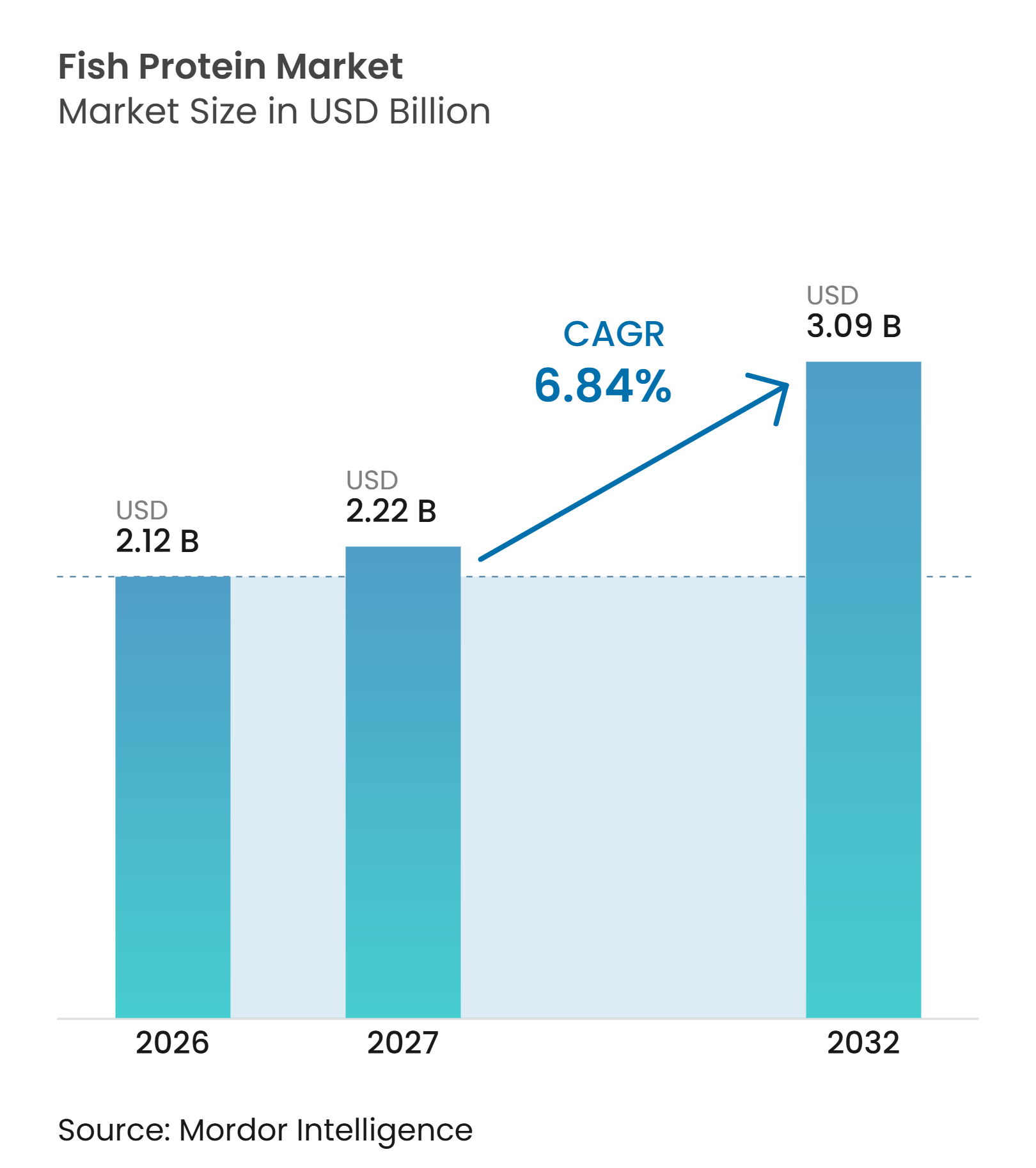
The fish protein market size is expected to increase from USD 2.12 billion in 2026 to USD 2.22 billion in 2027 and reach USD 3.09 billion by 2032, growing at a CAGR of 6.84% over 2027-2032. The fish protein market is supported by aquaculture feed demand, a wider use of marine ingredients in health products, and procurement requirements that increasingly favor traceable raw materials. Producers are separating commodity feed ingredients from higher-value hydrolysates and isolates for human nutrition, where purity, sensory performance, and clinical support affect purchase decisions. Traceable by-product supply is becoming more important to buyers that need documented sourcing and want to reduce reliance on whole-fish inputs. Clinical evidence, sensory quality, and processing efficiency are shaping product development in premium applications and affecting which suppliers can earn a higher-value position. Supply concentration in Peru and Norway still leaves the fish protein market exposed to catch conditions, biomass assessments, energy costs, and regulatory decisions.
Key Report Takeaways
- By product type, hydrolysate held 47.06% revenue share in 2026, while isolate is forecast to expand at a 7.21% CAGR through 2032.
- By source, anchovy held 32.17% revenue share in 2026, while salmon is forecast to expand at a 7.79% CAGR through 2032.
- By form, powder held 67.83% revenue share in 2026, while liquid is forecast to expand at an 8.01% CAGR through 2032.
- By application, animal feed held 41.35% revenue share in 2026, while supplements are forecast to expand at an 8.56% CAGR through 2032.
- By geography, North America held 34.71% revenue share in 2026, while Asia-Pacific is forecast to expand at a 7.75% CAGR through 2032.
Note: Market numbers in this report are based on Mordor Intelligence's proprietary estimation framework, which combines nine months of actuals with Q4 projections for base year 2026.
Market Trends and Insights
Drivers Impact Analysis of Fish Protein Market*
| Driver | (~) % Impact on CAGR Forecast | Geographic Relevance | Impact Timeline |
|---|---|---|---|
| Rising Demand for Sustainable Protein Sources | +1.5% | Global | Long term (≥ 4 years) |
| Growing Aquaculture Feed Production and Consumption | +1.8% | The Asia-Pacific core, spill-over to South America and Europe | Medium term (2-4 years) |
| Increasing Demand for High-Quality Animal Nutrition | +1.2% | The Asia-Pacific core and North America | Medium term (2-4 years) |
| Expanding Applications in Functional Food Products | +0.8% | North America and Europe | Long term (≥ 4 years) |
| Increasing Demand for Sports Nutrition Supplements | +0.9% | North America, Europe, and the Asia-Pacific | Long term (≥ 4 years) |
| Advancements in Fish Protein Extraction Technologies | +0.7% | Norway, North America, and Japan | Long term (≥ 4 years) |
| Source: Mordor Intelligence | |||
Rising Demand for Sustainable Protein Sources
Fish protein offers greater resource efficiency than several land-based animal proteins, strengthening its sustainability profile within the broader protein industry. According to FAO research, fish protein requires 13 times less water than pork and can generate emissions that are 10 times lower than beef per kilogram of protein. These resource-efficiency advantages position fish protein as a potentially lower-impact alternative for meeting growing global protein demand. IFFO reported that cumulative global fishmeal production increased by 8% year over year during the first three quarters of 2025, reflecting continued activity across the fishmeal supply chain[1]. Increased utilization of filleting by-products can further reduce the fish protein market's dependence on whole-fish inputs while supporting more efficient use of available aquatic resources. Additionally, FAO’s 2025 Guidelines for Sustainable Aquaculture support procurement models that prioritize traceability, responsible sourcing, and the circular use of aquatic resources.
Growing Aquaculture Feed Production and Consumption
The OECD-FAO Agricultural Outlook 2025–2034 projects global aquaculture output to reach 212 million tons by 2034, up from approximately 193 million tons in 2024[2]. Fishmeal use in aquaculture is expected to increase by 16% to 4.9 million tons, despite the growing share of oilseed-based alternatives. China is projected to account for 42% of global fishmeal consumption by 2034. FAO GLOBEFISH data also indicate that China absorbed 67% of Peru’s fishmeal exports in Q1 2025, highlighting the demand concentration that supports global pricing. According to IFFO, Peru set a quota of 3 million metric tons for its first anchovy fishing season in 2025, the largest quota in seven years. IFFO estimates full-year global fishmeal production at 5.4–5.6 million tons in 2025, providing adequate supply coverage for near-term aquaculture feed demand. Salmonid aquaculture, which is projected to grow by 26% by 2034, depends heavily on fish protein. Salmon requires a complete amino acid profile during both juvenile and grow-out stages, which plant proteins cannot provide without costly synthetic amino acid supplementation. The World Bank identifies aquaculture as the world’s fastest-growing food production sector. Moreover, structural growth in high-value farmed species, including shrimp, salmon, and sea bass, increases fish protein demand, as these species have a higher fish protein intensity than commodity species such as tilapia and carp.
Increasing Demand for Sports Nutrition Supplements
Fish protein hydrolysates support recovery-focused nutrition because their peptides enable rapid digestion. The global sports and active nutrition market has been expanding at approximately twice the rate of the broader vitamins and supplements industry, while clean-label marine protein continues to gain traction over dairy and soy alternatives among pescatarian consumers and those with food sensitivities. Hofseth BioCare reported a 180% year-on-year increase in Human Nutrition B2B sales, reaching NOK 9.3 million in Q2 2025. European, Chinese, and Southeast Asian markets demonstrated strong demand for its ProGo salmon-derived peptide. ProGo also won China’s “Panpan Cup” Food Maker Award in 2025, signaling institutional recognition in one of the world’s most competitive health ingredient markets. Manufacturers that shift from commodity hydrolysates to evidence-based ingredient positioning can capture pricing premiums that commodity competitors cannot access without comparable research infrastructure. This trajectory indicates a market in which clinical validation, rather than protein cost per unit, serves as the primary competitive differentiator.
Advancements in Fish Protein Extraction Technologies
Enzymatic hydrolysis optimization research shows that sea bream and sea bass side-stream hydrolysates can achieve protein content above 80%, with superior emulsifying activity and foaming capacity compared with crude fishmeal fractions. MDPI’s Fermentation journal (2025) reports that combined enzymatic-ultrasonic processing can increase the degree of hydrolysis by 4–5 percentage points while reducing enzyme consumption. Treated samples from Atlantic cod secondary raw materials also recorded antioxidant activity 2.5–3.2 times higher than control samples. Pelagia’s Norwegian FHF-funded research project, scheduled for completion in October 2025, evaluates superheated steam, pulsed-combustion drying, and rotating fluid-bed drying for pelagic fish protein hydrolysates. Superheated steam can deliver near-equivalent fishmeal quality while reducing energy consumption by up to 30% versus conventional hot-air drying, improving marine protein powder production economics. As these technologies scale commercially, they are expected to lower entry costs for mid-sized regional processors, expand competitive supply, and diversify manufacturing beyond Norway and Peru. Ingredient buyers will benefit from greater supply redundancy and a wider choice of verified-quality fish protein fractions by origin.
Restraints Impact Analysis of Fish Protein Market*
| Restraint | (~) % Impact on CAGR Forecast | Geographic Relevance | Impact Timeline |
|---|---|---|---|
| High Production Costs and Processing Expenses | -0.9% | Global, most acute in the Asia-Pacific and South America | Medium term (2-4 years) |
| Fluctuating Availability of Raw Fish Materials | -0.8% | South America (Peru/Chile core), spill-over to Global | Short term (≤ 2 years) |
| Stringent Regulations Governing Fish Protein Ingredients | -0.5% | Europe, North America, and Japan | Long term (≥ 4 years) |
| Fishy Odor and Unpleasant Taste Profiles | -0.4% | North America and Europe (consumer markets) | Medium term (2-4 years) |
| Source: Mordor Intelligence | |||
High Production Costs and Processing Expenses
Converting whole fish or processing side streams into purified protein ingredients requires energy-intensive drying, enzymatic treatment, and, in many cases, membrane filtration. These steps raise costs across the value chain, making fish protein more expensive than soy or pea protein concentrates with equivalent protein content. Fishmeal FOB prices from Peru are projected to reach USD 1,735 per metric ton in November 2025, a 15.8% year-on-year increase. Rising upstream input costs can cascade into downstream prices for hydrolysate and isolate manufacturers using fishmeal as their primary feedstock. For food-grade and nutraceutical-grade fish protein, purification adds costs for enzymatic hydrolysis equipment, pH control systems, and spray-drying infrastructure, which smaller processors may struggle to justify without sufficient throughput. TASA is expected to transition its Chimbote facility to natural gas in October 2025, reducing CO2 emissions by 18%, or approximately 6,500 tonnes annually. This demonstrates that sustainability investments and cost competitiveness can align at sufficient scale. However, smaller ingredient producers are likely to face production cost disadvantages over the medium term, constraining market entry and competitiveness in price-sensitive applications.
Fluctuating Availability of Raw Fish Materials
Peru and Norway anchor global fish protein supply chains but remain exposed to ocean ecosystem variability that can trigger sharp, unpredictable supply contractions. A Nature Food study cited by aqua.cl (2025) indicates that a fishmeal shortage could emerge as early as 2028 as aquaculture demand outpaces supply growth. Minor disruptions to Peruvian anchoveta catches can cause disproportionate price volatility. Peru accounts for approximately 20% of global fishmeal production and up to 30% of globally traded EPA and DHA. For the second north-central anchovy season in 2025, Peru initially set the total allowable catch at 500,000 metric tons, down 80% from 2024, before IMARPE’s updated biomass assessment led PRODUCE to raise the quota to 1.63 million metric tons. This reversal highlights the regulatory and ecological uncertainty facing buyers across the fish protein value chain. The OECD-FAO Outlook (2025) projects that El Niño events in 2027 and 2031 could each reduce South American catches by approximately 2 million tons. In response, downstream fish protein manufacturers are adopting strategic inventory management, dual sourcing from alternative species, and by-product-derived supplies that are less correlated with wild-catch fluctuations.
*Our forecasts treat driver/restraint impacts as directional, not additive. The impact forecasts reflect baseline growth, mix effects, and variable interactions.
Fish Protein Market Segment Analysis
By Product Type:
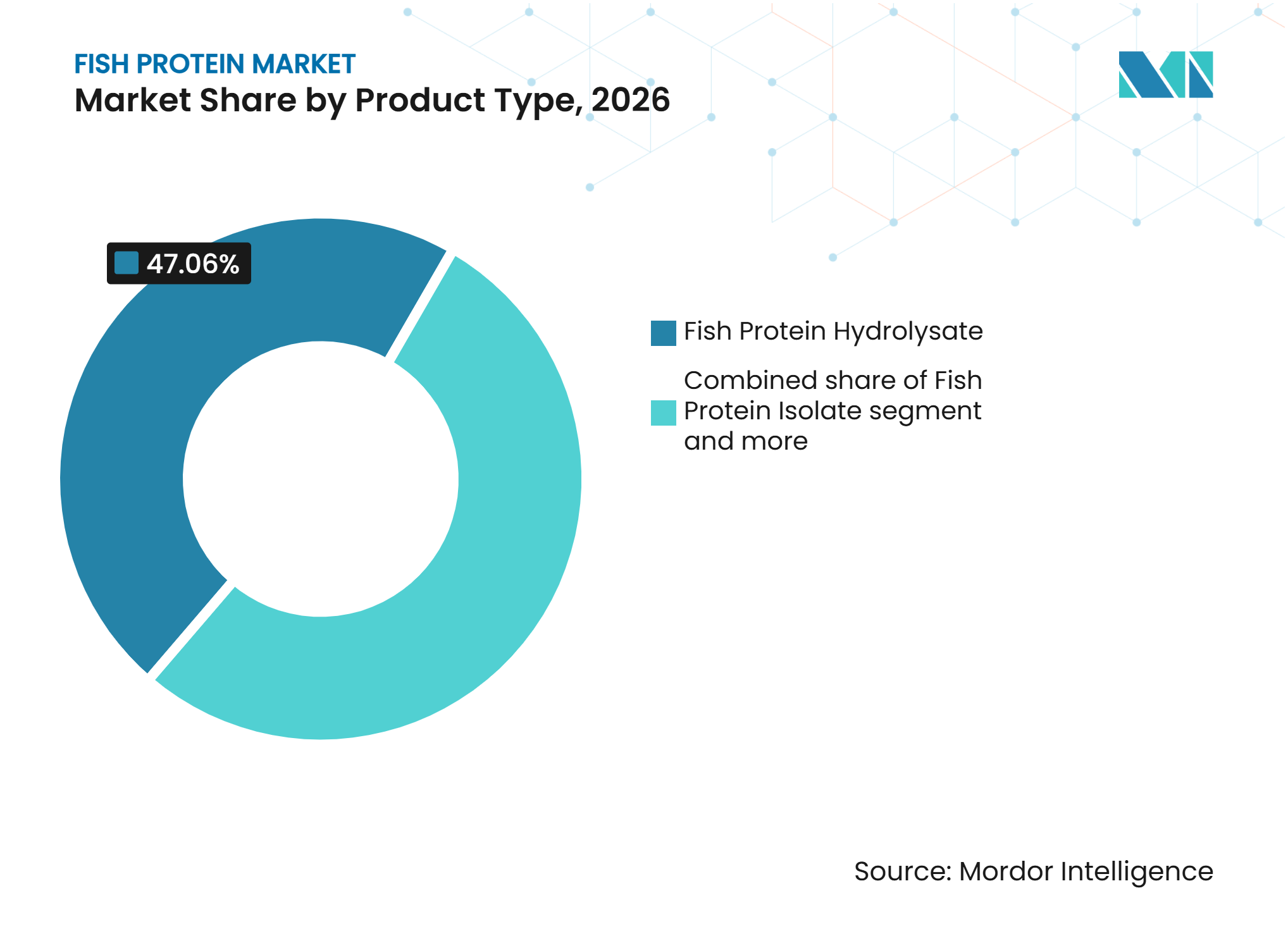
Hydrolysate Leads, While Isolate Expands FastestHydrolysate is projected to account for 47.06% of the fish protein market share in 2026, reflecting its established role in aquafeed and expanding use in cosmetics and human health applications. Hydrolysis enables manufacturers to tailor peptide size and functional properties for feed, beauty, and nutrition formulations, providing hydrolysate with greater application flexibility than less processed fishmeal. A 2025 article in Applied Sciences is expected to report that hydrolysates can replace 50-60% of fishmeal in certain aquafeed formulations without reducing growth performance, supporting their use as a primary feed ingredient. Fish protein concentrate occupies a mid-range position because of its cost-effectiveness and compatibility with pelletizing infrastructure, particularly in applications where bioactive specificity is less critical. Fish protein isolate is forecast to grow at a CAGR of 7.21% through 2032, driven by demand from clinical and sports nutrition products that value its high purity, neutral sensory profile, and improving production yields.
Specialty collagen preparations and functional peptide fractions represent smaller, higher-value product segments within the fish protein market. Producers use these materials in applications where texture, absorption, or a defined biological function is more important than bulk protein delivery. Fish protein isolate production uses techniques such as isoelectric precipitation and ultrafiltration to improve yields and reduce costs. These process improvements can expand its use beyond specialized clinical products into more accessible sports nutrition formulations. Product selection in the fish protein market therefore depends on the balance among price, functional performance, and customers’ requirements for documented ingredient quality.



By Source:
Anchovy Supports Scale, While Salmon Builds Premium UsesAnchovy is projected to account for 32.17% of the fish protein market in 2026, supported by Peru’s mature processing infrastructure, established export routes, and significant role in the supply of commodity marine ingredients. IFFO projects global fishmeal production to reach 5.4-5.6 million tons in 2025, with Peru contributing 20% of total output. Peru’s fleet landed nearly 98% of its 1.63 million-ton second north-central quota, while Chinese aquaculture demand remains a major driver of anchovy-derived supply. Sardine, mackerel, and herring support specialized processing corridors in Scandinavia and Western Europe, while menhaden remains integral to the United States supply chain. Salmon is projected to grow at a CAGR of 7.79% through 2032, as processors increasingly use side streams to produce premium ingredients.
Nutrimar processes 40,000 tons of salmon by-products annually at its Bergen biorefinery, producing salmon proteins and omega-3 oils for pet food and aquafeed applications. SalMar identifies Nutrimar as a wholly owned subsidiary that converts residual raw materials into marine ingredients. This model generates value from materials that would otherwise have limited use and reduces direct reliance on wild-catch inputs. Salmon-derived proteins are particularly relevant for purchasers seeking traceability, premium positioning, and a by-product sourcing narrative. Consequently, the fish protein market’s source mix combines large-scale anchovy supply with more specialized salmon-based ingredients.
By Form:
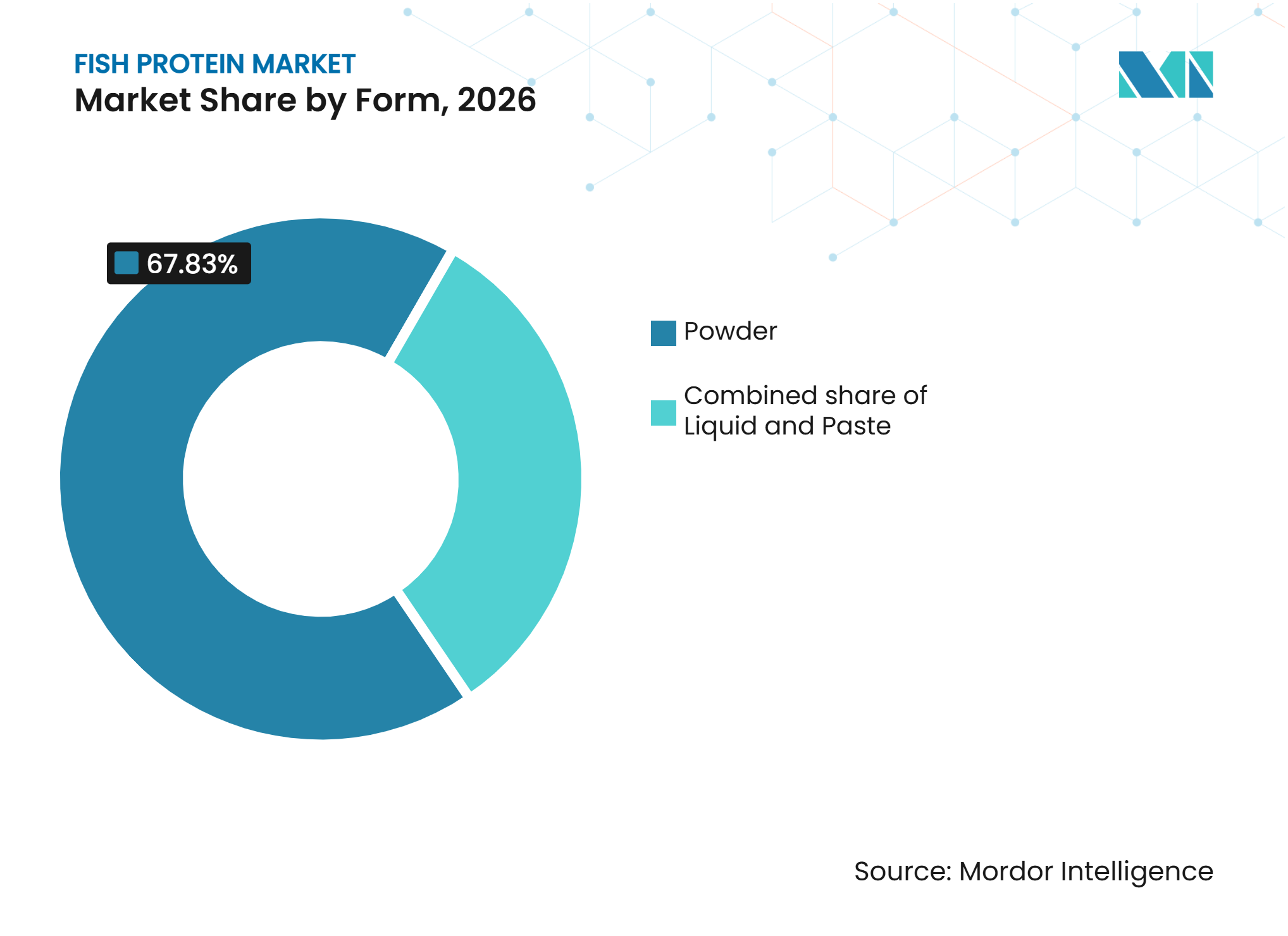
Powder Retains Scale, While Liquid Finds New UsesPowder is expected to hold 67.83% of the fish protein market in 2026, as it suits standard dry-mix feed systems, maintains quality during ambient storage, and moves efficiently through bulk export channels. These characteristics support its use in aquafeed, pet food, and powdered sports nutrition products, where consistent handling and storage are essential. TASA’s planned October 2025 conversion to natural gas at its Chimbote facility shows how established producers are protecting powder economics through process investments. The format remains linked to pelletizing infrastructure and is expected to retain a central role in large-volume feed formulations. Its broad installed base also provides suppliers with a familiar route to existing customers.
Liquid fish protein is projected to expand at a CAGR of 8.01% through 2032, driven by demand from larval aquaculture and formulations that prioritize rapid nutrient delivery over shelf life. A 2025 Frontiers in Nutrition study identified changes in peptide distribution and color following mackerel hydrolysate treatment, potentially expanding applications in cosmetics and functional foods. Liquid formats can also enable direct spray-coating in hatchery feed systems. Paste serves a smaller range of topical cosmetic and pharmaceutical applications, where its texture supports specific formulation requirements. Consequently, the fish protein market is adopting multiple delivery formats rather than relying solely on conventional powder.

By Application:
Feed Provides Volume, While Supplements Add ValueAnimal feed is estimated to account for 41.35% of the fish protein market in 2026, as aquaculture diets for carnivorous species rely on concentrated marine nutrient inputs. The OECD-FAO outlook projects aquaculture to contribute 56% of total fisheries output by 2034, with salmonid production increasing by 26% and shrimp production by 38%. This outlook provides producers with a durable demand base for feed applications across high-value farmed species. Research on Asian seabass indicates that tuna hydrolysate improves performance and health markers in low-fishmeal diets. Therefore, feed applications provide volume stability as new human nutrition applications expand.
The supplements segment is forecast to grow at a CAGR of 8.56% through 2032, driven by marine collagen and peptide products entering pharmacy and sports nutrition retail channels. Hofseth BioCare’s ProGo line illustrates the shift toward clinically supported, salmon-derived ingredients for human health products. Food and beverage manufacturers are also evaluating marine proteins for use in bakery products, beverages, cereals, condiments, confectionery, dairy alternatives, and ready-to-eat products. FDA and EFSA requirements govern permitted use levels and labeling claims, making regulatory preparation critical for these applications. Personal care and cosmetics remain lower-volume application areas; however, validated collagen and peptide products can command higher values.
Geography Analysis
North America: Infrastructure Depth Sustains Market Leadership
North America is projected to hold the largest fish protein market share at 34.71% in 2026. Its position is supported by the United States’ vertically integrated menhaden reduction fishery, one of the country’s largest single-species commercial fisheries by weight, according to NOAA, and Canada’s Atlantic processing corridor[3]. Domestic demand is driven by the aquafeed, pet food, and sports nutrition sectors. The US pet food industry’s shift toward novel-protein formulations, using marine fish for animals with suspected food sensitivities, provides an adoption pathway relatively insulated from commodity protein substitution. Omega Protein’s facilities in Virginia, Louisiana, and Mississippi collectively process 437,000 metric tons of menhaden annually. In October 2025, the company expanded high-purity fish protein hydrolysate production at its Virginia facility through upgraded enzymatic hydrolysis systems to meet growing sports nutrition and animal feed demand. Imports from Norway, Iceland, and Chile supplement demand in nutraceutical and specialty ingredient channels. Regulatory uncertainty surrounding the Atlantic States Marine Fisheries Commission’s ongoing review of menhaden reduction quotas could increase import dependence for specific ingredient grades over the medium term.
Asia-Pacific: Aquaculture Intensity Drives the Fastest Expansion
Asia-Pacific is forecast to grow at a CAGR of 7.75% during 2027–2032, the fastest among all geographies. Growth is driven by China, which accounted for 50.7% of fishmeal used in global aquaculture in 2024, up from 42.9% a year earlier, according to IFFO data presented in Tokyo in October 2025. India’s Mukka Proteins, the country’s largest fishmeal and fish oil producer, reported a 182% year-on-year increase in net profit in Q2 FY2026 and an order book across Bangladesh, Vietnam, China, Saudi Arabia, and Southeast Asia, reflecting rising regional demand. Japan is the region’s most mature segment, with domestic fishmeal demand projected to rise from 330,000 tons in 2025 to 380,000 tons in 2026. The aquaculture sector accounts for 72% of demand, while yen depreciation has increased the cost of imports from Peru and Chile, encouraging domestic by-product utilization. Thailand and Indonesia are key growth markets for aquaculture feed. Research on Asian seabass in 2025 showed that marine protein hydrolysates can replace up to 60% of fishmeal in low-fishmeal diets without affecting growth performance or intestinal health. South Korea and Australia are smaller but structurally stable markets, where premium marine protein ingredients are gaining shelf presence in pharmacies and sports nutrition outlets.
Distinct Growth Dynamics Across Europe, South America, and the Middle East and Africa
Europe’s fish protein sector is supported by Norway’s marine ingredient industry, including Pelagia, Hofseth BioCare, and TripleNine, which operate 26 factories across Norway, the United Kingdom, Ireland, and Denmark. EFSA frameworks govern the entry of marine-derived protein ingredients into human nutrition channels. Germany, the United Kingdom, France, and the Netherlands are key demand centers for high-value fish protein fractions used in clinical nutrition, infant formula fortification, and cosmeceuticals. Pelagia is expected to launch EPAX Evolve 05 in April 2025 as the world’s first commercially available VLC-PUFA concentrate. Its EFSA non-novel food status and US GRAS recognition reflect the clinical-grade ingredient trajectory pursued by European producers. South America primarily serves as a supply anchor. TASA is expected to produce 276,093 tons of fishmeal in 2025, valorize 24,883 tons of waste, and reduce water consumption by 22.6%, according to its sustainability report. Salmon biomass in Brazil and Chile is recovering and is projected to grow by 7–8% year on year, creating additional protein extraction streams. The Middle East and Africa are emerging consumption markets. Egypt, Nigeria, and South Africa are expanding aquaculture output, with fishmeal-based feed as the primary protein source. Meanwhile, the United Arab Emirates and Saudi Arabia are expanding food supplement distribution channels, where marine protein collagen and bioactive peptide products are gaining presence in pharmacy and wellness retail outlets.
Competitive Landscape
Market Concentration

The fish protein market is moderately fragmented, with integrated fisheries, by-product processors, and bioactive ingredient specialists serving different parts of the value chain. Scale, reliable feedstock access, and processing technology are becoming increasingly important as customers demand consistent quality and traceable supply. In May 2025, Pelagia acquired Fjord Solutions, adding sludge-capture capabilities and expanding its role from catch processing to aquaculture waste recovery. Mukka Proteins also strengthened its processing position through acquisitions in 2025, highlighting the value of production capacity and access to alternative raw materials. These developments underscore the growing importance of integrated supply systems in the fish protein market.
Technology serves as a key competitive differentiator in premium applications. In February 2025, Hofseth BioCare and Symrise agreed to expand enzymatic hydrolysis capacity at Berkåk, with production scheduled to begin in the second quarter of 2027. Pelagia’s EPAX unit is also investing in proprietary fractionation technologies for specialized fatty acids. Clinical documentation, process expertise, and consistent purity are more difficult to replicate than basic commodity output. Companies that combine these capabilities can serve customers requiring stronger scientific evidence and technical support.
EFSA non-novel food status and U.S. GRAS positioning can improve access to regulated nutrition applications. FAO’s Sustainable Aquaculture Guidelines also shape sourcing expectations for marine ingredients. Smaller Norwegian and Icelandic processors are targeting clean-label products derived from upcycled raw materials. The fish protein market offers opportunities for differentiated suppliers; however, biological variability can rapidly affect input costs and competitive positioning.
Fish Protein Industry Leaders
-
Omega Protein Corporation
-
Hofseth BioCare ASA
-
Symrise AG
-
Biomega Group AS
-
Copalis Industries SAS
- *Disclaimer: Major Players sorted in no particular order
Fish Protein Market Companies Covered in this Report
- Omega Protein Corporation
- Hofseth BioCare ASA
- Symrise AG
- Biomega Group AS
- Copalis Industries SAS
- Bio-Marine Ingredients Ireland Ltd.
- Scanbio Marine Group AS
- TripleNine Group A/S
- TASA, Tecnológica de Alimentos S.A.
- Diana Aqua, a Symrise AG business
- Alaska Protein Recovery, LLC
- Sopropeche S.A.
- Janatha Fish Meal and Oil Products
- Mukka Proteins Limited
- Kemin Industries, Inc.
- Pelagia AS
- FF Skagen A/S
- Sociedad Pesquera Landes S.A.
- Scoular Company
- Neptune’s Harvest
Recent Industry Developments in Fish Protein Market
- April 2025: Nutrition from Water (NXW) signed a joint development agreement with Japanese ingredient distributor Nissei Kyokei to commercialize Marine Whey, an ocean-derived protein ingredient. The partnership aimed to introduce the ingredient to Japanese food, dairy and nutrition manufacturers, expanding its B2B applications and international distribution.
- March 2025: Mukka Proteins acquired a 51% stake in GSM Marine Export for INR 14 crore. The acquisition strengthened its fishmeal and fish oil manufacturing capabilities, improved raw-material sourcing and expanded its supply capacity for B2B customers in aquaculture feed, poultry nutrition and pet food industries.
- February 2025: Hofseth BioCare partnered with Symrise to develop a second enzymatic hydrolysis facility in Berkåk, Norway. Supported by a EUR 5 million loan from Symrise, the expansion aimed to triple HBC's production capacity of salmon-derived proteins and bioactive ingredients for human health, functional food and pet nutrition applications. Production was targeted for Q2 2027.
Global Fish Protein Market Report Scope
Fish protein is any protein-rich material derived from fish flesh, whole fish, or fish-processing byproducts (such as trimmings, skins, or bones) that is added to foods, supplements, or feeds for its nutritional value or functional properties. The fish protein market is segmented by product type, source, application, and geography. By product type, the market is segmented into hydrolysate, concentrate, isolate, and other product types. By Source, the market is segmented into anchovy, sardine, tuna, mackerel, herring, menhaden, salmon, and other sources. By form, the market is segmented into powder, liquid, and paste. By application, the market is segmented into animal feed, personal care, food and beverages, and supplements. By geography, the market is segmented into North America, Europe, Asia-Pacific, South America, and the Middle East and Africa. The market forecasts are provided in terms of value (USD).
Segmentation Overview
| Fish Protein Hydrolysate |
| Fish Protein Concentrate |
| Fish Protein Isolate |
| Other Fish Protein Products |
| Anchovy |
| Sardine |
| Tuna |
| Mackerel |
| Herring |
| Menhaden |
| Salmon |
| Other Sources |
| Powder |
| Liquid |
| Paste |
| Animal Feed | |
| Personal Care and Cosmetics | |
| Food and Beverages | Bakery |
| Beverages | |
| Breakfast Cereals | |
| Condiments/Sauces | |
| Confectionery | |
| Dairy and Dairy Alternatives Products | |
| RTE/RTC Food Products | |
| Others | |
| Supplements |
| North America | United States |
| Canada | |
| Mexico | |
| Rest of North America | |
| Europe | United Kingdom |
| Germany | |
| France | |
| Italy | |
| Spain | |
| Sweden | |
| Belgium | |
| Poland | |
| Netherlands | |
| Rest of Europe | |
| Asia-Pacific | China |
| Japan | |
| India | |
| Thailand | |
| Singapore | |
| Indonesia | |
| South Korea | |
| Australia | |
| Rest of Asia-Pacific | |
| South America | Brazil |
| Argentina | |
| Colombia | |
| Peru | |
| Chile | |
| Rest of South America | |
| Middle East and Africa | United Arab Emirates |
| South Africa | |
| Saudi Arabia | |
| Nigeria | |
| Egypt | |
| Morocco | |
| Turkey | |
| Rest of Middle East and Africa |
| By Product Type | Fish Protein Hydrolysate | |
| Fish Protein Concentrate | ||
| Fish Protein Isolate | ||
| Other Fish Protein Products | ||
| By Source | Anchovy | |
| Sardine | ||
| Tuna | ||
| Mackerel | ||
| Herring | ||
| Menhaden | ||
| Salmon | ||
| Other Sources | ||
| By Form | Powder | |
| Liquid | ||
| Paste | ||
| By Application | Animal Feed | |
| Personal Care and Cosmetics | ||
| Food and Beverages | Bakery | |
| Beverages | ||
| Breakfast Cereals | ||
| Condiments/Sauces | ||
| Confectionery | ||
| Dairy and Dairy Alternatives Products | ||
| RTE/RTC Food Products | ||
| Others | ||
| Supplements | ||
| By Geography | North America | United States |
| Canada | ||
| Mexico | ||
| Rest of North America | ||
| Europe | United Kingdom | |
| Germany | ||
| France | ||
| Italy | ||
| Spain | ||
| Sweden | ||
| Belgium | ||
| Poland | ||
| Netherlands | ||
| Rest of Europe | ||
| Asia-Pacific | China | |
| Japan | ||
| India | ||
| Thailand | ||
| Singapore | ||
| Indonesia | ||
| South Korea | ||
| Australia | ||
| Rest of Asia-Pacific | ||
| South America | Brazil | |
| Argentina | ||
| Colombia | ||
| Peru | ||
| Chile | ||
| Rest of South America | ||
| Middle East and Africa | United Arab Emirates | |
| South Africa | ||
| Saudi Arabia | ||
| Nigeria | ||
| Egypt | ||
| Morocco | ||
| Turkey | ||
| Rest of Middle East and Africa | ||
Key Questions Answered in the Report
What is driving fish protein demand?
Aquaculture feed demand, sustainable sourcing requirements, and health-product use support demand.
Which fish protein product leads by revenue?
Hydrolysate led product types with 47.06% revenue share in 2026. Its processing flexibility supports feed, cosmetics, and human nutrition applications.
Which fish protein source is growing fastest?
Salmon is forecast to grow at a 7.79% CAGR through 2032, supported by by-product valorization. It provides a traceable source for premium ingredient applications.
Which application is growing fastest for fish protein?
Supplements are projected to expand at an 8.56% CAGR through 2032. Marine peptides and collagen are moving into pharmacy and sports nutrition retail.