
Fire-resistant Coatings Market Size and Share
Market Overview
| Study Period | 2021 - 2031 |
|---|---|
| Market Size (2026) | USD 1.87 Billion |
| Market Size (2031) | USD 2.40 Billion |
| Growth Rate (2026 - 2031) | 5.13 % |
| Fastest Growing Market | Asia-Pacific |
| Largest Market | Asia-Pacific |
| Market Concentration | Medium |
Major Players *Disclaimer: Major Players sorted in no particular order Image © Mordor Intelligence. Reuse requires attribution under CC BY 4.0. | |
Fire-resistant Coatings Market Analysis by Mordor Intelligence
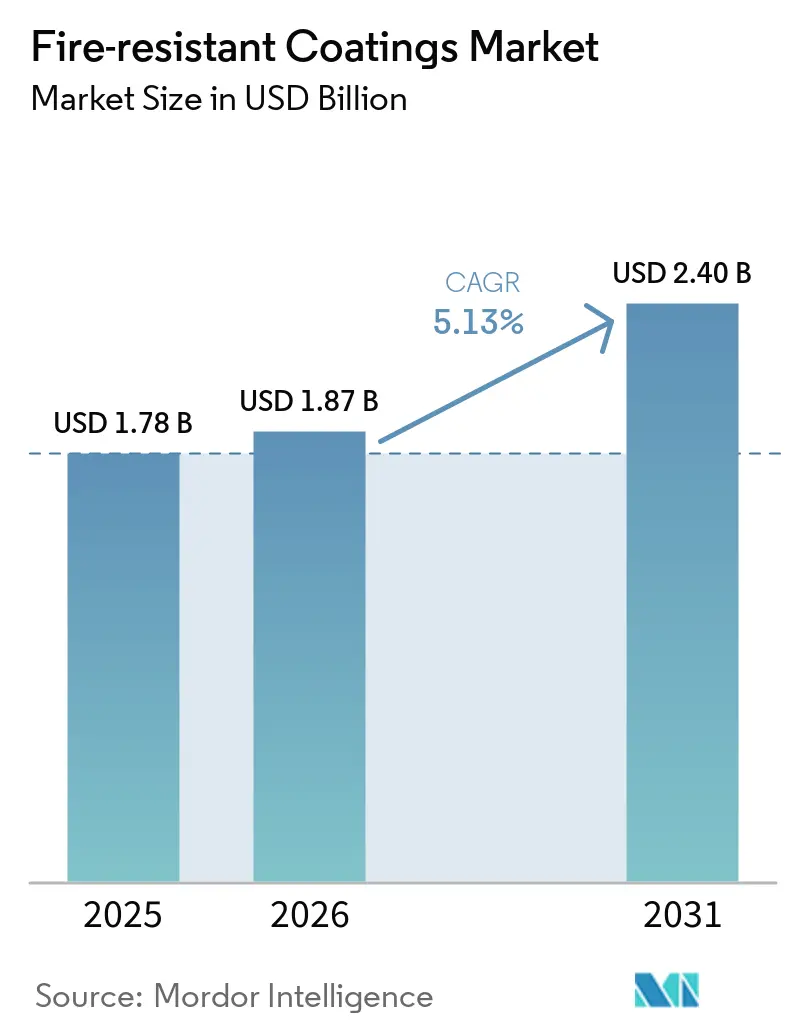
The fire-resistant coatings market size was valued at USD 1.78 billion in 2025 and is estimated to grow from USD 1.87 billion in 2026 to USD 2.40 billion by 2031, at a CAGR of 5.13% during the forecast period (2026-2031). Stricter fire codes drive the fire-resistant coatings market, the adoption of performance-based specifications, and demand from construction, energy, and industrial projects. Changes in fire codes affect new construction and existing assets, supporting demand beyond a single project cycle. The market serves commercial buildings, LNG facilities, industrial plants, and aerospace applications. Suppliers focus on certifications, trained applicator networks, and products that reduce installation time, as these factors affect project eligibility. Growth opportunities exist in regions with construction activity, safety enforcement, and high-specification infrastructure.
Key Report Takeaways
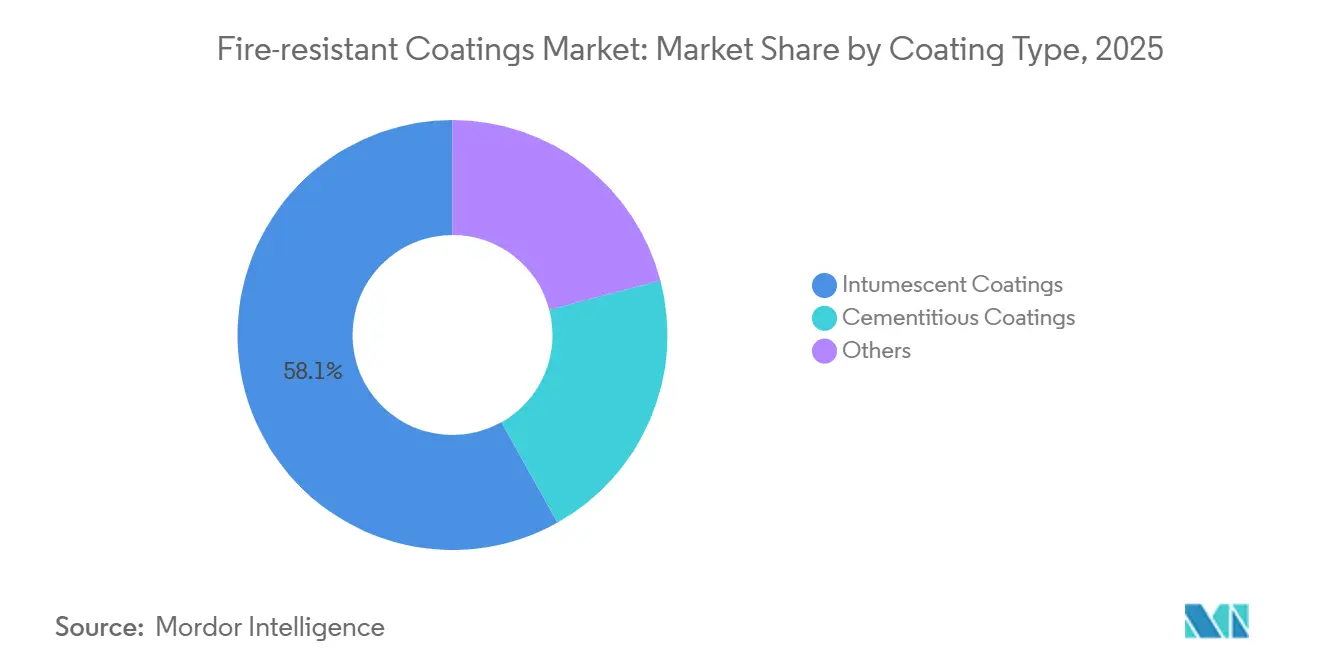
- By coating type, intumescent coatings held 58.13% of the fire-resistant coatings market share in 2025, while cementitious coatings are forecast to grow at a CAGR of 5.65% through 2031.
- By technology, waterborne formulations held 46.36% of the fire-resistant coatings market share in 2025, while powder coatings are forecast to grow at a CAGR of 5.78% through 2031.
- By substrate, metal accounted for 63.47% of the fire-resistant coatings market size in 2025, while wood is forecast to grow at a CAGR of 6.09% through 2031.
- By application technique, spray application accounted for 70.29% of the fire-resistant coatings market size in 2025 and is forecast to grow at a CAGR of 6.13% through 2031.
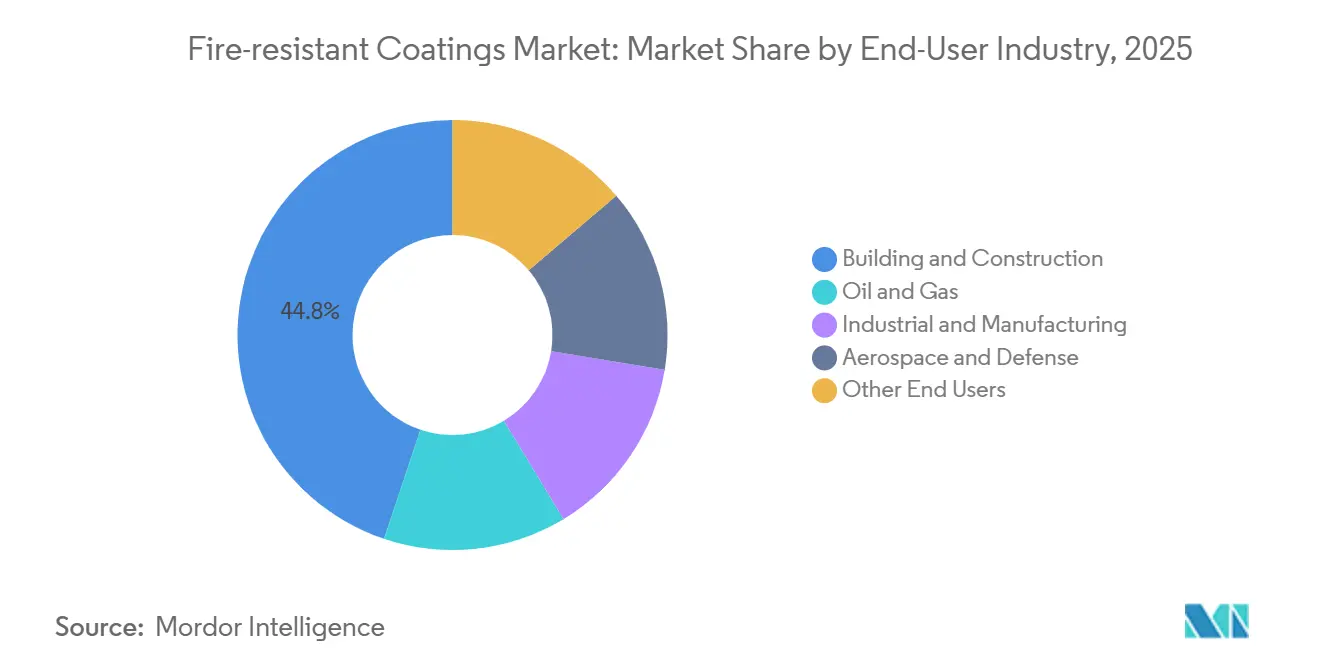
- By end-user industry, building and construction held 44.83% of the fire-resistant coatings market in 2025, while oil and gas is forecast to grow at a CAGR of 6.41% through 2031.
- By geography, Asia-Pacific held 35.02% of the fire-resistant coatings market in 2025 and is forecast to grow at a CAGR of 6.22% through 2031.
Note: Market size and forecast figures in this report are generated using Mordor Intelligence’s proprietary estimation framework, updated with the latest available data and insights as of January 2026.
Global Fire-resistant Coatings Market Trends and Insights
Drivers Impact Analysis*
| Drivers | (~) % Impact on CAGR Forecast | Geographic Relevance | Impact Timeline |
|---|---|---|---|
| Enforcement Of Fire-Safety Codes and Certification Requirements | +1.8% | Global, with concentrated near-term impact in South Asia, the EU, and the United Kingdom | Medium term (2-4 years) |
| Growth Of High-Rise, Infrastructure, And Retrofit Construction | +1.2% | Asia-Pacific, Middle East and Africa (MEA), and North America | Medium term (2-4 years) |
| Expansion Of Liquefied Natural Gas (LNG), Oil And Gas, Power, and Process Facilities | +1.0% | Middle East and Africa, North America, Gulf Coast, and Asia-Pacific (APAC) offshore | Medium term (2-4 years) |
| Shift Toward Low-Volatile Organic Compound (VOC) And Waterborne Fire-Protection Systems | +0.7% | Europe and North America, with spillover to core APAC markets | Long term (≥ 4 years) |
| Rising Demand for Lightweight and Faster-To-Install Protection | +0.5% | Global, with early gains in European and North American commercial construction | Short term (≤ 2 years) |
| Source: Mordor Intelligence | |||
Enforcement of Fire-Safety Codes and Certification Requirements
Changes in fire safety codes are expanding the demand base for the fire-resistant coatings market. The United Kingdom transitioned from BS 476 to BS EN 13501-1 in December 2025, increasing requirements for combustible cladding on structures above 18 meters. This transition requires Euroclass-rated intumescent systems for new high-rise projects and upgrades across parts of the existing commercial building stock. India’s National Building Code 2024 requires IS 3809-tested coatings for commercial buildings above 15 meters, supporting retrofit activity in Mumbai and Bengaluru. The revised Construction Products Regulation will require ISO 17025-verified performance declarations from Q3 2027, increasing compliance requirements for suppliers without accredited testing capabilities. These requirements generate demand from both new construction and existing facilities, while retrofit projects may be phased over several years.
Growth of High-Rise, Infrastructure, and Retrofit Construction
High-rise construction requires certified passive fire protection because load-bearing steel requires protection across the building frame. Project teams increasingly select thin-film intumescent systems where steel remains exposed and a cleaner finish is required compared with cementitious alternatives. Infrastructure investment in Asia-Pacific supports demand across metro systems, airports, data centers, and semiconductor facilities. These end-use segments follow different investment cycles, supporting demand across the fire-resistant coatings market. Faster installation remains important for commercial projects, particularly when airless spray equipment covers large steel areas with fewer passes. Data centers and advanced manufacturing facilities require higher-specification systems, as structural steel may require up to four hours of fire protection and corrosion resistance in humid operating conditions.
Expansion Of Liquefied Natural Gas (LNG), Oil And Gas, Power, and Process Facilities
Hydrocarbon facilities require passive fire protection systems that meet stringent specifications. Middle East producers planned USD 130 billion in oil and gas supply capacity investments during 2025, supporting activity across LNG, refinery, and offshore projects. Large LNG projects require fireproofing for structural steel, process modules, pipe racks, and tank structures exposed to hydrocarbon and jet-fire risks. Cheniere’s 2025 annual report outlined expansion plans for Sabine Pass LNG and Corpus Christi LNG, supporting a North American pipeline of related capital projects. Aging offshore assets in the North Sea, Gulf of Mexico, and Southeast Asia also require recoating as asset owners extend service lives. These applications require suppliers with Underwriters Laboratories (UL) 1709 capabilities, established project references, and trained applicator networks.
Shift Toward Low-Volatile Organic Compound (VOC) And Waterborne Fire-Protection Systems
Environmental requirements are changing product selection within the fire-resistant coatings market. The U.S. Environmental Protection Agency finalized amendments to national volatile organic compound (VOC) emission standards for aerosol coatings in January 2025[1]U.S. Environmental Protection Agency, “National Volatile Organic Compound Emission Standards for Aerosol Coatings,” Federal Register, govinfo.gov.. California Rule 1113 also limits VOC content in architectural coatings, restricting several solvent-borne formulations. PPG introduced STEELGUARD 652 for interior structural steel applications in North America in February 2026, with UL 263 certification and a water-based formulation. Waterborne systems can reduce health and safety risks during application, potentially reducing contractor liability and insurance-related concerns.
Restraints Impact Analysis*
| Restraints | (~) % Impact on CAGR Forecast | Geographic Relevance | Impact Timeline |
|---|---|---|---|
| High Surface-Preparation and Specialist-Applicator Costs | -1.5% | Global, most acute in emerging markets in South and Southeast Asia and Sub-Saharan Africa | Medium term (2-4 years) |
| Lengthy Fire Testing and Certification Cycles | -0.8% | Global, particularly multi-jurisdiction markets spanning ASTM, EN, and GB standards | Long term (≥ 4 years) |
| Raw-Material Price Volatility and Supply Exposure | -0.6% | Global, acute in import-dependent markets in APAC and MEA | Short term (≤ 2 years) |
| Source: Mordor Intelligence | |||
High Surface-Preparation and Specialist-Applicator Costs
Installation costs limit adoption in price-sensitive segments of the fire-resistant coatings market. Intumescent systems require precise dry-film-thickness measurements, controlled application conditions, and certified applicators with expertise in the complete primer-intumescent layer-topcoat system. On complex projects, installed exterior epoxy intumescent systems can cost USD 45-80 per m². The limited availability of certified applicators in South and Southeast Asia and Sub-Saharan Africa further constrains the practical deployment of these systems. Inadequate dry-film-thickness monitoring can lead to inspection failures and costly rework. These requirements slow market penetration, even where regulations clearly support passive fire protection.
Lengthy Fire Testing and Certification Cycles
Fire testing remains a significant barrier to product launches in the fire-resistant coatings market. Testing under ASTM E119, UL 263, and EN 13381-8 may require more than 100 steel specimens in different shapes and sizes. The complete testing and analysis process can take up to 18 months[2]PPG Industries, Inc., “Accurate Fire Testing of PFP Coatings Ensures Structural Safety,” PPG Industries, ppg.com.. Approval under a European standard does not automatically qualify a product for use on a North American project; such use requires separate certification. Products intended for China must also obtain the GB 14907 qualification. These requirements make it difficult for regional suppliers to replicate established multi-standard certification libraries and increase the investment threshold for market entry.
*Our forecasts treat driver/restraint impacts as directional, not additive. The impact forecasts reflect baseline growth, mix effects, and variable interactions.
Segment Analysis
By Coating Type: Intumescent Systems Retain Structural Hold as Cementitious Coatings Rebound
Intumescent coatings accounted for 58.13% of the fire-resistant coatings market in 2025. Their position reflects established certification libraries, contractor familiarity, and long-standing use on structural steel in commercial and energy applications. These systems expand when exposed to heat, forming an insulating char layer that protects the underlying structure. In March 2025, Hempel introduced Hempafire Extreme 550, an epoxy passive fire protection coating designed to reduce paint consumption per square meter by up to 40% compared with earlier formulations. This product addresses specification requirements for lower applied costs. Thin-film intumescent coatings are also used in mass timber projects, where transparent or lightly tinted products preserve visible wood surfaces. Peer-reviewed testing has demonstrated that coating type and thickness influence charring in mass-timber assemblies. The fire-resistant coatings market continues to depend on intumescent systems where appearance, weight, and space constraints are important. Their installed base also supports recurring demand from maintenance and renovation activities. Specifiers often favor systems with documented performance histories, as product changes may require new approvals, revised application procedures, and additional coordination among owners, contractors, and inspectors.
Cementitious coatings are projected to grow at a CAGR of 5.65% from 2026 to 2031, the fastest rate among coating types. Their lower cost remains relevant for industrial facilities, where large steel areas make unit economics more important than appearance. Liquefied natural gas (LNG) facilities use these coatings because foundations and pipe racks require protection across extensive surface areas. Cementitious systems can meet these requirements without the finish standards commonly associated with commercial architecture. Therefore, the fire-resistant coatings market will retain demand for both coating approaches rather than shift toward a single product class. The other coating types category includes geopolymer and bio-based hybrid systems. A 2025 Journal of Materials Science review described geopolymers that form dense, insulating layers without relying on organic char chemistry. These materials remain at an earlier stage of commercial development but may provide an alternative for applications requiring non-combustible fire protection. Their market relevance will depend on manufacturers’ ability to combine fire performance with practical installation, recognized test evidence, and the cost discipline required for industrial construction projects.



By Technology: Waterborne Commands Market Share as Powder Coatings Drive the Innovation Agenda
Waterborne formulations accounted for 46.36% of the fire-resistant coatings market by technology in 2025. Environmental regulations and sustained formulation investments have strengthened their position relative to solvent-borne products. Solvent-borne systems remain useful for maintenance work involving corroded or imperfectly prepared steel. Contractors continue to use these systems in brownfield industrial projects because they can tolerate more challenging surface conditions. AkzoNobel’s Interchar 1150 received European Technical Assessment (ETA) 26/0098 and CE Mark certification in 2026 for waterborne protection of structural steel. The product emphasizes lower material loadings and faster drying. In 2025, Evonik introduced VISIOMER HEMA-P to support transparent flame-retardant finishes in water-based wood coatings. These developments broaden the formulation options available to coating manufacturers. Waterborne products are relevant for building projects that prioritize lower solvent exposure. However, their selection also depends on drying conditions, job-site preparation, and contractors’ ability to meet the application requirements specified by the manufacturer and project documentation.
Powder coatings are projected to grow at a CAGR of 5.78% from 2026 to 2031, the highest rate within the technology category. Their zero-volatile organic compound (VOC), single-pass, factory-applied process is suited to prefabricated and modular construction. Factory application also reduces solvent handling, waste, and related compliance requirements. This trend supports the fire-resistant coatings market, as construction components are increasingly prepared before arriving at project sites. In 2025, Qualicoat UK & Ireland stated that specified architectural powder coatings can achieve an A2-s1,d0 fire reaction classification under EN 13501-1. This development expands the use of powder systems in high-rise and multi-occupancy façade applications. Other technologies include radiation-cured and high-solids products designed for niche marine and rail interior applications. While these systems hold a smaller market share, they address specialized performance requirements. The technology mix will continue to reflect differences in sites, substrates, and regulatory requirements. No single technology can serve every use case, as factory conditions, field repairs, exposed steel, wood protection, and specialized transport applications require distinct application methods and performance characteristics.
By Substrate: Metal Dominates Uncontested as Wood Opens a Structurally New Front
Metal substrates accounted for 63.47% of the fire-resistant coatings market in 2025. Structural steel loses a significant share of its load-bearing capacity at elevated temperatures, making passive fire protection essential in many steel-framed buildings and industrial facilities. Product development for metal substrates focuses on application efficiency and combined protection properties. In September 2024, PPG expanded STEELGUARD 951 to the Americas. The coating provides up to four hours of fire protection in a single-coat, 3,500-micron dry-film system while delivering corrosion resistance without a topcoat. Combined fire and corrosion protection can reduce labor requirements and system complexity. Metal will remain the core substrate because commercial buildings, infrastructure, and process facilities depend heavily on steel structures. The fire-resistant coatings market will also benefit from recurring demand for inspection, repair, and recoating across existing metal assets. This installed base provides stability even when new construction activity is uneven. Inspections, building alterations, corrosion repair, and recertification can generate follow-on work long after the initial system application, particularly for complex commercial and industrial assets.
Wood is projected to grow at a CAGR of 6.09% from 2026 to 2031, making it the fastest-growing substrate segment. Mass timber construction is expected to drive this demand, as exposed structural wood requires systems that protect the material without altering its appearance. More than 2,400 mass-timber projects were under construction or in planning globally in early 2026. Cross-laminated timber, glued laminated timber, and laminated veneer lumber are increasingly used in taller structures under updated performance-based codes. Wood coatings must address porosity, viscosity, and dry-film thickness consistency differently from steel coating systems. Transparent intumescent systems, therefore, require specialized formulation and installation expertise. This requirement creates opportunities for suppliers with expertise in wood coatings and fire performance. The other substrates category includes concrete, composite panels, and data center slab applications. Although these applications hold a smaller market share, they broaden the fire-resistant coatings market. They demonstrate that passive fire protection needs extend beyond primary structural steel and can arise wherever materials, asset designs, or occupancy conditions create specific fire-performance requirements.
By Application Technique: Spray Application Holds the Largest Market Share and Highest Growth Rate
Spray application accounted for 70.29% of the fire-resistant coatings market in 2025 and is projected to grow at a CAGR of 6.13% from 2026 to 2031. On large projects, airless spray equipment can cover 200 to 400 m² per applicator per day. This productivity supports applications in multi-floor steel-frame buildings and process plant decks with complex structures. Spray application enables contractors to achieve more consistent dry-film thicknesses across broad surfaces and provides a scalable option for passive fire protection on steel structures. High-build intumescent products that achieve 3,500 μm in a single coat support this application method. The technique is relevant where labor availability and project schedules affect total installed costs. Its market position reflects the need for large-scale applications and ongoing formulation development. Manufacturers are developing systems that support faster application and fewer coats, as labor productivity, access constraints, and consistent thickness control remain key considerations for large construction and energy projects.
Brush and roller applications remain relevant for repairs, touch-ups, and confined spaces. Contractors use these methods when they cannot safely deploy spray equipment or when project sizes do not justify equipment mobilization. These techniques account for a significant share of maintenance and recoating activities in Europe and North America, where many facilities are 10 to 25 years into their design life and require periodic restoration. Trowel application is primarily used for cementitious systems in heavy industrial settings, including structural columns and vessel skirts, where applied mass and durability take priority over finish quality. Manufacturers are increasingly optimizing product viscosities for spray delivery, expanding the range of projects suitable for this technique. However, the fire-resistant coatings industry will continue to require multiple application techniques because project access and asset conditions vary. This diversity limits the likelihood that any one technique will fully replace the others. Project size, access, health and safety conditions, repair scope, and the properties of the selected coating will continue to determine the most appropriate application method for each installation.
By End-User Industry: Construction Accounts for the Largest Market Share, While Oil and Gas Generates Higher Value
Building and construction accounted for 44.83% of the fire-resistant coatings market in 2025. This position reflects the scale of commercial, residential, and institutional projects that use structural steel. Building codes drive demand for fire-resistant coatings when projects exceed minimum height and occupancy thresholds. Data centers also represent a growing segment within construction demand. Semiconductor facilities, electric-vehicle battery plants, and AI campuses may require up to 4 hours of fire-resistant protection in high-humidity environments. These requirements support higher-value specifications than standard commercial projects. Industrial and manufacturing facilities constitute the third-largest end-user group, including refineries, power plants, and chemical sites. Their risk profile falls between that of conventional buildings and hydrocarbon facilities. Construction will remain the primary driver of demand for the fire-resistant coatings market because code compliance applies across a broad range of project types. The segment combines new commercial development with renovations, institutional assets, logistics facilities, and specialized manufacturing sites, creating demand with varying timelines and specification requirements.
The oil and gas sector is projected to grow at a CAGR of 6.41% from 2026 to 2031. Epoxy intumescent systems approved for Underwriters Laboratories (UL) 1709 pool and jet fire scenarios represent a higher-value product category within this end-user industry. Offshore coating costs per square meter can be three to five times higher than those for cellulosic protection in commercial buildings. As a result, oil and gas applications generate higher value per project despite lower application quantities than construction projects. Jotun introduced Jotachar 1709 XT at ADIPEC 2025 for onshore projects requiring UL 1709 certification. The company developed the product through testing on more than 1 km of structural steel. Aerospace and defense represent a smaller specialty segment that requires both fire resistance and weight reduction. Other end-user industries include marine, transportation infrastructure, and tunnels. Their varied requirements broaden the fire-resistant coatings market. Each application environment requires a different balance of thickness, weight, visual finish, durability, corrosion resistance, and access for application, requiring suppliers to maintain portfolios beyond a single general-purpose offering.
Geography Analysis
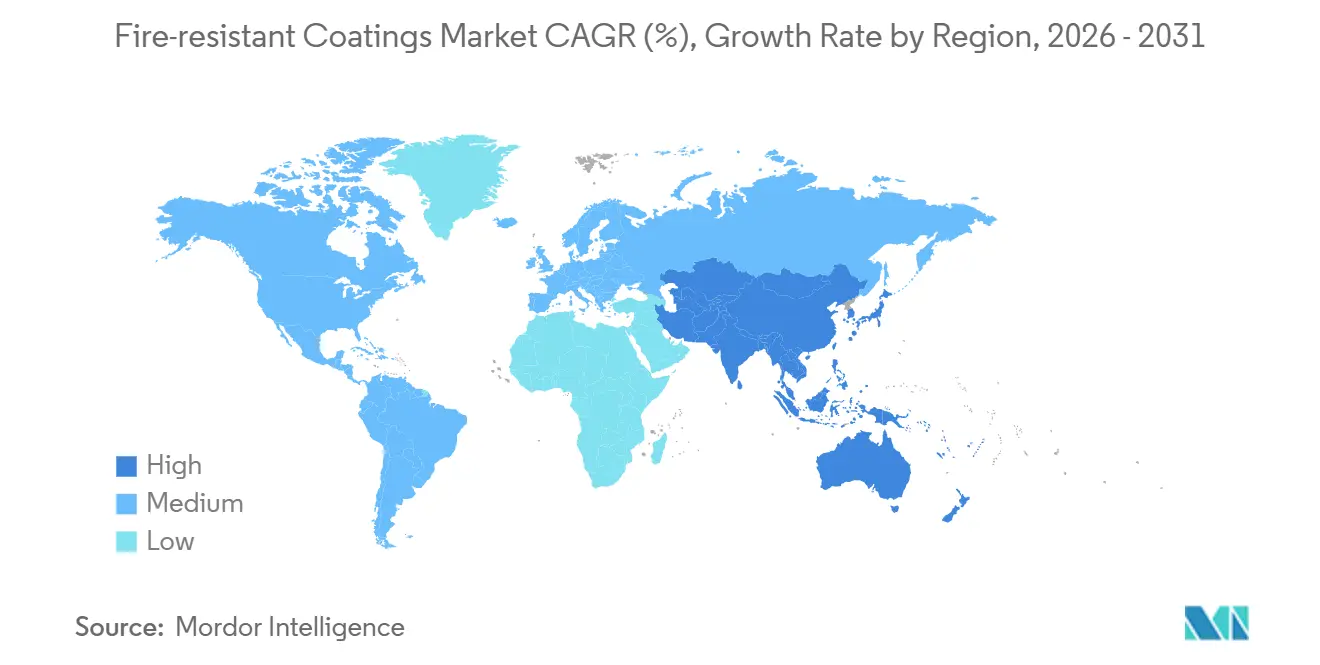
Asia-Pacific accounted for 35.02% of the fire-resistant coatings market in 2025 and is projected to grow at a CAGR of 6.22% during 2026-2031. China leads regional demand, driven by GB 14907 requirements, commercial property retrofits, and infrastructure projects, including airports, metro systems, and energy facilities. India is becoming a more specification-led market following the National Building Code 2024, which requires IS 3809-tested coatings for commercial buildings exceeding 15 meters in height. Related retrofit requirements include an estimated 1.2 million m² of office space in Mumbai and Bengaluru. Japan and South Korea have a demand for exposed architectural steel and mass timber projects. Vietnam, Indonesia, and Thailand are transitioning from cementitious systems to thin-film intumescent coatings as construction standards align with EN and UL benchmarks. This regional mix creates diverse application requirements across the Asia-Pacific. Suppliers must address varying local standards, construction methods, contractor capabilities, and end-user priorities rather than treat the region as a single specification environment.
North America is the second-largest regional market, supported by data center construction, advanced manufacturing projects, and commercial building renovations. Facilities with passive fire protection systems installed before 2000 increasingly require life-extension work or recertification following renovation. Europe has established technical standards and a mature urban construction base. Commission Delegated Regulation (EU) 2026/557 entered into force in May 2026 and harmonizes frameworks for fire-resistance performance declarations across the European Union. The regulation increases compliance requirements for non-certified suppliers and provides a market-access advantage to ISO-accredited international companies. The United Kingdom’s 2025 transition to BS EN 13501-1 supports demand for Euroclass-rated intumescent products. Renovation activity remains an important source of regional demand, as existing commercial buildings require assessment when internal layouts change or passive fire protection systems deteriorate. This demand is less dependent on the pace of new urban development.
The Middle East and Africa have high passive fire protection spending per project. Saudi Arabia’s upstream investment pipeline, Qatar’s liquefied natural gas (LNG) expansions, and UAE offshore projects require UL 1709-certified hydrocarbon fire protection systems. These projects require suppliers to provide certified products and regional delivery support. South America is a smaller market and is expanding through industrial construction and the modernization of building codes. Brazil and Argentina lead the region’s developing demand base beyond energy and mining customers. The fire-resistant coatings market varies by geography because codes, project types, and installation capabilities differ. Suppliers require regional certifications and applicator support to address these variations. Local presence remains important even for globally recognized product brands. Regional technical support, supply reliability, and relationships with trained applicators can influence the adoption of a certified product for complex projects.

Competitive Landscape
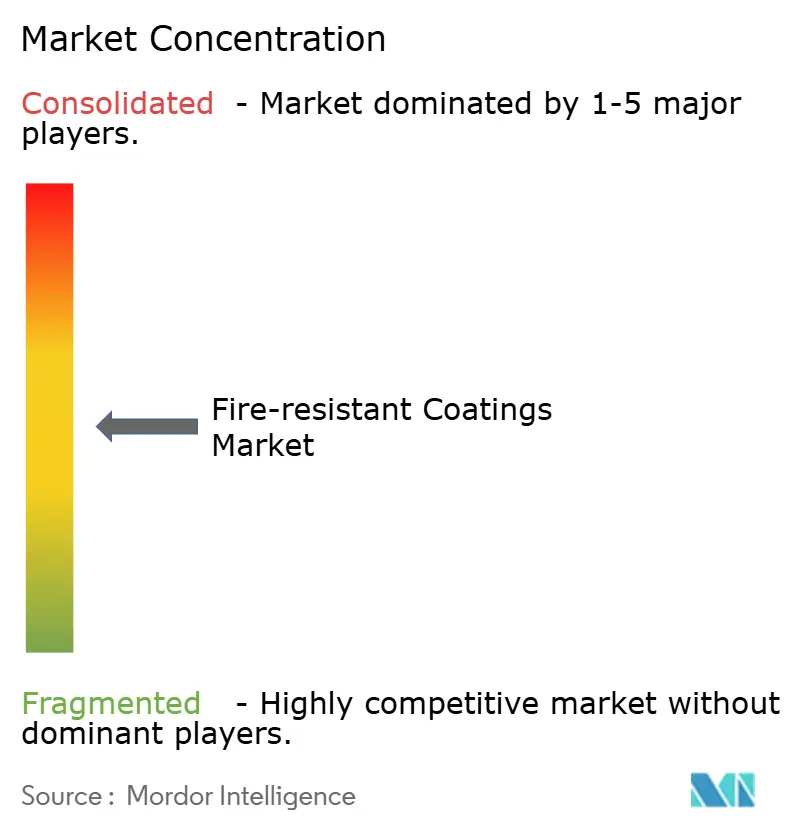
The fire-resistant coatings market is moderately fragmented. Principal multinational participants include Sherwin-Williams, AkzoNobel, PPG Industries, Jotun, Hempel, and RPM International through its Carboline and Tremco businesses. Companies holding UL 263, EN 13381, GB 14907, and UL 1709 certifications can support projects across major jurisdictions. Regional suppliers in China and India are gaining access through government procurement channels; however, they face constraints in developing multi-jurisdiction certification portfolios. Leading companies are expanding their waterborne and low-volatile organic compound (VOC) product portfolios to meet environmental requirements. They are also improving application efficiency through lower dry-film thicknesses, faster curing times, and single-coat systems. These strategies reduce labor requirements and can lower total system costs for customers. They also support participation in specifications that assess the combined costs of materials, application, inspection, maintenance, and project schedules, rather than material prices alone.
Sika announced five new manufacturing plants in February 2026 across growth markets, including facilities in Colombia and Argentina. The initiative reflects the role of regional production and delivery capacity. Jotun’s Oman facility produces the full Jotachar hydrocarbon intumescent product range and has an annual capacity of 2.4 million liters. The facility supports Gulf projects requiring rapid local supply. AkzoNobel launched Chartek ONE globally at GasTech 2025, following its initial introduction in the Middle East. The mesh-free, single-coat system provides up to three hours of jet-fire and pool-fire resistance in hydrocarbon and cryogenic environments. These developments indicate that suppliers compete on technical simplification, geographic reach, and compliance readiness. Suppliers serving demanding projects require a combination of these capabilities. To participate in major energy or infrastructure specifications, suppliers may need technical documentation, local product availability, trained installation support, and established project references.
Mass timber protection remains a developing competitive area, as many established suppliers offer only a limited range of certified products for exposed structural wood. Digital inspection tools that track dry-film thickness and application records present an opportunity for product and service differentiation. Jotun filed a patent application in 2025 for an intumescent composition comprising an epoxy binder, a hydrocarbon resin, and a reactive diluent. The formulation aims to improve toughness, cold-temperature resistance, and char formation. Geopolymer-based products represent a longer-term technology pathway rather than an immediate competitive substitute. A 2025 scientific review of geopolymers highlights why suppliers are monitoring inorganic fire-protection alternatives. The competitive landscape remains shaped by large incumbents because testing and certification require significant time and capital. However, specialized products for wood, offshore energy, and lower-VOC systems can create targeted market-entry opportunities. These areas require focused technical capabilities and can help qualified suppliers build project credentials before competing across major application categories.
Fire-resistant Coatings Industry Leaders
Akzo Nobel N.V.
PPG Industries, Inc.
The Sherwin-Williams Company
Jotun
Hempel A/S
- *Disclaimer: Major Players sorted in no particular order

Recent Industry Developments
- February 2026: PPG Industries launched PPG STEELGUARD 652, a water-based intumescent fire protection coating for interior structural steel, in North America. The UL 263-certified product provides up to two hours of cellulosic passive fire protection, with a low certified dry film thickness (DFT), bond strength, and a 20-year service life. It targets sustainable construction specifications under LEED and equivalent programs.
- September 2025: AkzoNobel’s protective coatings brand, International, launched Chartek ONE globally at GasTech 2025 in Milan, following its initial introduction in the Middle East. Chartek ONE is a single-coat, mesh-free epoxy passive fire protection system that provides up to three hours of jet and pool fire resistance against hydrocarbon and cryogenic fires across a wide operating temperature range. The product is available to energy sector customers across Europe.


Global Fire-resistant Coatings Market Report Scope
Fire-resistant coatings are protective materials applied to building components and structures to delay ignition, limit flame spread, and help maintain structural integrity during fire exposure. These coatings support fire safety requirements across commercial, industrial, and residential construction applications.
The fire-resistant coatings market is segmented by coating type, technology, substrate, application technique, end-user industry, and geography. By coating type, the market is segmented into intumescent coatings, cementitious coatings, and others. By technology, the market is segmented into water-borne, solvent-borne, powder coatings, and other technologies. By substrate, the market is segmented into metal, wood, and others. By application technique, the market is segmented into spray, brush and roller, and others. By end-user industry, the market is segmented into building and construction, oil and gas, industrial and manufacturing, aerospace and defense, and other end users. The report also covers market size and forecasts for fire-resistant coatings across 15 countries in major regions. The market sizes and forecasts are provided in terms of value (USD).
| Intumescent Coatings |
| Cementitious Coatings |
| Others |
| Water-Borne |
| Solvent-Borne |
| Powder Coatings |
| Other Technologies |
| Metal |
| Wood |
| Others |
| Spray |
| Brush and Roller |
| Others |
| Building and Construction |
| Oil and Gas |
| Industrial and Manufacturing |
| Aerospace and Defense |
| Other End Users |
| Asia-Pacific | China |
| India | |
| Japan | |
| South Korea | |
| ASEAN Countries | |
| Rest of Asia-Pacific | |
| North America | United States |
| Canada | |
| Mexico | |
| Europe | Germany |
| United Kingdom | |
| France | |
| Italy | |
| NORDIC Countries | |
| Rest of Europe | |
| South America | Brazil |
| Argentina | |
| Rest of South America | |
| Middle East and Africa | Saudi Arabia |
| South Africa | |
| Rest of Middle East and Africa |
| By Coating Type | Intumescent Coatings | |
| Cementitious Coatings | ||
| Others | ||
| By Technology | Water-Borne | |
| Solvent-Borne | ||
| Powder Coatings | ||
| Other Technologies | ||
| By Substrate | Metal | |
| Wood | ||
| Others | ||
| By Application Technique | Spray | |
| Brush and Roller | ||
| Others | ||
| By End-User Industry | Building and Construction | |
| Oil and Gas | ||
| Industrial and Manufacturing | ||
| Aerospace and Defense | ||
| Other End Users | ||
| By Geography | Asia-Pacific | China |
| India | ||
| Japan | ||
| South Korea | ||
| ASEAN Countries | ||
| Rest of Asia-Pacific | ||
| North America | United States | |
| Canada | ||
| Mexico | ||
| Europe | Germany | |
| United Kingdom | ||
| France | ||
| Italy | ||
| NORDIC Countries | ||
| Rest of Europe | ||
| South America | Brazil | |
| Argentina | ||
| Rest of South America | ||
| Middle East and Africa | Saudi Arabia | |
| South Africa | ||
| Rest of Middle East and Africa | ||


Key Questions Answered in the Report
What is current market size of Fire-resistant Coatings Market?
The fire-resistant coatings market size was valued at USD 1.78 billion in 2025 and is estimated to grow from USD 1.87 billion in 2026 to USD 2.40 billion by 2031, at a CAGR of 5.13% during the forecast period (2026-2031).
Which coating type holds the largest share?
Intumescent coatings accounted for 58.13% in 2025 due to their extensive use in structural steel protection. Certification availability, contractor familiarity, and use in commercial and energy projects continue to support the segment. Thin-film options also support applications where exposed structural steel or visual finish matters. Suppliers must maintain reliable test evidence and application guidance for use with these systems on complex structural designs.
Which technology is projected to grow the fastest?
Powder coatings are expected to grow at a CAGR of 5.78% through 2031, supported by factory-applied and low-VOC processes. Their fit with prefabricated construction also reduces solvent handling and material waste. This aligns with factory-controlled coating processes and modular building methods. It can also support a more consistent application when components are coated before reaching the construction site.
Why is wood a growing substrate for fire protection?
Wood is projected to grow at a CAGR of 6.09% through 2031 as mass timber projects require systems that preserve visible structural surfaces. Transparent intumescent systems must account for wood porosity, viscosity, and dry-film-thickness consistency. This makes wood a specialized area of formulation and application work. The coating must protect the substrate while allowing designers to retain the appearance of visible timber elements.
Page last updated on:


 Your data is secure and never sold or shared.


