
Fire Protection System Pipes Market Size and Share
Market Overview
| Study Period | 2021 - 2031 |
|---|---|
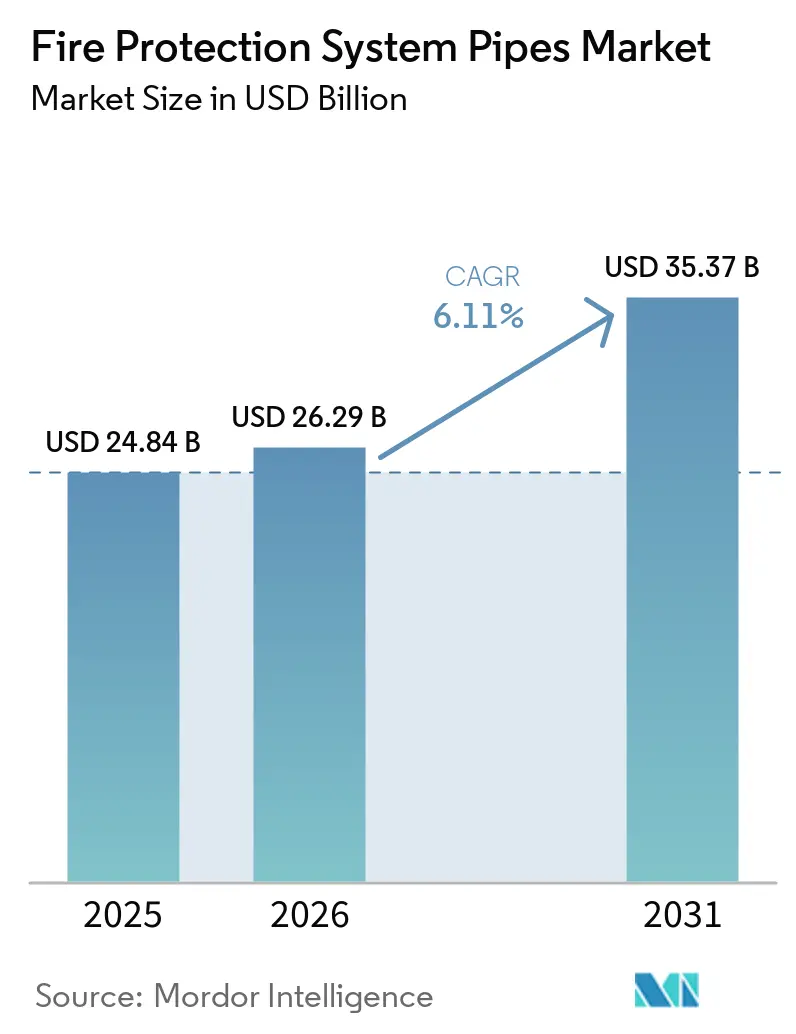
| Market Size (2026) | USD 26.29 Billion |
| Market Size (2031) | USD 35.37 Billion |
| Growth Rate (2026 - 2031) | 6.11 % |
| Fastest Growing Market | Asia-Pacific |
| Largest Market | Asia-Pacific |
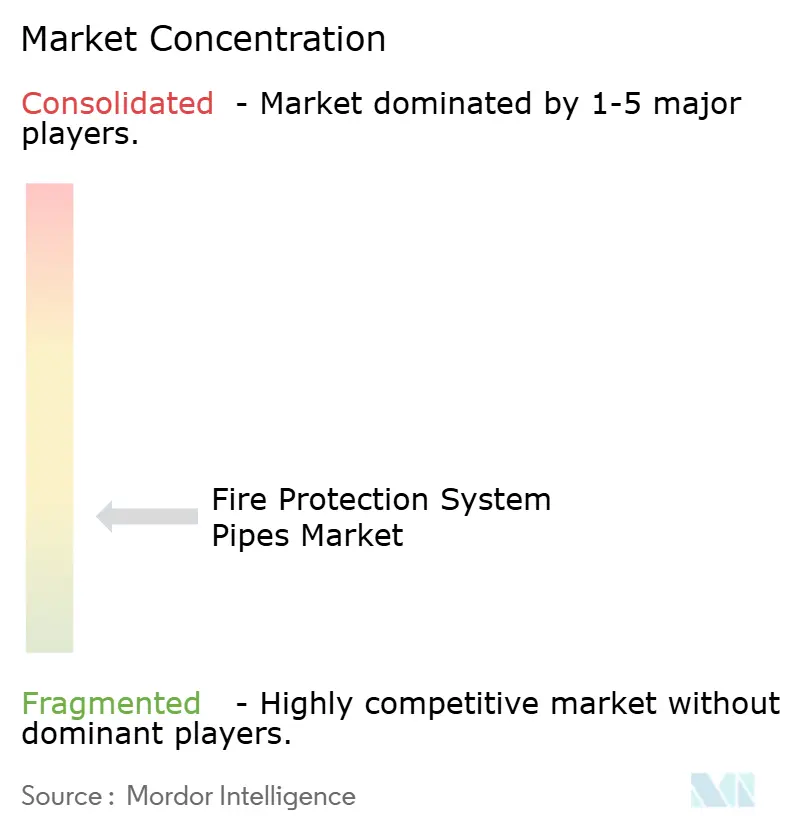
| Market Concentration | Low |
Major Players *Disclaimer: Major Players sorted in no particular order Image © Mordor Intelligence. Reuse requires attribution under CC BY 4.0. | |
Fire Protection System Pipes Market Analysis by Mordor Intelligence
The fire protection system pipes market size is expected to grow from USD 24.84 billion in 2025 to USD 26.29 billion in 2026 and reach USD 35.37 billion by 2031, at a CAGR of 6.11% during the forecast period (2026-2031). Building regulations that mandate automatic sprinkler coverage across many projects support the market, making fire protection piping a required component rather than a discretionary construction choice. This requirement provides suppliers with a more stable demand base than many other building material categories, even when project financing conditions become uncertain.
Regulatory changes, commercial construction activity, and replacement demand from aging buildings shape the near-term market outlook. Demand is also shifting toward systems for data centers, battery storage facilities, pharmaceutical plants, and logistics properties, where piping networks must meet more stringent operational requirements. Suppliers that offer compliant materials, listed products, regional distribution capabilities, and preassembled piping solutions are better positioned to serve these projects.
Key Report Takeaways
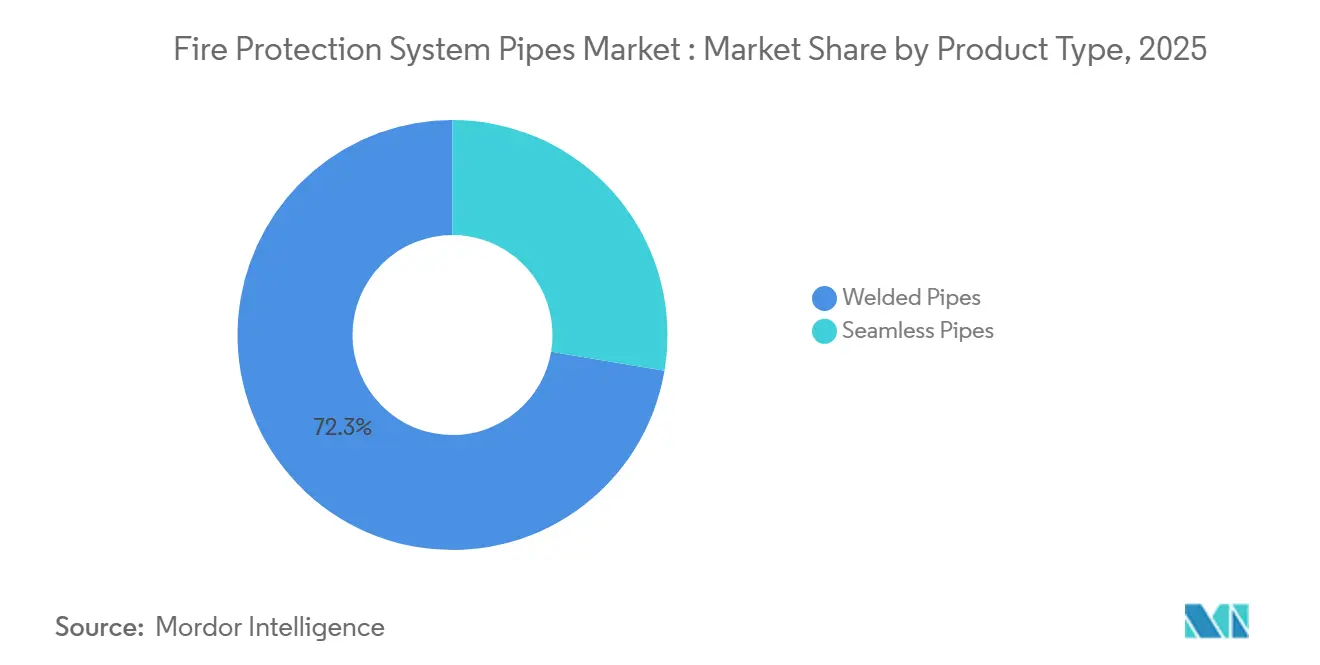
- By product type, welded pipes held 72.34% of the Fire protection system pipes market share in 2025 and are forecast to grow at a 6.78% CAGR through 2031.
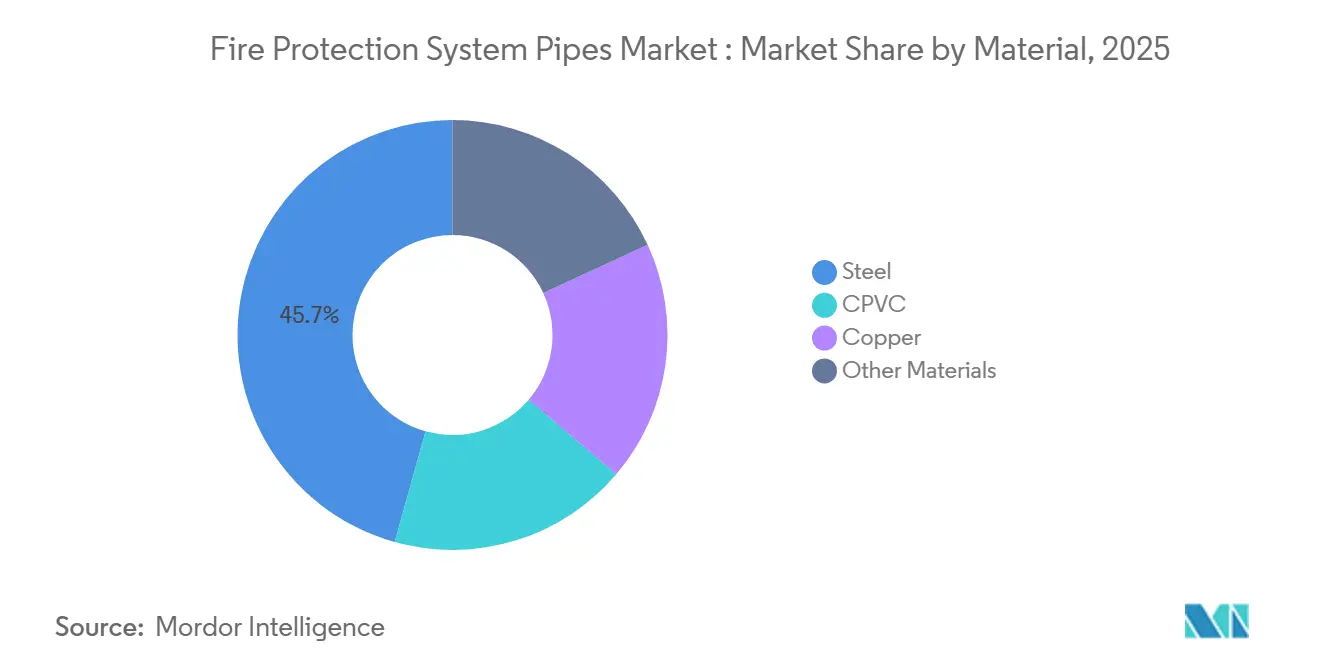
- By material, steel accounted for 45.67% of segment revenue in 2025, while CPVC is projected to record the highest CAGR of 7.06% through 2031.
- By application, fire sprinkler systems held 51.28% of segment revenue in 2025 and are expected to grow at a 7.32% CAGR through 2031.
- By end-use industry, commercial applications held 44.10% of segment revenue in 2025, while industrial applications are forecast to expand at a 7.44% CAGR through 2031.
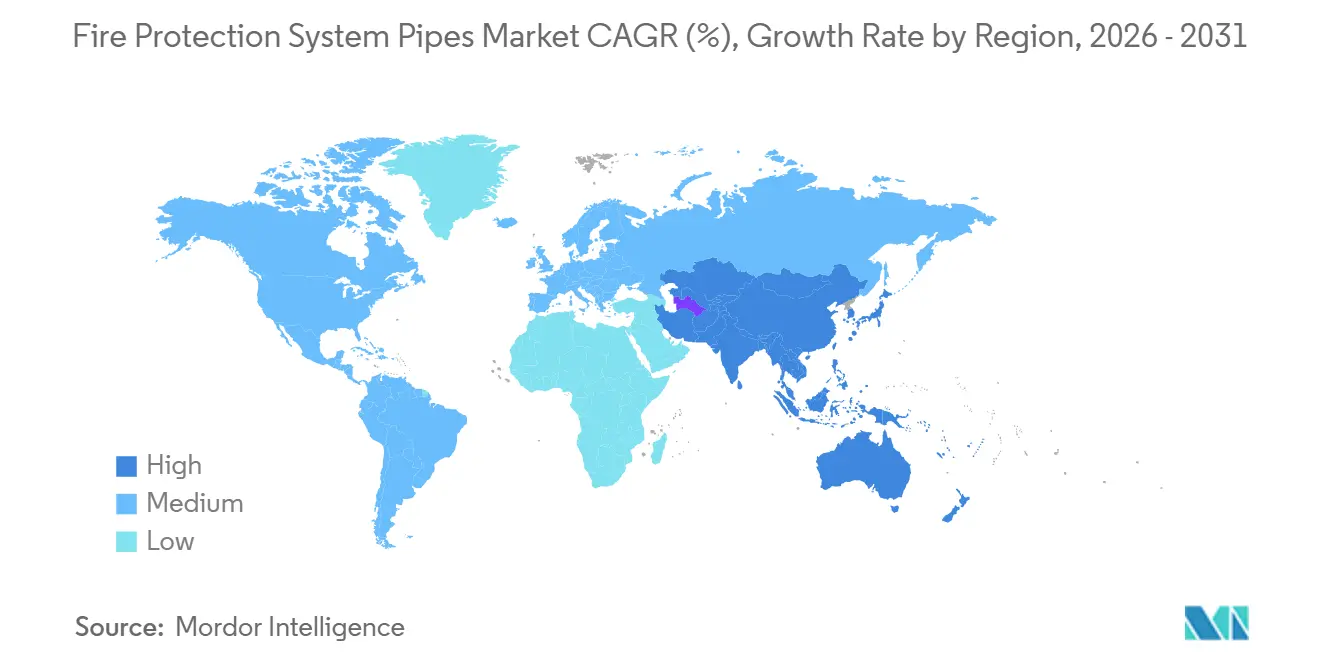
- By geography, Asia Pacific held the largest revenue share of 39.37% in 2025, and is expected to grow at a CAGR of 6.93% through 2031.
Note: Market size and forecast figures in this report are generated using Mordor Intelligence’s proprietary estimation framework, updated with the latest available data and insights as of January 2026.
Market Trends and Insights
Drivers Impact Analysis of Fire Protection System Pipes Market *
| Driver | (~) % Impact on CAGR Forecast | Geographic Relevance | Impact Timeline |
|---|---|---|---|
| Stricter Fire-Safety Codes and Insurance Requirements | +1.5% | Global, concentrated near-term impact in North America, Europe, and Asia-Pacific | Short term (≤ 2 years) |
| Commercial, Industrial, and Infrastructure Construction Expansion | +1.6% | Global, led by Asia-Pacific, the Middle East, and North America | Medium term (2-4 years) |
| Aging-Building Retrofit and Code-Driven Replacement Demand | +1.0% | North America, Europe, and developed Asia-Pacific markets | Medium term (2-4 years) |
| Growth of High-Hazard Facilities and Mission-Critical Buildings | +0.8% | Global, concentrated in North America, European data-center corridors, and China | Long term (≥ 4 years) |
| Prefabricated Piping and Grooved Joining Reducing Installation Time | +0.6% | Global, with strongest adoption in North America and Europe | Medium term (2-4 years) |
| Source: Mordor Intelligence | |||
Stricter Fire-Safety Codes and Insurance Requirements
The fire protection system pipes market benefits from codes that require owners to install, inspect, or replace water-based protection systems. California began enforcing the 2025 edition of NFPA 13 on January 1, 2026, which includes requirements for pipe materials, underground supply mains, and seismic protection.[1]National Fire Protection Association, “NFPA 13, Standard for the Installation of Sprinkler Systems, 2025 Edition,” National Fire Protection Association, nfpa.org. The 2026 edition of NFPA 25 also imposes more stringent inspection requirements on existing water-based systems, extending replacement demand beyond new construction.
China’s T/CECS 1819-2025, effective June 1, 2025, established technical requirements for galvanized nickel-carbon steel fire-fighting pipelines up to DN300. The standard covers design, installation, acceptance, and maintenance, providing contractors and owners with a clearer basis for material selection. Insurance requirements add further pressure, as underwriters may require documented sprinkler-system compliance before issuing or renewing coverage. Collectively, regulatory enforcement and insurance requirements make it more difficult to defer spending on compliant piping.
Commercial, Industrial, and Infrastructure Construction Expansion
Commercial, industrial, and infrastructure projects remain the primary sources of installed pipe volume in the fire protection system pipes market. Large warehouses and fulfillment centers require high-flow Early Suppression Fast Response (ESFR) sprinkler systems, which often use large-diameter steel pipes exceeding DN 200. This requirement increases the value of pipes supplied for these facilities compared with standard commercial systems. Airports, metro systems, tunnels, and data center campuses also use pre-action configurations that require careful commissioning and documented pressure performance. These projects favor fabricators that can supply tested pipe assemblies before site delivery. Faster growth in industrial and infrastructure projects is shifting the product mix toward more complex specifications, benefiting suppliers that offer a broad range of materials and joining systems.
Aging-Building Retrofit and Code-Driven Replacement Demand
Older buildings represent a distinct source of demand for fire protection system pipes, as many were constructed before automatic sprinkler requirements became widespread. Jurisdictions across North America and Western Europe are applying NFPA 13 and EN 12845 requirements to existing commercial, institutional, and high-density residential buildings. Pipe replacement may be necessary when internal pitting, tuberculation, and reduced C-factor performance decrease hydraulic capacity below design requirements. CPVC is well suited for retrofit applications because it weighs 30% to 50% less than comparable steel pipe and can be installed in confined spaces. Its lower weight also helps mitigate structural concerns in existing buildings. Work in occupied buildings requires planned shutdowns, coordinated access, and phased installation. Contractors can minimize disruptions by using short-cycle prefabricated assemblies to complete these projects efficiently.
Prefabricated Piping and Grooved Joining Reducing Installation Time
Prefabricated piping and grooved joining are reshaping how contractors evaluate installation time in the fire protection system pipes market. Grooved couplings install faster than threaded connections, eliminate the need for hot-work permits, and accommodate movement caused by seismic activity or temperature fluctuations. At the IT4Innovations Data Center in Ostrava, Victaulic used off-site fabricated pipe spools with ready-to-connect assemblies, reducing the critical installation path by several weeks.[2]Sebastian Matijasevich, “Mechanical Pipe Joining in Modularisation Is Reshaping Construction,” CCE Magazine, ccemagazine.com.
This approach reduces the need for skilled labor at the project site and is particularly relevant in North America and Europe, where contractors face skilled-trade shortages. CPVC also enables faster installation in suitable residential and light-commercial applications by eliminating threading and hot work. These methods make schedule certainty an important consideration alongside material costs.
Restraints Impact Analysis of Fire Protection System Pipes Market *
| Restraint | (~) % Impact on CAGR Forecast | Geographic Relevance | Impact Timeline |
|---|---|---|---|
| Steel and Specialty-Material Cost Volatility | -1.2% | Global, most acute in North America and Europe, where tariffs amplify feedstock swings | Short term (≤ 2 years) |
| Installation, Inspection, and Maintenance Complexity | -0.9% | Global, most constraining in emerging markets with limited skilled-trades capacity | Medium term (2-4 years) |
| Microbiologically Influenced Corrosion in Dry and Preaction Systems | -0.6% | Global, with documented cases in North America, Europe, and Australia | Long term (≥ 4 years) |
| Source: Mordor Intelligence | |||
Steel and Specialty-Material Cost Volatility
Material cost fluctuations are expected to remain an operational constraint for the fire protection system pipes market in 2026. The United States Producer Price Index for steel pipe and tube is projected to increase from 395.770 in March 2026 to 424.874 in July 2026, representing a 7.4% increase over four months. Rising steel, energy, and feedstock costs can complicate multi-month fixed-price bids for fabricators and installers. Contractors may use escalation clauses and index-linked material allowances to mitigate this exposure. However, smaller project owners and public procurement programs may continue to rely on fixed-price arrangements, shifting the risk to suppliers. CPVC also faces supply-related concerns, as resin production is concentrated among a limited number of vertically integrated chemical producers. Planned or unplanned resin production outages can disrupt delivery timelines and project schedules.
Installation, Inspection, Maintenance, and Corrosion Complexity
Installation and maintenance requirements can constrain adoption, particularly where building owners have limited budgets or lack access to qualified contractors. NFPA 25’s 2026 requirements introduce additional inspection and testing obligations for water-based systems, increasing the need for specialized capabilities throughout the system lifecycle. Dry, preaction, and deluge systems require pressure testing, moisture control, charging equipment, and trained commissioning personnel. These requirements can extend project schedules in South and Southeast Asia, Latin America, and parts of Africa, where certified fire-protection trades are less readily available. Microbiologically influenced corrosion also increases lifecycle risk, as bacteria on steel pipe walls can produce corrosive compounds, causing pitting and bore restrictions. SINTEF reported in 2025 that this type of corrosion can occur in wet-pipe systems when stagnant water and water chemistry promote biofilm formation. These issues can result in unplanned remediation because external inspections may not detect internal deterioration.
*Our forecasts treat driver/restraint impacts as directional, not additive. The impact forecasts reflect baseline growth, mix effects, and variable interactions.
Fire Protection System Pipes Market Segment Analysis
By Product Type:
Welded Pipes Lead Commercial and Industrial BuildsWelded pipes accounted for 72.34% of revenue by product type in 2025, making them the largest product category. Their leading position reflects the cost advantages of electric resistance welded production for high-volume, large-diameter commercial and industrial pipe applications. NFPA 13 includes established provisions for schedule 5, schedule 10, and schedule 40 welded carbon steel pipes, helping engineers and buyers reduce approval delays. The segment is also forecast to grow at a CAGR of 6.78% through 2031. Construction activity across Asia-Pacific, the Middle East, and North American data center corridors supports this combination of scale and growth. Standard commercial applications remain highly competitive, as welded carbon steel pipes are widely available and are often procured based on price and delivery terms.
Seamless pipes retain a distinct role in high-pressure and high-hazard installations. Deluge systems used in petrochemical storage facilities, semiconductor areas, and battery energy storage sites may require pressure-integrity margins that welded products cannot consistently provide across all diameters. The absence of a weld seam is particularly relevant when project specifications prioritize operating pressure and exposure conditions. The fire protection system pipes market also enables suppliers to differentiate through corrosion protection, material traceability, and listed product portfolios. In the second quarter of 2025, Victaulic is expected to launch an eco-friendly steel fire sprinkler pipeline using recycled steel feedstock. This development indicates that sustainability requirements can complement pressure, corrosion, and installation criteria in project selection. It also demonstrates opportunities for product differentiation within a category characterized by significant commodity features.



By Material:
Steel Holds Scale While CPVC Gains GroundSteel accounted for 45.67% of material-segment revenue in 2025, making it the largest material segment in the fire protection system pipes market. It remains integral to commercial, industrial, and infrastructure projects that require high-pressure ratings and large-diameter pipe availability. Steel also supports compatibility with established mechanical joining systems and contractor installation practices. CPVC is forecast to grow at a CAGR of 7.06% through 2031, the highest growth rate among material segments. Its corrosion resistance, lower weight, and suitability for listed fire sprinkler applications support its adoption in light- and ordinary-hazard occupancies. CPVC eliminates threading and hot-work requirements, reducing installation complexity in retrofit applications. Its growth reflects a material shift in applications where steel’s pressure-handling and diameter advantages are not required.
Astral’s Fire Pro CPVC range is UL-approved for NFPA 13 applications in light- and ordinary-hazard occupancies. Astral is expected to increase its total pipes and fittings production capacity from 381,957 MT in mid-2025 to 417,645 MT by the end of fiscal year 2026. Copper continues to serve residential and light-commercial applications, particularly in locations with skilled soldering labor and a preference for corrosion resistance over lower initial costs. Other materials, including polypropylene and HDPE variants, are suitable for underground mains and specialized industrial applications where chemical compatibility is the primary requirement. Material selection depends on occupancy risk, pipe diameter, pressure requirements, installation access, and applicable listing requirements. Steel and CPVC will continue to serve distinct operational requirements rather than replace one another across all applications.
By Application:
Fire Sprinkler Systems Set the Volume BaseFire sprinkler systems accounted for 51.28% of application revenue in 2025 and are projected to grow at a CAGR of 7.32% through 2031. This category is expected to hold the largest share of the Fire Protection System Pipes Market because wet-pipe sprinkler systems are widely used across commercial, residential, and institutional properties. Its leading position also reflects regulations requiring retroactive installations in parts of North America, Europe, and developed Asia-Pacific markets. The 2025 editions of NFPA 13R and NFPA 13D expand the permitted use of CPVC in residential and low-rise applications. These provisions support a residential retrofit pipeline that uses lighter materials and smaller pipe diameters. Each additional occupancy class covered by mandatory sprinkler requirements can create a sustained source of pipe demand.
Fire suppression systems include specialized deluge and preaction configurations for high-hazard locations. Data centers and battery storage sites are increasing demand for these engineered systems over standard wet-pipe designs. These applications require greater attention to pipe pressure integrity, corrosion conditions, and commissioning. UL listing and FM approval can influence the manufacturers included in project specifications. This compliance framework can support suppliers that demonstrate documented performance across pipe and connection products. While ordinary sprinkler systems provide a large-volume base for the Fire Protection System Pipes Market, specialized suppression projects increase the value of individual installations. Therefore, both building coverage regulations and the evolving types of facilities under construction shape the application mix.
By End-Use Industry:
Commercial Scale Meets Industrial GrowthCommercial applications accounted for 44.10% of end-use revenue in 2025, making them the largest end-use category. Healthcare expansions, high-rise office developments, mixed-use construction, and renovations of mature hospitality properties support this demand. Commercial buildings commonly use standardized wet-pipe systems, driving broad demand for welded steel pipes and compatible thermoplastic products. Industrial applications are forecast to grow at a CAGR of 7.44% through 2031, the highest rate among end-use groups. Data centers, pharmaceutical facilities, and battery gigafactories require preaction or deluge networks with more stringent pressure and commissioning requirements. These facilities may favor suppliers that offer listed, traceable, and pretested assemblies. The contrast between commercial-scale demand and industrial growth creates opportunities for suppliers with both standardized and engineered offerings.
Residential demand remains smaller but is supported by the continued adoption of NFPA 13D and NFPA 13R requirements in new construction. The supplied research indicates that 28 U.S. states and 7 Canadian provinces require fire suppression systems in new residential construction, supporting CPVC demand across homebuilding supply chains. Infrastructure projects also contribute to demand through airports, metro systems, tunnels, and port facilities. These projects commonly require large-diameter steel pipes with high-pressure ratings and reliable delivery across extended project schedules. Cold-storage logistics represents an emerging niche, as its systems must address freezing and inspection requirements. In August 2026, South Korea is expected to complete a review of an NFTC amendment requiring inspectable, separable piping at wall penetrations in cold-storage sprinkler systems. The fire protection system pipes market can benefit as such detailed technical requirements become integrated into facility designs.
Geography Analysis
APAC Fire Protection System Pipes Market
Asia-Pacific accounted for 39.37% of global revenue in 2025, maintaining the largest regional revenue share, and is forecast to grow at a CAGR of 6.93% through 2031. China generates the highest volume of regional procurement due to the scale of its civil and industrial construction activities. T/CECS 2074-2025 is scheduled to enter into force on April 1, 2026, establishing requirements for automatic on-off fire sprinkler systems in new, expanded, and retrofitted civil and industrial buildings. This broader regulatory coverage is expected to support compliant pipe specification and commissioning in China. India is also gaining importance through urban commercial construction, building-code enforcement, and additional local CPVC production capacity. Astral’s Kanpur facility is expected to become operational in October 2025, supporting the supply of pipes and fittings across northern India. Japan and South Korea are mature markets; however, seismic requirements continue to support demand for rated grooved systems and flexible couplings.
North America and Europe Fire Protection System Pipes Market
North America is the second-largest regional market by revenue, supported by the NFPA code system, insurer-led compliance requirements, and retrofit demand from older commercial and public buildings. The United States fire protection system pipes market is driven by both new construction and mandatory inspection, maintenance, and replacement activities. This combination provides contractors with opportunities across the project cycle, from initial installation to corrective replacement. It also increases the value of products that comply with established code provisions and are available through established distribution networks. Canada and Mexico contribute to demand through evolving building-code adoption and industrial and logistics development. In Europe, Germany, the United Kingdom, France, and Italy generate demand through existing-building compliance requirements and infrastructure upgrades. Central and Eastern Europe are also attracting manufacturing and logistics investments associated with nearshoring. Georg Fischer is expected to secure an order in May 2026 for SSAB’s green steel plant in Luleå, Sweden, including a turnkey marine intake and onshore pipeline system comprising 12 kilometers of DN800 to DN1600 pipe. The order is expected to demonstrate the increasing scale and technical requirements of European industrial infrastructure projects. It also highlights the need for pipe suppliers to manage large diameters and project-specific delivery requirements.
MEA and South America Fire Protection System Pipes Market
South America remains at an earlier stage of market development, with Brazil and Argentina accounting for most regional activity. Commercial and logistics construction in Brazil supports demand for steel sprinkler pipes, while economic constraints in Argentina limit procurement below its long-term potential. The Middle East and Africa represent smaller revenue shares but offer project-led opportunities. Saudi Arabia’s Vision 2030 project pipeline is increasing requirements for large-diameter steel pipes across commercial, hospitality, and industrial properties. The United Arab Emirates and South Africa also support demand from industrial and commercial applications. Petrochemical upgrades and offshore hydrocarbon projects in the Middle East require foam and water-deluge systems that use high-pressure, corrosion-resistant materials. These applications require more fabrication work and careful material selection than standard building projects. Consequently, they can favor providers with specialized technical support and experience in high-hazard environments. Sub-Saharan Africa remains a developing demand area, supported by investments in manufacturing, logistics, resource extraction, and related industries.

Competitive Landscape
The fire protection system pipes market is moderately fragmented, with steel pipe producers, specialist fabricators, and thermoplastic manufacturers competing across overlapping applications. Tata Steel and China Lesso Group leverage their production scale and broad product portfolios to serve infrastructure and construction requirements across multiple regions. Competition is most intense in standard commercial applications, where welded carbon steel pipe exhibits commodity-like characteristics. Suppliers differentiate through NFPA-, UL-, and FM-related compliance credentials, material portfolios, distribution coverage, and the ability to provide preassembled grooved systems. These capabilities can transform a basic pipe sale into a broader engineered system offering. In April 2024, Zekelman Industries invested USD 120 million to expand its Atlas Tube facility in Blytheville, Arkansas, enabling domestic production of inline galvanized tubing in new size ranges. This investment strengthens domestic supply for applications, including fire sprinkler pipe.
Georg Fischer is expected to complete its acquisition of VAG-Group in September 2025, adding metal valves for water utilities to its broader offering for building, industrial, and infrastructure applications. The acquisition is expected to support a more comprehensive flow-management portfolio comprising pipes, fittings, and valves, while giving customers access to a wider range of related products from a single supplier. In August 2026, Victaulic is expected to acquire Spain-based modular construction specialist Arumani and establish it as the company’s European center of excellence for modular construction. The move is expected to strengthen Victaulic’s use of BIM-driven design for manufacturing and assembly in Europe. Astral is expected to sign an agreement in November 2025 to acquire an 80% stake in Nexelon Chem, targeting a CPVC resin plant with an annual capacity of 40,000 MT. This initiative could reduce Astral’s dependence on external resin suppliers and strengthen its position in the fire protection system pipes market for CPVC products.
Mid-sized competitors often focus on material specialization, regional supply capabilities, and connection-system development. Minimax Viking is expected to file patents in 2025 for systems that integrate fire protection devices within pipe fittings, demonstrating how value can extend beyond the pipe wall. This approach increases the importance of the fitting and device interface, rather than focusing solely on the pipe. Suppliers also have opportunities to develop coatings that reduce microbiologically influenced corrosion in dry and preaction systems. Preconfigured pipe assemblies for data hall preaction networks represent another opportunity, as installation speed and reliability can support product differentiation. Listed CPVC product ranges may also find growth opportunities in Asia-Pacific markets, where construction activity is increasing alongside code enforcement. In the fire protection system pipes market, these capabilities can help suppliers compete without relying exclusively on standard pipe pricing.
The competitive landscape does not provide market-share data for leading companies. Therefore, it supports an assessment of moderate market concentration rather than high concentration. Competition is driven by compliance credentials, lead times, connection systems, material performance, and pipe pricing.
Fire Protection System Pipes Industry Leaders
Johnson Controls
Victaulic Company
Zekelman Industries
Tata Steel
Viking Group
- *Disclaimer: Major Players sorted in no particular order
Fire Protection System Pipes Market Companies Covered in this Report
- Aliaxis Holdings SA
- aquatherm
- ASTRAL PIPES
- China Lesso Group Holdings Limited
- Georg Fischer Ltd
- JM Eagle, Inc.
- Johnson Controls
- Mueller Co. LLC
- NIBCO INC.
- Simona AG
- Tata Steel
- The Reliable Automatic Sprinkler Co., Inc.
- Victaulic Company
- Viking Group
- Zekelman Industries

Recent Industry Developments in Fire Protection System Pipes Market
- August 2026: Victaulic acquired Arumani, a Spain-based specialist in modular construction and mechanical assemblies, marking its third investment in Europe in three years. Arumani now serves as Victaulic’s European center of excellence for modular construction. The company applies Design for Manufacturing and Assembly (DfMA) strategies across multisector projects and expands Victaulic’s grooved-system prefabrication capabilities throughout Europe.
- March 2026: Mueller Industries acquired Bison Metals Technologies LLC, a copper tube manufacturer based in Shawnee, Oklahoma. The acquisition expands Mueller's domestic tube manufacturing capacity and mitigates tariff-related costs on copper feedstock imported from foreign subsidiaries for fire protection and plumbing pipe production.


Global Fire Protection System Pipes Market Report Scope
Fire protection system pipes are specialized, high-pressure conduits designed to transport water or fire-suppressing agents from a supply source to sprinklers, hydrants, or standpipes during an emergency.
The fire protection system pipes market is segmented by product type, material, application, end-use industry, and geography. By product type, the market is segmented into seamless pipes and welded pipes. By material, the market is segmented into steel, CPVC, copper, and other materials. By application, the market is segmented into fire sprinkler systems, fire suppression systems, and others. By end-use industry, the market is segmented into commercial, industrial, residential, and infrastructural. By geography, the market is segmented into Asia Pacific, North America, Europe, South America, the Middle East and Africa. The report also covers the fire protection system pipes market size and forecasts for the fire protection system pipes market in 15 countries across major regions. For each segment, the market sizing and forecasts have been done on the basis of value (USD).
| Seamless Pipes |
| Welded Pipes |
| Steel |
| CPVC |
| Copper |
| Other Materials |
| Fire Sprinkler Systems |
| Fire Suppression Systems |
| Others |
| Commercial |
| Industrial |
| Residential |
| Infrastructural |
| Asia-Pacific | China |
| India | |
| Japan | |
| South Korea | |
| Rest of Asia-Pacific | |
| North America | United States |
| Canada | |
| Mexico | |
| Europe | Germany |
| United Kingdom | |
| France | |
| Italy | |
| Rest of Europe | |
| South America | Brazil |
| Argentina | |
| Rest of South America | |
| Middle East and Africa | Saudi Arabia |
| South Africa | |
| Rest of Middle East and Africa |
| By Product Type | Seamless Pipes | |
| Welded Pipes | ||
| By Material | Steel | |
| CPVC | ||
| Copper | ||
| Other Materials | ||
| By Application | Fire Sprinkler Systems | |
| Fire Suppression Systems | ||
| Others | ||
| By End-Use Industry | Commercial | |
| Industrial | ||
| Residential | ||
| Infrastructural | ||
| By Geography | Asia-Pacific | China |
| India | ||
| Japan | ||
| South Korea | ||
| Rest of Asia-Pacific | ||
| North America | United States | |
| Canada | ||
| Mexico | ||
| Europe | Germany | |
| United Kingdom | ||
| France | ||
| Italy | ||
| Rest of Europe | ||
| South America | Brazil | |
| Argentina | ||
| Rest of South America | ||
| Middle East and Africa | Saudi Arabia | |
| South Africa | ||
| Rest of Middle East and Africa | ||


Key Questions Answered in the Report
What is the projected value of fire protection system pipes market by 2031?
The Fire protection system pipes market is forecast to reach USD 35.37 billion by 2031, rising from USD 26.29 billion in 2026 at a CAGR of 6.11%. The projection reflects demand from mandatory sprinkler coverage, new commercial construction, and replacement work in aging buildings. The Fire protection system pipes market is also supported by growing requirements in data centers, battery storage, pharmaceutical manufacturing, and logistics properties.
Which product type leads fire protection system pipes revenue?
Welded pipes led product-type revenue with 72.34% in 2025 and are forecast to grow at a 6.78% CAGR through 2031. They suit high-volume commercial and industrial installations because electric resistance welded production supports lower unit costs for many large-diameter pipe runs. NFPA 13 provisions for common welded carbon steel schedules can also simplify engineering approvals and procurement. Seamless pipe remains relevant where high-pressure and high-hazard systems require extra pressure-integrity margins
Which material is growing fastest for sprinkler piping?
CPVC is expected to grow at a 7.06% CAGR through 2031, supported by lower weight, corrosion resistance, and reduced installation requirements. It avoids threading and hot work in appropriate residential and light-commercial uses, which is useful where access is restricted. Steel remained the largest material category with 45.67% of 2025 revenue because commercial, industrial, and infrastructure projects still require high pressure ratings and large pipe diameters. The Fire protection system pipes market therefore uses both materials for different technical needs.
Which region has the largest demand for fire protection system pipes?
Asia Pacific held 39.37% of global revenue in 2025 and is forecast to grow at a 6.93% CAGR through 2031. China provides the largest regional volume because of its civil and industrial construction base and updated technical requirements for automatic sprinkler systems. India adds demand through commercial construction, building-code enforcement, and CPVC manufacturing capacity. Japan and South Korea continue to support rated grooved systems and flexible couplings because seismic design remains important. The Fire protection system pipes market in the region is shaped by both construction volume and code development.
Page last updated on:





