
Fermentation-Enabled Alternative Proteins Supplements Market Size and Share
Market Overview
| Study Period | 2022 - 2032 |
|---|---|
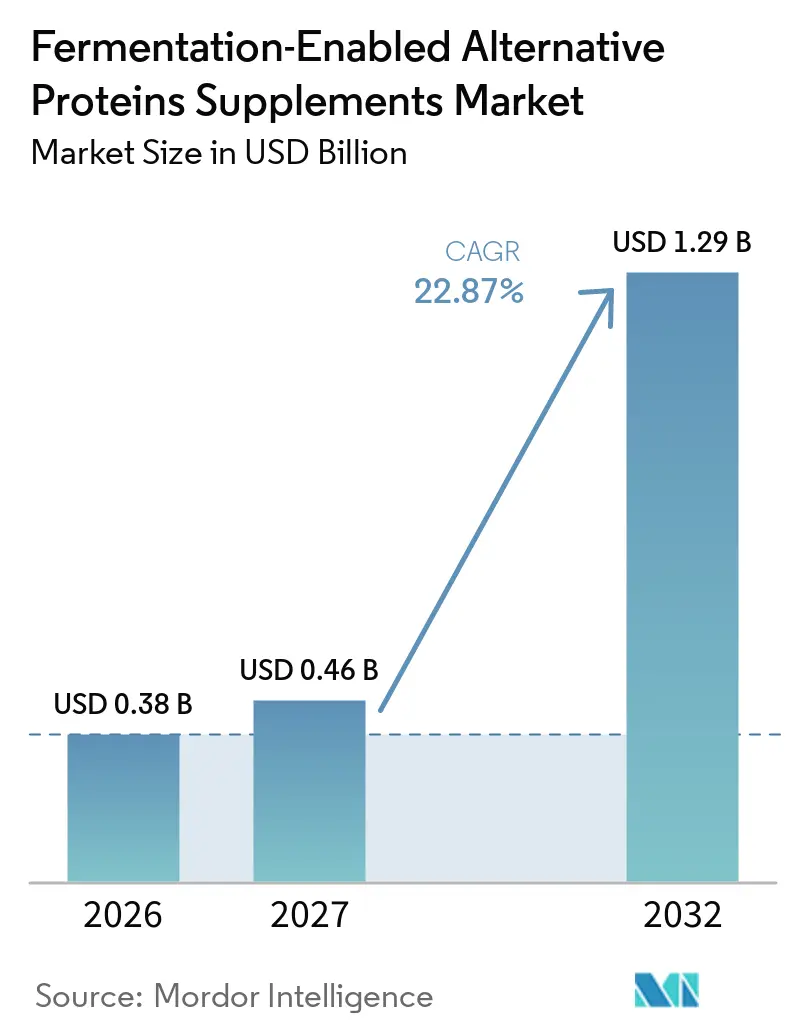
| Market Size (2027) | USD 0.46 Billion |
| Market Size (2032) | USD 1.29 Billion |
| Fastest Growing Market | Asia-Pacific |
| Largest Market | North America |
| Market Concentration | Medium |
Major Players *Disclaimer: Major Players sorted in no particular order Image © Mordor Intelligence. Reuse requires attribution under CC BY 4.0. | |
Fermentation-Enabled Alternative Proteins Supplements Market Analysis by Mordor Intelligence
The Fermentation-enabled alternative protein supplements market size was valued at USD 0.38 billion in 2026 and is projected to grow from USD 0.46 billion in 2027 to USD 1.29 billion by 2032, at a CAGR of 22.87% during the forecast period (2027-2032). Growth reflects demand for proteins that provide animal-like amino acid profiles without lactose and offer greater supply flexibility. The fermentation-enabled alternative protein supplements market is also gaining support from regulatory approvals for new proteins, making it easier for supplement brands to consider these inputs. Continuous fermentation and stronger purification processes are improving the commercial case for ingredients used in powders and beverages. Manufacturers that pair reliable production with clear product positioning are likely to have stronger access to premium nutrition channels. The opportunity remains limited by high facility costs, uncertain scale-up yields for some proteins, and competition from lower-cost whey, soy, and pea ingredients.
Key Report Takeaways
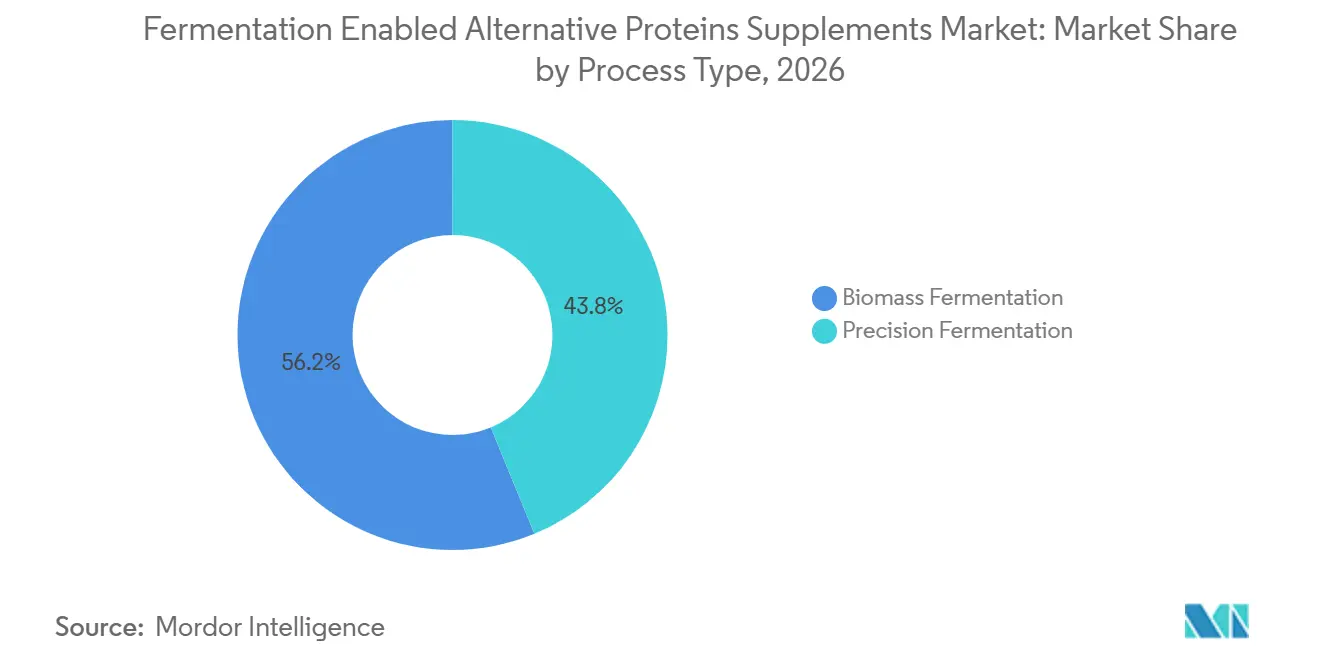
- By process type, biomass fermentation led with 56.23% revenue share in 2026, while precision fermentation is forecast to grow at a 24.17% CAGR through 2032.
- By ingredient type, mycoprotein and fungal biomass held 42.28% share in 2026, while precision-fermented animal-equivalent proteins are projected to expand at a 24.53% CAGR through 2032.
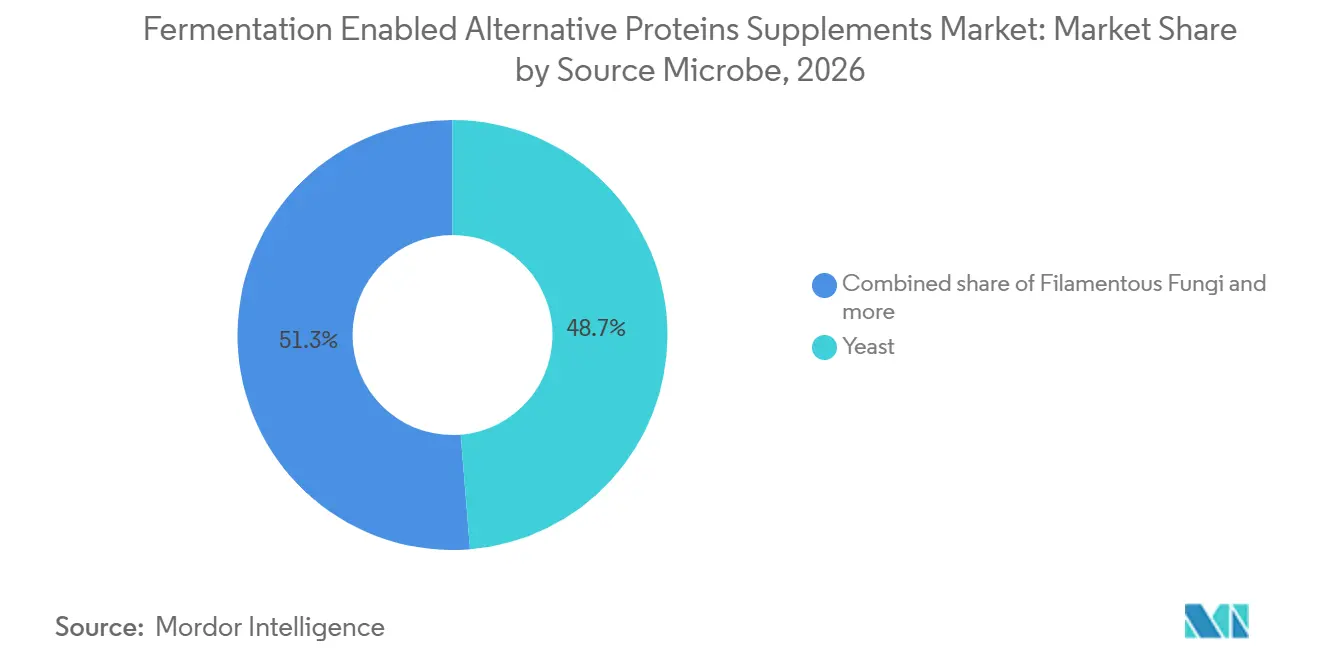
- By source microbe, yeast retained 48.65% share in 2026, whereas filamentous fungi are expected to grow at a 24.28% CAGR through 2032.
- By product form, powders and ready-to-mix formulations accounted for 54.87% share in 2026, while ready-to-drink supplements are forecast to advance at a 24.64% CAGR through 2032.
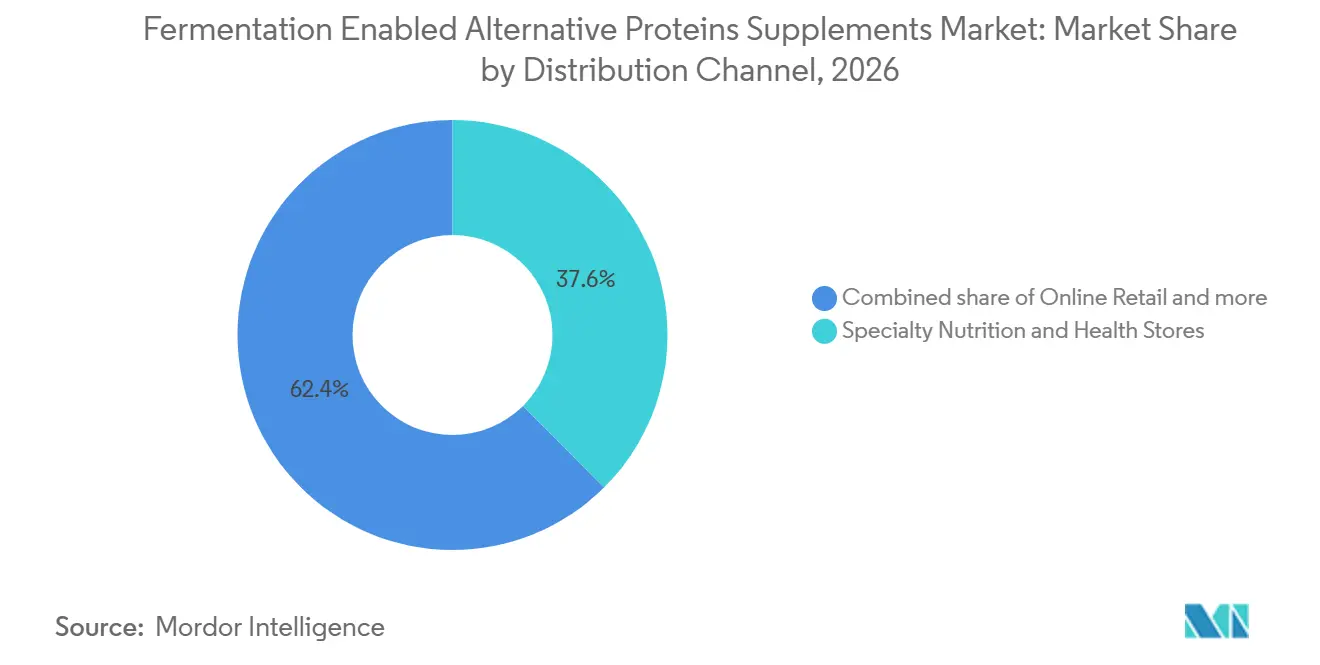
- By distribution channel, specialty nutrition and health stores represented 37.56% share in 2026, while online retail is projected to record a 24.26% CAGR through 2032.
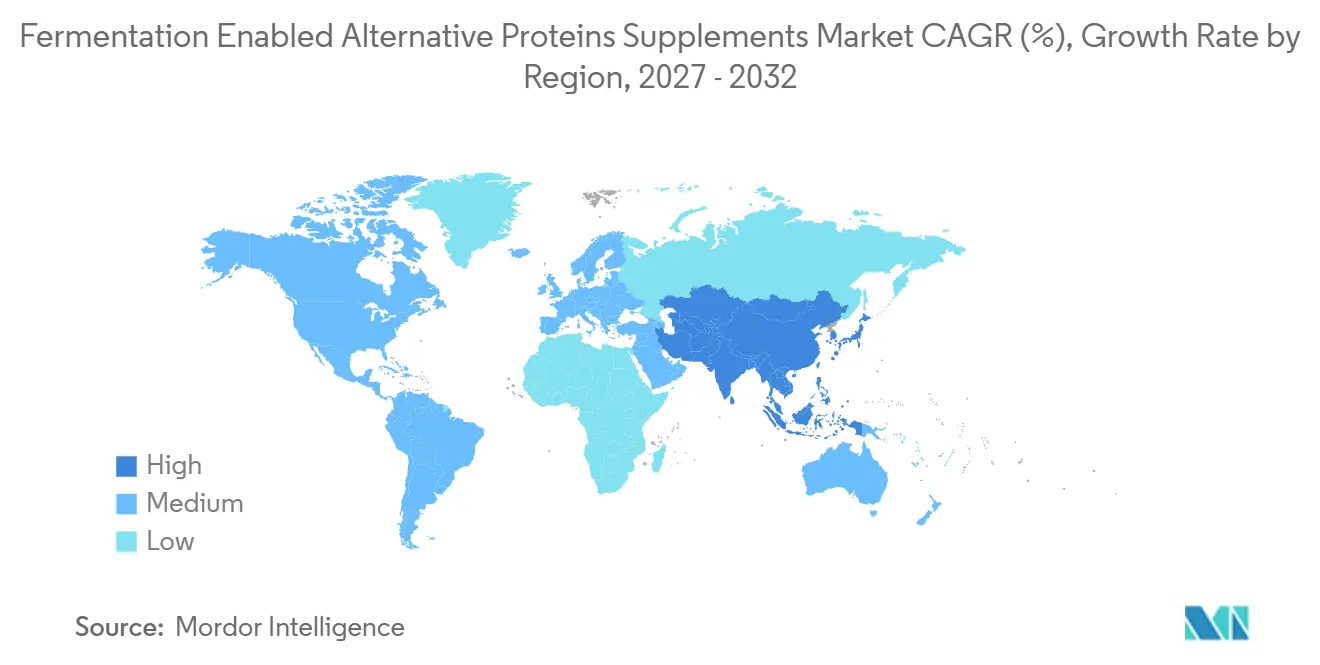
- By geography, North America held 62.48% share in 2026, while Asia-Pacific is forecast to grow at a 24.67% CAGR through 2032.
Note: Market numbers in this report are based on Mordor Intelligence's proprietary estimation framework, which combines nine months of actuals with Q4 projections for base year 2026.
Global Fermentation-Enabled Alternative Proteins Supplements Market Trends and Insights
Drivers Impact Analysis*
| Driver | (~) % Impact on CAGR Forecast | Geographic Relevance | Impact Timeline |
|---|---|---|---|
| Expanding Commercialization of Precision-Fermented Whey Proteins | +4.2% | North America & Europe | Short term (≤2 years) |
| Increasing Demand for Lactose-Free and Animal-Free Protein Supplement Formulations | +3.8% | North America, Europe, APAC | Short term (≤2 years) |
| Improving Protein Purification, Solubility, and Sensory Performance | +3.1% | Global | Medium term (2-4 years) |
| Advancements in Microbial Strain Engineering and Fermentation Protein Yields | +2.9% | Global; early gains in North America & Europe | Medium term (2-4 years) |
| Increasing Development of Nutritional Formulations for Weight Management and Muscle Maintenance | +2.6% | North America, Europe, East Asia | Short term (≤2 years) |
| Growing Investments in Commercial-Scale Fermentation Manufacturing Infrastructure | +3.4% | Global; concentrated in North America, Europe, APAC | Long term (≥4 years) |
| Source: Mordor Intelligence | |||
Expanding Commercialization of Precision-Fermented Whey Proteins
Whey protein price dislocation has opened a strategic entry point for fermentation-derived substitutes in the premium supplement formulation market. Whey protein concentrate prices rose 108%, and isolate prices nearly doubled over the two years leading into 2026, with forward contracts sold well into the year, a supply signal that precision fermentation ingredient producers are actively exploiting, according to Perfect Day, Inc. The FDA's consecutive "no questions" GRAS letters in 2025 for beta-lactoglobulin produced via precision fermentation from Vivici (GRN 1200, February 2025), TurtleTree lactoferrin (GRN 1219, May 2025), Onego Bio egg white protein (GRN 1249, September 2025), and Verley (GRN 1241, September 2025) have created a durable regulatory precedent that reduces the regulatory risk premium for next-applicant companies[1]. The less-visible implication is that multiple approved platforms producing identical proteins from different microbial hosts will intensify ingredient-level competition before brand-level differentiation can fully crystallize, compressing B2B pricing faster than most market participants currently model.
Increasing Demand for Lactose-Free and Animal-Free Protein Supplement Formulations
The rising incidence of lactose intolerance across Asian and Middle Eastern populations, combined with the accelerating adoption of vegan and flexitarian lifestyles in North America and Europe, is broadening the demand base for fermentation-derived proteins well beyond the traditional male gym-going demographic. Clinical evidence increasingly supports the functional equivalence of these ingredients: a 2025 systematic review in Frontiers in Nutrition, covering 12 human intervention studies, found that consumption of fermented whey products was associated with improvements in muscle mass, glycemic control, and lipid profiles, including reductions in LDL cholesterol and triglycerides[2]. For the supplement segment specifically, precision-fermented proteins such as Vivici's beta-lactoglobulin and TurtleTree's LF+ lactoferrin are being positioned in fitness nutrition, women's health, immunity, and gut health formulations, verticals where ingredient traceability and allergen transparency command premium pricing.
Improving Protein Purification, Solubility, and Sensory Performance
Functional performance parity with conventional proteins has historically been the central technical barrier to the expansion of fermentation-derived ingredients beyond niche applications. The gap is narrowing. Continuous fermentation is demonstrated by Pow.Bio and Bühler at a 3,000-liter scale with ATV Technologies achieved over 3x productivity gains and a 50% cost reduction versus conventional batch processing, representing a step-change in upstream economics that directly lowers the downstream purification cost burden. Separately, Stuttgart-based ProteinDistillery GmbH has developed a proprietary process that converts beer-industry yeast by-products into clean-label, vegan proteins with functional properties, including emulsification, gelation, and thickening, comparable to egg proteins and free of artificial additives. As solubility and sensory profiles improve, supplement formulators gain access to high-protein concentrations in ready-to-drink formats without the chalky texture or off-flavors that have historically constrained the adoption of fermented protein in beverage formats.
Advancements in Microbial Strain Engineering and Fermentation Protein Yields
Synthetic biology toolkits have materially expanded the productive repertoire of industrial fermentation organisms beyond their natural metabolic ceiling. Research published in Biotechnology Advances (2025) reports that engineered yeast strains now achieve protein contents exceeding 80% and protein utilization rates above 90% through adaptive laboratory evolution, rational metabolic redesign, and high-throughput strain screening. Angel Yeast Co., which holds approximately 19% of the global yeast market share, has operationalized this at scale: demand for its yeast protein has exceeded existing capacity, and the company is targeting annual production to triple once a new 11,000-metric-ton production line in Hubei province reaches full commissioning in 2025. A second-order effect that tends to be underappreciated: as gene-editing tools lower the cost of strain iteration from years to months, the product diversity within fermentation-derived proteins is expanding faster than regulatory frameworks are designed to handle, creating a first-mover opportunity for companies that can navigate novel-food approvals proactively.
Restraints Impact Analysis*
| Restraint | (~) % Impact on CAGR Forecast | Geographic Relevance | Impact Timeline |
|---|---|---|---|
| High Capital Investment Requirements for Fermentation Infrastructure | -3.2% | Global; acute in APAC emerging markets and South America | Long term (≥4 years) |
| Intense Price Competition from Established Whey, Soy, and Pea Protein Supplements | -3.8% | Global, especially North America and Europe | Short term (≤2 years) |
| Production Yield and Scale-Up Uncertainty for Complex Bioactive Proteins | -2.4% | Global; concentrated in precision fermentation hubs (North America, Netherlands, Singapore) | Medium term (2-4 years) |
| Product Labeling, Allergen Disclosure, and Health Claim Compliance Challenges | -2.1% | North America, EU, Australia | Short term (≤2 years) |
| Source: Mordor Intelligence | |||
High Capital Investment Requirements for Fermentation Infrastructure
Building a commercially viable fermentation facility requires capital outlays that few startups can absorb on their own. GFI's 2025 techno-economic meta-analysis estimates CapEx for a commercial-scale aerobic yeast or microalgae biomass plant at USD 139-324 million for an annual production volume of 18,000-48,000 metric tons, with a case value of USD 237 million. This threshold excludes most early-stage founders and forces precision fermentation ventures into contract manufacturing arrangements or joint ventures, which introduce additional operational complexity and supply-reliability risk. Fermentation industry funding in 2025 declined to USD 357 million from USD 651 million in 2024 per GFI analysis, meaning the pool of available capital for infrastructure buildout contracted precisely at the moment when scale-up is most urgent[3]. The constraint is structural: feedstock costs and facility CapEx account for the two largest cost drivers, both of which require scale to reduce, creating a circular dependency that only well-capitalized incumbents or sovereign-backed entities can readily resolve.
Intense Price Competition from Established Whey, Soy, and Pea Protein Supplements
Commodity plant proteins represent the toughest price benchmark for fermentation-derived alternatives. GFI's meta-analysis shows that fungal mycoprotein, with a median production cost of around USD 21.1/kg-protein, carries a substantial cost disadvantage relative to plant protein concentrates, which have a median cost of USD 6.0/kg-protein on a per-protein basis. Even as the biomass production cost converges toward USD 4-6 per kg, approaching parity with beef and pork, the comparison with low-cost pea and soy protein isolates remains unfavorable. Brands targeting value-conscious supplement consumers accordingly face a structural pricing ceiling that limits the adoption of fermentation protein primarily to premium and super-premium segments. This premium constraint also restricts the total addressable volume in markets such as India and Southeast Asia, where price sensitivity is highest, and consumer education about the functional differentiation of fermentation-derived proteins is still nascent.
*Our forecasts treat driver/restraint impacts as directional, not additive. The impact forecasts reflect baseline growth, mix effects, and variable interactions.
Segment Analysis
By Process Type: Biomass Fermentation Supports Current Revenue While Precision Fermentation Expands
Biomass fermentation accounted for 56.23% of the fermentation-enabled alternative protein supplements market share in 2026. Its position reflects established process knowledge and commercial experience in continuous-culture mycoprotein production. Marlow Foods, the producer of Quorn, has operated large-scale mycoprotein production for more than 30 years. This operating history supports dependable output without requiring genetic modification of the production organism. It also shows why new entrants face a demanding learning curve in this segment.
Precision fermentation is forecast to grow at a CAGR of 24.17% through 2032. The fermentation-enabled alternative protein supplements market size for this process is supported by premium supplement categories, where brands can absorb higher ingredient costs. GFI recorded that precision fermentation was the technology focus for 47% of companies in its fermentation database. Precision fermentation can produce proteins with targeted functional properties, which supports use in specialized sports and wellness products. Its growth will depend on reliable commercial-scale output and further regulatory clearances.
By Ingredient Type: Fungal Biomass Leads While Animal-Equivalent Proteins Grow Faster
Mycoprotein and fungal biomass held 42.28% of the fermentation-enabled alternative protein supplements market in 2026. These ingredients benefit from established familiarity in several regions and can provide protein together with dietary fiber. EFSA issued a positive scientific opinion in December 2025 for Fermotein, a mycoprotein derived from Rhizomucor pusillus. The decision broadened the potential range of mycoprotein strains that can be used in Europe. Fermentation-enhanced plant proteins remain a secondary option for brands seeking better digestibility without a fully biomass-based system.
Precision-fermented animal-equivalent proteins are forecast to grow at a CAGR of 24.53% through 2032. These ingredients include beta-lactoglobulin, lactoferrin, egg albumin, and casein variants. Their amino acid profile and functionality can closely resemble conventional dairy or egg proteins, which is valuable in premium sports nutrition. In 2025, the FDA issued notices for several of these proteins, improving the commercial pathway for formulators. The segment will need to translate technical similarity into a clear consumer benefit at the point of sale.
By Source Microbe: Yeast Has Scale While Filamentous Fungi Build Momentum
Yeast captured 48.65% of the fermentation-enabled alternative protein supplements market share in 2026. Its lead reflects a long history in food production, flexibility across feedstocks, and access to existing fermentation capabilities. Angel Yeast reported that demand for its yeast protein exceeded existing capacity while it advanced a new production line in 2025. Established yeast producers can adapt their production knowledge to protein applications more quickly than new entrants. Yeast, therefore, remains important for powders, bars, and other nutrition formats.
Filamentous fungi are forecast to grow at a CAGR of 24.28% through 2032. Their protein-and-fiber profile and texture properties create a distinct value proposition compared to yeast biomass. Research published in 2025 identified Fusarium and Neurospora species as nutritionally complete, low-allergenicity protein sources with profiles suited to active nutrition. This supports product development for consumers seeking more than isolated protein content. Commercial success will still rely on consistent cultivation, processing, and sensory quality.

By Product Form: Powder Retains the Base While Ready-to-Drink Gains Reach
Powders and ready-to-mix formulations held 54.87% of the fermentation-enabled alternative protein supplements market in 2026. Gym-channel buyers value their flexible serving size, high protein concentration, and lower cost per serving. Angel Yeast's AnPro yeast protein received the 2025 World Food Innovation Award for Best Ingredient Innovation. Such recognition can help ingredient suppliers enter powder formulation pipelines. Powder formats also allow brands to introduce unfamiliar proteins without changing familiar usage habits.
Ready-to-drink supplements are forecast to grow at a CAGR of 24.64% through 2032. Better protein solubility and a more neutral sensory profile make this format more practical than before. Vivici introduced beta-lactoglobulin for applications including clear protein drinks. Ready-to-drink products can place fermentation-derived proteins into convenience-led consumption occasions. They also require strict control of stability, taste, and production costs.
By Distribution Channel: Specialty Stores Explain the Category While Online Retail Scales It
Specialty nutrition and health stores accounted for 37.56% of the Fermentation-enabled alternative protein supplements market in 2026. Their trained staff can explain ingredients shoppers may not recognize, such as biomass and precision-fermented proteins. This advisory role is useful when brands must communicate processing methods, allergen information, and product benefits. Specialty stores also provide a setting for premium products where trial and direct comparison can support purchase decisions. Their role may remain important even as the category gains broader awareness.
Online retail is forecast to grow at a CAGR of 24.26% through 2032. Digital channels offer lower barriers for niche brands and enable direct consumer education through product pages and creator content. THG Nutrition reported strong sales improvement from its 2025 TikTok-specific bundles. This model can help new products build awareness quickly when claims and labeling are carefully managed. Online growth will depend on clear positioning and repeat purchase rather than initial curiosity alone.
Geography Analysis
North America held 62.48% of the fermentation-enabled alternative protein supplements market share in 2026. The region combines a large premium-supplement customer base with specialized retail and a relatively developed regulatory pathway for new food ingredients. FDA no-questions letters issued during 2025 supported commercial planning for several fermentation-derived proteins. The United States remains the core market because brands can reach sports nutrition and functional wellness users through both physical and digital channels. Canada and Mexico add opportunities through cross-border distribution and demand patterns influenced by the United States.
Asia-Pacific is projected to expand at a CAGR of 24.67% through 2032. China is important because government policy identifies microbial fermentation as part of its broader protein supply strategy. Pinggu District set targets for 2025 in alternative protein technology and proprietary microbial strains, and for CNY 1 billion in sector output by 2027. South Korea enacted the Food Tech Industry Promotion Act in December 2025, establishing a framework to support the development of innovative foods. Japan provides a separate opening for locally relevant products such as Agro Ludens' rice-and-koji mycoprotein Comeat.
EFSA's positive opinion on Fermotein in December 2025 provided an important signal for future European mycoprotein projects. Germany, the Netherlands, France, and the United Kingdom are likely to remain important markets because they combine ingredient research, nutrition brands, and informed consumers. PHW-Gruppe's 2025 partnership with Kynda Biotech shows interest in using food-production by-products for fungal mycoprotein production. South America and the Middle East and Africa are earlier in adoption, although Enifer's Brazilian partnership with FS indicates that production capacity is being developed before demand becomes broad.
Competitive Landscape
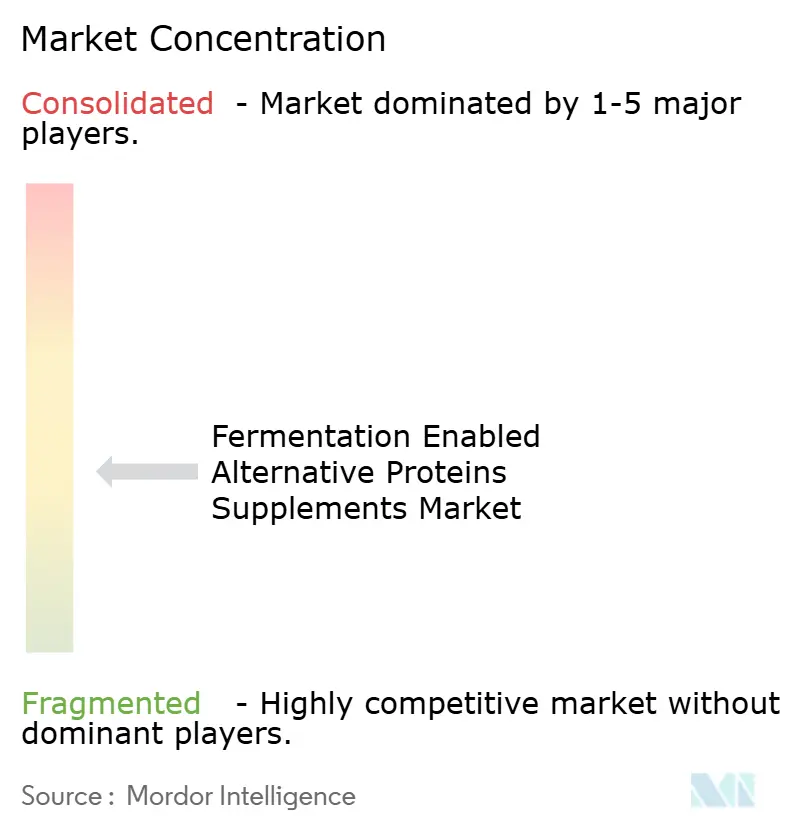
The fermentation-enabled alternative protein supplements market is moderately fragmented. Biomass fermentation companies with operating history compete alongside precision fermentation businesses moving from pilot facilities to larger production. Marlow Foods and ENOUGH represent the biomass side, while companies such as Perfect Day, Vivici, TurtleTree, Onego Bio, and Verley focus on proteins with specific functional or nutritional uses. A supplier that can provide dependable volumes can have an advantage with supplement brands that cannot tolerate stock interruptions.
Perfect Day is forming a joint venture with Zydus Lifesciences in Gujarat and expects to begin commercial ProFerm deliveries in the first quarter of 2027. Vivici completed a commercial-scale validation run in a 75,000-liter fermenter in Ghent during 2025. TurtleTree received a 2025 FDA no-questions letter for its LF+ lactoferrin, which supports its focus on high-value health and nutrition applications. These moves illustrate how companies are using capacity, validation, and regulatory milestones to position themselves with business customers. The fermentation-enabled alternative protein supplements market remains difficult for generalist entrants because safety evidence and manufacturing expertise must be developed together.
Companies are also using partnerships to improve feedstock access, build regional supply, and lower development risk. PHW-Gruppe and Kynda Biotech partnered in 2025 to develop fungal mycoprotein from food-production side streams. Millow commissioned a large-scale oat-and-mycelium facility in Sweden in May 2025, with each production line designed for up to 500 kg of protein per day. Intellectual property in strains, purification, and formulation can provide protection, but it will not replace the need for cost control. The Fermentation-enabled alternative proteins supplements market will favor competitors that combine technical performance with transparent claims, efficient manufacturing, and credible delivery plans.
Fermentation-Enabled Alternative Proteins Supplements Industry Leaders
-
Perfect Day, Inc.
-
Marlow Foods Limited
-
The Protein Brewery B.V.
-
MycoTechnology, Inc.
-
3FBIO Ltd., (ENOUGH)
- *Disclaimer: Major Players sorted in no particular order
Recent Industry Developments
- December 2025: The Protein Brewery secures the EU's first EFSA mycoprotein positive opinion: EFSA issued its first-ever positive scientific opinion for a mycoprotein ingredient derived from Rhizomucor pusillus (Fermotein), clearing the path for EU commercialization in sports nutrition starting in Q3 2026.
- August 2025: MoreMeat receives FDA GRAS for Fusarium compactum mycoprotein: MoreMeat received a no-questions letter, GRN 1255, for mycelial biomass from Fusarium compactum, expanding the approved mycoprotein organism palette in the US beyond Fusarium venenatum.
- May 2025: Millow AB commissioned its first large-scale factory in Gothenburg on a EUR 17.5 million blended-finance package, including EUR 2.5 million from the European Innovation Council, targeting up to 500 kg of complete protein per production line per day using its patented dry-state oat-and-mycelium fermentation process.
Global Fermentation-Enabled Alternative Proteins Supplements Market Report Scope
Fermentation-enabled alternative protein supplements are nutritional products containing proteins produced, enhanced, or derived through microbial fermentation, including precision and biomass fermentation. The Fermentation-Enabled Alternative Proteins Supplements Market is segmented by process type, ingredient type, source microbe, product form, distribution channel, and geography. By process type, the market includes Precision Fermentation and Biomass Fermentation. By ingredient type, the market is segmented into Mycoprotein and Fungal Biomass, Fermentation-enhanced Plant Proteins, Precision-fermented Animal-equivalent Proteins, and Others. By source microbe, the market is categorized into Yeast, Filamentous Fungi, Bacteria, Microalgae, and Other Microorganisms. By product form, the market includes Powders and Ready-to-Mix Formulations, Ready-to-Drink Supplements, Capsules and Tablets, Protein Bars and Supplement Snacks, and Other Forms. By distribution channel, the market is segmented into Supermarkets/Hypermarkets, Specialty Nutrition and Health Stores, Online Retail, and Others. By geography, the report covers North America, Europe, Asia-Pacific, South America, the Middle East, and Africa, with market size and forecasts provided for each region. The market sizing has been done in value terms in USD and volume terms in tons for all the abovementioned segments.
| Precision Fermentation |
| Biomass Fermentation |
| Mycoprotein and Fungal Biomass |
| Fermentation-enhanced Plant Proteins |
| Precision-fermented Animal-equivalent Proteins |
| Others |
| Yeast |
| Filamentous Fungi |
| Bacteria |
| Microalgae and Other Microorganisms |
| Powders and Ready-to-Mix Formulations |
| Ready-to-Drink Supplements |
| Capsules and Tablets |
| Protein Bars and Supplement Snacks |
| Other Forms |
| Supermarkets/Hypermarkets |
| Specialty Nutrition and Health Stores |
| Online Retail |
| Others |
| North America | United States |
| Canada | |
| Mexico | |
| Rest of North America | |
| Europe | United Kingdom |
| Germany | |
| France | |
| Italy | |
| Spain | |
| Russia | |
| Sweden | |
| Belgium | |
| Poland | |
| Netherlands | |
| Rest of Europe | |
| Asia-Pacific | China |
| Japan | |
| India | |
| Thailand | |
| Singapore | |
| Indonesia | |
| South Korea | |
| Australia | |
| New Zealand | |
| Rest of Asia-Pacific | |
| South America | Brazil |
| Argentina | |
| Colombia | |
| Chile | |
| Rest of South America | |
| Middle East and Africa | United Arab Emirates |
| South Africa | |
| Saudi Arabia | |
| Nigeria | |
| Egypt | |
| Morocco | |
| Turkey | |
| Rest of Middle East and Africa |
| By Process Type | Precision Fermentation | |
| Biomass Fermentation | ||
| By Ingredient Type | Mycoprotein and Fungal Biomass | |
| Fermentation-enhanced Plant Proteins | ||
| Precision-fermented Animal-equivalent Proteins | ||
| Others | ||
| By Source Microbe | Yeast | |
| Filamentous Fungi | ||
| Bacteria | ||
| Microalgae and Other Microorganisms | ||
| By Product Form | Powders and Ready-to-Mix Formulations | |
| Ready-to-Drink Supplements | ||
| Capsules and Tablets | ||
| Protein Bars and Supplement Snacks | ||
| Other Forms | ||
| By Distribution Channel | Supermarkets/Hypermarkets | |
| Specialty Nutrition and Health Stores | ||
| Online Retail | ||
| Others | ||
| By Geography | North America | United States |
| Canada | ||
| Mexico | ||
| Rest of North America | ||
| Europe | United Kingdom | |
| Germany | ||
| France | ||
| Italy | ||
| Spain | ||
| Russia | ||
| Sweden | ||
| Belgium | ||
| Poland | ||
| Netherlands | ||
| Rest of Europe | ||
| Asia-Pacific | China | |
| Japan | ||
| India | ||
| Thailand | ||
| Singapore | ||
| Indonesia | ||
| South Korea | ||
| Australia | ||
| New Zealand | ||
| Rest of Asia-Pacific | ||
| South America | Brazil | |
| Argentina | ||
| Colombia | ||
| Chile | ||
| Rest of South America | ||
| Middle East and Africa | United Arab Emirates | |
| South Africa | ||
| Saudi Arabia | ||
| Nigeria | ||
| Egypt | ||
| Morocco | ||
| Turkey | ||
| Rest of Middle East and Africa | ||
Key Questions Answered in the Report
What is the 2026 value of fermentation-enabled alternative proteins supplements?
The category is valued at USD 0.38 billion in 2026 and is forecast to reach USD 1.29 billion by 2032 at a 22.87% CAGR.
Which process type leads this category?
Biomass fermentation leads with 56.23% share in 2026, supported by established production experience and commercial mycoprotein capacity.
Why are ready-to-drink protein products expanding?
Ready-to-drink supplements are forecast to grow at 24.64% CAGR as protein solubility and sensory performance improve.
Which region offers the fastest growth outlook?
Asia-Pacific is forecast to expand at a 24.67% CAGR through 2032, supported by policy activity in China, South Korea, and Japan.