
Electrical Insulation Tape Market Size and Share
Market Overview
| Study Period | 2021 - 2031 |
|---|---|
| Market Size (2026) | USD 16.15 Billion |
| Market Size (2031) | USD 20.72 Billion |
| Growth Rate (2026 - 2031) | 5.11 % |
| Fastest Growing Market | Asia-Pacific |
| Largest Market | Asia-Pacific |
| Market Concentration | Low |
Major Players *Disclaimer: Major Players sorted in no particular order Image © Mordor Intelligence. Reuse requires attribution under CC BY 4.0. | |
Electrical Insulation Tape Market Analysis by Mordor Intelligence
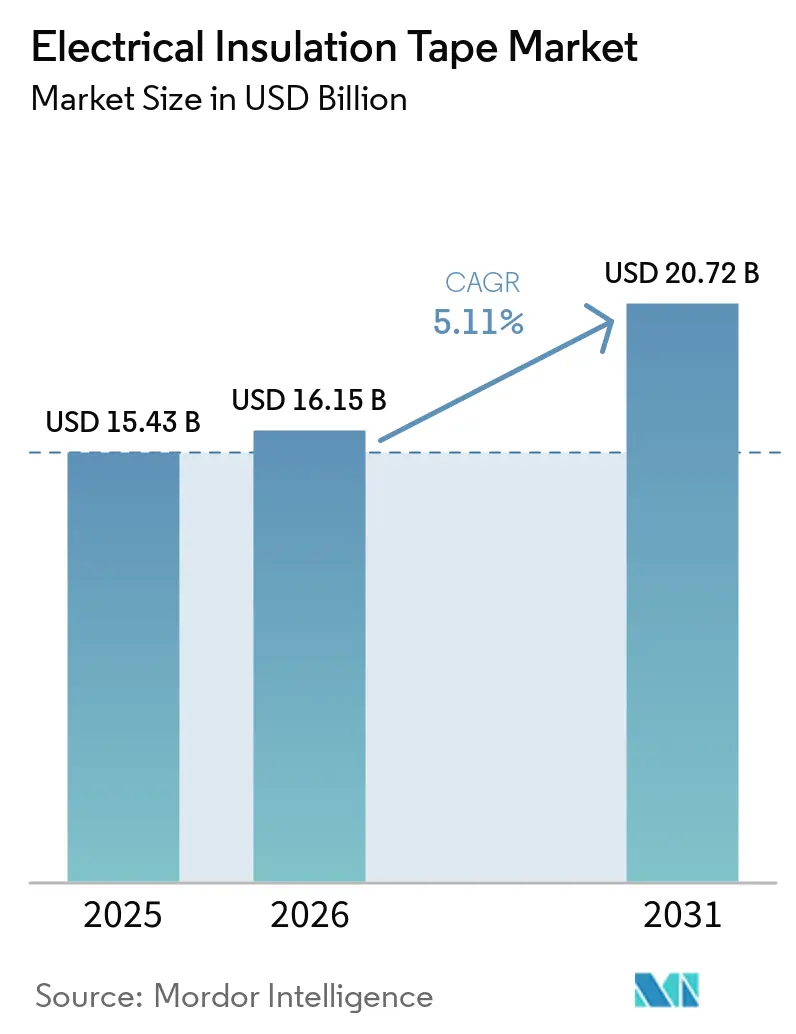
The electrical insulation tape market size was valued at USD 15.43 billion in 2025 and is estimated to grow from USD 16.15 billion in 2026 to USD 20.72 billion by 2031, at a CAGR of 5.11% during the forecast period (2026-2031). The electrical insulation tape market is supported by power grid modernization, vehicle electrification, and electronics manufacturing, which are increasing both material consumption and performance requirements across utility construction, wiring harness assembly, component production, repair work, and high-density electrical installations. Grid investment is making tape a regular input for transmission upgrades, reconductoring, and substation work rather than only a maintenance material, as these projects require insulation during installation, jointing, protection, testing, and subsequent service activity. The shift from 400 V to 800 V electric vehicle systems requires stronger dielectric and thermal performance, while compact electronic products require thinner, more precise tape formats. These conditions are reducing the relative role of commodity grades in the electrical insulation tape market and creating opportunities for suppliers with certified, high-temperature, halogen-free, and application-specific products.
Key Report Takeaways
- By product type, Polyvinyl chloride (PVC) tapes held 60.45% of the electrical insulation tape market share in 2025, while rubber tapes are forecast to grow at a 5.75% CAGR through 2031.
- By end-user industry, electrical and electronics accounted for 48.13% of the electrical insulation tape market share in 2025, while automotive is forecast to expand at a 6.06% CAGR through 2031.
- By geography, Asia-Pacific held 57.84% of revenue in 2025 and is forecast to grow at a 5.83% CAGR through 2031.
Note: Market size and forecast figures in this report are generated using Mordor Intelligence’s proprietary estimation framework, updated with the latest available data and insights as of January 2026.
Global Electrical Insulation Tape Market Trends and Insights
Drivers Impact Analysis*
| Drivers | (~) % Impact on CAGR Forecast | Geographic Relevance | Impact Timeline |
|---|---|---|---|
| Power-Grid Modernization and Renewable-Energy Infrastructure | +1.8% | Global, with intensity in Asia-Pacific, North America, and Europe | Long term (≥ 4 years) |
| Vehicle Electrification and High-Voltage Harness Growth | +1.5% | Global, with emphasis on China, South Korea, Germany, and North America | Medium term (2-4 years) |
| Electronics and Connected-Device Complexity | +1.0% | Global, with Asia-Pacific as the core region and demand extending to North America and Europe | Short term (≤ 2 years) |
| Certified Flame-Retardant and High-Temperature Tape Demand | +0.5% | Global, with strong regulatory influence in North America and Europe | Medium term (2-4 years) |
| Electrochemical-Migration Performance Testing | +0.3% | Global, with early adoption strongest in Japan, South Korea, and Germany | Long term (≥ 4 years) |
| Source: Mordor Intelligence | |||
Expansion of Power-Grid Modernization and Renewable-Energy Infrastructure
Power grid work provides a durable source of demand for the electrical insulation tape market, as insulation is required during upgrades, repairs, transmission expansion, and renewable energy connections. Different tape grades are used around cables, splices, terminations, panels, and equipment that are exposed to operating and environmental stresses. Global grid spending rose from USD 300 billion in 2020 to USD 480 billion in 2025. The International Energy Agency stated that annual grid investment needs to increase 50% from the USD 400 billion baseline to meet electricity demand through 2030[1]International Energy Agency, “Grids, Electricity 2026,” International Energy Agency, iea.org.. The US Department of Energy committed USD 1.9 billion in March 2026 for reconductoring and transmission upgrades, while American Electric Power's 2026 to 2030 plan allocated USD 33 billion to transmission within its USD 78 billion capital plan. Transmission construction and renewable integration require more demanding tape systems than many distribution projects, supporting demand for grades with stronger dielectric, flame-retardant, and mechanical properties. Utility projects also require both initial installation materials and maintenance supplies, broadening the market opportunity.
Electrification of Vehicles and Growth of High-Voltage Harnesses
Vehicle electrification is increasing tape use per vehicle and changing the requirements faced by suppliers in the electrical insulation tape market. Battery packs, high-voltage cable runs, wire harnesses, and electronic control systems each require reliable electrical separation and physical protection. A battery-electric vehicle uses 180 to 250 meters of insulating tape, compared with 80 to 120 meters in a conventional internal-combustion vehicle. New 800V platforms require greater dielectric strength and thermal stability than many 400V systems. High-voltage cabling in a battery-electric vehicle is estimated at 1 to 2 km, compared with 200 to 300 m in an internal-combustion vehicle. International Organization for Standardization (ISO) 19642 and LV 215 frameworks reinforce the need for qualified wiring-harness materials in new-energy vehicles. These specifications favor products that meet OEM approval requirements and sustain performance across the vehicle life cycle.
Rising Complexity of Electronics and Connected Devices
Miniaturization is driving demand for thin-film polyester and polyimide formats within the electrical insulation tape market, particularly where manufacturers need insulation, bonding, masking, and cable management functions without increasing the dimensions of finished electronic assemblies. Smartphones, wearable devices, and IoT products place more components inside smaller spaces, where general-purpose polyvinyl chloride (PVC) tape may not meet thickness, bonding, or insulation requirements. Nitto Denko reported FY2025 Industrial Tape revenue of JPY 366.6 billion (USD 2.38 billion), up 4.2% year over year, and identified battery-bonding electrical release tape for high-end smartphone assembly as an important demand area. Repair requirements for electronic devices can extend demand for tape beyond new device assembly by increasing replacement and refurbishment activity. Nitto Denko also identified this repair-related demand as a forward factor for its Industrial Tape business. Precision-insulated cable assemblies for 5G installations provide an additional source of tape use in dense communication infrastructure.
Demand for Certified Flame-Retardant and High-Temperature Tapes
Performance certification is becoming increasingly important in the electrical insulation tape market as customers specify products based on safety, temperature, and compliance requirements. This is particularly relevant where a tape must operate consistently in the presence of energized components, elevated temperatures, demanding assembly processes, or regulated building installations. Underwriters Laboratories (UL) 510 evaluates insulating tapes across 16 safety tests, including dielectric strength, flame resistance, tensile strength, adhesion, and environmental aging. Certified products can carry 40% to 50% price premiums over uncertified alternatives where procurement is specification-driven. International Electrotechnical Commission (IEC) 60454-3-1 defines classification and testing requirements for pressure-sensitive electrical tapes in European and Asian markets. Automotive directives, public-building fire requirements, and EU compliance needs are increasing demand for halogen-free and high-temperature formulations. Once an approved tape is listed for an OEM application, the qualification process makes it more difficult for buyers and new suppliers to replace it.
Restraints Impact Analysis*
| Restraints | (~) % Impact on CAGR Forecast | Geographic Relevance | Impact Timeline |
|---|---|---|---|
| Polyvinyl Chloride (PVC), Rubber, Polyester Film, and Adhesive Input Volatility | -0.8% | Global, most acute in Asia-Pacific, India, and import-dependent markets | Short term (≤ 2 years) |
| Substitution by Heat-Shrink Tubing, Connectors, and Molded Insulation | -0.6% | Global, with stronger pressure in North America and Europe for high-reliability uses | Medium term (2-4 years) |
| Installation, Surface-Contamination, and Adhesive-Compatibility Risks | -0.4% | Global, with greater exposure to emerging markets that have lower contractor-certification density | Long term (≥ 4 years) |
| Source: Mordor Intelligence | |||
Volatility in PVC, Rubber, Polyester Film, and Adhesive Inputs
Input cost movements remain an immediate concern for the electrical insulation tape market, as resin, rubber, film, and adhesive costs directly affect tape margins. Buyers in automotive, utilities, electronics, and construction may operate under conditions that limit rapid price adjustments. PVC resin prices in the United States reached USD 644 per metric ton in June 2026, while ethylene-based PVC prices in Asia moved by as much as USD 300 per metric ton over a two-month period earlier in 2026. Shin-Etsu Chemical announced an ex-factory price increase for PVC resin of more than JPY 30 per kg in May 2026, citing tighter chlor-alkali capacity and higher maritime freight rates. Downstream manufacturers with limited-supply contracts may not be able to fully pass through higher input costs under fixed-price OEM agreements. Larger integrated suppliers can hedge, source from multiple suppliers, and hold more inventory, which can widen their cost advantage during periods of price volatility.
Substitution by Heat-Shrink Tubing, Connectors, and Molded Insulation
Heat-shrink tubing, pre-insulated connectors, and molded insulation can replace tape in applications where installation reliability is important, as they provide more standardized coverage at terminations or enclosed assemblies where labor quality and repeatability are closely monitored. This substitution pressure is more pronounced in automotive harness terminations, data-center power distribution, aerospace wiring, and industrial automation. Pre-insulated connectors reduce variability in application associated with field-applied tape in safety-critical assemblies. The effect is more significant in North America and Europe, where labor costs and reliability requirements are high. Suppliers in the electrical insulation tape market are responding with self-amalgamating rubber formulations and pre-cut tape kits that simplify installation. These formats aim to retain tape's flexibility while reducing the practical reasons buyers may select alternative insulation methods.
*Our forecasts treat driver/restraint impacts as directional, not additive. The impact forecasts reflect baseline growth, mix effects, and variable interactions.
Segment Analysis
By Product Type: PVC’s Scale Faces Rubber’s Momentum
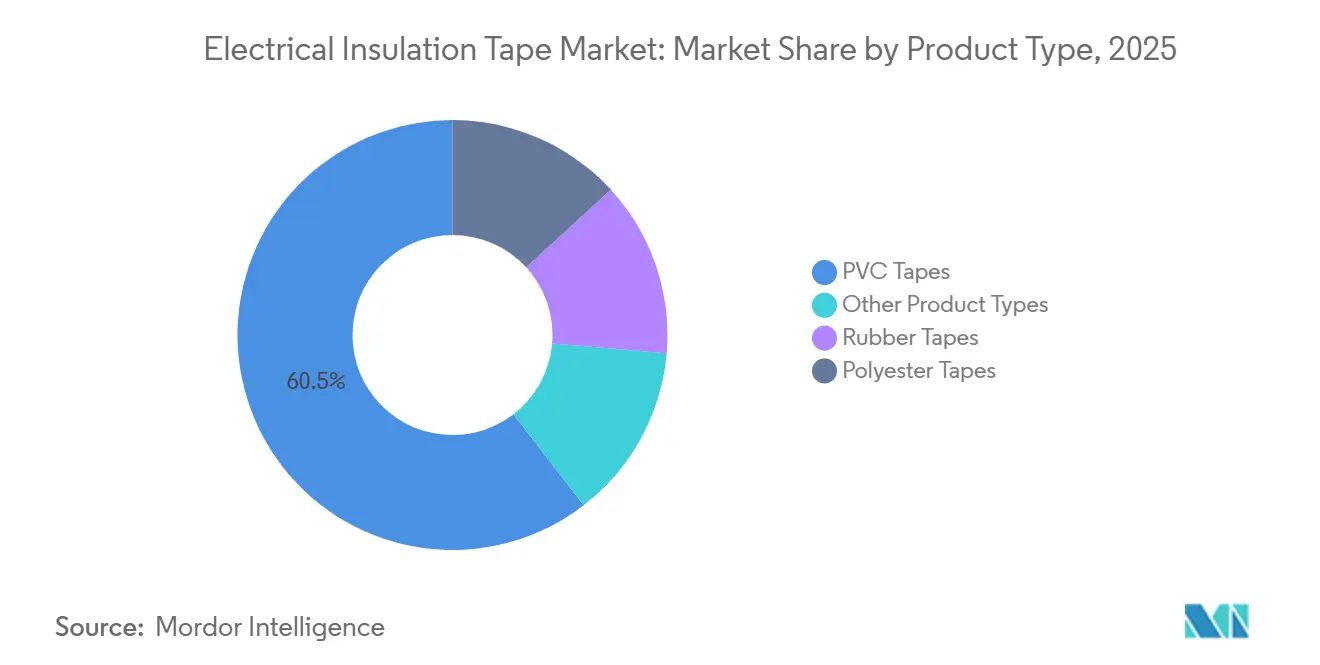
PVC tapes accounted for 60.45% of the electrical insulation tape market share in 2025, reflecting their established position in residential wiring, low-voltage industrial work, field repair, building maintenance, and everyday electrical tasks that rely on accessible, cost-effective tape products. Their cost-performance balance remains relevant where flame-retardant PVC tape meeting UL 510 or CSA-C22.2 requirements is specified. PVC also benefits from long-standing availability from distributors, particularly in building wire applications across many markets. Its large share reflects established distribution and familiar specifications rather than an absence of development in other materials. Construction activity and routine grid maintenance continue to support the segment's underlying demand. PVC suppliers must respond to reformulation requirements as buyers seek products with higher temperature performance and lower halogen content. The electrical insulation tape market size for PVC is supported by widespread replacement demand and a broad installed base, making it an important segment even as customers adopt more specialized materials for demanding applications. The segment remains exposed to raw material costs, as PVC resin is a major input.
Rubber tapes are forecast to grow at a 5.75% CAGR through 2031, outpacing the overall electrical insulation tape market growth rate, as self-amalgamating materials address high-voltage applications requiring reliable coverage of uneven surfaces, cable joints, and demanding terminations. Self-amalgamating rubber products can form void-free insulation at cable splices and terminations above 15 kV, addressing conditions that standard PVC tapes cannot effectively address. Grid operators increasingly specify tape systems that combine primary insulation and mechanical protection, which supports rubber tape adoption. UL 510 and International Electrotechnical Commission (IEC) 60454-3-1 requirements further support use in high-voltage transmission and distribution work. Polyester tape is used for motor winding, transformer insulation, and PCB masking, where its dimensional stability and chemical resistance support a premium position. Products in the other category, including glass cloth, polyimide, and specialty laminates, serve aerospace and semiconductor applications where tape is a certified process material. 3M has invested in polyester and glass-cloth tape lines with recognition under UL 510A, UL 840, and IEC 60112. These product differences shift value toward materials that meet higher specification requirements.



By End-User Industry: Automotive Electrification Reshapes Demand Hierarchy
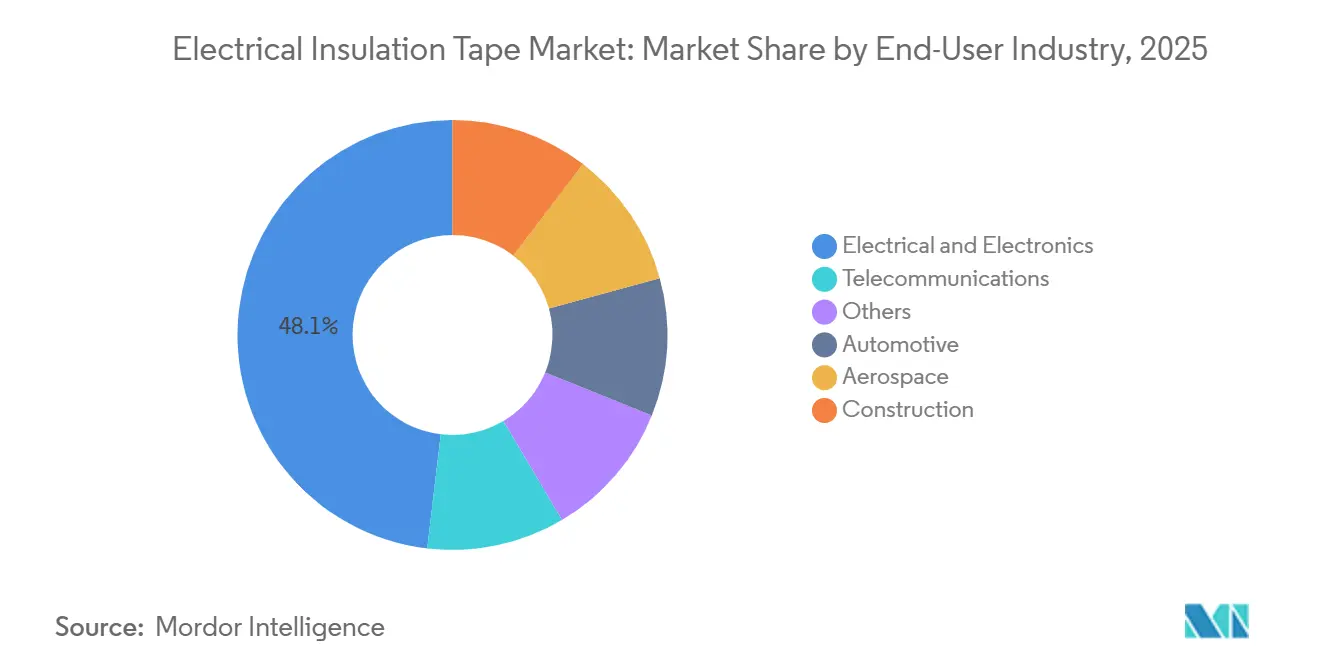
Electrical and electronics held 48.13% of the electrical insulation tape market share in 2025, supported by consumer-device assembly, PCB production, motor winding, telecommunications equipment, battery-related components, cable assemblies, and other production uses requiring reliable insulation in compact designs. The segment uses tape across several production steps and benefits from the scale of electronic manufacturing. Component miniaturization keeps demand focused on materials that provide insulation without adding excessive thickness. Motor-winding and PCB applications also require stable performance under heat and chemical exposure. The segment remains the largest end-user group due to its many recurring applications across devices and infrastructure. Growth in connected devices adds applications in compact assemblies and cable systems. The electrical insulation tape market size for this end-user group also benefits from repair and replacement activity, providing stability even as the automotive segment grows faster. Suppliers serving this group require product ranges that address both standard assembly work and precision applications.
Automotive is projected to grow at a 6.06% CAGR through 2031, the fastest rate among end-user industries in the electrical insulation tape market, as vehicle electrification increases the quantity of protected wiring and raises performance requirements for materials near high-voltage systems. Electric-vehicle platforms use more tape per vehicle and place greater demands on thermal stability and dielectric strength. Aerospace remains smaller in scale but requires performance across temperatures from -55°C to +200°C, material traceability, and FAA or EASA documentation. Flame, Smoke, and Toxicity (FST) requirements, military specifications, and AS9100 quality systems limit this segment largely to established manufacturers. Construction demand covers residential and commercial wiring, HVAC systems, and power-distribution panels. Telecommunications demand is linked to 5G base stations and data centers, where some operators specify tape rated for 130°C continuous operation near power-distribution units. Utilities, healthcare facilities, and general industrial maintenance form the other end-user group and provide repair-driven demand through economic cycles. These applications collectively give the electrical insulation tape industry a broad base beyond automotive production.
Geography Analysis
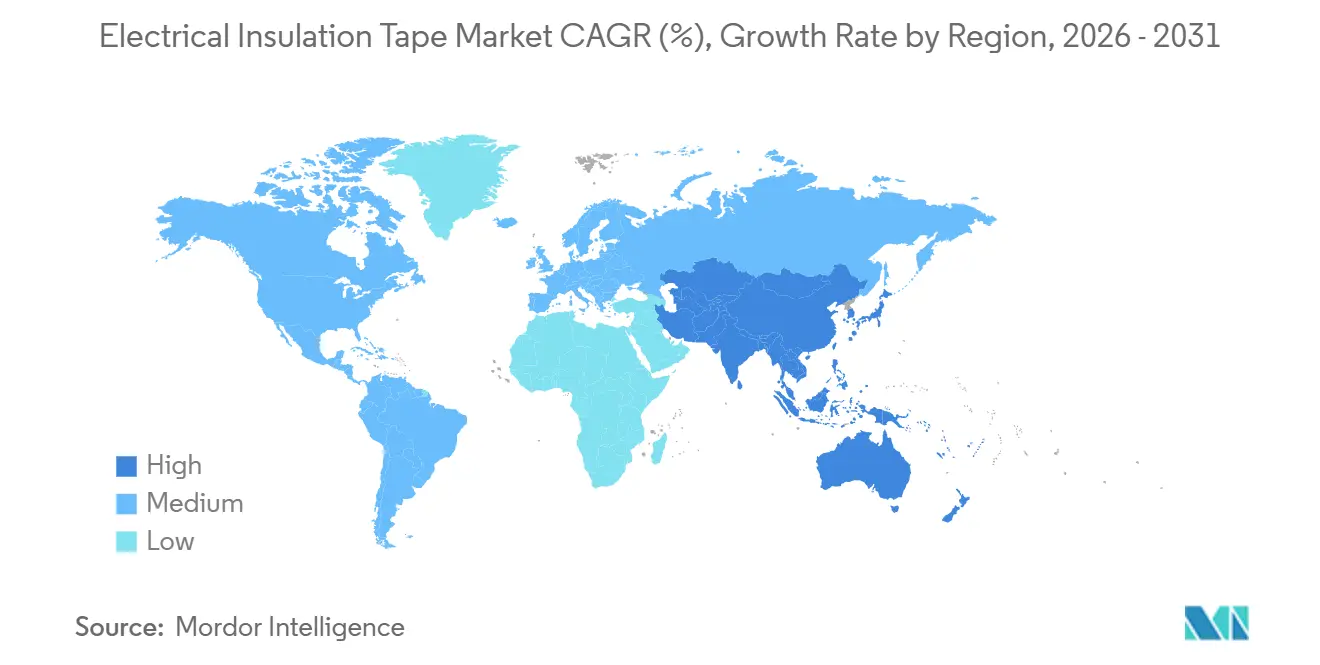
Asia-Pacific held 57.84% of the electrical insulation tape market share in 2025 and is projected to expand at a 5.83% CAGR through 2031. The combined scale of electronics production, appliance manufacturing, automotive supply chains, grid construction, and electrical-product distribution supports this growth. Electronics assembly, automotive wire-harness production, and appliance manufacturing are concentrated in the region, supporting localized demand and short supply chains. China leads the region in production and consumption due to its electronics manufacturing base and grid investment program. India's demand for electrical insulation tape is supported by infrastructure development, Smart Cities initiatives, domestic electric vehicle (EV) production, and tighter Bureau of Indian Standards (BIS) certification requirements. The Ministry of Housing and Urban Affairs stated that 94% of 8,067 Smart Cities projects had been completed by June 2025[2]Ministry of Housing and Urban Affairs, “Smart Cities,” Government of India, mohua.gov.in.. Japan and South Korea add demand for higher-specification products through automotive and electronics supply chains.
North American demand in the electrical insulation tape market is driven by an aging grid, data-center electricity demand, and EV infrastructure investment, with transmission projects, power-distribution upgrades, automotive production, and regulated electrical work shaping the region's application mix. The California Independent System Operator (CAISO) approved a 2025 to 2026 transmission plan covering USD 6.7 billion across 38 projects in May 2026. FirstEnergy's USD 950 million Ohio-Pennsylvania upgrade and American Electric Power's capital plan add to the transmission project pipeline. Mexico supports demand through its role in North American automotive supply chains and EV wire-harness production. The regulatory environment in the United States and Canada favors established suppliers, as projects often require Underwriters Laboratories (UL)-listed products and applicable Canadian Standards Association (CSA) compliance. High labor costs also increase interest in pre-insulated connectors for selected high-reliability applications. These factors create demand for certified products while increasing substitution pressure on standard tape formats.
Europe combines automotive electrification with renewable-energy integration, creating a distinct demand profile for the electrical insulation tape market. Compliance requirements and industrial supply chains shape the materials selected for transmission equipment, vehicle systems, electronics, and building-related electrical applications. The European Commission's Grid Action Plan supports permitting and financing for transmission upgrades across major European countries. REACH and IEC 60454-3-1 requirements are encouraging reformulation away from halogen-containing PVC where alternatives are available. South America, the Middle East, and Africa are earlier-stage demand regions where grid expansion and urbanization are more important than broad specification upgrades. Brazil anchors South American activity, while Saudi Arabia and South Africa contribute project-led demand through infrastructure and energy-capacity development.

Competitive Landscape
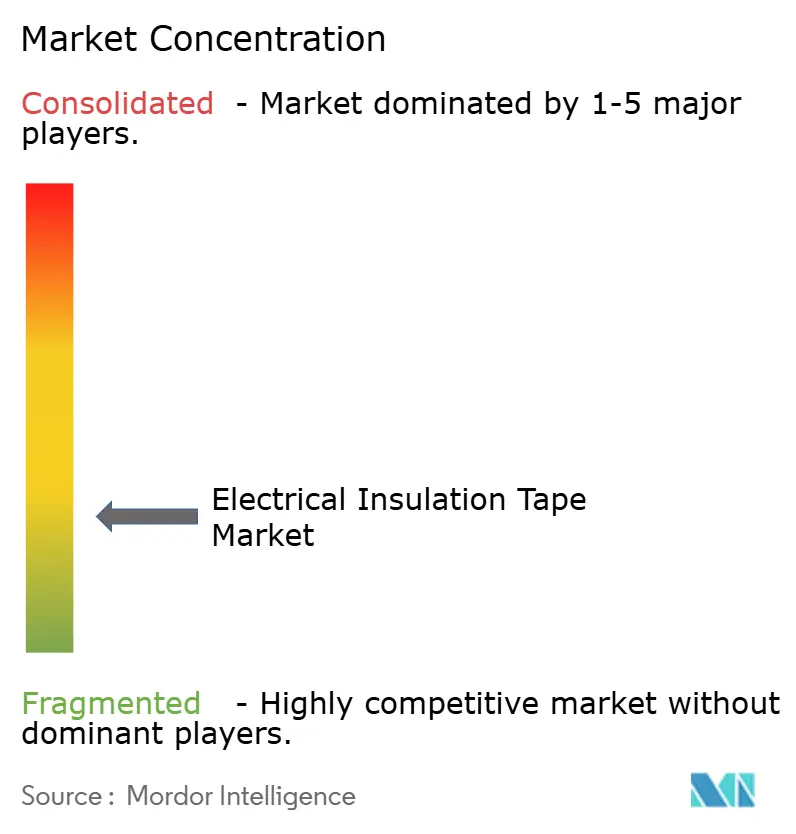
The electrical insulation tape market is fragmented. 3M, Nitto Denko, tesa SE, and Avery Dennison are in the premium specification tier, where customers value qualified products, documented performance, adhesive expertise, and consistent supply across global manufacturing programs. These companies benefit from agency approvals, adhesive technology, and long OEM qualification relationships. Coroplast, IPG, Shurtape Technologies, and Advance Tapes International compete across a wider range of product specifications and regional markets. Certified grades create an advantage because buyers must validate performance before changing suppliers. Competition, therefore, differs between standard and premium categories. Regional manufacturers compete more actively on price in mid-grade products, while premium suppliers compete through product performance, documentation, and manufacturing consistency. This structure supports ongoing rivalry without any single supplier controlling the electrical insulation tape market.
Coroplast Group opened a new production site in Schönebeck, Germany, in March 2026, following a first-phase investment of EUR 25 million (USD 28 million). The facility targets high-performance acrylic adhesive tapes for electromobility, adding production capacity in a category where vehicle manufacturers require strong bonding, insulation, and repeatable assembly performance. Tesa SE held a topping-out ceremony in May 2026 for a 4,500-square-meter expansion in Offenburg, designed to meet demand for automotive and electronics tape, with production planned for 2027. These investments indicate that established suppliers are building capacity around automotive, electronics, and high-performance applications. Tesa also presented automation-ready electric vehicle (EV) battery adhesive solutions in Japan in June 2026. Pre-cut die-cuts, linerless rolls, and packaging suited to robotic applications are relevant to high-output assembly operations. Such formats can reduce application time and improve consistency in automotive and electronics production. Capacity additions are therefore linked to both output growth and changing production methods.
Chinese domestic tape manufacturers are pursuing higher-value OEM positions through investments in certification and compliance with GB standards for flame-retardant tape. Formal product approval is important for suppliers seeking to participate in automotive programs rather than competing only in standard-grade categories. This trend could increase competition in China's EV manufacturing corridors, where multinational suppliers have historically held many qualified positions. Patent portfolios in adhesive chemistry and substrate construction remain important for product differentiation. RoHS, REACH, and evolving International Electrotechnical Commission (IEC) requirements function as practical market-access filters for suppliers. High-temperature, halogen-free, and self-amalgamating solutions for 800V EV systems and renewable energy equipment remain areas where product capability is a differentiating factor.
Electrical Insulation Tape Industry Leaders
3M
Nitto Denko Corporation
tesa SE
Avery Dennison Corporation
Shurtape Technologies, LLC
- *Disclaimer: Major Players sorted in no particular order

Recent Industry Developments
- August 2026: 3M was granted US Patent 12698422 for an electrically conductive masking tape for electronic articles. The tape features an electrically conductive backing and pressure-sensitive adhesive architecture designed for vapor-deposition processes. The patent strengthens 3M's intellectual property position in the advanced electronics assembly segment.
- March 2026: Coroplast Group opened a 3,500-square-meter facility in Schönebeck for high-performance acrylic adhesive tapes, with a first-phase investment of EUR 25 million (USD 28 million) and capacity for future expansion.


Global Electrical Insulation Tape Market Report Scope
Electrical insulation tape is a pressure-sensitive adhesive material made of flexible plastic, most commonly PVC, used to insulate wires and other electrically conductive materials.
The electrical insulation tape is segmented by product type, end-user industry, and geography. By product type, the market is segmented into PVC tapes, rubber tapes, polyester tapes, and other product types. By end-user industry, the market is segmented into electrical and electronics, automotive, aerospace, construction, telecommunications, and others. The report also covers market size and forecasts for electrical insulation tape across 15 countries in major regions. The market sizes and forecasts are provided in terms of value (USD).
| PVC Tapes |
| Rubber Tapes |
| Polyester Tapes |
| Other Product Types |
| Electrical and Electronics |
| Automotive |
| Aerospace |
| Construction |
| Telecommunications |
| Others |
| Asia-Pacific | China |
| India | |
| Japan | |
| South Korea | |
| ASEAN Countries | |
| Rest of Asia-Pacific | |
| North America | United States |
| Canada | |
| Mexico | |
| Europe | Germany |
| United Kingdom | |
| France | |
| Italy | |
| NORDIC Countries | |
| Rest of Europe | |
| South America | Brazil |
| Argentina | |
| Rest of South America | |
| Middle East and Africa | Saudi Arabia |
| South Africa | |
| Rest of Middle East and Africa |
| By Product Type | PVC Tapes | |
| Rubber Tapes | ||
| Polyester Tapes | ||
| Other Product Types | ||
| By End-User Industry | Electrical and Electronics | |
| Automotive | ||
| Aerospace | ||
| Construction | ||
| Telecommunications | ||
| Others | ||
| By Geography | Asia-Pacific | China |
| India | ||
| Japan | ||
| South Korea | ||
| ASEAN Countries | ||
| Rest of Asia-Pacific | ||
| North America | United States | |
| Canada | ||
| Mexico | ||
| Europe | Germany | |
| United Kingdom | ||
| France | ||
| Italy | ||
| NORDIC Countries | ||
| Rest of Europe | ||
| South America | Brazil | |
| Argentina | ||
| Rest of South America | ||
| Middle East and Africa | Saudi Arabia | |
| South Africa | ||
| Rest of Middle East and Africa | ||


Key Questions Answered in the Report
What is current market size of Electrical Insulation Tape Market?
The electrical insulation tape market size was valued at USD 15.43 billion in 2025 and is estimated to grow from USD 16.15 billion in 2026 to USD 20.72 billion by 2031, at a CAGR of 5.11% during the forecast period (2026-2031)
Which product category leads electrical insulation tape sales?
Polyvinyl chloride (PVC) tapes led with 60.45% share in 2025 because of their broad use in standard-voltage wiring, repair, and construction applications. Their established distributor availability and cost-performance balance keep them relevant across residential, commercial, industrial, and maintenance work.
Which end-user application is growing fastest?
Automotive is projected to grow at a 6.06% CAGR through 2031 as electric vehicles use more tape and require higher-performance insulation. Battery packs, high-voltage wiring, and related electrical systems increase tape use while also raising dielectric and temperature requirements.
Why are high-voltage vehicle systems important for tape suppliers?
New 800 V systems require stronger dielectric and thermal performance, and battery-electric vehicles use 180 to 250 meters of tape per vehicle. This is higher than the 80 to 120 meters used in conventional internal-combustion vehicles, which expands tape intensity per vehicle.
Page last updated on:





