
Electric Tractor Market Size and Share
Market Overview
| Study Period | 2022 - 2032 |
|---|---|
| Market Size (2027) | USD 0.85 Billion |
| Market Size (2032) | USD 2.02 Billion |
| Growth Rate (2027 - 2032) | 18.90 % |
| Fastest Growing Market | Asia-Pacific |
| Largest Market | Asia-Pacific |
| Market Concentration | Medium |
Major Players *Disclaimer: Major Players sorted in no particular order Image © Mordor Intelligence. Reuse requires attribution under CC BY 4.0. | |
Electric Tractor Market Analysis by Mordor Intelligence
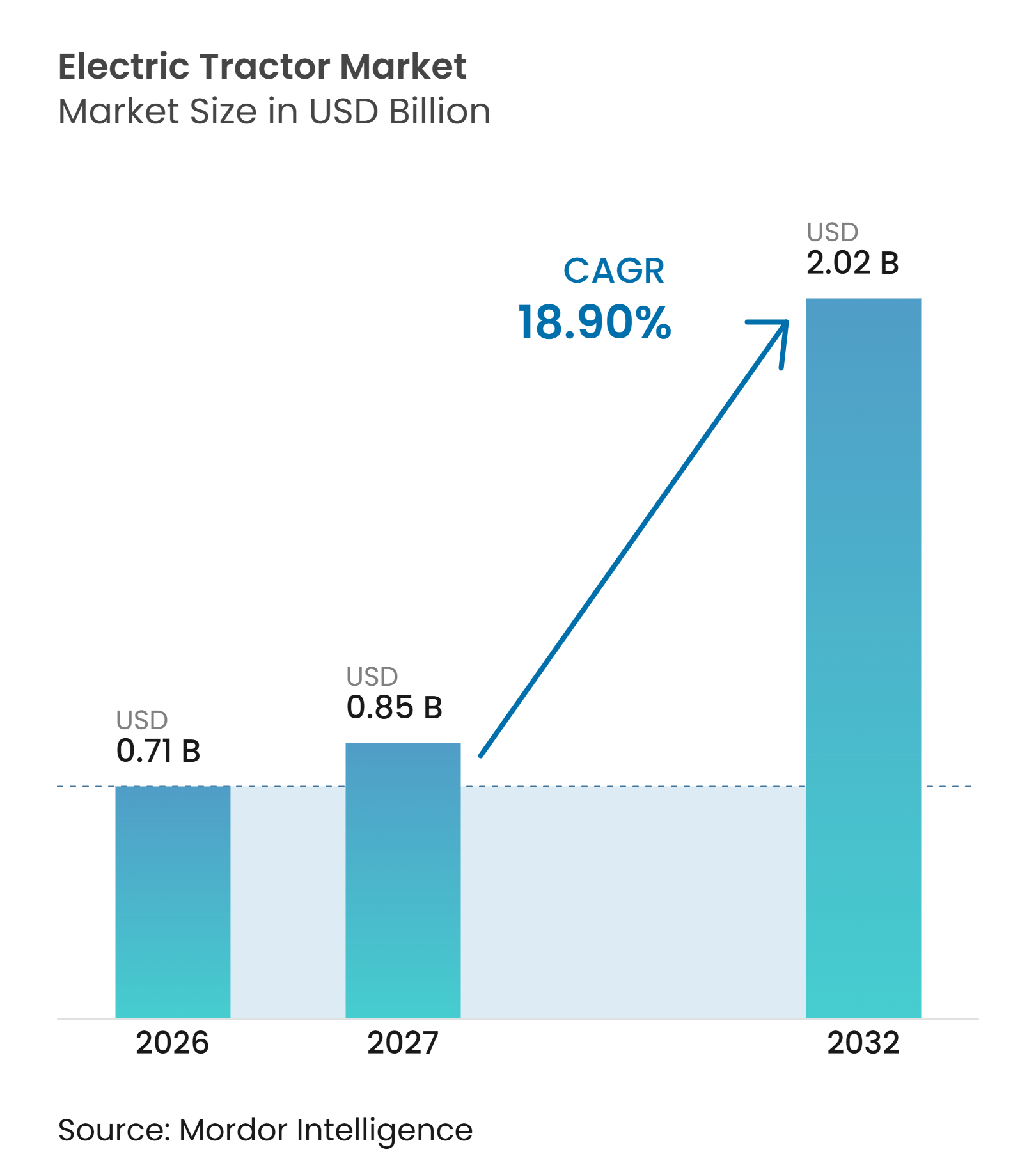
The electric tractor market size was valued at USD 716.20 million in 2026 and is projected to grow from USD 851.56 million in 2027 to USD 2,023.60 million by 2032, registering a CAGR of 18.90% during the forecast period 2027–2032. Market growth is supported by declining battery costs, stricter emissions requirements for off-road equipment, and increasing integration of renewable energy into farm operations. Electric tractors are gaining traction in compact farming, orchards, vineyards, livestock facilities, and other applications where predictable operating hours and shorter travel distances simplify charging and battery management. The expansion of on-farm solar power and charging infrastructure can further improve operating economics by reducing dependence on grid electricity and diesel fuel. However, adoption in large-scale field operations remains constrained by high initial purchase costs, battery capacity limitations, extended working hours, and the need for reliable charging infrastructure. Manufacturers are addressing these challenges through improvements in battery performance, charging solutions, and electric powertrain efficiency. Consequently, near-term growth is expected to be strongest in applications with lower power requirements and predictable duty cycles, while broader adoption in heavy-duty agricultural operations will depend on improvements in battery technology, affordability, and charging access.
Key Report Takeaways
- By propulsion type, battery-electric tractors were the largest segment and held 61.4% of the electric tractor market share in 2026, while hybrid-electric tractors are the fastest-growing segment and are forecast to expand at a 16.8% CAGR between 2027 and 2032.
- By power output, below 30 horsepower (HP) was the largest segment and held 58.0% of the electric tractor market size in 2026, while above 100 HP is the fastest-growing segment and is forecast to expand at an 18.4% CAGR between 2027 and 2032.
- By tractor type, compact tractors were the largest segment and held 34.0% of the market share in 2026, while utility tractors are the fastest-growing segment and are forecast to expand at a 16.5% CAGR between 2027 and 2032.
- By application, field crop cultivation and agriculture was the largest segment and held 65.7% of the market share in 2026, while orchard and vineyard operations are the fastest-growing segment and are forecast to expand at an 18.0% CAGR between 2027 and 2032.
- By geography, Asia-Pacific was the largest segment and held 39.5% of the market share in 2026, while it is also the fastest-growing segment and is forecast to expand at a 23.3% CAGR between 2027 and 2032.
Note: Market numbers in this report are based on Mordor Intelligence's proprietary estimation framework, which combines nine months of actuals with Q4 projections for base year 2026.
Market Trends and Insights
Drivers Impact Analysis of Electric Tractor Market*
| Driver | (~) % Impact on CAGR Forecast | Geographic Relevance | Impact Timeline |
|---|---|---|---|
| Lower Total Cost of Ownership in Suitable Duty Cycles | +4.2% | Global, strongest in North America, Europe, and South Asia | Medium term (2-4 years) |
| Government Incentives and Emissions Policies | +3.8% | North America, Europe, China, and India | Short term (≤ 2 years) |
| Battery Cost Declines and Powertrain Efficiency | +4.5% | Global, with a cost benefit in China and high-volume markets | Medium term (2-4 years) |
| Precision Agriculture and Autonomous Operations | +2.5% | North America, Europe, Japan, and South Korea | Medium term (2-4 years) |
| On-Farm Solar and Rural Energy-System Integration | +1.8% | India, Australia, Germany, South Africa, and parts of Asia-Pacific | Long term (≥ 4 years) |
| Low-Noise Electrification for Livestock, Horticulture, and Municipal Work | +1.2% | North America, France, Italy, Japan, and China | Short term (≤ 2 years) |
| Source: Mordor Intelligence | |||
Lower Total Cost of Ownership in Suitable Duty Cycles
Lower operating expenses can improve the economic case for electric tractors, particularly in applications with predictable workloads and access to convenient charging. In June 2025, Maharashtra registered a 45 HP AutoNxt electric tractor for commercial use, with the state transport minister reporting a plowing cost of INR 300 per acre (USD 3.53), compared with INR 1,200–1,500 per acre (USD 14.12–17.65) for a diesel tractor. These figures imply potential operating-cost savings of 75–80%. The economic case is also supported by a 2025 Natural Resources Defense Council (NRDC) assessment, which estimated the total cost of ownership of a 45 HP electric tractor at INR 310 per operating hour (USD 3.65), compared with INR 527 per hour (USD 6.20) for a comparable diesel tractor over a 10-year holding period[1]. The assessment assumes 1,000 operating hours annually for both tractors and one battery replacement after five years, demonstrating how lower energy and operating expenses can offset the higher initial cost of electrification under the modeled conditions. Electric drivetrains can also reduce routine engine-related maintenance, although battery replacement, charging infrastructure, purchase price, and service availability remain important cost considerations. Consequently, the electric tractor market is likely to gain traction first in suitable duty cycles, including orchard operations, greenhouse work, livestock facilities, and other applications with repeatable workloads and predictable charging schedules, while high-utilization operations with limited charging windows may require larger batteries or additional charging arrangements.
Government Incentives and Emissions Policies
Government incentives, concessional financing, and technical standards are supporting the adoption of electric tractors by reducing upfront investment barriers and establishing clearer requirements for electrified agricultural machinery. In September 2025, France expanded its E-TRANS program to include agricultural machinery, allocating EUR 1 million (USD 1.1 million) to support the purchase, lease, or electric retrofitting of at least 15 electric agricultural machines. Germany announced a complementary financing program in November 2025 through Landwirtschaftliche Rentenbank and the Federal Ministry of Agriculture, offering long-term, low-interest loans for battery-electric agricultural machinery and associated charging infrastructure, with implementation planned for 2026. In China, the Ministry of Industry and Information Technology issued the JB/T 15126-2025 electric tractor standard on May 9, 2025, with implementation beginning on November 1, 2025. The standard establishes technical requirements and testing procedures for fully electric wheeled and tracked tractors, supporting more consistent product evaluation. China is also providing purchase subsidies for qualifying high-horsepower equipment. Jiangsu's 2025 program specified a CNY 175,000 (USD 24,300) subsidy for eligible four-wheel-drive hybrid-electric tractors rated at 200 HP and above. These measures can improve affordability, support product standardization, and encourage investment in charging infrastructure. Consequently, the electric tractor market stands to benefit most where financial assistance, suitable charging facilities, and clear technical requirements develop together.
Battery Cost Declines and Powertrain Efficiency
Declining battery costs and the growing availability of lower-cost lithium iron phosphate (LFP) technology are improving the cost outlook for electric tractors. In December 2024, BloombergNEF reported that average global lithium-ion battery pack prices fell 20% year over year to USD 115 per kilowatt-hour, supported by manufacturing overcapacity, lower material costs, economies of scale, and the adoption of LFP chemistry. The International Energy Agency (IEA) reported that lithium-iron phosphate (LFP) batteries were nearly 30% cheaper per kilowatt-hour than lithium nickel manganese cobalt oxide (NMC) batteries in 2024[2]. LFP technology also offers thermal stability and the ability to withstand frequent charging, making it suitable for agricultural applications with regular operating schedules and access to on-farm charging. Lower battery costs can reduce the upfront cost of electric powertrains, which represent a major component of electric tractor prices. Improvements in battery management and electric motor efficiency can further support energy utilization and operating performance. In addition, retired tractor batteries may have potential for second-life use in stationary farm energy storage, subject to their remaining capacity, safety, and economic viability. These developments can strengthen the electric tractor market by improving vehicle affordability and creating opportunities to recover additional value from battery assets over their lifecycle.
Precision Agriculture and Autonomous Operations
Advances in precision agriculture and autonomous machinery are creating additional opportunities for electric tractor adoption, particularly in labor-intensive specialty-crop production. In June 2025, Kubota Corporation and Agtonomy announced plans to commercialize autonomous spraying and mowing operations using Kubota's M5N diesel tractors, integrating autonomy software with Kubota's crop-intelligence capabilities and dealer support. The collaboration targets growers of grapes, orchard crops, nuts, citrus, and other specialty crops, where labor shortages and rising workforce costs are encouraging automation. Separately, a peer-reviewed study published in Actuators in September 2025 examined advances in autonomous driving technologies for agricultural machinery, reflecting progress in sensing, navigation, and automated control. Electric powertrains can complement these developments through precise motor control and responsive torque delivery, although the benefits depend on the tractor's design and application. For specialty-crop operators, the combined potential to improve operational consistency, reduce reliance on manual driving, and optimize fieldwork can strengthen the case for electrified machinery. As manufacturers increasingly integrate automation, precision controls, and alternative powertrains, these technologies may create additional adoption opportunities for the electric tractor market.
Restraints Impact Analysis of Electric Tractor Market*
| Restraint | (~) % Impact on CAGR Forecast | Geographic Relevance | Impact Timeline |
|---|---|---|---|
| High Upfront Acquisition Cost | -3.5% | Global, most acute in South Asia, Brazil, and Sub-Saharan Africa | Short term (≤ 2 years) |
| Limited Rural Charging and Grid Capacity | -2.8% | India, rural China, Brazil, and remote Australia | Medium term (2-4 years) |
| Battery Endurance and Peak-Season Downtime | -2.0% | North America, India, Brazil, and Australia | Medium term (2-4 years) |
| Weak Resale, Financing, and After-Sales Ecosystems | -1.2% | India, Brazil, South Africa, and Mexico | Long term (≥ 4 years) |
| Source: Mordor Intelligence | |||
High Upfront Acquisition Cost
High initial purchase prices remain a major restraint on electric tractor adoption, particularly among farmers operating with limited capital and restricted access to formal financing. A 2025 analysis by the International Council on Clean Transportation (ICCT) reported that electric tractors in India cost substantially more than comparable diesel models, with many priced above the INR 800,000 (USD 9,400) eligibility ceiling for Andhra Pradesh's 5% purchase subsidy[3]. This price gap limits the reach of incentives and increases the amount buyers must finance upfront. Although electric tractors can deliver lower operating costs over their useful life, long-term savings may not offset the initial investment for farmers with low annual tractor utilization or limited borrowing capacity. Battery leasing, equipment-as-a-service models, and concessional loans from development banks could help spread costs over time, but their effectiveness depends on financing availability and suitable repayment structures. Until manufacturers reduce production costs and lenders develop accessible financing options, high acquisition prices are likely to constrain electric tractor penetration in price-sensitive agricultural markets.
Limited Rural Charging and Grid Capacity
Inadequate rural charging infrastructure and unreliable electricity supply remain significant barriers to electric tractor adoption, particularly in regions where agricultural operations require dependable access to power during peak farming periods. Limited charging-point availability, inconsistent connector standards, land-use approval requirements, and insufficient rural grid capacity can make it difficult and costly to establish reliable charging and battery-swapping networks. In India, Mint reported that only 26 electric tractors had been sold during the first seven months of FY2026, with inadequate rural charging infrastructure among the factors limiting adoption. Establishing dedicated charging facilities can require additional investment in electrical connections, grid upgrades, and compatible charging equipment, making deployment more difficult in remote or dispersed farming areas. Unreliable power supply can also disrupt charging schedules and reduce operational flexibility during time-sensitive activities such as planting and harvesting. Integrating tractor charging into rural microgrids, solar-powered farm systems, and agrivoltaic projects could help address these constraints, but implementation requires suitable infrastructure, reliable energy storage, and compatible charging standards. Until charging access and electricity reliability improve, infrastructure limitations are likely to slow electric tractor adoption, especially in rural markets with weak grid coverage.
*Our forecasts treat driver/restraint impacts as directional, not additive. The impact forecasts reflect baseline growth, mix effects, and variable interactions.
Electric Tractor Market Segment Analysis
By Propulsion Type:
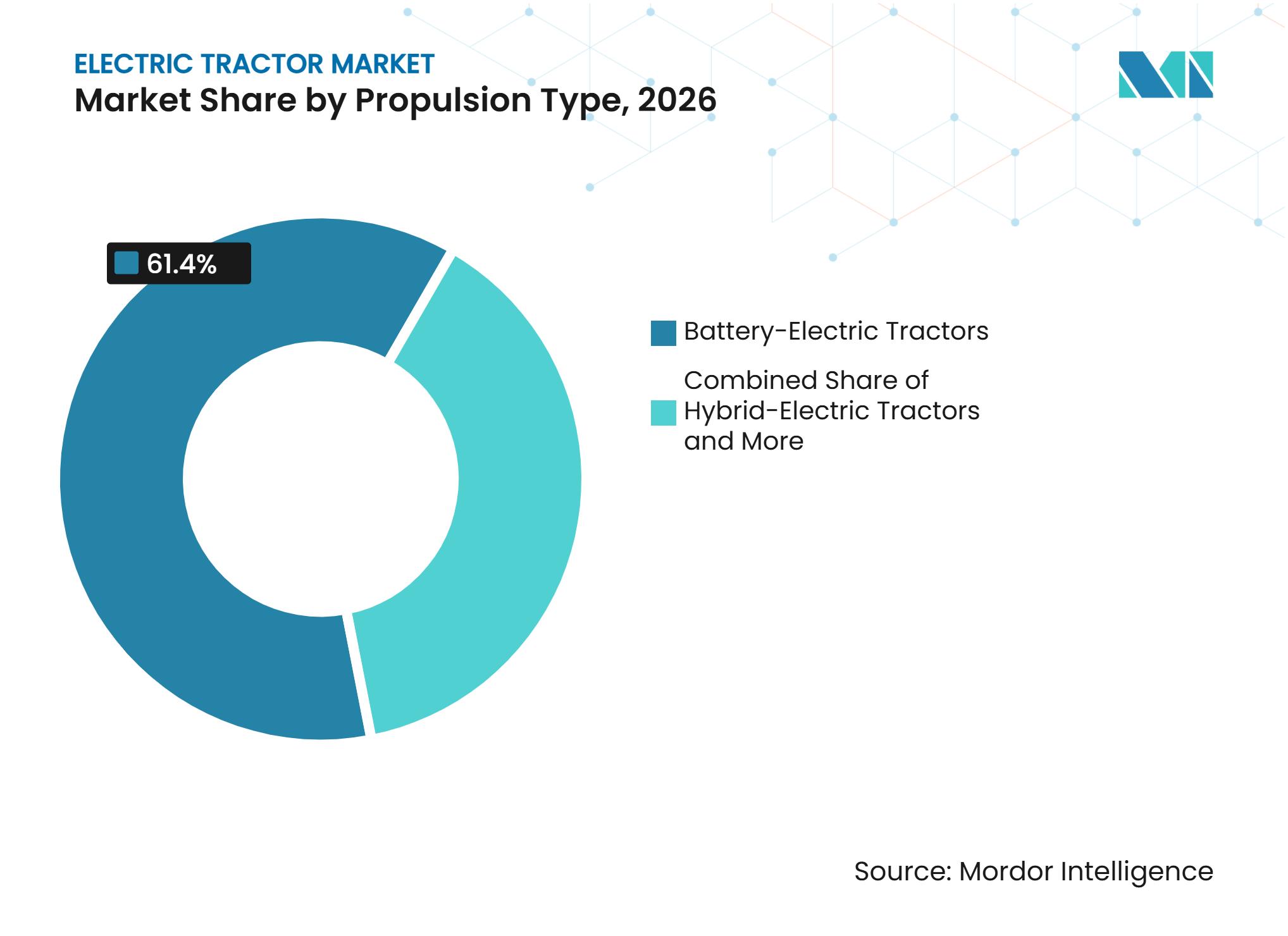
Battery-Electric Tractors Lead, Hybrid-Electric Tractors ExpandBattery-electric tractors held 61.4% of the electric tractor market share in 2026, making them the leading propulsion category. Their position reflects commercial readiness in compact farming, orchards, vineyards, and other specialty-crop applications where predictable workloads and access to on-farm charging support daily operation. Electric powertrains can reduce fuel and routine maintenance requirements, while battery improvements and expanding model availability are strengthening their suitability for selected agricultural tasks. These advantages support adoption among growers seeking lower operating costs and quieter machinery for regular fieldwork.
Hybrid-electric tractors are forecast to grow at a CAGR of 16.8% from 2027 to 2032, making them the fastest-growing propulsion category. Their growth prospects are supported by demand for machinery that combines electric powertrain efficiency with the extended operating range of an onboard combustion engine. This configuration can suit demanding applications such as deep tillage, large-field plowing, and baling, where battery-only operation may require longer charging breaks. Meanwhile, advances in electric transmissions and power management are helping manufacturers improve fuel efficiency and operating performance. Fuel-cell tractors remain at an early development stage, with manufacturers such as Kubota exploring hydrogen-powered concepts for future agricultural applications.



By Power Output:
Below 50 HP Leads, Above 100 HP AcceleratesBelow 30 horsepower (HP) tractors accounted for 58.0% of the electric tractor market share in 2026, making them the leading power-output segment. Their dominance reflects suitability for orchards, vineyards, greenhouses, livestock facilities, and municipal maintenance, where compact dimensions and moderate power requirements align with current battery capabilities. These applications often involve shorter operating distances and predictable work schedules, allowing tractors to return to a designated charging point between shifts. Growing model availability and improvements in battery performance further support adoption among specialty-crop growers and operators seeking to reduce fuel and routine maintenance costs.
Tractors above 100 HP are forecast to grow at a CAGR of 18.4% from 2027 to 2032, making them the fastest-growing power-output segment. Growth is supported by efforts to electrify more demanding agricultural operations, including intensive livestock work, large-scale field activities, and feed mixing. Hybrid powertrains can help meet higher power and longer runtime requirements while reducing fuel consumption, while advances in battery capacity are extending the potential of battery-electric models. Government support for high-powered intelligent tractors in China is also encouraging development in this category. As manufacturers improve powertrain efficiency and expand charging and financing options, higher-powered electric and hybrid tractors are expected to gain traction in applications where operating-cost savings can justify their greater upfront investment.
By Tractor Type:
Compact Tractors Anchor Revenue, Utility Tractors Grow FasterCompact tractors accounted for 34.0% of the electric tractor market share in 2026, making them the leading tractor-type segment. Their position reflects suitability for orchards, vineyards, greenhouses, and other applications with relatively predictable workloads and shorter operating distances. These operating conditions allow farmers to plan charging around daily schedules, while lower power requirements can make battery-electric propulsion more practical than in demanding broadacre operations. Manufacturers such as SABI AGRI SAS, Rigitrac, AutoNxt, and TI Clean Mobility are targeting these applications with compact electric models. These advantages support adoption among specialty-crop growers and operators seeking quieter machinery, lower local emissions, and reduced routine maintenance requirements.
Utility tractors are forecast to grow at a CAGR of 16.5% from 2027 to 2032, making them the fastest-growing tractor-type segment. Growth prospects are supported by advances in battery capacity, charging speed, and powertrain efficiency that could extend electrification into more demanding farm operations. New Holland's T4 Electric Power illustrates this development through its utility-tractor configuration, fast-charging capability, and autonomous features designed to support farm productivity. As manufacturers improve operating range and expand charging solutions, electric utility tractors could become increasingly viable for livestock operations, material handling, and mixed farming. Specialty and orchard tractors are also expected to retain demand where low noise and zero tailpipe emissions offer advantages for work near workers, livestock, and populated areas.
By Application:
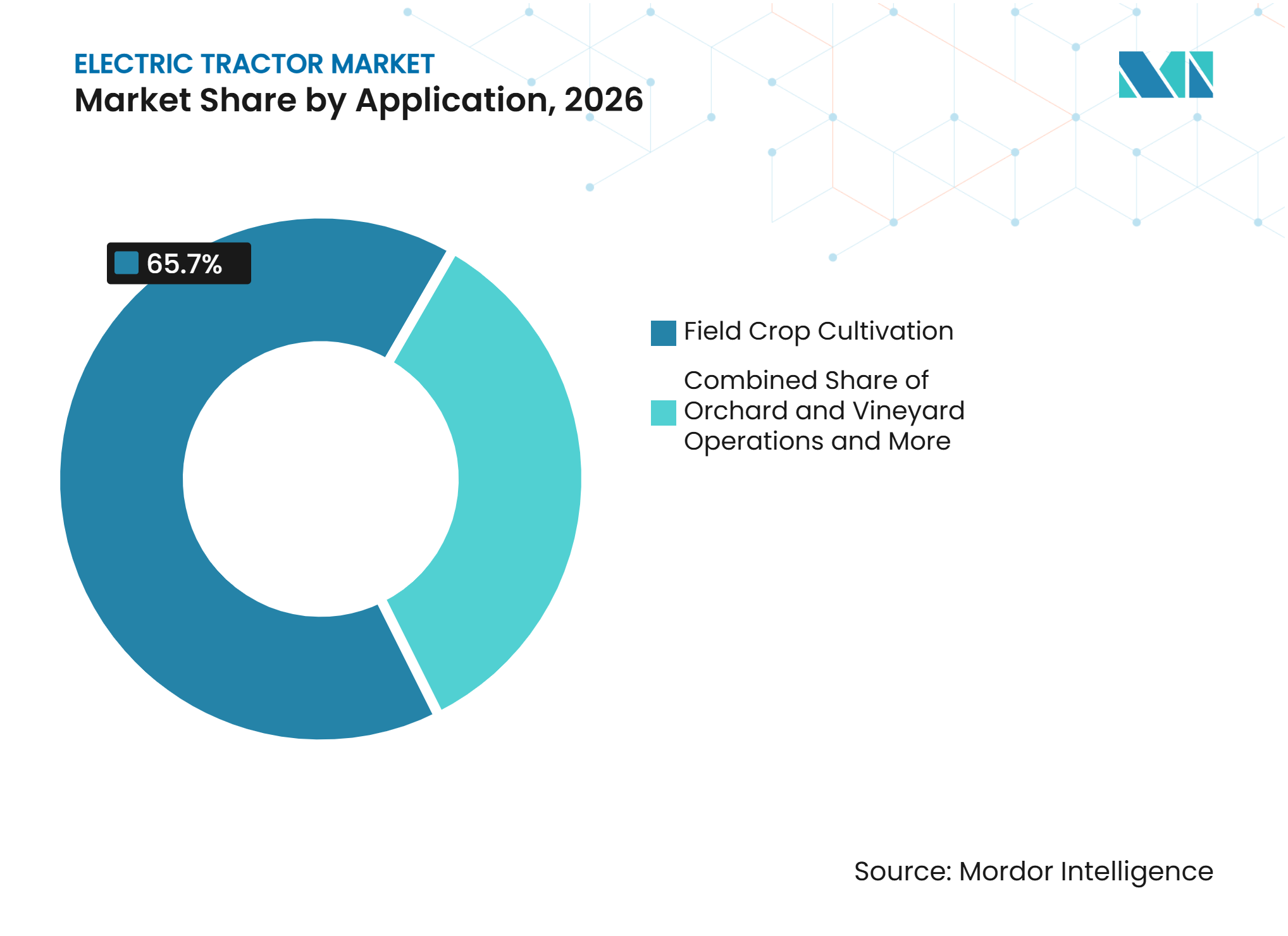
Field Crop Cultivation Anchors Value, Orchard and Vineyard Operations Lead GrowthField crop cultivation and agriculture accounted for 65.7% of the electric tractor market share in 2026, making it the leading application segment. Its dominance reflects the broad range of agricultural activities, including small-plot preparation, paddy cultivation, sugarcane transport, horticultural fieldwork, and the movement of agricultural inputs. Adoption is currently more practical for lower-power tasks with predictable workloads and access to reliable charging. Integrating electric machinery with on-farm renewable energy systems can further improve the economic and environmental case for electrification. A 2025 study published in the Journal of the Chinese Society of Agricultural Machinery reported that combining electric agricultural machinery with solar and biomass energy systems reduced farm-system costs by 24% and carbon emissions by 46%. These benefits support interest in electrification among farms seeking to manage energy expenditure and reduce emissions.
Orchard and vineyard operations are forecast to grow at a CAGR of 18.0% from 2027 to 2032, making them the fastest-growing application segment. Growth is supported by demand for compact machinery that can maneuver between crop rows while generating less noise and no tailpipe emissions during operation. Higher-value specialty crops and recurring, relatively predictable workloads can also make it easier to plan charging around daily operations. In May 2025, SABI AGRI SAS introduced its Volcam compact electric tractor in France for applications including vineyards, arboriculture, and municipal maintenance. Livestock and dairy farms also offer opportunities where reducing diesel exhaust in enclosed or poorly ventilated facilities is beneficial. Meanwhile, horticulture and protected cultivation can favor electric tractors because of confined operating spaces and scheduled work cycles. These application-specific advantages are expected to support faster adoption in orchard and vineyard operations than across more energy-intensive agricultural activities.

Geography Analysis
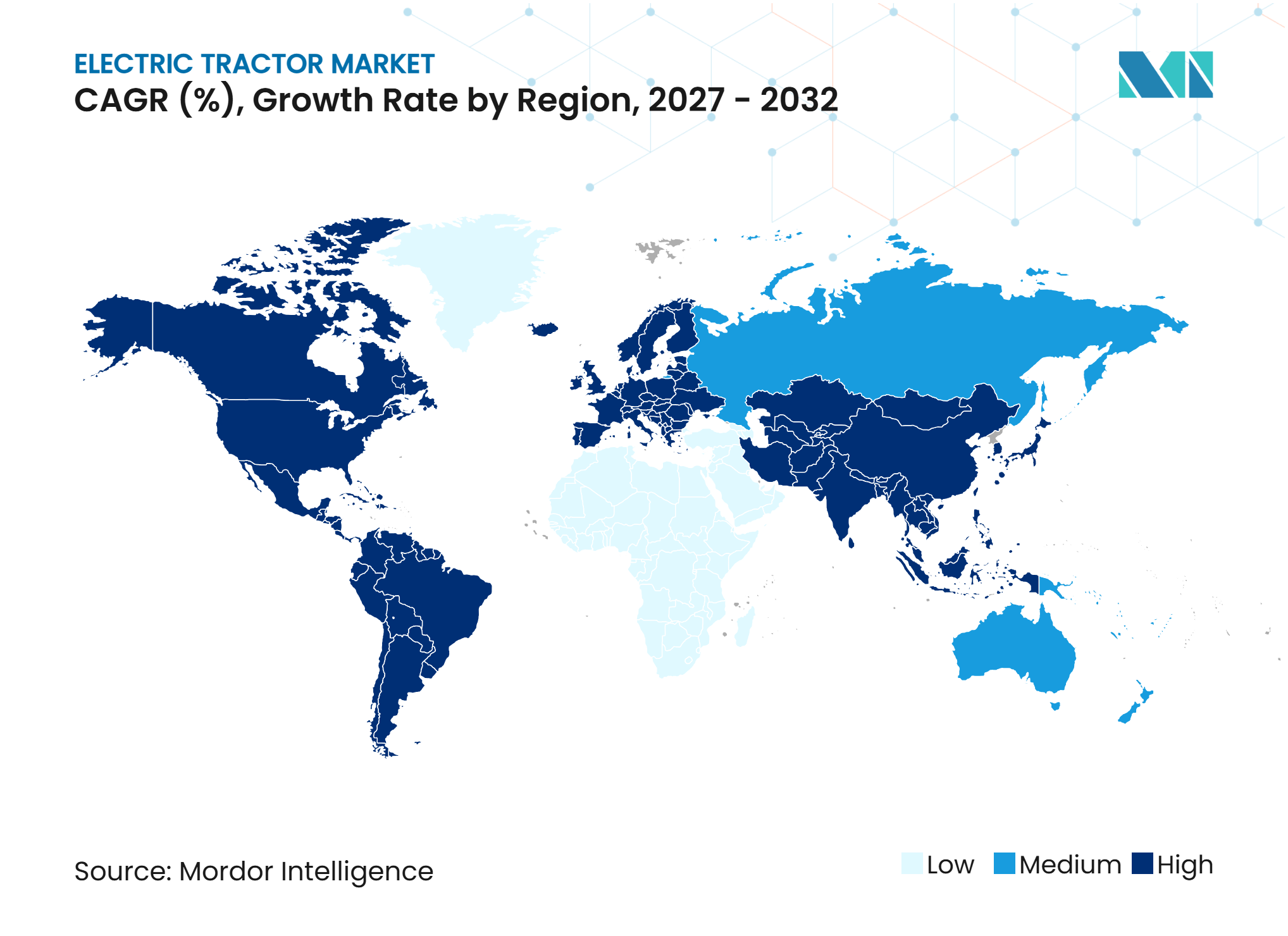
Asia-Pacific accounted for 39.5% of the electric tractor market share in 2026, making it the leading regional market. Its position reflects China's manufacturing scale, established battery supply chains, and government support for agricultural machinery electrification. In May 2025, Weichai Lovol commissioned an intelligent tractor manufacturing base in Weifang, Shandong, following an investment of CNY 3 billion (USD 420 million). The facility has an annual production capacity of 100,000 high-end intelligent tractors, strengthening regional manufacturing capabilities. China's electric tractor industry also benefits from technical standardization and provincial programs supporting hybrid and high-horsepower machinery. India represents an emerging market, although charging reliability, infrastructure gaps, and connector compatibility continue to constrain adoption.
Asia-Pacific is forecast to grow at a CAGR of 23.3% from 2027 to 2032, making it the fastest-growing regional market. Growth prospects are supported by China's expanding electric and hybrid tractor manufacturing capabilities, domestic battery supply, and policy support for agricultural mechanization. The introduction of China's JB/T 15126-2025 electric tractor standard further establishes technical requirements and testing procedures for electric tractor models. India also offers long-term potential as manufacturers develop products suited to local farm sizes and operating requirements. Australia, South Korea, and other markets across the region provide additional opportunities in compact agricultural machinery and municipal applications, where predictable operating schedules and access to dedicated charging can support electrification.
Europe and North America offer further growth opportunities through established agricultural equipment distribution networks, technological development, and support for alternative powertrains. France's E-TRANS program expanded in 2025 to include agricultural machinery, while Germany announced financing support for alternative-drive agricultural equipment and associated infrastructure. In North America, AGCO GmbH introduced the Fendt e100 Vario at World Ag Expo in California in February 2026, increasing the visibility of battery-electric tractors in the region. Meanwhile, adoption across South America, Russia, Western Asia, and Africa may progress more gradually where extensive field operations, high-power requirements, limited rural charging infrastructure, and restricted access to financing present greater barriers. In these markets, advances in battery capacity, hybrid powertrains, and rural energy infrastructure will influence the pace of electric tractor adoption.
Competitive Landscape
Market Concentration
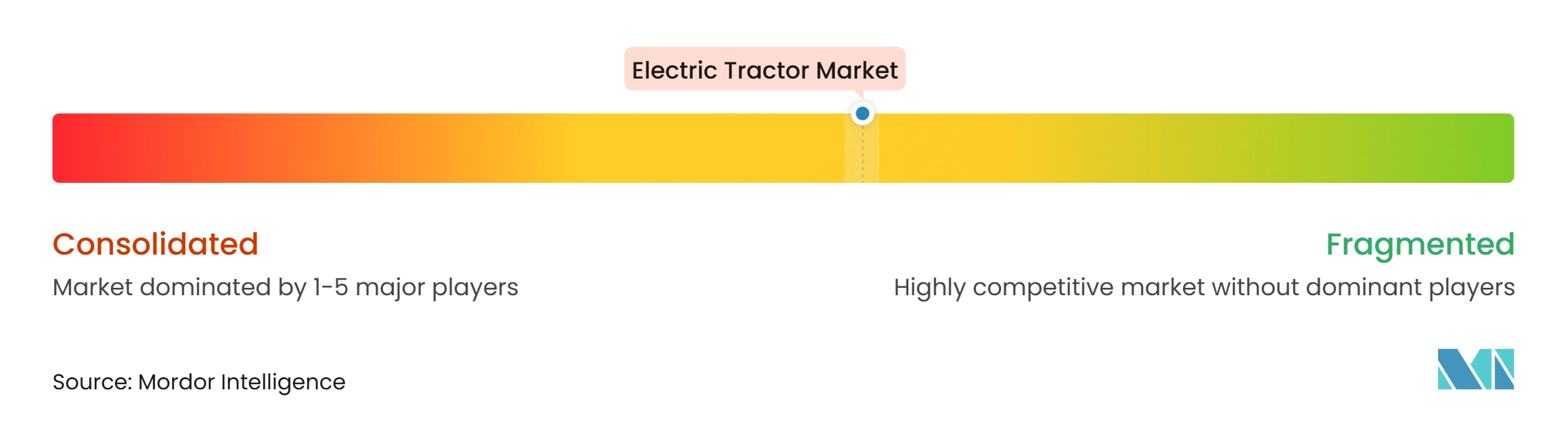
The electric tractor market was moderately concentrated in 2026, with AGCO GmbH (AGCO Corporation), CNH Industrial N.V., Tractors and Farm Equipment Limited (Amalgamations Group), Kubota Corporation, and International Tractors Limited (Sonalika Group) identified as the leading players. Their competitive positions are supported by established agricultural machinery portfolios, manufacturing capabilities, dealer networks, and experience serving diverse farming operations. Manufacturers compete through battery capacity, operating range, power output, charging efficiency, tractor compatibility, acquisition costs, and after-sales service. Established manufacturers are expanding their electrification capabilities, while specialized companies such as SABI AGRI, Rigitrac, and Weichai Lovol are developing electric and hybrid platforms for specific agricultural applications.
Product development, technological integration, and strategic partnerships are shaping competitive differentiation. In February 2026, AGCO Corporation showcased the Fendt e100 Vario battery-electric tractor at World Ag Expo in California, highlighting its efforts to expand electric tractor offerings in North America. In June 2025, Kubota Corporation announced a partnership with Agtonomy to advance autonomous spraying and mowing operations using its M5N tractor platform for vineyards, orchards, and other specialty-crop applications. The collaboration demonstrates how agricultural machinery manufacturers are integrating autonomous technologies into existing tractor platforms. In May 2025, Weichai Lovol commissioned an intelligent tractor manufacturing facility in Weifang, Shandong, with an annual production capacity of 100,000 high-end intelligent tractors. The company also presented its E1000, E2000ET-6, and E3404-8H electric and hybrid tractor platforms at the 2025 China International Agricultural Machinery Exhibition. These developments reflect growing competition in product electrification, manufacturing capabilities, and technology integration.
Long-term competitive positioning depends on reducing acquisition costs, improving battery performance, expanding charging infrastructure, and ensuring reliable maintenance and technical support. Opportunities remain for manufacturers developing battery-swapping solutions, tractor-as-a-service financing, integrated farm-charging systems, and autonomous electric machinery for predictable agricultural workloads. Battery lifecycle management and potential second-life energy storage applications may also create opportunities to improve the overall economics of electric tractors. In India, compliance with the Automotive Industry Standard AIS 168 provides an important framework for the safety assessment of battery-electric agricultural tractors, while China's JB/T 15126-2025 standard establishes technical requirements and testing procedures for electric tractor models. Manufacturers with the resources to meet evolving technical standards, maintain extensive service networks, and offer financing suited to agricultural customers are likely to strengthen their competitive positions as electric tractor adoption expands.
Electric Tractor Industry Leaders
-
International Tractors Limited (Sonalika Group)
-
Kubota Corporation
-
Tractors and Farm Equipment Limited (Amalgamations Group)
-
CNH Industrial N.V.
-
AGCO GmbH (AGCO Corporation)
- *Disclaimer: Major Players sorted in no particular order
Electric Tractor Market Companies Covered in this Report
- AGCO GmbH (AGCO Corporation)
- CNH Industrial N.V.
- Kubota Corporation
- Escorts Kubota Limited (Kubota Corporation)
- International Tractors Limited (Sonalika Group)
- Tractors and Farm Equipment Limited (Amalgamations Group)
- AutoNxt Automation Private Limited
- TI Clean Mobility Private Limited (Tube Investments of India Limited)
- Weichai Lovol Intelligent Agricultural Technology Co., Ltd. (Shandong Heavy Industry Group Co., Ltd.)
- Rigitrac Traktorenbau AG
- SABI AGRI SAS
- Amos Power, Inc.
- Tilmor LLC
Recent Industry Developments in Electric Tractor Market
- September 2026: GoSun and Moonrider introduced a 27 HP electric tractor featuring a 24 kWh lithium iron phosphate (LFP) battery and optional integrated 1.1 kW solar charging. The four-wheel-drive model offers approximately five hours of runtime and a 750 kg hitch lift capacity. The product targets agricultural work, homesteading, and property maintenance, combining battery-electric propulsion with optional solar-assisted charging.
- May 2026: ScaNxt Scientific Technologies, an IIT Kanpur-incubated startup, signed an MoU with CSIR-CMERI and the National Research Development Corporation (NRDC) for technology transfer of an indigenously developed, fully electric compact tractor. The tractor was developed with more than 90% indigenous components and includes vehicle-to-load functionality for powering equipment such as irrigation pumps.
- February 2026: AGCO GmbH presented the battery-powered Fendt e100 Vario for its North American debut at World Ag Expo in Tulare, California, held February 10–12, 2026. The compact electric tractor supports conventional and electrified attachments and can be fully charged in under five hours.
Global Electric Tractor Market Report Scope
Electric tractors are agricultural tractors powered entirely or primarily by electric motors using energy stored in rechargeable batteries. They perform farming operations such as tillage, planting, mowing, hauling, and material handling, replacing conventional diesel-powered engines with electric propulsion systems. The electric tractor market includes battery-electric tractors and purpose-built electric agricultural tractors sold for commercial, farm, and specialty agricultural applications. It excludes conventional diesel and petrol tractors, hybrid tractors that combine electric and internal combustion propulsion, electric utility vehicles not designed as tractors, autonomous farming robots without tractor functionality, and electric tractor components or charging infrastructure sold separately.
The Electric Tractor Market is Segmented by Propulsion Type (Battery-Electric Tractors, Hybrid-Electric Tractors, Plug-in Hybrid-Electric Tractors, and Hydrogen Fuel-Cell Electric Tractors), by Power Output (Below 30 HP, 30–50 HP, 51–100 HP, and Above 100 HP), by Tractor Type (Compact Tractors, Utility Tractors, Row-Crop Tractors, and Orchard and Vineyard Tractors), by Application (Field Crop Cultivation, Orchard and Vineyard Operations, Livestock and Dairy Farming, and Horticulture and Protected Cultivation), and by Geography (North America, South America, Europe, Asia-Pacific, Africa, and the Middle East). The Market Forecasts are Provided in Terms of Value (USD).
Segmentation Overview
| Battery-Electric Tractors |
| Hybrid-Electric Tractors |
| Plug-in Hybrid-Electric Tractors |
| Hydrogen Fuel-Cell Electric Tractors |
| Below 30 HP |
| 30-50 HP |
| 51-100 HP |
| Above 100 HP |
| Compact Tractors |
| Utility Tractors |
| Row-Crop Tractors |
| Orchard and Vineyard Tractors |
| Field Crop Cultivation |
| Orchard and Vineyard Operations |
| Livestock and Dairy Farming |
| Horticulture and Protected Cultivation |
| North America | United States |
| Canada | |
| Mexico | |
| Rest of North America | |
| South America | Brazil |
| Argentina | |
| Rest of South America | |
| Europe | Germany |
| France | |
| United Kingdom | |
| Italy | |
| Spain | |
| Russia | |
| Rest of Europe | |
| Asia-Pacific | China |
| India | |
| Japan | |
| South Korea | |
| Australia | |
| Vietnam | |
| Rest of Asia-Pacific | |
| Middle East | Turkey |
| Saudi Arabia | |
| United Arab Emirates | |
| Rest of Middle East | |
| Africa | South Africa |
| Egypt | |
| Rest of Africa |
| By Propulsion Type | Battery-Electric Tractors | |
| Hybrid-Electric Tractors | ||
| Plug-in Hybrid-Electric Tractors | ||
| Hydrogen Fuel-Cell Electric Tractors | ||
| By Power Output | Below 30 HP | |
| 30-50 HP | ||
| 51-100 HP | ||
| Above 100 HP | ||
| By Tractor Type | Compact Tractors | |
| Utility Tractors | ||
| Row-Crop Tractors | ||
| Orchard and Vineyard Tractors | ||
| By Application | Field Crop Cultivation | |
| Orchard and Vineyard Operations | ||
| Livestock and Dairy Farming | ||
| Horticulture and Protected Cultivation | ||
| By Geography | North America | United States |
| Canada | ||
| Mexico | ||
| Rest of North America | ||
| South America | Brazil | |
| Argentina | ||
| Rest of South America | ||
| Europe | Germany | |
| France | ||
| United Kingdom | ||
| Italy | ||
| Spain | ||
| Russia | ||
| Rest of Europe | ||
| Asia-Pacific | China | |
| India | ||
| Japan | ||
| South Korea | ||
| Australia | ||
| Vietnam | ||
| Rest of Asia-Pacific | ||
| Middle East | Turkey | |
| Saudi Arabia | ||
| United Arab Emirates | ||
| Rest of Middle East | ||
| Africa | South Africa | |
| Egypt | ||
| Rest of Africa | ||
Key Questions Answered in the Report
What is the size of the electric tractor sector?
The electric tractor market was valued at USD 716.20 million in 2026 and is projected to grow from USD 851.56 million in 2027 to USD 2,023.60 million by 2032, registering a CAGR of 18.90% during the forecast period 2027–2032.
Which propulsion system leads electric tractor sales?
Battery-electric tractors led with a 61.4% share in 2026, supported by compact and specialty-crop applications with regular charging access.
Which region leads demand for electric tractors?
Asia-Pacific held the largest 2026 share at 39.5%, while it is forecast to grow at a 23.3% CAGR between 2027 and 2032.
What limits adoption of electric tractors?
The main barriers are high upfront cost, rural grid constraints, charging compatibility, battery endurance during peak work, and limited resale and service systems.