
Elderly Nutrition Market Size and Share
Market Overview
| Study Period | 2021 - 2032 |
|---|---|
| Market Size (2027) | USD 25.58 Billion |
| Market Size (2032) | USD 36.07 Billion |
| Growth Rate (2027 - 2032) | 7.12 % |
| Fastest Growing Market | Asia-Pacific |
| Largest Market | North America |
| Market Concentration | Medium |
Major Players *Disclaimer: Major Players sorted in no particular order Image © Mordor Intelligence. Reuse requires attribution under CC BY 4.0. | |
Elderly Nutrition Market Analysis by Mordor Intelligence
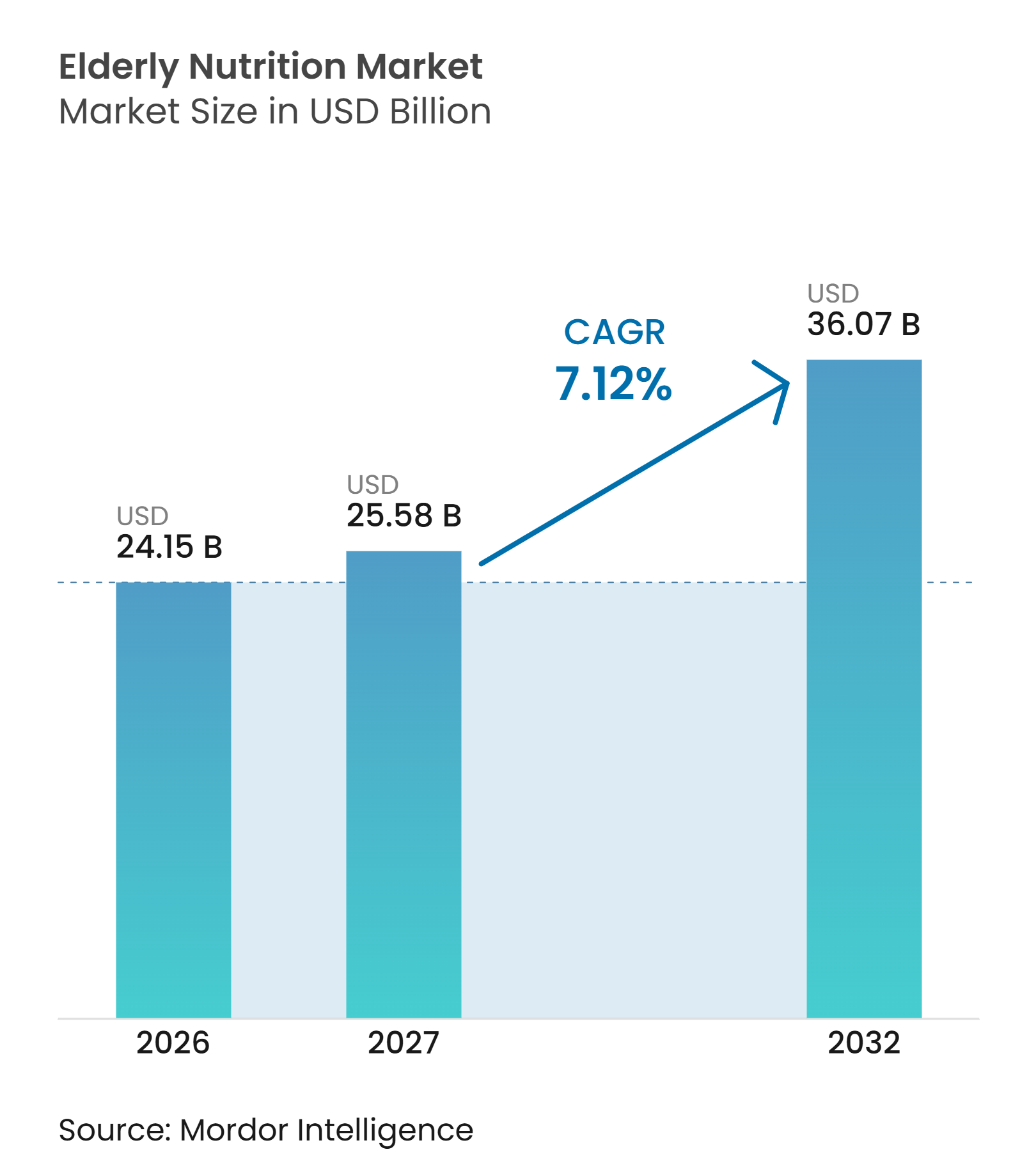
The Elderly Nutrition Market size is expected to grow from USD 24.15 billion in 2026 to USD 25.58 billion in 2027 and is forecast to reach USD 36.07 billion by 2032 at 7.12% CAGR over 2027-2032.
Population aging is increasing the number of older adults who need preventive nutrition, clinical feeding support, and disease-specific formulations. Japan had 36.24 million people aged 65 or older in October 2024, and people aged 75 or older outnumbered those aged 65 to 74, which shifts demand toward patients with higher nutrition risk. China is also expected to have 402 million people aged 60 or older by 2040, while Asia and the Pacific are expected to have close to 1.3 billion people aged over 60 by 2050. Providers are linking malnutrition screening more closely to care quality, and manufacturers are responding with protein-rich, texture-modified, and condition-specific products. The elderly nutrition market is also moving beyond hospitals as home care, online pharmacy access, and recurring nutrition support become more relevant.
Key Report Takeaways
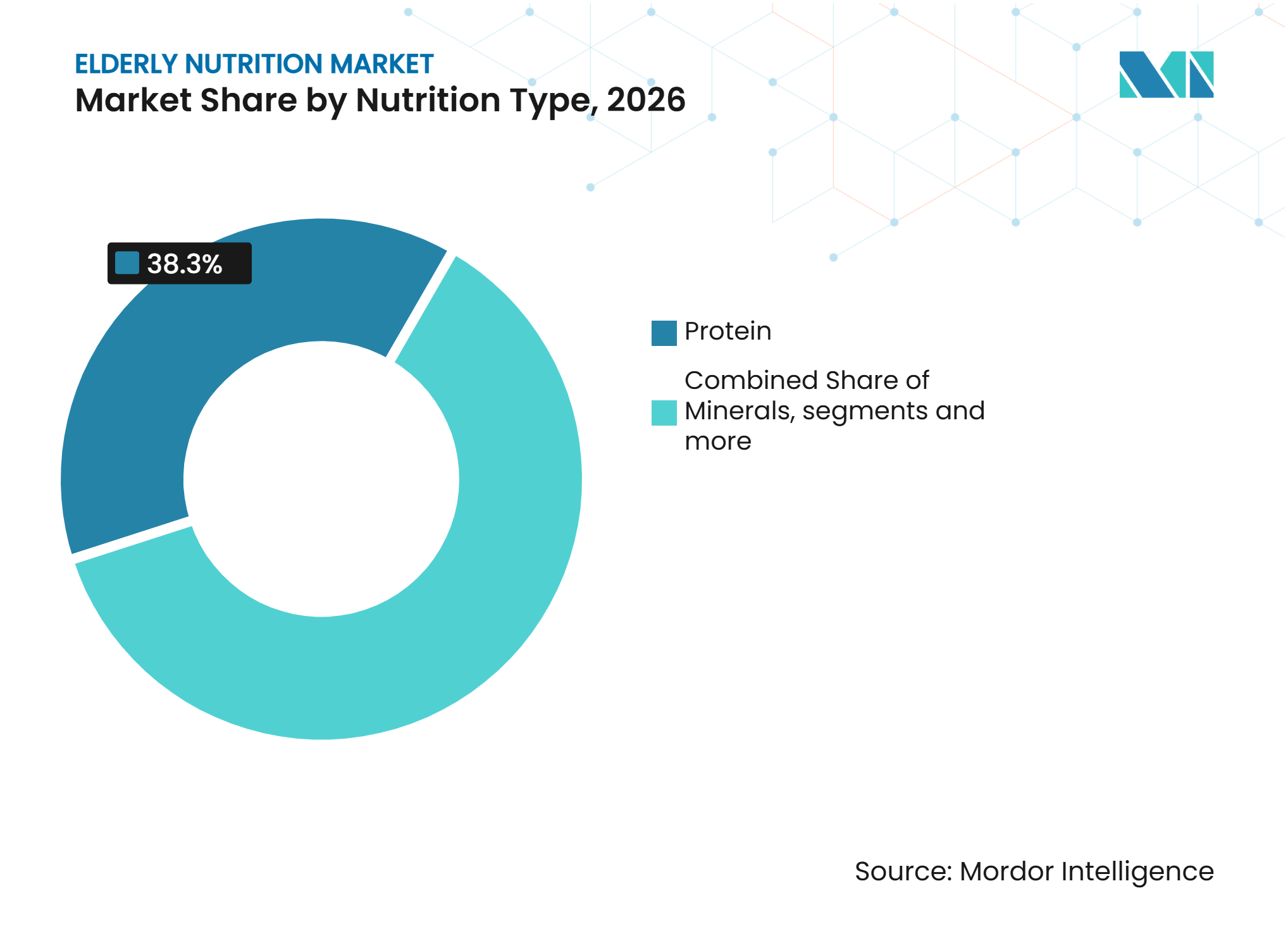
- By nutrition type, protein held 38.31% of the elderly nutrition market share in 2026, while multivitamins are forecast to grow at a 7.84% CAGR through 2032.
- By form, ready-to-drink liquids accounted for 39.25% of the elderly nutrition market in 2026, while tablets and capsules are expected to expand at an 8.24% CAGR through 2032.
- By route of administration, oral products held 41.16% of the elderly nutrition market share in 2026, while enteral tube feeding is forecast to grow at an 8.76% CAGR through 2032.
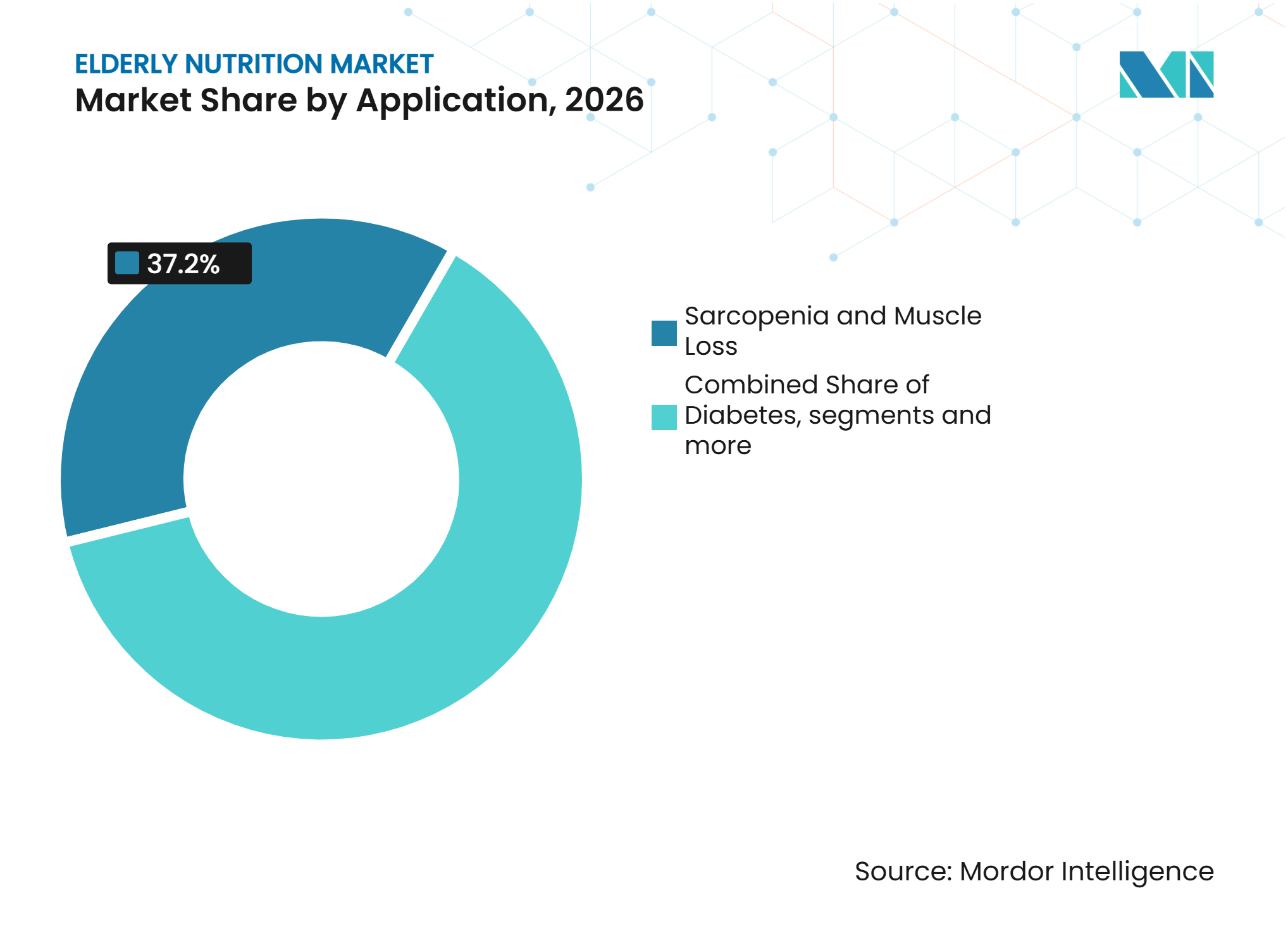
- By application, sarcopenia and muscle loss represented 37.23% of revenue in 2026, while cancer-related cachexia is anticipated to grow at a 9.55% CAGR through 2032.
- By distribution channel, hospital pharmacies held 43.22% of volume in 2026, while online pharmacies are forecast to grow at a 9.14% CAGR through 2032.
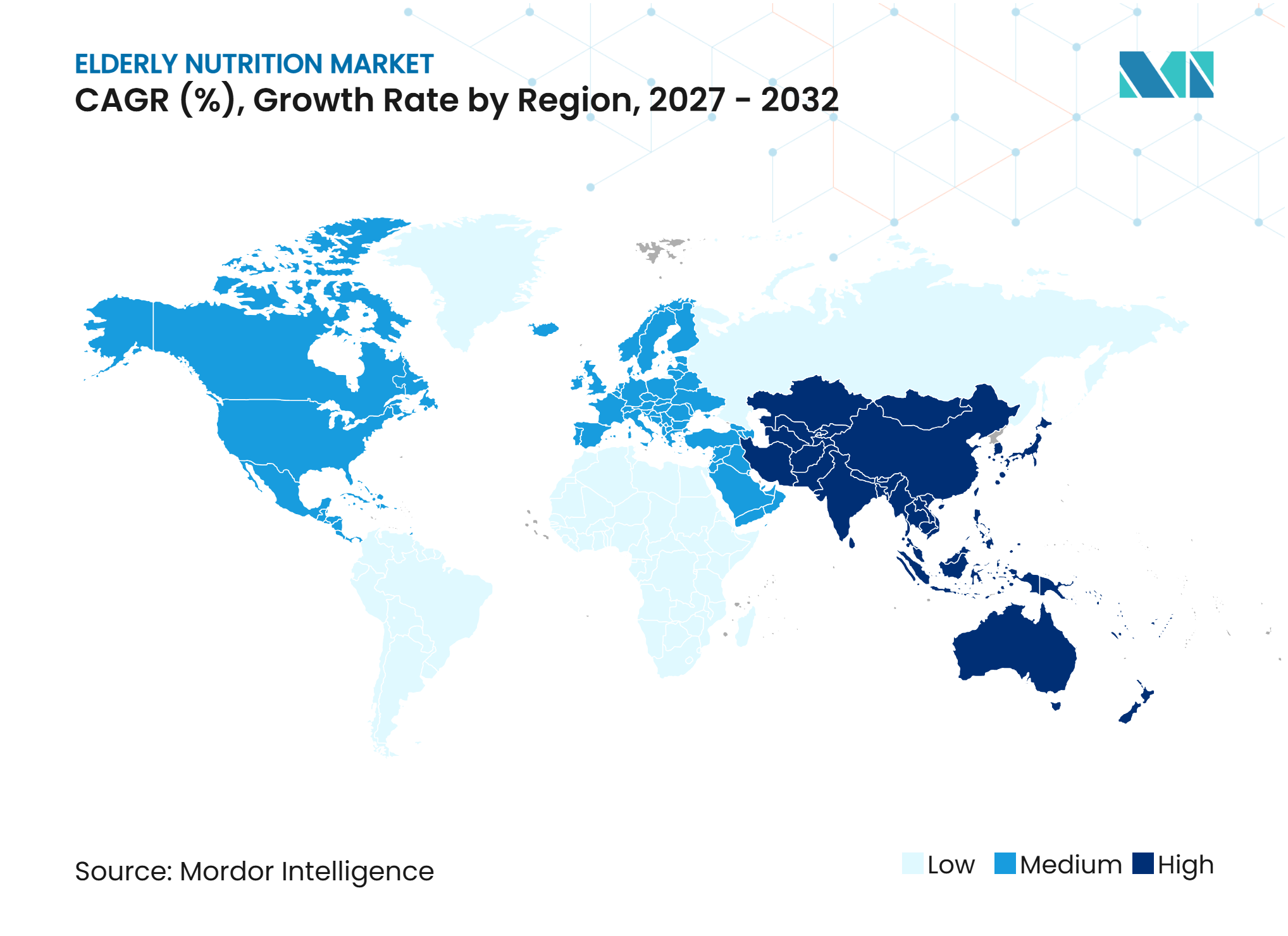
- By geography, North America held 47.16% of revenue in 2026, while Asia-Pacific is projected to grow at a 10.27% CAGR through 2032.
Note: Market numbers in this report are based on Mordor Intelligence's proprietary estimation framework, which combines nine months of actuals with Q4 projections for base year 2026.
Market Trends and Insights
Drivers Impact Analysis of Elderly Nutrition Market*
| Driver | (~) % Impact on CAGR Forecast | Geographic Relevance | Impact Timeline |
|---|---|---|---|
| Expansion of the 65-Plus Population and Healthy-Longevity Spending | +2.2% | Global | Long term (≥ 4 years) |
| Rising Disease- and Condition-Specific Nutrition Demand | +1.6% | Global, with North America and Europe leading adoption | Medium term (2-4 years) |
| Protocol-Based Malnutrition Screening in Elder Care | +0.9% | North America and EU, with spill-over to APAC | Medium term (2-4 years) |
| Aging in Place and Home-Based Nutrition Support | +0.8% | North America, Europe, Japan | Medium term (2-4 years) |
| Texture-Modified Nutrition for Dysphagia and Safer Swallowing | +0.6% | Asia-Pacific core, with growing adoption in North America and Europe | Short term (≤ 2 years) |
| Digital Adherence, Remote Monitoring, and Personalized Nutrition Plans | +0.5% | North America and Europe, with early gains in Japan and South Korea | Short term (≤ 2 years) |
| Source: Mordor Intelligence | |||
Expansion of the 65-Plus Population and Healthy-Longevity Spending
The elderly nutrition market is supported by the continued expansion of the population aged 65 and older. China’s population aged 65 or older could approach one-third of the national population by 2050, even as income levels remain below those of Japan. This gap makes public procurement and government-funded nutrition programs more important in large emerging markets. Japan’s age profile also points to demand from an older and more clinically vulnerable group, because its population aged 75 or older exceeded the population aged 65 to 74.[1] Abbott launched Ensure Strength Pro in India in May 2026 with 30 grams of protein and 31 nutrients, showing how suppliers are adapting products for large aging populations outside premium Western markets. The product addresses muscles, bones, heart health, blood cells, immunity, metabolism, and the nervous system.
Rising Disease- and Condition-Specific Nutrition Demand
The elderly nutrition market is shifting from general supplementation toward nutrition designed for defined health conditions. A 2025 review found that malnutrition affected 30% to 80% of older cancer patients, and it reported institutional prevalence of 22% among hospitalized older adults and nearly 30% in long-term care settings. The same review reported cachexia in 50% of cancer patients overall and in up to 80% of patients with gastrointestinal malignancies.[2] Cachexia treatment increasingly uses high-energy enteral nutrition, leucine-enriched protein, and omega-3 support alongside other care. Longer cancer survival can extend the period during which patients receive nutrition support. This increases the relevance of outpatient and home-based products after acute treatment ends.
Protocol-Based Malnutrition Screening in Elder Care
The elderly nutrition market benefits when nutrition screening becomes part of routine care practice. CMS expanded the Malnutrition Care Score to all hospitalized adults aged 18 or older for the 2026 performance year.[3] The measure links documented nutrition care with publicly reported hospital quality performance. ASPEN recommends validated nutrition screening within 24 hours of hospital admission and immediate intervention when patients are at risk. These procedures can encourage standardized nutrition orders across acute-care settings. They can also make hospital demand less dependent on discretionary consumer spending.
Aging in Place and Home-Based Nutrition Support
The elderly nutrition market is gaining support from health systems that seek to manage older patients at home. Japan’s long-term care insurance system subsidizes enteral nutrition supplies for eligible patients receiving care at home. Japan’s 2025 dietary reference intakes updated protein goals for aging populations, which further supports attention to nutrition in later life. Home support creates demand for products that fit routine daily use outside hospital care. Oral formats can help patients continue nutrition support after early discharge. This can reduce reliance on a hospital prescription as the only route to nutrition access.
Restraints Impact Analysis of Elderly Nutrition Market*
| Restraint | (~) % Impact on CAGR Forecast | Geographic Relevance | Impact Timeline |
|---|---|---|---|
| High Out-of-Pocket Cost and Uneven Reimbursement | -1.1% | Global, most acute in MEA and South America, and persistent in U.S. outpatient care | Long term (≥ 4 years) |
| Regulatory and Clinical-Claim Complexity Across Countries | -0.7% | Global, particularly complex in the EU, U.S., and APAC | Medium term (2-4 years) |
| Low Palatability, Taste Fatigue, and Poor Long-Term Adherence | -0.5% | Global, most commercially damaging in outpatient and home settings | Short term (≤ 2 years) |
| Protein, Ingredient, and Texture-Processing Cost Volatility | -0.4% | Global, with supply concentration risk in Asia-Pacific ingredient sourcing | Medium term (2-4 years) |
| Source: Mordor Intelligence | |||
High Out-of-Pocket Cost and Uneven Reimbursement
The elderly nutrition market faces slower uptake when clinically appropriate products are not covered after hospital discharge. Medicare Part B does not routinely cover oral nutritional supplements for outpatient older adults in the United States. A coalition of 50 U.S. organizations requested USD 2.285 billion for the Older Americans Act Nutrition Program in April 2026, compared with a USD 1.059 billion FY 2026 allocation. The coalition stated that 2.5 million eligible low-income, food-insecure older adults were not receiving services because of funding limits. This can separate clinical need from actual product purchases. The constraint is stronger where public insurance and institutional purchasing remain limited.
Regulatory and Clinical-Claim Complexity Across Countries
The elderly nutrition market operates across food supplements, medical foods, and pharmaceutical products. U.S. Foods for Special Medical Purposes requirements require evidence supporting disease-specific use, while European health claims require approval under the regional framework. Japan separates Foods for Specified Health Uses, Foods with Function Claims, and medical nutrition products. Different evidence thresholds and label permissions can require reformulation or separate documentation by country. Smaller suppliers may have fewer resources for clinical evidence, labeling, and local registrations. This supports the existing advantage of companies with broad regulatory and clinical capabilities.
*Our forecasts treat driver/restraint impacts as directional, not additive. The impact forecasts reflect baseline growth, mix effects, and variable interactions.
Elderly Nutrition Market Segment Analysis
By Nutrition Type:
Protein Leads Revenue While Multi-Vitamins Grow FastestProtein held 38.31% of the elderly nutrition market revenue in 2026. Its role is tied to muscle preservation, immune support, and recovery after acute illness. Abbott launched Ensure Max Protein 2 in 1 Muscle Support in December 2025 with 30 grams of protein and 1.5 grams of calcium beta-hydroxy-beta-methylbutyrate. This product shows the effort to differentiate protein formulas through specific clinical components. Research using Japan’s National Health and Nutrition Survey found that dietary protein and amino acid intake patterns were associated with healthy aging outcomes.
Multi-vitamins are forecasted to grow at a 7.84% CAGR through 2032. Preventive supplementation among adults aged 50 and older supports this demand. DSM-Firmenich introduced Vision R in Japanese medical institutions in November 2024. Minerals, fibers, prebiotics, lipids, and omega fatty acids make up the remaining nutrition categories. DSM-Firmenich also highlighted research on omega-3 supplementation and biological aging markers at Vitafoods Europe 2026.



By Form:
Ready-to-Drink Liquids Lead While Tablets and Capsules ExpandReady-to-drink liquids accounted for 39.25% of the elderly nutrition market in 2026. Their position reflects ease of use across hospital and home settings. They can also be prepared with a viscosity suited to patients with swallowing difficulties. A 2025 meta-analysis of 16 randomized controlled trials involving 1,812 adults found that texture-modified diets and thickened fluids improved protein intake and reduced aspiration risk. Powders remain relevant when shelf life, transport, and cost are important. Gels and puddings are used for patients for whom even thickened liquids can remain difficult to swallow.
Tablets and capsules are expected to grow at 8.24% CAGR through 2032. Their convenience matches the preventive use of multi-vitamins among community-dwelling adults. The format can support daily adherence in home settings and fits the growth of online pharmacy distribution. Softgels and soft chews can help people with swallowing limitations or reduced manual dexterity.
By Route of Administration:
Oral Products Dominate While Enteral Feeding GrowsOral administration accounted for 41.2% of the route-of-administration revenue in 2026. This route serves ambulatory adults, people living in the community, and lower-acuity hospital patients. ASPEN and ESPEN guidance supports oral nutritional supplementation as a first intervention when gastrointestinal function is intact. The guidance supports demand for oral drinks, powders, and dietary supplements through institutional and retail channels.
Enteral tube feeding is expected to grow at an 8.76% CAGR through 2032. Growth is linked to dysphagia, neurological conditions, and the expansion of home enteral programs. A 2025 nationwide Japanese study found that elemental enteral formulas had an odds ratio of 89.7 among prescribed products associated with malnutrition diagnoses in older adults. Parenteral nutrition remains essential when gastrointestinal failure prevents oral or enteral feeding.
By Application:
Sarcopenia and Muscle Loss Lead While Cachexia Grows FastestSarcopenia and muscle loss accounted for 37.23% of application revenue in 2026. Clinical studies place sarcopenia prevalence at 20% to 50% among older adults. Prevalence rose to 58% among colorectal cancer patients aged over 70 in the cited evidence. Protein supplementation protocols have an established role in this application. ICD-10 recognition of sarcopenia as a treatable condition and wider use of bioelectrical impedance analysis can support screening in community settings.
Cancer-related cachexia is anticipated to grow at a 9.55% CAGR through 2032. A 2025 review found cachexia in 52% to 62% of older adults with cancer and in 80% of people with advanced gastrointestinal malignancies. Longer oncology survival and clinical recognition of cachexia as a treatable condition support demand for specialized nutrition. Renal failure and immune and recovery support remain additional applications.

By Distribution Channel:
Hospital Pharmacies Lead While Online Pharmacies GrowHospital pharmacies accounted for 43.22% of distribution volume in 2026. Hospital dietitians and pharmacy committees influence which products are included on formularies. Once a product is placed in a formulary, standard clinical protocols and purchasing relationships can maintain volume. It can also limit margins because hospitals negotiate volume discounts through group purchasing organizations. Hospital purchasing, therefore, offers dependable volume but does not always provide the same pricing flexibility as consumer channels.
Online pharmacies are forecasted to grow at a 9.14% CAGR through 2032. Telehealth prescribing and stronger digital health access support the channel. Online access can improve repeat ordering for people using products at home. Retail pharmacies remain useful for accessible purchases by ambulatory older adults. Their growth can be limited by shelf-space constraints and the need for more disease-specific nutrition counseling.
Geography Analysis
North America
North America held 47.16% of global revenue in 2026. The United States supported this position because 18% of its population was aged 65 or older in 2024. Hospital pharmacies held 55.2% of North American clinical nutrition distribution volume in 2025. This supports institutional purchasing as a major regional demand channel. Medicare Part B coverage gaps for outpatient oral supplements remain a constraint. The funding request for the Older Americans Act Nutrition Program indicates continuing unmet need in community nutrition access.
Asia-Pacific
Asia-Pacific is projected to grow at a 10.27% CAGR through 2032. Japan had 29.3% of its 123.8 million people aged 65 or older in October 2024. Home enteral subsidies and updated dietary guidance support the region’s clinical nutrition infrastructure. RAND reported that China’s working-age-to-elderly ratio could fall from 5:1 to below 2:1 by 2050. DSM-Firmenich awarded 5 EUR 50,000 nutrition research grants to Asia-Pacific projects on healthy longevity in July 2026. India, Australia, South Korea, and other Asia-Pacific markets add demand through urbanization, chronic disease, and the development of clinical nutrition systems.
Europe, South America, and the Middle East, and Africa
Europe remains a substantial region with structured nutrition policies and reimbursement systems. ESPEN guidance and European food rules shape clinical and product decisions across the region. Germany, France, the United Kingdom, Italy, and Spain lead regional activity. South America, the Middle East, and Africa remain smaller but relevant markets. GCC investment in elder-care infrastructure and policy development can support institutional nutrition procurement over time.
Competitive Landscape
Market Concentration
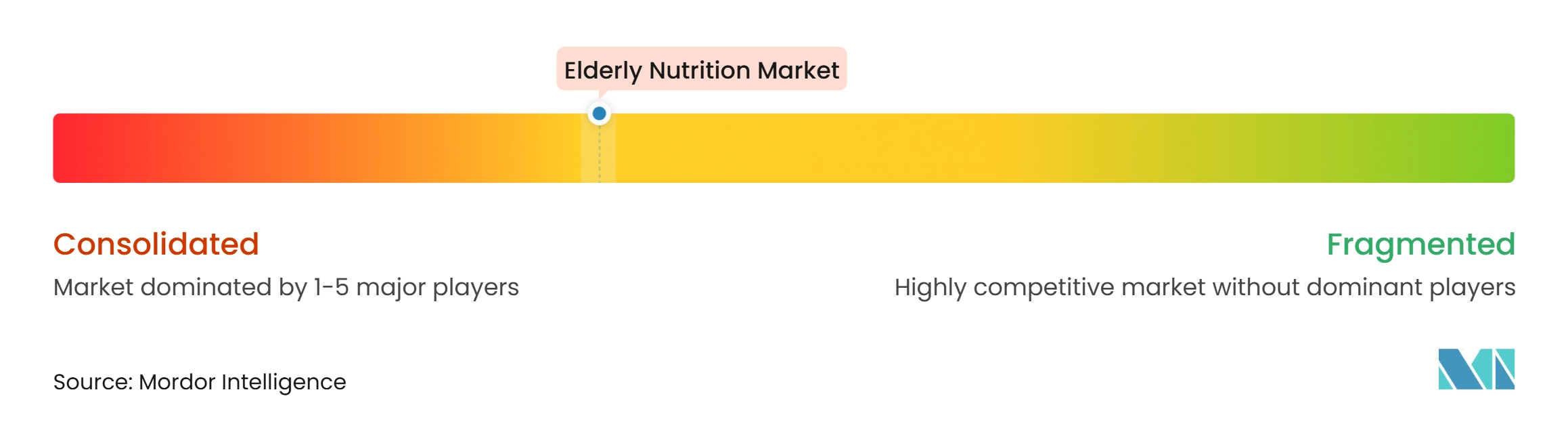
The elderly nutrition market is moderately concentrated around multinational suppliers with broad clinical portfolios. The elderly nutrition market rewards companies that can support both clinical users and home-care patients. Abbott Laboratories, Nestlé Health Science, Danone through Nutricia, Fresenius Kabi, and B. Braun Melsungen have formulary access across hospitals, long-term care, and home-care settings. Their positions depend on clinical evidence, portfolio breadth, product availability, and supply reliability. Regional suppliers, including Ajinomoto, Meiji Holdings, Morinaga Milk, and Nutrisens, compete through local formulations, established distribution, and familiarity with local preferences. Price is not the only basis of competition in institutional care. Clinical suitability and reliable supply remain important when providers choose nutrition products.
Fresenius Kabi expanded its plant-based enteral offer with Fresubin PLANT-BASED Tube Feed in Germany in November 2025 and in the United Kingdom in March 2026. Nutricia launched Fortimel Plant-Based Protein in October 2025 and reported entry into more than 10 European countries within 6 months. The company also reported 95% prescription adherence for its savory plant-based oral supplement in the cited clinical evidence. These moves address plant-based formulation, palatability, and administration challenges. They also show that format design can matter alongside nutrient composition.
Kate Farms, Vitaflo International, and Otsuka Holdings participate in specialized clinical areas such as plant-based formulas, metabolic disorder nutrition, and renal products. Their products can address smaller patient groups with defined nutrition needs. Home enteral care is also creating a competitive opening for suppliers that combine formula delivery, pump technology, and remote dietitian support. The elderly nutrition market can favor suppliers that make this transition from discharge to home use easier. This model can reduce the separation between hospital discharge and pharmacy fulfillment. ISO-certified manufacturing and country-specific medical food requirements remain material barriers for new suppliers.
Elderly Nutrition Industry Leaders
-
Abbott Laboratories
-
Nestlé Health Science
-
Danone S.A.
-
Fresenius Kabi AG
-
Otsuka Holdings Co., Ltd.
- *Disclaimer: Major Players sorted in no particular order
Elderly Nutrition Market Companies Covered in this Report
- AAK AB
- Abbott Laboratories
- Ajinomoto Co., Inc.
- B. Braun Melsungen SE
- Baxter
- Bayer
- Danone
- DSM-Firmenich AG
- Fresenius
- GlaxoSmithKline
- Hormel Foods
- Kate Farms, Inc.
- Meiji Holdings Co., Ltd.
- Morinaga Milk Industry Co., Ltd.
- Nestle
- Nutrisens Group
- Otsuka
- Pfizer
- Sanofi
- Unilever plc
- Vitaflo International Ltd
Recent Industry Developments in Elderly Nutrition Market
- June 2026: Fresenius Kabi launched Renalive HP in Germany, a new high-energy, high-protein, electrolyte-reduced oral and tube feed for dialysis-dependent patients at risk of malnutrition. The 200 ml bottle delivers 400 kcal and 20 grams of protein, meeting German statutory health insurance prescription criteria.
- May 2026: Abbott launched Ensure Strength Pro in India, a 31-nutrient formula containing 30 grams of high-quality protein designed to support 7 key health areas in aging adults, muscles, bones, heart, blood cells, immune system, metabolism, and nervous system. The launch extends Abbott's clinical nutrition franchise into the world's most populous country, targeting nutritional gaps identified across multiple Indian states.
- March 2026: Fresenius Kabi launched Fresubin PLANT-BASED Tube Feed in the United Kingdom, the only 1.5 kcal/ml high-protein plant-based tube feed available in the United Kingdom market. The product contains 100% plant-based soya protein and fiber and is halal- and kosher-certified, expanding institutional choices for enteral nutrition patients requiring plant-based formulations.
Global Elderly Nutrition Market Report Scope
According to the report’s scope, the elderly nutrition market encompasses nutritional products such as fortified foods, protein supplements, texture-modified meals, and medical nutrition formulas designed to address age-related challenges like reduced appetite, impaired nutrient absorption, sarcopenia, osteoporosis, diabetes, and cognitive decline. Its core purpose is to improve the quality of life, prevent malnutrition, and support independent living among the elderly population.
The elderly nutrition market is segmented into nutrition type, form, route of administration, application, distribution channel, and geography. By nutrition type, the market is segmented into protein, minerals, multi-vitamins, fibers and prebiotics, lipids and omega fatty acids, and other nutrition types. By form, the market is segmented into ready-to-drink liquids, powders, gels and puddings, tablets and capsules, and others. By route of administration, the market is segmented into oral, enteral tube feeding, and parenteral. By application, the market is segmented into diabetes, sarcopenia and muscle loss, renal failure, cancer-related cachexia, immune and recovery support, and other applications. By distribution channel, the market is segmented into hospital pharmacies, retail pharmacies, and online pharmacies. By geography, the market is segmented into North America, Europe, Asia-Pacific, the Middle East and Africa, and South America. The report also covers the estimated market sizes and trends for 17 countries across major regions globally. The report offers values (USD) for all the above segments.
Segmentation Overview
| Protein |
| Minerals |
| Multi-Vitamins |
| Fibers and Prebiotics |
| Lipids and Omega Fatty Acids |
| Other Nutrition Types |
| Ready-to-Drink Liquids |
| Powders |
| Gels and Puddings |
| Tablets and Capsules |
| Other Forms |
| Oral |
| Enteral Tube Feeding |
| Parenteral |
| Diabetes |
| Sarcopenia and Muscle Loss |
| Renal Failure |
| Cancer-Related Cachexia |
| Immune and Recovery Support |
| Other Applications |
| Hospital Pharmacies |
| Retail Pharmacies |
| Online Pharmacies |
| North America | United States |
| Canada | |
| Mexico | |
| Europe | Germany |
| United Kingdom | |
| France | |
| Italy | |
| Spain | |
| Rest of Europe | |
| Asia-Pacific | China |
| Japan | |
| India | |
| Australia | |
| South Korea | |
| Rest of Asia-Pacific | |
| Middle East and Africa | GCC |
| South Africa | |
| Rest of Middle East and Africa | |
| South America | Brazil |
| Argentina | |
| Rest of South America |
| By Nutrition Type | Protein | |
| Minerals | ||
| Multi-Vitamins | ||
| Fibers and Prebiotics | ||
| Lipids and Omega Fatty Acids | ||
| Other Nutrition Types | ||
| By Form | Ready-to-Drink Liquids | |
| Powders | ||
| Gels and Puddings | ||
| Tablets and Capsules | ||
| Other Forms | ||
| By Route of Administration | Oral | |
| Enteral Tube Feeding | ||
| Parenteral | ||
| By Application | Diabetes | |
| Sarcopenia and Muscle Loss | ||
| Renal Failure | ||
| Cancer-Related Cachexia | ||
| Immune and Recovery Support | ||
| Other Applications | ||
| By Distribution Channel | Hospital Pharmacies | |
| Retail Pharmacies | ||
| Online Pharmacies | ||
| By Geography | North America | United States |
| Canada | ||
| Mexico | ||
| Europe | Germany | |
| United Kingdom | ||
| France | ||
| Italy | ||
| Spain | ||
| Rest of Europe | ||
| Asia-Pacific | China | |
| Japan | ||
| India | ||
| Australia | ||
| South Korea | ||
| Rest of Asia-Pacific | ||
| Middle East and Africa | GCC | |
| South Africa | ||
| Rest of Middle East and Africa | ||
| South America | Brazil | |
| Argentina | ||
| Rest of South America | ||
Key Questions Answered in the Report
What is the projected market growth rate through 2032?
The elderly nutrition market is expected to grow from USD 24.15 billion in 2026 to USD 25.58 billion in 2027, and USD 36.07 billion by 2032, and is projected to grow at a 7.12% CAGR from 2027 to 2032.
Which nutrition type has the largest revenue share?
Protein held 38.31% of revenue in 2026, supported by demand for muscle preservation and recovery products. In the elderly nutrition market, protein formulas are used across hospital, long-term care, and home settings.
Which product form is growing fastest?
Tablets and capsules are forecasted to expand at an 8.24% CAGR through 2032, supported by preventive use and home-based routines.
Which region is expected to expand fastest?
Asia-Pacific is projected to grow at a 10.27% CAGR through 2032, supported by rapid aging and developing clinical nutrition systems.