
Dysphagia Management Market Size and Share
Market Overview
| Study Period | 2020 - 2031 |
|---|---|
| Market Size (2025) | USD 5.84 Billion |
| Market Size (2031) | USD 7.95 Billion |
| Growth Rate (2026 - 2031) | 5.28 % |
| Fastest Growing Market | Asia-Pacific |
| Largest Market | North America |
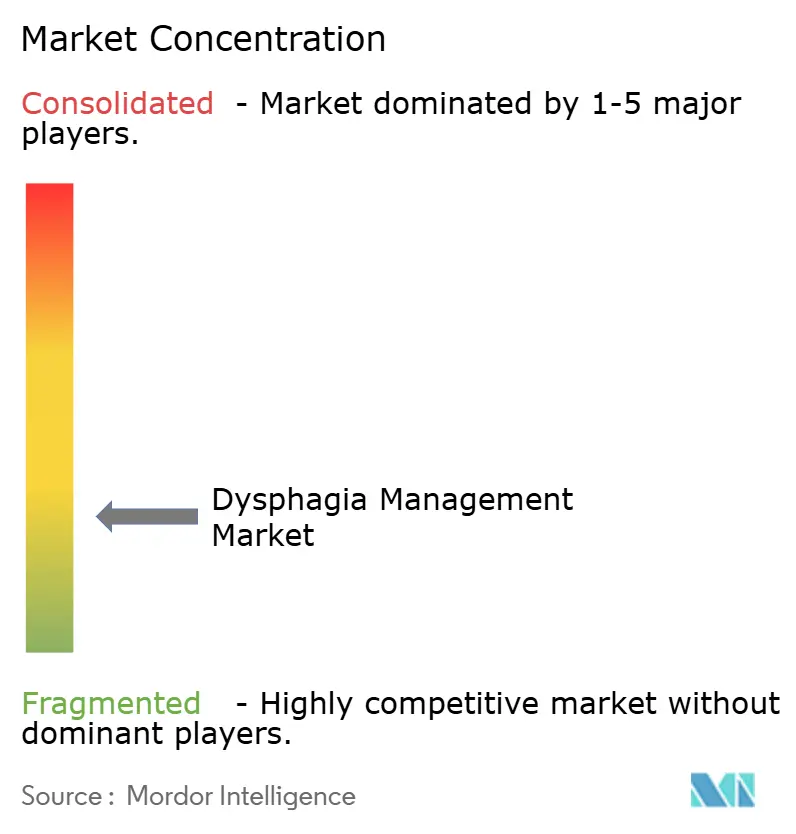
| Market Concentration | Low |
Major Players *Disclaimer: Major Players sorted in no particular order Image © Mordor Intelligence. Reuse requires attribution under CC BY 4.0. | |
Dysphagia Management Market Analysis by Mordor Intelligence
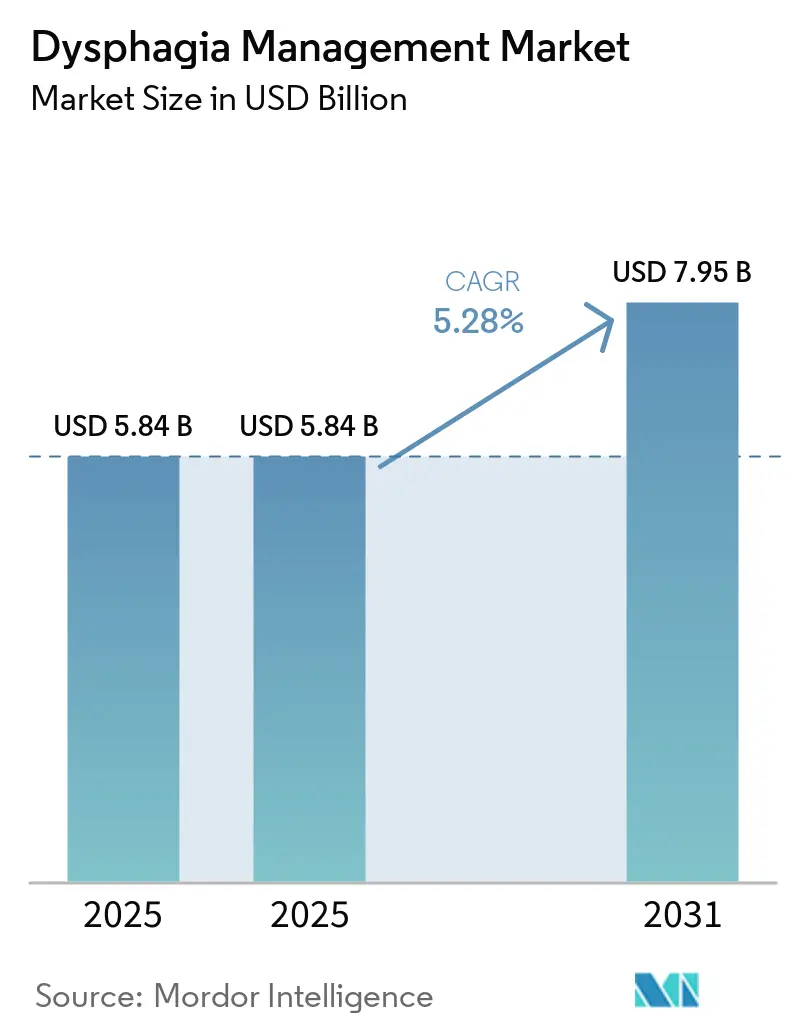
The Dysphagia Management Market size is projected to be USD 5.84 billion in 2025, USD 5.84 billion in 2025, and reach USD 7.95 billion by 2031, growing at a CAGR of 5.28% from 2025 to 2031.
The increasing burden of neurological conditions and age-related swallowing impairments supports the dysphagia management market. For instance, neurological conditions affect more than 3 billion people globally and cause more than 11 million deaths annually. Stroke and dementia are projected to remain the leading causes of disability worldwide in 2025.[1]World Health Organization, “11 Million Lives Lost Each Year Urgent Action Needed on Neurological Care,” WHO News, who.int Oropharyngeal dysphagia occurs in 42% to 75% of acute stroke cases and develops in 35% to 82% of individuals with Parkinson’s disease, closely linking the dysphagia management market to neurological care pathways. Product suppliers are responding by developing compliant nutritional formats, portable feeding systems, and assessment technologies that support care beyond hospital settings. However, reimbursement pressures and shortages of trained clinicians may limit patient access. Integrated home care models and culturally appropriate texture-modified foods present opportunities for differentiated product offerings.
Key Report Takeaways
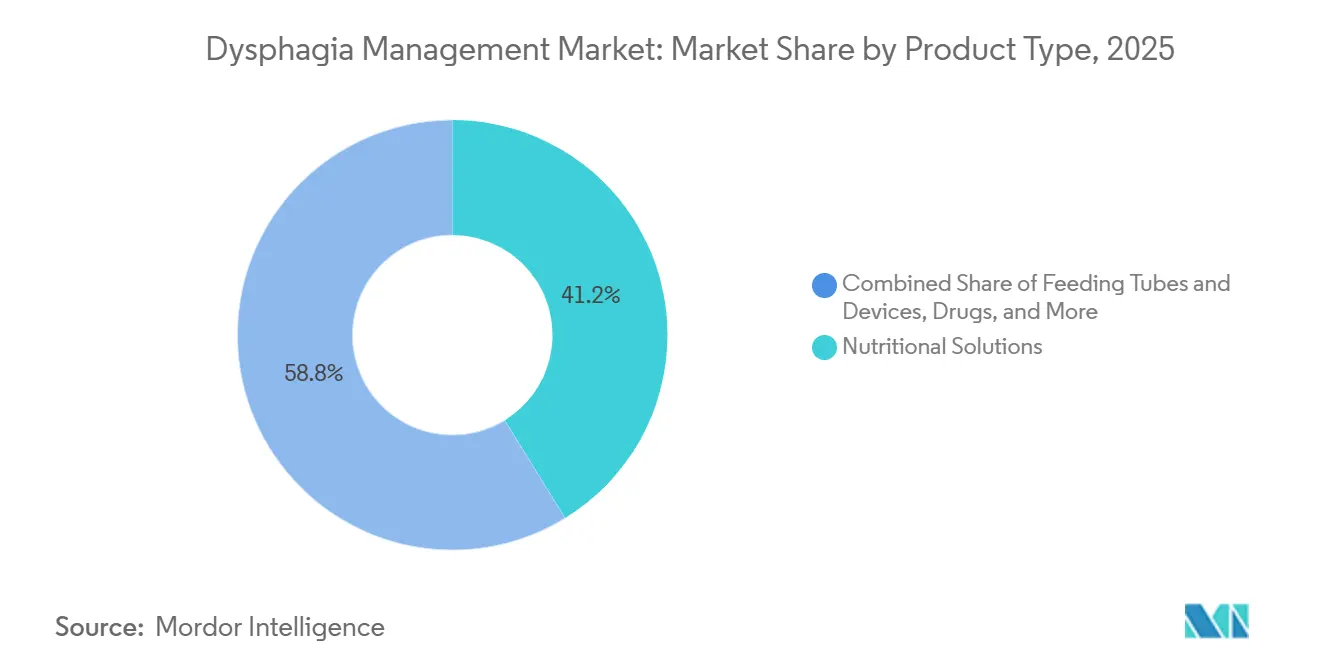
- By product type, nutritional solutions held 41.22% of revenue in 2025, while drugs were the fastest-growing product category through 2031.
- By indication, oropharyngeal dysphagia held 62.18% of revenue in 2025, while mixed and multifactorial dysphagia was the fastest-growing indication through 2031.
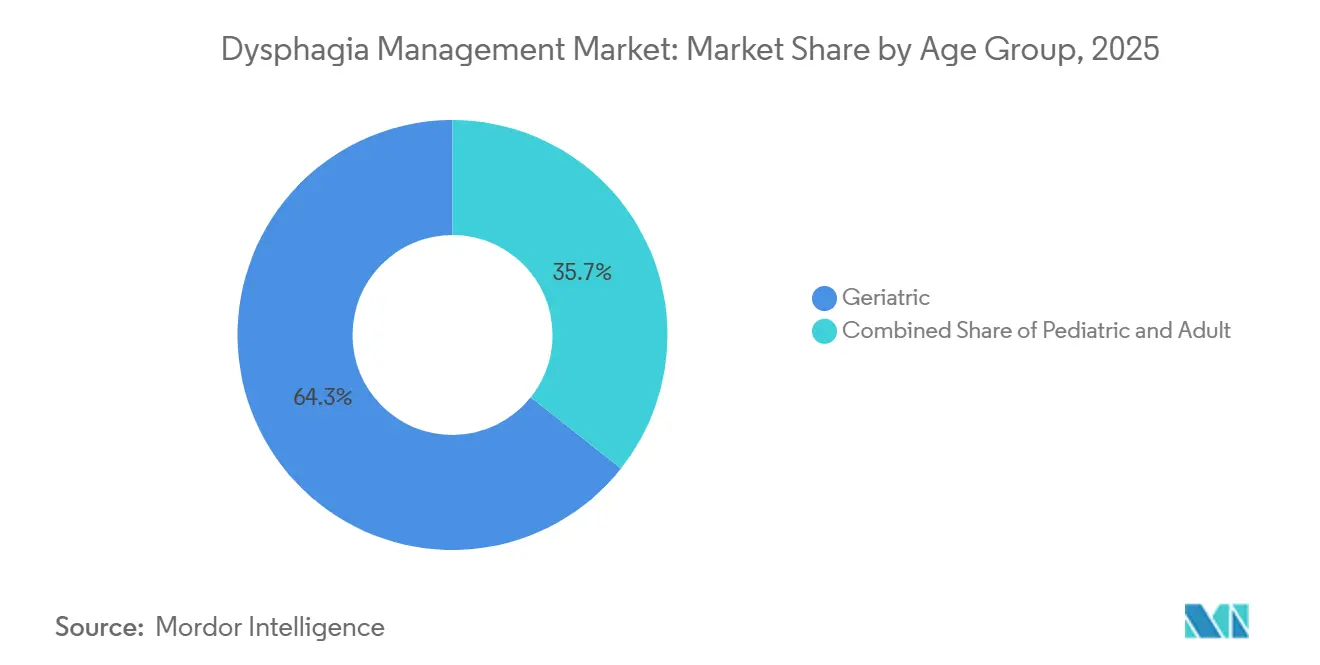
- By age group, the geriatric segment held 64.33% of revenue in 2025 and was also the fastest-growing age group through 2031.
- By end user, hospitals and ambulatory surgical centers held 36.11% of revenue in 2025, while homecare settings were the fastest-growing end-user category through 2031.
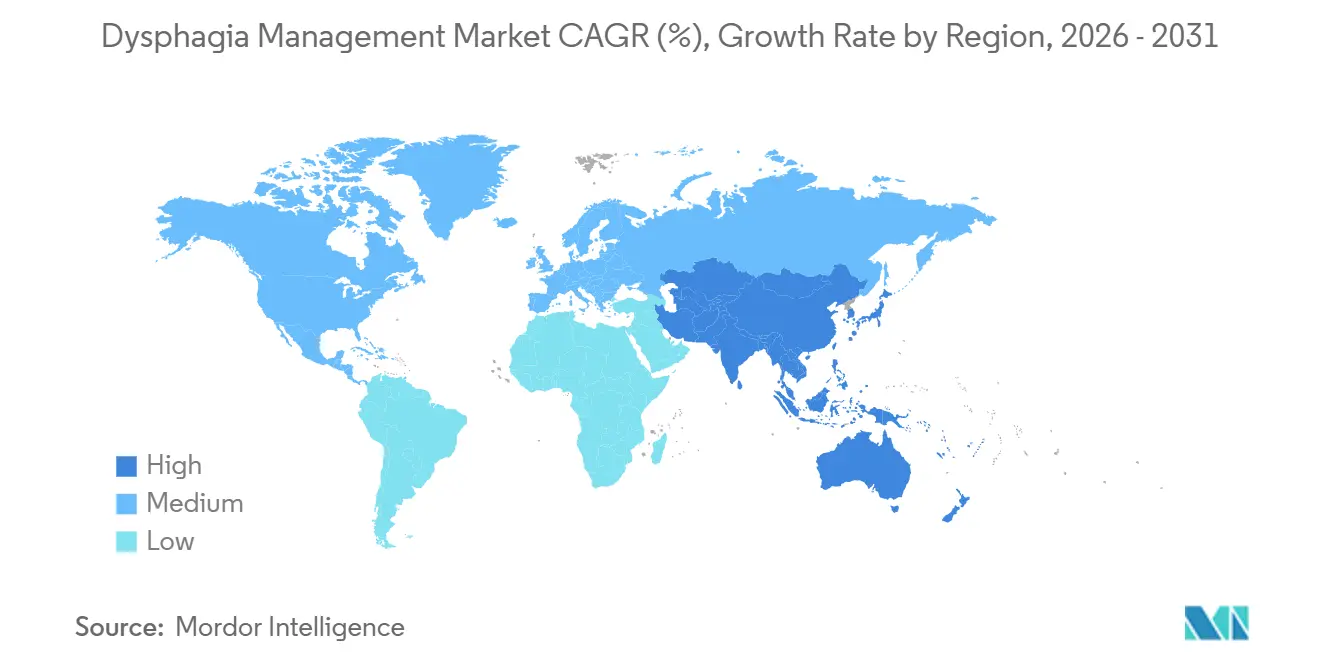
- By geography, North America held 41.21% of revenue in 2025, while Asia-Pacific was projected to grow at a 6.55% CAGR through 2031.
Note: Market size and forecast figures in this report are generated using Mordor Intelligence’s proprietary estimation framework, updated with the latest available data and insights as of January 2026.
Global Dysphagia Management Market Trends and Insights
Drivers Impact Analysis*
| Driver | (~) % Impact on CAGR Forecast | Geographic Relevance | Impact Timeline |
|---|---|---|---|
| Aging and Neurological Disease Burden | +1.3% | Global | Long term (≥ 4 years) |
| Earlier Dysphagia Screening and Instrumental Assessment | +0.7% | North America and the EU, spill-over to APAC | Medium term (2-4 years) |
| Expansion of Home-Based and Post-Acute Dysphagia Care | +0.6% | Global, with concentrated gains in North America, the EU, and APAC | Medium term (2-4 years) |
| IDDSI Standardization of Texture and Liquid Consistency | +0.5% | Global, led by ANZ, Singapore, the EU, and North America | Long term (≥ 4 years) |
| Salivary-Amylase-Resistant Texture-Modified Nutrition | +0.4% | APAC, ANZ, EU | Medium term (2-4 years) |
| Portable, Discharge-Ready Feeding and Monitoring Workflows | +0.5% | Global, near-term gains in North America and the EU | Short term (≤ 2 years) |
| Source: Mordor Intelligence | |||
Aging and Neurological Disease Burden
Aging populations provide a stable demand base for the dysphagia management market, as swallowing impairments often require ongoing clinical and nutritional support. Inpatient rehabilitation evidence published in 2024 found that 33% of older patients with dysphagia developed aspiration pneumonia.[2]Rainer Dziewas et al., “Complications of Oropharyngeal Dysphagia in Older Individuals and Interventions to Reduce Their Risk,” Frontiers in Neurology, frontiersin.org The same evidence reported malnutrition rates of 25% to 45% among dysphagia patients across the reviewed cohorts. Sarcopenia was associated with dysphagia, with a corrected odds ratio of 4.1 and a 95% confidence interval of 2.3 to 7.3. In 2025, low-income countries had up to 82 times fewer neurologists per 100,000 residents than high-income countries, which can delay diagnosis and treatment. Therefore, the dysphagia management market benefits from integrated nutritional rehabilitation and swallowing care for older patients with neurological diseases.
Earlier Dysphagia Screening and Instrumental Assessment
Hospitals are placing greater emphasis on instrumental assessment because bedside reviews can fail to identify silent aspiration. A 2025 review found continued gaps in psychometric evidence for dysphagia screening tools used with older adults. This limitation supports demand for sensor-based and AI-assisted alternatives to water swallowing tests within the Dysphagia management market. The 2025 UEG and ESGNM clinical recommendations identified videofluoroscopic swallow study and fiberoptic endoscopic evaluation of swallowing as first-line assessments for oropharyngeal and esophageal dysphagia. A 2025 survey found that 81.4% of U.S. speech-language pathologists had access to imaging assessments, although protocol use varied among younger clinicians.[3]American Speech-Language-Hearing Association, “Use of Standardized Dysphagia Protocols in Clinical Practice A Survey of U.S. Speech-Language Pathologists,” Journal of Speech, Language, and Hearing Research, pubs.asha.org Hospitals also have a financial reason to improve screening, where pneumonia readmissions can affect performance under federal payment programs.
Expansion of Home-Based and Post-Acute Dysphagia Care
Home-based rehabilitation and enteral nutrition are increasing the need for care models that support patients after discharge. The dysphagia management market benefits from portable systems that enable caregivers to manage feeding under clinical oversight. In September 2025, the National Home Infusion Association reported that one in four enteral nutrition providers was considering or planning to exit the supply business because of reimbursement conditions. Commercial insurers covered 38.3% of home enteral nutrition users, while Medicare fee-for-service and dual-eligible patients accounted for 34.1%. This payer mix complicates purchasing and formulary decisions for suppliers and providers. In May 2024, Rockfield Medical Devices received FDA over-the-counter clearance for its Mobility+ Enteral Feeding System, reflecting the shift toward portable devices that may reduce prescription-related access barriers.
IDDSI Standardization of Texture and Liquid Consistency
The IDDSI framework is turning texture and fluid consistency into a product compliance issue across care settings. Singapore made IDDSI adherence a licensing requirement for care facilities under the Healthcare Services Act from August 2024. The Dysphagia management market is affected because facilities must use the required texture and fluid levels and document suitable alternative diets when primary levels are unavailable. IDDSI released Framework V2.2 in April 2026, updating testing methods and food level descriptions. Manufacturers must validate existing products and may need to reformulate them under the updated framework. A 2026 Swedish mixed-methods study found that structured implementation improved meal compliance across all IDDSI texture levels. The former U.S. National Dysphagia Diet had already been fully superseded by IDDSI since October 2021, leaving suppliers with continuing validation work.
Restraints Impact Analysis*
| Restraint | (~) % Impact on CAGR Forecast | Geographic Relevance | Impact Timeline |
|---|---|---|---|
| Reimbursement and Coverage Variability | -1.1% | North America, acute, and the EU, moderate | Short term (≤ 2 years) |
| Shortage of Trained Dysphagia Specialists | -0.9% | Global, acute in MEA and APAC | Long term (≥ 4 years) |
| Palatability, Stigma, and Adherence Losses | -0.5% | Global | Medium term (2-4 years) |
| Cross-Border Product Classification And Raw-Material Variability | -0.4% | APAC, MEA, South America | Medium term (2-4 years) |
| Source: Mordor Intelligence | |||
Reimbursement and Coverage Variability
Coverage differences across Medicare contractors, Medicare Advantage plans, and state Medicaid programs can limit the use of newer assessment tools and specialist services. ASHA reported in 2025 that speech-language pathologists faced delayed or inconsistent Medicare Advantage payments, while utilization management practices reduced access for some beneficiaries. The dysphagia management market also faces supplier pressure in home enteral nutrition. The number of Medicare suppliers offering home enteral nutrition kits declined 31% from 2014 to 2023 under competitive bidding pressure.[4]National Home Infusion Association, “Trends in Home Enteral Nutrition The Impact of Competitive Bidding on Access and Quality,” NHIA White Paper, nhia.org Texture-modified retail nutrition is not uniformly reimbursed across Europe, and several health systems cap speech therapy reimbursement. Coverage requirements for swallowing studies add administrative work that is harder for smaller providers to manage. These conditions favor organizations with broader clinical networks and established reimbursement capabilities.
Shortage of Trained Dysphagia Specialists
Dysphagia care depends on speech-language pathologists who assess patients, guide rehabilitation, and determine care pathways. In ASHA’s 2025 survey, 55.5% of healthcare respondents said job openings exceeded job seekers at their facilities. The survey also found funded but unfilled positions at 44.8% of facilities, despite a 3.3% annual increase in ASHA-certified speech-language pathologists to 212,864 by the end of 2024. The gap is especially relevant to home health, rural care, and underserved settings. A limited specialist workforce can slow the adoption of advanced products in the dysphagia management market, where clinical judgment remains central. Digital rehabilitation and AI-assisted screening can support lower-acuity cases, but complex mixed dysphagia continues to require direct specialist involvement.
*Our forecasts treat driver/restraint impacts as directional, not additive. The impact forecasts reflect baseline growth, mix effects, and variable interactions.
Segment Analysis
By Product Type: Nutritional Solutions Support Institutional and Home Care
Nutritional solutions held 41.22% of the dysphagia management market share in 2025, reflecting the use of thickeners, texture-modified foods, and enteral formulas in institutional and home settings. A 2026 study found that starch-based products lost more than 99% of viscosity within 5 seconds of salivary alpha-amylase exposure, whereas xanthan gum products showed a 1% to 20% reduction.[5]P. García-Peris et al., “Salivary Alpha-Amylase Time-Effect on Thickening Products,” PubMed Central, pmc.ncbi.nlm.nih.gov This distinction can affect aspiration risk and clinical purchasing decisions. Fresenius Kabi expanded its Fresubin plant-based range during 2025 and 2026.
Feeding tubes and devices were the second-largest category, supported by nasogastric and gastrostomy placement in hospitals and nutrition centers. Drugs were the fastest-growing category through 2031 as pharmacological protocols expanded for esophageal dysphagia. Proton pump inhibitors, corticosteroids, and antimicrobials were included in the supplied treatment scope.



By Indication: Oropharyngeal Dysphagia Drives Broad Care Demand
Oropharyngeal dysphagia held 62.18% of the dysphagia management market share in 2025, consistent with its prevalence in stroke, neurodegenerative disease, and age-related swallowing decline. It requires nutritional modification, assessment, and rehabilitation across several care settings. A June 2026 study in Catalonia identified polypharmacy and poor baseline nutritional status as independent risk factors in older adults. These findings extend the relevant patient group beyond conventional stroke and dementia cohorts.
Esophageal dysphagia has a separate pathway that involves endoscopy, dilation, and pharmacological treatment. The 2025 UEG and ESGNM recommendations included proton pump inhibitors, calcium-channel blockers, and phosphodiesterase inhibitors for specific subtypes. Mixed and multifactorial dysphagia was the fastest-growing indication through 2031 as overlapping oral, pharyngeal, and esophageal dysfunction became more recognized. A July 2026 study compared the Medtronic ManoScan ESO and Laborie LMT systems for standardized swallow pressure measurement.
By Age Group: Geriatric Care Holds the Largest Revenue Base
The geriatric group represented 64.33% of revenue in 2025 and was the largest age cohort in the Dysphagia management market. It was also the fastest-growing age group through 2031. Geriatric patients often require texture-modified meals, enteral nutrition, and continuing speech therapy. Sarcopenia was associated with dysphagia at a corrected odds ratio of 4.1, supporting combined nutritional rehabilitation, resistance exercise, and swallowing therapy.
Adults represented the second-largest revenue pool, driven by stroke, head and neck cancer, and surgical complications. They also required more instrumental swallowing assessments. Pediatric patients were the smallest cohort by revenue but required age-specific formulas, pediatric feeding tubes, and palatability-focused oral supplements. Nestlé Health Science launched Complete Pediatric Oral Blends in 7 European countries during February 2026, using fruit, rice, and pea proteins.
By End User: Hospitals Lead, While Homecare Grows Fastest
Hospitals and ambulatory surgical centers held 36.11% of revenue in 2025, making them the leading end-user setting in the Dysphagia management market. These sites manage acute diagnosis, instrumental assessment, and initial nutritional treatment. Access to VFSS and FEES systems, multidisciplinary swallowing teams, and formulary purchasing support their role. Long-term care, rehabilitation, and outpatient clinics manage continuing nutrition, device use, therapy, and reassessment.
Homecare settings were the fastest-growing end-user category through 2031. Portable feeding equipment, telehealth, and remote monitoring support care after discharge. The NHIA reported in 2025 that 1 in 4 enteral nutrition providers were considering leaving the home enteral nutrition supply business because of reimbursement conditions. This supply constraint may restrict the full potential of homecare expansion.
Geography Analysis
North America held 41.21% of global revenue in 2025, supported by established speech-language pathology networks and hospital formulary systems. The United States had 61.9 certified speech-language pathologists per 100,000 residents in 2025. Availability ranged from 33.4 per 100,000 in Nevada to 101.0 per 100,000 in Arkansas.[6]American Speech-Language-Hearing Association, “Supply and Demand Resource List for Speech-Language Pathologists,” ASHA, asha.org Canada broadly reimburses speech therapy and enteral nutrition for diagnosed patients. Mexico is expanding as private hospital networks increase geriatric care capacity.
Europe was the second-largest region, with Germany, the United Kingdom, France, Italy, and Spain as major institutional markets. Germany’s statutory insurance system supports hospital and home enteral nutrition reimbursement. The United Kingdom’s NHS procurement model emphasizes clinical evidence and pricing compliance. UEG and ESGNM recommendations are supporting endoscopy investment, while structured IDDSI programs in Sweden and Austria create validation needs. Brazil is expanding with geriatric population growth and urban hospital capacity, though screening remains uneven outside major centers.
Asia-Pacific was the fastest-growing region at a 6.55% CAGR through 2031, supporting growth in the Dysphagia management market size. Japan’s long-term care insurance supports eligible older patients using texture-modified nutrition. China is expanding rehabilitation and geriatric facilities, while South Korea is developing remote monitoring-based home feeding. India is building specialist capacity, and Australia has adopted IDDSI early with acute stroke screening protocols. GCC investment supports Middle East and Africa growth, but specialist shortages and import costs restrict wider adoption in Sub-Saharan Africa.

Competitive Landscape
The dysphagia management market is moderately fragmented, as no single participant controls pharmaceuticals, nutritional solutions, and diagnostics across the full care pathway. Abbott Laboratories, Nestlé Health Science, Fresenius Kabi, and Danone Nutricia maintain broad nutritional portfolios through hospital formularies and specialized products. Avanos Medical, Becton Dickinson, and Cook Medical compete through feeding safety solutions, ENFit compliance, and product portability. Olympus Corporation and KARL STORZ hold strong positions in endoscopic visualization for FEES assessments. Recommendations from the UEG and ESGNM recognize FEES as a gold-standard assessment method.
Avanos Medical is expected to complete its acquisition by affiliates of American Industrial Partners on July 27, 2026. The all-cash transaction is valued at USD 1.27 billion and is expected to transfer ownership of Specialty Nutrition Systems. Medtronic and KARL STORZ are expected to announce a U.S. collaboration in June 2026, combining Medtronic’s Stealth AXiS ENT system with KARL STORZ visualization instruments. Fresenius Kabi is expected to launch Fresubin PLANT-BASED Tube Feed across the UK and European markets in March 2026. These developments are expected to support product specialization and integrated clinical workflows.
AI-assisted assessments, connected homecare platforms, and IDDSI-compliant foods tailored to different cultural preferences remain key competitive areas. SimplyThick and Hormel Health Labs compete with measured thickeners that emphasize clinical safety, palatability, and ease of use. A 2026 swallow-pressure study is expected to evaluate Medtronic’s ManoScan ESO against Laborie’s system. The dysphagia management market remains accessible to specialized providers, as product performance and clinical validation strongly influence procurement decisions.
Dysphagia Management Industry Leaders
Abbott Laboratories
Danone Nutricia
Fresenius Kabi
Kent Precision Foods Group, Inc.
Nestlé Health Science
- *Disclaimer: Major Players sorted in no particular order

Recent Industry Developments
- June 2026: Medtronic and KARL STORZ announced a strategic collaboration to expand access to integrated ENT surgical solutions in the United States, combining Medtronic's FDA-cleared Stealth AXiS ENT system with KARL STORZ's endoscopy and visualization instruments.
- April 2026: Avanos Medical entered a definitive go-private agreement with American Industrial Partners for USD 1.272 billion in an all-cash deal representing a 72.1% premium to the stock's prior closing price, unanimously approved by the Avanos Board of Directors.
- March 2026: Fresenius Kabi launched Fresubin PLANT-BASED Tube Feed across the UK and European markets, a nutritionally complete, high-energy 1.5 kcal/ml, high-protein 20% energy tube feed made from 100% plant-based soya protein with fiber, certified halal and kosher, and free from milk protein and lactose.
- March 2026: Olympus Corporation launched the VISERA ELITE III surgical imaging platform in the United States, equipped with true 4K and 3D imaging, continuous autofocus, narrow-band imaging technology, and fluorescence-guided surgery capabilities.


Global Dysphagia Management Market Report Scope
As per the scope of the report, the dysphagia management market includes products, services, and therapeutic solutions for treating, rehabilitating, and managing swallowing disorders (dysphagia) over the long term. Neurological conditions, aging, stroke, head and neck cancers, and other medical conditions can cause dysphagia. The market encompasses clinical interventions, rehabilitation therapies, nutritional support, and assistive technologies designed to improve swallowing function and prevent complications, including aspiration, malnutrition, and dehydration.
The dysphagia management market is segmented by product type, indication, age group, end user, and geography. By product type, it is further divided into drugs, feeding tubes and devices, nutritional solutions, and others. By indication, it is segmented into oropharyngeal dysphagia, esophageal dysphagia, and mixed and multifactorial dysphagia. By age group, the market is segmented into pediatric, adult, and geriatric. By end user, the market is segmented into hospitals and ambulatory surgical centers, rehabilitation centers, long-term care facilities, outpatient clinics, homecare settings, and others. The geography segment is further divided into North America, Europe, Asia-Pacific, the Middle East and Africa, and South America. The report also covers the estimated market sizes and trends for 17 countries across major regions globally. The report offers the market size and forecasts in value (USD) for the above segments.
| Drugs | Proton Pump Inhibitors |
| Antimicrobials | |
| Corticosteroids and Other Drugs | |
| Feeding Tubes and Devices | Nasogastric Tubes |
| Gastrostomy and PEG Tubes | |
| Jejunostomy and PEJ Tubes | |
| Enteral Feeding Pumps | |
| Feeding Accessories and ENFit Components | |
| Nutritional Solutions | Thickening Agents |
| Pre-Thickened Beverages | |
| Texture-Modified Foods and Purees | |
| Oral Nutritional Supplements | |
| Enteral Nutrition Formulas | |
| Others |
| Oropharyngeal Dysphagia |
| Esophageal Dysphagia |
| Mixed and Multifactorial Dysphagia |
| Pediatric |
| Adult |
| Geriatric |
| Hospitals and Ambulatory Surgical Centers |
| Rehabilitation Centers |
| Long-Term Care Facilities |
| Outpatient Clinics |
| Homecare Settings |
| Others |
| North America | United States |
| Canada | |
| Mexico | |
| Europe | Germany |
| United Kingdom | |
| France | |
| Italy | |
| Spain | |
| Rest of Europe | |
| Asia-Pacific | China |
| Japan | |
| India | |
| Australia | |
| South Korea | |
| Rest of Asia-Pacific | |
| Middle East and Africa | GCC |
| South Africa | |
| Rest of Middle East and Africa | |
| South America | Brazil |
| Argentina | |
| Rest of South America |
| By Product Type | Drugs | Proton Pump Inhibitors |
| Antimicrobials | ||
| Corticosteroids and Other Drugs | ||
| Feeding Tubes and Devices | Nasogastric Tubes | |
| Gastrostomy and PEG Tubes | ||
| Jejunostomy and PEJ Tubes | ||
| Enteral Feeding Pumps | ||
| Feeding Accessories and ENFit Components | ||
| Nutritional Solutions | Thickening Agents | |
| Pre-Thickened Beverages | ||
| Texture-Modified Foods and Purees | ||
| Oral Nutritional Supplements | ||
| Enteral Nutrition Formulas | ||
| Others | ||
| By Indication | Oropharyngeal Dysphagia | |
| Esophageal Dysphagia | ||
| Mixed and Multifactorial Dysphagia | ||
| By Age Group | Pediatric | |
| Adult | ||
| Geriatric | ||
| By End User | Hospitals and Ambulatory Surgical Centers | |
| Rehabilitation Centers | ||
| Long-Term Care Facilities | ||
| Outpatient Clinics | ||
| Homecare Settings | ||
| Others | ||
| By Geography | North America | United States |
| Canada | ||
| Mexico | ||
| Europe | Germany | |
| United Kingdom | ||
| France | ||
| Italy | ||
| Spain | ||
| Rest of Europe | ||
| Asia-Pacific | China | |
| Japan | ||
| India | ||
| Australia | ||
| South Korea | ||
| Rest of Asia-Pacific | ||
| Middle East and Africa | GCC | |
| South Africa | ||
| Rest of Middle East and Africa | ||
| South America | Brazil | |
| Argentina | ||
| Rest of South America | ||


Key Questions Answered in the Report
What is the 2031 forecast for dysphagia management?
The Dysphagia management market is forecast to reach USD 7.95 billion by 2031 at a 5.28% CAGR. It is estimated at USD 6.14 billion in 2026.
What is driving demand for dysphagia management solutions?
Aging, neurological disease, and the need to address aspiration pneumonia and malnutrition are key factors. The dysphagia management market also reflects continued demand for assessment, nutrition, and rehabilitation across hospital and home settings.
Which product category was the largest in 2025?
Nutritional solutions led with 41.22% of 2025 revenue. The Dysphagia management market uses these products across acute, long-term, and home care settings.
Which age group has the largest care need?
The geriatric group held 64.33% of revenue in 2025 and was also the fastest-growing age group. The Dysphagia management market serves this group through nutritional support and therapy.
Why is homecare becoming more important?
Portable feeding systems, telehealth, and remote monitoring support care after hospital discharge. The Dysphagia management market may be constrained by reimbursement conditions and supplier participation.
Which region is growing fastest?
Asia-Pacific is projected to grow at a 6.55% CAGR through 2031, supported by aging populations and expanding rehabilitation capacity.
Page last updated on:





