
Market Overview
| Study Period | 2021 - 2031 |
|---|---|
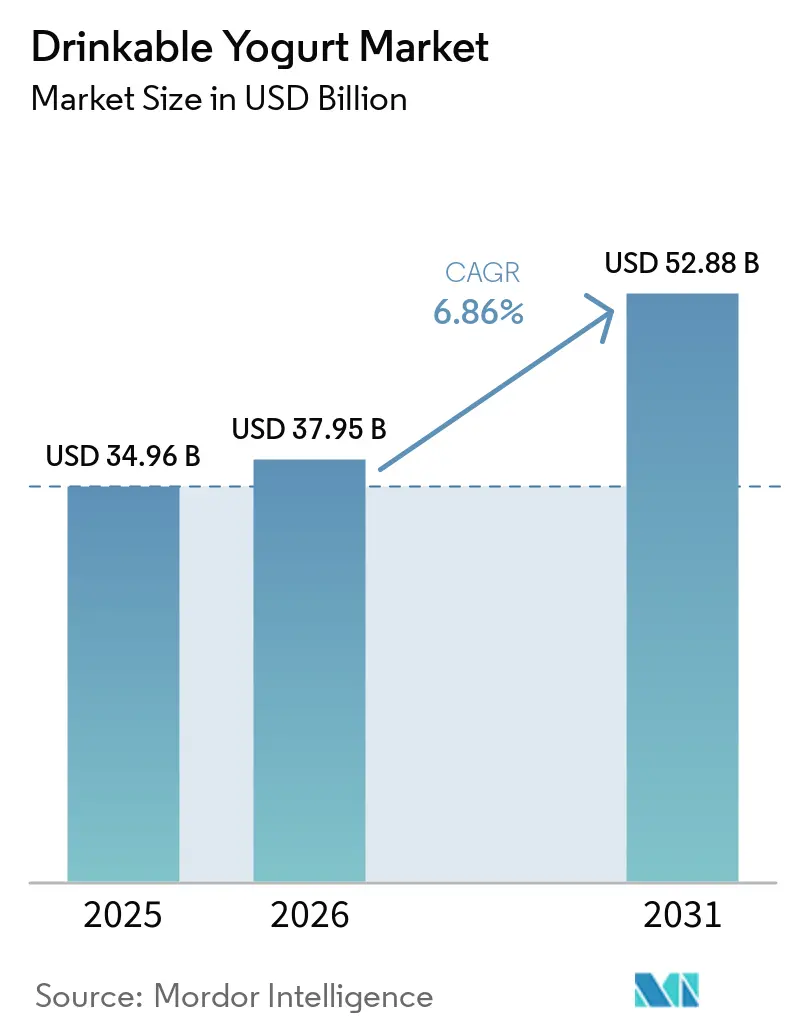
| Market Size (2026) | USD 37.95 Billion |
| Market Size (2031) | USD 52.88 Billion |
| Growth Rate (2026 - 2031) | 6.86 % |
| Fastest Growing Market | Asia Pacific |
| Largest Market | Europe |
| Market Concentration | Low |
Major Players *Disclaimer: Major Players sorted in no particular order Image © Mordor Intelligence. Reuse requires attribution under CC BY 4.0. | |
Drinkable Yogurt Market Analysis by Mordor Intelligence
The drinkable yogurt market size is valued at USD 37.95 billion in 2026, growing from the 2025 value of USD 34.96 billion, and is forecast to climb to USD 52.88 billion by 2031, advancing at a 6.86% CAGR during the forecast period. This growth rests on rising health awareness, accelerating channel diversification, and steady product innovation. Premium, low-sugar formulations that comply with front-of-package rules are securing shelf visibility, while precision-fermented plant alternatives are redefining competitive boundaries. Large dairy conglomerates still dominate, yet regional specialists and start-ups are winning share by pairing strain-specific probiotics with sustainable packaging. Regulatory tightening in the United States, Canada, and the United Kingdom is forcing reformulation, but it is also reinforcing consumer trust, which lifts category velocity. Volatile raw-milk prices and tightening retailer margins have widened the gap between cost-efficient manufacturers and lagging incumbents, spurring plant-based entrants to leverage lower commodity exposure.
Key Report Takeaways
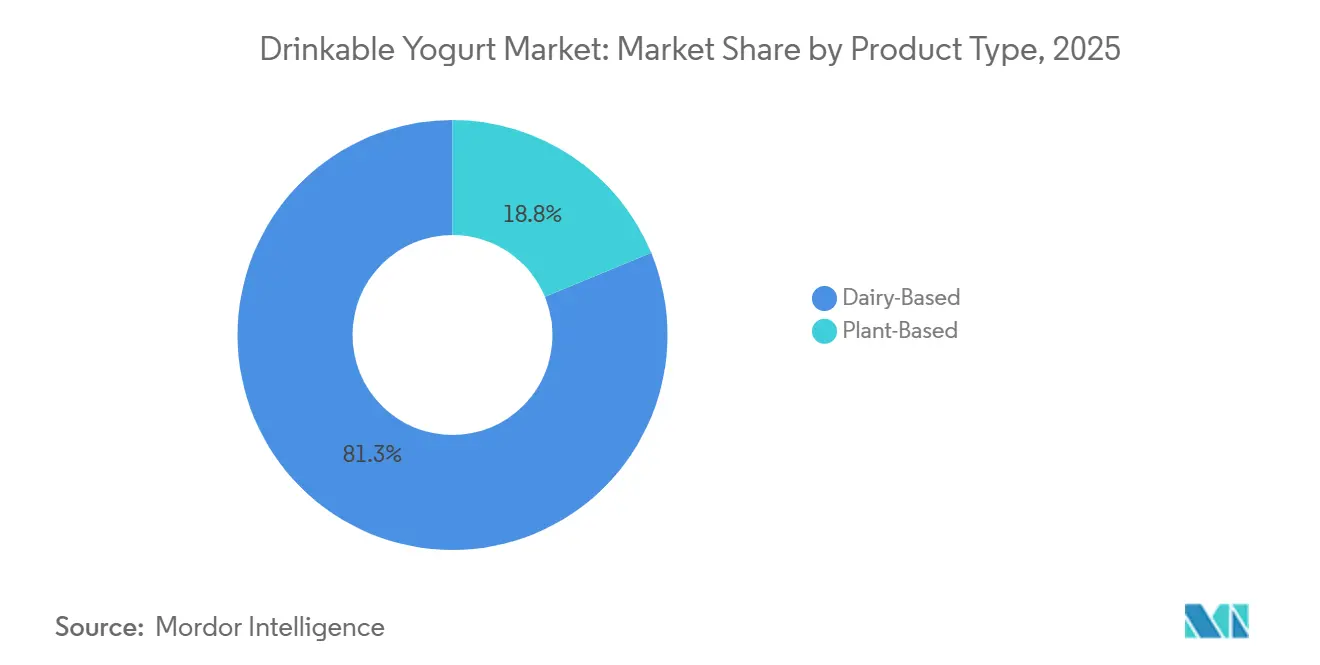
- By product type, Dairy-Based captured 81.25% of drinkable yogurt market share in 2025, while Plant-Based is forecast to expand at a 8.47% CAGR through 2031.
- By packaging type, PET Bottles led with 44.58% revenue share in 2025; Pouches & Sachets are projected to grow at an 8.86% CAGR to 2031.
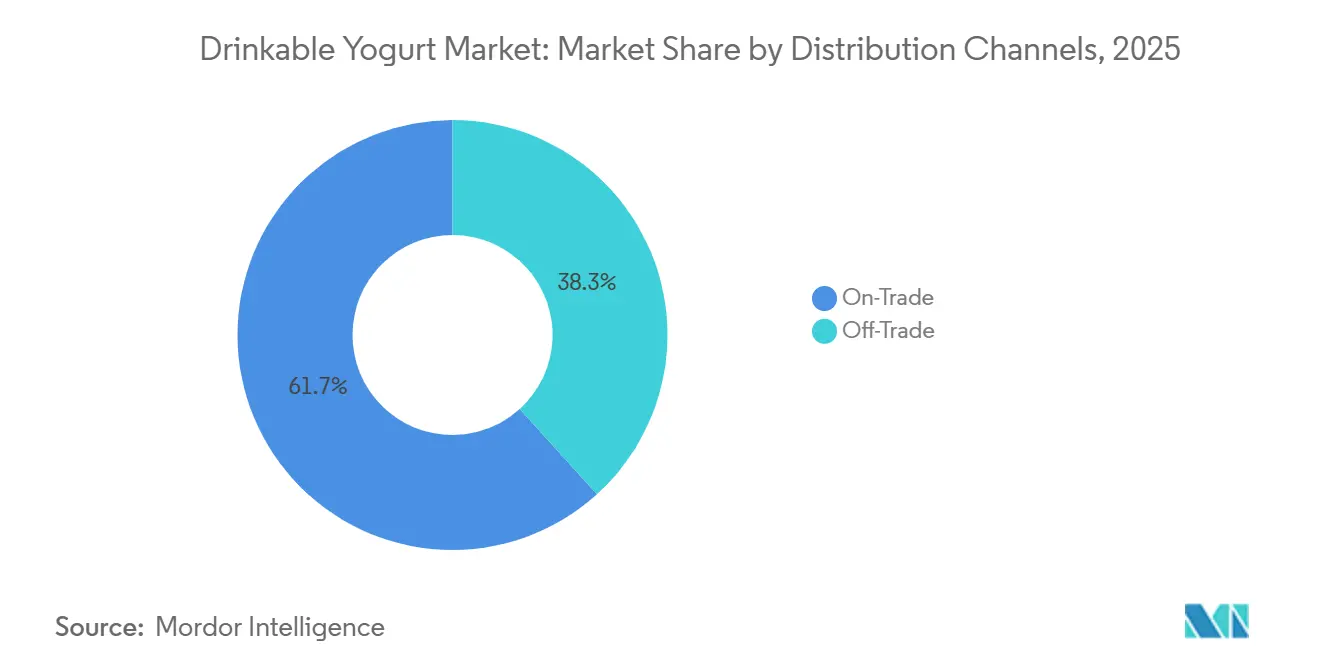
- By distribution channel, Off-Trade accounted for 38.27% of the drinkable yogurt market size in 2025 and On-Trade is advancing at a 10.26% CAGR through 2031.
- By geography, Europe held 35.68% share of the drinkable yogurt market in 2025, whereas Asia-Pacific is rising at a 9.86% CAGR to 2031.
Note: Market size and forecast figures in this report are generated using Mordor Intelligence’s proprietary estimation framework, updated with the latest available data and insights as of January 2026.
Market Trends and Insights
Drivers Impact Analysis of Drinkable Yogurt Market*
| Drivers | (~) % Impact on CAGR Forecasts | Geographic Relevance | Impact Timeline |
|---|---|---|---|
| Increasing demand for convenient, on-the-go probiotic snacks | +1.2% | Global, with highest intensity in North America and Asia-Pacific urban centers | Medium term (2-4 years) |
| Rising health consciousness drives preference for gut-friendly dairy | +1.5% | Global, particularly Europe and North America; emerging in Asia-Pacific | Long term (≥ 4 years) |
| Product innovations like plant-based, fortified, and flavored variants | +1.0% | North America, Europe, and Asia-Pacific; limited penetration in MEA and South America | Medium term (2-4 years) |
| Marketing emphasizing digestive and immune benefits | +0.8% | Global, with regulatory compliance influence in North America and Europe | Short term (≤ 2 years) |
| Aging population seeking nutrient-dense options for bone health and immunity support | +0.7% | Europe, North America, and Japan; moderate relevance in China | Long term (≥ 4 years) |
| Expansion of retail channels including supermarkets, convenience stores, and e-commerce | +0.9% | Global, with fastest adoption in Asia-Pacific and North America | Medium term (2-4 years) |
| Source: Mordor Intelligence | |||
Increasing Demand for Convenient, On-the-Go Probiotic Snacks
Urbanization and the demands of modern life are pushing consumers toward convenient, single-serve formats that provide functional nutrition without requiring preparation. This trend is particularly prominent in North America and the Asia-Pacific. In these regions, commute times in major metropolitan areas often exceed 60 minutes, and more than 30% of working adults are skipping breakfast. Drinkable yogurt, with its ambient or chilled shelf stability, resealable packaging, and portion control, aligns well with these changing consumer habits. Manufacturers are responding by introducing 200-milliliter to 250-milliliter bottles and pouches designed for easy cup-holder compatibility and one-handed use. The FDA's updated "healthy" claim criteria now allow yogurt products that meet strict added-sugar and saturated-fat limits to display this voluntary label[1]Source: U.S. Food and Drug Administration, “Use of the ‘Healthy’ Claim on Food Labeling,” fda.gov. This change motivates manufacturers to reformulate their offerings, focusing on nutrient-dense, low-sugar profiles that appeal to health-conscious consumers. E-commerce, which experienced significant growth in the food and beverage sector during the pandemic, continues to expand. Subscription models and same-day delivery services are simplifying impulse purchases. Enhancing the convenience narrative further, workplace wellness programs are stocking office refrigerators with probiotic snacks, creating a direct channel that bypasses traditional retail markups.
Rising Health Consciousness Drives Preference for Gut-Friendly Dairy
Growing consumer awareness of the gut microbiome's impact on immune function, mental health, and metabolic regulation has propelled probiotics from niche supplements to mainstream dietary essentials. Clinical evidence demonstrating the benefits of specific Lactobacillus and Bifidobacterium strains in reducing gastrointestinal distress and improving pathogen resistance is now widely shared through digital health platforms and influencer campaigns. According to the FAO's 2024 Agricultural Outlook, middle-income countries are driving the fastest growth in animal-source food consumption[2]Source: Food and Agriculture Organization, “FAO Dairy Price Index,” fao.org. Dairy products, particularly fermented variants, are capturing a significant share of increased spending as incomes rise. This trend is especially pronounced in China and India, where per-capita dairy consumption, though below global averages, is increasing rapidly. Regulatory frameworks are evolving: the FDA's guidance on qualified health claims for probiotics, while still restrictive, allows manufacturers to highlight digestive and immune benefits if supported by randomized controlled trials, avoiding enforcement actions. However, strain-specific efficacy remains a challenge. Generic "probiotic" labeling is losing credibility as informed consumers demand transparency on colony-forming units and strain identification, compelling brands to invest in clinical validation and third-party certification.
Product Innovations Like Plant-Based, Fortified, and Flavored Variants
Plant-based drinkable yogurts have become a mainstream category. Precision fermentation technologies now allow manufacturers to culture traditional yogurt bacteria on substrates such as oat, almond, and coconut. This advancement replicates the tangy mouthfeel and probiotic benefits of dairy while eliminating lactose and animal protein. Oat-based formulations are gaining popularity due to their neutral flavor, creamy texture, and lower environmental impact compared to almond or soy options. Brands are also focusing on fortification by incorporating vitamin D, calcium, and protein isolates to address micronutrient deficiencies identified in national dietary surveys, particularly among adolescents and older adults. The FDA's proposed front-of-package labeling, which requires interpretive descriptors for saturated fat, sodium, and added sugars, is driving innovation toward naturally sweetened alternatives using monk fruit, stevia, or date syrup. Flavor options are expanding beyond traditional vanilla and strawberry to include functional ingredients like turmeric, matcha, and adaptogens, catering to wellness-conscious millennials and Gen Z consumers. However, the regulatory environment remains inconsistent.
Marketing Emphasizing Digestive and Immune Benefits
Brands are moving away from broad wellness messaging toward specific, research-supported claims. Marketing now highlights the unique benefits of strains—such as Lactobacillus rhamnosus GG for preventing diarrhea and Bifidobacterium lactis for improving regularity. These campaigns emphasize clinical outcomes, including reduced gastrointestinal distress linked to antibiotics and improved vaccine responses. The FDA's updated guidelines on nutrient and health claims offer a compliance framework, but the requirements are stringent: manufacturers must provide evidence of significant effects through well-designed human trials and avoid overstating benefits. In the U.S., digital platforms are enhancing brand reach—Instagram and TikTok influencers collaborate with companies to create content showcasing daily consumption habits. Meanwhile, e-commerce platforms are integrating educational content on the gut-brain axis into product pages. Since the pandemic, the focus on immune support has intensified, with consumers increasingly turning to nutrition to prevent infections. However, regulatory scrutiny is increasing. For instance, the UK will enforce advertising restrictions on certain foods, including sweetened yogurts, starting October 2025. This regulation, regardless of probiotic content, requires brands to reformulate or risk exclusion from major advertising channels.
Restraints Impact Analysis of Drinkable Yogurt Market*
| Restraints | (~) % Impact on CAGR Forecasts | Geographic Relevance | Impact Timeline |
|---|---|---|---|
| High sugar content in flavored variants faces regulatory scrutiny | -0.6% | North America, Europe, and select Asia-Pacific markets (Australia, Singapore) | Short term (≤ 2 years) |
| Intense competition from smoothies, kombucha, and plant milks | -0.8% | Global, with highest intensity in North America and Europe | Medium term (2-4 years) |
| Stringent labeling rules on health claims | -0.4% | North America and Europe; emerging in Asia-Pacific | Short term (≤ 2 years) |
| Premium pricing limits penetration in price-sensitive emerging markets | -0.5% | South America, Middle East, Africa, and rural Asia | Long term (≥ 4 years) |
| Source: Mordor Intelligence | |||
High Sugar Content in Flavored Variants Faces Regulatory Scrutiny
Public-health authorities are placing greater focus on flavored drinkable yogurts, which lead retail sales, due to concerns about added-sugar consumption. In August 2023, the FDA introduced a 50-gram Daily Value for added sugars and established labeling thresholds, classifying products with 2.5 grams or more per reference amount as contributing 5 percent or more of the Daily Value. Beginning January 2025, a front-of-package labeling proposal will require products exceeding 20 percent of the Daily Value for added sugars to display a "High" descriptor, which research shows can significantly reduce consumer purchase intent. Similarly, the UK's October 2025 advertising restrictions will prohibit "sweetened yoghurt and fromage frais" from broadcast and online advertising if they score one or more points under the Department of Health's nutrient profiling model. These regulatory measures are pressuring margins for traditional portfolios focused on fruit-on-the-bottom and dessert-style formulations. Reformulating these products is challenging: replacing sugar with non-nutritive sweeteners impacts mouthfeel and necessitates extensive consumer testing, while natural sweeteners like stevia and monk fruit incur higher ingredient costs. Brands that fail to adapt risk being de-listed by retailers, as grocers increasingly favor products that comply with evolving dietary guidelines. Manufacturers are responding in different ways: some are launching "no added sugar" product lines to mitigate regulatory risks, while others are shifting away from sweetened segments to concentrate on plain and lightly sweetened options that qualify for health claims.
Intense Competition from Smoothies, Kombucha, and Plant Milks
Drinkable yogurt competes with an expanding range of functional beverages for consumer attention and refrigerator space. Kombucha, promoted as a trendy probiotic option with lower sugar content and a fermentation-focused narrative, has established a premium position, particularly among health-conscious millennials. Similarly, plant-based milks—such as oat, almond, and soy—are gaining popularity not only among lactose-intolerant and vegan consumers but also among flexitarians, reducing dairy consumption for ethical or environmental reasons. Smoothies, available in ready-to-drink and made-to-order formats, offer higher fruit and vegetable content, attracting consumers who prioritize whole-food nutrition over isolated probiotics. The competition is further intensified by limited retail shelf space, as grocers allocate finite chilled linear footage, and category captains, typically large dairy conglomerates, aggressively protect their share. Drinkable yogurt differentiates itself through its probiotic functionality, protein content, and calcium fortification—benefits that kombucha and plant-based milks struggle to match without additional fortification.
*Our forecasts treat driver/restraint impacts as directional, not additive. The impact forecasts reflect baseline growth, mix effects, and variable interactions.
Drinkable Yogurt Market Segment Analysis
By Product Type:
Plant Alternatives Accelerate Against Dairy incumbentsDairy-Based lines captured 81.25% of the drinkable yogurt market share in 2025, reflecting entrenched consumer trust and optimized supply chains. Plant-Based offerings, however, are forecast to post a 8.47% CAGR as lactose intolerance, vegan lifestyles, and lower environmental footprints draw incremental shoppers. The drinkable yogurt market size for plant variants is set to widen sharply as precision-fermented fats replicate dairy mouthfeel, letting oat formulations bridge taste gaps. R&D alliances, such as Fonterra with Nourish Ingredients, lower the cost of replicating creamy texture, which supports margin parity with dairy. Plant SKUs now fortify with calcium and vitamin D to secure “healthy” claim compliance, improving shelf parity and clinical credibility.
Traditional dairy manufacturers counter by expanding Greek-style, high-protein drinkables that deliver 15–20 grams of protein per serving, appealing to sports-nutrition users. Repositioned full-fat lines satisfy keto followers, while low-fat options retain mainstream volume. Hybrid recipes blending milk with plant bases shorten ingredient lists and manage cost volatility. The drinkable yogurt industry thus sees a race between dairy incumbents leveraging culture expertise and plant innovators banking on sustainability narratives.



By Packaging Type:
Pouches Gain Momentum as Sustainability Message ResonatesPET Bottles maintained 44.58% share in 2025, prized for resealability and clear walls that showcase texture. Yet Pouches & Sachets are growing at an 8.86% CAGR because they reduce plastic tonnage and suit grab-and-go use. The drinkable yogurt market size for pouches remains smaller than bottles, but is expanding in Asia’s commuter corridors. Recyclable board cartons, recently adopted by Yoplait, slash pack volume by 50% and use 78% plant-based materials, illustrating capex commitment toward retailer packaging mandates.
HDPE’s opacity guards light-sensitive probiotics, attracting premium SKUs that tout live-culture counts on front labels. Regulatory font-size rules under the U.S. proposal favor larger display panels, nudging brands toward mid-sized packs to retain visual clarity. Sustainability certifications are rapidly becoming table stakes, amplifying competitive advantage for vertically integrated firms with in-house packaging engineers.
By Distribution Channel:
On-Trade Drives Premiumization and Brand ExperienceOff-Trade still delivers 38.27% of category revenue, yet growth favors On-Trade, whose 10.26% CAGR through 2031 mirrors consumer willingness to pay for experiential consumption. Cafés integrate 250 milliliter yogurt shots into breakfast bundles, while quick-service restaurants upsell blend-to-order smoothie bases. The drinkable yogurt market size generated by On-Trade remains smaller than grocery volume, but its higher margins influence product design. Coca-Cola’s Fairlife performance confirmed that foodservice partners drive double-digit gains without promotional discounts.
Within Off-Trade, supermarkets face share leakage to convenience stores and e-commerce. Online subscription programs provide 15% discounts on recurring orders and feed shopper data back to manufacturers, enabling targeted promotions. Cold-chain costs, however, erode e-commerce margins, so only scale brands maintain profitable direct-to-consumer models. Manufacturers with limited budgets prioritize off-trade volume via distributors, then layer in selective On-Trade placements to build premium equity.
Geography Analysis
Europe Drinkable Yogurt Market
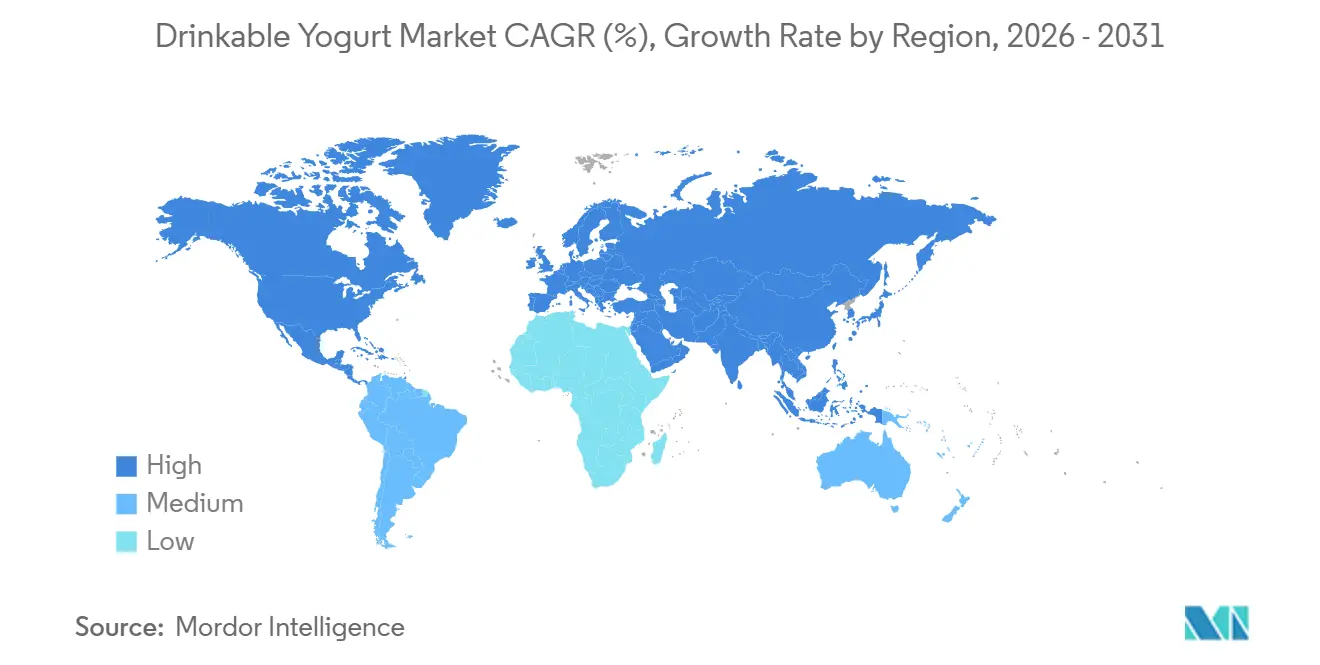
Europe retained 35.68% of the drinkable yogurt market revenue in 2025, buoyed by France, Germany, and the Netherlands, where yogurt consumption anchors breakfast routines. The EU’s positive list for health claims offers regulatory clarity yet imposes multi-year timelines that advantage incumbents with dedicated regulatory teams. UK advertising curbs on sweetened yogurts, effective October 2025, pressed brands to remove added sugars or risk media blackout. Eastern European countries, with rising disposable incomes and expanding cold chains, exhibit faster growth than Western peers, signaling a shift in regional volume mix.
APAC Drinkable Yogurt Market
Asia-Pacific is forecast to grow at 9.86% CAGR through 2031 on the back of rising incomes, urban migration, and nutrition-focused government programs. China’s 6.5% milk output rise in 2023 has fed domestic processing capacity, while India’s urban households now allocate nearly 40% of spending to food, elevating dairy uptake. Japan’s senior demographics support fortified drinkables targeting bone health, and Australia shows high per-capita volumes, albeit slower unit growth. Cold-chain infrastructure gaps persist in rural zones, yet are narrowing as public-private partnerships fund refrigerated logistics.
The Americas and MEA Drinkable Yogurt Market
North America remains a consolidation arena. Chobani’s USD 1.2 billion Rome, New York plant underscores scale economics, whereas General Mills’ USD 2.1 billion yogurt divestiture signals strategic retreat from a low-margin category. Canada’s symbol mandate, kicking in January 2026, fuels a wave of lower-sugar reformulations[3]Source: Health Canada, “Front-of-Package Nutrition Symbol Labelling Guide,” canada.ca. South America and the Middle East-Africa trail on affordability and logistics, yet urban centers such as São Paulo and Riyadh show rising probiotic awareness, hinting at long-term upside once cold-chain coverage broadens.

Regulatory Landscape
Drinkable yogurt sits within dairy and fermented-milk rules that set minimum composition, process controls, and labeling parameters, with national standards often tighter than international baselines. In the United States, the FDA yogurt standard of identity (21 CFR 131.200) specifies minimum milkfat and milk-solids-not-fat requirements and requires yogurt to reach pH 4.6 or lower within 24 hours of filling, which affects how drinkable formats are formulated while they still position as yogurt. Internationally, Codex Alimentarius (CXS 243-2003, amended 2024) defines drinks based on fermented milk as composite milk products containing at least 40% fermented milk (m/m), and requires both water declaration and the fermented-milk percentage on labels, creating a reference point for exporters and private-label programs.
Recent rule updates are tightening compliance in major demand centers and shaping reformulation, pack claims, and cross-border flows. China implemented GB 19302-2025 (National Food Safety Standard for Fermented Milk) on September 16, 2025, updating raw material requirements for fermented milk products, which affects both domestic producers and importers supplying cultures, bases, or finished products. In Europe and Great Britain, dairy imports require origin approval and heat-treatment specific model health certificates under EU rules (including Commission Regulation (EU) 2022/2292) and UK import information notes, adding documentation and lead-time considerations for multinational brands with multi-country sourcing and co-packing footprints.
Value Chain Analysis
The drinkable yogurt value chain starts with raw milk (or plant bases for non-dairy), cultures and functional ingredients (probiotics, protein concentrates, fibers, sweeteners), and packaging substrates (PET, HDPE, cartons, pouches). It then moves through standardized dairy processing steps: milk collection and chilling, standardization, pasteurization/homogenization, culture inoculation, fermentation, blending/flavoring, and hygienic filling. Manufacturing efficiency depends on fermentation tank capacity, aseptic or hygienic filling-line availability, and CIP changeover time, while distribution economics are driven by refrigerated storage and transport, typically maintained at 2 to 6 degrees Celsius, with chilled shelf life commonly spanning about 4 to 7 weeks.
Downstream, products move through distributors and cold-chain logistics providers into off-trade (supermarkets, convenience/drug stores, online cold delivery) and on-trade (cafes and foodservice) channels, where promotional cadence and rotation requirements influence SKU and pack decisions. Supply-chain integration and retailer-manufacturer programs are becoming more visible: Ahold Delhaize USA, Danone North America, and The Nature Conservancy announced a September 2025 collaboration focused on reducing Scope 3 methane emissions in dairy supply chains used for yogurt production, showing how sustainability metrics are increasingly embedded in sourcing and procurement. Corporate restructuring and integration also show up upstream-to-midstream, such as Danone and Arcor forming a joint venture in Argentina (March 2026) that combines dairy operations and logistics (including Logistica La Serenisima), aiming to tighten production-to-distribution coordination and reduce fulfillment friction in a price-sensitive market.
Competitive Landscape
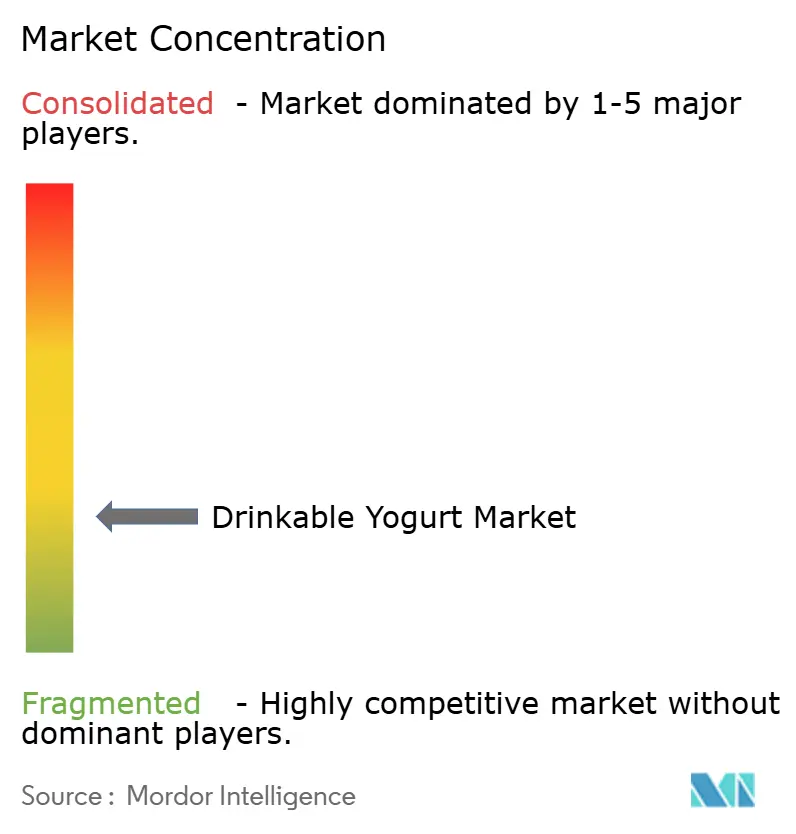
The drinkable yogurt market exhibits low concentration. Multinationals like Danone, Lactalis, Yili, and Mengniu leverage vertical integration to manage raw-milk volatility and streamline compliance. Danone’s expansion at Minster, Ohio, raises milk procurement by 60%, reflecting the capital intensity needed to sustain national distribution. Simultaneously, Danone purchased a majority stake in Kate Farms to bolster plant-based capabilities, indicating that scale players hedge dairy dependence.
Emerging disruptors center on sustainability and format innovation. Chobani secured USD 1 billion in equity to fund a 1.4 million-square-foot plant that will push beyond Greek yogurt into plant variants. Precision-fermentation alliances, such as Fonterra with Nourish Ingredients, allow incumbents to embed dairy-mimicking fats in plant bases, narrowing sensory gaps and safeguarding share. Digital direct-to-consumer models offer data-rich feedback loops, but high cold-chain costs mean only brands with premium price points and repeat-purchase logic, such as subscription bundles, sustain profitability.
Regulatory readiness increasingly separates winners. Early reformulators meet front-of-package limits and secure “healthy” icons, which win shelf facings and avoid advertising bans. Smaller labels without clinical data or capital for sugar reduction face de-listing or acquisition. Functional hybrids fortified with collagen or adaptogens remain a white space where nimble innovators can capture high-margin niches before conglomerates react.
Drinkable Yogurt Industry Leaders
Danone Groupe SA
Chobani, LLC.
Morinaga Nutritional Foods, Inc.
General Mills Inc.
Yakult Honsha Co., Ltd.
- *Disclaimer: Major Players sorted in no particular order
Drinkable Yogurt Market Companies Covered in this Report
- Danone S.A.
- Yakult Honsha Co., Ltd.
- Lactalis Nestlé Produits Frais
- Chobani LLC
- Inner Mongolia Yili Industrial Group
- China Mengniu Dairy Co., Ltd.
- General Mills Inc. (Yoplait)
- Fonterra Co-operative Group Ltd.
- Müller UK and Ireland Group
- Arla Foods amba
- The Coca-Cola Company (Fairlife)
- PepsiCo, Inc. (Kevita)
- FrieslandCampina N.V.
- Meiji Holdings Co., Ltd.
- Saputo Inc.
- Siggi’s Dairy
- Parmalat S.p.A.
- Yeo Valley Group
- Mother Dairy Fruit and Vegetable Pvt. Ltd.
- Valio Ltd.

Market Opportunities and Future Outlook
Opportunity is concentrated where manufacturers can translate regulatory and retailer pressure on sugar, claims, and labeling into differentiated, compliant portfolios, particularly in single-serve formats that fit commuting and snack occasions. Tightening front-of-pack and advertising rules in markets such as Canada (front-of-package symbol mandate from January 2026) and the United Kingdom (advertising restrictions for sweetened yogurts from October 2025) reinforces room for lower-sugar, high-protein, and strain-specific probiotic propositions that can be supported with clear labeling and evidence-backed positioning. Brands are already signaling this direction through launches like Danone North America Oikos Fusion (August 2025) aimed at GLP-1 users and Chobani High Protein drinks (October 2024), which together outline a premium functional ladder (protein density, fiber/prebiotics, and targeted benefit messaging) within drinkable formats.
On the supply side, capacity modernization and regional processing investments create space for localized production and fresher cold-chain radii, supporting both off-trade scale and on-trade partnerships. Lactalis Germany announced a EUR 50 million (USD 56.9 million) investment to expand capacity at its Neuburg facility in Bavaria, with an operational start targeted for August/September 2026, illustrating continued capital deployment into European dairy hubs that can serve multiple cultured-dairy formats. Separately, large-scale dairy infrastructure projects in high-growth consumption markets expand the milk-processing base (for example, Amul scheduled a foundation event on July 18, 2026 for a mega dairy plant in Howrah, India), supporting broader fermented-dairy throughput and enabling more regional brand and private-label participation in drinkable yogurt as cold-chain coverage improves.
Recent Industry Developments in Drinkable Yogurt Market
- March 2026: Danone and Arcor formed a joint venture in Argentina to integrate dairy operations and logistics, including Logistica La Serenisima, to tighten production-to-distribution coordination and reduce fulfillment friction in a price-sensitive market. The deal creates a platform for regional private-label participation and cross-border supply-chain optimization. This major cross-border venture signals a strategic shift in South American dairy capacity deployment.
- August 2025: Danone North America launched Oikos Fusion, a drinkable cultured dairy product positioned for GLP-1 weight-loss medication users, with a high-protein, lactose-free formulation and added prebiotic fiber and vitamins. The positioning reinforces the shift toward benefit-led drinkable yogurt propositions that are designed around specific consumer use cases and nutrient targets.
- October 2024: Chobani introduced its Chobani High Protein line, including drinkable options with 15 g, 20 g, or 30 g protein per serving that are lactose-free and made with no added sugar. The launch raised the performance benchmark for mainstream brands and pushed the category toward protein-forward formulations as a primary route to premiumization.


Drinkable Yogurt Market Report Scope and Research Methodology
Market Definition and Coverage
This market covers ready-to-drink yogurt beverages sold through retail and online channels, including dairy-based and non-dairy options, across major global regions. Values are measured as revenue generated from sales of drinkable yogurt products to end buyers.
Scope exclusions: Excludes spoonable yogurt, kefir-only products, and other fermented dairy drinks that are not positioned and sold as drinkable yogurt.
Segments Covered in This Report
- By Product Type
- Dairy-Based Drinkable Yogurt
- Plant-Based Drinkable Yogurt
- By Packaging Type
- PET Bottles
- HDPE Bottles
- Cartons
- Pouches and Sachets
- By Distribution Channel
- On-Trade
- Off-Trade
- Supermarkets and Hypermarkets
- Convenience and Drug Stores
- Online Retail Channels
- Other Channels
- By Geography
- North America
- United States
- Canada
- Mexico
- Rest of North America
- Europe
- Germany
- United Kingdom
- France
- Italy
- Spain
- Russia
- Netherlands
- Belgium
- Poland
- Rest of Europe
- Asia-Pacific
- India
- China
- Japan
- Australia
- South Korea
- Rest of Asia-Pacific
- South America
- Brazil
- Argentina
- Rest of South America
- Middle East and Africa
- South Africa
- Saudi Arabia
- Rest of Middle East and Africa
- North America
Data Sources, Market Sizing, and Validation
Desk Research
Desk work started with public food and dairy statistics to understand the demand pool and how it changes by region. We relied on sources such as FAOSTAT (Food and Agriculture Organization), national agriculture and food statistics agencies, official customs and trade data portals, and dairy and fermented foods trade association publications to map supply, consumption, and trade flows.
To refine assumptions, company annual reports, investor presentations, and retailer announcements were read for product mix cues, channel movement, and pricing direction. We also used paid databases for company financials and intelligence, plus shipment-level import and export indicators where they helped validate cross-border flows. These desk sources are not exhaustive, and we used additional references for data collection, validation, and clarification.
Primary Interviews and Surveys
Primary work focused on checking what is actually counted as drinkable yogurt in different markets, plus how pricing and pack sizes behave across channels. We spoke with a mix of manufacturers, ingredient and packaging ecosystem participants, distributors, and retail category experts across APAC, EMEA, and the Americas, and their feedback helped correct coverage gaps and pressure-test key assumptions before finalizing the model.
Distribution of primary research fieldwork respondents
| Company type | Respondent position | Region |
|---|---|---|
| Top tier: 36% | CXOs: 17% | APAC: 47% |
| Mid tier: 47% | Functional/Unit leaders: 36% | EMEA: 30% |
| Smaller Players: 17% | Managers: 47% | Americas: 23% |
Market-Sizing & Forecasting
The sizing starts with a top-down build where yogurt drink demand is reconstructed from regional yogurt and fermented dairy consumption signals. We then adjust for the share consumed in drinkable format and the portion sold through the tracked channels. The model is corroborated using selective bottom-up checks, such as sampled price per liter by pack type and channel, and a limited roll-up of visible supplier and brand revenue where disclosures are available.
Key inputs used in the model include pricing progression by pack size and packaging format (for example PET bottles versus cartons), mix shift between flavored and plain, the growth of non-dairy drinkable options, cold-chain and distribution reach indicators, and trade flow direction for dairy ingredients that can influence cost and availability. When bottom-up inputs are missing for smaller markets, gaps are handled through proxy pricing from similar markets and channel mix normalization that was confirmed during interviews.
Forecasting is done using scenario analysis supported by trend lines from historical consumption and pricing. We then validate with expert views on how promotions, premiumization, and health-focused positioning are likely to evolve. Where the near-term outlook is uncertain, assumptions remain explicit so clients can trace the impact of each variable on the total.
Data Validation & Update Cycle
Outputs are checked against independent signals, including per-capita dairy and yogurt consumption trends, retail channel growth patterns, and observed pricing ranges by pack type. If a country result moves outside expected ranges, we re-check the drivers, confirm the unit conversions, and then re-contact selected experts when the variance cannot be explained through public data.
Before sign-off, the model goes through multi-step analyst reviews, where assumptions, calculations, and narrative logic are verified. The report is refreshed annually, and interim updates are made when material events occur, such as sharp dairy input cost changes or major policy actions that affect labeling or trade. Right before delivery, a final review pass is completed so clients receive the latest updated view.
Mordor Intelligence's Drinkable Yogurt Market Estimate Compared With Other Published Estimates
Published market sizes for drinkable yogurt can look far apart because the category is defined differently across sources, and the same product can be counted under yogurt, fermented drinks, or functional beverages depending on the author. Differences also come from base year selection, inflation handling, and how each source treats channel coverage in markets where modern retail is still developing.
Some external estimates use an earlier base year and broader channel buckets that can smooth out pack-size shifts and promotion-led pricing changes. In the Mordor Intelligence model, drinkable yogurt revenue is counted only when the product is sold as a ready-to-drink yogurt beverage, and pack-type ASP checks are refreshed as the mix moves between bottles and cartons.
Benchmark comparison
| Source | Market Size | Gaps in Research Methodology |
|---|---|---|
| Mordor Intelligence | USD 51.26 B (2026) | |
| Industry Research Publisher A | USD 42.32 B (2025) | Uses a different base year and a longer historical window, and the growth profile implies a slower pricing and mix shift path, which can keep the near-term total lower when converted to the next-year value. |
| Business Research Portal B | USD 43.30 B (2024) | Starts from an earlier base year and relies more on broad category splits and generalized channel buckets, so pack-size driven ASP movement and regional mix effects can be under-modeled in the base estimate. |
The comparison shows that timing and category interpretation explain most of the spread, even before forecasting assumptions are discussed. By tying the model to observable signals like pack pricing, channel mix, and consumption direction, we keep the final value easy to trace back to the inputs and straightforward to update.


Key Questions Answered in the Report
What is the projected value of the drinkable yogurt market by 2031?
The category is expected to reach USD 52.88 billion by 2031 at a 6.86% CAGR.
Which segment of drinkable yogurt holds the largest 2025 market share?
Dairy-Based formulations led with 81.25% of drinkable yogurt market share in 2025.
Which packaging format will grow fastest through 2031?
Pouches & Sachets are forecast to register the highest CAGR at 8.86%.
Why is Asia-Pacific considered the growth engine for drinkable yogurt?
Rising disposable incomes, urbanization, and nutrition programs push Asia-Pacific to a 9.86% CAGR.
Page last updated on:


 Your data is secure and never sold or shared.


