
Digital Radiography Detectors Market Size and Share
Market Overview
| Study Period | 2020 - 2031 |
|---|---|
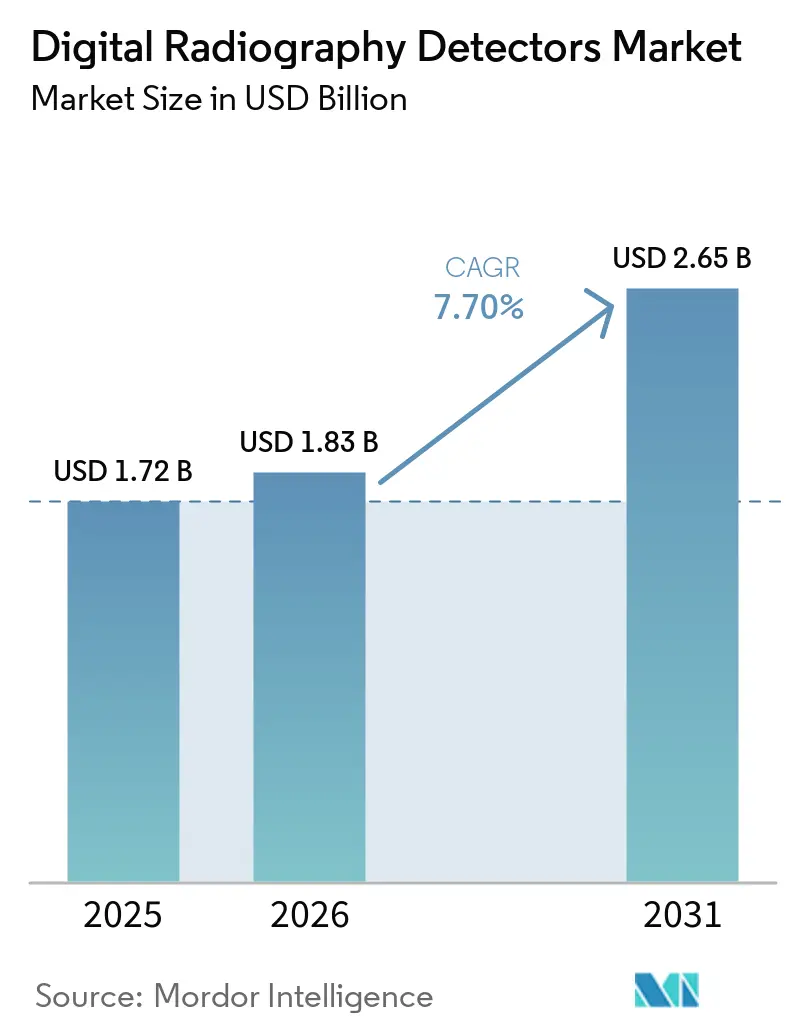
| Market Size (2026) | USD 1.83 Billion |
| Market Size (2031) | USD 2.65 Billion |
| Growth Rate (2026 - 2031) | 7.70 % |
| Fastest Growing Market | Asia-Pacific |
| Largest Market | Australia and New Zealand |
| Market Concentration | Medium |
Major Players *Disclaimer: Major Players sorted in no particular order Image © Mordor Intelligence. Reuse requires attribution under CC BY 4.0. | |
Digital Radiography Detectors Market Analysis by Mordor Intelligence
The Digital Radiography Detectors Market size is projected to be USD 1.72 billion in 2025, USD 1.83 billion in 2026, and reach USD 2.65 billion by 2031, growing at a CAGR of 0% from 2026 to 2031.
The digital radiography detectors market is supported by the replacement of computed radiography and film-based imaging systems with digital detector platforms. Hospitals are also favoring upgrades that improve image quality while helping to manage radiation dose and workflow time. Portable imaging demand is widening the use of detectors in intensive care units, emergency departments, and bedside settings. Suppliers are responding with detector designs that combine wireless operation, image-processing software, and easier integration with existing imaging rooms. The digital radiography detectors market also faces slower purchasing decisions where equipment budgets, software validation, and interoperability requirements extend the time needed to complete upgrades.
Key Report Takeaways
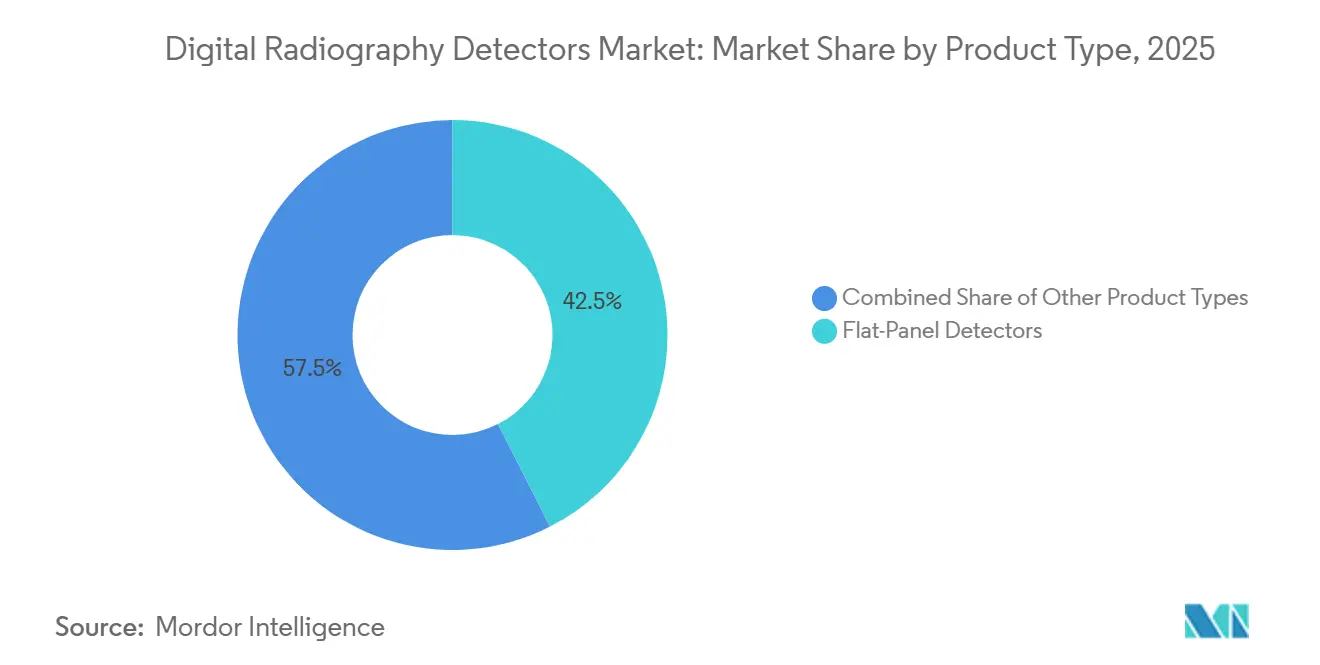
By product type, Flat-Panel Detectors held 42.5% of revenue in 2025. No separate fastest-growing product-type CAGR was provided.
By detector technology, Amorphous Silicon held 36.8% of revenue in 2025, while CMOS/IGZO Detectors recorded the highest projected CAGR at 9.4% through 2031.
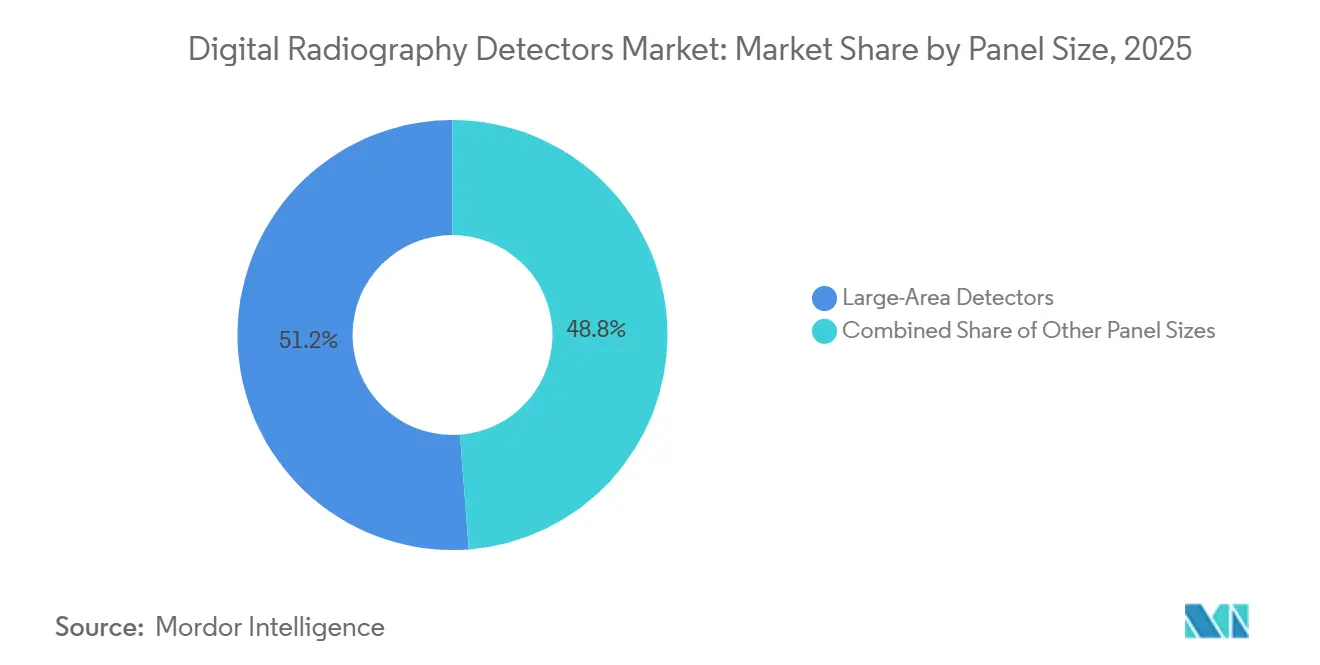
By panel size, Large-Area Detectors accounted for 51.2% of revenue in 2025 and recorded the highest projected CAGR at 7.8% through 2031.
By modality, Fixed Detectors held 58.4% of revenue in 2025, while Portable Detectors recorded the highest projected CAGR at 8.8% through 2031.
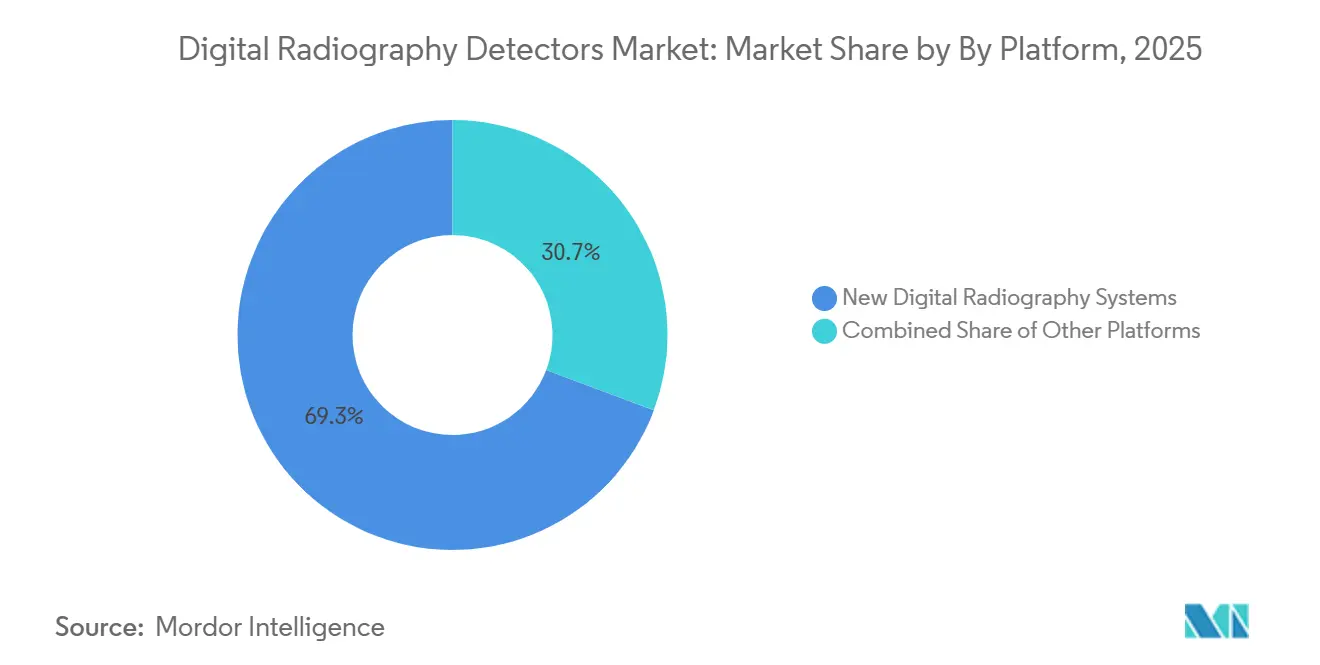
By platform, New Digital Radiography Systems held 69.3% of revenue in 2025, while Retrofit Systems recorded the highest projected CAGR at 8.5% through 2031.
By application, General Radiography held 31.7% of revenue in 2025, while Oncology and Mammography Imaging recorded the highest projected CAGR at 9.1% through 2031.
By end user, Hospitals and Clinics held 56.1% of revenue in 2025, while Diagnostic Imaging Centers recorded the highest projected CAGR at 8.2% through 2031.
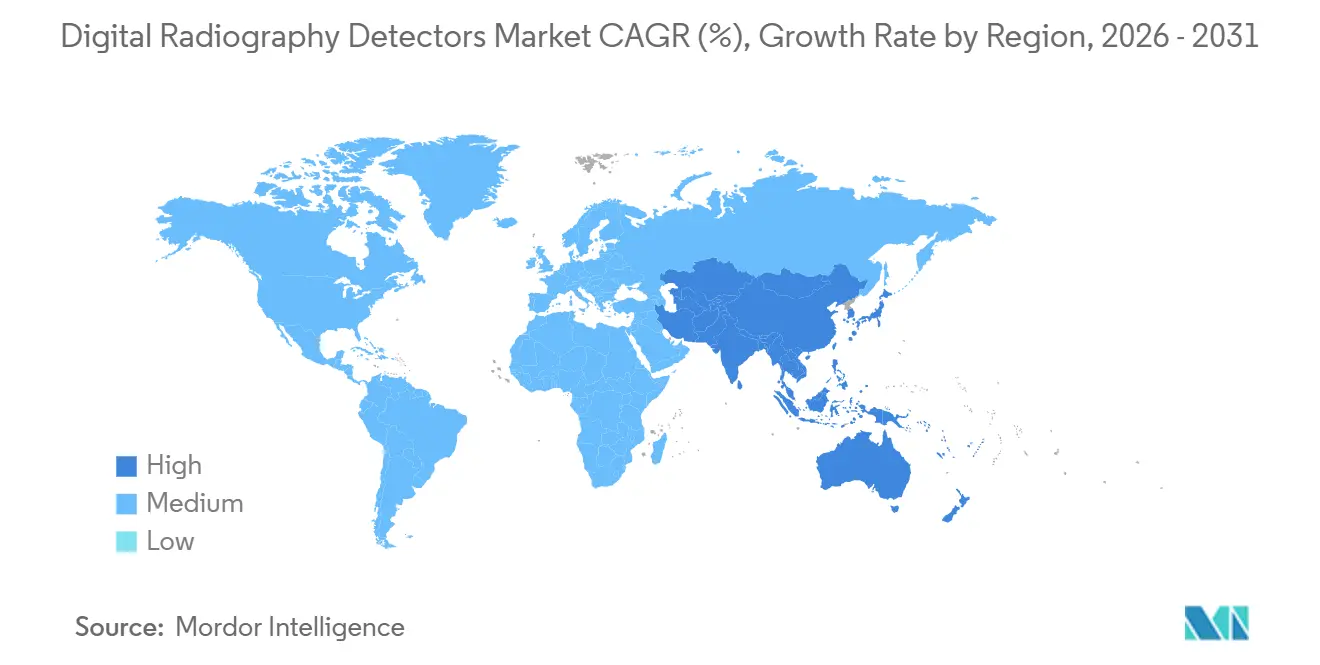
By geography, Asia-Pacific held 35.2% of revenue in 2025 and recorded the highest projected CAGR at 8.6% through 2031.
Note: Market size and forecast figures in this report are generated using Mordor Intelligence’s proprietary estimation framework, updated with the latest available data and insights as of January 2026.
Global Digital Radiography Detectors Market Trends and Insights
Drivers Impact Analysis*
| Driver | (~) % Impact on CAGR Forecast | Geographic Relevance | Impact Timeline |
|---|---|---|---|
| Replacement of Computed Radiography and Legacy Film Systems | +2.0% | Global, highest in Asia-Pacific and South America | Short term (≤ 2 years) |
| Demand for Lower-Dose, Higher-Quality Diagnostic Imaging | +1.5% | North America, Europe, Japan | Medium term (2-4 years) |
| Expansion of Mobile and Bedside Point-of-Care Radiography | +1.2% | Global, with acceleration in Asia-Pacific and Sub-Saharan Africa | Short term (≤ 2 years) |
| Healthcare Infrastructure Expansion in Emerging Economies | +1.0% | Asia-Pacific, Middle East and Africa, South America | Medium term (2-4 years) |
| AI-Enabled Image Acquisition and Detector Calibration | +0.8% | North America, Europe, China | Long term (≥ 4 years) |
| Localized Detector Manufacturing in Emerging Markets | +0.6% | China, with potential spillover to India and Southeast Asia | Long term (≥ 4 years) |
| Source: Mordor Intelligence | |||
Replacement of Computed Radiography and Legacy Film Systems
The retirement of computed radiography systems gives the digital radiography detectors market a large base of replacement opportunities. A retired cassette-based system can be replaced with a complete digital radiography room or with a flat-panel detector that works with an existing X-ray generator. The draft indicated that modern digital radiography workflows return images in 10 to 15 seconds, compared with 30 to 45 seconds for computed radiography cassette-reader cycles. This shorter process can raise the number of patients handled in an imaging suite. Agfa Radiology Solutions[1]Agfa Radiology Solutions, “Bon Secours Hospital, Cork, Installs the First Agfa DR 600 Room in Ireland,” Agfa Radiology Solutions installed a DR 600 room at Bon Secours Hospital in Cork in April 2025, replacing the hospital's oldest analog unit. Similar replacements support demand even when hospitals are not building new imaging departments.
Demand for Lower-Dose, Higher-Quality Diagnostic Imaging
The digital radiography detectors market benefits when providers make image quality and radiation management part of equipment selection. Detection Technology states that IGZO TFT technology can enable pixel pitches below 100 μm, compared with 140 μm in conventional amorphous silicon designs. Smaller pixel pitches can support detailed imaging in oncology and small-anatomy examinations. A 2025 study reported that Canon's AI-based noise reduction maintained diagnostic image quality in portable neonatal radiography while reducing dose. Japan updated its national Diagnostic Reference Levels in 2025, reinforcing the importance of dose management in radiology practice. Suppliers that combine detector hardware with exposure support and image processing can address these clinical and procurement requirements.
Expansion of Mobile and Bedside Point-of-Care Radiography
Mobile imaging is creating demand for detectors that can be used safely and consistently outside fixed radiography rooms. Varex Imaging describes wireless portable detectors that weigh less than 3 kg and can transmit 14 by 17-inch diagnostic images in less than 4 seconds. This supports bedside imaging for patients who cannot be moved easily from intensive care or emergency settings. FUJIFILM launched the DR CALNEO Go iQ in Japan in June 2025 with a second monitor and camera-assisted positioning features. Wider use of wireless panels also makes battery maintenance, wireless coordination, and cleaning procedures more important in purchasing decisions. Unitaid and the Clinton Health Access Initiative announced a 2025 agreement to expand access to an ultraportable AI-compatible X-ray device across eligible programs in 138 low- and middle-income countries.
Healthcare Infrastructure Expansion in Emerging Economies
New hospital capacity in emerging economies can lead directly to digital radiography installations rather than intermediate computed radiography adoption. This pattern gives the digital radiography detectors market opportunities in facilities that are adding imaging services for the first time. Uganda deployed 11 OneStopTB X-ray trucks in 2025, with EasyDR digital detectors and CAD4TB software for community-based tuberculosis screening. The deployment shows how portable radiography can be used outside traditional hospital imaging rooms. The same need exists where hospitals are expanding services in the Asia-Pacific, the Middle East, and parts of Africa. Demand in these settings may favor systems that balance detector performance, training needs, mobility, and service support.
Restraints Impact Analysis*
| Restraint | (~) % Impact on CAGR Forecast | Geographic Relevance | Impact Timeline |
|---|---|---|---|
| High Detector Acquisition and Lifecycle Costs | -1.2% | Global, most acute in low- and middle-income countries and Tier 2 and Tier 3 hospitals | Short term (≤ 2 years) |
| Slow Radiography-Room Retrofit Cycles | -0.8% | North America and Europe | Medium term (2-4 years) |
| Thin-Film Backplane and Specialty-Material Supply Concentration | -0.7% | Global IGZO substrate and CsI scintillator supply chains | Long term (≥ 4 years) |
| Interoperability, Cybersecurity, and Software-Validation Burden | -0.5% | North America, Europe, and advanced Asia-Pacific markets | Long term (≥ 4 years) |
| Source: Mordor Intelligence | |||
High Detector Acquisition and Lifecycle Costs
High acquisition and lifecycle costs limit the pace of digital detector purchases, particularly in smaller hospitals and lower-income settings. The investment includes the detector or imaging system, installation, staff training, and service support. Cost pressure can encourage buyers to retain functioning computed radiography equipment for longer than planned. It can also move procurement toward retrofit panels instead of full-room replacement projects. The 2025 Unitaid[2]Unitaid, “Unitaid and Partners Cut Cost of Portable AI-Compatible X-Ray Device, Bringing TB Screening Closer to Communities,” Unitaid and Clinton Health Access Initiative agreement shows how alternative financing and discounted access programs can help expand portable imaging access. The digital radiography detectors market, therefore, depends on both equipment performance and the financing route available to the buyer.
Slow Radiography-Room Retrofit Cycles
Radiography-room upgrades can be delayed because hospitals make capital decisions across many competing clinical priorities. A detector replacement may require checks across the generator, room layout, DICOM workflow, radiology information systems, and picture archiving systems. Canon Medical states that its CXDI-Elite detector uses automatic exposure detection to enable retrofit installations without generator-side modifications. Reducing installation work can make retrofit proposals easier for hospitals to approve. Even so, software validation and cybersecurity reviews can extend implementation time for networked imaging equipment. These delays restrain near-term conversions, but they also leave a continuing pipeline of rooms that still require future upgrades.
*Our forecasts treat driver/restraint impacts as directional, not additive. The impact forecasts reflect baseline growth, mix effects, and variable interactions.
Segment Analysis
By Product Type: Flat-Panel Detectors Lead on Revenue and Expand Technology Reach
Flat-Panel Detectors held 42.5% of the digital radiography detectors market share in 2025. The category covers entry-level amorphous silicon panels and higher-performance IGZO designs used in more demanding imaging settings. Its position reflects the continuing replacement of computed radiography phosphor-plate systems. Flat-panel products can be installed in new rooms or used to update existing X-ray generators. This flexibility supports procurement in hospitals with different equipment budgets. The digital radiography detectors market size for flat-panel systems is also supported by use across general radiography, mammography, pediatric imaging, and dynamic imaging.
Computed Radiography Detectors remain present in lower-volume and price-sensitive settings. Their installed base is declining as digital workflows become more practical for routine imaging operations. Varex Imaging reports continuing technical progress in detector design, including developments that support portable and fixed imaging use. Larger CMOS formats can also narrow the historical gap between CMOS panels and amorphous silicon panels. These changes widen the range of clinical settings that can use flat-panel systems. The product category is therefore positioned to retain its lead through the forecast period.



By Detector Technology: CMOS/IGZO Expands Beyond Amorphous Silicon
Amorphous Silicon held 36.8% of the digital radiography detectors market share in 2025. It remains widely used because it has a long record of clinical deployment and an established supply chain. The technology is also used in high-dose and industrial environments where its operating characteristics are well understood. CMOS/IGZO Detectors are forecast to grow at a 9.4% CAGR through 2031, the fastest rate among the technology categories. Detection Technology identifies lower leakage current, faster pixel readout, and pixel pitches below 100 μm as advantages of IGZO TFT technology. These features are relevant where resolution and rapid image capture are important.
Detection Technology[3]Detection Technology Plc, “Detection Technology Launches Trend-Setting Flat Panel Detectors to Elevate Dental Imaging,” Detection Technology launched the X-Panel 2520z FOM IGZO-TFT flat-panel detector at IDS 2025 in Cologne. The product introduced IGZO technology in a 25 by 20 cm dental CBCT detector format. Amorphous selenium continues to serve mammography applications because it enables direct conversion. Scintillator-based detectors remain important for general radiography where indirect conversion offers a practical cost-performance balance. Perovskite detector chemistry is identified in the supplied draft as a possible later-stage technology, beyond the 2031 forecast period. The digital radiography detectors market will continue to use multiple detector technologies because clinical requirements vary by imaging task.
By Panel Size: Large-Area Formats Support High-Volume Imaging
Large-Area Detectors accounted for 51.2% of the digital radiography detectors market share in 2025. They are used widely for chest, spine, and full-body fluoroscopy imaging workflows. The same category is forecast to grow at 7.8% CAGR through 2031. Large panels can also support full-leg and full-spine orthopedic imaging with stitched acquisitions. This avoids repeated positioning steps during examinations that require broad anatomical coverage. The digital radiography detectors market size for large-area formats is therefore tied to routine, high-volume imaging and specialized orthopedic workflows.
Agfa Radiology Solutions describes its DR 600 installation at GPR Klinikum Rüsselsheim in Germany as including large-area detectors and full-leg and full-spine stitching. Medium-Area Detectors continue to serve intraoperative and extremity imaging. Small-Area Detectors are used in dental CBCT and portable veterinary imaging, where compact size and low weight are important. Smaller formats are also gaining access to advanced backplane technology. These uses keep panel-size selection closely connected to clinical workflow. Large-area systems remain the primary revenue category because of the broad imaging volumes handled in chest and skeletal examinations.
By Modality: Fixed Systems Retain Revenue Leadership While Portable Use Grows
Fixed Detectors held 58.4% of the digital radiography detectors market share in 2025. Fixed rooms remain central to high-throughput chest, skeletal, and fluoroscopy services in tertiary hospitals. Portable Detectors are forecast to grow at 8.8% CAGR through 2031, the fastest modality rate. Their use is linked to bedside imaging in intensive care units, emergency departments, and surgical wards. Portable systems reduce the need to transport patients who are critically ill or difficult to move. The digital radiography detectors market continues to need both fixed and portable configurations because their roles in patient care differ.
Canon Medical introduced the Mobirex i9 Smart Edition in Japan in September 2025, combining the CXDI-Elite panel with built-in exposure assistance and AI-based noise reduction. The product illustrates the effort to make bedside imaging faster and easier to operate. Fixed systems are also advancing through the integration of radiography, serial imaging, and low-dose fluoroscopy functions. Canon Medical described its Adora DRFi installation in Germany as a system that combines these imaging functions in one unit. Dynamic and fluoroscopy detectors serve a smaller portion of demand but are used where real-time procedural imaging is needed. Modality decisions therefore depend on patient condition, room throughput, and the clinical setting.
By Platform: New Systems Lead Revenue While Retrofits Grow Faster
New Digital Radiography Systems held 69.3% of the digital radiography detectors market share in 2025. This reflects demand from new hospitals, first-time digital installations, and complete room replacement projects. Retrofit Systems are forecast to grow at 8.5% CAGR through 2031. A retrofit can replace the detector while preserving an existing X-ray generator and much of the room infrastructure. This can reduce disruption compared with a full-room renovation. The digital radiography detectors market serves both approaches because providers use different investment paths to modernize imaging capacity.
Canon Medical's CXDI-Elite design is intended to simplify retrofit work by avoiding generator-side changes. This approach can support detector-only upgrades in rooms that remain clinically useful. New systems continue to lead revenue because they combine the detector with a complete imaging room. Retrofits grow faster because they offer a lower-disruption route for facilities with usable existing infrastructure.
By Application: Oncology and Mammography Show the Fastest Growth
General Radiography held 31.7% of the digital radiography detectors market share in 2025. It remains the largest application because routine radiography procedures generate high examination volumes. Oncology and Mammography Imaging is forecast to grow at 9.1% CAGR through 2031. The supplied draft linked this growth to the need for higher detector resolution in breast imaging. A 2025 mammography screening study reported a 10.5% higher cancer detection rate for 70 μm pixel-pitch digital breast tomosynthesis compared with 100 μm systems. Clinical evidence of this type supports demand for premium detector platforms in mammography.
Orthopedic and trauma imaging also benefits from large-area panel resolution, particularly in weight-bearing examinations. Cardiovascular imaging remains another meaningful application for dynamic detector performance. GE HealthCare states that Pristina Recon DL combines deep learning and iterative reconstruction to improve mammography imaging performance. Dental imaging, veterinary, and industrial imaging are smaller areas of demand in the digital radiography detectors market. Their requirements often favor compact panels that are easier to position. Lower costs for compact advanced panels could widen adoption in these applications. Application requirements will continue to shape the balance between detector size, resolution, dose, and mobility.
By End User: Hospitals Lead Demand While Imaging Centers Expand
Hospitals and Clinics held 56.1% of the digital radiography detectors market share in 2025. These sites operate high-acuity imaging departments and may need fixed, portable, and specialized detector configurations at the same time. Diagnostic Imaging Centers are forecast to grow at 8.2% CAGR through 2031. Their growth is linked to the shift of some imaging volumes from hospital departments to outpatient facilities. Imaging centers can often assess detector investments directly against examination volume and service capacity. The digital radiography detectors market is therefore serving both comprehensive hospital networks and more focused outpatient providers.
Apollo Hospitals installed a Samsung GF85 floor-mounted digital radiography system at its Hyderabad Financial District facility in 2025. The installation illustrates how major hospital networks are adding integrated digital radiography capacity. OEMs and research institutes remain important early users of new CMOS and dual-layer detector concepts. Their work can generate the clinical evidence later considered by hospitals. Dental care centers and veterinary facilities also add demand as compact detector options become more accessible. End-user needs differ in scale, but each group requires dependable image quality and a practical workflow.
Geography Analysis
Asia-Pacific held 35.2% of the digital radiography detectors market share in 2025 and is forecast to expand at 8.6% CAGR through 2031. The region benefits from hospital investment, equipment renewal programs, and expanding domestic manufacturing capability. China, India, and Southeast Asian countries are central to the regional demand outlook in the supplied draft. Japan represents a higher-value technology segment, where dose guidance and advanced detector features remain important. Japan's 2025 Diagnostic Reference Levels provide a national reference framework for radiation management. Canon Medical launched the Radrex i5/Flex Edition in Japan in March 2025 with its CXDI-Elite detector and AI image-processing features. Apollo Hospitals' 2025 digital radiography installation also shows continuing investment by large Indian healthcare networks.
North America and Europe have established imaging installed bases, but their demand drivers differ. North American purchasing is shaped by investment in AI-supported workflows, cybersecurity expectations, and regulatory requirements for connected imaging devices. Varex Imaging introduced LUMEN HD and LUMEN HD Pro wireless detectors at RSNA 2024 for portable and bedside imaging uses. European demand is supported by regular replacement of aging room equipment. Liverpool Women's NHS Foundation Trust placed an Agfa DR 800 room into operation in April 2025. Bon Secours Hospital in Cork installed Ireland's first Agfa DR 600 room in April 2025. These examples show demand based on room replacement rather than only on greenfield hospital construction.
The Middle East and Africa and South America combine advanced hospital purchasing with major unmet first-installation needs. Gulf Cooperation Council states and private hospital networks in Brazil can support premium equipment procurement. Rural and community settings in Africa require portable solutions and suitable operating guidance. Zambia's Ministry of Health issued national operational guidelines for portable digital X-ray units in 2025. Uganda's 11 OneStopTB X-ray trucks show a public-health model for deploying portable digital radiography. South American demand is concentrated in Brazil, Chile, and Colombia according to the supplied draft. Providers in these areas seek equipment that fits private diagnostic expansion and available capital budgets.

Competitive Landscape
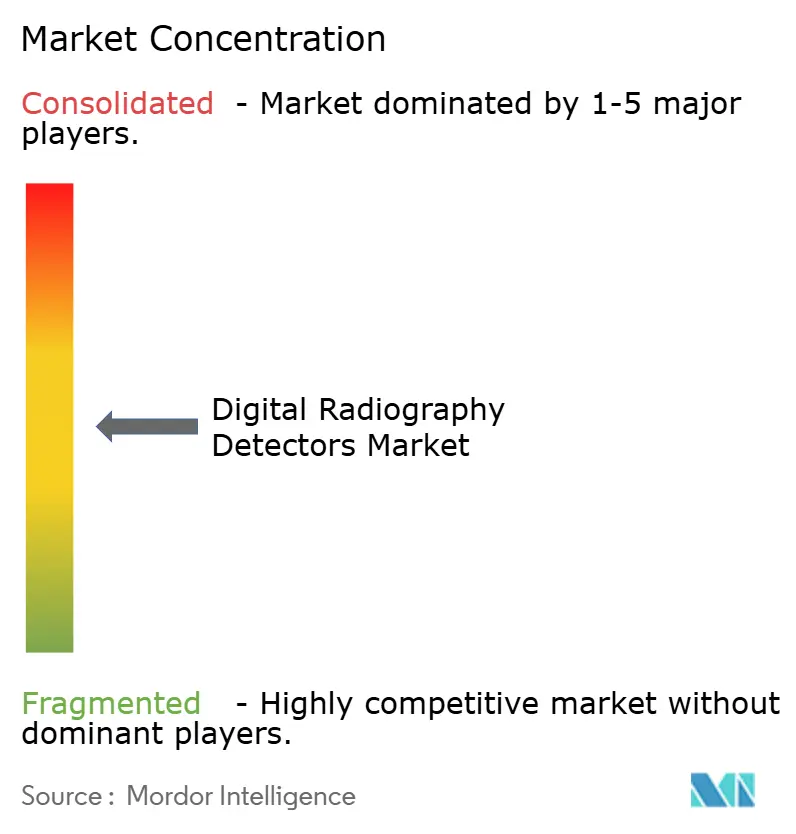
The digital radiography detectors market includes a moderately consolidated upper tier and a more fragmented middle tier. The supplied draft identifies Varex Imaging, Canon Medical, FUJIFILM, GE HealthCare, Siemens Healthineers, and Konica Minolta among the established imaging suppliers. It also identifies Vieworks, Rayence, iRay Technology, Detection Technology, and KA Imaging as dedicated detector-focused competitors. Competition differs between integrated detector ecosystems and standalone panel offerings. Integrated systems use software, dose support, and workflow tools to strengthen the connection between the supplier and the customer. Standalone panels compete more directly on price, availability, detector performance, and delivery time.
Varex Imaging has developed long-standing OEM partnerships across medical, dental, and industrial applications, according to the supplied draft. Such relationships can be difficult for new suppliers to match quickly. Detection Technology expanded its dental portfolio in 2025 by launching the X-Panel 2520z FOM IGZO-TFT detector. Canon Medical launched its Mobirex i9 Smart Edition in 2025 for bedside digital radiography use. FUJIFILM[4]FUJIFILM Holdings Corporation, “FUJIFILM Launches CALNEO Go iQ,” Inner Vision also launched the DR CALNEO Go iQ in 2025, adding portable workflow and positioning features. These moves show that suppliers are competing through product design and workflow support as well as detector hardware.
Chinese suppliers are expanding from domestic supply into overseas competition, while European and North American OEMs are strengthening software integration in their offerings. The draft describes software platforms from Agfa, Konica Minolta, GE HealthCare, and Canon Medical as tools that can make the imaging workflow more connected. KA Imaging's single-shot dual-energy detector is positioned for applications where low- and high-energy images are captured together. The draft also identifies photon-counting detector architectures, large-area CMOS panels for fluoroscopy, and fleet-management platforms as areas of future interest. These opportunities remain linked to the ability to prove clinical value and operational reliability. The market concentration score is 3/10 because the draft describes an established upper tier but a fragmented middle tier and does not provide global combined-share data for the leading companies.
Digital Radiography Detectors Industry Leaders
Siemens Healthineers AG
Koninklijke Philips N.V.
GE HealthCare Technologies Inc.
Canon Medical Systems Corporation
FUJIFILM Holdings Corporation
- *Disclaimer: Major Players sorted in no particular order

Recent Industry Developments
- August 2026: Konica Minolta published research on an improved AI segmentation model for its DM-MODE dynamic radiography analysis system, demonstrating reliable diaphragm localization in complex cases with cardiac overlap or reduced contrast, enhancing functional pulmonary imaging utility in high-volume clinical environments.
- September 2025: Canon Medical Systems launched the Mobirex i9 Smart Edition bedside mobile DR unit in Japan, combining the CXDI-Elite IGZO flat-panel detector with Built-in AEC Assistance and AI noise reduction for rapid bedside deployment across ICU, emergency, and ward settings.
- June 2025: FUJIFILM launched the DR CALNEO Go iQ portable DR system in Japan, featuring a second-monitor command interface and camera-assisted auto-positioning, supported by the CALNEO Flow flat-panel detector series, targeting high-mobility ward and bedside imaging.
- April 2025: The Agfa Radiology DR 800 multi-tool digital X-ray room became fully operational at Liverpool Women's NHS Foundation Trust, replacing a legacy system and enabling integrated neonatal and adult imaging with Dynamic MUSICA fluoroscopic processing.


Global Digital Radiography Detectors Market Report Scope
| Flat-Panel Detectors |
| Computed Radiography Detectors |
| Amorphous Silicon |
| Amorphous Selenium |
| CMOS/IGZO Detectors |
| Scintillator-Based Detectors |
| Large-Area Detectors |
| Medium-Area Detectors |
| Small-Area Detectors |
| Fixed Detectors |
| Portable Detectors |
| Dynamic/Fluoroscopy Detectors |
| New Digital Radiography Systems |
| Retrofit Systems |
| General Radiography |
| Orthopedic & Trauma Imaging |
| Cardiovascular Imaging |
| Oncology & Mammography Imaging |
| Dental Imaging |
| Veterinary & Industrial Imaging |
| Hospitals & Clinics |
| Diagnostic Imaging Centers |
| Dental Care Centers |
| Veterinary Facilities |
| OEMs & Research Institutes |
| North America | United States |
| Canada | |
| Mexico | |
| Europe | Germany |
| United Kingdom | |
| France | |
| Italy | |
| Spain | |
| Rest of Europe | |
| Asia-Pacific | China |
| Japan | |
| India | |
| South Korea | |
| Australia | |
| Rest of Asia-Pacific | |
| Middle East and Africa | GCC |
| South Africa | |
| Rest of Middle East and Africa | |
| South America | Brazil |
| Argentina | |
| Rest of South America |
| By Product Type | Flat-Panel Detectors | |
| Computed Radiography Detectors | ||
| By Detector Technology | Amorphous Silicon | |
| Amorphous Selenium | ||
| CMOS/IGZO Detectors | ||
| Scintillator-Based Detectors | ||
| By Panel Size | Large-Area Detectors | |
| Medium-Area Detectors | ||
| Small-Area Detectors | ||
| By Modality | Fixed Detectors | |
| Portable Detectors | ||
| Dynamic/Fluoroscopy Detectors | ||
| By Platform | New Digital Radiography Systems | |
| Retrofit Systems | ||
| By Application | General Radiography | |
| Orthopedic & Trauma Imaging | ||
| Cardiovascular Imaging | ||
| Oncology & Mammography Imaging | ||
| Dental Imaging | ||
| Veterinary & Industrial Imaging | ||
| By End User | Hospitals & Clinics | |
| Diagnostic Imaging Centers | ||
| Dental Care Centers | ||
| Veterinary Facilities | ||
| OEMs & Research Institutes | ||
| By Geography | North America | United States |
| Canada | ||
| Mexico | ||
| Europe | Germany | |
| United Kingdom | ||
| France | ||
| Italy | ||
| Spain | ||
| Rest of Europe | ||
| Asia-Pacific | China | |
| Japan | ||
| India | ||
| South Korea | ||
| Australia | ||
| Rest of Asia-Pacific | ||
| Middle East and Africa | GCC | |
| South Africa | ||
| Rest of Middle East and Africa | ||
| South America | Brazil | |
| Argentina | ||
| Rest of South America | ||


Key Questions Answered in the Report
What is the 2026 value of digital radiography detectors?
The digital radiography detectors market size is USD 1.83 billion in 2026 and is forecast to reach USD 2.65 billion by 2031 at a 7.7% CAGR. The forecast reflects replacement demand, mobile imaging needs, and broader use of digital workflows in clinical practice.
What is driving digital detector adoption in hospitals?
Replacement of computed radiography and analog systems, lower-dose imaging needs, and demand for faster workflows are key factors. New hospital capacity and the ability to use portable detectors at the bedside also support adoption across established and developing healthcare systems.
Which detector technology is growing fastest?
CMOS/IGZO Detectors are forecast to grow at 9.4% CAGR through 2031, supported by fast readout and smaller pixel-pitch capability. The technology is relevant to applications that require detailed imaging, including dental, oncology, mammography, and other small-anatomy uses.
Why are portable radiography detectors becoming more important?
Portable detectors allow bedside imaging in intensive care units, emergency departments, and other settings where moving patients is difficult. Their use also makes battery management, detector cleaning, wireless coordination, and simple positioning part of the evaluation process for hospitals.
Which application is growing fastest for digital radiography detectors?
Oncology and Mammography Imaging is forecast to grow at 9.1% CAGR through 2031, supported by demand for high-resolution breast imaging. Evidence on cancer detection performance is increasing the value placed on detector resolution and image-processing capability in mammography equipment decisions.
Which region leads demand for digital radiography detectors?
Asia-Pacific held 35.2% of revenue in 2025 and is forecast to grow at 8.6% CAGR through 2031. Regional growth is supported by hospital investment, equipment modernization, domestic manufacturing development, and demand from large healthcare systems including China, India, and Japan.
Page last updated on:





