
Diabetes Care Drugs and Devices Market Size and Share
Market Overview
| Study Period | 2020 - 2031 |
|---|---|
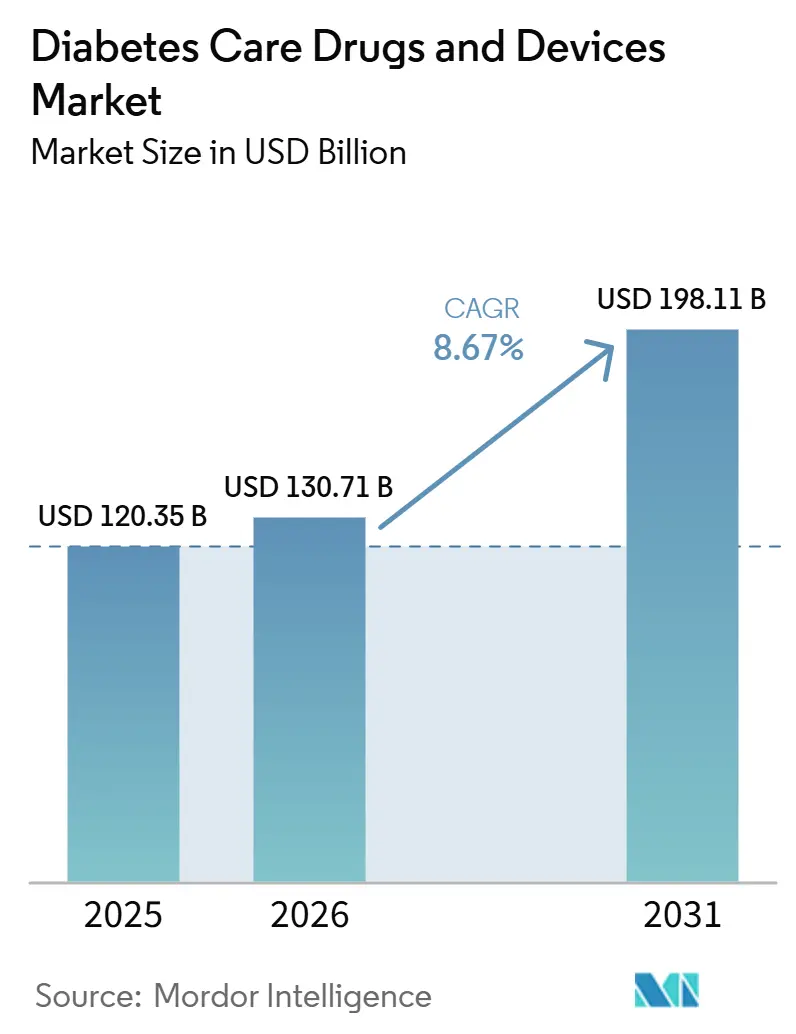
| Market Size (2026) | USD 130.71 Billion |
| Market Size (2031) | USD 198.11 Billion |
| Growth Rate (2026 - 2031) | 8.67 % |
| Fastest Growing Market | Asia-Pacific |
| Largest Market | North America |
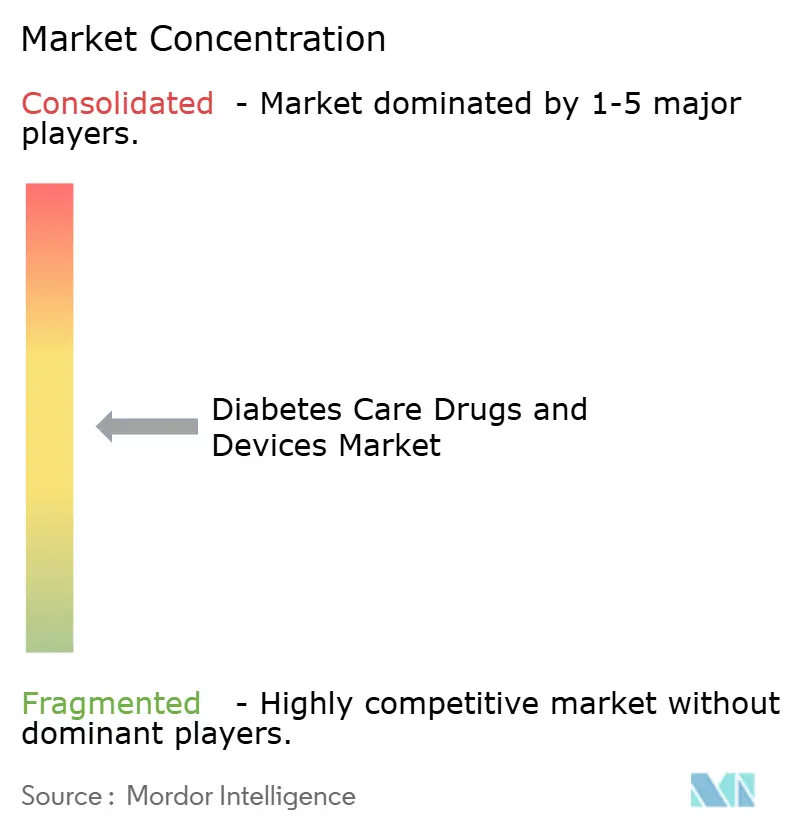
| Market Concentration | Medium |
Major Players *Disclaimer: Major Players sorted in no particular order Image © Mordor Intelligence. Reuse requires attribution under CC BY 4.0. | |
Diabetes Care Drugs and Devices Market Analysis by Mordor Intelligence
The diabetes care drugs and devices market size was at USD 120.35 billion in 2025 and stands at USD 130.71 billion in 2026. The market is forecasted to reach USD 198.11 billion by 2031, registering a CAGR of 8.67% from 2026 to 2031. The diabetes care drugs and devices market is being lifted by the large and still growing global disease pool, with 589 million adults living with diabetes in 2024 and a much larger patient base expected over time. A second force is the fast expansion of GLP-1 therapies, which is changing prescribing patterns and also pulling more demand into monitoring and home-based care routines. The diabetes care drugs and devices market is also being shaped by reimbursement support for continuous glucose monitoring, stronger use of connected insulin delivery, and the steady shift of diabetes management into home settings. North America remained the largest regional base in 2025, while Asia-Pacific is set to advance the fastest as prevalence, access, and device adoption improve across large population centers. Cost barriers, prior authorization friction, and the EU MDR recertification cycle continue to slow the pace at which the diabetes care drugs and devices market can convert innovation into broad patient access.
Key Report Takeaways
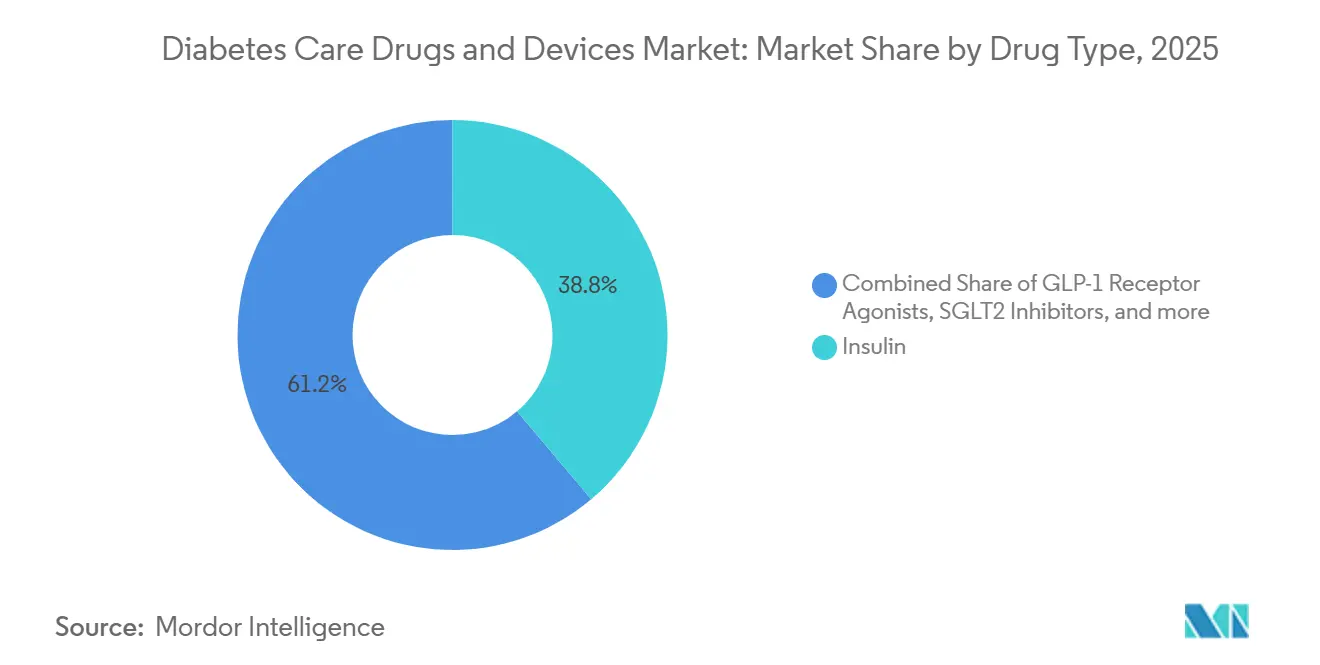
- By drug type, insulin held 38.8% of segment value in 2025, while GLP-1 receptor agonists are forecasted to expand at a 16.5% CAGR through 2031 in the diabetes care drugs and devices market.
- By device type, monitoring devices accounted for 65.4% of segment revenue in 2025, while management devices are projected to grow at a 10.7% CAGR through 2031 in the diabetes care drugs and devices market.
- By patient type, type 2 diabetes represented 85.2% of combined demand in 2025, while type 1 diabetes remains the segment that is setting the benchmark for advanced automated delivery adoption in the diabetes care drugs and devices market.
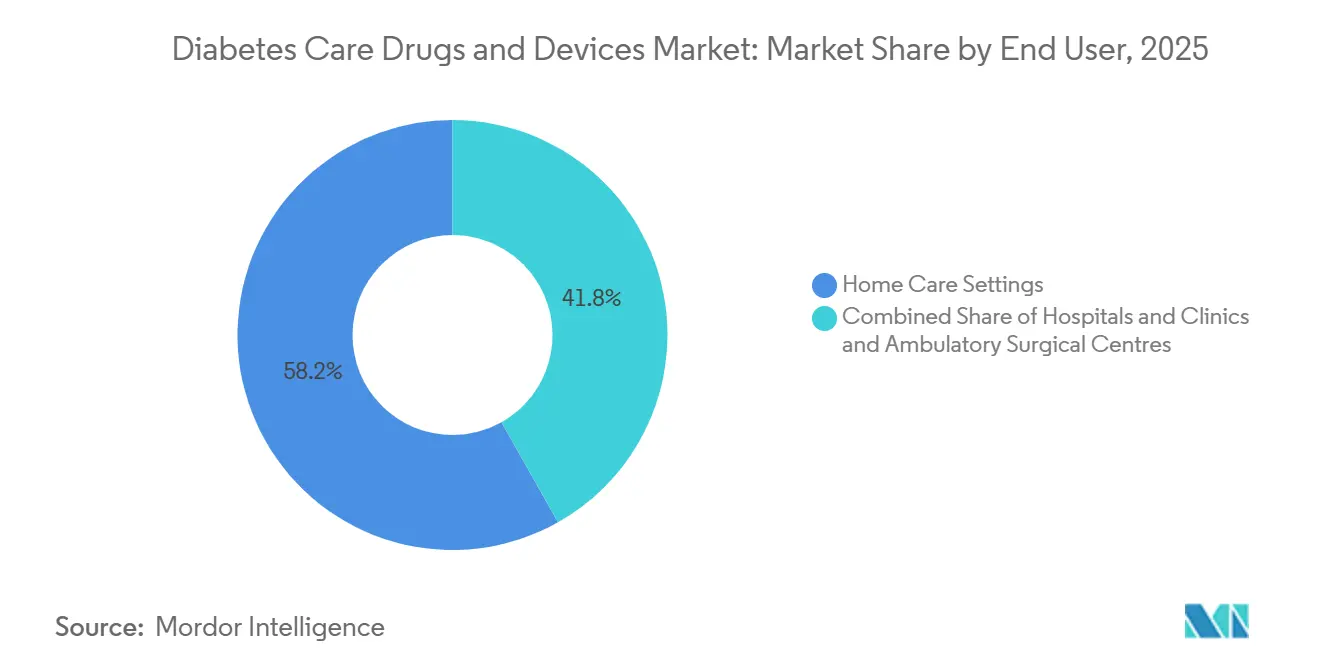
- By end user, home care settings held 58.2% of the diabetes care drugs and devices market share in 2025 and are advancing at a 10.2% CAGR through 2031.
- By distribution channel, retail pharmacies captured 48.8% of revenue in 2025, while e-commerce and direct-to-consumer channels are forecasted to expand at a 15.0% CAGR through 2031 in the diabetes care drugs and devices market.
Note: Market size and forecast figures in this report are generated using Mordor Intelligence’s proprietary estimation framework, updated with the latest available data and insights as of January 2026.
Market Trends and Insights
Drivers Impact Analysis of Diabetes Care Drugs and Devices Market*
| Driver | % Impact on CAGR Forecast | Geographic Relevance | Impact Timeline |
|---|---|---|---|
| Rapid Reimbursement Expansion for Continuous Glucose Monitoring | +2.30% | North America & EU, with spill-over to high-income APAC | Short term (≤ 2 years) |
| Rising Global Diabetes Prevalence and Treatment Intensification | +1.80% | Global; concentrated in APAC and MEA | Long term (≥ 4 years) |
| Faster Adoption of Connected Insulin Delivery and Smart Monitoring | +1.40% | North America, EU, high-income APAC | Medium term (2–4 years) |
| Expanded Public and Private Funding for Diabetes Screening and Care Pathways | +0.60% | North America, EU, South Asia | Medium term (2–4 years) |
| GLP-1 Driven Demand Spillover into Home Glucose Testing and Care Devices | +1.60% | North America dominant; growing in EU and APAC | Short term (≤ 2 years) |
| Pediatric Hybrid Closed-loop Adoption in Europe and High-income Asia-Pacific | +0.40% | EU (UK, Germany, France), Japan, South Korea | Medium term (2–4 years) |
| Source: Mordor Intelligence | |||
Rapid Reimbursement Expansion for Continuous Glucose Monitoring
The diabetes care drugs and devices market is gaining from policy changes that are turning interest in continuous monitoring into actual use in daily care. In the United States, Medicare expanded access effective January 2025 by removing the earlier requirement for repeated daily fingerstick testing, which opened eligibility to a wider group of insulin users and people with documented problematic hypoglycemia.[1]American Academy of Family Physicians, “Medicare Coverage of Continuous Glucose Monitoring, 2023 Updates,” Family Practice Management, aafp.orgThat matters because reimbursement often decides whether a patient tries sensor-based monitoring at all, especially in older populations where recurring device cost can delay adoption. Better access to CGM in 2025 and 2026 also improves treatment follow-through because patients can see glucose response more clearly and respond faster to therapy changes at home. In the diabetes care drugs and devices market, this creates a link between device reimbursement and broader therapy use, since monitoring tools can support stronger persistence with injectable and insulin-based regimens. This is why reimbursement policy now shapes not only device demand, but also the pace of treatment intensification across the wider care pathway in the diabetes care drugs and devices market.
Rising Global Diabetes Prevalence and Treatment Intensification
The diabetes care drugs and devices market continues to expand because the underlying patient base remains very large and still has significant unmet treatment need. The International Diabetes Federation reported in 2025 that 43% of adults living with diabetes in 2024 remained undiagnosed, which means the current treatment pool still understates long-term demand.[2]International Diabetes Federation, “IDF Diabetes Atlas 2025, 11th Edition,” IDF Diabetes Atlas, diabetesatlas.org The report also noted in 2025 that nearly 90% of the undiagnosed population lived in low- and middle-income countries, which points to future demand growth across both basic therapies and advanced monitoring as diagnosis rates improve. At the same time, diagnosed patients are moving toward more intensive treatment plans that combine newer drug classes with data-driven monitoring, raising revenue per patient rather than only increasing patient numbers. In February 2026, Novo Nordisk reported its fiscal 2025 results, confirming that GLP-1-based diabetes sales continued to contribute meaningfully even as obesity products grew faster. That combination of wider diagnosis and deeper treatment use is giving the diabetes care drugs and devices market a stronger growth base across both its drug and device segments.
Faster Adoption of Connected Insulin Delivery and Smart Monitoring
The diabetes care drugs and devices market is moving away from stand-alone products and toward connected systems that combine monitoring, dosing support, and data sharing. In December 2025, Medtronic began the broad United States commercial launch of its MiniMed 780G system integrated with the Abbott-made Instinct sensor, which showed how quickly major suppliers were shifting toward ecosystem-led offerings. In 2025, real-world data from Germany also showed that adults using automated insulin delivery achieved stronger time in range over a 12-month period than conventional therapy benchmarks.[3]Springer Nature, “Cardiovascular Outcome Trials in Cardiorenal Metabolic Medicine, A Decade of Transformative Progress (2016-2026),” Cardiovascular Diabetology, link.springer.comThat matters because providers and payers increasingly favor systems that can reduce friction for the patient and improve routine disease management over time. In January 2026 and June 2026, fresh regulatory clearances and partnership expansion further showed that leading manufacturers were building around integrated platforms rather than isolated hardware features. As a result, the strongest competitive position now comes from system integration rather than from performance gains in only one device component.
The diabetes care drugs and devices market is also seeing demand move across categories as GLP-1 therapy adoption changes patient behavior in daily monitoring. Many people beginning GLP-1 treatment, especially in type 2 diabetes, are entering more structured monitoring routines for the first time, which lifts interest in CGM and SMBG devices. In 2026, combined global sales of tirzepatide and semaglutide were projected to exceed USD 84.5 billion, which showed the scale at which GLP-1 growth could influence adjacent categories. This shift is important because it pulls value into home management tools even when the starting point of therapy growth comes from a drug category rather than a device category. In February 2026, Abbott India and Novo Nordisk entered a co-promotion agreement in India that linked semaglutide distribution with Abbott’s broader commercial reach, showing how drug and device pathways can begin to align more closely in go-to-market strategy. In the diabetes care drugs and devices market, that cross-category pull is helping create longer use cycles, stronger refill patterns, and deeper involvement of digital monitoring in type 2 care.
Restraints Impact Analysis of Diabetes Care Drugs and Devices Market*
| Restraint | % Impact on CAGR Forecast | Geographic Relevance | Impact Timeline |
|---|---|---|---|
| High Out-of-pocket Cost for Advanced Devices and Branded Therapeutics | -1.20% | North America (uninsured/underinsured), APAC (price-sensitive), South America | Short term (≤ 2 years) |
| Low Awareness and Weak Follow Through in Rural and Underserved Care Settings | -0.60% | Africa, South Asia, rural Latin America, MEA | Long term (≥ 4 years) |
| EU MDR and Other Re-certification Bottlenecks for Legacy Devices | -0.80% | EU core, spill-over to markets following EU regulatory alignment | Medium term (2–4 years) |
| Insurance Prior Authorization Friction for Newer Diabetes Therapies | -0.50% | North America, EU | Short term (≤ 2 years) |
| Source: Mordor Intelligence | |||
High Out-of-Pocket Cost for Advanced Devices and Branded Therapeutics
The diabetes care drugs and devices market still faces a clear affordability problem in advanced product categories. In 2025, FDA-approved CGM systems were described in the source material as costing USD 100 to USD 400 per month before insurance, and that still left meaningful patient exposure even where coverage existed. In lower-income and price-sensitive markets during 2025 and 2026, that challenge became more severe and kept many patients on older monitoring formats instead of shifting them into continuous sensing or premium drug therapy. High cost can also reshape channel behavior, because patients who cannot afford standard branded access may search for lower-cost supply routes that are less consistent and harder to supervise. In the diabetes care drugs and devices market, this slows adoption beyond well-insured groups and limits how fast innovation can scale into broad routine use. It also means that strong clinical value alone is not enough if the patient still cannot maintain access month after month.
EU MDR and Other Re-certification Bottlenecks for Legacy Devices
The diabetes care drugs and devices market in Europe is facing operational pressure from the recertification cycle under the EU Medical Device Regulation. As of February 2025, only 43% of the 28,489 MDR applications submitted had resulted in certificates, which showed the scale of the certification backlog. MedTech Europe warned in 2025 that the renewal phase for earlier MDR certificates due from 2026 to 2027 could create a new bottleneck for manufacturers that still need continuity across long-established device lines. This issue is particularly important for diabetes products with longer life cycles and tighter margins, because the cost and workload of recertification can be heavy relative to their commercial scale. In December 2025, MedTech Europe also described the European Commission’s revision proposal as a first step toward easing parts of the complexity, but it did not remove the immediate execution burden facing suppliers. Even with policy revisions under discussion, the recertification burden remains a real timing and capacity issue for device makers operating across the region
*Our forecasts treat driver/restraint impacts as directional, not additive. The impact forecasts reflect baseline growth, mix effects, and variable interactions.
Diabetes Care Drugs and Devices Market Segment Analysis
By Drug Type:
GLP-1 Momentum Reshapes Insulin's DominanceInsulin held 38.8% of the drug segment by value in 2025, which kept it in the leading position across treatment categories in the diabetes care drugs and devices market. That position reflects its essential role in type 1 care and its continued importance in large parts of type 2 management, especially in markets where cost still shapes prescribing choices. Even so, growth momentum is moving toward drug classes that offer a wider clinical value proposition and stronger commercial expansion potential. In 2026, clinical guidance and commercial activity both continued to support newer treatment classes with broader cardiometabolic relevance. The shift does not reduce insulin’s relevance, but it does change where future mix improvement is likely to come from in the diabetes care drugs and devices market.
GLP-1 receptor agonists are forecasted to grow at a 16.5% CAGR from 2026 to 2031, making them the fastest-growing drug class in the diabetes care drugs and devices market. Their expansion is being supported by broader use in cardiometabolic care and by stronger physician confidence in long-term outcomes beyond glucose control alone. In January 2026, IRA-negotiated Medicare prices took effect for selected drugs, which added another pricing and access variable for branded diabetes therapies. SGLT2 inhibitors are also gaining importance in 2026 because guidelines are bringing diabetes therapy closer to heart failure and kidney disease management in routine practice. Oral GLP-1 formats remain strategically important through the forecasted period because they can help expand access among patients who still hesitate to begin injectable therapy.



By Device Type:
Smart Integration Compounds Monitoring's LeadMonitoring devices held 65.4% of device segment revenue in 2025, giving them the largest diabetes care drugs and devices market share within the device category. This lead reflects how quickly continuous monitoring moved into the mainstream for insulin users and how steadily it spread into broader type 2 care. The category is being led by sensor ecosystems that make daily tracking easier, extend wear time, and fit more naturally into patient routines. In April 2025, Dexcom received FDA clearance for its G7 15-Day CGM, which showed continued movement toward longer wear formats. It also explains why the device mix in the diabetes care drugs and devices market is staying weighted toward monitoring even as management systems improve.
Management devices are projected to grow at a 10.7% CAGR through 2031, which makes them the fastest-expanding device segment in the diabetes care drugs and devices market. In January 2026, Medtronic received FDA clearance for the MiniMed Go Smart MDI system, and in June 2026, MiniMed expanded its Abbott partnership around dual glucose-ketone sensors. In May 2026, Abbott also secured CE Mark for Libre Duo, which reinforced the move toward more clinically advanced sensing within insulin management. These steps show that growth in management devices is increasingly tied to connected design rather than stand-alone delivery hardware. In practical terms, the companies that can combine sensor data, decision support, and dosing tools most effectively are likely to hold the strongest long-term position in this part of the diabetes care drugs and devices market.
By Patient Type:
Type 2 Diabetes Drives Volume, But Type 1 Sets the Tech BenchmarkType 2 diabetes represented 85.2% of total demand in 2025, which made it the main volume driver across the diabetes care drugs and devices market. This concentration reflects the underlying prevalence of the condition and the steady rise in treatment intensity within this patient group. In 2024 and 2025, type 2 patients were central to GLP-1 uptake, home-based CGM use, and routine pharmacy-driven refill activity across many developed and emerging markets. Because the patient base is so large, even a modest increase in therapy intensity can create substantial value expansion across drugs, sensors, and support devices. The International Diabetes Federation also reported in 2025 that gestational diabetes affected 15.6% of live births globally in 2024, which supports continued demand for monitoring devices during pregnancy.
Type 1 diabetes accounts for a smaller share of the diabetes care drugs and devices market, but it remains the segment where advanced technology is most established and most closely evaluated. In July 2025, Medtronic received CE Mark expansion for the MiniMed 780G system to include children as young as 2, pregnancy, and type 2 diabetes, which showed how evidence developed in type 1 care was beginning to support broader use cases. Automated insulin delivery, pediatric approvals, and pregnancy-related use cases are all moving first through type 1 care before spreading more widely into type 2 treatment. That creates an evidence path that can support broader reimbursement decisions later, especially when systems prove they can work reliably outside specialist settings. This is why type 1 care continues to influence the pace of innovation across the wider diabetes care drugs and devices market, even though it does not drive the same patient volume as type 2 diabetes.
By End User:
Home Care Settings Anchor the Structural Growth StoryHome care settings held 58.2% of the diabetes care drugs and devices market share in 2025, which made them the leading end-user segment. This position reflects the wider use of smartphone-linked CGM, connected pens, patch pumps, and delivery models that support self-managed care. It also reflects patient preference for less frequent facility-based management when monitoring can be handled reliably at home. Hospitals and clinics still remain important for treatment initiation, dose adjustment, and more complex cases, but the center of routine management has moved outward.
Home care settings are projected to grow at a 10.2% CAGR through 2031, which keeps them central to the diabetes care drugs and devices market size over the forecasted period. This growth is also shifting competition toward retention tools such as remote monitoring apps, refill continuity, and caregiver-sharing features. As device hardware begins to converge, service quality and digital continuity become more important in keeping patients on a given platform. The diabetes care drugs and devices industry is therefore seeing home care turn into both the largest usage setting and one of the strongest sources of repeat demand.
By Distribution Channel:
E-Commerce Expands Access but Fragments Quality ControlRetail pharmacies held 48.8% of channel revenue in 2025, which kept them in the leading distribution position across the diabetes care drugs and devices market. Their strength comes from their role as the main dispensing point for insulin, sensors, strips, and repeat therapy supplies in most developed markets. Hospital pharmacies still remain important for high-acuity cases and specialty initiation, while clinic-linked supply channels serve narrower but relevant patient groups. Even with that, the channel structure is becoming more diverse as digital fulfillment becomes easier for long-term diabetes care. The diabetes care drugs and devices market is therefore keeping a strong traditional channel base while also building faster digital routes on top of it.
E-commerce and direct-to-consumer channels are forecasted to grow at a 15.0% CAGR through 2031, making them the fastest-growing distribution route in the diabetes care drugs and devices market. Subscription models, mail-order supply programs, and digital prescribing pathways in 2025 and 2026 are supporting this growth because they fit well with recurring therapy needs. In November 2025, the U.S. OIG reported that Medicare payments for CGM supplies exceeded supplier acquisition costs by USD 359 million, which brought more attention to billing control and pricing discipline as volume shifts online. From mid-2026, CMS action around competitive bidding is also set to influence channel economics more directly. In the diabetes care drugs and devices market, digital channel growth will remain important, but it will need tighter operational controls as scale increases.
Geography Analysis
North America Diabetes Care Drugs and Devices Market
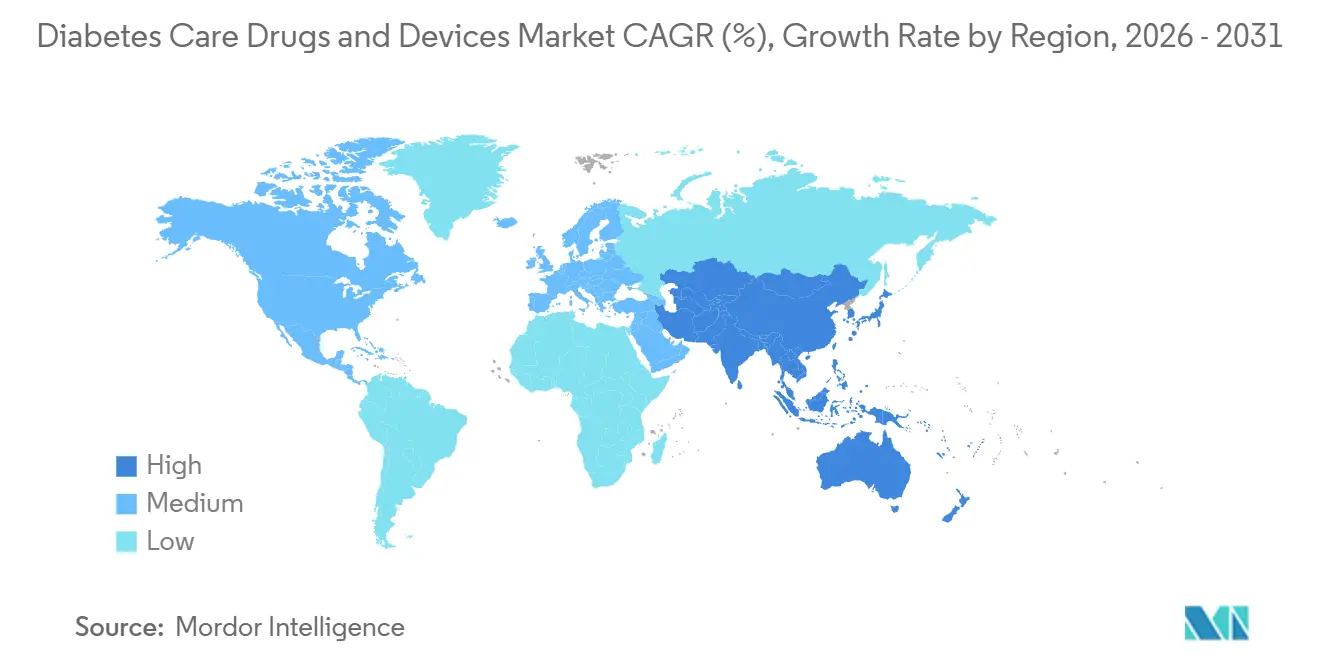
North America held 39.6% of global revenue in 2025, which gave it the largest regional position in the diabetes care drugs and devices market share. The region’s lead reflects high per-patient treatment spending, broad insurance infrastructure, and early use of premium CGM and automated insulin delivery systems. In the United States, Medicare coverage changes effective from January 2025 further improved access to CGM for insulin-using patients and people with problematic hypoglycemia. Canada adds a steadier base through provincial reimbursement, while Mexico remains more underpenetrated and more concentrated in private care settings. Even in this large regional block, prior authorization and affordability in 2025 and 2026 still shape how quickly advanced solutions spread across everyday use.
APAC Diabetes Care Drugs and Devices Market
Asia-Pacific is forecasted to grow at a 10.7% CAGR from 2026 to 2031, making it the fastest-growing regional component of the diabetes care drugs and devices market. The region combines a large diabetes burden with improving access to diagnosis, basic therapy, and device reimbursement in several major markets. In Q3 2025, tirzepatide posted 251% year-on-year sales growth in Japan, which signaled strong premium therapy adoption in a mature market. In February 2026, Abbott India and Novo Nordisk entered a co-promotion agreement in India, showing how affordability-focused partnerships are being used to widen access in high-volume markets. Together, these developments make Asia-Pacific the main long-term expansion zone for the diabetes care drugs and devices market.
EMEA and South America Diabetes Care Drugs and Devices Market
Europe remains a substantial part of the diabetes care drugs and devices market, supported by established reimbursement structures and specialist care networks in major countries. In 2025, MedTech Europe continued to highlight the operational strain tied to MDR recertification, and that pressure is carrying directly into the 2026 to 2027 renewal cycle. In July 2026, Diabeloop’s DBLG2 closed-loop system received CE Mark for initial launch in Germany, which showed that innovation in automated delivery was still moving forward despite the regulatory burden. South America remains more sensitive to affordability, while the Middle East and Africa show a split between stronger premium uptake in wealthier Gulf countries and slower progress in lower-income settings with procurement and logistics limits. This leaves the wider regional picture uneven, but still relevant for long-term expansion beyond the largest established markets.

Competitive Landscape
The diabetes care drugs and devices market is moderately consolidated at the top end, with a small group of companies holding a strong position across the most commercially attractive categories. In 2025 and 2026, Novo Nordisk and Eli Lilly remained the central GLP-1 players because their brands set the pace for growth and shaped treatment visibility across diabetes and broader cardiometabolic care. On the device side, Abbott, Dexcom, and MiniMed defined competition in continuous monitoring and integrated delivery systems, while Insulet and Tandem remained important in insulin pump-based care. This structure gives the diabetes care drugs and devices market strong leadership in premium segments without turning the full market into a closed field. Competition remains active because value is spread across drugs, monitoring, insulin delivery, and recurring supply relationships rather than resting in a single product format.
A major competitive pattern in 2026 is the use of cross-company alliances to build stronger integrated ecosystems within the diabetes care drugs and devices market. In June 2026, MiniMed expanded its partnership with Abbott to develop dual glucose-ketone sensors for MiniMed dosing systems, which deepened the value of an integrated sensor and insulin delivery model. In May 2026, Abbott strengthened its position by securing CE Mark for Libre Duo, which supported its push into more advanced sensing formats. In January 2026, Medtronic added another notable move when it received FDA clearance for the MiniMed Go Smart MDI system using the Instinct sensor made by Abbott. These actions show that product development, regulatory progress, and partnership strategy are now moving together rather than acting as separate competitive levers.
There is still open space in implantable monitoring, smart injection systems, and lower-cost insulin supply where not every patient needs the most advanced integrated platform. Mid-tier companies can still grow by targeting affordability, public tender access, or a narrower set of use cases that large leaders do not cover as directly. Software-linked care support also remains important in 2025 and 2026 because patient engagement and therapy continuity matter more as management shifts into the home. The diabetes care drugs and devices market therefore combines strong leadership at the top with meaningful room for selective competition in price-sensitive and underpenetrated parts of care. That balance supports a market structure where large companies keep the advantage in premium innovation, while smaller and focused players can still win share in targeted segments.
Diabetes Care Drugs and Devices Industry Leaders
Abbott Laboratories
Ascensia Diabetes Care Holdings AG (PHC Holdings Corporation)
Medtronic plc
Sanofi
Novo Nordisk A/S
- *Disclaimer: Major Players sorted in no particular order
Diabetes Care Drugs and Devices Market Companies Covered in this Report
- Abbott Laboratories
- A. Menarini Diagnostics srl
- Arkray
- Ascensia Diabetes Care Holdings AG (PHC Holdings Corporation)
- AstraZeneca
- Bayer
- Beckton Dickinson
- Bionime
- Dexcom
- Eli Lilly and Company
- Embecta Corp.
- Roche
- Insulet
- LifeScan Enterprises LLC
- Medtronic
- Nipro
- Novo Nordisk
- Sanofi
- Senseonics
- Tandem Diabetes Care
- Terumo
- Trividia Health, Inc.
- Ypsomed

Recent Industry Developments in Diabetes Care Drugs and Devices Market
- June 2026: MiniMed commercially launched the MiniMed 780G system integrated with Abbott's Instinct and Instinct Go sensors across European markets, expanding its AID sensor portfolio in the region. Simultaneously, MiniMed announced an expanded agreement with Abbott to jointly develop and commercialize dual glucose-ketone sensors exclusively for MiniMed dosing systems, building on their existing Instinct collaboration.
- February 2026: Abbott India and Novo Nordisk entered a co-promotion agreement to distribute semaglutide in India, using Abbott’s network to widen access beyond major urban centers and showing how drug promotion and glucose monitoring can increasingly move together in growth markets.
- July 2025: Medtronic received CE Mark for the MiniMed 780G system with expanded indications, including children as young as 2, pregnant women, and people with type 2 diabetes, guided by NICE TA943 and 2024 ISPAD guidance supporting broader AID use in pediatric type 1 care.
- April 2025: Dexcom received FDA clearance for the G7 15-Day CGM for adults, extending maximum sensor wear time by 5 days over the prior version. Dexcom then began its commercial rollout in the second half of 2025 and confirmed plans for compatibility with automated insulin delivery partners.


Global Diabetes Care Drugs and Devices Market Report Scope
| Insulin |
| GLP-1 Receptor Agonists |
| SGLT2 Inhibitors |
| DPP-4 Inhibitors |
| Other Diabetes Drugs |
| Monitoring Devices | Self-Monitoring Blood Glucose Devices | Glucometer Devices |
| Test Strips | ||
| Lancets | ||
| Continuous Glucose Monitoring Devices | Sensors | |
| Durables | ||
| Management Devices | Insulin Pumps | Insulin Pump Device |
| Insulin Pump Reservoir | ||
| Infusion Set | ||
| Insulin Delivery Consumables | Insulin Syringes | |
| Insulin Pens | ||
| Jet Injectors | ||
| Type 1 Diabetes |
| Type 2 Diabetes |
| Gestational and Other Diabetes Types |
| Hospitals and Clinics |
| Home Care Settings |
| Ambulatory Surgical Centres |
| Hospital Pharmacies |
| Retail Pharmacies |
| E-Commerce and Direct-to-Consumer Channels |
| Diabetes Specialty Clinics and Institutional Supply |
| North America | United States | |
| Canada | ||
| Mexico | ||
| South America | Brazil | |
| Argentina | ||
| Rest of South America | ||
| Europe | Germany | |
| France | ||
| United Kingdom | ||
| Italy | ||
| Spain | ||
| Russia | ||
| Rest of Europe | ||
| Asia-Pacific | China | |
| Japan | ||
| India | ||
| South Korea | ||
| Australia | ||
| Rest of Asia-Pacific | ||
| Middle East and Africa | Middle East | GCC |
| South Africa | ||
| Rest of Middle East and Africa | ||
| By Drug Type | Insulin | ||
| GLP-1 Receptor Agonists | |||
| SGLT2 Inhibitors | |||
| DPP-4 Inhibitors | |||
| Other Diabetes Drugs | |||
| By Device Type | Monitoring Devices | Self-Monitoring Blood Glucose Devices | Glucometer Devices |
| Test Strips | |||
| Lancets | |||
| Continuous Glucose Monitoring Devices | Sensors | ||
| Durables | |||
| Management Devices | Insulin Pumps | Insulin Pump Device | |
| Insulin Pump Reservoir | |||
| Infusion Set | |||
| Insulin Delivery Consumables | Insulin Syringes | ||
| Insulin Pens | |||
| Jet Injectors | |||
| By Patient Type | Type 1 Diabetes | ||
| Type 2 Diabetes | |||
| Gestational and Other Diabetes Types | |||
| By End User | Hospitals and Clinics | ||
| Home Care Settings | |||
| Ambulatory Surgical Centres | |||
| By Distribution Channel | Hospital Pharmacies | ||
| Retail Pharmacies | |||
| E-Commerce and Direct-to-Consumer Channels | |||
| Diabetes Specialty Clinics and Institutional Supply | |||
| By Geography | North America | United States | |
| Canada | |||
| Mexico | |||
| South America | Brazil | ||
| Argentina | |||
| Rest of South America | |||
| Europe | Germany | ||
| France | |||
| United Kingdom | |||
| Italy | |||
| Spain | |||
| Russia | |||
| Rest of Europe | |||
| Asia-Pacific | China | ||
| Japan | |||
| India | |||
| South Korea | |||
| Australia | |||
| Rest of Asia-Pacific | |||
| Middle East and Africa | Middle East | GCC | |
| South Africa | |||
| Rest of Middle East and Africa | |||


Key Questions Answered in the Report
What is the 2026 size of the diabetes care drugs and devices space?
The diabetes care drugs and devices market stands at USD 130.7 billion in 2026 and is forecast to reach USD 198.1 billion by 2031 at an 8.7% CAGR.
Which product group is growing the fastest in diabetes treatment?
GLP-1 receptor agonists are the fastest-growing drug class in this analysis, with a projected 16.5% CAGR from 2026 to 2031.
Why are monitoring devices leading device revenue?
Monitoring devices held 65.4% of device revenue in 2025 because CGM adoption is expanding across insulin users and more type 2 patients.
Which care setting leads diabetes management demand?
Home care settings led with 58.2% share in 2025 and are projected to grow at a 10.2% CAGR, supported by connected sensors and self-management tools.
Page last updated on:





