
Commercial Water Heater Market Size and Share
Market Overview
| Study Period | 2021 - 2032 |
|---|---|
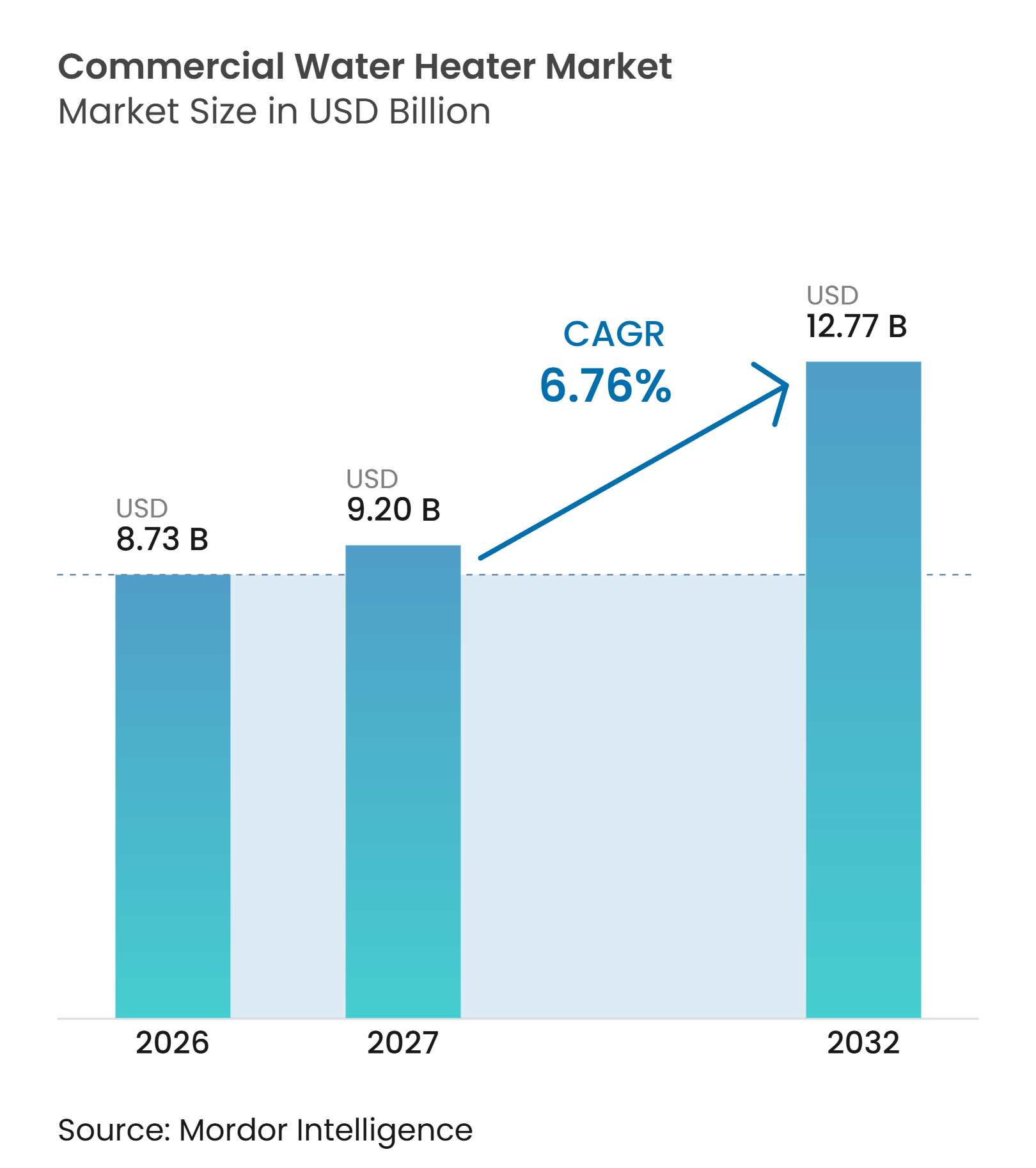
| Market Size (2027) | USD 9.20 Billion |
| Market Size (2032) | USD 12.77 Billion |
| Growth Rate (2027 - 2032) | 6.76 % |
| Fastest Growing Market | Asia-Pacific |
| Largest Market | Asia-Pacific |
| Market Concentration | Medium |
Major Players *Disclaimer: Major Players sorted in no particular order Image © Mordor Intelligence. Reuse requires attribution under CC BY 4.0. | |
Commercial Water Heater Market Analysis by Mordor Intelligence
The Commercial Water Heater Market was valued at USD 8.73 billion in 2026, is estimated at USD 9.20 billion in 2027, and is forecast to reach USD 12.77 billion by 2032, growing at a 6.76% CAGR during 2027–2032. Regulatory changes, commercial construction, and replacement demand are expected to support purchases across the commercial water heater market. The shift toward electric, heat pump, hybrid, and condensing equipment is changing how facilities plan replacements and new installations. Higher-efficiency requirements can bring forward purchasing decisions when older equipment fails or reaches the end of its service life. Manufacturers are responding with broader high-efficiency portfolios, specification support, and direct engagement with large commercial buyers. Opportunities are strongest where building owners must balance reliable hot water supply, operating costs, compliance requirements, and available installer capacity.
Key Report Takeaways
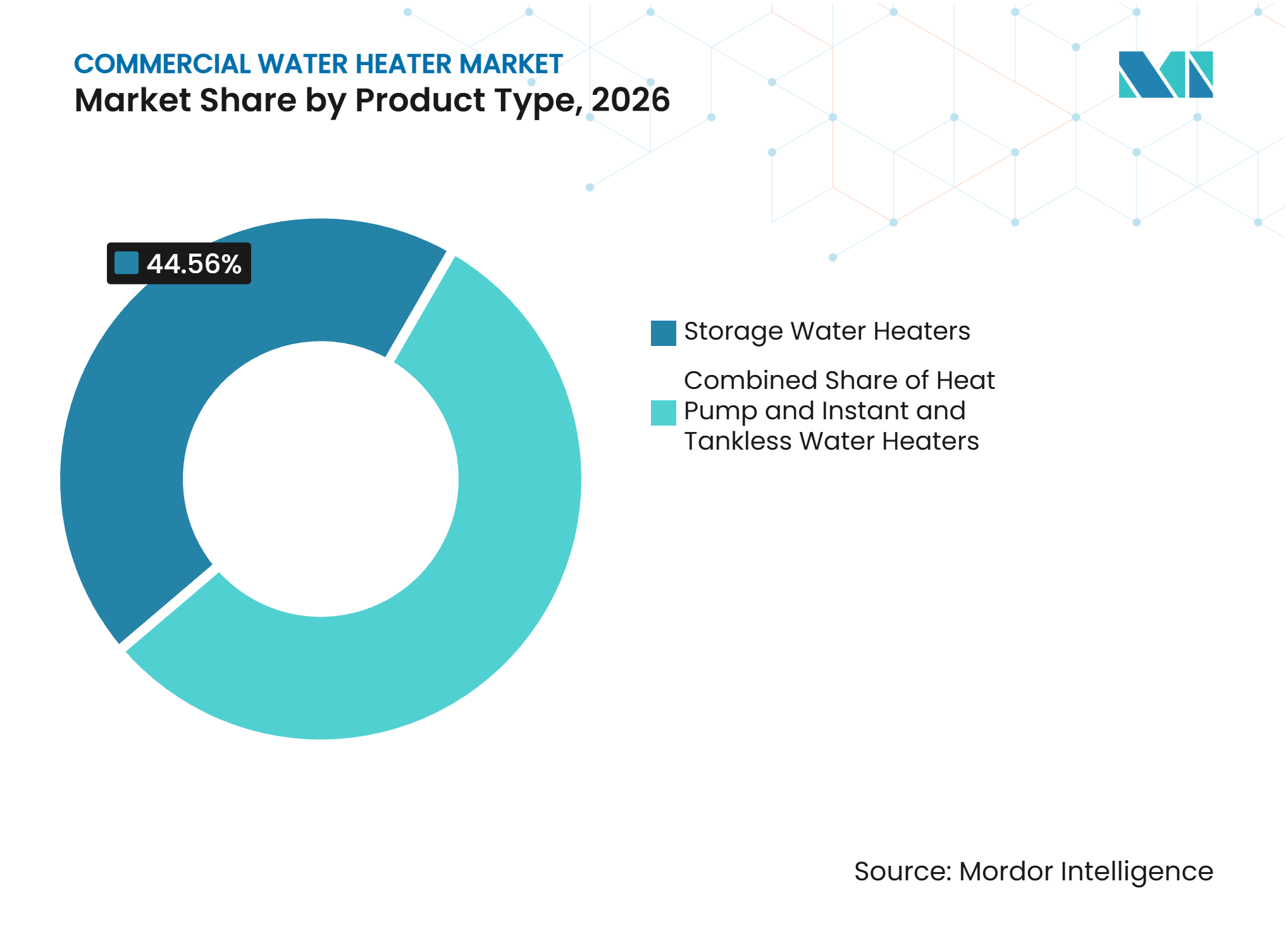
By product type, storage water heaters held a 44.56% market value share of commercial water heater demand in 2026, while heat pump and hybrid water heaters are projected to grow at the fastest CAGR of 8.71% between 2027 and 2032.
By energy source, electric systems accounted for a 47.34% market value share of commercial water heater demand in 2026, while solar systems are projected to grow at the fastest CAGR of 8.52% between 2027 and 2032.
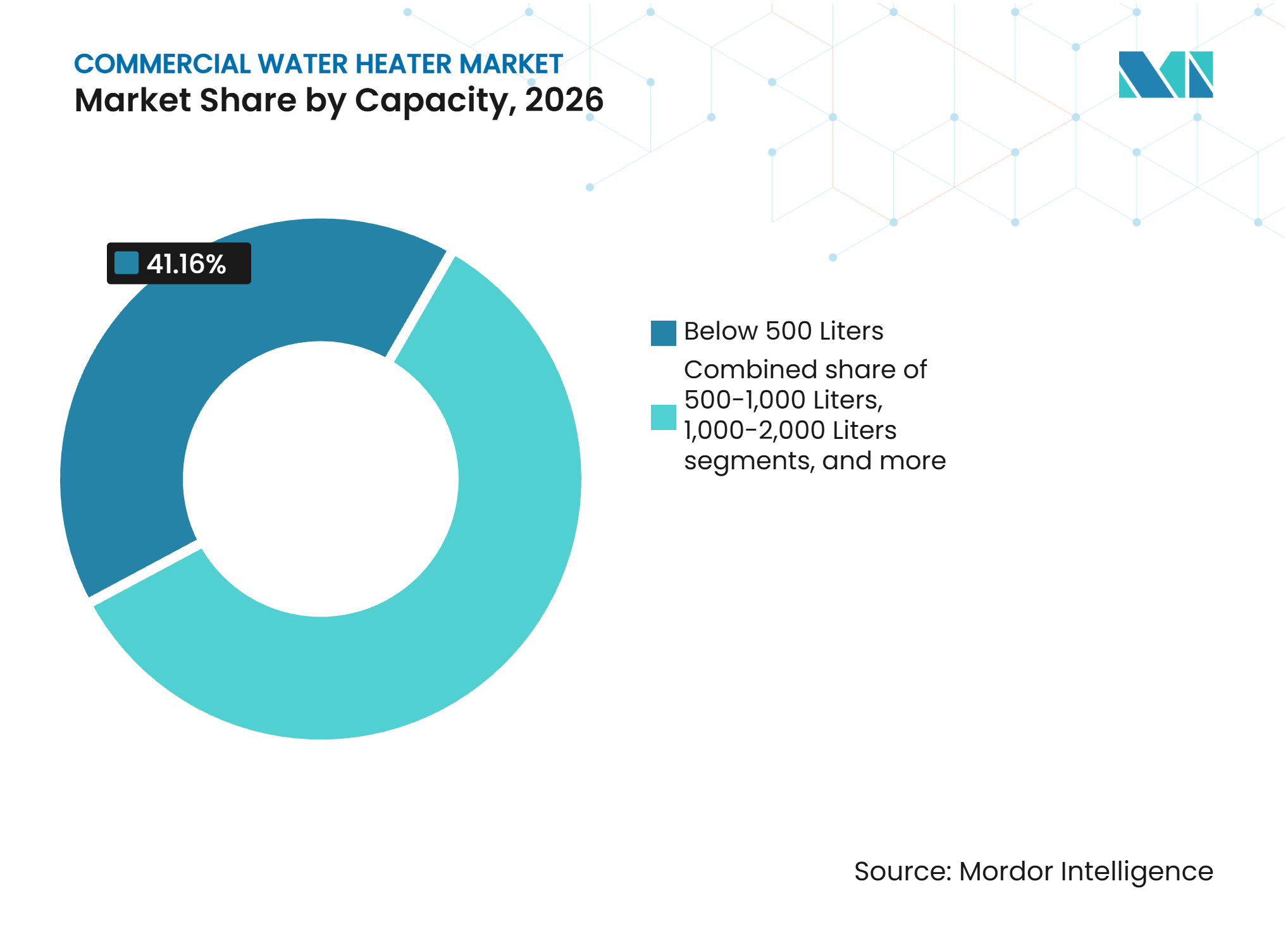
By capacity, below-500-liter systems held a 41.16% market value share of commercial water heater demand in 2026, while above-3,000-liter systems are projected to grow at the fastest CAGR of 8.33% between 2027 and 2032.
By end user, hospitality held a 25.05% market value share of commercial water heater demand in 2026, while healthcare is projected to grow at the fastest CAGR of 8.14% between 2027 and 2032.
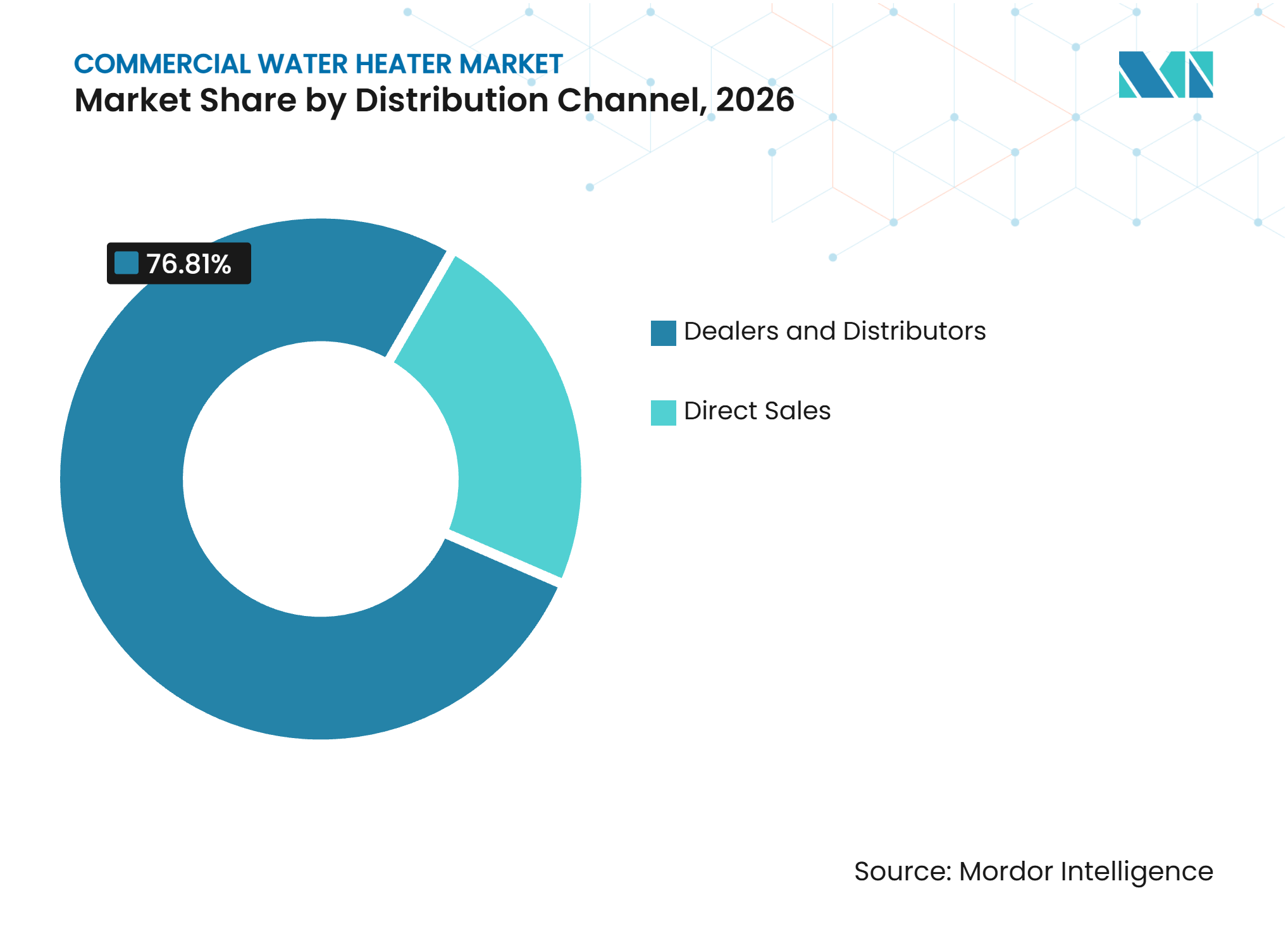
By distribution channel, dealers and distributors held a 76.81% market value share of commercial water heater demand in 2026, while direct sales are projected to grow at the fastest CAGR of 7.47% between 2027 and 2032.
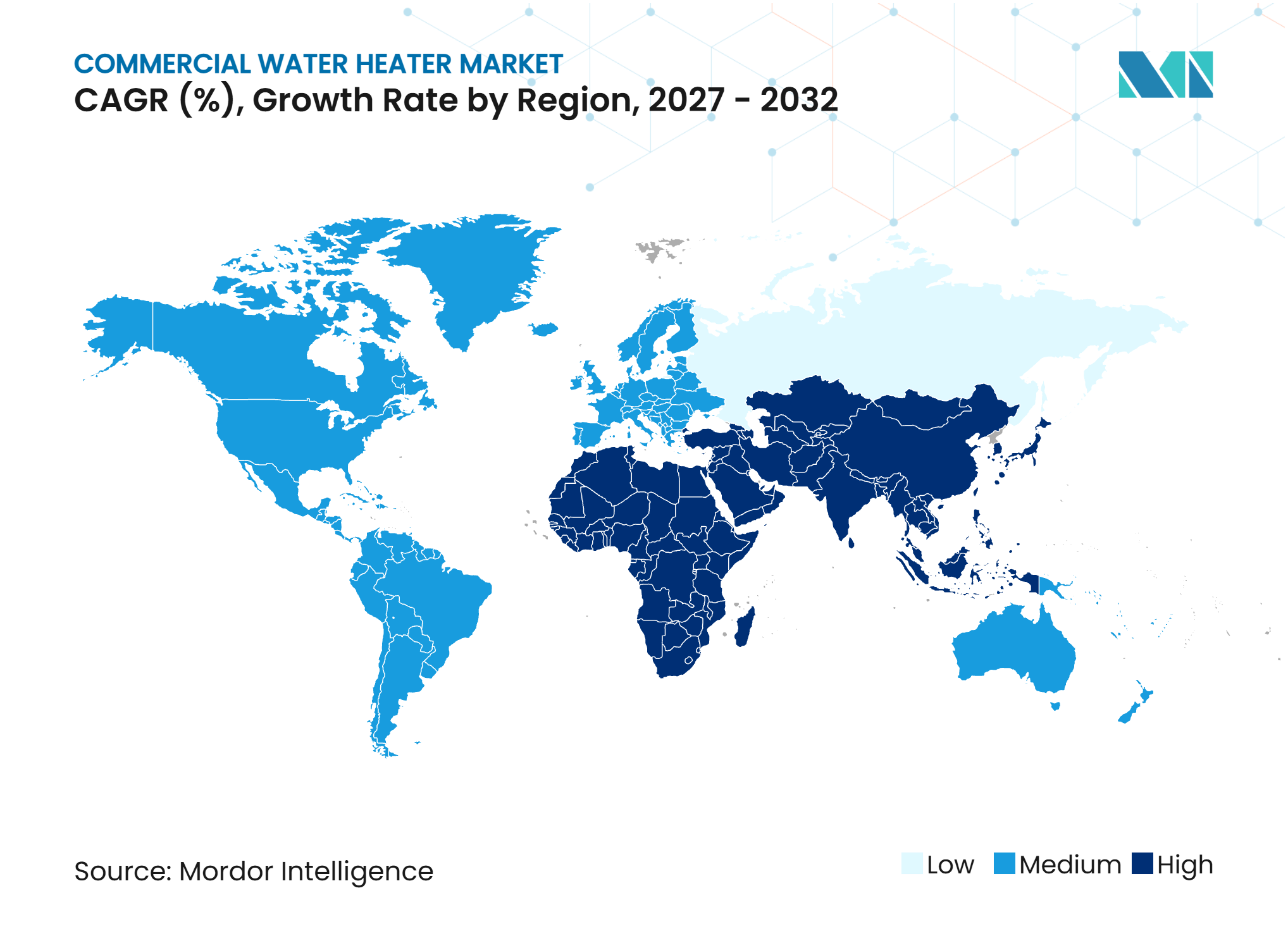
By geography, Asia-Pacific held a 35.50% market value share of commercial water heater demand in 2026 and is projected to grow at the fastest CAGR of 8.69% between 2027 and 2032.
Note: Market numbers in this report are based on Mordor Intelligence's proprietary estimation framework, which combines nine months of actuals with Q4 projections for base year 2026.
Market Trends and Insights
Drivers Impact Analysis of Commercial Water Heater Market*
| Driver | (~) % Impact on CAGR Forecast | Geographic Relevance | Impact Timeline |
|---|---|---|---|
| Commercial Construction and Hospitality Infrastructure Expansion | +1.3% | Global, with early gains in Asia-Pacific core markets and GCC hospitality corridors | Medium term (2-4 years) |
| Commercial Energy-Efficiency Standards and Decarbonization Policies | +1.2% | Global, with the strongest compliance activity in North America, the European Union, and China | Medium term (2-4 years) |
| Replacement of Aging Commercial Water Heating Assets | +1.1% | North America and Europe, with spillover to the Middle East & Africa | Short term (≤ 2 years) |
| Heat-Pump and Hybrid System Adoption in Commercial Facilities | +0.8% | Asia-Pacific, North America, and Europe, with emerging adoption in Middle East & Africa hospitality retrofits | Medium term (2-4 years) |
| Thermal Storage and Demand-Response Revenue for Commercial Buildings | +0.5% | North America, with early-stage activity in Europe | Long term (≥ 4 years) |
| High-Volume Hot Water Demand From Healthcare, Foodservice, and Institutional Facilities | +0.5% | Global, with strongest demand in North American healthcare and Asia-Pacific institutional development | Short term (≤ 2 years) |
| Source: Mordor Intelligence | |||
Commercial Construction and Hospitality Infrastructure Expansion
Commercial construction is creating a steady pipeline for the commercial water heater market, especially in hotels, hospitals, foodservice sites, and institutions. The United States hotel pipeline contained 6,280 projects and 737,036 rooms at the end of the second quarter of 2025, and 902 new hotels are projected to open in 2027[1]. Extended-stay properties require frequent use of hot water for guest rooms and kitchenettes, which can increase system capacity requirements. Hotels, healthcare facilities, restaurants, and educational campuses also need dependable service during daily peak periods. Hospitality accounted for 25.05% of demand in 2026, while healthcare is forecast to expand at an 8.14% rate through 2032. This mix supports both standard replacement equipment and engineered systems for high-volume sites.
Replacement of Aging Commercial Water Heating Assets
Replacement demand remains important because many systems installed during the early and middle years of the 2010s are approaching a typical 10-to-15-year service life. The Northwest Energy Efficiency Alliance found that equipment failure and code requirements were the main triggers for commercial water heater purchases in its 2025 research. United States Department of Energy rules for commercial gas-fired equipment set more stringent efficiency requirements, which change the available replacement options. In April 2026, DOE announced enforcement discretion for units manufactured before October 6, 2027, while the 2023 rule remains in force[1]. Building owners can therefore face higher equipment and installation costs when older units fail. These conditions make product availability, contractor support, and lifecycle costs more important in the commercial water heater market.
Heat-Pump and Hybrid System Adoption in Commercial Facilities
Heat pump, hybrid, and solar systems are gaining attention because building owners are looking for lower energy use and alternatives to conventional gas equipment. The commercial water heater market is supported by LEED v5 requirements that set a combined weighted-average coefficient of performance of at least 1.8 for service water heating in applicable projects[3]. ANSI/ASHRAE/IES Standard 90.1-2025 also includes updated provisions for commercial water heating equipment and gas-fired heat pump water heaters. Solar is forecast to grow at an 8.52% rate, supported by broader interest in solar thermal capacity for institutional and commercial uses. The IEA Solar Heating and Cooling Programme recorded 17.8 GW, which was 14% lower than the previous year, of new solar heat capacity worldwide during 2024. Adoption still depends on site conditions, available capital, electricity prices, and the ability of local contractors to design and commission these systems.
Thermal Storage and Demand-Response Revenue for Commercial Buildings
Commercial facilities can use water heating as a flexible thermal load when equipment controls respond to utility price signals and periods of grid stress. Lawrence Berkeley National Laboratory demonstrations found that load-shifting controls redirected 29% to 54% of heat pump water heater energy use away from peak periods, depending on the rate structure[4]. The commercial water heater market can benefit when this operating flexibility improves project economics for hotels, campuses, and healthcare facilities. Thermal storage can also help facilities maintain hot water availability while reducing coincident electricity demand. The value proposition is strongest where utilities offer demand-response programs or time-varying rates. Wider adoption will depend on controls integration, owner confidence, and clear measurement of savings.
Restraints Impact Analysis of Commercial Water Heater Market*
| Restraint | (~) % Impact on CAGR Forecast | Geographic Relevance | Impact Timeline |
|---|---|---|---|
| High Capital Cost and Long Payback Periods for High-Efficiency Systems | -0.7% | Global, with the highest exposure in retrofit-heavy North American and European commercial stock | Short term (≤ 2 years) |
| Installation Complexity and Shortage of Qualified Commercial Contractors | -0.5% | North America and Europe, with an emerging constraint in rapidly scaling Asia-Pacific markets | Medium term (2-4 years) |
| Water Quality, Scale, and Corrosion Risk in High-Use Facilities | -0.3% | Middle East & Africa, and hard-water areas across North America and Europe | Long term (≥ 4 years) |
| Peak-Demand Sizing and Redundancy Requirements for Mission-Critical Sites | -0.2% | Global, with the greatest relevance for healthcare campuses and major hospitality complexes | Medium term (2-4 years) |
| Source: Mordor Intelligence | |||
High Capital Cost and Long Payback Periods for High-Efficiency Systems
High upfront cost can limit the adoption of heat pump, hybrid, and condensing systems in existing commercial buildings. Projects may require electrical upgrades, structural work, ventilation changes, or modifications to the existing water distribution system. The CalNEXT pilot found that installation costs varied with site conditions, equipment complexity, and the existing water heater configuration. Smaller hotels, restaurants, and clinics may prioritize the lowest initial cost when equipment fails unexpectedly. Water quality, scale, and corrosion can increase maintenance requirements in high-use facilities. Healthcare campuses and large hotels must also pay for redundancy and peak-demand capacity to protect continuous service.
Installation Complexity and Shortage of Qualified Commercial Contractors
Large heat pump systems, condensing boiler cascades, and solar-hybrid installations require design, hydronic, controls, and commissioning skills. The NEEA reported that contractors and decision-makers were concerned about unfamiliar installation requirements for heat pump applications with high demand or recirculation. A limited pool of qualified contractors can delay projects and raise installation costs in the commercial water heater market. The issue is more acute in smaller locations where specialized mechanical expertise is concentrated among a few firms. Facility owners operating hospitals, hotels, and other critical sites may avoid unfamiliar designs if service reliability is uncertain. Training, standard system designs, and stronger manufacturer support can reduce this barrier over time.
*Our forecasts treat driver/restraint impacts as directional, not additive. The impact forecasts reflect baseline growth, mix effects, and variable interactions.
Commercial Water Heater Market Segment Analysis
By Product Type:
Storage Water Heaters Maintain a Broad Installed BaseStorage water heaters held a 44.56% share of commercial water heater demand in 2026. Their position reflects reliable performance in high-volume applications, a wide capacity range, and familiarity among engineers and installers. Large storage configurations can support hospitals, campuses, hotels, and other sites with sustained demand. Operators in critical settings often prioritize operational continuity when they select a replacement system. Instant and tankless units remain relevant for foodservice operations and smaller commercial sites where floor space is constrained. Rinnai extended warranties on its commercial continuous-flow range to 12 years in 2025, which can reduce perceived lifecycle risk for tankless installations.
Heat pump and hybrid water heaters are forecast to grow at an 8.71% rate between 2027 and 2032. The commercial water heater market size for this category benefits from tighter efficiency expectations and interest in electrification. A. O. Smith expanded its commercial VERITUS air-source heat pump line during 2025 while also adding the Cyclone Flex condensing gas product. This product mix gives commercial buyers equipment choices during the transition from non-condensing gas systems to electric alternatives. LEED v5 places greater emphasis on service water heating efficiency in qualifying projects. Product choice will continue to depend on demand patterns, available electrical capacity, and local installation expertise.



By Energy Source:
Electric Systems Lead While Solar Gains MomentumElectric systems held a 47.34% share of commercial water heater demand in 2026. Their lead reflects compatibility with heat pump configurations and a simpler path toward building electrification. Electric storage units also face a different regulatory position from gas-fired storage equipment under the federal efficiency framework. Natural gas and LPG continue to serve commercial properties in locations with established gas infrastructure and favorable fuel costs. However, higher efficiency requirements for gas-fired storage equipment increase the technology threshold for new installations. The commercial water heater market will remain mixed because fuel availability and building infrastructure differ widely across regions.
Solar systems are projected to expand at an 8.52% CAGR through 2032. The IEA Solar Heating and Cooling Programme reported 106 solar heat-for-industrial-process plants commissioned in 2024, with a 28% increase in related capacity from the preceding year. Solar thermal applications can support commercial facilities where roof space, solar exposure, and hot water demand align. China remains important to the global solar thermal supply base and to demand for engineering and institutional projects. Oil-fired and other sources retain niche roles where grid or gas access is limited. Their long-term outlook is more limited because electrification and higher-efficiency solutions are drawing investment.
By Capacity:
Smaller Systems Lead Volume While Large Systems Grow FasterBelow-500-liter systems accounted for a 41.16% share of commercial water heater demand in 2026. This category serves the large population of restaurants, boutique hotels, outpatient clinics, educational sites, and retail locations. Buyers in these settings are often price-sensitive and may make decisions after an equipment failure. Standard configurations and established dealer networks make replacement easier for these customers. The 500-to-1,000-liter and 1,000-to-2,000-liter ranges serve full-service hotels and mid-sized hospitals. As capacity increases, system design and contractor specification become more important to the purchase decision.
Above-3,000-liter systems are forecast to record an 8.33% CAGR through 2032. Their demand is linked to major hospital campuses, convention hotels, and institutional facilities that use central plant designs. These projects increasingly use multiple units in cascade to provide capacity and reduce the risk of a single equipment failure. A 2025 study in Water reported that smart recirculation management in a large hospital reduced daily electrical energy use by 68.6% while maintaining water-safety requirements. Such results reinforce the value of controls in high-capacity installations. The commercial water heater market size for these projects is therefore shaped by reliability requirements as well as by total capacity.

By End User:
Hospitality Anchors Demand While Healthcare ExpandsHospitality held a 25.05% share of commercial water heater demand in 2026. Hotels and resorts need consistent hot water delivery across guest rooms, kitchens, laundry operations, and common areas. The United States hotel construction pipeline shows that future demand spans upper-midscale, upscale, and other property types. Renovations and brand conversions can also require water-system upgrades even when they do not add new rooms. Hospitality operators often balance guest experience, energy use, space constraints, and service continuity. These needs support both storage systems and engineered hybrid configurations.
Healthcare is projected to grow at an 8.14% rate through 2032. Hospitals and care facilities have stringent hot water temperature and water-management requirements, which create demand for automated and monitored systems. The Health and Safety Executive states that hot water should be stored at 60°C or above and distributed at 50°C or above within 1 minute at outlets to control Legionella risk. The United States Centers for Disease Control and Prevention also sets out water-management measures for potable water systems. Manufacturing, laundries, multifamily properties, foodservice venues, and institutional users provide stable additional demand. Healthcare growth gives suppliers an opening to provide temperature controls, monitoring, and service support alongside equipment.
By Distribution Channel:
Dealers Remain Central While Direct Sales ExpandDealers and distributors held a 76.81% share of commercial water heater demand in 2026. This channel provides product access, contractor credit, and job-site logistics through local plumbing and HVAC networks. It is especially important for standard replacement projects where a failed unit needs rapid delivery. Hotels and hospitals may require same-day or next-day access to limit disruption to normal operations. The dealer model is therefore embedded in routine replacement activity. Regional stock availability also remains a practical factor in the commercial water heater market.
Direct sales are forecast to grow at a 7.47% CAGR between 2027 and 2032. This channel is more suitable for large campuses, hospital networks, and hotel groups with centralized procurement and complex system specifications. In April 2025, Rinnai created a dedicated commercial leadership role and separate sales, engineering, and national-account operations. Manufacturers can use direct relationships to provide lifecycle cost analysis, remote monitoring, service agreements, and application engineering. Direct engagement does not remove the role of installers and distributors, but it changes who influences the specification. This approach is likely to grow where projects involve larger capital commitments and performance requirements.
Geography Analysis
Asia-Pacific
Asia-Pacific held a 35.50% share of commercial water heater demand in 2026 and is forecast to grow at an 8.69% rate through 2032. China has a substantial solar thermal base and remains important for commercial heat pump and solar equipment demand. The China Solar Thermal Industry Technology Innovation Strategic Alliance reported that solar thermal installed capacity in China reached 294 GW by mid-2025. Commercial water heater market demand in the region is also supported by construction in hotels, hospitals, and institutional sites. China’s Green Building Evaluation Standard influences equipment selection in projects seeking improved energy performance. Japan is moving toward higher-capacity replacement cycles and service models that lower initial capital exposure. Suppliers that combine product efficiency, localized service, and installer support can benefit as commercial buyers evaluate electrified equipment.
North America
The commercial water heater market in North America is shaped by regulatory compliance and replacement needs. Federal requirements for commercial gas-fired water heaters have raised the efficiency threshold for new equipment. California’s 2025 nonresidential energy standards add requirements for heat pump water heaters, backup heat, and pool and spa equipment. Grid-responsive equipment is also becoming more relevant as owners seek to manage peak electricity demand. Lawrence Berkeley National Laboratory has shown that heat pump water heating controls can shift a material share of energy use away from peak periods. These compliance and operating considerations favor suppliers that can support equipment selection, commissioning, and controls integration.
Europe, Middle East & Africa, and South America
Europe is moving through a technology transition as heat pumps gain a larger role in new heating installations. The European Heat Pump Association reports around 2.63 million residential heat pumps sold in 2025 across 16 countries. The EU F-Gas Regulation affects refrigerant selection, and BDR Thermea introduced a commercial R290 heat pump that can deliver water temperatures up to 80°C for retrofit projects. In the Middle East & Africa, hotels, malls, gyms, and public facilities can support commercial demand, although project economics remain sensitive to installation cost and water conditions. In South America, solar thermal systems are gaining attention, with Brazil’s newly installed collector area rising 10.8% in 2024 and Mexico’s rising 10%. The mixed regional picture favors solutions tailored to local climate, fuel access, refrigerant rules, and building stock.
Competitive Landscape
Market Concentration
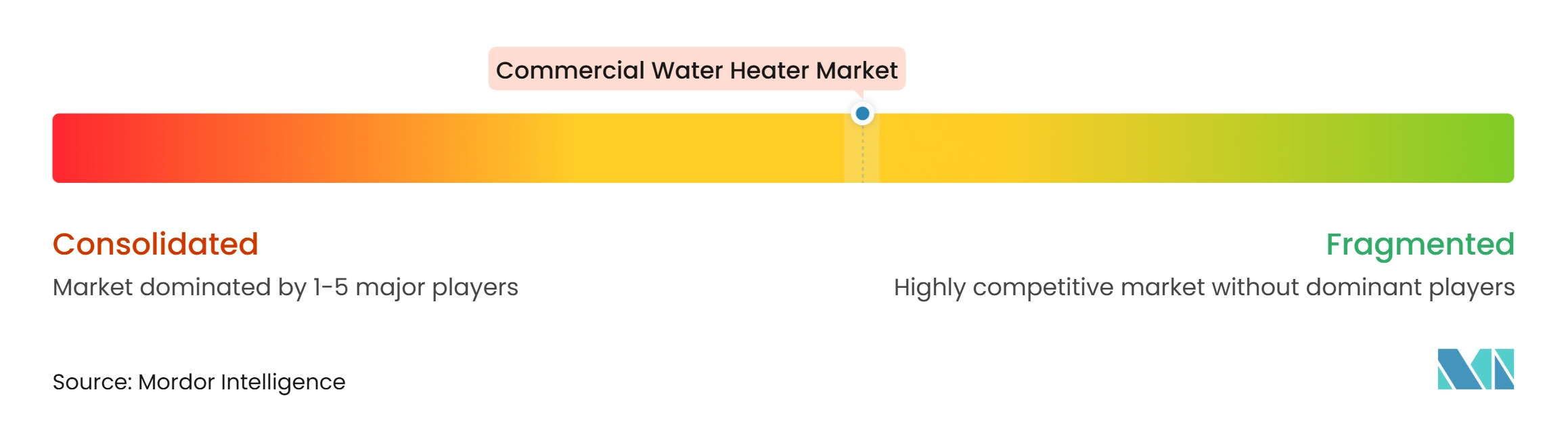
The commercial water heater market remains moderately concentrated outside the leading global suppliers because product selection, service networks, and regional specifications vary widely. The commercial water heater market has established multinational suppliers alongside many regional and specialist competitors. A. O. Smith, Rinnai, Bradford White, Ariston, Bosch, and Vaillant have broad product portfolios across storage, tankless, electric, and heat pump equipment. Chinese manufacturers, including Midea and Haier, compete strongly in Asia-Pacific with scale and expanding heat pump ranges. A. O. Smith reported USD 2,984.2 million in North America segment sales and USD 95 million in research and development expenditure during 2025. This spending supports product development across several technology categories.
Technology differentiation is increasingly centered on high-efficiency gas, heat pump, tankless, controls, and monitoring solutions. In May 2026, A. O. Smith launched the Adapt Premium Condensing Commercial Water Heater, with a 199,000 BTU model and a 0.95 UEF rating. Rinnai’s Sensei RX commercial tankless range features a 0.98 UEF rating, Smart Connect commissioning, and CTA-2045 connectivity. BDR Thermea’s R290 commercial heat pump offers an 80°C water temperature for retrofits where older buildings need higher operating temperatures. These moves show how suppliers are preparing for stricter efficiency requirements and a broader move toward electric equipment. Larger suppliers can fund product testing, certification, and application support across several regions.
Distribution and service models are another competitive area in the commercial water heater market. In April 2026, Rinnai opened a commercial manufacturing facility and distribution center in Griffin, Georgia, to strengthen supply for commercial products. In April 2025, Bradford White acquired Bock Water Heaters and Tank Technology, adding oil-fired commercial water heaters and large-capacity storage tanks to its portfolio. In January 2026, A. O. Smith completed the acquisition for USD 470 million to add water temperature and flow-control capabilities. These actions broaden the equipment and service offer available to engineers and national accounts. Smaller specialist providers can compete by focusing on specific applications, rapid response, and high-performance products. Intellihot’s demand-prediction approach to commercial tankless equipment also shows how digital controls can challenge conventional large-storage designs.
Commercial Water Heater Industry Leaders
-
A. O. Smith Corporation
-
Rheem Manufacturing Company
-
Ariston Holding N.V.
-
Robert Bosch GmbH
-
Haier Smart Home Co., Ltd.
- *Disclaimer: Major Players sorted in no particular order
Commercial Water Heater Market Companies Covered in this Report
- A. O. Smith Corporation
- Rinnai Corporation
- Paloma Rheem Holdings / Rheem
- Midea Group Co., Ltd.
- Ariston Holding N.V.
- Haier Smart Home Co., Ltd.
- Whirlpool Corporation
- NORITZ Corporation
- Daikin Industries, Ltd.
- Gree Electric Appliances Inc. of Zhuhai
- Bradford White Corporation
- Robert Bosch GmbH
- Mitsubishi Electric Corporation
- Mayekawa Mfg. Co., Ltd.
- Navien Inc.
- Intellihot Inc.
- Showa Manufacturing Co., Ltd.
- Ferroli S.p.A.
- Guangdong Vanward New Electric Co., Ltd.
- STIEBEL ELTRON GmbH & Co. KG
Recent Industry Developments in Commercial Water Heater Market
- September 2026: Rinnai America expanded its RCET Series Commercial Electric Tank Water Heaters to 54 configurations across 50- and 80-gallon tank sizes, offering voltage options of 208V, 240V, 277V, and 480V and inputs from 12.3 to 36 kW. Single-phase units can be field-converted to three-phase, addressing both new-construction and replacement applications across a broad range of commercial facility types. The expansion materially broadens Rinnai's commercial electric offering as the commercial water heater market transitions toward electrified water heating.
- August 2026: Bradford White launched the Infiniti GS and GR commercial tankless water heater models at 150,000 BTU/h each, certified by ENERGY STAR and compliant with Ultra Low NOx emissions standards. Both models support indoor or outdoor installation and are convertible between natural gas and propane. The GR variant adds a built-in recirculation pump that reduces water waste and hot-water wait times for foodservice and hospitality operators.
- July 2026: Zurn Elkay Water Solutions announced the acquisition of Intellihot, a commercial tankless water heater company serving healthcare, education, hospitality, and other commercial end markets. Intellihot’s net sales are expected to be approximately USD 37 million in 2026. The transaction marked Zurn Elkay’s entry into water heating, citing regulatory tailwinds and demand for high-efficiency tankless systems.
- April 2026: The United States Department of Energy announced enforcement discretion for units manufactured before October 6, 2027, to delay enforcement of revised thermal-efficiency standards for commercial gas-fired water heaters. The original efficiency requirements remain legally in force, and manufacturers that choose to comply can continue selling condensing-only products.
Global Commercial Water Heater Market Report Scope
Commercial water heaters are designed to meet the high-volume, continuous hot water demands of commercial and industrial facilities. The commercial water heater market is segmented by product type, energy source, capacity, end user, distribution channel, and geography. By product type, the market is segmented into storage water heaters, instant and tankless water heaters, and heat pump and hybrid water heaters. By energy source, the market is segmented into electric, natural gas and LPG, oil-fired, solar, and other energy sources. By capacity, the market is segmented into below 500 liters, 500-1,000 liters, 1,000-2,000 liters, 2,000-3,000 liters, and above 3,000 liters. By end user, the market is segmented into hospitality (hotels, resorts, accommodation), healthcare (hospitals, clinics, care facilities), institutional (education, public buildings), foodservice (restaurants, commercial kitchens), multifamily and commercial residential buildings, and manufacturing, laundries, and other facilities. By distribution channel, the market is segmented into direct sales and dealers and distributors. By geography, the market is segmented into North America, South America, Europe, Asia-Pacific, and the Middle East & Africa. The report offers the market size in value terms in USD for all the above-mentioned segments.
Segmentation Overview
| Storage Water Heaters |
| Instant and Tankless Water Heaters |
| Heat Pump and Hybrid Water Heaters |
| Electric |
| Natural Gas and LPG |
| Oil-Fired |
| Solar |
| Other Energy Sources |
| Below 500 Liters |
| 500-1,000 Liters |
| 1,000-2,000 Liters |
| 2,000-3,000 Liters |
| Above 3,000 Liters |
| Hospitality (Hotels, Resorts, Accommodation) |
| Healthcare (Hospitals, Clinics, Care Facilities) |
| Institutional (Education, Public Buildings) |
| Foodservice (Restaurants, Commercial Kitchens) |
| Multifamily / Commercial Residential Buildings |
| Manufacturing, Laundries, and Other facilities |
| Direct Sales |
| Dealers and Distributors |
| North America | Canada |
| United States | |
| Mexico | |
| South America | Brazil |
| Peru | |
| Chile | |
| Argentina | |
| Rest of South America | |
| Europe | United Kingdom |
| Germany | |
| France | |
| Spain | |
| Italy | |
| BENELUX (Belgium, Netherlands, Luxembourg) | |
| NORDICS (Denmark, Finland, Iceland, Norway, Sweden) | |
| Rest of Europe | |
| Asia-Pacific | India |
| China | |
| Japan | |
| Australia | |
| South Korea | |
| South-East Asia | |
| Rest of Asia-Pacific | |
| Middle East & Africa | United Arab Emirates |
| Saudi Arabia | |
| South Africa | |
| Nigeria | |
| Rest of Middle East & Africa |
| By Product Type | Storage Water Heaters | |
| Instant and Tankless Water Heaters | ||
| Heat Pump and Hybrid Water Heaters | ||
| By Energy Source | Electric | |
| Natural Gas and LPG | ||
| Oil-Fired | ||
| Solar | ||
| Other Energy Sources | ||
| By Capacity | Below 500 Liters | |
| 500-1,000 Liters | ||
| 1,000-2,000 Liters | ||
| 2,000-3,000 Liters | ||
| Above 3,000 Liters | ||
| By End User | Hospitality (Hotels, Resorts, Accommodation) | |
| Healthcare (Hospitals, Clinics, Care Facilities) | ||
| Institutional (Education, Public Buildings) | ||
| Foodservice (Restaurants, Commercial Kitchens) | ||
| Multifamily / Commercial Residential Buildings | ||
| Manufacturing, Laundries, and Other facilities | ||
| By Distribution Channel | Direct Sales | |
| Dealers and Distributors | ||
| By Geography | North America | Canada |
| United States | ||
| Mexico | ||
| South America | Brazil | |
| Peru | ||
| Chile | ||
| Argentina | ||
| Rest of South America | ||
| Europe | United Kingdom | |
| Germany | ||
| France | ||
| Spain | ||
| Italy | ||
| BENELUX (Belgium, Netherlands, Luxembourg) | ||
| NORDICS (Denmark, Finland, Iceland, Norway, Sweden) | ||
| Rest of Europe | ||
| Asia-Pacific | India | |
| China | ||
| Japan | ||
| Australia | ||
| South Korea | ||
| South-East Asia | ||
| Rest of Asia-Pacific | ||
| Middle East & Africa | United Arab Emirates | |
| Saudi Arabia | ||
| South Africa | ||
| Nigeria | ||
| Rest of Middle East & Africa | ||
Key Questions Answered in the Report
What is the projected growth rate for commercial water heaters?
The commercial water heater market is forecast to grow at a 6.76% CAGR from 2027 to 2032, reaching USD 12.77 billion by 2032.
Which commercial water heater product category is growing the fastest?
Heat pump and hybrid water heaters are forecast to grow at 8.71% between 2027 and 2032, supported by efficiency rules and building electrification.
Which energy source leads commercial water heating?
Heat pump and hybrid water heaters are forecast to grow at 8.71% between 2027 and 2032, supported by efficiency rules and building electrification.
Which energy source leads commercial water heating?
Electric systems held 47.34% of demand in 2026, while solar systems are forecast to grow at 8.52% through 2032.
Why are healthcare facilities increasing demand for commercial water heaters?
Healthcare is projected to grow at 8.14% through 2032 because hospitals need reliable temperature control and water-management practices for Legionella prevention.
What is driving replacement demand for commercial water heaters?
Aging equipment, equipment failures, stricter energy-efficiency requirements, and the need for dependable hot water are accelerating replacement decisions.
Which region is expected to lead commercial water heater growth?
Asia-Pacific held 35.50% in 2026 and is expected to grow at the fastest regional CAGR of 8.69% through 2032.